
As we’ve all started to figure out by now, our botanical-influenced aquariums are a lot more of a little slice of Nature that you’re recreating in your home then they are just a “pet-holding container.”
Our aquariums are actually a form of biome.
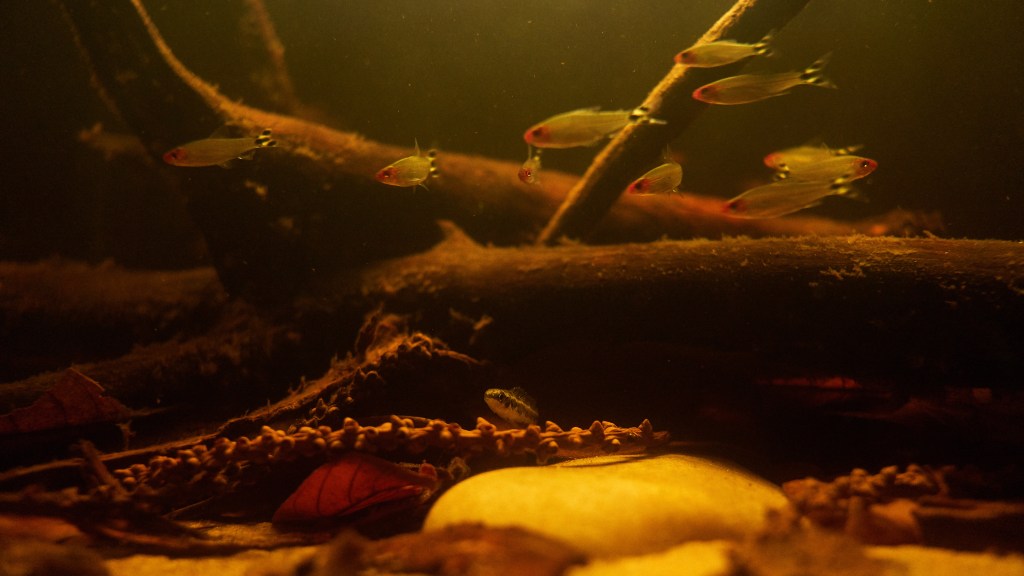
BIOME: (bi·ome) : A large naturally occurring community of flora and fauna occupying a major habitat.
It’s an important mental shift to embrace the idea of an aquarium as a habitat, which contains a wide variety of plants and animals. Not only do these life forms constitute a source of ecological balance and environmental stability- they are a source of supplemental food for the resident fishes.
How do botanicals impact this process? Or, more specifically, the microorganisms that they serve?
In other words, does having a bunch of leaves and other botanical materials in the aquarium foster a larger population of these valuable organisms, capable of processing organics- thus creating a more stable, robust biological filtration capacity in the aquarium?
I believe that they do.
With a matrix of materials present, do the bacteria (and their biofilms) have not only a “substrate” upon which to attach and colonize, but an “on board” food source which they can utilize as needed?
Sure they do!
As I’ve suggested for years, I am of the opinion that a botanical method aquarium, complete with its decomposing leaves and seed pods, can serve as a sort of “buffet” for a variety of organisms along the food chain. And many fishes- even those whose primary food sources are known to be things like insects and worms and such, will in turn feed off of the detritus and the microorganisms within it. An excellent supplemental food source for our fishes!
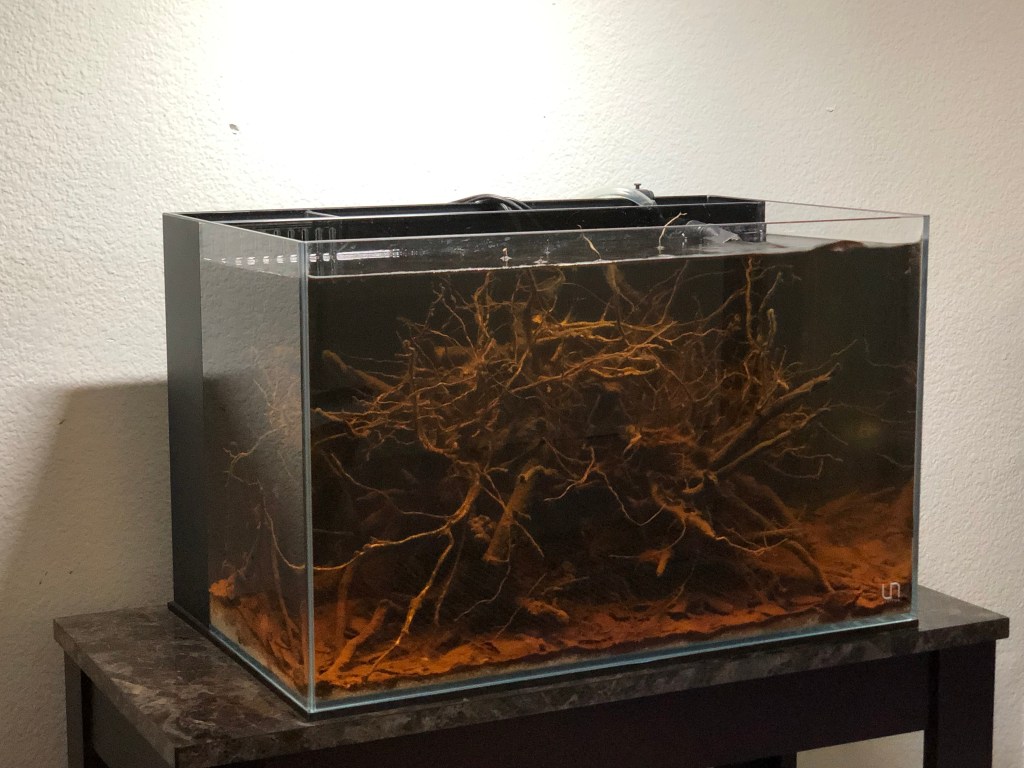
There is a significant amount of food which our fishes can obtain which occurs within the aquatic habitat itself. This is something that we, as lovers of the botanical-style aquarium, are well-suited to embrace. And of course, the concept of food production within our botanical-style aquariums is irresistible to think about. If you observe your tank closely- and I’m sure that you do- you’ll see your fishes foraging on the botanicals…picking off something.
I’ve noticed, during times when I’ve traveled extensively and haven’t been around to feed my fishes, that they’re not even slightly slimmer upon my return, despite not being fed for days sometimes…
What are they eating in my absence?
Well, there are a number of interesting possibilities.
Perhaps most interesting to us botanical method aquarium people are epiphytes. These are organisms which grow on the surface of wood, botanicals, plants or other substrates, and derive their nutrients from the surrounding environment. They are important in the nutrient cycling and uptake in both Nature and the aquarium, adding to the biodiversity, and serving as an important food source for many species of fishes.
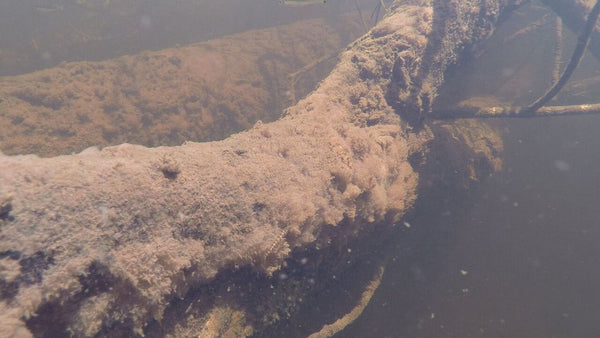
In our favorite aquatic habitats, like streams, ponds, and inundated forests, epiphytes are abundant, and many fishes will spend large amounts of time foraging the “biocover” on tree trunks, branches, leaves, and other botanical materials.
The biocover consists of stuff like algae, biofilms, and fungi. Although most animals use leaves and tree branches for shelter and not directly as a food item, grazing on this epiphytic growth which occurs on them is very important.
I am of the opinion that a botanical method aquarium, with its compliment of decomposing leaves and seed pods, can serve as a sort of “buffet” for many fishes- even those who’s primary food sources are known to be things like insects and worms and such. Detritus and the organisms within it can provide an excellent supplemental food source for our fishes!
Yeah, detritus. More on that later.
It’s well known that in many habitats, like inundated forests, etc., fishes will adjust their feeding strategies to utilize the available food sources at different times of the year. And it’s also known that many fish fry feed actively on bacteria and fungi in these habitats…so, for that very reason, I suggest that a botanical-style aquarium could be an excellent sort of “nursery” for many fish and shrimp species!
You’ll often hear the term “periphyton” mentioned in a similar context, and I think that, for our purposes, we can essentially consider it in the same manner as we do “epiphytic matter.” Periphyton is essentially a “catch all” term for a mixture of cyanobacteria, algae, various microbes, and of course- detritus, which is found attached or in extremely close proximity to various submerged surfaces. Again, fishes will graze on this stuff constantly in both the wild and in our aquariums when it’s available to them.
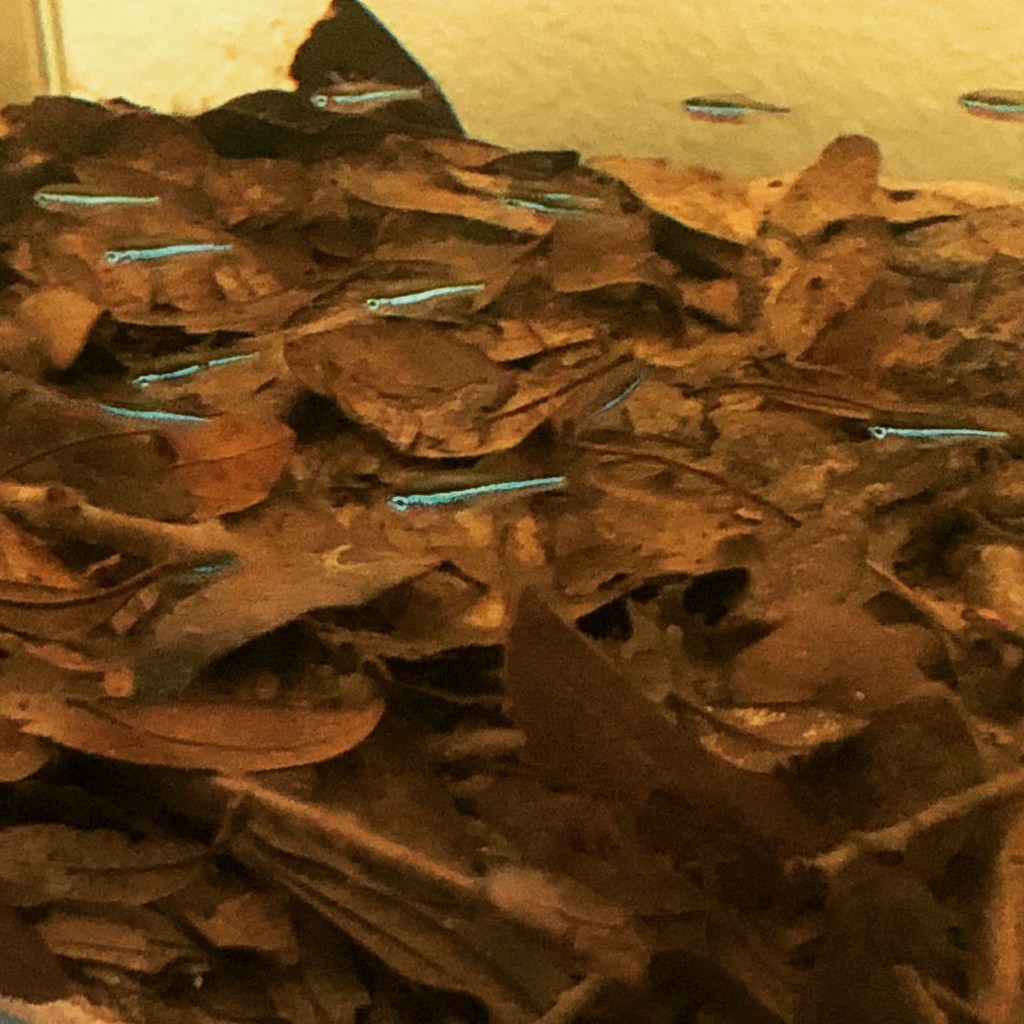
In the wild habitats, some organisms, such as nematodes and chironomids (“Bloodworms!”) will dig into the leaf structures and feed on the tissues themselves, as well as the fungi and bacteria found in and among them. These organisms, in turn, become part of the diet for many fishes.
And the resulting detritus produced by the “processed” and decomposing plant matter is considered by many aquatic ecologists to be an extremely significant food source for many fishes, especially in areas such as Amazonia and Southeast Asia, where the detritus is considered an essential factor in the food webs of these habitats.
If you observe the behavior of many of your fishes in the aquarium, such as characins, cyprinids, Loricarids, and others, you’ll see that, in between feedings, they’ll spend an awful lot of time picking at the aforementioned “stuff” on the leaves, stems, wood, and botanical materials within the tank. In a botanical-style aquarium, this is a pretty common occurrence, and I believe it’s an extremely important “side benefit” of this type of system!

As a sort of geeky “experiment”, I’ve maintained several botanical-based aquariums for extended periods of time without supplementary feeding. The fishes were as fat and happy as their brethren in “well fed” aquariums.
And of course, we’ve talked before about the “botanical nursery” concept- creating an aquarium for fish fry that has a large quantity of decomposing botanicals and leaves to foster the production of these materials, which serve as supplemental food for your fish fry. I have done this before myself and can attest to its viability. Your fishes will have a constant supply of “natural” foods to supplement what you are feeding them in the early phases of their life.
It’s yet another example of the “functional aesthetics” of botanical method aquariums. The idea which acknowledges the fact that the botanicals we use not only look cool, but they facilitate an important function (supplemental food production) as well.
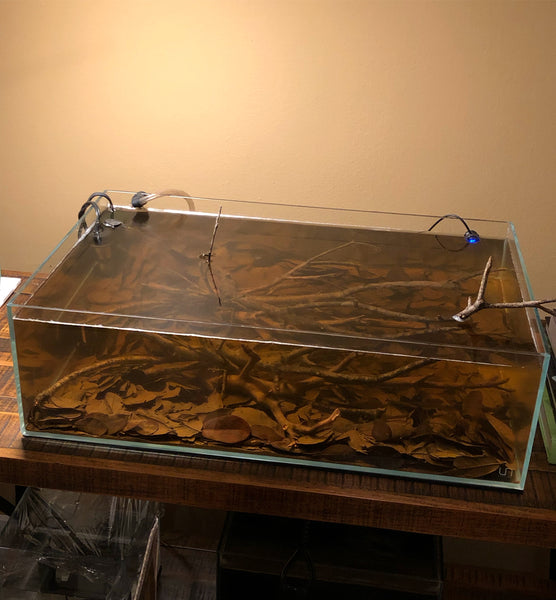
This is a profoundly important idea.
Perhaps arcane to some- but certainly not insignificant.
When we create and manage botanical method aquariums, not only do we have the opportunity to create aquariums which differ significantly from those in years past- we have a unique window into the natural world and the processes which take place in the wild.
Studying the influences of Nature on aquatic environments, and how to replicate and incorporate these influences into our aquariums is the key. Building a specialized aquatic microcosm in our tanks will, over time, undoubtedly unlock many secrets and lead to amazing breakthroughs with our fishes.
Scott Fellman
 The Tint
Leave a comment