
Just about everything that we play with in the botanical method aquarium world- leaves, seed pods, bark, stems- has its origin in…trees. And trees, of course, yield wood. Trees are perhaps one of the most important influences on the dynamic tropical habitats we are fascinated by- perhaps second only to soils.
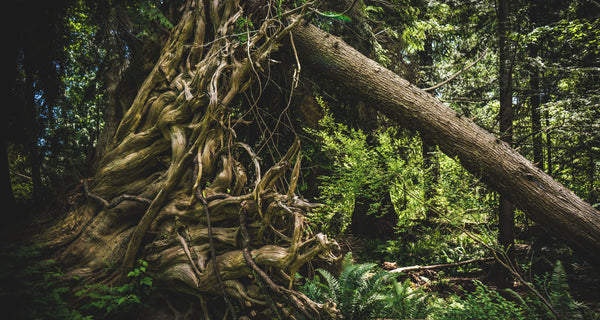
Virtually every time we plan an aquascape, it seems like one of the most major components of the composition is wood. It’s been that way in the hobby for years. And it makes sense. Wood adds a sense of color, texture, and depth to any aquascape.
It makes or breaks it, in many cases, right? Wood comes from- trees, when I last checked. 😆
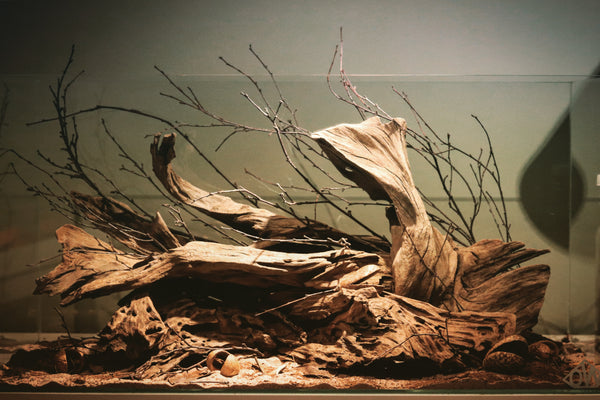
In the botanical method aquarium world, wood reigns supreme over rock, because many of the habitats we replicate in our tanks tend to have more wood than rocks.
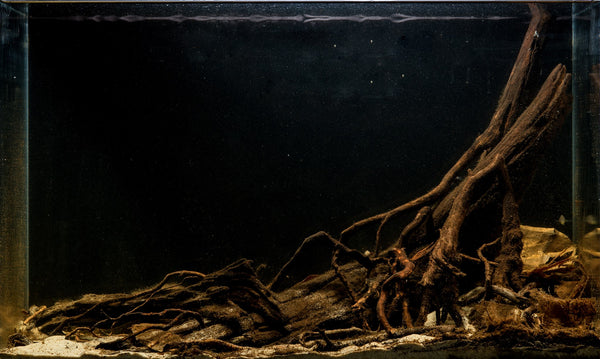
And of course, branches and twigs and other tree parts are ubiquitous in the wild aquatic environments of the world. And many of you are absolutely incredible at ‘scaping with wood! Collectively, we’ve developed extreme talent for creating fantastic designs with all sorts of wood, roots, and twigs.
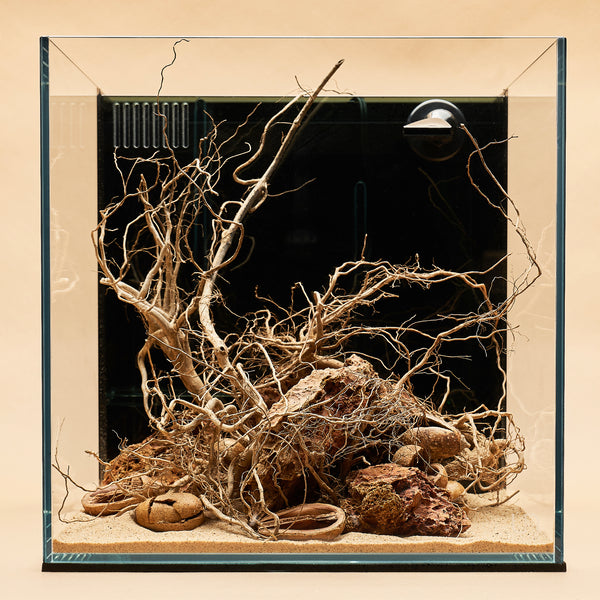
However, there is more to this stuff than just the good looks, right?
Of course! There is a functional benefit that is as beautiful- if not more so- than the aesthetics themselves.
Let’s focus for a bit on the ecological “role” that tree branches, trunks, and other components of the trees play in the wild aquatic ecosystems of the world. Doing this helps give us not only “context” as to how they function, but what impact they have on the overall aquatic habitat. This is an extremely helpful context when we decide to play with wood in our aquariums!
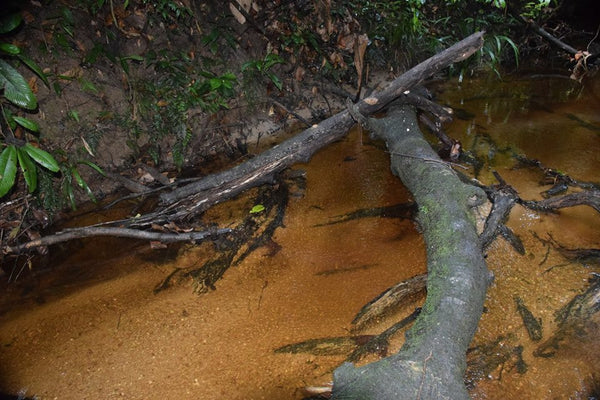
In Nature, it is not uncommon at all for small (and large) trees to fall in the rain forest, with punishing rain and saturated ground conspiring to easily knock over anything that’s not firmly rooted!
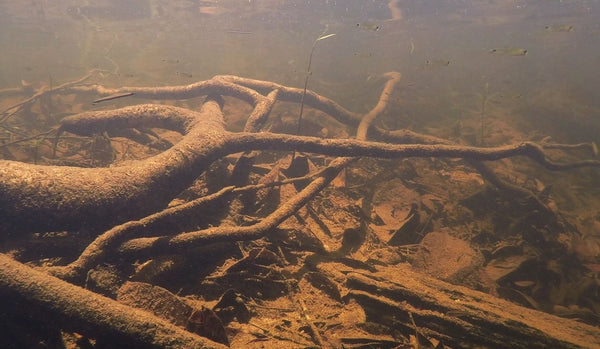
When these trees fall over, they often fall into small streams, or in the case of the varzea or igapo environments in The Amazon ( the ones that I’m totally obsessed with), they fall and are ultimately submerged in the inundated forest floor when the waters return.
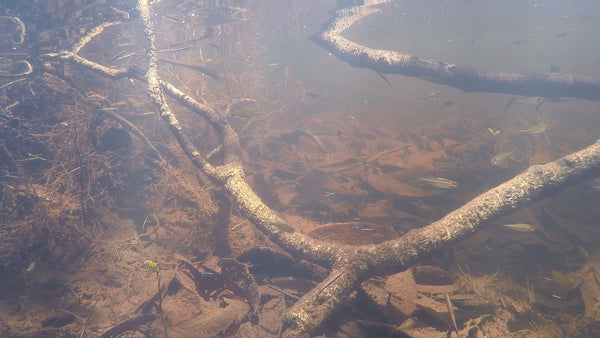
And of course, they immediately impact their (now) aquatic environment, fulfilling several functions.
Fallen trees provide a physical barrier or separation from currents, perhaps creating a little “dam”, which accumulates leaves, sediments, and detritus- all important as food sources to a huge number of aquatic organisms. They also provide a “substrate” for algae and biofilms to multiply on, and providing places for fishes forage among, and hide in. Many fishes, like small cichlids, will reproduce and raise their fry among these fallen tree trunks.
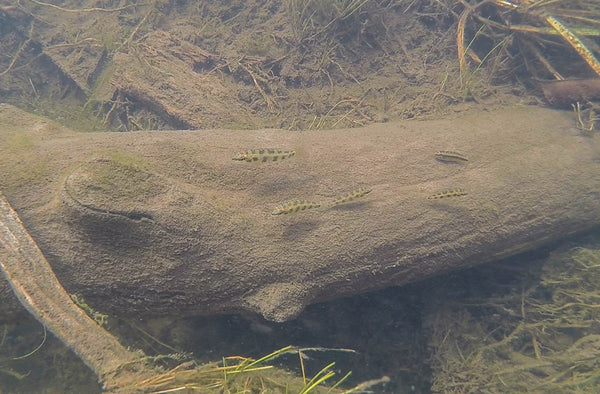
An entire community of aquatic life forms uses the fallen tree for many purposes. And the tree trunks, branches, and other parts of the tree will last for many years, fulfilling this important role in the aquatic ecosystems they now reside in each time the waters return.
Let’s focus on this “ecological component” for just a bit. Let’s review what happens when a tree falls…literally!
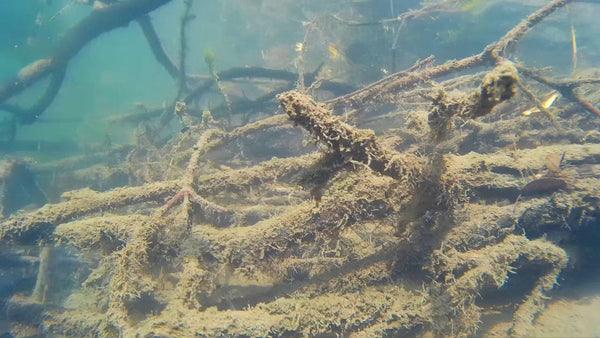
Shortly after falling into the water, fungi and other microorganisms act to colonize the surfaces, and biofilms populate the bark and exposed surfaces of the tree. Over time, the tree will impart many chemical substances, (lignin, humic acids, tannins, sugars, etc.) into the water as the bark breaks down and the tree itself softens.
In aquatic ecosystems, much of the initial breakdown of botanical materials is conducted by detritivores- specifically, fishes, aquatic insects and invertebrates, which serve to begin the process by feeding upon the tissues of the seed pod or leaf, while other species utilize the “waste products” which are produced during this process for their nutrition.
In these habitats, such as streams and flooded forests, a variety of species work in tandem with each other, with various organisms carrying out different stages of the decomposition process.
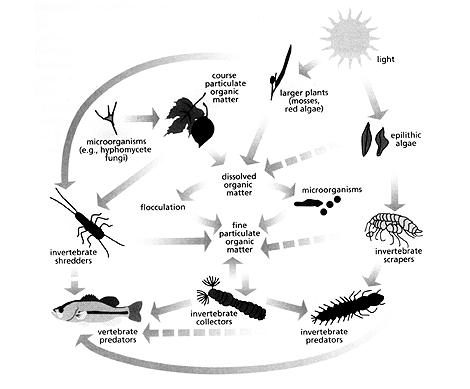
The fallen tree literally brings new life to the waters.
I can’t stress enough how interesting and important this transformation of the terrestrial environment to the aquatic one is. It helps explain so much of why the aquatic habitats look and function the way they do, and how they impact the life forms which make use of them.
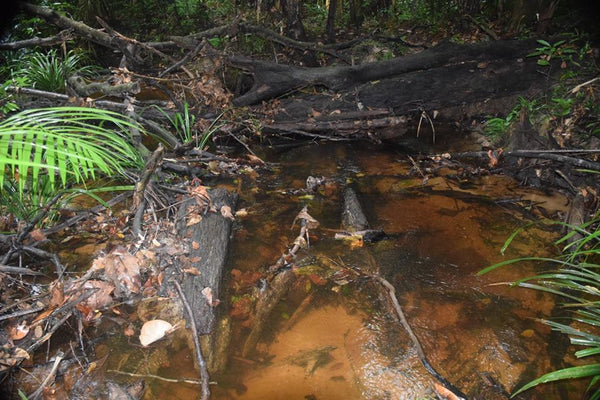
The materials that comprise the tree are known in ecology as “allochthonous material”– something imported into an ecosystem from outside of it. (extra points if you can pronounce the word on the first try!) We’ve talked about that stuff for a while now, right?
Yeah.
And of course, in the case of fallen trees, this includes includes leaves, fruits and seed pods that fall, or are washed into the water along with the branches and trunks that topple into the stream.
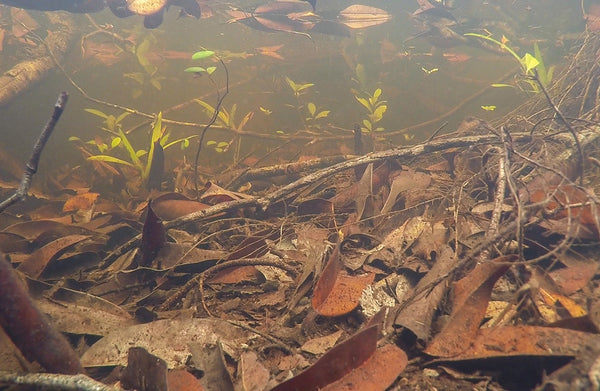
There are stages of breakdown of botanical materials in water which ecologists have identified. Each one of these phases actually plays out in our aquariums, as well- just another cool advantage of working with natural materials!
After it’s submerged, some of the “solutes” (substances which dissolve in liquids- in this instance, sugars, carbohydrates, tannins, etc.) in the tree/leaf /seed pod tissues are released rather quickly. Interestingly, this “leaching stage” is known by science to be more of an artifact of lab work (or, in our case, aquarium work!) which utilizes dried leaves, as opposed to fresh ones.
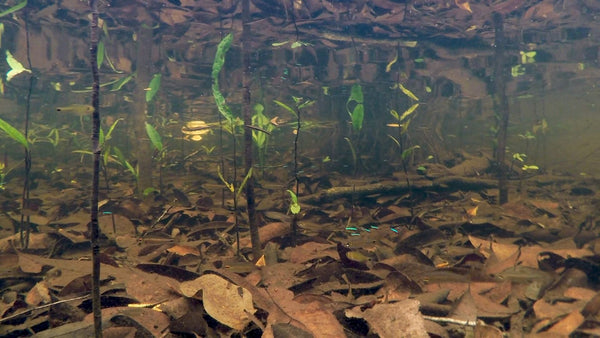
The second stage of the process is called the “conditioning phase”, in which microbial colonization on the branch, leaf or seed pod takes place. They begin to consume some of the tissues of the leaf- at least, softening it up a bit and making it more palatable for the aforementioned detritivores.
The last phase, “fragmentation”, is exactly what it sounds like- the physical breakdown of the submerged material by various organisms, ranging from small crustaceans and shrimp to fungi- and even fishes, collectively known as “shredders.” It has been suggested by some ecologists that microbes might be more important than “shredders” in tropical streams. These are typically more pronounced processes in softer materials like leaves, as opposed to more durable ones like tree trunks and branches.
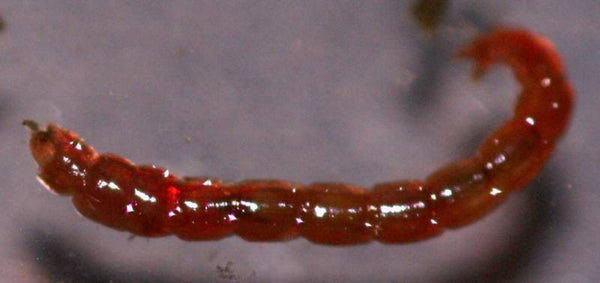
Fauna composition differs between habitats, yet most studies I’ve found will tell you that Chironomidae ( insect larvae-think Bloodworms!) are the most abundant in many streams, pools, flooded forests, and “riffles” in the initial period of leaf and botanical material breakdown!
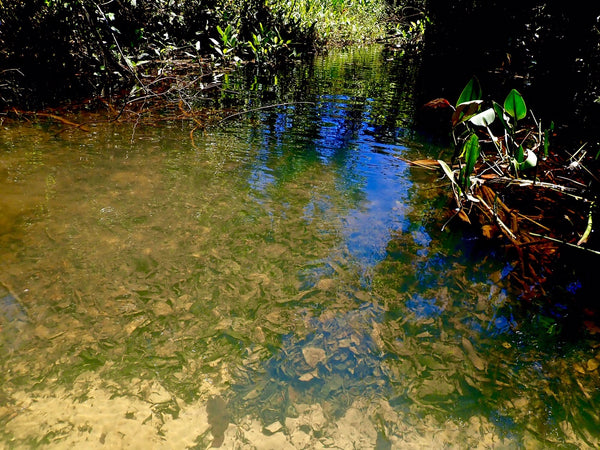
The botanical material is broken down into various products utilized by a variety of life forms. The particles are then distributed downstream by the current and are available for consumption by a variety of organisms which comprise aquatic food webs.
Six primary breakdown products are considered in the decomposition process: bacterial, fungal and shredder biomass; dissolved organic matter; fine-particulate organic matter; and inorganic mineralization products such as CO2, NH4+ and PO43–. In tropical streams, a high decomposition rate has been related to high fungal activity…they accomplish a LOT!

Interestingly, scientists have noted that the leaves of many tropical plant species tend to have higher concentrations of secondary compounds and more recalcitrant compounds than do leaves of temperate species. Also, some researchers hypothesized that high concentrations of secondary compounds ( like tannins) in many tropical species inhibit leaf breakdown rates in tropical streams…that may be why you see leaf litter beds that last for many years and become known features in streams and river tributaries!
These materials are known to ecologists as “coarse particulate organic matter” (CPOM), and in the waters of these inundated forest floors there is a lot of CPOM, and the community of aquatic organisms (typically the aforementioned aquatic insects and crustaceans) has a high proportion of “shredders”, which feed on the CPOM and break it up into tinier bits called (wait for it…) “fine particulate organic matter” (FPOM).
And of course, some fishes, like larger characins, catfishes, etc., consume fallen fruits and seeds as part of their diet as well, aiding in the “refinement” of the CPOM, as well as helping spread the undigested seeds throughout the forest floor, ready to sprout when the waters recede.
Other organisms make use of the fine particulate matter by filtering it from the water or accessing it in the sediments that result. These allochthonous materials support a diverse food chain that’s almost entirely based on our old friend, detritus!
Yeah, that detritus.
The stuff of nightmares for many dyed-in-the-wool hobbyists…The stuff of dreams for many hungry fishes who consume it and the associated fauna within it! It’s so incredibly important to aquatic organisms that I can’t even begin to stress it enough!
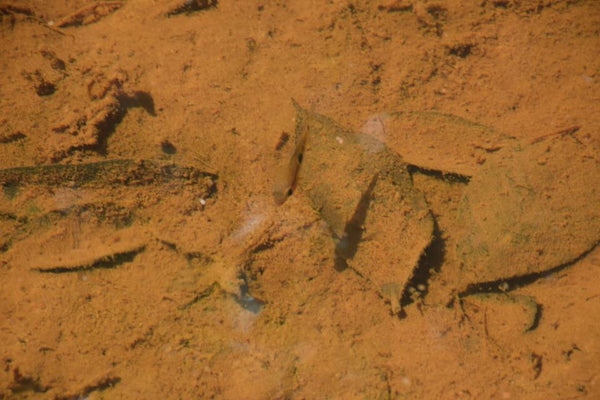
And, although the forest floor receives substantially less sunlight than open rivers, the nutrients and available light are utilized by algae, which may colonize the surfaces facing up into the sun. And of course, many fishes make use of these algal films as a food source…Sensing a theme here?
Absolutely…
So, to summarize at this point:
Fallen, submerged trees and their constituent structures (branches, seed pods, LEAVES) are of enormous importance as a provider, facilitator, and accumulator of food for aquatic organisms.
We see similar results in our aquariums, right? “Undefended” surfaces are colonized by algal “patinas” and biofilm/fungal growths. These growths may look a bit “unconventional” to many hobbyists, but their appearance belies their elegance and beauty as indispensable components of a complex aquatic ecosystem.
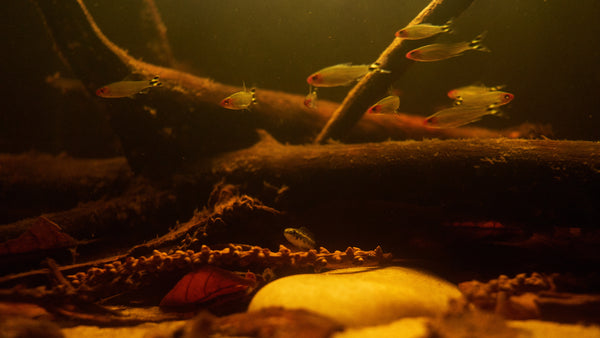
And of course, the tree, like almost anything that is submerged, will gradually decompose over long periods of time. This process is actively exploited by aquatic life forms at all levels. Hollowed-out sections will be inhabited by fishes and exploited for the shelter they offer, and of course, the aforementioned crustaceans and insects will utilize the tree and its constituent materials in various ways.
And, as for the fish population, it’s long been known by ecologists that fish movement, species richness, diversity, and population density are directly affected by the physical and biological influences of… fallen trees!
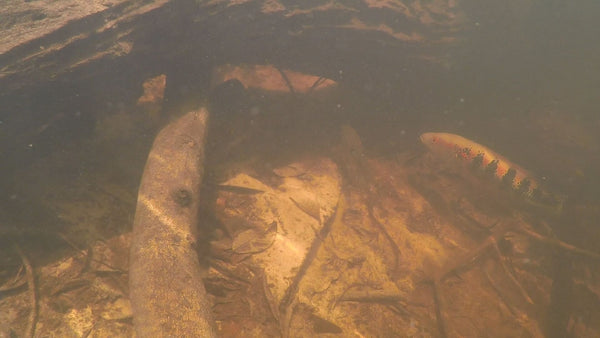
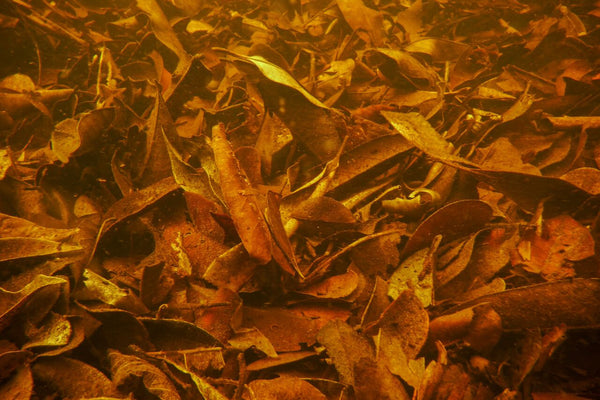
And the deep beds of leaves that may be “corralled” by the fallen trees- a sort of natural “dam”- play an important tole in determining what fishes live in these “microhabitats.” Deep accumulations of leaves, as we’ve discussed before, will definitely limit some fish species, which cannot tolerate the lower oxygen concentrations found in these areas, yet attract others which make use of the life forms living on the surface layers of the leaves.
Other fishes take advantage of the “physical barrier” that a fallen tree presents to shelter from predatory species. Many adaptations have taken place over eons to allow fishes to exploit these changes to their environment caused by fallen trees!
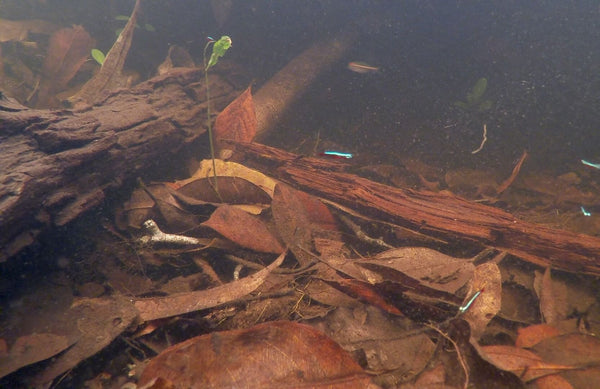
It’s pretty fascinating stuff, all of which has implications for us as aquarists who want to replicate natural habitats to the most realistic degree possible. As aquarium hobbyists, what does this all mean to us? How can we employ the lessons learned from fallen trees in Nature? What can we do to mimic this?
Well, for one thing, I think it’s a call for us to consider employing some bigger, thicker pieces of wood in our tanks!
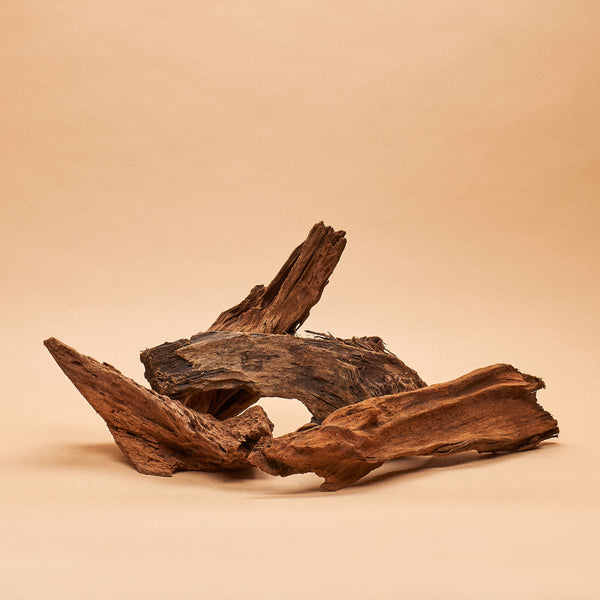
Now, sure, I can hear some groans.
I mean, big, heavy wood has some disadvantages in an aquarium. First, the damn things are…well- BIG- taking up a lot of physical space, and in our case, precious water volume. And they’re likely not as sexy as those awful “bonsai trees”mounted to rocks that are (regrettably) becoming popular again…
And, of course, a big, heavy piece of wood is kind of…pricy. And your truly hates shipping them!
Although wild habitats are filled with big old tree trunks, stumps, and branches, scenes just begging to be recreated in aquariums, we tend to hesitate…
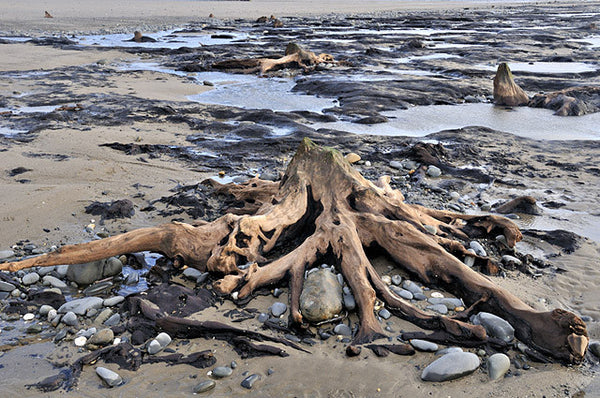
There are many ‘scapers who would make the case that you can’t make big, gnarly pieces of wood “work” in an aquarium because of their impact on “ratio” and “proportion”, etc… You know, the “artistic” part.
And to these types, I gently admonish you to check out the works of some talented ‘scapers, like our friend, Mitch Mazur, who have made that now-famous “mental shift” to work with Nature in an artistic interpretation...
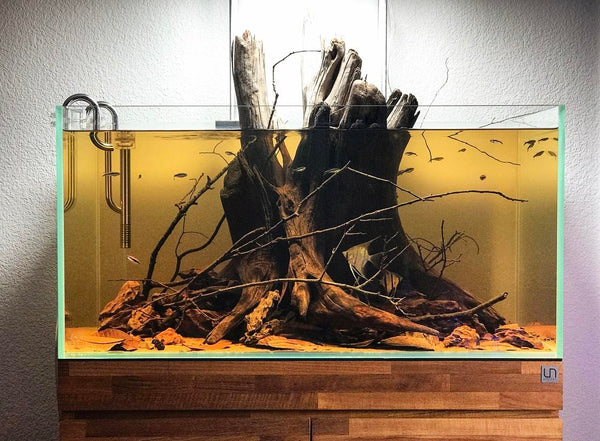
These pleas and “look what HE did!” sort of arguments are almost a “prerequisite” of late when I talk about any idea that has an “aesthetic” component to it, because the self-appointed “guardians of aquascaping style” seem to come out of the woodwork (lol) after these discussions, reciting dozens of well-rehearsed reasons why the concept won’t work, rather than even trying to do something similar.
It’s weird.
To that, of course, I call, “Bullshit!”
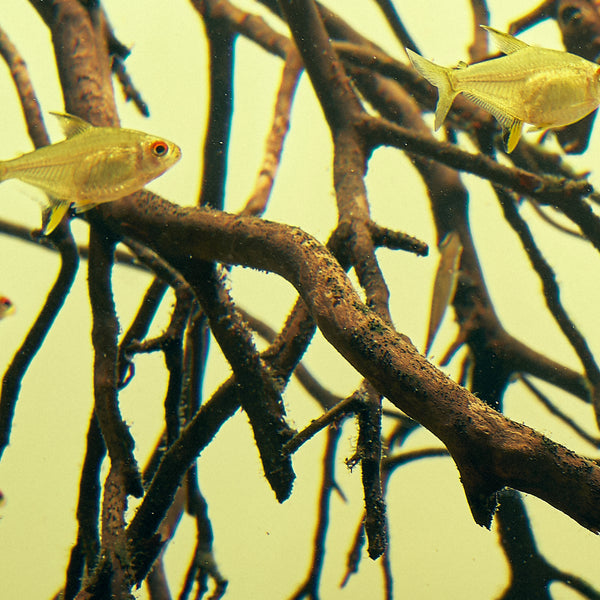
Yeah, a big piece of wood or dense aggregation of smaller pieces in an aquarium does create some challenges, but most of them are in our head. Hell, Takashi Amano himself did a few amazing tanks with huge pieces of wood years ago. Remember?
And of course, when we utilize a large piece of wood (relative to the aquarium’s water volume), it has a chemical and physical impact on the aquatic environment that is…hey- sort of similar to that which occurs in Nature, right?
Yeah.
Now, on a purely practical level, let’s think about the very practices we employ when utilizing wood in our aquariums. It starts with the preparation process…
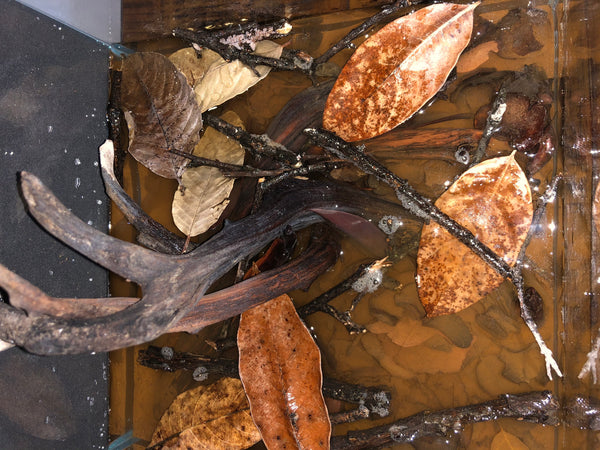
When you first submerge wood, a lot of the dirt from the atmosphere and surrounding environment comes off, along with tannins, lignin, and all sorts of other “stuff” from the exterior surfaces and all of those nooks and crannies that we love so much.
And of course, there are the tannins. Now, I don’t know about you, but I’m always sadistically amused by the frantic posts on aquascaping forums from hobbyists that their water is turning brown after adding a piece of driftwood. I mean- what’s the big deal?
Oh, yeah, not everyone likes it…I forgot.
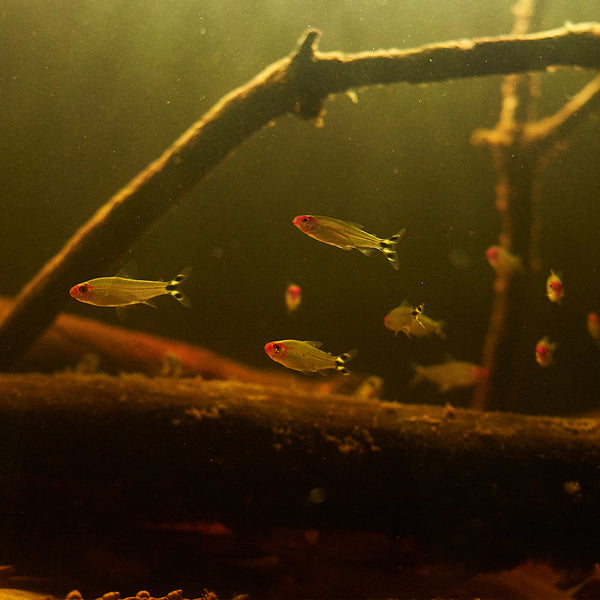
The reality, as you probably have surmised, is that driftwood will continue to leach tannins pretty much for as long as it’s submerged. As a “tinter”, I see this as a great advantage in helping establish and maintain the blackwater look, and to impart the humic substances that have been proven to be very beneficial to the health of almost all freshwater fishes.
It’s a unique aesthetic, too, of course!
When it comes to preparation, I’m more concerned with those impurities- the trapped dirt and such contained within the wood.
As you probably know, that’s also why I’ve been a staunch advocate of the overly conservative “boil and soak” approach to the preparation of botanicals, too- for most hobbyists. As we’ll discuss shortly- if you can get your head wrapped around it- there is a strong case I can make for “in situ curing” of wood and botanicals!
Now, lot of material gets bound up in the dermal layer of the tree where the wood comes from. The bulk of the dry mass of the xylem (the “network” within the tree which transports water and soluble mineral nutrients from the roots throughout the plant, and comprises what we know as “wood.”) is cellulose, a polysaccharide, and most of the remainder is lignin, which is a sort of complex polymer.
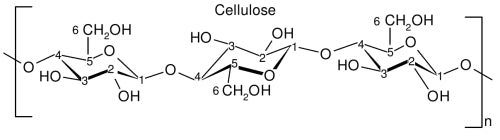
Why the mini botany lesson?
Well, because when you have some idea of what you’re putting into your tank, you’ll better understand why it behaves the way it does when submerged! In a given piece of driftwood, there is going to be some material bound up in these structures, and it will be released (gradually or otherwise) into the water that surrounds it, with a big “burst” happening on initial submersion.
This is why, during the first couple of weeks after you submerge wood, that the water often becomes dark and even cloudy. There is a lot of “stuff” in there!
So…
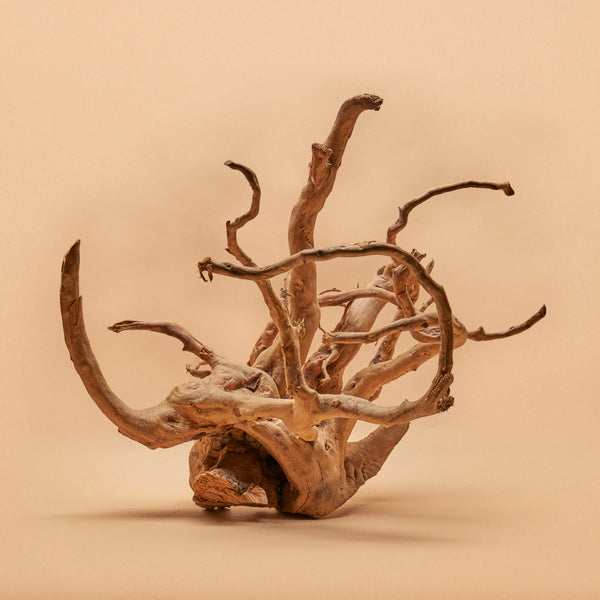
In situ “curing” of wood and botanicals is something we should all consider trying! Something that indeed, goes against “typical” hobby practice, and certainly is different than my more “conventional” botanical method aquarium approach of boiling leaves and pods, and curing wood in a separate container of water. Rather, just “rinse and drop!”
Yeah. hardly precise. And rather at odds with even our own” conventions” and practices that we’ve touted here!
Yet, playing with this approach has given me some of my favorite tanks ever!
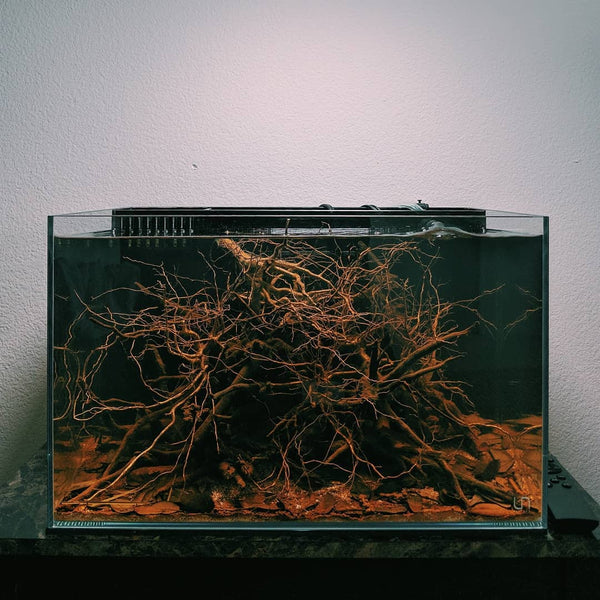
It takes time, and a willingness to wait and observe and open yourself up to a bit of a “mess” at the beginning- at least in the “conventional” aquarium sense. To me, it seems like by doing this, you’re actually letting Nature do Her thing!
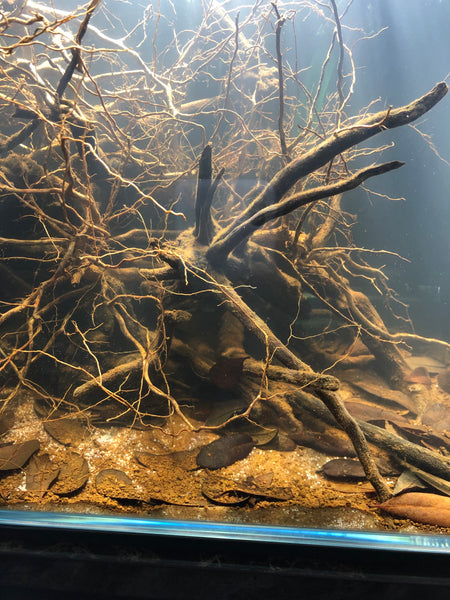
It’s not revolutionary…However, it is “evolutionary” for me, in that it more completely embraces my philosophy of building up a microcosm from scratch in an aquarium. This approach might be the ultimate expression of that. Think about this: Why do we “cure” wood outside of our display aquariums?
Well, typically, it’s because we don’t want the silt, sediment, biofilms and fungal growth which inevitably appears on wood when we submerge it for the first time, in our tanks. We want leaves and botanicals to sink right to the bottom. Also, not everyone is fond of the tannins released during this process, too. And the other materials, which we (present company include) have historically referred to as “organic pollutants”, are seen as “undesirable.”
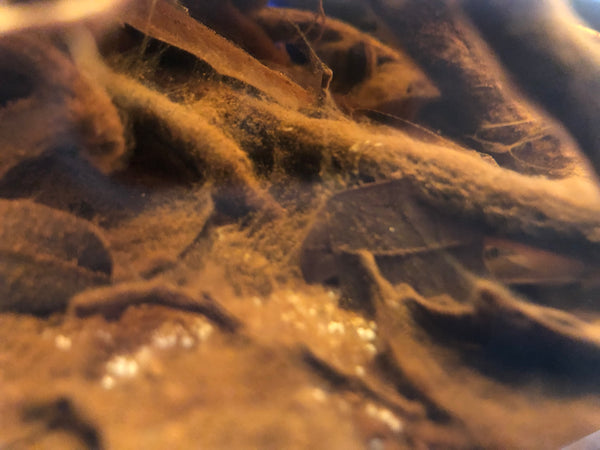
So, why? Why do we fear all of that “stuff?”
Well, when you really think about it, all of these materials and compounds are food to various organisms, right? And when we remove this stuff, we’re essentially depriving someone along the food chain their sustenance, right?
Yeah, the growth and proliferation of organisms of all types will contribute not only to the biological stability of the system over the long haul, I believe that it’ll form the basis of a literal “food web” in the aquarium. Allowing this to happen, despite our human impatience- or even our initial aversion to the looks of the process- enables us to truly embrace the function of Nature.
In Nature, terrestrial materials covered by water are the basis for almost every aquatic ecosystem. The processes of decomposition and colonization- and utilization– of these materials by an enormous variety of organisms- is truly what “powers” these ecosystems.
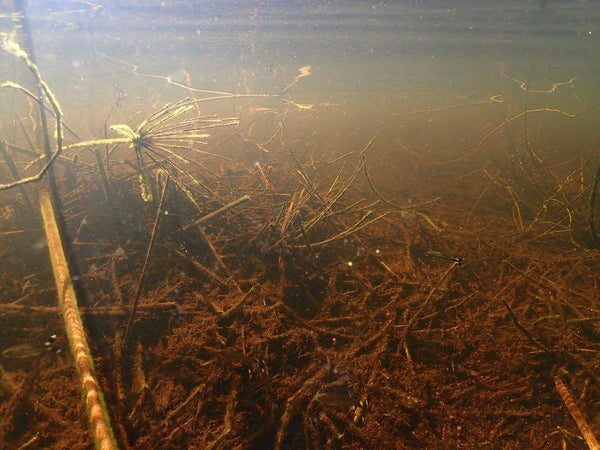
It works exactly the same in an aquarium...If we let Nature do her work without excessive intervention.
Having now done this literally dozens of times with tremendous success- I’m really having trouble grasping exactly what the problem is with this approach- other than the obscene amount of patience we have to deploy as hobbyists waiting for our tanks to settle in and be “just right” for fishes. Is it just the look? Is it because we’ve always been told NOT to start aquariums this way? Maybe? I mean, the aquariums that we play with own our world are not exactly “conventional”, right? So what should the way we establish them be?
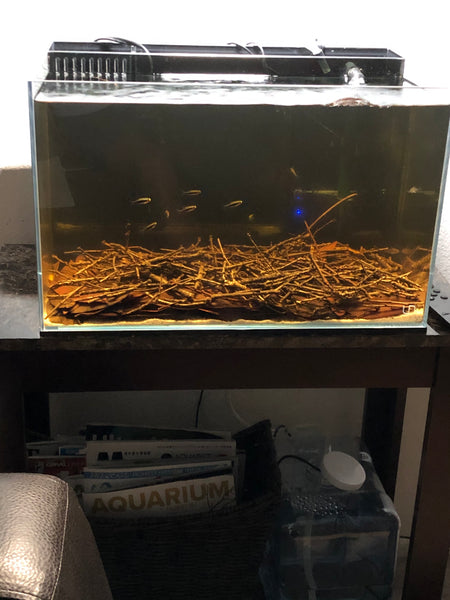
Sure, you might want to monitor ammonia and nitrite during the early phases, but since you’re not in any real hurry, this might be more for informational purposes, rather than an indicator of “when to start adding fishes.”
Secret: I’ve seen the fastest, least scary “cycling times” occur in tanks when I’ve utilized this approach. I mean, you COULD add fishes as soon as your ammonia and nitrite are undetectable…usually a week or less, in my experience! You just might not see your fishes very often in those early days in that morass of murky water , biofilms, and “stuff!”
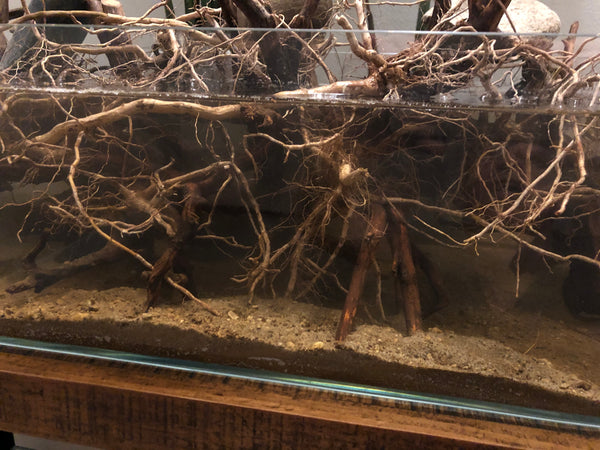
And of course, all of this process DOES take some time. No escaping that.
Like, on the order of around 3-4 weeks or more before you’d likely want to add fishes. And, I get it. Many hobbyists would rather get their displays up and running and “populated” with fishes and such pretty quickly. A tank full of biofilms, fungal growth, and “stuff” from the wood and leaves is not going to get you there quickly.
Ahh…but that’s the interesting part to me!
Sort of doing your “scape” dry, and filling the tank up with conditioned water, and allowing the biofilm growth and dirt and all of that good stuff to sort of “brew” creates a veritable “soup” of biological possibilities. Of course, you can’t add fishes anytime soon, right?
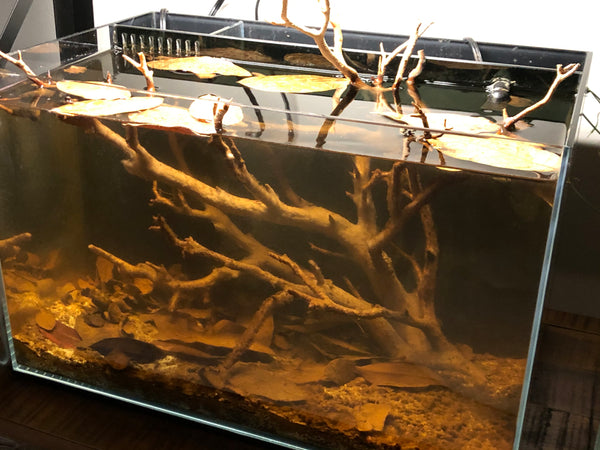
However, what you end up with in this little chaotic, murky, and rather disorderly-looking display is the beginnings of a microcosm, which will “sort itself out” as time goes by. About the only thing you need to do is maybe exchange some water after a week or two, and then get on a regular small water exchange schedule., like you would with any aquarium.
Now, it’s not totally “seat of the pants”..I do assist things just a bit.
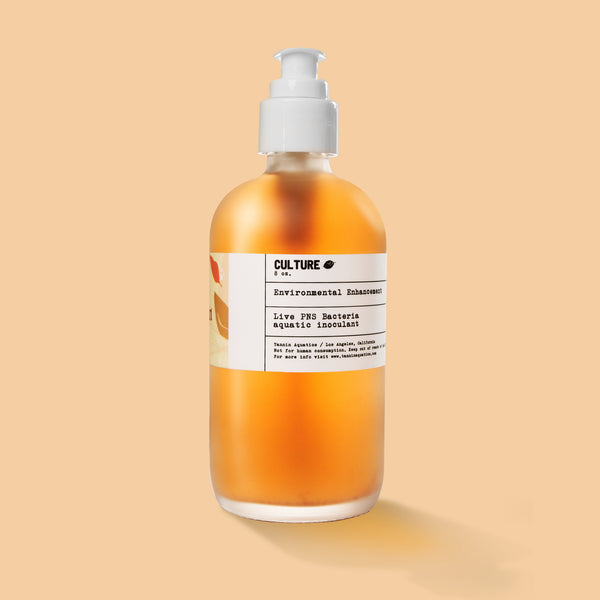
I add bacteria, in the form of Purple Non Sulphur bacteria (PNS), as these highly adaptable bacteria not only “work” with the nutrients and compounds present in the aquarium via the materials- they will help “kick start” the nitrogen cycle as well.
This is exactly what we want these bacterial additives to do- To compliment the botanical method aquarium approach and facilitate the development of a rich microbiome with natural processes. Back in the day, we had a pretty good one at Tannin, but there are a lot of ’em out there nowadays.
The reality of this approach to creating a botanical method aquarium is that it is allowing Nature to do what She does best- to efficiently use what’s available to Her- to assemble and maintain an ecosystem.
These are, in my mind, exercises in functionality. Doing things in a fundamentally different way, in order to create a more robust, diverse, and rich ecosystem within the aquarium.
I think that we’ll continue to work on some of these approaches more; perhaps refine the process into more definable “steps” so that others can try to validate or improve upon my “techniques” with this stuff.
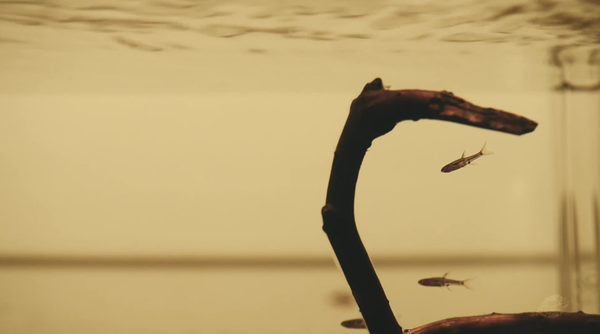
Here is a natural corollary: It’s pretty plain to see that at least part of the reason we see a burst of new algae growth and biofilm in wood recently added to an aquarium is that there is so much stuff bound up in it. Algal and fungal sports can literally “bloom” during the initial period after submersion. It’s exactly what happens in the wild aquatic habitats of the world when tree trunks and branches are covered by water.
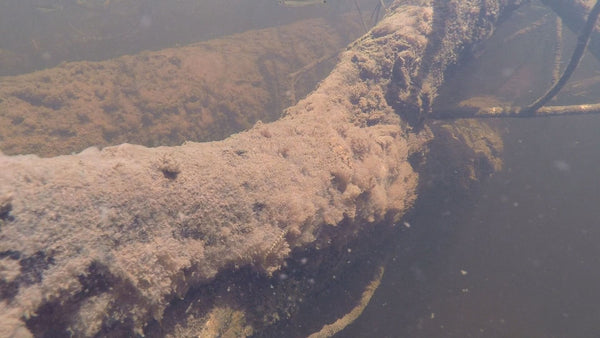
On the other hand, the adventurous aquarist in me can’t help but wonder if we should just give the wood a thorough washing, and let this whole process play out in the aquarium, to foster this amazing biodiversity within the aquarium itself. Again, this is an example of setting up an aquarium from the start to replicate both the form and function of Nature.
Yes, it will look different. Yeah, you’ll see a lot more biofilm, fungal growth, detritus, and perhaps even slightly hazy water. You’ll have to carefully monitor the nitrogen cycle, and manage nutrient accumulations with good husbandry…
Yet, think of the interesting results of this incredible patience!
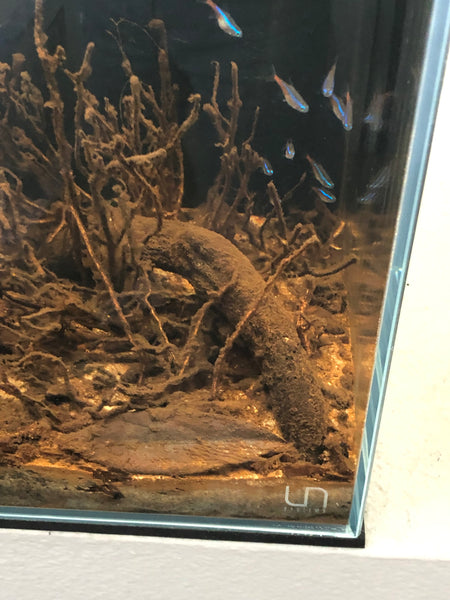
Let’s jump back to how we arrange the wood in our tanks.
Let’s rethink how we create the physical aggregation of wood in your aquariums.
Try a fairly large piece of aquatic wood (or several smaller pieces, aggregated to form one large piece) some time. I think you might find this sort of arrangement quite fascinating to play with regardless of if wether you “prep” it in the display, or in a separate container first.
Arrange the wood in such a way as to break up the tank space and give the impression that it simply fell innaturally. Let it create barriers for fishes to swim into, and disrupt water flow patterns. Allow it to “cultivate” fungal growth and biofilms on its surfaces, and small pockets where leaves, botanicals, substrate materials, and…detritus can collect.
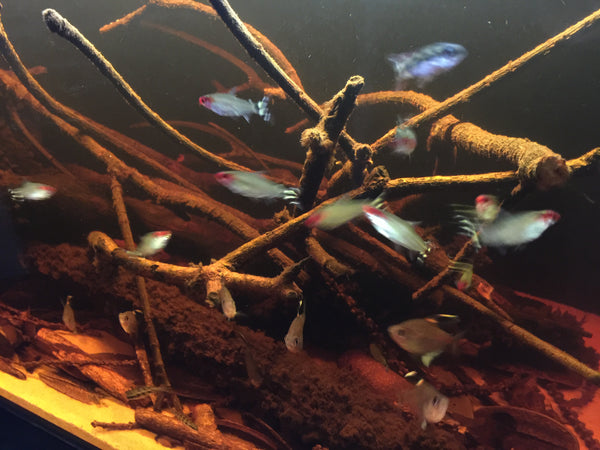
“Pre-populate” the system with food orgmaisms, like Daphnia, Gammarus, and the like, weeks or months before you add the fishes. Enjoy the biofilms. And select a population of fishes that can exploit the variety of new habitats that the “fallen tree” creates.
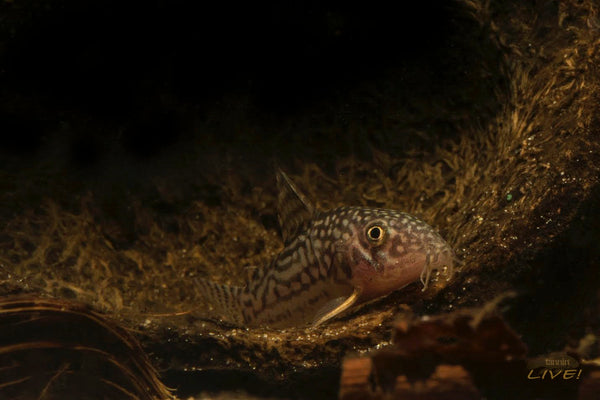
There are many distinct “zones” created by these sorts of aggregations of tree trunks and branches…This is absolutely a perfect utilization for wood. Looking at these materials from a functional perspective- observing the roles the serve and how they aggregate in Nature- then interpreting it for aquariums-is the way to go, IMHO.
So, yeah.
Trying what might appear to be a big, somewhat awkward piece of wood, or group of wood pieces- filling much of the tank can be a challenge to our aesthetic sensibilities at first.
But guess what?
You’ll get over it when you simply enjoy the setup for what it represents- not for a “typical” aquascape. And, when you populate the tank “correctly”, with fishes that can utilize the interesting ecological “niches” within the tank, you’ll realize that “conventional” aquascaping is not the only way…
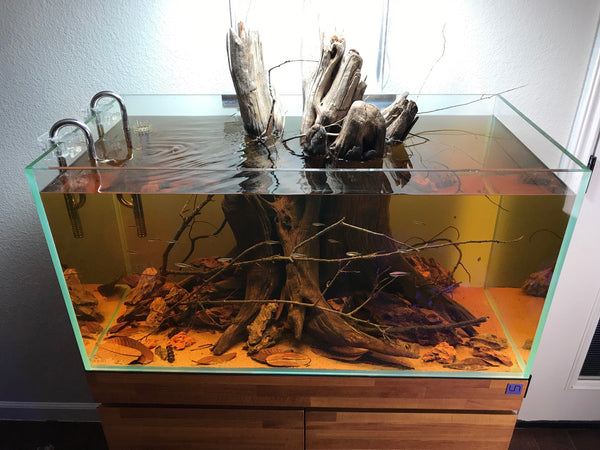
Yes, hobbyists have been throwing big old wood pieces into tanks for decades…
However, as a hobby, I don’t think that we’ve ever really played it out in a manner that was specifically intended to replicate the “functional” aspect of them. The ecology and aesthetics sort of go hand-in-hand. Nature calls the shots in our approach, however.
I’m pretty sure that we haven’t really thought through the idea that big, gnarly tree trunk in our tank functions not only as an “aesthetic component”, but more important- as an ecosystem, which supports not only an abundance of life, but provides a tremendously interesting study in adaptation and the resourcefulness of nature.
Perhaps these aggregations are a freshwater “version” of a coral reef- filled with multiple ecological niches and functions.
Oh, and they look cool, too.
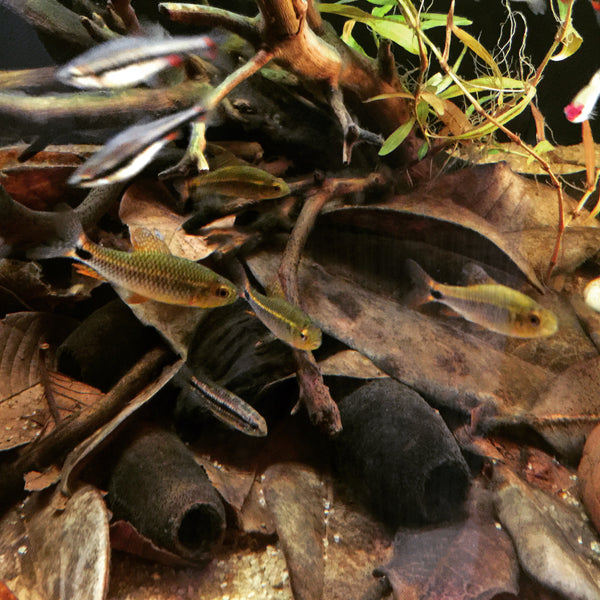
Yeah, this piece covered a fair amount of territory today. And I think that it’s good to look at multiple aspects of what seems like a straightforward topic- because we as aquarists need to think beyond just the idea of utilizing wood in our aquariums. We need to think of wood as a literal “bringer of life” in both the natural habitats and in the aquarium…
It’s another “mental shift” we can make. A pretty easy one, actually!
Make it. Go for it.
So, a tree may fall in the forest..And an entire ecosystem will arise as a result. Yeah, an awful lot of good stuffstarts happening underneath the water!
This is a really important thing for us to grasp.
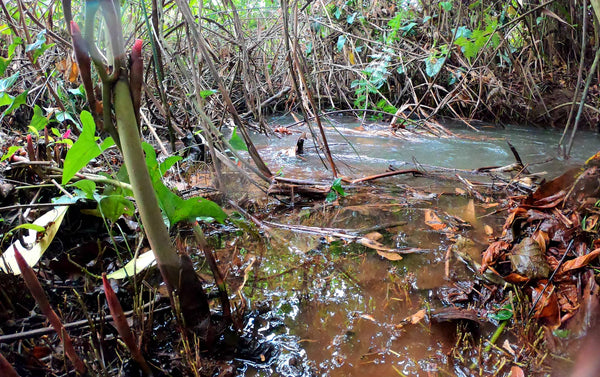
Literally, trees are bringers of life- above snd beneath the waters of the world.
Stay thoughtful. Stay curious. Stay observant. Stay patient. Stay inspired. Stay creative…
And Stay Wet.
Scott Fellman
 The Tint
Leave a comment