
One of the things that drives most hobbyists crazy is when “stuff” gets blown around, covered or moved about in the aquarium. It can be because of strong current, the activity of fishes, or simply being overgrown by plants. I understand the annoyance that many hobbyists feel; I recall this same aggravating feeling in many reef tanks where I had high flow and sand on the bottom- almost always a combination for annoyance!
I mean, I get it.
We have what feel is a carefully thought-out aquascape, looking exactly how we expected it would after setup. Yet, despite our ideas and thoughts, stuff moves around in the aquarium. It’s something we can either accept, or modify in our aquariums, depending upon our preferences.
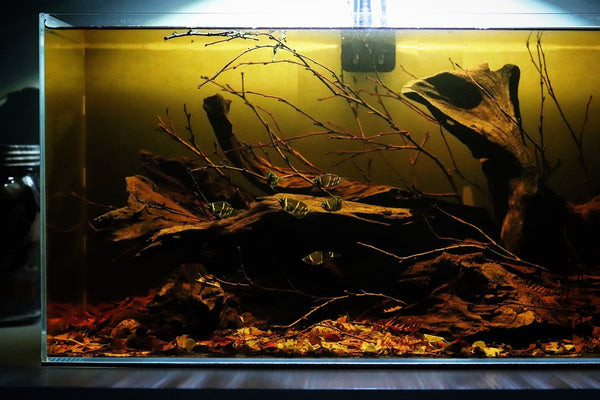
Yet, movement and “covering” of various materials by sediments, biofilms, etc., which accumulate on the substrate in natural habitats are everyday occurrences in Nature, and they help forge a very dynamic ecosystem. And they are constantly creating new opportunities for the fishes which reside in them to exploit.
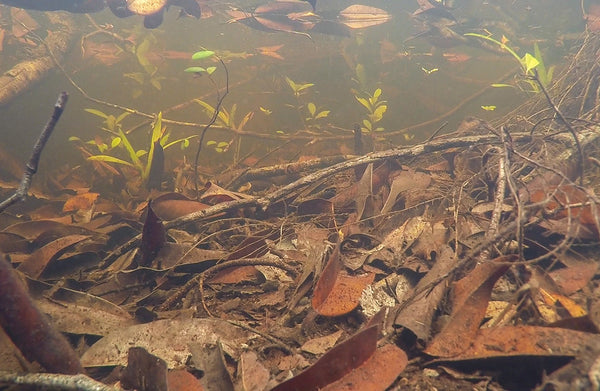
When you think about how materials “get around” in the wild aquatic habitats, there are a few factors which influence both the accumulation and distribution of them. In many topical streams, the water depth and intensity of the flow changes during periods of rain and runoff, creating significant re-distribution of the materials which accumulate on the bottom, such as leaves, branches, seed pods, and the like.
Larger, more “hefty” materials, such as branches, submerged logs, etc., will tend to move less frequently, and in many instances, they’ll remain stationary, providing a physical diversion for water as substrate materials accumulate around them.
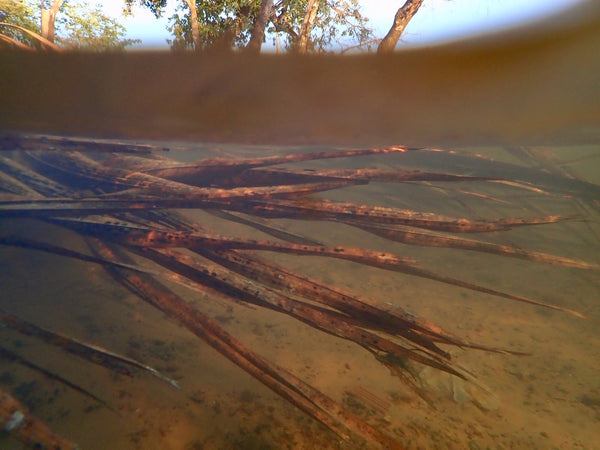
A “dam”, of sorts, if you will.
And this creates known structures within streams in areas like Amazonia, which are known to have existed for many years. Semi-permanent aquatic features within the streams, which influence not only the physical and chemical environment, but the very habits and abundance of the fishes which reside there.
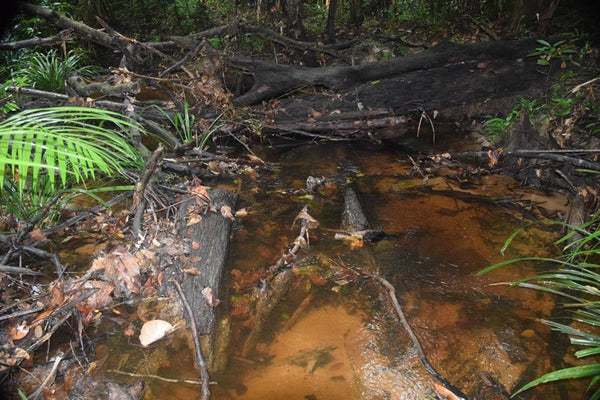
Most of the small stuff, like leaves, tend to move around quite a bit… One might say that the “material changes” created by this movement of materials can have significant implications for fishes. As we’ve talked about before, they follow the food, often existing in, and subsisting off of what they can find in these areas.
New accumulations of leaves, detritus, and other materials benefit the entire ecosystem.
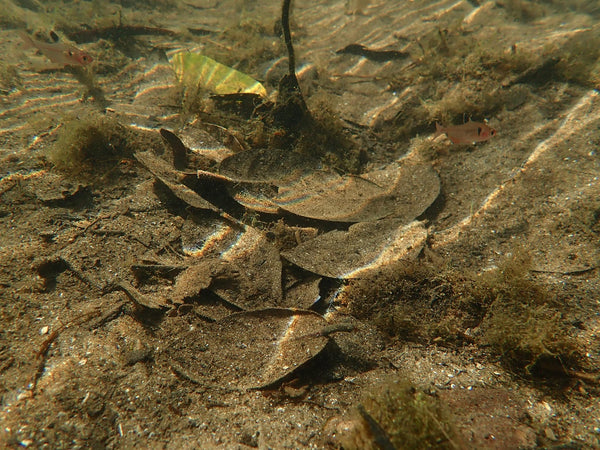
In the case of our aquariums, this “redistribution” of material can create interesting opportunities to not only switch up the aesthetics of our tanks, but to provide new and unique little physical areas for many of the fishes we keep.
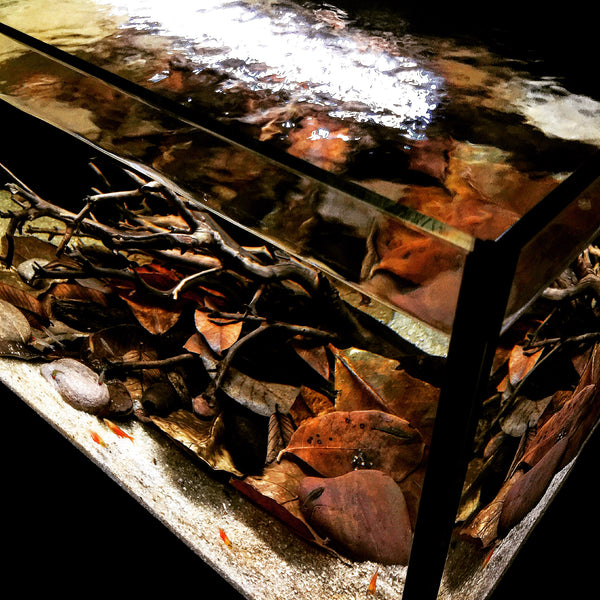
And yeah, the creation of new feeding opportunities for life forms at all levels is a positive which simply cannotbe overstated! As hobbyists, we tend to lament changes to the aquascape of our tanks caused by things outside of our control, and consider them to be a huge inconvenience, when in reality, they’re not only facsimile of very natural dynamic processes-they are fundamental to their evolution.
The benthic microfauna which our fishes tend to feed on also are affected by this phenomenon, and as mentioned above, the fishes tend to “follow the food”, making this a case of the fishes adapting to a changing environment. And perhaps...maybe…the idea of fishes sort of having to constantly adjust to a changing physical environment could be some sort of “trigger”, hidden deep in their genetic code, that perhaps stimulates overall health, immunity or spawning?
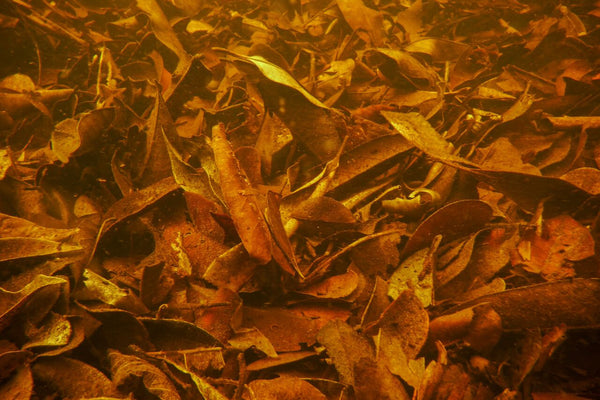
Something in their “programing” that says, “You’re at home…” Perhaps something which triggers specific adaptive behaviors?
I find this possibility fascinating, because we can learn more about our fishes’ behaviors, and create really interesting habitats for them simply by adding botanicals to our aquariums and allowing them to “do their own thing”- to break apart as they decompose, move about as we change water or conduct maintenance activities, or add new pieces from time to time.
Again, just like Nature.
We just need to “get over ourselves” on this aesthetic thing!
Another mental shift? Yeah, it is. An easy one, but one that we need make, really.
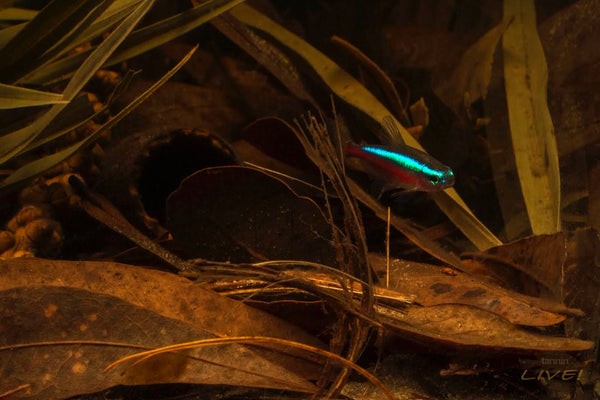
Like any environment, botanical/ leaf litter beds have their own “rhythm”, fostering substantial communities of fishes. The dynamic behind this biotope can best be summarized in this interesting excerpt from an academic paper on blackwater leaf-litter communities by biologist Peter Alan Henderson, that is useful for those of us attempting to replicate these communities in our aquaria:
“..life within the litter is not a crowded, chaotic scramble for space and food. Each species occupies a sub-region defined by physical variables such as flow and oxygen content, water depth, litter depth and particle size…
…this subtle subdivision of space is the key to understanding the maintenance of diversity. While subdivision of time is also evident with, for example, gymnotids hunting by night and cichlids hunting by day, this is only possible when each species has its space within which to hide.”
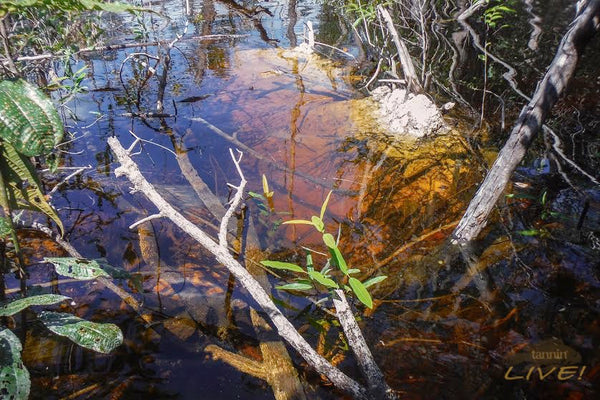
In other words, different species inhabit different sections of the leaf litter beds. As aquarists, we should consider this when creating and stocking our botanical-style aquariums.
It just makes sense, right?
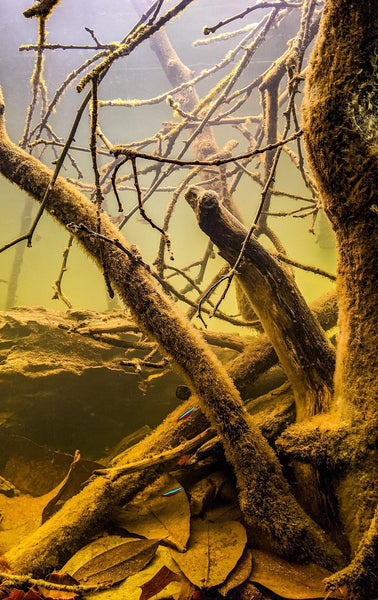
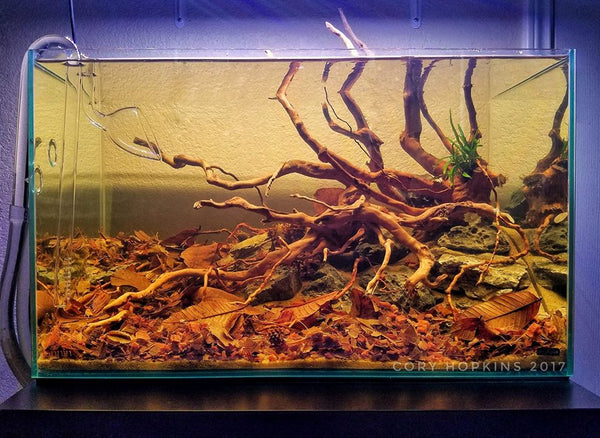
So, when you’re attempting to replicate such an environment, consider how the fishes would utilize each of the materials you’re working with. For example, leaf litter areas would be an idea shelter for many juvenile fishes, catfishes, and even young cichlids to shelter among.
Submerged branches, larger seed pods and other botanicals provide territory and areas where fishes can forage for macrophytes (algal growths which occur on the surfaces of these materials). Fish selection can be influenced as much by the materials you’re using to ‘scape the tank as anything else, when you think about it!
And it’s not just fishes, of course. It’s a multitude of life forms.
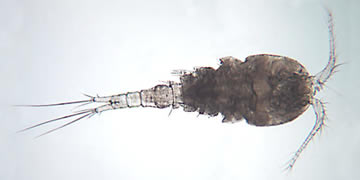
There are numerous life forms which are found on ad among these materials as well, such as fungal growths, bacterial biofilms, etc. which we likely never really consider, yet are found in abundance in nature and in the aquarium, and perform vital roles in the function of the aquatic habitat.
Perhaps most fascinating and rarely discussed in the hobby, are the unique freshwater sponges, from the genus Spongilla. Yes, you heard. Freshwater sponges! These interesting life forms attach themselves to rocks and logs and filter the water for various small aquatic organisms, like bacteria, protozoa, and other minute aquatic life forms. Some are truly incredible looking organisms!
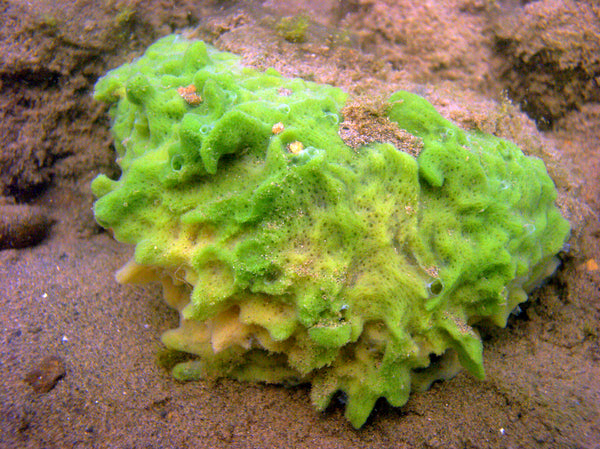
(Spongilla lacustris Image by Kirt Onthank. Used under CC-BY SA 3.0)
Unlike the better-known marine sponges, freshwater sponges are subjected to the more variable environment of rivers and streams, and have adapted a strategy of survival. When conditions deteriorate, the organisms create “buds”, known as “gemmules”, which are an asexually reproduced mass of cells capable of developing into a new sponge! The Gemmules remain dormant until environmental conditions permit them to develop once again!
Oh, cool!
To my knowledge, these organisms have never been intentionally collected for aquariums, and I suspect they are a little tricky to transport (despite their adaptability), just ike their marine cousins are. One species, Metania reticulata, is extremely common in the Brazilian Amazon. They are found on rocks, submerged branches, and even tree trunks when these areas are submerged, and remain in a dormant phase in the aforementioned gemmules during periods of desiccation!
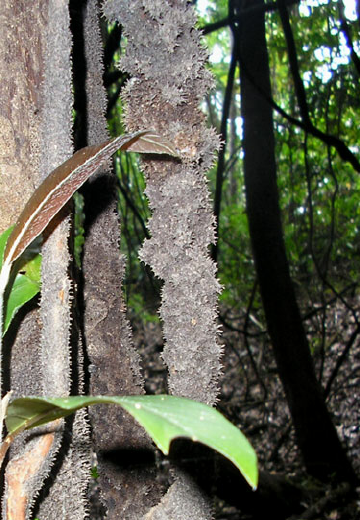
Now, I’m not suggesting that we go and collect freshwater sponges for aquarium use, but I am curious if they occur as “hitchhikers” on driftwood, rocks or other materials which end up in our aquariums. When you think about how important sponges are as natural “filters”, one can only wonder how they might perform this beneficial role in the aquarium as well!
We’ve encountered them in reef tanks for many years…I wonder if they could ultimately find their way into our botanical-style aquariums as well? Perhaps they already have. Have any of you encountered one before in your tanks?
The big takeaway from all of this: A botanical bed in our aquariums and in Nature is a physical structure, ephemeral though it may be- which functions just like an aggregation of branches, or a reef, rock piles, or other features would in the wild benthic environment, although perhaps even “looser” and more dynamic.
Stuff gets redistributed, covered, and often breaks down over time. Exactly like what happens in Nature.
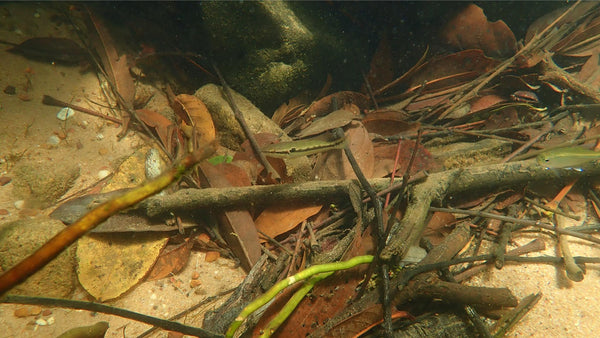
If we focus on streams, which are one my personal areas of interest, there are some interesting takeaways for us as aquarists that we can gain by studying how they form and function. And, as with virtually all aquatic systems, the relationship between land and water is always impactful.
Much of how streams form and flow revolves around how sediments and other bottom materials arrive in them. It’s important to note that the volume of water entering the stream helps, in part, to determine the amount and size of sediment particles that can be carried along, and thus comprise the substrate and its contours.
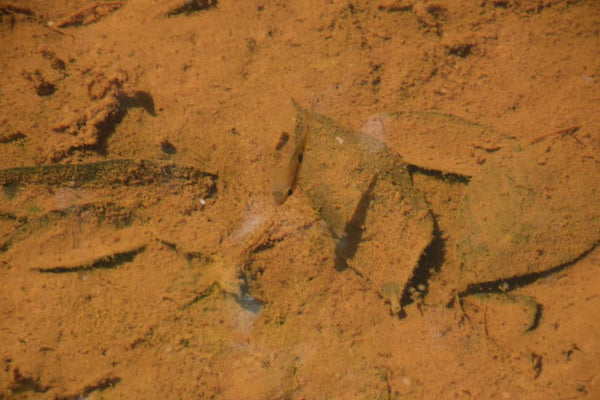
The composition of bottom materials and the depth of the channel are always changing in response to the flow in a given stream, affecting the composition and ecology in many ways. I’ll probably state this idea more than once in this piece, because it’s really important:
Every stream is unique. Although there are standard structural or functional elements common to many streams, each stream is essentially a “custom response” to local ecological, topographical, meteorological, and biological factors.
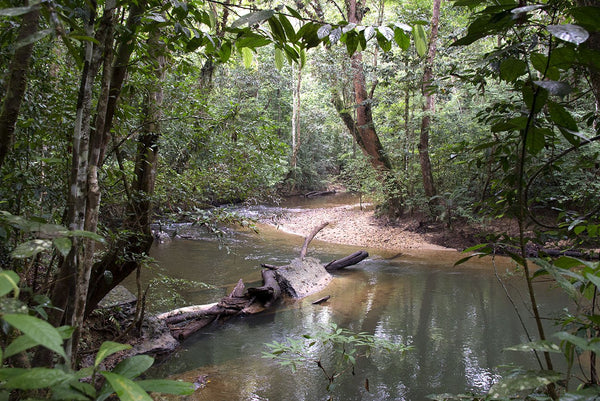
Permanent streams will often have different volume and material composition (usually finely-packed sands and gravels, with lots of smooth stones) than more intermittent streams, which are the result of inundation caused by rain, etc., or even so-called “ephemeral” streams, often packed with leaves and lighter sediments, which typically occur only immediately after rain events (which means they usually don’t have fish in them unless they are washed into them from more permanent watercourses).
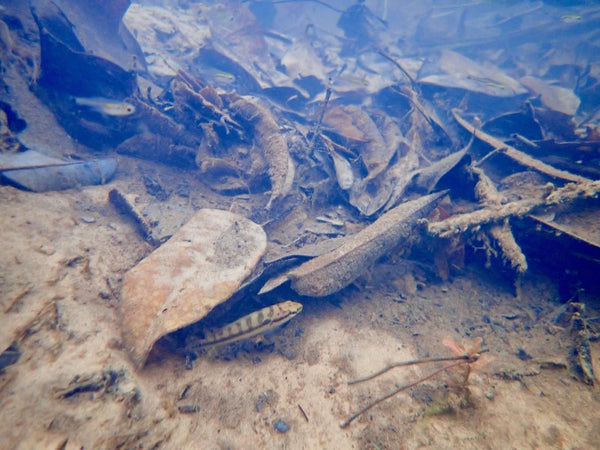
The latter two stream types are typically more affected by leaves, botanical debris, branches, and other materials. Like the igarapes (“canoe ways”) of Brazil…little channels and rivulets which come and go with the seasonal rains. And then, there’s those flooded Igapo forests that I obsess over.
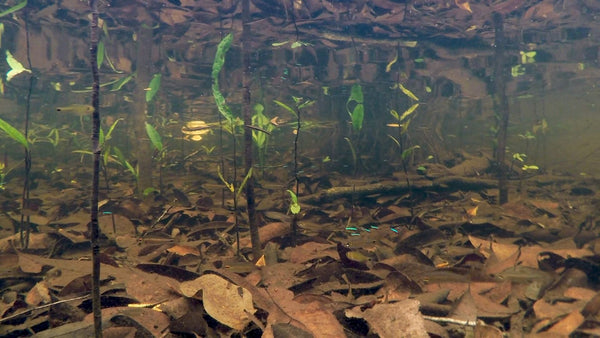
In the overall Amazon region (you knew I was sort of headed back that way, right?), it sort of works both ways, with the rivers influencing the surrounding land…and then the land “giving” some of the materials back to the rivers…the extensive lowland areas bordering the river and its tributaries, known as varzeas (“floodplains”), are subject to annual flooding, which helps foster enrichment of the aquatic environment.
Much of them come from trees.
Yeah, trees.
The materials that comprise the tree are known in ecology as “allochthonous material”– something imported into an ecosystem from outside of it. (extra points if you can pronounce the word on the first try…) And of course, in the case of trees, this also includes includes leaves, fruits and seed pods that fall or are washed into the water along with the branches and trunks that topple into the stream.
You know, the stuff we obsess over around here!
Although many streams derive their food base from leaves and organic matter, there is a lot of other material present that contributes to its structure. Think along those lines when scheming your next aquarium. Ask yourself what factors would contribute to the bottom composition of the area you’re taking inspiration from.
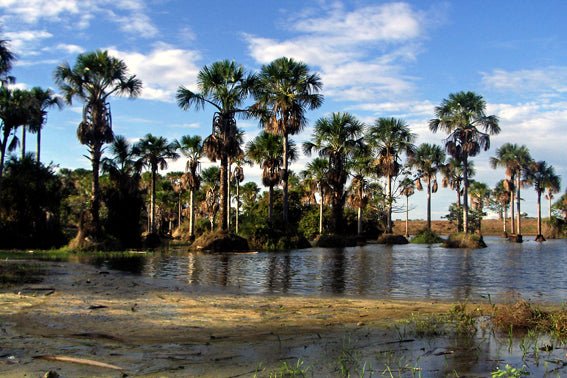
Stream and river bottom composition is affected by things like regional weather, current, geology, the surrounding terrestrial ecosystem, and a host of other factors- all of which could make planning your next aquarium even more interesting if you take them into consideration!
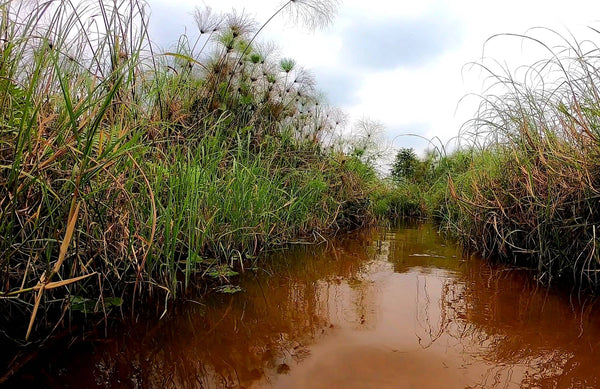
And there is the whole dynamic of water movement. Like, what role does the flow of water determine the ecology of a given stream, and how it will “recruit” life forms to reside in it?
You’ll see a variety of bottom compositions in Amazonian and other streams, ranging from the aforementioned leaves and detritus in stream margins, to sand and silt over “cobbles”, to boulders covered in algae, to fine patch gravels, and even just silt.
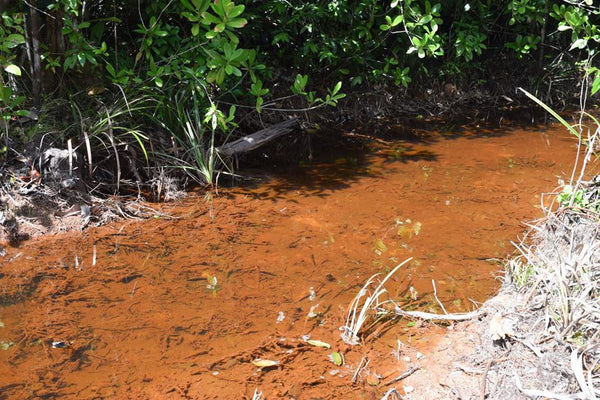
You might even say that rivers and streams act like nature’s “sediment sorting machines”, as they move debris, geologic materials, and botanicals along their courses. And along the way, varying ecological communities are assembled, with all sorts of different fishes being attracted to different niches.
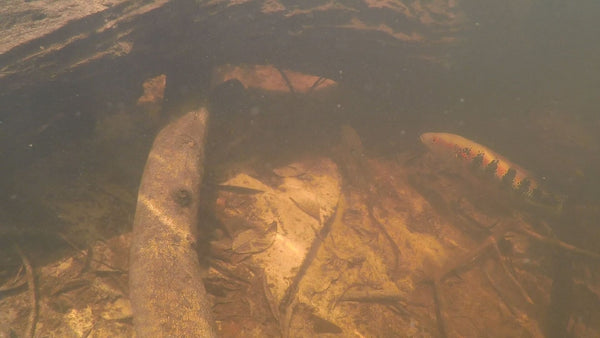
Interestingly, in streams, the primary producers of the food webs that attract our fishes are algae and diatoms, which are typically found on rocks and wood wherever light and nutrients create optimum conditions for their growth. Organic material that enters streams via leaf fall is acted upon by fungi and small organisms, which help break it down.
It is probably no surprise, then, that bacteria (especially in biofilms!) and fungi are the initial consumers of the organic materials that accumulate on the bottom. Like, the stuff many of us loathe. These, in turn, are extremely vital to fishes as a food source. Hence, one of the things I love so much about utilizing a leaf litter bed as a big part of your substrate composition in an aquarium! Of course, we talk about that all the time, right?
Streams which flow over stony, open bottoms, free from natural obstacles like tree trunks and such, tend to develop a rich algal turf on their surfaces.
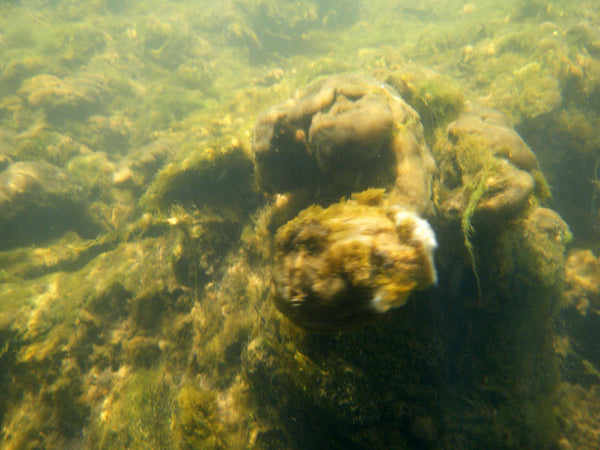
While not something a lot of hobbyists like to see in their tanks (with the exception of Mbuna guys and weirdos like me), algae-covered stones and rocks are entirely natural and appropriate for the bottom of many aquariums! (enter a tank with THAT in the next international aquascaping contest and watch the ensuing judge “freak-out” it causes! )
Grazing fishes, of course, will feed extensively on or among these algal films, and would be logical choices for a stony-bottom-themed aquarium. When we think about the way natural fish communities are assembled in rivers and streams, it’s almost always as a result of adaptations to the physical environment and food sources.
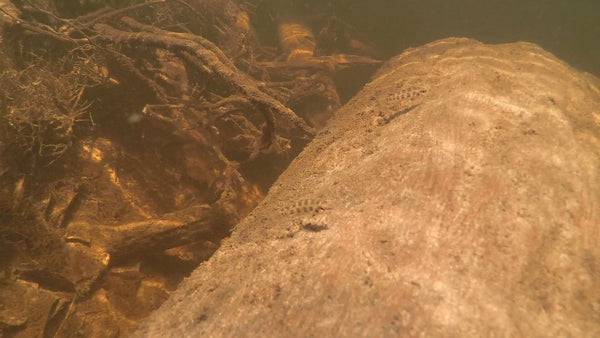
Now, not everyone wants to have algae-covered stones or a mass of decomposing leaves on the bottom of their aquarium. I totally get THAT! However, I think that considering the role that these materials play in the composition of streams and the lives of the fishes which inhabit them is important, and entirely consistent with our goal of creating the most natural, effective aquariums for the animals which we keep.
As a hobbyist, you can employ elements of these natural systems in a variety of aquariums, using any number of readily-available materials to do the job. And, let’s face it; pretty much no matter how we ‘scape a tank- no matter how much- or how little- thought and effort we put into it, our fishes will ultimately adapt to it.
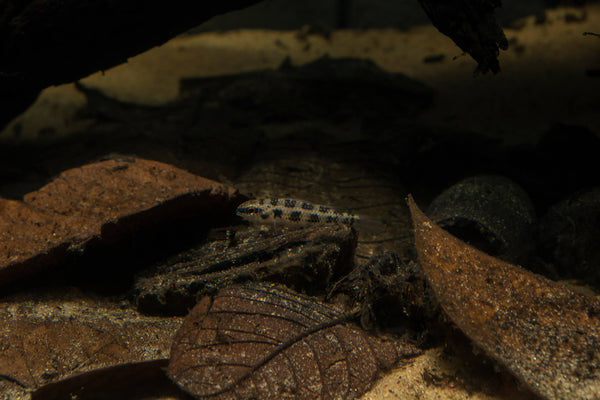
They’ll find the places they are comfortable hiding in. The places they like to forage, sleep and spawn. It doesn’t matter if your ‘scape consists of carefully selected roots, seed pods, rocks, plants, and driftwood, or simply a couple of clay flower pots and a few pieces of egg crate- your fishes will “make it work.”
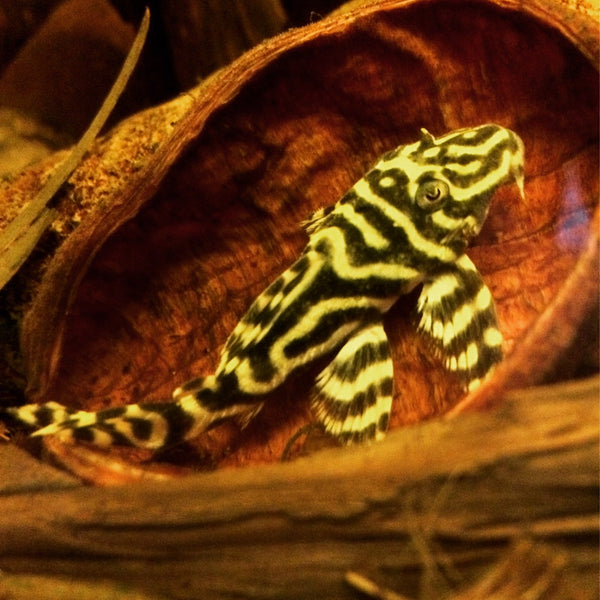
It’s what fishes do. It’s what they’ve done for eons.
Fishes tend to live in areas where the food and protection is, as we’ve talked about previously. Places that provide protection from stronger current, and above-and below-water predators. Places where they can create territories, interact, spawn and defend themselves.
Reduction of stress. Indeed, survival. That’s pretty important in the wild…so I’d imagine it’s equally as important in the aquarium.
Think about the possibilities which are out there, under every leaf. Every sunken branch. Every root. Every rock.
It’s all brought about by the dynamic process of movement.
Perhaps instead of looking at the movement of stuff in our tanks as an annoyance, we might enjoy it a lot more if we look at it as an opportunity! An opportunity to learn more about the behaviors and life styles of our fishes and their ever-changing environment.
Stay observant. Stay creative. Stay excited. Stay open-minded…
And Stay Wet.
Scott Fellman
 The Tint
Leave a comment