
Yes, I’m sort of riffing off of the topic of “Continuity” that I touched on the other day. Why? Well, continuity and change, and the way you embrace both define your hobby experience. And it’s important to understand what your motivations and inspirations are in this hobby, and kind of important to have some insight into what type of personality you are as an aquarist.
I am not sure what it is with me, but, although as a hobbyist I can be as patient and goal-driven as hell, I occasionally get “restless.”
Like, I’ll start off on an aquarium project with a good idea and the best of intentions, and then, early on in the thing, I’ll completely change my mind and do a 360 degree switch.
And I honestly don’t know what causes this. Maybe it’s because I wanted to just DO something, and I started working with an idea that really wasn’t what I wanted…and then when that “muse” strikes- I just tear the whole thing down and start anew.
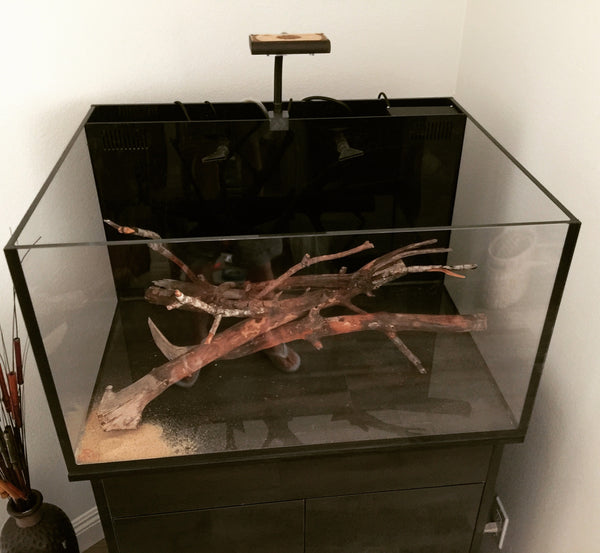
It’s not always great attribute for a hobbyist to have, I’ll admit.
Sometimes, the trigger can be something as simple as a piece of equipment I don’t like…For example, I had a filter once that, in addition to being obtrusive in the tank, was just making too much noise. And because the other filters that would I could use wouldn’t be much quieter, the entire project was scrapped. Like, I didn’t even try to do a workaround. I didn’t try to see if there was some way I could live with it.
I scrapped it. Took it down.
Why?
Because I believe that life is too short to have things which don’t bring you pleasure. I never would have liked this tank, because I couldn’t handle the filter. It would have bothered the living shit out of me as long as the aquarium was running…And I was honest with myself about it.
“Champagne problem, Fellman.” “You’re so entitled..”
Yeah, I suppose one could say that.
But when you think about it, how is it any different than say, purchasing a new outfit, piece of furniture, or a TV, getting it home. and realizing it just isn’t working for you?
I mean, sure, in the case of an aquarium, you generally want to determine this before you’ve added fishes and gotten them acclimated and adjusted to the tank. Sure, it’s not very humane to uproot animals simply because you’re not happy with the filter or whatever.
One of the things I love the most is to be able to switch up an idea…to be flexible. Now, like many of you- I’m obscenely patient in some respects. However, when it comes to the idea- or getting the idea executed, well, that’s where I can be a bit impatient.
I have this thing about getting stuff started right.
Like, if there us an annoyance- a noisy pump, an obtrusive piece of equipment…these things usually manifest immediately, and they set the tone for how the experience in general will go with the tank. I mean, if I’m ten minutes in and the sight of a big ugly filter or something else is already annoying me- well, “game over!”
Tank is coming down. Full stop.
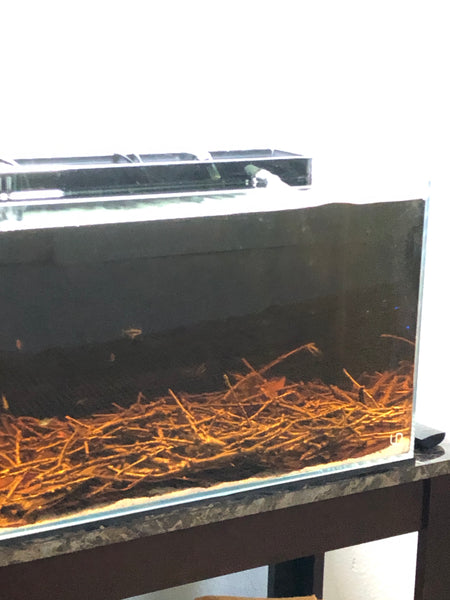
I have great admiration for some hobbyists- the ones who are able to sort of let filter intakes, outlets, heaters, etc. simply “disappear”- and by disappear, I mean not bother them. Like, they’ll have this amazing aquarium, and right in the middle is a filter outlet…but no biggie- you just don’t even notice it. I don’t even notice it…because the rest of the tank is THAT good.
I wish I could create work like that!
But I can’t. And Im okay with that.
So I will often literally tear apart a hardscape multiple times to get to “it…” That “thing” I was envisioning…and often I’ll tear up my “final”, only to end up right back where I started…and somehow like it.
Changing stuff up- “messing” with things- is part of the creative process. And it’s part of being an aquarist for me. It may not be how everyone works.
But it’s how I work, and I’m okay with that.
Perhaps it’s weird. Perhaps it’s even fucked up.
But that’s my “process”, lol
It’s a burden, on occasion. Other times, it’s led me to some of my best work.
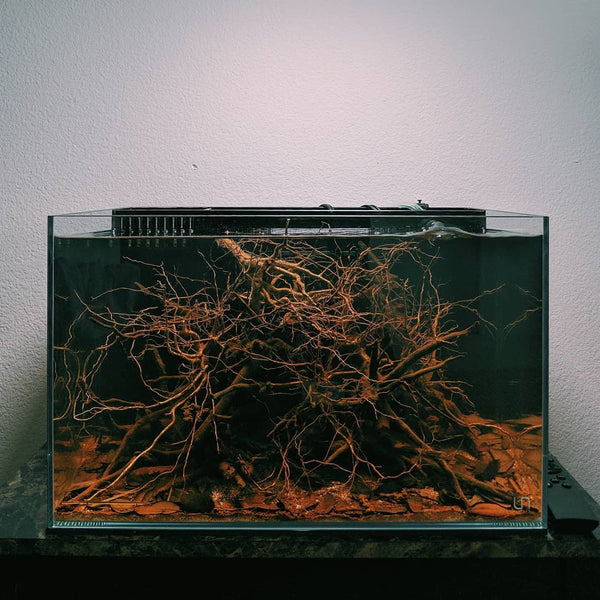
Yet, I’ve come to realize that I’m no aquascaper. I’m no super-guru of creating the perfect hardscape or whatever. I will never be one of those guys who could be some kind of champion ‘scaper, or become an authority on creating awesome aquascapes. It’s not me.
I admire those who have those skills and attributes that allow them to nail every tank they do. It’s just not me. I’m a guy who just has ideas about replicating natural habitats that I want to play with and execute. Sometimes I can pull them off. Other times, I fall short. And when I fall short, I change them up until I hit what I wanted.
I’m totally not afraid to do that.
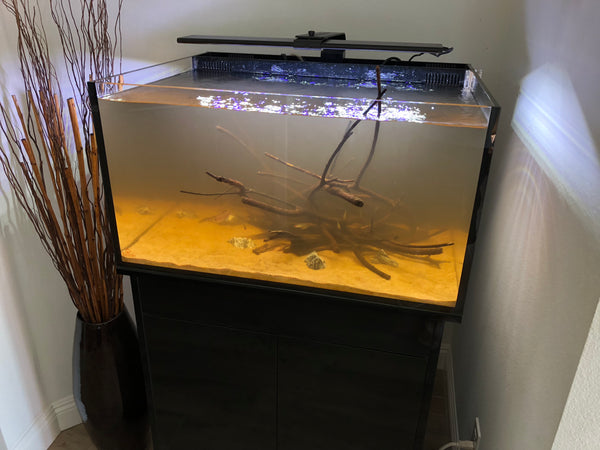
At least I know when I’m not hitting the target that I want, and I can admit to myself that I don’t like what I’m doing, or what I’ve ended up with. It’s a sort of comfortable feeling, knowing that what you did is NOT what you wanted to do, and being okay with admitting that and either fixing it, or simply “pulling the plug” and starting over.
I think a key component of being a successful aquarist is having a healthy dose of self awareness.
I am a sort of “self editor” of my work. It’s a very honest process.
Yeah, I’ll “edit.”, gradually dissecting my concept and morphing it into something else, until it feels right to me.
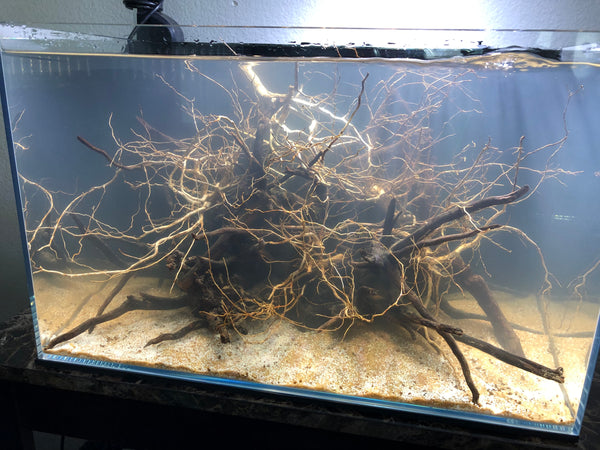
Moving this. Re-positioining that. Taking out an element, adding something.
Now, a lot of people will call this process “evolution”, or view it as a necessary stage in the development of an aquarium. I wonder if it’s “A.D.D.” or something! Not sure. It’s like, all of the sudden, I’ll see an article about “ephemeral floating leaf litter beds” or an underwater video of an Amazonian igarape, and It’ll realize that what I have done is not what I really wanted to do, and my carefully conceived African River biotope or whatever, goes straight out the damn window.
Off we go… into a totally different direction!

I think I’m what I like to classify as a “Perpetual Editor” -type of aquarium personality. At least, in terms of my ideas. Perhaps, it’s as a result of embarking on a path that, deep down inside, I knew wasn’t where I really want to go. I think that’s why, although I have great admiration for my friends who are masters of planted aquascapes- that I’ll never do one on my own initiative. A lot of people ask me why I don’t keep a full-on, high-concept planted aquarium. I have a simple answer..
It’s just not ME.
If one of my friends wanted to do one for me, I’d totally agree to it, and manage it. I love the look. I’d be stoked to have on in my home. But I simply won’t create one myself. There is a certain patience and love of the process in planned tank that simply isn’t “active” in me. At least not right now- and in the past four decades or so. I won’t hold my breath on the chance that it will activate soon. But you never know, right?
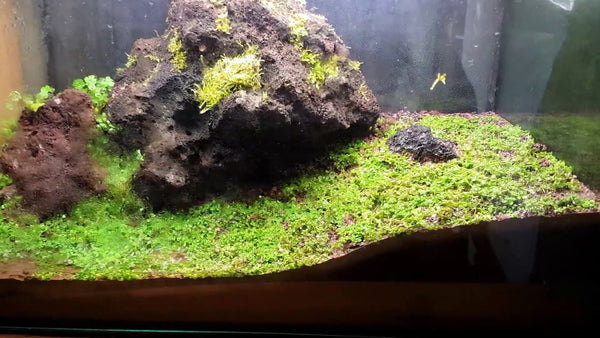
Reef tanks, on the other hand, hold a certain fascination for me, and I’m actively keeping one at all times! It’s part of me– in my core, and it installs a certain passion in me. However, it’s not my sole passion in the hobby, and I’m able to “compartmentalize it” while I work through some of my other current hobby priorities, like brackish, etc.
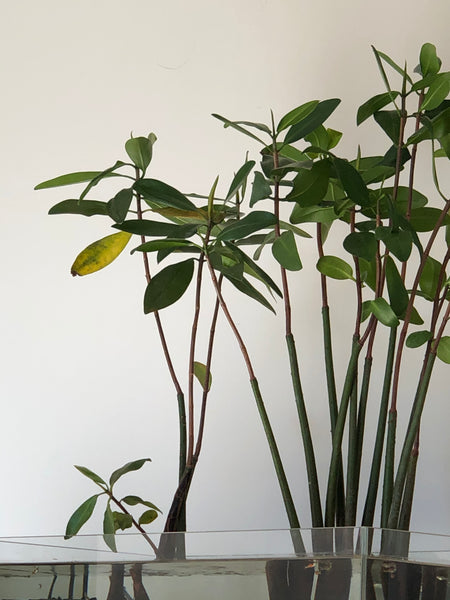
Yet, at the core of it all, I’m an “editor”, I suppose.
It’s a bit odd that I “edit” ideas so quickly, because, as you know- I’m obsessed with the process…I have huge patience in establishing my aquariums and leaving them to evolve largely unmolested. It’s really at the initial execution or ideation phase where I get detoured. And if I start executing too soon, before I’ve really settled on the idea- that’s when tanks get broken down and shuffled around.
Now, don’t get me wrong.
My core beliefs about aquarium keeping are typically unchanging..well, they evolve, as you’ve seen over the years, based on experience-like everyone else. And, like you, I am always open to suggestions to do something better. Sometimes, this is a good thing. I mean, if your idea was to develop a Knifefish community in a 50-gallon tank, and you “pivoted” to a 700-gallon tank after running it by some friends, that’s a very good thing!
“Coming to your senses” is what it’s called.
However, my changes are often more subtle: For example, I was planning on stocking an all-South-American characin system, but ended up creating a Rasbora-dominated biotope instead.
You know, that kind of thing…
They’re based upon what I was really feeling.
It can get really crazy. During one particularly frenetic period of time in 2017, I re-did the same tank three different times in a span of about 3 months.
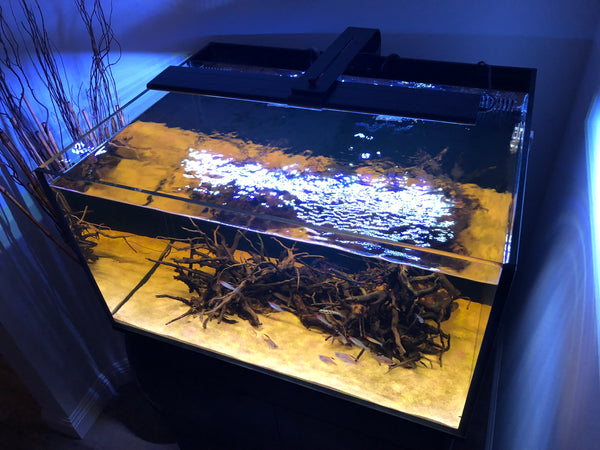
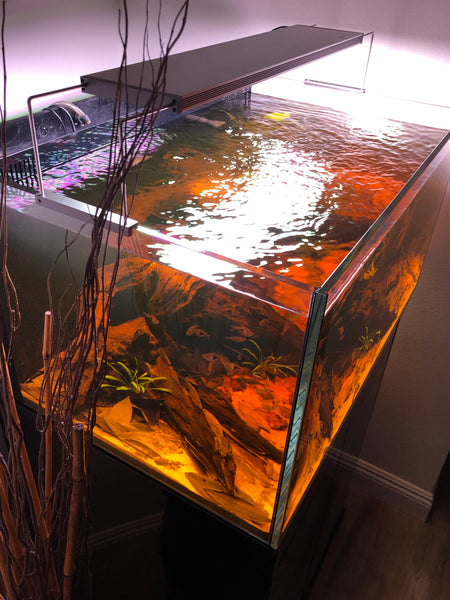
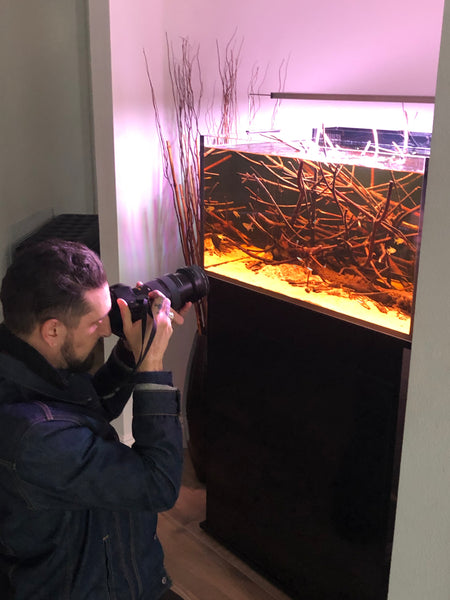
Yeah, that’s a little bit crazy, I know.
On the other hand, being a “Perpetual Editor” archetype of fish keeper also has advantages. mainly, the ability to modify a plan as you go if you see a better way.
Almost categorically, the “Perpetual Editor” has a looser, more flexible approach to aquarium planning, construction, and management, and is perhaps more in tune with the latest and greatest trends, techniques, and philosophies of the aquarium game. (and of course, more susceptible to being influenced by a lot of stuff!)
Now, I hate “trends”, personally. I typically abhor them and will almost never follow aquarium hobby trends. However, I do find myself influenced strongly by new research I conduct on various wild habitats.
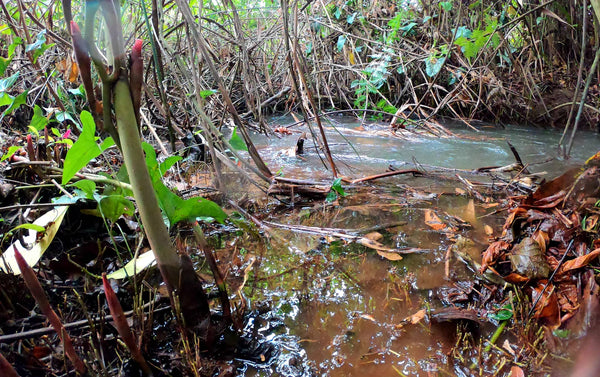
Yeah, I personally hate chasing trends. Really.
One thing about being a “Perpetual Editor” is that you are constantly availing yourself to the latest information, and, in the case of the “Active Listener”, probably having great dialogue with other hobbyists who perhaps have more- or different– experience doing what you’re thinking of doing.
And it opens you up to re-thinking ideas that you may have had before which, for whatever reason, never came to pass. Maybe you needed more information. Perhaps you needed to see something in Nature to push you. Or maybe, you just had an “itch” that you finally wanted to scratch, and you did it!
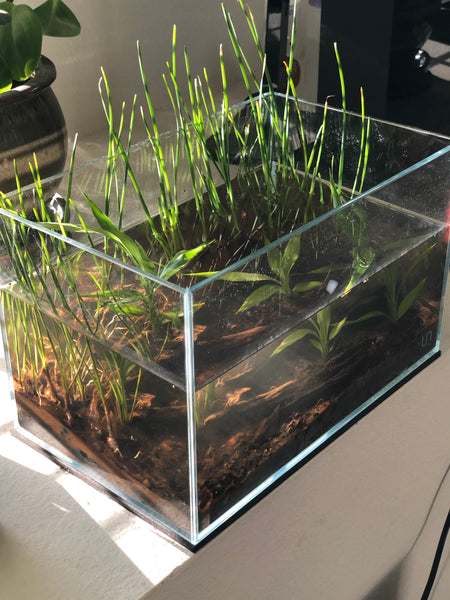
The online world and social media have enabled the “Active Listener” to develop his or her idea to the ultimate degree. Although, the “danger” of being an “Active Listener” is that you can easily “lose control” of your plan by listening to every critique, suggestion, and opinion out there.
And the “trend jumpers?”
Well, e-commerce has completely enabled these people, right? You can switch gears in an instant. Regardless of your aquarium-keeping philosophy, a certain degree of independence and individuality is a key requirement to be happy, I think.
In a way, being a “Perpetual Editor” is not really a bad thing.
However, it’s important to go beyond what is “easy” and “available” when working in the botanical method aquarium sector of the hobby, IMHO. Too many people simply “mail it in” and fall back on the shallow and superficial. Too many hobbyists seek “inspiration” from superficial sources.
For example:
Not long ago, I was perusing a hobby forum on “blackwater aquariums” , and an aquarist was asking for “inspiration” for an “Amazonian-themed blackwater flooded forest aquarium.”
Okay, that’s always cool…Anything “Amazon-themed” or “flooded forest” always sort of catches my attention! And “blackwater” kind of gets to me…

And, predictably, a bunch of hobbyists chimed in to help- because hobbyists are kind. They shared photos of a variety of what they called “Amazonian- themed blackwater” aquariums, which, sadly, not only didn’t have “blackwater”type conditions- they bore almost no resemblance to any actual natural aquatic habitat- blackwater flooded forest, or otherwise.
Some of the responses were downright boastful and seemingly authoritative, with more than one literallystating that, “…this is how you should do it if you want this type of tank…” And, they looked like all of the other other “Amazon-Themed” tanks you see on social media…Superficial at best…downright inaccurate at the worst.
Yup.
The effort by most of the respondents was sincere, but the tragedy in all of this was that no one thought to share a single picture of a natural Aquatic habitat.
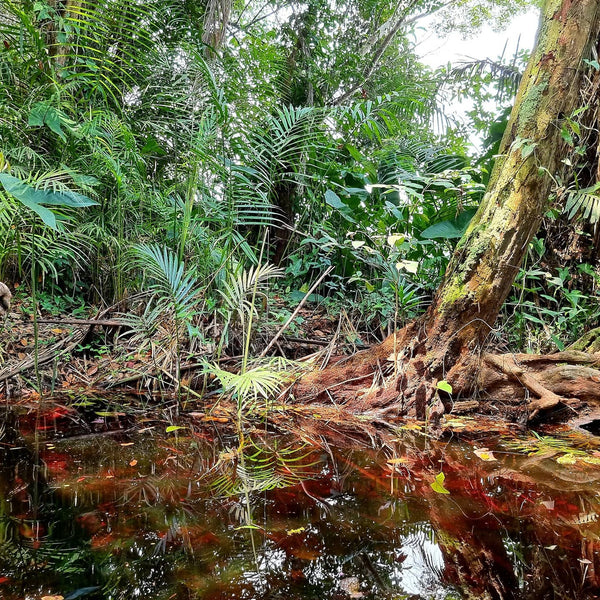
Or even a recommendation to search Google for one!
Virtually any pic of a natural (blackwater) habitat would provide endless inspiration. At the very least, it would have opened up more discussions; perhaps led to some different questions. Questions which could have led to some shared experiences, greater understanding, and maybe- some new ideas on how to execute an aquarium representing this amazing habitat.
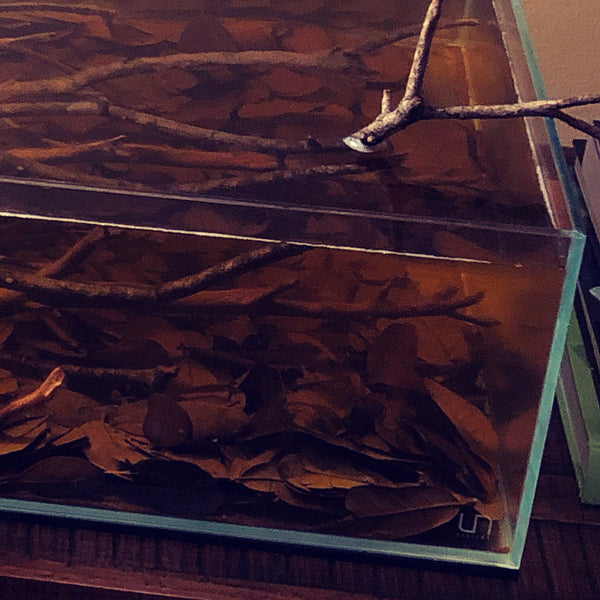
Yet, it turned into the usual “regurgitation fest” of assorted Instagram- ready aquariums, and discussion on how to replicate the look of them. It was disappointing enough that none of the tanks in the discussion remotely “looked” like the wild habitat the questioner was intrigued by- and even more disappointing that the discussion was about how to replicate the tanks-not the habitat!
Yeah, a desire to replicate the look of an aquarium purportedly based upon a natural habitat (which it didn’t really resemble at all, in form or function)? Like, WTF?!
How does this happen?
I think that it’s because we as a hobby are, well- lazy.
Seriously. I know that sounds harsh, but it’s true, IMHO.
With few exceptions, most hobbyists generally don’t make the effort to do their own research- or any research, for that matter, other than asking for pics of someone else’s tank. It’s a real tragedy, because with minimal effort, even the visuals of a natural ecosystem could provide cues and topics to further research that will help hobbyists really understand what they’re contemplating!
Now, I realize that this can easily turn into another “grumpy ‘ol Scott rant telling the neighborhood kids to get off his lawn”, but that’s not the point.
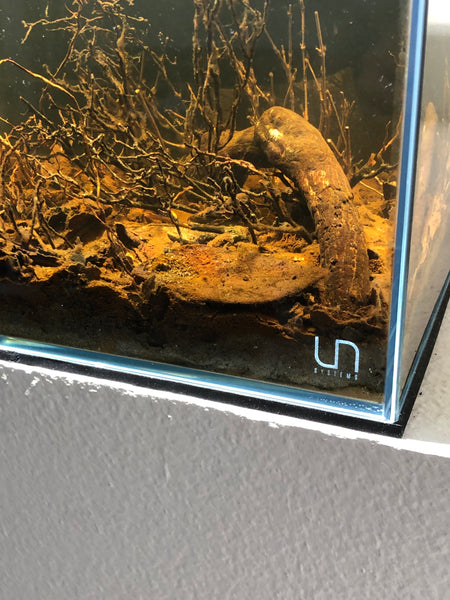
And, I do realize that not everyone wants to create an aquarium filled with leaves and soil and decomposing muck, and that not every aquarium representing one of these habitats has to be that way. However, the greater issue is when our hobby understanding of these habitats is based wholy on someone’s aquarium, which may bear little, if any resemblance to the actual environment it intends to “replicate.”
Then what happens is that we perpetuate misinformation– even when unintended. We continue to push dumbed-down or superficial information about these habitats and the practices required if we truly want replicate them functionally, not just aesthetically. I mean, enjoy the hobby hope you want to- but don’t perpetuate the bad information that’s already out there in the process.
I think we need to spend way more time as hobbyists actually looking at Nature for our inspiration– not only for the “aesthetics”- but to study and understand the function. To learn about why these habitats function and look the way they do.
It’s the “unlock”- the key to everything!
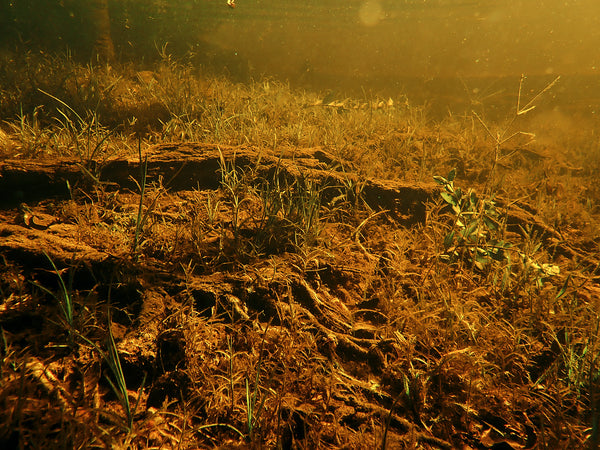
Look, you may love the way they look, respect and understand the function- and still choose to create a tank “inspired” by them. And that’s perfectly okay. I do it all the time. My tanks don’t precisely replicate many of the habitats they represent. I don’t want try to manage a 4.3pH ecosystem, despite how accurate it may be. I do, however, understand these systems on some levels, and I certainly make the effort to learn about, and replicate when possible, the ecology where they occur.
And I don’t defectors declare my tanks as the ultimate representation of a specific habitat.
Maybe I “pick and choose”what I care to work with- which a lot of us do.
And that’s fine.
What I don’t do-what NONE of us should do- is make declarative statements about my way being “the best” way or the “only” or the “correct” way to do something, and I don’t espouse that any other approach is incorrect or “wrong”- that’s just being an asshole.
It doesn’t help anyone.
It’s perfectly fine to do whatever you want and call your work whatever- I mean, if your tank has 6 different species of fishes from the Amazon, it’s decidedly an “Amazon-themed” tank, but to literally imply that your work is the epitome of accuracy is just absurd. It’s NOT fine when you’re dogmatically telling people that your tank something that it’s not, and inferring that if they don’t replicate your work, they somehow “not doing things correctly.”
It’s important for us to refer to research and information from outside of the aquarium hobby. Otherwise, this just becomes an echo chamber where we keep bouncing around the same assertions, regardless of accuracy. Google Scholar and other scientific research aggregator sites are really helpful- and you’d be surprised just how much stuff there is on the most arcane topics that you’re trying to learn about. I can’t begin to tell you how many times I’ve made use of these priceless resources for my work!
Now sure, some of this stuff is often dry, filled with academic language, graphs, and references, and might be difficult for us non-scientist to follow…But if you persevere and stay at it, you can uncover some real gems that will help you in ways you might not have thought about.
An example for me was a paper containing the orginal description and type locality of Tucanoichthys tucano; a paper which gave me the information which I needed to create what I would proudly call one of my finest and most iconic aquairums (jokingly referred to as the “Tucano Tangle”- but the name sorta stuck, lol).
I’ve made this plea before- but I think it’s vitally important to go beyond what’s “easy.”
I realize that finding your info on YouTube is convenient, and that there are some great channels out there- but more often, it’s filled with inaccuracies and even vacuous drivel. You need to do a few more “technical” searches to see what I mean. Trust me- once you find one of those hidden gems in scholarly articles- it’ll change the way you get your information!
Yeah, inspiration comes from all sorts of sources.
Some of them are just a bit more “original” than others.
Seek them out. Learn from them. Be inspired by them.
Be self aware.
Think about stuff independently. Don’t just take my word or anyone’s word as the ultimate answer.
The only way.
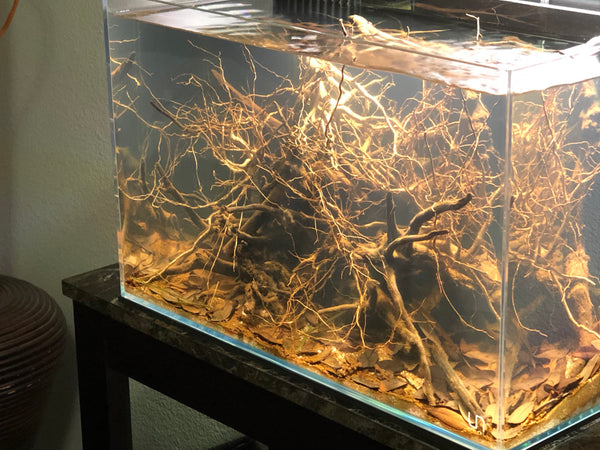
I mean, if you’re a “constant editor”, I’ll bet that you’re always aware of what’s going on in your tank, you’re constantly thinking of improvements and changes, you’re totally aware of the “Latest and Greatest” in the hobby, and you are “nimble”- able to change directions “on a dime”, as they say, taking bits and pieces of ideas that are in line with your hobby beliefs.
The key, in my opinion, is to stay consistent with your management philosophy.
And it’s important to understand the arena in which you’re operating, and recognizing what is normal for the type of system you’re working with. Not reversing course for the wrong reason. For instance, just because the new tank is getting that patina of biofilm, it’s not the time to tear out everything and start over. That’s not editing…that’s interfering!
However, that “honesty” of knowing that what you’ve pulled off in that tank is NOT what you really wanted, is supremely valuable. Letting yourself change it up because YOU don’t like it is a good thing.

Now sure, the argument can be made that this sort of nonsense can stress out animals and such- and it’s legitimate. However, if you exercise proper due diligence during your process- and have the means to temporarily house your fishes while you ideate- that’s a less disruptive thing.
Again, part of knowing yourself is admitting that this is how you work, and having an extra tank around to house fishes while you “redecorate” is a morally proper thing.
Self-awareness. A powerful tool for the aquarist.
So, if you find yourself a bit frustrated with what you’ve done; “restless”- oddly dissatisfied, and maybe just plain “over it”- fear not. You can and SHOULD switch it up.
Do some editing.
The “restlessness” you feel is not some sort of “mental problem” you have…Rather, it’s your own heart telling you what you need to listen to: The fact that what you did wasn’t what you really wanted to do.
Trust yourself. Listen to yourself.
Change it up.
It’s okay.
Stay honest. Stay bold. Stay passionate. Stay creative. Stay persistent…
And Stay Wet.
Scott Fellman
 The Tint
Leave a comment