
If you think a bout it, the typical aquarium “startup” process is to add some sand, add some wood, maybe plants, and…BOOM!
Aquarium.
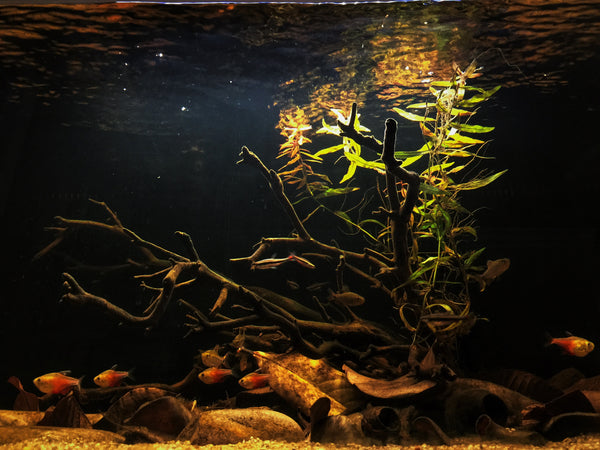
Okay, there is more to it than that.
However, it’s interesting to me that little consideration is played to the idea of starting an aquarium in a more functional way…Like, yeah, the basic essential tasks are pretty straightforward, yet the idea of creating a functional ecosystem from the ground up is almost a bit of an afterthought, IMHO. It seems to take a back seat to the “structural” aspects (aquascape, hardscape, etc.).
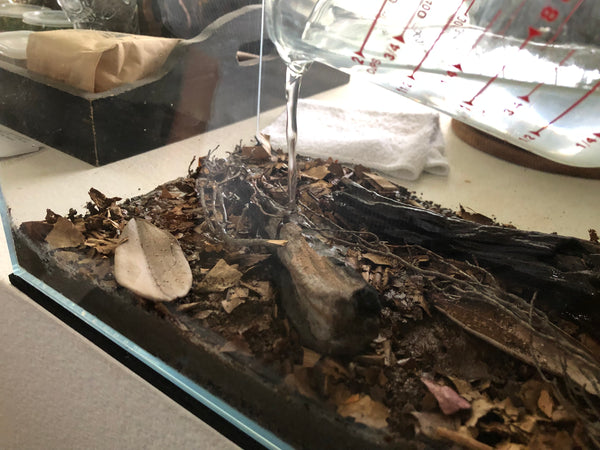
So, over the years, I thought a lot about different ways to start up a new botanical method aquarium. And I think it dovetails nicely with my philosophies, and my experiences with my “Urban Igapo” setups. I think it’s important to set up an aquarium-particularly a botanical-method aquarium- by taking a “terrestrial approach.”
Huh?
Well, this kind of builds upon a lot of the things we’ve talked about here.
One underlying theme is that aquatic environments are profoundly influenced by- or even formed by- the terrestrial habitats which surround them. Sure, the flooded forest floors, subjected to seasonal inundation from overflowing rivers and streams are the “classic” example. However, there are other influences, some less directly obvious, yet every bit as important.
For example, as I’ve discussed repeatedly here, soils and geology in general are very influential on the surrounding aquatic habitats. We know that blackwater environments are created partially from the surrounding soils, rich in fulvic and humic acids, as well as the rock strata from which the source waters flow (like, in the Andes, for example).
Remember our little foray into soils and how they influence aquatic habitats?
Perhaps it’s time for a refresher…😱
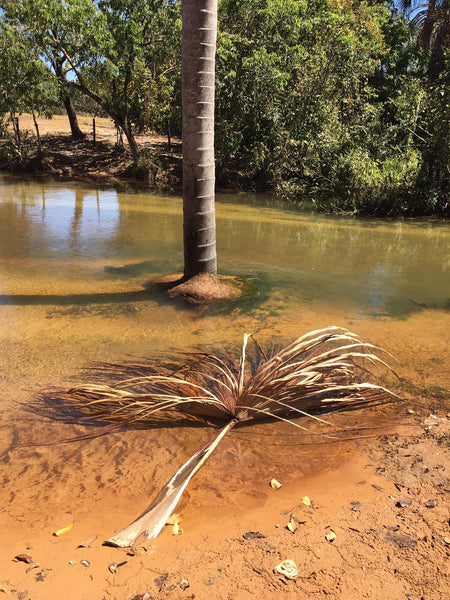
In general, blackwaters originate from sandy soils.
High concentrations of humic acids in the water are thought to occur in drainages with what scientists call “podzol” sandy soils from which minerals have been leached. That last part is interesting, and helps explain in part the absence of minerals in blackwater.
Blackwater rivers, like the Rio Negro, for example, originate in areas which are characterized by the presence of the aforementioned podzols.
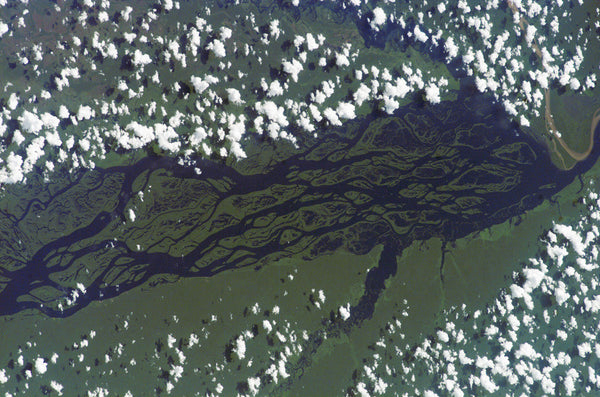
Podzols are soils with whitish-grey color, bleached by organic acids. They typically occur in humid areas like the Rio Negro and in the northern upper Amazon Basin. And the Rio Negro and other blackwater rivers, which drain the pre-Cambrian “Guiana and Brazilian shields” of geology, can in part attribute the dark color of their waters to high concentrations of dissolved humic and fulvic acids!
Although they are the most infertile soils in Amazonia, much of the nutrients are extracted from the abundant plant growth that takes place in the very top soil layers, as virtually no plant roots are observed in the mineral soil itself.
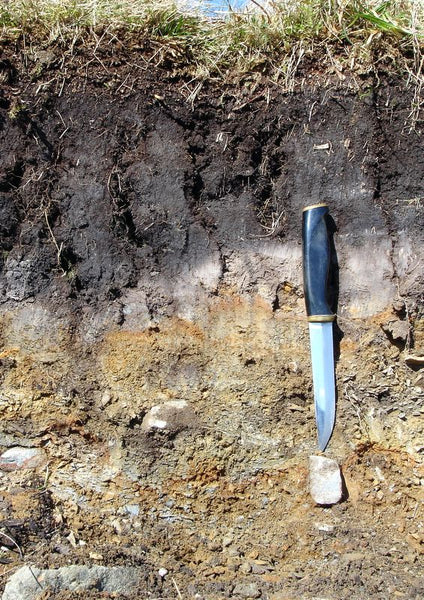
One study concluded that the Rio Negro is a blackwater river in large part because the very low nutrient concentrations of the soils that drain into it have arisen as a result of “several cycles of weathering, erosion, and sedimentation.” In other words, there’s not a whole lot of minerals and nutrients left in the soils to dissolve into the water to any meaningful extent!
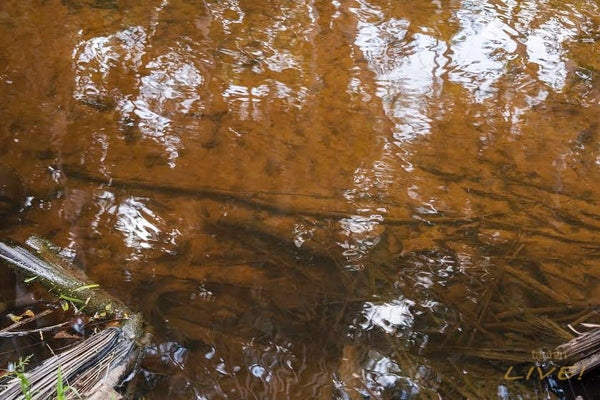
Okay, that’s a pretty roundabout way of re-explaining that various soils contribute to the water chemistry of the aquatic habitats which cover them. So, what are the implications for us as aquarists?
For one thing, perhaps your next botanical-method aquarium needs to have more of a “terrestrial influence” from day one.
In other words, incorporate some soil or other materials into your substrate.
Yes, that’s what I’m getting at here: Set up your aquarium with some other materials besides just clean while sand.
I’ll help you with that, promise.
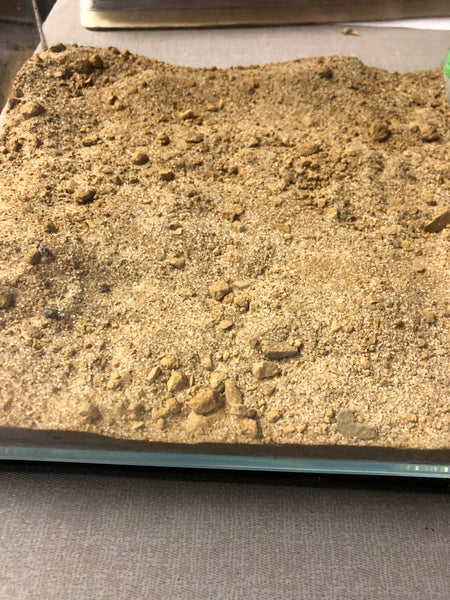
And, while you’re at it, how about throwing in some botanical materials into the mix, like leaves- intact or crushed, to “kick start” the biological processes?
I’m a huge fan of the radically weird, highly variable, and utterly “dirty” Live Oak leaf litter. Collect it yourself, our get it from my friend Ben at Betta Botnaicals IMHO, it contains a lot of what you need to accomplish this. Oh, and it will help tint the water, too!
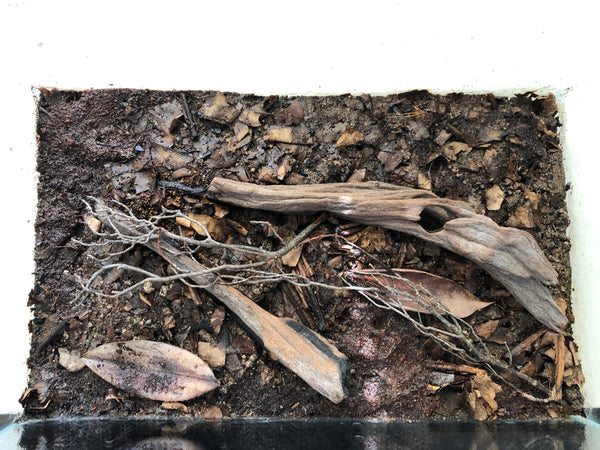
So, yeah, I’m thinking that many different botanical method aquariums should be set up almost as if you’re going to do a vivarium or even a little planted terrarium.
Like, full-on terrestrial habitats.
I’d spray them down with water for a week or two, get the leaves all moist and perhaps even starting to decompose a bit. Essentially, “prep” the substrate for life. Perhaps dose some PNS bacteria solution as well…This process helps create and facilitate the biological relationship between the aquatic and terrestrial environments.
These interdependencies are really complicated- and really interesting!
And it just goes to show you that some of the things we could do in our aquariums (such as utilizing alternative substrate materials, botanicals, and perhaps even submersion-tolerant terrestrial plants) are strongly reminiscent of what happens in the wild.
We know this, because we see their impact on natural aquatic systems all the time, don’t we? Every flooded forest, inundated Terre Firme grassland, every overflowing stream- provides a perfect example for us to study.
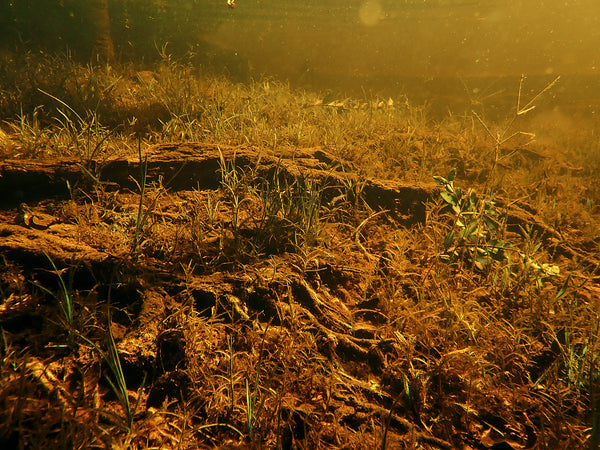
The land influences the water.
Each component of the terrestrial habitat has some unique impact on the aquatic habitat. Not really difficult to grasp, when you think about it in the context of stuff we know and love in other areas of life.
The “Urban Igapo” idea that I’ve been pushing since 2019 is just one way to play with this stuff and study these unique interdependencies.
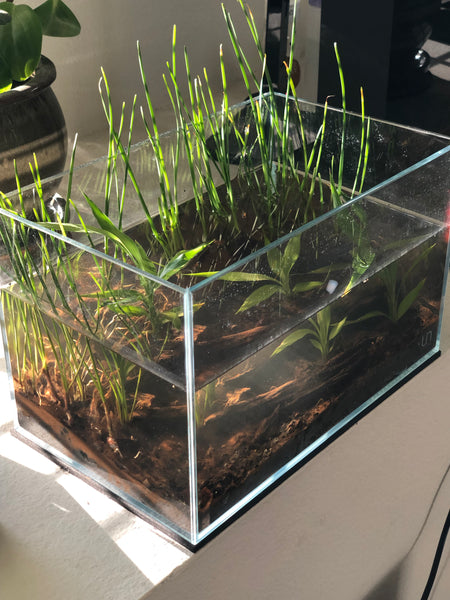
These systems function and evolve quite differently than almost any other type of aquarium I’ve played with over the years. They “cycle” differently because they are ecologically different.
One of the things I’ve noticed about my botanical method aquariums in general, and systems started in the manner we just discussed in particular, is that they tend to “cycle” very quickly. Like, often in less than a week. I don’t fully have an understanding why…I can only speculate at this point, but I think it’s got something to do with a large quantity of botanical materials/soil in the new system. And starting a tank “dry” as discussed above probably creates an “onboard ecology” from day one.
The same factors that would endanger an established system might simply contribute to a rapid growth of beneficial bacteria and other micro and macro fauna!
Interestingly, over the years, I’ve also found that nitrate accumulation tends to be almost nonexistent in my botanical-method aquariums. Now, I don’t know if that’s something which you’ve noticed, too? I simply have never seen a nitrate accumulation more than 0.2mg/L! And quite frankly, nitrate isn’t something I really think about much in regards to these types of systems- it’s an interesting “holdover” from my reef keeping experience..but a curious observation regardless.- and perhaps a testimony to the “ecology forward” approach that we take.
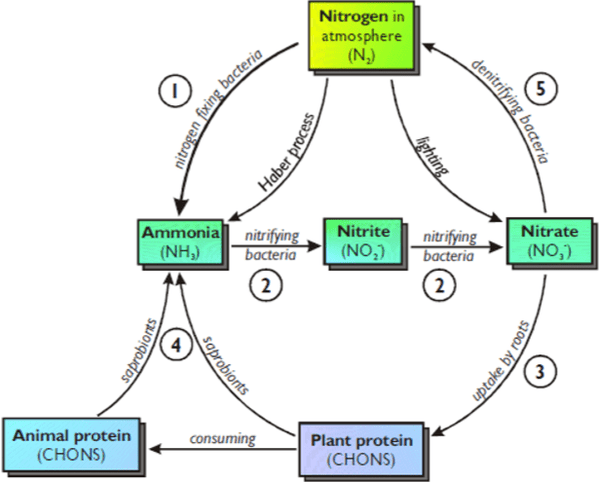
And, despite what I hypothesized would happen in my early years of playing with botanical method aquariums, I found that they always produce little to no detectible nitrate, despite utilizing a lot of botanical material within the tank that was breaking down. I would have thought, at least on the surface, that there would be some detectible nitrate. Now, this is interesting, but I’m not the only one who has reported this.
Many of you have.
My hypothesis is that, yes, the material is breaking down, and contributing to the biological “load” of the system- but with an abundance of microorganisms living in, on, and among the botanical materials in the aquarium, and with regular frequent water changes, there is a very efficient processing of nutrients occurring.
This is purely speculation on my part, but I think it’s as good a guess as any, based on the repeated similar results I’ve achieved in every single blackwater/botanical-method aquarium I’ve kept for the last 10 or 12 years!
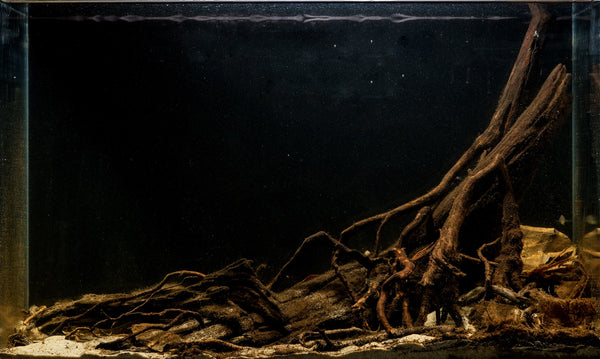
I’m sure that a more sophisticated explanation, revolving around the presence of “on- board carbon sources” and other biological processes is likely the reason. I think that we’re sort of looking at a freshwater equivalent of a reef aquarium in many respects, where, instead of “live rock”, a lot of the microbial population and biological processes occur within and upon the surfaces of the botanicals and leaves themselves.
Almost like those synthetic “biopellets” function in a reef tank, perhaps the botanicals are not only a carbon source for beneficial bacteria- they’re also a sort of biological filtration “substrate” for them to colonize on. Again, speculative, and needing some more rigorous scientific investigation to verify one way or another, but it’s been my “working hypothesis” for several years.
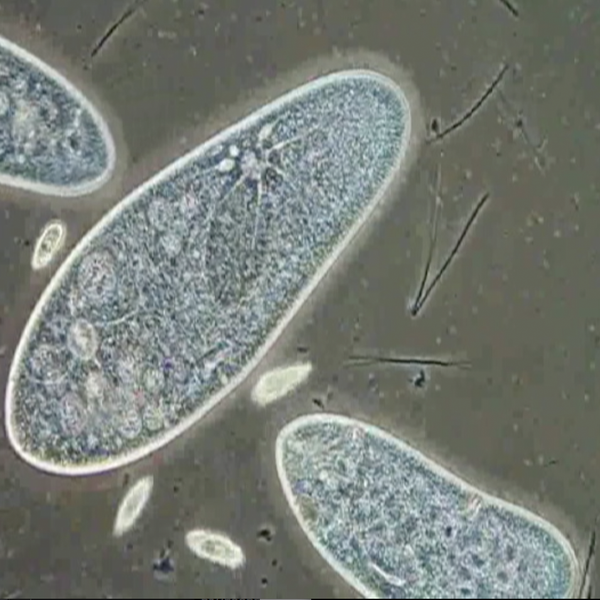
In my experience, once they get through the initial startup phase, /botanical-method systems seem to run incredibly smoothly and in a very stable manner.
If you adhere to a regular, yet simple maintenance schedule, obey the long-established common-sense “rules” of aquarium husbandry, and don’t go crazy with radical overstocking or trying to speed up things too much by dumping tons of botanicals into your tnewly-established ank in a brief span of time, these systems run almost predictably, IMHO.
They function much like natural aquatic ecosystems do…Which makes sense, because the “influences” are largely the same: “Terrestrial” materials interacting with the aquatic environment.
The concept of allochthonous inputs, which are materials arriving into a habitat (in our case, the aquatic one) from outside of it (the terrestrial one), like fruits, seeds, insects, and plant parts, are important food sources to many fishes. Many fishes, like midwater -dwelling characins- consume fruits and seeds of terrestrial plants, as well as terrestrial insects.
It’s not uncommon for a tree to fall in the rain forest, with punishing rain and saturated ground conspiring to easily knock over anything that’s not firmly rooted. When these trees fall over, they often fall into small streams, or in the case of the varzea or igapo environments in The Amazon that I’m totally obsessed with, they fall and are submerged in the inundated forest floor when the waters return.
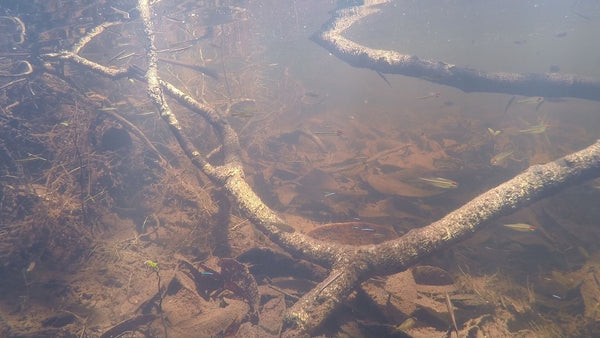
And of course, they immediately impact their (now) aquatic environment, fulfilling several functions: Providing a physical barrier or separation from currents, offering territories for fishes to spawn in, providing a substrate for algae and biofilms to multiply on, and providing places for fishes forage among, and hide in.
An entire community of aquatic life forms uses the fallen tree for many purposes. And the tree trunks and parts will last for many years, fulfilling this important role in the aquatic ecosystems they now reside in each time the waters return.
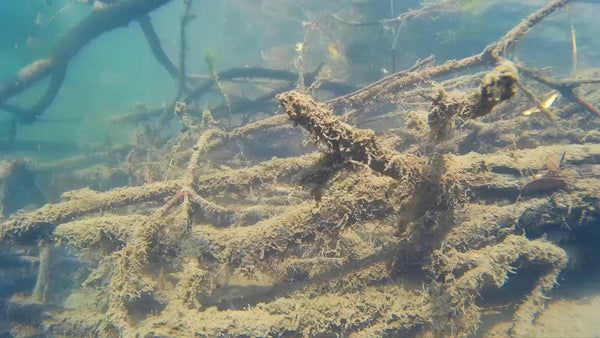
Shortly after falling into the water, fungi and other microorganisms act to colonize the surfaces, and biofilms populate the bark and exposed surfaces of the tree. Over time, the tree will impart many chemical substances, (humic acids, tannins, sugars, etc.) into the water.
The fallen tree literally brings new life to the waters.
Let’s summarize:
The materials which comprise the tree are known in ecology as “allochthonous material”– something imported into an ecosystem from outside of it. (extra points if you can pronounce the word on the first try…) And of course, in the case of fallen trees, this includes includes leaves, fruits and seed pods that fall or are washed into the water along with the branches and trunks that topple into the stream.
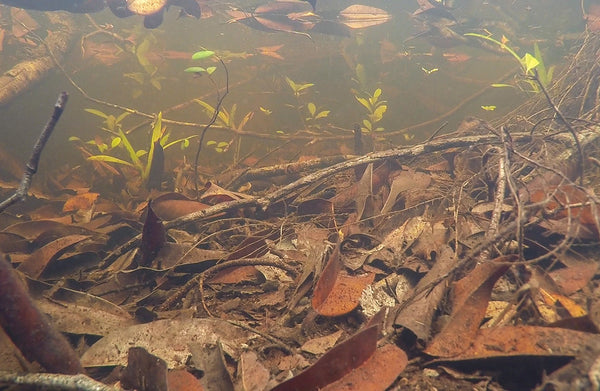
And the life forms of the terrestrial environment become important to the aquatic habitat as well. Insects, specifically, are really important to fishes in blackwater ecosystems. In fact, it’s been concluded that the the first link in the food web during the flooding of forests is terrestrial arthropods, which provide a highly important primary food for many fishes.
As we’ve already established, the relationship between the terrestrial and aquatic habitats is important beyond just the food input/production benefits. The reality is that the relationship is absolutely foundational– part of the very existence of the habitats themselves! (and it should be in our aquariums, as well, IMHO)
The leaves, branches, seed pods, etc. which end up submerged in these habitats following the seasonal inundation essentially create the biology and the structural/physical part of the benthic environment of the igapo. These systems are intimately tied to the surrounding terrestrial environment.
Even the permanent rivers have a strong, very predictable “seasonality”, which provides fruits, seeds, and other terrestrial-originated food resources for the fishes which reside in them. It’s long been known by ecologists that rivers with predictable annual floods have a higher richness of fish species tied to this elevated rate of food produced by the surrounding forests.
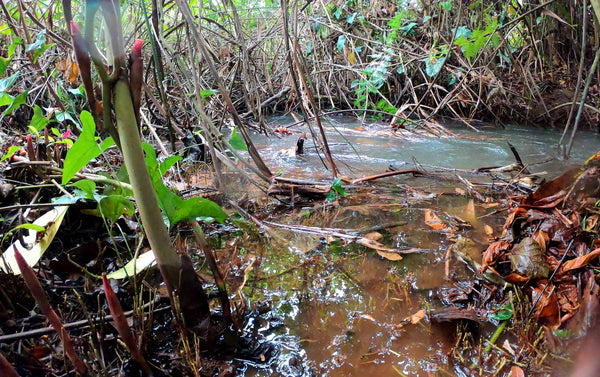
And of course, we typically don’t maintain completely “open” systems in the hobby, but I wonder just how much of the ecology of these fascinating habitats we can replicate in our tanks-and what potential benefits may be realized?
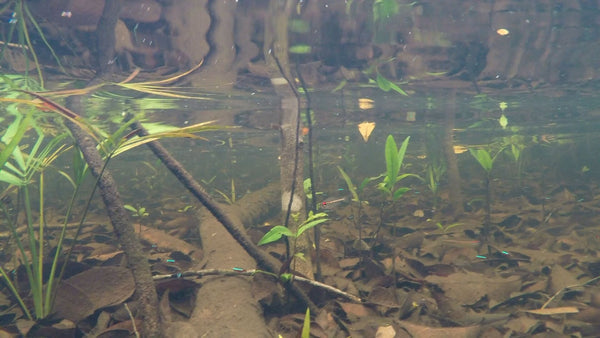
There is something tantalizing to me about the idea of our fishes being able to supplement what we feed them with natural food sources, produced “in situ” in our tanks. In particular, fry of fishes being able to sustain themselves or supplement their diets with what is produced inside the habitat we’ve created in our tanks get’s me really excited!
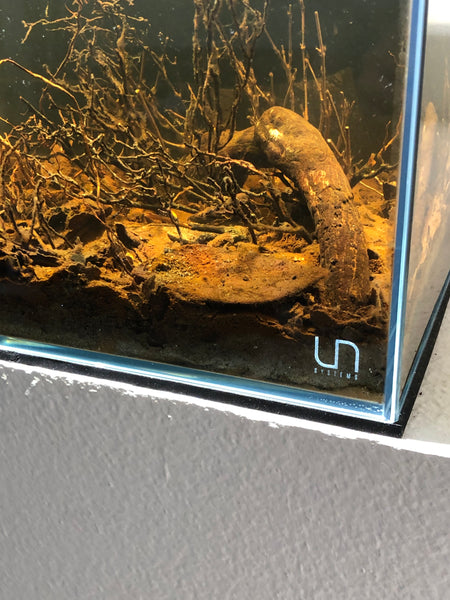
Recreating the land/water relationship in our aquariums is the “unlock” to all of this. The ecology practically assembles itself if we provide the right “ingredients”, and provides supplemental sustenance for our fishes!
A true gift from Nature.
I think that we as botanical-method aquarium enthusiasts really have to get it into our heads that we are creating more than just an aesthetic display. We need to focus on the fact that we are creating functional microcosms for our fishes, complete with physical, environmental, and nutritional aspects.
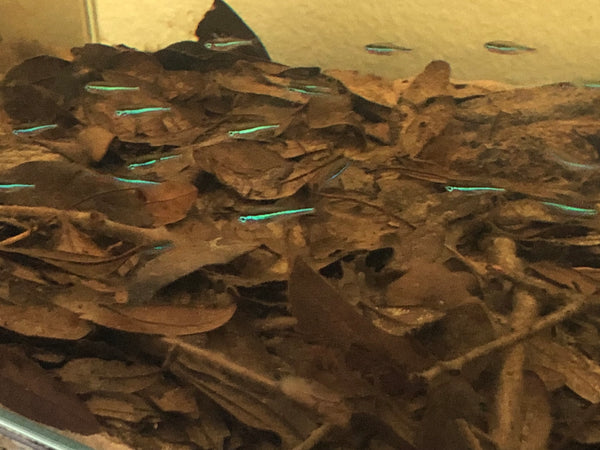
And when you think about it- getting back to the whole botanical method of aquarium keeping- the idea that various terrestrial materials can influence the ecology of the aquarium is the game.
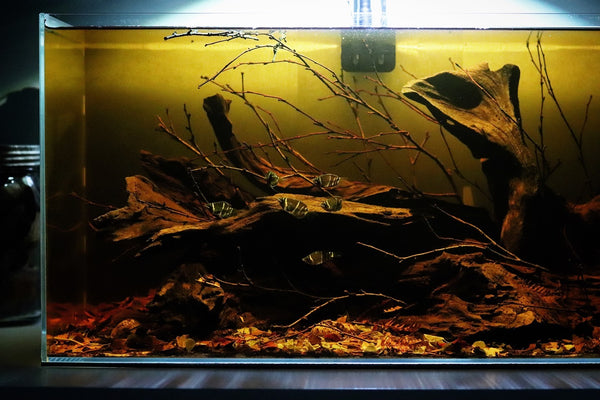
Even the aesthetics are different in our aquariums. And interestingly, a significant part of them is derived from the function of botanical materials interacting with the aquatic environment.
I cannot stress this enough.
With more and more attention being paid the overall environments from which our fishes come-not just the water, but the surrounding areas of the habitat, we as hobbyists will be able to call even more attention to the need to learn about and protect them when we create aquariums based on more specific habitats.
We should look at nature for all of the little details it offers.
We should question why things look the way they do, and postulate on what processes led to a habitat looking and functioning the way it does- and why/how fishes came to inhabit it and thrive within it.
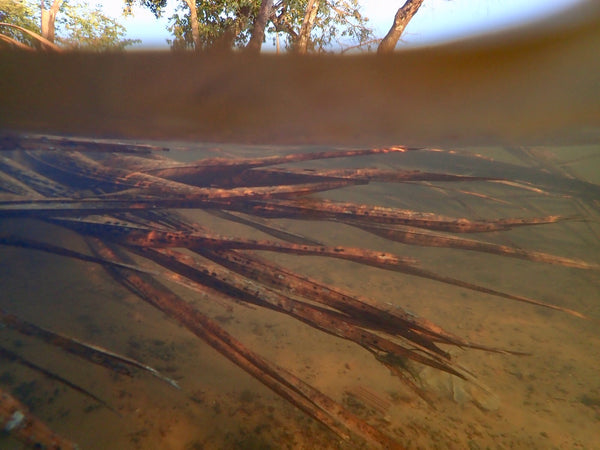
It’s a fun and fascinating journey, that will not only yield greater understanding of our fishes, but of the precious and fascinating environments from which they come. And a greater appreciation for the functions and vulnerabilities of these wild ecosystems means that we’ll be in a better position than ever as aquarists to call attention to the perils that they face.
That’s my continuing challenge to our community… We’ll be talking a lot more about this in coming months. I think it’s fundamental to what we do in the botanical method aquarium hobby.
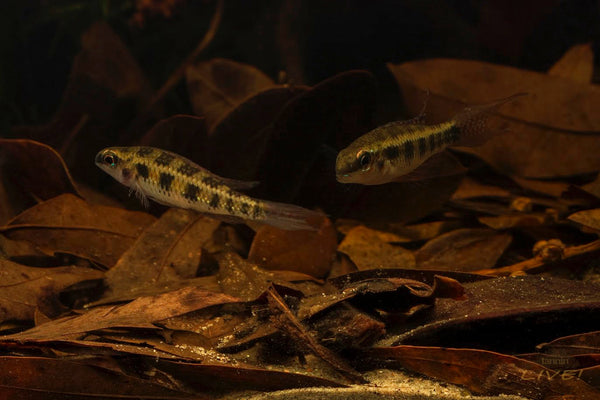
This is the most superficial look at this idea, but the point is to look at the influences of the land and how they affect aquatic habitats, and try to replicate them and their processes.
It’s easy to do…
Just look around.
Stay inspired. Stay creative. Stay thoughtful. Stay motivated…
And Stay Wet.
Scott Fellman
 The Tint
Leave a comment