
Today, I thought I’d switch things up a bit snd discuss the idea of…gear for your botanical method aquariums. Specifically, the gear that I use and recommend to you. This will not be an authoritative review on every piece of equipment that you can use in the botanical method aquarium, or a concise “how to.”
Rather, it will be a simple discussion about some of the stuff that I use here for the many aquariums that I’ve played with over the years, why I selected the gear I use, and my thoughts on the various ones that I use.
First off, let’s talk about aquariums.
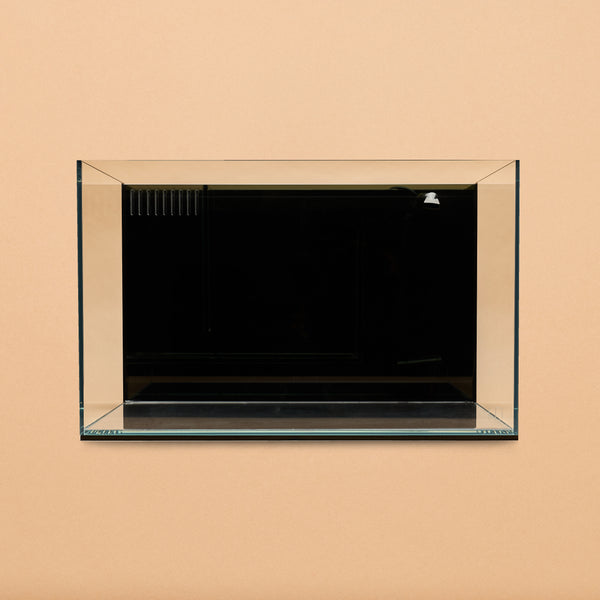
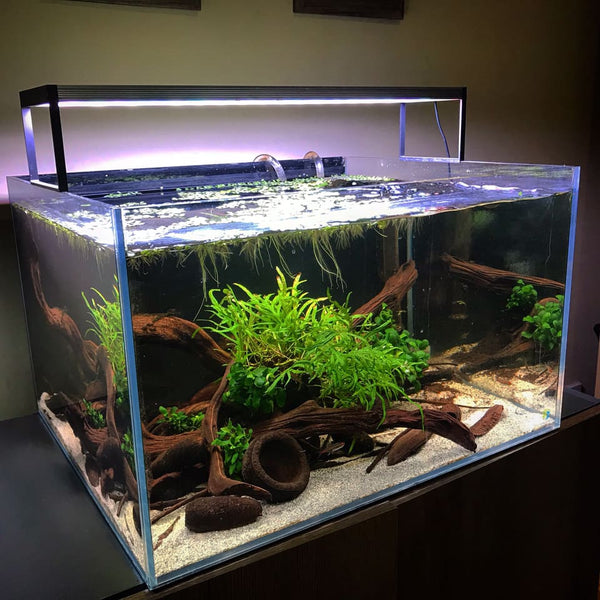
I’ve used all sorts of tanks to create botanical method aquariums over the years. In fact, I’ve used everything from plastic storage containers to glass jars to goldfish bowls with great success. You can use all sorts of tank shapes and sizes for botanical method aquariums.
I tend to favor wider, more shallow tanks for the aesthetics and for their surface area; however, you can use deeper, narrow tanks just as easily.
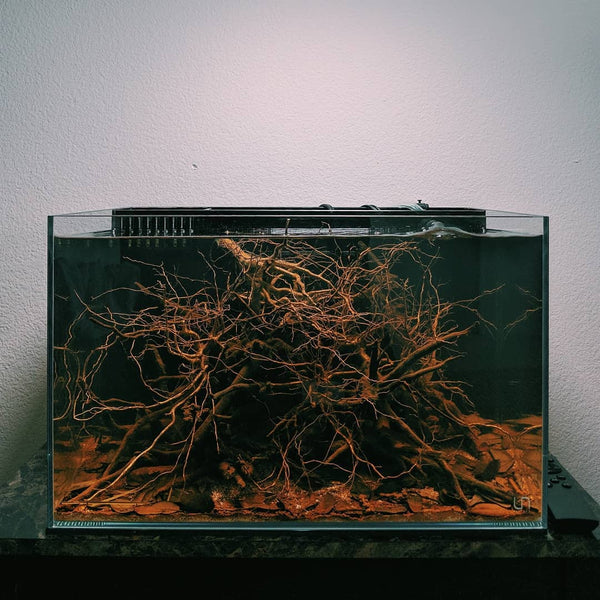
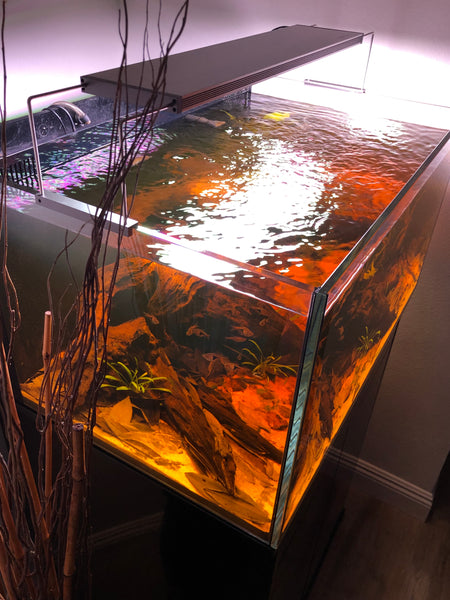
The top choice for me, however, is the so-called “all-in-one” (AIO) tank. These are simply aquariums which have a separate filter chamber located in the rear of the tank, which serves as a sort of sump- a location where the return pump. heater, and other gear (if you have it) can be placed. It’s a real game changer, in MHO.
Most “all-in-one” tanks, like my Innovative Marine “Fusion Lagoon” system, or my Ultum Nature Systems AIOs, offer a great “hybrid” of a “sump” (in this case, a rear-mounted external filter compartment) and an external filter, making an affordable, simple, aesthetically clean, easy-to-maintain-and-operate system.
And then, there is the topic of filtration.
So, before I ramble too far- here’s the “long and the short” of this topic:
You can use just about any type of filter available on your botanical-method aquarium.
The real considerations with filters, IMHO, are: A) where in the water column you are bringing in water from, and b) Where the outputs are aimed. Oh, and C) what media you’re using in the filter. More on media in a bit.
As a reefer, I admit, I love my tanks with built in overflows and sumps.
Now, I realize that not everyone wants the expense, logistics, challenges, and additional considerations (return pumps, space under the tank, etc.) which go along with the use of sumps. I also realize that the majority of freshwater hobbyists utilize glass aquariums without overflows and such, so there are numerous other options.
Yet, I still love sumps. I love them because:
a) You don’t see any of the ugly shit (heaters, etc.) in the tank proper. Oh, and even that freakin’ “glassware”- yes, I know that YOU may not think they’re ugly, but I”m no fan of them as they are now. They completely and utterly suck in every way, in my humble opinion. I hate them. Why? We can have that discussion some other time, okay?
b) Sumps add water volume to your tank. As the sayings goes, “Dilution is the solution to pollution”– and stability! So, that’s always a good thing!
c) Sumps provide an area where you can keep filter media, biological media, botanicals, wood, etc. to influence environmental conditions in the display aquarium. Like, if you simply hate the look of leaves and decomposing stuff in your display, but love the blackwater look and biodiversity, sumps are a good choice. No, a great choice!
d) They rely on surface overflow “weirs” to supply water. Overflow weirs skim water from the surface, removing the film which accumulates and can interfere with gas exchange…Important when you have lots of botanicals in your tank breaking down, right?
Okay, that’s enough about sumps.
Of course you can employ those ubiquitous, ever-popular canister filters!
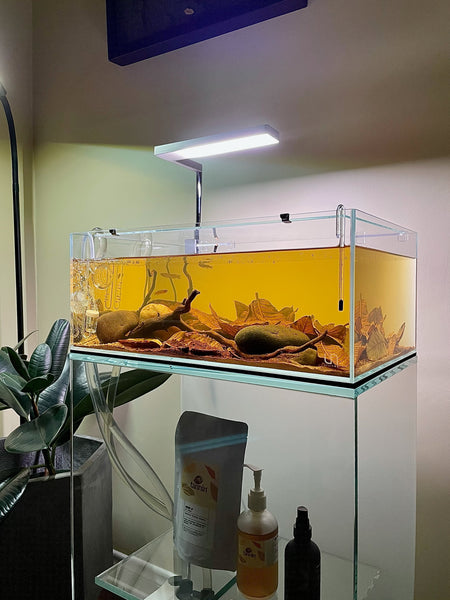
Shit, canister filters necessitate the need for…”glassware”, right? Arrghhhh….If you know me, you know I despise “glassware” for a lot of reasons.
IMHO, you should direct the return from canister filters near the surface, to create agitation and to facilitate gas exchange. Unlike pure planted aquariums, where there is a definite benefit from using those goddamn “Lily Pipes” and such to return water well below the surface to preserve CO2, I personally believe that heavily-stocked botanical method aquariums benefit from this surface agitation.
Oh, did I mention that I hate those pipes? Just wanted to make sure on more time…
To be clear- I hate them…😆
How did these things ever become a thing? Who wants to spend that kind of money for what is simply a stupid filter return? “Oh, but they’re very artistic!”
“Artistic”, my ass!
And yeah, I’ve broken a bunch over the years…A big part of why I hate the damn things so much. That and the mysterious way the diameter and hose compatibility information are presented to the hobbyist. You have to be a mathematician to figure out which one to buy for your filter. And, hasn’t anyone made a 3D printed version yet? Shit.
Hate isn’t a strong enough word for how I feel about “glassware.”
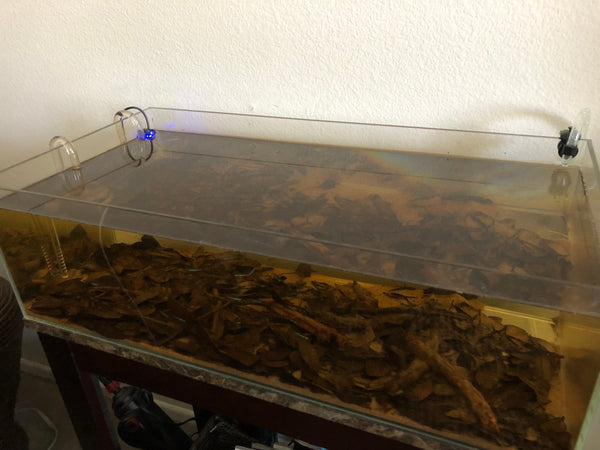
Whew…a whole lot of anger being directed to a piece of hardware, huh?
And, while we’re talking about returning water- regardless of how you get it there, you can return some of the water towards the lower levels of the tank to keep things “stirred up” just a bit, without blowing shit all over the tank. (that’s a technical term, by the way).
And of course, outside power filters do the same thing- keep everything relatively neat and tidy, and potentially outside of the tank if you like.
Oh, and sponge filters are great- and those so-called “Matten Filters”, too- because they are primarily biological filters and are relatively easy to hide in displays…Hell, there is likely even a use case scenario for reviving the old “under gravel filter” in botanical method aquariums!
Use whatever the hell kind of filter you want!
With regards to filter media, the most common question I get is:
“Can you use chemical filtration media in a botanical method tank?”
Well, sure.
The real “issue” (if you want to call it that) with filtration in regards to our botanical methodaquariums is what media you utilize. Again, I call on my reef-keeping experience to tell you that I am a huge fan of activated carbon. I use it on every tank I set up- even the ones with the gnarliest (yes, it’s a word- I’m from L.A.-we talk that way. It’s a word. Deal with it.), darkest “tint” imaginable.
I lurrrrrve me some activated carbon in my tanks.
“Carbon? WTF Fellman?”
Yes, carbon.
And it can remove some of the tint and probably even some of the valued humic substances and other beneficial compounds imparted by botanicals. It’s not selective. That being said, it also can remove impurities, like volatile dissolved organic compounds, urea, some metals, etc. It’s valuable stuff.
The key is to just not overdo it.
Just use considerably less than the manufacturer recommends. Easy.
Of course, if you want leaves and such in your tank, but not the tinted water- as we’ve discussed many times- just use the ‘recommended” dose of carbon and you have the best of both worlds- at least, aesthetically.
Better as chemical filtration media would be stuff like specialized ion-exchnage or “organic scavenger resins” and zeolites- stuff which requires more research, trial and error, and testing. But it is possible, at least in theory, to incorporate filtration media which removes the undesirable pollutants and retains the desired humic substances and tannins. Oh, and proper biological function in low pH systems, fostering the “biome” of these tanks.
I like the “Poly Filter” pad, by Poly BioMarine, as it removes organics and can remove stuff like ammonia even in low pH systems. In my years of working with this stuff, I have not seen it remove substantial amounts of the “tint” in the water caused by tannins from botanicals. This is hardly a scientific assessment of the stuff, but I do believe in it. I’ve used it for decades in pretty much every type of aquarium- fresh, brackish, reef- that I’ve maintained with excellent results.
And back to those “specialized resins” and such…
These things are are all something we will see more of in the future...trust me. There are numerous materials out there, used in other water purification work , that will definitely work with our aquariums.
In the mean time, you can continue use materials like carbon, Purigen, etc. to do the trick; just be aware of the way they work and what they will do. If you go “full power” (ie; the typical manufacturers’ recommended “dose”), you’ll have a really clear tank- if that’s what you want.
Nonetheless, I adore Seachem Purigen.
It’s a “macro-porous synthetic polymer” (aka “organic scavenging resin”) that removes soluble and insoluble impurities from water by adsorption. In other words, it cleans up stuff.
Like, really well.
More filtration ideas for botanical method aquariums?
Well, you could actually use the tank itself, and the botanical environment as the “biological filter”, and simply use aeration/surface skimming and/or circulation pumps to facilitate the gas exchange. Not revolutionary, of course- but an idea that’s often overlooked today.
Yeah.
The botanical materials present in our systems provide enormous surface area upon which beneficial bacterial biofilms and fungal growths can colonize. These life forms utilize the organic compounds present in the water as a nutritional source.
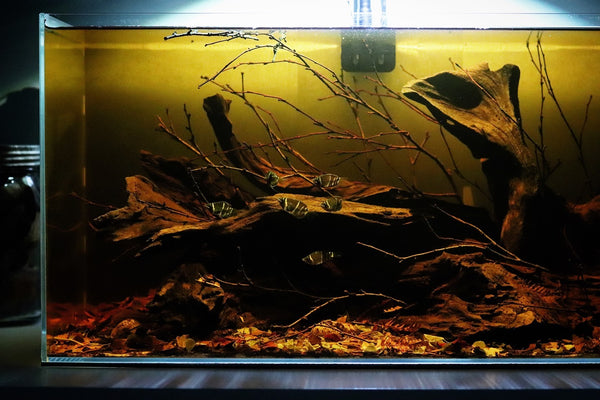
Oh, the part about the biofilms and fungal growths sounds familiar, doesn’t it? No discussion of the topic of filtration in botanical method aquariums is complete without the Scott Fellman rant on biofilms…
Let’s talk about our buddies, the biofilms, just a bit more. One more time. Because nothing seems as contrary to many hobbyists than to sing the praises of these gooey-looking strands of bacterial goodness! And they’re damn important.
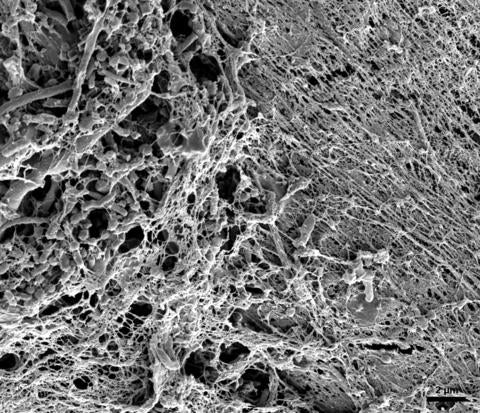
Structurally, biofilms are surprisingly strong structures, which offer their colonial members “on-board” nutritional sources, exchange of metabolites, protection, and cellular communication. They form extremely rapidly on just about any hard surface that is submerged in water.
When I see aquarium work in which biofilms are considered a “nuisance”, and suggestions that it can be eliminated by “reducing nutrients” in the aquarium, I usually fucking cringe.
Mainly, I cringe because this mindset overlooks reality…because no matter what you do, biofilms are ubiquitous, and always present in our aquariums. We may not see the famous long, stringy “snot” of our nightmares, but the reality is that they’re present in our tanks regardless.
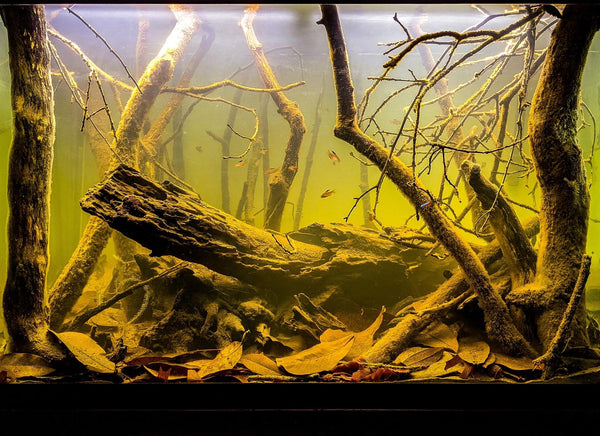
The other reality is that biofilms are something that we as aquarists typically fear because of the way they look.
In and of themselves, biofilms are not harmful to our fishes. They function not only as a means to sequester and process nutrients ( a natural “filter” of sorts?), they also represent a beneficial food source for fishes.
Now, look, I can see rare scenarios where massive amounts of biofilms (relative to the water volume of the aquarium) can consume significant quantities of oxygen and be problematic for the fishes which reside in your tank. These explosions in biofilm growth are usually the result of adding too much botanical material too quickly to the aquarium. They’re excaserbated by insufficient oxygenation/circulation within the aquarium.
These are very unusual circumstances, resulting from a combination of missteps by the aquarist.
Typically, however, biofilms are far more beneficial that they are even remotely detrimental to our aquariums.
Yeah, they’re really quite useful as a form of biological filtration.
Nutrients in the water column, even when in low concentrations, are delivered to the biofilm through the complex system of water channels, where they are adsorbed into the biofilm matrix, where they become available to the individual cells. Some biologists feel that this efficient method of gathering energy might be a major evolutionary advantage for biofilms which live in particularly in turbulent ecosystems, like streams, (or aquariums, right?) with significant flow, where nutrient concentrations are typically lower and quite widely dispersed.
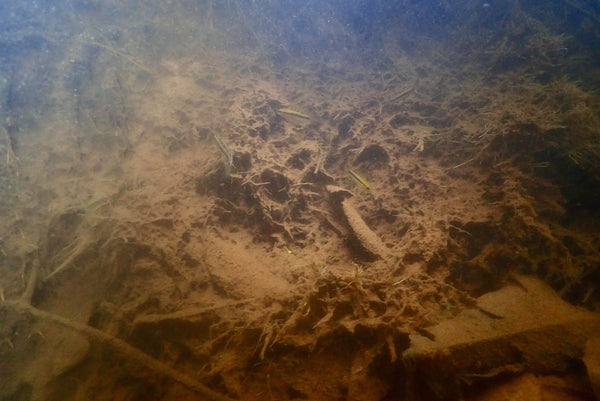
Biofilms have been used successfully in water/wastewater treatment for well over 100 years! In such filtration systems the filter medium (typically, sand) offers a tremendous amount of surface area for the microbes to attach to, and to feed upon the organic material in the water being treated. The formation of biofilms upon the “media” consume the undesirable organics in the water, effectively “filtering” it!
Biofilm acts as an adsorbent layer, in which organic materials and other nutrients are concentrated from the water column. As you might suspect, higher nutrient concentrations tend to produce biofilms that are thicker and denser than those grown in low nutrient concentrations.
Those biofilms which grow in higher flow environments, like streams, rivers, or areas exposed to wave action, tend to be denser in their morphology. These biofilms tend to form long, stringy filaments or “streamers”,which point in the direction of the flow. These biofilms are characterized by characteristic known as “viscoelasticity.”This means that they are flexible, and stretch out significantly in higher flow rate environments, and contract once again when the velocity of the flow is reduced.
Okay, that’s probably way more than you want to know about the physiology of biofilms! And probably the 12th time in the last month I’ve talked about them.
Regardless, it’s important for us as botanical method aquarists to have at least a rudimentary understanding of these often misunderstood, incredibly useful, and entirely under-appreciated life forms and the benefits they offer.
And the whole idea of facilitating a microbiome in our aquariums is predicated upon supplying a quantity of botanical materials- specifically, leaf litter, for the beneficial organisms to colonize and begin the decomposition process. An interesting study I found by Mehering, et. al (2014) on the nutrient sequestration caused by leaf litter yielded this interesting little passage:
“During leaf litter decomposition, microbial biomass and accumulated inorganic materials immobilize and retain nutrients, and therefore, both biotic and abiotic drivers may influence detrital nutrient content.”
The study determined that leaves such as oak “immobilized” nitrogen. Generally thinking, it is thought that leaf litter acts as a “sink” for nutrients over time in aquatic ecosystems.
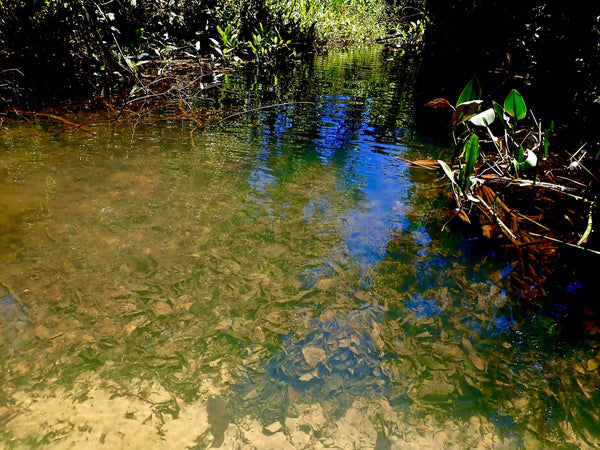
Oh, and one more thing about leaves and their resulting detritus in tropical streams: Ecologists strongly believe that microbial colonized detritus is a more palatable and nutritious food source for detritivores than uncolonized dead leaves. The microbial growth which occurs on the leaves and their resulting detritus increases the nutritional quality of leaf detritus, because the microbial biomass on the leaves is more digestible than the leaves themselves (because of lignin, etc.).
Oh, I’m going on and on about this stuff- but the idea of the aquarium, or more precisely, the microbiome of the aquarium- acting as a “filter”- is worth considering, so I’ll touch on it again.
You could successfully run a botanical method aquarium without a “filter” of any kind, other than the materials contained within the tank itself.
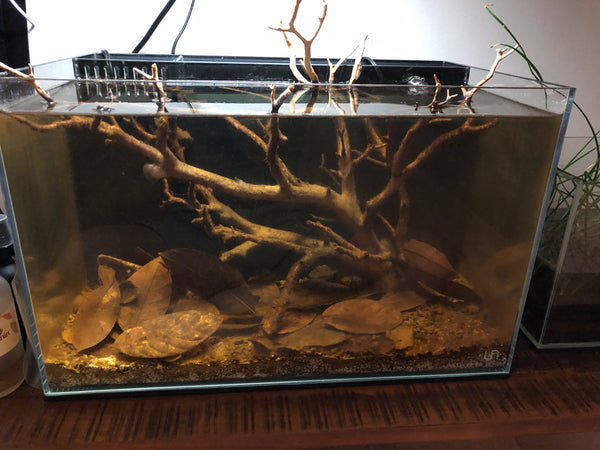
I mean, this isn’t really an earth-shattering concept.
Every tank in the 19th century, and many in the early 20th century, ran this way, right?
Yeah.
Now, I get it- these were tanks which were often dominated by aquatic plants, which processed the nutrients and realized oxygen via photosynthesis, but the idea here is essentially the same- creating a biological system which assimilates and processes nutrients.
Our “Urban Igapo” tanks use terrestrial or riparian plants…they uptake nutrients from the soils…
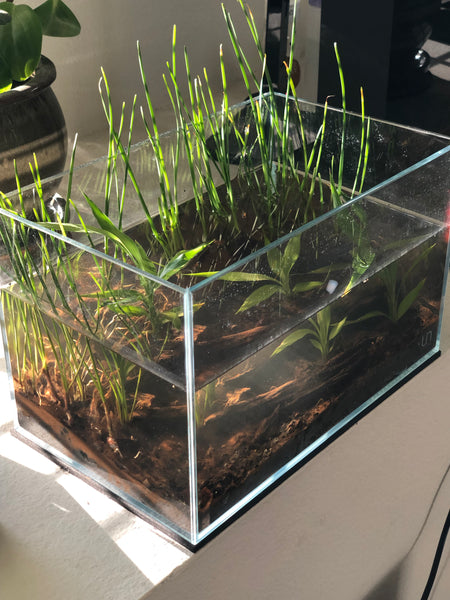
Yet, there are other organisms besides plants to accomplish nutrient export, right? Now, what about our old nemesis, cyanobacteria- that stringy stuff we’ve been taught to loathe over the years? Well, they’re photosynthetic. They convert sunlight into energy and produce oxygen as a waste product. Maybe cultivating them in our “filterless” tanks could be a cool idea, huh? Or even fungi…
Perhaps?😆
Well, I’m getting sidetracked a bit, but it’s interesting stuff to think about, right?
The point is, botanical method aquariums can be equipped and managed in a great variety of ways. You can go with high-tech filtration, simple old-fashioned filters, just an airstone, or, no filter at all. (which is to say, no additional mechanical equipment…).
There are so many possibilities here, huh?
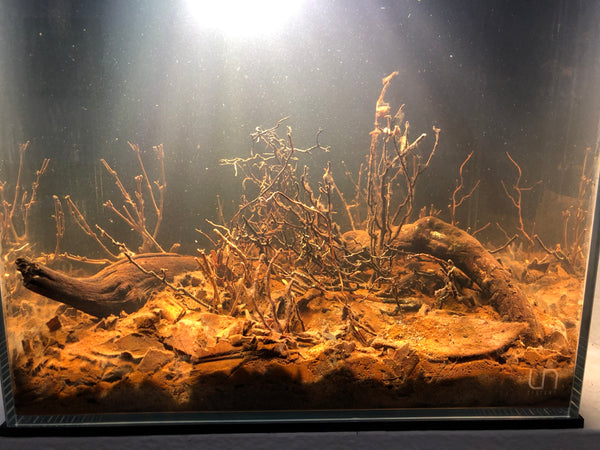
There are literally dozens of ways to “filter” your water…ways to process metabolic wastes and to oxygenate and move water within your system.
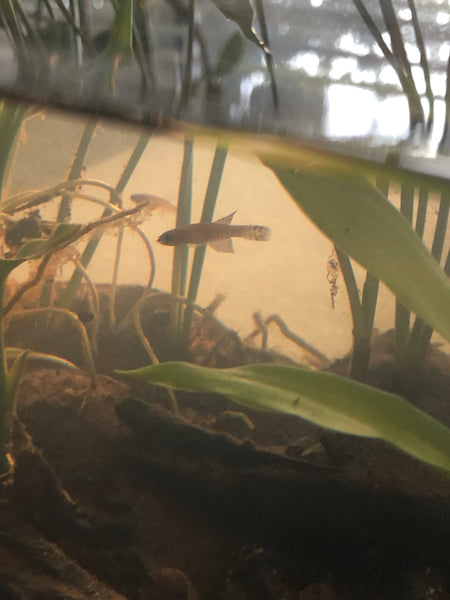
This is a real “open source” component in our hobby sector.
An invitation and opportunity for YOU- the working aquarist- to make a big impact on the hobby, discovering benefits and developing techniques perhaps as yet not fully understood…
Is there one “best” filtration method?
Of course not.
So, yeah- use what works for you, benefits your fishes, and creates the best outcomes for them. There are so many approaches, any of which could work for you.
The concept of filtration is constantly evolving. To me, besides the obvious benefits of utilizing media which can remove impurities and organics on a continuous basis from the aquarium, the most important ones are circulation and gas exchange/aeration.
By having large quantity of botanical materials, and fostering the growth and development of this community of organisms in your tanks, you could, in theory, have no supplemental “filtration” system.
Yeah, you could use no filter, or just aeration, or even just employing a surface skimmer- and no other “filter” in the traditional sense. The surface skimmer would facilitate gas exchange and provide some aeration.
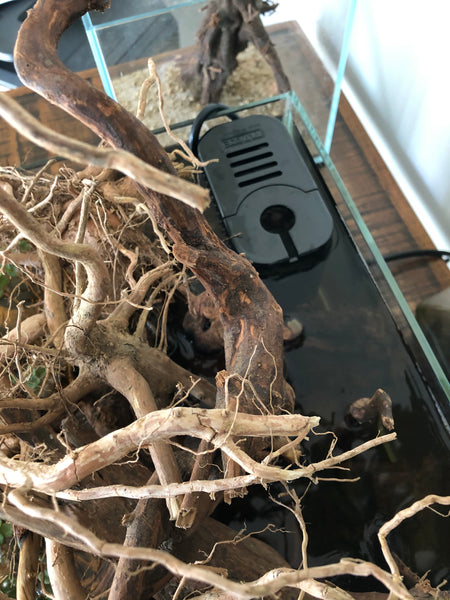
Now, you would have to obey the fundamental principles of aquarium management…water exchanges, proper stocking, careful feeding, etc. However, you can do this; I’ve done it many times.
I’ve especially done this with the “Urban Igapo” type of tanks, which rely on the biotia in the tank as a result of the substrate, vegetation, and botanicals. It’s a throwback, if you will, to the earliest days of the aquarium hobby, when process and active management performed many of the same functions as filtration does today.
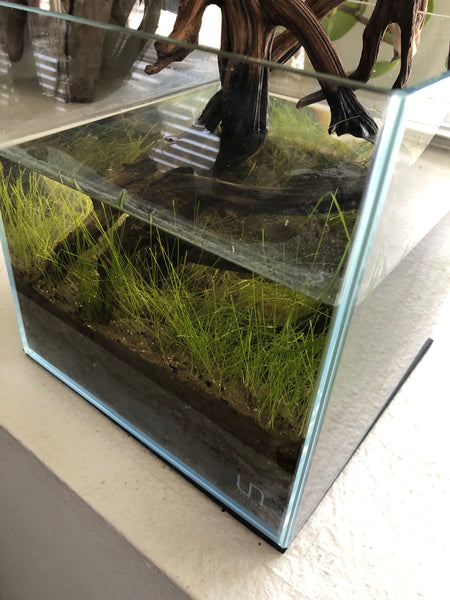
When we consider the aquarium itself as a living, breathing entity- one which has levels of life forms performing the biological filtration function, such bold experiments and concepts aren’t all that weird, right?
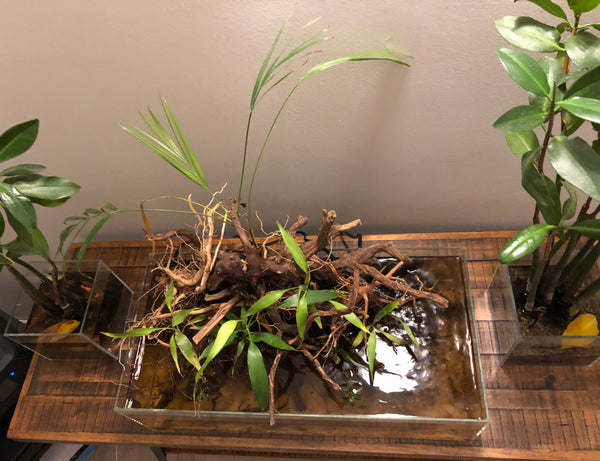
Lots of potential experiments await the creative fish geek!
Stay open-minded. Stay thoughtful. Stay creative. Stay curious…
And Stay Wet.
Scott Fellman
 The Tint
Leave a comment