
We walk a line between function and aesthetics in our world.
A world which demands mental shifts, adoption of new techniques, and a love of a certain “look.”
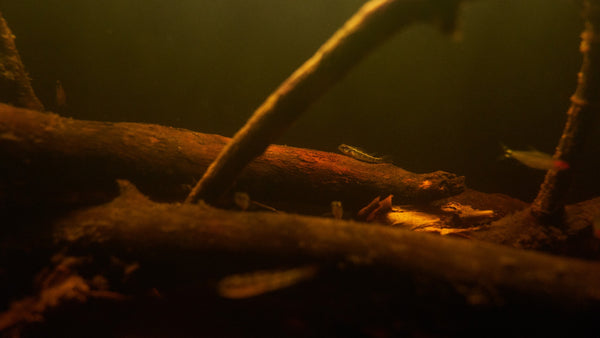
And, one of the big discussion points we have in our world is about the color and “clarity” of the water in our blackwater aquariums. I receive a significant amount of correspondence from readers who are curious how much “stuff” it takes to color up their water.
Interesting observation: Those of us in the community of blackwater, botanical method aquarists seek out tint and “body” in our water…while the rest of the aquatic world- well, they just sort of… freak the fuck out about that, huh?
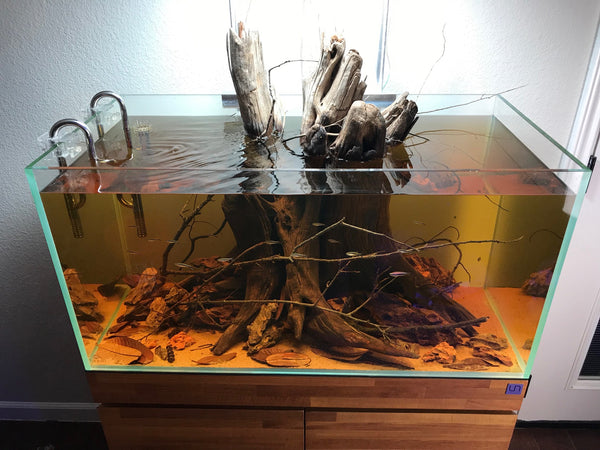
Our aesthetic “upbringing” in the hobby seems to push us towards “crystal clear water”, regardless of whether or not it’s “tinted” or not. And think about it: You can have absolutely horrifically toxic levels of ammonia, dissolved heavy metals, etc. in water that is “invisible”, and have perfectly beautiful parameters in water that is heavily tinted and even a bit turbid.
(FYI, WIkipedia defines “turbidity” in part as, “…the cloudiness or haziness of a fluid caused by large numbers of individual particles that are generally invisible to the naked eye, similar to smoke in air.”)
That’s why the aquarium “mythology” which suggested that blackwater tanks were somehow “dirtier” than “blue water” tanks used to drive me crazy. The term “blackwater” describes a number of things; however, it’s not a measure of the “cleanliness” of the water in an aquarium, is it?
Nope.
Color alone is not indicative of water quality for aquarium purposes, nor is “turbidity.” Sure, by municipal drinking water standards, color and clarity are important, and can indicate a number of potential issues…But we’re not talking about drinking water here, are we?
No, we aren’t!
There is a difference between “color” and “clarity.”
The color is, as you know, a product of tannins leaching into the water from wood, soils, and botanicals, and typically is not “cloudy.” It’ actually one of the most natural-looking water characteristics that we encounter in aquariums, as water influenced by soils, woods, leaves, etc. is ubiquitous around the world. Other than having that undeniable color, there is little that differentiates this water from so-called “crystal clear” water to the naked eye.
Of course, the water may or may not have a lower pH and general hardness, but these factors have no bearing on the color or visual clarity of the water. Again, it’s one of those things where we ascribe some sort of characteristics to the water based solely on its appearance.
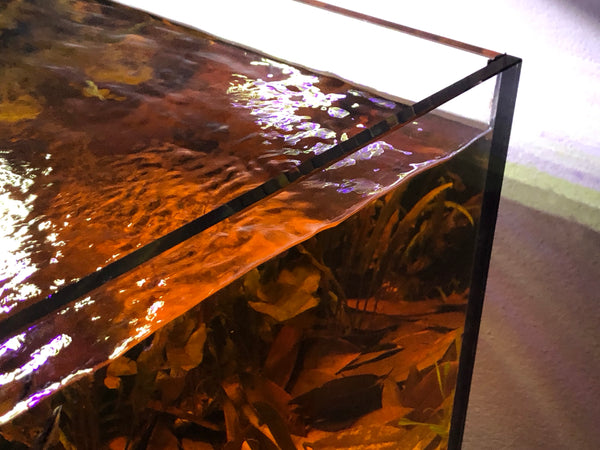
I remember fondly, when I was co-owner of Unique Corals, a major coral importer/propagator, here in Los Angeles ,I had a little blackwater aquarium in my office. I loved that little tank! It was more of an “artistic” hardscape; but it had a bunch of catappa bark and leaves that gave it a definite brownish tint!
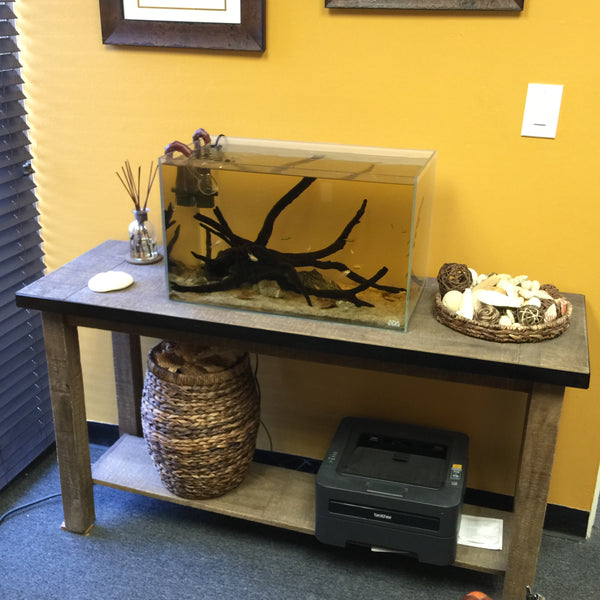
Everyone who came in my office gazed into that little aquarium; most were hardcore “reef people” and marine livestock vendors. Their “orientation” was ultra clear, blue-white water…And if I had a dollar for every time someone told me, “Man, you MUST be busy! That aquarium looks pretty dirty. You need to change the filter…!” I’d be filthy rich! Yeah. Once I explained what blackwater is and how it was natural and, in my eyes desirable, they would either have an “Ahah!” moment, or (more typically) just continue with the business at hand, shrugging off my explanation.
Some hobbyists just don’t get it!
As aquarists, we were pretty much indoctrinated from the start that our tanks should have “crystal clear, blue-white water”, and that this is one of the benchmarks of a healthy aquarium.
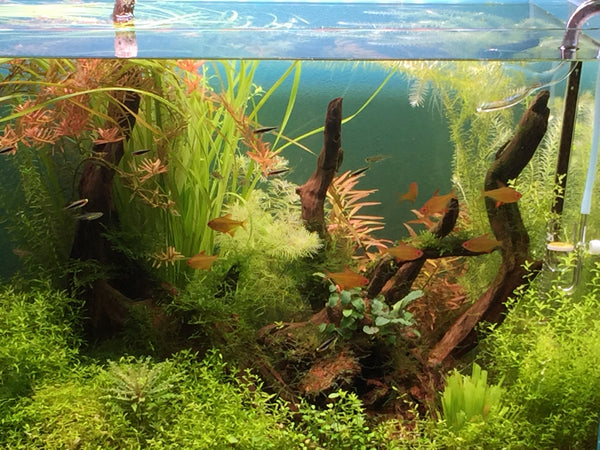
And of course, I won’t disagree that “clear” water is nice. I like it, too…However, I would make the case that “crystal clear” water is: a) not always solely indicative of “healthy” or “optimum” , and b) not always what fishes encounter in Nature.
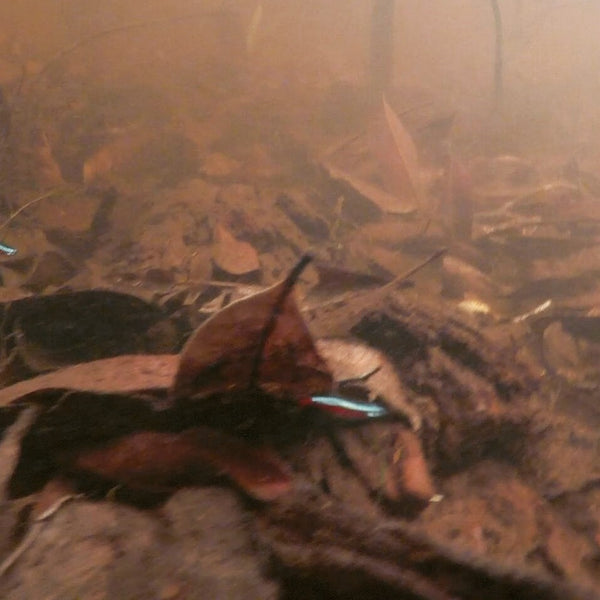
The point is, we as fish geeks seem to associate color in water with overall “cleanliness”, or clarity. The reality is, in many cases, that the color and clarity of the water can be indicative of some sort of issue, but color seems to draw an immediate “There is something wrong!” from the uninitiated!
And it’s kind of funny- if you talk to ecologists familiar with blackwater habitats, they are often considered some of the most “impoverished” waters around, at least from a mineral and nutrient standpoint.
In the aquarium, the general hobby at large doesn’t think about “impoverished.” We just see colored water and think...”dirty.”
I’ve seen plenty of botanical-influenced aquariums which have a visual “thickness” to them-you know, a sort of look- with small amounts of particulate present in the water column- yet still have spot-on water conditions from a chemical perspective, with undetectable nitrate, phosphate, and of course, no ammonia or nitrite present.
Although we all seem to know this, I hear enough comments and questions about the color of the water and its relation to “cleanliness” in natural, botanical-method systems that it warranted this seemingly “remedial” review!
Again, just because the water in a botanical-influenced aquarium system is brownish, or has a bit of noticeable “turbidity”, it doesn’t mean that it’s of low quality, or “dirty”, as we’re inclined to say. I can’t stress it often enough.
It simply means that tannins, humic acids, and other substances are leaching into the water, creating a characteristic color that some of us geeks find rather attractive. If you’re still concerned, monitor the water quality…perform a nitrate test; look at the health of your animals.
What’s happening in there?
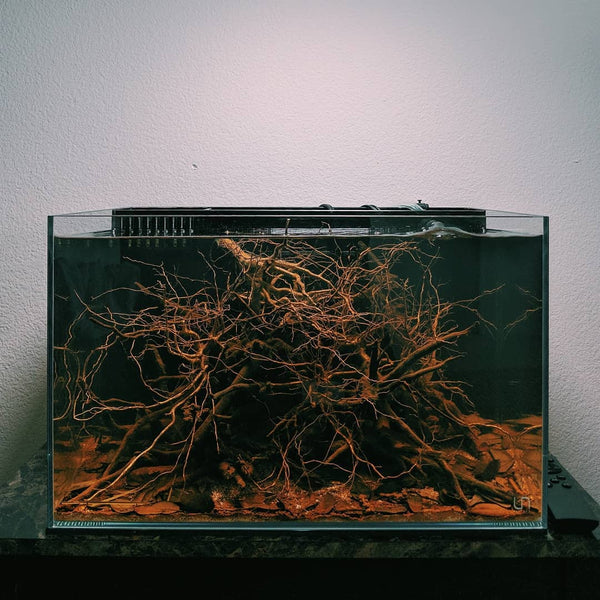
In my personal aquariums, and in many of the really great natural-looking blackwater aquariums I see the water is dark, almost turbid or “soupy” as one of my fellow blackwater/botanical method aquarium geeks refers to it. You might see the faintest hint of “stuff” in the water…perhaps a bit of fines from leaves breaking down, some dislodged biofilms, pieces of leaves, etc.
Just like in nature.
Chemically, my water typically has virtually undetectable nitrate and phosphate levels…A solid “clean” by aquarium standards.
But, yeah- it’s “soupy”-looking…
One of my good friends calls this “flavor”– which sort of makes me laugh every time I hear it…but it seems to be an apt descriptor, huh?
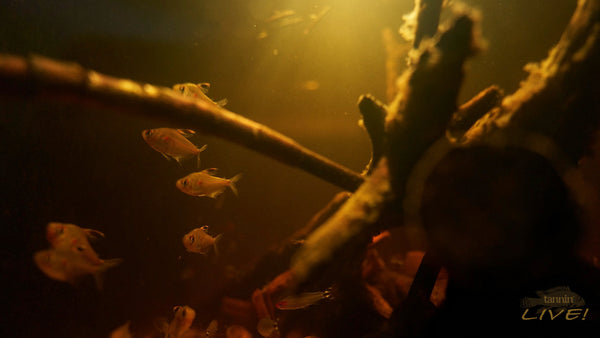
It’s important, when passing judgement on, or evaluating the concept of botanicals and blackwater in aquariums, to remember this. Look, “crystal-clear water” is absolutely desirable for 98% of all aquariums out there- but not always “realistic”, in terms of how closely the tank replicates the natural environment.
In other words, not every natural aquatic habitat is crystal clear, blue-white water..and not every “natural aquarium” needs to be, either!
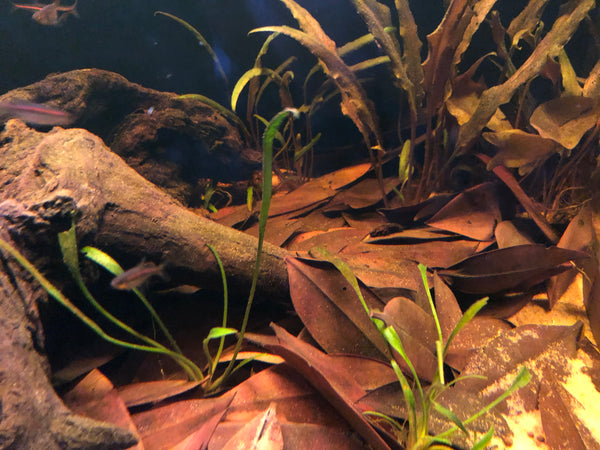
And, don’t forget that the color, turbidity, chemical characteristics, and sure- the overall quality of the water – are profoundly influenced by the terrestrial environment surrounding any body of water in question.
On the other hand, “turbidity”, as it’s typically defined, leaves open the possibility that it’s not a negative thing:
“…the cloudiness or haziness of a fluid caused by large numbers of individual particles that are generally invisible to the naked eye, similar to smoke in air…”
What am I getting at?
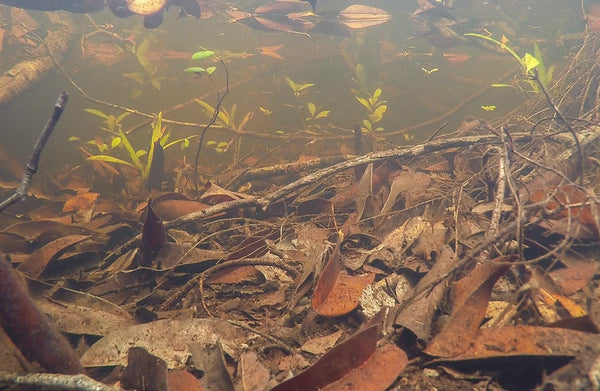
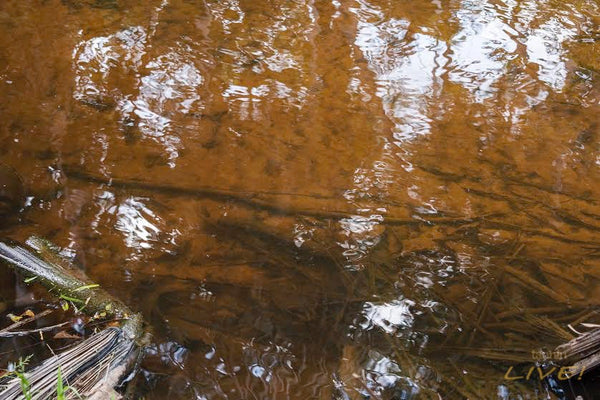
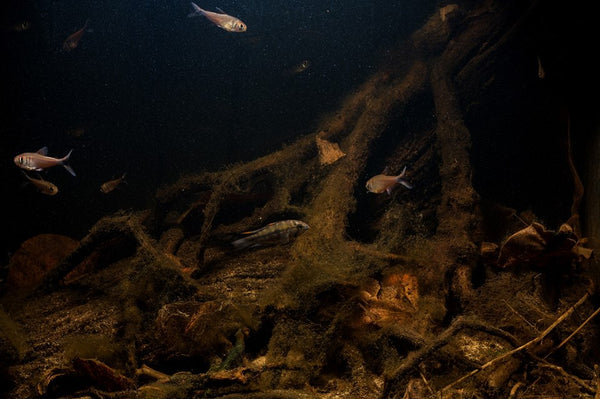
Well, think about a body of water like the Rio Negro, as pictured above in the photo by Mike Tuccinardi. This water is of course, “tinted” because of the dissolved tannins and humic substances that are present due to decaying botanical materials. That’s different from cloudy or turbid, however. It’s a distinction that neophytes to our world should make note of.
The “rap” on blackwater aquariums for some time was that they look “dirty”- and this was largely based on our bias towards what we are familiar with. And, of course, in the wild, there might be some turbidity because of the runoff of soils from the surrounding forests, incompletely decomposed leaves, current, rain, etc. etc.
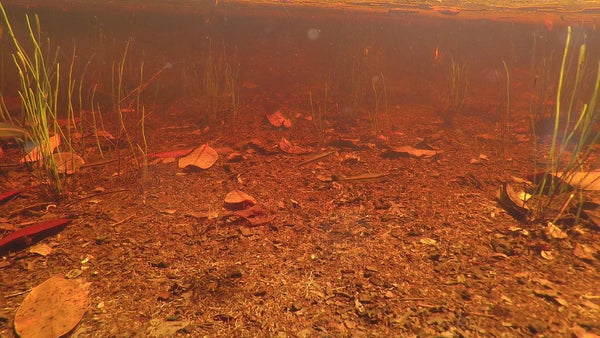
None of the possible causes of turbidity mentioned above in these natural watercourses represent a threat to the “quality”, per se. Rather, they are the visual sign of an influx of dissolved materials that contribute to the “richness” of the environment. It’s what’s “normal” for this habitat. It’s the arena in which we play in our botanical method aquariums, as well.
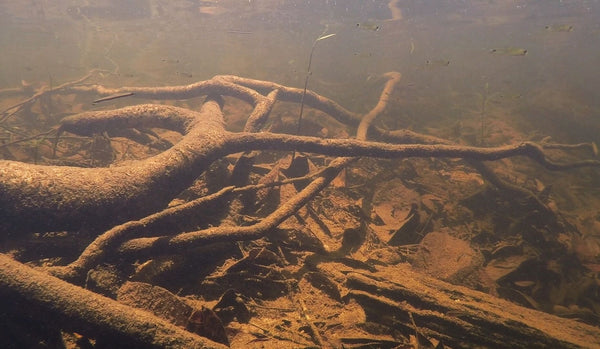
Obviously, in the closed environment that is an aquarium, “stuff” dissolving into the water may have significant impact on the overall quality. Even though it may be “normal” in a blackwater environment to have all of those dissolved leaves and botanicals, this could be problematic in the aquarium if nitrate, phosphate, and other DOC’s contribute to a higher bioload, bacteria count, etc. Again, though, I think we need to contemplate the difference between water “quality” as expressed by the measure of compounds like nitrate and phosphate, and visual clarity.
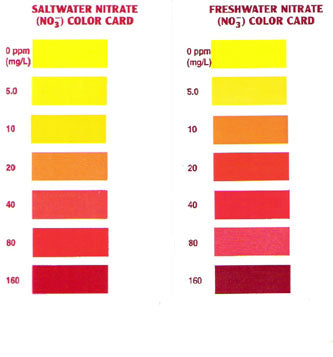
Soils, geology, the presence of decomposing leaves, vegetation, rainfall, etc. all play a role in this. The interdependency between the terrestrial and aquatic habitats, and the changes which occur when seasonal wet/dry cycles occur is a fascinating and fundamental aspect of natural aquatic habitats- one which we as hobbyists would do well to understand and attempt to replicate in our aquariums.
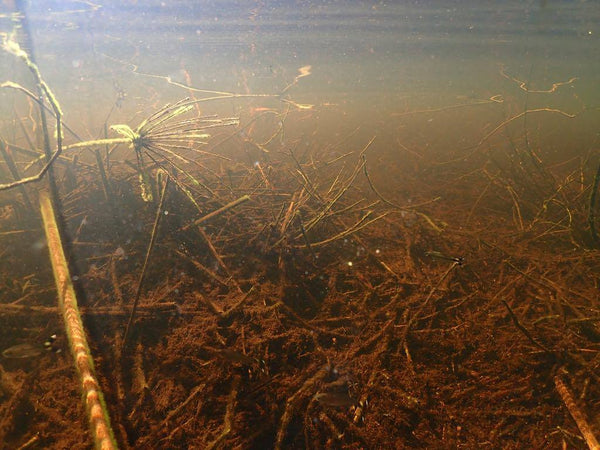
Understanding that the wild aquatic habitats of the world are, in essence, a “by-product” of their surrounding terrestrial environment is extremely helpful in “de-bunking” the long-held aquarium hobby “myth” that all water needs to be colorless and clear to be considered “healthy.”
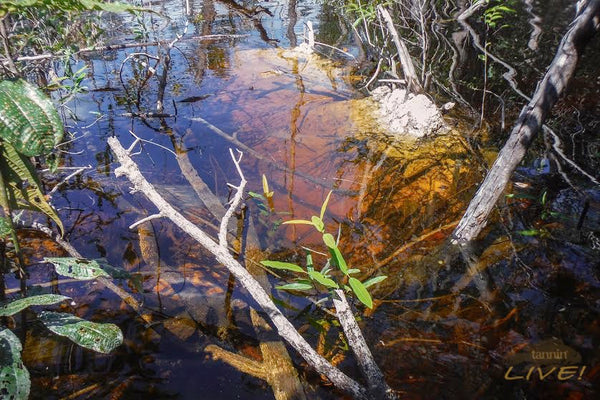
As I mentioned before, a funny by-product of our more recent obsession with botanical method aquariums in the hobby is a concern about the “tint” of the water, and yeah, perhaps even the “flavor” of said water! A by-product of our acceptance of natural influences on the water, and a desire to see a more realistic representation of certain aquatic environments.
And that means that dark water we love so much.
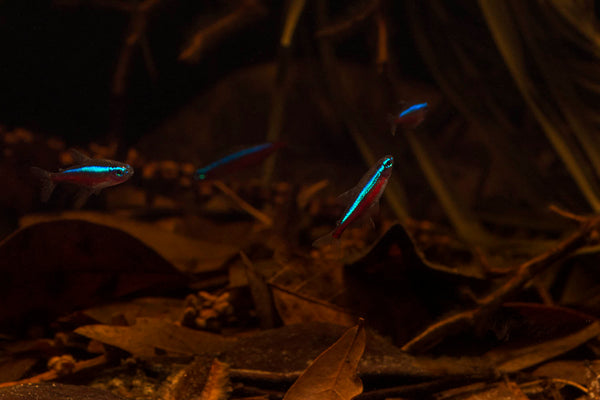
Yeah, we now see posts and discussions by hobbyists lamenting the fact that their aquarium water is not “tinted” enough. A lot of hobbyists have “bought in” to those mental shifts we keep talking about!
You sort of have to smile a bit, right?
Total mental shift, huh?
And of course, a healthy botanical- influenced tank also may typically not be turbid, but that doesn’t mean that it’s not “functioning properly.” Again, this realization and willingness to understand and embrace the aesthetic for what it is becomes a large part of that “mental shift” that I talk incessantly about in this blog.
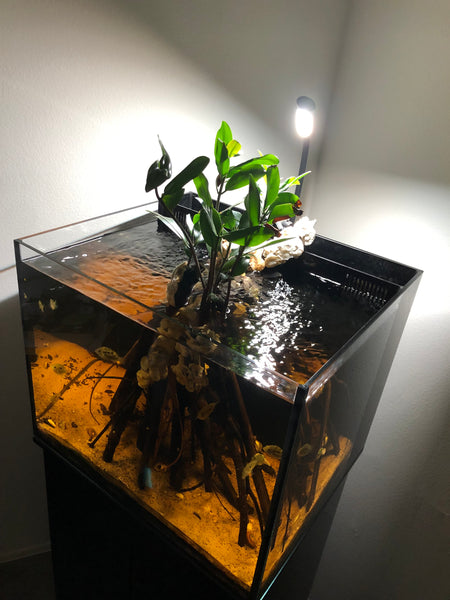
The color of the water and influence of tannins-and the “turbidity”, for that matter- are also profoundly influenced by the ionic charges and other physio-chemical characteristics of the water as well as the materials interacting with it. There is likely so much to this that we are just starting to understand.
At the risk of over-simplifying things, my advice is to look at your aquarium’s environment as a “whole”, much like we’d examine a natural aquatic habitat- and think about the influences which are imparted by materials (ie; botanicals, wood, substrate, etc.) present.
The beauty of an aquarium is that you can affect the color and clarity characteristics of your water if you don’t like ’em, by simply utilizing “technique”- ie; mechanical and chemical filtration, more aquatic plants (it’s thought that they might uptake tannins…), adding more/different botanical materials, performing larger water changes, etc.
It’s that simple.
And that complex, too.
Take stuff out or continue to allow it to remain and influence the water. Add more- or less– to achieve the desired goal.
Evaluate, observe, adjust, test, and tweak.
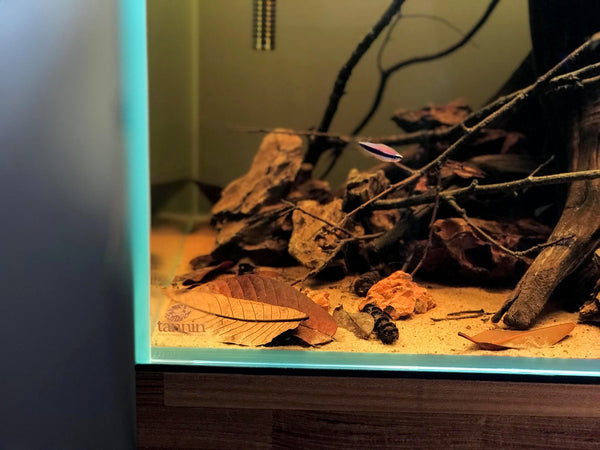
I realize I’m probably being a bit redundant; talking about the same things over and over again in this piece. But it’s kind of important to grasp this stuff. And it really is pretty straightforward. There is NO “recipe” for this- no “plug-and-play” techniques- each aquairum is bespoke, custom, one-of-a-kind, etc…
Easy.
And difficult…
Yet, pretty damn fun, huh?
Sure is.
Make those mental shifts
Stay diligent. Stay curious. Stay excited. Stay open-minded. Stay observant…
And Stay Wet.
Scott Fellman
 The Tint
Leave a comment