
Hey Scott- how come you don’t see rocks in those pics of the igapo inundated forests? Can I Include them in my “Urban Igapo?”
Oh, this is a good one. A question I get all the time. First off- you CAN do whatever the hell you want. However, if you’re trying to faithfully represent one of these habitats in your own tank, you should read on bit…
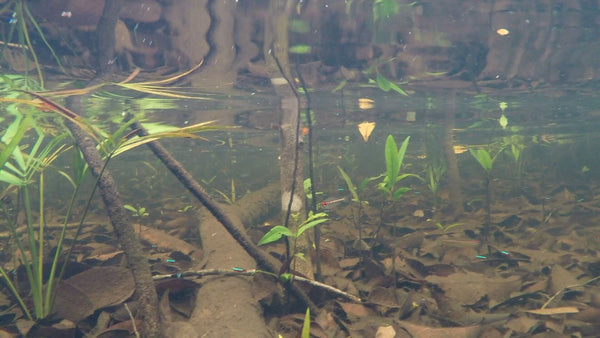
I’ve talked about this before over the years, but I think it’s a story worth telling again! It’s story of minerals, sediments, soils, and the processes which impact their formation.
And it starts way up in the mountains…
The “whitewater” rivers rush quickly down from the mountains of Peru and Bolivia, too rapidly for clay and silt to be stripped from them. The rocks from these mountainous areas offer minerals and nutrients such as nitrogen, attached to the silt and clay, and minerals like illite, montmorillomite (hey, shrimp geeks know about that stuff!), and chlorite, to nourish the lower-lying areas. In these lower areas, numerous microbes and plants consume some of the nitrogen, and while eaten by other organisms, convey what’s left to the even lower-lying forest habitats.
The Amazonian blackwater rivers are largely depleted in nutrients, having passed through these lowland forest soils as groundwater, from which weathering has already occurred. “Hydro-geomorphic processes” ( i.e.; a fancy way of referring to part of the stuff that makes rocks!) are far less intense than they are in the upland, mountainous regions, with their abundance of minerals, nutrients, slits, and sediments.
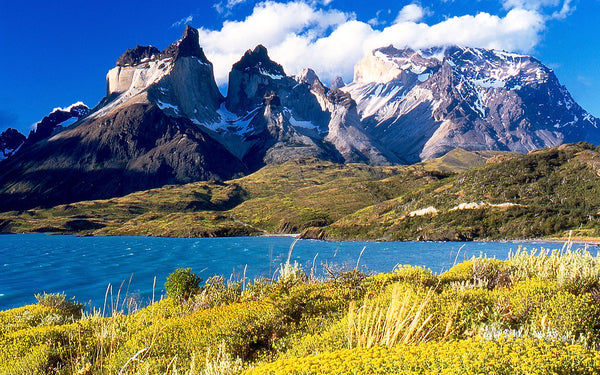
In other words, rocks form high in the mountains in these locales.
Most low-lying Amazonian forest soils are really low in nutrients. The soils are nutrient-poor, acidic types. It’s been suggested that most of the available nutrients are taken up by the root mats of the dense plant growth in these forested areas. And even the rainwater provides little in the way of nutrient for the plants which grow there.
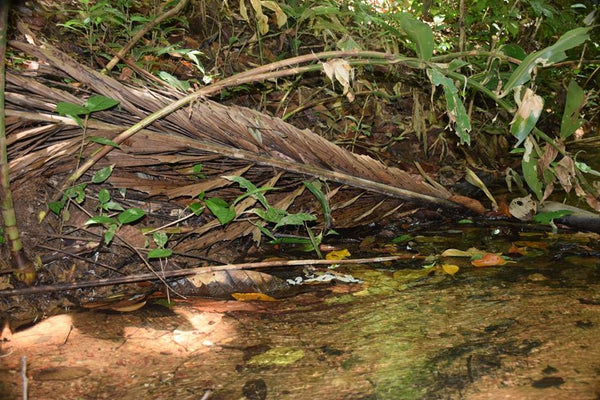
Blackwaters in areas like Amazonia (one of my fave locales, of course!) drain from an area known to geologists as the “Precambrian Guiana Shield”, which is comprised of sediments including quartz, sandstone, shales, and conglomerates, stemming from near the formation of the earth some 4.6 billion years ago. As a result of lots of geological activity over the eons, a nutrient-depleted soil type, consisting of whitish sand we call podzol is formed.
What little nutrient is there is typically returns to the soils by means of leaf drop from the trees which grow there. And of course, when the water returns to the forest floors, residual nutrients are released into thewaters, too. And they’re quickly utilized by the resident microorganisms.
Serious nutrient cycling, right?
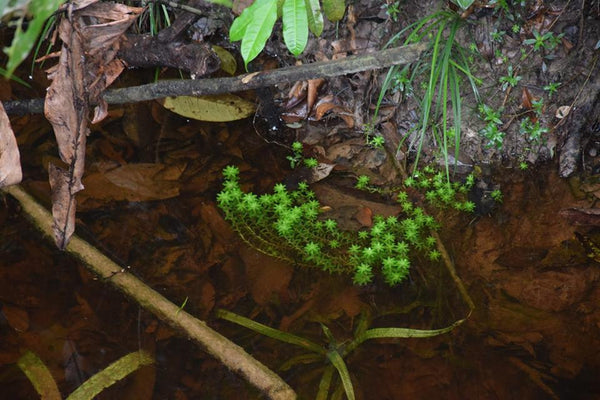
I’m no expert-or even a novice– on geology or geochemistry, or anything in that subject area, for that matter….I admit that I kind of dozed through geology classes in college…much to my regret now! (Hot tip to young fish geeks: Don’t nap in Geology or Meteorology class…you might need them some day!) However, based on my research into this stuff, it goes without saying that these are hardly conditions under which rocks as we know them could form.
Sure, you might find the random rock in the igapo that was washed down from the Andes or some other high-country locale in these forests, but it most certainly did not evolve there. This also helps to explain why the blackwater habitats are generally low in inorganic nutrients and minerals, right?
So…if you’re really, really hardcore into replicating an igapo, you’d probably want to exclude rocks…
And of course, there are some things which contribute to the overall habitat of blackwater environments- or specifically, how they form.
Well, it goes back to Geology. Again.
Hey, don’t start yawning on me…
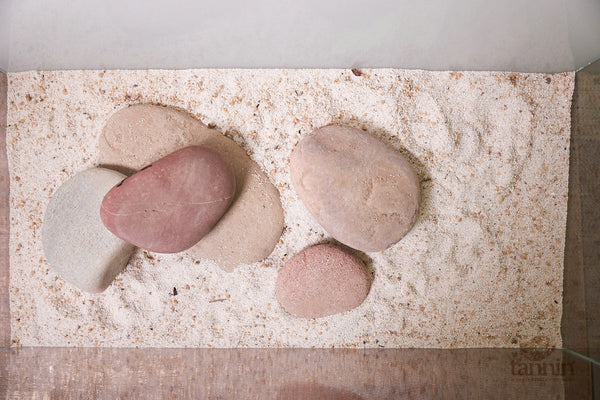
Let’s go back to those podzolic soils one more time, okay?
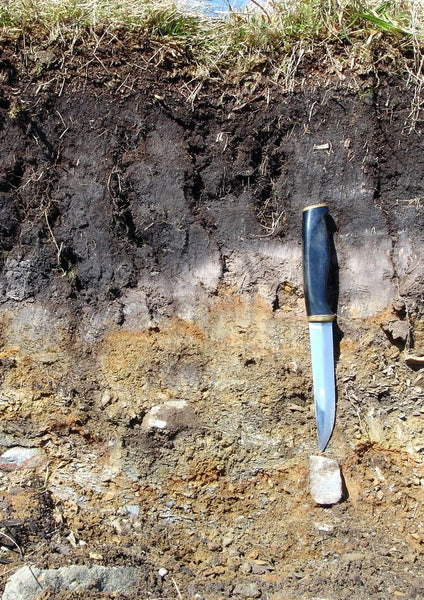
As mentioned previously, podzols typically derive from quartz-rich sands, sandstone, and other sedimentary materials in areas of high precipitation. (Hmm, like…ya’ know, The Amazon!). Typically, podzols are kind of well, shitty for growing stuff like food crops, because they are well- sandy, have little moisture, and even less nutrients!
A process called podzolization (Are you fucking kidding me? Well, what else would you call it, right?) occurs where decomposition of organic matter is inhibited. Numerous microbes and plants consume some of the nitrogen, and while eaten by other organisms, convey what’s left to the even lower-lying forest habitats.
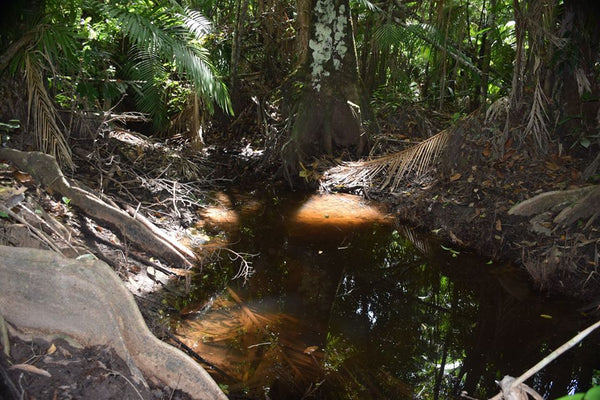
Same story as above- the Amazonian blackwater rivers are largely depleted in nutrients, having passed through the lowland forest soils as groundwater, from which weathering has already occurred. As a result, layers of acidic organics build up. With these rather acidic conditions, a deficiency of nutrients further slows down the decomposition of organics. So, yeah- lousy soil for growing crops…But guess, what? They form the basis of the substrate in many Amazonian aquatic habitats!
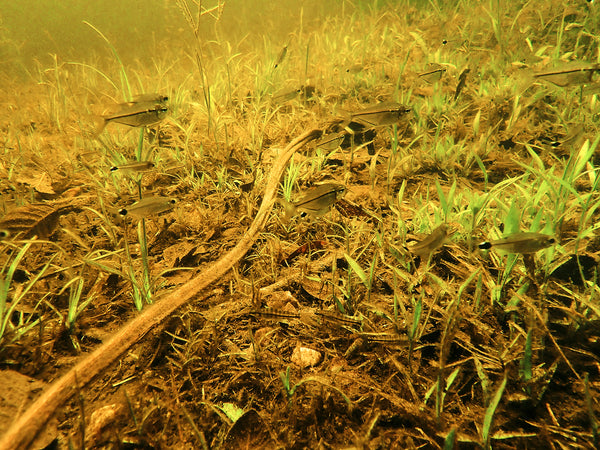
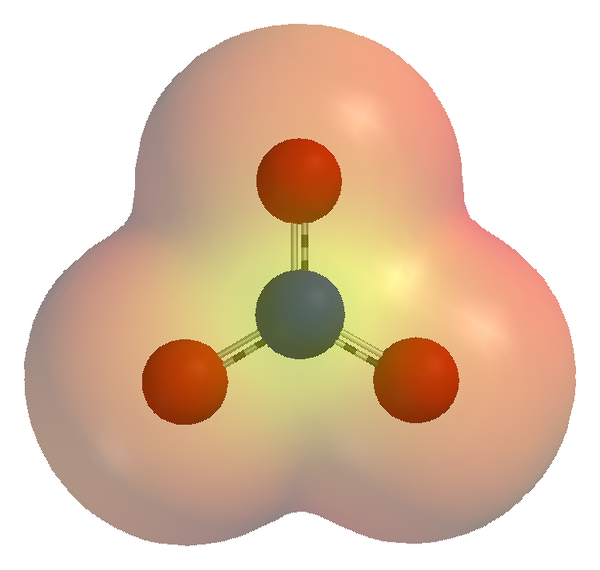
And the water which flows over this soil is what we call “blackwater”, which achieves it’s unique color from a really high content of dissolved humic substances and fulvic acids- it’s poor in nutrients and electrolytes. It’s characterized by having sodium as one of its major cations (ions with fewer electrons than protons, giving them a positive charge), which means it has low alkalinity. Typically, the pH and electrical conductivity values are less than 5.0 and 25 μS cm–1, respectively (pretty freakin’ low!).
So, to make a very long and intimidating story short, the physical characteristics of blackwater habitats are influenced as much by the geology as anything else! Tossing a bunch of Alder cones into your tap water does NOT create “blackwater!” Just get that shit out of your head once and for all, okay?
When I was formulating my “sedimented substrates back in the Tannin Aquatics days, I spent a lot of time studying the geology of the regions which led to the formation of these podzolic soils, to see if I could create something that had similar characteristics. Unfortunately, you just can’t roll up to the local garden center, ask for “podzolic soils”, and pick up a 50 pound bag! (Trust me, I tried).
So I made my own verision…lol
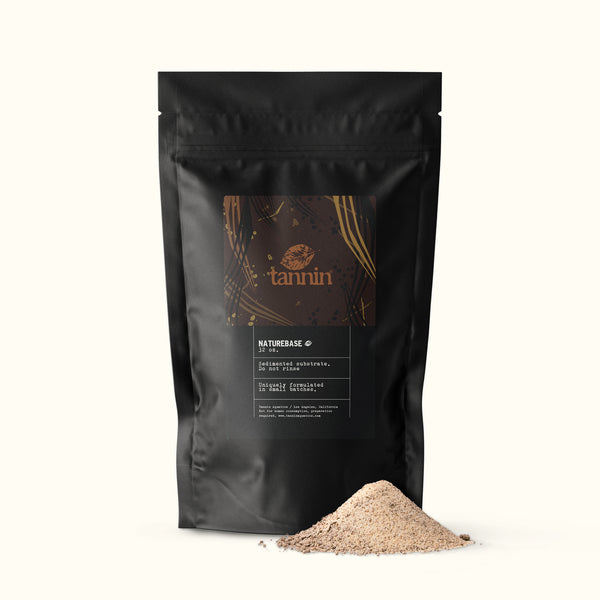
What I can tell you is that using different formulations of substrates has completely changed the way I create botanical method aquariums. In Nature and in the aquarium, the soils and rocks have a profound influence on the formation of blackwater.
All of the dissolved humic substances which give these bodies of water their unique look are “enabled” by the geological properties of the region. And from the “trace element” perspective (that’s the reefer in me), only Fe, B, Sr, Pb and Se present consistent concentration variabilities sufficient to influence the chemistry of these waters…Like, this water has very low concentrations of trace elements.
That’s why you’ll often see simple fine, white silica-type sands on the bottoms of so many Amazonian streams and rivers. They originate up in the mountains and are transported by various means into the lowland areas. I mean, there is way more to this process than I can meaningly convey here- but, suffice into say, it’s a study in the relationship between seemingly unrelated elements and how they come together.
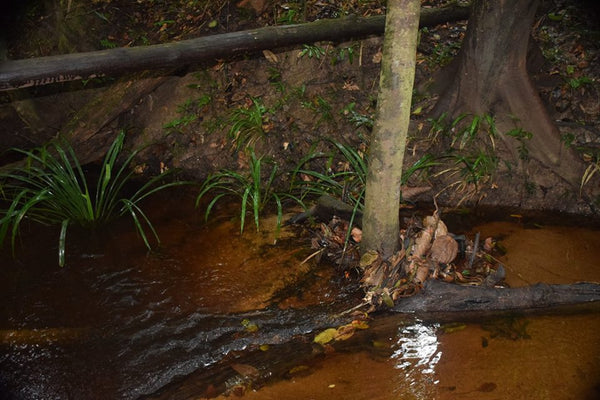
Now, I admit that this is probably more than you will ever care to know about how geology influences your fave blackwater habitats, and I’m all over the place as usual- but I think it’s important to understand that it’s all kind of…related. In fact, it makes it a lot easier to understand how blackwater systems came to exist and function when you consider this “big picture” stuff!
And of course, we’re a hell of a lot more interested in the “decaying vegetation” (you know, the leaves, twigs, seed pods…stuff like that!) which influences the waters, right?
Well, yeah.
However…
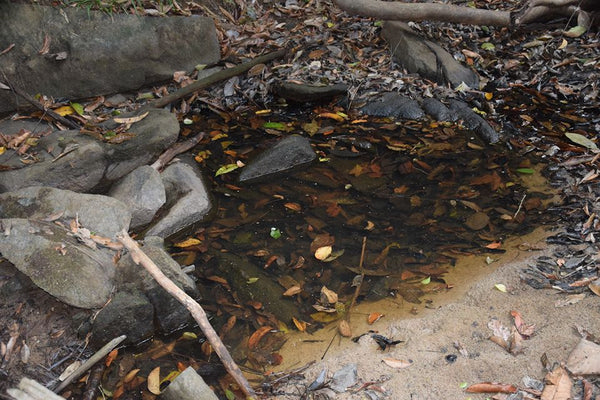
The rock and substrates we select for our tanks do play an important role in being able to create and maintain such natural conditions.
And there’s more: Studies have shown that particle sizes tend to decrease the further downstream from the source they are found. Makes sense, right?
Large rivers, such as the Amazon, have beds of shifting sands, slowly transported with the currents. Typically, the larger the item (pebble, rock, or boulder), the longer it tends to stay in one place. So, in a more powerful flow, you’re more likely to find larger-sized materials.
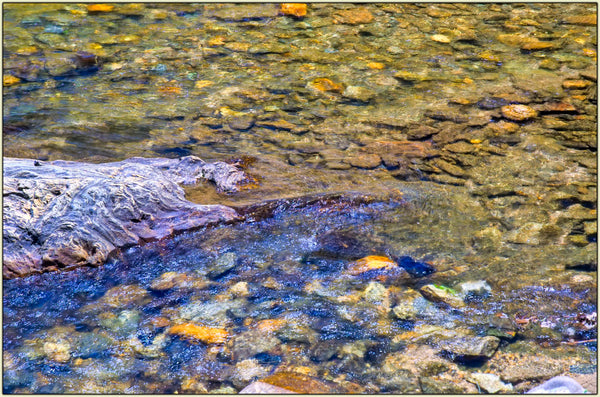
History lesson (yeah- where else in the aquarium world will you get a mini history lesson on substrates?):
The first recorded observations of bed material of the Amazon River were made in 1843 by Lt. William Lewis Herndon of the US Navy, when he travelled the river from its headwaters to its mouth, sounding its depths, and noting the nature of particles caught in a heavy grease smeared to the bottom of his sounding weight.
He reported the bed material of the river to be mostly “sand and fine gravel.” Oltman and Ames took samples at a few locations in 1963 and 1964, and reported the bed material at Óbidos, Brazil, to be “fine sands, with median diameters ranging from 0.15 to 0.25 mm.”
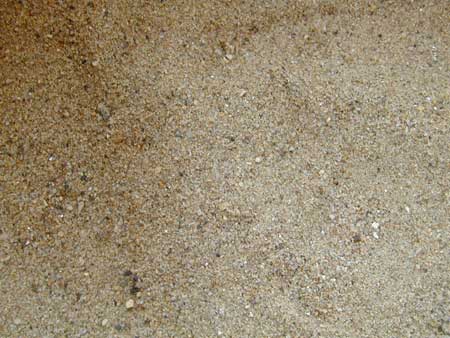
Okay, not some real breakthrough knowledge there, I know- but the point is, many of the larger rivers and their tributaries that we obsess over have mixed sizes of sands and gravels on the bottom.
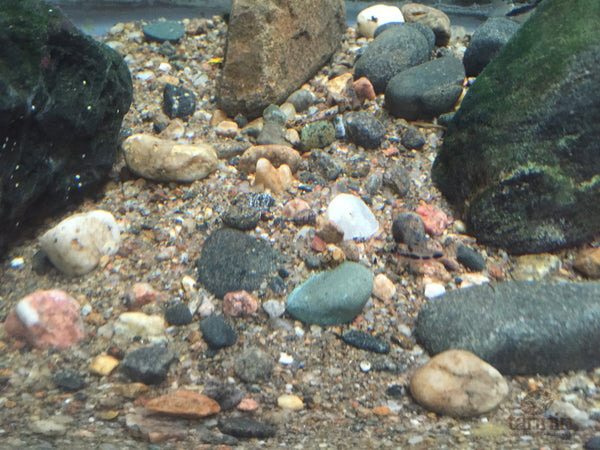
Substrate is pretty important, both in Nature and in the aquarium.
So, using a quality substrate material which doesn’t impact the pH or buffering capacity of the water to any great extent is important…The reality is that just having an awareness of what goes on in the natural aquatic habitats we love gives us a nice “leg up” on this stuff. You’re obviously not going to use a strongly buffering substrate like aragonite, calcite, and such to do the job in your low-pH-and -alkalinity blackwater aquarium, right?
Of course not. Choose silica. Or commercially available silica-based substrates which won’t impact pH and hardness.
So, back to that question about utilizing rocks in your “Rio Negro” habitat or “igapo” aquascape…
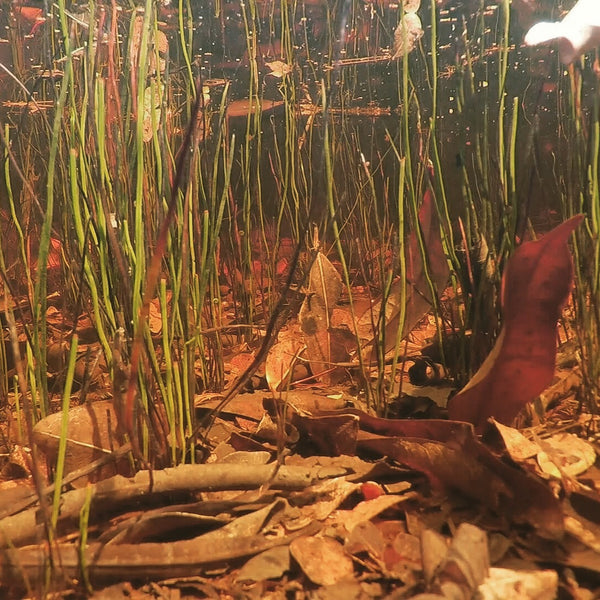
If you’re really, really hardcore into replicating an igapo, like, one of those biotope freaks- or even just a dork like me- you’d probably want to exclude rocks- especially if you’re entering one of those biotope aquarium contests. Astute judges would (rightfully) nail you on scoring for falling back on your natural inclinations as an aquascaper and tossing some in.
Of course, no one has ever entered an aquarium representing an igapo in one of these contests, as far as I know, and I honestly don’t know if most of the people who judge them would even know that little detail…
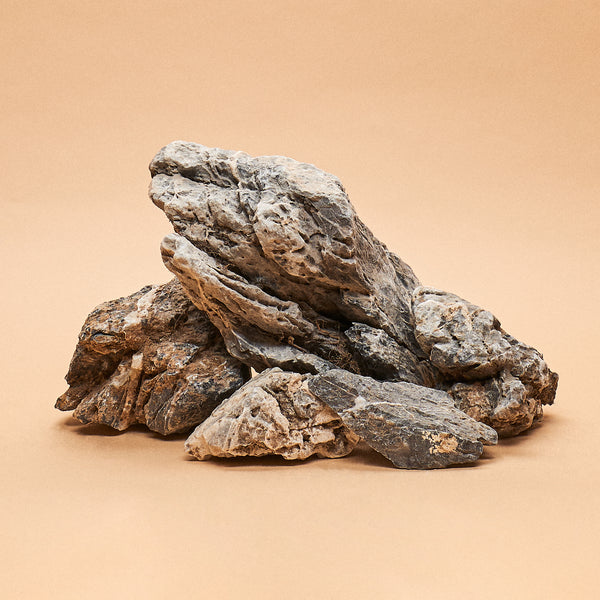
I personally, of course, would likely be a bit more forgiving, which is why I’d be a completely shitty judge- but you won’t find rocks in my igapo tanks! I am not even interested in looking at them. Nope.
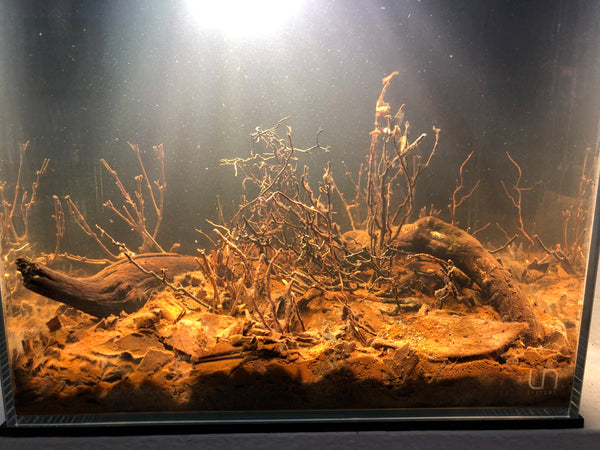
Besides, there is something far more compelling and romantic about leaves, seed pods, sediments, and wood than there is about a bunch of rock, right?
Maybe?
Okay, don’t answer that…
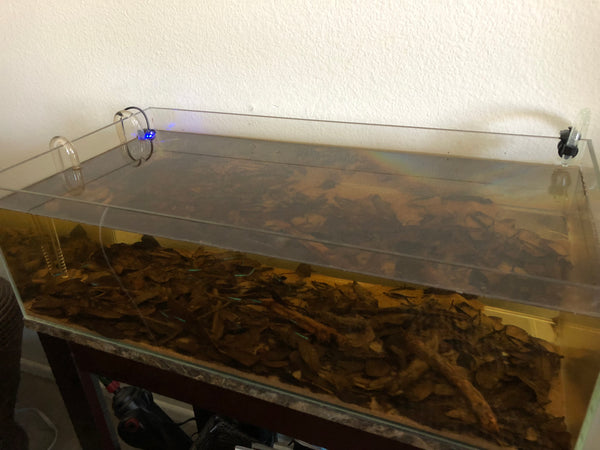
Don’t cry, rock lovers…We’ll come back to that topic in just a bit. Let’s just talk about botanicals as substrate a bit more.
In many of the slower-moving waters, where the sediment “sorting” has already occurred, you will find an accumulation of softer, more “ephemeral” materials, like leaves, twigs, seed pods, soil, sediments, etc. over a bed of sand. Sometimes, these can be quite deep- a meter or more. In areas such as the Pantanal, as related by our friend, Tai Strietman, this decomposing materials- often terrestrial plant parts and such, can be extremely deep.
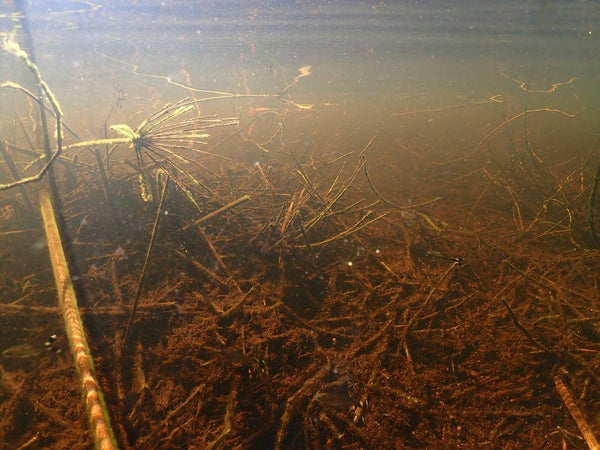
What goes on in these deep beds ofdecomposing botanical materials?
A lot, I think.
It’s something that I keep coming back to, because the idea of utilizing botanicals in your aquarium substrate keeps tantalizing me with its performance and potential benefits.
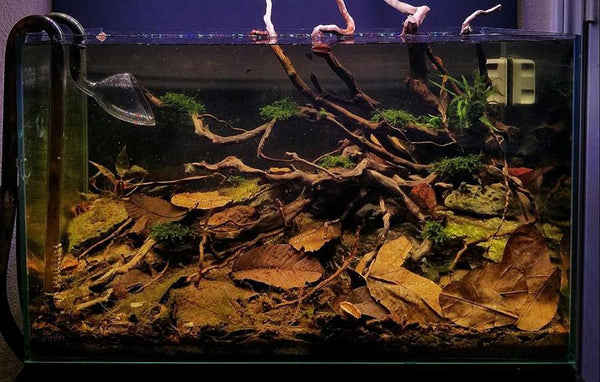
As I’ve obsessively reported to you, a few years back, I set up a small tank for the sole purpose of doing damn near the entire substrate with leaves and twigs- sort of like in Nature. There was less than approximately 0.25″/0.635cm of fine sand in there. I went from throwing in wood to make it look “cool”, to ultimately yanking out everything but the leaves and twigs on the bottom. That’s the whole “scape.” What we in the reef world call a “no scape.”
Leaves and a shoal of Parachierdon simulans.
Nothing else.
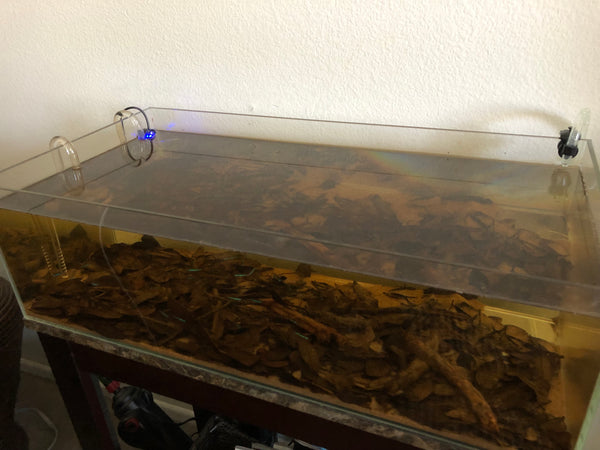
And the interesting thing about this tank was that it was one of the most chemically stable, low-maintenance tanks I’ve ever worked with. It held a TDS of 12 and a pH of 6.2 pretty much from day one of it’s operation. It cycled in about 5-6 days. Ammonia was barely detectible. Nitrite peaked at about 0.25mg/L in approximately 3 days.
Now, the point of this piece is not to drop a big old “humble brag” about some weird tank I started. The point is to show what I think is an interesting “thing” I noticed about that particular tank: Stability and ease of function.
I was quite astounded how a new tank could go from dry to “broken in” in a week or so. And not just “broken in” (ie; “cycled”), mind you. We’re talking, like, stable. I don’t usually do this, but I tested all basic parameters every day for the first 3 weeks of the tank’s existence, just to kind of see what would happen.
And not much happened.
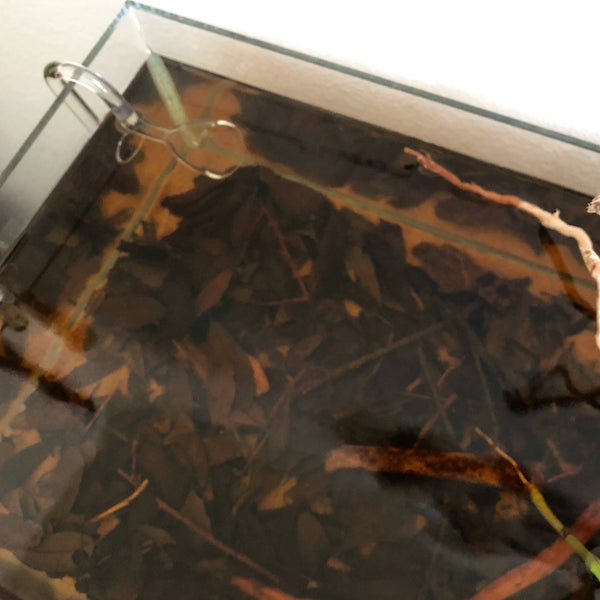
The interesting thing about a tank like this is that it relied on leaves in a way that I had rarely done before. Yet, I had complete confidence that it could work just fine. I’m not some “visionary” here- I’m just a guy who’s played with blackwater/botanical method aquariums for a long time and has developed a certain degree of comfort with them.
Many of you are in the same position, I’ll bet!
I’ve created numerous similar systems since then with equally great results.
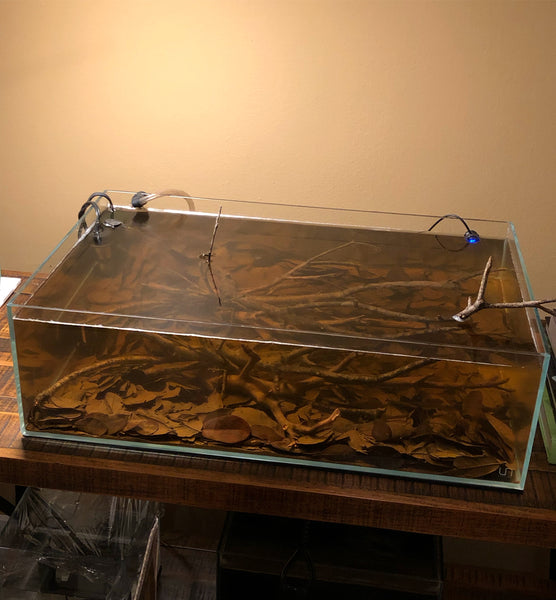
As far as I have determined, what goes on in an aquarium with botanicals- or leaves, in this instance as the majority “substrate” (or “hardscape”, as the case may be) is that they become the basis for ecological activity in the tank. As we have discussed a million times here, as botanicals break down, they recruit bacteria, fungi, and other organisms on their surfaces.
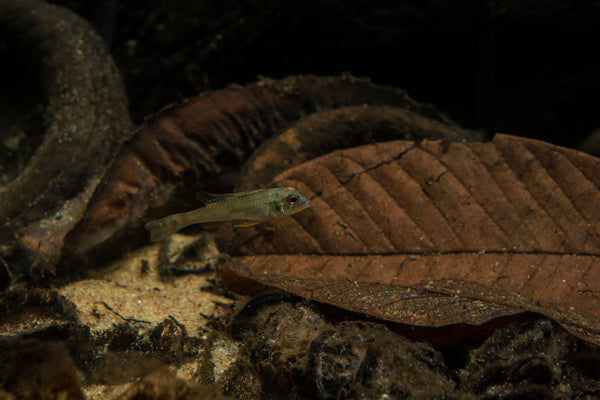
What I am starting to feel more and more confident about is postulating that some degree of denitrification occurs in a system with a layer of leaves and botanicals as a major component of the tank. At the very least, good nutrient processing occurs in such a system because of the resident micro and microfauna present in this botanical bed.
Now, I know, I have little rigorous scientific information to back up my theory, other than anecdotal observations and even some assumptions. However, there is always an example to look at- Nature.
Of course, Nature and aquariums differ, one being a closed system and the other being “open.” However, they both are beholden to the same laws, aren’t they? And I believe that the function of the captive leaf litter bed and the wild litter beds are remarkably similar to a great extent.
And sure, there are plenty of Amazonian and other habitats with tinted water and rocks. SO let’s jump back to that for a bit.
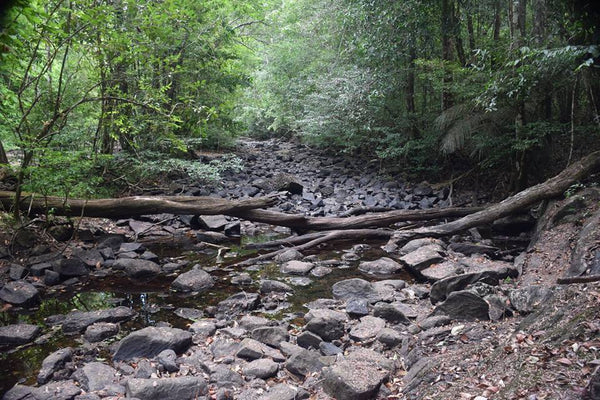
In the aquarium, we have many options to faithfully recreate, or simply gain inspiration from -these habitats.
It’s okay to use rock. Really.
I mean, it provides a unique and satisfying aesthetic experience for our aquariums, while providing a nice contrast with wood and botanicals.
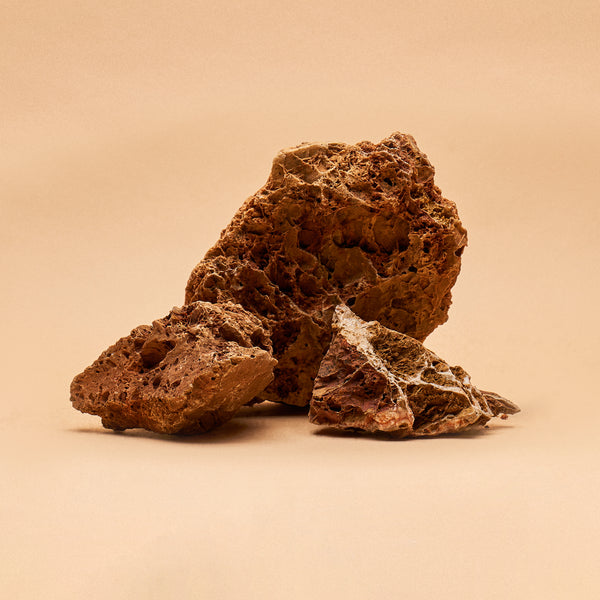
Sure, the fact is, some rock will impact the chemistry of your water, and if you’re really hardcore about it, you’ll have to do some experimentation. I have played with many types of “aquairum available” rocks in my tanks, and I can say that they will typically impact pH and GH a bit; however, to what extent is subject to many variables, ranging from the type of water you start with to the substrate you use, etc. Making generalizations is tricky and “outside of my pay grade” as they say…SO…
Experiment.
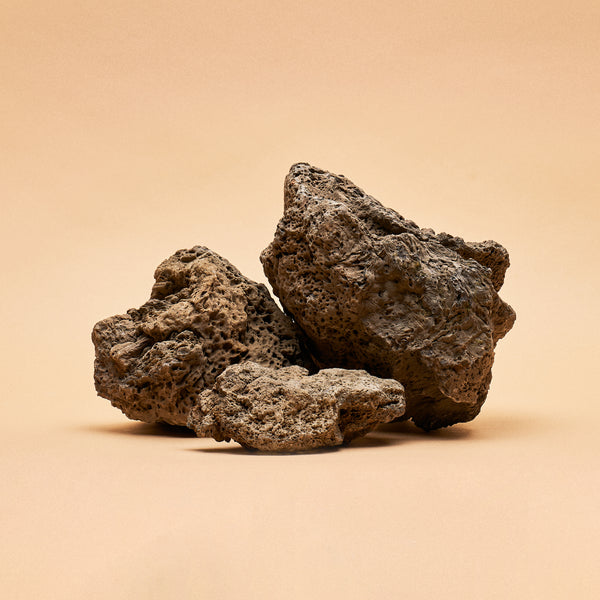
As I always say, it’s important to understand that we should not specifically limit ourselves to any one rigid way of thinking…We simply have to understand that rocks- like botanicals or wood or anything else we add to our aquariums- impact the environmental characteristics of our closed systems. And, that if we’re trying to replicate habitats which don’t typically have rocks in them, then to exclude them from our tanks makes more sense, right?
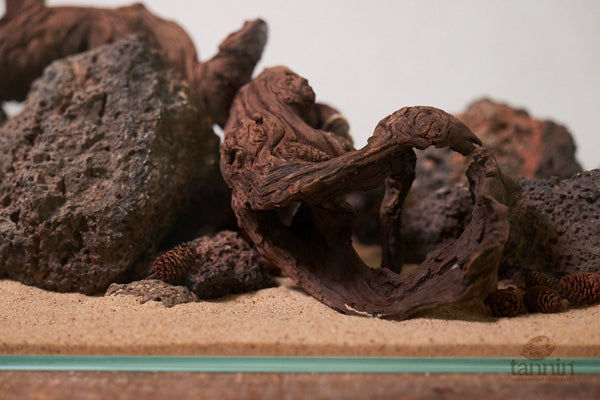
From water chemistry aspect, if you’re faithfully trying to recreate a highly acid, soft water habitat -than you’d likely want to avoid using rocks of any kind to a great extent.
Right?
Okay, enough off this stuff already. I’m longing to talk more about something more exciting…like, leaves and stuff! Bet you didn’t see that coming, huh?
Stay curious. Stay resourceful. Stay observant. Stay creative…
And Stay Wet.
Scott Fellman
 The Tint
Leave a comment