
The other day I was admiring some of my Epiplatys dageti Monroviae (a top-spawning African killifish) spawning in one of my tanks. It’s always cool to see your fishes spawn, and it’s even more cool when they are fish that you’ve raised from fry themselves- I guess it’s something about “closing a circle”, or whatever.
Regardless, the satisfaction of seeing our fishes- any of our fishes- engage in reproductive behavior in our aquariums is not only one of Nature’s wonders- it’s kind of a testimony to our work!
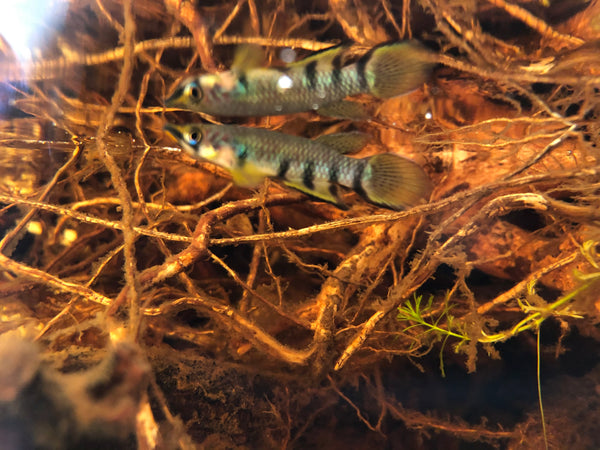
When our fishes reproduce in our aquariums, it’s a pretty amazing achievement, really. Think about it: An animal is comfortable enough in the environment which you have provided, and healthy enough under your care to engage in eons-old reproductive activity, just like occurs in Nature. Now, sure, with some fishes, like many livebearers, this reproductive behavior is almost inevitable in captivity. It’s still amazing to see, though isn’t it?
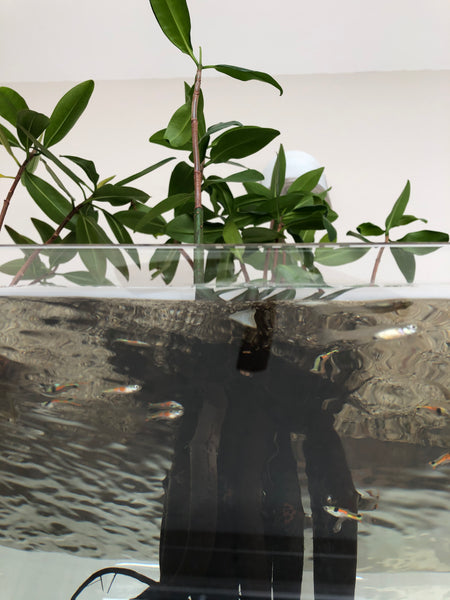
And of course, there are some fishes, like Discus, for which spawning is not considered “inevitable.” These fishes require very specific environmental conditions, social hierarchies, and time, in order for this to occur. It’s not “impossible”- just a bit more demanding of us…
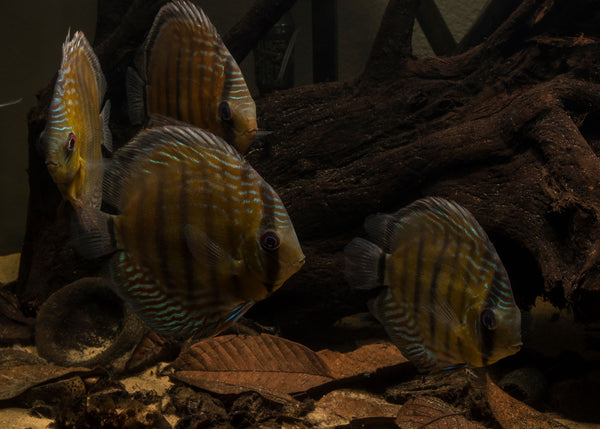
What is it about some fishes which challenges us to make them spawn? Is it some sort of environmental “trigger” that is required? Or is it simply something in the “genetic programming” of the fish, which has a “timing mechanisms: which needs to be “unlocked” or something?
As a kid, I remember that the idea of breeding my fishes seemed so exotic; so aspirational…and often, unachievable.
Sometimes, it still feels that way, especially with some fishes.
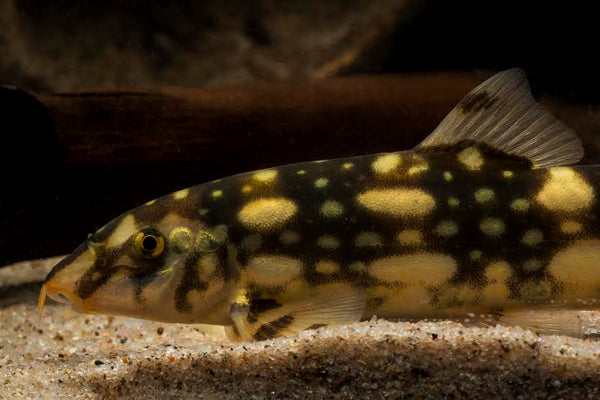
I mean, sure, I was able to breed livebearers, killies, Kribs, Zebra Danios, Apistos, Cherry Barbs- fishes like that. Sometimes, these were the result of random chance, coincidences, or just plain old luck. Usually, my deliberately organized breeding attempts just sort of came up short all the time.
I mean, I’d have some success.
I had various Tetras breed when I intentionally tried to do it. However, for the most part, my “career” as a deliberate fish breeder has been essentially lacking. For whatever reason, I just don’t have that combination of skill, desire, and a certain kind of patience that almost every talented fish breeder seems to possess in abundance.
The combination which leads to success with so many types of fishes.
And, that’s okay. I made peace with that a long time ago. Thank goodness there are so many hobbyists out there who have that skill set, means, and desire! Where would the hobby be without you guys?
Yeah, not everyone has the right combination of skill, patience, and resources to be a great fish breeder. Some of us just don’t get bitten with that bug. I mean, the occasional random, spontaneous event happens, and we rejoice, panic, and hopefully learn from it- but it kind of ends with that.
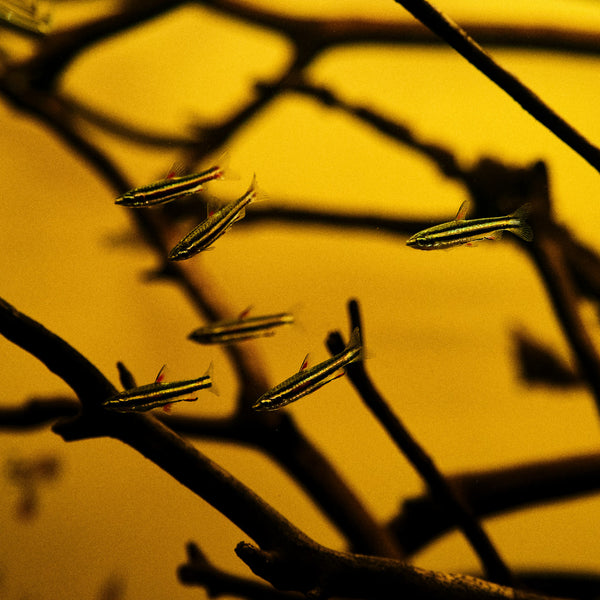
Over the decades, I’ve had a surprisingly large number of those “spontaneous” spawning events with my fishes. You know, you wake up one morning and your Pencilfishes are acting weird…Next thing you know, there are clouds of eggs flying all over the tank…
That sort of stuff.
And after the initial surprise and excitement, during my “postgame analysis”, I’d always try to figure out what led to the spawning event…It was usually pure luck, coupled with providing the fishes a good environment, rather than some intentionally-spawning-focused efforts I made.
And after a few years of experiencing this sort of thing, I began to draw the conclusion that it was the result of going out of my way to focus on recreating the correct environmental conditions for my fishes on a full-time basis- not just for spawning- which led to these events occurring repeatedly over the years.
With all sorts of fishes, too.
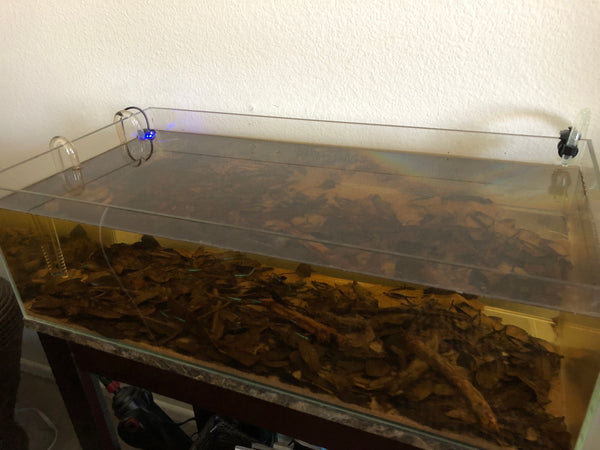
When it happened again, a couple of years ago, in my experimental leaf-litter only tank, hosting about 20 Paracheirodon simulans (“Green Neon Tetras”), I came the conclusion, in a rather circuitous sort of way, that I AM a “fish breeder” of sorts.
Or, more precisely, a “fish natural habitat replication specialist.”
A nice way of saying that by focusing on the overall environmental conditions of the aquarium on a full timebasis, I could encourage more natural behaviors- including spawning- among the fishes under my care. The breeding essentially being a “collateral benefit” of doing the other stuff…
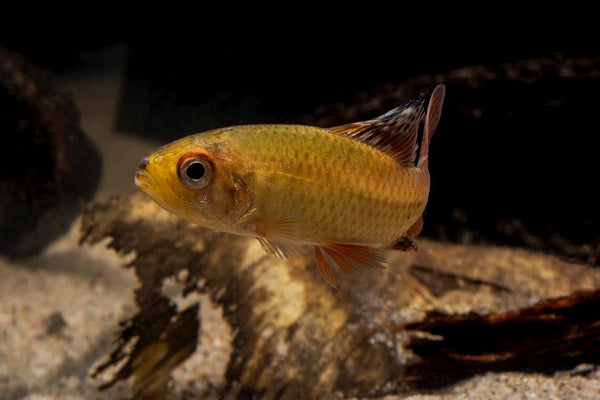
Of course, there is more to being a “successful” breeder than just having the fishes spawn. You have to rear the resulting fry, right? Sure, half the battle is just getting the fishes to lay eggs in the first place- a confirmation that you’re doing something right to make them comfortable enough to want to reproduce! And there is a skill set needed to rear the fry, too.
Yet, I think that with a more intensive and creative approach, our botanical method aquariums can help with the “rearing aspect”, too. Sure, it’s more “hands-off” than the traditional “keep-the-fry-knee-deep-in-food-at-all-times” approach that serious breeders employ…but my less deliberate, more “hands-off” approach can work. I’ve seen it happen many times in my “non-breeding” tanks.
We’re seeing more and more reports of “spontaneous” spawnings of all sorts of different fishes associated with blackwater conditions.
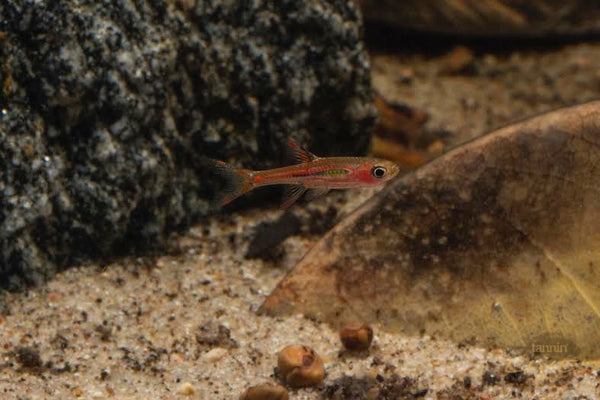
Often, it’s a group of fishes that the aquarist had for a while, perhaps with little effort put into spawning them, and then it just sort of “happened.” For others, it is perhaps expected– maybe the ultimate goal as it relates to a specific species…but was just taking a long time to come to fruition.
The “common denominator” in all of the reports I receive are that the fishes are displaying better overall color, vigor, and overall health after being recently exposed to the more “physiologically appropriate” conditions of a botanical method (blackwater) aquarium. Now, this is by no means us stating that blackwater/botanical method tanks are somehow “magical”, and possess the ability to make every fish automatically thrive and spawn- or that this is some amazing “secret” that we’ve stumbled upon.
Nope. It’s as old as the hobby itself. It’s hardly magic.
It’s the work of Nature.
Rather, it’s more of an affirmation of a theory which I’ve developed over the decades that fishes from “specialized environmental conditions”- even those which might be many generations captive-bred, can always benefit from being “re-patriated” to the conditions under which they have evolved for eons.
I often wonder what is wrong with the idea of a permanent setup- a setup in which the fishes are provided a natural setting, and left to their own devices to “do their thing…”
This is pretty much the “classic” way many of us “bred” livebearers, killifish, and Rainbowfishes for a long time. It’s a very low-labor, aesthetically interesting way to keep and breed these guys.
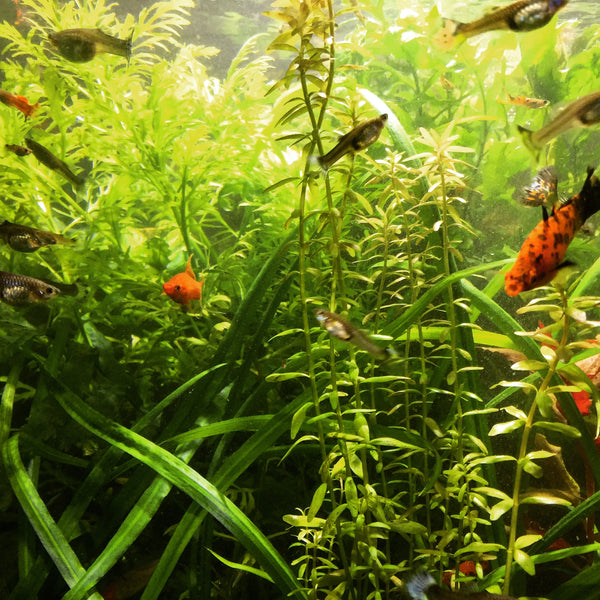
Now, I realize that a lot of hardcore, very experienced breeders will scoff at this- and probably rightly so. For the serious breeder, giving up control when the specific goal is the reproduction of your fishes is probably not a good thing. Practicality becomes important- hence the employment of clay flowerpots, spawning cones, breeding traps, bare tanks to raise fry, etc.
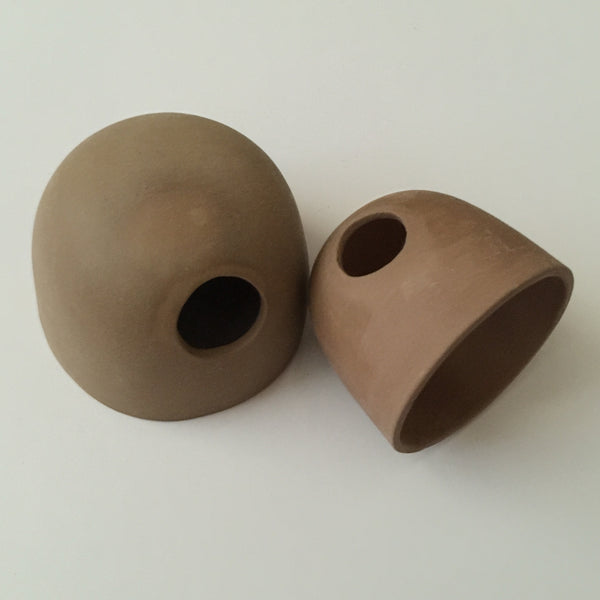
Sure, to a fish, a cave is a cave, be it constructed of ceramic or if it’s the inside of a hollowed-out Cariniana pod. To the fish, it’s a necessary place to spawn quietly and provide a defensible territory to protect the resulting fry.
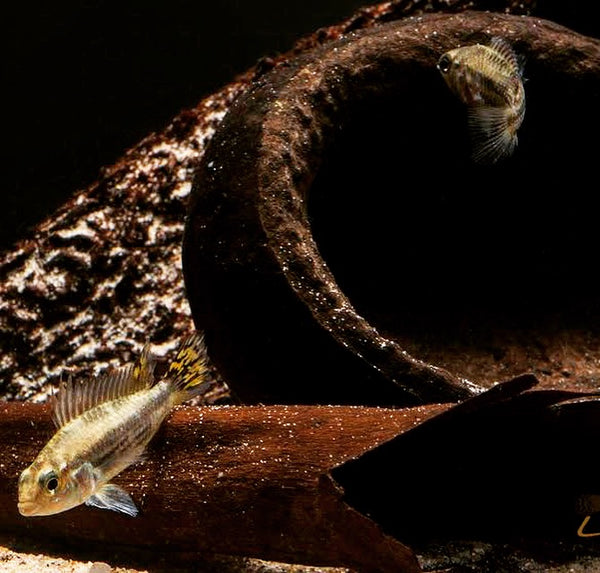
In all likelihood, they couldn’t care less what it is made of, right? And to the serious or professional breeder, viable spawns are the game.
And rearing the fry is the whole game!
No discussion of rearing our little fishes would be complete without revisiting the idea of a botanical-influenced “nursery” tank for fishes. You know where I’m going with this, right?
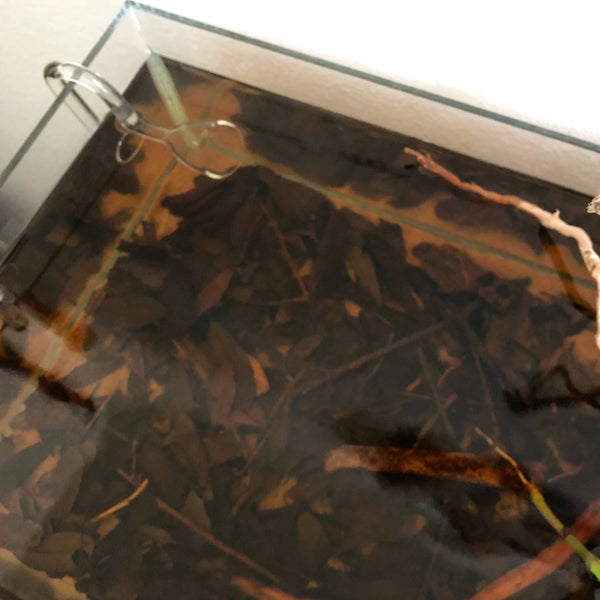
I think it’s interesting for a number of reasons:
First, as we’ve discussed many times, the humic substances and other compounds associated with leaves and other botanicals, when released into the water, are known to have beneficial health impact on fishes. The potential for antimicrobial and antifungal effects is documented by science and is quite real.
Wouldn’t this be something worth investigating from our unique angle?
I think so!
As you know, by now, when I get on a “roll” about something, I tend not to let up on it, right? I’ve been bothering you a lot about the idea of “functional aesthetics” in the botanical method aquarium. In other words, creating an environment in your tank comprised of natural materials assembled in such a way as to not only be aesthetically pleasing, but to enhance the aquatic environment chemically, biologically, or physically.
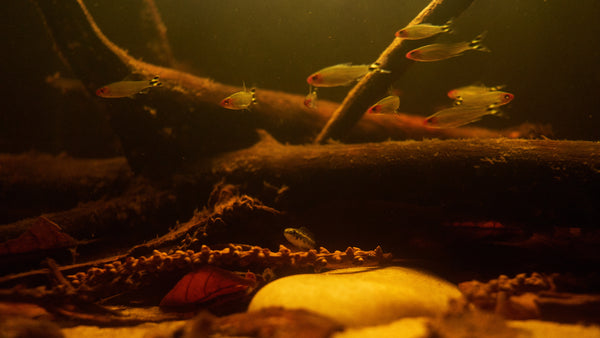
And interestingly, I tend to stumble on stuff that reinforces this idea on a pretty regular basis. I think it’s largely because I’m attuned to these kinds of “fun facts” and when I see stuff that reinforces the concept, I’ll often jump right into it.
Such a case occurred one day when I was visiting a killifish forum on Facebook. One of the participants was discussing some new fishes that he obtained, and one was from a rare genus called Episemion. Weird, because it is a fish that falls genetically halfway between Epiplatys and Aphyosemion.
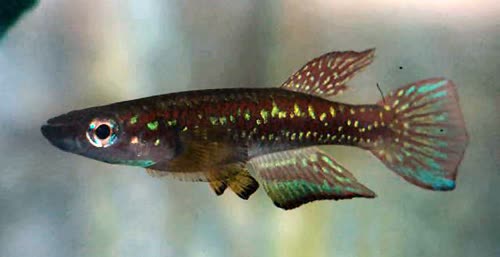
Even more interesting to me was the discussion that it’s notoriously difficult to spawn, and that it is only found in a couple of places in The Congo.
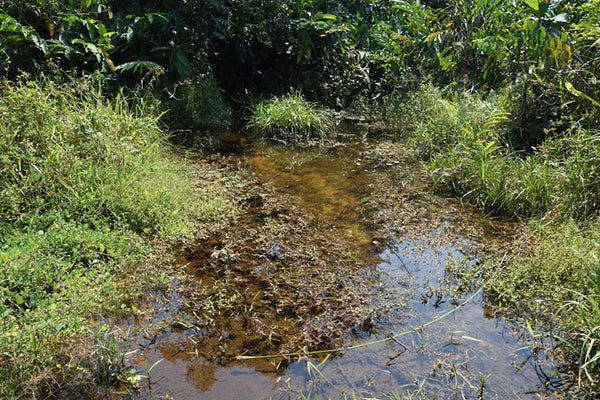
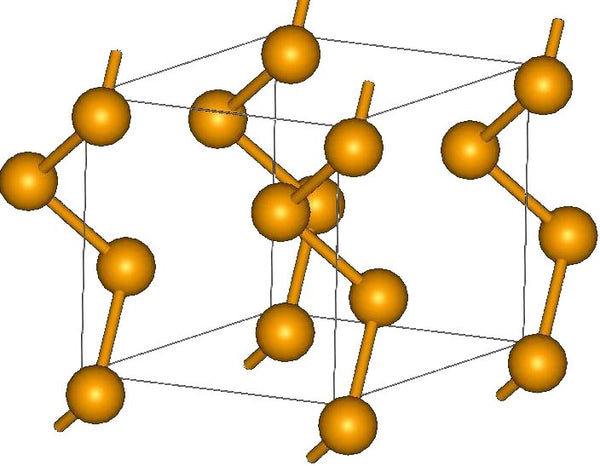
And even more interesting was that it is in a region known for high levels of selenium I the soil…And that’s VERY interesting. Selenium is known to be nutritionally beneficial to animals and humans at a concentration of 0.05-0.10ppm. It’s an essential component of many enzymes and proteins, and deficiencies are known to cause diseases. One of it’s known health benefits for animal is that it plays a key role in immune and reproductive functions!
Okay, that helps with the “difficult to breed” part, right?
Selenium occurs in soil associated with sulfide minerals. It’s found in plants at varying concentrations which are dictated by the pH, moisture content, and other factors. Soils which contain high concentration of selenium are found in greater concentration in plants which occur in these regions.
Interesting.
I’m doubtful that we know the specific concentrations of selenium in many of the planted aquarium substrates out on the market, and most hobbyists aren’t just throwing in that “readily available” tropical Congo soil that you can pick up at any LFS in their tanks, right? 😜
So, how would we get more selenium into our tanks for our killies?
Botanicals could be one way. Like, The Brazil nut…
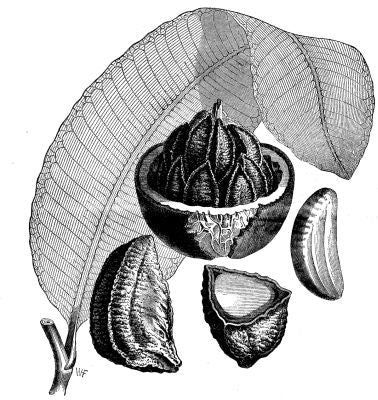
And the Brazil nut is kind of known to us, isn’t it? The “Monkey Pot” has something to do with this, right?
And, yes- it’s technically a fruit capsule, produced from the abundant tree, Lecythis pisonis, native to South America -most notably, the Amazonian region. Astute, particularly geeky readers of “The Tint” will recognize the name as a derivative of the family Lecythidaceae, which just happens to be the family in which the genus Cariniana is located…you know, the popular “Cariniana Pod.” Yeah…this family has a number of botanical-producing trees in it, right?
Yes, it does.
Hmm…Lecythidae…
Ahh…it’s also known as the taxonomic family which contains the genus Bertholletia– the genus which contains the tree, Bertholletia excelsa– the bearer of the “Brazil Nut.” You know, the one that comes in the can of “mixed nuts” that no one really likes? The one that, if you buy it in the shell, you need a freakin’ sledge hammer to crack?
Yeah. That one.
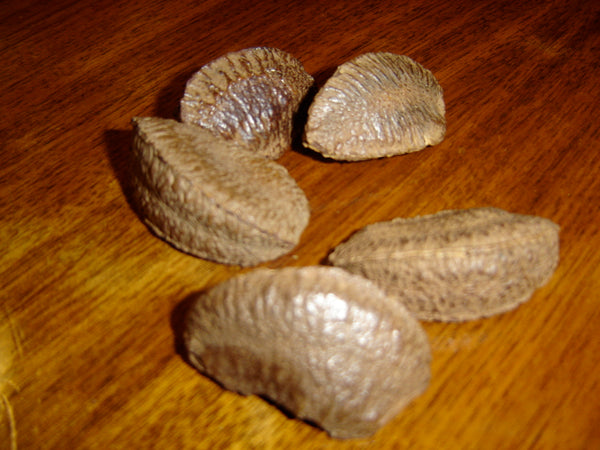
Craving more useless Brazil Nut trivia?
Check this out: Because of their larger size size, they tend to rise to the top of the can of mixed nuts from vibrations which are encountered during transport…this is a textbook example of the physics concept of granular convection– which for this reason is frequently called…wait for it…the “Brazil Nut effect.” (I am totally serious!)
Okay, anyways…woudl it be possible to somehow utilize the “Monkey Pot” in a tank with these fishes to perhaps impart some additional selenium into the water? Okay, this begs additional questions? How much? How rapidly? In what form? Wouldn’t it be easier to just grind up some Brazil nuts and toss ’em in? Or would the fruit capsule itself have a greater concentration of selenium? Would it even leach into the water?
Where the hell am I going with this exercise?
I’m just sort of taking you out on the ledge here; demonstrating how the idea of utilizing botanicals to provide “functional aesthetics” is, at the every least, a possibility to help solve some potential challenges in the hobby.
Like, this is something that we have done with Catappa leaves forever. You’ve seen my thoughts about them and the alleged health benefits that they are purported to offer fishes. Some is marketing bullshit. Some of it IS legit…SO, could the same assumption be made for other botanicals?
I think so. I think it’s worth investigating; experimenting…right?
Hobby suppliers like my friend Ben at Betta Botanicals offer lots of different botanicals, many of which find their way into tropical aquatic habitats around the world. Many come from regions where specific soil types are found…perhaps they contain concentrations of various micronutrients or minerals which are beneficial to fishes in ways that haven’t been thoroughly studied..or at least, the connection between the two hasn’t.
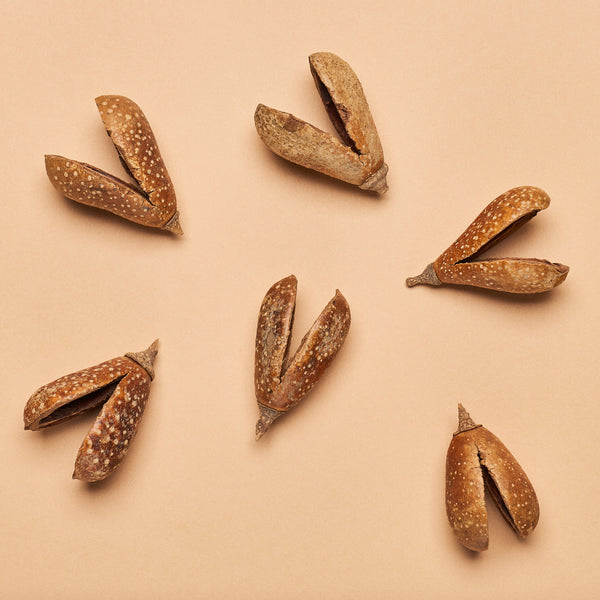
We often hear from our customers how fishes seem to spawn not long after botanicals are introduced toothier tank, or how they are seemingly healthier and more colorful, etc. Is it just the tannins? The humic substances? Or other compounds found in the botanicals?
A ton to learn here. The possibilities are endless.
We talk about the idea of replicating the natural habitats of our fishes as almost a religious thing. We understand that fishes have evolved over eons to reside in specific environmental conditions and ecological niches.
And of course, sometimes, when we attempt to replicate some of these environmental conditions, they create outcomes that we might not have expected. Hoped for perhaps, but not expected.
There were many times during my Tannin Aquatics days when I’d receive a breathless phone call from a customer who had recently switched over to a botanical method aquarium, only to have a fish like her little Boraras, which she’d had for over a year, suddenly start spawning!
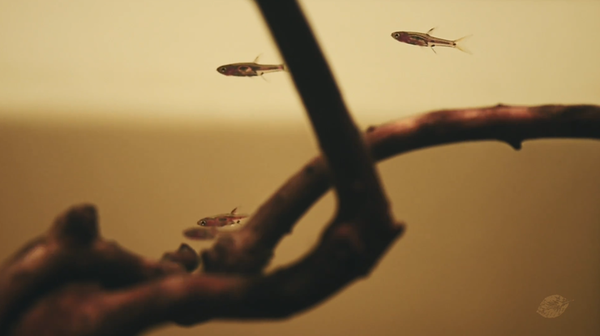
Cool!
Now sure, it could just have been that they finally were of spawning age, or that the temperature in her tank changed one night, or… number of a dozen possible factors. She felt it was “something in the water” released by the botanicals that she added not too long before (in her case, it was Selatan Catappa Bark -from that particular region of Boreo, and a few other items…). I can’t say with any high degree of certainty that this was, indeed, the catalyst for the spawning event…but it makes one wonder..
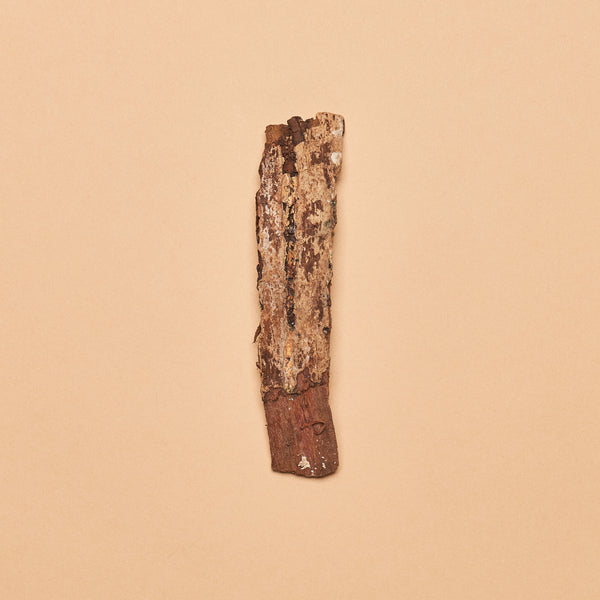
However, I hear these kinds of stories from hobbyists fairly often…In fact, likely too often to think that it’s merely a complete coincidence, or a set of unrelated events and random factors.
Yeah.
Actually, I hear about them all the time. Like, on the regular.
What we’re seeing more and more in botanical method aquariums are reports of “spontaneous” spawnings and “perking up” of all sorts of different fishes associated with these types of conditions.
The “common denominator” in all of the reports are that the fishes are displaying better color, vigor, and overall health after being recently exposed to the more “physiologically appropriate” conditions of a blackwater aquarium.
Now, again-this is by no means us stating that blackwater, botanical method tanks are somehow “magical”, and possess the ability to make every fish spontaneously thrive and spawn.
That’s just complete B.S., and I won’t ever make or support those kinds of assertions.
However, it’s more of an affirmation that fishes from some specialized environments- even those which might be several generations captive-bred, can always benefit from being “repatriated” to some of the conditions under which they have evolved for eons.
But, here’s the thing.
We just can’t replicate every single environmental parameter of our fishes’ natural habitats in our aquariums.
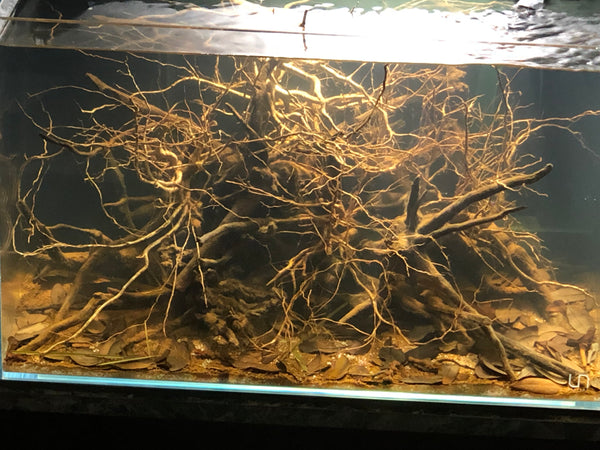
We can, however, replicate many aspects of their natural habitats- chemical, ecological, and physical.
We can.
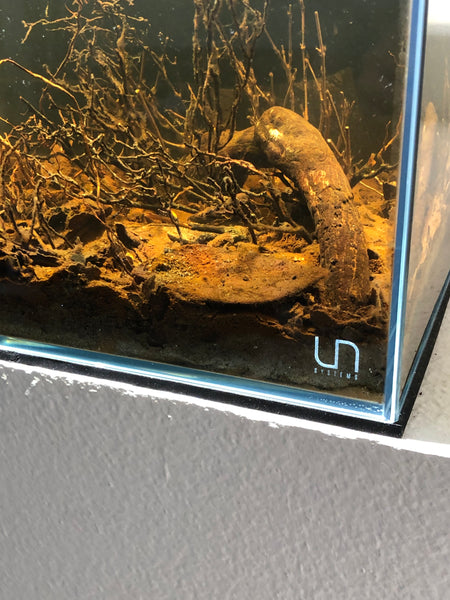
Now, I have no illusions about what we do here. One of the things that we can do is analyze some of the ecological parameters of the natural habitats from which our fishes come, and figure out how replicate, to the best of our capabilities, the ones that we can.
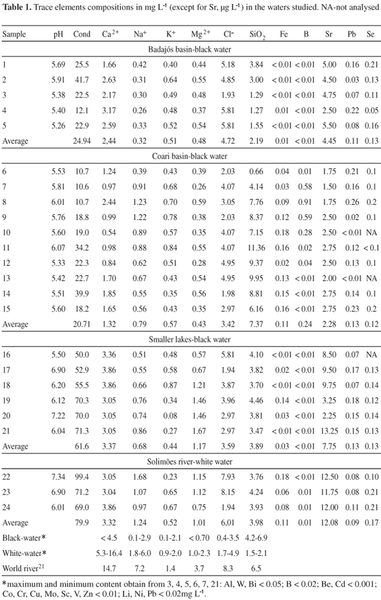
This is not an “excuse” for half-assed work. Rather, it’s a bit of a concession to practicality. Realistically, most hobbyists don’t have the test equipment or means to manipulate water parameters so that you can get “x” mg/L of Sr, Fe, SiO2, etc. Now, I’m not saying that you can’t do this…it just may not be practical for many who don’t have access to lab-grade analytical equipment and pure chemicals.
And, it’s not always advisable to do so, even if you DO have the means.
We as hobbyists have for many years felt compelled to “chase numbers” in our attempts to recreate the water chemistry of our fishes natural habitats as faithfully as possible. Now, this is a pursuit which I can understand; I do have enormous respect for those hobbyists who endeavor to do this.
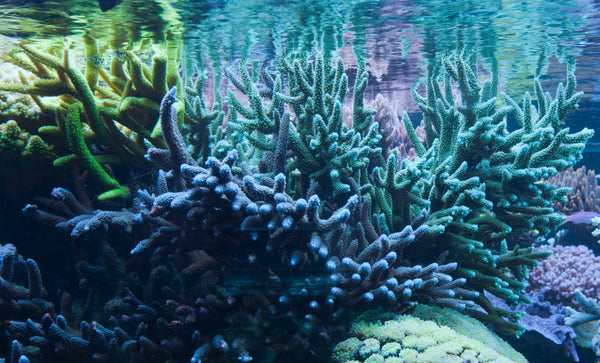
As a side note- I remember several hobbyists from the reef aquarium world who were scientists, and who DID try this sort of stuff, and their tanks were among the most “average” I’d seen! That being said, I did see some tanks from hobbyist/scientists who had access to incredible analytical equipment and chemicals, and they DID have amazing tanks…it balances out, I suppose.
I think that the other “problem” is that we aren’t exactly certain what some of these trace elements and such actually do, in terms of benefits for our fishes…We just know that they are present in the natural waters from which many of our fishes come. So, where does that leave us?
I guess I’ve often taken the rather sheepish response of saying that it’s better to replicate some of the aspects of our fishes’ natural habitats than none whatsoever. Of course, I realize that some things are important, like pH and alkalinity. Some species simply cannot spawn, have eggs develop, etc. under anything but some very tight parameters, or with the presence of specific trace elements.
Like any good reef aquarist, I am really into water testing. Not only because it’s good to know what exactly is going on in my aquariums, but because I can compare the water quality in my tanks to that on the reefs (this information. is readily available). In my botanical method aquariums, the water testing to me has always been to help me learn the “baselines” at which these systems operate.
I mean, seeing that our more focused practice of using lots of leaves and other botanical materials in our tanks is relatively new, it’s not like there is a huge database in the aquarium hobby to see what’s “normal” for these types of systems.
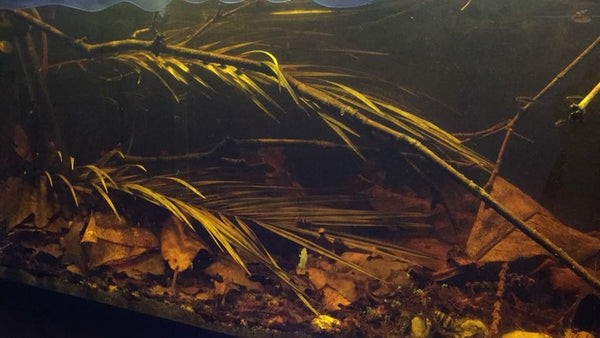
Just like in the reef world, if you look long and hard enough, you can find all sorts of scientific papers documenting all sorts of water chemistry parameters in some of the wild habitats we obsess over. Being able to know what is “normal” for the wild habitats is a valuable asset. Of course, we can’t expect to target and achieve every single parameter that we see in one of these studies of natural systems in our aquariums, However, we can use these as a sort of “point of comparison” to see what kinds of “commonalities” we can achieve between the natural habitats and our aquariums.
Of course, you can get really crazy, and just “chase numbers” to the point of actually being detrimental to your livestock. There are some parameters that you can work with that can yield interesting results. Of course, the key is not to go overboard chasing specific numbers in the process.
Redox is a great example of this.
One good aquarium source I found online defines redox (aka “ORP” or “oxidation-reduction potential”) “… a measure, in millivolts, of the tendency of a chemical substance to oxidize or reduce another chemical substance.”
In aquarium practice, Redox potentials are closely related to the stability of the aquarium and is often used as a ‘barometer’ of water quality.
Things which decrease the oxygen content of the water, such as decomposing food, fish poop, etc., can rapidly break down into more toxic compounds like ammonia and nitrite, are known as “reductive agents.” These reductive agents can decrease the redox potential, which indicates deteriorating water quality.
I remember my first measurements of redox in one of my botanical method aquariums, I FREAKED THE FUCK OUT because I was getting a reading of 202mv, when, in the reef world, I’d been “brought up” to looking at target numbers like 350-400mv as “acceptable!” That reading was like “sewer water” in reef tank land!
Now, some hobbyists would use ozonizers to achieve these high redox levels, and end up essentially burning off the fins of some of their fishes in the process! It was a classic example of chasing numbers to the point of not taking into account the actual damage that we were doing to our livestock in pursuit of some target number!
The reality is that my botanical-style/blackwater aquariums were gorgeous and simply thriving with ORP reading of around 200-240mv or so. Of course, if I were chasing what “the books” said about ORP and freshwater, I’d be trying to hit higher numbers, like 250-300mv, because…well, because…um, why? Because “they” said so?
Yeah, I think.
I mean, thinking about numbers as absolutes is really a problem that we as hobbyists seem to get into. A real “hamster wheel” that many get stuck in. The reality, we’d do far better to fall into some sort of range for some of these parameters, and to just look at our own aquariums and see how the organisms under our care are doing.
And further, when you research the parameters of the wild habitats from which our fishes come from, some of the numbers you see reported seem to be well below what “the books” suggest that you target in the aquarium!
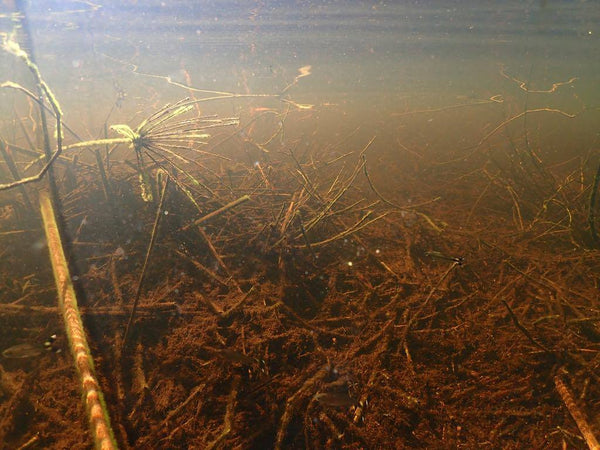
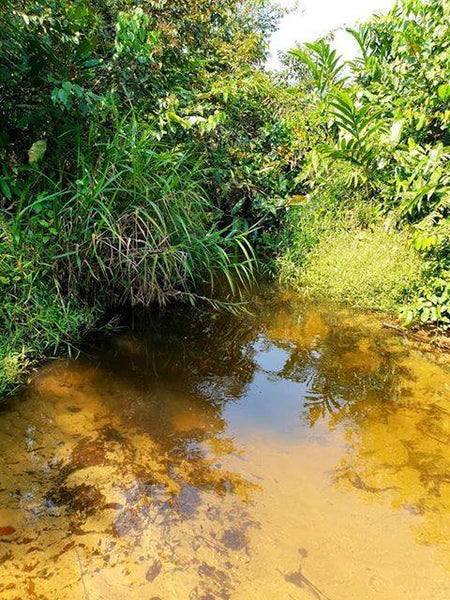
Again, the idea of simply chasing numbers and using that as a rationalization that you’re doing everything correctly is a fool’s errand, IMHO. Rather, I think it useful to study the environments and ecology of the environments from which our fishes come from, and see which ones you can replicate as accurately as possible. Or at least, which ranges, factors, or conditions you can replicate as accurately as possible.
You’ll find that it’s extremely difficult to replicate them exactly in most cases, because of numerous factors related to the environments surrounding the aquatic habitats we love so much. Factors like soil geology, rainfall, flood influx from surrounding streams, seasonal temperature shifts, periodic sediment and nutrient influxes, etc. are among the many variables which factor into the way these habitats evolve and function.
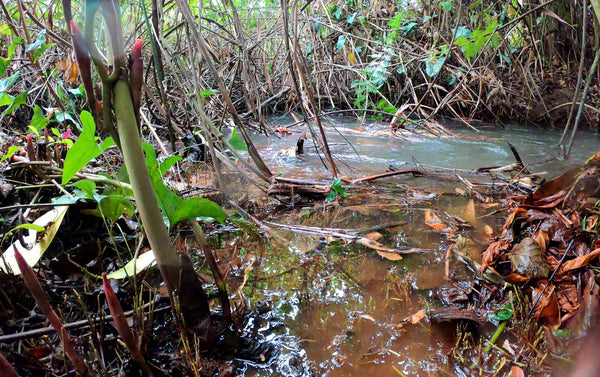
One of the reasons I spent about two years of my life playing with all sorts of materials to develop sedimented substrates was to attempt to replicate- on some level, the influence of soil geology has on wild aquatic habitats in our closed aquariums.
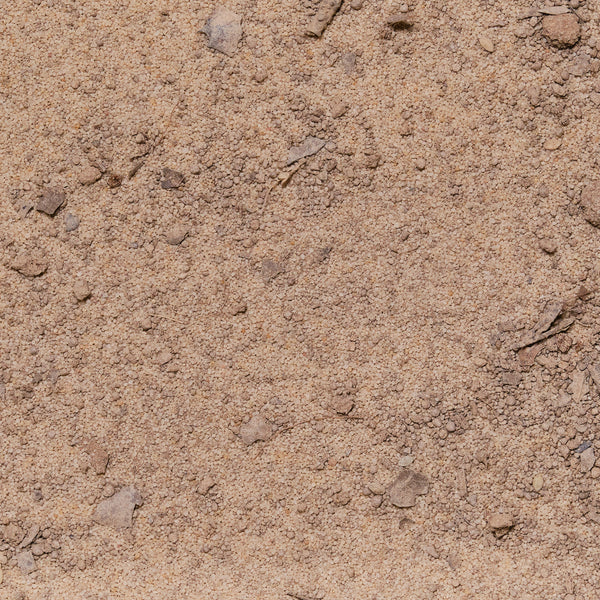
The results were/are interesting and have been quite encouraging, but they’re far from “exact.” We can at least introduce some of the factors which natural soils and sediments have on aquatic habitats in our aquarium versions, and attempt to replicate some of their physical and aesthetic characteristics. I personally feel that they’re more “biotopically “accurate” than most of the substrates out there, but they are certainly not the best substrates ever made.
And their very composition– silts, clays, and sediments- ensures initially cloudy conditions that would discourage all but the most hardcore hobbyists from going “all in” with them as the sole substrate in a large display tank! They’re largely experimental.
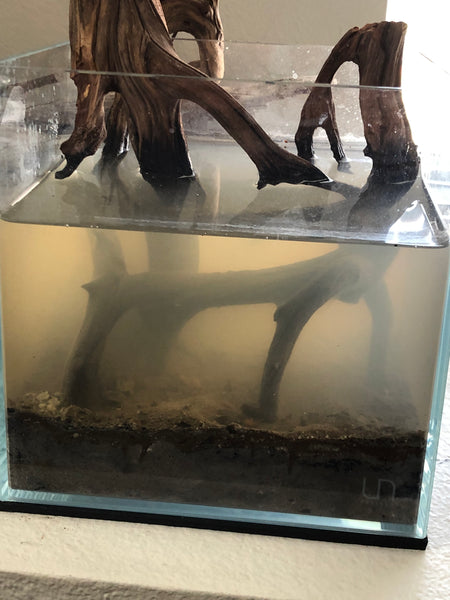
Again, the joy (and frustration) of “chasing numbers”, or attempting to replicate the characteristics and function of wild aquatic habitats is that it’s damn hard to do it with 100% accuracy! The reality is that you can recreate a “reasonable facsimile” in many cases- which is pretty incredible, really. However, because of the enormous number of factors and influences on aquatic habitats, I personally feel that this might be as close as we can get for the foreseeable future.
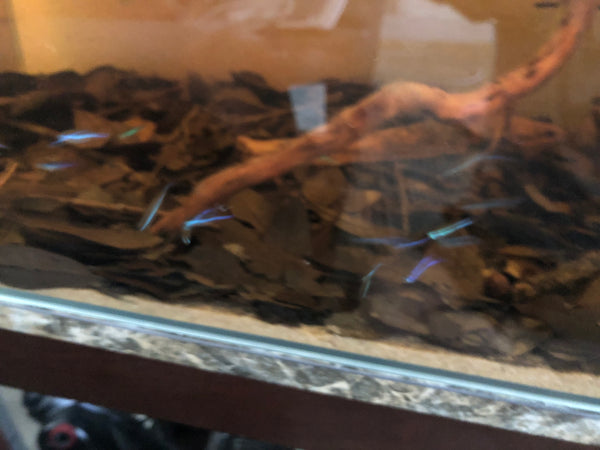
Yet, I’d hardly think of that as a reason NOT to strive to try to recreate every possible parameter of Nature in our tanks. The “wins” we rack up on the way towards the impossible-to-achieve goal of 100% accuracy will only benefit our fishes and advance the state of the art of the aquarium hobby for many years to come!
So, the parting shot here is that, if you’re excited like I am about the idea of replicating some of the functions and characteristics of your fave wild aquatic habitats- go for it.
However, keep one leg firmly grounded in practicality, and understand and accept that “perfection” is an unlikely outcome. Rather, it’s about a process of learning, understanding, and experimentation- all done in an effort to get us closer to creating more optimum conditions for the fishes which we love so much.
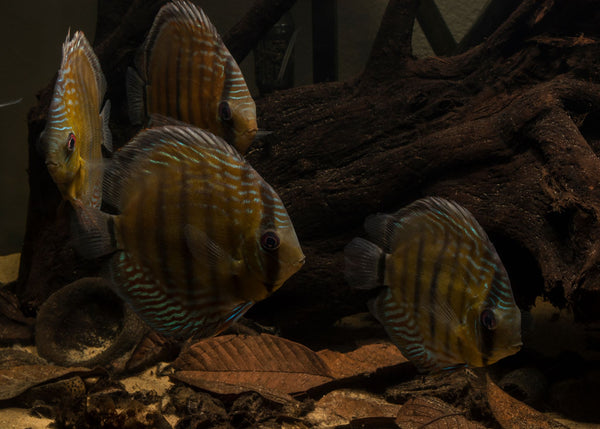
Stay experimental. Stay curious. Stay bold. Stay studious. Stay diligent…
And Stay Wet.
Scott Fellman
 The Tint
Leave a comment