
As I plot my next botanical method aquarium, I’m thinking about all of the different ideas I want to incorporate in it. Actually, it’s more about what ecological niche I’d like to try to replicate.
A submerged log? A flooded varzea meadow? A temporal pool? A leaf-choked igarape?
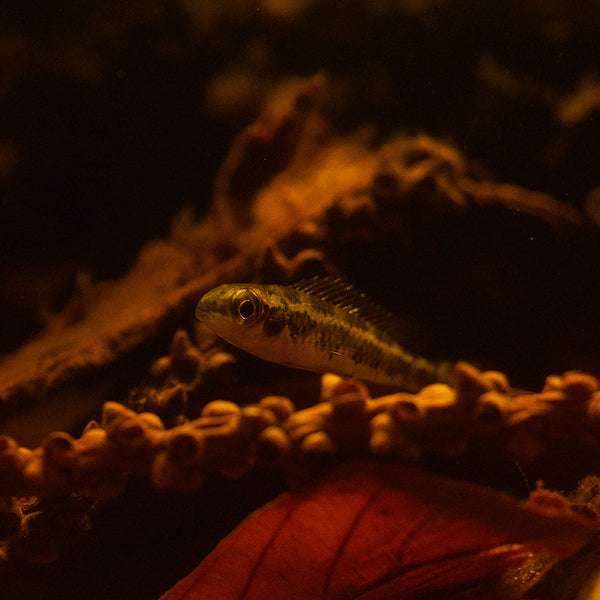
And then there are the botanicals themselves.
Not, which ones I use, although I will give you my two cents on that topic in a bit- but more on how I use them. How I prepare them, how many I tend to use, etc.
We can start with my thoughts on selection.
That’s the “million dollar question”, because it varies. I have personal tastes and ideas behind my selections. Many hobbyists choose specific botanicals because they offer shelter or hiding spaces for fishes, or help create spawning sites, foraging areas, etc., etc., etc. So, it’s impossible for me to say that I use a specific botanical in every tank I play with.
Yeah, it varies.
Okay, here’s one generality: Personally, I do like smaller botanicals in most of my tanks. I tend to select smaller ones, because they provide a sense of scale. Larger botanicals just look better in larger tanks, IMHO.
I like the smaller stuff, because it better fits most of the “themes” I play with. It fits the “scale” of the tanks I work with.
Another generality:
I tend to use only 1 or 2 types of different materials in most of my tanks. Okay, maybe as many as 3. But that’s really it. Although a lot of natural habitats have numerous types of materials in them, the reality is that, in the confines of the aquarium, having a ton of different materials is sort of “distracting” to me, from an aesthetic standpoint.
If you look at underwater pics from a variety of the habitats I favor, you will typically see a somewhat less diverse assemblage of types of materials in small areas. And our aquariums, by virtue of their diminutive size (compared to Nature) really represent these small areas of a given habitat.
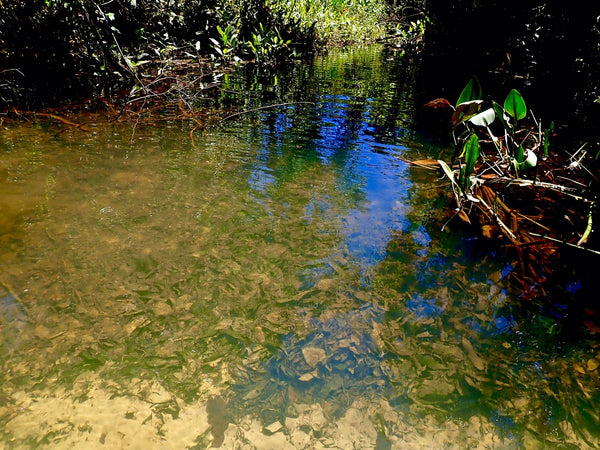
Now, with leaf litter beds, I’m a big fan of diversity! In most of the leaf litter beds I’ve been to and seen in Nature, there is a fair amount of diversity in a given area. It’s likely because of the way materials behave when they fall into the water- aggregating based on their size and density. And of course, depending upon what trees and plants are growing in a given area.
It’s a good model for us.
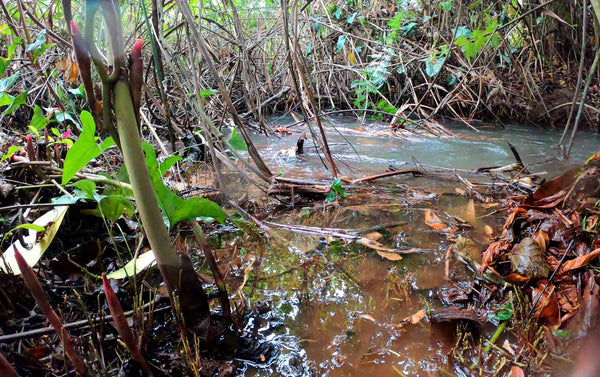
And of course, in some of my aquariums, like my “Igapo” and “Varzea” concepts, I will typically use a lot of different stuff, because that’s what you’ll find in these habitats.
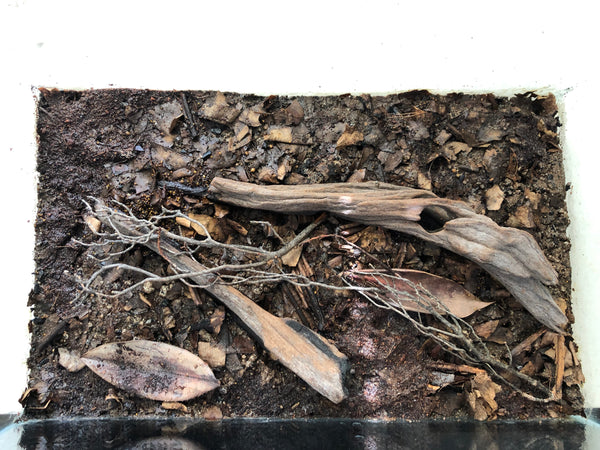
And then there’s the surprisingly “controversial” process of preparation. I get a lot of questions about this. Even after five years of trying to elevate the art and science, there’s still confusion, misunderstanding, and even some “regurgitation” of “recommendations” proffered by people who have never even tried this stuff.
It’s weird.
“Fellman, you’re really into boiling and stepping them, huh?”
Yes. I am.
Usually.
“Why do you do that?”
Botanicals and leaves are collected from various locations around the world; typically as naturally fallen and dried. When these materials fall on the ground, they can be exposed to stuff like spiders and their webs, bird droppings, dust, and good old-fashioned dirt.
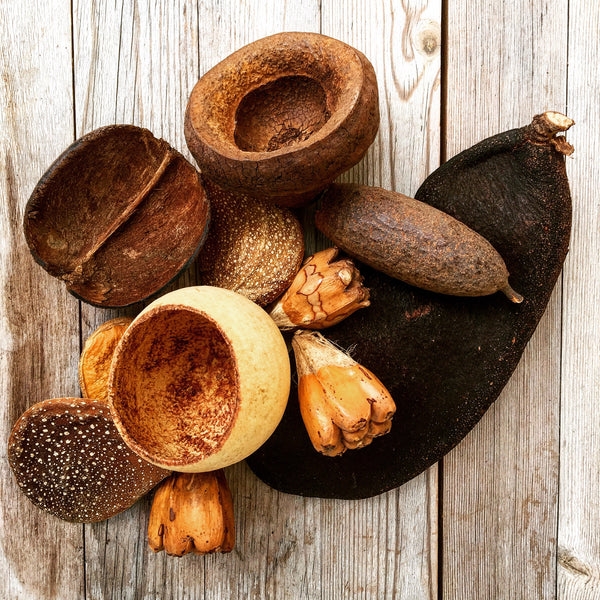
Look, I’m big on utilizing all sorts of stuff in my tanks to foster biodiversity and bacterial growth, etc., but I don’t want bird shit and spider webs in my tank! This is stuff which, in the confines of an aquarium, could introduce unwanted organisms and contribute to the degradation of the water quality.
So I give my botanicals a good rinse. Then I boil or steep them.
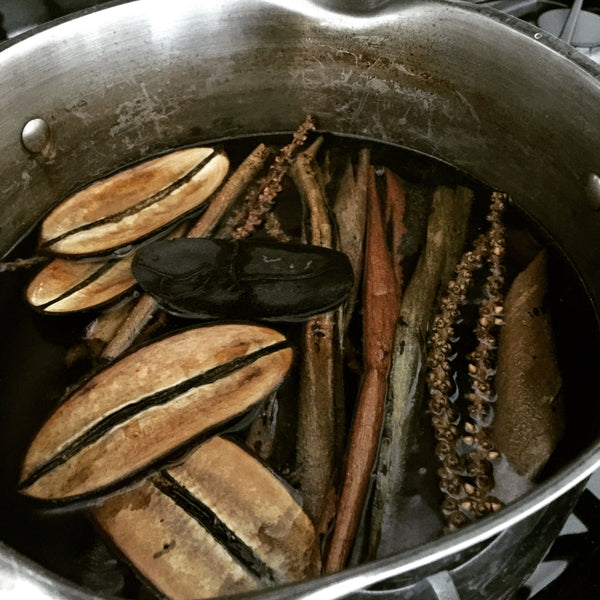
“Isn’t that overkill?”
I don’t think so.
Consider that boiling water is used as a method of making water potable by killing microbes that may be present. Most nasty microbes “check out” at temperatures greater than 60 °C (140 °F). For a high percentage of microbes, if water is maintained at 70 °C (158 °F) for ten minutes, many organisms are killed, but some are more resistant to heat and require one minute at the boiling point of water. (FYI the boiling point of water is 100 °C, or 212 °F)…But for the most part, most of the nasty bacteria that we don’t want in either our tanks or our stomachs are eliminated by this simple process.
So, wouldn’t it make sense to boil our botanicals before we dump them into our aquariums?
Yeah, it would.
Ten minutes of boiling is “golden”, IMHO. Of course, we boil for other reasons, too-as we’ll touch on now.
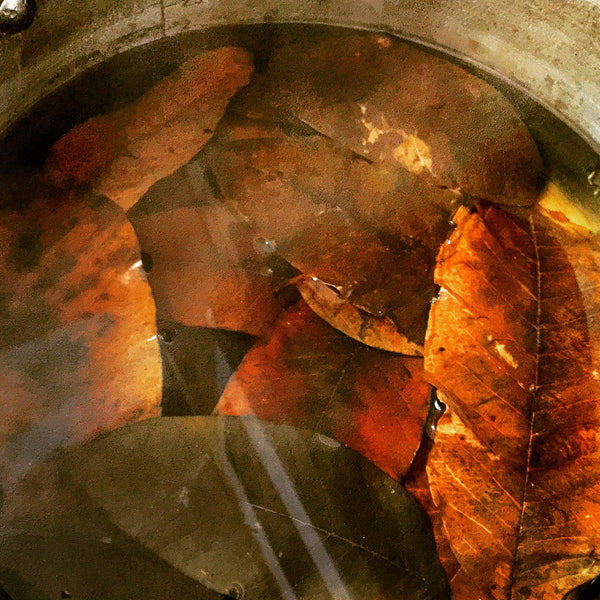
Boiling also serves to soften botanicals. Softening them helps them sink more quickly in our aquariums. No one seems to like a bunch of leaves and seed pods floating around, right?
If you remember your high school Botany (I actually do!), leaves, for example, are surprisingly complex structures, with multiple layers designed to reject pollutants, facilitate gas exchange, drive photosynthesis, and store sugars for the benefit of the plant on which they’re found.
As such, it’s important to get them to release some of the materials which might be bound up in the epidermis(outer layers) of the leaf. Boiling or steeping facilitates this. As we get deeper into the structure of a leaf, we find the mesophyll, a layer of tissue in which much of photosynthesis takes place.
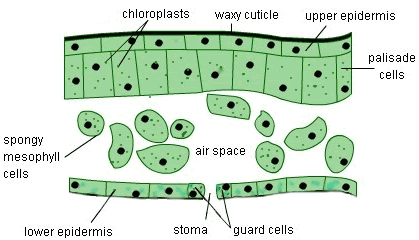
We use only dried leaves in our botanical method aquariums, because these leaves from deciduous trees, which naturally fall off the trees in seasons of inclement weather, have lost most of their chlorophyll and sugars contained within the leaf structures. This is important, because having these compounds present, as in living leaves, contributes excessively to the bioload of the aquarium when submerged…
When I first started Tannin Aquatics, the idea of utilizing seed pods, bark, leaves, branches and stuff in aquariums to manipulate the environmental conditions wasn’t completely unknown. Hobbyists had been doing it for generations to some extent. However, when I embarked on my mission to curate, test, and ultimately introduce new and different botanical materials into the hobby, I know it was a risk.
Some might have proven to be toxic to fishes. Some might have been collected from polluted environments that had noxious chemicals. Some might have been intended for other purposes, and sold to us by unscrupulous suppliers, who had them treated with laquers or other industrial chemicals. We found this out the hard way a few times, killing fishes in our test tanks in the process.
Horrible to lose innocent animals, but part of the challenge I accepted when I intended to become A leader in this new arena. Releasing untested materials to fellow fish keepers and killing them was not an option. I had to assume the risk of testing myself. Vetting of suppliers was crucial. Good quality source material still doesn’t guarantee success- but it does mitigate some of the risk.
When I developed my techniques for the preparation of botanicals for aquarium use, it was to help mitigate some of the risks that are inherent when you place natural terrestrial materials into a closed aquatic environment.
Yet, even with the development of “best practices” and recommended approaches and technique for safely utilizing botanicals in our aquariums, I knew that there was an even bigger, more ominous risk out there…Human nature.
Yes, when I started playing with botanicals in my aquariums about two decades ago, I made a fair number of mistakes. Sometimes, they cost the lives of my fishes.
And killing fishes sucks.
Some mistakes were caused by my lack of familiarity with using various materials. Most were caused by not understanding fully the impact of adding botanical materials to a closed aquatic ecosystems. All were mitigated by taking the time to learn from them and honestly asses the good, the bad, and the practical aspects of using them in our aquariums.
And that meant developing “best practices” to help mitigate or eliminate issues as much as possible, even though the “practices” may not be the easiest, most convenient, or expedient way to proceed.
I KNEW that there would be people who might kill their fishes by adding lots of botanicals to their established systems without reading and following the instructions concerning preparation, cadence, and what to expect. I knew there would be people who would criticize the idea, “edit” the processes or recommended “best practices”, talk negatively about the approach and generally scoff and downplay what they didn’t know, understand, or do.
It’s human nature whenever you give people something a bit different to play with…They want to go from 0-100 in like one day. And I knew that some of these people would go out on social media and attempt to trash the whole idea after they failed. This, despite all of my instructions, information, and pleas to follow the guidelines I suggested.
After about 8 years of running Tannin Aquatics, I feel that I pretty much identified the two most common concerns I had for customers associated with utilizing botanicals in their aquariums. Curiously, my two biggest concerns revolved around our own human impatience and mindset- not the botanical materials themselves.
The first is… preparation.
I am often asked why I don’t feel that you can, without exception, just give any of your botanicals “a quick rinse” and toss them into your aquarium.
After all, this is what happens in nature, right?
Well, shit- yes…but remember, in most cases, there is a significant “dilution factor” caused by larger water volumes, currents, biologically-rich substrates, etc. that you encounter in natural aquatic systems. Even in smaller bodies of water, you have very “mature” nutrient export systems and biological equilibriums established over long periods of time which handle the influx and export of organic materials.
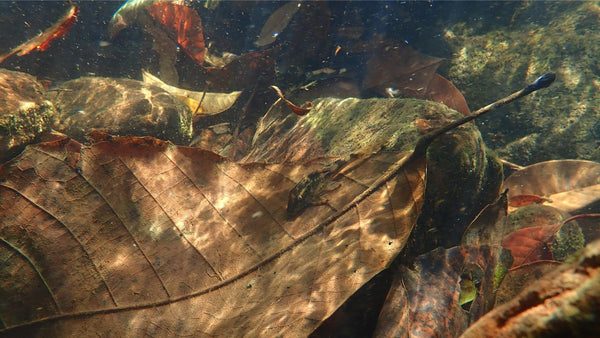
However, even in Nature, things go awry, and you will occasionally see bodies of water “fouled” by large, sudden influxes of materials (often leaves, grass clippings, etc.)- sometimes after rain or other weather events- and the result is usually polluted water, large algal blooms, and a pretty nasty smell!
In the aquarium, of course, you have a closed system with a typically much smaller water volume, limited import of fresh water, limited filtration (export) capacity, and in many cases, a less robust ecological microcosm to handle a large influx of nutrients quickly.
So you know where I’m going with this:
Fresh botanical materials, even relatively “clean” ones, are often still “dirty”, from collection, storage, etc. They may have dust, airborne pollutants, soil or silt (depending upon where they were collected), even cobwebs, bird droppings, and dead insects (yuck!).
Natural materials accumulate “stuff.” They’re not sterile; made in some high tech “clean room” in a factory in Switzerland, right?
So, “just giving botanicals a quick rinse” before tossing them in your tank is simply not good procedure, IMHO- even for stuff you collect from your own backyard. It’s more risk to take on. At the very least, a prolonged (30 to 60 minute) steep in boiling hot water will serve to “sterilize” them to a certain extent. Follow it with a rinse to remove any lingering dirt or other materials trapped in the surfaces of your botanicals.
Now, I don’t recommend this process simply because I want to be a pain in the ass. I recommend it because it’s a responsible practice that, although seemingly “overkill” in some people’s minds- increases the odds for a better outcome.
It reduces some of the risk.
The crew up in the cockpit on your flight from L.A. to New York know every system of the Boeing 737Max9 that they fly. But guess what? They still complete the pre-flight checklist each and every time they hop in the plane.

Because it can save lives.
Why should we be any different about taking the time to prepare botanicals? I know it sounds harsh; however, if you skip this step and kill your fishes- it’s on you.
Period.
Why would you skip this, other than simply being impatient?
Could you get away with NOT doing this?
Sure. Absolutely. Many people likely do.
But for how long? When will it catch up with you? Maybe never...I know I’ll get at least one email or comment from a hobbyist who absolutely doesn’t do any of this and has a beautiful healthy tank with no problems.
Okay, good for you. I’m still going to recommend that, like I do- that you embrace a preparation process for every botanical item that you add to your aquariums.
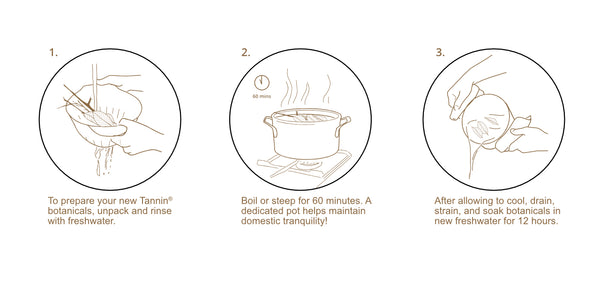
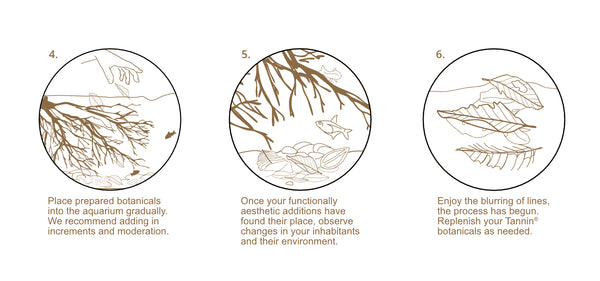
Boiling/steeping also serves a secondary, yet equally important purpose: It helps soften and even break down the external tissues of the botanical, allowing it to leach out any remaining subsurface pollutants, sugars, or other undesirable organics to the greatest extent possible. And finally, it allows them to better absorb water, which makes them sink more easily when you place them in your aquarium.
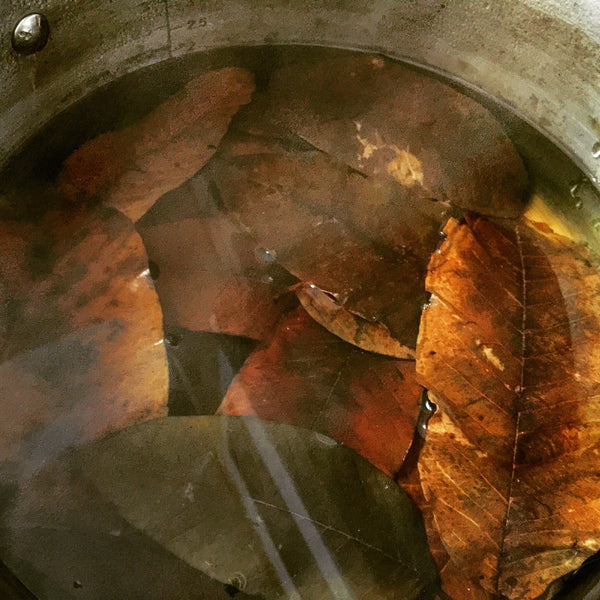
Yes, it’s an extra step.
Yes, it takes time.
However, like all good things in nature and aquariums, taking the time to go the extra mile is never a bad thing. And really, I’m trying to see what possible “benefit” you’d derive by skipping this preparation process?
Oh, let me help you: NONE.
None.
There is simply no advantage to rushing stuff.
Personally, I feel that we have enough bioload going into our tanks, so why add to it by using freshly-fallen leaves with their sugars and such still largely present, right? Although- I think I’ll experiment with various “fresh” leaves down the road to see what happens in certain circumstances.
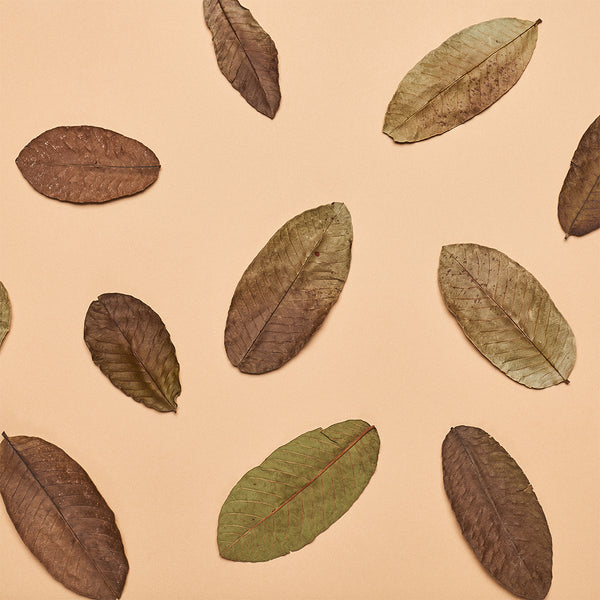
Are there variations on this prep theme?
Well, sure. Of course!
Many hobbyists rinse, then steep their leaves in boiling water, rather than a prolonged boil, for the simple fact that exposure to the newly-boiled water will accomplish the potential “kill” of unwanted organisms, which at the same time softening the leaves by permeating the outer tissues. This way, not only will the “softened” leaves “go to work” right away, releasing the beneficial tannins and humic substances bound up in their tissues, they will sink, too!
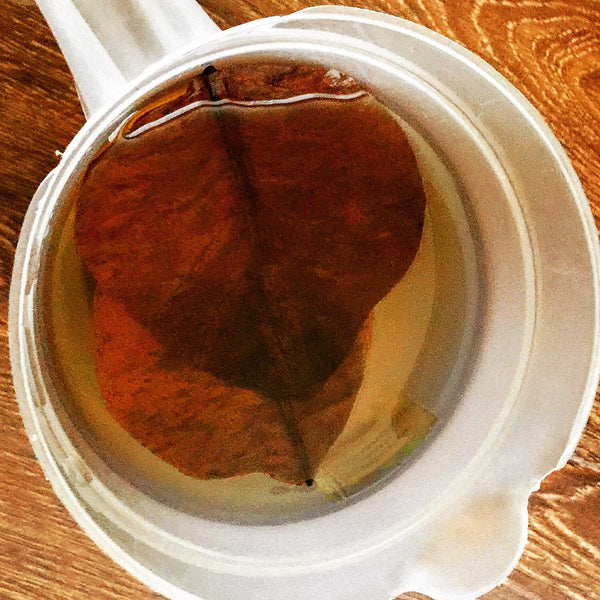
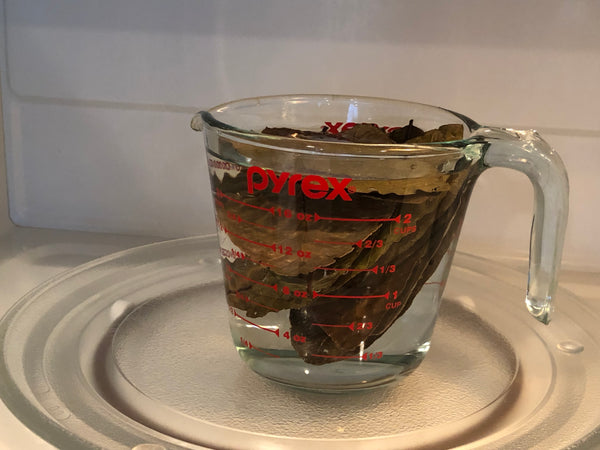
And of course, I know many who simply “rinse and drop”, and that works for them, too! And, I have even played with “microwave boiling” some stuff in a Pyrex container. It does work, and it makes your house smell pretty nice, too!
It’s not a perfect science- this leaf preparation “thing.”
And I admit, I’ve changed some of my approaches over the years…I’d be foolish not to.
And of course, one of the common followup questions I get is, “Doesn’t all of this boiling and steeping release all of the tannins in the leaves and seed pods? Seems counter-productive to boil them!”
It isn’t.
If you’ve played with leaves and botanicals long enough, you’ll realize that botanical materials will continue to leach out some water-coloring tannins over an extended period of time- even after they were boiled or steeped. And my tanks are as deeply tinted as anyone else’s that I know, trust me!
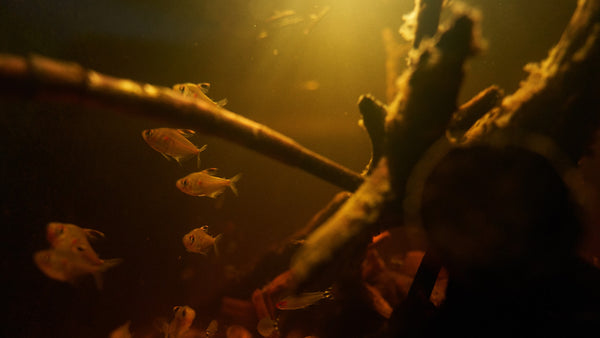
The amount of tint-producing tannins that you will lose as a result of preparation is insignificant, especially when you take into account the benefits realized by this process.
Final words on prep:
I do what I recommend.
Like so many things in our evolving “practice” of perfecting the botanical-style aquarium, developing, testing, and following some basic botanical preparation “protocols” is never a bad thing. And understanding some of the “hows and whys” of the process- and the reasons for embracing it-will hopefully instill into our community the necessity- and pleasures– of going slowly, taking the time, observing, tweaking, and evolving our “craft”- for the benefit of the entire aquarium community.
And the other question I receive from our community in regards to botanicals is do I leave them in until they completely decompose, or do I remove them?
I leave them in.
Decomposition is something to be embraced in the botanical method aquarium world.
Decomposition is an amazing process by which Nature processes materials for use by the greater ecosystem. In Nature, it’s the first part of the recycling of nutrients that were used by the plant from which the botanical material came from. When a botanical decays, it is broken down and converted into more simple organic forms, which become food for all kinds of organisms at the base of the ecosystem.
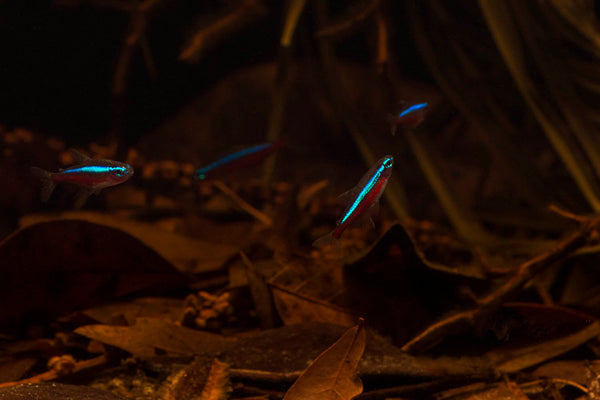
This is a dynamic, fascinating process- part of why we find the idea of a natural, botanical-style system so compelling.
Many of the organisms- from microbes to micro crustaceans to fungi- are almost never seen except by the most observant and keen-eyed hobbyist…but they’re there– doing what they’ve done for eons. They work slowly and methodically over weeks and months, converting the botanical material into forms that are more readily assimilated by themselves and other aquatic organisms.
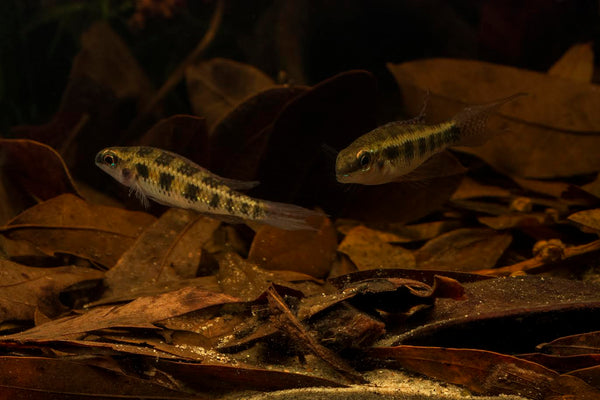
I am of the opinion that, when we remove partially decomposed botanicals from our systems, we’re interrupting a process– denying these beneficial organisms access to their primary food sources. And, as we’ve discussed before, these organisms also serve as supplemental food sources for our fishes.
In our aquariums, we’re just beginning to appreciate the real benefits of using leaves and botanicals. Notjust for cool aesthetics or to “tint” the water- but to create truly natural, ecologically stable aquatic systems for the health and well-being of the fishes we love so much!
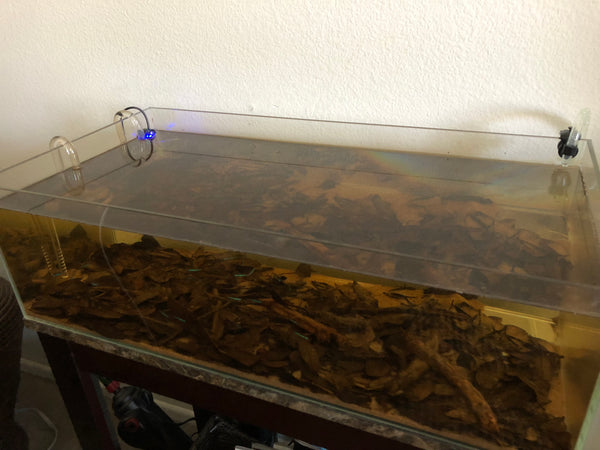
It’s important to remember that leaves and such are simply not permanent additions to our ‘scapes, and if we wish to enjoy them in their more “intact” forms, we will need to replace them as they start to break down.
This is not a bad thing.
For most of us- those of us who’ve made that mental shift- we let Nature dictate the evolution of our tanks. We understand that the processes of biofilm recruitment, fungal growth, and decomposition work on a timeline, and in a manner that is not entirely under our control.
So, yeah- there IS a lot to consider when utilizing botanical materials in your aquarium. It’s far, far beyond the idea of just “dumping and praying” that has been an unfortunate “model” for how to utilize them in our aquariums for many years. It’s more than just aesthetics alone…the “functional aesthetic” mindset- accepting the look and the biological processes which occur when terrestrial materials are added to our tanks is a fundamental shift in hobby thinking.
Another one of the main things that I do- what I believe most aquarists do- is to have a “theme”- an idea- in mind when I start my tanks. A “North Star”, if you will. This is an essential thing; having a “track to run on” guides the entire project. It influences your material and equipment selections, your establishment timetables, and of course, your fish population.
Let’s look at a recent botanical method aquarium as an example of my approach.
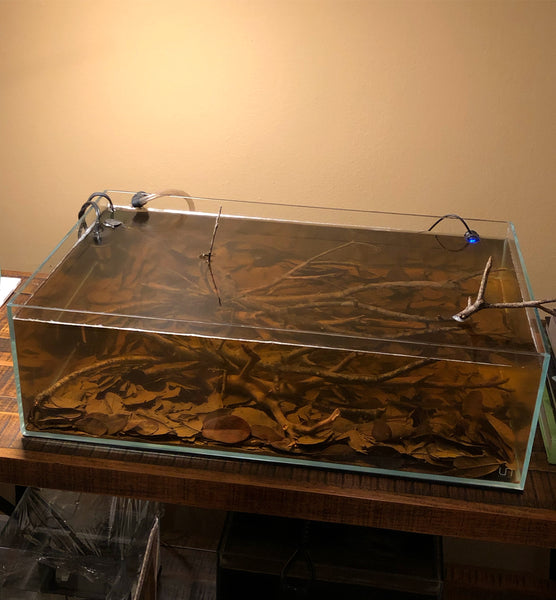
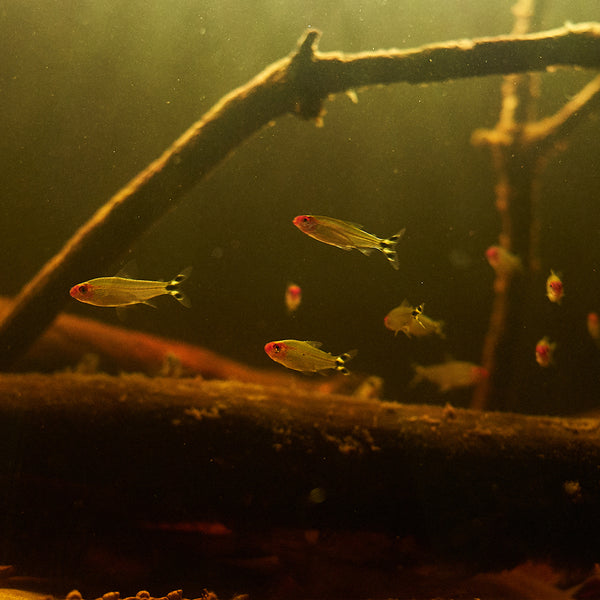
First off, I had a pretty good idea of the “theme” to begin with: A “wet season” flooded Amazonian forest. Now, I freely admit that I put a lot of thought into getting the characteristics of the environment and ecology down as functionally realistic as possible, but that the fish selection was far more “cosmopolitan”- consisting of characins- my fave fishes- some of which are found in such habitats, and some which are not. It was not intended to be some competition-minded, highly accurate biotope display.
Just a fun way to feature some of my fave fishes!
Since I was kid, I’d always dreamed of a medium-to-large-sized tank, filled with a large number of different Tetras. This tank would essentially be my “grown-up”, more evolved version of my childhood “Tetra fantasy tank!”
The most basic of all “how I do it” lessons is to have some idea about what you’re trying to accomplish before you start. In our game, since recreating the environment and ecology are paramount, this will impact every other decision you make.
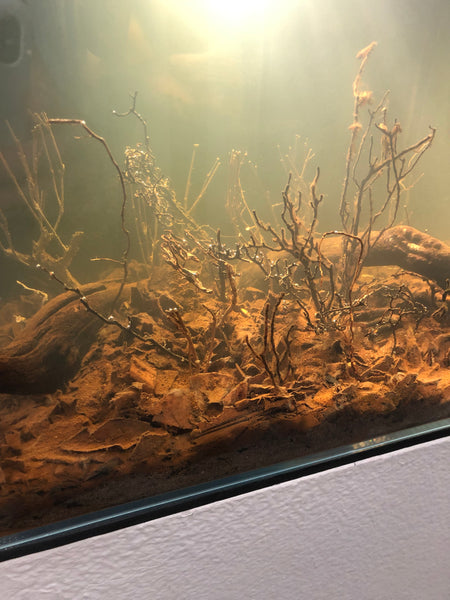
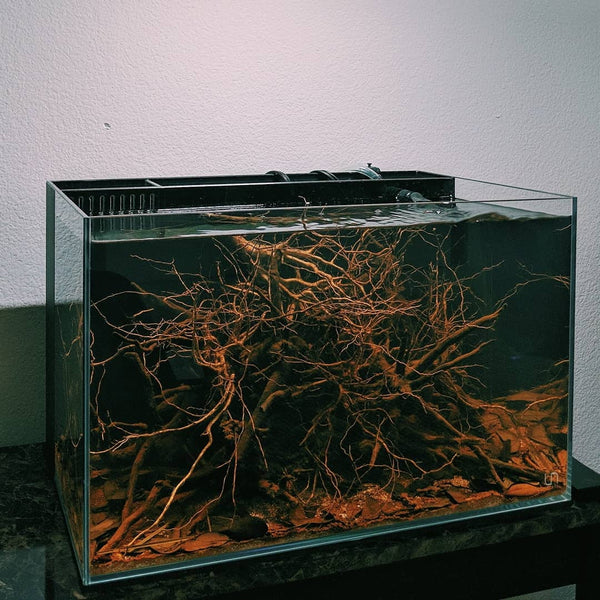
In this aquarium, the main “structure” of the ecosystem was comprised of a literal “hodgepodge” of “scrap” pieces of wood of different types and sizes that I had laying around. Very little thought was given to specific types or shapes. The idea was to create a representation of an inverted, partially buried root section and tangle of broken branches from a fallen tree on the forest floor, which becomes an underwater feature during the “wet season.”
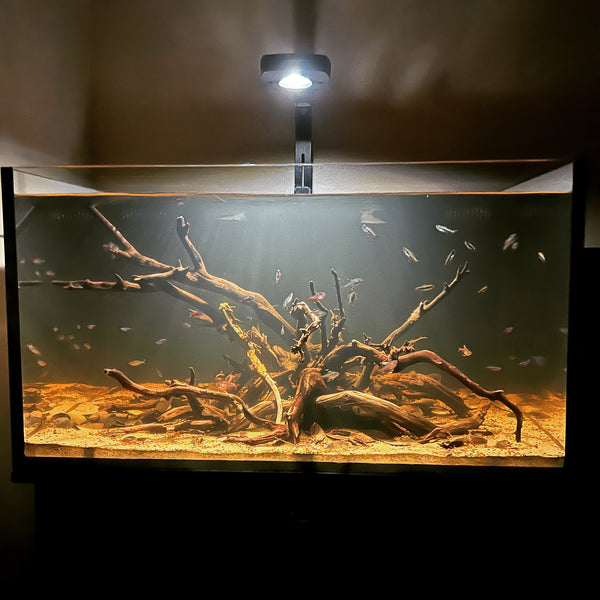
It was simply a matter of assembling a bunch of smaller pieces to create the look of the inverted root that I had in my head. And once they are down and covered in that “patina” of biocover, it’s hard to distinguish one from the other. It looks like one piece, really. Sure, it would have been easier to carefully select just one piece to do it all (would it, though?🤔), but it was more practical to “use what I had” and make it work!
So, another “how I do it” lesson is that you don’t always have to incorporate a single specific wood type to have an incredible-looking, interesting physical aquascape. No chasing after the latest and creates trendy wood for me.
I use what I have, or what I like.
You should, too.
Since we’re more about function than we are about aesthetics exclusively, which type of wood isn’t as important as simply having any wood to complete the job. (and by extension, other “aquascaping materials”…)
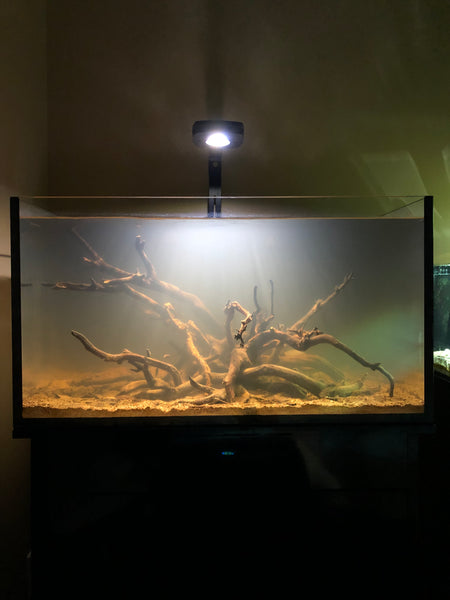
After I get my wood pieces the way I like them, it’s the usual stuff: Make sure that they stay down before you fill the tank all the way, etc. Nothing exotic here.
The next step is to fill the tank up. Again, there is no real magic here, except to note that, since we’re often using sedimented substrate and bits of botanicals on the substrate, it’s best to do this very slowly. I mean, your water is likely to be turbid for some time; it’s what goes with the territory. However, no need to exacerbate it by rushing!
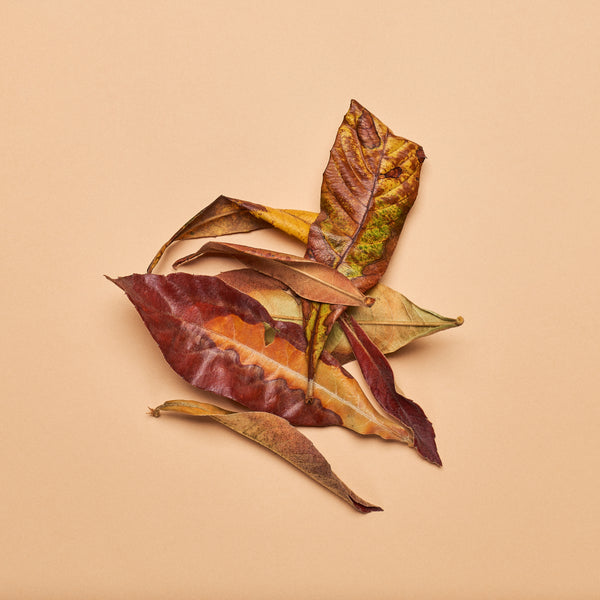
And, after the tank is about 1/3 full, I’ll usually add all of my prepared leaves and botanicals. Why? Because I’ve found over the years, similar to planted tank enthusiasts, that it’s much easier to get the leave and botanicals where you want them by working in a partially filled tank.
Another, hardly revolutionary approach, but one which I think makes perfect sense for what we do.
After the tank is fully filled…that’s is where the real fun begins, of course…In our world, the “fun” includes a whole lot of watching and waiting…Waiting for the water to clear up (if you use sedimented substrates). Waiting for Nature to start Her work; to act upon the terrestrial materials that we have added to our tank.
And of course, this is the time when you’re busy making sure that you did all of the right things to get the tank ready for “first water.”
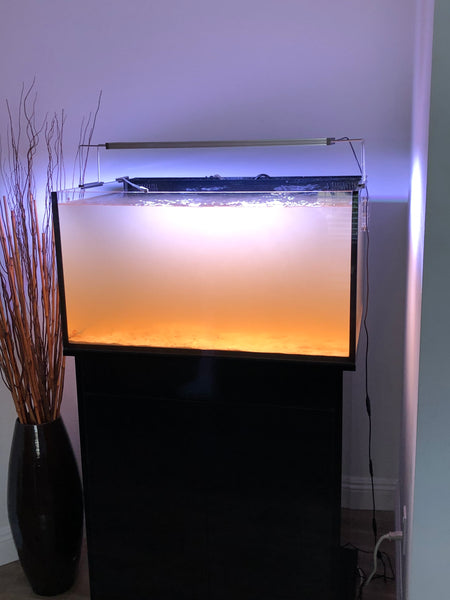
And of course, it’s also the part where every hobbyist, experienced or otherwise, has those lingering doubts; asks questions- goes through the “mental gymnastics” to try to cope: “Do I have enough flow?” “Was my source water quality any good?” “Is it my light?”
And then- when the first fungal filaments or biofilms appear, some new to our specialty still doubt: “When does this shit go away?” “It DOES go away. I know it’s just a phase.” Right? “Yeah, it goes away…” “When?” “It WILL go away. Right?”
And then there is the realization that this is a BOTANICAL METHOD aquairum, and that you expect and WANT that stuff in your tank. And it will likely never fully “go away…”
But you know this. And yet, you still count a bit.
I mean, it’s common with every new tank, really. The doubts. The worries….
The waiting. The not-being-able-to-visualize-a-fully-stocked tank “thing”…Patience-testing stuff. Stuff which I- “Mr. Tinted-water-biofilms-and-decomposing-leaves-and-botanicals-guy”- am pretty much hardened to by now. You will be, too. It’s about graciously accepting a totally different “look.” Not worrying about “phases” or the ephemeral nature of some things in my aquarium.
Yet, like anyone who sets up an aquarium, I admit that I still occasionally get those little doubts in the dim (tinted?) recesses of my mind now and then- the product of decades of doing fish stuff, yet wondering if THIS is the one time when things WON’T work out as expected…
I mean, it’s one of those rights of passage that we all go through when we set up aquariums right? The early doubts. The questioning of ourselves. The reviewing of fundamental procedure and practice. Maybe, the need to reach out to the community to gain reassurance.
It’s normal. It’s often inevitable.
Do I worry about stuff?
Well, yeah. Of course.
However, it’s not at the point in my tank’s existence when you’d think that I’d worry. It’s a bit later. And it’s not about the stuff you might think. It’s all about the least “natural” part of my aquariums: The equipment.
Yep.
Usually, for me, this worry manifests itself right around the first water exchange. By that time, you’ll likely have learned a lot of the quirks and eccentricities of your new aquarium as it runs. You’ll have seen how it functions in daily operation.
And then you do your first deliberate “intervention” in its function. You shut down the pumps for a water exchange.
That’s when I clutch. I worry.
I always get a lump in my throat the first time I shut off the main system pump for maintenance. “Will it start right back up? Did I miscalculate the ‘drain-down’ capacity of the sump? Will this pump lose siphon?”
And so what the fuck if it DOES? You simply…fix the problem. That’s what fish geeks do. Chill.
Namaste.
Yet, I worry.
That’s literally my biggest personal worry with a new tank, crazy though it might sound. The reality, is that in a lifetime of aquarium-keeping, I’ve NEVER had a pump not start right back up, or overflowed a sump after shutting down the pump…but I still watch, and worry…and don’t feel good until that fateful moment after the first water change when I fire up the pump again, to the reassuring whir of the motor and the lovely gurgle of water once again circulating through my tank.
Okay, perhaps I’m a bit weird, but I’m being totally honest here- and I’m not entirely convinced that I’m theonly one who has some of these hangups when dealing with a new tank! I’ve seen a lot of crazy hobbyists who go into a near depression when something goes wrong with their tanks, so this sort of behavior is really not that unusual, right?
However, our typical “worries” are less “worries” than they are little realizations about how stuff works in these tanks.
In a botanical method aquarium, you need to think more “holistically.” You need to realize that these extremely early days are the beginning of an evolution– the start of a living microcosm, which will embrace a variety of natural processes.
But yeah, we know what to expect…We observe.
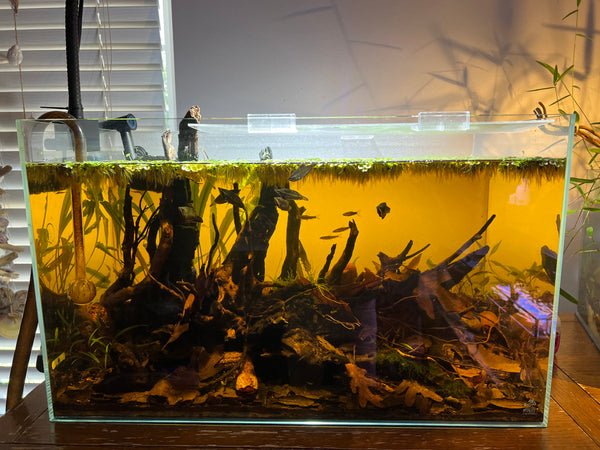
So, what exactly happens in the earliest days of a botanical method aquarium?
Well, for one thing, the water will gradually start to tint up…
Now, I admit that this is perhaps one of the most variable and unpredictable aesthetic aspects of these types of aquariums- yet one which draws in a lot of new hobbyists to our “tribe.” The allure of the tinted water. Many factors, ranging from what kind (and how much) chemical filtration media you use, what types (and how much again!) of botanical materials you’re using, and others, impact this. Recently, I’ve heard a lot of pretty good observation-based information from experienced plant enthusiasts that some plants take up tannins as they grow. Interesting, huh?
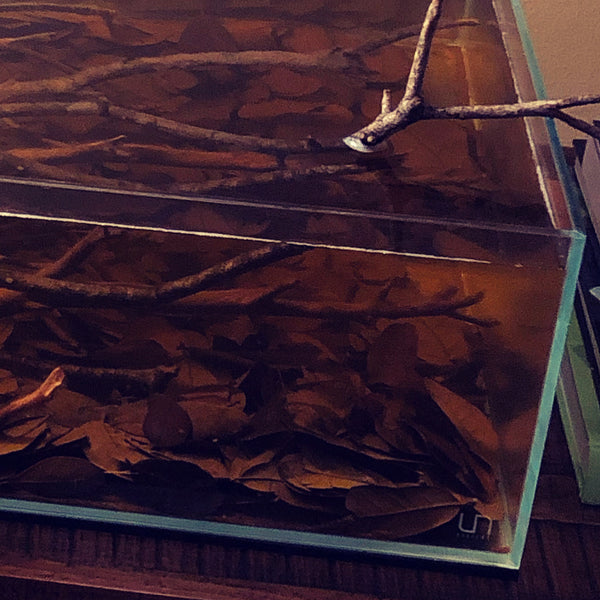
Stuff changes. The botanicals themselves begin to physically break down; the speed and the degree to which this happens depends almost entirely on processes and factors largely beyond your control, such as the ability of your microbial population to “process” the materials within your aquarium.
I personally feel that botanical-method aquariums always look better after a few weeks, or even months of operation. When they’re new, and the leaves and botanicals are crisp, intact, and fresh-looking, it may have a nice “artistic” appearance- but not necessarily “natural” in the sense that it doesn’t look established and alive.
The real magic takes place weeks later.
Things change a bit…
The pristine seed pods and leaves start “softening” a bit. And biofilms and fungal growths make their first appearances.
Mental shifts are required on your part.
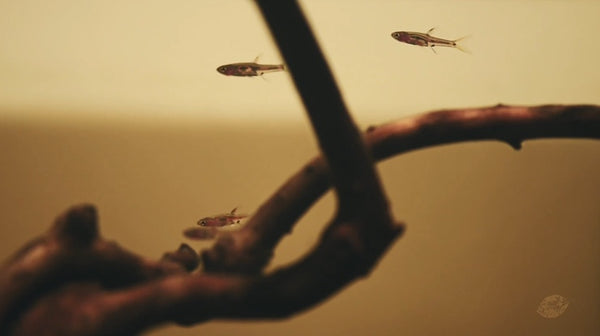
Yup, the first mental shift that we have to make as lovers of truly natural style aquariums is an understanding that these tanks will not maintain the crisp, pristine look without significant intervention on our part. And, by “intervention”, I mean scrubbing, rinsing, and replacing the leaves and botanicals as needed. I mean, sure- you can do that. I know a bunch of people who do.
They absolutely love super pristine-looking tanks.
Well, to each his own, I suppose. Yet, the whole point of a true botanical method aquarium is to accept the “less than pristine” look and the changes that occur within the system because of natural processes and functions.
I admit, I feel a bit sorry for people who can’t make the mental shift to accept the fact that Nature does Her own thing, and that She’ll lay down a “patina” on our botanicals, gradually transforming them into something a bit different than when we started.
When we don’t accept this process, we sadly get to miss out on Nature guiding our tank towards its ultimate beauty- perhaps better than we even envisioned.
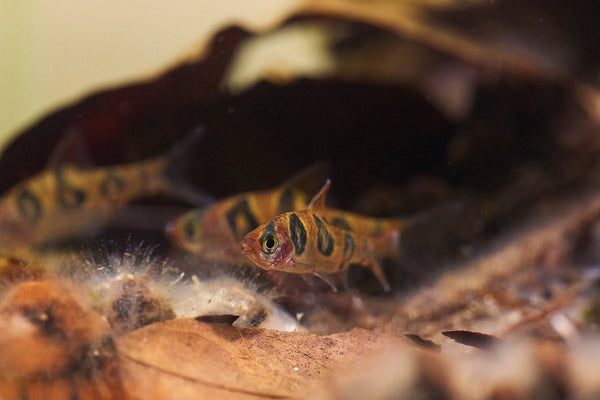
For some, it’s really hard to accept this process. To let go of everything they’ve known before in the hobby. To wait while Nature goes through her growing pains, decomposing, transforming and yeah- evolving our aquascapes from carefully-planned art installations to living, breathing, functioning microcosms.
But, what about all of that decay? That “patina” of biofilm?
If you’re struggling with accepting this, just remind yourself regularly that it’s okay.
It’s normal.
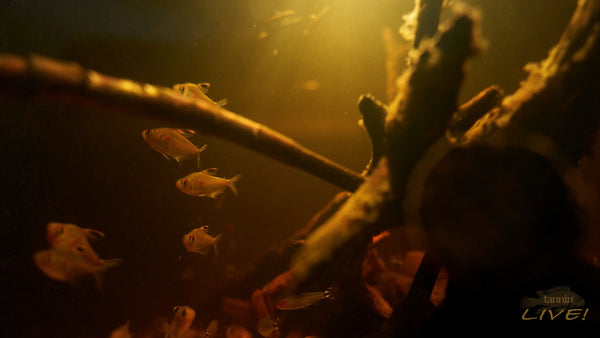
The whole environment of a more established botanical-method aquarium looks substantially different after a few weeks. While the water gradually darkens, those biofilms appear…it just looks more “earthy”, mysterious, and alive.
It’s a reminder of “Wabi-Sabi” again.
Something that’s been on my mind a lot lately.
In it’s most simplistic and literal form,the Japanese philosophy of “Wabi Sabi” is an acceptance and contemplation of the imperfection, constant flux and impermanence of all things.
This is a very interesting philosophy, one which was brought to our attention in the aquarium world by none other than the late, great, Takashi Amano, who proferred that a (planted) aquarium is in constant flux; constant transistion- and that one needs to contemplate, embrace, and enjoy the changes, and to relate them to the sweet sadness of the transience of life.
Many of Amano’s greatest works embraced this philosophy, and evolved over time as various plants would alternately thrive, spread and decline, re-working and reconfiguring the aquascape with minimal human intervention. Each phase of the aquascape’s existence brought new beauty and joy to those would observe them.
Yet, in today’s contest-scape driven, break-down-the-tank-after-the-show world, this philosophy of appreciating change by Nature over time seems to have been tossed aside as we move on to the next one.
Sure, this may fit our human lifestyle and interest, but it denies Nature her chance to shine, IMHO. There is something amazing about this process of change; about the way our tanks evolve, and we should enjoy them at every stage.
And then, there is the human desire to “edit” stuff. People ask me all the time if I take stuff out of the system; if I make “edits” and changes to the tank as it breaks in, or as the botanicals start to decompose.
Well, I don’t, for reasons we’ve discussed a lot around here:
Remember, one thing that’s unique about the botanical-method approach is that we accept the idea of a microbiome of organisms “working” our botanical materials. We’re used to decomposing materials accumulating in our systems. We understand that they act, to a certain extent, as “fuel” for the micro and macrofauna which reside in the aquarium.
I have long been one the belief that if you decide to let the botanicals remain in your aquarium to break down and decompose completely, that you shouldn’t change course by suddenly removing the material all at once…
Why?
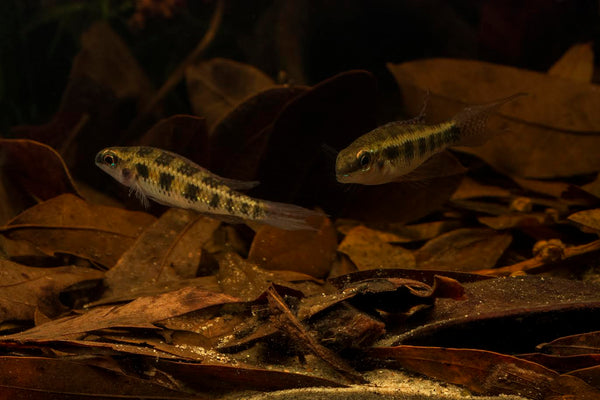
Well, I think my theory is steeped in the mindset that you’ve created a little ecosystem, and if you start removing a significant source of someone’s food (or for that matter, their home!), there is bound to be a net loss of biota…and this could lead to a disruption of the very biological processes that we aim to foster.
Okay, it’s a theory…
But I think it’s a good one.
You need to look at the botanical-method aquarium (like any aquarium, of course) as a little “microcosm”, with processes and life forms dependent upon each other for food, shelter, and other aspects of their existence. And I really believe that the environment of this type of aquarium, because it relies on botanical materials (leaves, seed pods, etc.), is more signficantly influenced by the amounts and composition of said material.
Just like in natural aquatic ecosystems…
The botanical materials are a real “base” for the little microcosm we create.
And of course, by virtue of the fact that they contain other compounds, like tannins, humic substances, lignin, etc., they also serve to influence the water chemistry of the aquarium, the extent to which is dictated by a number of other things, including the “starting point” of the source water used to fill the tank.
So, in summary- I think the presence of botanicals in our aquariums is multi-faceted, highly influential, and of extreme import for the stability, ecological balance, and efficiency of the tank. As a new system establishes itself, the biological processes adapt to the quantity and types of materials present- the nitrogen cycle and other nutrient-processing capabilities evolve over time as well.
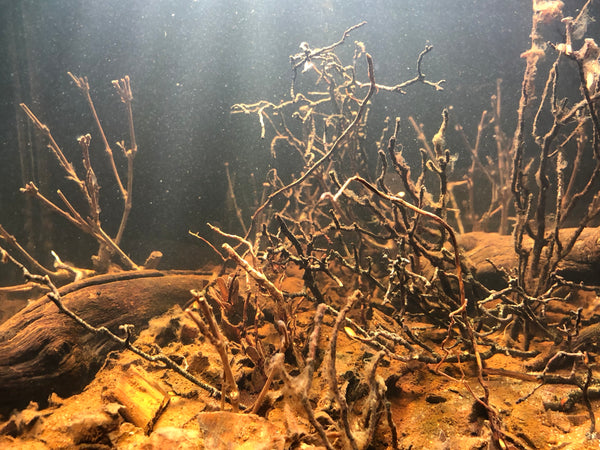
Yes, establishing a botanical method aquarium is as much about making mental shifts and acquiring patience and humility as it is about applying any particular aquarium keeping skills. It’s about growing as a hobbyist.
Having faith in yourself, your judgment, and, most important- in the role that Nature Herself plays in our tanks.
In seemingly no time at all, you’re looking at a more “broken-in” system that doesn’t seem so “clean”, and has that wonderful pleasant, earthy smell- and you realize right then that your system is healthy, biologically stable, and functioning as Nature would intend it to. If you don’t intervene, or interfere– your system will continue to evolve on a beautiful, natural path.
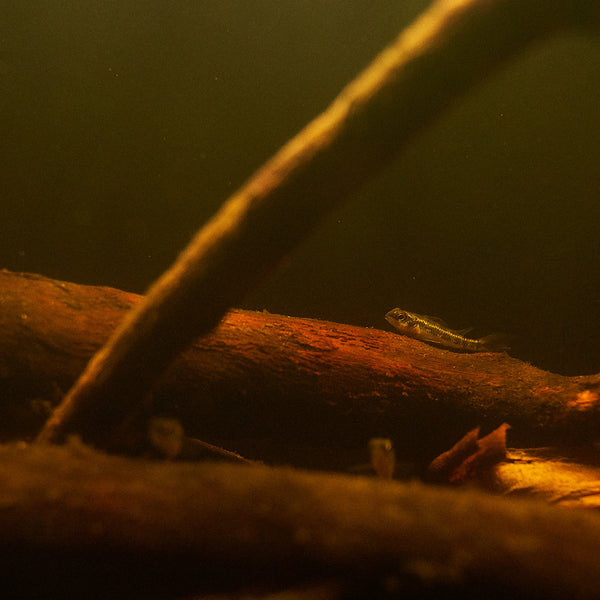
It’s that moment- and the many similar moments that will come later, which makes you remember exactly why you got into the aquarium hobby in the first place: That awesome sense of wonder, awe, excitement, frustration, exasperation, realization, and ultimately, triumph, which are all part of the journey– the personal, deeply emotional journey- towards a successful aquarium- that only a real aquarist understands.
This is how I do it.
Stay excited. Stay bold. Stay observant. Stay brave. Stay curious. Stay patient…
And Stay Wet.
Scott Fellman
 The Tint
Leave a comment