
I talk incessantly about the “preparation” of botanical materials for use in our aquariums. It’s become part of our hobby “ethos”; a practice that we hardly even question anymore these days. It’s a safe, efficient, and practical approach to utilizing botanicals in our tanks.
Now, with twigs and branches, that idea of practicality comes in. Most of us simply don’t have freaking cauldron or big-ass kettle- let alone, a “stove” large enough upon which to boil a bunch of branches, right?
So, compromise is in order.
Soaking is not a bad thing.
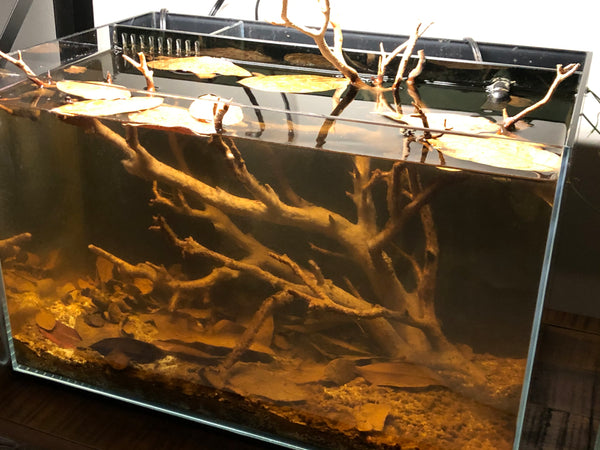
I’ve touched on the idea of “in situ” preparation of wood, and it really does make sense with oak branches (largely because of the size issue)- and consider this:
It’s pretty obvious that at least part of the reason we see a burst of new algae growth and biofilm in wood recently added to an aquarium is that there is so much “stuff” bound up in it. “Organics”, like sugars, lignins, and compounds found in soils, etc. Algal and fungal spores can literally “bloom” during the initial period after submersion. It’s exactly what happens in the wild aquatic habitats of the world when tree trunks and branches are covered by water.
I get it- a lot of hobbyists simply don’t want to see this stuff in their display tank.
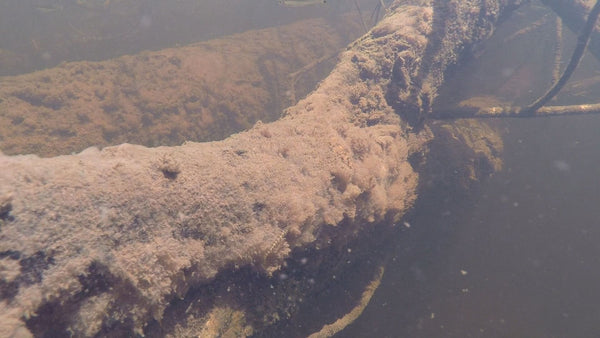
On the other hand, the adventurous aquarist suggests that we should just give the wood a thorough washing, and let this whole process play out in the aquarium, to foster this amazing biodiversity within the aquarium itself.
Again, this is an example of setting up an aquarium from the start to replicate both the form and function of Nature.
Why NOT do this? Especially with “self-collected” stuff like oak branches.
What would the “downsides” be? There ARE none, IMHO. I’ve done this many times with no issues. However, the experience IS a bit different.
It’s starts with what you see.
Yeah, you’ll see a lot more biofilm, fungal growth, detritus, and perhaps even slightly hazy water. You’ll have to carefully monitor the nitrogen cycle, and manage nutrient accumulations with good husbandry…
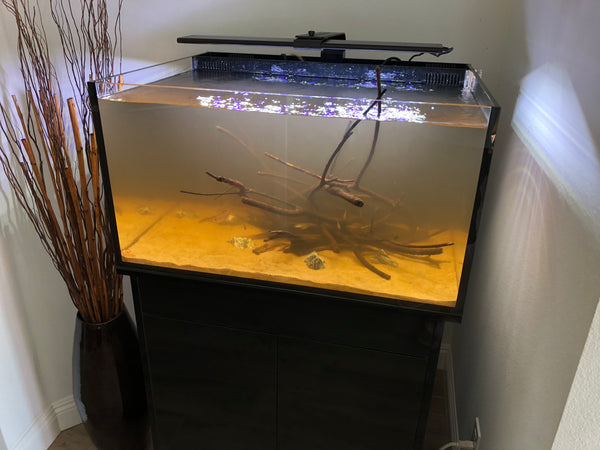
You’ll have to employ a lot of patience, and yeah, I’d recommend testing during the “break-in”process. Testing for what? Well, I’d likely do ammonia and nitrite, for starters. “Have you done all of this testing when you tried this, Scott?”
Not always, I admit. Why? For one thing , it’s because I’m in no rush to add fishes to brand-new tanks. Because I let my tanks develop biologically for a long time before I add them. I did out of sheer curiosity, of course! And the “cycle”time was really nothing extraordinary at all.
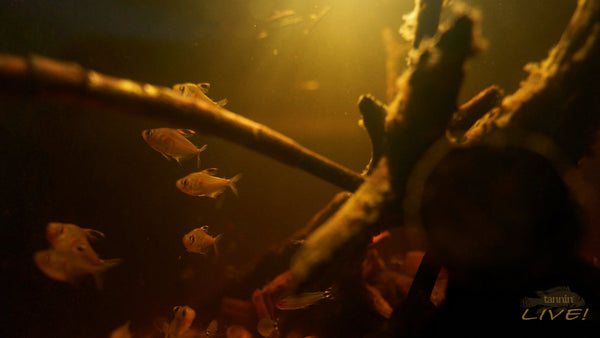
Really, the biggest difference between this “in-tank-curing” and using an external container was that any of the stuff that emerged from the wood itself would leach into, and “accumulate” in the display tank, and impact the water appearance, and chemistry. Although I admit, I didn’t notice a significant difference in nitrate or even phosphate in new tanks where the “curing” process was undertaken internally.
Remember, I’m a water exchange fanatic; I perform 10% water exchanges in every tank I maintain- every week, without fail. So there was some dilution of whatever organics were found in the water.
The biggest difference determined by testing was often TDS. And of course, because TDS represents the “total concentration of dissolved substances” in water it can include both inorganic salts, as well as a small amount of organic matter. To me, “TDS” is always a bit of a vague thing; I mean, it can be so many different things. Regardless, when I cured “in situ”, TDS readings were higher than in tanks where this process wasn’t employed.
Do some of the other materials leached out of wood have implications for the healthy break-in and operation of your aquarium? Can you even test for everything that leaches out of newly submerged wood, other than simply labeling these compounds as “organics?”
Likely NOT, in the hobby world.
Well, lignin is one substance that you might find leaching out of wood. And there are actually lignin test kits out there for scientific work; I suppose it would be interesting and informative to test for them to see what the concentration was, although I’m not really sure what function it would perform, other than just kind of “knowing.”
Just like with testing for tannins, Interpreting what is “baseline” or even “okay” for lignin is something we have never really done in the hobby, right? Another supposition would be that lignin concentration might be different in a filtered aquarium than it would be in some big container of water without a filter that you might cure wood in.
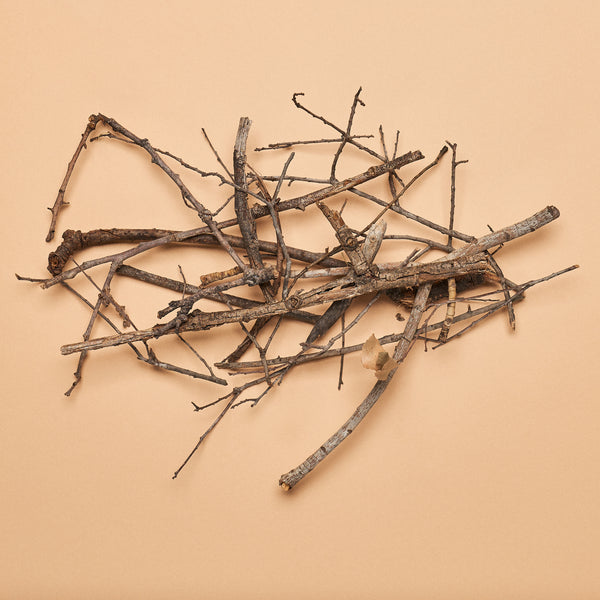
The point is, there are some things that we just don’t know.
We assume.
I mean, whenever we “cure” wood externally, we almost always see lots of that yucky biofilm and fungal growth on the surface tissues. That’s “par for the course” when terrestrial materials are submerged in water. The real issue that makes “in situ” curing a bit unusual is the possible “gross pollutants” that may leach out of the wood. I suppose that would be stuff like dust, dirt, maybe some small amounts of sap, etc., bound up in or on the surface tissues of the wood.
I did a lot of research on this in the online forums, articles, etc, and the reasons why it’s recommended that wood be “cured” outside of the display tank are always listed as (in no particular order):“to leach out impurities”,“to leach out tannins”, to “let the fungal growth subside”, and “to waterlog and sink.”
Now, other than “waterlog and sink” process, which you can accomplish in the display tank by simply placing a few rocks on the wood, IMHO none of the other reasons given for external curing of wood are really “non-starters” here.
It’s occasionally stated that boiling wood or extended soaking helps eliminate potential parasites that might be present in/on the wood. I’d hazard a guess that most wood used in aquariums doesn’t have significant populations of parasites that could harm fishes, either. And again, even if there are such parasites present, if you’re taking your time to add fishes (essentially keeping your tank “fallow” for a period of time) you’re essentially denying any parasites that are present their “hosts”, right?
Am I missing something here?
I don’t really think so. It’s just that I don’t see the “stuff” that happens during the curing process as a “problem.”
“In situ” curing isn’t a perfect, guaranteed route to accomplishing everything you want to easily, but it works. And the process and its impacts on the ecology of your aquarium is not all that different than what occurs in Nature, when you think about it.
Let’s review this again for the millionth time:
In Nature, it is not uncommon at all for small (and large) trees to fall in the rain forest, with punishing rain and saturated ground conspiring to easily knock over anything that’s not firmly rooted!
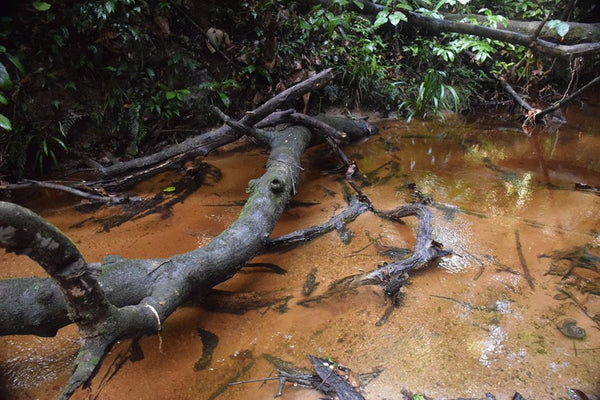
When these trees fall over, they often fall into small streams, or in the case of the varzea or igapo environments in The Amazon ( the ones that I’m totally obsessed with), they fall and are ultimately submerged in the inundated forest floor when the waters return.
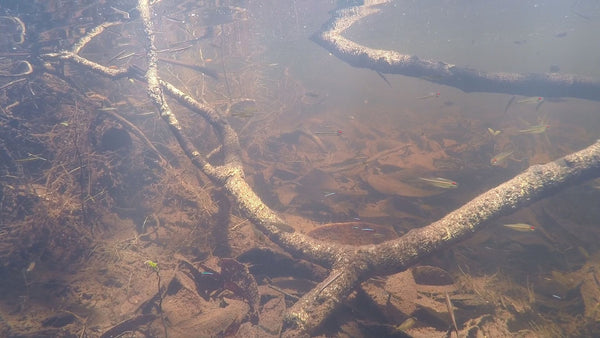
And of course, they immediately impact their (now) aquatic environment, fulfilling several functions.
Fallen trees provide a physical barrier or separation from currents, perhaps creating a little “dam”, which accumulates leaves, sediments, and detritus- all important as food sources to a huge number of aquatic organisms.
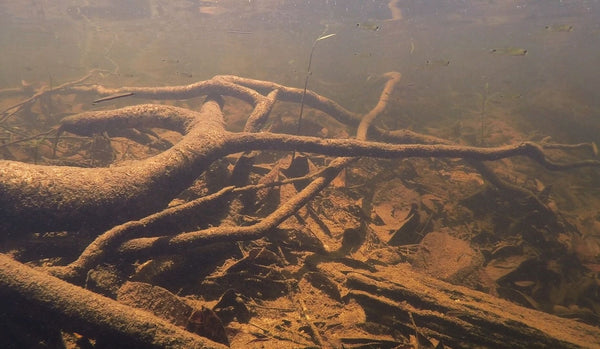
As they saturate and soften, some of their chemical constituents leak into the surrounding waters. They also provide a physical “substrate” for algae , fungal growths, and biofilms to multiply on. They provide numerous places for fishes forage among, and hide in. Many fishes, like small cichlids, will reproduce and raise their fry among these fallen tree trunks.
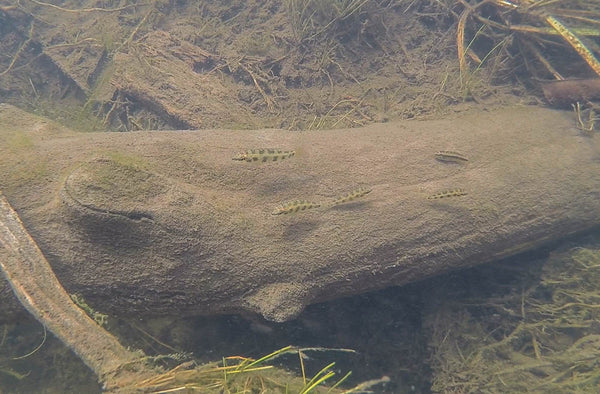
An entire community of aquatic life forms uses the fallen tree for many purposes. And the tree roots, trunks, branches, and other parts of the tree will last for many years, fulfilling this important role in the aquatic ecosystems they now reside in each time the waters return.
So, all of this talk of prep for wood in our aquariums is important…but the idea of “prep” can encompass many things. It’s one of those things that we as hobbyists know to do, but we always sort of second guess ourselves about HOW to do it.
The fact is, we need to embrace SOME sort of “preparation protocol” for any natural materials that we add to our aquariums. Even if that means “curing” the wood inside the aquarium.
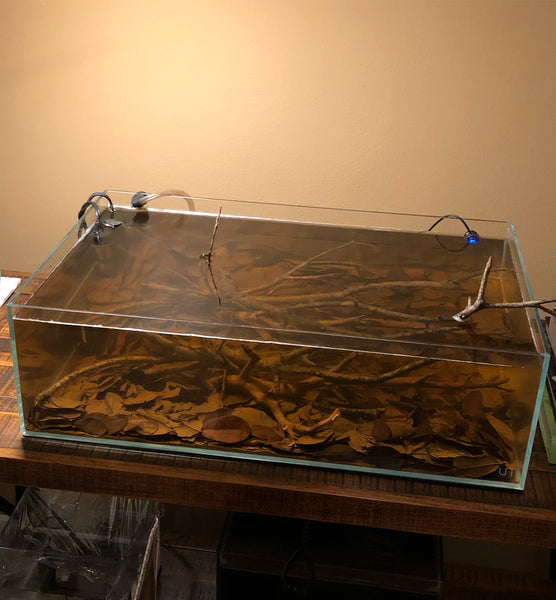
It’s not just about the aesthetic, of course.
The idea is that you’re utilizing wood to accomplish much the same thing in your aquarium as it does in Nature. Aggregations of branches and roots provide fishes with hiding places, foraging areas, and spawning sites, just like they do in Nature. And perhaps most important- they literally “anchor” the ecology of our closed aquarium ecosystems, hosting a community of beneficial life forms.
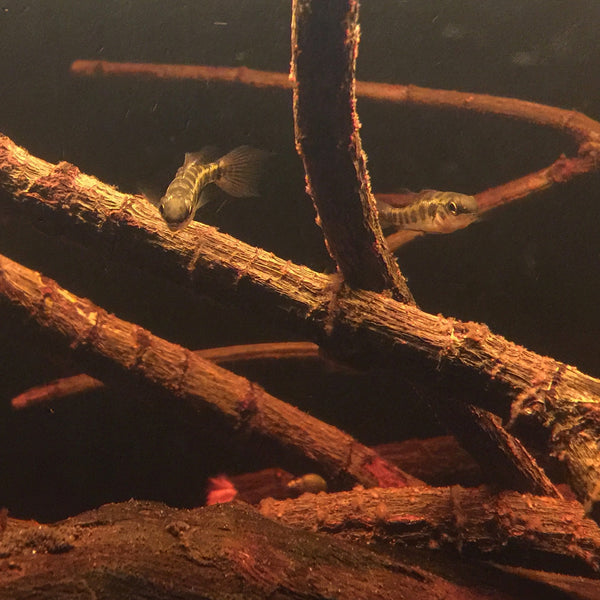
At the end of the day, the use of twigs, roots, and branches for the benefit of the organisms which take advantage of them is one of the most stunning aspects of Nature that we can recreate and see in our own aquariums, provided we don’t “edit” them out of our tanks!
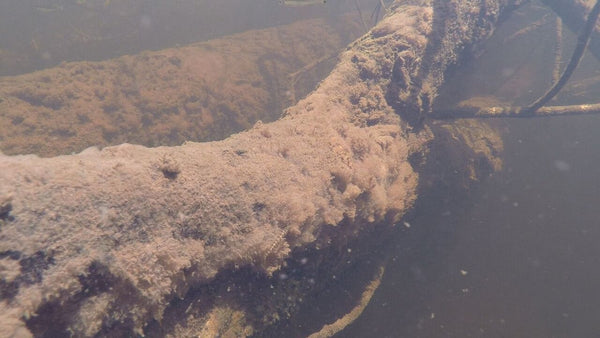
Like any dynamic habitat, the “branch, twig and root” microhabitat relies on a variety of organisms to do the job of processing nutrients. A diverse assemblage of organisms dwelling in this layer, ranging from bacteria to fungi, to worms and small crustaceans- comprise what we call the “infauna.” Essentially, the infauna is a collective of organisms which do most of the work in keeping a botanical-method aquarium functional and healthy.
Be kind to these organisms, and they’ll no doubt be kind to you, too.
In situ “curing” of wood (and, to a lesser extent, some botanicals) is something that indeed, goes against our “typical” practice, and certainly is different than my more “conventional” approach of boiling leaves and pods, and curing wood in a separate container of water.
Rather, just “rinse and drop!” Hardly precise. And rather at odds with even our own “conventions” and practices that I’ve touted here!
Yet, playing with this approach has given me some of my favorite tanks ever!
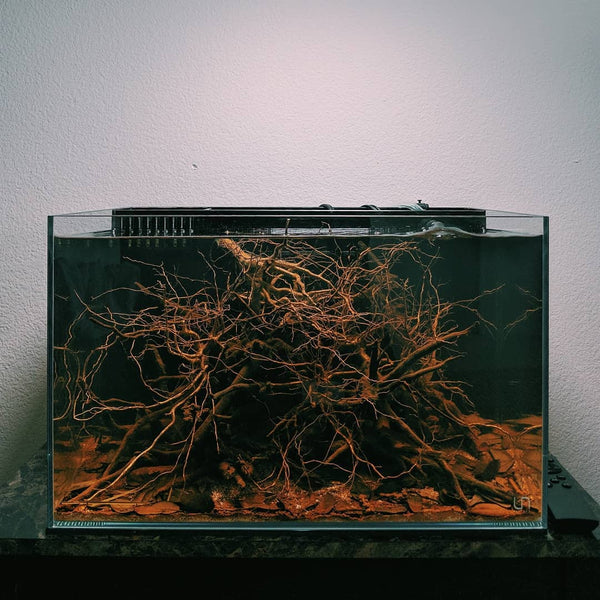
It takes time, and a willingness to wait and observe and open yourself up to a bit of a “mess” at the beginning- at least in the “conventional” aquarium sense. To me, it seems like by doing this, you’re ceding a bit of control; actually letting Nature do Her thing!
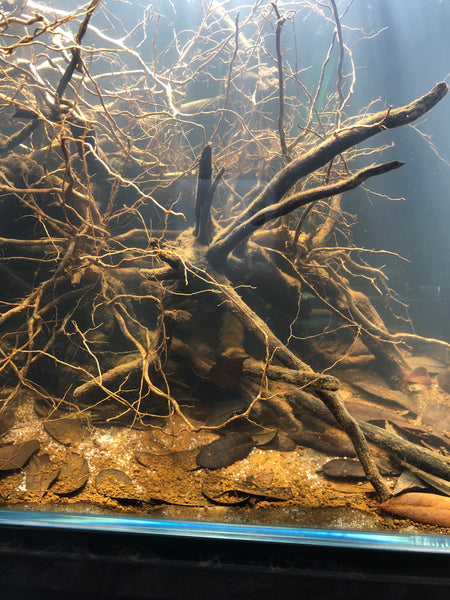
It’s not revolutionary…However, it is “evolutionary” for me, in that it more completely embraces my philosophy of building up a microcosm from scratch in an aquarium. This approach might be the ultimate expression of that.
The reality of this more “relaxed” approach to creating a botanical method aquarium is that it is allowing Nature to do what She does best- to efficiently use what’s available to Her- to assemble and maintain an ecosystem.
This is, in my mind, an exercise in functionality.
Doing things in a simple. yet fundamentally different way, in order to create a more robust, diverse, and rich ecosystem within the aquarium.
Stay bold. Stay open minded. Stay experimental. Stay observant. Stay enthralled…
And Stay Wet.
Scott Fellman
 The Tint
Leave a comment