
Okay, we need to talk about something…again.
There is this mindset in the hobby that aquariums which embrace the use of natural materials like leaves and seed pods are somehow “messy” or “dirty.” I hear this a lot from hobbyists unfamiliar with our little niche. It annoys me, to be honest. This is not only a completely incorrect assertion- it’s just sort of stupid. As I have pointed out for a decade now, Nature is anything but a clean, organized place.
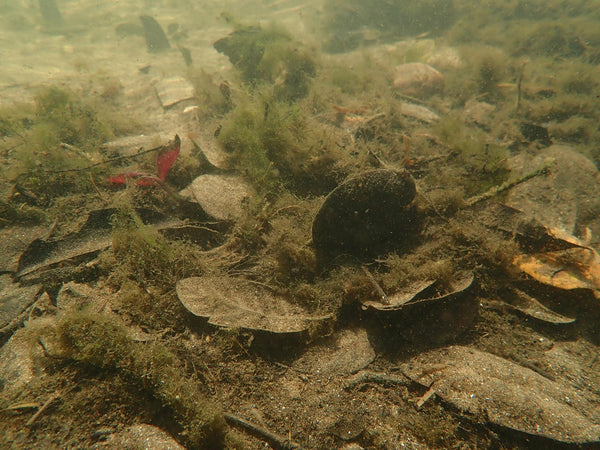
Yet, for some reason, those not in the know seem to love inferring that aquariums set up with large amounts of botanical materials (intended to be colonized by biofilms and fungal growths prior to decomposing) are “messy.” This, to me, seems like a statement based entirely on aesthetic preference, and has no relationship at all with the ecological function of the botanical method aquarium.
This is understandable, I suppose; but to those of us familiar with this methodology, this assertion is kind of laughable. It overlooks the actually facts. These tanks are not “messy” from an ecological perspective. Rather, they are a microcosm of life at many layers, with numerous biological relationships and dependencies from a myriad of life forms.
Processes like decay, fungal recruitment, and tinted water may appear “messy” to the uninformed, but in actuality, they are the representation of an elegant , healthy, and surprisingly orderly ecosystem. One which has evolved over time to create a dynamic, yet fundamentally stable aquarium.
As you know by now, I am pretty much near-obsessed with the idea of allowing a botanical method aquarium to “evolve” with little interference on the part of the aquarist. With botanical method aquariums, I personally believe that they can better handle evolving on their own more so than many typical systems…Not that I’d want to just “let a tank go”, mind you…
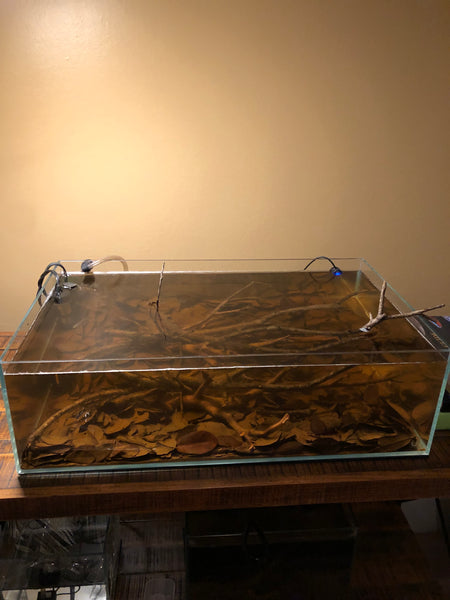
I’m a fairly diligent/borderline obsessive maintenance guy. I love my weekly water exchanges. They perform the same role in a botanical method aquarium as they do in any other type of system.
However, I think it’s very important to understand the reason why we create aquariums like this in the first place. What is the goal? What are we trying to accomplish? If we make an effort to understand the way the natural habitats we are enamored with actually function, it becomes way easier to manage them in a more confident manner.
Hobbyists unfamiliar with our processes and ideas will call this a mess.
We call it “natural.”
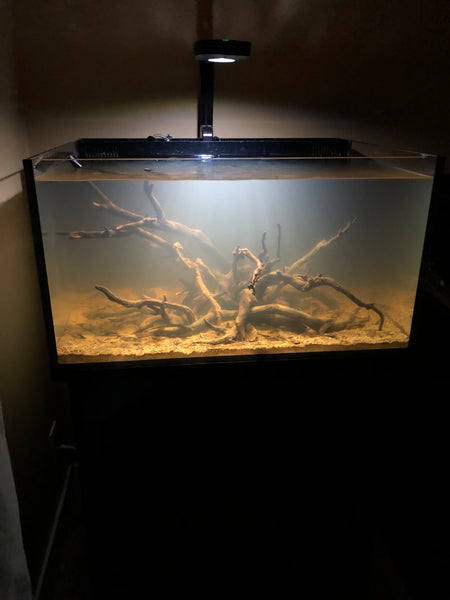
It looks different than the beautiful, yet markedly artificial-looking “Nature Aquarium” that has a grip on the sensibilities of the freshwater aquarium world as the ‘pinnacle” of achievement in an aquatic display. And indeed, they are beautiful, highly stylized, and utterly artistic representations of what a natural aquatic ecosystem looks like. They’re meticulous, manicured, and near perfect…from a purely aesthetic perspective. “Natural” is a concept worth discussion in this context.
I’m not telling you to turn your back on the modern popular aquascaping scene; to disregard or dismiss the brilliant work being done by aquascapers around the world, to develop a sense of superiority or snobbery, and conclude that everyone who loves this stuff is a sheep…
Noooooo.
Not at all.
I’m simply the guy who’s passing along the gentle reminder from Nature that we have this great source of inspiration that really works! Rejoice in the fact that nature offers an endless variety of beauty, abundance, and challenge- and that it’s all there, free for us to interpret it as we like. It’s not all perfect “rule of thirds” or flawless layouts and such.
Some of us just happen to like things bit more “natural” than others…
I mean, when you think about it, the natural, botanical method aquarium is deliberately set up to replicate a wild aquatic habitat where all of this stuff -decomposition, biofilm and fungal composition, and detritus accumulation/utilization-is taking place. Leaves, seed pods, etc. are more-or-less ephemeral in nature, and are constantly breaking down in these environments. These are not “hardscape” pieces in the traditional “aquascaping” sense.
Colonization by biofilms and fungal growths, as well as fragmentation and decomposition of botanical materials is continuous, and ubiquitous.
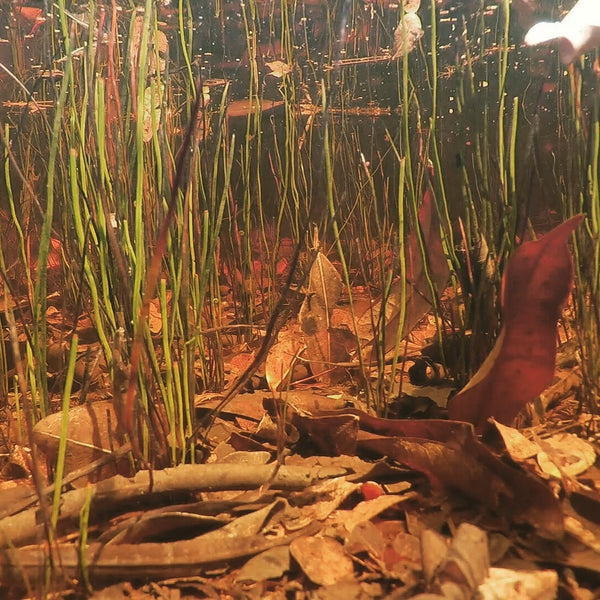
I love the fact that this approach is still seen as somewhat “contrarian” to the more conventional aquarium interpretation of a “natural” aquarium, despite the growing global popularity. I’m fascinated by the “mental shifts” that we need to make to accept the aesthetic and the processes of natural decay, fungal growth, the appearance of biofilms, and how these affect what’s occurring in the aquarium.
So, when I hear our aquariums criticized as “messy” by the (let’s call them what they are) uninformed, self-appointed critics out there- I sort of laugh.
They literally have no idea what they’re talking about.
“Messy?”
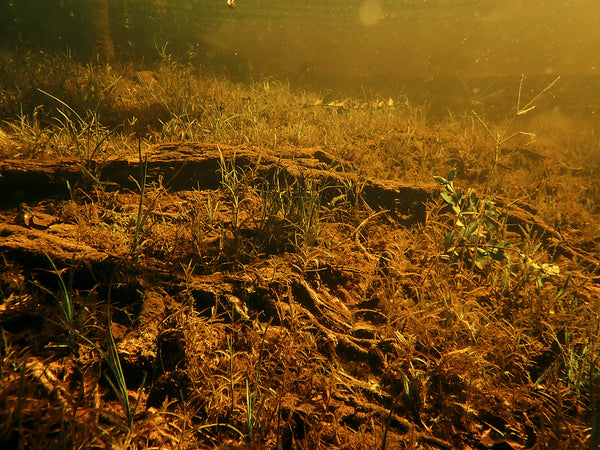
It takes time, and a willingness to wait and observe and open yourself up to a bit of a “mess” at the beginning- at least in the “conventional” aquarium sense. To me, it seems like by doing this, you’re actually letting Nature do Her thing!
I also like leaving botanical materials in my aquariums until they break down completely. Long, long ago, I made that mental shift to a philosophy which says, “Hey, it’s okay to have some decomposing botanicals and biofilms and…detritus…in your tank. It facilitates natural biological functions!”
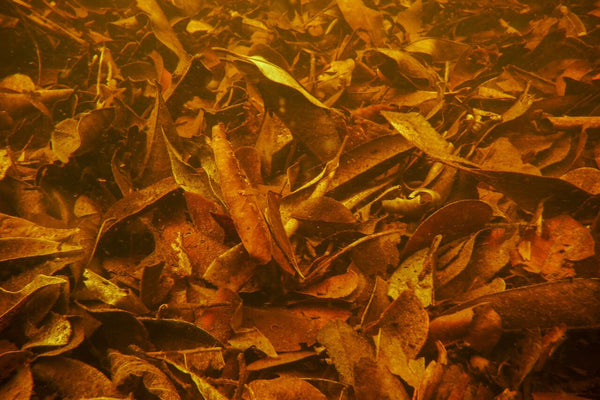
Now, the caveat here is that I didn’t just “give myself permission” to neglect tanks or avoid basic husbandry…no, that wasn’t the point. The point is to accept that materials breaking down in our aquariums can provide “fuel” for the biological processes which create long-term stability in a closed system.
Like any other type of aquarium, a botanical method system relies on time-honored practices of maintenance, nutrient export, and attention from the aquarist. However, one thing that we have that a lot of types of systems don’t is an abundance of potential food sources for a myriad of organisms which reside in our tanks. We are very much creating a little microcosm, and it needs to respect the “checks and balances” which Nature imposes.
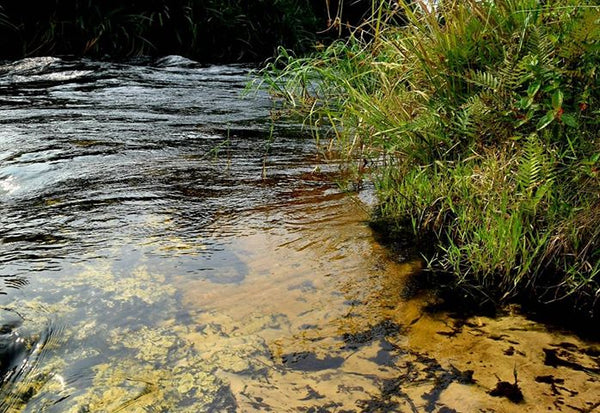
And of course, we can’t ever lose sight of the fact that we are creating and adding to a closed aquatic ecosystem, and that our actions in how we manage our tanks must map to our ambitions, tastes, and the “regulations” that Nature imposes upon us.
She’ll absolutely kick your ass if you don’t pay attention to husbandry. I 100% guarantee it. Full stop.
I’m not looking for instant gratification.
I know-we all know– that good stuff often takes time to happen. I’m certainly not afraid to wait for results. Well, I’m not just sitting around in the “lotus position”, either- waiting, anyways. However, I’m not expecting immediate results from stuff. Rather, I am okay with doing the necessary groundwork, nurturing the project along, and seeing the results happen over time.
Yeah, that’s a “long game.”
Don’t look for magic potions, shortcuts, or hacks.
Good stuff takes time to achieve.
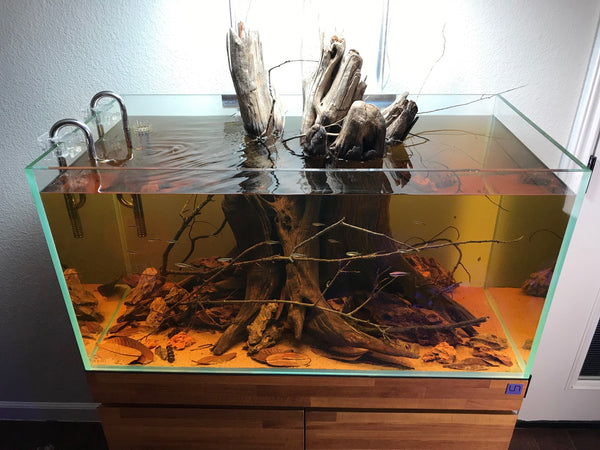
Allowing fishes and other life forms the chance to utilize the decomposing botanicals in their life cycle is an important part of the game, IMHO. Being overly fastidious about siphoning out every speck of dirt or botanical material as it breaks down is complete “overkill”, in my opinion, and can be just as detrimental as complete neglect.
Nature strikes a balance.
Nature thrives on efficiency.
Remember, when you’re adding botanicals to a tank, you’re not just doing “aquascaping”- you’re laying down the groundwork for the “biological operating system” -the ecology-of your aquarium. As such, you need to think “big picture” here. (That “functional aesthetics” thing again!)
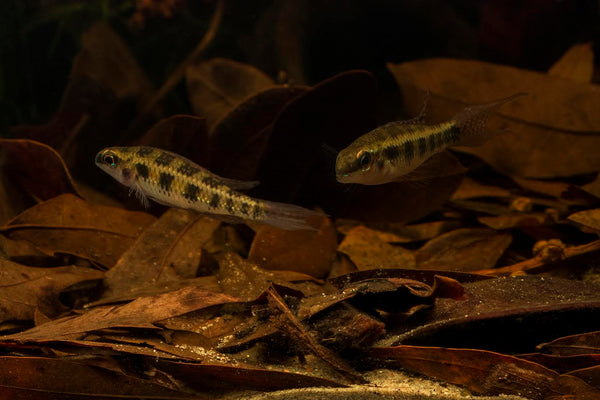
And of course, when you keep botanical materials in your tank, you’ll recruit a lot of biofilm and fungal growth initial.ly Maybe get some cloudy water for a bit as materials leach out and either settle, or are consumed by a growing population of microorganisms within the tank.
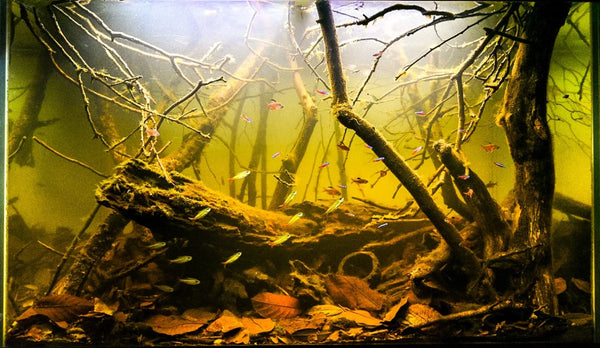
Yeah, the growth and proliferation of organisms of all types will contribute not only to the biological stability of the system over the long haul, I believe that it’ll form the basis of a literal “food web” in the aquarium. I talk about this often, because I think it’s really important. Allowing this to happen, despite our human impatience- or even our initial aversion to the looks of the process- enables us to truly embrace the function of Nature.
The reality is that these processes will continue despite any interventions we perform on our tanks. We can “resist” them, performing traditional “maintenance” tasks on our tanks, like siphoning detritus or removing biofilms from leaves – but these are merely serving to counteract or stave off the inevitable changes that occur in an aquarium as it establishes itself, and begins to thrive.
Stuff breaks down, and different types of organisms flourish and reproduce as a result. Nothing goes to waste in Nature…and that includes the “nature” which is found in our aquariums, too..If we allow it to happen.
In Nature, terrestrial materials covered by water are the basis for almost every aquatic ecosystem. The processes of decomposition and colonization- and utilization– of these materials by an enormous variety of organisms- is truly what “powers” these ecosystems.
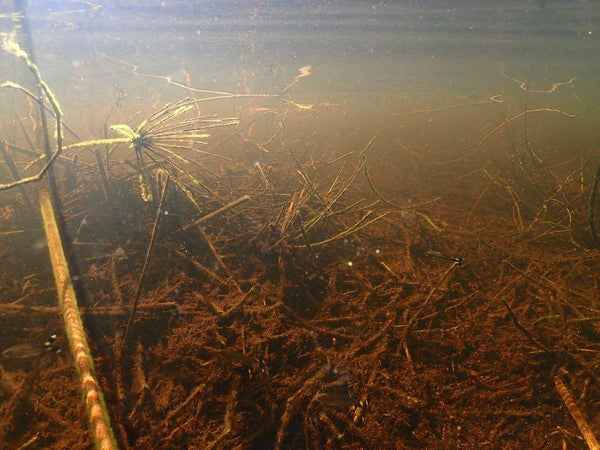
It works exactly the same in an aquarium...If we let Nature do her work without excessive intervention.
Yeah, let it be. Literally.
It’ll take a while before it’s “ready” for fishes.
Is that a downside? I don’t think so.
Now, sure, I realize that an aquarium is not an open, natural aquatic system, and that there are different inputs and export mechanisms, but in principle, an aquarium is subject to natural “laws” and functions like natural aquatic systems, right?
I’m really having trouble grasping exactly what the problem is with this slower approach- other than the obscene amount of patience we have to deploy as hobbyists waiting for our tanks to settle in and be “just right” for fishes.
“Messy?” Is it just the look? Is it because we’ve always been told NOT to start aquariums this way? Maybe? I mean, the aquariums that we play with own our world are not exactly “conventional”, right?
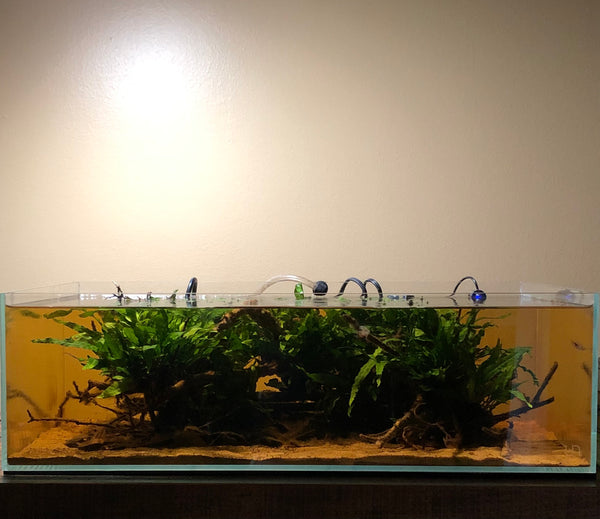
So why should the way we establish them be?
It just takes longer, that’s all.
Aquarium hobbyists have (by and large) collectively spent the better part of the century trying to create “workarounds” or “hacks”, or to work on ways to circumvent what we perceive as “unattractive”, “uninteresting”, or “detrimental.” And I have a theory that many of these things– these processes– that we try to “edit”, “polish”, or skip altogether in the general hobby world, are often the most important and foundational aspects of botanical-method aquarium keeping!
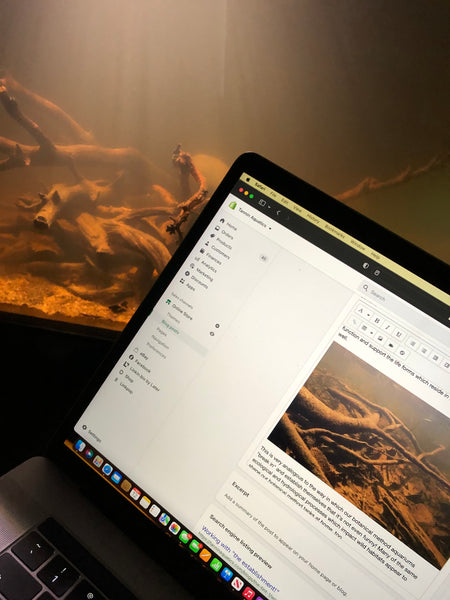
It’s why I literally pound it into your head over and over here that you not only shouldn’t try to circumvent these processes and occurrences- you should embrace them and attempt to understand exactly what they mean for the fishes that we keep.
They’re a key part of the functionality.
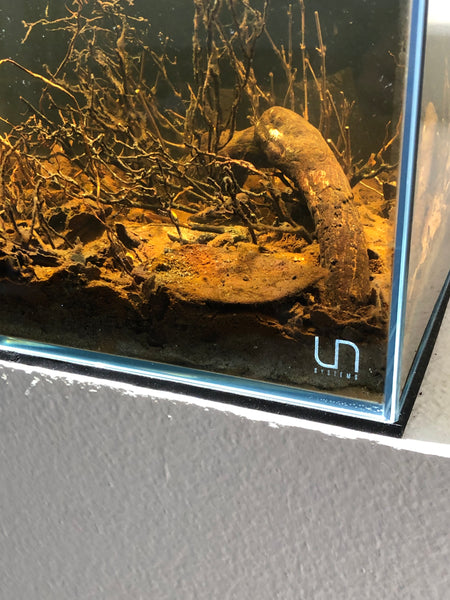
Now, I’ve had a sort of approach to creating and managing botanical method aquariums that has drawn from a lifetime of experience in my other aquarium hobby “disciplines”, such as reef keeping, breeding killifish and other more “conventional” hobby areas of interest. And my approach has always been a bit of an extension of the stuff I’ve learned in those areas.
I’ve always been fanatical about NOT taking shortcuts in the hobby. In fact, I’ve probably avoided shortcuts- to the point of making things more difficult for myself at times! Over the years, I have thought a lot about how we as botanical method aquarium enthusiasts gradually build up our systems, and how the entire approach is about creating a biome– a functional little closed ecosystem, which requires us to support the organisms which comprise it at every level.
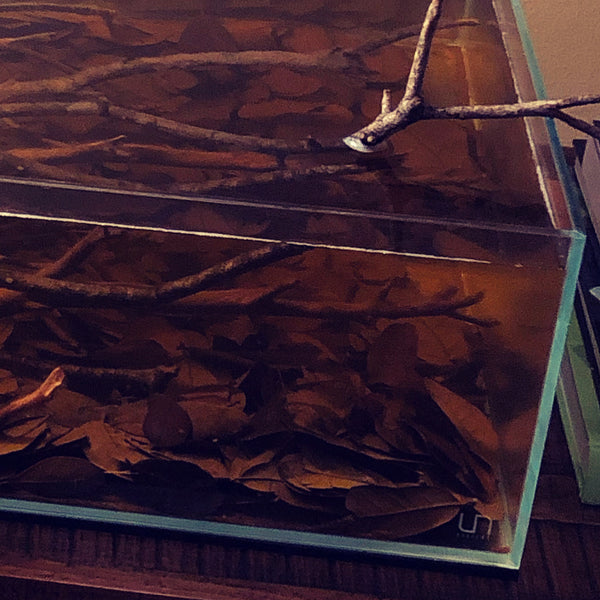
Just like what Nature does.
It takes a little bit of mental shifting, a little bit of courage, a bunch of attitude, and the ability to overlook some aesthetics which you’ve been programmed by the hobby to be freaked out about.
You up for that?
Oh, and for those who think that what we do is “messy?” Chew on this thought:
It’s perfectly okay to make a little “mess” sometimes. It can lead to something beautiful. And highly successful.
THAT is a fine “mess”, indeed.
Stay brave. Stay open-minded. Stay creative. Stay patient. Stay engaged…
And Stay Wet.
Scott Fellman
 The Tint
Leave a comment