
As we’ve discussed so many times here, the idea of mixing of elements- soils, roots, and seed pods is a fundamental aspect of the botanical-method aquarium.
If there’s one consistent lesson that we keep returning to, it’s that land and water are inexorably linked together. And I think that when we contemplate the dynamic of how water and the terrestrial environment interact, it makes us look at aquatic habitats- and our aquariums-a bit differently.
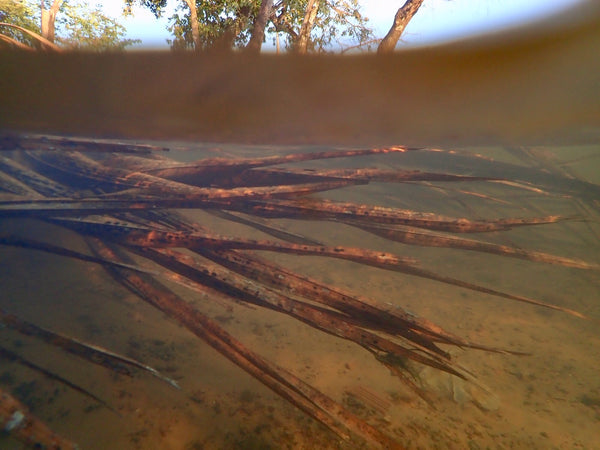
The forest floors of South America are a prime example of how the terrestrial environment and the aquatic are linked, and ecologically dependent upon each other.
What drives this relationship?
Well, it starts with...rain.
Rain does more than just bring life to the land- it influences the existing watercourses, which in turn, influence the terrestrial environments. Torrential rains are a sort of catalyst for the formation of the Igapo. After several weeks of rain, the water levels in the rivers rise significantly. Often several meters, and the once dry forest floor fills with water from the torrential rain and overflowing rivers and streams.
The Igapos are formed.
Flooded forest floors.
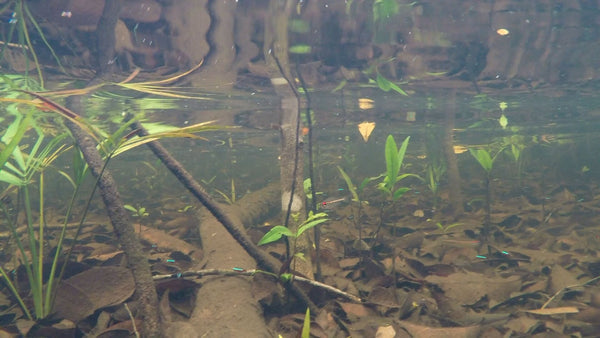
The formerly terrestrial environment is now transformed into an earthy, twisted, incredibly rich aquatic habitat, which fishes have evolved over eons to live in and utilize for food, protection, and spawning areas.
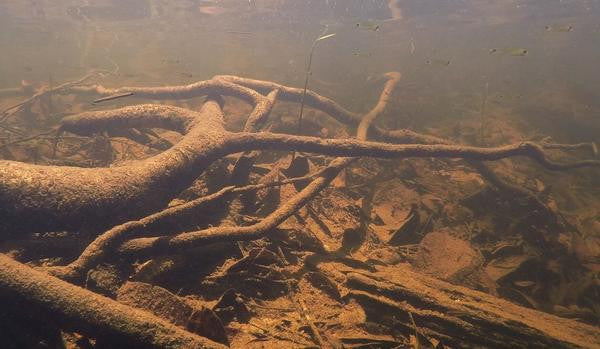
All of the botanical material-shrubs, grasses, fallen leaves, branches, seed pods, soil, and such- is suddenly submerged. Over time, significant water levels create strong currents, which re-distribute the soils, sediments, leaves and seed pods and branches into little pockets and “stands”, affecting the (now underwater) “topography” of the landscape.
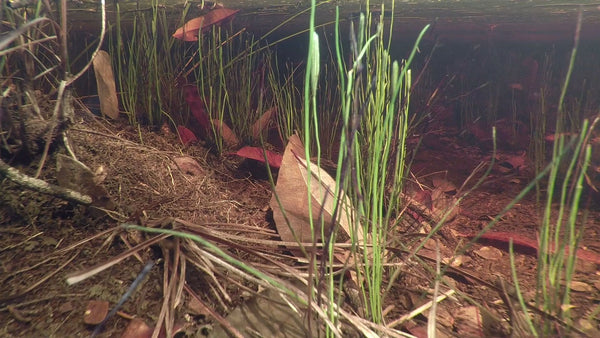
From an ecological perspective, this transformation from terrestrial to aquatic presents challenges- and opportunities for the organisms which live in these habitats. The ecological adaptations that the inhabitants are required to make are fascinating and dynamic. As the rain continues to fall, branches and stems of trees, once higher up in the forest ecosystem, become an enticing hiding place or foraging area for fishes, which can now easily access them.
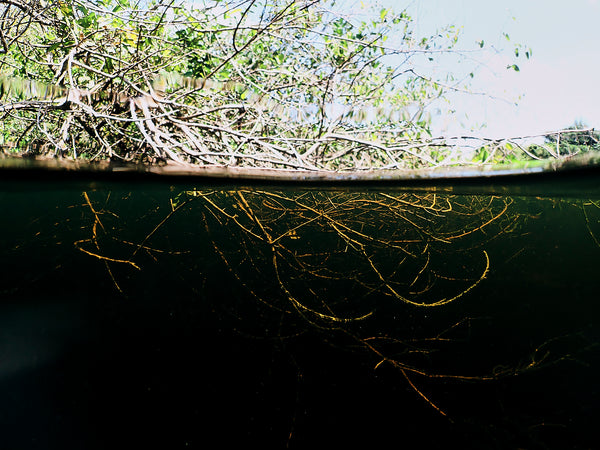
Leaves begin to accumulate.
Soils dissolve their chemical constituents- tannins, and humic acids- into the water, enriching it. Fungi and micororganisms begin to feed on and break down the materials. Aquatic insects and diverse organisms as well-known as copepods and as unusual as tree sponges- come to life.
Land and water working together.
It’s an intimate, interrelated, “codependent” sort of arrangement!
This is an absolutely tantalizing ecosystem to recreate in our aquariums. Pretty much ideally suited for the botanical method.
I believe that it’s important to think of the relationship between the terrestrial habitat and the aquatic one when visualizing the possibilities of replicating nature in your aquarium in this context.
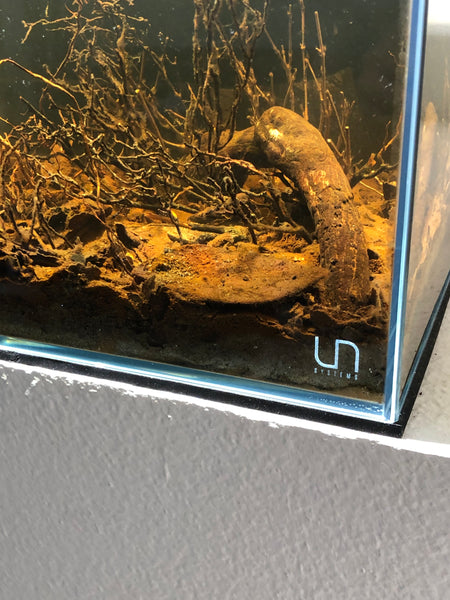
We’ve talked about the idea of “flooding” an aquarium setup designed to replicate an Amazonian forest for a while now. The so-called “Urban Igapo” idea is fascinating, exciting, and becoming sort of “well-trodden territory” now, with lots of people in our community embracing the idea and doing amazing executions!
It’s been incredibly fun for me, sort of attempting to simulate some of the processes which happen seasonally in Nature. With the technology, materials, and information available to us today, the capability of creating a true “year-round” habitat simulation in the confines of an aquarium/vivarium setup has never been more attainable.
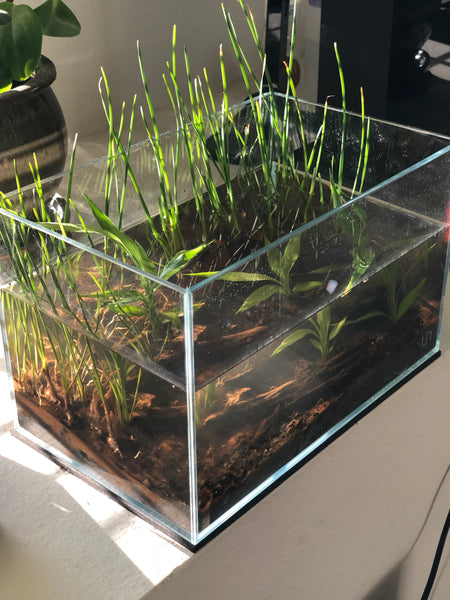
Now, that’s all well-and-good. We’ve kind of figured out how this wet-and-dry cycle can be managed in these types of systems. We’re starting to really get this thing down, and it’s easily replicated by the patient aquarist.
However, let’s think about simulating the “inundation season” as the aquarium. Let’s assume that you’re kind of not into doing the whole “start with a dry habitat, plant some grasses and terrestrial plants, and gradually inundate it with water, then gradually dry it out again” thing that is the crux “Urban Igapo” idea.
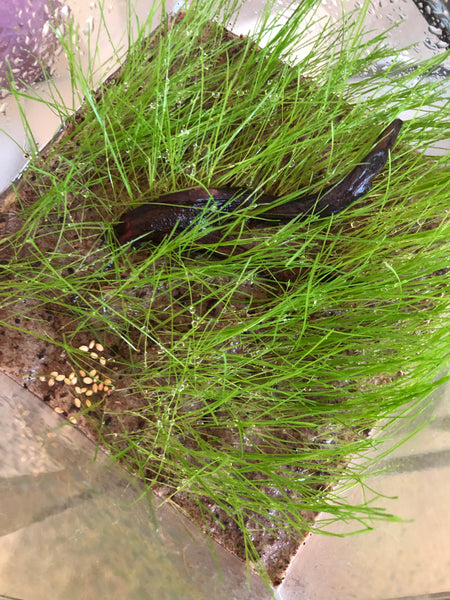
So, if you’re going “straight to the inundation phase” of the habitat in your tank, you can still take the approach of replicating the dry forest floor before adding water. to the aquarium.
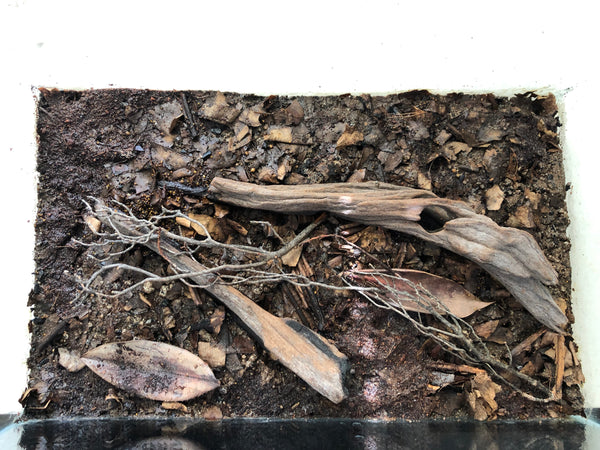
By setting up your substrate, and regularly wetting these materials- the substrate, leaves, botanicals, and wood- down for a few days, and letting them saturate, it’s entirely possible to go from “terrestrial” to “aquatic” in a very short period of time, and getting the cool effect- and indeed, part the function (a burst of microbial life, biofilms, fungal growths, and release of tannin and humic substances) of this system from the start.
I’d recommend some sort of bacterial inoculant, such as Purple Non-Sulphur Bacteria -to “kick start” the biological processes in your system before it’s inundated with water.
I think that this step of “bacterial inoculation” is such a fundamental part of the botanical-style aquarium approach. I see it as much less of a “hack” to kick-start the nitritogen cycle (it will help do that…) and more of a way to provide an initial population of life forms which help assimilate some of the botanical materials and make the many organic (and other) compounds and substances locked in their tissues (tannins, humic substances, lignin, sugars, etc.) available to other life forms within the evolving microcosm you’re creating.
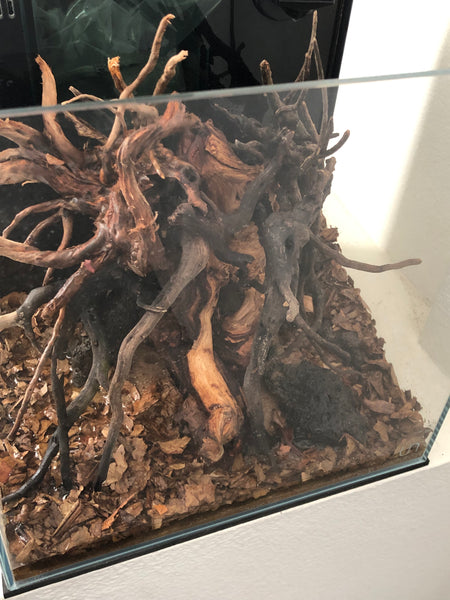
This type of “terrestrial first” approach to starting a “flooded forest”-themed aquarium is very interesting from so many standpoints. And, it gives you an interesting way to really experience the processes which occur as terrestrial habitats transform into aquatic ones.
And, from a strictly “practical” point of view, preparing the aquatic habitat in a terrestrial phase before filling it with water is not all that different from the “dry start” approach that many serious aquatic plant hobbyists take when setting up their systems, right?
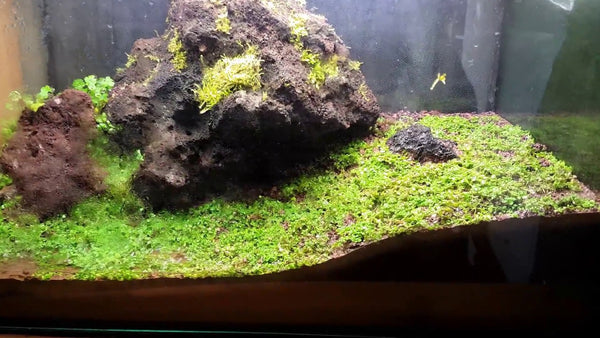
The main difference is that, unlike our planted tank friends, we’re more interested in setting up a “whole habitat simulation”, as opposed to just setting the stage for aquatic plant growth, and we’re likely not adding fertilizers to our substrate of choice. Rather, we’re more interested in fostering the development of microbial, fungal, and other life forms throughout the system once water is added.
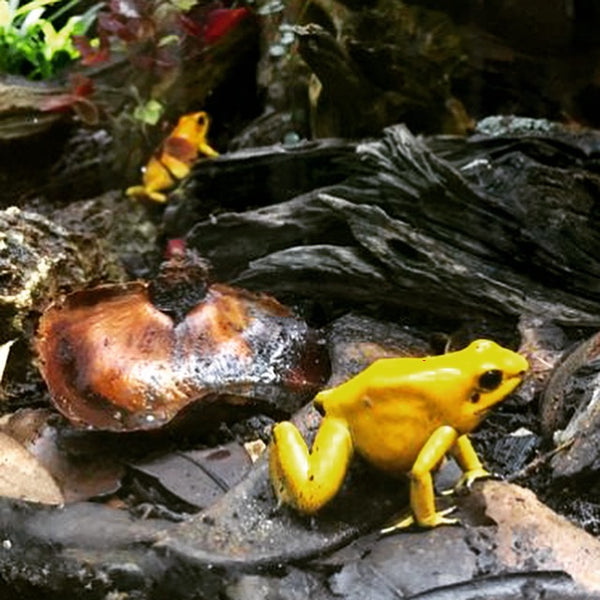
I suppose another good analogy might be the approach that our vivarium friends take when creating “bioactive” substrates for their frog enclosures and such.
The idea being to cultivate as large a population of beneficial organisms in your aquarium as possible from the start, to deal with the significant bio load that a large quantity of botanical materials brings.
So, the way this would work for us is to simply set up the tank like our “standard” approach to creating an “Urban Igapo”- utilizing a sedimented substrate to create a “forest floor.” And then, you add leaves, botanicals, and perhaps, some terrestrial grass seeds, and even riparian plants.
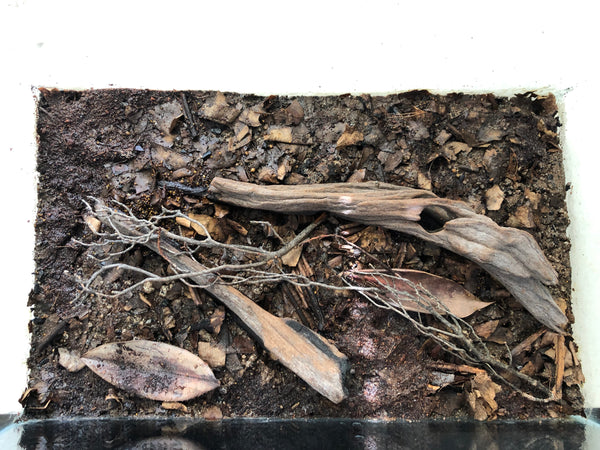
You’d set whatever “hardscape” you want- driftwood, etc. in place. Of course, you’d have to water your little forest floor for some period of time, allowing the vegetation to sprout and grow. Based on the many times of played with the “Igapo” idea, this process typically takes around 2-3 months to establish the growth well.
And then what? Well, you’d flood it!
You could do this all at one time, or over the course of several days, depending upon your preference. I mean, you’ve waited a couple of months to add water to your tank…what’s another few days? 😆 Now, sure, there’s a difference between a 5-gallon tank and a 50- gallon tank, and it takes a lot longer to fill, so it’s up to you how you want to approach this!
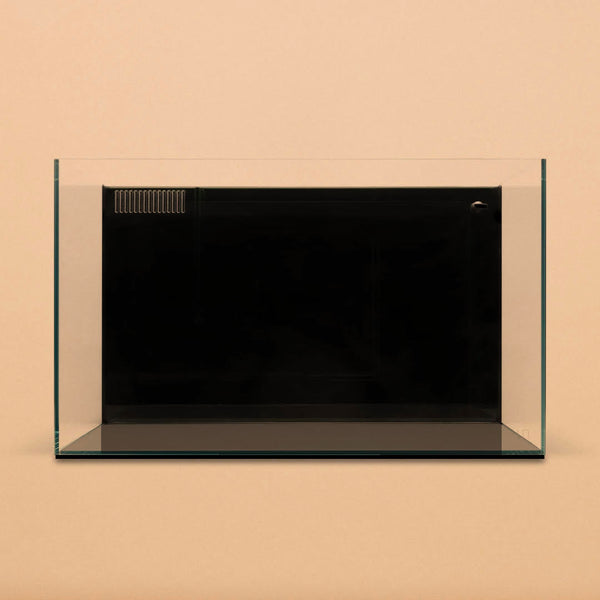
And what you’d initially end up with is a murky, tinted environment, with little bits of leaves, botanicals, and soil floating about. Sounds like a blast, huh?
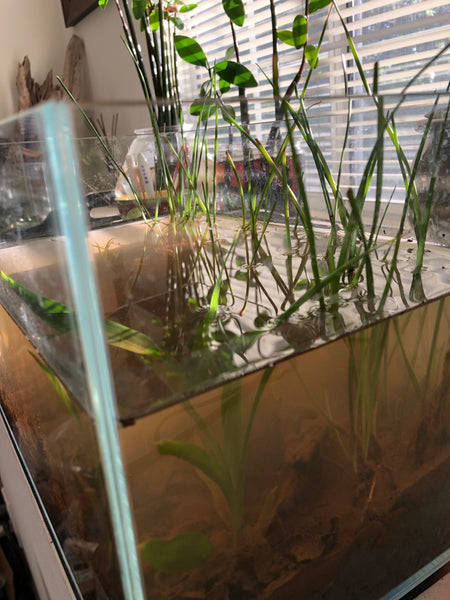
The interesting thing about this approach is that you will see a tank which “cycles” extremely quickly, in my experience. In fact, I’ve done many iterations of “Urban Igapo” tanks where there was no detectible “cycle” in the traditional sense. I don’t have an explanation for this, except to postulate that the abundance of bacterial and microorganism growth, and other life forms, like fungal growths, etc., powered by the nutrients available to them in the established terrestrial substrate expedites this process dramatically.
That’s my theory, of course, and I could be way, way off base, but it is based on my experience and that of others in our community over the past several years. I mean, there is a nitrogen cycle occurring in the dry substrate, so when it’s inundated, do the bacteria make the transition, or do they perish, followed by the very rapid colonization by other species, or..?
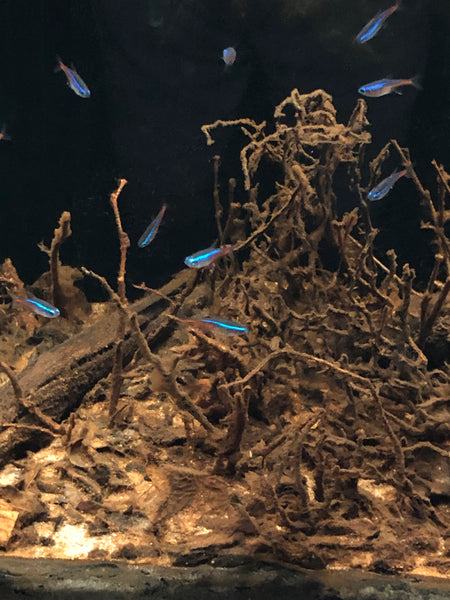
An underwater biome is created immediately with this approach. Doing this type of “transition” is going to not only create a different sort of underwater biodiversity, it will have the “collateral benefit” of creating a very different aesthetic as well. And yeah, it’s an aesthetic that will be dictated by Nature, and will encompass all of those things that we know and love- biofilms, fungal growth, decomposition, etc.
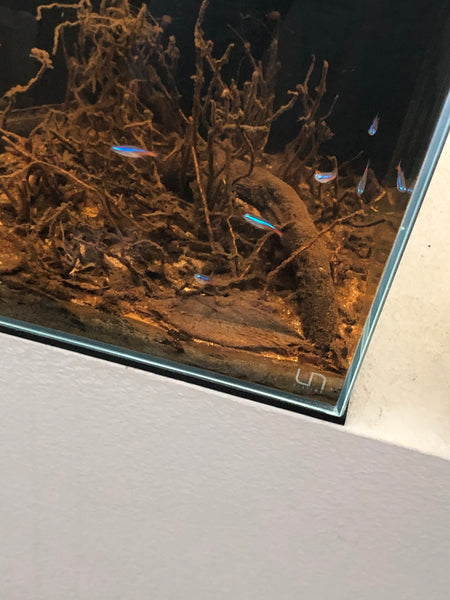
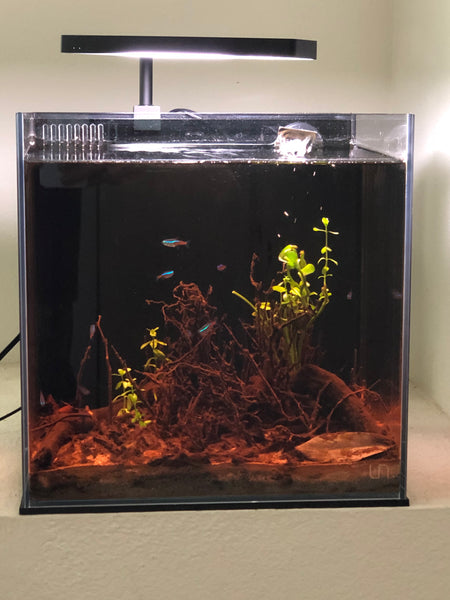
I’ve done this in aquariums up to 10 gallons so far, with great success, so I’m completely convinced that this process can be “scaled up” easily. The technique is the same.
Now, one fundamental difference between this approach and the more “traditional” “Urban Igapo” approach (lol) is that it’s a “one way trip”- start our dry and take it to “wet”, without going through repetitive dry cycles. The interesting thing to me about this approach is that you’re going to have a very nutrient-rich aquarium habitat, with a big diversity of life from the start.
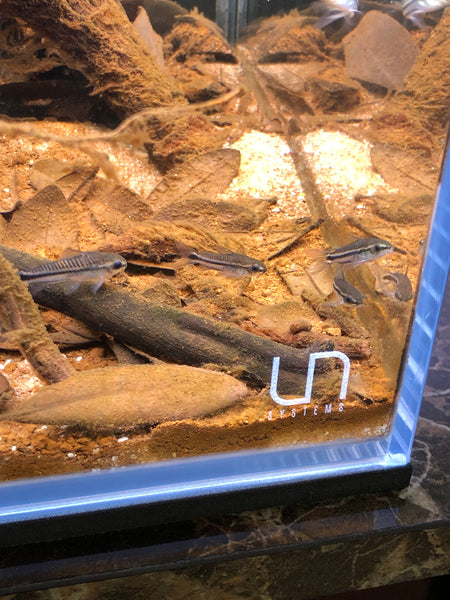
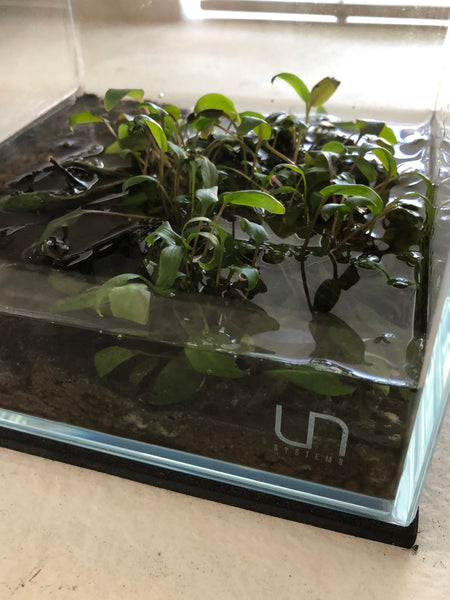
Could you plant aquatic plants in the substrate? Well, sure. You could use them from the start, or you could add them later on, if you wish. If you’re using sedimented substrates, you will be able grow many aquatic plants.
Here is a sort of “mash up” of the most common questions I receive online and elsewhere- about this approach:
What size aquarium do you need?
You can use just about any size of aquarium. Most of my executions have been in smaller tanks (1-10 U.S. gallons). Of course, you can scale this up to medium and large aquariums. The concept is the same.The execution is the same. The biggest challenge, in my opinion, is embracing the fact that you might set up a large tank which may not have any fishes in it for months. Patience! It’s a mental shift; a commitment to following though on an idea that is rather “alien” to most aquarists.
Does the grass and plants that you’ve grown in the “dry season” survive the inundation?
Another great question. Some do, some don’t. (How’s that for concise info!). I’ve played with grasses which are immersion tolerant, such as Paspalum. This stuff will “hang around” for a while while submerged for about a month and a half to two months, in my experience, before ultimately succumbing. Sometimes it comes back when the “dry season” returns. However, when it doesn’t survive, it decomposes in the now aquatic substrate, and adds to the biological diversity by cultivating fungi and bacteria.
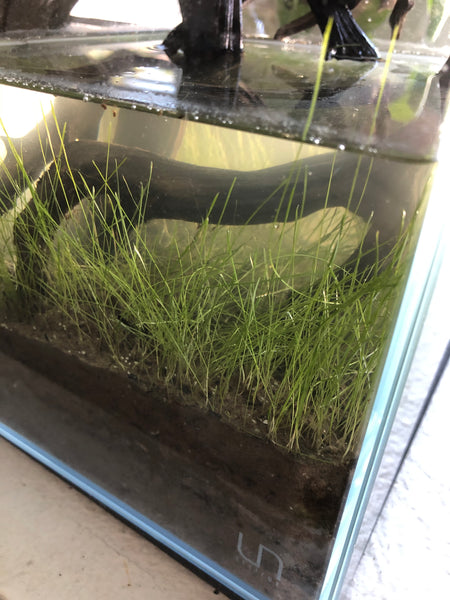
You can use many plants which are riparian in nature or capable of growing emmersed, such as my fave, Acorus, as well as all sorts of plants, from Hydrocotyle, Cryptocoryne, and others. These can, of course, survive the transition between aquatic and “terrestrial” environments
How long does the “dry season” have to last?
Well, if you want to mimic one of these habitats in the most realistic manner possible, follow the exact wet and dry seasons as you’d encounter in the locale you’re inspired by. Alternatively, I’d at least go 2 months “dry” to encourage a nice growth of grasses and plants prior to inundation.
And of course, you cans do this over and over again!
When you flood the tank, doesn’t it make a cloudy mess? Does the water quality decline rapidly?
Sure, when you add water to what is essentially a terrestrial “planter box”, you’re going to get cloudiness, from the sediments and other materials present in the substrate. You will have clumps of grasses or other botanical materials likely floating around for a while.
Surprisingly, in my experience, the water quality stays remarkably good for aquatic life. Now, I’m not saying that it’s all pristine and crystal clear; however, if you let things settle out a bit before adding fishes, the water clears up and a surprising amount of life (various microorganisms like Paramecium, bacteria, etc.) emerges. Curiously, I personally have NOT recorded ammonia or nitrite spikes following the inundation. That being said, you can and should test your water before adding fishes.
Should I use a filter in the “wet season?”
You certainly can. I’ve gone both ways, using a small internal filter or sponge filter in some instances. I’ve also played with simply using an air stone. Most of the time, I don’t use any filtration. I just conduct partial water exchanges like I would with any other tank- although I take care not to disturb the substrate too much if I can. When I scale up my “Urban Igapo” experiments to larger tanks (greater than 10 gallons), I will incorporate a filter.
What kinds of fishes can you keep in these systems?
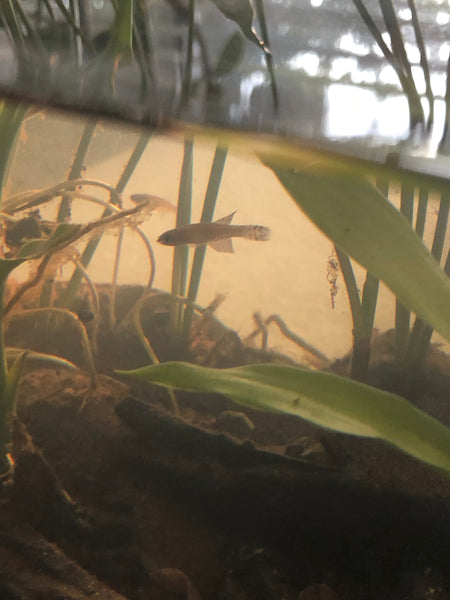
I’ve played with a lot of different types of fishes. Particularly annual killifishes, small characins (like Red Phantom Tetras, Neons, and others), Gouramis, and Bettas. Lots of possibilities!
I suppose the big question- the overarching curiosity that many of you have about this idea is why you’d try it. And the best answer that I can provide is…because it’s a fascinating exercise in patience, experimentation, and fostering biodiversity. It will familiarize you with the influence of the terrestrial habitat and the dynamic which exists between the aquatic and the terrestrial habitat during seasonal changes.
It’s about process, and transition…And there is so much to learn here. Now, from a purely functional standpoint, you can replicate many aspects of the flooded forests by taking this approach. And of course, you don’t have to go batshit crazy trying to replicate every single aspect of these habitats in your tanks. I mean, you could. Really, though- all sorts of fun variations are possible. Remember, it’s not about trying to please some contest judge with an absolutely perfect biotopic representation, or a “ratio-compliant” aquascape.
Nope.
It’s about experimentation; studying, observing, and replicating a natural process in the aquarium…to the best of our capabilities. “Artistic liberties” are not only possible- they’re welcome! So many iterations, interpretations, and experiments are possible here.
So, what’s this all mean? What are the implications for this practice in our aquariums?
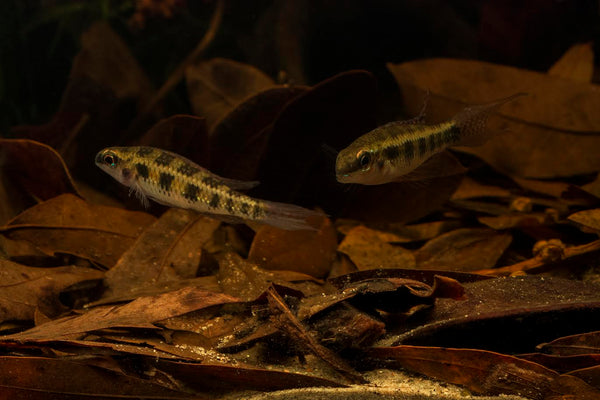
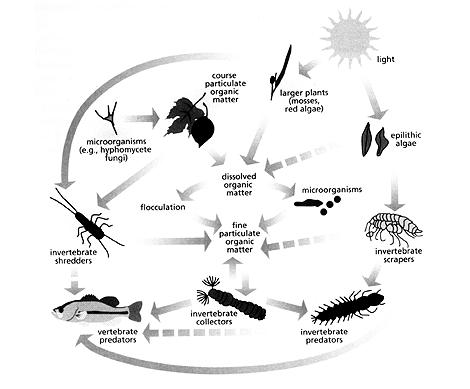
I think it means that we need to continue to foster the biological diversity of animals in our aquariums- embracing life at all levels– from bacteria to fungi to crustaceans to worms, and ultimately, our fishes…All forming the basis of a closed ecosystem, and perhaps a “food web” of sorts for our little aquatic microcosms. And one way to help foster that is perhaps most enjoyably facilitated through this sort of “terrestrial first” approach!
It’s a very interesting concept- a fascinating field for research for aquarists, and we all have the opportunity to participate in this on a most intimate level by simply observing what’s happening in our aquariums every day!Fostering a diversity of life forms in our aquariums is interesting enough, but when you factor in seasonal changes and cycles, it becomes an almost “foundational” component for a new way of running our botanical-method aquariums.
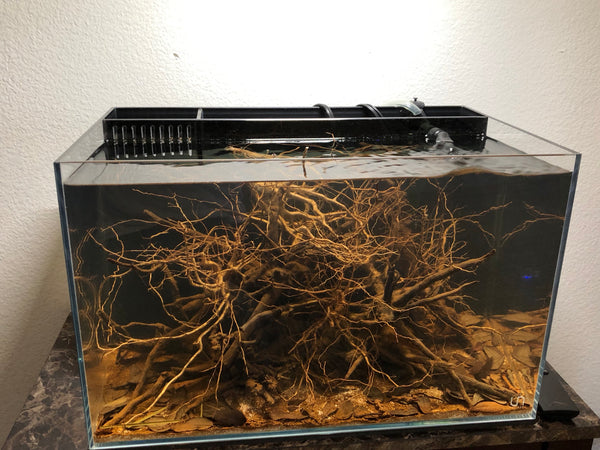
It all starts with an idea...and a little bit of a “waiting game…” Patience. And a belief in Nature; a trust in the natural processes which have guided our planet and its life forms for eons.
The appreciation of this process is a victory, in and of itself, isn’t it? The journey- the process– is every bit as enjoyable as the destination, I should think.
It’s all out there for us to learn. Investigating the relationship between land and water might just lead to a new world of discovery for the hobby.
Stay adventurous. Stay curious. Stay creative. Stay observant. Stay undaunted...
And Stay Wet.
Scott Fellman
 The Tint
Leave a comment