
Our love of unique ecological niches in Nature has enabled us to embrace a lot of “alternative” materials within the aquarium in order to recreate their form and function.
No where is this more evident than in the substrates that we use in our tanks.
Substrates are more than a “set and forget” thing. They’re a dynamic, functional part of the miniature ecosystems we create in our aquariums. We’ve used the “basic” stuff for a generation. It’s time to open up our minds to a few new ideas. To rethink substrate. To reconsider why we incorporate substrate, and what we use.
Of course, taking an historic perspective never hurts, either, right?
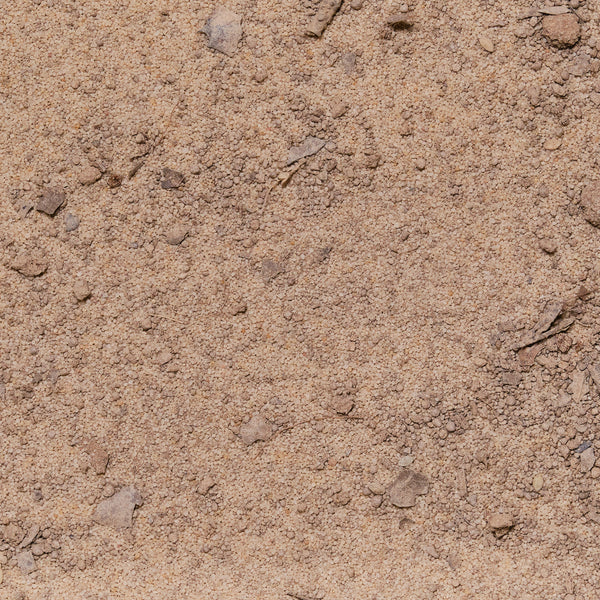
As we know, the substrates that we’ve been using in our aquarium work for most of the past 50 years or so in the hobby have been fairly “standard.” Much of what hobbyists have used has been finer gravels (what hobbyist who didn’t start as a kid doesn’t remember the famous “#3 Aquarium gravel”– the industry standard for a generation?)
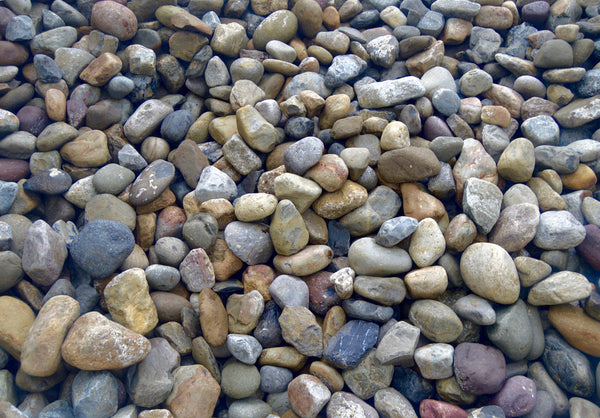
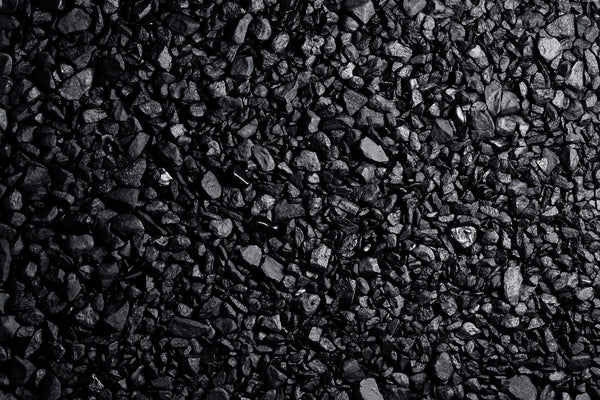
Now, occasionally, you’d see some sands and much finer gravels, but with the emergence of the “under gravel filter”, the coarser materials were far more common. In the late 60’s and early 70’s, more “exotic” materials, like the much-loved black gravels, appeared. That was some crazy shit, lol! What kid didn’t’ want that in his/her tankful of Cardinal Tetras, right?
In the 1980’s, the reef aquarium hobby began to take off, and materials like crushed coral, dolomite, and eventually aragonite, started to come into the game. Dolomite was much loved by the African Rift Lake cichlid crowd. In the 90’s and early 2000’s, you really started seeing the emergence of sands of various sorts making a big presence known.
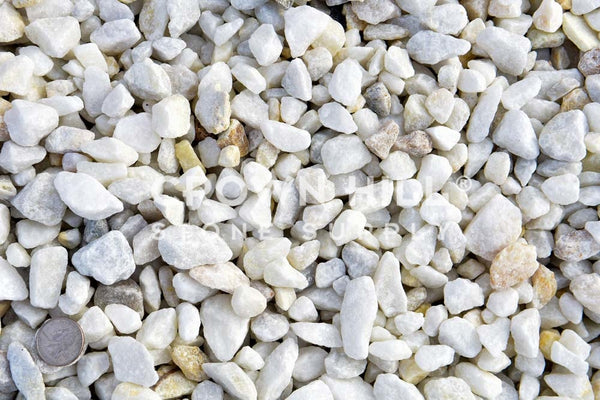
Manufacturers started cranking out some cool stuff, based more on what you might see in some wild habitats, rather than just what material could be appropriated from a different industry, like, landscaping, etc.
You also saw far more varieties of “nutritious” substrates for planted aquariums, many containing volcanic materials or clays, designed to grow aquatic plants as efficiently as possible. This, to me, was a big turning point in the “substrate universe.” We had really functional substrate materials at last- materials created for the expressed purpose of growing plants…that was really cool!
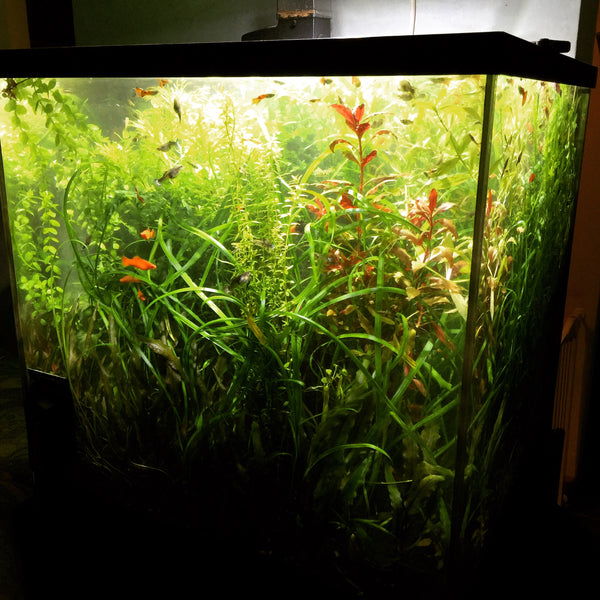
However, as a huge fan of aquarium substrates, to me, it seemed like little innovation was going on in the “fish-centric” side of the substrate world. I mean, some of the sands marketed by the major manufacturers are incredible- and I absolutely love them, and use them extensively. Yet, they were geared more for aesthetics than function, in my humble opinion.
These materials are of generally excellent quality, provide a wide range of choices for a variety of applications, and are readily available.
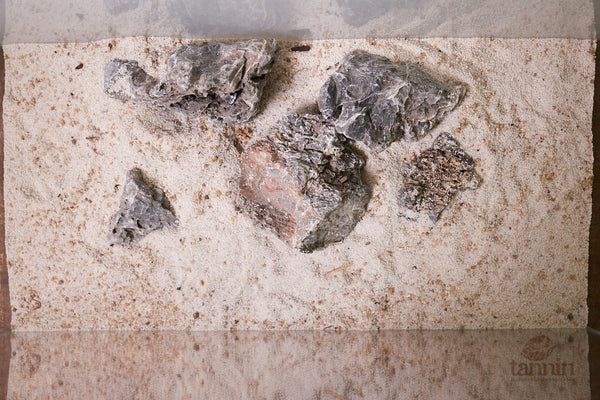
Now, in many of the tropical regions we admire, the basic substrate is often referred to simply as “fine, white sand” in most scientific papers- typically, but not necessarily a silica of some sort. And of course, other locations have slightly larger grain sizes of other pulverized stones and such. Still others are comprised of sediments which wash down from higher elevations during seasonal rains.
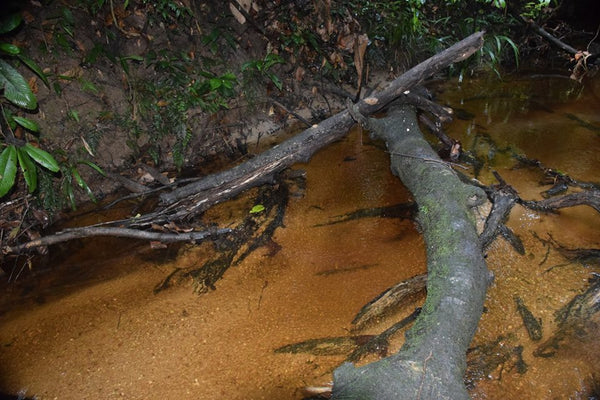
Studies have shown that particle sizes tend to decrease the further downstream from the source they are found. Large rivers, such as the Amazon, have beds of shifting sands, slowly transported with the currents. Typically, the larger the item (pebble, rock, or boulder), the longer it tends to stay in one place. So, in a more powerful flow, you’re more likely to find larger-sized materials.
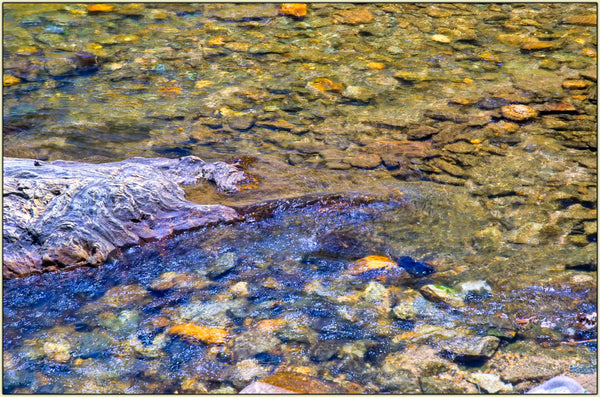
The first recorded observations of bed material of the Amazon River were made in 1843 by Lt William Lewis Herndon of the US Navy, when he travelled the river from its headwaters to its mouth, sounding its depths, and noting the nature of particles caught in a heavy grease smeared to the bottom of his sounding weight.
He reported the bed material of the river to be “mostly sand and fine gravel.” Oltman and Ames took samples at a few locations in 1963 and 1964, and reported the bed material at Óbidos, Brazil, to be “fine sands, with median diameters ranging from 0.15 to 0.25 mm.”
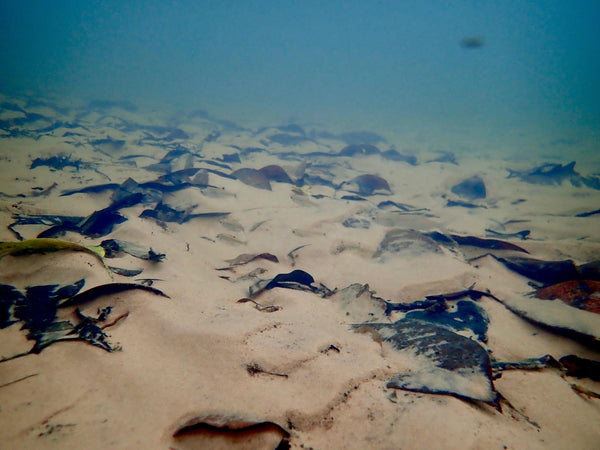
Yet, there’s a lot more we can uncover when we look towards Nature, in regards to substrate. You’ve likely seen my work with with different materials, like leaves, botanicals, clays, and sediments that I’ve shared with you here and elsewhere over the years.
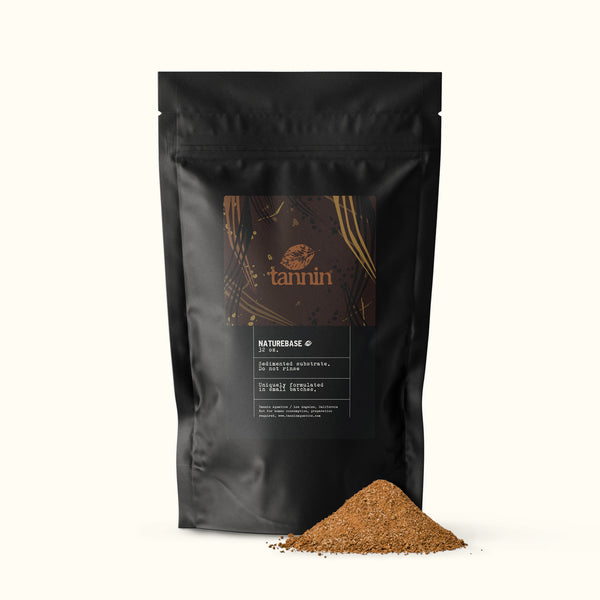
I even created a line of “sedimented substrates”, which were specifically formulated to recreate on both a functional and aesthetic level the substrates found in some of the unique ecological niches we’re obsessed with, back in my Tannin Aquatics days…I was- and am- really into this stuff!
Getting back to the topic at hand, there is a lot more to the substrate materials found in Nature than just “sand.” That’s the biggest takeaway here! So, as hobbyists, we have more options and inspiration to to draw on to create more compelling functional substrates in our aquariums!
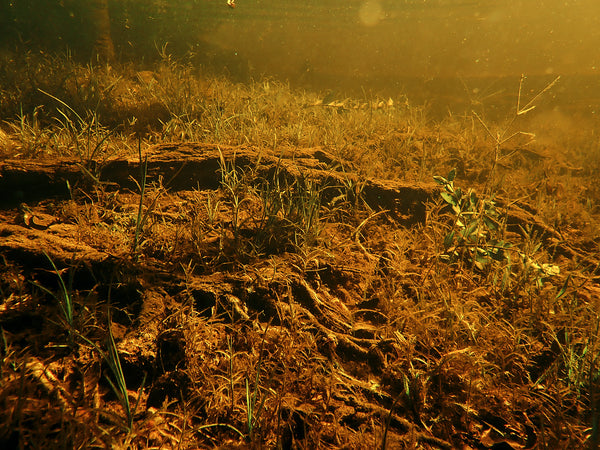
What kinds of materials can we employ to create more “functional” substrates (which just happen to look cool, too?). What kinds of functions and benefits can we hope to recreate in the confines of our aquariums?
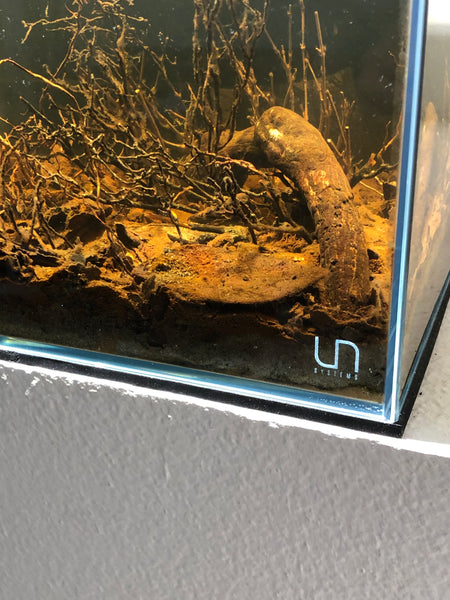
First off, think beyond just sands…or anything resembling “conventional” aquarium substrate. Think about what goes on in the benthic (bottom) regions in the natural habitats we love, and what benefits or support the materials which aggregate there provide for the organisms within the ecosystem.
Think about terrestrial soils, clays, and mixtures of both.
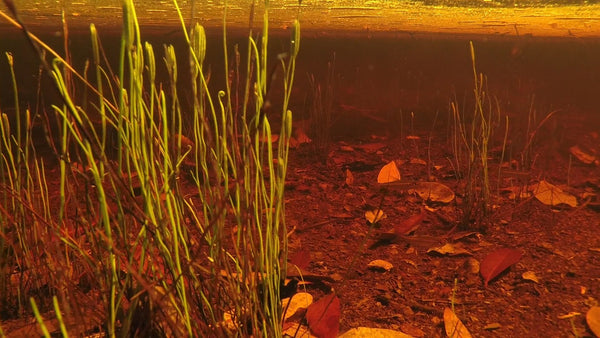
Understand that the substrate is a dynamic, extremely important part of the aquarium. And what we construct our substrate with, and how we manage it, is of profound importance to our fishes!
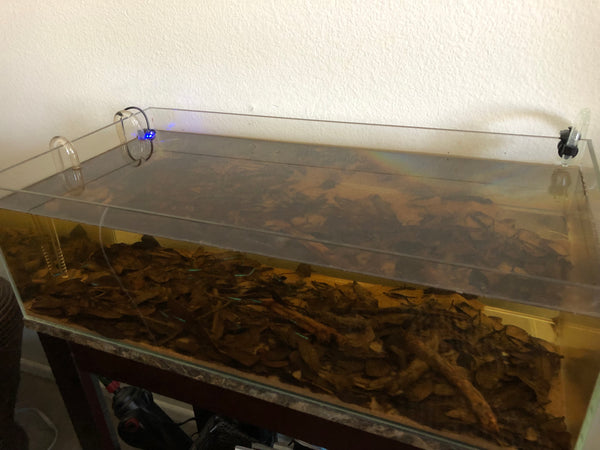
Fostering fungal growth, as well as other microorganisms and small crustaceans, should be a huge component of the “why” we do this. These organisms, as we’ve discussed repeatedly, form a part of the “food chain” within our captive ecosystems, and offer huge benefits to the aquarium not only as potential supplemental nutrition for fishes, but as a means to process and export nutrients from within the botanical-method aquarium.
A combination of finely crushed leaves, bits of botanicals, small twigs, etc. can form the basis for a more “biologically active” and even productive substrate. As these materials break down, they are colonized by fungi and biofilms, and impart tannins, lignin, and other sources of carbon into the water to fuel a variety of microbial growth.
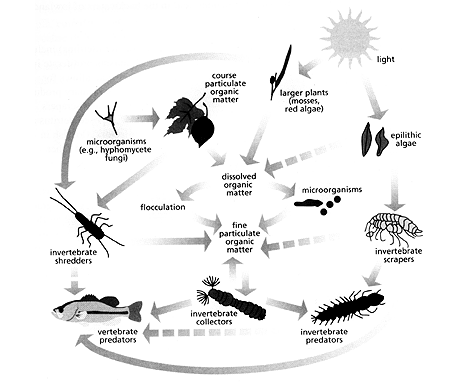
And of course, larger crustaceans and even fishes will consume the organisms which live in this “matrix”, as well as possibly consuming some of the detritus from the decomposing leaves themselves. This is precisely what happens in natural ecosystems.
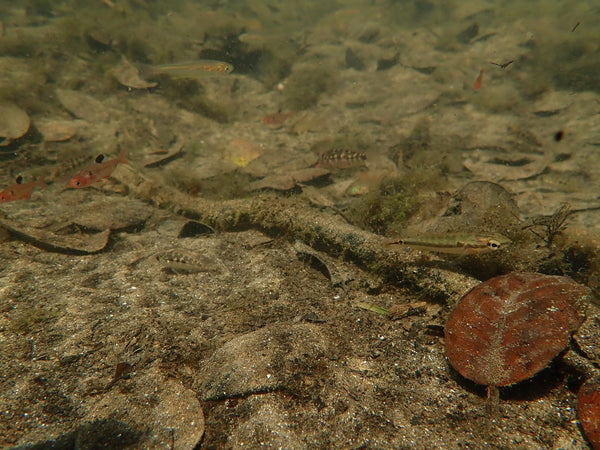
I’m fascinated by the different types of soils or substrate materials which occur in natural blackwater systems, and how they influence the aquatic environment. Keep in mind that many of the habitats we obsess over, like Amazonian “igapos” and “igarapes” are seasonally-inundated forest-floor features, so it goes without saying that the terrestrial soil composition and associated biomass have significant influence on the aquatic environments that emerge during the wet season.
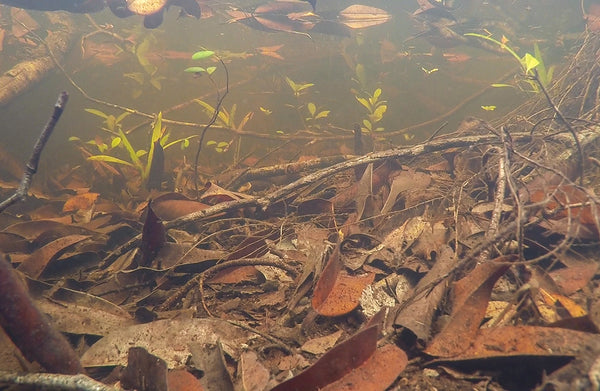
Its a very different looking- and functioning- substrate, for sure. And it can absolutely be replicated successfully in the aquarium. Adding materials reminiscent of those found in the wild to augment- or completely replace- the more “traditional” sands and other substrates used in aquariums is an easy “mental shift” that we can make and act upon.
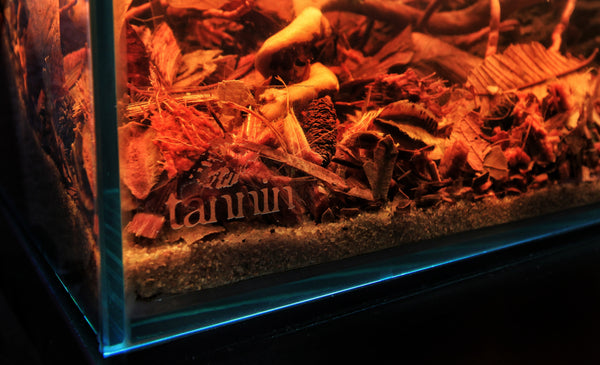
With our embrace of “detritus” or “mulm” as a source of “fuel” for creating active biological systems within the confines of our aquariums, I think that the idea of an “enriched substrate,” replete with botanical materials, will become an integral part of the overall ecosystems that we create. in the very near future. Considering the substrate as both an aesthetic AND functional component- especially in “non-plant-focused” aquariums, opens up a whole new area of aquarium “exploration.”
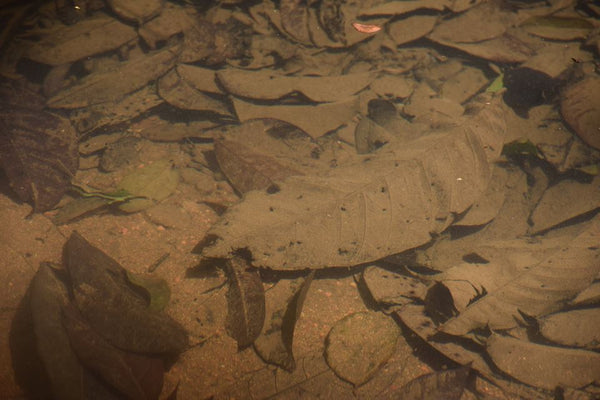
I envision that the future of mainstream aquarium practice may include creating such a substrate as simply part of what we do. Adding a mix of botanical materials, live bacterial and small organism cultures, and even some “detritus” from healthy aquatic systems may become how we establish systems. For botanical method aquariums, which tend to be less plant-focused, establishing the “ecosystem” is very important.
And the idea is not THAT crazy- it’s long been practice to add some sand or filter media from established aquariums into new tanks to help “jump-start” necessary biological processes. It makes sense, and the overall concept is really not that difficult to grasp. And we probably shouldn’t get too crazy into understanding every single aspect of this practice. Suffice it to say, something about this practice works, for reasons which we already tangentially understand.
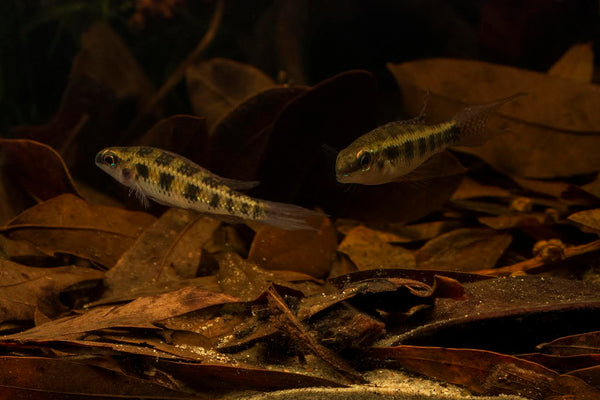
In a strictly aesthetic sense, the bottom itself becomes a big part of the aesthetic focus of the aquarium as well, with the botanical materials placed upon the substrate- or, in some cases, becoming the substrate.
Okay, cool. What are some other material you can play with to create these “alternative” substrates?
How about…twigs?
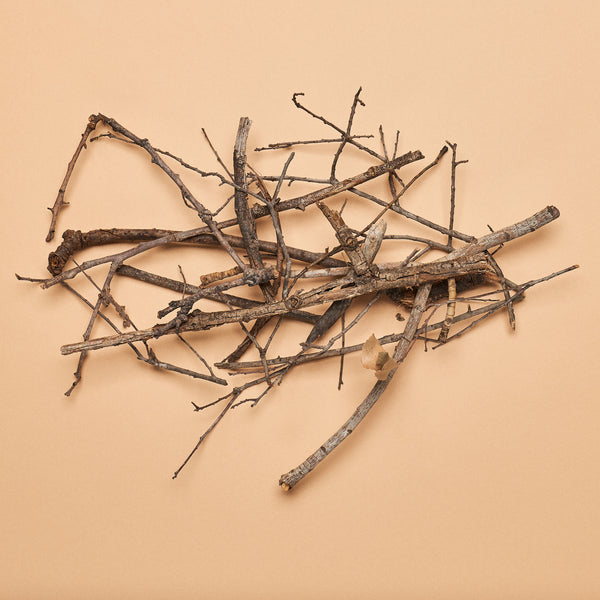
Twigs are really fascinating to me as a substrate, because not only do they create an interesting-looking substrate, they provide unique functional benefits as well. They create “interstitial spaces” (defined as “spaces between objects”) which create areas for various fauna (small crustaceans, worms, and aquatic insects), as well as a surface for biofilm, algae, and fungal attachment and growth. The matrix offer protection for these organisms to grow.
Of course, it also provides a foraging area for the fishes. A place where they, too can shelter when needed. A place for them to spawn on and in.
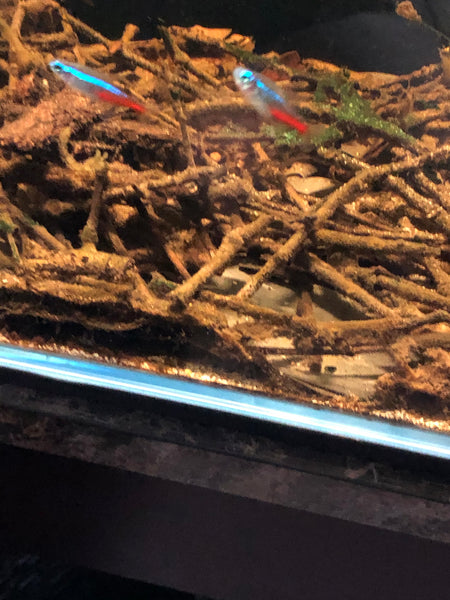
And of course, the twigs will leach tannins and other compounds into the water, which can impact the aquatic environment chemically. And, because of their physical structure, a substrate consisting substantially of twigs can create spaces for leaves and other botanical materials to accumulate, as well as to sequester our friend, detritus- which, as we’ve discussed repeatedly- is a valuable secondary food source for many species of fishes.
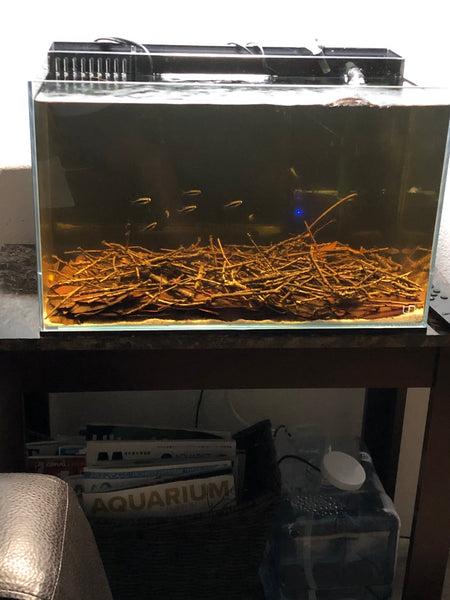
And of course, a mixing of elements – sand, sediments, crushed botanicals, etc., is yet another approach that you can take to creating a very unique and highly functional substrate. Allowing natural processes of decomposition to take place in and on the substrate is considered “best practice” in this approach.
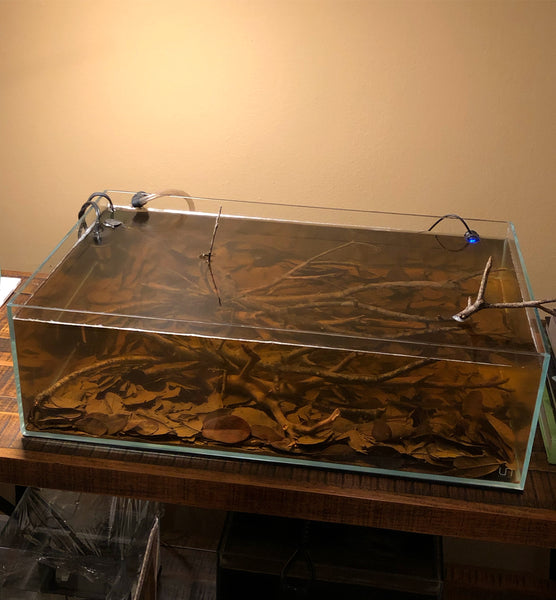
Why? Because if we try to remove the detritus or other “offensive” material from a substrate created for this purpose, we’re effectively depriving “someone”- some beneficial organisms- of their food source. Thus, a slowdown- or even a complete breakdown– of the very processes we’re trying to foster-occurs.
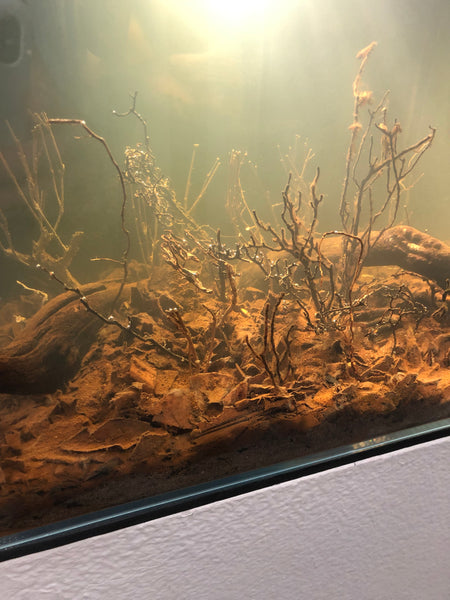
There is something incredibly beautiful and useful about utilizing these alternative materials in our substrates. They have created an incredible opportunity for us as hobbyists to forge new directions in the hobby. To embrace function first, and let the aesthetics unfold as a result.
And most important- to appreciate the wonders of Nature as it is- and how these systems organize themselves into beautiful, highly unique aquariums if we let them. If we make that mental shift which says, “You don’t have to make your substrate an afterthought!”
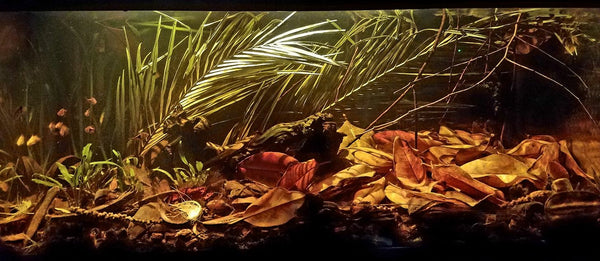
Because of the very “operating system” of our tanks, which features decomposing leaves, botanicals, soils, roots, etc., we are able to create a remarkably rich and complex population of creatures within them. Let’s take advantage this!
This is one of the most interesting aspects of a botanical-method aquarium: We have the opportunity to create an aquatic microcosm-on many levels- which provides not only unique aesthetics- it provides some supplemental nutritional value for our fishes, and perhaps most important- nutrient processing- a self-generating population of creatures that compliment, indeed, create the biodiversity in our systems on a more-or-less continuous basis.
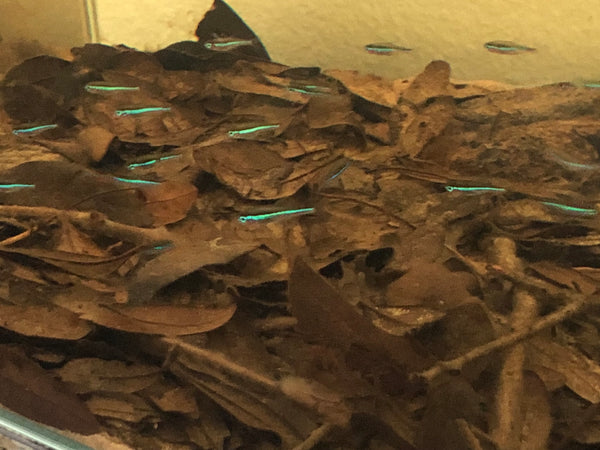
It’s important to at least understand this concept as it can relate to aquariums. It’s worth doing a bit of research and pondering. It’ll educate you, challenge you, and make you a better overall aquarist. Try an alternative substrate in your next aquarium- because sand is just so, well… you get the idea!
I spend a tremendous amount of time focusing on specific habitats and ideas to recreate them in the aquarium, and few have proven as popular- or alluring- as the flooded forest floors of Amazonia. We’ve visited these habitats multiple times in our blog, and done some discussion on the fishes and animals which reside in them during the periods of inundation (which is usually around September to the end of May).
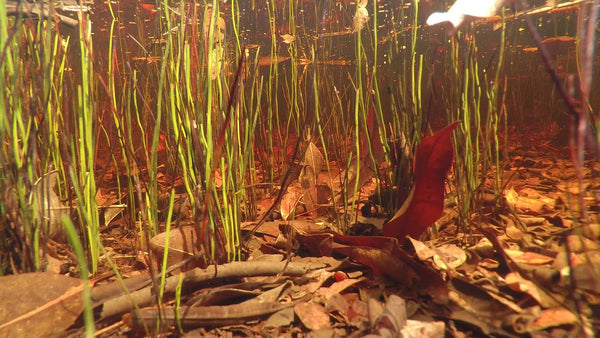
When the forests flood, the sandy soils are carpeted in aggregations of botanical detritus, root tangles, fallen logs, leaves, bark, etc. from the formerly dry forest floor. This is, of course, the stuff we as botanical-method aquarium enthusiasts are most interested in. One of the key components of this habitat, from a “structural/spatial” sense, is the presence of logs, branches, and roots from fallen trees.
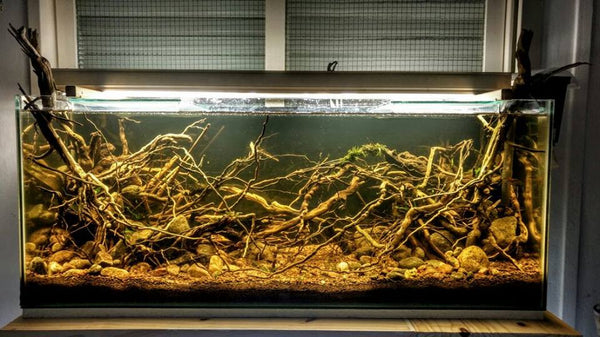
Yes, roots.
We see many aquariums which feature wood and leaves, of course. However, I think we don’t see a tremendous use of smaller branches, roots, and “twig-sized” pieces, and I think that is something we would definitely like to see more of in our aquariums. There is something remarkably realistic about the presence of these smaller materials in an aquarium.
The complexity and additional “microhabitats” they create are compelling and interesting. And they are very useful for shelling baby fishes, breeding Apistogramma, Poecilocharax, catfishes, Dicosssus, an other small, shy fishes which are common in these habitats.
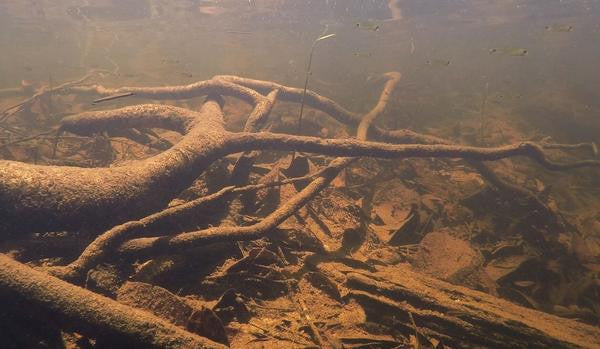
Now, small root bundles and twigs are not traditionally items you can find at the local fish store or online. I mean, you can, but there hasn’t been a huge amount of demand for them in the aquascaping world lately…although my ‘scape scene contacts tell me that twigs have become more and more popular with serious aquascapers for “detailed work”…so this bodes well for those of us with less artistic, more functional intentions!
And I refer you to my friend Ben’s company- Betta Botanicals- for a good selection of twigs and roots and such for these projects!
Ben even has my beloved “Melastoma Roots” and some others available to accomplish all kinds of cool stuff with your tanks!
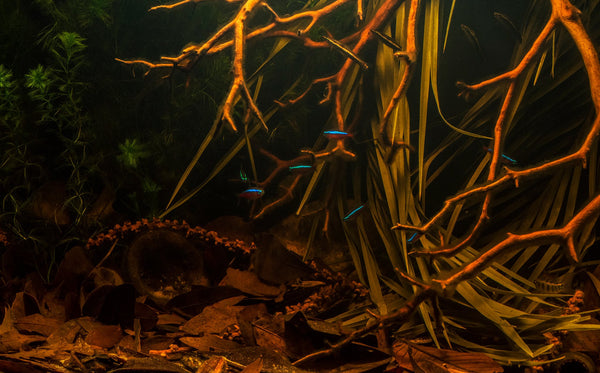
In flooded forests, roots are generally found in the very top layers of the soil, where the most minerals are. In fact, in some areas, studies indicated that as much as 99% of the root mass in these habitats was in the top 20cm of substrate! Low nutrient availability in the Amazonian forests is partially the reason for this. So, ecological reasons aside, what are some things we as hobbyists can take away from this?
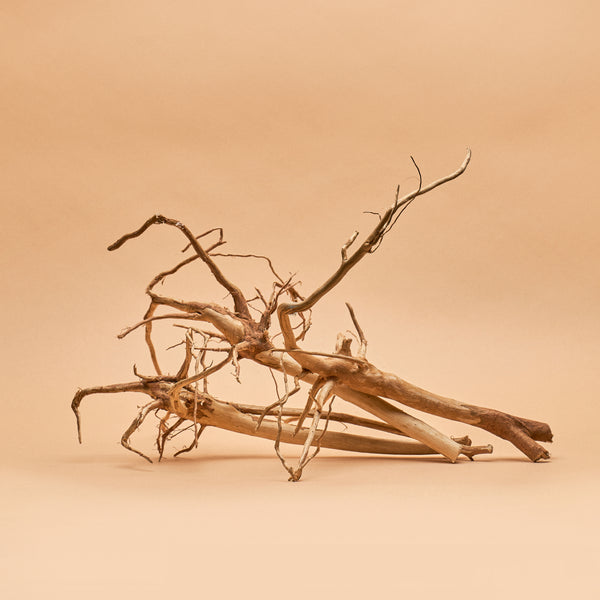
Well, for one thing, you can use a lot of materials to create a very dense look of tangled root structures extending into the water. For example, Melastoma roots have a perfect, delicate structure, and when combined with smaller wood pieces of materials to create a very unique, realistic look and function.
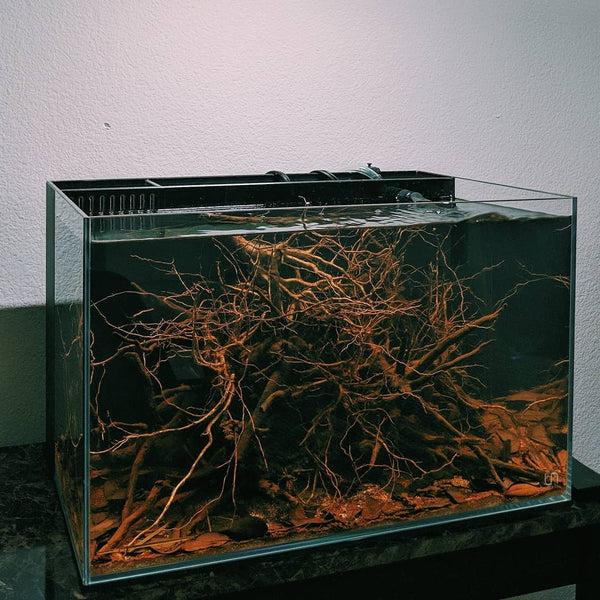
The nice thing about a tangled mix of roots is that it not only creates a unique aesthetic- it creates a fascinating natural foraging area for fishes.
Fungal growth, biofilms, and small crustaceans/microorganisms will live in the tangled matrix of small roots with enormous surface area. This has the dual advantage of functioning not only as a producer of supplemental food sources, but as a natural nutrient processing “facility” in the aquarium. This is a huge and important benefit provided by this type of assemblage.
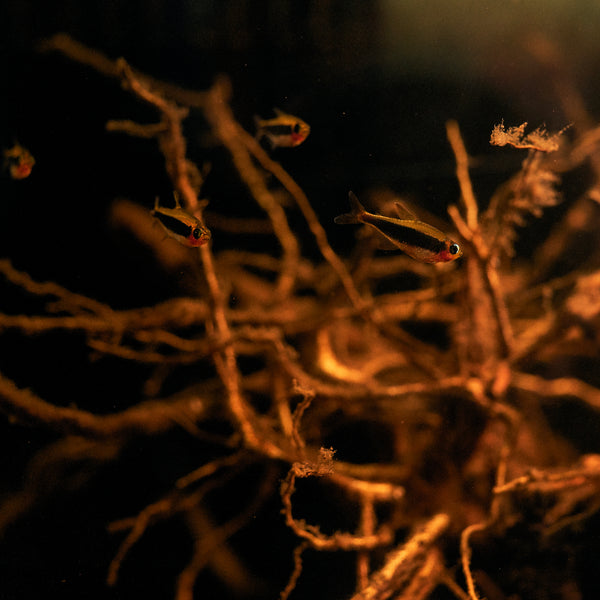
In Nature, these assemblages also serve a similar role, and “sequester” materials like leaves and such, further adding value to the resident life forms. These areas are ideal for fishes to use for spawning sites and shelter from predators, as well.
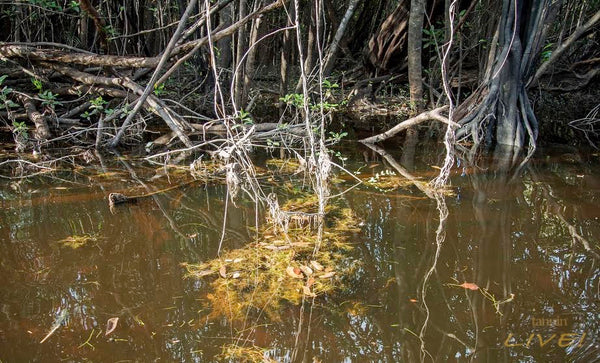
The trees-or their parts- literally bring new life to the waters which surround them.
The materials that comprise the tree are known in ecology as “allochthonous material”– something imported into an ecosystem from outside of it. (extra points if you can pronounce the word on the first try…) And of course, in the case of trees, this also includes includes leaves, fruits and seed pods that fall or are washed into the water along with the branches and trunks that topple into the stream.
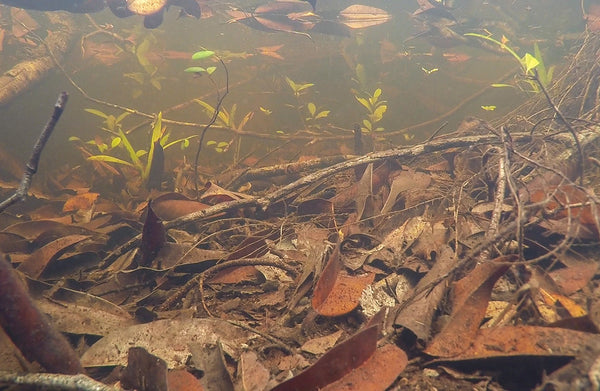
These materials are known to ecologists as “coarse particulate organic matter”, and in the waters of these inundated forest floors there is a lot of CPOM, and the community of aquatic organisms (typically the aforementioned aquatic insects and crustaceans) has a high proportion of “shredders”, which feed on the CPOM and break it up into tinier bits called (wait for it…) “fine particulate organic matter.”
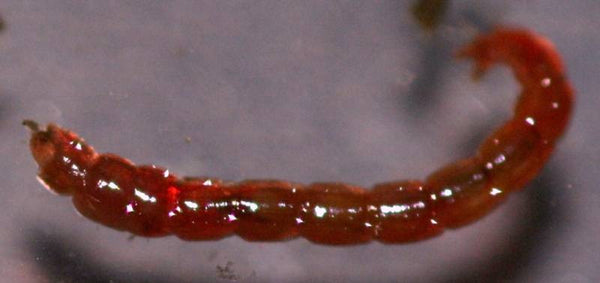
Some of these “shredders” and their larvae are a direct source of food for fishes, providing a nutritious food source for growing populations in these waters.
And of course, some fishes directly consume fallen fruits and seeds themselves as part of their diet as well, aiding in the “refinement” of the CPOM. Think about the Pacu, for example, which has specialized mouthparts suited to crushing hard-shelled fruits and seeds. Other organisms make use of the fine particulate matter by filtering it from the water or accessing it in the sediments that result. These allochthonous materials support a diverse food chain that’s almost entirely based on our old friend, detritus!
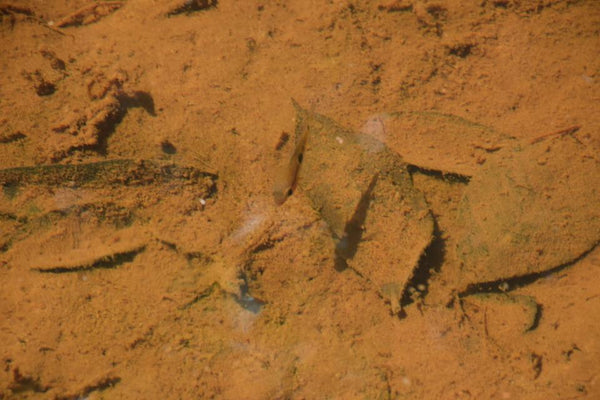
Yes, detritus. Sworn enemy of the traditional aquarium hobby…misunderstood bearer of life to the aquatic habitat. Just another benefit (yeah, you heard me right) to recreate these complex “root tangles” in the aquarium.
I have this obsession with these little niches in wild habitats, where a confluence of materials occurs. There IS something fascinating about tangled roots, branches, submerged, decaying vegetation, and rich substrate intersecting in the wild that has inspired me to replicate aspects of them in my aquariums in recent years.
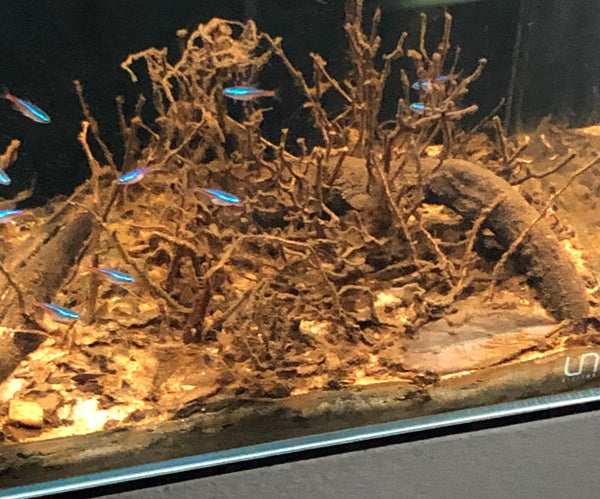
We talk a lot about “microhabitats” in Nature; little areas of tropical habitats where unique physical, environmental and biological characteristics converge based on a set of factors found in the locale. Factors which determine not only how they look, but how they function, as well.
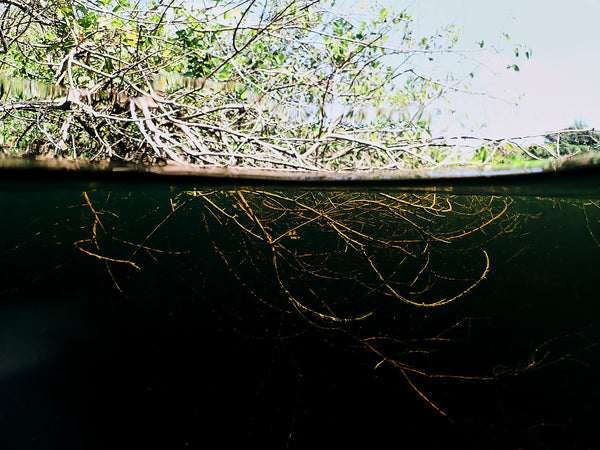
As aquarists, observing, studying, and understanding the specifics of microhabitats is a fascinating and compelling part of the hobby, because it can give us inspiration to replicate the form and function of them in our tanks! Just looking closely at an image of one of these locales can give you a plethora of tank ideas!
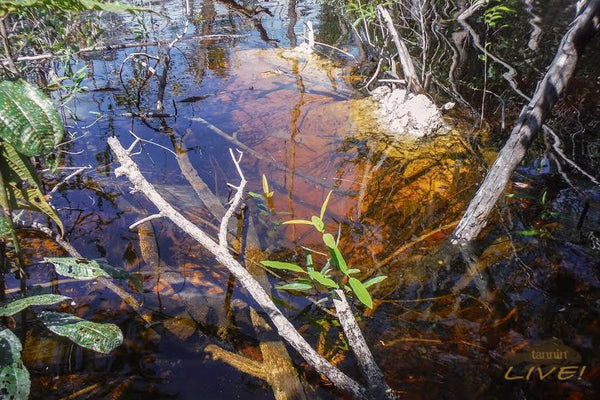
Continue to look to Nature for your inspiration. Make the effort study the way life forms adapt to these habitats and live within it. The lessons we can learn are so numerous, and so potentially beneficial, that we simply can’t overlook this niche.
Stay curious. Stay resourceful. Stay thoughtful. Stay patient. Stay creative…
And Stay Wet.
Scott Fellman
 The Tint
Leave a comment