
I have no idea why, but I’m definitely one of those guys who loves grey and brown fishes…
Yeah, seriously…
When I consider new fishes for my tanks, I’m not pouring over the selections either online or in person, looking for the brightest, most gaudily-colored fishes around. Nope, I’m obsessing over color patterns and intricacies. Subtle blends of tone and “texture.”
I mean, even brown and gold and ball offer variations that are compelling, IMHO.
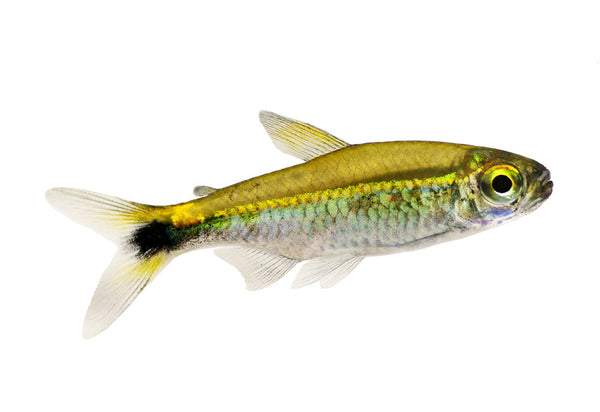
Now, don’t get me wrong, I love really colorful ones, too- but for some reason, in recent years, my affections towards brown fishes has increased. I think it’s in part because of my love of the blackwater, botanical-influneced aquarium I’m so obsessed with.
One of my friends jokingly told me that he thinks it’s because I grew up owning an old-school copy of William T. Innes’ “Exotic Aquarium Fishes” that had nothing but black and white pics, and I obsessed over the patterns instead of the colors of the fishes…Hmm, he might be onto something there, as my favorite characin, Crenuchus spilurus, the rather subdued “Sailfin Tetra,” is a strong childhood memory from the black-and-white pic in that book!
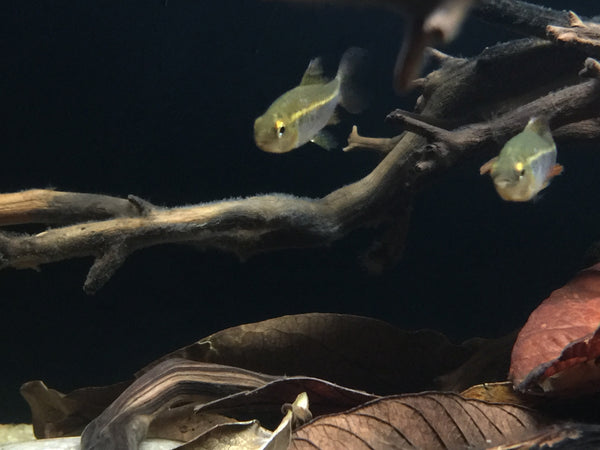
All speculation aside, I think that there are some cool reasons to love the more subtly-colored fishes as primary “players” in your botanical method aquarium. The first and foremost is that they don’t compete with the colors of the botanical materials; rather, they compliment them.
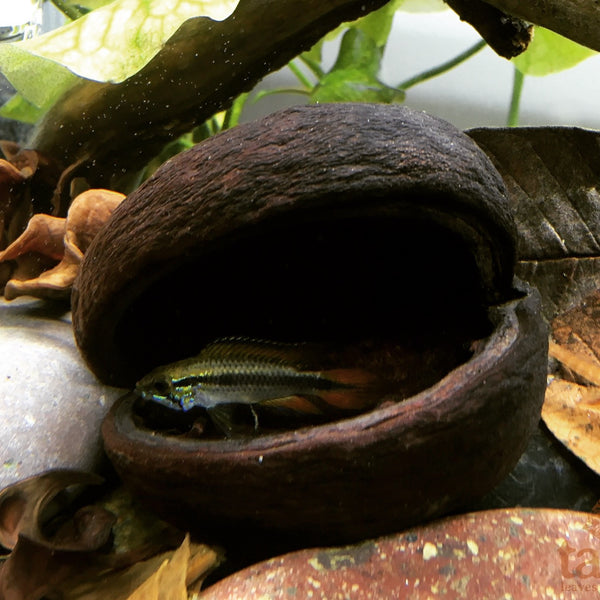
Having more subtle-colored fishes is far more engaging, to me. Having lots f brightly colored fishes swimming all over a bright, crisp-white tank is just…well- get a reef tank at that point! 🙂
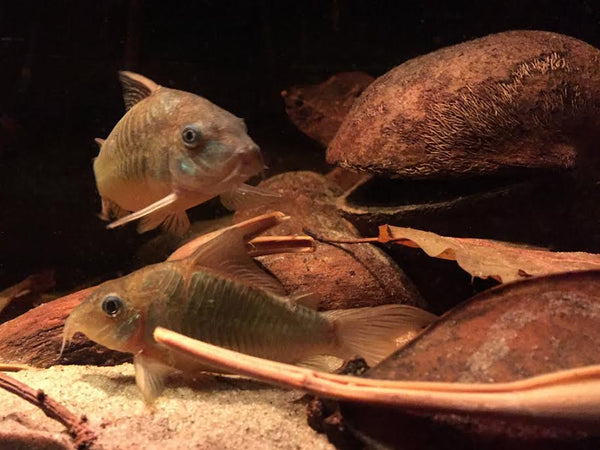
And further, by creating a population of largely subtle-colored fishes, you create a sense of harmony and a relaxed aesthetic which sets the stage for the few brightly-colored fishes that you’d use, like Cardinal Tetras and Neon Tetras, etc. Sort of like in nature, where the really brightly colored fishes occur either in large schools, like the species mentioned above, or are just random individuals scattered throughout the leaf litter.
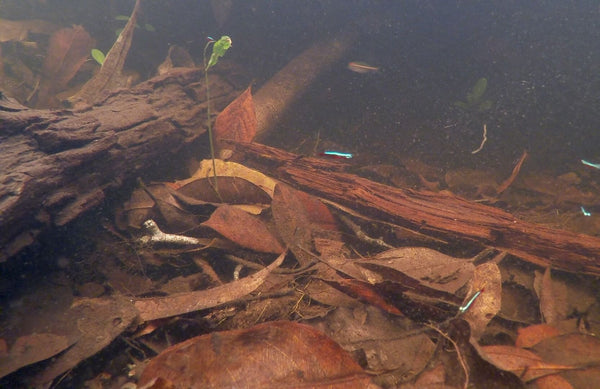
And isn’t it kind of fun to “explore” your aquarium and have to do a little looking around to see what’s swimming? I have always felt that many of the best aquariums I’ve ever encountered are not the ones with the most equsiite aquascape or most color full collection of fishes. Rather, to me, the most visually engaging aquariums are the ones that have intricate aquascapes with subtly-colored fishes throughout, inhabiting all sorts of niches within the tank. The brightly-colored ones are sort of the “icing on the cake”, and add that pop of color that makes things dramatic and alive.
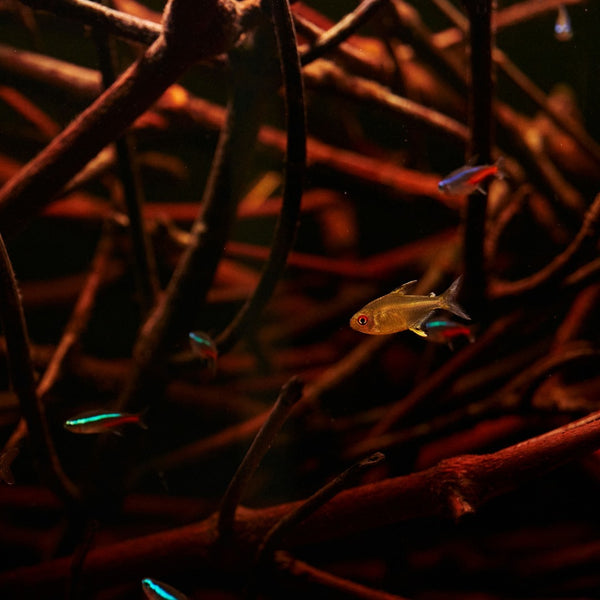
Interestingly, in talking with people who understand the way the colors of fishes is impacted by their environment, It always amazes me how many characins have such vibrant color delineation and contrast, and I got to thinking about just why it is that these little fishes have such intense coloration and, in many cases, contrasting stripes.
In particular, the Neon Tetra has such a dramatic coloration and pattern that you just had to figure it was for some reason other than just the fact that it looks awesome! (Yeah, Nature really couldn’t give two f – – -s about aesthetics, as we know…) Turns, out, I have not been the only one wondering about this stuff.
Scholars have been researching it for years!
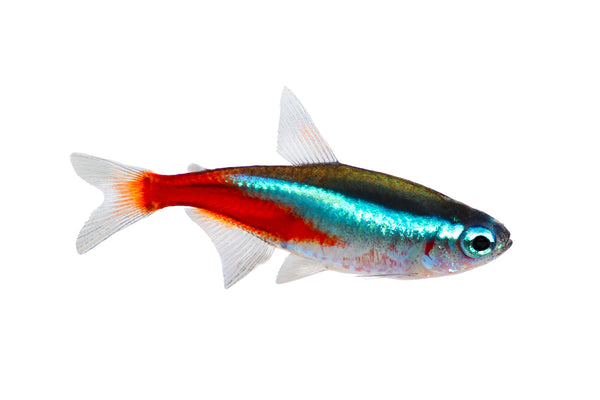
A couple of Japanese scientists (Takehide Ikeda and Shiro Kohshima ) were curious about this same thing, and they had a hypothesis about the stripes that was published after they conducted some field studies on fishes of blackwater biotopes (!) in the Peruvian Amazon, along with some aquarium observations as well, back in 2009.
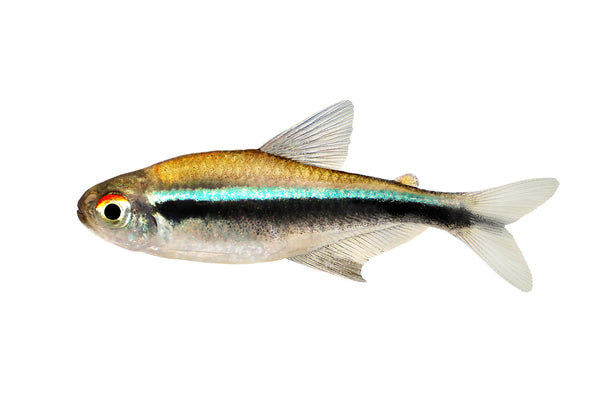
They found that the lateral stripe in the Neon is actually kind of inconspicuous in the blackwater environment…unless viewed from an angle of about 30 degrees..Similar to an angle of attack that a predator might take when pursuing the Neon! From this angle, the stripe is actually “projected” in a near “mirror image” to just beneath the surface of the water.
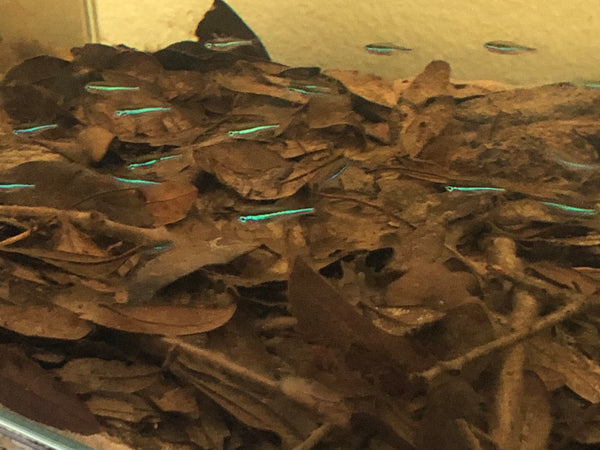
Totally confusing to a would-be “Neon-muncher!”:
“…Although they appeared bright in colorless water, their stripes appeared darker in blackwater. In addition, the visible are of their stripes was small and their brightness decreased, unless they were observed with a limited viewing angle (approximately 30 degrees above the horizon). The results show that from the viewpoint of approaching submerged predators, a bright mirror image of the stripes is projected onto the underside of the water’s surface, providing a dramatic visual target while the real fish remains less conspicuous…”
This became known as the “Mirror-Image Decoy Hypothesis” (sounds incredibly sexy intellectual, huh?), and is a brilliant explanation (pun sort of intended) for the unique coloration of the Neon (and possibly the Cardinal Tetral, Glowlight Tetra, and several other Tetras as well, though to a different extent! Although it could be construed that the Neon (and by extension, the Cardinal) have evolved this “decoy coloration” further than many other species, which have a darker-colored lateral stripe and a lighter dorsal stripe, the opposite of the Neon!
“Fish Stealth.”
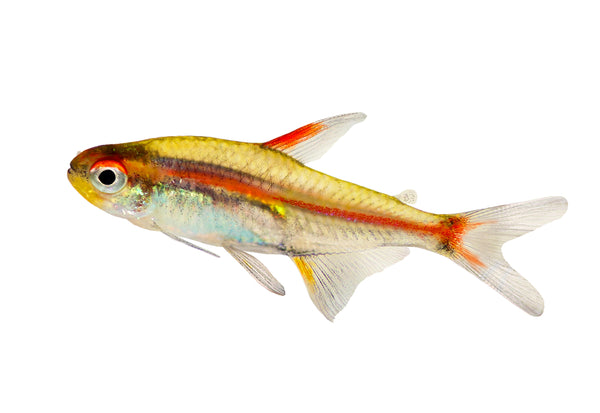
Interestingly, Neons can alter their color intensity somewhat as well; for example, at night, when the colors are “duller- which also helps them blend in a bit more in various water and lighting conditions. Essentially, they change color in response to the lighting and environmental conditions in which they reside as an anti-predatory measure. However, the “Mirror Image Decoy” appears to be a specific adaptation to the blackwater environments from which these fishes predominantly hail from.
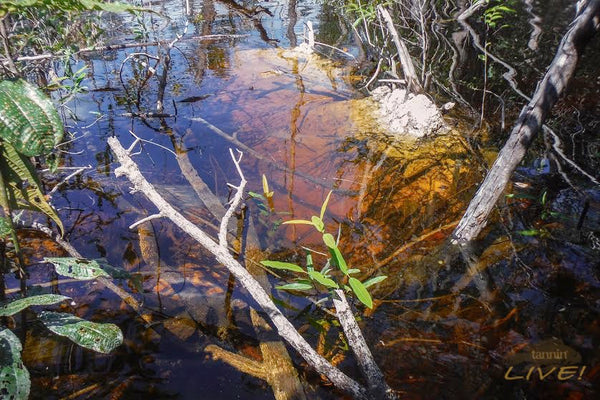
And of course, the subtle, brownish-grey fishes with interesting patterns sort of blend right in, don’t they? That’s kind of cool, I think!Ad one could make that stretch, when enjoying other small Tetras from blackwater habitats- that the coloration corresponds to the characteristics of the habitat directly. In other words, fishes which hail from areas of lighter substrates would likely be light on top, to better blend in with their habitat from above, and vice versa with dark stripes on top.
That would explain some interesting color patterns in many of these small fishes, right?
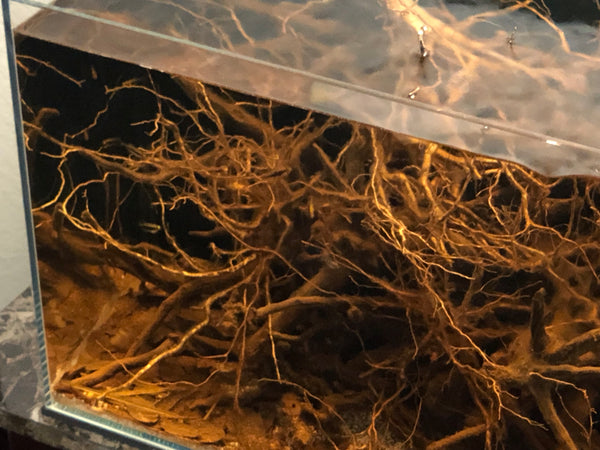
So we as hobbyists enjoy the chromatic brilliance and color combination of the Neon Tetra, while the fish “enjoys” the protection afforded by this little trick of optics!
Other fishes, like Angelfishes, use this subtlety to blend into their environment super effectively.
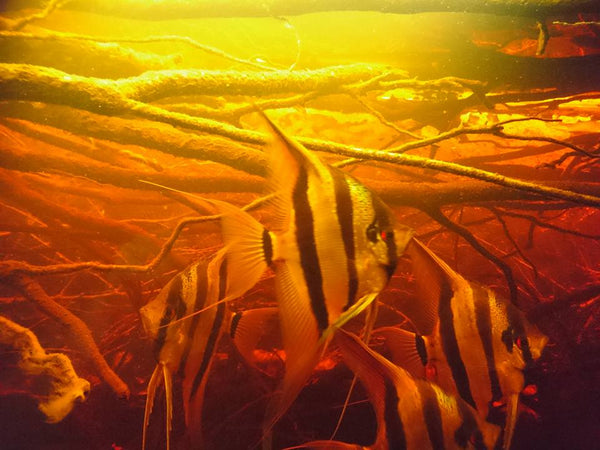
So, if you’re thinking of stocking your next botanical method aquarium, I’d highly recommend going “subtle” for a while. Not only will you gain an appreciation of the way the fishes blend in-and yes, enhance- the aquascape, you’ll be surprisingly pleased with the little intricate nuances of their color patterns. You’ll develop a new appreciation for how and why these fishes evolved over eons, adapting to the complex, varied nature of their environment.
Loud and bright is too easy…kind of overrated, in my opinion…
One of those”tendencies” that I have have developed over many years is an appreciation for fishes that have a subtle beauty, as opposed to the flashy ones!
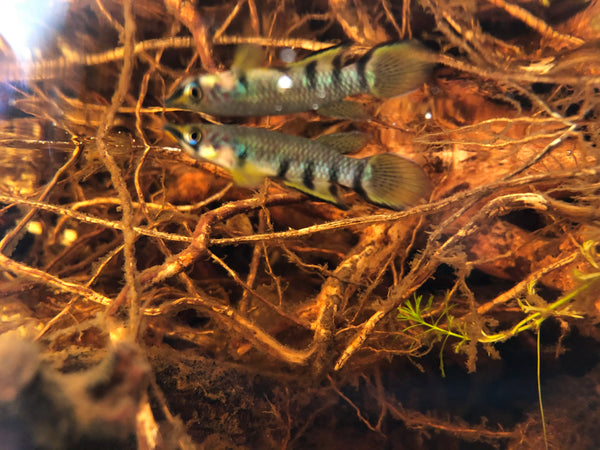
I don’t know if it’s just me, but I have this thing about “brown and grey” fishes. Subtle ones with a splash of color. I’ve written about this before, and it always catches an empathetic ear from some fish geek somewhere, who agrees with my less than chromatically brilliant aesthetic choices.
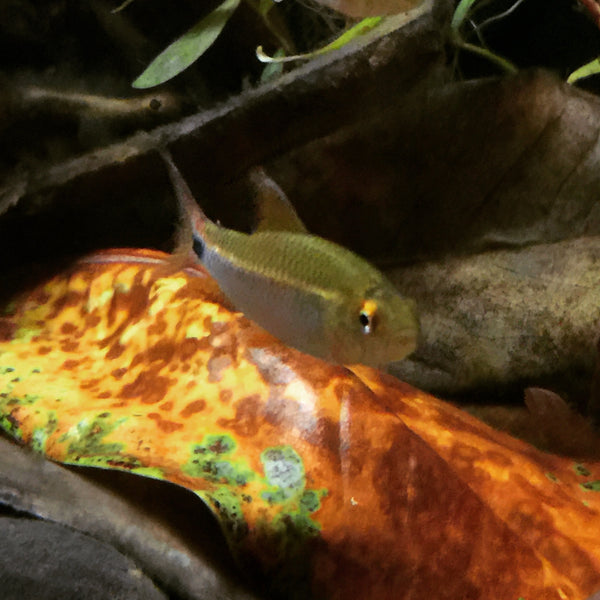
And I try to figure out what it is about the somewhat “chromatically challenged” fishes that I love so much. Now, don’t get me wrong, I can appreciate the incredible colors of a fancy Betta, brilliantly-colored Tetra, a beautiful Discus, or a fancy livebearer. I love them and keep many. It’s just that, when I’m selecting fishes for my aquariums, I tend to go after the more subtly-colored ones for the bulk of the fish population in a given aquarium.
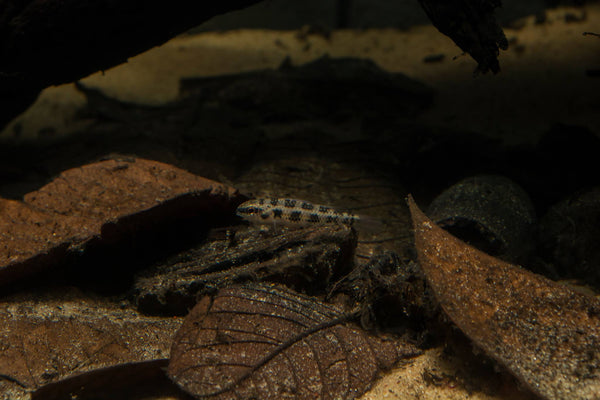
Sure, I will often put in a fish or two that has a big “pop” of color for the affect. However, the majority of the fishes in my tanks are subtly attractive (or, “Just subtle”, as one of my “friends” tells me, lol). For example, the “stars” in one of my recent characin-heavy tanks (okay, most of my tanks are characin-heavy, lol) that you see so much here are the “Diptail Pencilfish”, Nanostomus eques, and Sailfin Tetras (Crenuchus spilurus)– really nice fish- but not the kinds of fishes that you’re going to catch a glance of as they swim by and yell, “WOW! Those are crazy!”
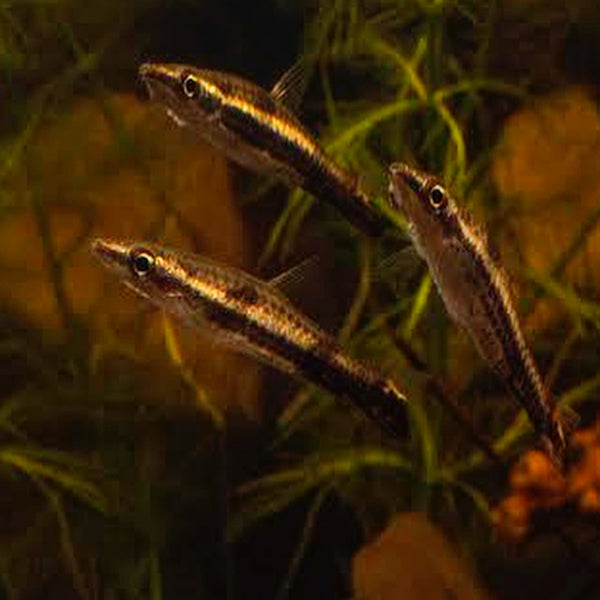
Rather, they are the kinds of fishes that have their own quiet charm.
They blend nicely into their surroundings, have interesting color patterns, and sort of hold your attention a bit longer than say, a school of bright, flashy Cardinal Tetras. For a “pop” in color, I always seem to choose a fish that is, indeed colorful, but maybe one that wouldn’t be your first choice to blow people’s minds…
Like, for example, the “Orange Flame Tetras”, Hyphessobrycon flammeus (a domesticated variant of a popular “beginner’s fish”) that graced one of my tanks not too long ago, during my Tannin Aquatics days. If I had a dollar for every time someone asked me what those fishes were, I wouldn’t have had to sling botanicals for a living!
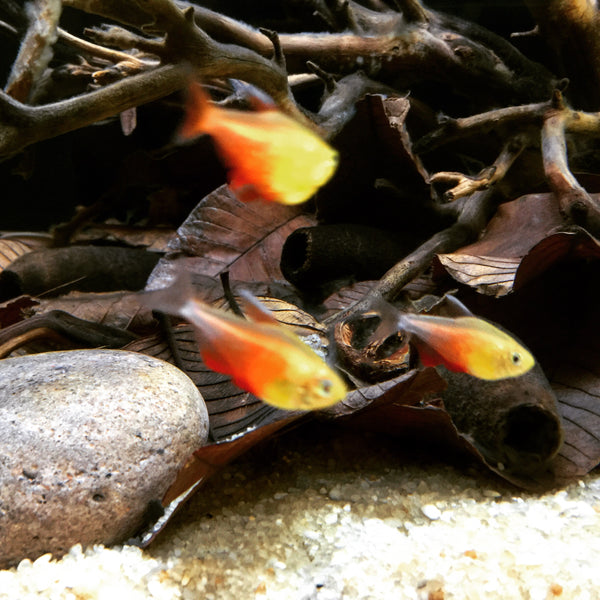
There is something to be said for bright- but not outrageous-fishes in a natural setting. I remember when I was a kid, my dream tanks in my mind always had black gravel and a huge school of Cardinal or Neon Tetras in them. I think it was about contrast.
I still like that look, yet, as I’ve gotten older and more experienced as an aquarist, I’ve found that I tend to favor more subtle fishes that sort of blend in harmoniously with their environment.
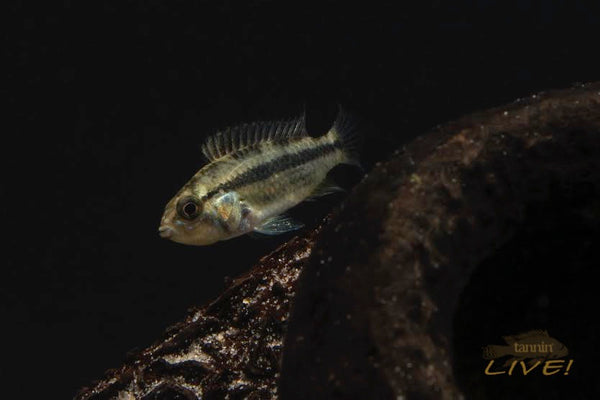
In the botanical method aquarium, it’s great to have a little pop of color against the deep, rich colors of leaves, pods, and wood, and the tinted water. However, one of the surprising things I’ve discovered is that the more subtle fishes tend to “pop” more in blackwater tanks. Now, “surprising” not in that they display better colors- the environmental conditions we create obviously assist in that- but “surprising” in that they tend to catch your eyes more than I had expected.
Even the more cryptically-colored-and shaped fishes do this. In fact, they are somewhat more engaging in this setting than the more obvious, brightly colored fishes, IMHO.

There is something I enjoy about being able to take in the “whole picture” of an aquarium, and to not have any one element really make a huge impression on you. Rather, it’s nice to have the entire aquarium provide a sort of “vibe”, and take you on a little journey of discovery.
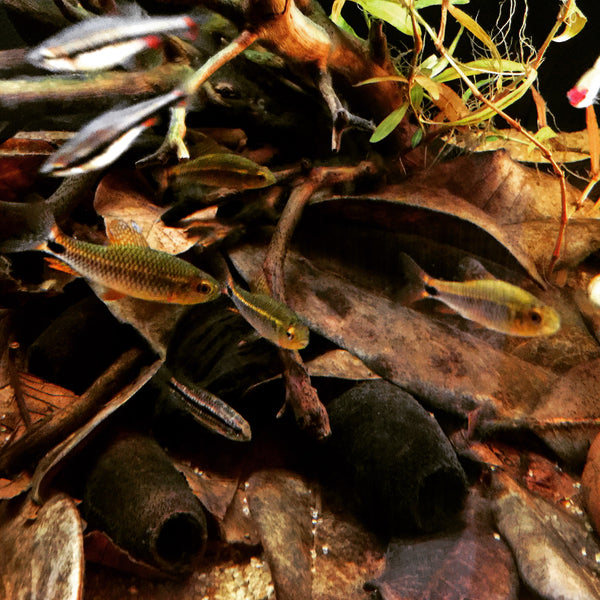
In my opinion, the very best aquariums- marine or freshwater, keep you engaged for a long time, as if strolling in a garden- discovering the little surprises along the way. The best aquariums I’ve ever seen don’t stand out because of that one element…rather, it’s a combination of things working together, creating an intricate collage of color, texture, and structure.
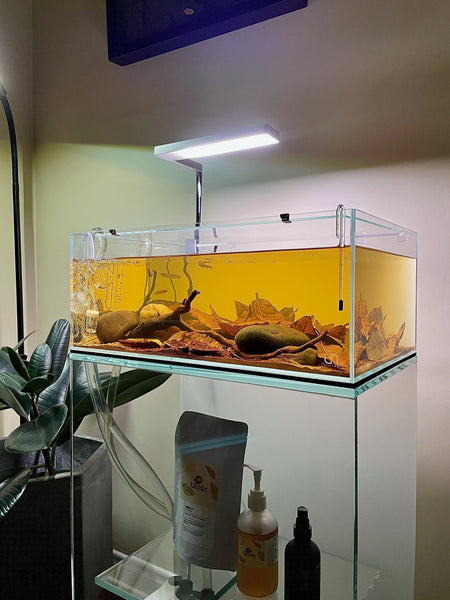
Regardless of what the primary focus of the aquarium is (fish, plants, hardscape), it’s the combination of elements that seems to create the whole impression. For example, some tanks, are filled with all sorts of botanical elements, as surprising as palm fronds or as common as leaves and plants, yet the entire “picture” is truly greater than the sum of its parts.
The fishes tend to become the “kinetic” element in a well thought-out display: A moving, living component which weaves the whole thing together.

And that’s where the less vibrant fishes come in. In my opinion, if you had nothing but crazy-colored fishes, the tank itself would tend to just be “the background”- a supporting player in a larger cast of characters!
By incorporating more subtly beautiful fishes into your aquarium, you’ve woven together a combination of colorful, interesting elements that form the whole picture, truly greater than the sum of its parts.
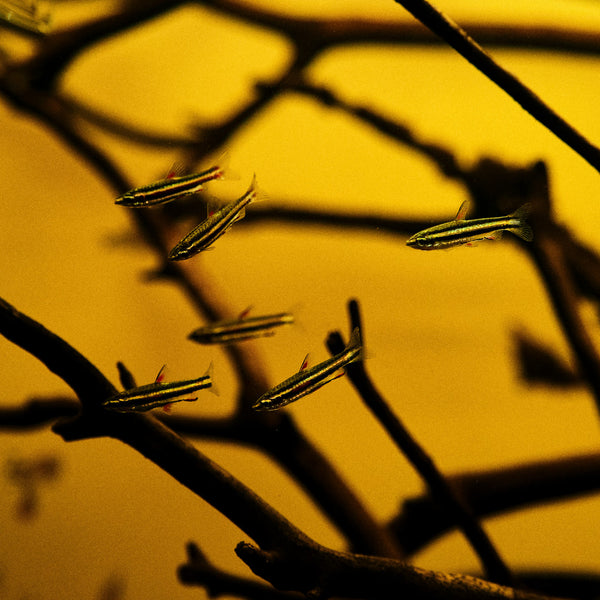
A lot of outstanding aquariums arise from a vision, a dream…an idea. A means to execute something which may have caught our fancy…perhaps the way a certain piece of wood or the texture of the substrate play with each other- something which speaks to us. A cast of separate “players”, working together to create something amazing.
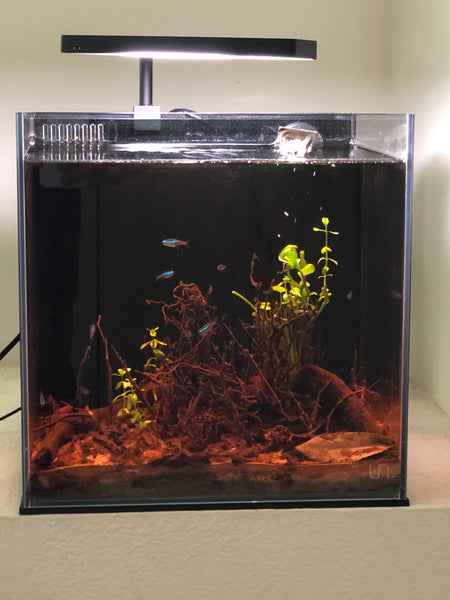
It seems that, no matter how we plan them in our head, they come together in ways that perhaps we never even imagined, and as they evolve, morph into ever more rich, complex works of living art…not unlike Nature itself.
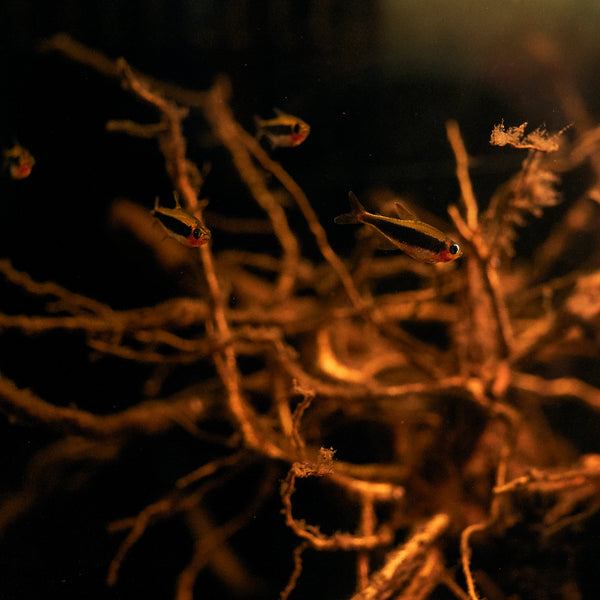
That’s the value of subtlety.
A favorite quote from author Neal Stephenson comes to mind…Although a bit aggressively satirical in its tone, there is a serious element of truth to it:
“The difference between stupid and intelligent people – and this is true whether or not they are well-educated – is that intelligent people can handle subtlety.”
Ouch!
But kinda true, huh?
Don’t overlook subtlety.
Scott Fellman


Leave a Reply