
One of the more common questions that I receive here at The Tint Blog and via social media accounts, is, “How do you maintain one of these (botanical method) aquariums?”
It really is a great question, because, although I’ve talked about it quite a bit over the last several years, it’s a very fundamental item which I haven’t talked about in detail recently… So, why not revisit it today?
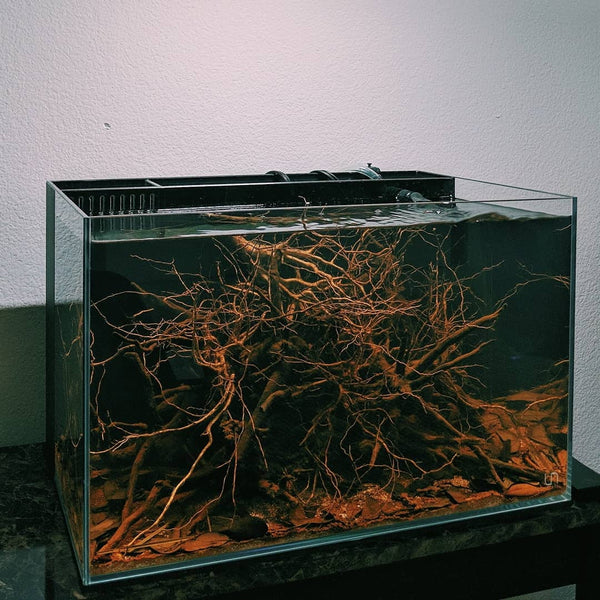
As we’ve talked about before, for the longest time, there seemed to have been a perception among the mainstream aquarium hobby that tanks with lots of botanical materials were delicate, tricky-to-maintain systems, fraught with potential disaster; a soft-water, acidic environment which could slip precipitously into some sort of environmental “free fall” without warning.
And there was the matter of that “dark brown water…”
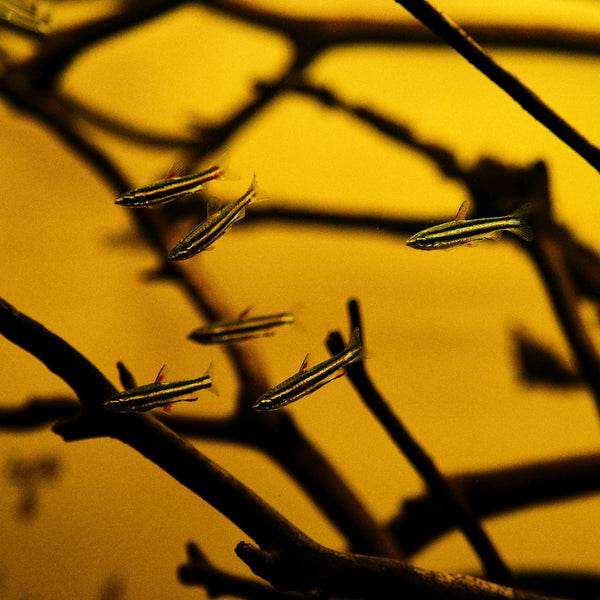
And the aquairum hobby has, for decades, equated brown water with “dirty”, “dangerous”, and “non-sustainable…”
Perceptions which require a bit of examination and understanding of before we can successfully navigate the world of botanical method aquairums.
Yeah, like so many things in our little hobby speciality, it’s a matter of understanding exactly what you’re getting into. I think that the most difficult aspect of a botanical method aquarium is to understand exactly what it is, why it’s set up the way it is, and how it actually works. The fundamentals are everything here.
So, how do we keep these aquariums running for extended periods of time? Through continuous, regular maintenance, of course! Let’s talk about some of the “best practices” that we engage in to keep these tanks running and looking their best.
It starts with the way you set up your botanical method aquarium, and how it relies on natural processes to function.
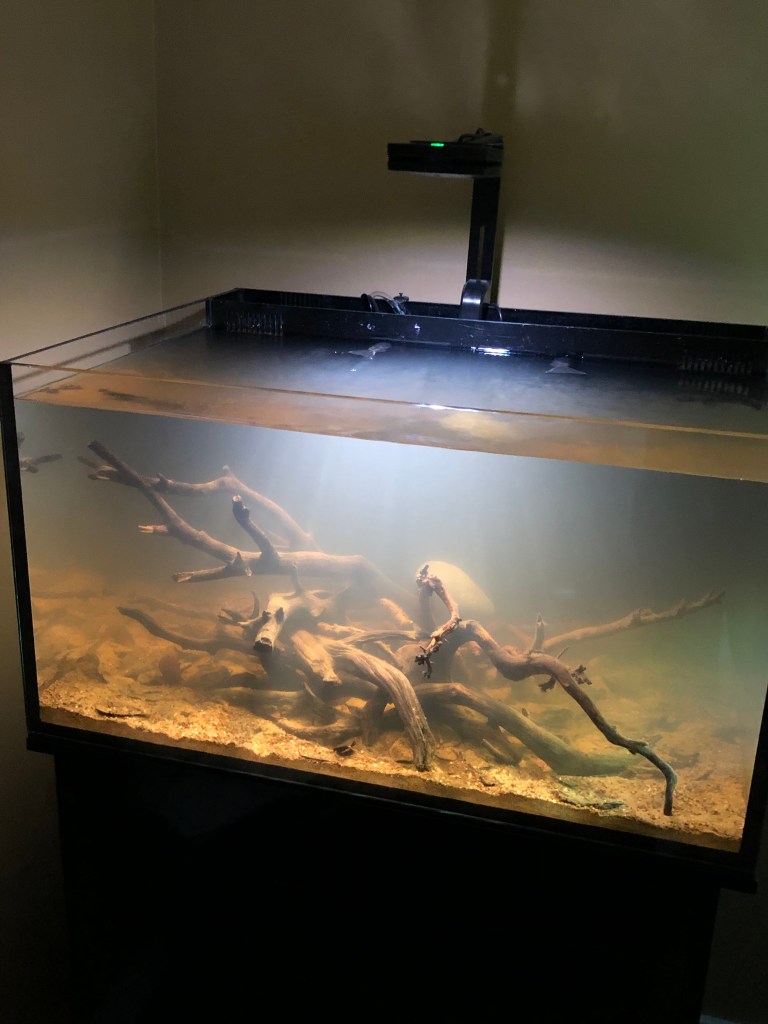
If you’re “converting” an existing aquarium, start slowly, gradually building up your quantities of botanical materials over a period of weeks, or even months, until you reach a level that you like aesthetically, and which provides the type of manageable environmental parameters you and your fishes are comfortable with. This is essential, because how we start our aquariums dictates how they will run over the longer term.
And of course, you’ll need to understand the progression of things that happen as your tank establishes itself. And, perhaps most important, you’ll need to make some mental “adjustments” to accept and appreciate this different function and aesthetic.
Damn, I keep coming back to that, huh?
Yeah, because it’s so fundamental to our craft.
You’ll have to get used to a certain amount of material breaking down in your tank. It’s natural, and part of the function… and the aesthetic. Accepting the fact that you’ll see biofilms, fungal growth, detritus, and decomposition in your system is something that many aquarists have a difficult time with. As we’ve discussed numerous times here, it goes against our “aesthetic upbringing” with regards to what an “attractive, healthy-looking tank” is!
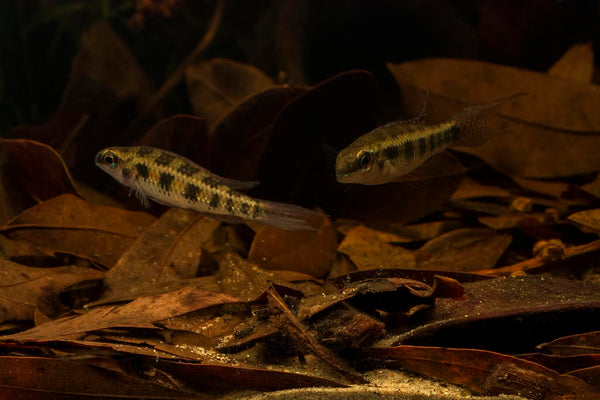
We have learned to understand and appreciate this stuff, and that accepting these things is not an excuse to develop or accept lax maintenance practices! It’s understanding that this is part of the normal function of Nature. It’s a “call to awareness” that there is probably nothing wrong with your system when you see this stuff. It’s quite contrary to the way we’ve been “trained” to evaluate the aesthetics of a typical aquarium.
Okay, let’s talk aesthetics, one more time…
Watch some underwater videos and study photos of environments such as the Amazonian region, etc., and you’ll see that your tank is a much closer aesthetic approximation of Nature than almost any other type of system you’ve worked with before, in both form and function.
This is a significant thing, really!
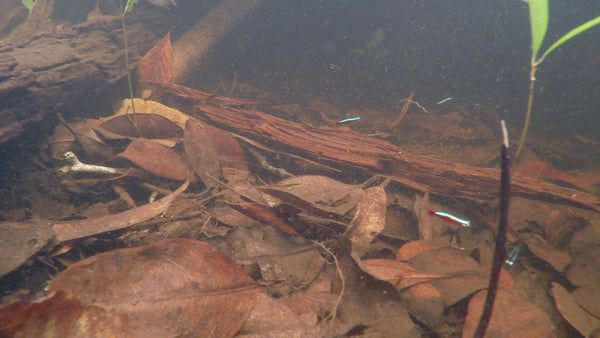
And, to your comfort, you’ll find that botanical method aquariums are as stable as any other if you follow regular maintenance and good old common sense.
So, what are we talking about, in regards to regular maintenance?
Well, for one thing, water exchanges. Because the topic is so well discussed in the aquarium world, I’ll keep it relatively brief on this topic:
What’s a good water-exchanging regimen?
I’d love to see you employ 10% per week…It’s what I’ve done for decades, and it’s served me- and my animals- very well! Regardless of how frequently you exchange your water, or how much of it you exchange- just do them consistently. And of course, as previously discussed, don’t go crazy siphoning every bit of detritus out during the process.
Remember, that in an aquarium which encourages the growth of bacteria, fungi, copepods, etc., the organic material contained in detritus becomes part of the “food web.” And everybody up the food chain can benefit from the stuff.
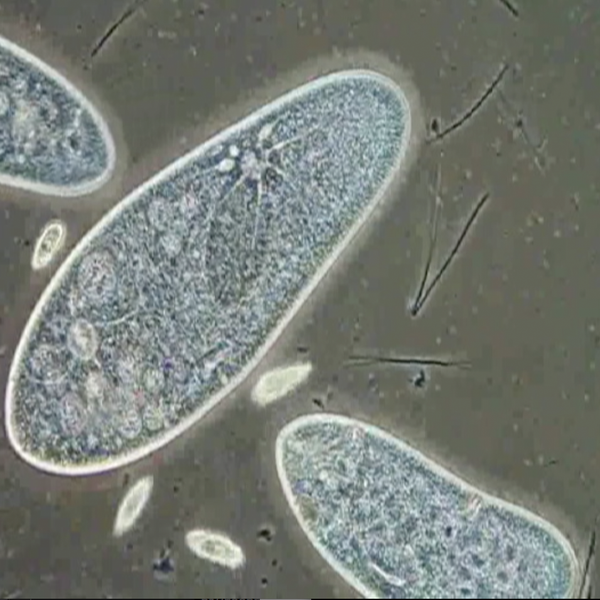
So, by going “full ham” and siphoning every last speck of detritus in your tank, you’re essentially breaking this chain, and denying organisms at multiple levels the chance to benefit from it! Yeah, over-zealously siphoning this material from your tank effectively destroys an established community of microorganisms which serve to maintain high water quality in the closed environment of an aquarium!
This is a super-important point to remember!
In an ironic twist, I believe that it’s far more common for those “anomalous” ammonia spikes and such that aquarists report periodically, to have their origin in over-zealous cleaning of aquariums and filter media, as opposed to the accumulation of detritus itself. So, yeah-taking out all of the “fish shit” is actually removing a complex microbiome that’s keeping your tank healthy!
Even something as seemingly “mundane” as the way we maintain our botanical-method aquariums requires us to make some “mental shifts” to appreciate our methodology more thoroughly, doesn’t it?
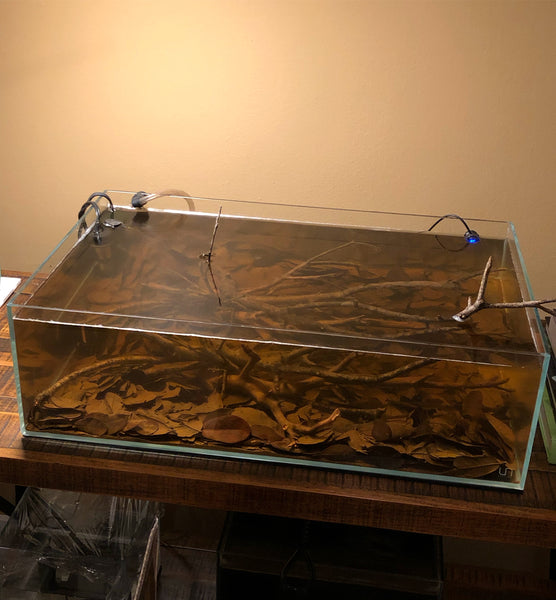
Now, during water exchanges, it’s almost inevitable that some stuff gets shifted around. Leaves and seed pods are pretty lightweight materials, and as they decompose, they’re even more lightweight and “mobile.”
And that’s not necessarily a bad thing. Don’t get stressed if you stir some stuff up. Your tank will be fine.
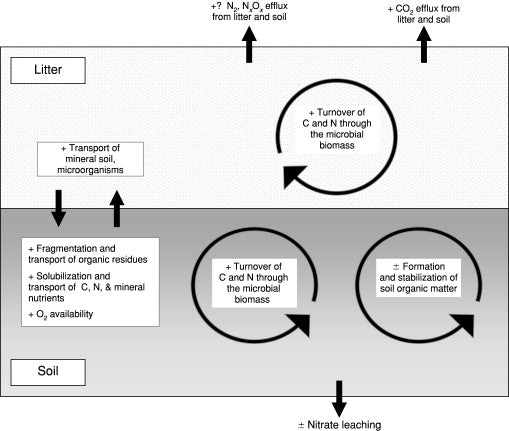
Think about the natural leaf litter beds, and the processes which influence their composition, structure and resilience. Many litter beds are long-term “static” features in their natural habitats. Almost like reefs in the ocean, actually. Yet, there is a fair amount of material being shifted around constantly by current, rain, flooding, and the activities of fishes.
Yeah, stuff does get disturbed and redistributed.
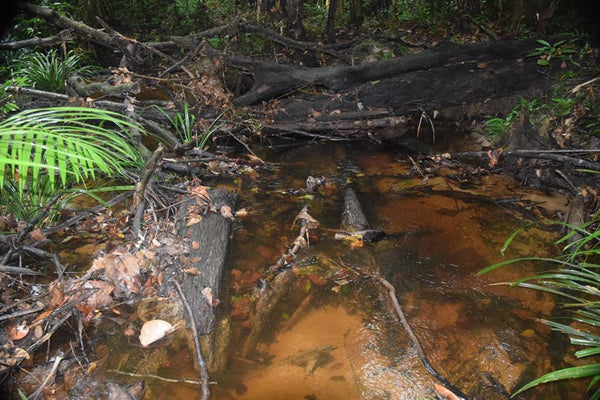
The organisms which reside in these systems deal with these dynamics effectively.
They have for eons.
The benthic microfauna which our fishes tend to feed on also are affected by this phenomenon, and as mentioned above, the fishes tend to “follow the food”, making this a case of the fishes adapting to a changing environment.
And perhaps…maybe…the idea of fishes sort of having to constantly adjust to a changing physical (note I didn’t say “chemical”) environment could be some sort of “trigger”, hidden deep in their genetic code, that perhaps stimulates overall health, immunity or spawning?
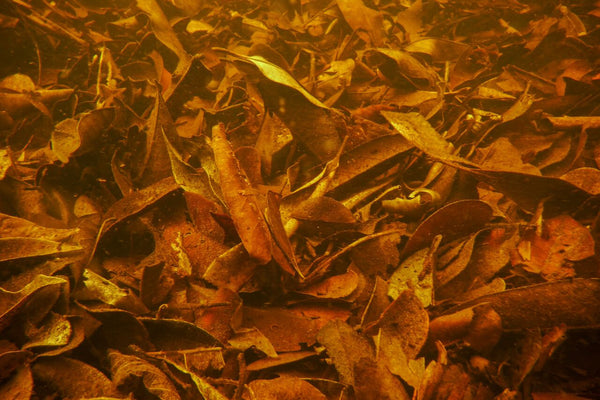
Something in their “programing” that says, “You’re at home…the season has changed, because there’s an influx of new water…leaves are rolling around…” Perhaps not as “specific”, but something like that, which can trigger specific adaptive behaviors?
I find this possibility fascinating, because we can learn more about our fishes’ behaviors, and create really interesting habitats for them, simply by adding botanicals to our aquariums and allowing them to “do their own thing”- to break apart as they decompose, move about as we change water or conduct maintenance activities, or to be added to from time to time.
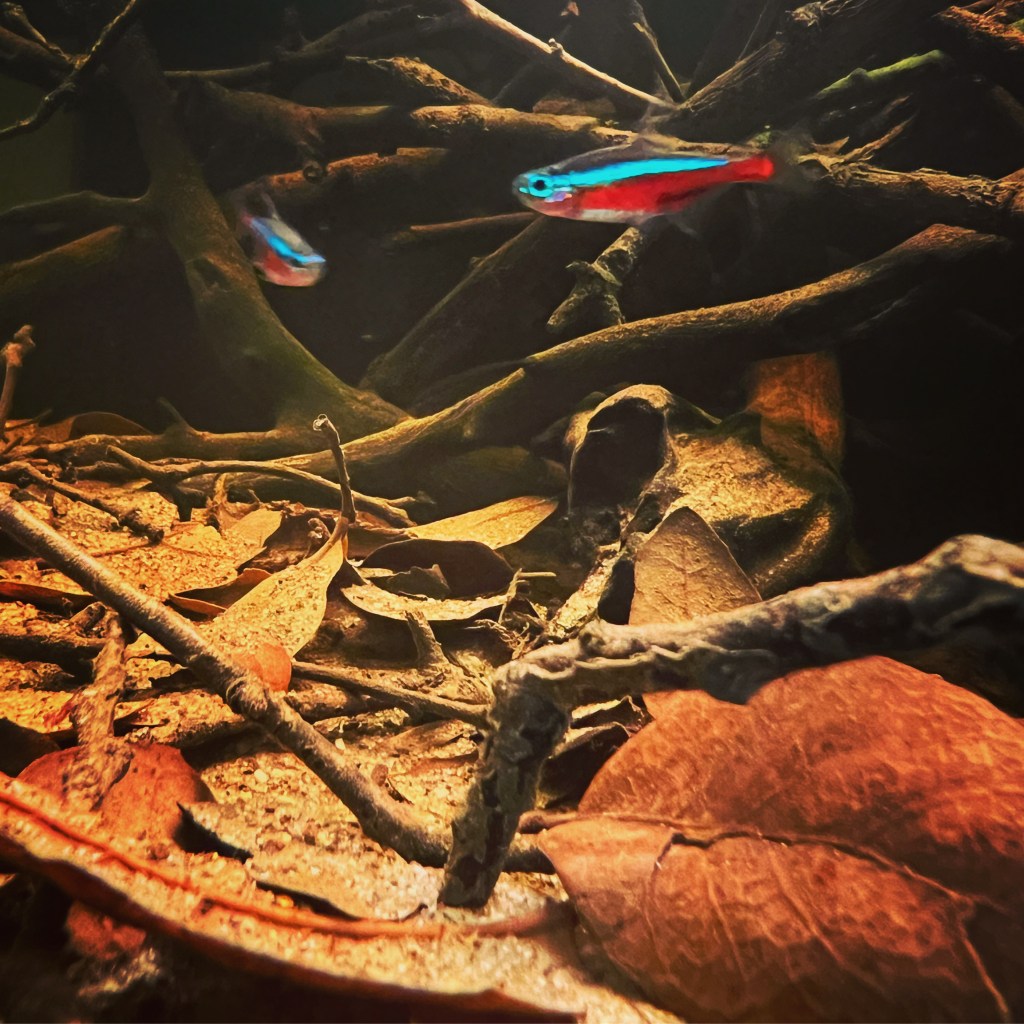
Well, I mentioned the whole “breaking down” part about botanicals here, so I should say a little about that.
As we have discussed for years, botanical materials break down and start decomposing as soon as they are added to your aquarium. It’s normal. It’s natural. It’s to be expected. Some materials, like the harder seed pods, last a very long time- almost indefinitely- before they finally are broken down by biological activity. Other stuff, like softer seed pods and leaves, tend to break down much more quickly.
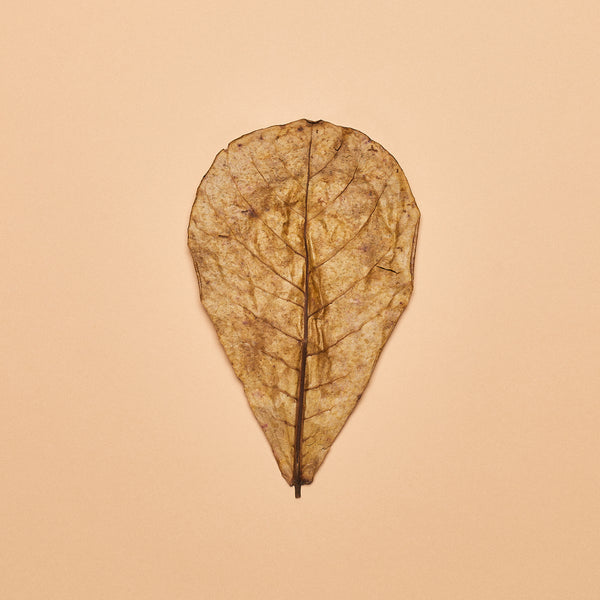
Yeah, leaves should be considered the most “temporary” or ephemeral items we utilizing in our botanical method tanks, requiring replacement regularly. Those seed pods and stems tend to last longer and it’s personal preference to leave them in, or remove as desired.
So, DO you remove the botanical materials from your aquarium as they break down?
No. Never.
For reasons I’ve touched on numerous time here in “The Tint”, I personally like to leave all of these materials in the aquarium until they completely break down, which I believe facilitates the very ecological processes which help the ecosystem of our aquariums run. And, leaving the material “in situ” while it breaks down does NOT “pollute” the aquarium, if it’s otherwise well managed (ie; if you conduct regular water exchanges, filter media replacements, feed carefully, and stock sensibly, etc.).
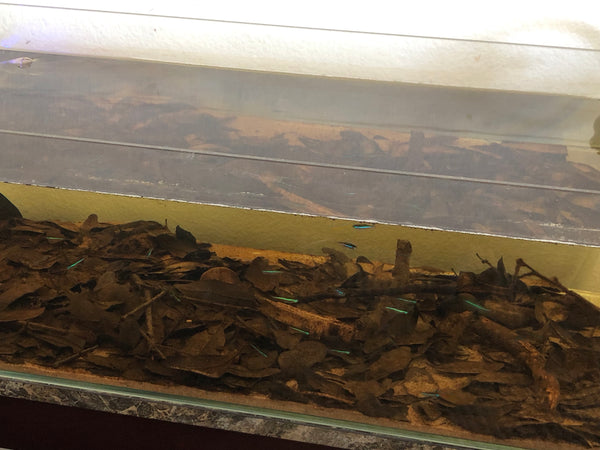
I think that we need to look beyond the simple “aesthetic” of the leaves and other botanicals in our tanks, and consider them more than just hardscape “props.” Rather, they are functional materials, which perform biological, environmental, and physical/structural roles in the aquarium- just as they do in Nature.
Evaluate your tank periodically and decide if you want to exchange or simply add some new botanicals to your system. There is no exact “science” to this; like with so many things we do in aquariums, it will require you to “go with your gut” and make decisions based upon what your goals are, and what by now you consider “normal” for your system.
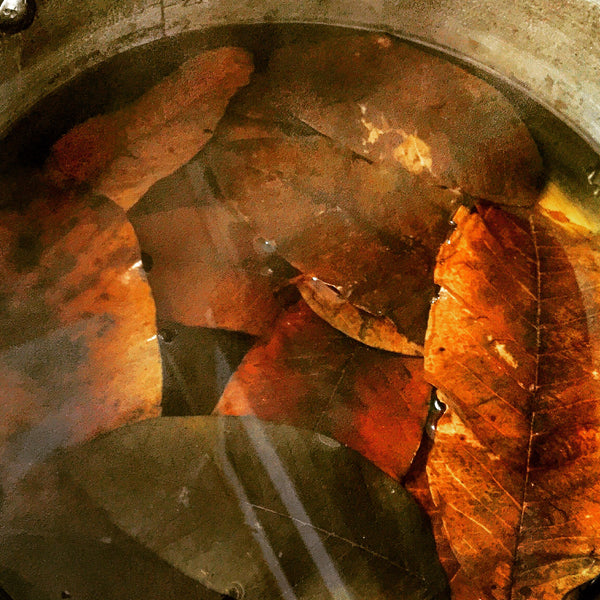
The same processes and functions which govern what happens to these materials in the wild occur in our aquariums. And, if we reject our initial instinct to “edit” what Nature does, the aquarium takes on a look and vibrancy that only She can create.
It’s that simple. “For best results, don’t fuck with it!”
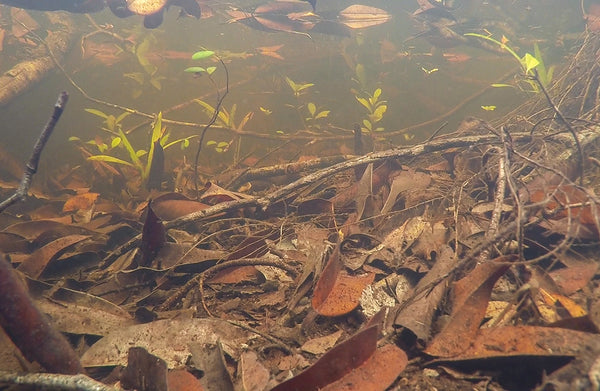
Again, I wouldn’t get too carried away with trying to remove any of it, really.
Remember, most of this “stuff”- the broken-down botanical and the resulting detritus and such- is utilized by organisms throughout the food chain in your tank…and as such, is a “fuel” for the biological processes we are so interested in.
No sense disrupting them, right?
What goes down…doesn’t always have to come up.
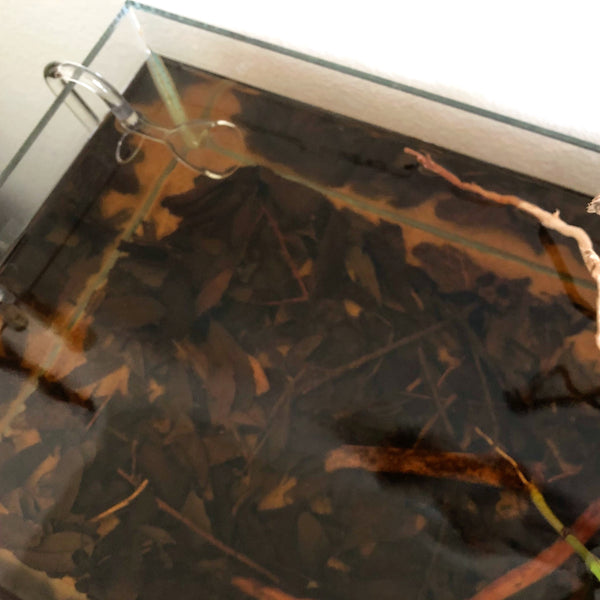
Take care of your tank by taking care of the enormous microcosm which supports its form and function. And that means, not removing all of this material as it decomposes. I know, I’ve said it several times already in this one piece, and countless times in “The Tint” and elsewhere, but it’s really a fundamental part of the botanical method of aquarium keeping.
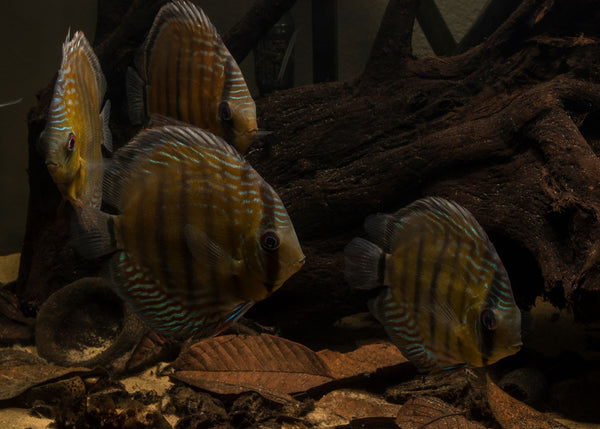
One physical maintenance task that I have found to be continuous and necessary is the cleaning of filter intakes, mechanical filter media, and water pumps. With a constantly-decomposing array of botanical materials streaming into the water column, lots of small debris tend to get sucked into filter intakes, pumps, and of course, mechanical filter media. This can reduce performance, and that means less flow in the aquarium, and less long-term reliability of the equipment we relay on. These need to be cleaned/replaced on a regular basis; perhaps even more frequently than other maintenance tasks.
It’s simply part of the game when working with a botanical-method aquarium!
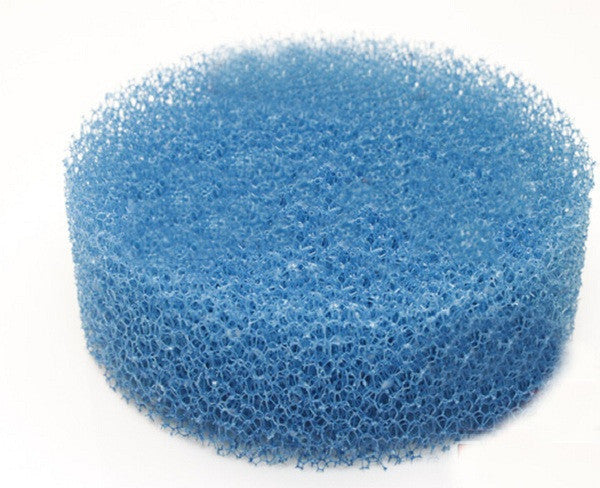
There are other “tricks” to maintaining environmental consistency in botanical method aquariums, which we can re-visit in future installments. The bottom line here, though, is that these aquariums are no more difficult to maintain than any other type of system we work with in the hobby. They simply require a basic understanding of ecological/biological processes, and how they play out in our tanks. It requires patience, consistency, and execution- attributes which are ideal for any hobbyist to possess.
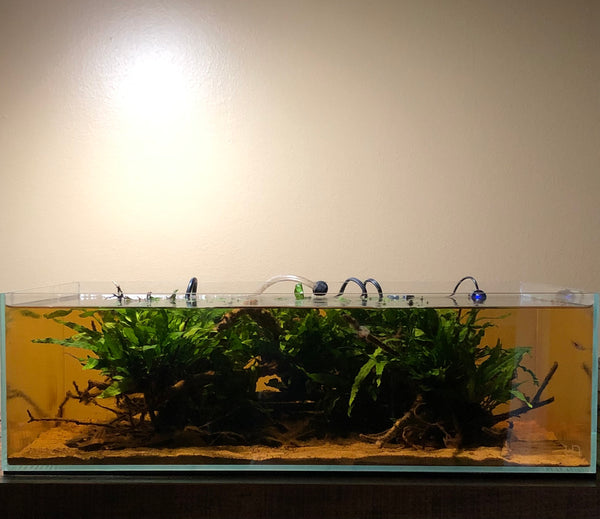
Our idea of what a beautiful, healthy aquarium is may vary substantially from the “mainstream” aesthetically- but you won’t be able to make that argument from a functional perspective when you employ common, well-known aquarium maintenance practices.
Just remember that the long term success of botanical method aquariums requires a mix of knowledge and action…nothing all that different from what you’ve already come to understand in the aquarium hobby.
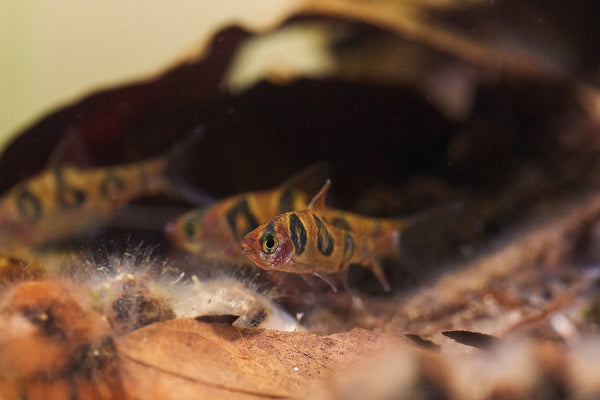
I think that the main difference is the acceptance of various ecological processes, some of which create aesthetics which challenge our preconceived notions of what a healthy aquarium should look like!
As most of you who work with these aquariums know, the key to long-term success with them is to go slowly, deploying massive amounts of patience, consistent, common-sense husbandry, monitoring of environmental parameters, and careful stocking management. Not really much different from what you’d need to do to successfully maintain ANY type of aquarium for the long haul.
Yeah, real “news flash” there, right?
Consistency above almost all else. And not taking shortcuts.
Consistency.
In the botanical-influenced, low alkalinity/low pH blackwater environment, consistency is really important. Although these tanks are surprisingly easy to manage and run over the long haul, consistency is a huge part of what keeps these speciality systems running healthily and happily for extended periods of time.
It wouldn’t take too much benign neglect or even a little sloppiness in husbandry to start a march towards increasing nitrate, phosphate, and their associated problems, like nuisance algae growth, etc. (although I admit, I have yet to see any algae problem in almost two and a half decades of working with botanical method aquariums)
Quite honestly, if you forgot to change the water, clean out the filter intake, or add some new leaves for a couple of weeks, or even (gulp) months- what would really happen?
This is something that we as hobbyists likely have some degree of firsthand experience with. I know that I do.
Over the lifetime that I’ve been in the hobby there have been a number of times that, for one reason or another, I simply let my aquariums “run themselves”, save an occasional water change or filter media cleaning, and of course, regular feeding (that consisted of tossing in a few flakes or pellets, or whatever was on hand at the time).
You know, putting Mother Nature in control!
A particularly fond memory of this type of “practice” comes from my Senior year in high school, when I was seriously into breeding killies (in addition to keeping saltwater, cichlids, tetras, and of course, the usual high school pursuits of girls, sports, and socializing). As a junior AKA member, I obtained a group of the “Clown Killie”, Epiplatys annulatus Monroviae, and was determined to breed the little fuckers.
Of course, they always had a reputation for being just a bit of a challenge, requiring steadfast care, feeding, and a fair measure of patience. As a busy kid, I had little patience (although more than the average high school guy- after all, I was a fish geek!), so I was delighted to learn that these fishes were thought to fare better in “permanent” and so-called “natural” setups (fish geek code for “set and forget”, IMHO).
So of course, I thought that this species was a perfect fish for my busy lifestyle at the time!
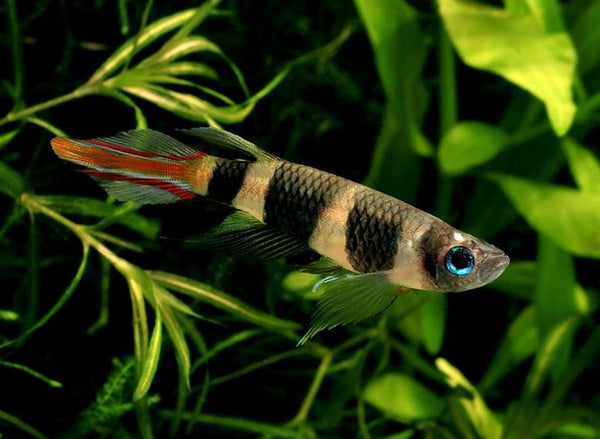
I set up 2 pairs and a few extra females in a 2.5 gallon tank, planted with Water Sprite, Hygrophila, and Rotala. Given moderate light from a small fixture, and a sponge filter providing filtration/circulation, this tank looked good and ran just fine with little intervention on my part. In fact, I’m embarrassed to admit that I would sometimes go a week or more without so much as looking at the tank long enough to toss some food in there.
Yeah.
One day (I think it was during Spring Break), I took the time to really stare into the tank, to see what was going on…Sure enough, upon close examination, I saw several tiny fry flitting in and among the Rotala! I was elated! Rather than panic and start hatching brine shrimp, I made the very mature and level-headed decision to simply...leave them alone, as I had been doing for months. I resisted the temptation to net them out, “power feed” them, and otherwise intervene.
I reasoned that I could hardly do better than what they were apparently being provided by Nature, as they have done successfully for eons.
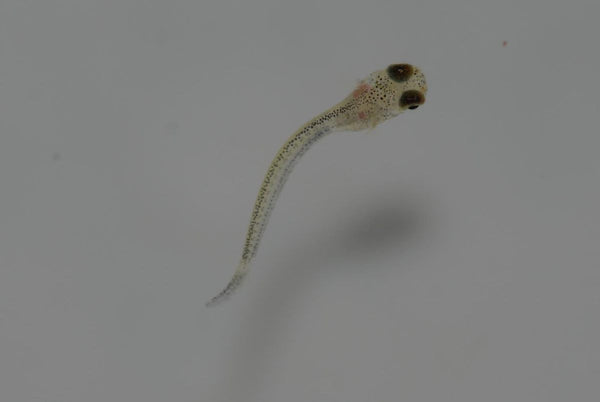
I ultimately ended up with a pretty stable population of around 12-15 individuals, in a tank I “maintained” for around 3-4 years. Ironically, the difficulties started when I had the time to really get into “taking care” of the fishes, and took more initiative and “control” of the breeding!
I ultimately slowly lost the entire colony. Sad.
But a valuable lesson.
Sometimes, what we would classify as “benign neglect” is actually the best thing we could do..the closest imitation to Nature that we can offer fishes in captive environments!
Other times, it’s a fusion of both “hands on” and “hands off” approaches.
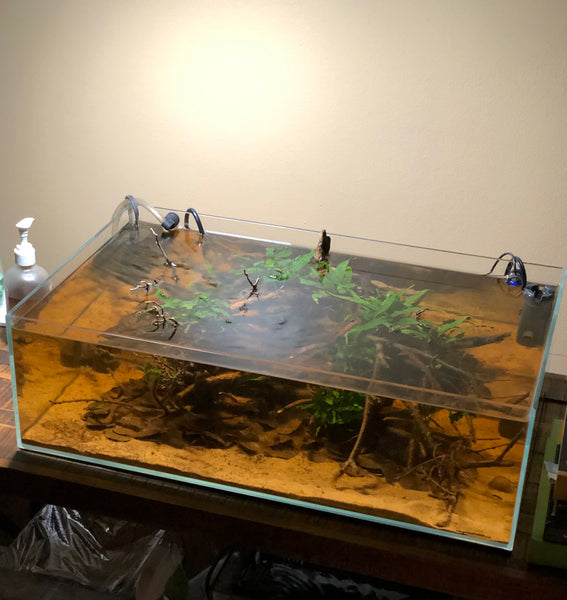
Now, again-I’m not suggesting that you abandon all care of your fishes, but I am suggesting that you reconsider the way that you might care for some of the more demanding varieties (from a breeding aspect, anyways).
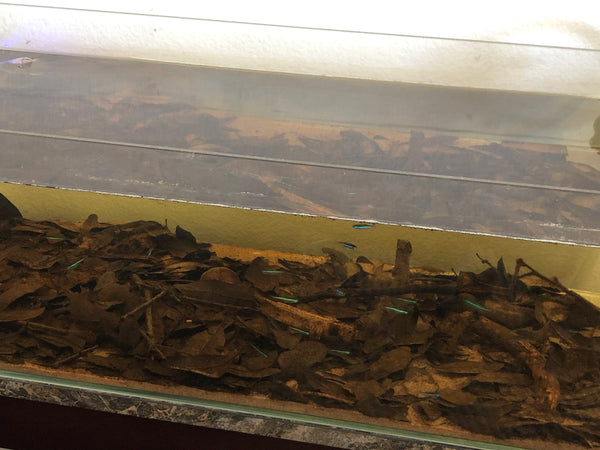
Sometimes, what we would classify as “benign neglect” is actually the best thing we could do..the closest imitation to Nature that we can offer fishes in captive environments! I experimented with this a few years back in my “no-scape” leaf litter tank for Paracheirodon simulans, which was set up in the hopes of “passively feeding” the fish via the organisms living in, and produced via the layer of decomposing leaf litter which composed the entire “hardscape” of the aquarium.
It worked. And it worked well.
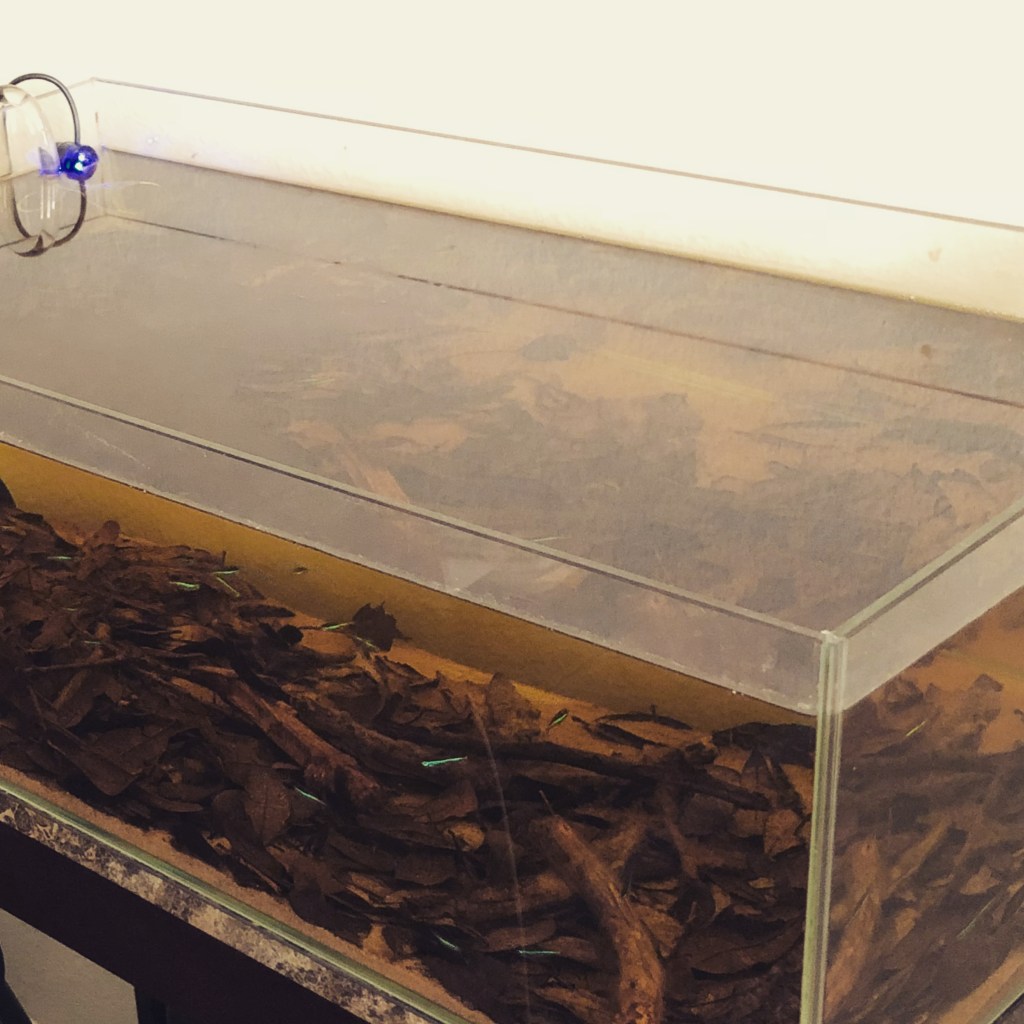
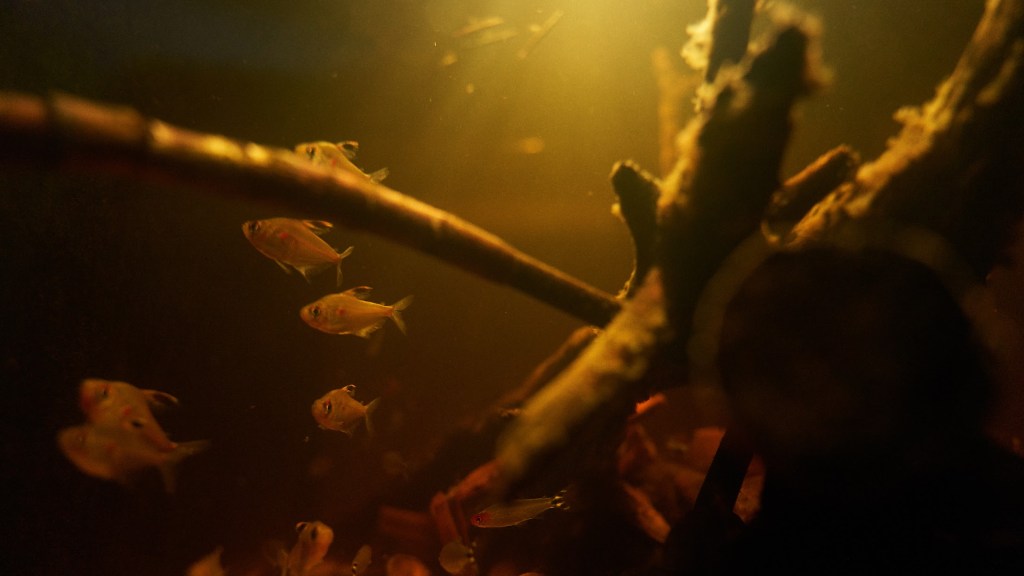
And, as part of the experiment, I did not feed these fishes during the entire 7-month duration of the experiment, and they not only were as fat and happy as any “Green Neon Tetras” I’d ever seen, but they actually spawned repeatedly in this tank! They subsisted entirely on food sources produced by the aquarium.
As I’ve reiterated previously, the tank was “pre-stocked” with some small crustaceans, Paramecium cultures, and some worms and such, and allowed to “break in” for a month before fishes were even added.
It was set up to succeed in this fashion.
And it did.
Is this reproducible “at scale?”
Yeah, I think so. However, a caveat is in order:
In many cases, the tank itself may not produce enough food to sustain an entire population of mid-sized adult fishes…However, it might be able to supplement whatever feeding you’re actively doing as an aquarist, and very likely could do the same for fry, until they are caught and moved to a “proper nursery” tank.
Yet, you don’t have to go nuts trying to control every aspect of the tank…
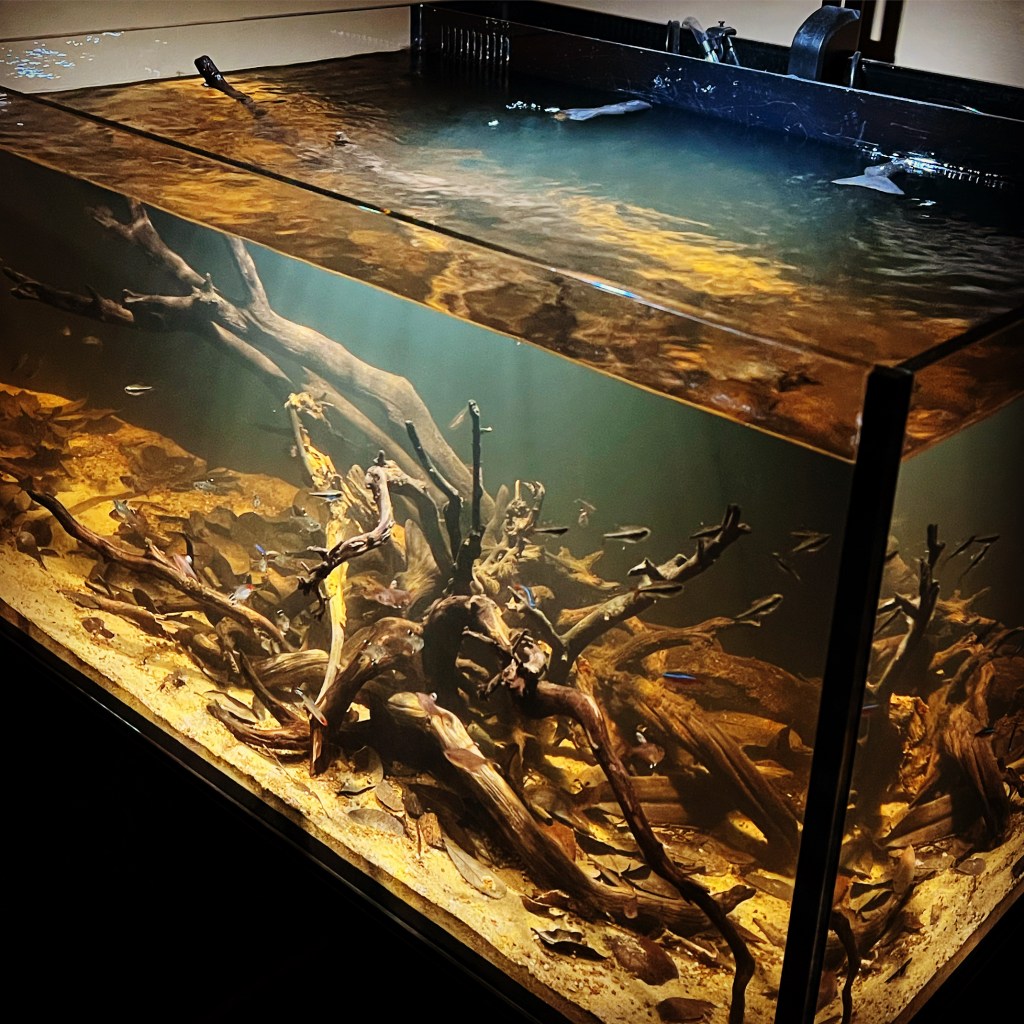
Sometimes it’s best to simply “monitor” and not intervene so much.
Hard to do for us ‘hands on” fish geeks- particularly for a hardcore hobbyist like myself- but it often times works far better than our efforts to take control of the situation, IMHO.
So, yeah- it’s possible to ignore the tank for a period of time and have no issues at all. However, the big takeaway for long-term success with botanical method aquariums build down to one word:
Consistency.
Regular maintenance. Scheduled water changes. The usual stuff. Nothing magic here. Nothing that a sexy $24.00 bottle of bacterial culture is going to replace.
Nothing that you, as an experienced hobby don’t already know. Right?
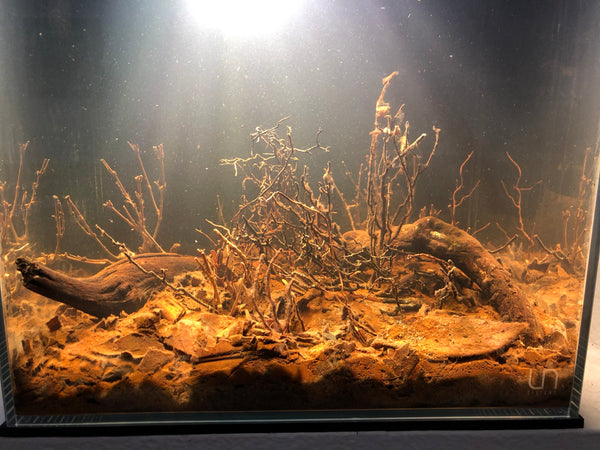
Just looking at your tank and its inhabitants will be enough to tell you if something is amiss. More than one advanced aquarist has only half-jokingly told me that he or she can tell if something is amiss with his/her tank simply by the “smelI!” get it- excesses of biological activities do often create conditions that are detectible by scent!
It’s as much about consistency-consistency in practices and procedures- as it is about hitting those “target numbers” of pH, nitrate, etc. If you ask a lot of successful aquarists how they accomplish this-or-that, they’ll usually point towards a few things, like regular water changes, good food, and adhering to the same practices over and over again.
Consistency = Stability.
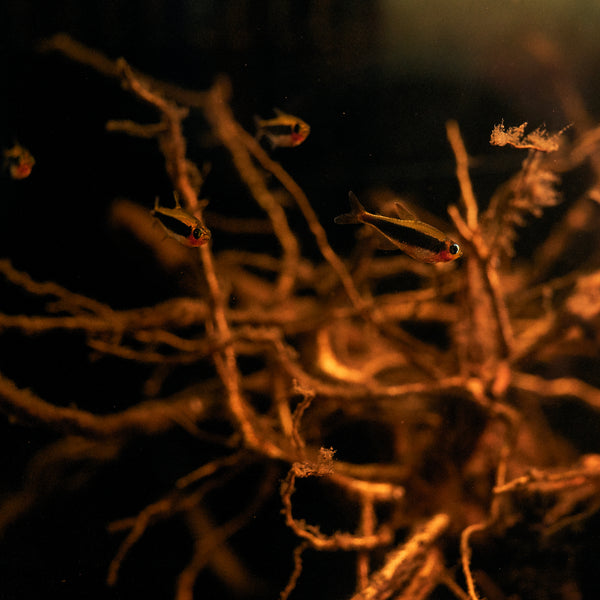
Sure, there might be times you deliberately manipulate the environment fairly rapidly, like a temperature change to stimulate spawning, etc., but for the most part, the successful aquarist plays a consistent game. Most fishes come from environments that vary only slightly during he course of a day, and many only seasonally, so stability is at the heart of “best practice” for aquarists.
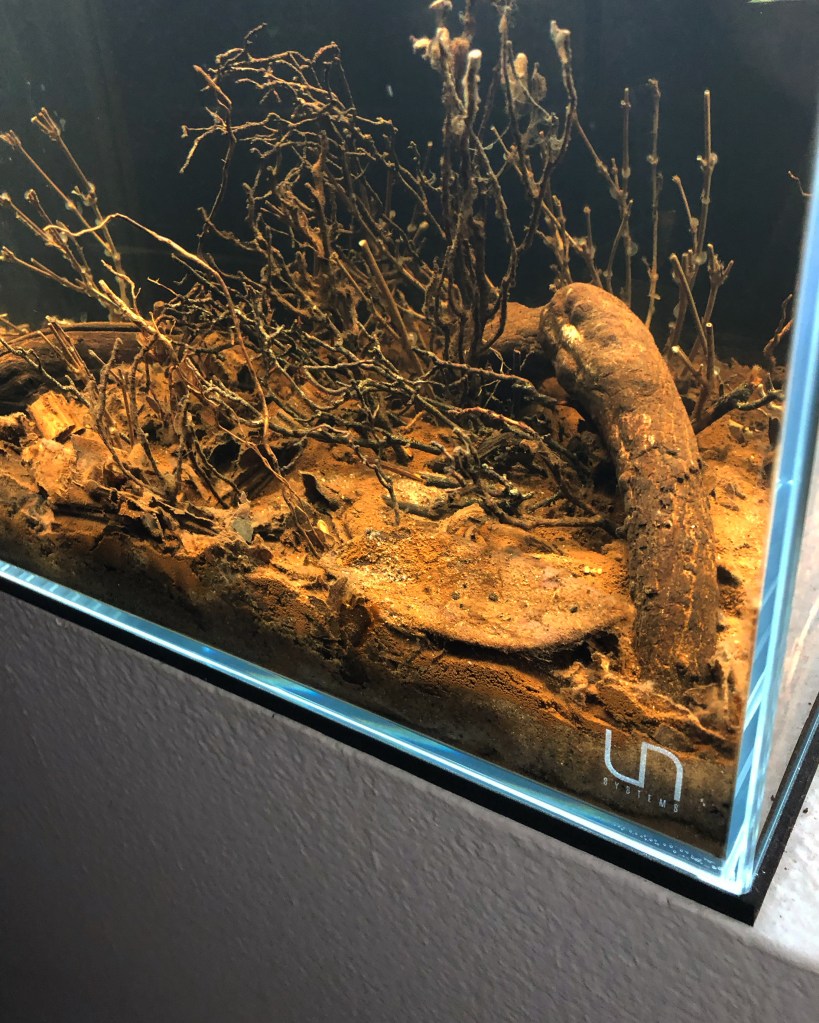
So, without further beating the shit out of this, I think we can successfully make the argument that consistency in all manner of aquarium-keeping endeavors can only help your animals. Maintaining a stable environment is not only humane- it’s playing into the very strength of our animals, by minimizing the stress of constantly having to adapt to a fluctuating environment.
As one of our local reef hobbyists likes to say, “Stability promotes success.”
Who could argue with that?
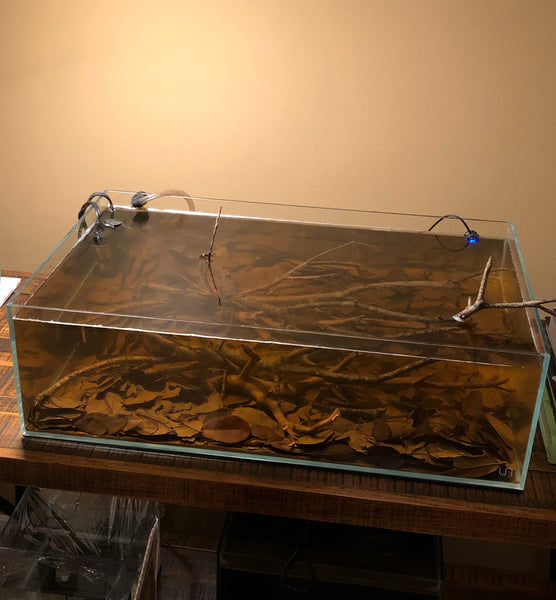
I’m sure that you can think of tons of ways that consistency in our fish-keeping habits can help promote more healthy, stable aquariums. Don’t obsess over this stuff, but do give some thought to the discussion here; think about consistency, and how it applies to your animals, and what you do each day to keep a consistent environment in your systems.
Not quite “set and forget”- but something sort of close, right?
Oh, and don’t be fucking lazy.
Don’t look for magic potions, shortcuts, or hacks. Good stuff takes time to achieve.
Stay persistent. Stay observant. Stay curious. Stay thoughtful. Stay patient…
And Stay Wet.
Scott Fellman


Leave a Reply