
Starting up a botanical method aquarium is a pretty easy process, really.
We just need to let Nature do most of the hard work.
She’ll take that seemingly “unsexy” piece of wood or rock or bunch of dried leaves, and, given the passage of time, the action of gravity and water movement, and the work of bacteria, fungi, and algae- She’ll mold, shape, evolve them into unique and compelling pieces, as amazing as anything we could ever hope to do…
If we give her the chance.
If we allow ourselves to look at her work in context.
If we don’t worry when things go “sideways.”
If we don’t give up.
Always have faith in Nature.
She’ll challenge you. She’ll tempt you. She’ll school you. But She’ll also educate you, indoctrinate you into her ways, and take you under her wing…if you let Her.
Let Nature handle some of the details… She pretty much never messes them up! Don’t fight Her. Understand her. Don’t be afraid to cede some of the work to Her.
Botanical-method aquariums are not not “just a look.” Not just an aesthetic. Not just a “trend.” Not even just a mindset…
They’re a methodology. One which requires us to make some leaps of faith.
And they operate under many of the same “best practices” that we’ve come to know and love over the past century of modern aquarium keeping. Our success or failure is completely dependent upon how we apply many of these time tested approaches.
If there is a commonality among successful hobbyists in any aquarium speciality- and especially ours-it’s that they follow fundamentals- common core principles of aquarium keeping. It’s not additives, or fancy gear- it’s patience and consistency.
First and foremost is patience.
I feel that we don’t celebrate patience quite enough.
Are you one of those people who loves to have stuff right now? The kind of person who just wants your aquarium “finished”- or do you relish the journey of establishing and evolving your little microcosm?
I’m just gonna go out on a limb here and postulate that you’re part of the latter group.
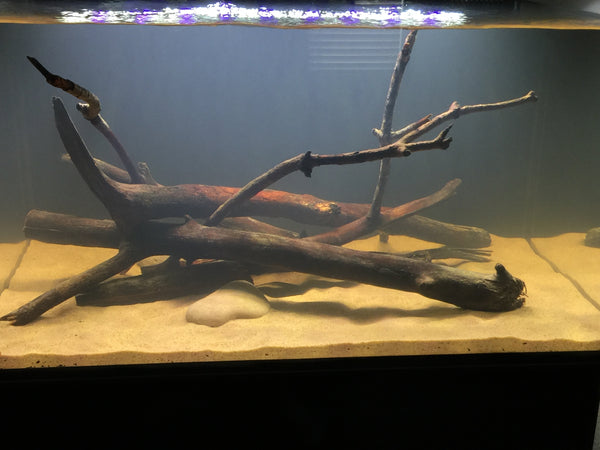
Have you ever completed setting up a new aquarium and stepped back and looked at it in its most “embryonic” phases, and thought to yourself, “This looks good?” The pristine glass, perfect deal wood, sparkling gravel…The scent of a brand new aquarium…
Well, of course you have! It’s part of the game.
It’s a total sensory experience, isn’t it?
To me, however, the real “magic” in an aquarium happens not when it’s new and pristine, but after a few weeks or months, when materials “soften”- when it develops that “patina” of micro algae, fungal growths, and a bit of detritus…the “matte” sheen of biofilm on the substrate…And when your tank develops that earthy, clean, alive smell.
When Nature really gets to work.
That, to me, is when an aquarium really feels “alive” and evolving.
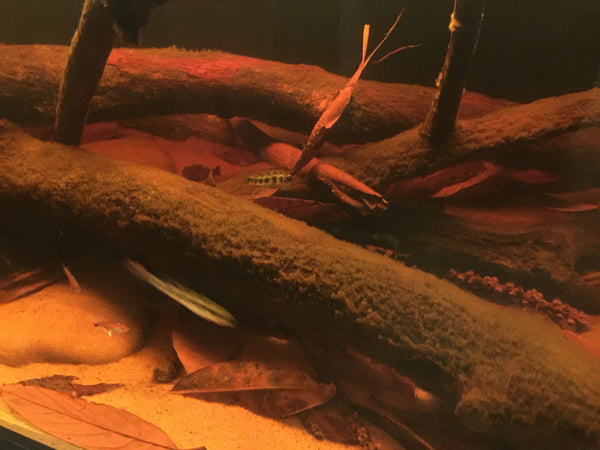
I let some of those natural processes evolve, just like the tank itself…One day you’ll look at your tank, and realize that it becoming the type of ecosystem you intended it to be…Largely, because you simply stepped back and let Nature take care of the details.
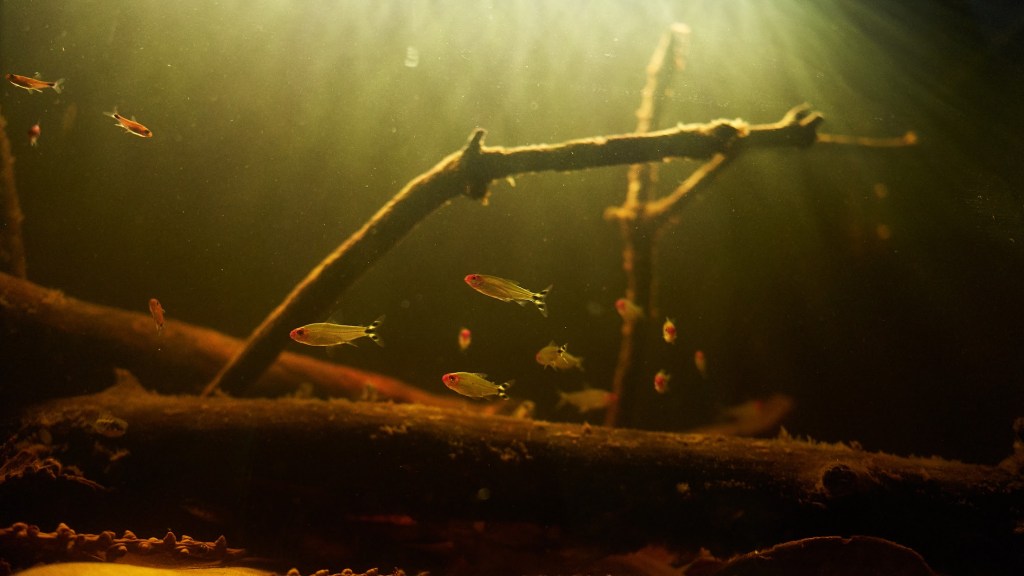
Understanding this dynamic in any closed aquarium system-but especially in botanical method ones- is really important.
There is another aspect to appreciating it: Letting a system “evolve” and find its way, with just a little bit of guidance (or botanicals, as the case may be) from time to time, is beautiful to me…Watching the “bigger picture” and realizing that all of these “components” are part of a bigger “whole.”
Doing…nothing.
Let me clarity what I mean by this.
When my tanks look “bad”, yet are otherwise seemingly healthy…I generally don’t do anything other than wait it out. Some of the best botanical method aquariums that I’ve ever created arose out of me just doing nothing when stuff got challenging. I literally let Nature sort stuff out…and it works pretty much every single time.
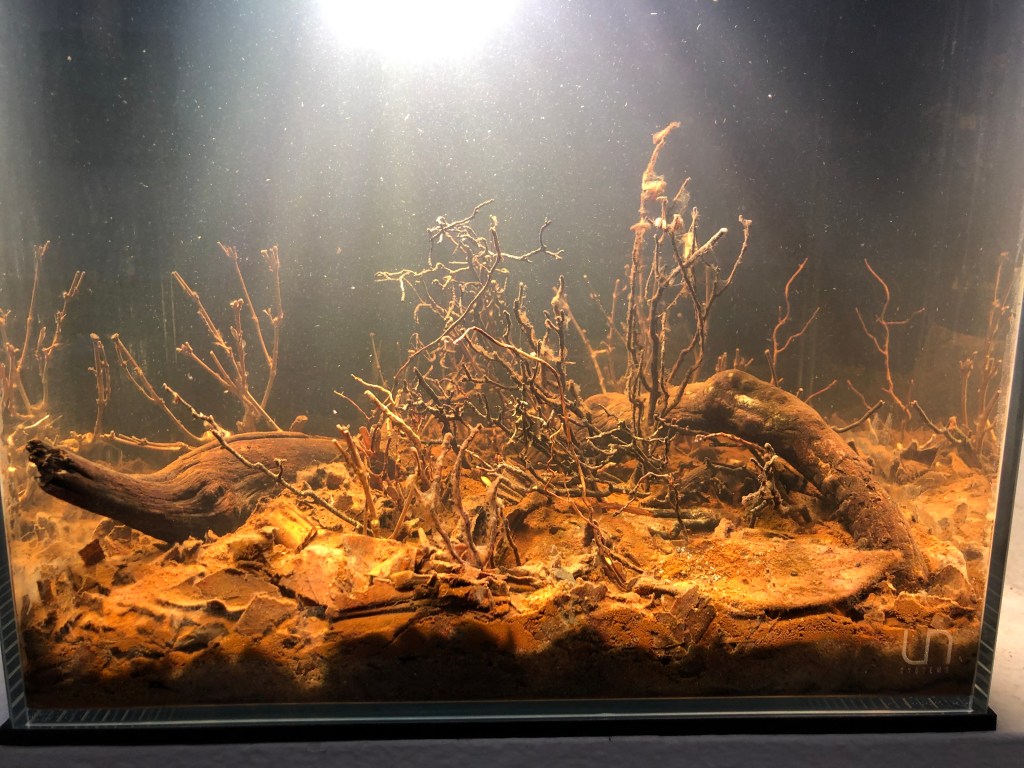
When I first approached botanical method tanks years ago, this was a definite mental shift for me, right along with accepting the biofilms, blackwater, and decomposing leaves. It was so different than the typical tanks I kept.at the time. In those tanks, it was all about control, managing the processes and details. Not letting things get “out of hand.” I wanted to constantly manage every aspect of the tank.
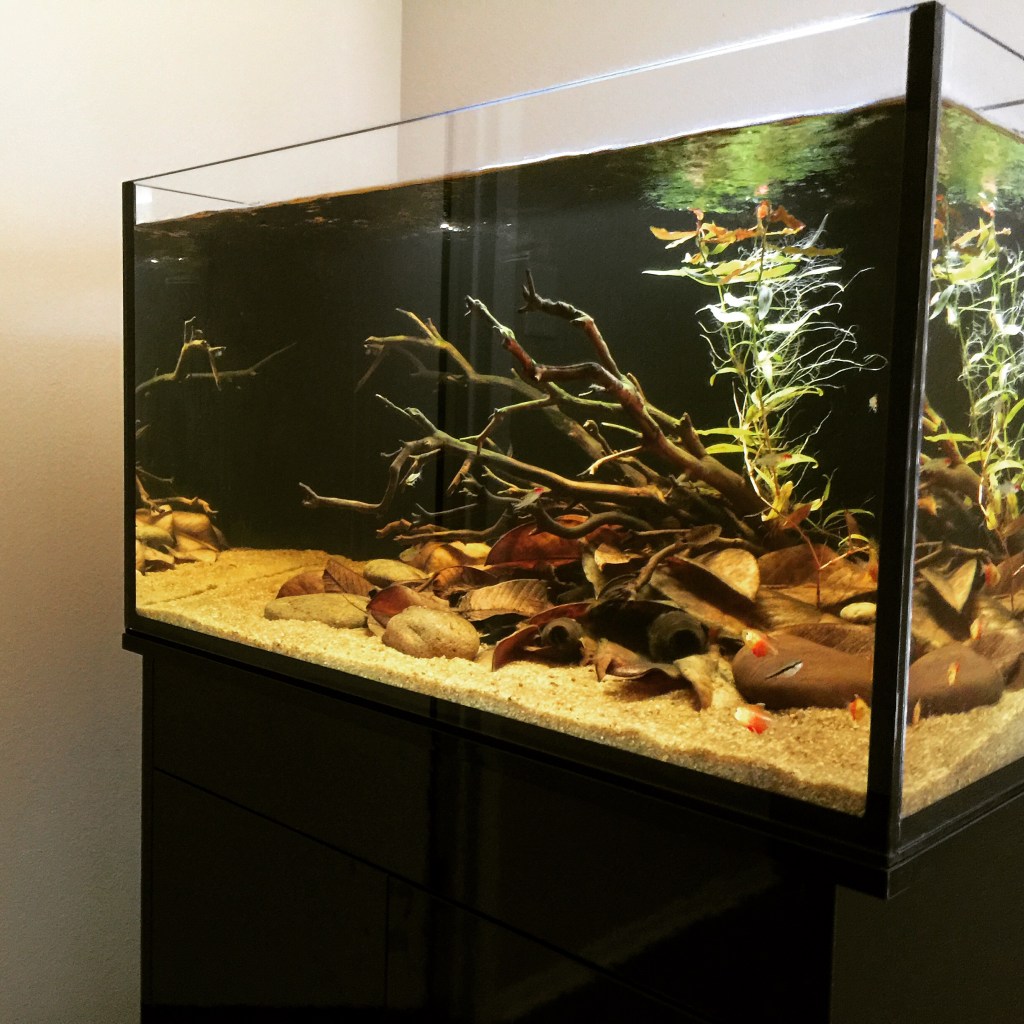
And after a while, I began to hate that approach!
Because it was a whole lot of crazy work and worry for marginally better results than what can be achieved by just doing some basic husbandry and not doing anything except letting Nature take over when stuff seems to be out of whack.
I’ve come to realize that taking a more relaxed approach to aquarium creation and evolution has created a much more enjoyable hobby experience for me. And being a bit more accepting about seeing natural processes play out has created far more aesthetically pleasing, naturally-appearing aquariums. for me.
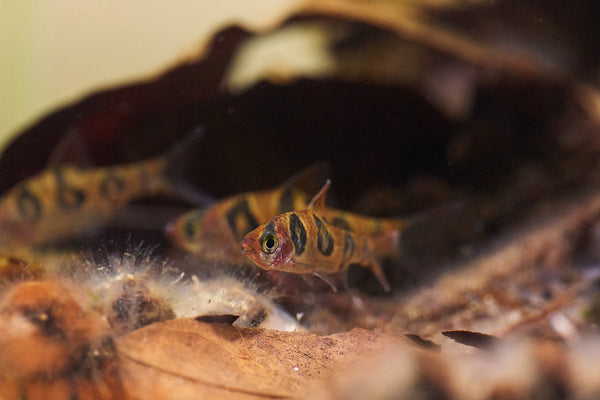
Tanks will sort themselves out if we leave them be. It may take a while, but they’ll get there. Even when things seem to go wrong, This is literally what Nature does. She finds a way to work with what’s available to create and evolve systems which benefit the life forms which reside in the habitats She creates.
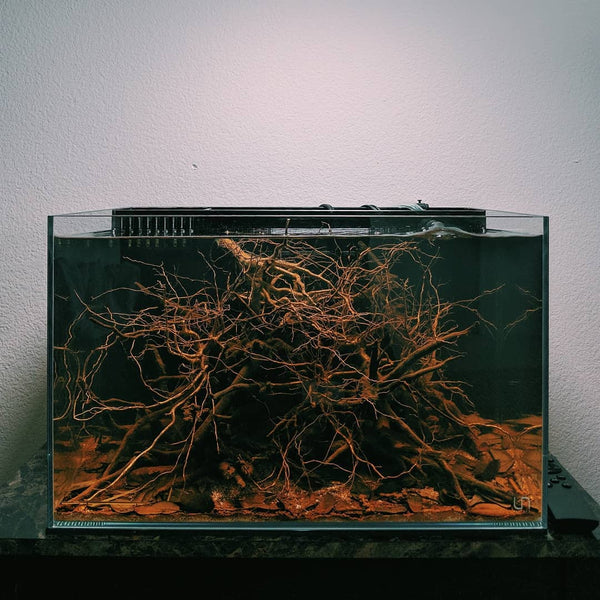
And really, a well-run botanical method aquarium that is properly stocked, thoughtfully maintained, and otherwise in good condition has no reason to simply descend rapidly into chaos, right?
I don’t think any of us operate our tanks on such a “razor’s edge” between success and disaster that the slightest deviation will create dire consequences, right?
Yeah. If they do- you’re likely doing something wrong. Really. These systems aren’t that “fragile.”
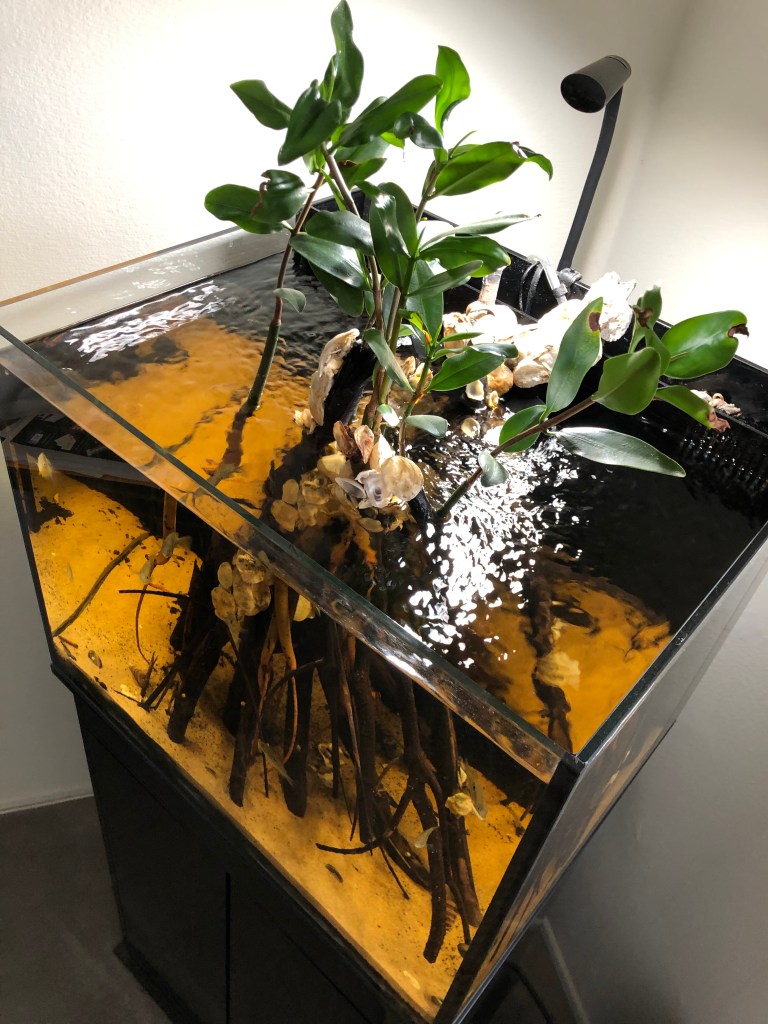
And you have to consider how botanical method tanks operate in general, right?
I mean, when you think about it, the botanical method aquarium is set up to embrace the processes which occur in a natural habitat where all of this stuff is taking place.
Decomposition, enrichment, nutrient import/export..
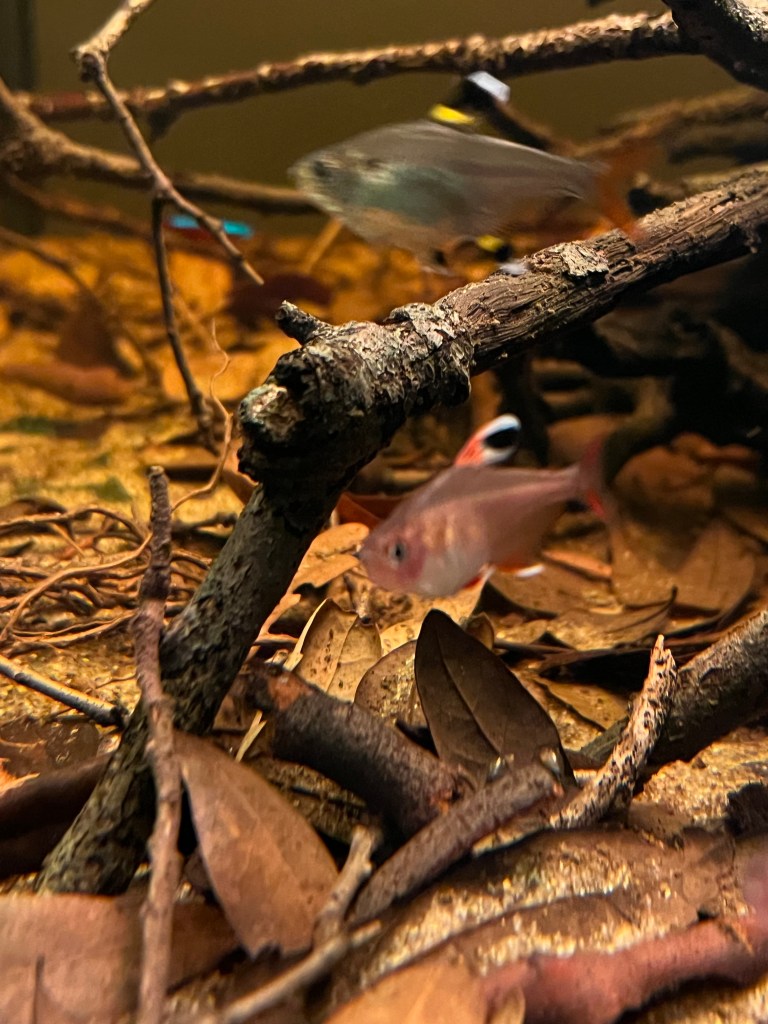
So, yeah- they’re set up from day one to function in a natural way; to process and assimilate nutrients from a variety of sources. Nature carries a lot of the load here. You don’t always have to be doing something on one of these systems.
As most of you who work with these aquariums know, the key to long-term success with them is to go slowly, deploying massive amounts of patience, common-sense husbandry, monitoring of environmental parameters, and careful stocking management. And keeping your hands off sometimes.
Doing nothing.
Not really much different from what you’d need to do to successfully maintain ANY type of aquarium for the long haul.
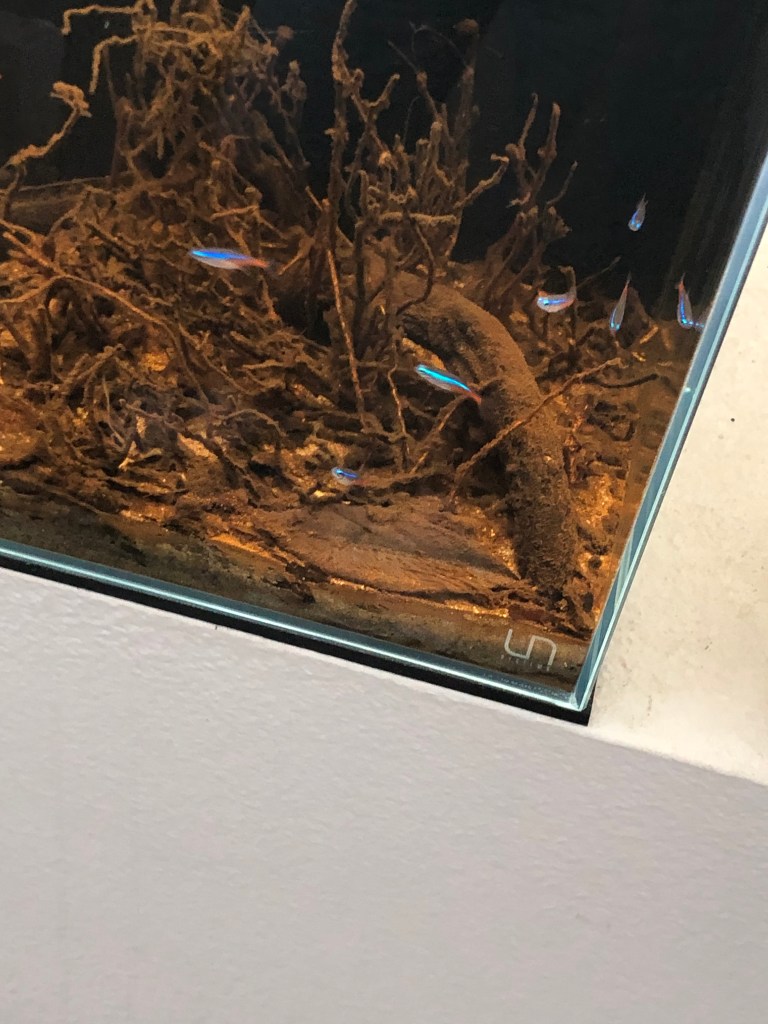
Regardless of what you do- or don’t do- as the case may be- natural processes that have evolved over the eons will continue to occur in your aquarium. You can fight them, in a futile attempt to stave them off with elaborate “countermeasures” and labor…or you can embrace them and learn how to moderate and live with them and the benefits which they offer via understanding the processes.
And the decomposition, biofilms and fungal growth? The things which might at first frighten or disturb you?
They’ll always be there.
Helping to shape the ecology of your aquarium.It’s just a matter of how “prominent” we allow them to be. How we learn to accept the way they work in our tanks.
And a lot of this learning involves simply doing…Nothing.
Let the processes play out over time.
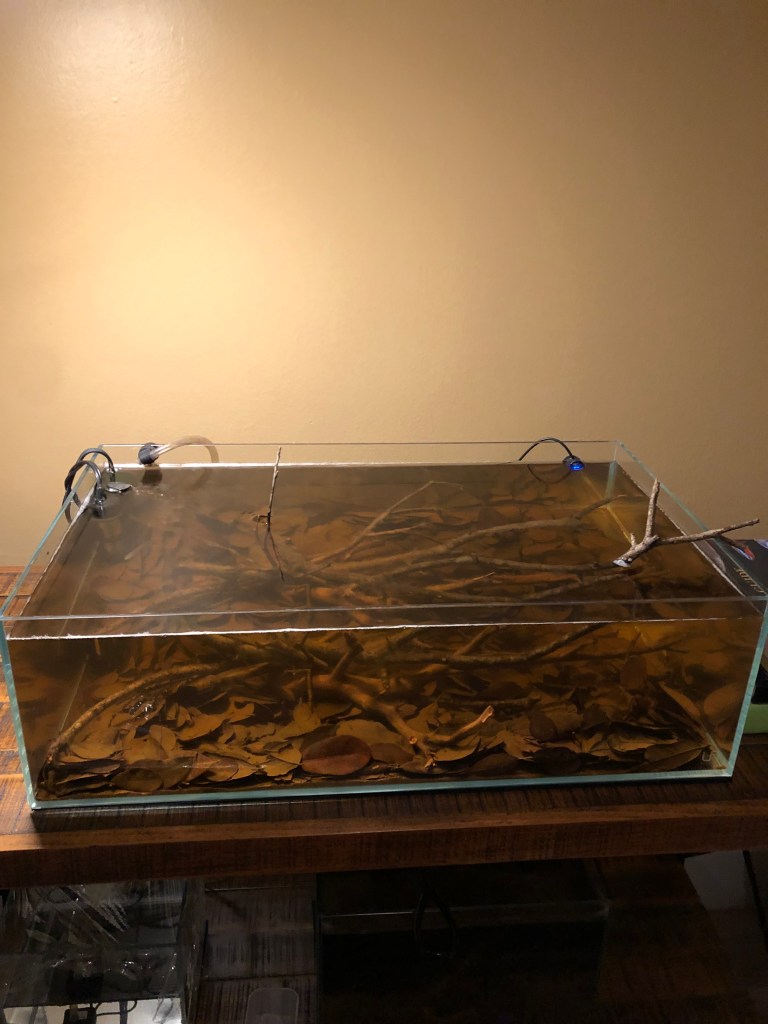
And when you think of the expanded time frames under which our tanks evolve and operate, what’s the big rush to make things “perfect” right away?
I’m not sure exactly what it is, but when it comes to the aquarium hobby…I find myself playing what is called in many endeavors (like business, sports, etc.) a “long game.”
I’m not looking for instant gratification. Nor should you.
I know-we all know– that good stuff often takes time to happen in aquariums.
I’m certainly not afraid to wait for results. Well, I’m not just sitting around in the “lotus position”, either- waiting, anyways. I get impatient sometimes, as alluded to previously. However, I’m not expecting immediate results from stuff. Rather, I am okay with doing the necessary groundwork, nurturing the project along, and seeing the results happen over time.
Yeah, that’s a “long game.”
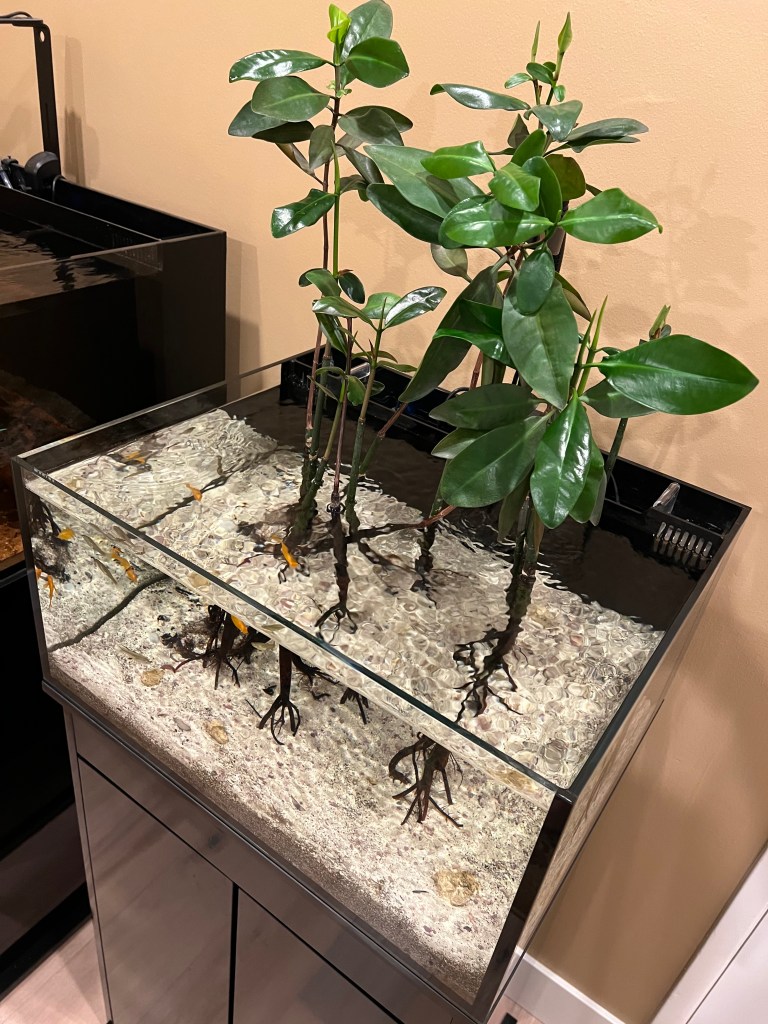
If you’re seriously into tropical fish keeping, it’s almost a necessity to have some sort of patience, isn’t it? I mean, sure, some of us are anxious to get that aquascape done, get the fishes in there, fire up the plumbing in the fish room, etc. However, we all seem to understand that to get good results- truly satisfying, legitimate results- things just take time.
Give everything the time and space to develop.
Things take time.
And just so that you know, I’ll say it: Your botanical method aquarium likely won’t look anything like what you’ve envisioned for at least 3 months after you set it up.
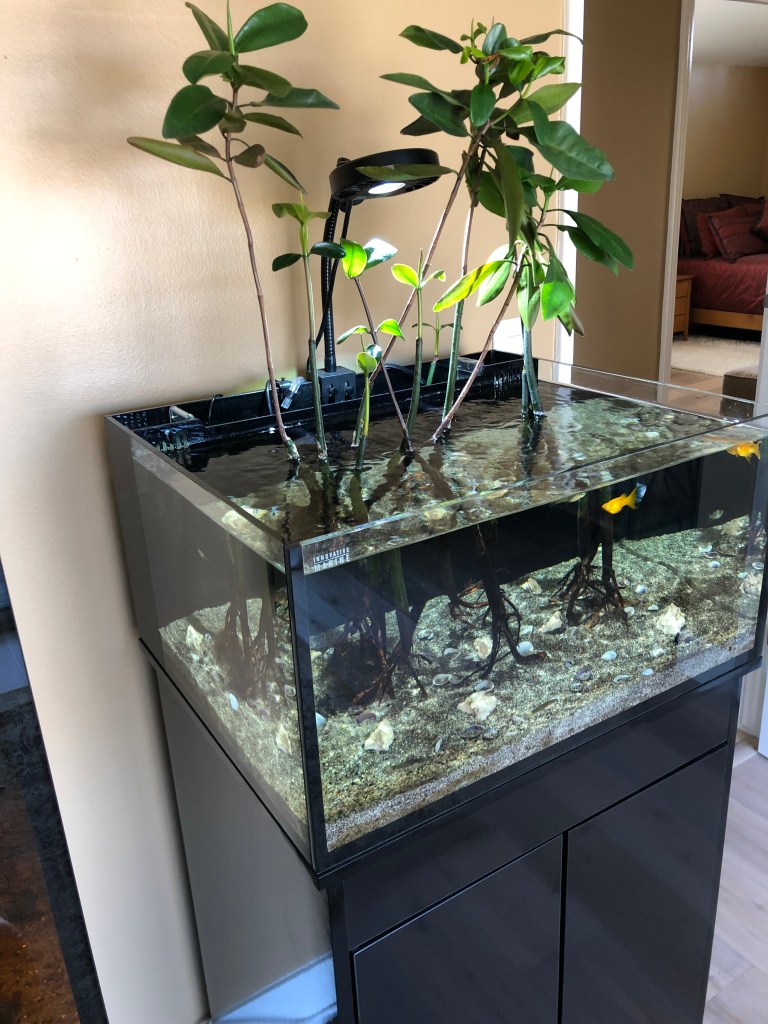
And there’s absolutely nothing wrong with that. Enjoy the evolution.
What’s the rush?
From day one, your botanical method aquarium will simply look different than any other tank that you’ve ever kept. It will by virtue of the fact that it’s set up differently than any other tank you’ve ever kept!
So, why not simply enjoy THAT?
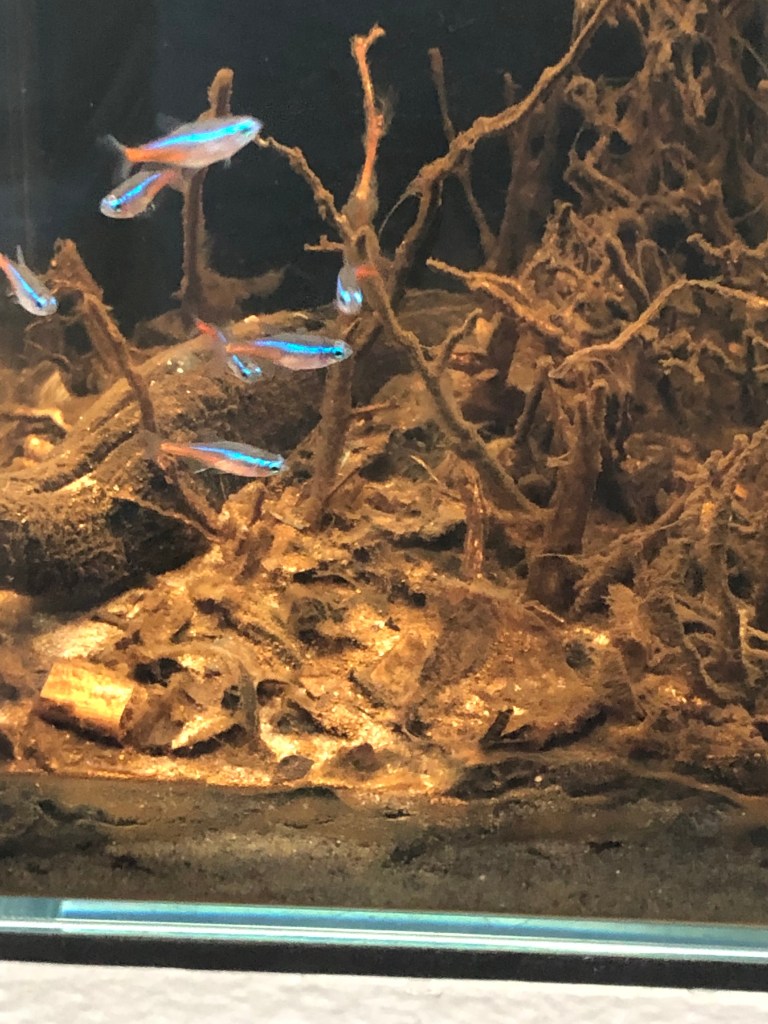
I think that we as a hobby tend to glorify the “finished product”, with very little discussed- or shared on social media- about the journey itself. And that probably perpetuates our impatience. No one (well, almost no one) talks about the journey; what to expect as your system evolves, and what it takes a while.
I believe that, if presented with the same gusto as “finished” tanks by hobbyists active on social media, stories about the journey of a botanical method aquarium from beginning to well-established (notice I didn’t say “finished?)can be incredibly compelling- even as compelling as the “finished” product.
I think that, by sharing such journeys, we can create an atmosphere of excitement around process– and a mindset that embraces patience- a huge thing for our hobby.
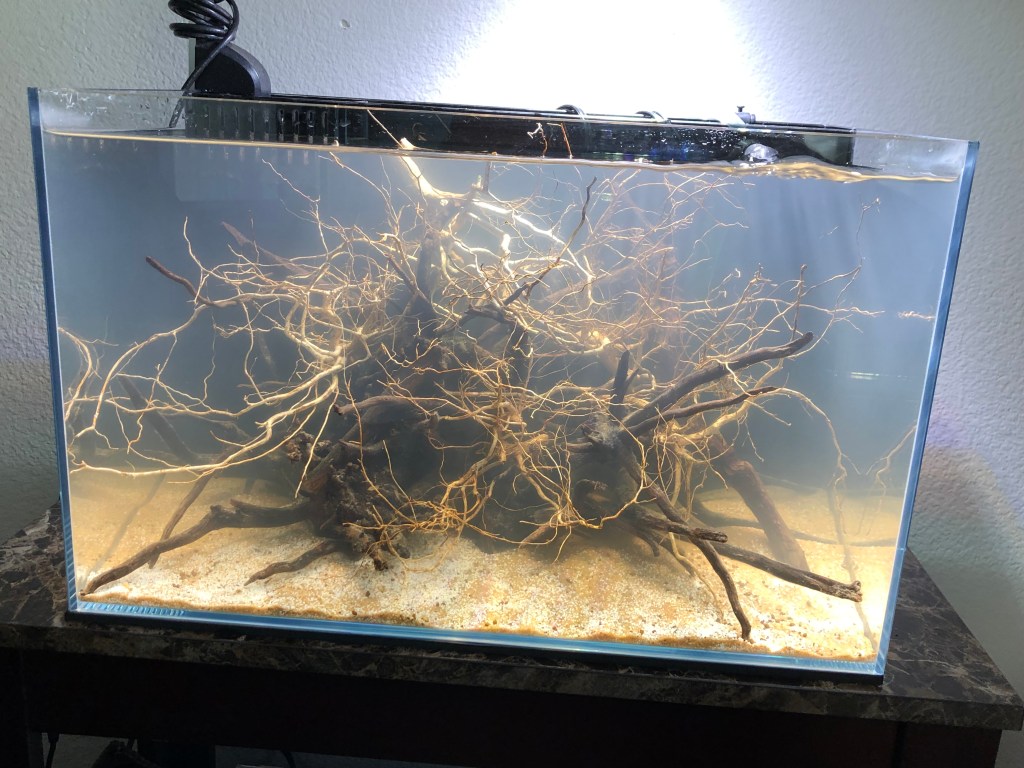
Yeah, what it takes to get there is patience…And consistency.
Nature is a master of consistency. Even within Her seasonal changes, there is a certain consistency to the aquatic environments she creates.
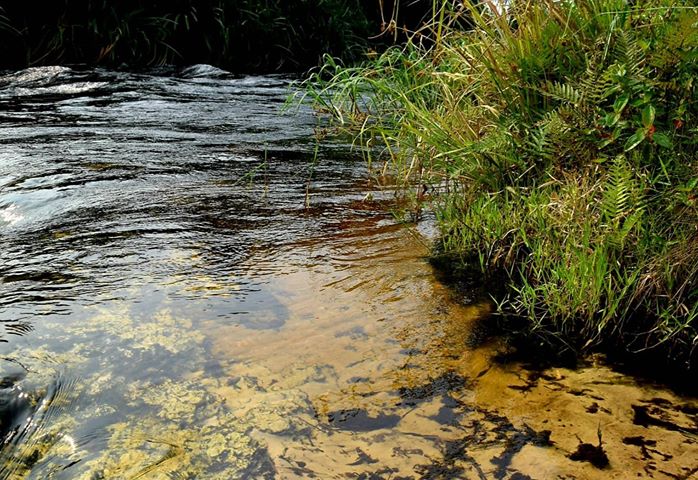
Consistency. A big ally to all of us.
In the botanical-influenced, low alkalinity/low pH blackwater aquarium environment, consistency is really important. It kind of goes hand in hand with patience and “doing nothing” on occasion…Although these tanks are surprisingly easy to manage and run over the long haul, consistency is a huge part of what keeps these speciality systems running healthily and happily for extended periods of time.
Nothing that you, as an experienced hobbyist don’t already know. Right?
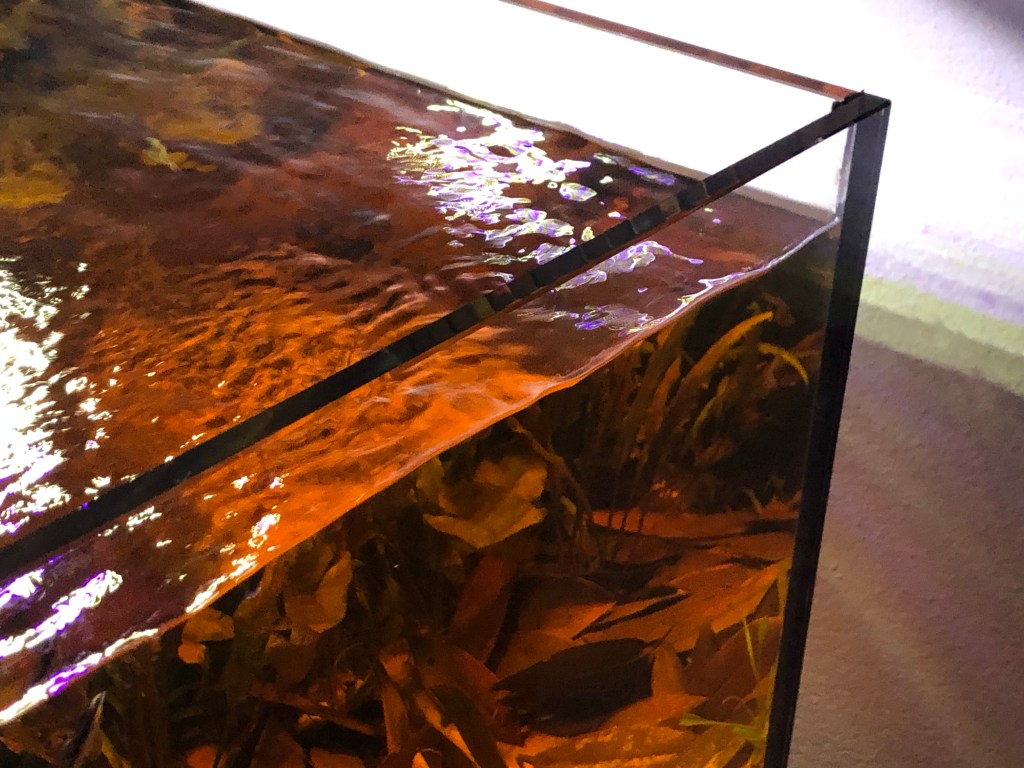
You know your aquariums.
Just looking at your tank and its inhabitants will be enough to tell you if something is amiss. More than one advanced aquarist has only half-jokingly told me that he or she can tell if something is amiss with his/her tank simply by the “smelI!” get it- excesses of biological activities do often create conditions that are detectible by scent!
It’s as much about consistency-consistency in practices and procedures- as it is about hitting those “target numbers” of pH, nitrate, etc. If you ask a lot of successful aquarists how they accomplish this-or-that, they’ll usually point towards a few things, like regular water exchanges, good food, and adhering to the same practices over and over again.
Consistency = Stability.
Sure, there might be times you deliberately manipulate the environment fairly rapidly, like a temperature change to stimulate spawning, etc., but for the most part, the successful aquarist plays a consistent game. Most fishes come from environments that vary only slightly during he course of a day, and many only seasonally, so stability is at the heart of “best practice” for aquarists.
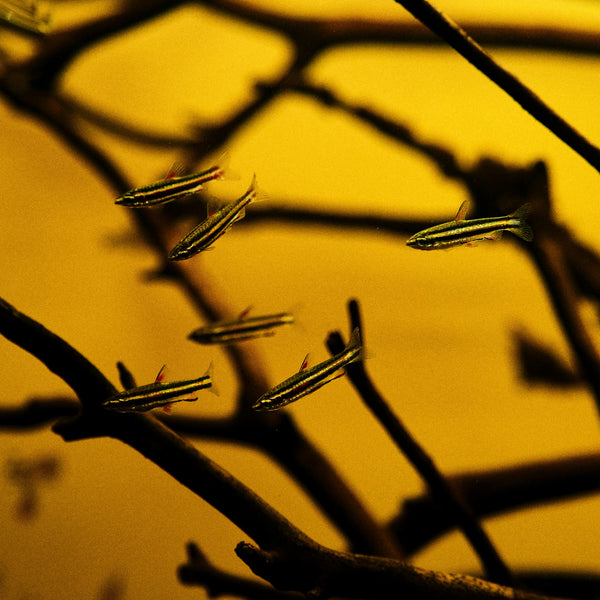
So, without further beating the living shit out of this, I think we can successfully make the argument that consistency and patience in all manner of aquarium-keeping endeavors can only help your animals. Keeping a stable environment is not only humane- it’s playing into the very strength of our animals, by minimizing the stress of constantly having to adapt to a fluctuating environment. As one of our local reef hobbyists likes to say, “Stability promotes success.”
Who could argue with that?
Don’t obsess over this stuff, but do give some thought to the discussion here; think about consistency, patience, and how it applies to your animals, and what you do each day to keep a consistent environment in your systems.
Often, it’s simply observing your aquairum. Doing “nothing.”
Doing “nothing” as your tank evolves can be quite thrilling.
However, don’t be fucking lazy.
Don’t look for magic potions, shortcuts, or hacks.
Good stuff takes time to achieve.
Stay observant. Stay methodical. Stay diligent. Stay grounded. Stay consistent…
And Stay Wet.
Scott Fellman
 The Tint
Leave a comment