
With our aquarium work, we marry art, science, and, yeah- philosophy. An important mix, really.
In its most simplistic and literal form, the Japanese philosophy of “Wabi Sabi” is an acceptance and contemplation of the imperfection, constant flux and impermanence of all things.
This philosophy was been embraced in aquascaping circles by none other than the late, great, Takashi Amano, who proffered that a planted aquarium aquascape is in constant flux, and that one needs to contemplate, embrace, and enjoy the sweet sadness of the transience of life.
This is a fascinating and meaningful philosophy, IMHO.
Many of Amano’s greatest works embraced this philosophy, and evolved over time as various plants would emerge, thrive, spread and decline, re-working and reconfiguring the aquascape with minimal human intervention. Each phase of the aquascape’s existence brought new beauty and joy to those would observe them.
Did you get the part about “minimal human intervention?” I mean, that all implies that an aquarium has to be left set up long enough for plants to thrive, decline, etc. In other words, you set it up for the long run.
Yet, in today’s contest-scape driven, break-down-the-tank-after the show world, this philosophy of appreciating change by nature over time seems to have been tossed aside as we move on to the next ‘scape. It’s all about “sketch it out, set it up, photograph it, edit it, share it…break it the f—- down and move on…”
And that is almost tragic, IMHO. In fact, I can’t help but wonder if Mr. Amano would feel the same.
This philosophy of “meeting Nature where it is” is the perfect encapsulation of what happens in an aquarium..specifically, the botanical-style systems we love. If someone pressed me to name the single most important thing you need to understand and embrace to be successful when working in this arena, this concept would be it.
I recently had one of those hardcore fish discussions with an old friend who is as much a philosopher as he is an aquarist..Real “Obi-Wan Kenobi”, “Aquascaping Jedi”-type. He had this amazing viewpoint on all things aquarium. It was a fun talk.
We all know a hobbyist or two like him, huh? Inspiring, interesting…intelligent.
And during our long-winded discussion, we talked about the ideas of aquariums reflecting nature, and how a good segment of the hobby has been chasing a sort of filtered interpretation of nature for the last 15-20 years or so, but somehow falling a bit short. Aesthetic-wise, our systems have never been more beautiful.
However, to my friend, he felt something was lacking in many scapes. We discussed how some aquascapes- even ones set up in an “artistic” manner, just have a certain “it” factor that evokes something…
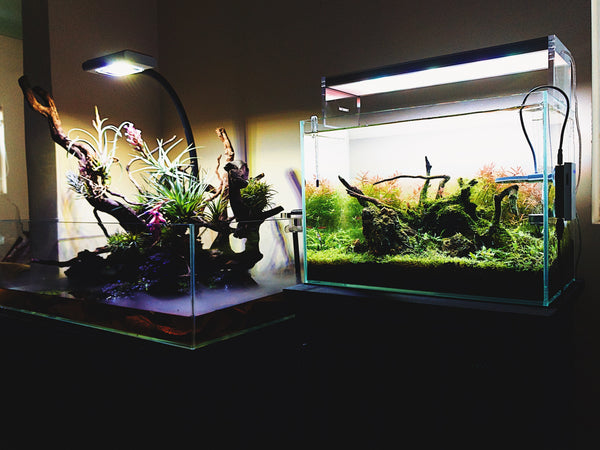
Yet others fall short by miles.
Couldn’t quite place it. What could it be?
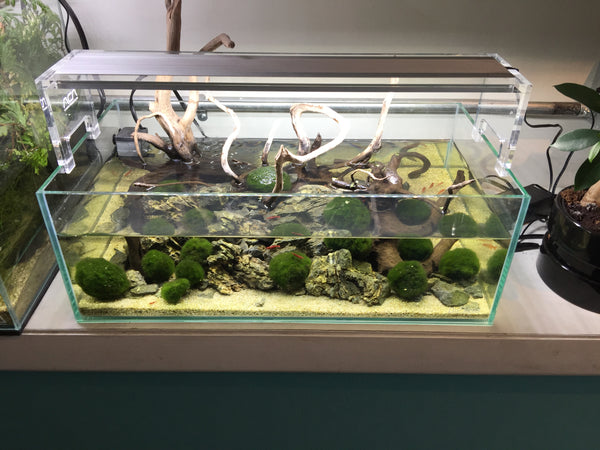
I think I know what it is.
Really.
I told him…and he agreed.
It’s “Wabi-Sabi” again. Something that’s been on my mind a lot lately.
Indeed, I think it’s foundational to aesthetic side of the botanical method aquarium approach.
There is this great emphasis on planted aquaecapes looking very similar to the way they did when the tank was first set up…Sort of “arresting” it in a manicured phase. Of course, you can and should trim tanks, lest you end up with….
With what? A lush, disorderly “jungle” of plants, fighting each other for space and resources?
Is that bad?
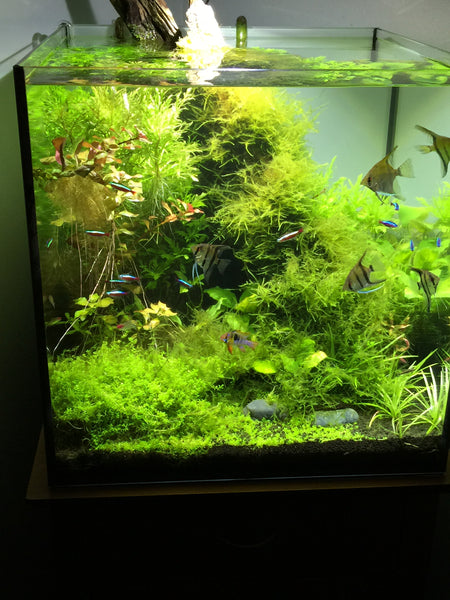
I mean, to some people, it’s a tragedy. I get that. They must have order. Design. “manicuring.”
Control.
To others… it’s what would happen in Nature- so they ask if it’s such a bad thing…Personally, I’m not that all put off by this kind of thing. Rather, I find it fascinating to put Nature in charge..
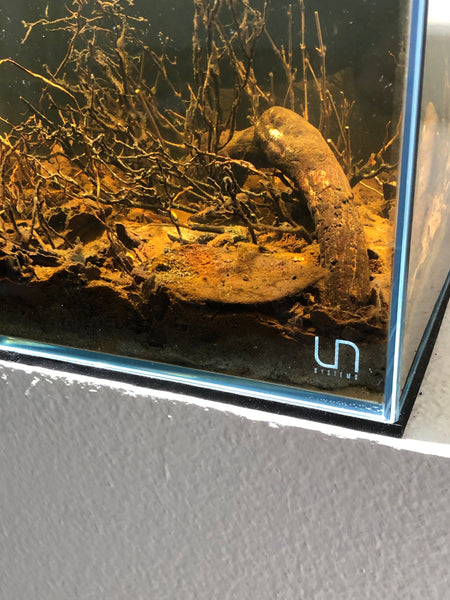
Evolution is amazing to watch…
And it goes for any aquarium, IMHO.
Let your system “breathe” a bit…These things take time. Patience. Observation. Appreciation. Changes caused by Nature are often subtle, maybe barely perceptible- but they’re happening. We need to train ourselves to be attuned to them. And to enjoy them at every stage.
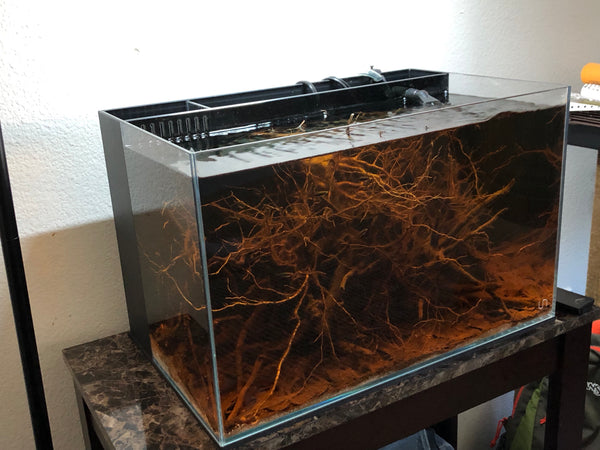
When we use natural botanical materials in our aquatic hardscape, such as leaves and softer botanicals, which begin to degrade after a few weeks submerged, one can really understand the practicalities of this philosophy. It could be argued, that the use of botanicals in an aquarium and embracing the progression is the very essence of what “Wabi Sabi” is about.
I love that the mainstream aquarium wold is looking at this stuff more seriously. However, with hobbyists worldwide getting interested in blackwater, botanical-style tanks, and more and more aquatics vendors starting to offer “botanicals” sections on their web sites, I think that we have to ask ourselves, “Why are we doing this?”
Is it because this is suddenly “cool?” Because it’s a way to have a “hip and trendy-looking” tank? Is it because somebody told us to do it? Or is it perhaps something else?
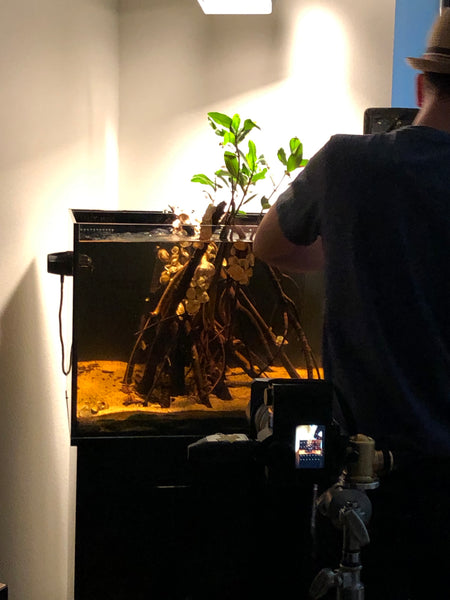
Are we as a hobby understanding that this type of tank goes way, way beyond the “typical” purely aesthetic-driven scapes that have been “the thing” for the last couple of decades? The “functional aesthetic” concept that we embrace here is really the cornerstone of this “movement” in the hobby.
It starts with the way we “configure” our aquascapes. How we “set them up” to follow Nature’s course, rather than fight it.
If we’re slaking strictly about aesthtics- I’ve always personally felt that, in a botanical-method aquarium, a “hardscape” should have some more-or-less “permanent” materials, like driftwood, complemented by some of the more durable botanicals, like Catappa bark or Sterculia pods, and complimented by the use of leaves- which are perhaps the most “ephemeral” component of the botanical method aquarium, and need replenishment/replacement over time.
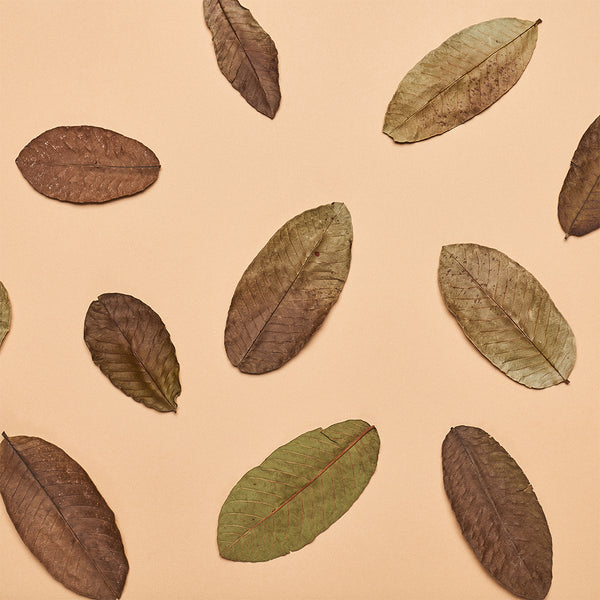
As we know, natural botanical materials not only offer very unique natural aesthetics- they offer literal “enrichment” of the aquatic habitat through their release of tannins, humic acids, vitamins, etc. as they decompose- just as they do in Nature.
This is a pretty amazing thing.
Much like flowers in a garden, leaves will have a period of time where they are in all their glory, followed by the gradual, inevitable encroachment of biological decay. At this phase, you may opt to leave them in the aquarium to enrich the environment further (providing food for fungi, bacteria, and other fauna), and offer a different aesthetic, or you can remove and replace them with fresh leaves and botanicals if that’s your thing.
This very much replicates the process which occur in Nature, doesn’t it?
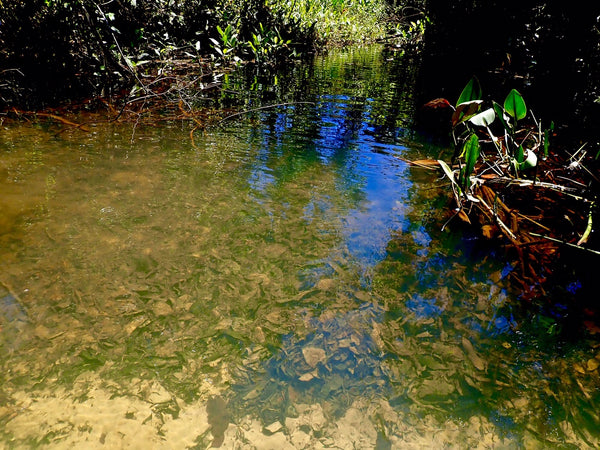
With the publishing of photos and videos of leave-influenced ‘scapes in the past few years, there has been much interest and more questions by hobbyists who have not really considered these items in an aquascape before. This is really cool, because new people with new ideas and approaches are actively experimenting. And, perhaps most important of all- we’re looking at nature as never before. We’re celebrating the real diversity and appearance of natural habitats as they really are…
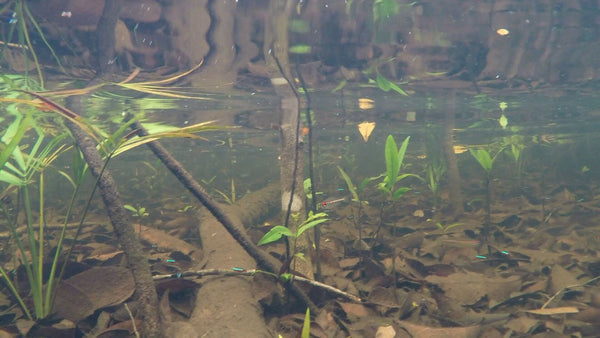
Some hobbyists have commented that, as their leaves and botanicals break down and the scape as initially presented changes significantly over time. Weather they know it or not, they are grasping “Wabi-Sabi”…Well, sort of. One must appreciate the beauty at various phases to really grasp the concept and appreciate it. To find little vignettes- little moments- of fleeting beauty that need not be permanent to enjoy.
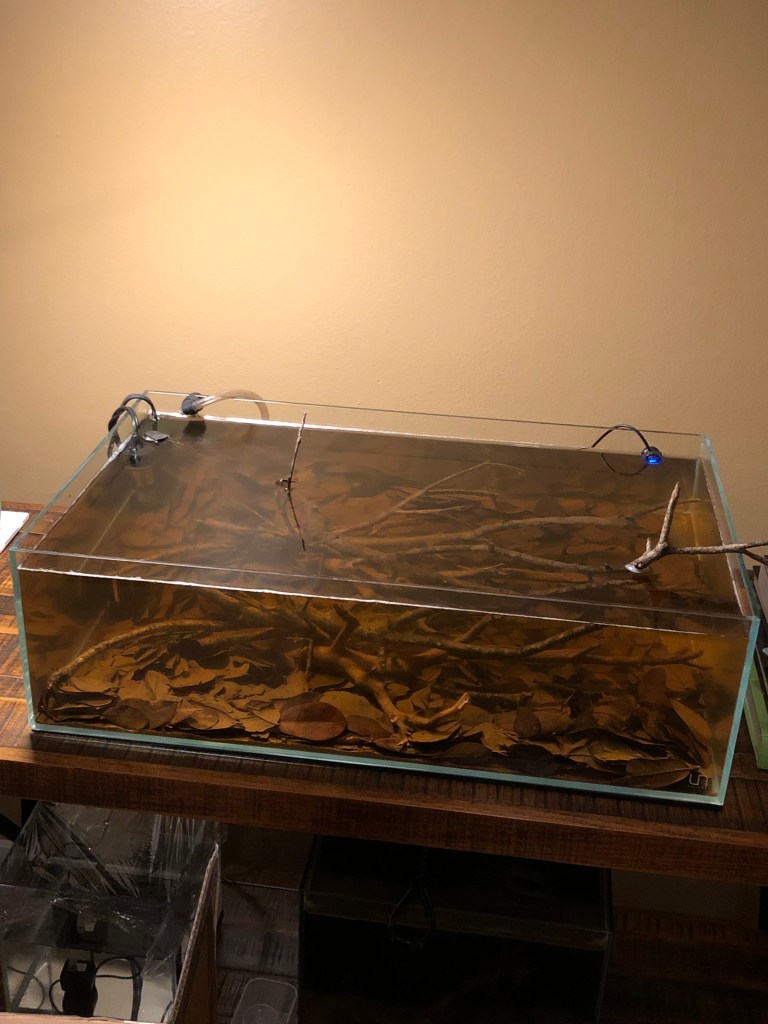
And of course, there are always some people who just “don’t get it”, and proffer that this is simply sloppy, not thought-out, and seemingly random approach to aquarium keeping.
I recall vividly one critic on a Facebook forum, who, observing a botanical-inspired aquascape created by another hobbyist, commented that the ‘scape looked like “…someone just threw in some pods and leaves in a random fashion..”
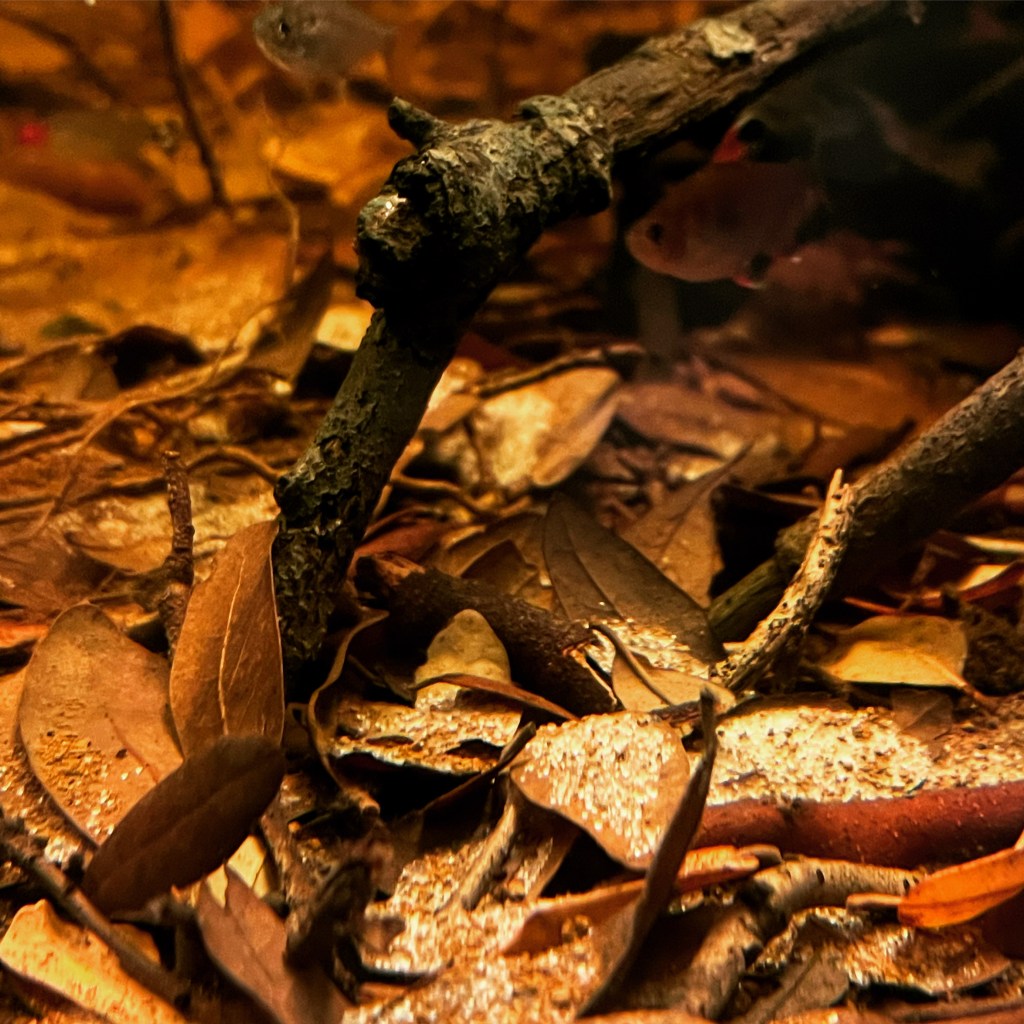
Yeah, this guy actually did superficially describe the aesthetic to a certain (although very unsophisticated) degree…but he couldn’t get past the superficial assessment of the look, which was in conflict with his personal taste, and therefore concluded it was, “…haphazard, sloppy, and not thought out.”
Had he ever actually been to, or seen pictures of, a natural aquatic habitat? I couldn’t help but wonder. The lack of ability to get out of this head space that “natural” = sloppy, poorly thought out, and unsophisticated.
Ouch.
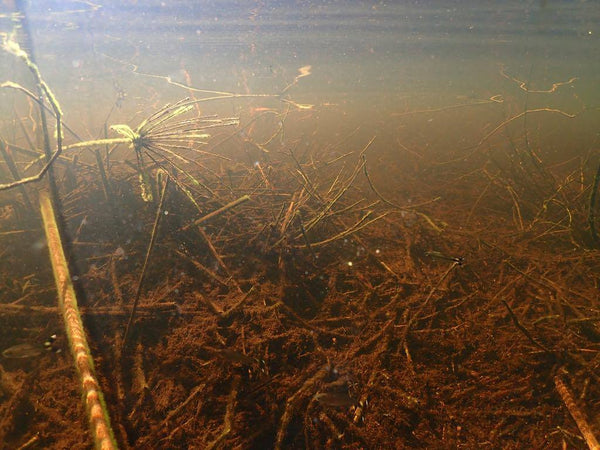
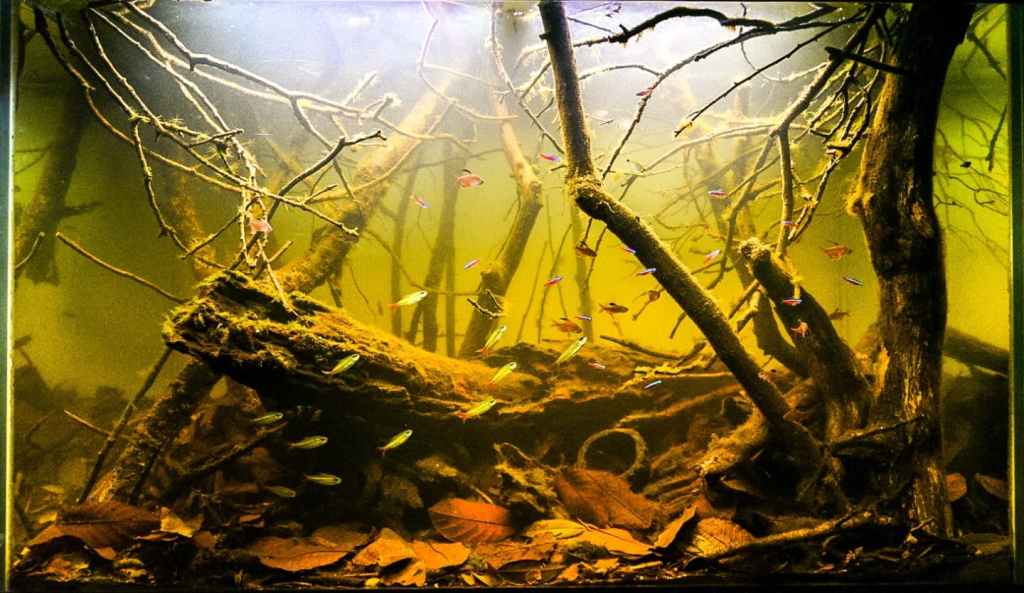
But on the other hand, that sort of random, almost “deconstructed” look was the charm and beauty of the tank in question. The seemingly transient nature of such an aquascape, with leaves deposited as in Nature by currents, tidal flows, etc., settling in unlikely areas within the aquarium is beautiful.
Not everyone likes this nor appreciates it. Or understands it. And that’s perfectly fine. Not everyone finds brown water, decomposing leaves, biofilms, and detritus beautiful. A lot of aquarists just sort of shrug.
Some even laugh.
Some love to criticize.
It’s not the “best” way to run a tank. Just “a way.”
Some want “rules.” Order. Guidelines from experts.
We offer no “rules.”
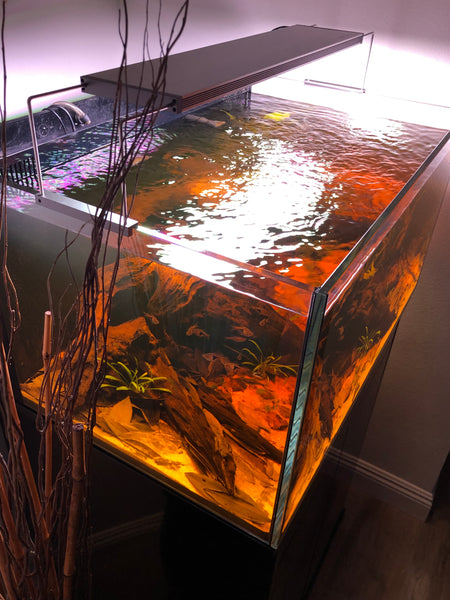
We can only offer an assessment of what Nature does to an aquarium when it’s set up a certain way. We can only point out the way Nature looks and study how it functions, and perhaps offer some hints on how to embrace the processes which it utilizes.
There are no real “rules” when creating a botanical method aquarium, other than the biological aspects of decomposition and water chemistry, which are the real factors that dictate just how your aquarium will ultimately evolve.
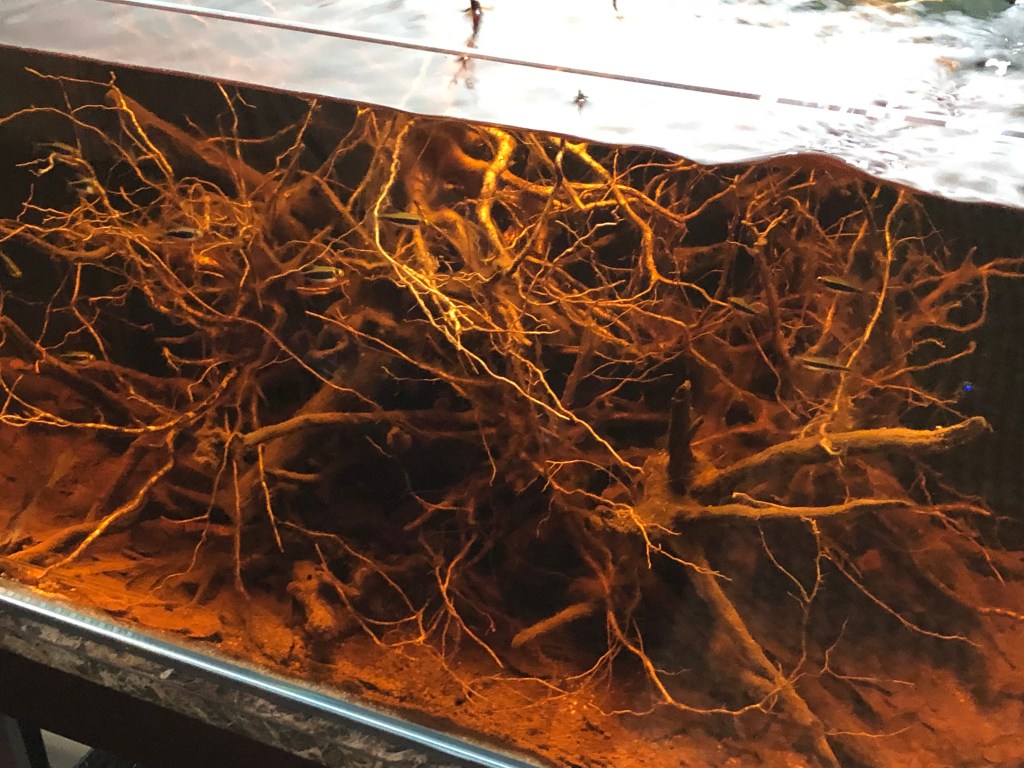
Accepting this inevitable change and imperfection is the very essence- and beauty- of the “Wabi-Sabi” principle, IMHO.
It’s about observation. Dedication. Imagination. Individuality. And the mindset of meeting Nature where it is.
Stay contemplative. Stay observant. Stay curious. Stay inquisitive. Stay patient. Stay unique…
And Stay Wet.
Scott Fellman
 The Tint
Leave a comment