
Are you one of those people who loves to have stuff right now? The kind of person who just wants your aquarium “finished”- or do you relish in the journey of establishing and evolving your little microcosm?
I’m not sure exactly what it is, but when it comes to the aquarium hobby…I find myself playing what is called in many endeavors (like business, sports, etc.) a “long game.”
I’m not looking for instant gratification.
I know that good stuff often takes time to happen.
I’m certainly not afraid to wait for results. Well, not just sit around in the literal sense, mind you. However, I’m not expecting instant results from stuff. Rather, I am okay with doing the necessary groundwork, nurturing the project along, and seeing the results happen over time.
A “long game.”
If you’re into tropical fish keeping, it’s almost a necessity to have this sort of patience, isn’t it? I mean, sure, some of us are anxious to get that aquascape done, get the fishes in there, fire up the plumbing in the fish room, etc. However, we all seem to understand that to get good results- try satisfying, legitimate results- things just take time.
Yeah, I’d love it if some “annual” killifish eggs hatched in one month instead of 7-9 months. I wouldn’t complain, but I do understand that there is the world the way it is; and the world the way we’d like it to be!
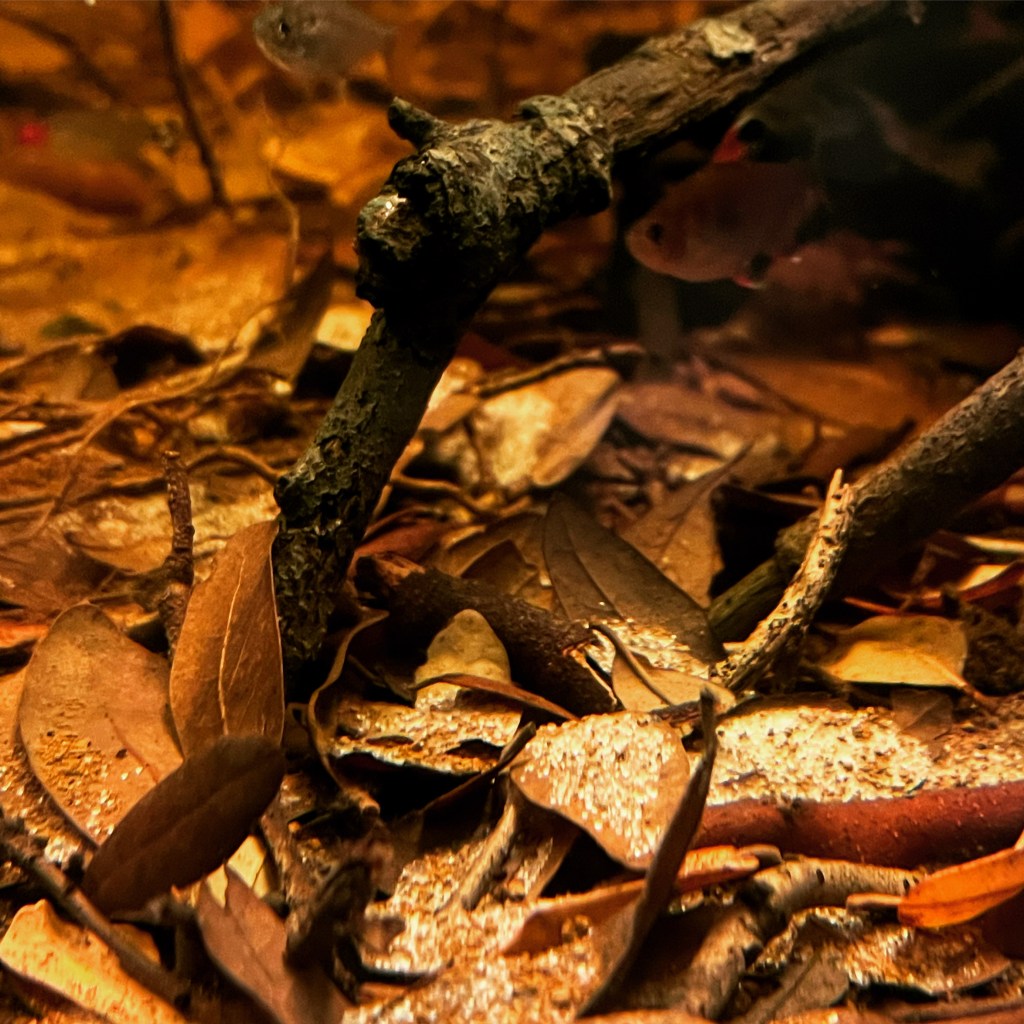
I’ve learned in the many years that I’ve been playing with botanical method aquariums that the system just doesn’t get where you want it overnight. Initially, you’ll see that burst of tint in the water, a tone, and see some of the materials you place in the tank breaking down, but for a while, your carefully conceived aquarium just looks like some wood with some leaves and seed pods thrown on the bottom, doesn’t it? Perhaps almost “clinical” in appearance; not quite “there” just yet, huh?
We can “scape” well. We can manage the tank effectively; engage in best practices to keep it functioning and progressing in a healthy manner…But we cannot rush Nature.
It simply takes time. Time for the bacterial and fungal populations to grow and soften the botanicals in your aquarium. Time for the water chemistry to stabilize. Time for the aquascape to take on a more “mature”, established look.
It’s not really 100% in our control.
Which is kind of cool, actually.
There is that certain thing about not being totally in control of our botanical method aquarium- or ANY aquarium, for that matter- which makes the whole process just that more engrossing, if you ask me.
However, you always seem to have some people trying to get to some “point” in the process of establishing their botanical method aquariums as quickly as possible.
Often, they look for hacks.
Shit, I hate that term, “hack!”
To many, it implies a sort of “inside way” of doing stuff…a “work-around” of sorts. A term brought about by the internet age to justify doing things quickly, often skipping slower, more cautious procedure, and to “save time” because “we’re all so busy.” I think it’s a sort of sad commentary on the prevailing mindset of many people- particularly when applied to the aquarium hobby and the living organisms which command the bulk of our attention!
Yet, we see it a lot.
We all need stuff to happen quickly...We want a “shortcut.
Personally, I call it “cheating.”
Yes, it is.
With what we do, a “hack” is trying to cheat Nature. Speed stuff up. Make Nature work on OUR schedules.
Bad idea, if you ask me.
Really bad.
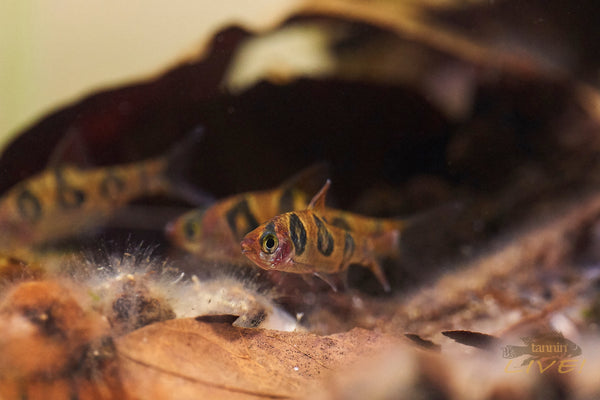
Attempt to circumvent or significantly speed up, or even skip Nature’s processes and she’ll justifiably kick your ass.
In our game of aquariums-particularly the botanical method ones, the idea of “hacks” seems sort of contrary to all that I proffer here: Patience, time, embracing the process, etc. Yet, curiously, a fair amount of questions trickle in every week to my DMs and email about how to achieve certain things quickly in our botanical method aquariums.
And you know what the most common “hack” questions I receive are?
“How do I get the water in my tank to tint up faster?” and How do I get that “established look more quickly?”
I swear, I’m totally serious. Faster.
This is kind of funny.
This is literally how cool stuff is getting in our world! I mean, we went from an aquarium culture that was practically horrified at the prospect of a tank with brown water and decomposing leaves, to one that is now impatient about achieving dark water, softening leaves, and all of the other collateral benefits…quickly, I might add!
Interesting paradigm shift of sorts, huh?
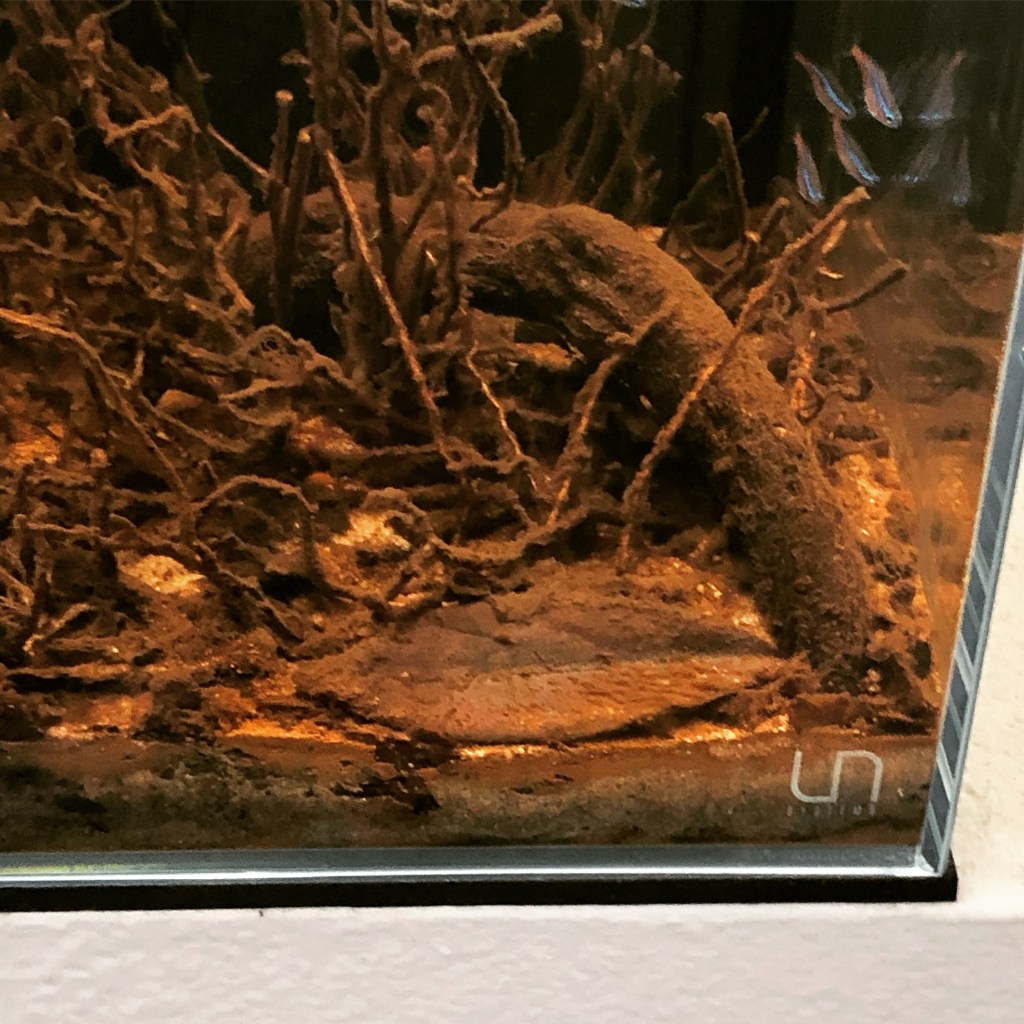
Now, in all fairness, most of us DO understand that there are real no true “shortcuts” in any part of the aquarium game, but I do understand that there is a certain degree of impatience with this. Things happen according to natural processes, not some perfectly predictable timetable.
The typical newbie to the botanical method world sees all of these pics cool tanks; of natural habitats that they’ve always dreamed of replicating, and even though he or she totally understands that it’s a natural process that takes time, wants to “get in the game” as quickly as possible! She wants her tank to look like the ones online….like, NOW!
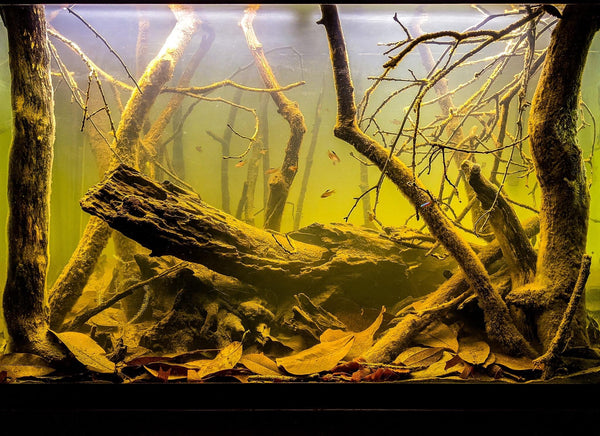
Unfortunately, it just doesn’t work that way in the real world. We just have to be patient.
If there is one thing I have learned in a lifetime in the hobby, it’s that you need to deploy massive amounts of patience for real, long-term success. Sure, you can take shortcuts, employ “hacks” or “workarounds” or whatever and speed stuff up a bit. However, when you do that, sometimes you can push too hard, and get from “Point A” to “Point C” without hitting “Point B”- but the results over the long term almost always are not quite as good as when you “slow your roll” a bit.
Patience and allowing the space and time for that natural processes which power our aquariums to “breathe” and “evolve”, much like they do in Nature.
And, when we think about our aquariums and the processes which we employ to create them to perform in this manner, the parallels are striking, aren’t they?
Let’s examine these processes again, so we can illustrate this. The evolution of many aquatic habitats that I model in my tanks goes something like this:
A tree falls in the (dry) forest.
Wind and gravity determine it’s initial resting place (I play around with positioning wood pieces until I get ’em where I want, and in a position that holds!).
Next, other materials, such as leaves, sediment, and perhaps a few roots and plant parts become entrapped around the fallen tree or its branches (I set a few “anchor” pieces of hardscaping material into the tank).
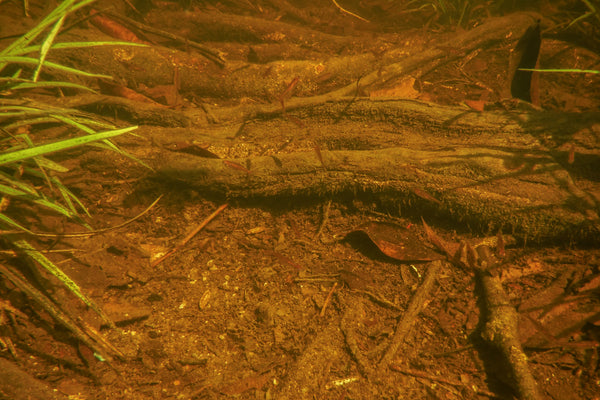
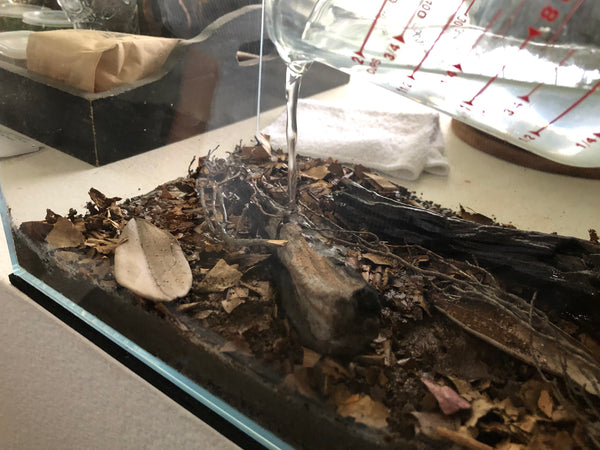
Then, the rains come; streams overflow, and the once-dry forest floor becomes inundated (I fill the aquarium with water).
It starts to evolve. To come alive in a new way.
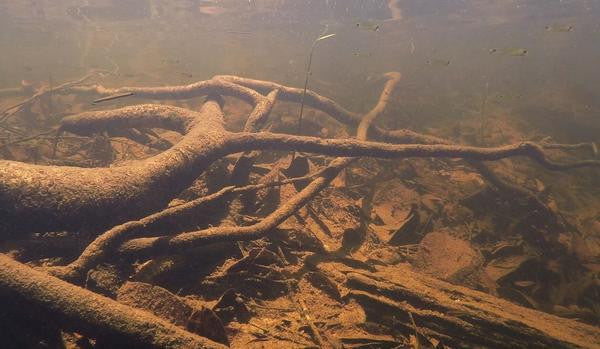
The action of water and rain help set the final position of the tree/branches, and wash more materials into the area influenced by the tree (I place more pieces of botanicals, substrate, leaves, etc. into place). The area settles a bit, with occasional influxes of new water from the initial rainfall (I make water chemistry tweaks or additions if needed).
Fungi, bacteria, and insects begin to act upon the wood and botanicals which have collected in the water (kind of like what happens in our tanks, huh?)
Biofilms and fungal growths are beautiful…
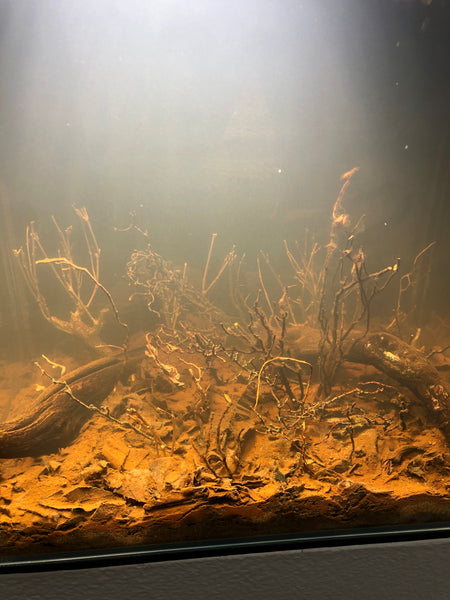
Gradually, the first fishes begin to follow the food and populate the area (we add our first fish selections based on our stocking plan…).
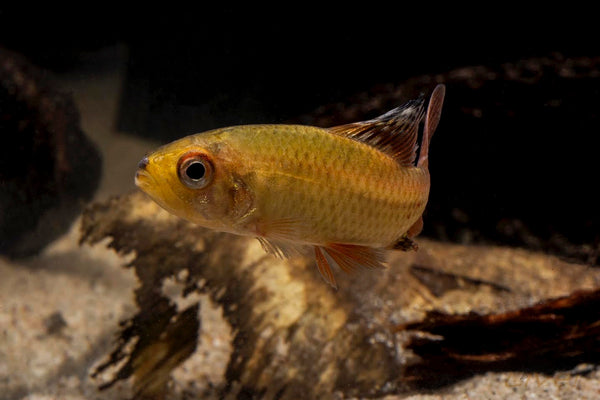
Okay, you get the idea. I can go on and on with the stupid analogies,…But it’s helpful to look at this in this fashion, because it makes us understand what things take time in Nature- and in our tanks.
The stuff we do when we establish our aquariums mimics-on a surprising number of levels- the processes which occur as natural aquatic habitats evolve.
It’s not always a fast process. In fact, it typically isn’t.
And the thing we must deploy at all times in this process is patience.
“Radical patience!”
What’s ‘radical” about patience?
Well, these days, it seems that we tend to celebrate “finished” more than the process to get there, which is, IMHO, kind of sad. So, apparently, patience has become a sort of radical departure from the “new normal” in then hobby. Ironically (?), the real “magic” and fascination– is the evolution of an aquarium ecosystem.
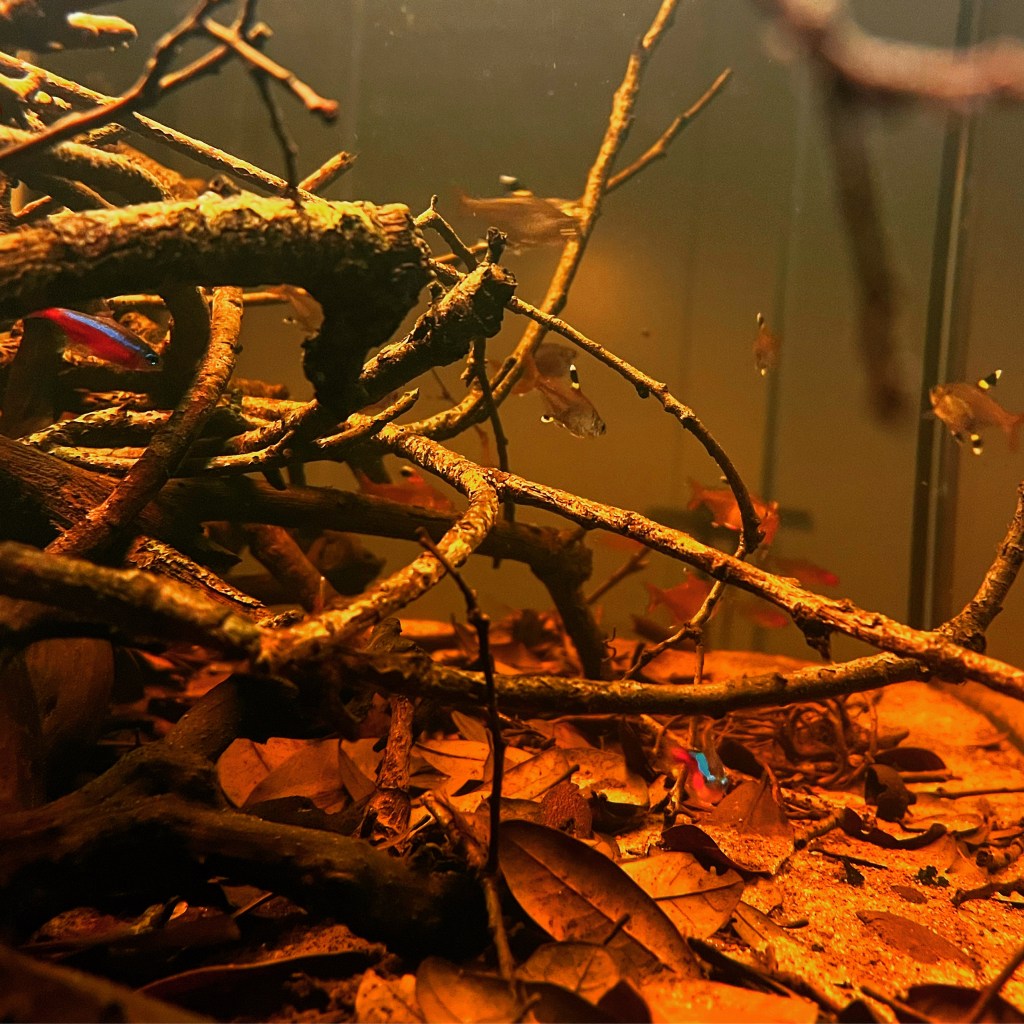
It’s as much about common sense as anything, actually.
Yeah, common sense.
That is- not jumping right to “finished”...or trying to., anyways
Rather, it’s about taking a bit of time- or even a long time- to allow your aquariums to “run in” and develop before pushing them along. To allow the population of the “supporting cast” of microorganisms, fungal growths, and biofilms to evolve and multiply.
It’s actually a surprisingly interesting time.
Just because your tank doesn’t have fishes swimming around in it doesn’t mean that it’s not compelling or engaging. I mean, why are we always in such a freakin’ hurry to get fishes in, everything set perfectly, and the tank “Instagram ready?”
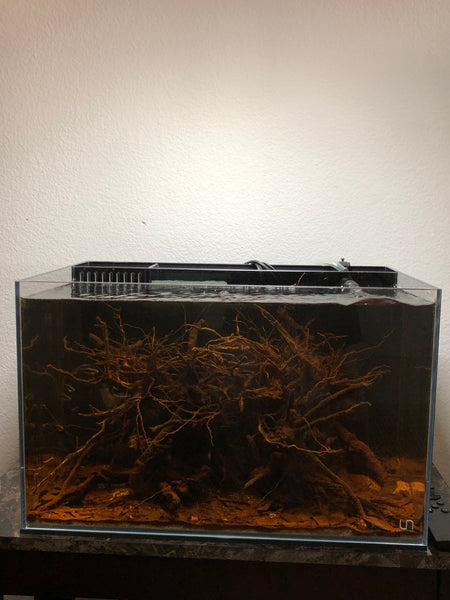
I think it’s because we have historically not celebrated the process of an aquarium establishing itself as a closed ecosystem.
If we make an effort to understand how aquatic systems establish themselves and function, we develop an appreciation for each and every step in the process, and how it will influence the overall “tempo” and ultimate success of the aquarium we are creating.
Suddenly, “speed” is secondary to process.
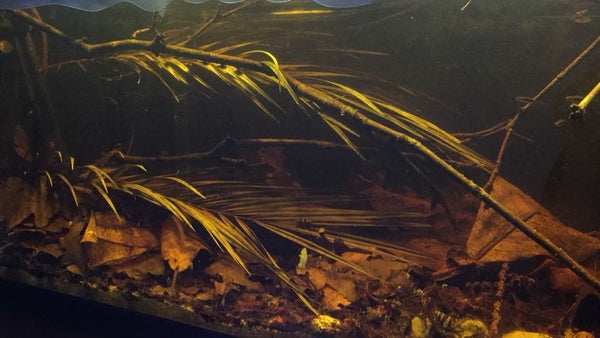
When we take the view that we are not just creating an “aquatic display”, but a functional simulation of a diverse, dynamic, and functional habitat for a variety of aquatic life forms, we tend to look at it as much more of an evolving process than some sort of “recipe”- or a step-by-step “procedure” for getting somewhere.
Taking the time to consider, study, and savor each phase is such an amazing thing, and I’d like to think- that as students of this most compelling aquarium hobby niche, that we can appreciate the evolution as much as the “finished product” (if there ever is such a thing in the aquarium world).
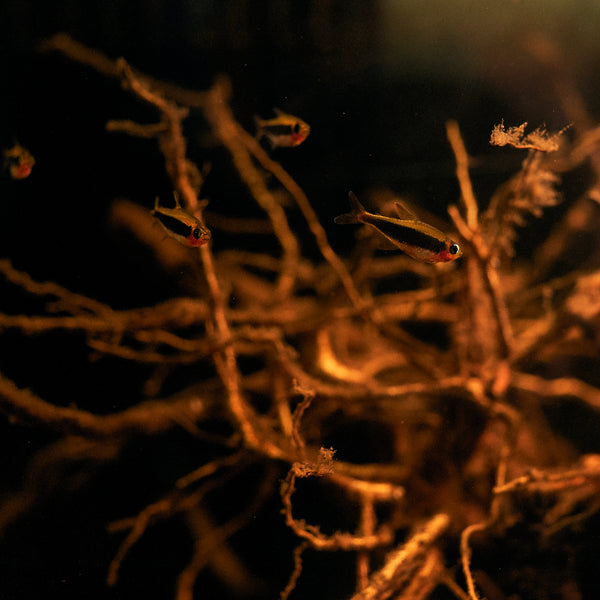
It all starts with an idea...and continues with a little bit of a “waiting game…” and a belief in Nature; a trust in the natural processes which have guided our planet and its life forms for eons.
The appreciation of this process is a victory, in and of itself, isn’t it? The journey- the process- is every bit as enjoyable as the destination, I should think.
As I’ve already asserted, In the botanical method aquarium game, rushing stuff for the sake of “getting finished” or whatever is simply not advisable.
Here’s why:
The way we have embraced the botanical method aquarium, it’s not just about achieving a certain “look.” Now, yeah, we do celebrate the “look” as much as anyone can. Yet, botanical method tanks are not really a “style”, they’re a type of approach to creating and managing an aquarium.
And what we need to celebrate is the creation- the“evolution” of a small microcosm, complete with the many life forms which encompass it.
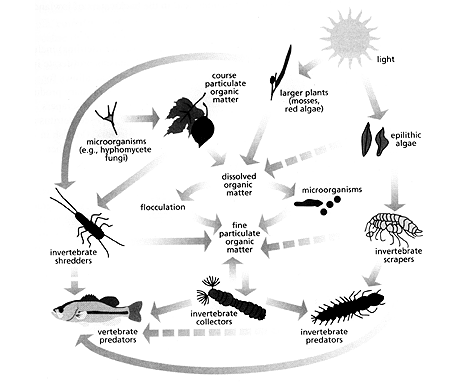
This takes some time.
Populations of these organisms can only grow and multiply as fast as the resources are available to them. Shortcuts really don’t make much sense. Now sure, you can- and should– consider “jump starting” your miniature ecosystem by “inoculating” your tank with bacterial and microorganisms cultures, to help get these valuable organisms into the system as early as possible.
But you can’t do this with the intention of “rushing” the process. It doesn’t work that way.
It takes time.
The bacteria, fungi, and other organisms which serve to “process” botanicals and nutrients within our aquariums take a while to establish themselves. Much like establishing the nitrogen cycle itself, botanical method aquariums require us to be patient while these secondary organisms arrive, grow, and multiply to sufficient populations capable of fulfilling this role within the closed ecosystem we are establishing.
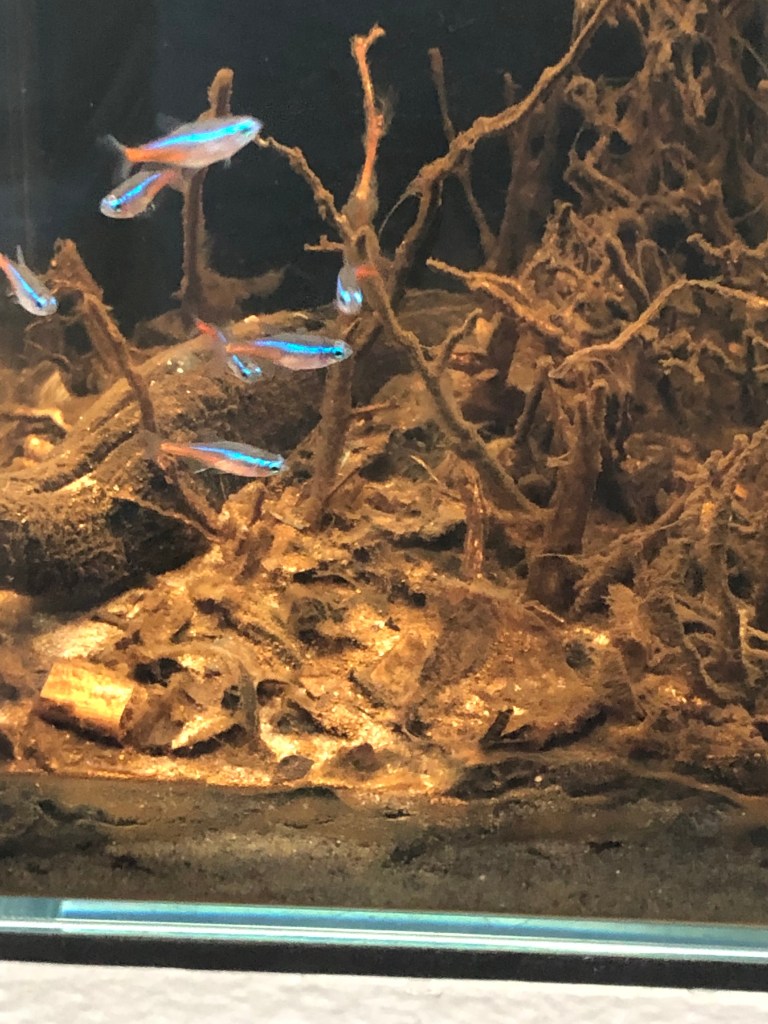
The pace and duration of this process is dictated by the availability of numerous factors, including food resources, temperature, and perhaps- most important- our ability to keep our “hands off” during this time.
It’s okay to go slowly.
In addition to allowing microorganism populations time to multiply the other benefit of patience when establishing a botanical method aquarium is that it gives you time to “get in tune” with your aquarium- to observe it, understand its “baseline” operating parameters, and to make “tweaks” and “edits” to the equipment, hardscape, lighting, etc. A chance for you to get to know your new aquarium…A pretty exciting time, really.
And think about this concept which we discuss a lot around here:
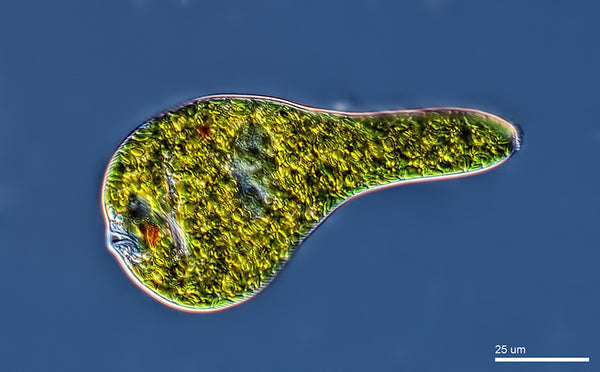
As botanicals begin to break down in the aquarium, they themselves and the organisms which feed upon them become, in turn, supplemental food resources for the higher life forms- our fishes. Yeah, fish spend most of the waking hours of aquatic animals are devoted to acquiring food and reproducing, right? They need to have some food sources available to “hunt and graze” for.
That’s reality.
So why not think about this time while the tank is establishing itself as a time to help accommodate your future fishy residents’ nutritional needs?
And in our world, that might mean allowing some breakdown of the botanicals, or time for wood or other botanicals to recruit some biofilms, fungi- even turf algae on their surfaces before adding the fishes to the aquarium.
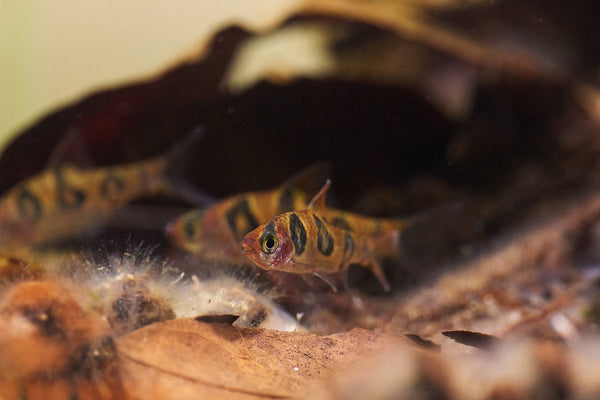
That process- or the time frame it takes to establish it- can’t be rushed.
The very process of creating a botanical method aquarium lends itself to this “on board supplemental food production” concept, as we have discussed many times here. We are essentially helping to establish a of a sort of “food web” in our tanks that’s pretty analogous to those found in Nature, right?
And it plays right into the work that we regularly do as botanical method aquarium fans… Hardly a radical concept in our world; merely a simple “mental shift” that we can in the way we look at our typical way of establishing an aquarium.
Sure, short cuts are exciting...appealing, even- if we look at the whole goal as achieving some pre-ordained “checkpoint” in our aquarium’s lifespan. However, we need to look at them for what they really are.
They are band aids, props…”hacks”, if you will.
But they are not the key to establishing a successful long-term-viable botanical-style aquarium. Ultimately, Nature, the ultimate “editor”- has to “approve” and work with any of the “boosts” we offer.
Nature dictates the pace.
We simply follow her lead.
We employ practices, such as preparation and placement of our botanicals- because they are measured steps on a long road.
Are you an “impatient fish geek?”
Be honest.
I ask that not to get some secret marketing data I can use to exploit your psychological weaknesses for my vendor friends’ nefarious purposes (hmm..but that does sound like an interesting idea..), not to chastise you just “because.”
Rather, I’m curious because, as I asserted before, I think that most hobbyists are not.
Usually. Okay, maybe- sometimes…
As aquarists, we’re taught that nothing good ever happens quickly in a fish tank, and I’d tend to agree with that. Most of us don’t make really rash decisions, and go crazily into some tangent at the first sign of an anomaly.
However, as consumers, I think us fish geeks do sometimes make things happen quickly with last-minute purchasing decisions! We tend to deviate just a bit from our normal patient attitude and “long game”, and often go “off plan.”
We get a bit...impulsive!
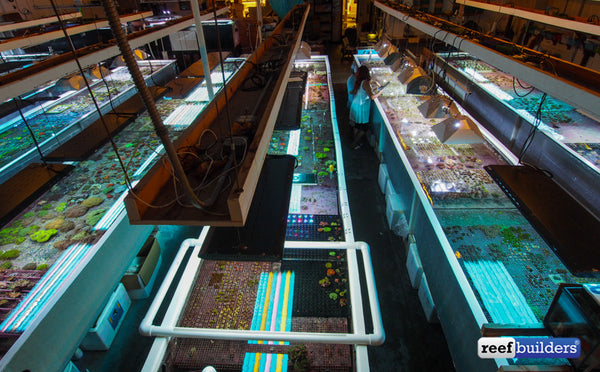
When I co-owned coral propagator Unique Corals, I dealt with lots of hobbyists every day who were buying corals and fishes, and I was often surprised at the rather odd additional purchases that people make to “fill out” their orders- you know, to hit free shipping, get an extra piece of coral to share with a friend, or just to “scratch that itch” to try a new species…It happened just often enough to make me think that fish geeks are not necessarily impulsive, but that we are “strategic.”
In other words, the purchase may not be something we would start our order with, but it “justifies” purchasing at the end in order to hit that free shipping number, etc.
Logical, on the surface, right?
Yeah.
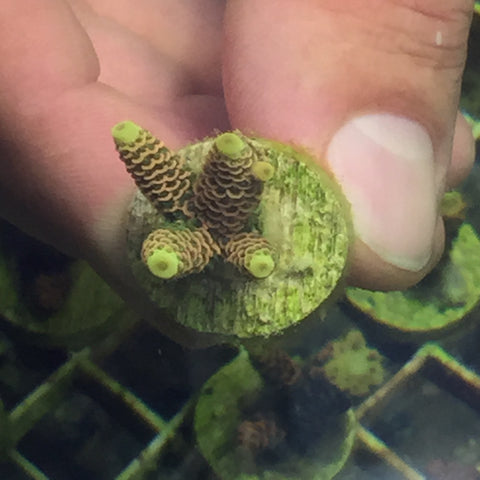
However, being a lifelong fish geek and student of the “culture” of aquarium keeping, I think many of the reefers I dealt with really wanted that extra piece in the first place. A lot of times, they’d mention, in passing, at the end of an order or other conversation, “So, are those Montipora really that hard to keep in good color?”
I would always get a sneaking feeling that they intended buy the coral anyways, and maybe just needed some “assurance” that it was a cool piece, or within their skill set to maintain, or something like that. The “impulse buy” was almost always something totally unrelated to their primary order (for example, 5 zoanthids, and then an Acropora frag added at the last second)!
So very like us fish geeks, isn’t it?
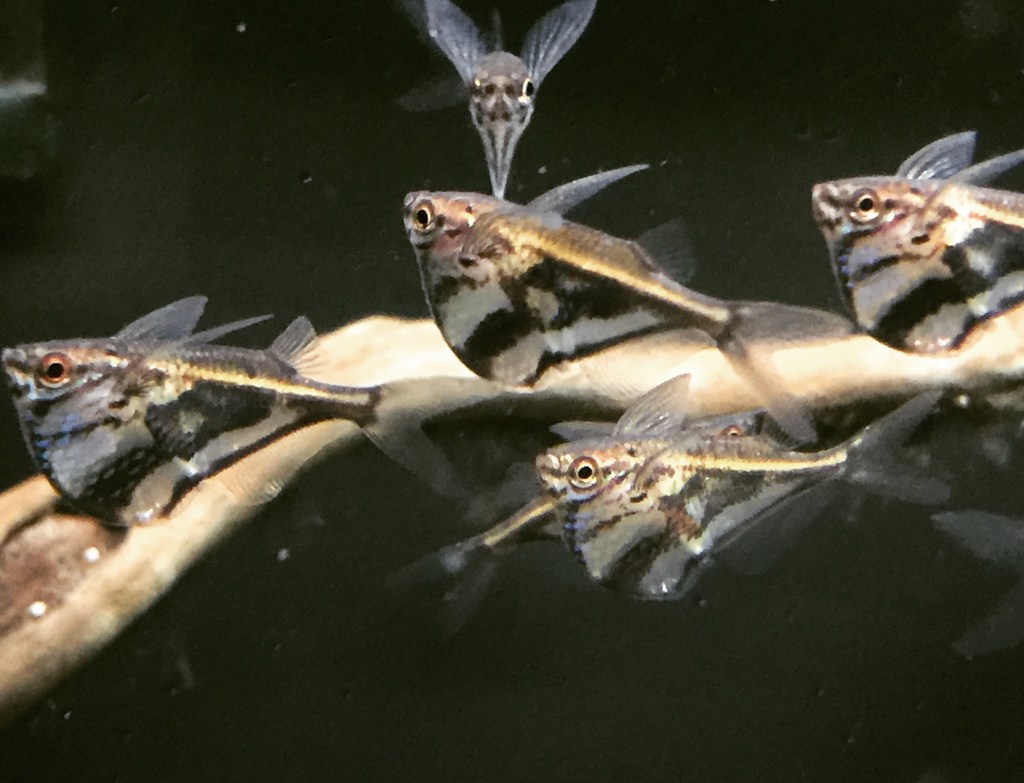
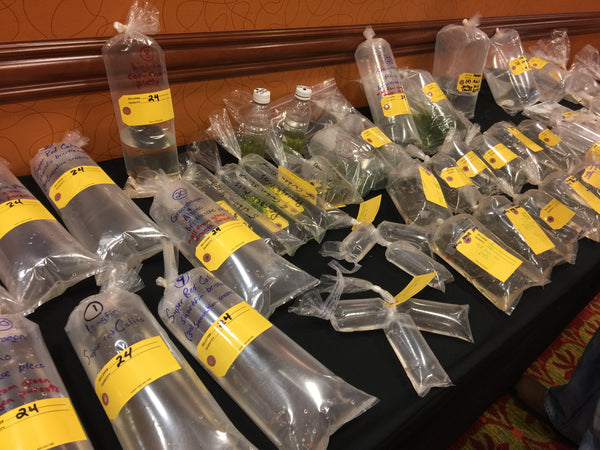
You see this at fish club raffles all the time- when the hobbyist who’s bred like 300 species of fishes and swears that she’s done trying new ones- ends up feverishly bidding for some obscure cichlid or characin in the heat of the moment- always done under the pretext of “helping the club out”-seemingly casting aside her self-imposed “mandate” NOT to get any more fish!
And then, of course, there are those of us like me, who are the polar opposite of this:
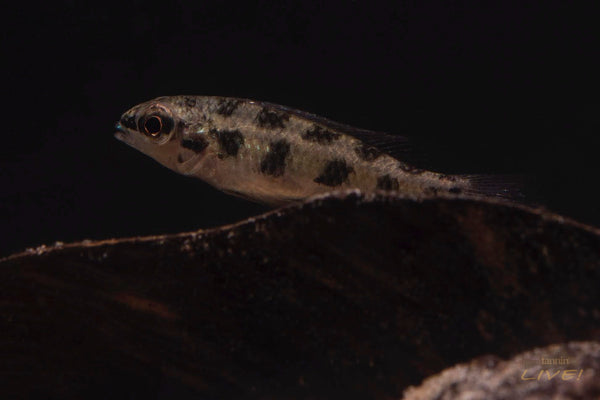
I recall driving my LFS employees crazy when I was younger, because I’d spend literally hours in the store, scrutinizing every aspect of a fish before I’d pull the trigger…or not (that must be why I drove ‘em crazy!). I would look at every fin ray, every gill movement…I’d look at every “twitch” and “scratch” the fish performed and correlate it with known disease symptoms versus regular behaviors for the said species…
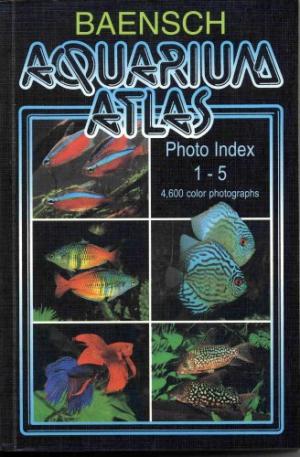
I would sometimes even bring my reference material (like Axelreod’s or Baensch’s books and maybe the early Albert Thiel stuff after the dawn of the “reef” age, notes from Bob Fenner’s books in my hand later on), and would just geek out.
Yeah. Weird.
Of course, I would second guess everything the LFS guy said because “the books” said otherwise, even though the employees worked with these animals every day of their lives, and could give incredibly accurate advice. My first brush with aquarium-keeping “dogma”, I suppose. Ironically, it was my own!
I was a complete fish dork!
My, how things change! (well, the “dogma” part…I’m still a dork, I think…)
I knew at an early age that I’d never be an “impulsive fish geek.”
I learned patience right away.
I think that in my case, it might have come about because, when you’re a kid, you have a 10-gallon tank and $5.67 in change that you’ve painstakingly saved for months to spend. You need to be absolutely sure of your purchases.
I was very thorough!
Even as an adult, with a 225-gallon reef tank, and much more money to spend, I still found myself doing the same thing (okay, maybe with my iPhone in tow, instead of some well-worn reference book).
It could take me like a year to stock a 50-gallon tank fully…
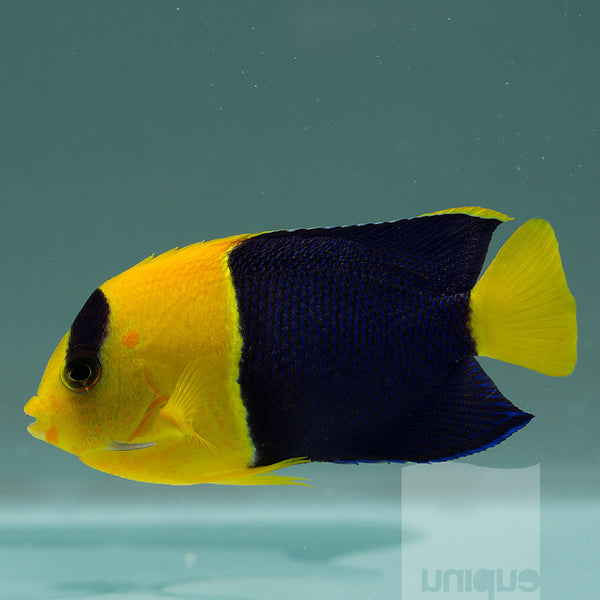
You should have seen me when I would go to the wholesalers here in L.A….it could take me half a day to pick like 5 fish! At Unique Corals, we worked with a lot of collectors and mariculturists overseas..However, we had built up personal relationships to the point where these guys more or less knew our tastes, and would often throw the fishes in the boxes with corals, so that was actually easier than going to the wholesaler’s facility! (well, better than sending ME there, anyways!)
This “anti-impulsive” thing isn’t just limited to fishes, in my case…
Equipment choices are even more subject to analysis and absurd scrutiny, because, hey- how often do you purchase a heater, floss filter roller, or a lighting system? ( OK, wait- don’t answer that). But seriously, when you’re sending the big bucks on a critical piece of life-support equipment, you want to get it right!
One of the things I love most about the internet is that most sites will analyze the shit out of almost anything, from an algae magnet to a new aquarium controller.
Useful stuff for many of us- essential for anal-retentive fish geeks like myself.
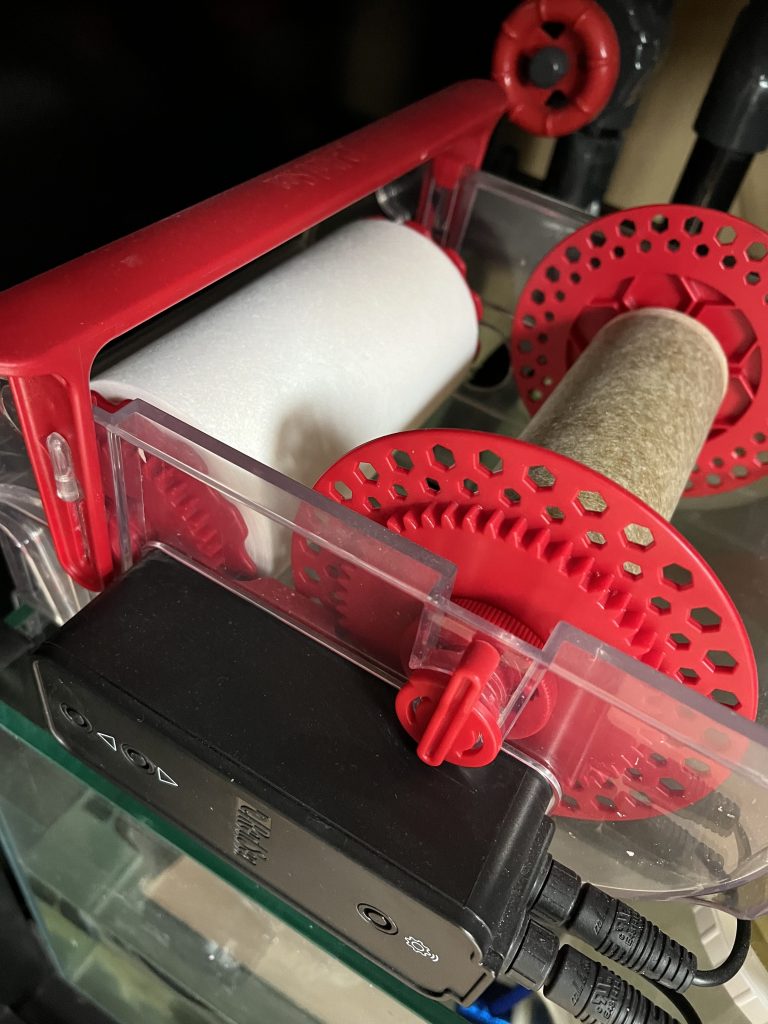
Of course, impulsiveness can permeate every aspect of being a fish geek, including setup and configuration of your tank. I may not be overly impulsive in terms of additions and purchases, but I CAN be “spur-of-the-moment” on tank decisions.
What exactly do I mean by “tank decisions?”
For example, I’ll be scraping algae or some other mundane maintenance chore in my tank and suddenly, I’ll notice a rock or driftwood branch that seems “not right” somehow…”Hmm, what if I move this guy over here…?”Of course, this almost always leads to a spontaneous “refreshing” of the aquascape, often taking hours to complete.
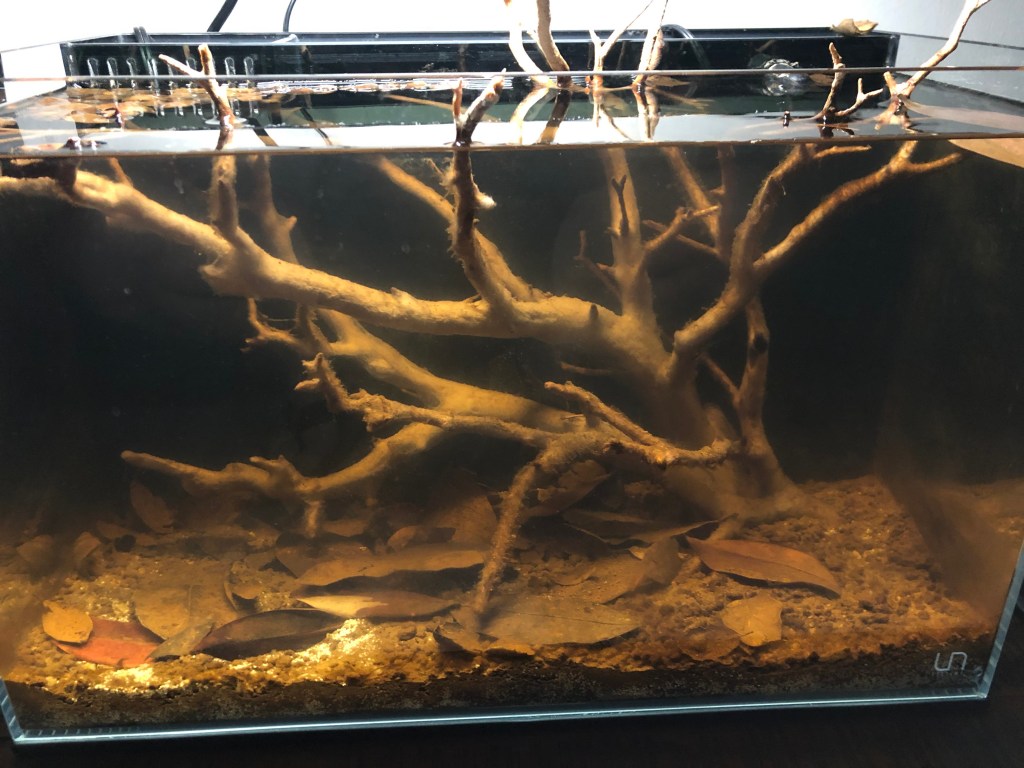
Somehow, I find this “relaxing.” Weird. So it’s entirely possible to be analytical and calculating on some aspects of aquarium keeping, and spontaneous on others.
I believe that this dichotomy actually applies to many of us.
And of course, there are aquarists who are entirely impulsive, which is why you see entire 200-gallon tanks full of every fish imaginable, with selections from all over the world poking out from every nook and cranny. (Or, as one of my hardcore “freshwater-only” friends asserted, “That’s why there are reef tanks…” Ouch! )
Of course, I cannot, in all honesty, say anything truly negative about impulsive hobbyists because some of these types kept me in business for years, lol!
The “long game” is familiar to many of us…and of course, so is the love of the “impulse buy” or “quick-reconfigure.” And of course, I couldn’t resist analyzing the hell out of a seemingly arcane topic like this. After all, I am your “morning coffee” or “afternoon tea”, as I’ve been told- right?
So, stay impulsive, while staying patient simultaneously…Stay crazy, motivated, fun-loving, adventurous, and just a bit weird.
And, yeah- we all need to preach the one fundamental skill for which there is no “hack”- patience.
Patience.
Focus on patience, responsibility, and the acquisition of basic aquarium fundamentals. The real values that the hobby cherishes. Honor them. Hold them up. Scream them from the highest mountain. Teach them tirelessly to newcomers to the hobby.
Stay vigilant. Stay persistent. Stay patient.
And Stay Wet.
Scott Fellman
 The Tint
Leave a comment