
You know…
You can use leaves and botanicals which you can collect yourself.
I have a lot of people ask me if they can use “such and such” a leaf or seed pod, or whatever they collected nearby -in their aquarium. And quite frankly, for many items, my thinking is that you should give them a try…conditionally.
Consider stuff like oak.
Oak trees represent a true “one-stop-shop” for botanical method aquariums. Finding a fallen oak tree stump on a riverbank or lake shore yields rugged, incredibly durable root structures. They release an excellent amount of beneficial tannins and humic acids into the water
Why Oak?
These are some of the best materials to use because, IMHO, they not only contribute to the physical structure of your tank- they also impact the ecology and water chemistry in significant ways as well. They are all surprisingly durable, long-lasting, and aesthetically pleasing, too!
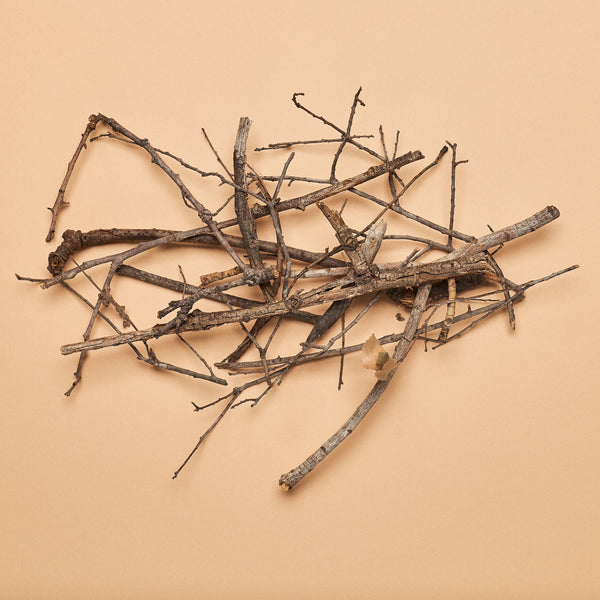
Oak twigs and branches absorb water and begin to impart tannins, lignins, and other compounds into the water. Not only will you notice a visible “tint” to the water when you utilize oak branches and twigs, you’ll have a perfect “substrate” upon which biofilms and fungal growths can colonize.
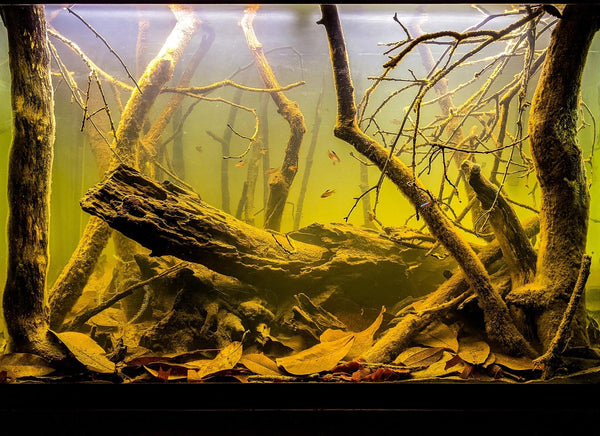
The other beauty of oak is that you can collect these materials yourself, if you have a source of them nearby!
Oak belongs to the genus Quercus, of the beech family (Fagaceae), with almost 500 species. A large and diverse genus, which, according to Wikipedia “is native to the Northern Hemisphere, and includes deciduous and evergreen species extending from cool temperate to tropical latitudes in the Americas, Asia, Europe, and North Africa. North America has the largest number of oak species, with approximately 160 species in Mexico of which 109 are endemic and about 90 in the United States. The second greatest area of oak diversity is China, with approximately 100 species.”
So, in plain English, Oak is found across a broad swath of the planet, making it one of the most readily available and accessible botanical resources for hobbyists worldwide. The fact that you can collect them yourself if you can source them is a huge plus!
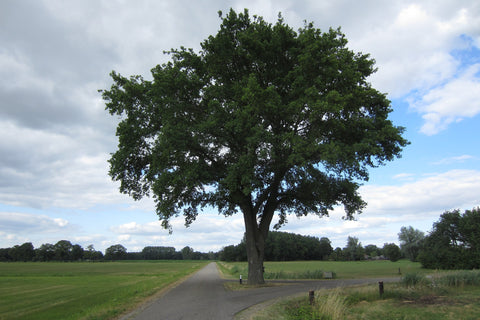
(Image by Jurgen Eissink -CC-by S.A. 4.0 )
Now, like any botanical, sourcing and preparation are important considerations with oak-derived materials. Regardless of whether you collect them yourself, or purchase them from a well-regarded vendor, you’re going to be working with materials that are essentially clean and non-polluted. Which means that preparation is going to consist of steeping or boiling leaves, and steeping or (if you have a big enough pot or vat) boiling of twigs/branches.
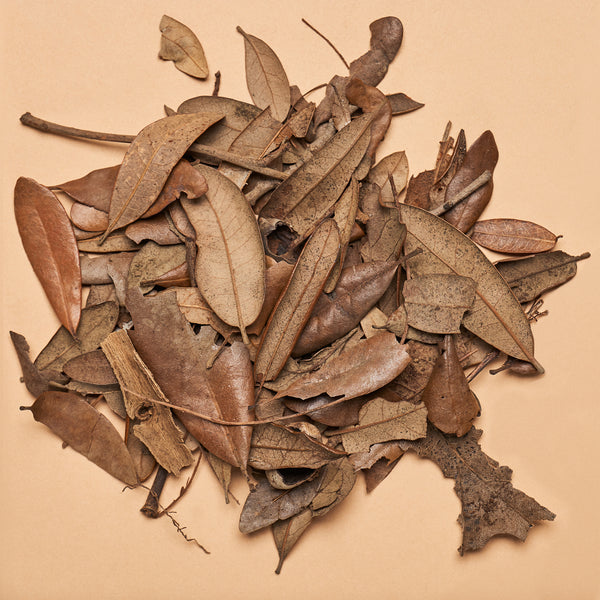
I love creating tanks in which the “hardscape” consists mainly of twigs and small branches. Oak is the perfect “provider” of these materials, BTW. It keeps things simple and easy.
The beautiful thing about this idea is that you don’t necessarily have to use 12 different varieties of branches and such to create a remarkably complex and interesting scape. Just oak!
Oak twigs and branches, and oak leaves are pretty much all you need for a sweet botanical-method aquarium, IMHO.
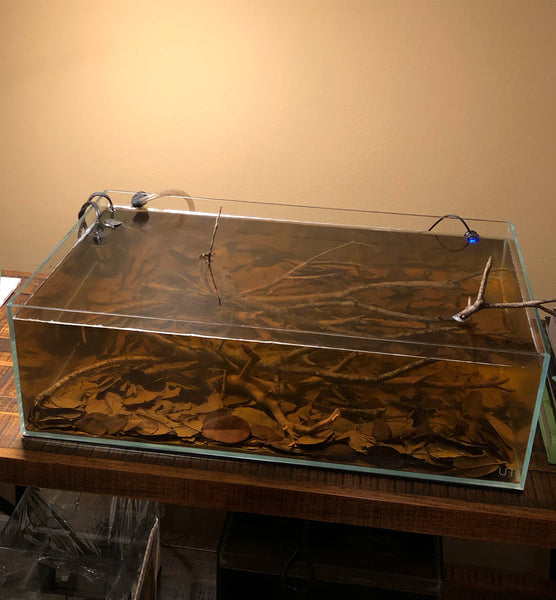
It’s not just about then aesthetic, of course.
The idea is that you’re creating a matrix of these materials to impart a very natural and interesting look to the aquarium. These aggregations provide fishes with hiding places, foraging areas, and spawning sites, just like they do in Nature.
And then there is the Alder tree. Found abundantly in North America and Europe, these trees- or rather- parts of these trees- have long been utilized by aquarium hobbyists. While people frequently harvest their cones, the root systems and branches of fallen, dried alder trees are fantastic for our purposes! They are slightly less dense than oak but possess highly “detailed”, networks of fine roots, perfect for small fish to graze upon and shelter amongst.
What about live stuff…like grasses, for example?
We’ve talked a lot about flooded forest floors and inundated meadows in the tropical regions of the world, specifically South America and Southeast Asia. Being terrestrial habitats, these forest floors are often covered with shrubs and grasses, many of which are not typically available in the aquarium hobby.
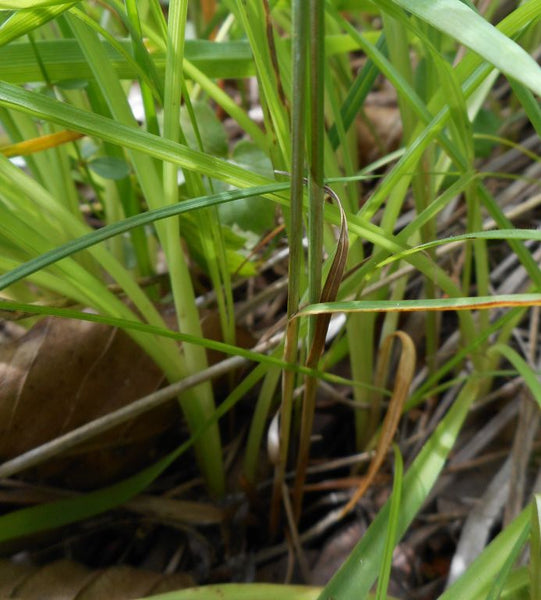
Grasses, such as Paspalum repens, a common species found in South America, and several other grasses, are quite abundant in these habitats, and are most resistant to prolonged submersion.
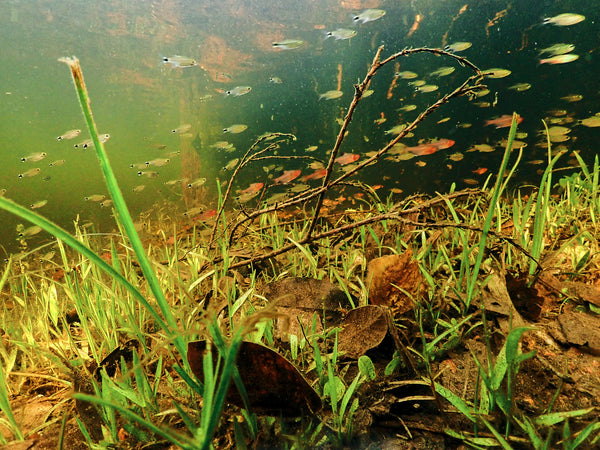
Now, there are species of Paspalum which are available as seed in many parts f the world, particularly North America and Europe. You absolutely can grow these and utilize them for the “role” of (“generic”) “Panatanal grasses” or “forest grasses” in your displays. Many of them are remarkably tolerant of submersion for brief periods of time!
Now, my other “challenge’ to plant lovers in general: Let’s figure out which terrestrial plants can tolerate/grow/thrive under submerged or partially submerged (blackwater) conditions. Perhaps a more “realistic” (not in the hardcore “biotope aquarium contest” context, of course) avenue to explore in this regard?
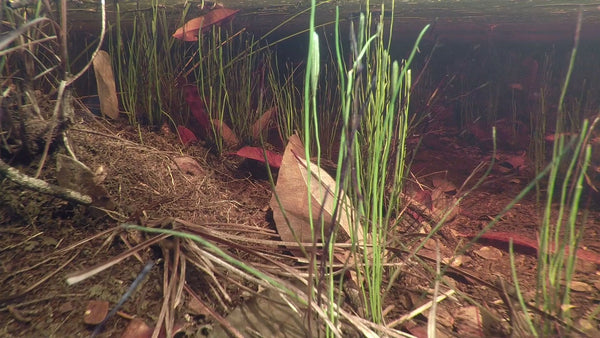
I’ve got one tree for you to research…the dominant terrestrial plant in the South American flooded forests is Eugenia inundata… Don’t think I’m not well underway in my (somewhat futile) efforts to see if I can secure fallen leaves of THIS plant! You’ll also find Iriartea setigera, Socratea exorrhiza, Mauritiella aculeata palms in these areas..
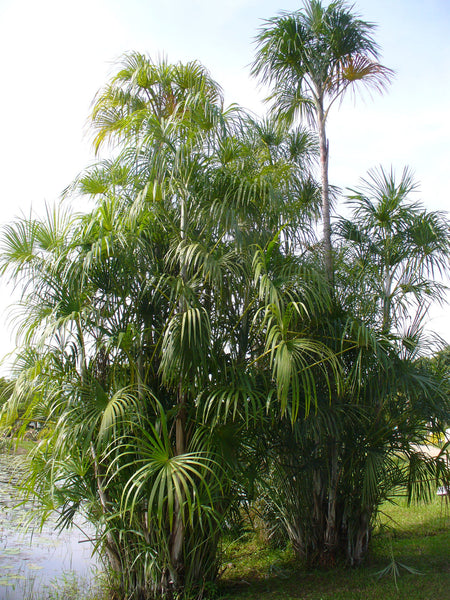
(Mauritiella aculeata – Image by pixel too used under CC BY 2.0)
Like so many things from the Amazon, it’s not easy (read that, damn near impossible) to secure botanical material from this region, so the proverbial “Don’t hold your breath waiting for this” comes to mind! Oh, and the submerged grasses we see and drool over in those underwater pics from Mike Tucc and Ivan Mikolji of these habitats?
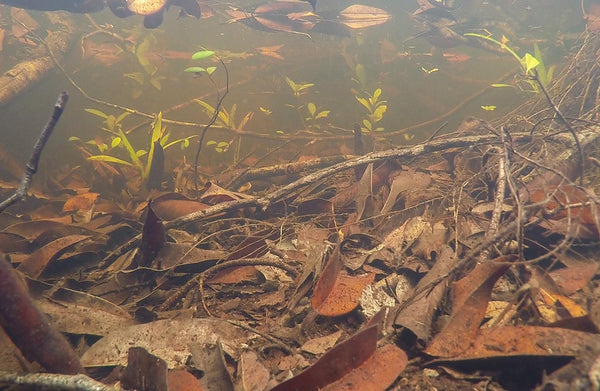
Again, they’re typically Paspalum repens and Oryza perennis.
And we DO have access to some species, such as Sedges and other riparian or semi-aquatic/bog plants from genera that are found in these regions, such as Papyrus (Cyperus), Acorus, Orzyas, etc. These are surprisingly popular plants in the pond hobby, and for the purpose of recreating one of these seasonally-inundated habitats, they’re near perfect!
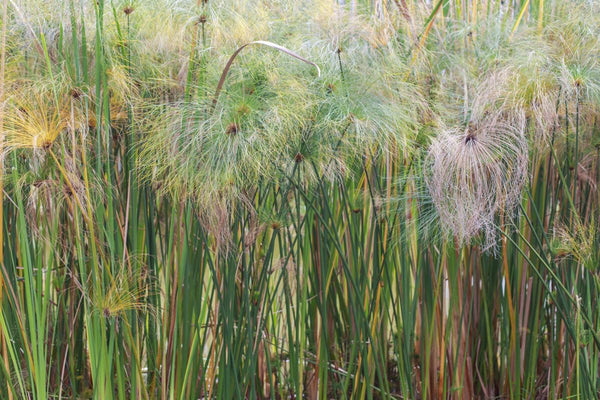
Since many of these plants tolerate submersion for extended periods of time, they are of great interest to many of us for use in our aquariums. Of course, part of what interests me is that these are generally very hardy plants.
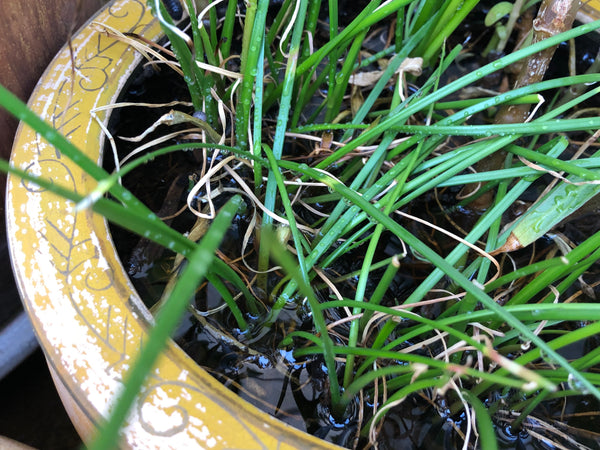
There are numerous species more commonly available from commercial nurseries in North American and European nations, so creating realistic representations of these habitats in our aquariums is more attainable than ever!
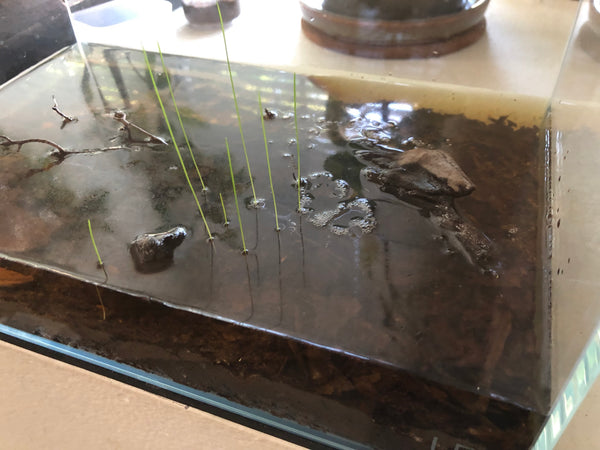
Now, with this in mind, there are also lots and lots of possibilities for creating unique aquatic displays with what I would call “aquatic analogs” of these grasses and shrubs. In other words, incorporating some true aquatics to replicate the “look” of the flooded forests using representative species.
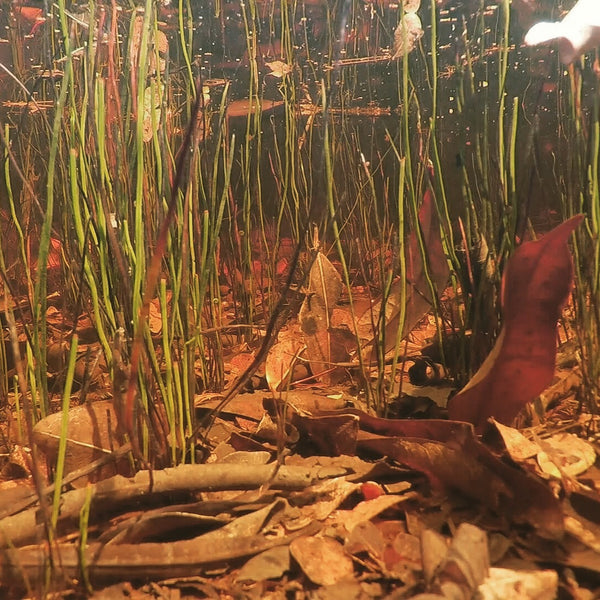
I freely admit that this is a total “cheat”- but when you think about it, it’s a pretty good method that can be employed if you want to represent the inundation period for the theme of your aquarium, and aren’t able to secure or grow the terrestrial/semi-aquatic analogs to the species found in these habitats.
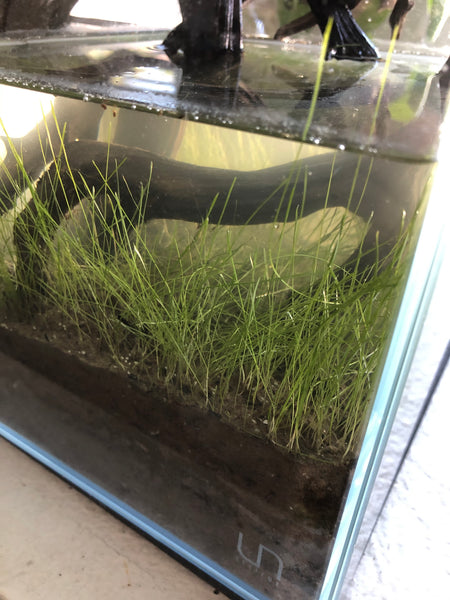
So, I’m thinking about plants like Echinodorus tenellus, the “Pygmy Chain Sword”, which grows in a most “grasslike” state, and certainly is representative of the grasses one might find on a flooded Panatanal or forest floor habitat in South America.
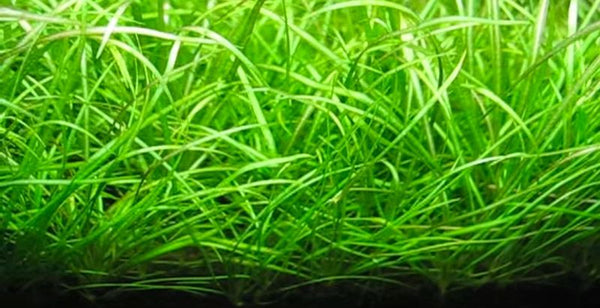
It’s not hard to cultivate a little section of these plants in your representation of a flooded forest, and drop in a few leaves and botanicals, and achieve a relatively realistic-looking facsimile!
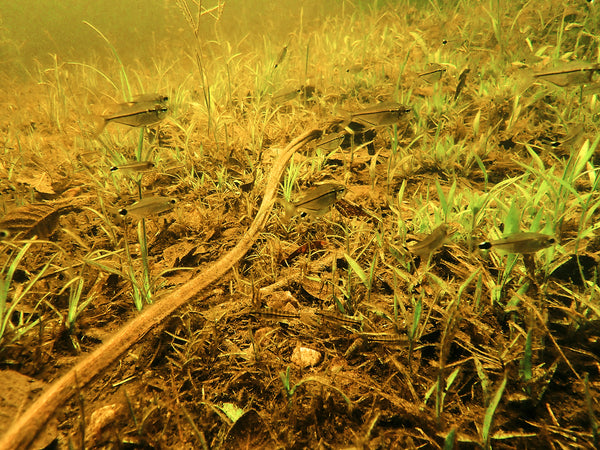
Another great candidate that has a sort of “generic tropical terrestrial grasslike” appearance would beCryptocoryne parva. This diminutive plant actually can be grown emerged, so for “semi-flooded” igapo or varzeabiotope aquariums, it would be really adaptable! And when submerged, it bears strong resemblance to Paspalum or other tropical, submersion-resistant grasses. (It’s the plant in the foreground in the below pic, BTW)
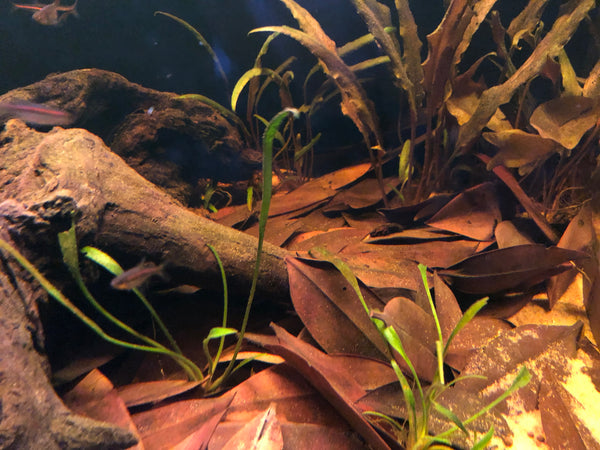
I suppose the old fave, Sagittaria, could also be employed for this purpose, but some species can achieve a larger size and perhaps ultimately be not as realistic, so you’d need to choose carefully. More exotic, but readily available as tissue-cultured, would be the beautiful Lilaeopsis mauritiana, a beautiful species often called “Micro Sword” for its appearance and size.
And of course, since we’re representing a flooded forest floor or meadow, with patchy growth over rich soil and leaves, you likely don’t need to have the full-on green lawn that planted aquarists strive for so ardently! A little bit of “open space” and some twigs, roots, bark pieces, a few seed pods, and exposed substrate and you’re well on your way to creating a remarkably cool tank!
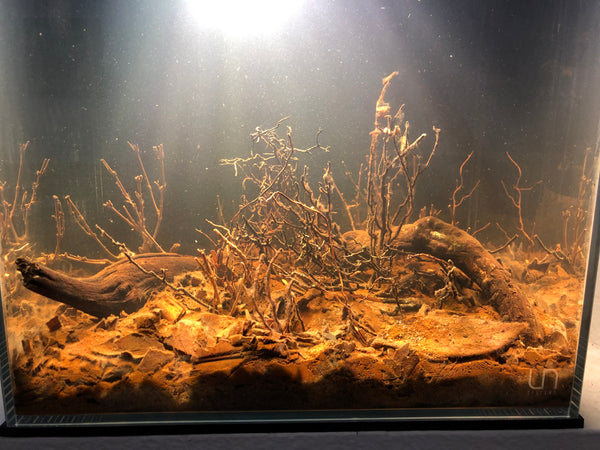
Just plant some of it here and there in such a tank, and….well, yeah, you get the idea, right? 😆
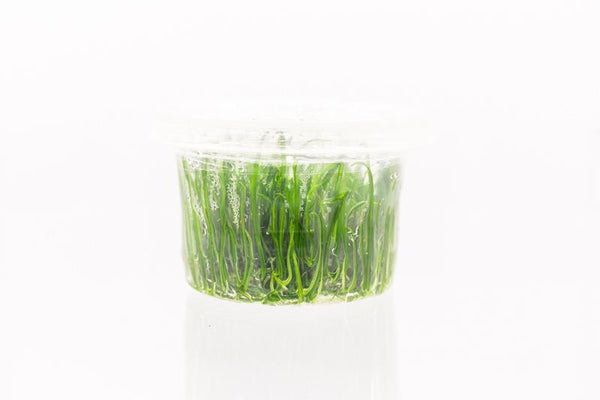
Again, since the intense growth of aquatic plants isn’t the primary focus of such a display, you have a tremendous amount of “latitude” over their care when working with them in this manner! You don’t need to go nuts with CO2 or massive and complicated fertilizer regimens. A good aquatic soil, sand, and or other media, accompanied by good lighting is all you need.
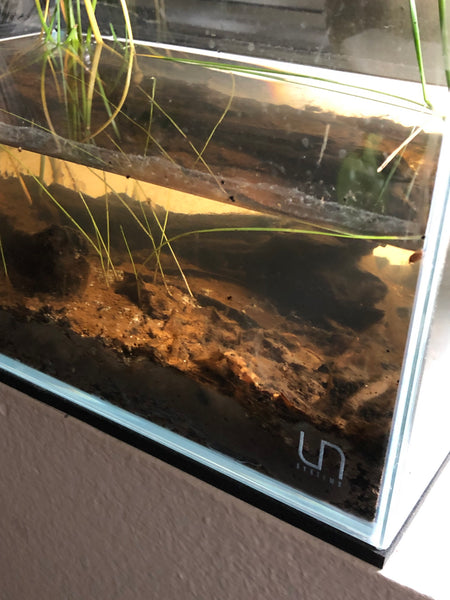
Employing a good cover of leaf litter, along with selected botanicals, you could create a very realistic representation of these habitats in your aquarium!
I think that despite the fact that this is sort of “cheat” (and yeah, it most definitely IS! ), you could certainly create a pretty faithful representation of these unique habitats, and inspire further research into them.
You need not be “hamstrung” by not being able to source or obtain the actual terrestrial plants found in these habitats…you could always turn to “aquatic analogs” for a good start!
So collecting your own stuff and sourcing analog plants and grasses is not only fun- it’s often economical and very educational.
Now, part of the “education” includes identifying what materials you can collect and use in aquariums. Some is known- and some will require experimentation! It all starts with identifying what you’re working with.
Proper identification is an important part of utilizing botanical materials in your aquarium. I’ve tried a lot over the years, believe me. Ive generally had plenty of success with no real bad outcomes to speak of.
And again, I say go for it, if you can!.
Keep in mind that I am in The Western U.S., (Los Angeles, CA area) and this is written from the context of materials and such consistent with what is really available in North America or Europe. Obviously, if you live in tropical Asia, Africa, or South America, there are different nuances to this.
So, disclaimers aside- there are a few general words of advice we have for you if you are going to collect your own stuff:
-Make sure that you are legally permitted to gather the materials that you’re considering, and that you aren’t trespassing on someone else’s property while doing so.
-Make a positive identification of the botanicals that you’re going to collect. A good “nature guide” or field guide to plants of your region can really help. And there’s there are these things called “Google” and “Chat GPT” that might work well, too. Don’t be lazy.
-Confirm that the area you are collecting from is not sprayed with pesticides or subject to runoff from other toxic substances or pollutants. This is super important! If you’re not sure, just don’t grab them. It’s simply not worth it, IMHO.
– Collect the botanicals you’re focusing on as naturally-fallen materials. This is particularly important with leaves, as we’ve discussed many times in this blog. When leaves fall naturally, they have consumed many of the sugars and other compounds which are not beneficial for our aquariums, and actually are more detrimental than helpful.
-Never collect anything from a tree or shrub which is protected, endangered, or otherwise restricted from being disturbed in your area. This is pretty obvious, but we’d be negligent if we didn’t mention it here!
Okay, all of the reality checks aside, what materials can you typically collect?
A lot. We already discussed a few- and I can only touch on a few in this piece- but believe me, there are TONS!
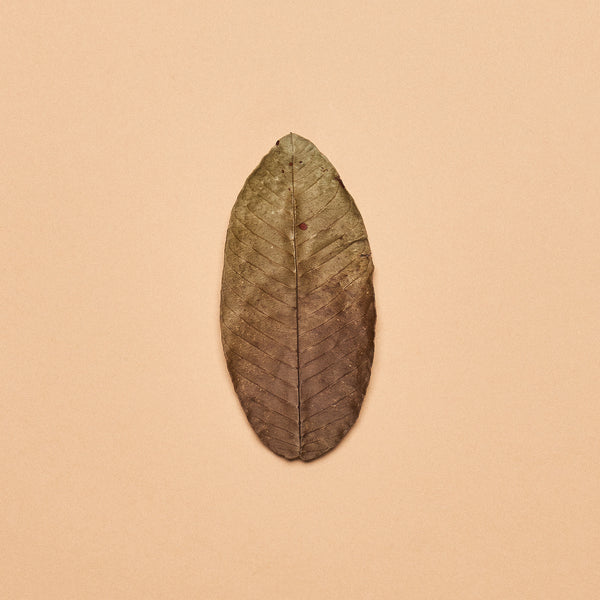
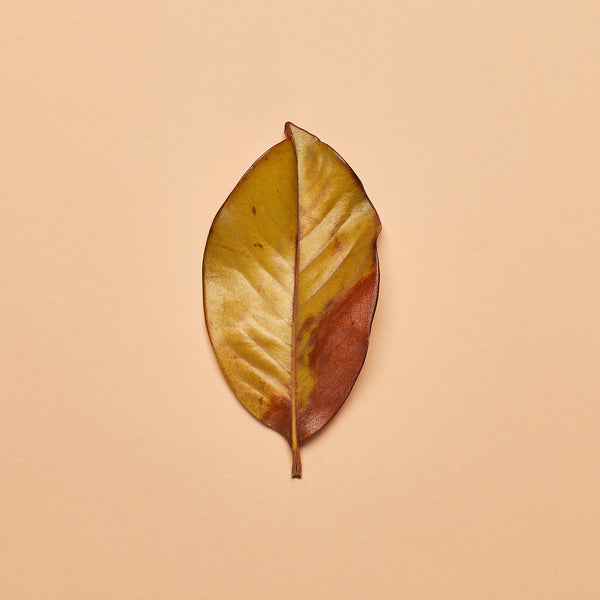
LEAVES: Magnolia is an obvious one for many people in North America. There are plenty of references for identifying the specific species you have in your area. I’ve personally tried a few varieties, and have determined that no one variety is substantially better than another.
The important thing is that you collect them as naturally fallen, not “green”, and that you rinse them and take the time to wipe them off and dry them a bit more before use. Their waxy dermal layer retains moisture, and they can get moldy if packed away too soon after they’ve fallen. The mold is not necessarily harmful, and can typically be wiped away and eliminated via boiling during the prep process, but it is unpleasant!
Beech, Ash, and many other leaves are commonly used by aquarists. At the risk of over-generalizing, numerous species of naturally fallen, dried leaves are perfectly safe for use in aquariums. There are literally hundreds of possibilities here- but I can’t give you the pros and cons on each one. Some may have toxins or oils in their tissues which can be problematic, even deadly. The reality is that you’ll need to research, collect, prepare, and experiment with them on your fishes carefully.
Don’t like the idea of experimenting with your fishes like that? Well, I know a place online where you can get leaves that are “fish safe!” 😆
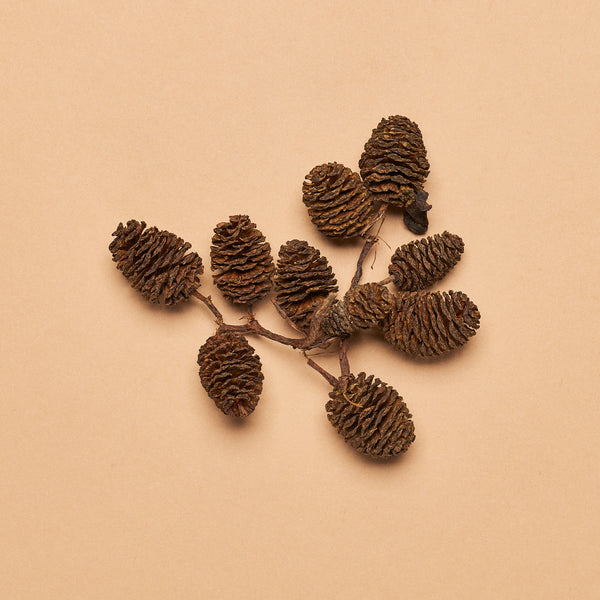
CONES: Some of the most popular botanical materials used in aquariums are cones of various trees: Alder, Birch, etc. Like leaves, there are a lot of varieties out there to choose from; many are safe, but some might not be…So, yeah, it’s on you to do that critical experimentation and safety assessment for yourself. Cones typically need to be collected as naturally fallen, dried, and risked carefully and dried again before use. (noticing a theme here?)
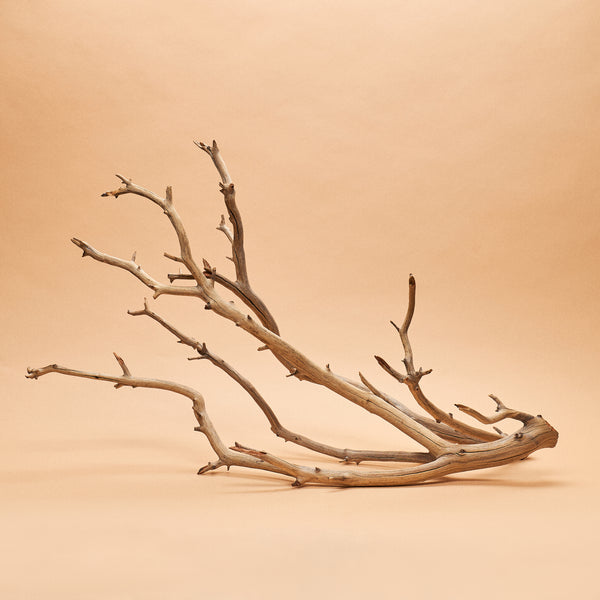
BRANCHES/DRIFTWOOD: Again, there are numerous varieties of trees which yield great results when used in an aquarium setting. The caveats, besides selecting varieties that are not known to be ichthyotoxic, or otherwise environmentally polluting when submerged, are that they need to be properly sourced, collected, and prepared in order to be safe.
What varieties? Again, it’s incumbent upon us as hobbyists to do our homework to determine what’s appropriate. Personally, I tend to avoid trees and shrubs with the descriptors like “Deadly” or “Poison” in them- but that’s just me, lol.
I’ve played with branches, twigs, and roots from stuff like Crepe Myrtle, Azalea, even dried palm roots, with great results. Quite honestly, you can try just about any dried root or weed and be reliably assured of success, with a few exceptions. No guarantees, of course- but you have to try!
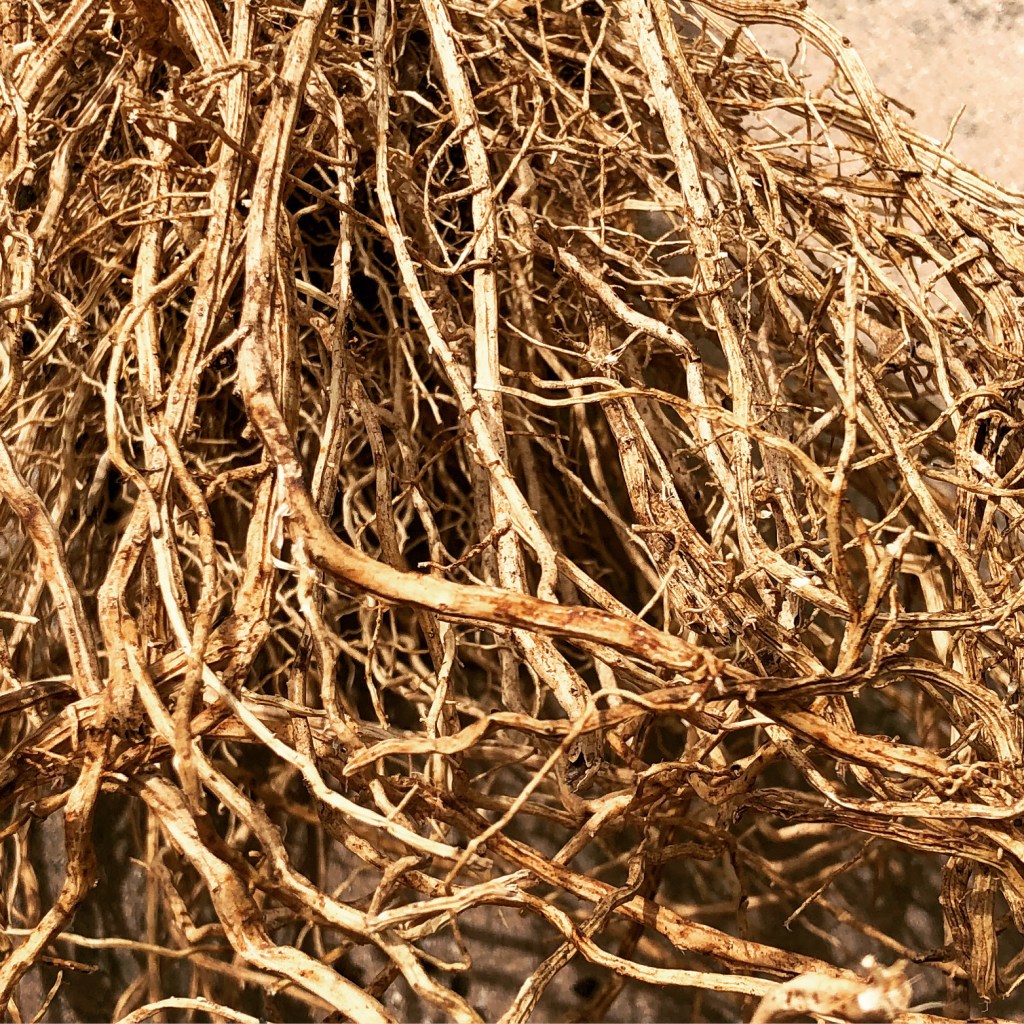
Obtaining dried, naturally-fallen branches, roots, and driftwood, collected legally from pollution-free sources are some of the important factors to consider. Also, bark typically should be removed or substantially stripped, as it often contains surface pollutants or other materials which are not desired in the aquarium.
Oh, and you don’t want to collect wood that is “green”- more or less “fresh”- as it needs to be largely depleted of many of the sugars and other compounds found in fresher woods. Substances like sap are typically extremely toxic to fishes, and any wood leaching sap- regardless of variety, should be treated as “unsuitable.”
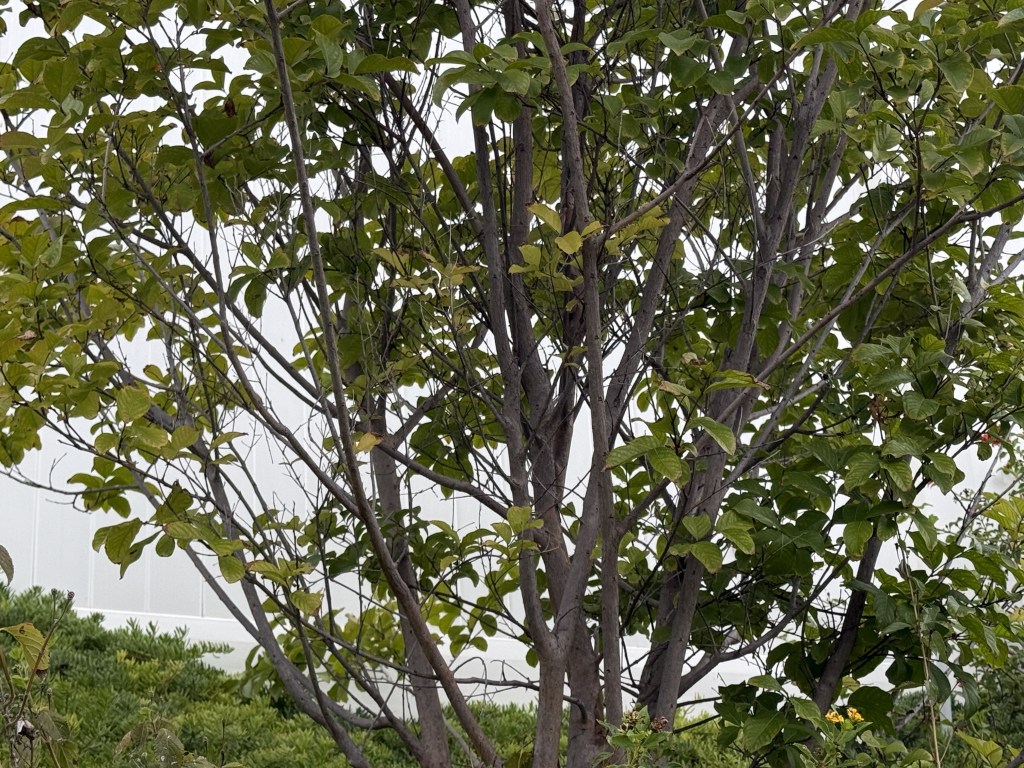
Yes, this is hardly the last word on this topic- but I think it’s good start. Collecting and sourcing your own materials is a very interesting and engaging “sub hobby”, IMHO!
I hope that this admittedly generalized, brief summation of collecting your own botanicals and utilizing “analogs” of tropical plants and grasses for aquarium use is motivating to you! If nothing else, I hope that it serves to motivate and inform you that you can collect stuff for your own use. Every neighborhood walk, hike, gardening session, etc. can yield new possibilities! I find myself looking at all sorts of trees, shrubs, and even weeds -with a very open mind!
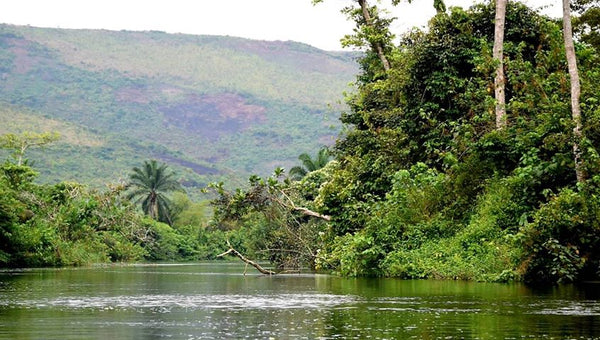
Sure, many of the materials that we play with are from tropical, rather geographically-challenging locales from around the world, and you’re not likely to visit, let alone collect from- these areas.
However, you need not see that as an obstacle!
There are lots and lots of botanical materials which you can legally collect and safely utilize in your aquarium. Hobbyists have done this for many decades! It makes sense that you should seek out readily obtainable free materials for use in your tanks, if only just to supplement the more “exotic” materials which we offer. Not only is it a good way to save some money- it could get you into the “Great Outdoors” and maybe even create a new hobby for you! And it can be educating!
It’s beyond just “collecting stuff.”
It’s important to understand how these materials occur, what benefits they can offer, and how they play a role in the wild terrestrial-and aquatic- ecosystems of the world.
Collect your own!
And, just like the botanical materials you’d purchase, you need to employ common sense, an abundance of caution, and take the time to prepare them before utilizing in an aquarium. And of course, test and add things very slowly, knowing that there are always risks associated with this stuff.
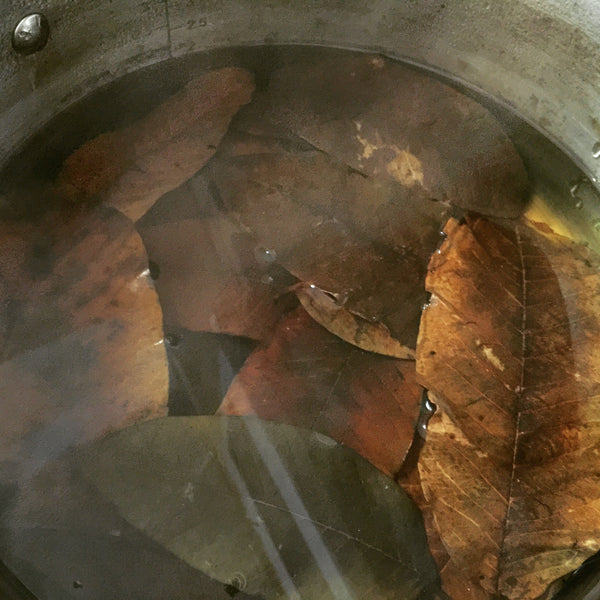
Nothing really new here, right?
Identify, verify, collect, prepare, test.
Be a “hunter-gatherer” of botanical materials for your aquariums, and you’ll be hooked!
Stay adventurous. Stay intrigued. Stay cautious. Stay patient.
And Stay Wet.
Scott Fellman


Leave a Reply