
Yeah, it’s becoming a trend, isn’t it? Me addressing some of the ridiculous stuff I’ve been responsible for introducing into the hobby, and commenting on some of its general absurdities!
One of the interesting things about the aquarium hobby is the rather opinionated positions that we often take about subjects which are near and dear to us. And, sometimes, people can get a bit “touchy” when it comes to their particular area of interest, and they start placing “standards” on stuff.
It gets weird.
Every once in a while, I’ll get into these discussions with other hobbyists about the various minutiae of the hobby…Particularly about areas that I’m fascinated by, of course. Like, oh, I dunno...blackwater/botanical method aquariums, for example! I’m fascinated about how the perception of our “sector” has evolved significantly.
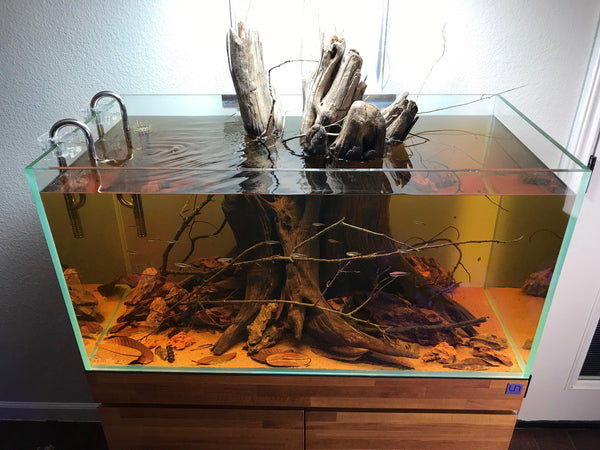
A couple of friends and I had one of those chats recently, and somebody remarked that the term “blackwater” is being used quite a bit nowadays in the hobby – thrown around quite casually, actually.
Which I can’t help but feel just a tiny bit proud of.
I mean, when I started the Tannin in 2015 blackwater aquariums were a “thing”- in that hobbyists were playing with them long before we came along, of course- yet it was a “thing” that tended to be viewed by the greater hobby as more of a “sideshow” of sorts. Something that you would play with that would invite hushed whispers, concerned comments, and even pity from fellow hobbyists when you shared your tank with them.
And the idea of “botanicals” to create in-tank ecology and foster the appearance of blackwater was even more obscure.
I think that I’ve played a small role in bringing blackwater aquariums and botanicals out of the shadows, and encouraging more experimentation with them. The aura of “mystery and danger” that surrounded these types of tanks seems to have abated somewhat. And most of the credit goes to YOU- for giving this stuff a try, despite the “bad press” it received for so long in the hobby.
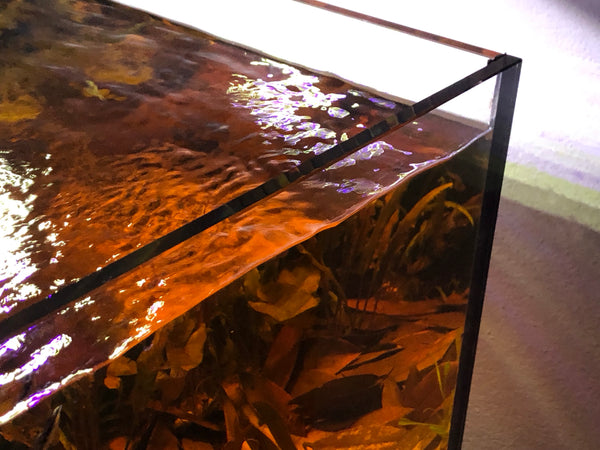
The word “botanical” in aquarium context was non-existent prior to 2015, as far as I can tell. We seem to have a distinct starting point for that in the hobby. And the “botanical method” is becoming much more widely known and practiced in the hobby thanks to the efforts of many of you!
However, the term”blackwater” in the aquarium context has been around for many decades, and is also becoming more and more commonplace, as aquariums featuring these types of conditions are falling more and more into the “mainstream” of the hobby. It’s just a “kind of an approach you take.”
However, as I mentioned above, in the aquarium hobby, people do love to sort of “take possession” of various ideas, techniques, etc., and make a “land grab” for “mind share” in a sense. Suffice it to say, the concept of “blackwater aquariums” is subject to just as much analysis, classification, and discussion as any other aquarium movement or idea.
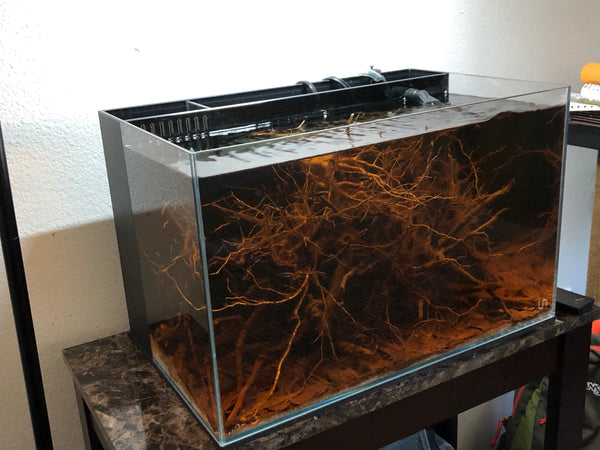
I’ve always been a bit leery of hobbyists “appropriating” for hobby use what have been largely scientific names/descriptors of things…I mean, not always, but some stuff becomes a bit problematic. Don’t get me wrong. It’s important for us to elevate our work; hold ourselves to higher standards to sort of push the “state of the art” of the hobby and educate our community. And sometimes, that involves creating a “language” and “best practices” for what we do, based upon personal and community experience, to provide context.
Makes sense.
Yet, occasionally, it goes too far. We sometimes dig in to a position based as much on third-party information, arrogance, or emotion than on facts gleaned from actual experience or firsthand knowledge. And some people become real jerks about it. The “danger of regurgitation”, as I’ve talked about before, is a very real hobby “thing.”
In the reef aquarium world, where I came from, you learn to be less than cavalier about tossing stuff about if you don’t have the “goods” to back up your assertions, as you’ll typically be challenged by those who do– and the results aren’t pretty, trust me.
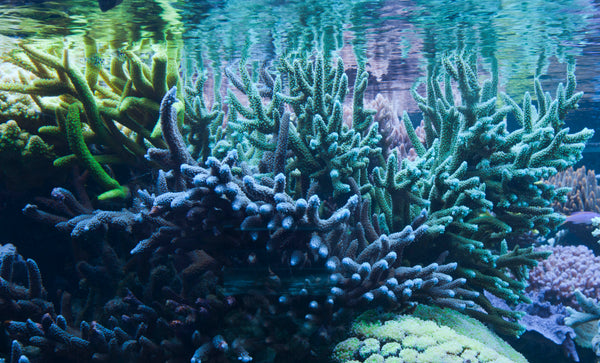
For some reason, in the reef side of the hobby, in addition to pure hobbyists, you have a lot of scientists who also happen to be reef hobbyists, and many take great pains to compel us to instill accuracy in things we all do, while still understanding that it is supposed to be a hobby...They’re super cool and helpful.
Still others are incredibly offended by us non-scientists even using scientific terms or concepts to describe stuff, and will just level you in forum discussions if you assert an opinion that is contradictory to what they know from their work. These discussions can get ugly, too: “You know that Vanadium is only found in seawater in concentrations of 0.0003 ppm, and that can only mean…”
Yeah, that hardcore. It’s weird. Shit can get ugly real fast.
However, it instills in you, as a hobbyist, not to casually toss around scientific terms and ideas if you don’t have a really good handle on them. Which is kind of good, because it does help limit at least some of the B.S. that gets tossed around out there, and elevates the hobby.
There is always a place for hobbyists sharing opinions, experiences, relating finds in scientific literature, and even offering theories about various topics. As everyday “field researchers”, we can offer a lot!
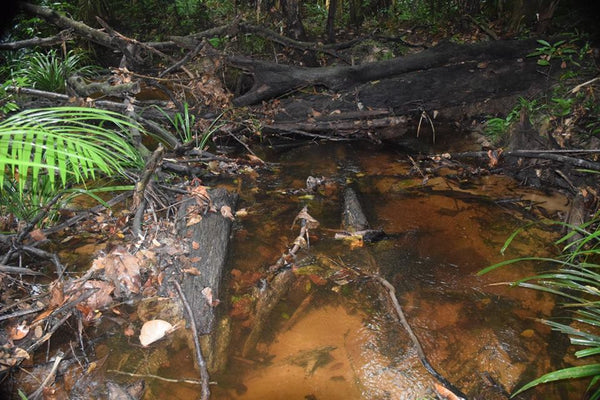
And, in our world, things are perhaps a bit more “open for discussion” because a term like “blackwater” or “blackwater aquarium” doesn’t have a real “official” descriptor, at least in hobby parlance.
I mean, really.
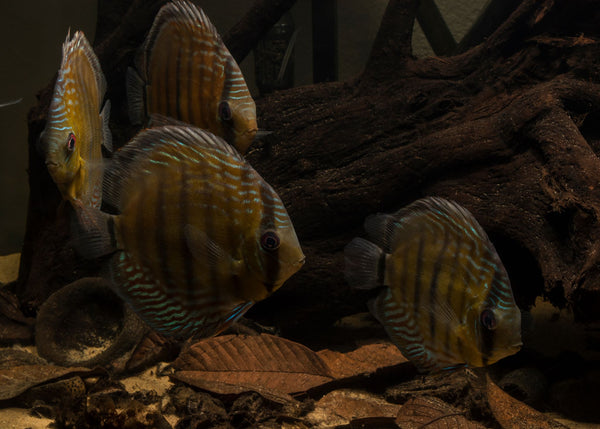
So, when I see us talking about “blackwater”, I feel that occasional pang of “reefer’s remorse” if I think it starts going too far.
I get that familiar feeling…
Sometimes, you need to look at the facts on hand to really get a handle on this stuff. Especially if you’re going to dig in and take a strong position and defend it vehemently.
The reality is that the term “blackwater” as defined in hobby reference literature is a rather vague and somewhat broad definition! To strictly rely on what you find on a quick search in ChatGPT, read in one study, or find in one science book is kind of incomplete.
In fact, you could argue that it’s not really a “scientific” term at all, merely a “catch all” term to describe a set of characteristics of an aquatic ecosystem. A lot of the descriptons, even from a scientific perspective, tend to start out with aesthetic observations- the color of the water, often described as “tea-colored.”
About the most cohesive set of characteristic descriptors I can find anywhere on a casual level indicates that “blackwater” is typically acidic water with low ionic concentrations of sodium, magnesium, potassium, and calcium. It has low conductivity and relatively low concentrations of dissolved solids.
That’s pretty accurate for our purposes, I should think!
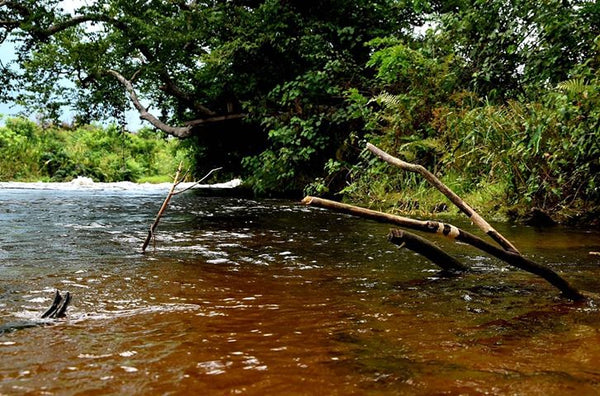
Typically, blackwater occurs when vegetation or other terrestrial materials accumulate in rivers and streams, then decompose and leaches tannins into the water, making a transparent, acidic water that is darkly stained, resembling tea. There are other factors, like soil and geological factors, which contribute to blackwater aquatic systems as well, of course.
Yeah, this is spot-on for our purposes.
And that pH-based descriptor, which hobbyists seem to love to float around as a “qualifier” isn’t all that narrow, either! In fact, it’s all over the place.
Natural aquatic ecosystems that are characterized as “blackwater” can vary in pH from as low as 2.9 to as high as 6.5 or higher. It’s all over the map. I mean, a peat bog in Asia- most definitely a “blackwater ecosystem”- might have a pH of around 3.5, whereas a blackwater river, such as the beloved Rio Negro, might have a pH of around 5.1! And a small jungle tributary might have a pH somewhere in between, like 4.7 or so.
So, yeah.
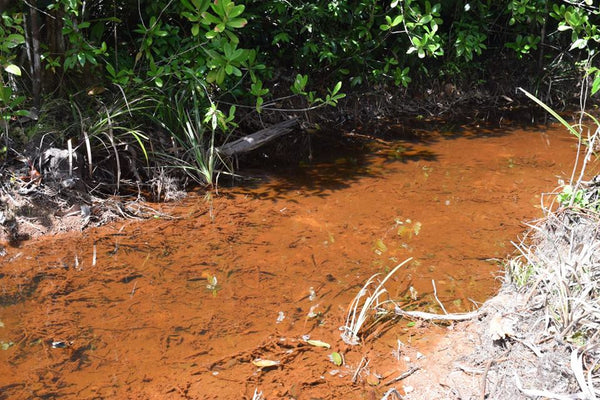
However, if we press on deeper, and get a little more scholarly, we can find out some pretty definitive characteristics which can really help us recreate this type of habitat in our aquariums. But it requires some study and some understanding of chemistry, geology, and biology.
More specialized scientists, like limnologists, who study inland aquatic ecosystems, or biogeochemists, would describe things much more concisely: To them, “Blackwater” describes a highly colored, acidic, oligotrophic aquatic ecosystem dominated by dissolved organic matter (DOM)
They’ll talk about something called “Chromophoric Dissolved Organic Matter” (CDOM). Scientists don’t just see “tea-colored” water; they measure high concentrations of CDOM. This matter strongly absorbs ultraviolet and blue light, giving the water its characteristic dark red, brown, or black hue.
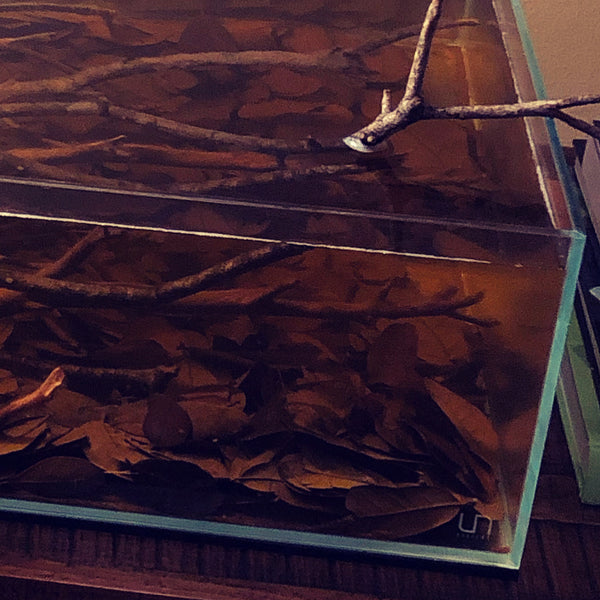
They will also talk a lot about turbidity! Because the characteristic darkness is caused by dissolved material rather than suspended sediments (like silt or clay), blackwater has very low turbidity. It is optically transparent, meaning light can penetrate deeply if not for the color absorption.
And off course, they’d focus on pH, noting that Blackwater ecosystems are chemically distinct due to their high concentration of organic acids (humic and fulvic acids). A scientist would quantify this with a pH typically ranging from 3.8 to 5.5.
The biogeochemists will chime in and tell you that, because these rivers drain ancient, highly weathered sandy soils (like podosols), they contain very few dissolved inorganic ions (like calcium, magnesium, or carbonate). This results in exceptionally low specific conductivity, often below 20 to 30 µS/cm (microsiemens per centimeter).
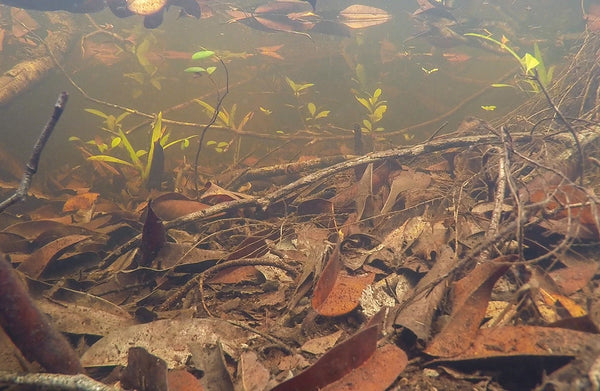
The water is lower in dissolved oxygen, too. The massive amounts of decaying organic matter in blackwater systems fuel microbial respiration. Bacteria consume oxygen as they break down detritus, often leading to naturally hypoxic (low oxygen) conditions, especially in slow-moving sections of streams or swamps.
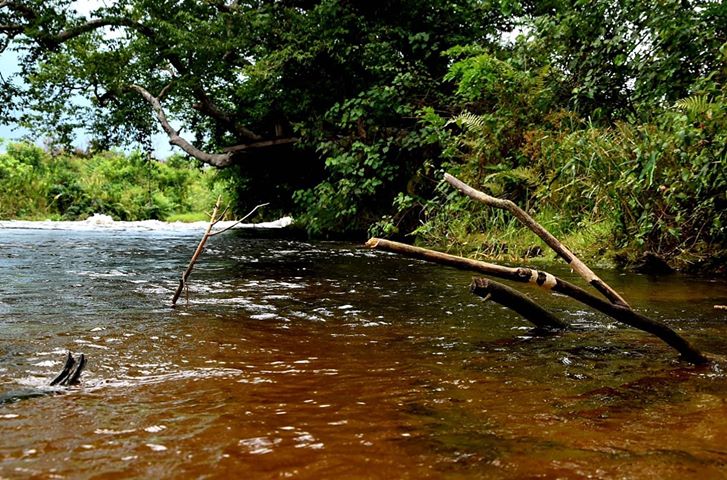
Blackwaters are severely nutrient-limited. Levels of bioavailable phosphorus and nitrogen are literally microscopic. The ratio of Carbon to Nitrogen (C:N) and Carbon to Phosphorus (C:P) is incredibly high. Almost all the carbon is locked up in complex, “refractory” (hard-to-break-down) organic molecules rather than living biomass.
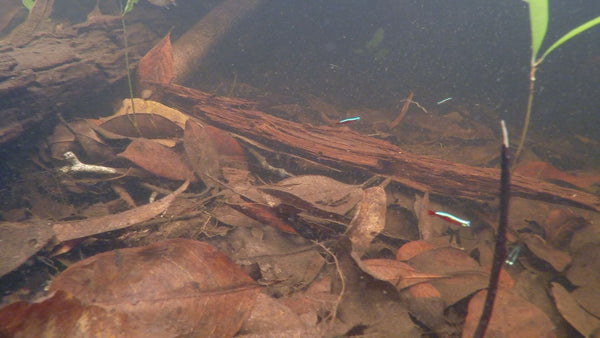
And then there’s the true ecological concept of “food webs.” We talk a lot about them around here, huh? In most rivers, food webs are powered by autotrophic organisms (like algae and aquatic plants using sunlight). Because the dark water blocks sunlight, photosynthesis is severely restricted. Instead, blackwater food webs are allochthonous, meaning they are powered by organic energy originating from outside the river (terrestrial leaf litter and falling insects). We know that word, don’t we?
Yeah!
However, all of this information can be used for good (like, giving us a “roadmap” to recreate these characteristics in our aquairums). or “evil”- like just trashing unsuspecting, yet earnest hobbyists with ad hominum type attacks.
I recently saw a discussion in a European Facebook group in which a hobbyist described his blackwater aquarium- which had darkly tinted water, no real mineral content, and a pH of about 6.2 -arguably meeting the threshold for this moniker- and the guy was just getting slammed by some wise-ass who claimed that these were not “blackwater conditions…”
I mean, just slapped around like you wouldn’t believe.
And I was like, “WTF? Here we go…”
Yes, I sat on the sidelines in that discussion, but monitored the sad and inevitable argument that ensued. I probably should have spoken up. On the other hand, I would have gotten pulled into a real ugly situation, and it would have not changed much. The guy who was attacking was a real jerk…And offered little but attitude, arrogance, and loud bluster to back up his position, which was really not too strong.
And the reality is that, based on the set of characteristics/factors used to describe “blackwater” habitats that we ferreted out above, the hobbyist was being assailed for having tank parameters which definitely fell well within the generally accepted ones that are applicable to “blackwater ecosystems!”
I mean, if we try to apply a specific pH or TDS level to the definition of “blackwater ecosystem”, we’d be woefully inaccurate-or incomplete, at the very least. There’s simply too broad a range to do this.
So, the takeaway in all of this?
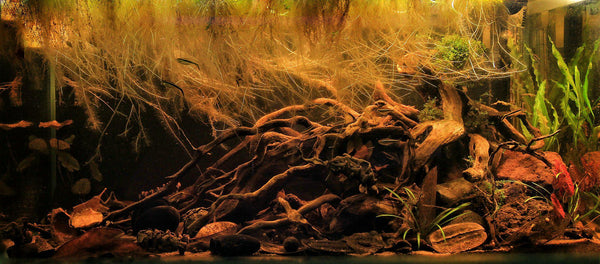
“Blackwater” seems to a have a broad set of descriptive characteristics that are more of a “range” as opposed to a specific factor or factors, and it is irresponsible to try to narrow this description down too much.
And… from a “hobby culture” standpoint:
We need to have a good understanding of what we talk about, and be open-minded enough to accept the positions and information provided by others.
And we need to ditch the pretentiousness. No one owns the damn title of “expert on blackwater aquarium characteristics” or whatever. Sure, some people might understand more about specific topics than other do, but your obligation at that point is to share, encourage, and mentor others- not to be a loud-mouthed bully.
Full stop.
And I think the importance of a certain degree of “accuracy”- in whatever hobby application we’re discussing- is important. This can head off a lot of these “misunderstandings” at the outset. That’s part of why I never make blanket assertions about the stuff I work with. I report facts on hand, question our own ideas, and those not verified elsewhere, refer to scientific literature when applicable, and am not afraid to say, “I haven’t a clue”if I don’t! And if something is my opinion, I present it as such.
As hobbyists, we can “self-regulate” to some extent and correct things that we’re doing work, for the greater good of the hobby. It always works out best. That goes for us vendors, too!
For example, I’ll relay the story of how we arrived at the names of the botanical materials that we work with back in the early days of Tannin Aquatics…
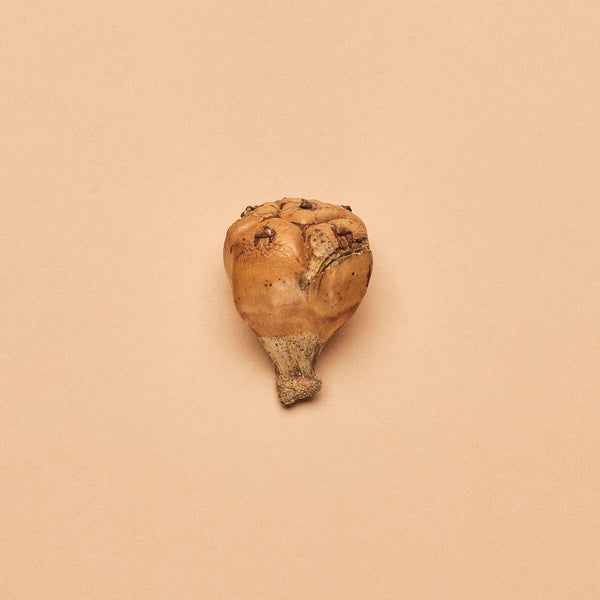
When I first started Tannin, it was fun to sort of create a “flavor” for our site and come up with exotic-sounding names for the materials we sourced. I made up a lot of fun Portueguese names for the botanicals. Why Portueguese? Because that’s the primary language spoken in Brazil, where there happens to be that cool region called “Amazonia” that we’re kind of intrigued by, and…

Well, yeah– it made sense at the time.
Helped define us. Distinguished this stuff. Helped popularize botanicals. Romanticized it a bit.
But here’s the thing.
It was kind of…stupid.
What? You heard me. STUPID.
Let me digress:
As I discussed before, I came from the world of reef aquariums and coral propagation…You know, the expensive, over-hyped $100-per-square-centimeter coral frags that have, well- silly names and equally silly prices. I used to laugh at that stuff. The names…the over-romanticizing of them…
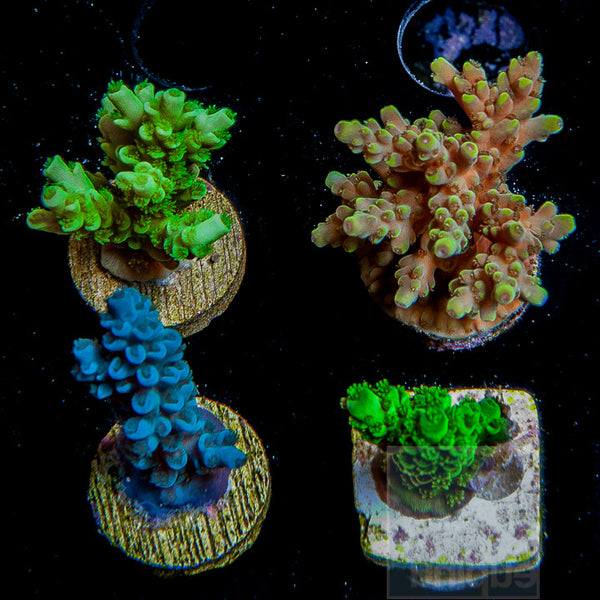
Yet, in an odd way, it sort of made sense to do this very thing with botanicals to create more interest in them initially- to make ’em more relatable; to give context and identity…
No one knew what this shit was, and the idea of overwhelming skeptical hobbyists with unpronounceable scientific names seemed pretentious. So, I went with the “fun” names. It seemed to work fine.
And it did. For a while. It was a great way to refer to various botanicals.
In fact, as I mentioned before, I think we were actually the first to even utilize the term “botanicals” to describe these materials…I don’t think that, prior to 2015, you even heard about botanical materials used in aquariums even described as…“botanicals!”
So I think it’s kind of cool to speculate that (perhaps) the fun names might have helped to make these things more popular; less mysterious or off-putting to some. Marketing, one could argue.
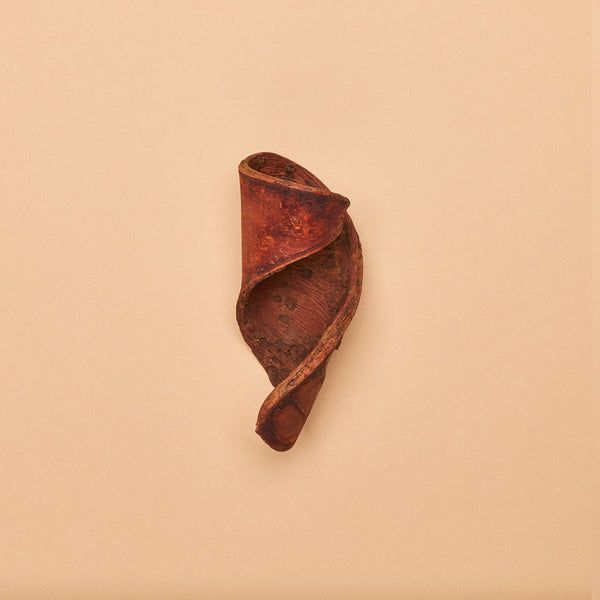
Yet, at times, I kind of wished that I “kept it real” from the start, because not only are the actual endemic vernacular names and the actual scientific names of these botanical materials intriguing, they’re more helpful when you’re the real hardcore type, trying to figure out what belongs in a specific aquarium…
That sort of thing!
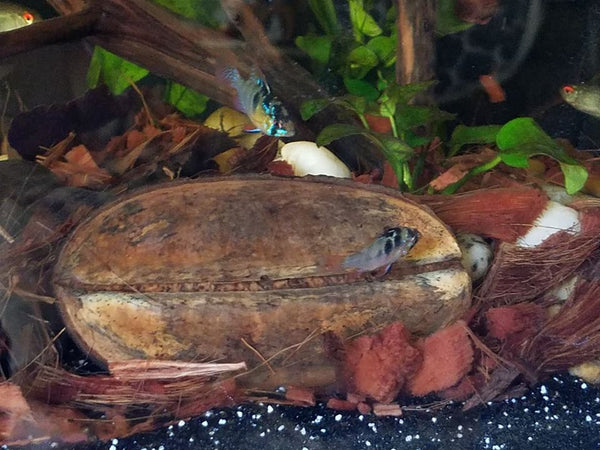
However, the fun names did serve to create a “vibe” and a buzz around Tannin and what we did initially…Fostering new excitement in a hobby sector that was obscure at best, and virtually non-existent at worst.
Fast forward to late 2018, and we had a full-blown hobby movement with botanicals! People all over the world were really getting into it! We arrived at a new “maturity” level in the practice of utilizing botanicals and creating more natural, “functionally aesthetic” aquariums…
And with this “maturity” came more responsibility for us as a “thought leader” to continue to lead in this area. And with it, came responsibility to educate, inspire, and inform.
A responsibility to be more accurate and authoritative.
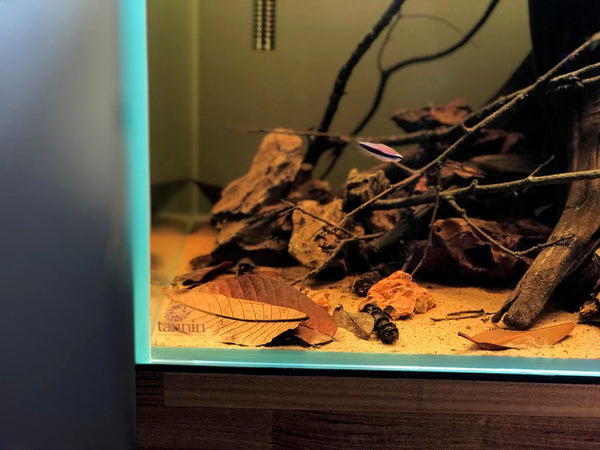
Yeah, it was time to ditch the cute names.
It was getting a bit too much, even for me!
Although it might be a bit easier to pronounce and remember cute names, it is better in the long run to embrace the more accurate nomenclature. This botanical aquarium “movement” is bigger than any one company. More important than any one brand or person.
We offered botanicals.
Nature “made” them.
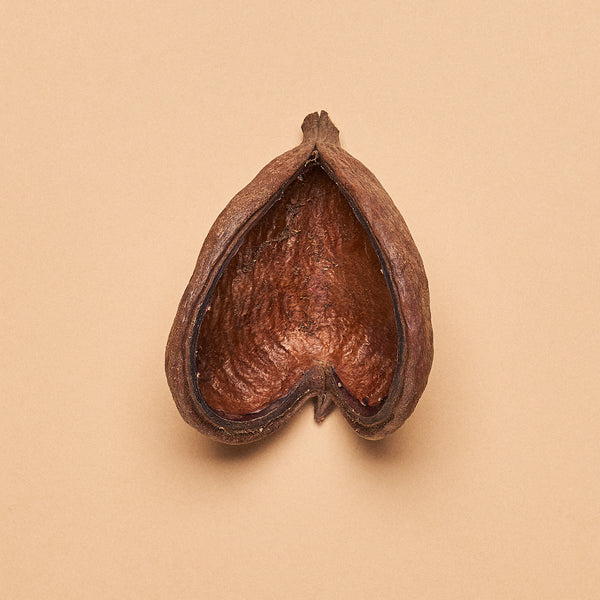
And we were a brand which stood for something. And the brand superseded the goofy individual “product names.” And the botanical method aquarium movement supersedes any one brand…
And a few other vendors emerged around that time, trying to do this botanical thing – which was great. What was a bit funny, however, was that a few of ’em started using the very names that we coined to describe similar materials that they were offering-even though, as discussed above- they were essentially “meaningless”…
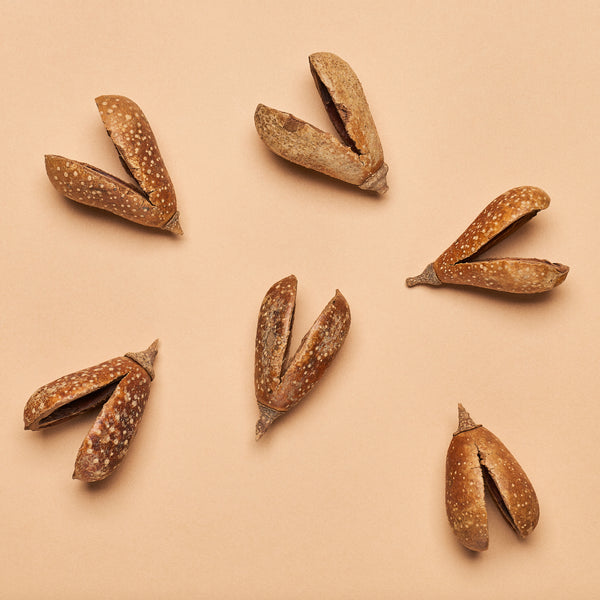
And in at least one instance, someone who tried very hard to replicate what we do “translated back” our silly botanical names into English to name his offerings…A 360 degree cycle of absurdity! (Hint, if you try to rip someone off- do a better freakin’ job. Seriously.)
It was inevitable, I suppose.
And I realized that if I didn’t step up and show some real leadership and confidence at that point, this could have turned into the world’s goofiest “coral frag swap” all over again, with out-of-control stupid names, absurd claims, “limited edition” botanicals and such.
And that wouldn’t be helpful… I mean, there we were at Tannin, with a big social media presence, numerous blogs and hobby magazine articles, talking all about the most arcane aspects of the botanical/blackwater aquarium hobby- pushing and poking around the hobby in lots of crazy ways- hopefully educating and inspiring…
And then, we’d call a Dregea volubillsis pod a “Concha Pod.”
Cute. Entertaining. But not helpful.
We stepped up, because it was the right thing to do for the hobby.
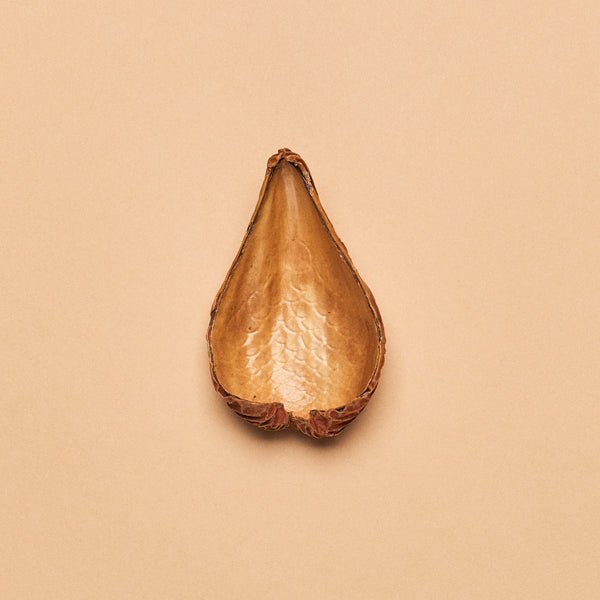
Okay, okay, I”m not relaying this story to you to prove how heroic I am. I’m using it as an example of putting some of the “science” into the “art” of what we do- for the greater good. Holding ourselves to higher standards.
I’ve said it a thousand times, so I’ll state it again: No one “invented” this stuff.
I sure as hell didn’t.
My company curated it. Studied it. Loved it. Sourced it. Shared it. But we didn’t invent it. NO ONE DID.
Now I admit, I was rather fond of a lot of the names we came up with…some of these materials simply never had a “common name”, so we invented ones that fit our vibe. When I embarked on the process of transitioning to more accurate, appropriate names, it took a lot of research and talking to my suppliers in the countries of origin to find out if there even was a “common” or “popular name” for some of these materials..
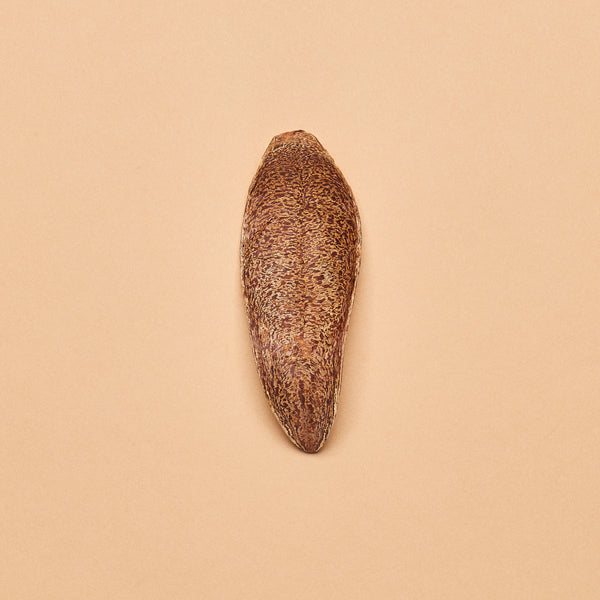
And when applicable, we still used some of them. Or, we went by the genus/species name and call them “_______ Pods.”
It worked out just fine. I’m proud to see the best in the business, Ben at Betta Botanicals, following this path. He gets it.
Yet, I remember how I was worried that it was going to be a bit confusing at first…And remarkably, it wasn’t. Why? Because I think our community- YOU guys- was ready for a little bit of “elevation” of this stuff.
You took to it so easily.
Yes, this has been a rather tortured explanation of why I think that as much accuracy as possible is important for this “movement”- and for this hobby.
Embracing the art and the science and attempting to learn, experience, and share our hard-won knowledge is what elevates the whole thing!
So, the next time you see one of those discussions where someone is getting all bent out of shape about some hobby topic that you know well, make the effort to understand where they might be coming from. Try to be a bit diplomatic if you have to engage with them, and gently mediate with facts if necessary to calm them down. Share what you know with confidence, not arrogance.
Don’t allow arrogantly-presented incorrect information to propagate online and elsewhere in the hobby. Yeah, I sort of regret not jumping in to that one conversation, although I think my time was better served doing what I do here everyday.
Be open-minded, of course.
However, if you know you’re right, and that the facts and information that you offer are able to offer up are correct, accurate, and helpful, be earnest in presenting them to the hobby. Knowledge gleaned from research, observation, personal experience, and success (or failure!) is the best kind to share!
That’s how the “art” can elevate the “science”– and vice versa.
Stay curious. Stay educated. Stay inspired. Stay gracious. Stay humble. Stay smart...
And Stay Wet.
Scott Fellman


Leave a Reply