
There is something exciting about the earliest days of a botanical method aquarium, isn’t there? After the initial “construction” work is done, there is that time when you sort of look back and allow the “dust to settle…”
And that’s just the very beginning…
The “startup phase” is NOT those first hours after you fire up the tank. Nope- it’s a much longer affair…Like, maybe the first 6-8 weeks or so of the aquarium’s existence. Yeah, these are the critical parts of the “startup” of an aquarium.
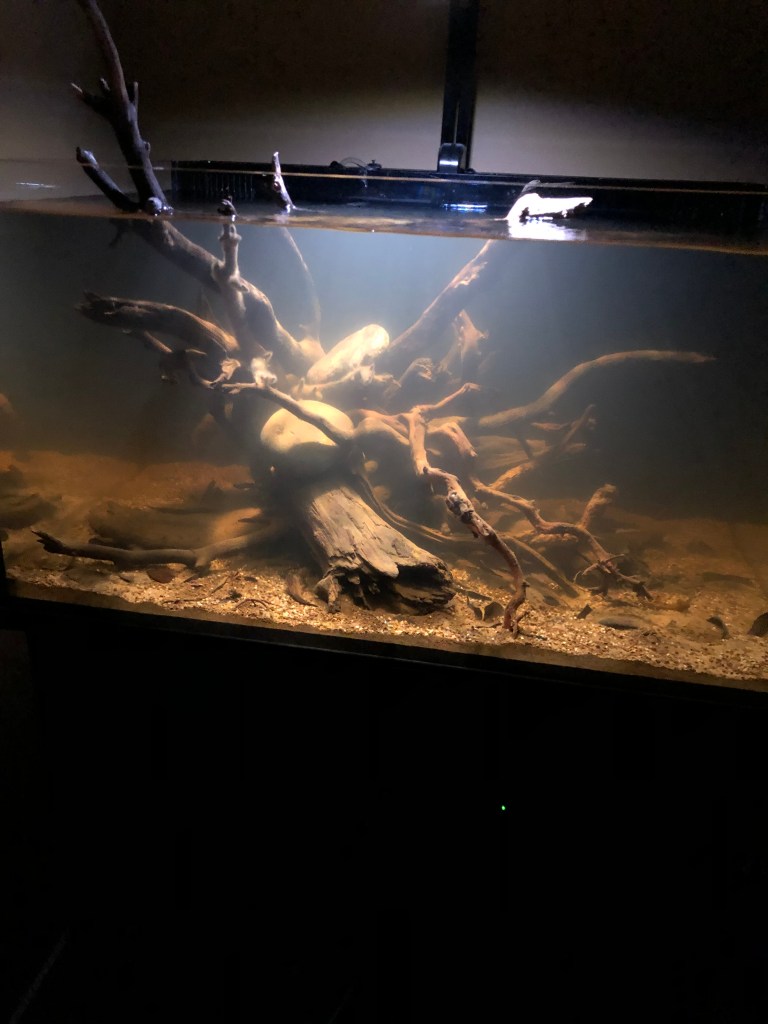
When you flood a new botanical method aquarium with wood, leaves, and seed pods, you are introducing a massive influx of labile organic carbon. Nature abhors a vacuum, so a predictable sequence of life explodes to consume it.
Yeah, it sort of goes like this:
The Fungal and Biofilm Wave (Weeks 1–4): Spores and bacteria immediately colonize the surfaces of the botanicals, creating thick, gooey, or fuzzy matrices. As we have known for many years, although it looks horrifying, this is not rot to be feared; it is the rise of a literal microscopic “forest.” It is actively processing nutrients, locking up bound compounds, and creating a living biological “filter” in your aquarium, long before your traditional nitrifying bacteria even fully catch up.
The Algae and Micro-Fauna Boom (Weeks 3–8): As the initial bacterial boom stabilizes, light and available nutrients may trigger a localized algae phase. Not always, but sometimes. Concurrently, populations of copepods, rotifers, and micro-crustaceans explode within the safety of the biofilm and leaf litter.
The “Equilibrium” (Month 2+): Eventually, the easily accessible sugars and nutrients in the outer layers of the botanicals are exhausted. The biofilms naturally thin out, the algae runs out of fuel, and the tank shifts into a more established-looking, stable, “functional aesthetic” where the water clears significantly, and a rich ecological balance is achieved.
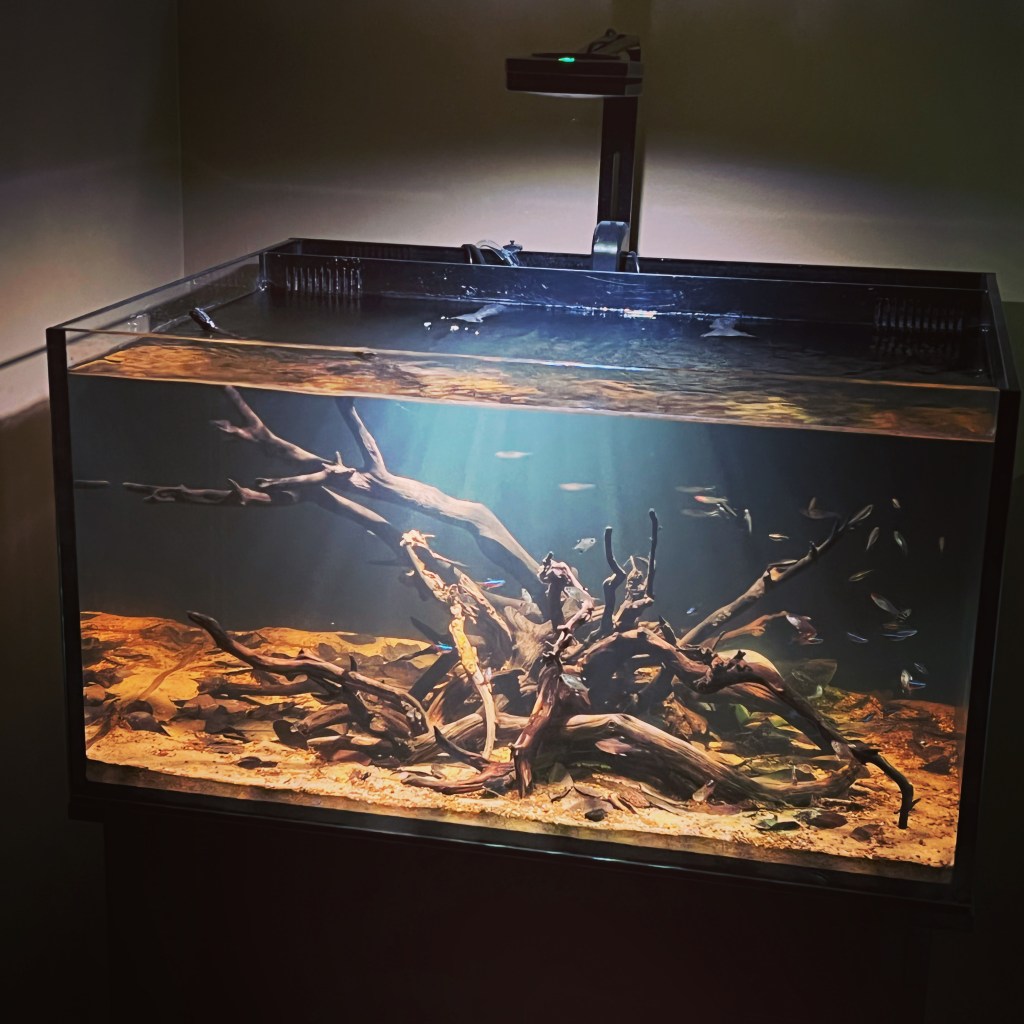
It pays to remain calm and observant during these early phases of your botanical method aquarium’s existence. When you panic during these early phases and begin scrubbing wood, vacuuming out detritus, or dumping in algaecides and chemicals, you literally reset the ecological clock. Manual removal simply leaves bare, nutrient-rich surfaces open for a second wave of opportunistic organisms- some even worse than the first, like cyanobacteria or other algae
A lot of neophyte hobbyists would be inclined to use chemical interventions to remove these “unsightly” growths, which actually destroy the delicate microbial populations that are trying to establish equilibrium, delaying the tank’s ultimate stability!
Ultimately, by allowing the tank to move through its “ugly” phases unhindered, you build a incredibly resilient, self-sustaining ecosystem. The reward for your patience is a tank that is far less fragile down the road.
And you might have to ask yourself if those so-called “ugly” phases are really that ugly…
Hands off.
Now, there might be some occasions when you would intervene, but these are very specialized situations; generally ones which involve endangering the lives of your fishes in the aquarium.
While “persevering” through these phases is the gold standard in botanical method aquarium keeping, there is a fine line between a system establishing its balance and a system genuinely “crashing.” You should step in only under two conditions:
Dissolved Oxygen Depletion: Massive bacterial and fungal blooms consume huge amounts of oxygen. If you notice your early fish inhabitants gasping at the surface, the solution isn’t to “scrub” the tank of all biofilms and fungal growth—it is to immediately add heavy surface agitation (like an airstone) to keep oxygen levels high while the bacteria do their work.
True Organic Overload: If the water turns completely opaque and smells foul (like sulfur or rotten eggs) rather than earthy, the bioload of decomposing material has overwhelmed the volume of water. This requires a moderate water change to dilute the system back to a manageable baseline. To be perfectly honest, other than in a goldfish bowl as a child, I’ve NEVER had this happen…and I doubt that you will, either.
And the reality, as I’ve reiterated many times here, is that most of the stuff which happens in the early phases of the botanical method aquarium my be aesthetically off-putting, but it’s not “dangerous” or ecologically unsound in any way. It’s about understanding how Nature works, and what these natural occurrences actually look like.
It’s about “reading the room”, ecologically-speaking, and not adding fishes until the tank is stable.
With regards to starting up and establishing a botanical method aquarium, the process is actually remarkably simple, isn’t it?
I often wonder if I should recommend my preferred approach for starting a botanical method aquarium to everyone as the best way to go:
I have long felt that simply adding all of the “ingredients” (leaves, wood, botanicals, substrate) to an aquarium, standing by and letting Nature go to work and sort out an ecosystem with them is the best way to start a botanical method system. A sort of “hands-off” approach that allows the ecology to develop in a manner- and at a pace- which Nature determines.
By adding all your leaves, wood, and seed pods simultaneously, you allow a massive, unified microbial foundation to establish right from the start. Rather than shocking the system with piecemeal additions later on, the entire ecology scales together at a natural pace.
However, while this “hands-off” approach is great for developing a robust ecosystem, its success depends entirely on one critical factor: Whether you add animals on day one, or whether you let the tank run empty. You know- patience! If you follow the philosophy by adding all “ingredients” on day one and letting the tank sit without fish or shrimp for 4 to 8 weeks, it is incredibly effective; almost predictable and reliable.
Here is a breakdown of how this philosophy plays out in practice, and the safest way to execute it.
Adding everything at once is a foundational approach to creating ecological stability. It just takes time. When you add all of the botanical materials at one time, all the available carbon, sugars, and organic compounds leach into the water at once, right? Yeah.
This triggers a massive, explosive spike in bacteria, fungi, and biofilms. Because there are no fish in the tank, the resulting massive drop in dissolved oxygen (caused by the hyper-growth of bacteria) and potential ammonia spikes from decomposing organic matter are irrelevant.
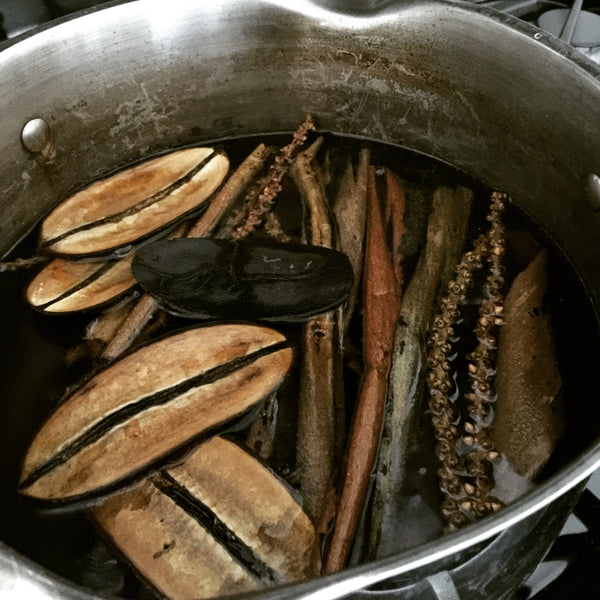
By the time you introduce livestock weeks later, the dangerous bacterial spikes have collapsed, the water chemistry has stabilized, and your fish will drop into a mature “living supermarket” packed with microscopic food, copepods, and established biofilms.
Super simple, right? It actually is. It feels almost decadent; it’s that easy….The hard part is the patience!
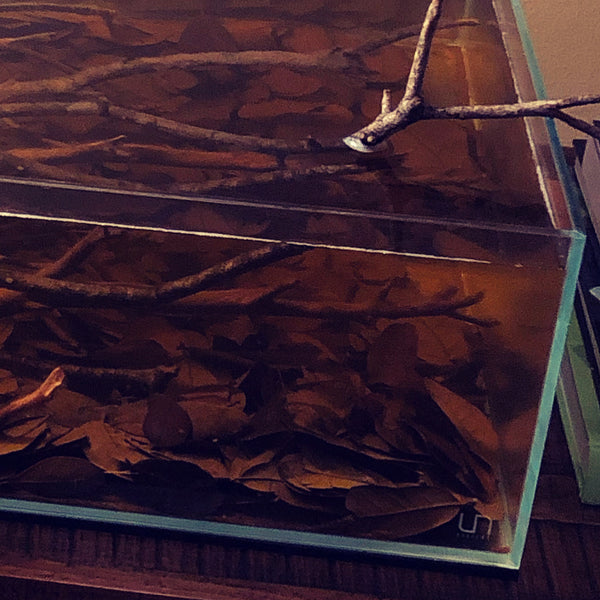
To execute this method of letting Nature dictate the pace from the very beginning, arrange your substrate, wood, seed pods, and heavy leaf layers exactly how you want them. Fill the tank, turn on your heater and filter (for gentle circulation), and do not add livestock.
Literally walk away. Let the tank move through its cloudy, gooey, hyper-bacterial phases completely unhindered for at least a month. Only monitor the water parameters out of scientific curiosity.
Once the thickest biofilms and fungal growths begin to naturally recede and break down (roughly 2 months in), your ecosystem has established its baseline. At this point, you can safely introduce your fishes into what is essentially a perfectly tailored, resilient habitat.
Ultimately, the instinct to let ecology dictate the pace is entirely correct, IMHO. The best way to honor that process is simply to give Nature a quiet, unpopulated “arena” in which to build its foundation before introducing the fishes.
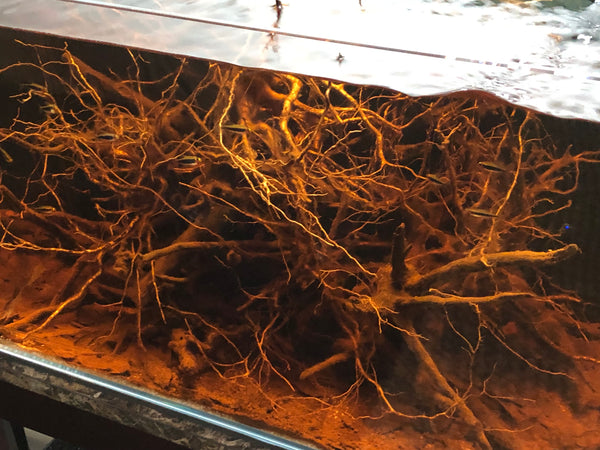
Starting without fishes early on is the absolute “gold standard” for establishing a botanical method aquarium. By removing livestock from the equation, you eliminate all risk and allow yourself to become an observer of pure ecological succession rather than a panicked manager of water chemistry.
When you think about it, setting the stage for life in our aquariums is the SINGLE most important thing that we do. If we utilize a different mind set, and deploy a lot more patience for the process, we start to look at it a bit differently.
When you throw all your wood, leaves, and seed pods in on day one and just walk away, you can expect a fascinating, almost completely predictable timeline as your ecosystem builds itself from scratch. This is a very rational approach to creating a more durable, biologically diverse aquarium ecosystem.
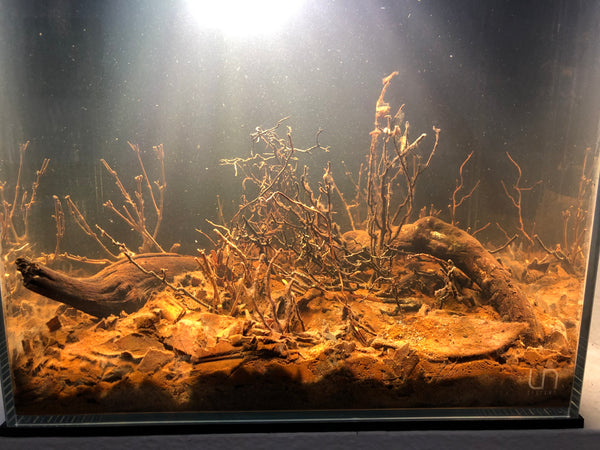
And if you don’t clean your driftwood and leaves and botanicals carefully before you add them to the aquairum, you’re liable to have some soil or other “dirt” get into your system, and more tannins being released, which leads to…well, what does it lead to?
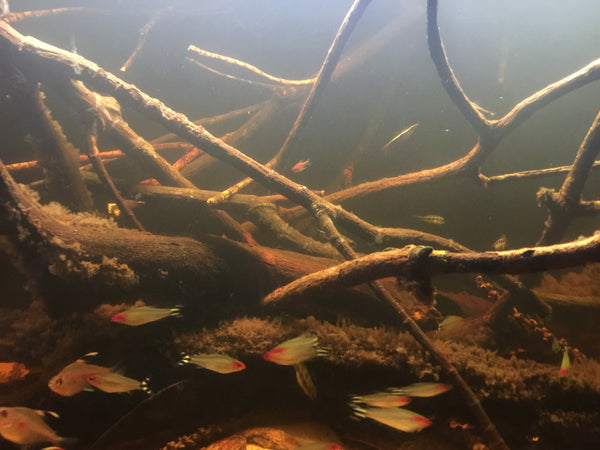
I mean, an aquarium is not a “sterile” habitat.
The natural aquatic habits, although comprised of many millions times the volumes of water that we have in our tanks- are typically not “pristine”, either- right? I mean, soils from terrestrial geologic activity carry with them decomposing matter, leaves, etc, all of which impact the chemistry, oxygen-carrying capacity, biological activity, and of course, the visual appearance of the water.
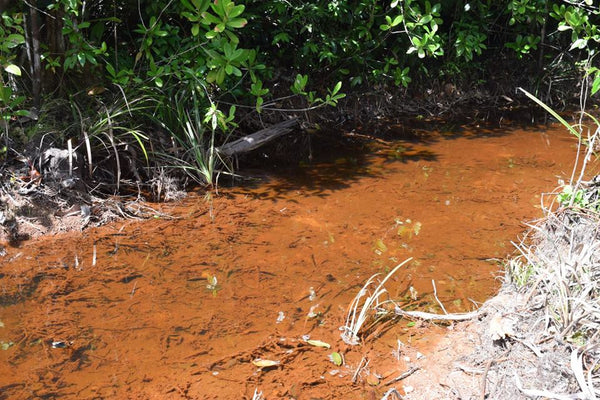
And that’s kind of what our whole botanical method aquarium adventure is all about- utilizing the “imperfect” nature of the materials at our disposal, and fostering and appreciating the natural ecological interactions which take place in aquatic habitats.
Understand that descriptors such as “crystal clear” and “pristine” only apply to some aquatic habitats, and that there is real beauty in all types of aquatic habitats.
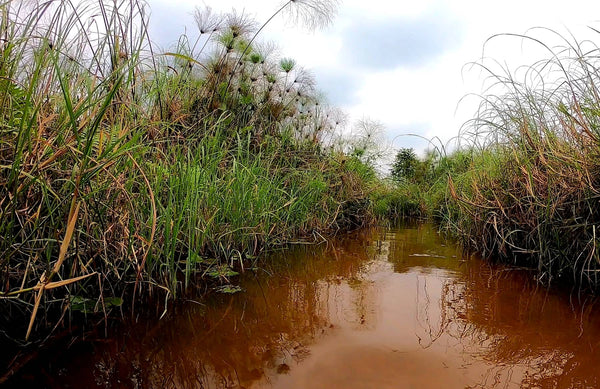
Indeed, the real “magic”, in many instances, occurs in the more murky, turbid, not-so-crystal-clear waters of the world. And if we understand and accept this, we’re likely to start our aquariums with a bit less concern over absolute sterile perfection.
We can embrace the mindset that every leaf, every piece of wood, every bit of substrate in our aquariums is actually a sort of “catalyst” for sparking biodiversity and yes- a new view of aesthetics in our aquariums.
Now, I’m not saying that we should NOT rinse sand, or soak wood before adding it to our tanks. What I AM suggesting is that we don’t “lose our shit” if our water gets a little bit turbid or there is a bit of botanical detritus accumulating on the substrate because maybe we didn’t. And guess what? We don’t have to start a tank with brand new, right-from-the-bag substrate.
Of course not. Some of that “dirty” stuff encourages the growth of microorganisms which comprise the ecology of our aquarium. In a botanical method aquarium, facilitating the rapid growth of biotia is foundational. Absolutely sterility is not essential.
Patience, observation, and restraint are.
And, even though Nature is doing 99% of the work, there are a couple of things that you can do to ensure that the startup process goes smoothly.
First, keep the lights off! Because there are massive amounts of nutrients leaching into the water in the first few weeks, running high-intensity aquarium lights will trigger an enormous explosion of hair or black algae. Keep the lights entirely off or on a very low setting for the first month. Let the fungi and bacteria dominate first; they will naturally starve out potential pest algae.
“Ghost Feed” the ecosystem. Huh? Well, while the decomposing leaves provide plenty of food for bacteria, tossing a tiny pinch of fish food or a crushed pest snail into the tank on day one adds a source of chitin and varied proteins. This helps introduce a wider variety of beneficial nitrifying bacteria into your biological soup. Adding pure cultures of copepods, paramecium, etc. is also a nice way to “kick start” the ecology at this point.
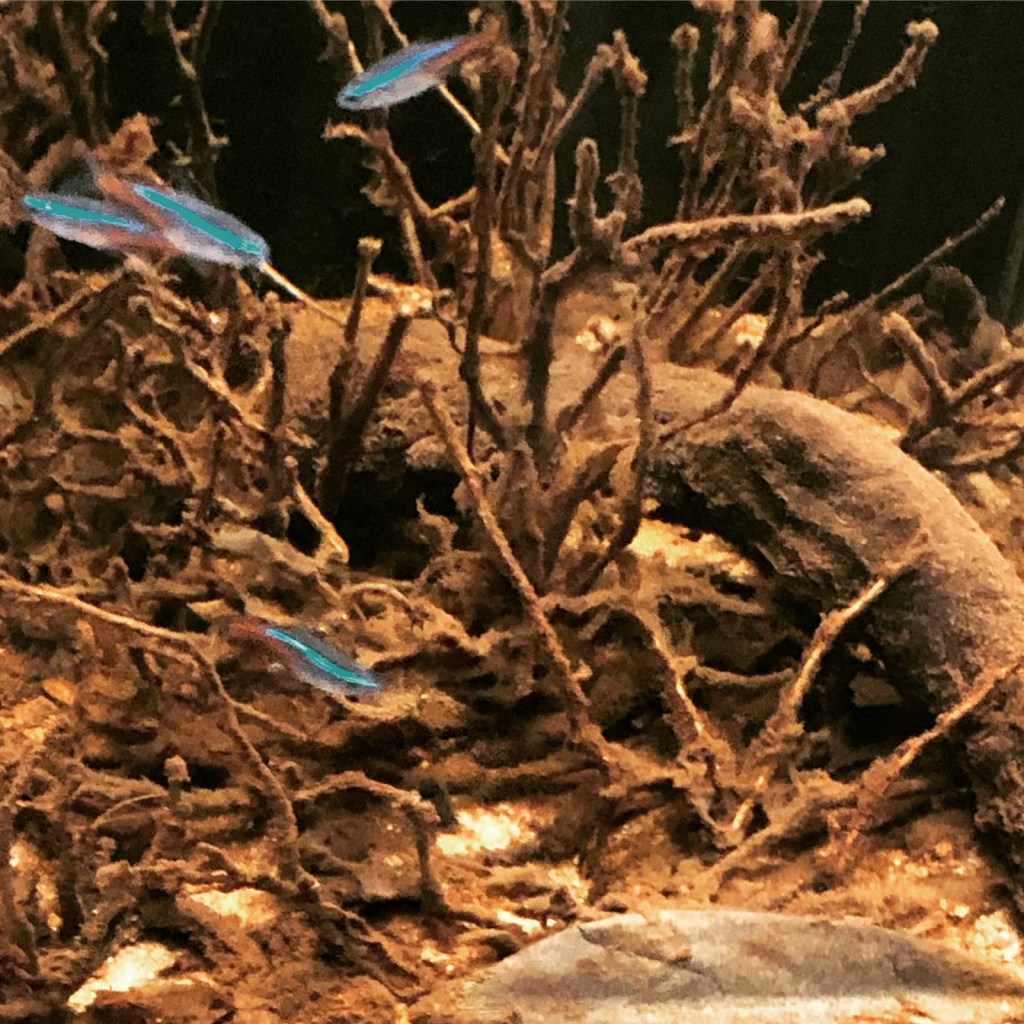
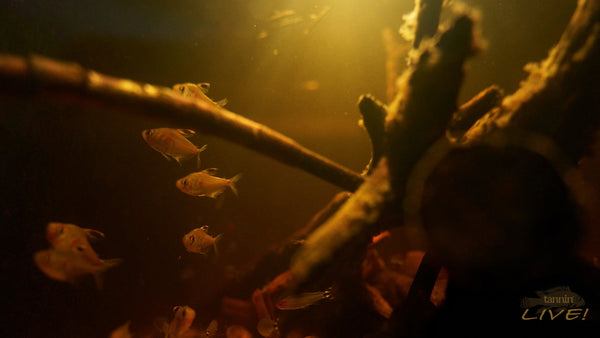
Once you hit week 6 or 8, introducing your first small fishes, particularly wild-type fish (like Licorice Gouramis, Green Neon tetras, “Micro Rasboras”, etc.) is incredibly rewarding. They won’t experience the shock of a “sterile” new tank; instead, they will instantly drop into a mature, stable habitat and immediately begin grazing on a natural food source.
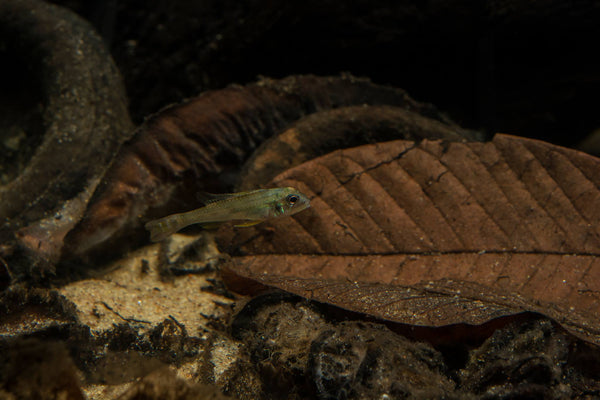
At this point, your aquarium has no doubt settled into a comfortable, more stable situation, and you’ve come to appreciate the more natural appearance of your system. Some of the softer, more “transient” botanicals, such as leaves, have typically broken down significantly.
You employ regular maintenance practices, such as water exchanges, filter cleaning/media replacement, etc., and monitor water chemistry parameters like you would in any other tank. Your aquarium has achieved that magical place- equilibrium.
Equilibrium.
By this time, you’ll come to recognize what is “normal” for your system, and any deviations from the norm will become more obvious to you. You can “top off” your system with some newly-prepared botanicals as you see fit, or just let things ride. This is where you’ll no doubt develop your own routines for this. I love this time, because it’s where the nuances of long-term botanical-method aquarium management are developed and perfected!
It’s that easy. And that difficult.
The key- as always- is patience.
And the evolution of your new botanical method aquarium doesn’t stop once you add the fishes; after your tank achieves that equilibrium.
With a stabilized nitrogen cycle in place, the real evolution of the aquarium begins. This process is constant, and the actions of Nature in our aquariums facilitate changes over time.
And our botanical method systems do change- continuously.
They change over time in very noticeable ways, as the leaves and botanicals break down and change shape and form. The water will darken. Often, there may be an almost “patina” or haziness to the water along with the tint- the result of dissolving botanical material and perhaps a “bloom” of microorganisms which consume them.
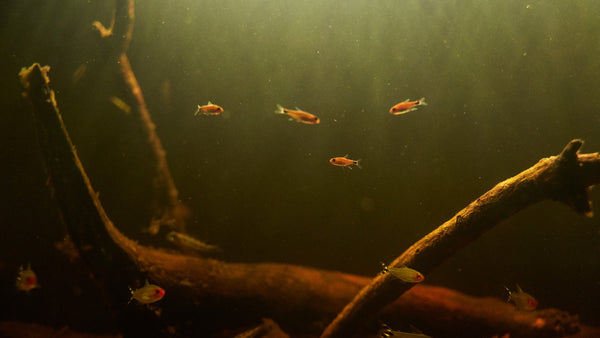
This is perfectly analogous to what you see in the natural habitats of the fishes that we love so much. As the materials present in the flooded forests, ponds, and streams break down, they alter it biologically, chemically, and even physically. They change both the ecology and the appearance of the aquarium over time.
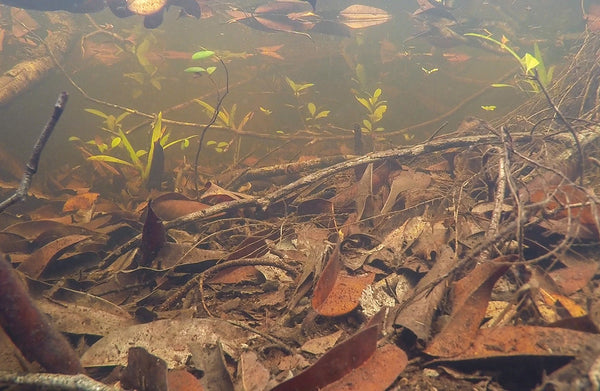
It’s something that we as aquarists have to accept in our tanks, which is not always easy for us, right? Something as basic as the evolving physical appearance of our aquarium as it matures requires us to accept it.
And decomposition, detritus, biofilms- all that stuff looks, well- different than what we’ve been told over the years is the norm for an aquarium. And, it’s as much a perception issue as it is a husbandry one. I mean, we’re talking about compounds entering the water column from decomposing botanicals and wood, as opposed to uneaten food, fish waste, and such. Were talking about how materials change over time as ecological processes alter them dramatically.
What’s really cool about this phenomenon is that, in our community, we aren’t seeing hobbyists freak out over some of the aesthetics previously associated with “dirty”, or the significant changes in our tanks as they mature.
It’s accepted.
It’s fundamental.
The look is different, but the idea of maintaining our aquariums is no different than what we’ve been indoctrinated to do since our earliest days in the aquarium hobby.
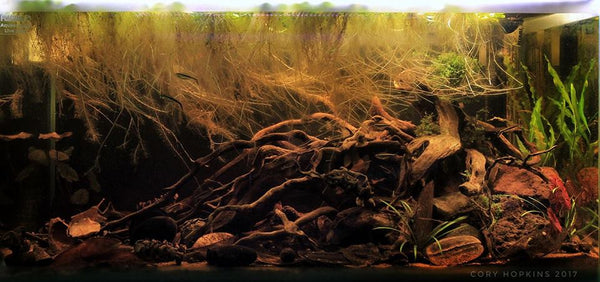
And it’s not like we’ve told ourselves that it’s acceptable to not change water, siphon detritus, overstock, or overfeed. Nope. We can still perform excellent regular husbandry routines on botanical method aquariums. We’re still diligent aquarists. We can follow Nature’s “cues.” And we still might have so-called “dirty-looking” water in our perfectly healthy tank!
And, that’s kind of what Nature wants, right?
Always remember that Nature plays by Her own rules, developed over eons. Resistance is futile, lol. When we accept Her rules, embrace Her aesthetics…and make a mental shift to something that the rest of the world might call “messy”, “disorganized”, or even “dirty”- we can truly appreciate its real beauty.
We have made a collective mental shift. We’ve evolved, right along with our aquariums. And we’ll continue to do so.
And it all begins with how we establish our aquariums.
Stay patient. Stay ambitious. Stay curious. Stay excited. Stay diligent…
And Stay Wet.
Scott Fellman


Leave a Reply