
I have written and discussed the flooded forests of South America many times here in “The Tint”, and they are among the most compelling habitats we have encountered during our search for interesting ones to replicate in aquariums.
South American forests and “swamp forests”are seasonally inundated with freshwater. These forests are perhaps Nature’s finest example of the interaction between land and water, and how diverse and surprisingly productive aquatic environments arise in these habitats.
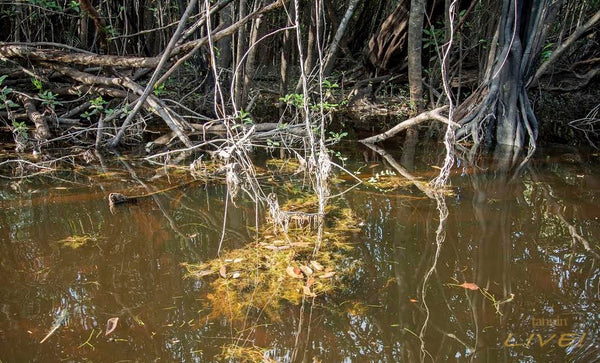
The soils of the Amazon’s flooded Igapó forests are quite distinct from most tropical soils because they form in nutrient-poor, heavily leached, acidic environments associated with blackwater rivers.
These soils are mainly comprised of highly weathered sandy material- quartz-rich sand- and are typically very low in nutrients like nitrogen, potassium, and phosphorus. These are considered “old” soils, in which nutrients have been depleted over long time scales.
When inundated, leaves, wood, and fruits from terrestrial vegetation accumulate, and as the waters recede, this organic material decomposes into a thin humus layer. However, the decomposition s often slow and incomplete, with nutrients quickly leached away by rain and flooding cycles.
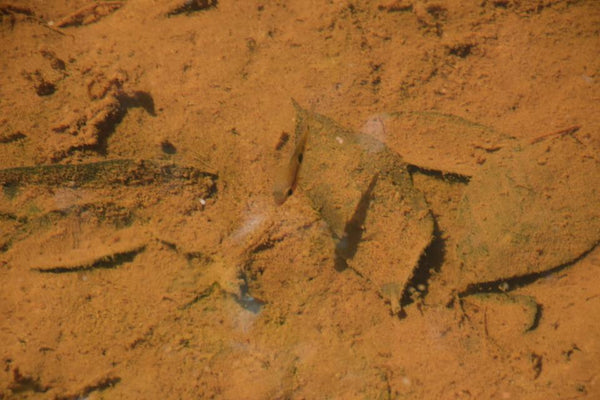
These soils are high in concentrations of humid and fulvic acids released from decaying plant matter. This produces water that is visually dark, and has a low ph (often 4-5).
Compared to fertile Varzea floodplains, Igapo soils have very low cation exchange capacity, minimal amounts of available phosphorous, and have extremely limited levels of calcium and magnesium. In other words, they’re “chemically starved” soils.
Because the soil is so “poor”, many plants present in Igapo forests rely on surface litter rather than deeply held soil nutrients. The roots of plants that come from Igapo ecosystems typically have adapted to anchoring in sand, and engage in rapid nutrient uptake after the forest floors flood.
The soil properties of the Igapo are strongly influenced by long flooding periods (like, months), oxygen poor condition during inundation, and rapid leaching of nutrients during prolonged rain.
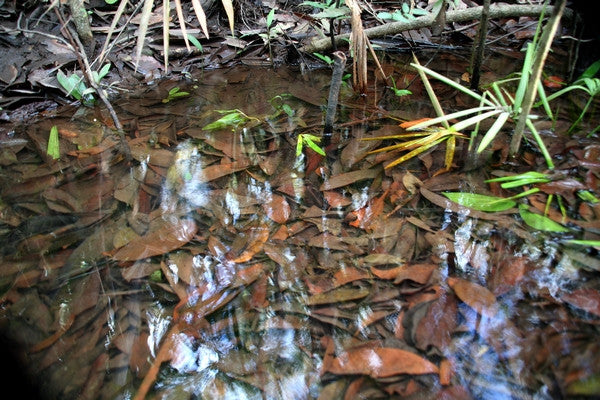
In summary, Igapo soils are old, sandy, highly depleted soils with thin, seasonally recycled organic layers and strong acidity, driven by blackwater chemistry. These conditions result in less food at the base of the food web, meaning that fewer total fish can be supported. In other words, fewer algal and plankton blooms equals fewer invertebrates, which means the ecology supports fewer larger predatory fishes.
Igapo fishes display high degrees of dietary specialization, exploring detritus from decaying plant material, insect fall from the overhead vegetation, worms and small invertebrates, and consumption of the leaves themselves, or the biofilms and fungal growth which they recruit. Many fish species are tightly linked to this forest floor habitat, evolving very efficient digestive systems.
The fish communities in Igapo are structured around detritus, insects, and microhabitats (roots, leaf litter, submerged forest) rather than plankton-rich open water food chains.
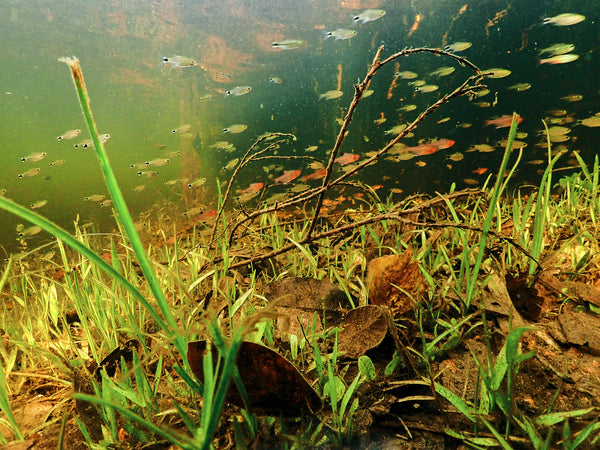
Instead of a few abundant generalists, igapó systems support a rich mosaic of specialized fish tightly linked to flooded forest structure and low-nutrient conditions.
This is why you’ll find fishes like characins, dwarf cichlids, and even small knifefishes in these habitats: They can easily exploit the food resources available to them in the flooded forests.
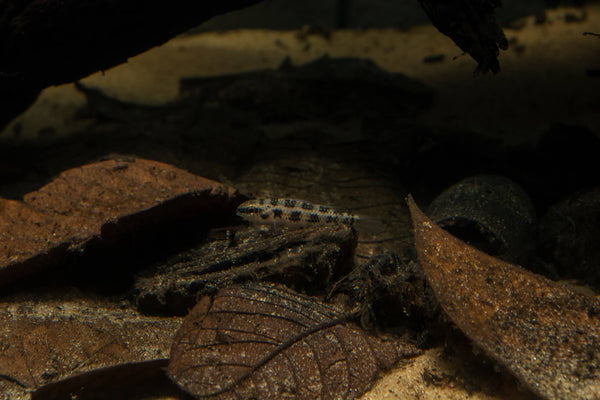
And structurally, the flooded forests have a lot of “interdependencies”- relationships between the terrestrial components which, upon inundation, influence the structure of the now aquatic habitats as well.
For example- roots.
We have talked a lot about roots before…They are structures which are so important in so many ways to these ecosystems, in both their terrestrial and aquatic phases.
Not only do they help “secure the soils” from falling away, they foster epiphytic algae, fungal growth, and biofilms, which supplement the foods of the resident fishes. And of course, they provide a physical habitat for fishes to forage, seek shelter, and reproduce among. In short, these roots create a unique “microhabitat” which harbors a diversity of life.
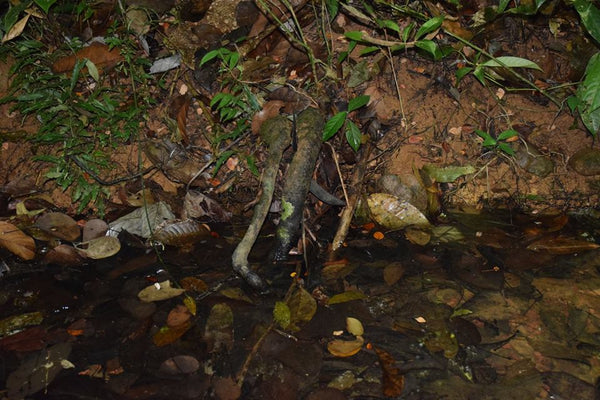
And they look pretty aesthetically cool, too!
So yeah- this makes them an irresistible subject for a natural-looking- and functioning– aquascape!. And relatively easy to execute, too!
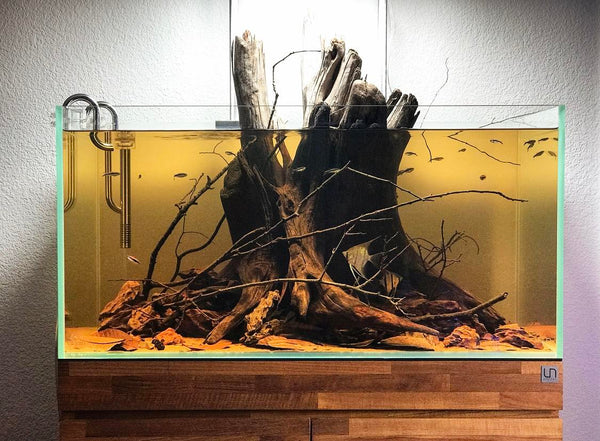
With a variety of interesting natural materials readily available to us as hobbyists, it’s easier than ever to recreate these habitats in as detailed a version as you care to do.

As usual with my ramblings, this blog has become yet another homage to roots and other forest features, and how they function in the transitional aquatic habitats we love so much. But, hey, they’re so fundamental to the ecology of these systems that it just makes sense to incorporate them into our replications of this habitat, rich?
One of the foundational root types that we can replicate in or aquarium works what botanists call “buttress roots.” Not only are these interesting structures to replicate in our aquariums, they are an important component of the ecosystems which make up the flooded forests, particularly in areas like Amazonia.
Buttress roots are large, very wide roots that help keep shallow-rooted forest trees from toppling over. They are commonly associated with nutrient-poor soils (you know, like the kinds you see in the igapo or varzeaecosytems). These roots also serve to take uptake nutrients are available in these podzolic soils.
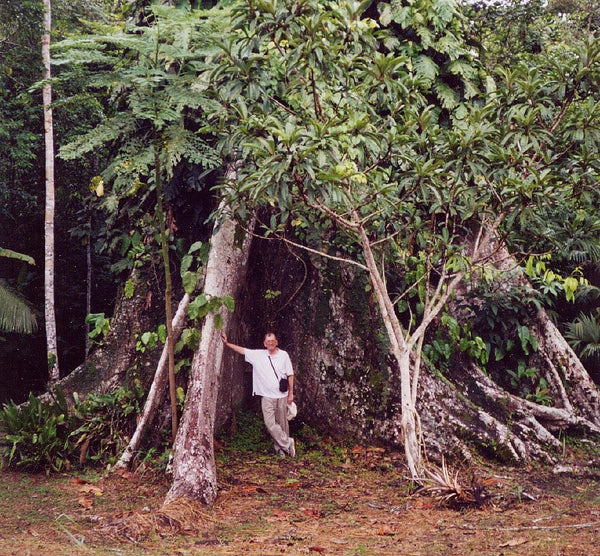
The buttress roots of various species of forest trees often weave in and out of each other horizontally, and create a vast network which serves to keep many trees in the forest from toppling over. And since these habitats often flood during the rainy season, buttress roots help stabilize the trees and retain soils during this inundation.
Isn’t that interesting?
Even the trees have made adaptations over eons which allow them to survive under these harsh conditions! As you might suspect, the “white-water” flooded forests (Varzea) tend to be richer in species diversity and density than the less nutrient-dense blackwater-flooded Igapo forests. Seems like everything in these ecosystems is a function of nutrient availability, isn’t it?
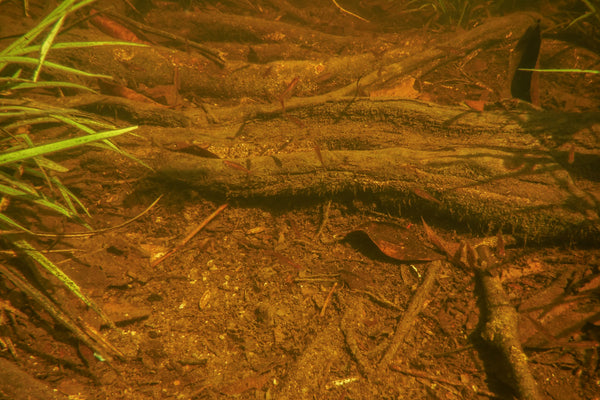
And, as I mentioned before, the sandy soil which comprises these habitats is low in nutrients, such as phosphorus, potassium, calcium, and magnesium. Ecologists will tell you that the soil also has a “high infection rate”, or density, of fungi, and consists of a lot of fine roots in the upper layer of the soil.
Nutrition for plants- and the other organisms which reside in these habitats- comes at a premium!
The network of fine roots helps these forests uptake nutrients in these nutrient- poor conditions. And even more interesting, studies have shown that decomposition of materials can take several years in the deep litter layer on the forest floor.
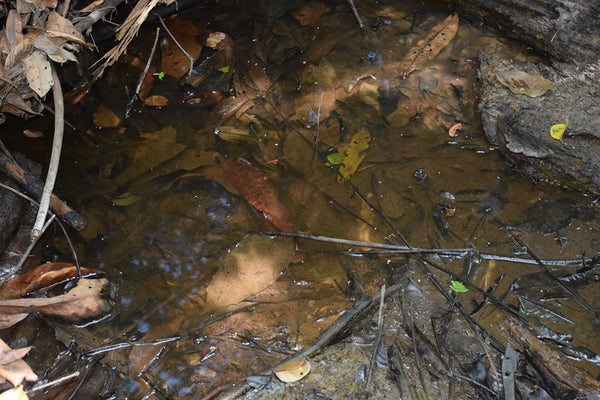
During the dry season, igapo forest floors are littered with leaves and seed pods from the overhead forest canopy. With some much material on the forest floor, the potential for a dynamic ecosystem in both the wet and the dry season is assured!
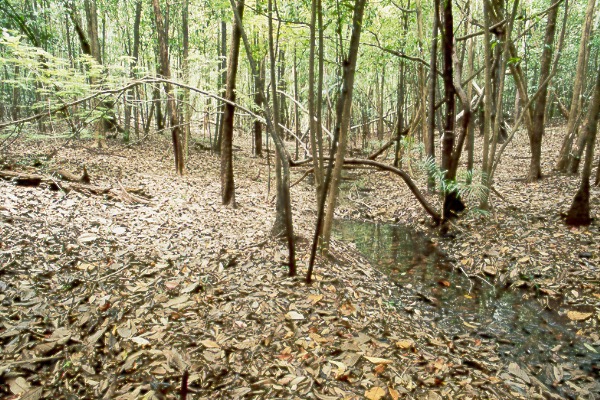
In addition to being nutrient poor, the sandy soil does not retain water very well, which can lead to drought after the inundation period is over. It’s another example of the intricate relationship between land and water, and the way terrestrial and aquatic habitats work together.
When the rains finally come, all of the botanical material-shrubs, grasses, fallen leaves, branches, seed pods, and such, accumulating on the forest floor, is suddenly submerged; often, currents re-distribute the leaves and seed pods and branches into little pockets and “stands”, affecting the (now underwater) “topography” of the landscape.
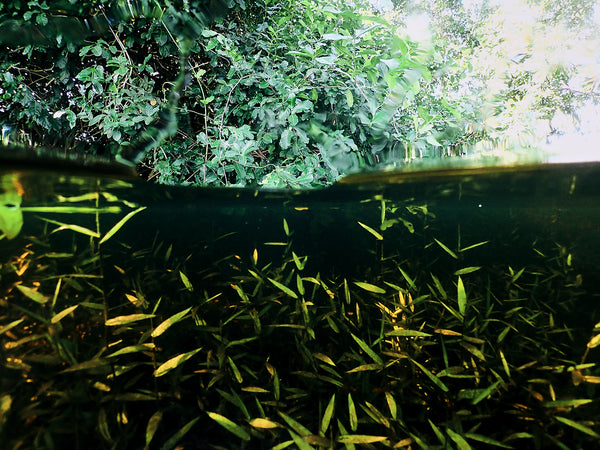
Leaves begin to accumulate.
Soils dissolve their chemical constituents- tannins, and humic acids- into the water, enriching it. Fungi and micororganisms begin to feed on and break down the materials. Biofilms form, crustaceans multiply rapidly. Some robust varieties grasses hang on for extended periods of time during this inundation..
Others go into a sort of “dormant” phase, “browning out” and awaiting the time when the waters will recede and once again turn the igapo into a terrestrial forest floor.
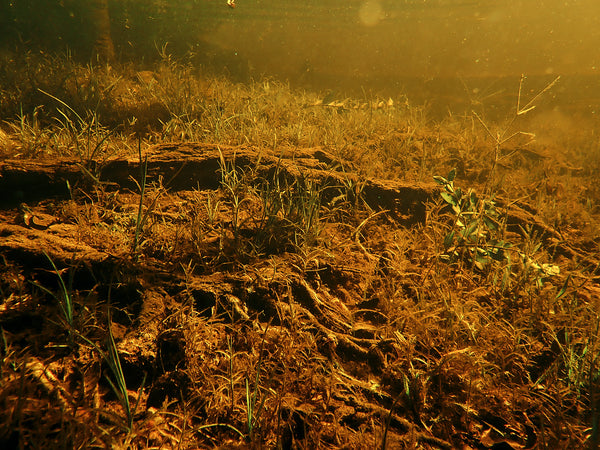
In this rich, highly dynamic environment, the fishes are able to find new food sources; new hiding places..new areas to spawn.
Because the flood pulses are so predictable, eons of this process has led to adaptations by various forest trees to withstand them, as well as to depend upon various species of fishes (‘frugivores”) to help disperse seeds throughout the forest by consuming and pooping them out!
Ecologists have further determined that the distribution of various species of trees in these forests may be largely determined by the ability of their seedlings to tolerate periods of submergence and limited light that penetrates the canopy through the water column.
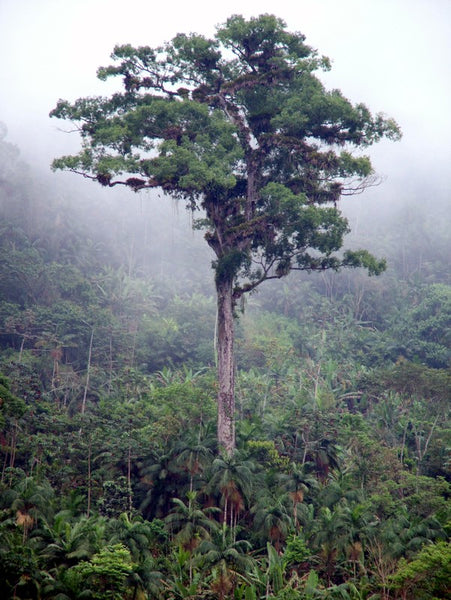
(Cariniana legalis tree. Image by mauroguanandi, used under CC BY 2.0)
In fact, in remarkable adaptation to this environment, seedlings may be completely submerged for several months, and many species can tolerate several weeks of complete submergence in a state of “rest.” Most species in these forests tend to grow during the times year when the forests are flooded, and tend to bear fruit and flower when the waters start to recede.
It’s all about adaptation to this incredible, highly variable habitat.
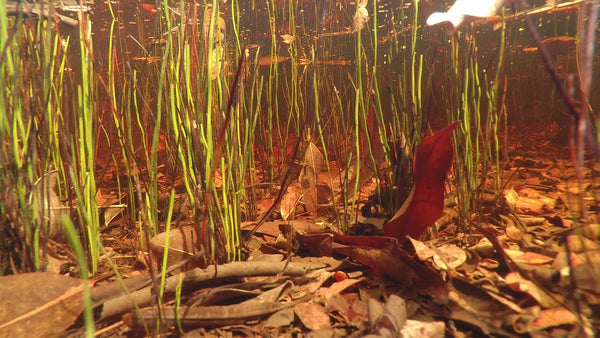
We talk a lot about food webs in these habitats and how to replicate some of their attributes in our aquariums. Here’s another insight into the food webs of these flooded forest habitats to consider, from a paper I found by researcher Mauricio Camargo Zorro:
“Both algae and aquatic macrophytes enter in aquatic food webs mostly in form of detritus (fine and coarse particulate organic matter) or being transported by water flow and settling onto substrates (Winemiller 2004). Particulate organic matter in the stream of rapids and waterfalls is mostly associated with biofilm and epilithic diatoms that grow on rocks, submerged wood, and herbaceous plants and compose the main energy sources for macro invertebrates and other trophic links (Camargo 2009a).”
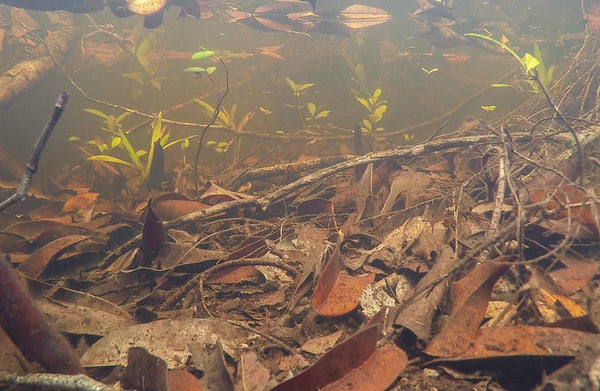
As we’ve discussed before, Amazonian leaf litter beds are home to a surprising variety and population density of fishes, with some studies of igapos yielding as many as 20-40 different species of fishes in a 200 square meter area! And, the majority of the specimens found in these studies are small, averaging around 40mm-100mm (1.5″- 3.9″) in length!
A lot there, I know. What this does is give us some ideas about facilitating the “in situ” production of supplementary food sources in our aquariums.
As aquarists, this dynamic environment is incredibly inspiring! The “igapo” habitat can really help you flex your creative muscles, offering the dual challenge of creating something unique, while holding back and not going too crazy with tons of detail. Rather, a fewer, stronger elements, punctuated with some smaller details provided by the botanicals, can create an engaging, mysterious, and inspiring display!
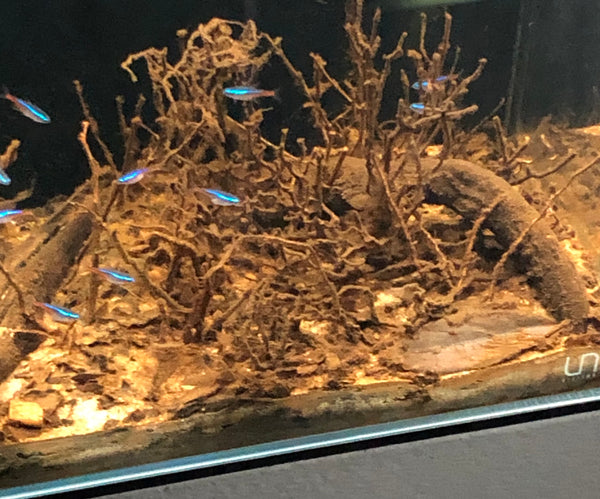
The interaction between the terrestrial elements and the aquatic ones. are irresistible to us botanical method aquarium geeks, huh? Allowing terrestrial leaves to accumulate naturally among the “tree root structure” we have created fosters this more natural-functioning environment.
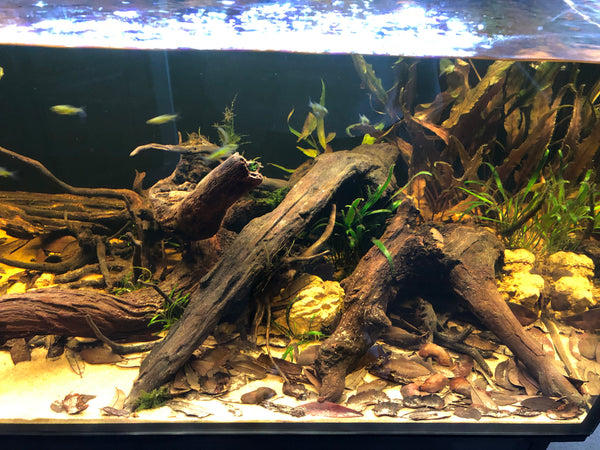
As these leaves begin to soften and ultimately break down, they foster microbial growth, biofilms, and fungal growths- all of which will provide supplemental foods for the resident fishes…just like what happens in Nature.
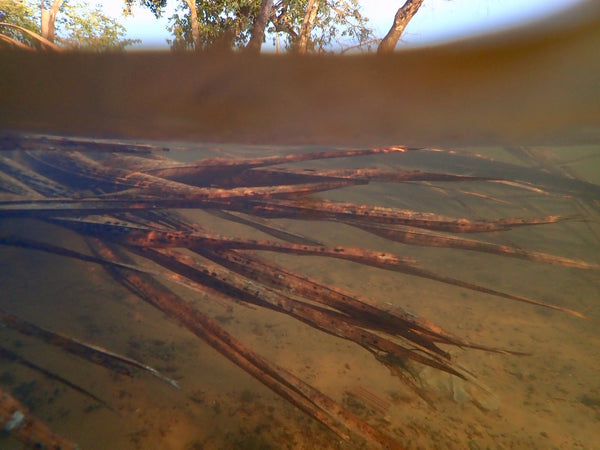
Facilitating these processes- allowing the materials to accumulate naturally and break down “in situ” is a key component of replicating and supporting these microhabitats in our aquariums. The typical aquarium hardscape- artistic and beautiful as it might be, generally replicates the most superficial aesthetic aspects of such habitats, and tends to overlook their function– and the reasons why such habitats form.
Replicating forest structures- like buttress roots and their functions- really helps facilitate more natural biological processes, functions, and behaviors in our fishes!
That’s like the whole game to me!
The possibilities are endless here! And, as always, the aesthetics are a “collateral benefit” of the process.
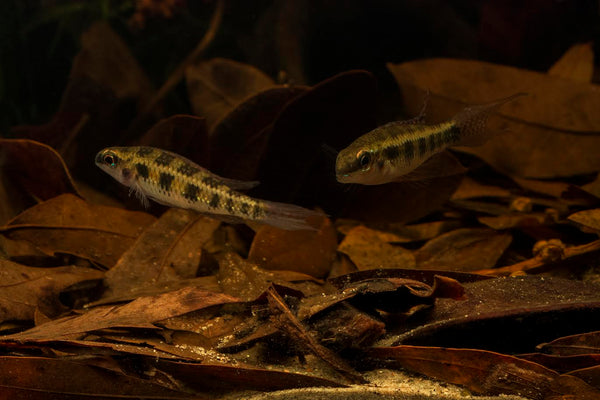
And of course, to really replicate this dynamic habitat, it’s a call for us to employ some bigger, thicker pieces of wood in our tanks!
Yup., I know.
I can hear some groans.
I mean, big, heavy wood has some disadvantages in an aquarium.
First, the damn things are…well- BIG- taking up a lot of physical space, and in our case, precious water volume. And the “scale” is a bit different. And, of course, a big, heavy piece of wood is kind of pricy. And physically cumbersome for some.
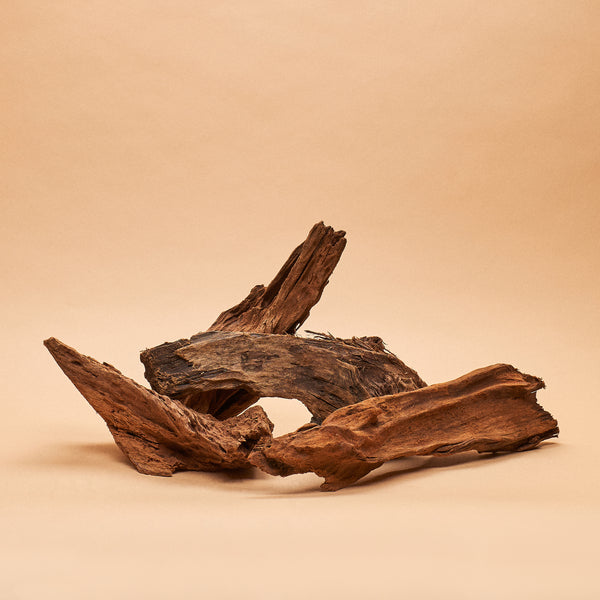
However, the use of larger pieces of wood- or several pieces of wood aggregated together- can create really interesting structures which can replicate the form and function of buttress roots in the aquarium.
At the very least, you can try a fairly large piece of aquatic wood (or several smaller pieces, aggregated to form one large piece) some time in a botanical method aquarium. I think you might find this sort of arrangement quite fascinating to play with!
Arrange the wood in such a way as to break up the tank space and give the impression that it simply rooted naturally. Let it create barriers for fishes to swim into, and disrupt water flow patterns. Allow it to “cultivate” fungal growth and biofilms on its surfaces, and small pockets where leaves, botanicals, substrate materials, and…detritus can collect.
This is exactly what happens in Nature.
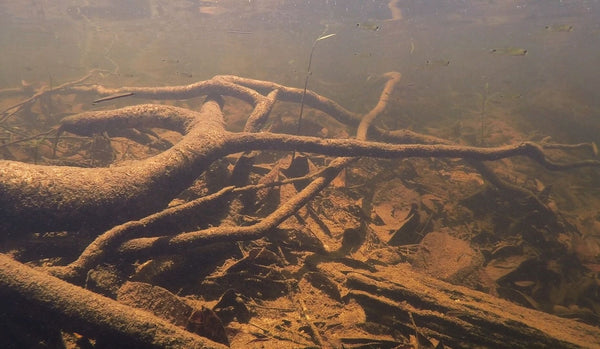
It’s fascinating and important for us to understand- at least on a superficial level- the concept of replicating some of the structures and features of these transitional habitats, such as flooded forest floors.
By understanding how these structures work, why the exist, and how they provide a benefit to the organisms which live among them, we will be in an excellent position to incorporate exciting features- such as buttress roots-into our future aquariums!
Stay inspired. Stay educated. Stay bold. Stay creative. Stay thoughtful…
And Stay Wet.
Scott Fellman


Leave a Reply