
One of the cool things about being an aquarium hobbyists is that, if you want, you can take an almost unlimited number of directions and approaches- many completely different, and achieving entirely different things. This hit home the other day when I was “playing hobbyist” with my reef aquarium.
Before I ever started Tannin, and even before I seriously thought much about botanical method aquariums, I kept reef tanks, and I grew corals commercially.
As a coral farmer, you’re completely attuned to the needs of the organisms you’re growing, from both an environmental and ecological standpoint.
For the first 25 years or so of the reef aquarium hobby, it was all about literally creating a miniature reef- with life at many levels, ranging from invertebrates to corals, and of course, fishes. Techniques, approaches, and gear were developed to foster the development of the overall captive reef environment.
We incorporated “live rock” (calcareous reef rock which has been colonized by all sorts of organisms, from bacteria to macroalage, sponges) into the literal “foundation” of our reef tanks. The rock was a biodiversity catalyst, physical structure, and “filter.”
Denitrification was thought to occur in deep layers of aragonite sand, so 3″-5″ sand beds were found in almost every aquairum at the time. Procedures and practices all revolved around developing appropriate fauna to help maintain such sand beds. The typical reef aquarium of the early 2000’s was a diverse assemblage of all sorts of life.
And reefs became a lot easier to maintain.
As the hobby evolved, greater attention was paid to the corals themselves- acquiring, studying, and propagating them.
Suddenly, the “ecology” part of a “reef aquarium” fell to a supporting role, with aquarists spending their time, attention, and money on equipment to provide for the needs of the corals above almost everything else. Sand beds and lots of live rock were seen as less important than mineral supplementation and technical filtration. The high diversity reef tanks of the early 2000’s gave way to coral focused aquariums.
It was about bare bottoms, minimal rock, and lots of mineral supplementation. We discovered that flow was as important , if not more so- to corals than light- so sand was removed, as it blew all over the place under the power of the new pumps we used. Incredible technological advances occurred in pump, lighting, and other life support equipment, resulting in some amazing gear. Corals flourished.
Because of environmental restrictions imposed by many countries, the importation of live rock was extremely limited, if at all. We began to utilize alternative materials, such as manmade or mined rock, to create our reef structures. It was a necessary, responsible response to the limitations that we had.
There was a certain obsession with limiting nutrients to the aquairum, save those the corals needed.
Corals became almost “easy” to keep and grow. It was the start of a fantastic new era in reef aquariums…
Yet, something was amiss.
You started hearing more and more about “the uglies”- a colloquialism for the phase that a reef tank goes through as it establishes itself ecologically. A phase where algae, biofilms, and dinoflagellates flourished in the absence of competition. A time when cloudy water and bacterial “blooms” were a regular occurrence.
We didn’t have these issues- at least, not to such an extent- during the early 2000’s, when ecodiveristy and creation of a microbiome were at the forefront of what we did.
It’s been that way for a while now. Bare bottom aquariums and inert, artificial rock, as environmentally responsible as they are, create a big challenge in creating a stable reef aquarium.
Fortunately, we’re kind of figuring it out, and approaches are being modified to incorporate the development of eco diversity in our tanks using artificial rock. Aquacultured rock is becoming more prevalent, and sand is making a comeback.
Okay, so I’m not including this long-winded description of the last 3 decades of reef keeping just to show you how much I know. I’m talking about this stuff to illustrate the challenges that can arise when we eschew ecology in the establishment of our aquariums.
It’s no coincidence that the botanical-method aquarium is a microcosm which depends upon botanical materials to foster the ecology and impact the environment.
My current reef is a bit different than what I’ve traditionally done. Well, the reality is that, it’s not “reef” aquarium in the “traditional” hobby sense. Rather, it’s a coral aquarium. The approach I took, with equipment choices, set up, and management was all be focused on keeping corals healthy, happy and growing.
I was not going to try to recreate the ecology of the entire reef ecosystem, with lots of sand, live rock, and all sorts of interstitial and sand bed organisms. The biodiversity and ecology within the tank largely comes from the corals and fishes themselves. Corals are communal organisms that are like little havens of self-contained biodiversity, and the success of the tank rides upon me making the corals happy.
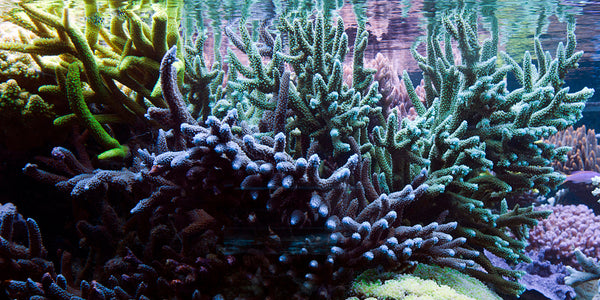
This approach is almost a diametric opposite to the approach that I take with my botanical method aquariums, be they brackish, blackwater, or whatever.
So, I had to laugh just a bit!
As you know, I’m a huge fan of creating a microcosm within our aquariums- at least to the greatest extent possible. I favor utilizing natural botanical materials and compositionally rich substrates to foster the ecology within our tanks. That ecology is everything from Paramecium to fungal growths, small crustaceans, and just about anything in between.
My freshwater and brackish water aquariums are ecologically rich, highly diverse miniature ecosystems. They’re intended from the start to be this way. As we’ve discussed so many times.
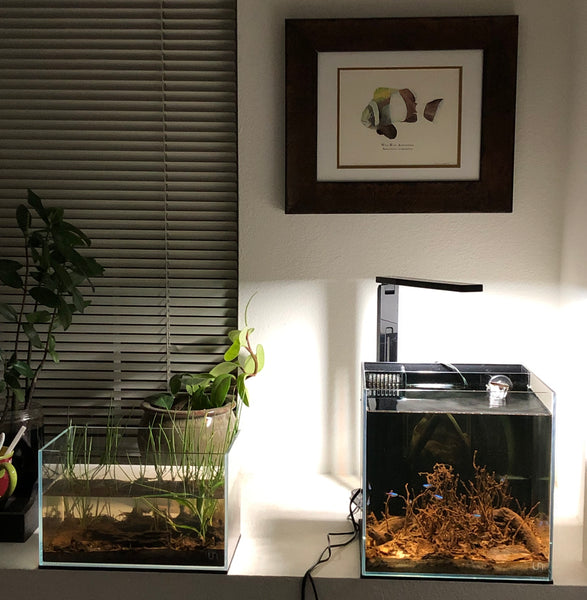
And of course, the sequence or process which we employ is pretty important…And really simple.
When I set up a brand new botanical-method aquarium, my process is really nothing crazy:
1) Add substrate material
2) Add wood (if used)
3) Add botanicals (all of them, at once after preparation)
4) Innoculate with cultured of bacteria or other organisms
OR…
5) Add a bit of material (decomposing leaves or botanicals) from a healthy established tank
6) Wait, and let it “bloom.”
Seriously complex stuff 😆
Woah, that blew you away, right?
Likely not, but hey. It’s just not really all that exotic a procedure.
That’s really about all there is to the actual physical setup process.The real part where the “rubber hits the road” is the period after the setup.
When you let it be.
A “jumping-off” stage, where our initial work is done, and Nature takes over for a while, breaking down the botanicals, allowing a “patina” of biocover and biofilm to cover some of the surfaces, removing the crisp, harsh, “new” feeling. This is where Amano’s concept of embracing the Japanese philosophy of wabi-sabi takes over. Accepting the transient nature of things and enjoying the beauty of the changes that occur over time.
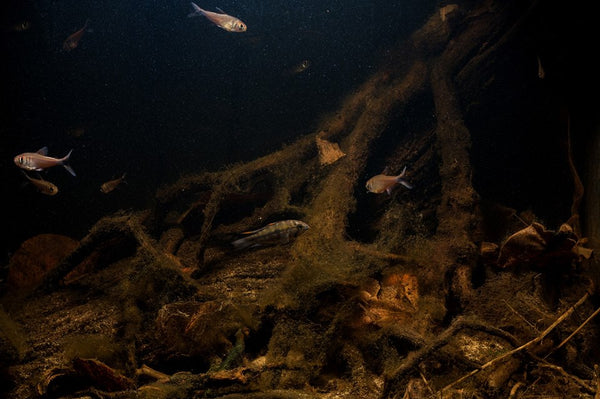
And of course, once stuff starts “softening” or breaking down, it doesn’t mean that your job is done, or that you’re just an observer from that point on. Nope. It means that you’re now in a cool phase of “actively managing” (and by “managing”, I am emphasizing observation more than “intervening!”) the aquarium.
Sure, when you embrace this mindset, you’re making minor “tweaks” as necessary to keep the aquarium healthy and moving in the direction-aesthetically, functionally, and otherwise- that you want it to. Yet, at some point early in the process- you’ll likely find yourself just letting go and allowing the tank to do what Nature intends it to do on it’s evolutionary path…
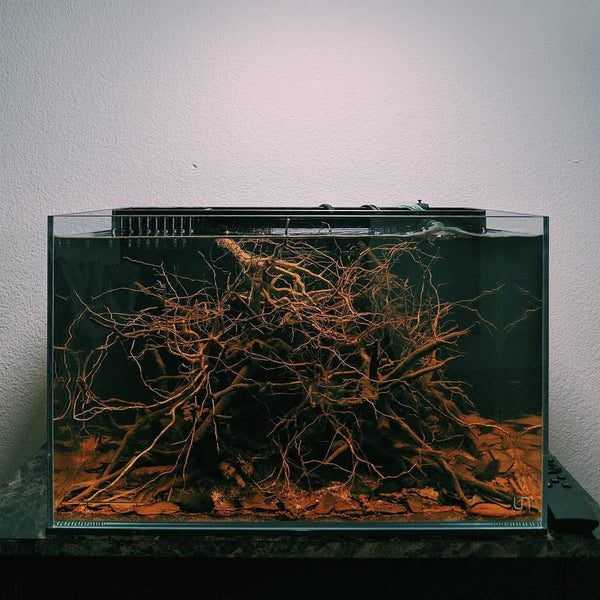
It’s a wonderful time in the life cycle of the aquarium.
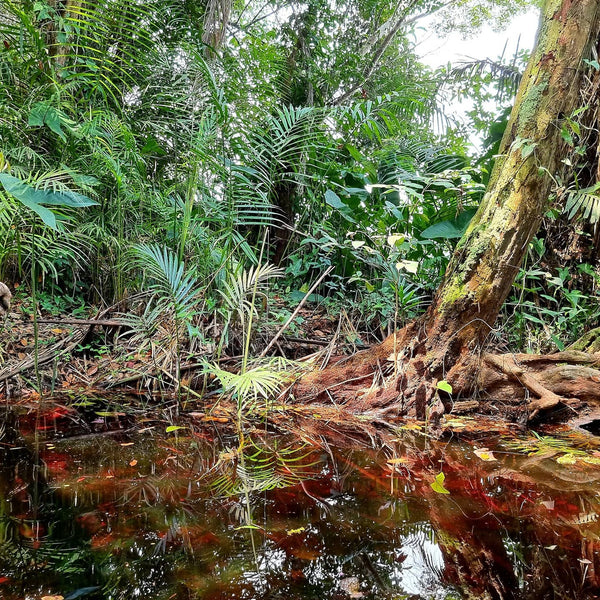
As botanical materials break down, more and more compounds (tannins, humic substances, lignin, bound-up organic matter) begin leaching into the water column in your aquarium, influencing the water chemistry and overall environment. Some botanicals, like leaves, break down within weeks, needing replacement if you wish to maintain the “consistency” of the habitat you’ve started to achieve in your aquarium.
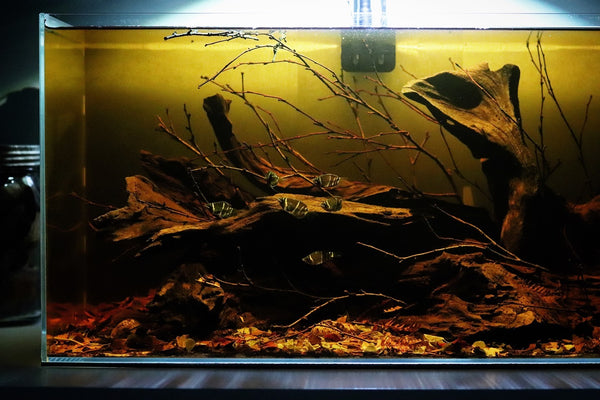
Others, like bark, branches, and more robust seed pods last a much longer time. They not only serve to enrich the aquatic environment- they become “attachment points” for fungal growth, biofilms, and algal mats- just like in Nature.
The key here is that the process takes time. It cannot be rushed. We can, of course, “assist” a little bit, by adding some bacterial cultures or cultures of other microorganisms, like Paramecium, etc., or small organisms like Daphnia.

And of course, there’s the very old tried and true practice that I mentioned, of seeding your new aquarium with material (in our case, botanicals, leaves, or wood) from an existing aquarium to help “kick start” things a bit.
It’s a classic way to go in many different types of aquariums, and it’s every bit as effective in botanical-method tanks as it is in any other. It won’t help you evade the process by which Nature recruits organisms to develop a microbiome, but it will certainly start the process a little more quickly.
The bottom line is that you need to take time, and go slowly. Your aquarium will evolve over time- regardless of the steps you take (or don’t take) to expedite the process. Going slowly- or at least, not doing stuff with the expectation that you’ll get to some perceived “destination” quickly- is a great approach.
I’m not in the habit of quoting myself; however, on occasion, something like this little gem from way back in 2016 rings as true today as it did then:
“…regardless of how you employ the botanicals, I cannot stress enough the need to go SLOWLY. There is no need to rush and dump everything in at one time, or in huge quantities. Particularly in an established aquarium, where your animals are used to a certain stable range of parameters…
It goes without saying that if your introducing materials which can influence water chemistry and quality, you will need to go slow and exercise common sense. And, since botanicals are actively “breaking down” in your aquarium over their “service lifetimes”, it’s important to employ good husbandry techniques (i.e.; monitoring of water quality, water changes, regular filter media changes, etc.)…”
Just some words to the wise, right?
Now, a lot of hobbyists new to our world will see the first biofilms and fungal growths emerge and assume that the tank is “overloaded” with organic matter. I think that “overloaded” is, in many cases, a bit extreme. However, “adequately stocked” might be a better descriptor.
And the appearance of these organisms is the initial indicator of the developing ecology of your aquarium. These are evidence of beneficial processes that you are witnessing. Not quite what you’d colloquially call a “cycle”, but a process that begins with leaves or other botanicals being colonized by organisms which help to break them down.
How does a leaf break down? And why should you care? Well, it’s a multi-stage process which helps liberate its constituent compounds for use in the overall ecosystem.
And one that is vital to the construction of a food web- both in Nature, and within our aquariums. So, it’s important that you understand jus ta bit about the process, I think.
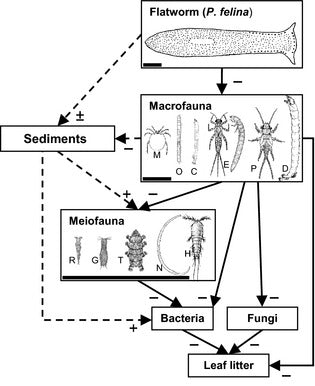
The first step in the process is known as leaching, in which nutrients and organic compounds, such as sugars, potassium, and amino acids dissolve into the water and move into the soil.The next phase is a form of fragmentation, in which various organisms, from termites (in the terrestrial forests) to aquatic insects and shrimps (in the flooded forests) physically break down the leaves into smaller pieces.
As the leaves become more fragmented, they provide more and more surfaces for bacteria and fungi to attach and grow upon, and more feeding opportunities for fishes!
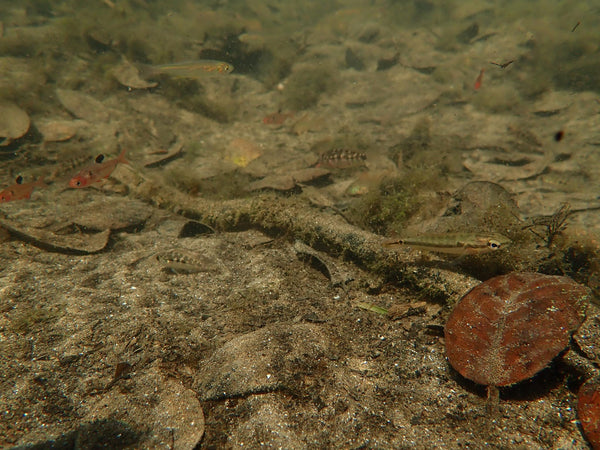
In a perfect world, you’d allow the tank to “run in” for a few weeks, or even months if you could handle it, before adding your fishes- to really let these organisms establish themselves. And regardless of how you allow the “biome” of your tank to establish itself, don’t go crazy “editing” the process by fanatically removing every trace of detritus or fragmented botanicals.
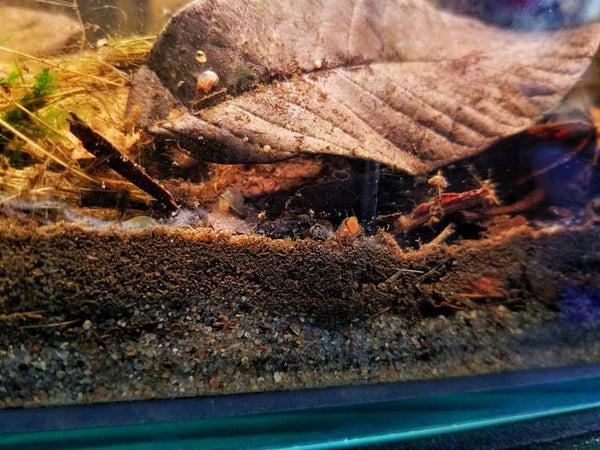
When you do that, you’re removing vital “links” in the food chain, which also provide the basis for the microbiome of our aquariums, along with important nutrient processing.
So, to facilitate these aquarium food webs, we need to avoid going crazy with the siphon hose! Simple as that, really!
Yeah, the idea of embracing the ecologically-driven breakdown of our so-called “decorative” materials in our tanks as a “phase” in the production of natural food sources in our aquariums is elegant, remarkable, and really not all that surprising. They will virtually spontaneously arise in botanical-style aquariums almost as a matter of course, with us not having to do too much to facilitate it.
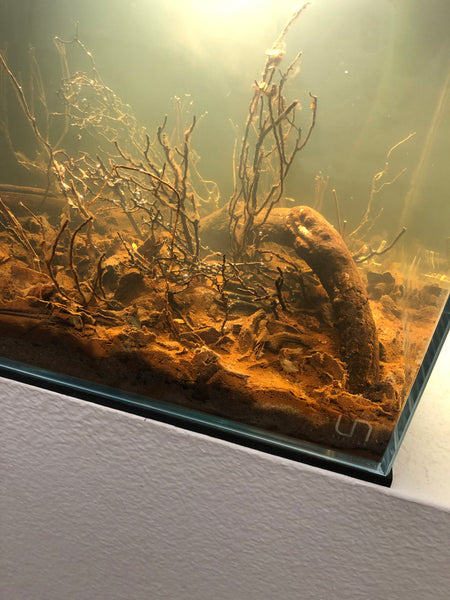
I’ve postulated the idea about botanical/leaf litter beds functioning as a sort of “biological filter”, and I think it’s pretty much a given that these systems do indeed perform that role. I believe that it’s not only possible– but probably very efficient- to utilize the materials in the botanical/litter bed to foster denitrification.
I believe that the idea of embracing some of the things that we’ve feared- like having all of that fungal growth on new wood and leaves and stuff, understanding the turbidity and cloudy water, and accepting the fact that things will evolve past the early, perhaps unsettling aesthetics.
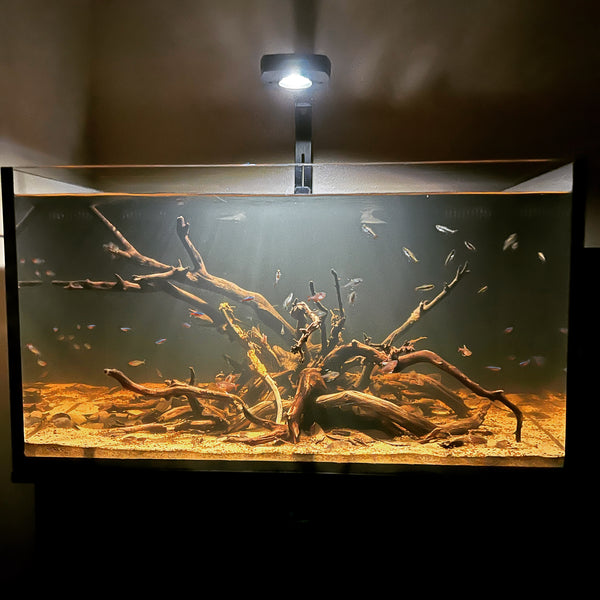
“Pushing through” the earliest phases.
When you think through the idea of how these early impacts are mostly aesthetic, and not harmful to your aquarium, you start to realize that the looks of this stuff is actually more awful than any possible detriments that they bring. And most important, you’ll discover that “editing” it out by removing it from your tank is actually doing damage to a burgeoning ecosystem before it ever really gets off the ground!
Utilizing our friends, the bacteria- the biofilms, and the fungal growths- to work with us to create amazing, functional systems is irresistible and more achievable than ever before.
Part of the game, as we’ve discussed ad naseum here, is to understand, appreciate, and ultimately embrace the way the aquatic environment is influenced by the fungal growths, biofilms, and decomposition which occurs when botanicals are added into our aquariums.
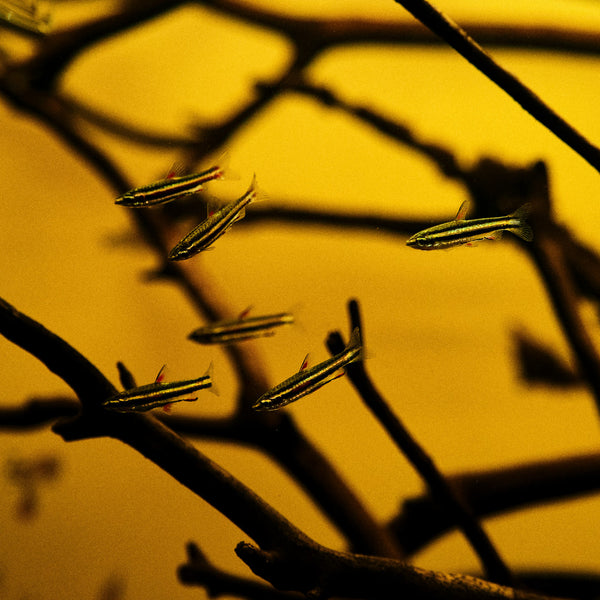
And, as we often say, that means making a mental shift to accept the unique aesthetics of a botanical-style aquarium: Brown water, stringy biofilms, and decomposing leaves and botanicals. All have their place in our world. The most challenging part of starting and managing one of these more natural, “ecology-centric” aquariums is to appreciate not only how they function, but to understand why they look the way they do.
You’ll get it- after that initial, ” Oh shit! What have I done? What’s all of this gunky stuff…” freakout…
If you don’t panic. Do some research, and learn about how natural aquatic ecosystems function, something just “clicks.” And you’ll understand.
It’ll make sense when you get out of your head the notion that you’re just trying to go after some sort of aesthetic, rather than trying to nurture the development of a miniature ecosystem within your aquarium.
I think we’re starting to see a new emergence of a more “holistic” approach to aquarium keeping…a realization that we’ve done amazing things so far, keeping fishes and plants in a glass or acrylic box with applied technique and superior husbandry…but that there is room to experiment and push the boundaries even further, by understanding and applying our knowledge of what happens in the real natural environment.
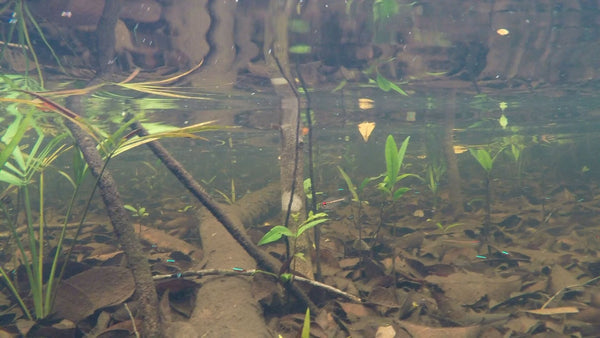
You’re making mental shifts...replicating Nature in our aquariums by achieving a greater understanding of Nature…
Expanding the ecology of your aquarium is largely a function of expanding your mind.
You’ve got this.
Stay patient. Stay educated. Stay observant. Stay curious…
And Stay Wet.
Scott Fellman
 The Tint
Leave a comment