
There is something fascinating and enticing to me about the idea of keeping an aquarium system “going” for very long periods of time, occasionally changing things up; yet leaving the “operating system” largely intact, while replacing the “soft” components over time.
Huh? The “operating system?”
Example?
Okay, let’s say that you’re kind of “over “your Southeast Asian Cryptocoryne biotope, and ready to head West to South America.
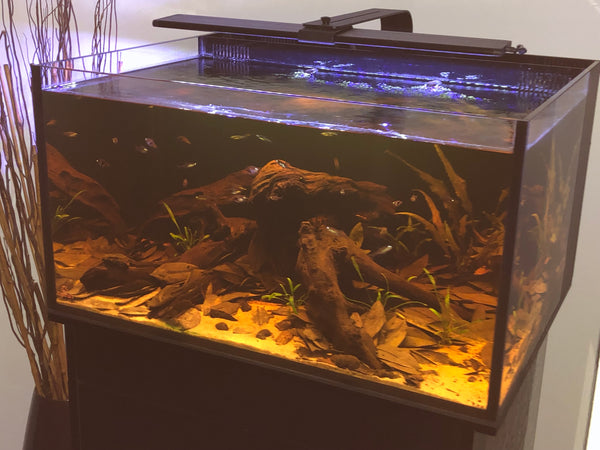
So, rather than tearing up the entire tank, removing all of the plants, the hardscape, the leaves and botanicals, and the substrate, you opt to remove say, only the plants and the driftwood/rocks from the tank; exchange a good quantity of the water. Add some new leaves and a few twigs or whatever.
Woooah! Crazy! You fucking rebel…
I know. I know. This isn’t exactly earth-shattering. Taking out old stuff and switching it up with new stuff…Groundbreaking.
On the other hand, in the world of the botanical-method aquarium, the idea of leaving the substrate and leaf litter/botanical “bed” intact as you “remodel” isn’t exactly a crazy one. And conceptually, it’s sort of replicates what occurs in Nature, doesn’t it? Ecologically, it’s on point for sure.
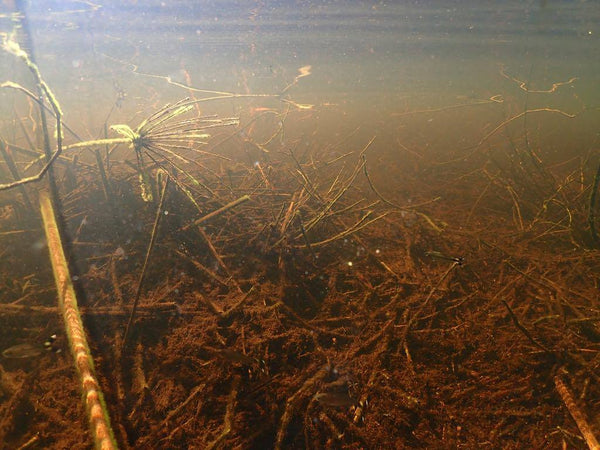
Yeah, think about this for just a second.
As we almost constantly discuss, habitats like flooded forests, meadows, vernal pools, igarape, and swollen streams tend to encompass terrestrial habitats, or go through phases where they are terrestrial habitats for a good part of the year.
In these wild habitats, the leaves, branches, soils, and other botanical materials remain in place, or are added to by dynamic, seasonal processes. For the most part, the soil, branches, and a fair amount of the more “durable” seed pods and such remain present during both phases.
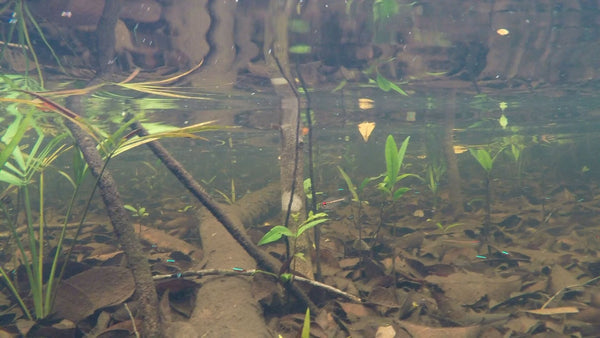
The formerly terrestrial physical environment is now transformed into an earthy, twisted, incredibly rich aquatic habitat, which fishes have evolved over eons to live in and utilize for food, protection, and complex, protected spawning areas.
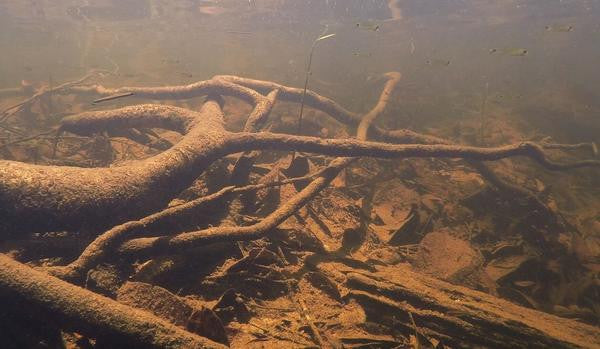
All of the botanical material-shrubs, grasses, fallen leaves, branches, seed pods, and such, is suddenly submerged; often, currents re-distribute the leaves and seed pods and branches into little pockets and “stands”, affecting the (now underwater) “topography” of the landscape.
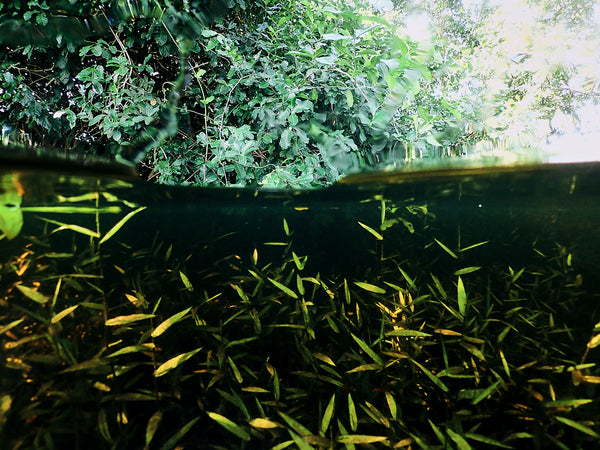
Leaves begin to accumulate. Detritus settles.
Soils dissolve their chemical constituents- tannins, and humic acids- into the water, enriching it. Fungi and micororganisms begin to feed on and break down the materials. Biofilms form, crustaceans multiply rapidly. Fishes are able to find new food sources; new hiding places..new areas to spawn.
Life flourishes.
Similar to what should happen in our aquaria, right?
The longer these materials are present in the ecosystem, the more they are utilized along the food chain by various aquatic life forms. And this process will play out continuously as long as there are materials present to “fuel” it.
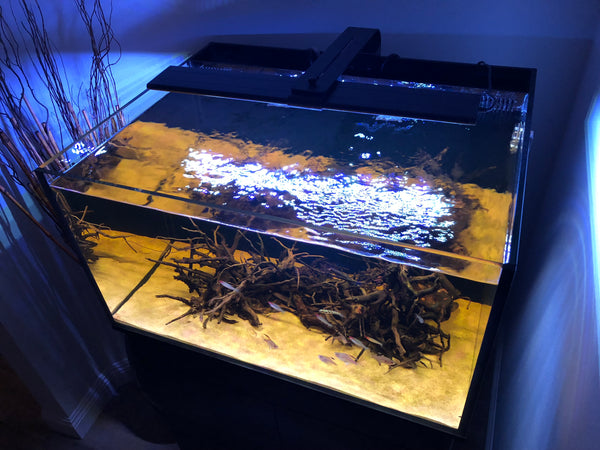
I have long believed that if you decide to let the botanicals remain in your aquarium to break down and decompose completely, you shouldn’t change course by suddenly removing the material all at once…Particularly if you’re going to a new version of an existing aquarium.
Why?
Well, I think my theory is steeped in the mindset that you’ve created a little ecosystem, and if you start removing a significant source of someone’s food (or for that matter, their home!), there is bound to be a net loss of biota…and this could lead to a disruption of the very biological processes that we aim to foster! I think that we should continuously add more materials into the aquarium to replace those which have broken down.
So yeah, I’ll literally transfer a fair percentage of the “software” from an existing tank into the new one. The rationale is exactly the same as the rationale for using sand from an established tank. And, as you probably recall, fungal growths and bacterial biofilms are also extremely valuable as food sources for life forms at many levels, including fishes, so “bringing forward” fungal-encrusted leaves, for example, from your old tank to the new one, makes perfect sense.
The growth of these organisms is powered by…decomposing leaf litter! Something which is present in virtually all proper-run botanical method aquariums.
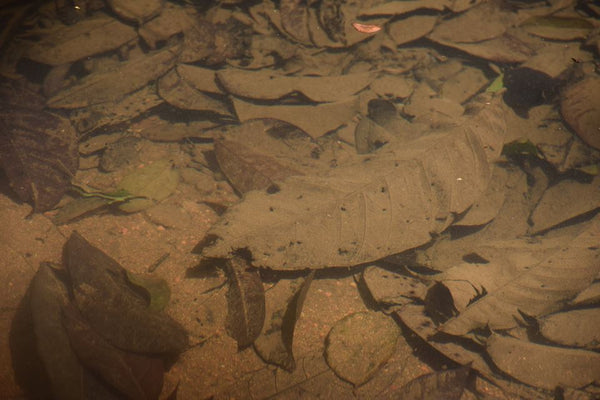
And the idea of adding “pre-colonized” materials from existing tanks to help “jump start” a new tank is simply a logical and economical practice. Having a big chunk of completely-established ecology transferred from one tank to another is almost too easy a process not to take advantage of!
Now, sure, transferring all of this material over isn’t a way to take a shortcut to circumvent the establishment of the nitrogen cycle in the new tank, it’s a step in establishing it. A way to bring some extant ecology into a new location.
And, think about it: This isn’t all that different than what happens when a stream overflows and forms a new small tributary. Some of the materials from the established aquatic ecosystem flow into the newly-inundated area, bringing with them their “on-board” population of microorganisms, fungi, and insects.
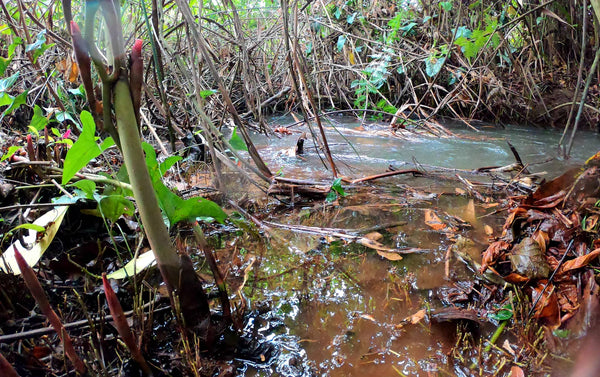
Nothing’s ever wasted, right?
This isn’t exactly earth-shattering, I know, but it’s worth thinking about vis-a vis our aquarium work.
And, as we’ve discussed many times, the same sort of concept applies when you’re “remodeling” an existing aquarium; perhaps switching up from say, a “South American theme” to an “African theme”, or whatever.
This is similar in some respects to the Japanese aquascaping practice of “sozo haishoku” espoused by the “Master” of this in aquariums, the late Takashi Amano. This is the processs of removing of as much old substrate material as possible along with the plants it contains in an aquarium, and replacing them with new materials.
It preserves the overall “composition” of the layout, but the “softscape” (botanicals and leaves, in our case) could change dramatically.
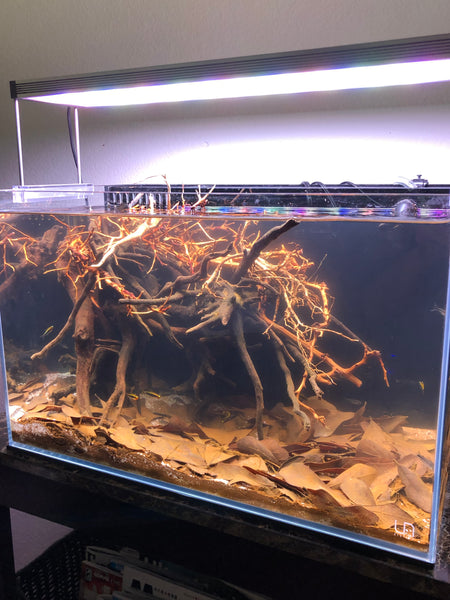
Yeah, in the world of the botanical method aquarium, the idea of leaving the substrate and leaf litter/botanical “bed” intact as you “remodel” isn’t exactly a crazy one. It’s about preserving ecology over time, and despite changes.
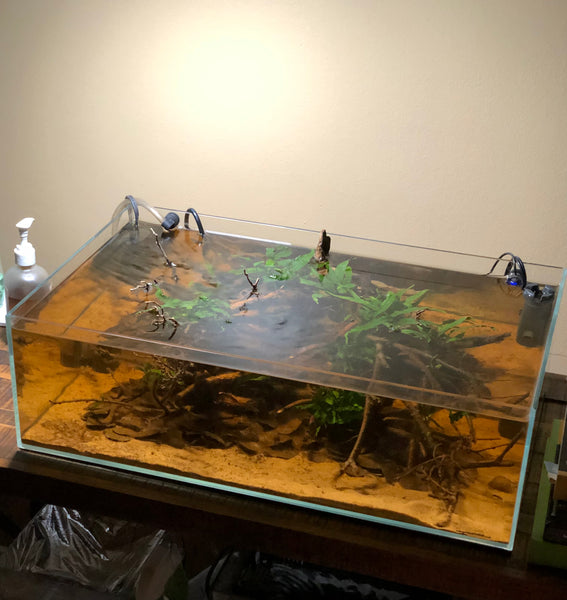
Yeah, there is a natural “prototype” for this process.
And, in the aquarium, we can embrace this and replicate it.
As we talked about many times before, removing old materials and replacing them with new stuff does sort of mimic what happens in many streams and rivers on a seasonal basis: Older materials are swept downstream as the watercourses swell, and are replaced by new ones that arrive to replace them.
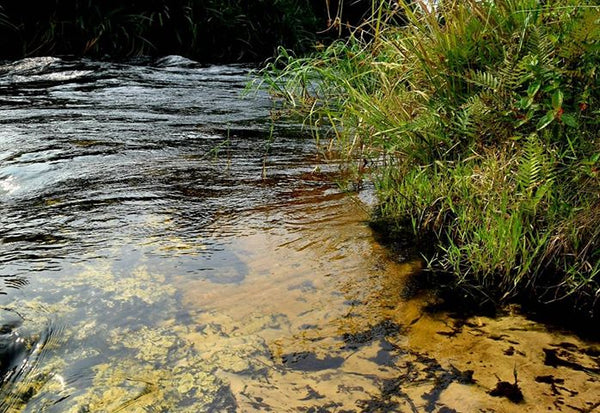
And of course, in the aquarium, performing a “sozo haishoku”-type replacement of materials can significantly change the aesthetic of the aquascape because the botanicals are replaced with different ones after the previous ones are removed. In Nature, the underwater “topography” is significantly affected by these events, removing old feats and replacing them with new ones.
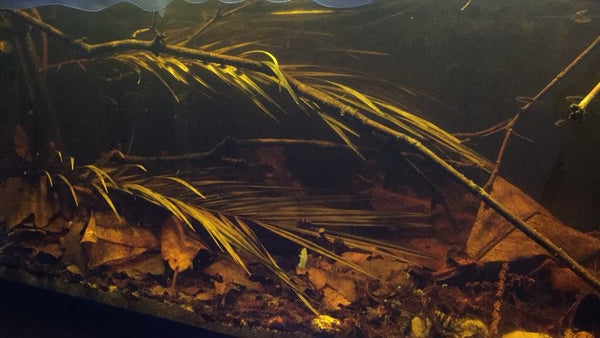
On the “downside”, it can also create significantly different environmental parameters when we do big “change-ups” of materials in a short span of time; the impacts on our fishes may be positive or negative, depending upon the conditions which existed prior to the move.
Okay, I might just be torturing this simple idea to death- I admit this point that I’m probably not adding much more to the “recipe” here; likely simply being redundant and even a bit vague…However, I think we need to think about how interesting and indeed, transformative this simple practice is.
And yeah, I’ll concede that we probably don’t have every answer on the processes which govern this stuff.
For example:
The most common question I get when it comes to taking out a fair amount of this material and then “continuing” the tank is, “Will it cycle again?”
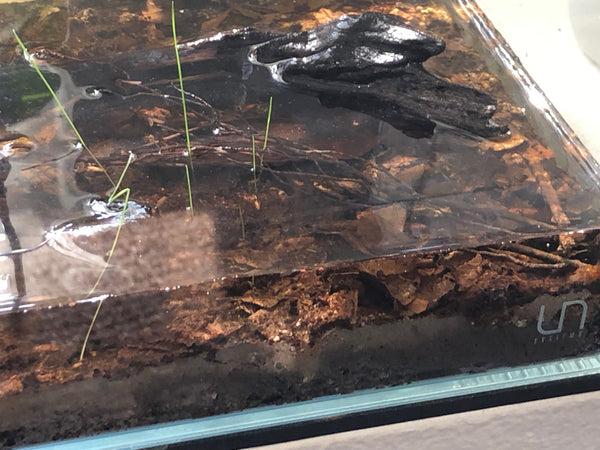
And the answer is…Sure, it could.
On the other hand, here is my personal experience:
Remember, I keep a sort of diary of most of my aquarium work. I have for over three decades (gulp…). Just random scanning my aquarium “diary” (yeah, I keep one), I see that I have executed this practice dozens of times in all types of aquariums, ranging from simple planted aquariums to hardscape-only tanks, to botanical-style, blackwater and brackish aquariums, to reef tanks.
Not once- as in never- have I personally experienced any increase in ammonia and nitrite, indicative of a new “cycle.”
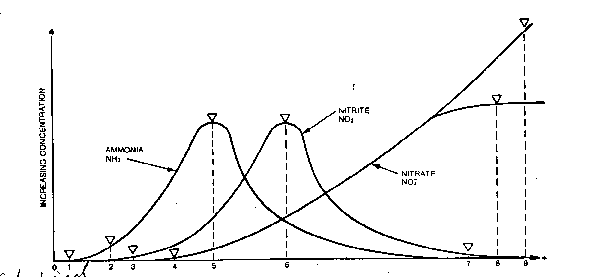
Now, this doesn’t mean that I guarantee a perfect, “cycle-free” process for you. I’d be a complete asshole if I asserted that!
On the other hand, by leaving the bulk of the substrate material intact, and continuing to provide “fuel” for the extant biotia by leaving in and adding to the botanicals present in the aquarium, this minimizes disruption to the ecology to a certain extent, and makes a lot of sense from a “ecological stability preservation” standpoint.
I personally think our botanical method systems, with their diverse and dynamic biology, rebound quickly. Much like the natural systems they purport to represent.
Sure, I have in place a mindset and husbandry practices that assure success with this idea. We all do.
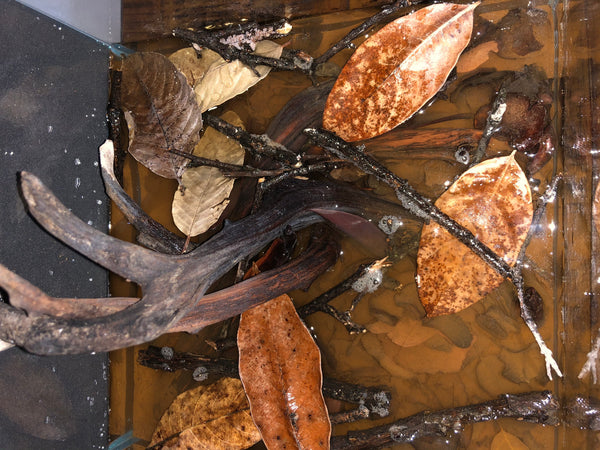
Personally, I don’t think that botanical method aquarium are ever “finished.” They simply continue to evolve over extended periods of time, just like the wild habitats that we attempt to replicate in our tanks do…
Botanical method systems are, in my opinion, more robust than they are vulnerable.
I believe that our systems, with their diverse and dynamic biology, rebound quickly from disruptions and changes. And I also believe that, because of our approach and it’s reliance on biological processes, they establish themselves to a more “stable” state far more quickly than “typical” aquariums do.
Much like the natural systems they purport to represent!
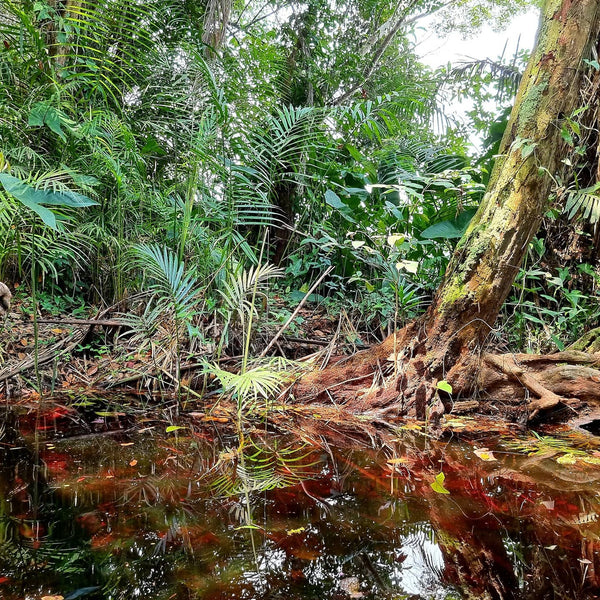
Of course, I also have in place a mindset and (like most of you) a mastery of basic aquarium husbandry practices that assure success with this approach, and that’s a huge key here. Patience, and the understanding that yeah, a tank might take a while to establish itself, even with a large influx of “old” materials…or grasping the fact that you might experience an ammonia or nitrite spike when you “reconfigure” an existing tank- and being able to “go with that”- is critical to success, IMHO.
Not needing to rush to some arbitrary “finish line” is a most liberating approach to keeping any kind of aquarium. It will not only guide your practices, it will instill in you a better understanding of the processes and occurrences which take place in Nature as well.
If you look at an aquarium as you would a garden- an organic, living, evolving, growing entity- then the need to see the thing “finished” becomes much less important. Suddenly, much like a “road trip”, the destination becomes less important than the journey.
It’s about the experiences gleaned along the way. Enjoyment of the developments, the process. In the botanical method aquarium, it’s truly about a dynamic and ever-changing system.
Every stage of the aquarium’s existence holds a unique fascination.
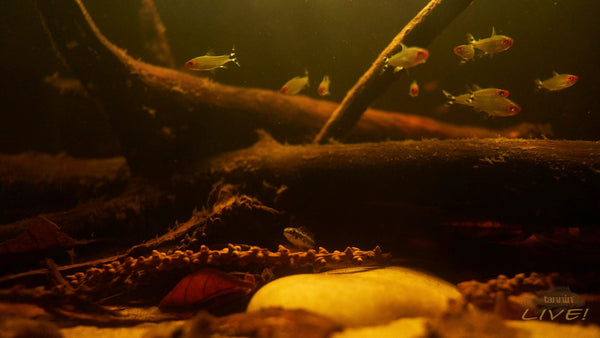
By reusing and re-purposing existing materials and the organisms which colonize them in new iterations of your tank, or new tanks altogether, you’re simply carrying on the same process which have occurred in natural aquatic systems for eons.
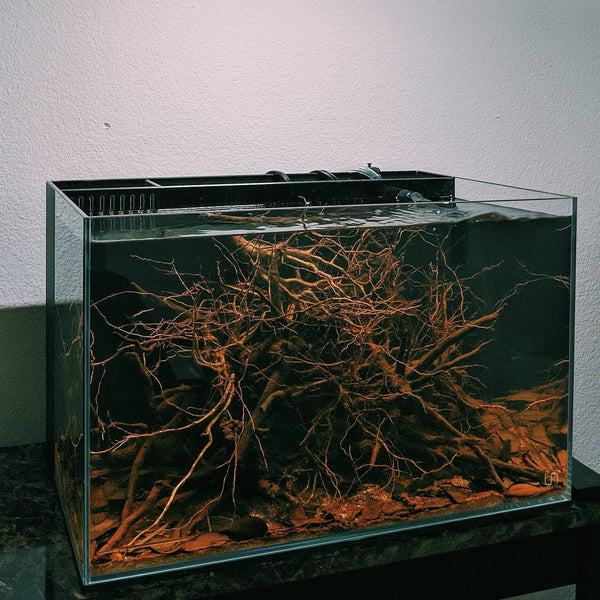
In essence, one could argue that this process instills a certain “immortality” into our aquariums…The botanical materials and substrate form one established aquarium can literally “bring life” to a succession of new systems indefinitely!
A sort of “immortality”, for sure!
Endless.
Stay engaged. Stay creative. Stay bold. Stay excited…
And Stay Wet.
Scott Fellman


Leave a Reply