
Like many of you, I find it hard to stick to just one obsession in the aquarium hobby. And I have pretty diverse interests! As you probably know by now, I have had a long term love affair with the brackish water habitats of the tropical world.
Brackish water habitats are among the most ecologically diverse and productive on the planet. Brackish water is water that has more salt than freshwater but less salt than seawater. It forms where freshwater and saltwater mix, such as in estuaries (where rivers meet the ocean), Mangrove swamps (“Mangals”), and Coastal lagoons.
Typical specific gravity in brackish water systems ranges from about 1.002-1.018.
Brackish water often supports specialized plants and animals that can tolerate changing salt levels, such as:
Many of these habitats are dominated by the aforementioned Mangroves.
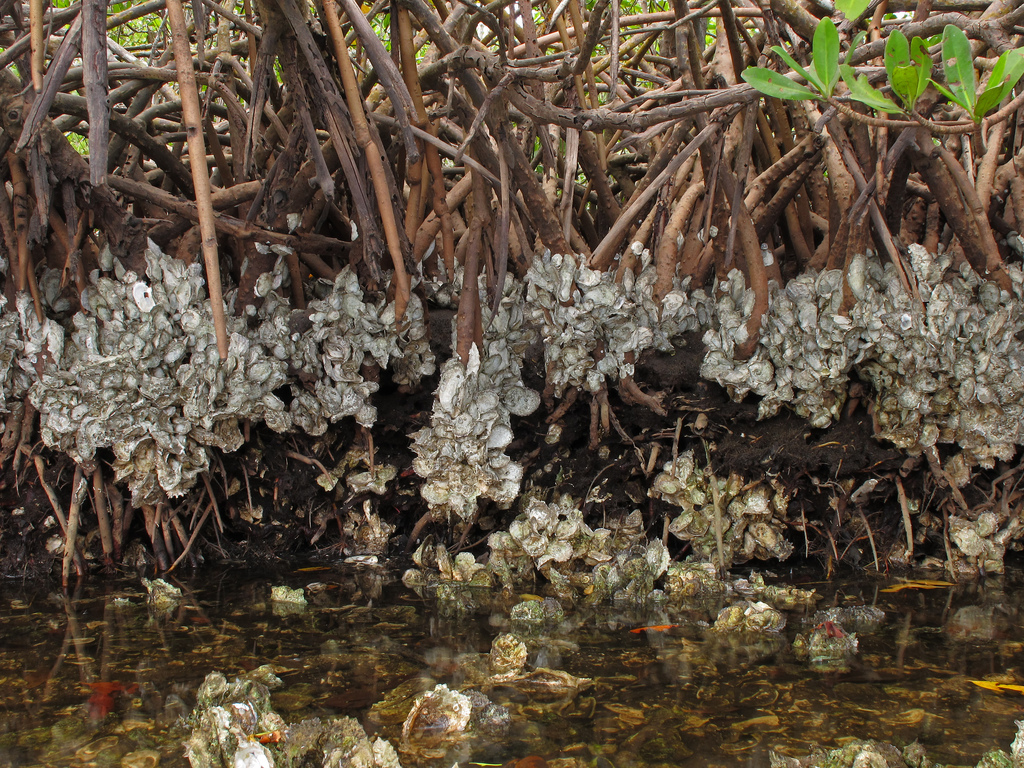
There are a lot of misconceptions about brackish water aquariums floating around out there. I think that part of it stems from a lack of clear understanding about the habitat itself. And the “hobby interpretation” of brackish water habitats has impacted not only the technique, but the aesthetic interpretation -and appreciation- of these habitats as well.
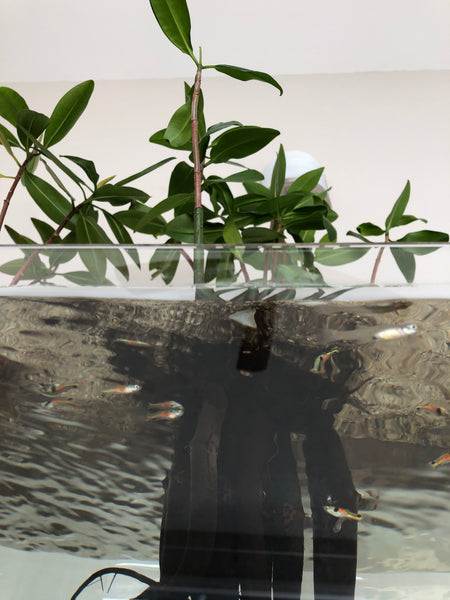
Although there is a good amount of scholarly information on brackish-water habitats from which brackish water fishes come, in the hobby, (with the rare exception of some biotope enthusiasts) we’ve sort of distilled brackish water aquarium aesthetics down to white aragonite sand, a few rocks, and maybe some hardy plants…and it’s been mired in that aesthetic hell for decades.
And little effort has been made to recreate the ecology of these habitats in aquariums, IMHO.
And then there is that “perception” thing…
I think that the perception among many aquarium hobbyists was that brackish is more tricky to keep than freshwater, easier than a reef tank, yet offers little in the way of excitement on first glance. A sort of “no man’s land”- a middle ground, if you will- that no one really goes to with any degree of regularity. Progression has been slow, if not static.
And really, the fish selection and availability has not been exactly stellar, with many dealers hesitant to stock brackish fishes for simple lack of demand and interest.
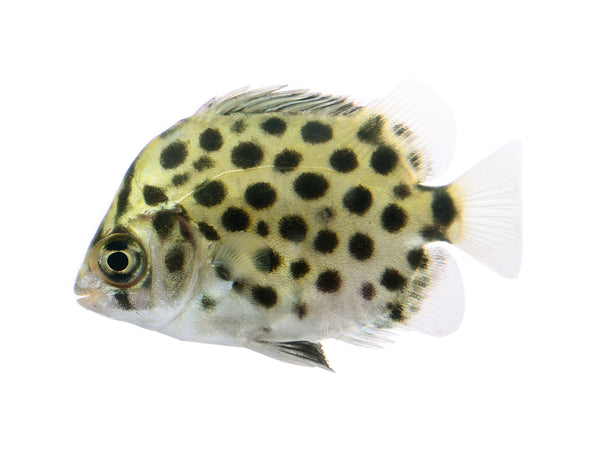
And quite frankly, many fishes that have been perceived to be “brackish” by hobbyists are either actually from pure freshwater habitats (I’m thinking about certain Glassfish and some Rainbows), or have some populations that are from brackish (which are seldom, or inconsistently imported).
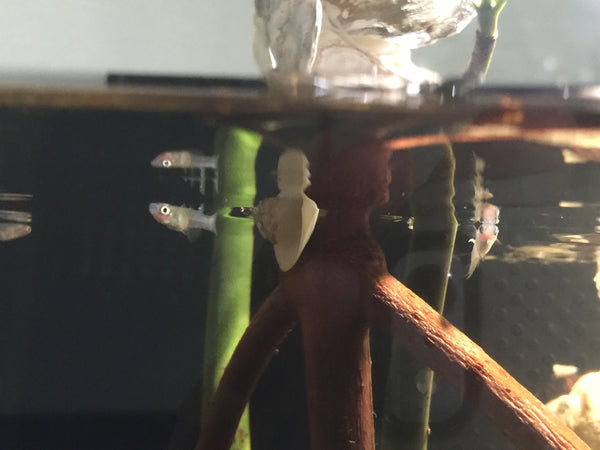
So, at least part of the issue is that we aren’t exactly certain in many cases where our subject fishes came from! A bit of a challenge when trying to keep them in specialized water conditions!
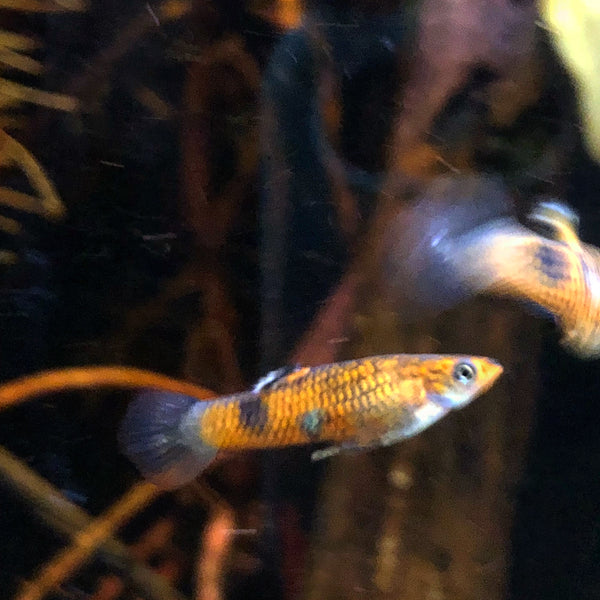
And then there are those fishes, like Mollies. which are euryhaline (capable of tolerating a wide range of salt concentrations), with the majority being found in pure freshwater. Salt, in many cases, is simply used for health purposes.
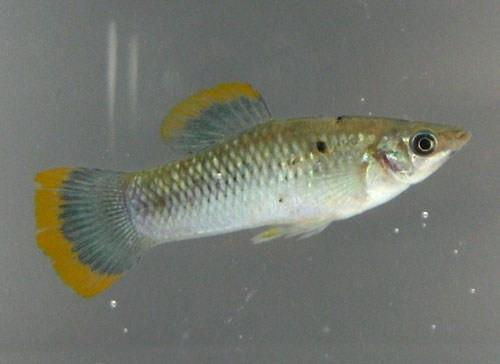
(P. sphenops by Hugo Torres. Used under CC by 2.5 es)
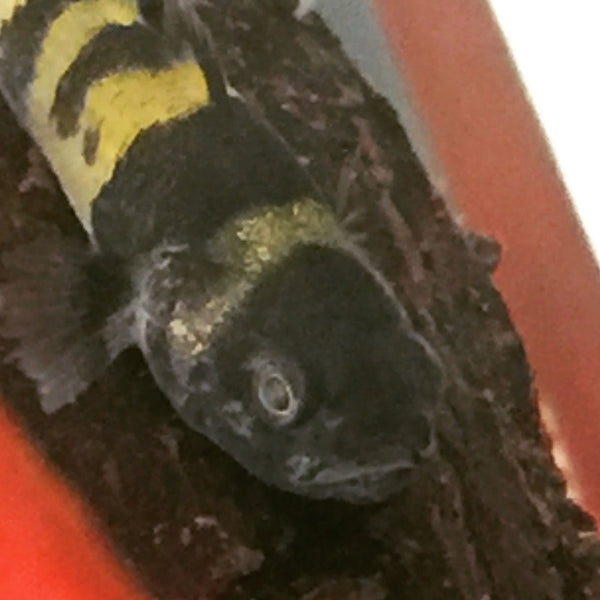
Oh, and I can’t even begin to tell you the challenge I went through to source a group of Bumblebee Gobies that were actually collected from a brackish water habitat! And even then, the species ID on mine is not 100%; with a few hobbyists I know insisting that mine are a pure freshwater species…and of course, when I do the research, I discovered that there are populations from both pure fresh AND brackish,,,Arrghhh!
One of the biggest differences between the botanical-method approach to brackish aquariums and the more traditional approach of “rock and crushed coral/oyster shell, etc.” approach is that there are a variety of natural collateral ecological benefits to the physical environment that you can realize by having live mangroves, and materials like mangrove root sections, branches and leaves in the water.
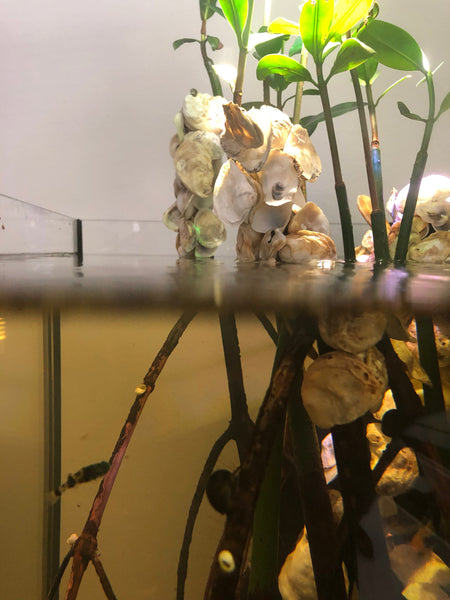
Use of mangrove roots, branches, and leaves virtually assures that you’re going to be imparting tannins into your aquarium water. The tannins, of course, not only add an appealing visual “tint” to the water, they provide other benefits as well. In this instance, tannins realized from the mangrove wood and leaves will react with calcium and other alkaline compounds to produce the insoluble salt, calcium tannate. The by-product of this reaction is the releasing of calcium and other ions into the water, which serve to buffer the pH in the aquarium.
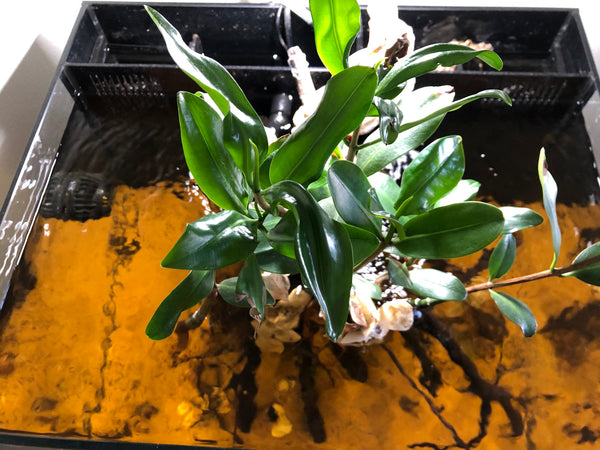
So, yeah, oddly, having a bunch of wood and leaves in your tank will actually create a sort of stability that benefits your tank in ways you may not have considered! Just one of many unusual and useful discoveries which await those who venture into the slightly salty world.
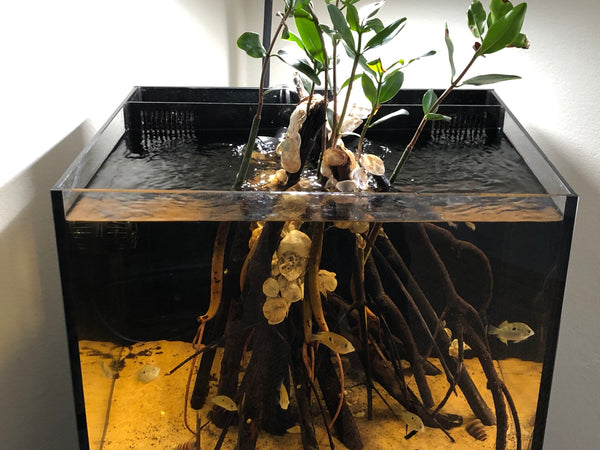
Of course, that’s just a water chemistry benefit.
There are many ecological benefits to this approach, as we’ve discussed before. Much like in our freshwater botanical method aquariums, brackish water mangrove aquariums can replicate the unique ecology of the wild habitat. Mangrove ecosystems are heavily detritus-driven. Fallen leaves become microbial food, detrital particles, and dissolved organic matter.
This fuels the growth of crabs, fishes, invertebrates, shrimp, and microbial communities. A huge portion of mangrove productivity enters the food web through decomposition rather than direct grazing. Decomposing leaves and detritus are of huge importance.
And yeah, as I keep mentioning, most tropical brackish water systems are dominated by Mangroves.
There are more that 50 species of mangroves found throughout the world. Mangroves thrive in oxygen-deprived sediments which would certainly spell doom for most plants. They have evolved certain morphological and physiological responses, which allow them to survive in these harsh conditions.
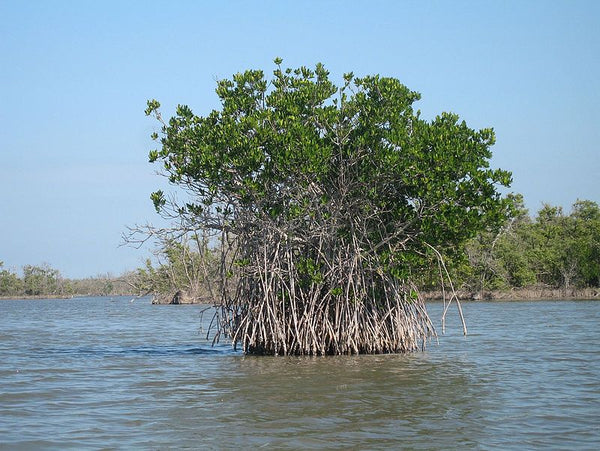
Mangroves employ a sort of “internal ionic regulation.” The Red Mangrove, Rhizophora mangle, (the most common one we encounter in the aquarium hobby) is known to botanists as a “salt excluder”, which separates freshwater at the root surface by creating a type of non-metabolic “filtration system.”
The process of transpiration (exhalation of water vapor) at the leaf surface creates negative pressure in the xylem (the vascular tissue in plants that conducts water and dissolved nutrients upward from the root ). This causes a type of “reverse osmosis” to occur at the root surface. The salt concentration of xylem sap in the Red Mangrove has been found to be about 1/70th of the salinity of surrounding seawater, but this is l0 times higherthan in normal plants!
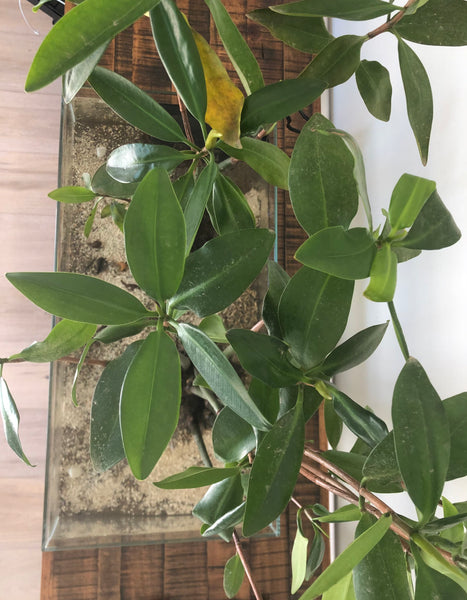
The Red Mangrove stores and disposes of excess salt in the leaves and fruit. (Which is one reason why we spray the leaves down regularly, which helps avoid salt buildup on their surfaces).
Yeah, mangroves are incredibly adaptable.
Recreating a brackish mangrove ecology in an aquarium is absolutely possible, and it can become one of the most biologically interesting aquarium systems you can build! The key is understanding that a mangrove habitat is not just “saltwater with mangrove plants” — it’s a dynamic detritus-driven mud ecosystem with fluctuating salinity, shallow water, microbial activity, and root complexity.
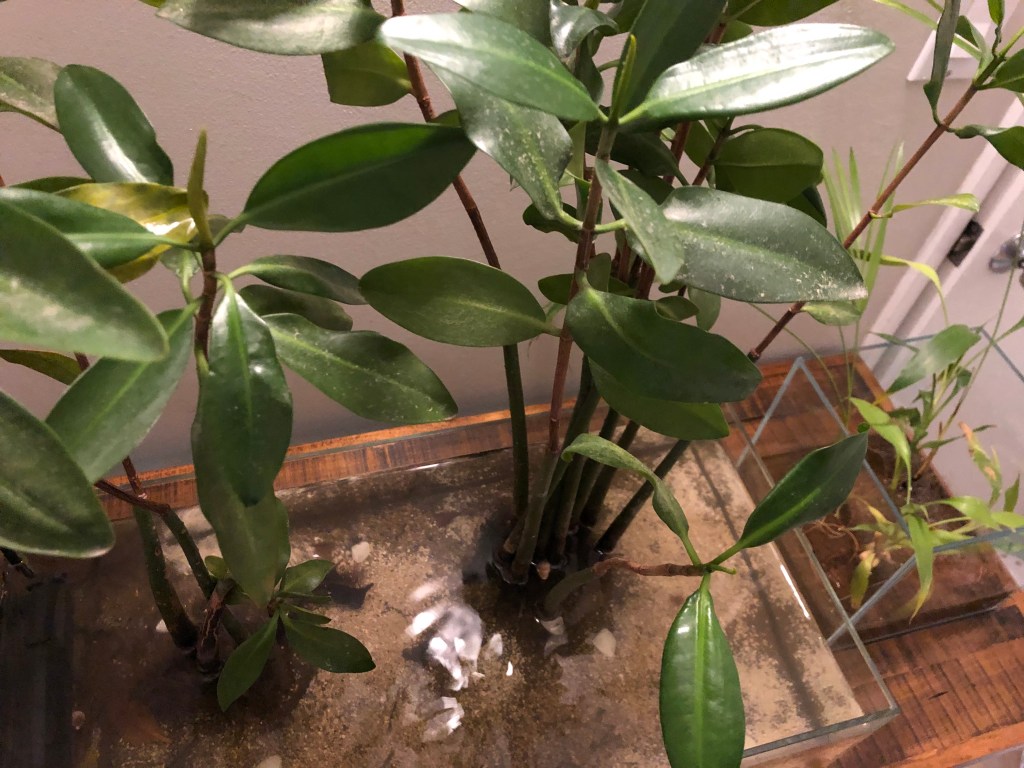
The hardest thing we’ve had to do- and continue to do- is to change the perception among hobbyists that brackish water biotopes are stark white sandy places with a few rocks, and super clean water. Actually, many brackish water estuaries and lagoons are way different than we’ve portrayed them in our aquariums over the years.
Mud, leaf litter…and mangroves.
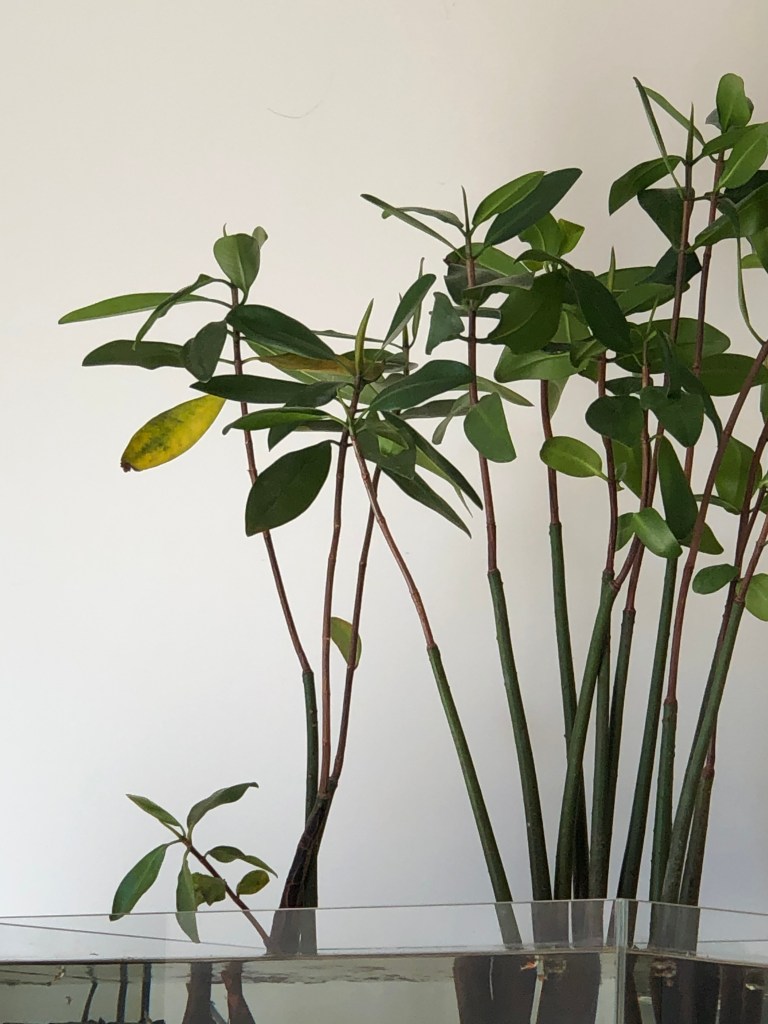
An ecologically functional brackish water mangrove aquarium system needs brackish water, mud/sediment substrate, root complexity, detritus cycling, moderate nutrient availability, strong biological filtration, and low-to-moderate water movement- all things that we can create in our tanks with a little effort.
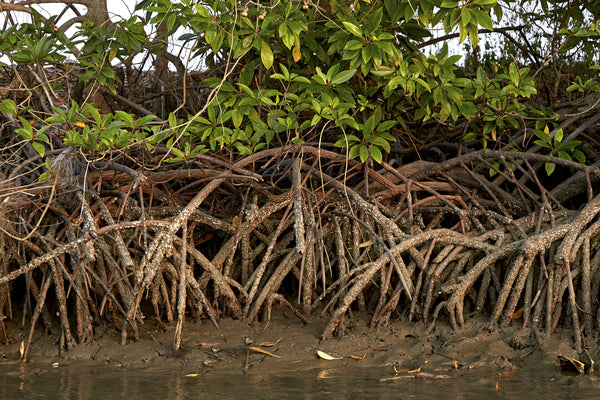
These brackish water habitats are often turbid, brown-tinted waters, with muddy, rich bottoms covered with decomposing leaves, lots of micro and macro algae, some plants, and often dominated by Palms and Mangroves. Oh- and lots of small fish and invertebrates.
Sounds like a fun time to me!
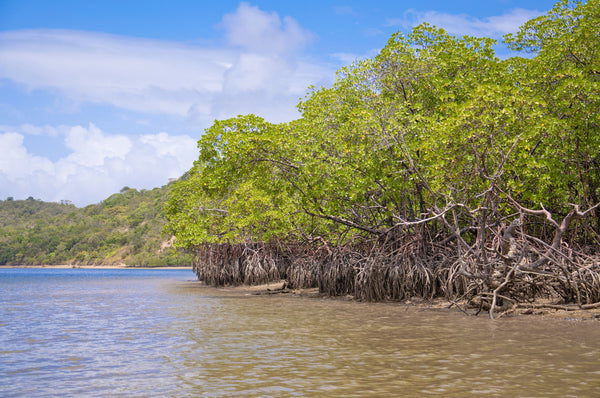
Sometimes, you’ll find amazing mangrove growth in blackwater ecosystems, more reminiscent of the types of habitats we’re used to replicate in our aquariums!
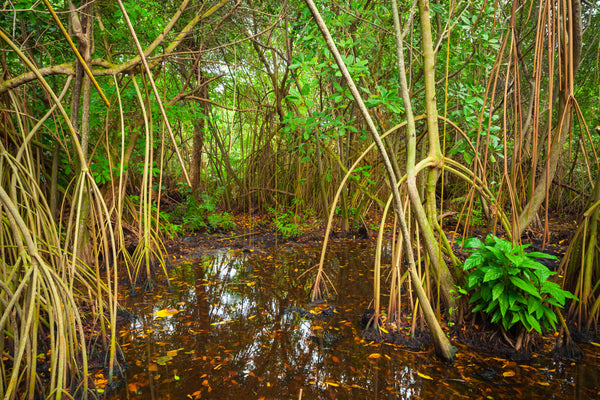
By and large, however, mangrove ecosystems are either brackish or full-strength marine water.
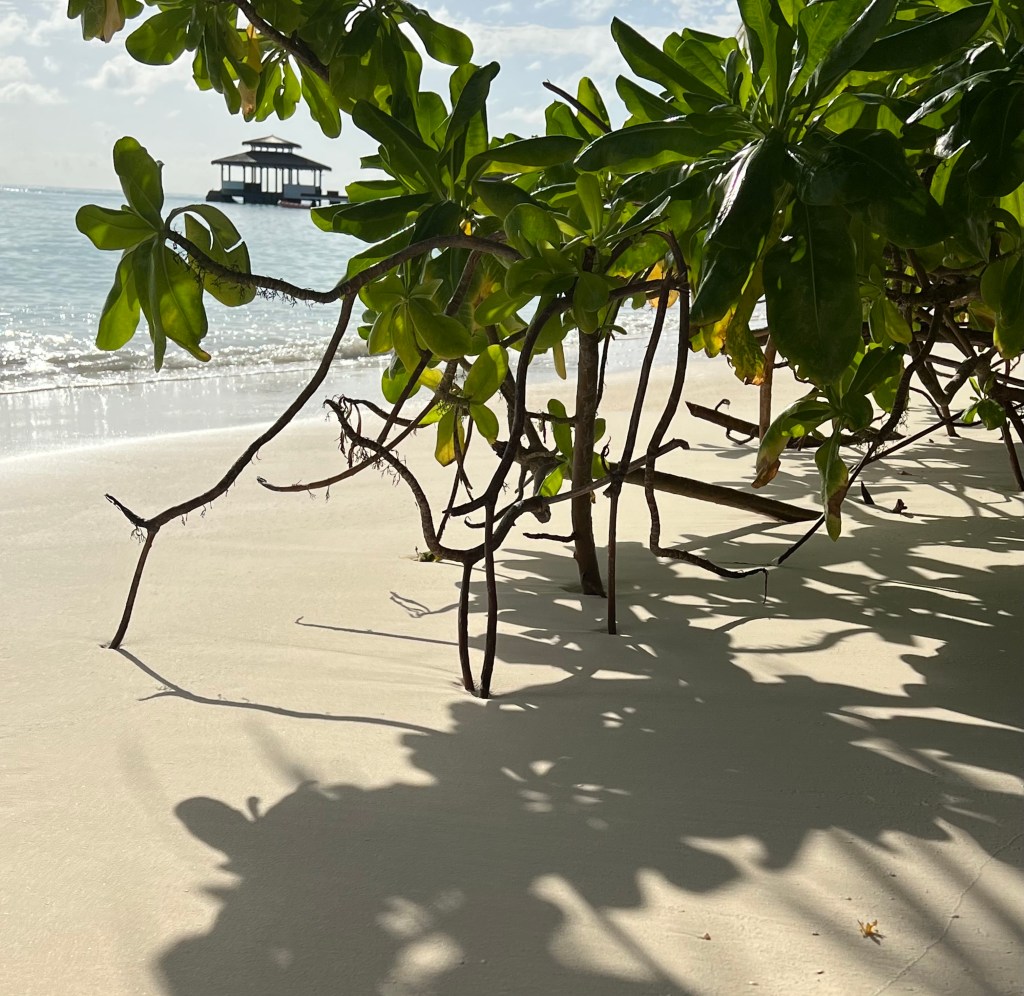
When you play with brackish water and this more ecologically-minded approach, you should expect a bit of “pushback” when you share your work with the broader aquairum hobby community. Yes the aquarium world has its quirks…and opinions- about how things should be…
Over the years, I’ve heard the “warnings” from people on attempting to replicate the ecology of this habitat in the aquarium:
“It won’t work in a brackish tank! It will create anaerobic conditions! Too much nutrient! Ionic imbalance…Tinted water means dirty!”
Etcetera…
And, unlike many of the prognosticators who predict doom and gloom, and who insist this can’t work, or that the functional aspects of the habitats we’re obsessed with can’t be recreated in aquariums, I believe that they are perfect for replication. And yeah, I’ve actually been to quite a few of these habitats myself- dip net, refractometer, and ORP tester in hand- and I have the cuts, bruises, and insect bites to prove it! I’ve gotten up close and personal with mangroves, mud, and many of the wonderful organisms which call the “Mangal” home.
Trust me, these are way, WAY different than how we have traditionally portrayed brackish-water habitats in the aquarium. There is a very serious disconnect that has always left me scratching my head.
I’ve spent a lot of time studying and exploring the wild mangrove ecosystems, and messing with them in aquariums, and the weird criticisms just didn’t add up to this fish geek.
A lot of naysaying, without a lot of actually trying. “Regurgitation Syndrome” rears its ugly head again.
And, yes, the by-product of our approach is that it just happens to have a different aesthetic, too, by virtue of the materials we work with. Less emphasis on “sterile” bright white sand and crystal-clear water, and more emphasis on a functional representation of a tropical, brackish water ecosystem: Muddy, nutrient-rich substrate, filled with decomposing mangrove leaves, and stained a bit from tannins.
Beautiful in a very different, yet oddly compelling way.
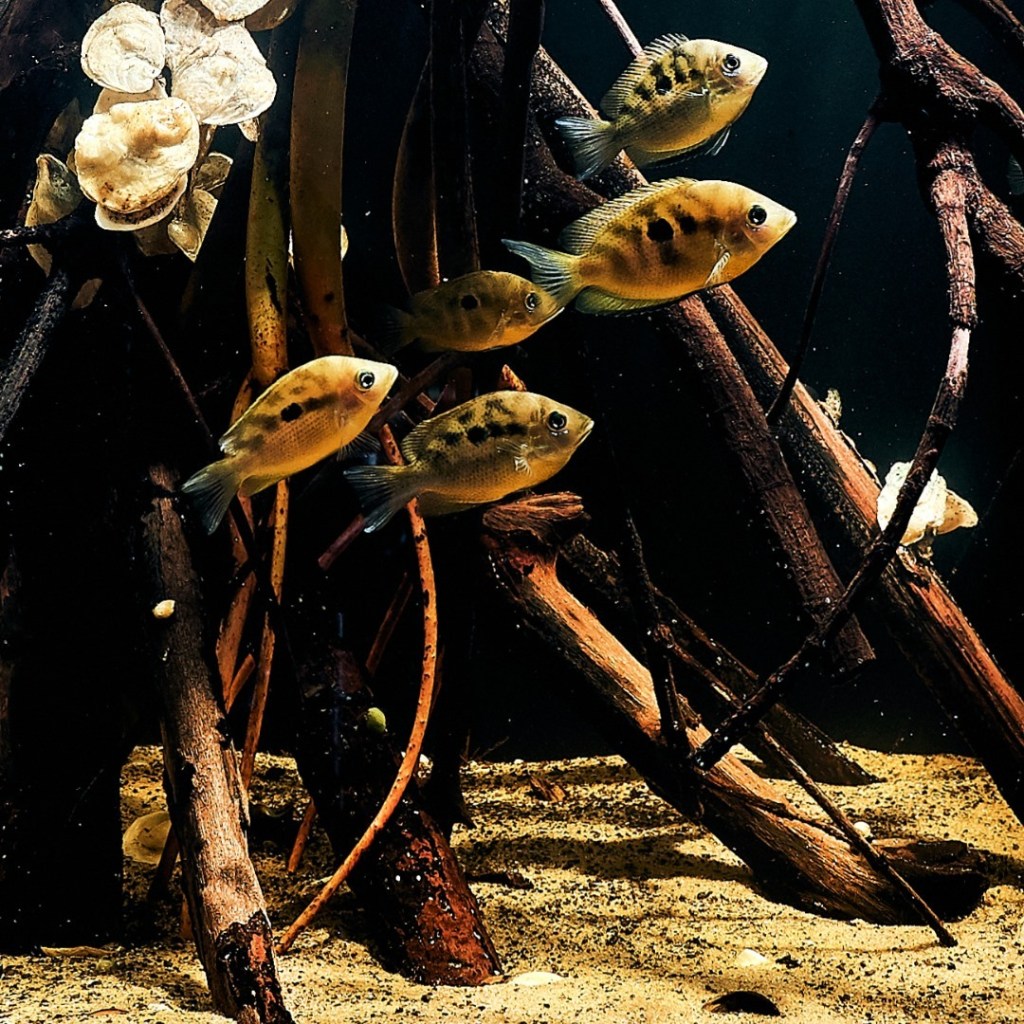
The primary ecological drivers of a brackish-water mangrove habitat are the environmental forces ( ie; temperature, tides, nutrients) that determine which organisms can survive there and how the ecosystem functions. Mangroves exist in a constantly shifting boundary zone between land and sea, so their ecology is dominated by stress tolerance and nutrient cycling.
And I think that our interpretation has embraced this and maybe can help move the needle a bit.
It’s an evolution– a step forward out of the artificially-induced restraints of “this is how it’s always been done”– another exploration into what the natural environment is REALLY like- and understanding, embracing and appreciating its aesthetics, functionality, and richness.
“Richness.” A good word. actually.
The substrate of this type of habitat- and the aquariums which represent it-are covered with a thin layer of leaf litter. Specifically, mangrove leaf litter. This not only provides an aesthetically interesting substrate- it offers functional benefits as well. Like, imparting minerals, trace elements, and organic acids to the water.
Mangrove leaf litter, like its freshwater counterpart, is the literal “base” for developing our brackish-water aquarium “food chain”, from which microbial, fungal, and crustacean growth will benefit.
And of course, these leaves will impart some tannins into the water, just as any other leaves will!
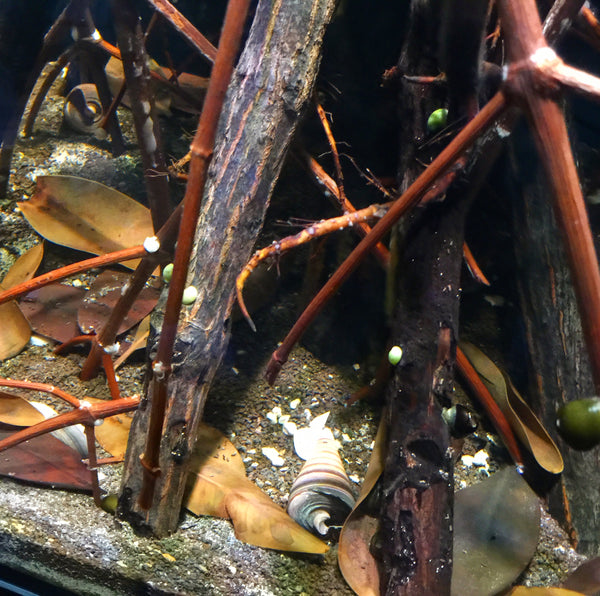
Fungi and bacteria in brackish and saltwater mangrove ecosystems help facilitate the decomposition of mangrove material, just like in their pure freshwater counterparts. It’s also been found that materials like humic acid, which are abundant in the mangroves, stimulate phytoplankton growth there.
Interesting, right?
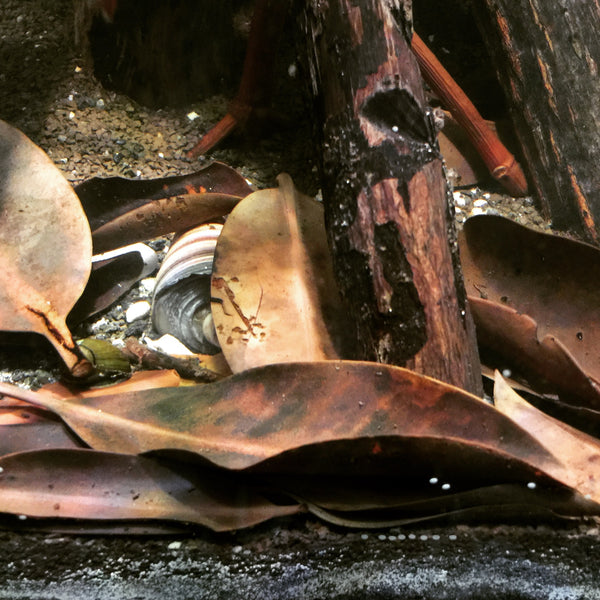
The leaves of mangroves, as they break down, become subject to both leaching of the compounds in their tissues, as well as microbial breakdown. Compounds like potassium and carbohydrates are commonly leached quickly, followed by tannins. Fungi are the “first responders” to leaf drop in mangrove communities, followed by bacteria, which serve to break down the leaves further.
So, in summary, you have a very active microbial community in a brackish water aquarium.
The management of a brackish tank is really surprisingly similar to that of a typical blackwater aquarium. The biggest difference is the salt and perhaps a greater interest in a rich substrate. Now, one parameter that hobbyists will argue about is specific gravity. I tend to favor one of two specific gravities in my brackish tanks: 1.005 or 1.010 I’ve changed over the past few years, having tried all types of ranges, from as low as 1.004 to 1.008. Finally, I settled on 1.010, because it is a sort of “sweet spot” that many of the brackish water fishes which I am interested in (gobies, rainbow fishes, mollies, etc.) seem to fare quite well at this slightly higher S.G.
And the mangroves don’t seem to have any problem with that, either!
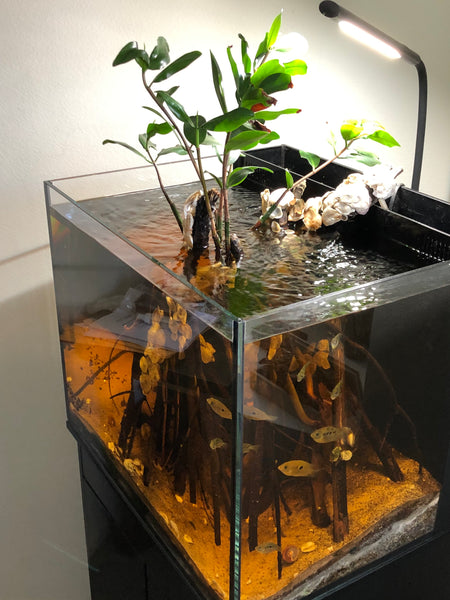
Oh, let’s talk about brackish water mangrove aquariums and detritus again…
One of the first decisions I made when I started to apply botanical-method aquarium “methodology” to brackish was to NOT siphon out the “organic debris/detritus” (total “catch-all” phrase, huh?) that accumulate during the normal course of existence of any aquarium. My rationale was that, the bulk of this material was processed fish waste and broken down leaves and botanicals, as opposed to uneaten food and such.
And of course, that detritus becomes part of the “food web” that we’re trying to establish, so removing it is quite counterproductive, IMHO.
My whole point of the brackish water/Mangrove aquarium “exercise ” is to create a simulation of the organic-heavy, exceedingly rich substrates in which they are found, while still creating a manageable closed system that doesn’t turn into a cesspool!
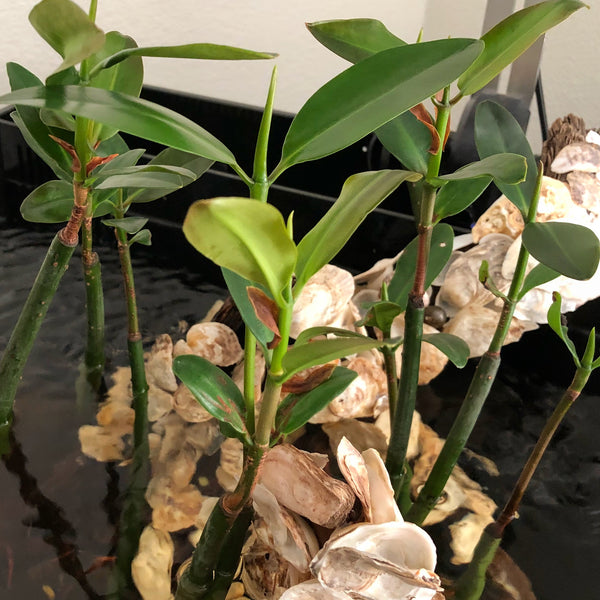
I kind of figured that I don’t overfeed. I don’t over-stock, and I perform regular water exchanges on a weekly basis. I employ practices which assure as much environmental consistency as possible. And yeah, the physical environment in my brackish water mangrove tanks have a very slight amount of fine organic debris/detritus on the substate.
I’ve purposely siphoned the stuff out before, and by crude estimation, I’d say that well over 80% of what there actually is there, accumulating on the substrate, is the aforementioned botanicals and leaves In a decomposed state.
A sort of “mulch”, if you will. I do see Nerites snails and some of the fishes foraging in this material from time to time… but it’s not all that noticeable unless you look really carefully. And quite honestly, even when you notice it- it’s not an issue.
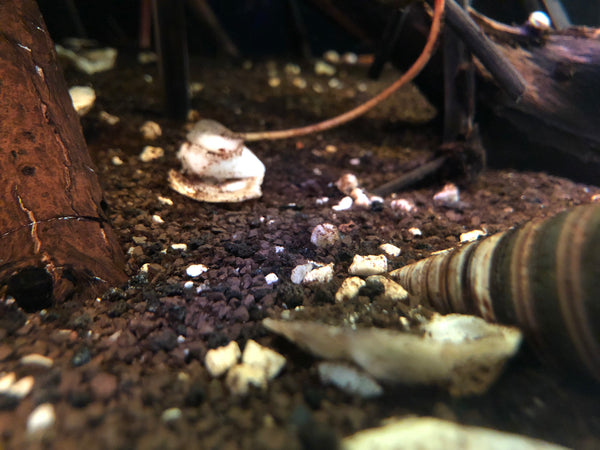
I think these materials replicate, to some extent, the types of rich substrates in which mangroves grow and thrive. If you recall from my previous ramblings about this approach, we long ago decided to abandon “clean white sand” in favor if a “compound” of fairly rich substrate materials, including “marine biodsediment” soils, and aragonitic sand, and occasionally, a more coarse aragonite for the “top-dressing” of sorts.
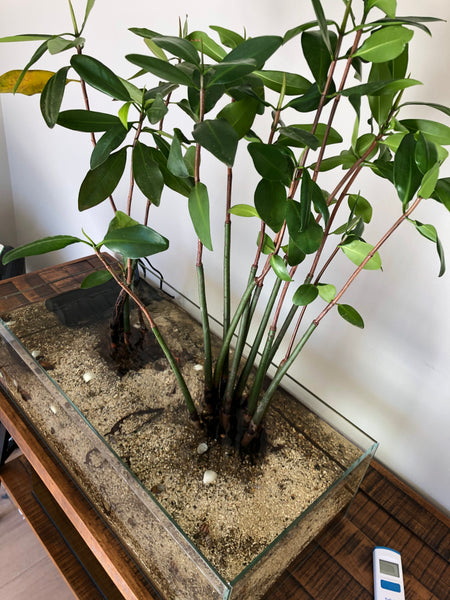
Mangrove soils are an interesting, nutrient-rich mix of marine alluvium, transported as sediment and deposited by rivers and the ocean tides. Soils are made up of sand, silt and clay in various combinations. Mangrove soils are typically saline, anoxic, often acidic and frequently waterlogged.
A real “cocktail” of variables, right?
You often hear the substrate in these habitats referred to as “mud.” In this context, of course, “mud” actually refers to mixture of silt and clay, both of which are rich in organic matter. The “topsoil” is a combination of sand or clay. Now, interestingly, the lighter-colored topsoils, consisting largely of sand, are pretty well aerated.
The clay-like topsoils are far less aerated.
In a recent study of these habitats which I stumbled on, the researchers concluded that the composition in typical mangrove habits was as follows: “Overall sediment proportion of main fractions is 59% for silt, 21% for sand and 20% for clay.”
Of course, this has some implications for those of us who are trying to recreate this type of habitat in our aquariums, doesn’t it?
The reason for this selection of “rich” substrate materials back in the day was twofold:
First, I wanted to create a functional mud-like substrate that would facilitate both denitrification and the ability to provide a habitat for minute life forms. I felt that this would also be a more natural setting for a brackish water aquarium. I knew that mangroves would love it.
My original intent, years ago, was to plant some Cryptocoryne ciliata, a species well-known for its ability to adapt to a low salinity brackish-water environment in my tanks.
This plan was ultimately abandoned when I decided to increase the specific gravity of the aquarium to 1.010, considerably higher than the documented SG at which this plant is known to survive (typically 1.002-1.005). Plus,it was a pain in the ass to find that damn Crypt!
And mangroves are way cooler, anyways.
Let’s talk about plants in brackish-water aquariums for just a second…
This is another little sub-rant that will likely alienate me from pretty much every YouTube aquarium channel and hobby forum out there. But really, sometimes there are things that simply have to be said, and since I don’t really care if I take some heat, let me say it.
Why are we sooo insistent on keeping freshwater aquatic plants in our brackish water aquariums?
Seriously, one of the top questions that I see on like every brackish water forum, Facebook group, or YouTube video is, “What kinds of aquarium plants can I keep in brackish water?”
I hate that question.
Why?
Well, because…It belies a fundamental unwillingness of us as hobbyists to let go of what we know and to embrace something different. I mean, you’re obviously new to the brackish world, so why try to bring along your old baggage with you?
Just enjoy the difference!
Sure, you hear a lot that Amazon Swords, Anubias, Java Fern, and other “hardy” plants may hang on in very slightly brackish water (like, up to say 1.003 SG max) situations. They may or may not do okay long term. And yeah, the elusive (and HUGE!) Crpytocoryne ciliata is known to actually be found in areas where there may be a very low salt content…But I think I’ve seen one…ONE brackish water aquarium with Cryptocoryne ciliatia in it. In the past 10 years.
Why do this? Why “force fit” freshwater plants into our brackish water aquariums?
This is that whole, “Well, the (fish/plant) can adapt to (insert your desired water parameters here)conditions, so, why can’t I keep it in there….?” Argument.
It’s dumb. I mean, sure- the plant can adapt…You can adapt to living in a 3 meter cube at 105 degrees F/40.55 degrees C for the rest of your life, too…but would you want to? Would you be at your best? How do you think that would work out, long term?
Want my advice? (probably NOT at this point, I know…)
Just give up the idea of keeping freshwater plants in your brackish water aquarium. Ditch the idiotic “YouTube take” to brackish, and tell the next “content producer” who “recommends” that “approach” to shove it.
Seriously. Approach this differently.
All you are doing is trying to force-fit freshwater plants which have developed a reputation for being “hardy” to adapt to an environment which is utterly alien for them. Sure, they may survive…for some period of time. But they’re usually not thriving. (Of course, one of you will send me a video of your tank, which has a SG of 1.005 and has an obscene number of healthy Amazon Swords and Anubias thriving, as they have for the last five years- but I assure you that you’re the exception, rather than the rule. You couldn’t seriously recommend keeping them this way to someone else…or could you? )
Really, have you ever seen a public aquarium representation of a brackish water habitat which contained Anubias, Swords, etc.? Probably not. If you have seen plants in these displays, they are likely riparian grasses which are salt and emergent growth tolerant. Usually, if there are any plants at all- they’re mangroves. Or even just mangrove roots…
And before you bring it up- Seagrasses and marine macro algae can’t typically survive for any length of time under less than natural seawater conditions, so instead, you’ll need to find species of plants which are found in intertidal zones, like mud flats and estuaries, which have brackish water. There out there, but pretty hard to find in the trade….
So yeah, lose the whole “I want to keep aquatic plants in my brackish water aquarium” thing…
Like, honestly…Where in Nature have you seen a documented wild population of Amazon Sword Plants growing in a brackish-water habitat? You haven’t, I’ll wager.
So, why bother?
And the really funny thing to me is that, when I search these YouTube videos where some content producer is sharing his/her brackish water aquarium, it almost always features one or more of these varieties of plants (most specimens of which appear to be in average health at best) and, in the ultimate ironic twist, they’re being kept in tanks with fishes like Scats, which are known to tear up plants. Sometimes it’s puffers, which is equally funny to me.
Like, why? Why?
If you are going to try something different, approach it differently…Make the effort to understand what’s found in these habitats in Nature. Think about how you can replicate the function…
OMG, can we just agree as a hobby to “stand down” from producing any more of the mostly pathetic, absurd representations of brackish water “habitats” which are just all over the internet?
Please?
Educate yourself by researching…not by watching some awful “amateur-hour “interpretation of brackish!
Take a few minutes and look at some real brackish water habitats- what they really look like, and what is actually found in them-how they function, and why… and stop using those lousy YouTube versions of somebody’s watered-down, zquairum-santized interpretation of what you’re “supposed to have” in a brackish water aquarium as your model!
Read. Research outside of the aquarium world. You can do this.
Yeah, take your inspiration from Nature!
Okay, rant over.
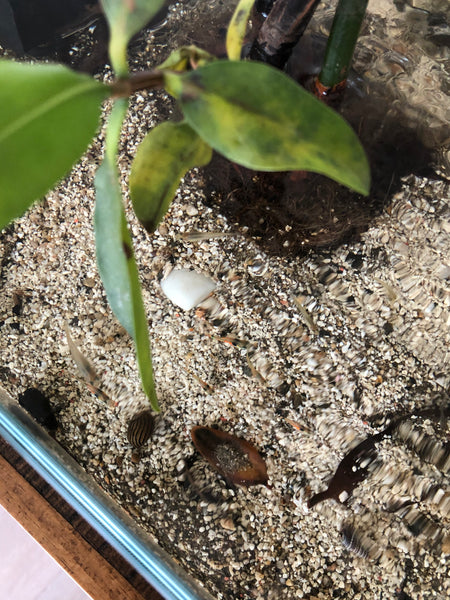
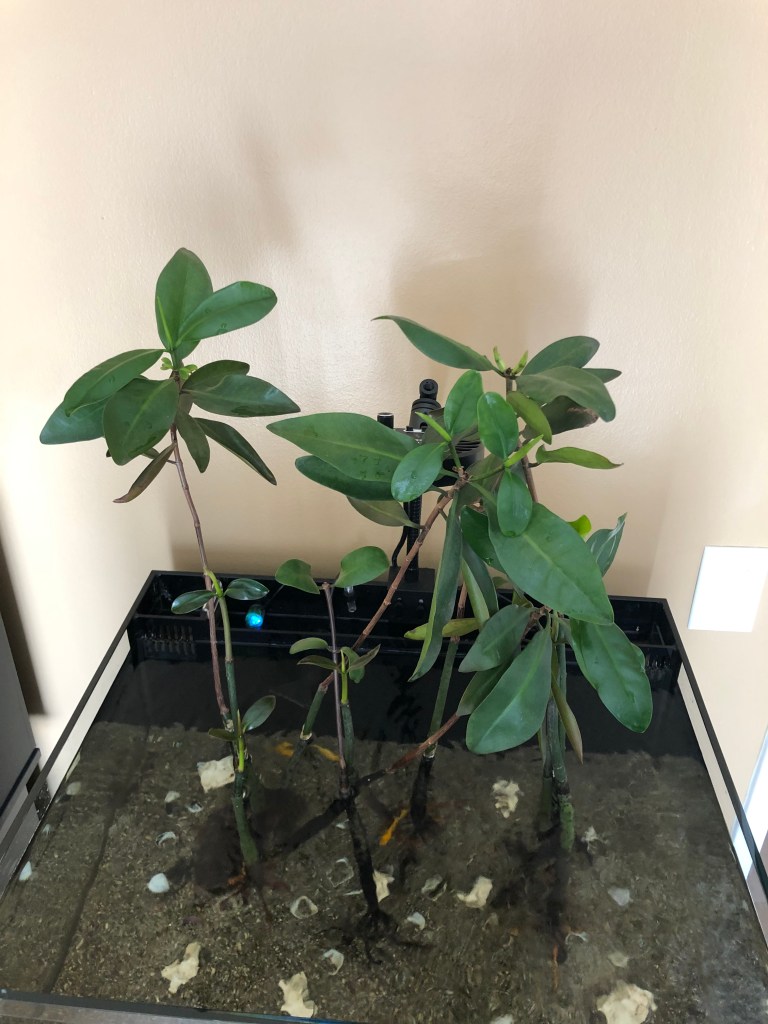
Oh, and there is a certain faith you need to have in employing a rich substrate in an aquarium even before anything is physically rooted in it. I get that. As you know by now, mangrove propagules put out roots whenever they’re damn well ready, and then- and only then, do the roots make contact with the substrate.
You can’t shove a rootless propagule into the sand and expect it to sprout. I knew from a lot of time playing with mangroves in reef systems that his process takes many months, of course, given the depth of the tank.
You want to suspend the propagule above the substrate and let the roots “find their way” to the bottom, as they do in Nature.
Patience is mandatory.
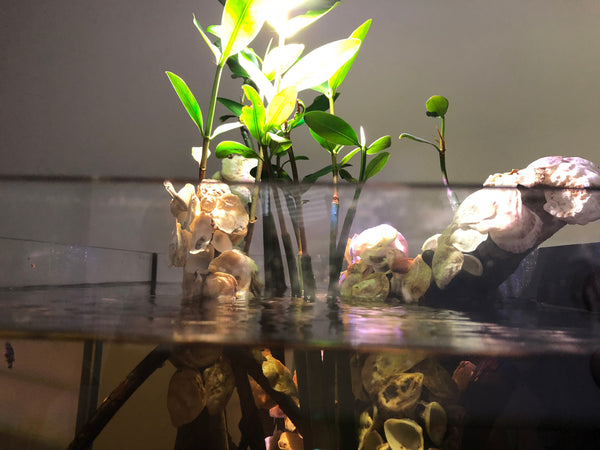
If you ARE patient, you’ll be rewarded.
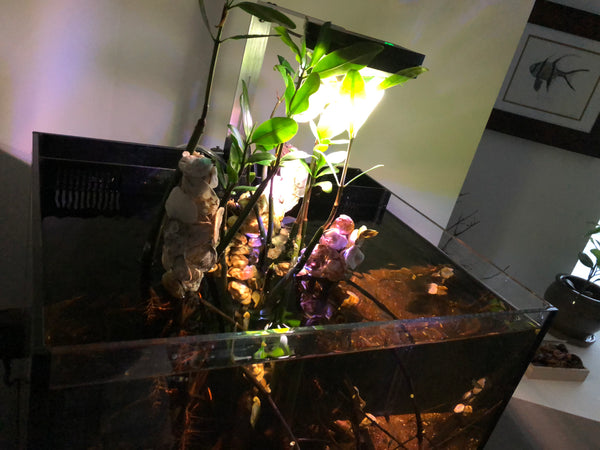
It’ll take months, but your mangroves will do what they do in Nature: They put down prop roots, and grow many leaves, some of which dry up and fall…and of course, we do allow the leaves to accumulate on the bottom, just like in the natural habitats we are attempting to replicate to a certain extent.
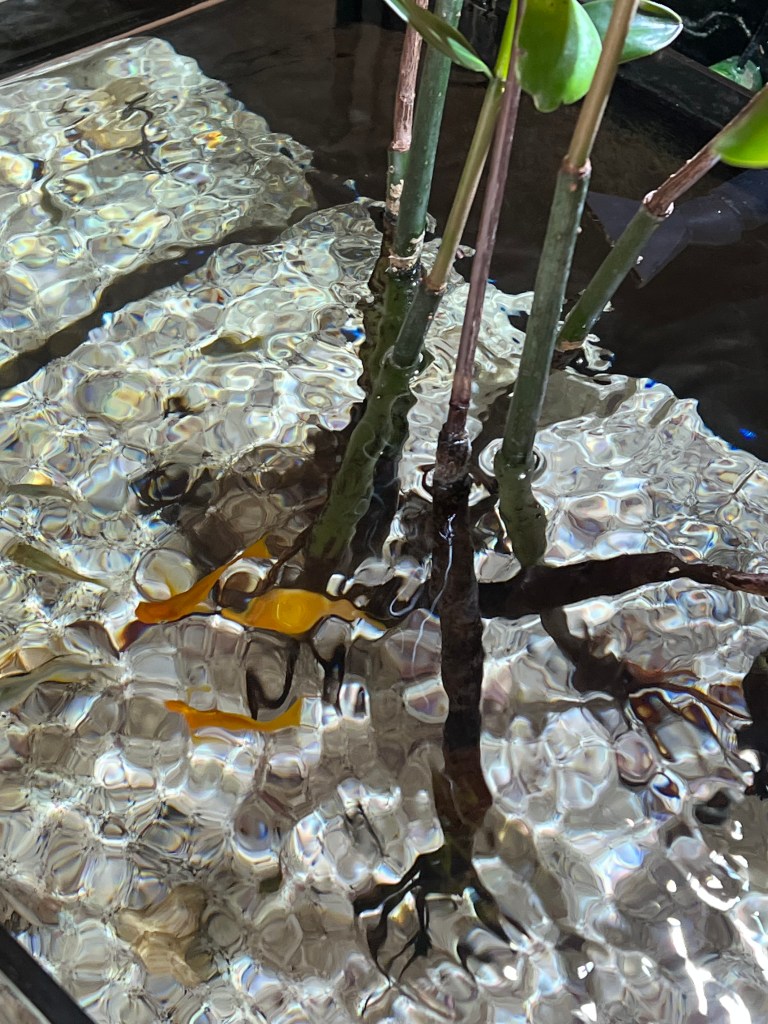
Mangrove ecosystems are remarkably complex, diverse systems which process nutrients by decomposing and utilizing organic matter. Many organisms, like fungi, bacteria- even sponges, work together to utilize the vast food resources produced in these habitats. And larger creatures, like crabs, amphipods, etc., break apart leaf bits, providing a “gross dismantling” service that contributes to decomposition of these materials, leading to detritus.
Yeah, if you want to move beyond the absurd, hyper-santized hobby version of a brackish water aquarium, you need to understand how these ecosystems work, make some “mental shifts” to accept the appearance, the challenges, and the obligation to observe, test, and maintain these systems over the long haul. And you need to deploy, as with anything we do- a shit-ton of patience.
Up for it?
You can do this. Easily.
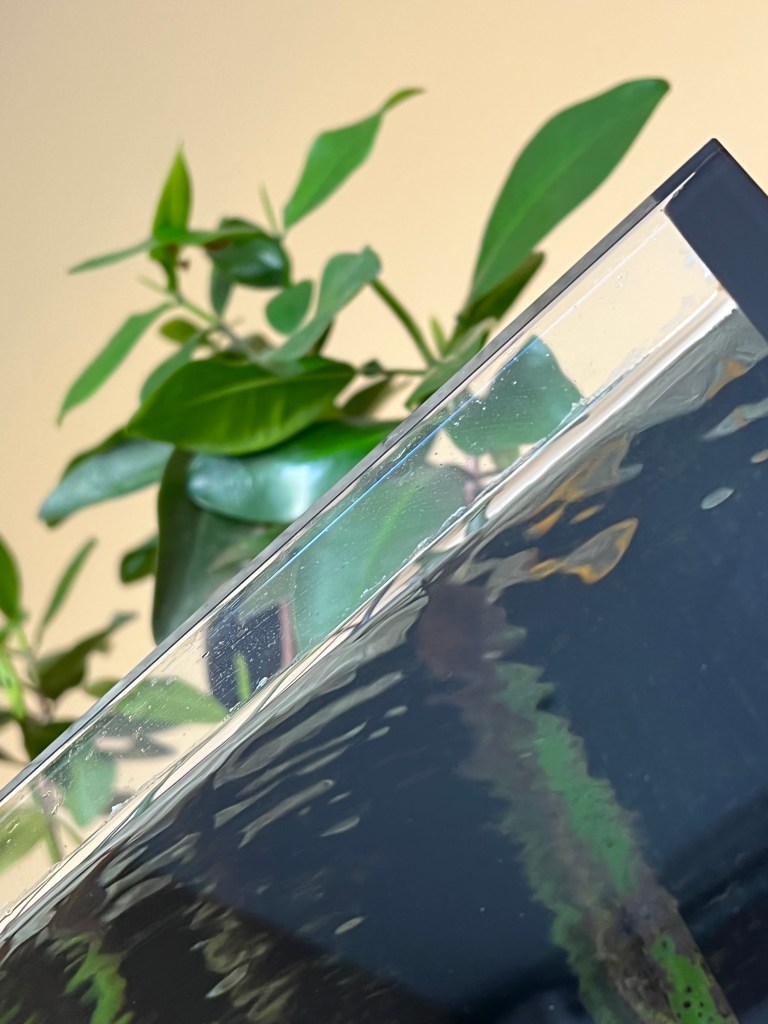
Get to it. You can contribute a lot to the ever-evolving world of the botanical-method brackish water aquarium! We need to follow our instincts and feel free to experiment and play our hunches. Risks are always present. Yet, taking risks in the face of critics is one way we advance in the hobby.
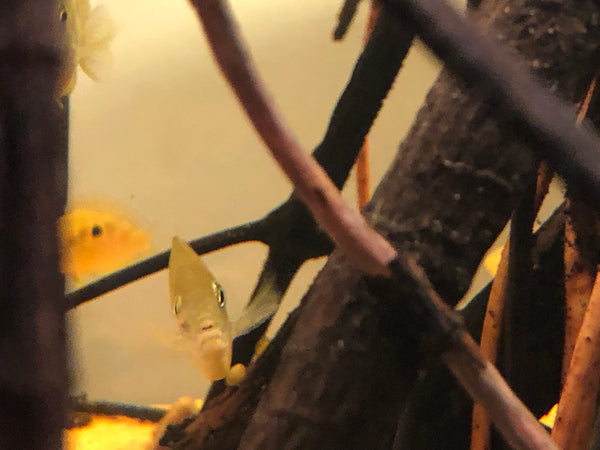
Stay inspired. Stay curious. Stay patient. Stay brave. Stay resourceful…
And Stay Wet.
Scott Fellman


Leave a Reply