
The number of mental shifts that our community has made in regards to operating botanical method aquariums is remarkable. We deal with things like unusual aesthetics, acceptance of natural processes which previously horrified everyone in the hobby, and we celebrate adding stuff to our tanks which most hobbyists would simply laugh at!
When it comes to managing a botanical method aquarium, you are already at a sort of “disadvantage” if your goal is to be running a “spotlessly clean” aquarium. I mean, you’ve already committed to a tank which contains large quantities of botanical materials, most of which are in various stages of decomposing at any given time.
And that’s just for starters!
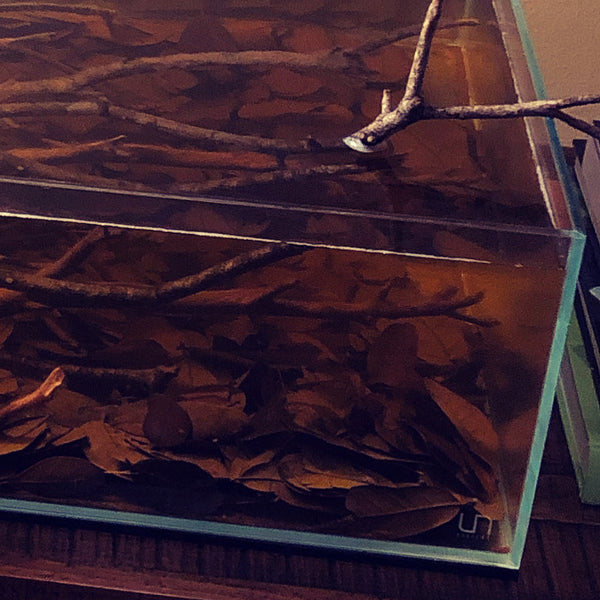
“Cleanliness” is something that gives me a lot to think about.
At any given time, the bioload in your aquarium is likely as great- or greater- than a fully stocked community aquarium with lots of well-fed fishes.
What is the implication of all this “stuff” breaking down in our tanks? Are we simply adding tons of organic materials for our beneficial bacteria to handle, or are we actually helping foster and feed a small “food chain” of organisms which collectively assimilate this material and the associated organic compounds it produces?
Or, is it somewhere in between?
Our botanical method aquariums are a bit of an enigma to many hobbyists.
I mean, we have tanks with all of this stuff decomposing in the water, yet manage to maintain high water quality and stability for extended periods of time without any real “magic” in terms of procedure or equipment.
What gives?
And of course, not being a scientist makes it kind of challenging for me to make all kinds of assertions about water quality and chemistry, so I will at least try to focus on what we want to achieve, water quality-wise, and how botanical method aquariums seem to be able to “pull it off” given their vast quantities of leaves, seed pods, etc.
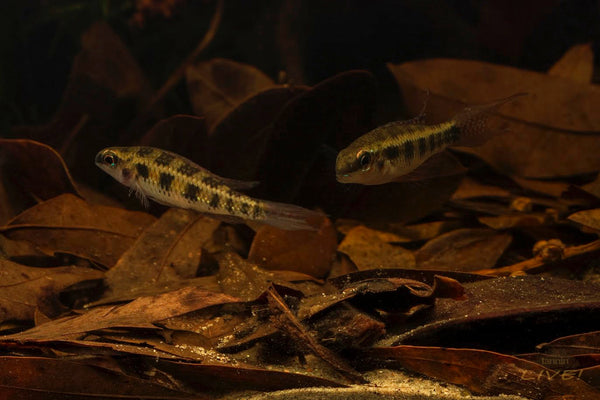
A good start is to test our aquarium water.
Now, we kind of have a pretty good “handle” on which tests make the most sense for our pursuits. It’s a given that ammonia, nitrite, pH and DKH are the key indicators which most hobbyists will want to know about.
And then, there are the tests which give us information on the quality of the environment we’ve created—nitrate and phosphate. Nitrate (NO3) is not necessarily considered “toxic” at a specific level, although a typical rule of thumb is to keep readings under 50 mg/l—or better still, 20 mg/l or less—for most fishes at various stages of their life cycle.
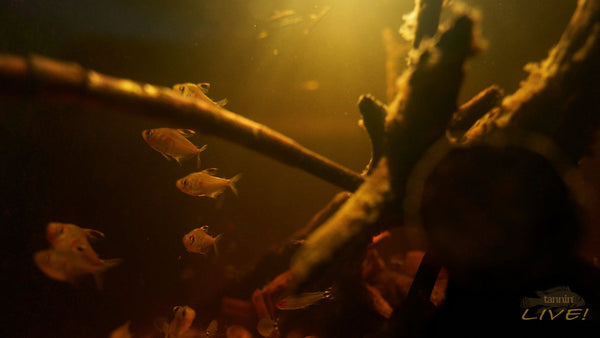
Although there is no “lethal dose”, as indicated above, and many fishes can tolerate prolonged exposure to up to 500 mg/l of nitrate, studies have revealed that prolonged exposure to elevated levels of nitrate may reduce fishes’ immunity, affecting their internal functions and resistance to disease.
Many fishes can adapt to a gradual increase in nitrate over time, although long-term physiological damage can occur. Some fishes are much more sensitive to nitrate than others, displaying deteriorating overall health or other symptoms at much lower levels.
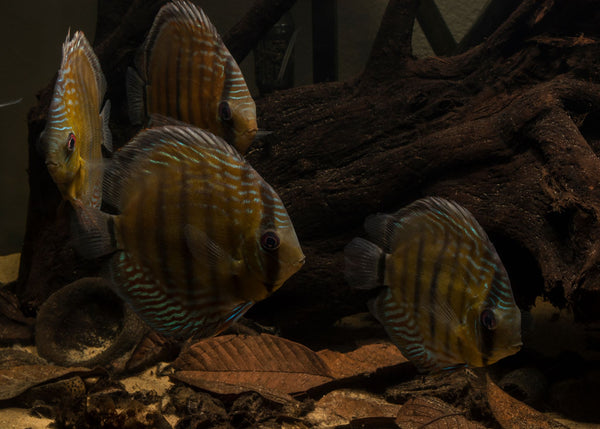
One of the interesting things about nitrate is that it can and will accumulate over time in the aquarium if insufficient export mechanisms (such as water exchanges or adequate chemical or biological filtration) exist. This, of course, gives the impression that fishes are “doing okay” when the reality is that they are exposed to a long-term stressor.
In a “typical” aquarium, there is a reliance on the presence of plants, known for their utilization of nitrate as a growth factor. Plants are considered a viable way to reduce/export nitrates, along with overall good husbandry (ie; stable fish population, proper feeding technique, etc.)
But we generally don’t rely on plants in our tanks, do we?
In my botanical method aquariums, I typically don’t keep any significant quantity of aquatic plants. And, I have personally never observed/measured significant levels of nitrate. In fact, with a good husbandry regime in place, virtually undetectable (on a hobbyist-grade test kit, at least) levels of nitrate have been the norm for my systems. I think that the highest nitrate reading I’ve personally recorded in a botanical method system which I maintained was around 10 mg/l.
Why is this?
It’s not because I’m some aquatic genius. I personally feel that well-maintained systems, including our heavily botanically-influenced ones, offer a significant “medium” for the growth and proliferation of beneficial bacteria species, such as Nitrospira.
I believe that the presence of botanicals, although in itself a contributor to the biological load on the aquarium, also is a form of “fuel” to power the nitrification process—a carbon source, if you will—to elevate levels of biological activity in an otherwise well-maintained system.
Okay, sounds like a lot of cobbled-together “mumbo jumbo”, but I think there is something to this.
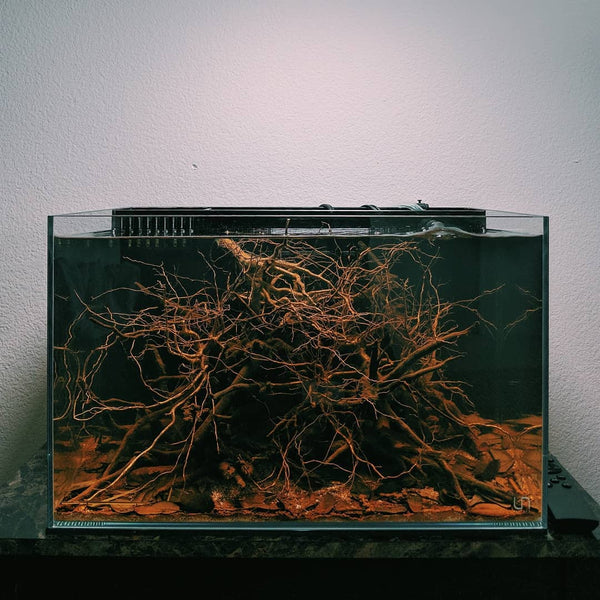
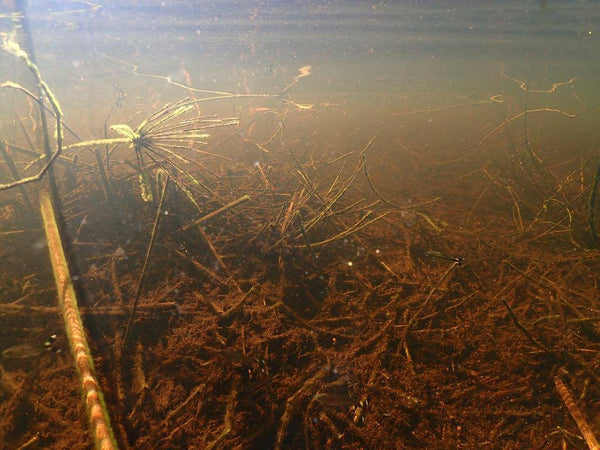
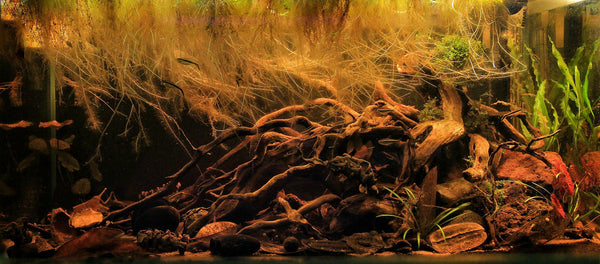
I mean, when you think about it, a botanically-rich aquarium with leaves and other materials fosters bacteria, fungi, biofilms, and supports crustaceans and other organisms which can consume the botanicals as they break down, along with fish wastes and other organics. A sort of “on board” biological filtration system, if you will, with the added benefit that fishes will consume some of these organisms.
Perhaps botanicals are even the basis for a sort of “food web”, something that we know exists in all natural aquatic ecosystems.
Something to think about!
The other measure of water quality that most of us should consider is phosphate (PO4). It’s a salt of phosphoric acid- an inorganic chemical. It’s an essential chemical for the growth of plants, and other living organisms. Phosphate gets a lot of “bad press” in the hobby-particularly the marine side- as a contributor to the growth and proliferation of algae, which it is. However, it’s really only half of the equation, as algae only grows if nitrogen is also present…So, it’s a contributor to algae issues and overall water quality- not the main culprit.
In the reef hobby, phosphate has long been vilified as a growth inhibitor to coral, and all manner of additives, reactors, and removal media have been developed to combat it. The reality, IMHO, is that phosphate- although a great measure of overall water quality, tends not to become a problem in an otherwise well-managed aquarium. It gets into our systems in the first place via food, and will accumulate if mechanisms for its absorption/utilization or removal don’t exist.
One key way to circumvent accumulations of phosphate and nitrate?
Regular small water exchanges.
So, yeah—perform those regular water exchanges. Yet another argument in favor of them!
However, apply some “ecological common sense” when performing water exchanges. A common mistake is treating botanical method aquariums like “conventional” aquariums and removing every bit of detritus from them.
In a botanical method aquarium, decomposition and the production and accumulation of some detritus is part of the ecosystem. The “challenge” to the aquarist is maintaining a balance where biological processes keep pace with the organic material being added.
Oh, and one more thing:
Both nitrate and phosphate are typically present in tap water…so when I espouse the use of an expensive RO/DI unit to pre-treat your tap water, I’m recommending a means to eliminate it at the source, giving you at least a good start. Reverse osmosis/deionization units, albeit somewhat pricy, are, in my opinion, an essential piece of equipment for any serious hobbyist.
Finally, remember this: A botanical aquarium intentionally contains decomposing material, but there is a limit.
Watch for accumulations of excess food trapped in leaf litter, and any nitrite or ammonia is problematic. And remember, a thin layer of detritus is beneficial, especially for fish and microfauna. You should encourage the development of microfauna in your aquarium. Remember that healthy botanical method systems rely heavily on microbial communities. Allow biofilms and fungal growths to develop on leaves and wood, and don’t overly “clean” materials before using them. Replace decomposing leaf litter periodically to support microbial succession.
In general, the water quality of our botanical-influenced, natural systems is something worthy of a lot of research, experiments, and discussion in our community. There is so much interesting stuff happening in our tanks- and so many things we don’t know…
When it comes to environmental stability and water quality, I see a lot of discussion about lower pH systems and how to manage them, so I’ll touch on it a bit here.
A lot of hobbyists who want to keep fishes like Altum Angels or Discus in very low pH (by aquarium standards, anyways) pH systems, wonder how very low pH aquariums are best kept biologically stable. Well, that’s a whole new frontier that we’re really only starting to understand…
How does the nitrogen cycle function at those extremely low pH levels?
Archaeans.
They sound kind of exotic and even creepy, huh?
Well, they could be our friends. We might not even be aware of their presence in our systems…If they are there at all.
Are they making an appearance in our low pH tanks? I’m not 100% certain…but I think they might be.
Okay, I hope that they might be.
“WTF are you talking about, Fellman? What are Archaeans and why should I care?”
Refresher:
Archaeans include inhabitants of some of the most extreme environments on the planet. Some live near vents in the deep ocean at temperatures well over 100 degrees Centigrade! True “extremophiles!” Others reside in hot springs, or in extremely alkaline or acid waters. They have even been found thriving inside the digestive tracts of cows, termites, and marine life where they produce methane (no comment here). They live in the anoxic muds of marshes (ohhh!!), and even thrive in petroleum deposits deep underground.
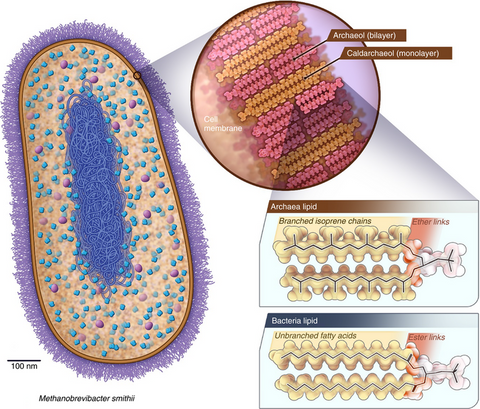
(Image used under CC 4.0)
Yeah, these are pretty crazy-adaptable organisms. The old sayings that “If these were six feet tall, they’d be ruling the world…” sort of comes to mind, huh?
Yeah, they’re beasts…literally.
Could it be that some of the challenges in cycling what we define as “lower ph aquariums” are a by-product of that sort of “no man’s land” where the pH is too low to support a large enough population of functioning Nitrosomanas and Nitrobacter, but not low enough for significant populations of Archaea to make their appearance?
I’m totally speculating here. I could be so off-base that it’s not even funny, and some first year biology major (who happens to be a fish geek) could be reading this and just laughing at my ignorance…
Of course, I still can’t help but wonder- is this a possible explanation for some of the difficulties hobbyists have encountered in the lower pH arena over the years? Part of the reason why the mystique of low pH “blackwater” aquarium systems being “difficult to manage” has been so strong?
Could it be that we just need to go a LOT slower when stocking low pH systems?
Perhaps. Yeah, probably.
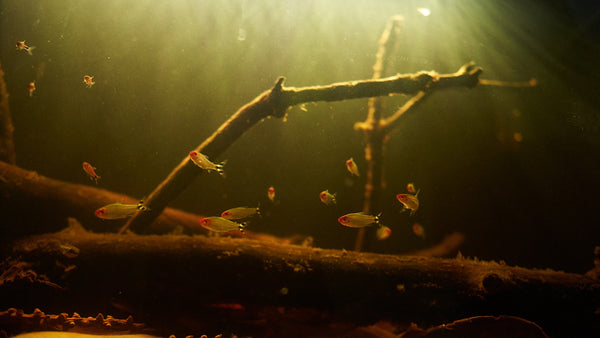
And then- you think about the pH levels in some natural, well-populated (by fishes!) blackwater habitats falling into the 2.8-3.5 range, you have to wonder what it is that makes life so adaptable to this environment. You have to wonder if this same process can- and indeed does -take place in our aquariums.
And you have to wonder if we, as a hobby, simply aren’t working with these tanks in a correct manner.
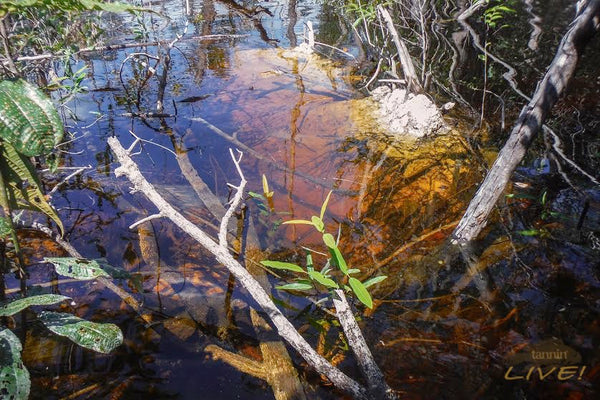
The key to running a successful low-pH “blackwater” aquarium is chemical stability, not simply achieving the lowest possible pH.
Many aquarists focus on hitting a target pH (such as 5.0 or even lower), but fish adapted to blackwater environments are often more sensitive to sudden changes in water chemistry than to the exact pH value itself.
Particularly, when they fall into what we’d call “extreme” pH ranges.
I wonder if the “crashes” and fears and all sorts of bad stuff we’ve talked about in the hobby for decades were simply the result of not quite understanding the “operating system?”
Things just work differently at those lower pH levels- in Nature, and in our aquariums. Even the toxicity of ammonia is different at lower pH levels.
A lot of strings to pull here…
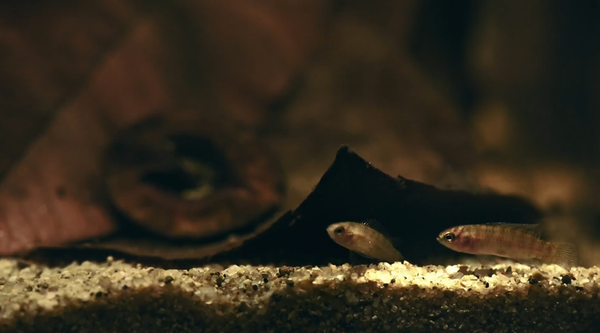
A useful rule of thumb when trying to create a low pH “blackwater” environment in the aquarium is to start with soft water first. That’s where the RO/DI unit comes in, as it yields water with dramatically reduced dissolved solids. RO/DI gives you a blank canvas to work with. Complete control of water chemistry
Instead of adapting fish to your tap water, you can adapt the water to your fish. It’s the perfect starting point for creating ga specialized low pH aquarium environment.
Then, really target chemical and biological stability. Fishes which live in low pH environments seem to not tolerate rapid environmental fluctuations very well. Once you get your system stable, then you can focus on pH. When the first two are right, the desired pH often develops naturally.
I think the secret to successfully keeping a low pH botanical method aquarium is somewhere in between extreme and mundane…Out there…somewhere.
Oh, and I think the use of a nice bed of leaf litter is important if you’re trying to create a biologically stable low pH system. Of course, there is much to learn about the function- both ecologically and chemically- of deep leaf litter beds in the aquarium.
As leaves decompose, they release tannins, humic and filmic acids, and other organic compounds which can gradually acidify the water, potentially lowering pH.
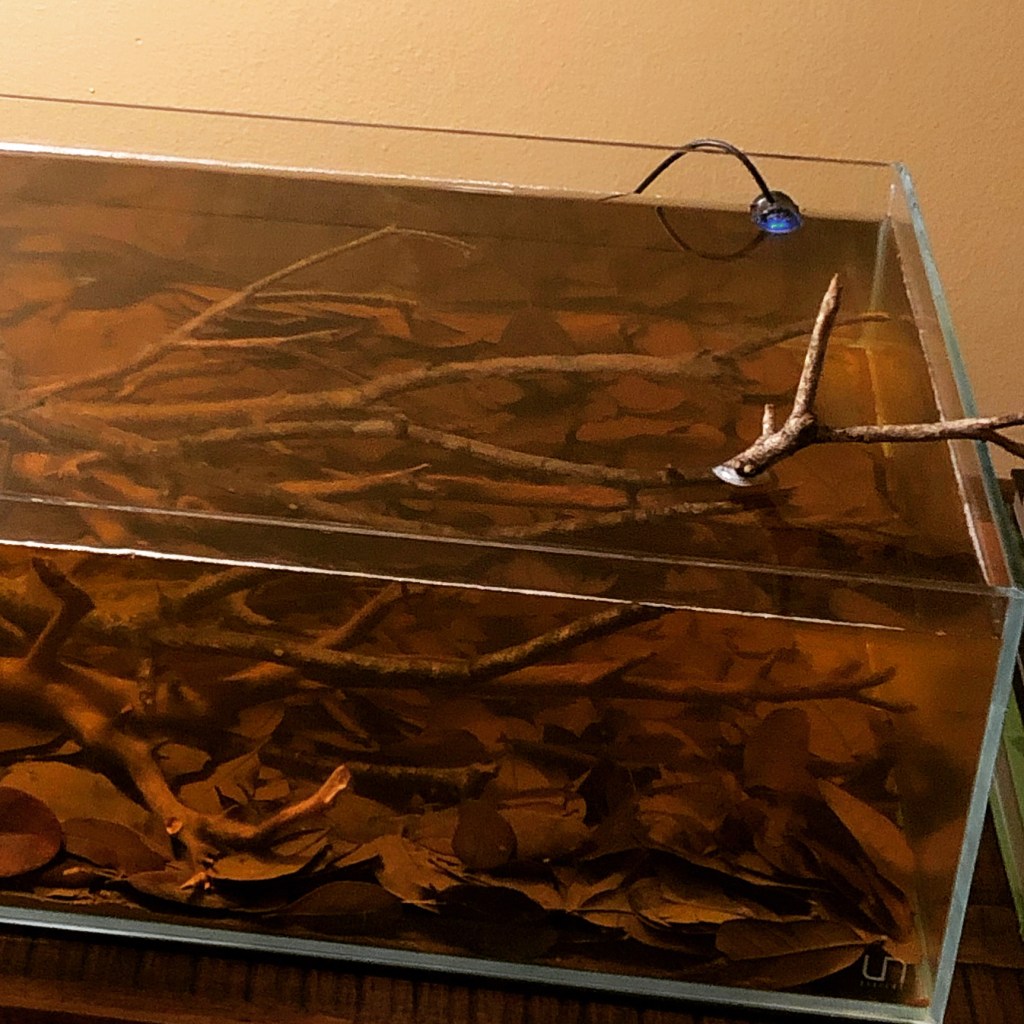
However, the effect varies, and it’s important to remember these “fundamentals” of using botanicals to manipulate pH in the aquarium:
In soft water with low KH (carbonate hardness), leaf litter can noticeably lower pH. In hard, highly buffered water, the pH change may be small because the buffering capacity resists acidification. Creating and maintaining a low-pH aquarium is usually less about adding acids and more about controlling the buffering capacity (KH) and choosing a system that naturally produces acidic conditions.
If your goal is a significant pH reduction, leaf litter alone may not be sufficient unless your source water is already relatively soft.
And, as a hobby, we’re still not done with the idea of using peat in aquariums to lower pH, though. It can work well under the right conditions. Like leaves, peat releases humic acids. However, unlike leaves, peat can exchange ions which serve to soften water. Peat is especially effective when the KH is low and the water is already soft.
Alright, I’m heading into another tangent…
Let’s not get too into the weeds about “blackwater” because the ecological definition and aquarium definition vary significantly! Remember, in the wild, “blackwater” is largely created by geologic processes. What we as aquarists call “blackwater” tends to focus more on the look of the water and perhaps the pH.
Buzzkill moment: I’ll wager that many aquariums that hobbyists label as “blackwater aquariums” just have tinted water and chemical parameters that are not consistent with the ecological definition!
As mentioned above, the real key to creating “blackwater” in aquariums is to start with RO/DI water with low to nil mineral content (ie; buffering). That makes the water more “malleable” to change. The key principle is that low pH is maintained by low buffering capacity plus continuous natural acid production, not by repeatedly adding acids to water that is strongly buffered!
The potential for significant developments in establishing and managing these low pH, botanical method aquariums is there. The application of leaf litter and other botanical materials for multiple functions, ranging from food production to nutrient sequestration to possibly even denitrification are just a few possibilities.
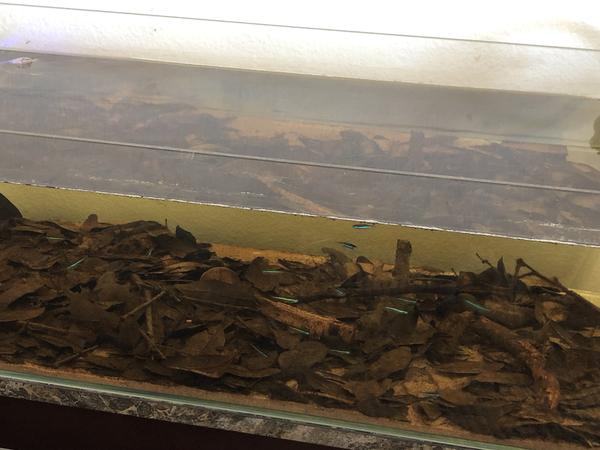
So here we are…at an interesting intersection of science, art, and technique.
Even if the processes we have discussed here are not “new” to the aquarium hobby, the approach that we take- and the viability and performance of botanical-method aquariums IS different than what has been done in the “conventional” aquarium world. It opens up all sorts of avenues to explore.
We have collectively taken our first tentative footsteps beyond what has long been accepted and understood in the hobby, and are starting to ask new questions, make new observations, and yeah- even a few discoveries– which will evolve the aquarium hobby in the future.
How exciting is that?
Stay diligent. Stay curious. Stay studious. Stay experimental. Stay bold. Stay open-minded…
And Stay Wet.
Scot Fellman


Leave a Reply