
One of the central ideas behind botanical method aquariums that is often overlooked is the “filtration” system that the aquarium essentially becomes. I’ve espoused this idea for years, and I believe in it more than ever.
The leaves, seed pods, wood, and other botanical materials are not the “filter” themselves, however. Rather, they are the “substrate” upon which the filter grows.
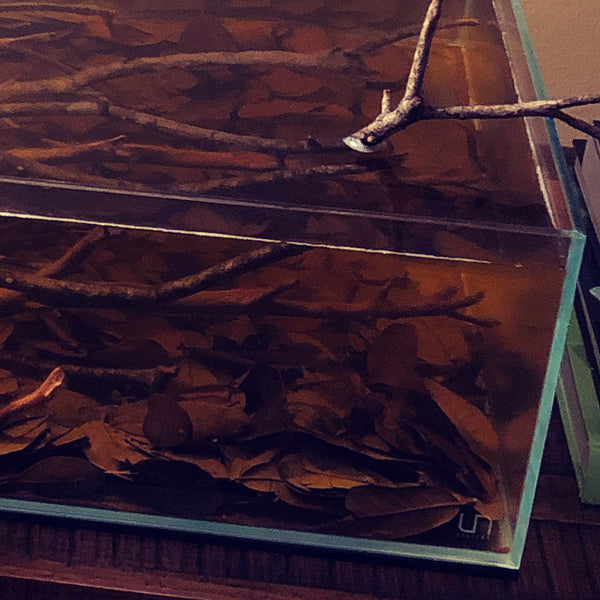
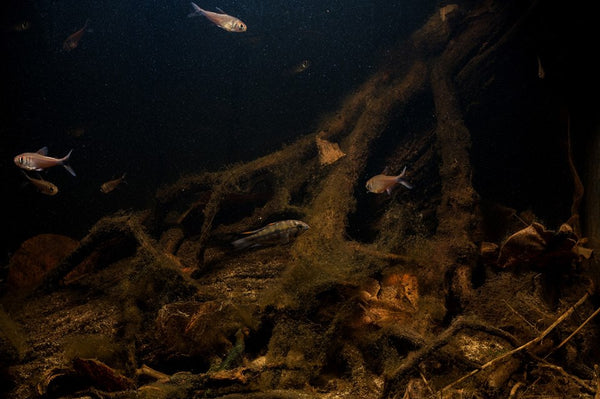
As botanicals decompose, they become colonized by bacteria, fungi, protozoa, biofilms, and tiny invertebrates. That entire community is what processes nutrients, transforms organic matter, and supports the food web. The leaves are essentially providing both habitat and a continual source of carbon and energy.
A traditional filter is largely a place where bacteria oxidize ammonia to nitrite to nitrate. A botanical aquarium is doing something broader. It supports a decomposer ecosystem.
Think about what happens to a single leaf in our aquariums: Bacteria colonize its surface, aquatic fungi begin breaking down cellulose and lignin, biofilms develop, micro crustaceans, worms, snails, and shrimp graze on that biofilm, fish browse on the microorganisms, and the remaining organic matter continues to mineralize into dissolved nutrients, which are then taken up by plants or processed by microbes.
That is filtration for sure—but it’s also nutrient cycling.
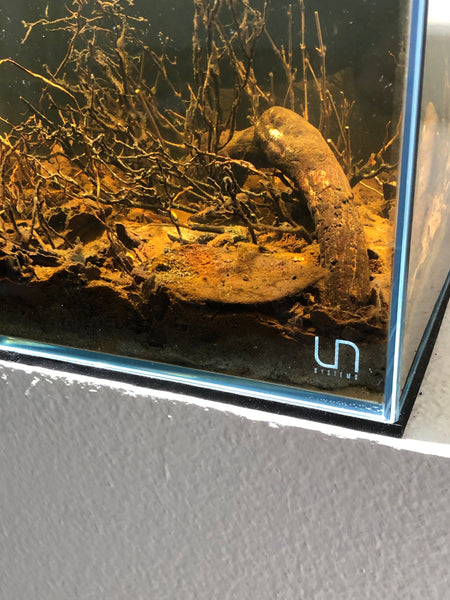
In fact, I think “biological filter” undersells what’s happening. It’s closer to a detrital food web, the same engine that drives countless blackwater streams and flooded forests.
What’s fascinating is that this parallels what happens in a reef aquarium as it matures. Essentially, growing coral biomass becomes an increasingly important nutrient sink and biological processor.
In a botanical method aquarium, growing decomposer biomass—the bacteria, fungi, biofilms, and meiofauna associated with botanicals—becomes an increasingly important nutrient processor.
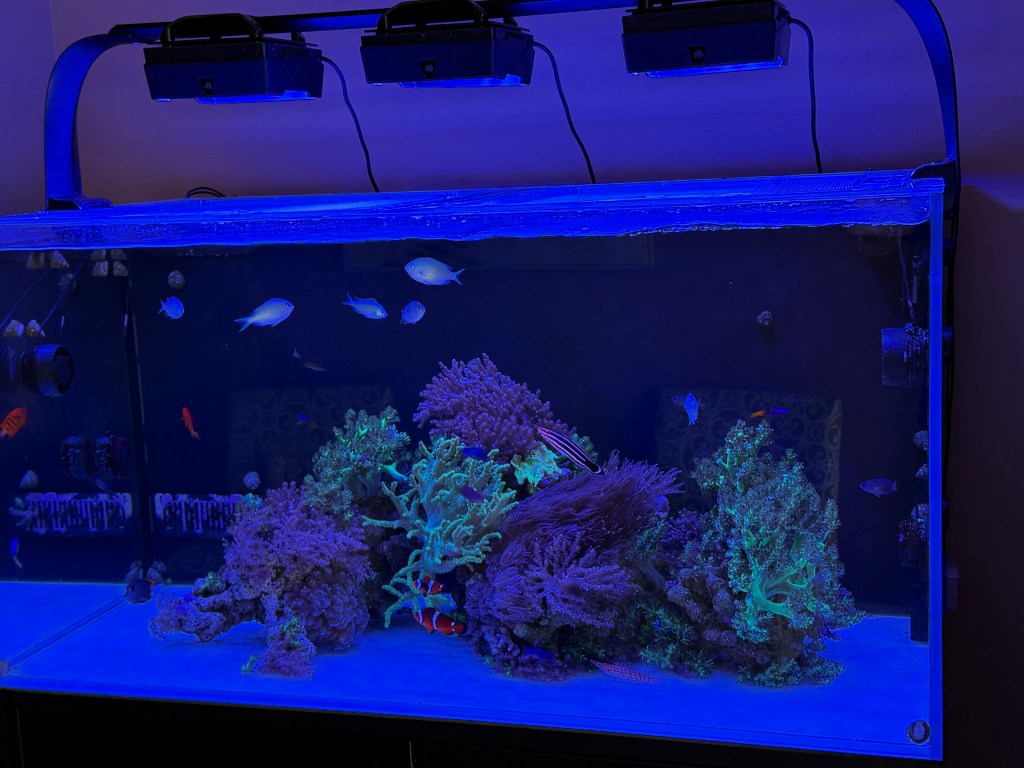
A reef system is driven largely by primary producers and calcifying animals (corals). The botanical method aquarium is driven by decomposers and detritivores. Yet both become more stable as the biological complexity increases.
That similarity strikes me as more than coincidence. In both cases, the aquarist is shifting away from relying solely on equipment and instead cultivating living processes.
In fact, this ties beautifully into my philosophy of being a “curator” of your aquairum. Whether you’re guiding a reef or a botanical method aquarium, you’re not really curating objects—corals, leaves, or seed pods.
Rather, you’re curating ecological succession.
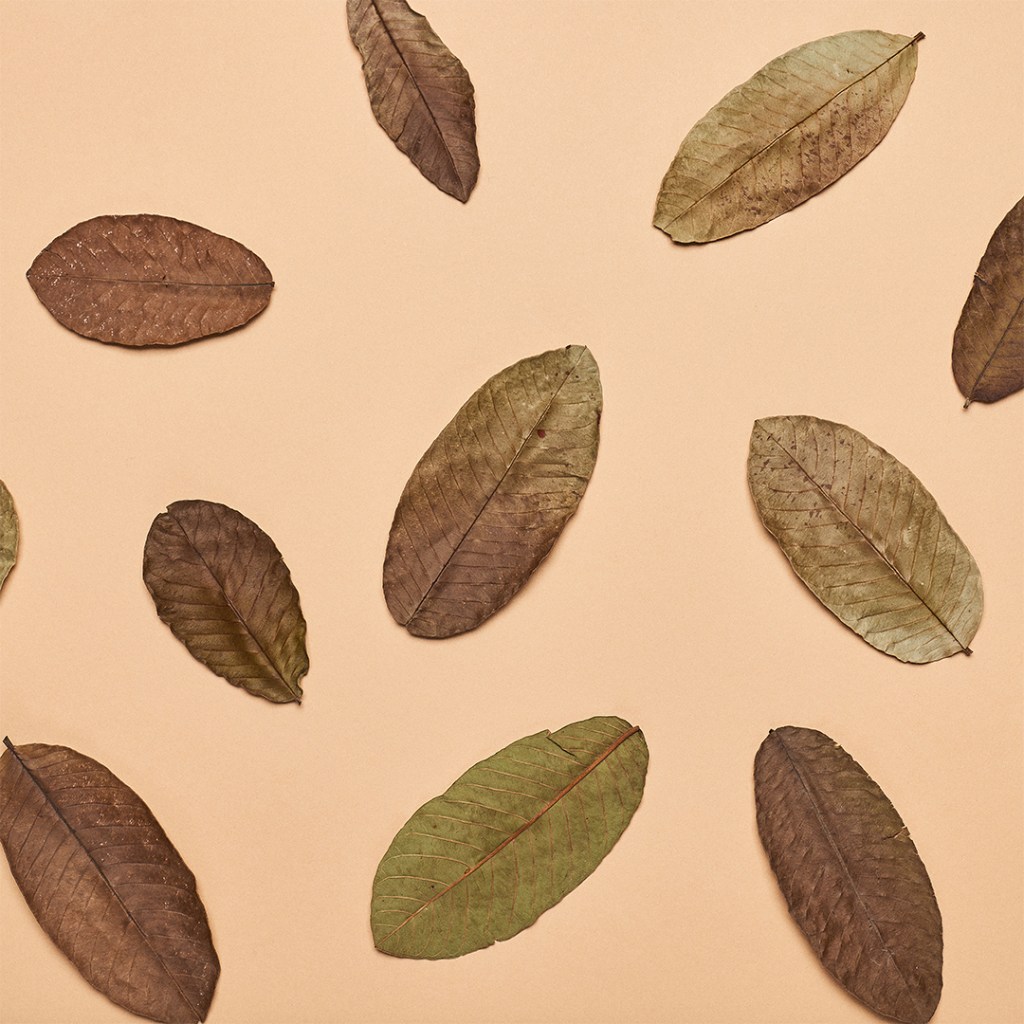
A fresh leaf isn’t valuable because it’s a leaf. It’s valuable because of what it will become over the next six months. Likewise, a tiny coral frag isn’t valuable because of its size today, but because of the living architecture and ecological function it will eventually provide.
That’s a subtle but profound shift in perspective. Instead of asking, “What does this object do?” the curator asks, “What process does this object enable?”
And it is important to remember that we don’t “create Nature” in our aquariums. We create the conditions in which Nature can “reveal herself” and take over. The botanical method aquarium is successful not because we “control Nature”, but because we learn when to stop interfering and allow natural processes to become the primary means of tank management!
That captures something I find distinctive about the botanical approach. The measure of success isn’t how much you’re doing to the aquarium—it’s how much the aquarium is able to do for itself because you’ve fostered a resilient ecosystem.
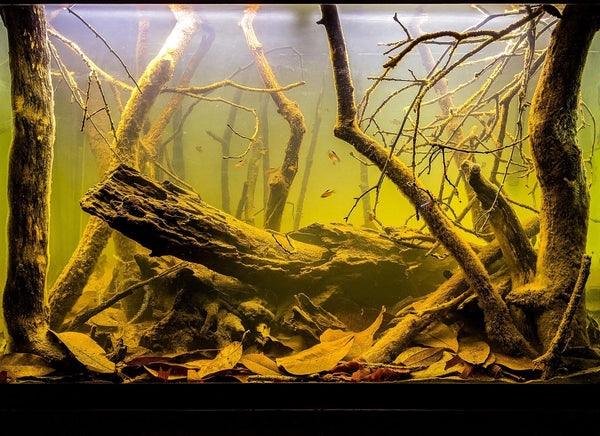
Can a botanical method aquarium run indefinitely, expanding its ecological capacity to function as a “filter?” Well, good question…The system is self-expanding to a point, but it is not self-sustaining indefinitely without new inputs.
Think of a what happens on an Amazonian rainforest floor.
A rainforest doesn’t continue functioning because the same leaves lie there forever. It functions because new organic matter is continually entering the system. Leaves fall. Branches break. Trees die. Floods deposit debris. The decomposer community is sustained by a continuous, though variable, supply of carbon.
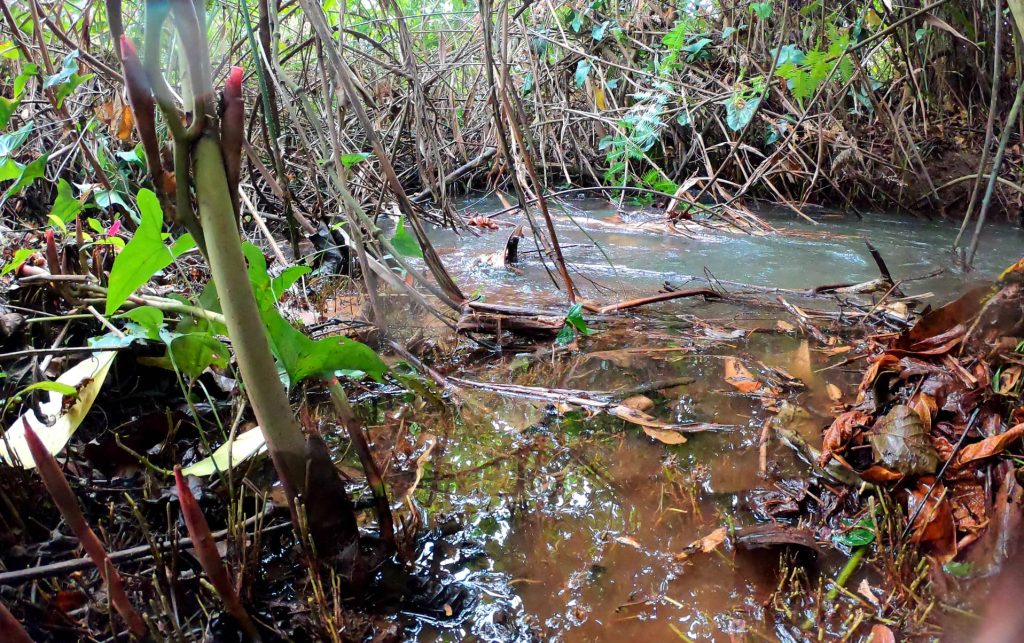
A botanical aquarium works much the same way.
Initially, you add a large amount of leaves, pods, bark, and wood. Those materials become colonized by microbes and fungi, which multiply dramatically. In that sense, the biological filtration does expand—not because there are more leaves, but because there is exponentially more living biomass inhabiting those leaves!
For many months, the botanical method aquarium becomes increasingly efficient as microbial diversity increases, fungal communities establish and multiply, biofilms mature, detritivores reproduce within the aquarium, and nutrients are cycled through what are arguably increasingly complex “pathways” within the aquarium.
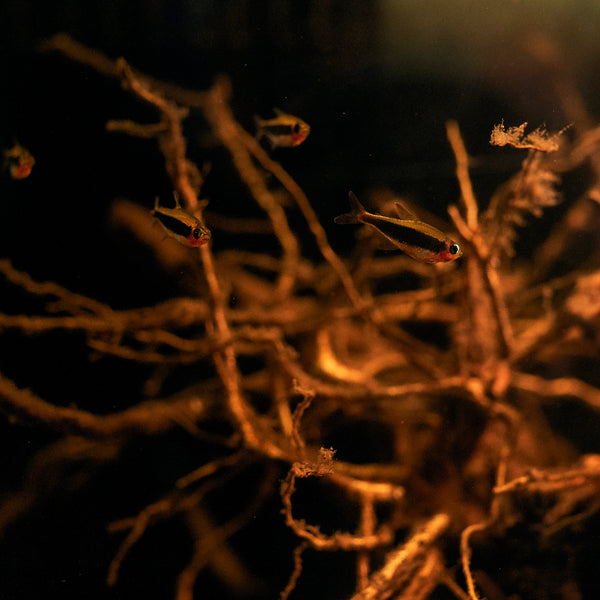
To put it simply, the biology within the system grows faster than the substrate upon which it is growing disappears!
Eventually, however, decomposition catches up, the leaves become mineralized, and much of their stored carbon has been concerted into microbial biomass, dissolved organic compounds, CO2, and nutrients. At that point, the little ecosystem you’ve helped foster hasn’t “failed”- it’s simply consumed its available “fuel”.
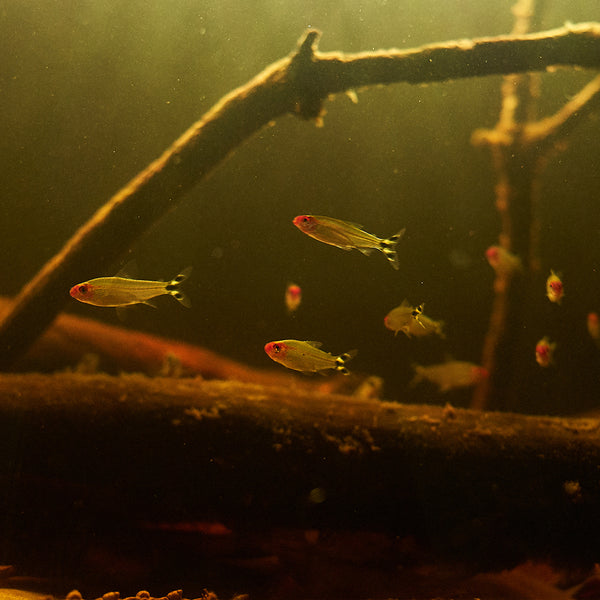
The bacteria and other organisms which comprise your aquarium’s ecology need a fresh habitat and a continuing source of organic carbon to work with.
So, if you want to maintain that ecologically rich decomposer community indefinitely, you need to add new botanical materials periodically. Think of leaves and such like “consumables” that need regular replenishment. This will certainly make vendors happy, but it’s an essential process to keep our systems viable over the very long term!
I actually tend to think of botanicals less as a “filter media” than as “ecological fuel” in our aquariums. Think about this: If you have a big fan y canister filter, you replace the media periodically because it clogs, right? In a botanical method aquarium, you replace the leaves and botanicals because they’ve become part of the aquarium’s ecosystem!
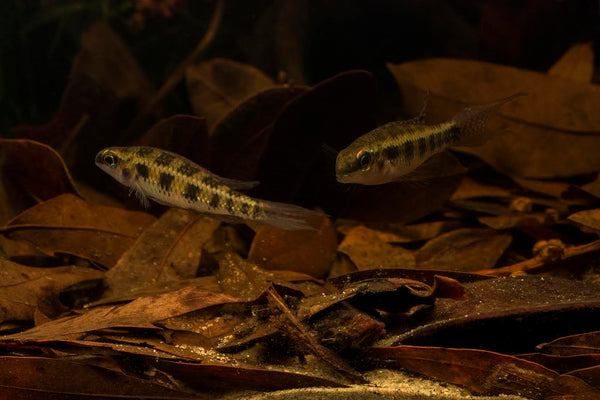
What’s fascinating to me is that not all of the filtration capacity disappears with the leaves. Think about it: By the time the original leaves are mostly gone, you’ve accumulated decomposed leaf fragments, “mulm”, bacterial biofilms, fungal hyphae, sediment, and an abundance of different microbial communities all over the substrate!
These communities continue functioning even as individual leaves and botanicals disappear. The ecosystem develops a sort of ecological “memory.”
So your botanical method aquarium has a degree of “ecological elasticity” if you will. If you add another batch of leaves after several months, the new leaves are colonized almost immediately because the microbial infrastructure is already in place. A brand-new aquarium takes weeks to develop these communities; a mature botanical method aquarium may colonize fresh material in days.
This reminds me very much of the difference between the concept of standing biomass and that of ecosystem productivity. A mature botanical method aquarium isn’t stable because it has a fixed quantity of leaves. It’s stable because it has an established community capable of rapidly processing whatever organic material enters the system.
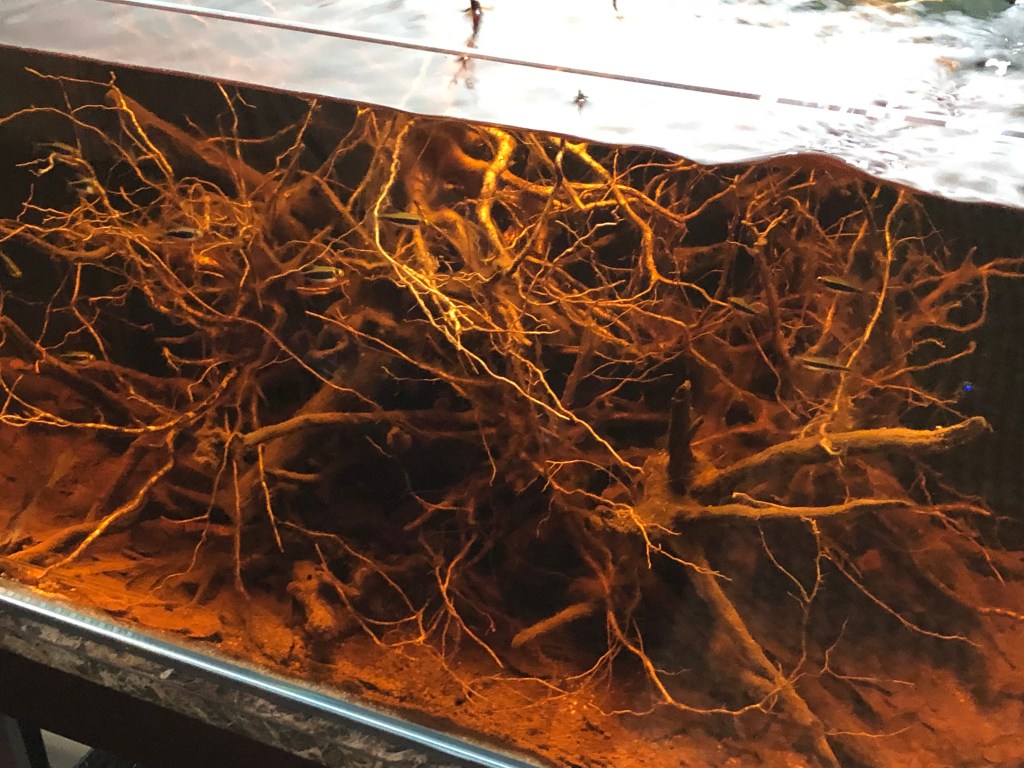
That idea dovetails beautifully with the philosophy we’ve been discussing here for many years. A botanical method aquarium isn’t maintained by preserving the original leaves indefinitely. It’s maintained by preserving the process of succession. The leaves are temporary, ephemeral.
The ecosystem which they support is enduring.
In that sense, I would say the long-term goal for your botanical method aquarium isn’t to maintain a particular quantity of botanical material, but to maintain a continuity of decomposition.
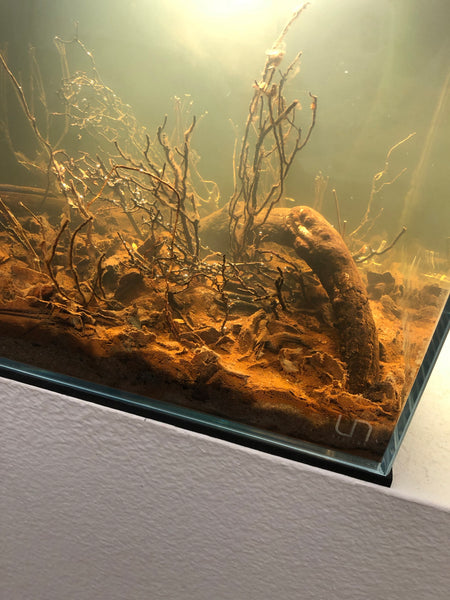
As in Nature, in our well-managed botanical method aquariums, old leaves fade into sediment, new ones take their place. The identity of the materials changes continuously, but the ecological function remains remarkably constant.
That’s much closer to how Nature operates in the flooded forests that we love so much, where the system is defined not by permanence, but by an ongoing cycle of growth, decay, and renewal.
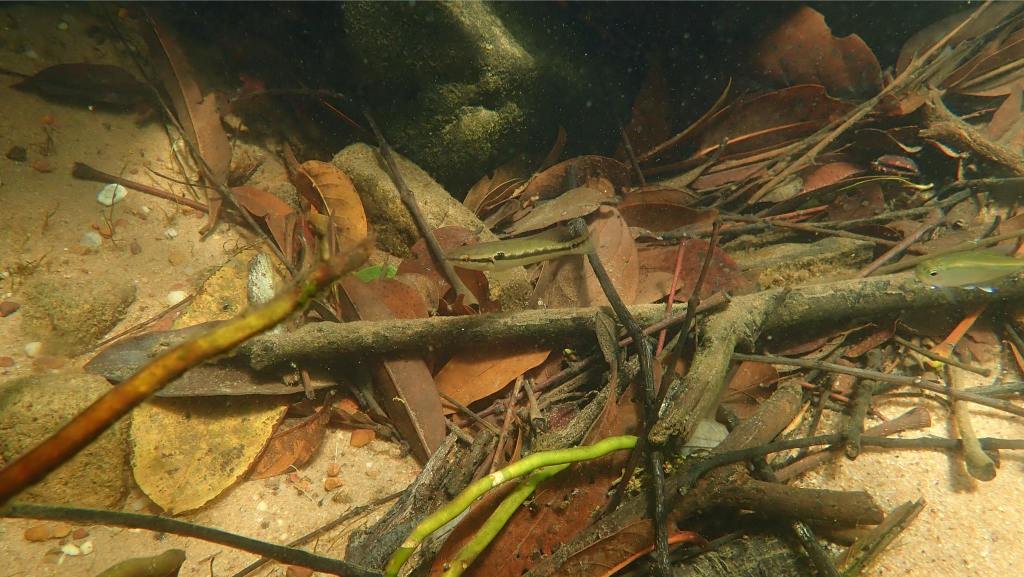
You can maintain a botanical method aquarium- or a reef tank, for that matter- indefinitely if you replenish the “fuel.” Neither a reef aquarium nor a botanical-method aquarium is a static system. They are both “flow-through” ecosystems, meaning that what must continue indefinitely is not the materials themselves, but the flow of matter and energy through the system.
For a reef aquarium, the “fuel” includes light (the primary energy source for photosynthetic corals and algae), food for fish and corals, calcium, alkalinity, and magnesium for calcification, trace elements, oxygen and water movement. In such a well-managed reef tank, as corals grow, they become increasingly capable of processing nutrients, but they also consume more resources. The reef’s biological engine expands, provided its inputs keep pace.
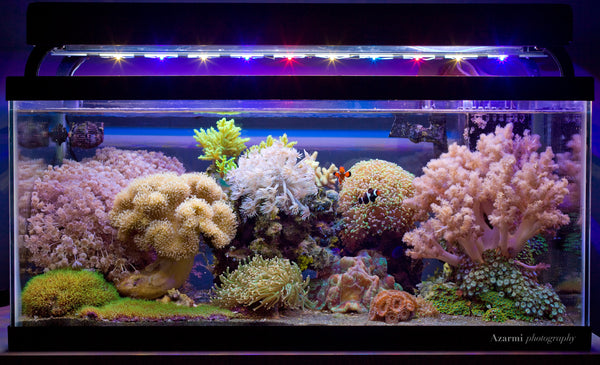
For a botanical-method aquarium, the “fuel” includes leaves, seed pods, and other materials, fish food oxygen, and time which allows decomposition and ecological succession to unfold. As the decomposer community matures, its capacity to process organic matter increases, but it still depends on fresh carbon entering the system!
What’s remarkable about both types of aquarium is that the ecosystem itself can persist indefinitely, even though virtually none of its individual components do. No coral poly lives forever, no leaf lasts forever, and no bacteria lives indefinitely. Yet each aquarium system can theoretically endure for decades because its components are continually replaced.
In actuality, this is one of the defining characteristics of living ecosystems.
Ecologists sometimes describe them as “maintaining their organization “while their constituents are in constant turnover. Your aquarium in year ten may contain almost none of the original bacteria, leaves, fish food molecules, or even much of the original coral tissue—yet it is recognizably the same ecosystem because its processes have been sustained.
Chew on that!
Nature is extraordinarily good at cycling materials, but in the closed volume of an aquarium, there are limits. Unlike a river, reef, or flooded forest, your aquarium cannot import fresh resources or export wastes on its own.
You provide those exchanges.
To me, that’s the distinction between maintaining an aquarium and maintaining an ecosystem.
In the first, the aquarist is the primary “agent of stability.” In the second, the aquarist sustains the conditions that allow the ecosystem itself to remain stable over time.
As the system matures, your role shifts from being the “operator” to being the steward of the processes that keep it alive. I feel that’s one of the most satisfying aspects of both mature reef aquariums and botanical-method aquariums:
Over time, they rely less on your constant manipulation and more on the resilience of the living communities you’ve helped establish.
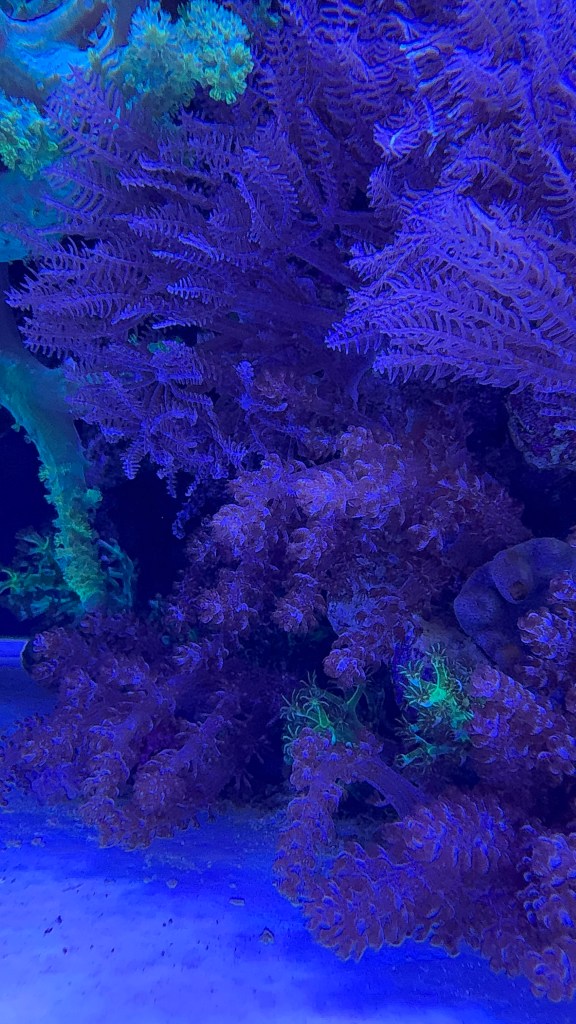
A reef aquarium is fundamentally a production-based ecosystem. Sunlight fuels photosynthesis, which supports coral growth and the broader food web.
A botanical method aquarium is fundamentally a decomposition-based ecosystem. Organic carbon stored in leaves and wood fuels microbes and the detrital food web.
One begins with light and builds biomass.
The other begins with biomass and releases its stored energy.
Yet both are examples of ecosystems sustained by continuous nutrient cycling. And we set the stage for all of this to occur, don’t we?
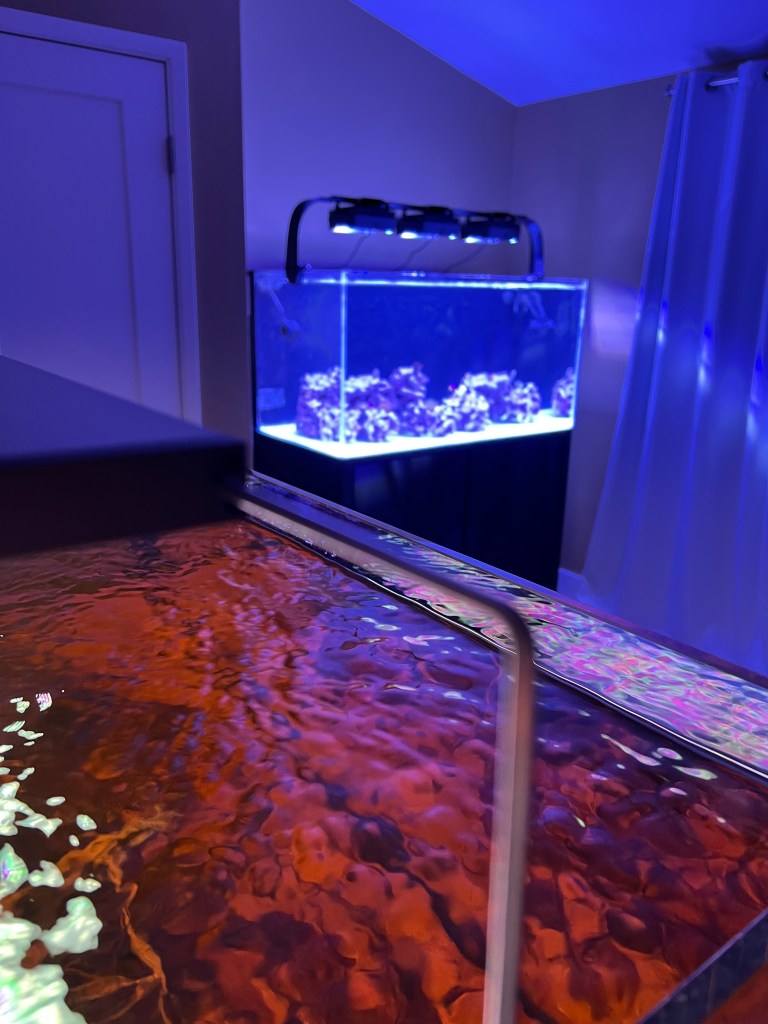
That’s the art and science of our hobby. We curate “freshwater reefs”, in a very true sense.! So I dare suggest that you might actually be a reefer- even if you only own a freshwater botanical-method aquarium!
Both are about fostering ecology, observing, and maintaining.
Both are amazing ways to learn about our wold.
Stay curious. Stay diligent. Stay observant…
And Stay Wet.
Scott Fellman
 The Tint
Leave a comment