
One of the most overlooked truths in fishkeeping is that the substrate is not merely the bottom of an aquarium—it is a habitat. In Nature, tropical fishes interact continuously with the materials beneath them. Sand, leaf litter, branches, roots, and decomposing plant material provide food, shelter, spawning sites, and refuge from predators. Countless species sift sediments for invertebrates, graze biofilms from submerged leaves, probe decomposing wood for microorganisms, or simply retreat into the complex structure of the forest floor.
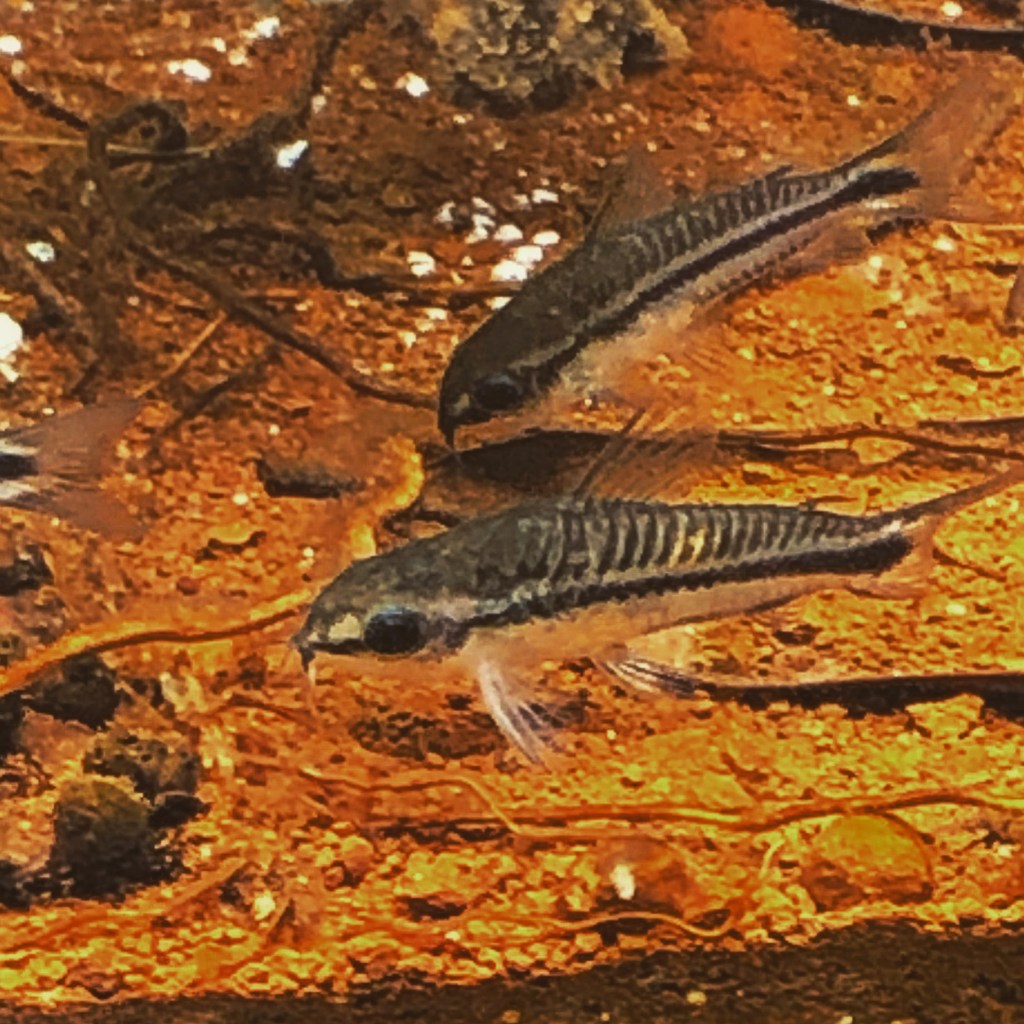
These interactions are not incidental; they are fundamental to how these ecosystems function. The substrate is alive with bacteria, fungi, protozoa, and countless microscopic organisms that transform organic matter into an ever-renewing source of nutrition. Fish have evolved alongside these dynamic processes, becoming participants in them rather than mere inhabitants of the water above.
The botanical method aquarium embraces this reality.
Rather than treating leaves, seed pods, and wood as “decorative accents,” it recognizes them as the foundation of a living ecosystem. As botanicals gradually decompose, they foster biofilms and microbial communities that invite natural foraging behaviors. Fish explore, graze, sift, investigate, and interact with their environment in ways that closely mirror their wild counterparts.
Ultimately, the substrate is more than scenery. It is an active, evolving biological engine that shapes the behavior of the animals above it. By creating a functional substrate rather than a purely aesthetic one, we move beyond simply displaying tropical fishes—we provide them with opportunities to express the instincts and behaviors that define them in Nature.
As always, my “prototype” for these types of functional aquatic substrates are the flooded igapo forest floors in Amazonia.
During the annual flood season in the Amazon, vast expanses of forest become submerged, transforming the leaf-strewn forest floor into one of the richest feeding grounds on Earth. Rather than searching only in the open water, many tropical fishes spend much of their time foraging among layers of fallen leaves, twigs, roots, and decomposing wood.
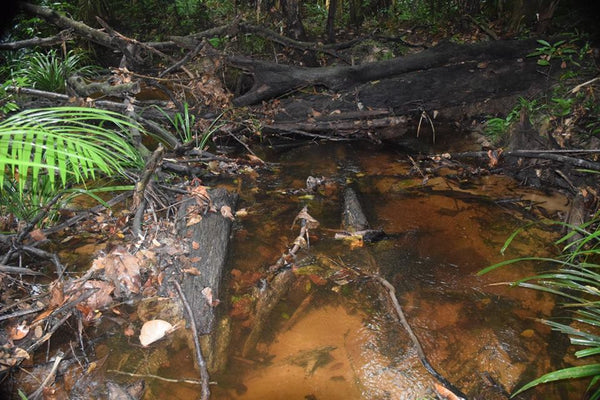
This substrate is far from inert. As leaves soften and break down, they become coated with biofilms composed of bacteria, fungi, algae, and other microorganisms. Tiny crustaceans, insect larvae, worms, and protozoans colonize this living matrix, creating a remarkably productive food web. For many fishes, the forest floor is less a bottom than an expansive buffet.
Different species have evolved specialized ways of exploiting these resources. Tetras and characins methodically pick at biofilms and tiny invertebrates clinging to leaves and branches. Corydoras catfishes sift mouthfuls of leaf litter and sediment through their barbels and gill structures, separating edible organisms from detritus before expelling the remainder.
Dwarf cichlids probe beneath leaves, overturn fragments of wood, and inspect root tangles for insect larvae and small crustaceans. Even larger fishes cruise slowly through the flooded forest, browsing on fruits, seeds, insects, and other foods made accessible by the seasonal inundation.
Much of this foraging appears almost leisurely, but it is constant. Fish investigate every surface, every crevice, and every accumulation of organic material. Their feeding behavior is one of exploration as much as consumption, driven by an environment where food is abundant but dispersed among countless microhabitats.
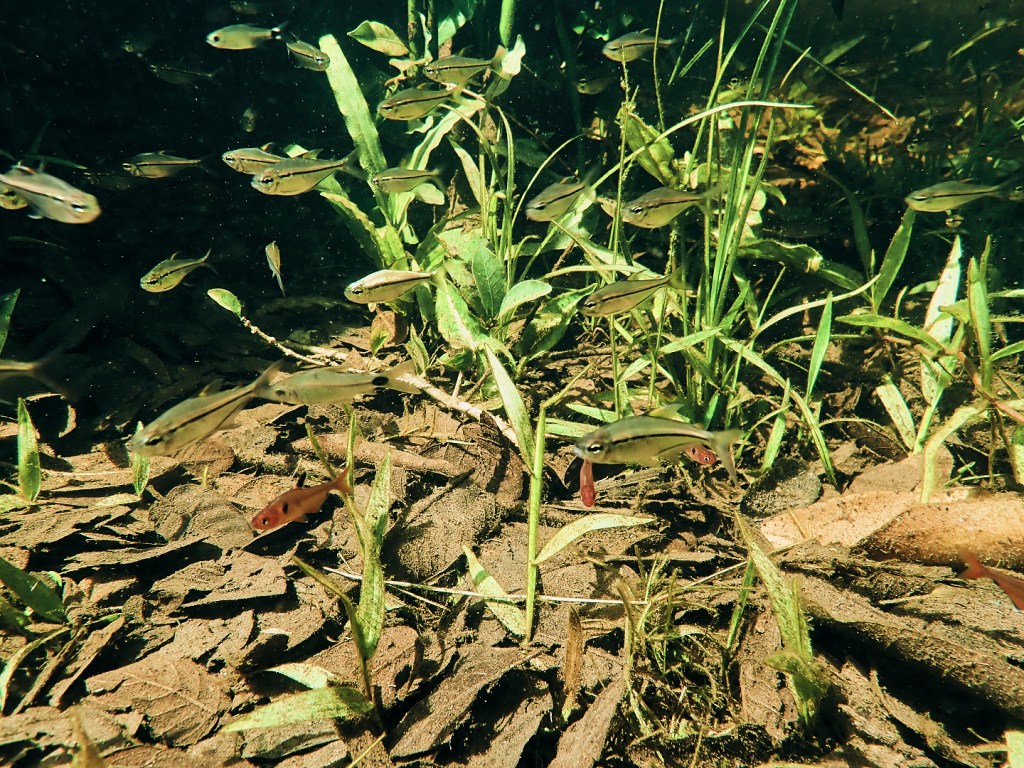
One of the defining characteristics of Amazonian flooded forests is that the substrate is not simply where organic matter settles—it is where life is concentrated. Every submerged leaf, twig, and branch becomes part of a living ecosystem that supports an extraordinary diversity of organisms. The fishes are not merely swimming over the substrate; they are actively engaged with it, participating in the continuous cycle of decomposition, colonization, and renewal that defines these remarkable habitats.
The substrate of the Amazon’s flooded igapó forests is a remarkably productive feeding habitat, despite the nutrient-poor nature of the surrounding blackwater. It’s a complex collection of materials which accumulate on the forest floor. Following the inundation, these materials become part of the aquatic environment and contribute to its ecology. Rather than relying on nutrients dissolved in the water column, fishes exploit the rich communities of organisms that colonize submerged leaf litter, wood, roots, and sediments.
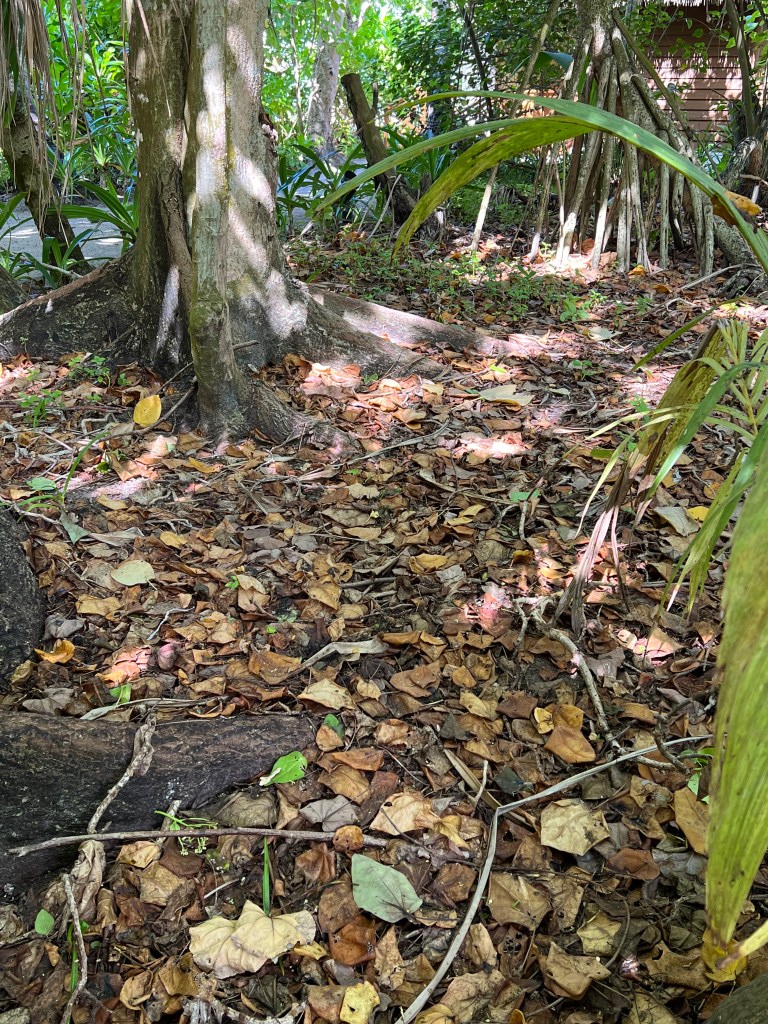
Among the most important food items are insect larvae, including the aquatic stages of midges (Chironomidae), mosquitoes, caddisflies, mayflies, and other insects that develop among decomposing leaves. Small crustaceans—such as copepods, cladocerans, ostracods, and amphipods—graze on biofilms and detritus and, in turn, become prey for fishes. Aquatic worms, nematodes, tiny snails, mites, and other meiofaunal organisms are abundant within the substrate and provide a constant source of nutrition for bottom-feeding species.
Equally important are the microbial communities themselves. As leaves and wood decompose, they become coated with biofilms composed of bacteria, fungi, algae, and protozoans. Many fishes consume these biofilms directly while grazing, ingesting both the microorganisms and the fine organic particles trapped within them. Although these microbial communities are microscopic, they form the foundation of the flooded forest food web, converting dead plant material into living biomass that ultimately supports larger animals.
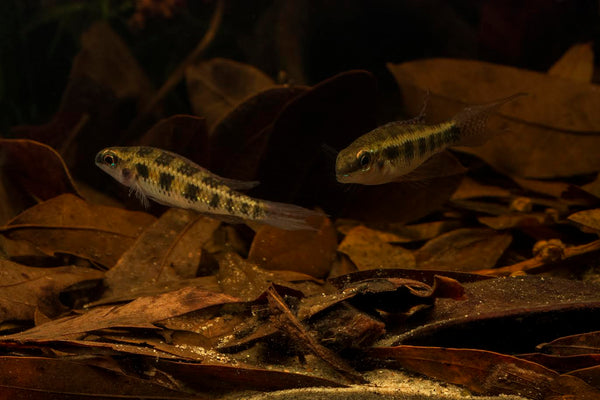
The substrate also harbors fish eggs, zooplankton resting stages, terrestrial insects that have fallen into the water, and fragments of fruits and seeds that accumulate among the leaves. During the flood season, these resources become widely dispersed throughout the forest, encouraging fishes to forage continuously among the submerged debris.
In many respects, the flooded forest substrate functions as a living pantry. Every leaf, twig, and piece of wood supports its own miniature ecosystem, populated by microbes and tiny invertebrates. Tropical fishes spend much of their lives browsing, probing, sifting, and inspecting these microhabitats, feeding not on the leaves themselves, but on the extraordinary diversity of life that the decomposing botanicals sustain.
Supporting these natural feeding behaviors is less about feeding more and more about creating an environment that continuously produces opportunities to forage. In a botanical method aquarium, the goal is not to replicate every organism found in an igapó forest—that would be impossible—but to recreate the ecological processes that encourage exploration and grazing.
My thoughts on some stuff you can do to replicate this feeding behavior in the aquairum?
Well, here a re a few:
Maintain a mature botanical substrate. A layer of leaf litter, small twigs, seed pods, and wood provides the structural complexity that supports microbial colonization. Resist the urge to replace everything at once. As materials age, they become increasingly valuable as biological habitat.
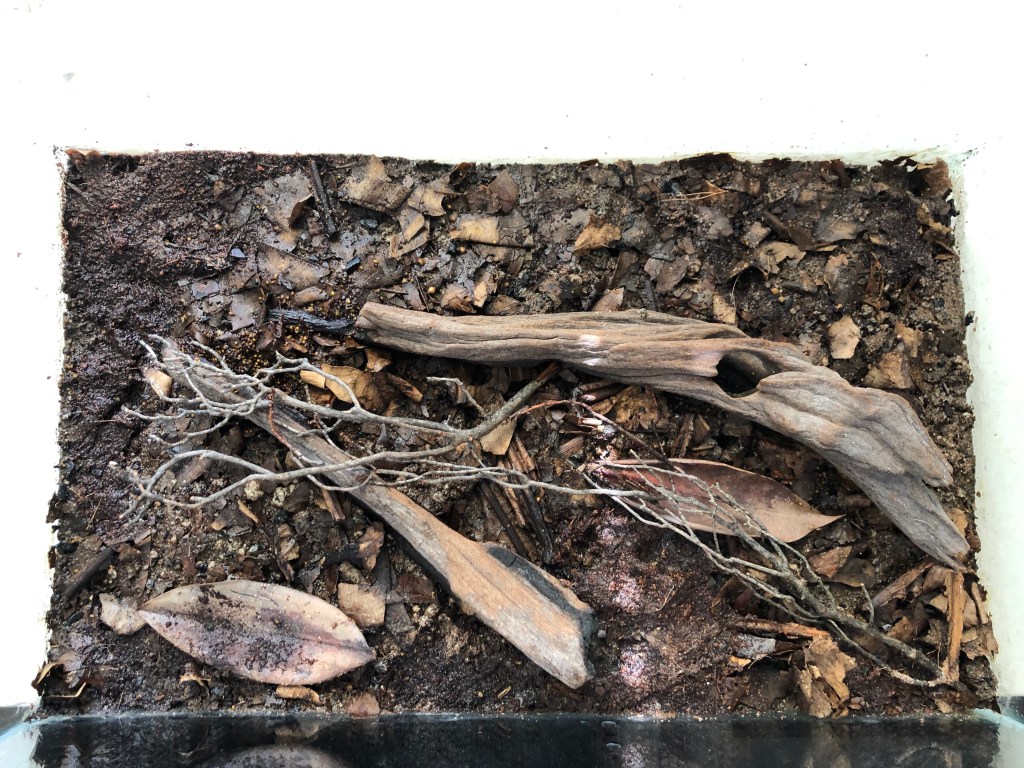
Allow those biofilms to develop. Biofilms that appear on leaves, branches, and wood are among the most important natural food sources in the aquarium. While they may not always be aesthetically appealing, they are eagerly grazed by many fishes, shrimp, and snails.
Avoid over-cleaning. Vacuuming every bit of detritus or scrubbing every surface removes much of the habitat where microorganisms and tiny invertebrates live. Periodic maintenance is important, but leaving portions of the substrate undisturbed allows these communities to mature.
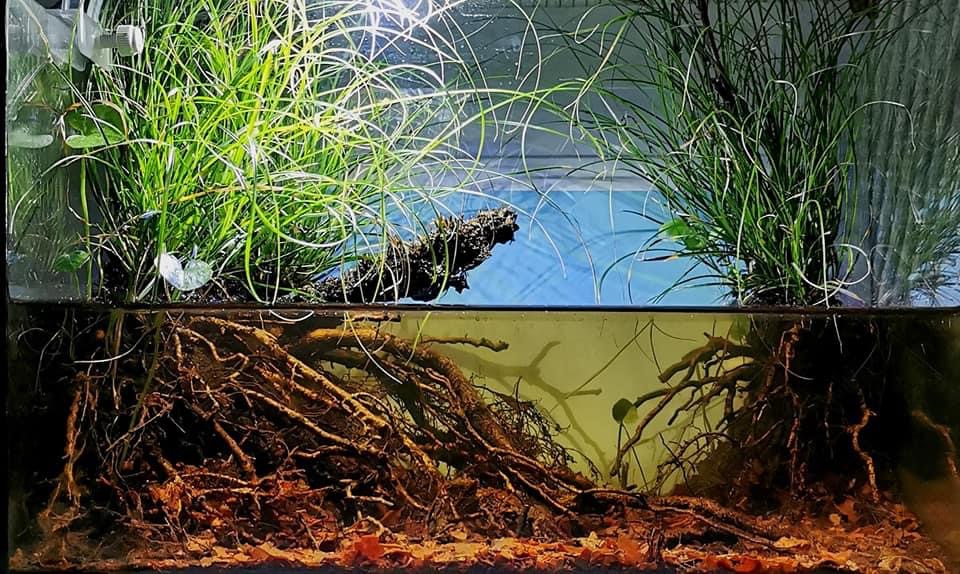
Provide physical complexity. Layers of overlapping leaves, root tangles, and small branches create hundreds of microhabitats that fishes can investigate. Complexity encourages natural searching behavior.
Feed foods that become part of the ecosystem. Fine frozen foods, live foods, and occasional powdered foods inevitably leave small particles behind. These nourish the microbial community as much as they feed the fish directly.
Cultivate microfauna. Copepods, ostracods, nematodes, and other tiny organisms often establish themselves naturally in mature aquariums. Given stable conditions and plenty of organic “habitat”, their populations can become surprisingly robust. Think “refugium” here…
Exercise restraint. Strong mechanical filtration, excessive sterilization, and constant “tidying” can reduce the abundance of the very organisms that make the substrate biologically rich. The objective is a healthy, balanced ecosystem—not a clinically pristine one.
Perhaps most importantly, feed the aquarium, not just the fish.
In Nature, fishes often consume organisms that have themselves fed on decomposing organic matter. The leaves support microbes; the microbes support tiny invertebrates; the invertebrates and biofilms support the fishes. By sustaining that chain, the aquarium begins to function more like the ecosystems we are trying to emulate.
This reflects one of the central ideas behind the botanical method:
The substrate is not simply a place where food lands—it is a place where food is generated. As the botanical materials decompose and become colonized by bacteria, fungi, protozoa, and small invertebrates, they create countless opportunities for fishes to browse, sift, probe, and explore throughout the day. In doing so, we are not merely feeding our fishes; we are restoring one of the most fundamental behaviors they exhibit in the wild.
For a botanical method aquarium intended to emulate an Amazonian igapó forest, I would think less in terms of creating a “substrate” and more in terms of creating a layered forest floor. In Nature, fishes are not foraging over clean sand—they are interacting with a mosaic of leaves, twigs, roots, decomposing wood, and pockets of sediment, all in various stages of decay.
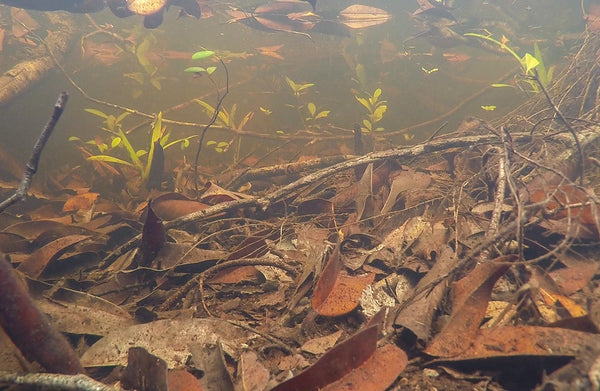
Here’s what I would use:
Base Layer
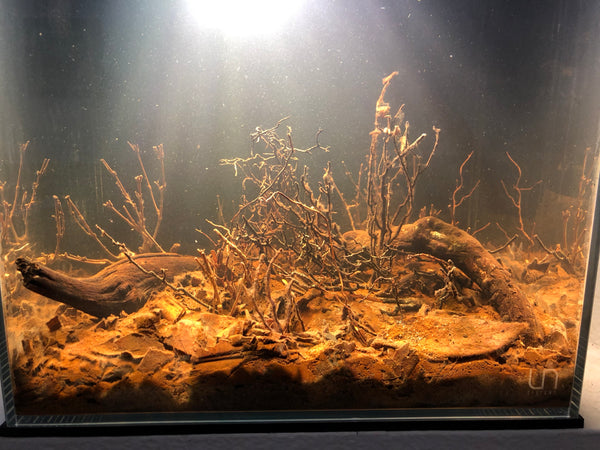
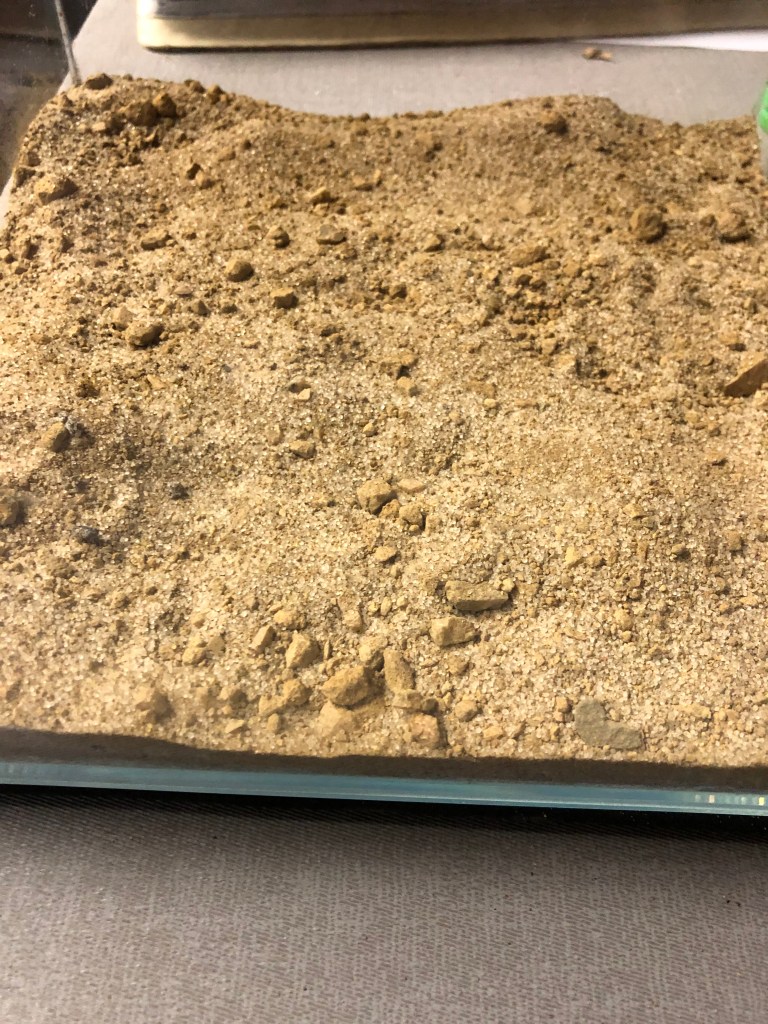
A fine sand (0.2–1.0 mm grain size) provides the ‘foundation” for the underlying sediment. Go with a very shallow layer- maybe 1/2″-3/4″ max. Fine sand allows fishes like Corydoras and many dwarf cichlids to sift naturally without damaging their mouths or barbels. It also traps organic particles that become incorporated into the substrate.
Mix in some kaolinitic clay, and possibly some soil and sediment from a pesticide-free garden. These materials not only bring ion a different “particle size”, they offer biological diversity.
Leaf Litter
Leaves are the heart of the system. Rather than striving for dozens of species, I’d select two or three that decompose at different rates.
Good choices include Indian Almond (Terminalia catappa), Guava (Psidium guajava), Magnolia, and Live Oak
The goal is to maintain overlapping layers of leaves in various stages of decomposition, just as occurs in Nature. Personally, I just use one leaf type in most tanks (Oak), but you can use whatever leaves you like, and in whatever combination rocks your world.
Twigs and Small Branches
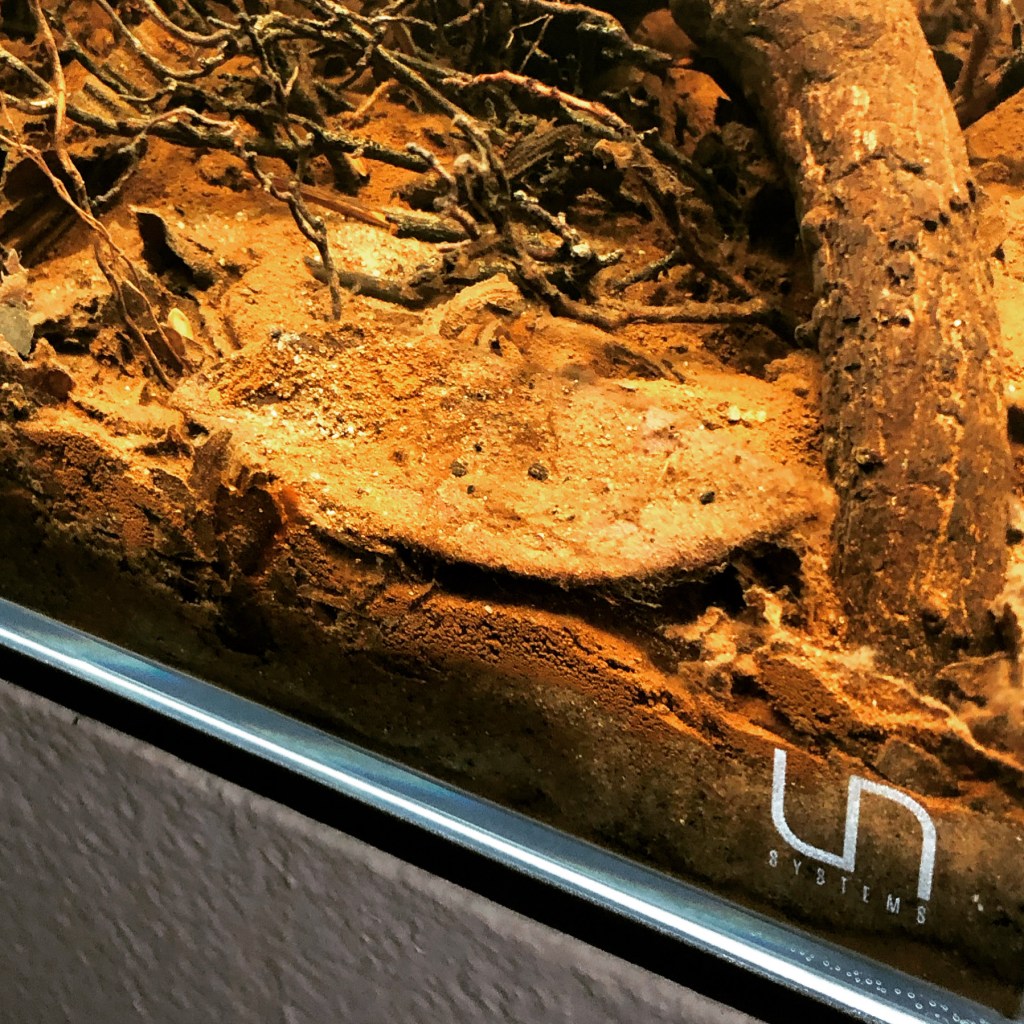
Fine woody debris is abundant in flooded forests. Thin branches and twigs create tremendous surface area for microbial colonization and provide shelter for tiny invertebrates. and fishes. I’m a huge fan of oak, as you’ve seen me rant about before.
Seed Pods and Woody Botanicals
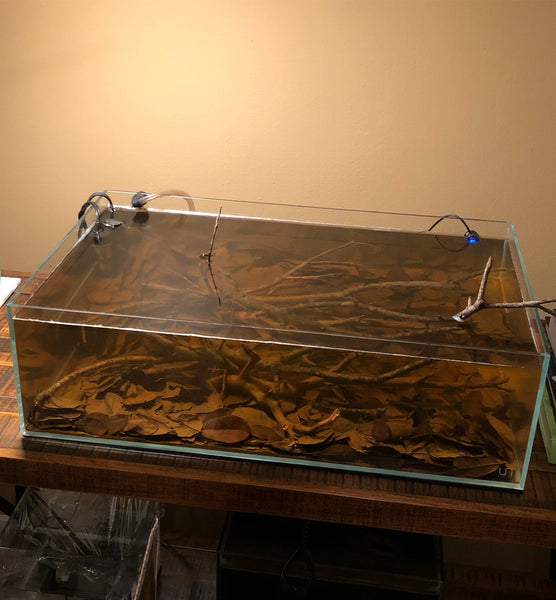
These add long-lasting structure that persists after leaves have decomposed. They’re less about aesthetics and more about increasing habitat complexity and surface area. Personal note: I use very few pods these days, I’m more about leaves- but do you!
Driftwood and Root Structures
Submerged roots and fallen branches are iconic features of igapó forests. They provide additional substrate for biofilms and fungi while creating shaded, protected areas where fishes naturally forage.
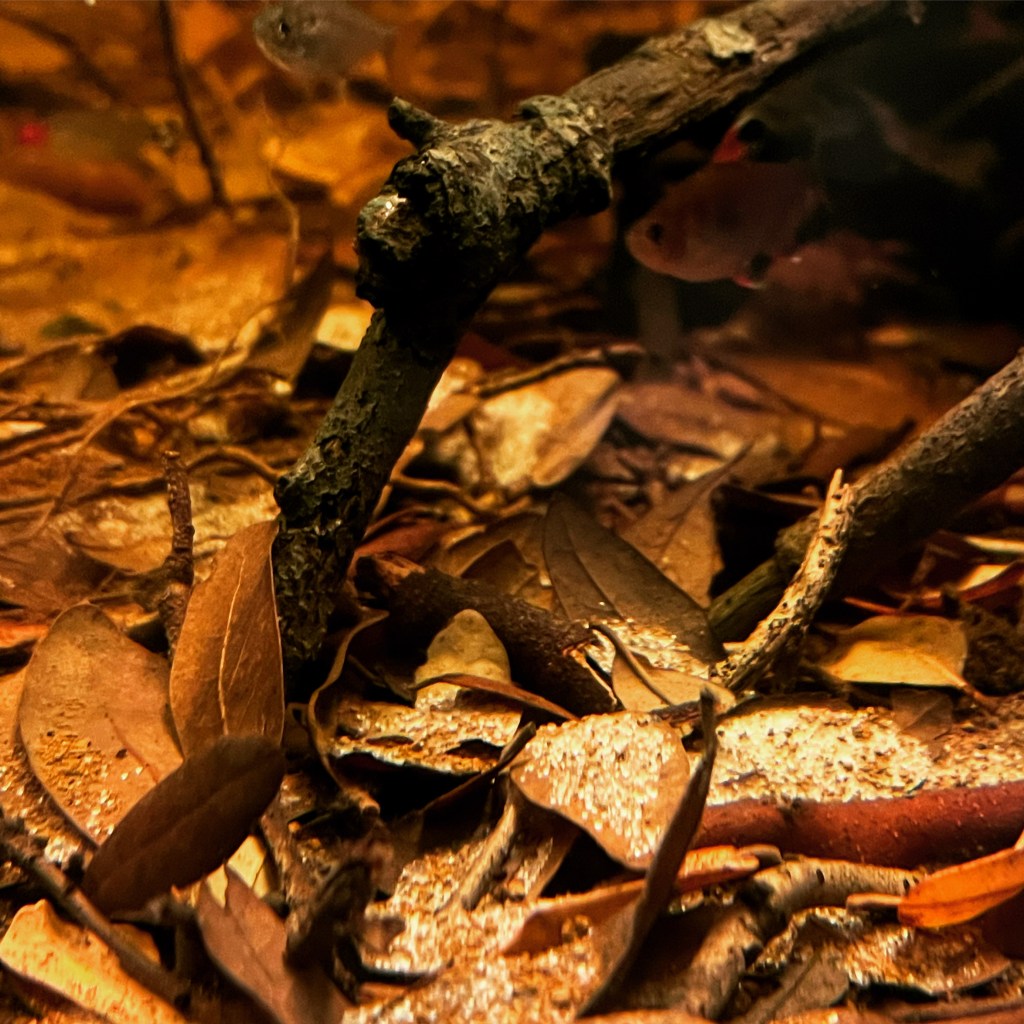
A Modest Detritus Layer
One of the biggest differences between a decorative aquarium and a functional botanical system is accepting a thin accumulation of decomposing organic matter. This isn’t “dirt”—it’s habitat. Tiny particles of fragmented leaves, fish waste, microbial biomass, and organic debris become incorporated into the substrate, supporting bacteria, fungi, protozoa, nematodes, copepods, ostracods, and countless other microscopic organisms.
Resist the Urge to “Reset”
Perhaps the most important “material” is time.
A newly assembled botanical aquarium may look like an approximation of a forest floor, but after six months it begins to become one. Leaves soften, wood develops biofilms, fungal hyphae appear, sediments accumulate, and microbial communities diversify. The substrate becomes increasingly complex, both physically and biologically.
In many ways, I think the most authentic botanical method substrates are also the simplest. A very shallow bed of fine sand, a sprinkling of ground-up aquatic soil, a generous layer of leaves, scattered twigs, root wood, and a handful of persistent woody botanicals can, over time, evolve into something remarkably similar to the submerged floor of an Amazonian flooded forest.
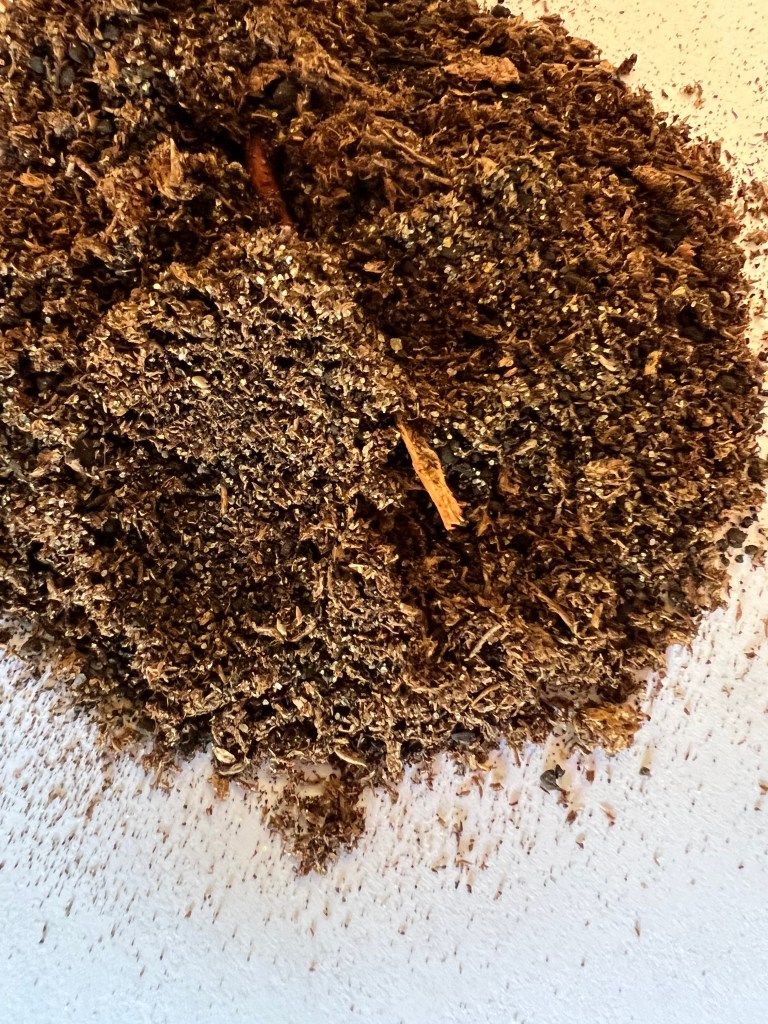
The key is recognizing that we don’t build the finished substrate—we build the starting point. Nature completes the process.
As decomposition proceeds and life colonizes every available surface, the aquarium develops the same kind of living, dynamic substrate that tropical fishes have been interacting with for millions of years. That, more than any particular botanical or decorative arrangement, is what makes the botanical method so compelling.
Start your journey at the bottom…literally.
Keep exploring . Stay resourceful. Stay creative. Stay curious…
And Stay Wet.
Scott Fellman


Leave a Reply