
One of the subtle shifts that occurs as an aquarist embraces the botanical method is learning to resist the urge to organize every aspect of the aquarium. Instead of viewing leaves, branches, seed pods, and other botanical materials as “decorations” to be arranged into a composition, we begin to see them as active participants in building the habitat itself.
This is an important distinction.
In Nature, botanical materials don’t simply occupy a habitat—they help create it.
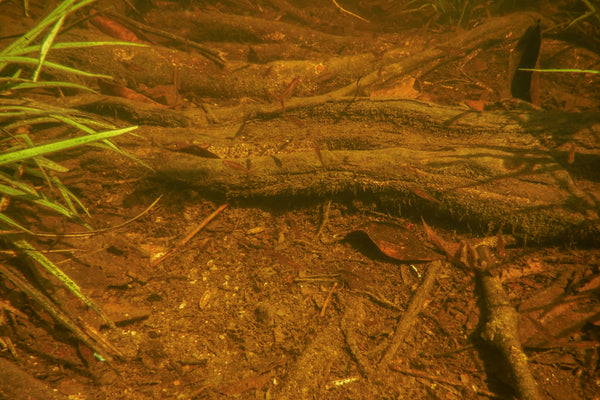
A fallen branch redirects current. A bed of decomposing leaves traps fine sediments. Seed pods become temporary refuges for small fishes and invertebrates. Bark and twigs accumulate biofilms, fungi, and microbial communities that eventually support an entire food web. Each botanical influences the physical environment, and in doing so, shapes the biological community that develops around it.
The same processes unfold in the aquarium. If we allow them to, of course!
“Creating” a botanical method aquarium is as much about just letting things happen and unfold as they may as it is about making conscious decisions about what goes where, etc. When you think about what the materials we add to our aquariums actually do in this context, it changes your thinking a bit.
Every leaf that settles onto the substrate changes water movement, however subtly. Every piece of wood creates areas of turbulence, shelter, and reduced flow. As botanical materials soften and decompose, they capture detritus, encourage microbial colonization, and provide surfaces upon which countless organisms establish themselves. Over time, the aquarium becomes less a collection of carefully placed objects and more an interconnected ecosystem of living and decaying materials.
This is where the botanical method becomes especially compelling.
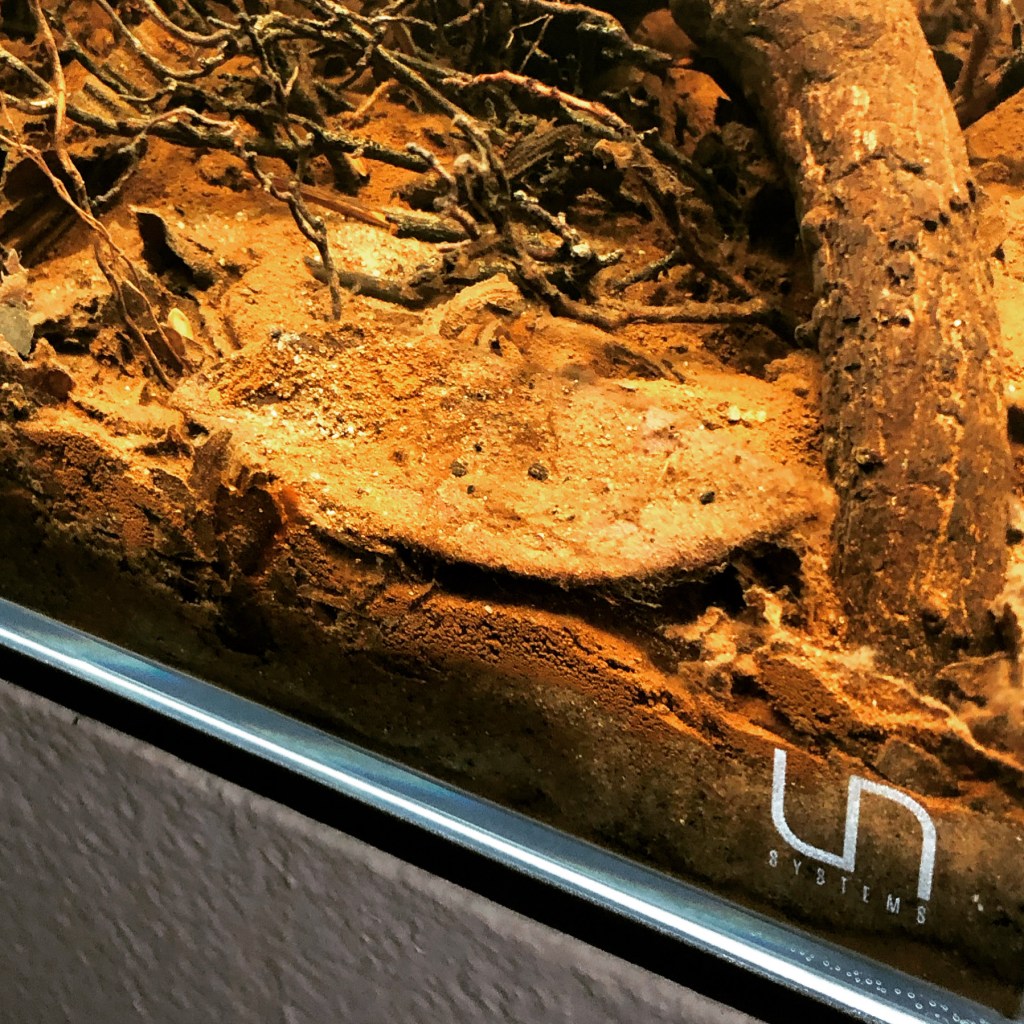
Rather than attempting to engineer every ecological outcome ourselves, we can allow the botanicals to “perform some of the work.” They organize space physically by creating shelter, barriers, and gradients of flow. They organize the ecosystem biologically by fostering biofilms, fungal growth, bacterial populations, and detrital food webs. They become habitat in the fullest ecological sense of the word.
As decomposition progresses, the habitat continues to evolve. A crisp leaf skeleton eventually becomes a lacework colonized by microorganisms. A seed pod gradually softens, its cavities filling with fine organic matter and tiny invertebrates. What began as structure slowly transforms into nutrient, then into biomass, before ultimately becoming part of the substrate itself.
Nothing is static. Everything is contributing, evolving, changing.
This perspective also changes the role of the aquarist.
Instead of meticulously arranging every detail, we become curators of ecological succession. We introduce the raw materials, maintain appropriate environmental conditions, and periodically replenish what Nature has consumed. The aquarium itself—through the combined activity of microbes, fungi, invertebrates, fishes, and chemistry—does much of the actual “construction.”
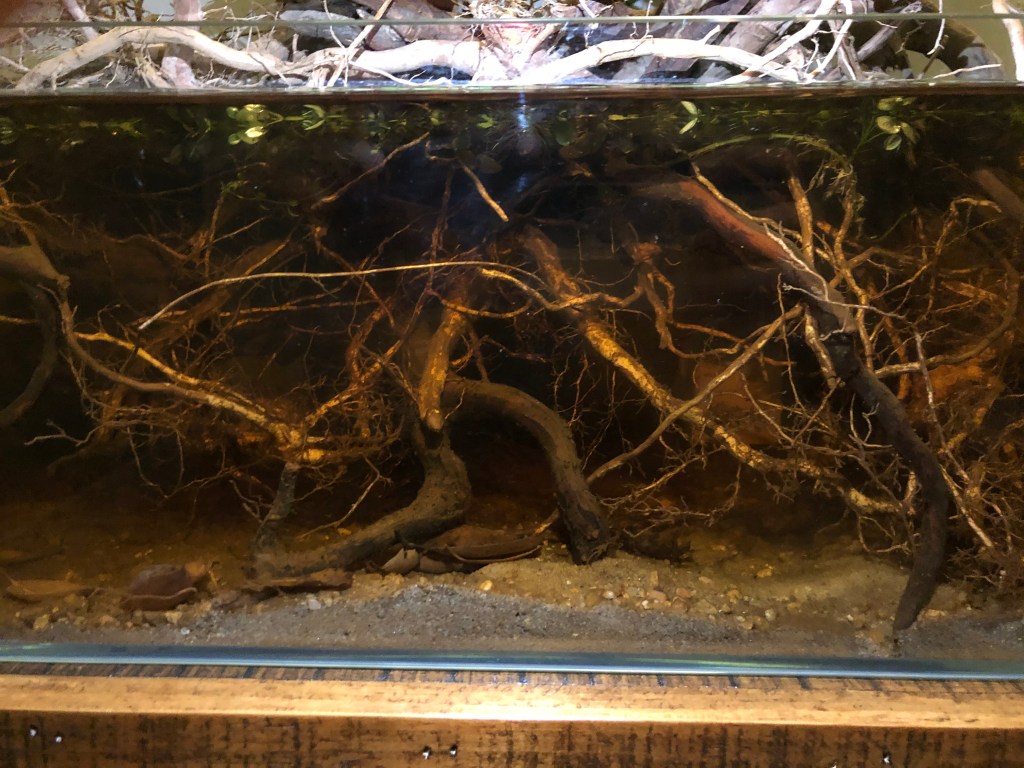
One of the defining characteristics of the botanical method aquarium is that many of the ecological processes occurring within it are not inventions of the hobby—they are direct analogues of processes taking place every day in natural aquatic habitats. The difference is largely one of scale, not mechanism.
Throughout the world’s freshwater ecosystems, terrestrial materials are constantly entering the water. Leaves fall from overhanging trees, branches are carried downstream during floods, seed pods and fruits accumulate along shorelines, and entire trees eventually become submerged. Collectively, these inputs are known as allochthonous input—materials produced on land that become incorporated into aquatic ecosystems.
These botanical inputs are far more than just “debris.”
They are structural habitat, nutrient reservoirs, microbial substrate, and drivers of ecological succession. We’ve touched on this concept for years, but it’s so very fundamental to what we do.
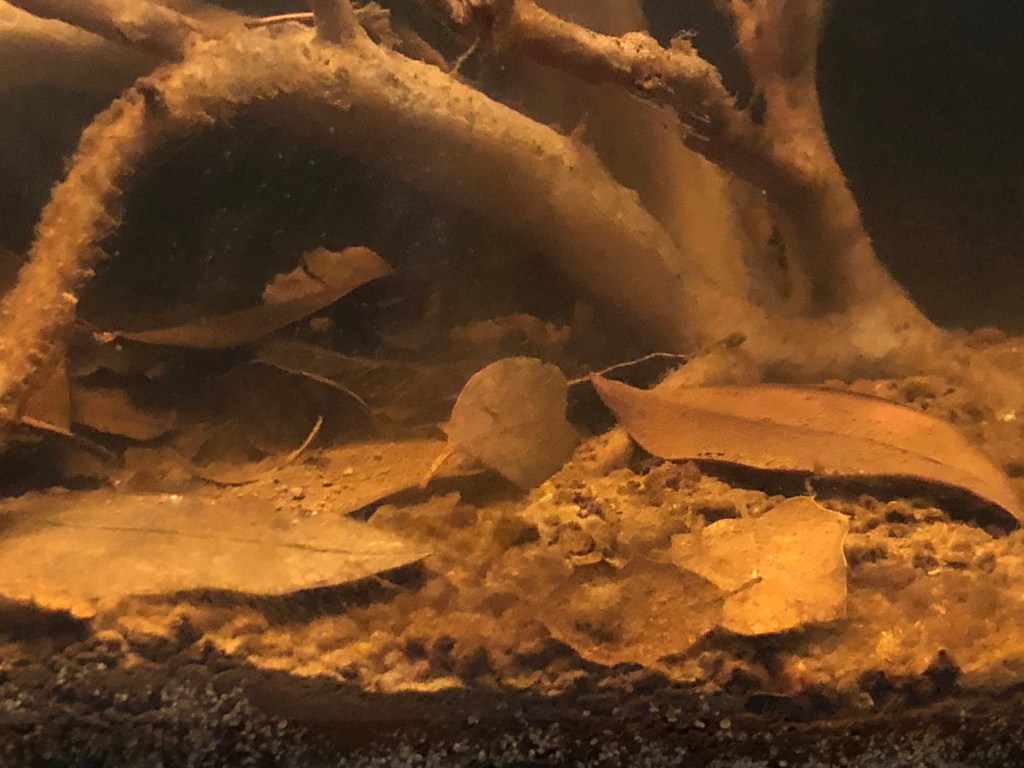
The moment a leaf enters the water, it begins changing physically and biologically. Soluble compounds are rapidly leached into the surrounding water. Bacteria and aquatic fungi colonize its surface, forming complex microbial biofilms. Small invertebrates begin grazing these microbial communities while simultaneously fragmenting the leaf itself. Fine organic particles accumulate within and around the decomposing material, eventually becoming incorporated into the sediment.
Wood follows a similar trajectory, albeit over a much longer timescale. Fallen branches redirect current, alter sediment deposition, stabilize leaf accumulations, and create areas of reduced flow where organic matter can settle. Their surfaces support dense microbial communities while their complex geometry provides shelter for fishes and countless invertebrates.
These processes collectively reshape the habitat. Or, in the confines of an aquarium, they define the habitat.
Importantly, none of this requires active direction.
The organization emerges from the interaction of hydrodynamics, microbial metabolism, decomposition, sediment transport, and biological succession. Habitat complexity is not “engineered’—it is an emergent property of ecological processes operating continuously over time.
The botanical method aquarium harnesses these same mechanisms.
Although the aquarium exists within a highly constrained volume and under the influence of filtration, water changes, and other husbandry practices, the fundamental biological processes remain remarkably consistent with those observed in Nature.
Because an aquarium IS part of Nature, really. A participant in processes much larger than it is.
This is perhaps the most significant distinction between the botanical method and more purely “decorative” approaches to aquascaping.
The objective is not merely to reproduce the visual appearance of a leaf-litter habitat. Rather, it is to establish the ecological conditions under which habitat continues to develop through natural biological and physical processes. As in a forest stream or an Amazonian igarapé, the habitat is never truly “finished.” It is continuously being constructed, modified, decomposed, and rebuilt through the interaction of organisms with organic matter.
In this sense, the botanical method aquarium is not simply displaying Nature—it is allowing Nature’s processes to remain active. To unfold over time.
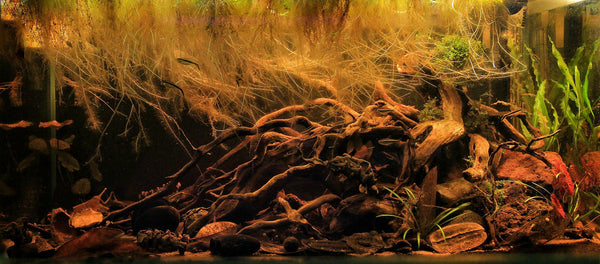
That may be its greatest strength.
We introduce the materials and maintain appropriate environmental conditions, but much of the habitat’s organization arises through the same mechanisms that have structured aquatic ecosystems for millions of years. The aquarium becomes less a static arrangement of objects and more a dynamic system in which decomposition, colonization, nutrient cycling, and habitat formation are perpetually intertwined.
The stage is smaller. The actors are fewer. The timescales are compressed.
But the ecological script is fundamentally the same.
Ironically, surrendering a measure of control often produces a habitat that is richer, more authentic, and more dynamic than one assembled entirely by our own design! Nature has been organizing botanical habitats for millions of years. The botanical method simply allows those processes to continue, albeit within the glass walls of an aquarium.
Perhaps this is one of the method’s greatest lessons: We don’t have to do all of the work.
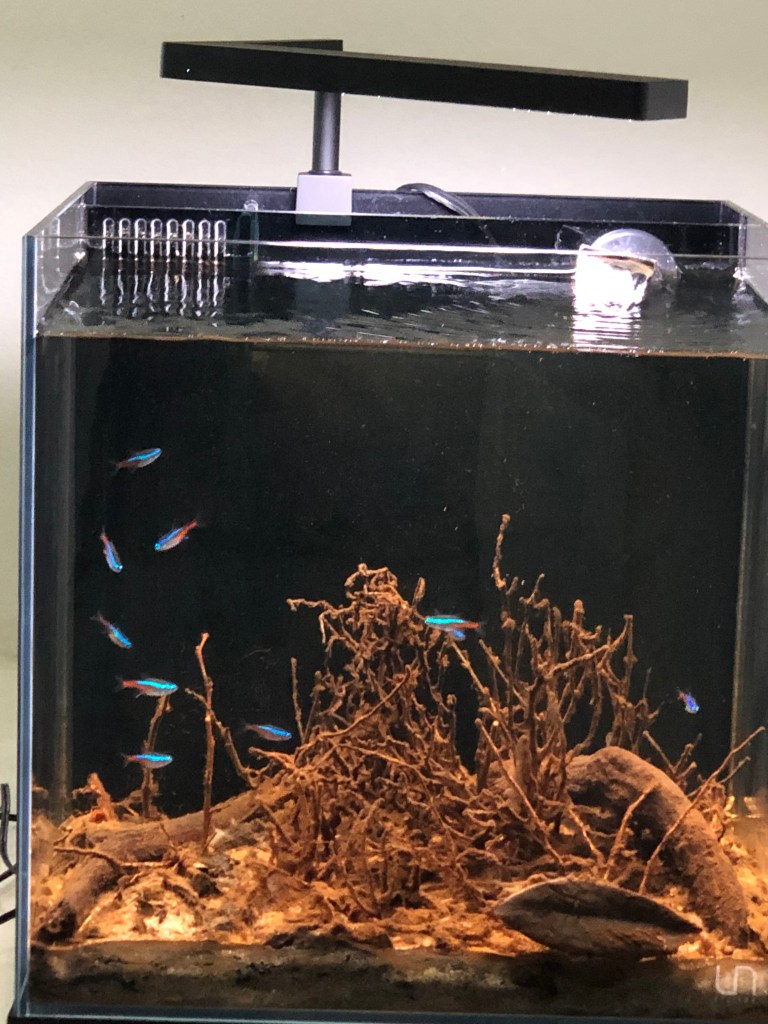
Sometimes the most successful aquarium is one in which we provide the ingredients, then step back just enough to let the leaves become leaf litter, the branches become woody debris, and the botanicals become what they have always been in Nature—not ornaments, but architects of the ecosystem itself.
So, yeah- let your botanicals do some of the work.
Stay thoughtful. Stay resourceful. Stay observant.
And Stay Wet.
Scott Fellman


Leave a Reply