
Over the years, those of you who follow “The Tint” know that I’m always looking to unusual natural ecological niches for inspiration. Nature provides plenty of ideas that we can interpret in the aquarium. Some are super obscure. Others are found all over the world. Some simply carry a bit more mystique to them because of what they are; where they are found.
To me, one of the most compelling aquatic scenes in Nature is the sight of a stream meandering into the forest.
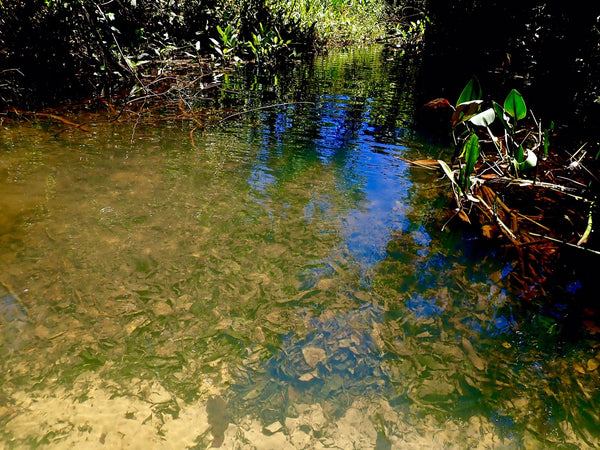
There is something that calls to me- beckons me to explore, to take note of its intricate details- and to replicate some of its features in an aquarium- sometimes literally, or sometimes, just taking components that I find compelling and utilizing them in other work..
Among the countless aquatic habitats of the Amazon Basin, few are as captivating—or as overlooked in the aquarium hobby—as the igarapé. Derived from the local Tupi language, meaning “canoe path,” an igarapé is a small, often temporary forest stream that winds beneath a dense canopy of trees, often disappearing into the surrounding vegetation. And, yeah, they are truly “canoe paths”- navigable during certain times of the year with small watercraft.
These intimate waterways are far removed from the vast Amazon River, yet they support an extraordinary diversity of life.
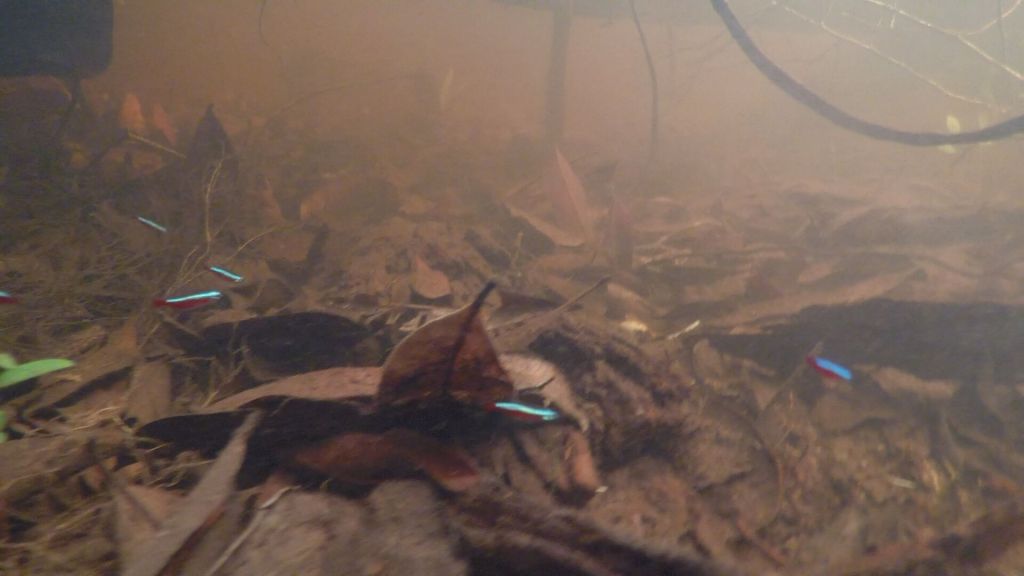
Fortunately, this habitat is well studied by ecologists, and there is a fair amount of data out there for those who care to dig a little!
First off, there is the topic of water depth- sort of foundational to the habitat. The igarapé are generally quite shallow, particularly during normal water conditions. While there is tremendous variation depending on region, season, and rainfall, a useful approximation is:
| Habitat | Typical Depth |
|---|---|
| Small headwater igarapé | 10–40 cm (4–16 in) |
| Average forest igarapé | 30–100 cm (12–40 in) |
| Deeper pools | 1–2 m (3–6 ft) |
| Exceptional holes or channels | occasionally >2 m (6+ ft) |
In other words, much of an igarapé typically consists of water less than knee-deep. Really fucking shallow!
An important consideration when contemplating such a replication in our tanks is to consider just how these little forests streams form. Typically, they are either a small tributary of a larger stream, with the path carved out by rain or erosion over time. In other situations, they may simply be the result of an overflowing tributary during the rainy season, and as the waters recede later in the year, they evolve into smaller streams meandering through vegetation.
Those little streams fascinate me.
For the aquarist, the igarapé offers an inspiring model.
Rather than emphasizing dramatic hardscape or colorful ornamentation, it invites us to recreate ecological function. Fine sand, leaf litter, driftwood, twigs, and a mature microbial community become the defining features of the aquarium. Over time, these materials evolve into a living substrate that encourages fishes to forage, explore, and behave as they do in Nature.
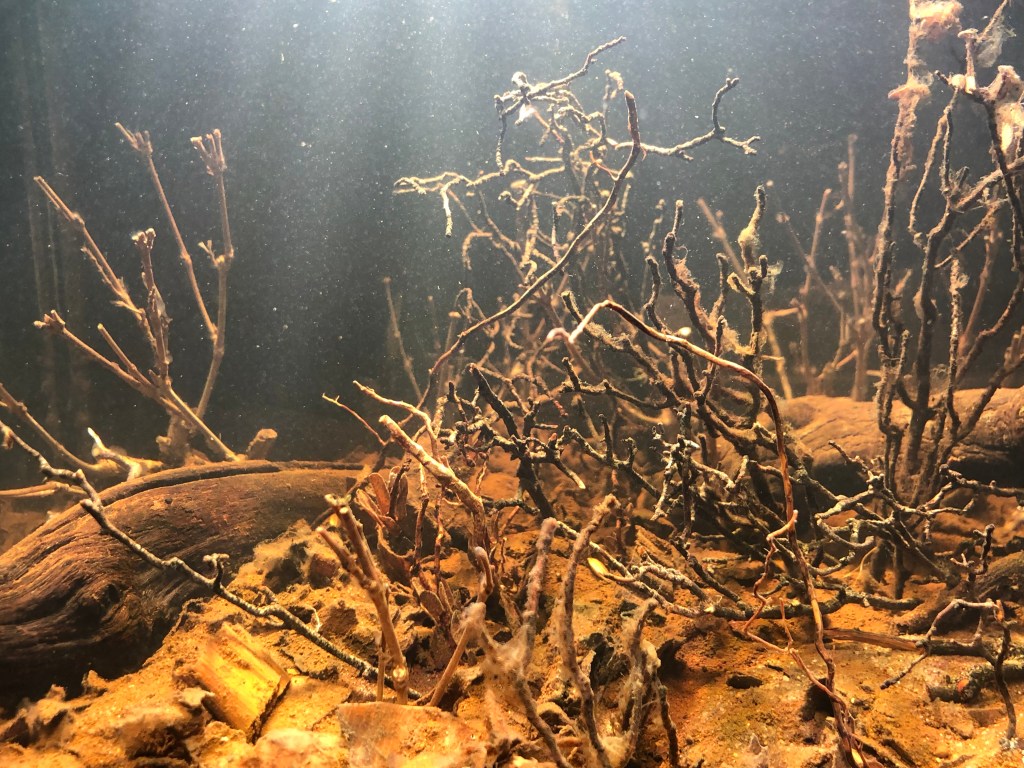
Yet, we need to do a bit of studying if we want to faithfully recreate such a habitat in the aquairum.
Aquarists who try to replicate systems like this all too often often build aquaecapes with towering wood piles, lots of vertical structure, and relatively open bottoms.
Many actual igarapés are almost the opposite.
The observers eye is drawn to the forest floor, accumulated leaves, low tangles of roots, fallen branches lying nearly horizontal, and occasional patches of open sediment.
The vertical complexity comes from the forest above the water as much as from within it.
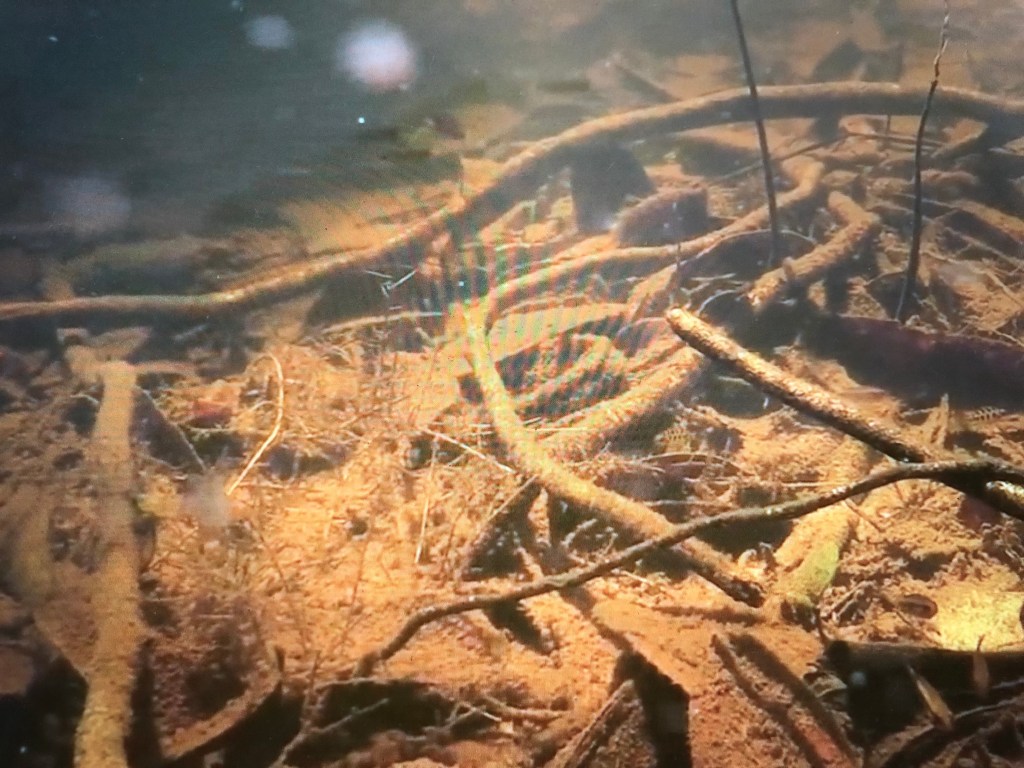
This is where I think many Amazonian- themed aquariums become unintentionally unrealistic.
You see too much of this on YouTube and other social media by otherwise well-meaning hobbyist “influencers” purportedly presenting a realistic representation of an”Amazonian habitat” with an air of undisputed authority, perpetuation a cycle of misinformation about these fascinating habitats.
Let’s do better.
We need to replicate the actual habitats…not other aquarists’ work that may or may not be environmentally accurate! Stop doing that!
Research the actual habitat!
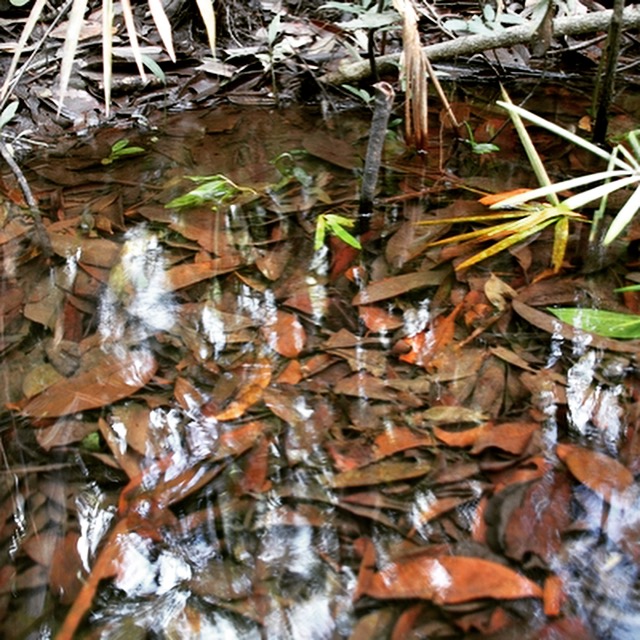
Because many igarapés are quite shallow, they have an extraordinarily high edge-to-volume ratio. A shallow, wide aquarium would be optimal to recreate one.
And another unique thing about this habitat:
Everything interacts.
Leaves don’t take long to reach the bottom. Insects fall directly into the water. Light penetrates completely. This is the “poster child” habitat for allochthonous input!
Fish are always close to substrate, wood, leaf litter, AND the water surface.
There is very little “open water” in the pelagic sense.
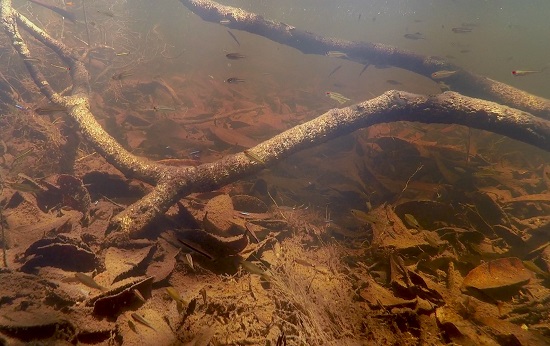
That’s one reason so many Amazonian fishes are “benthic foragers”, surface pickers, or midwater “cruisers” that remain closely associated with structure.
Most igarapés are shaded for much of the day, with sunlight filtering through the forest in shifting patterns. This is a clue when electing lighting for your tank. LED’s turned way down is what I’m thinking here.
The water is deeply stained by tannins released from leaves, wood, and other botanical materials. The current is generally gentle, carrying a continuous supply of fallen leaves, twigs, branches, fruits, and seeds that settle onto the streambed, where they slowly decompose. We’ll come back to the topic of current in a bit.
To the casual observer, the bottom of an igarapé may appear to be simply littered with debris. and that’s that. In reality, it is one of the most biologically active parts of the ecosystem! Every leaf and branch becomes colonized by bacteria, fungi, protozoa, algae, and tiny invertebrates. Together, these organisms transform dead plant material into a living substrate that supports countless fishes and other aquatic animals.
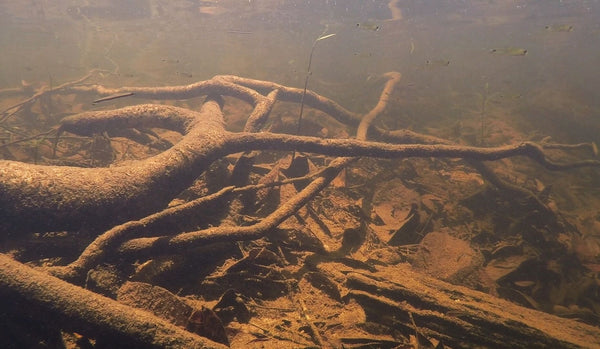
Many Amazonian fishes spend much of their lives interacting with this forest floor. They browse biofilms, sift through leaf litter, probe beneath submerged branches, and investigate every crevice in search of insect larvae, crustaceans, worms, and other microscopic prey. The substrate is not simply a place to rest—it is where much of life happens.
Perhaps this is the greatest lesson of the igarapé. Its beauty does not arise from pristine simplicity, but from quiet complexity. It is an ecosystem shaped by decomposition, renewal, and countless interactions between organisms and their environment. By embracing these natural processes, we create aquariums that are not merely inspired by Amazonia—they begin to function like a small piece of it.
A relatively shallow aquarium—say 12 to 18 inches (30-45 cm) of actual water depth—can actually be more representative of many forest streams than a very deep tank.
It allows light to reach the substrate, leaves to dominate the visual field, fish to interact constantly with the bottom and surface, and wood to become habitat rather than simply “decoration.”
I think of an igarpae as a flooded forest floor with a gentle current passing through it.
That one sentence changes almost every design decision. you’ll make
The substrate becomes the primary habitat.
The leaf litter becomes infrastructure.
Wood becomes succession rather than “ornament.”
And the fishes become participants in a living forest ecosystem rather than occupants of a “aquascaped” aquarium.
To recreate an igarape in an aquarium, at least from an ecological perspective- you should start from the literal bottom…the substrate. Get creative, be bold, and ditch the clean white sand.
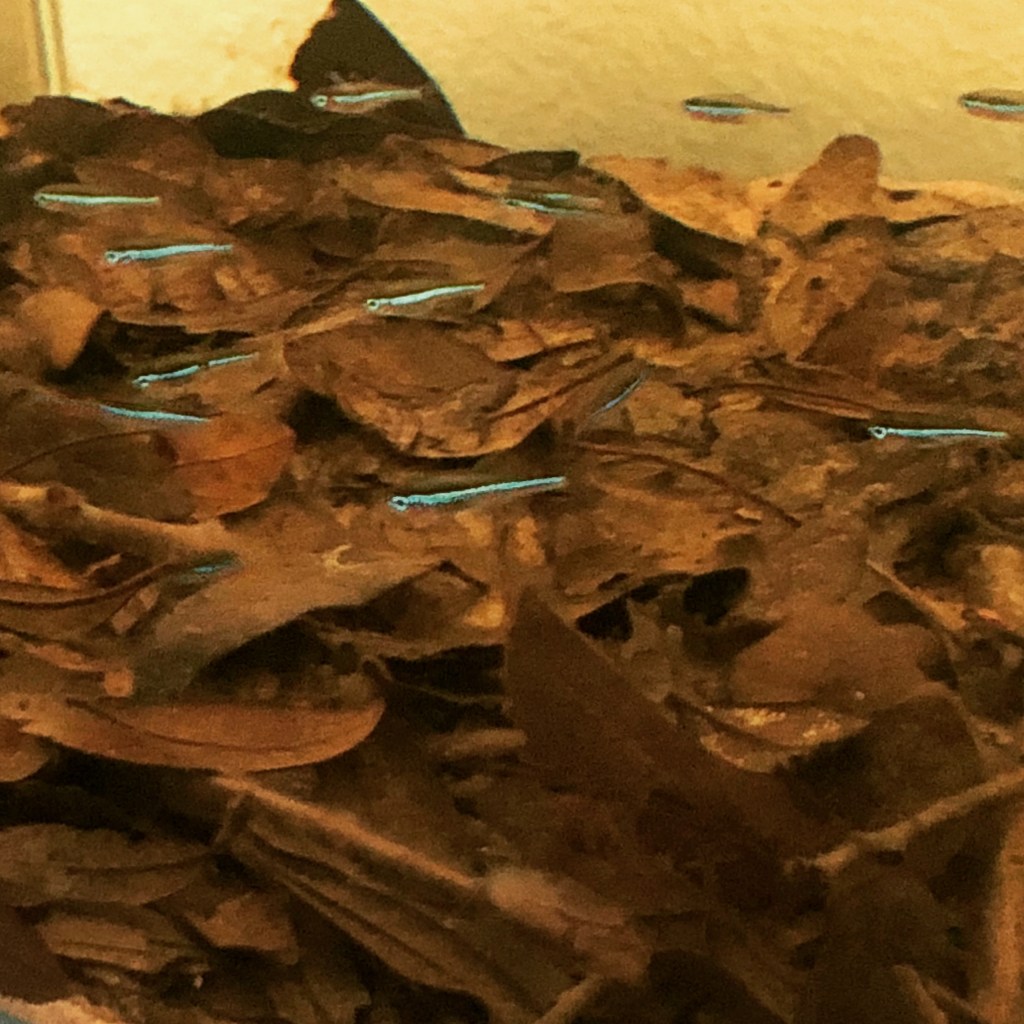
Start with a shallow layer of mineral sediment. Perhaps some kaolinitic clay, mixed together with some finely ground planted aquarium substrate. Run it through a coffee grinder…just get a cheap one on Amazon and run small batches of these granular substrates through it at a time. Yeah it’s a pain in the ass- but it is how to get the right consistency and a good blend of material.
Keep the substrate on the shallow side- like 1.5″ or so deep. Above that, literally toss in a mix of botanical material- small leaves, bits of broken twigs, palm fragments, etc. And it need not be uniform- some areas can be almost “bare”. Some areas will have heavy accumulations of botanical materials. This is exactly how igarape develop in Nature. Remember, we’re talking about a little steam running through the forest floor.
Then, throw in a mix of branchy wood.
Literally, whatever you have on hand. Preferably finer material, like oak, or some basic, light, gnarled driftwood pieces. Nothing terribly fancy, and certainly nothing super big and clunky. You want wood that will break down, recruit biofilms and fungal growths, and generally a mix of different types and textures. Again, we’re talking about a forest floor which a seasonal steam runs through. Whatever is there during the dry season is there when the water comes.
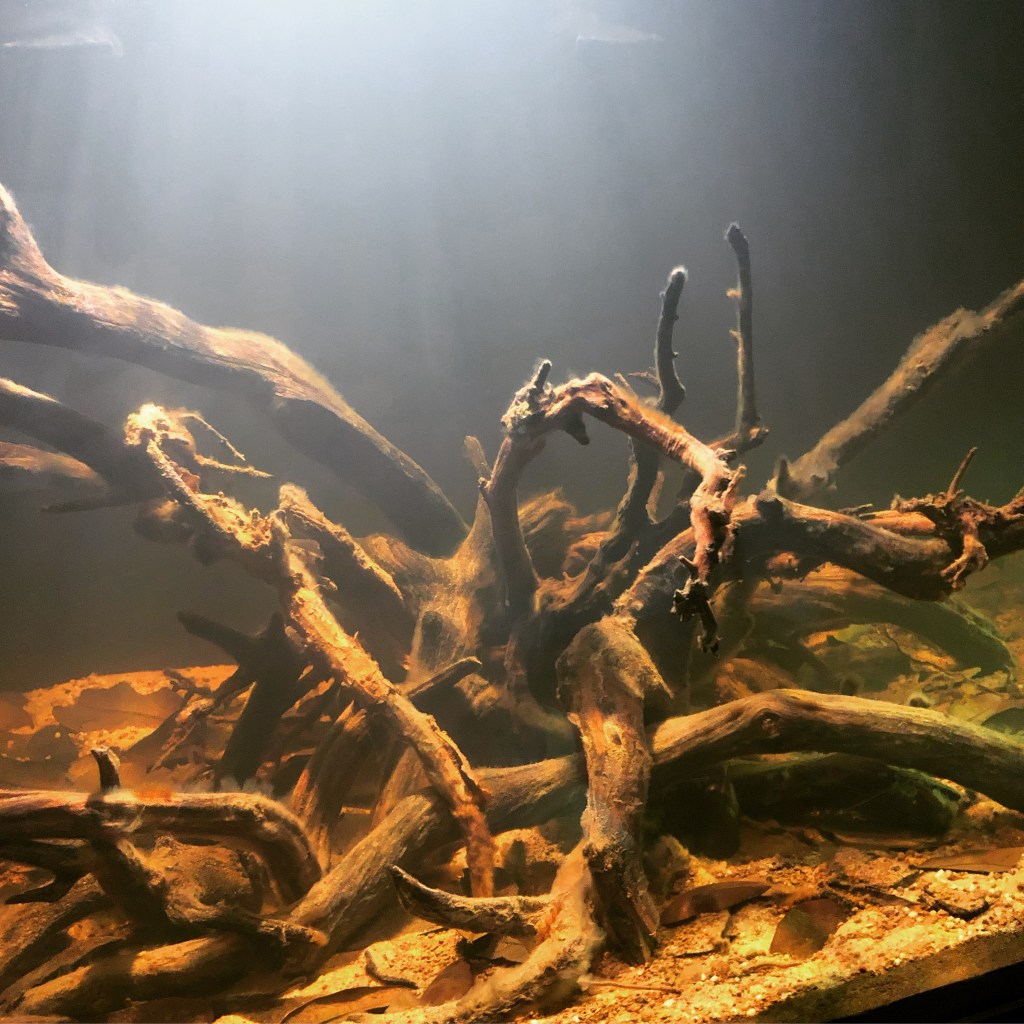
It’s not about high concept and ratios and such. That’s for the fanboys to play with. You’re representing Nature, not continuing to pander to a bunch of haiku-quoting cargo cult of followers to talk about how incredible you skills at arranging wood are! You can make it look cool without having to be a slave to that shit.
Let’s talk about water movement for a second.
I would not create “strong flow.”
I’d create complex flow. Quiet pools. Slow riffles. Localized eddies behind wood. Leaf packs where fine organic matter settles. Open lanes where fish cruise.
Again…it’s the geometry of flow, not simply turnover of water. And speaking of water, don’t forget what you’re trying to represent here. A literal path through a forest.
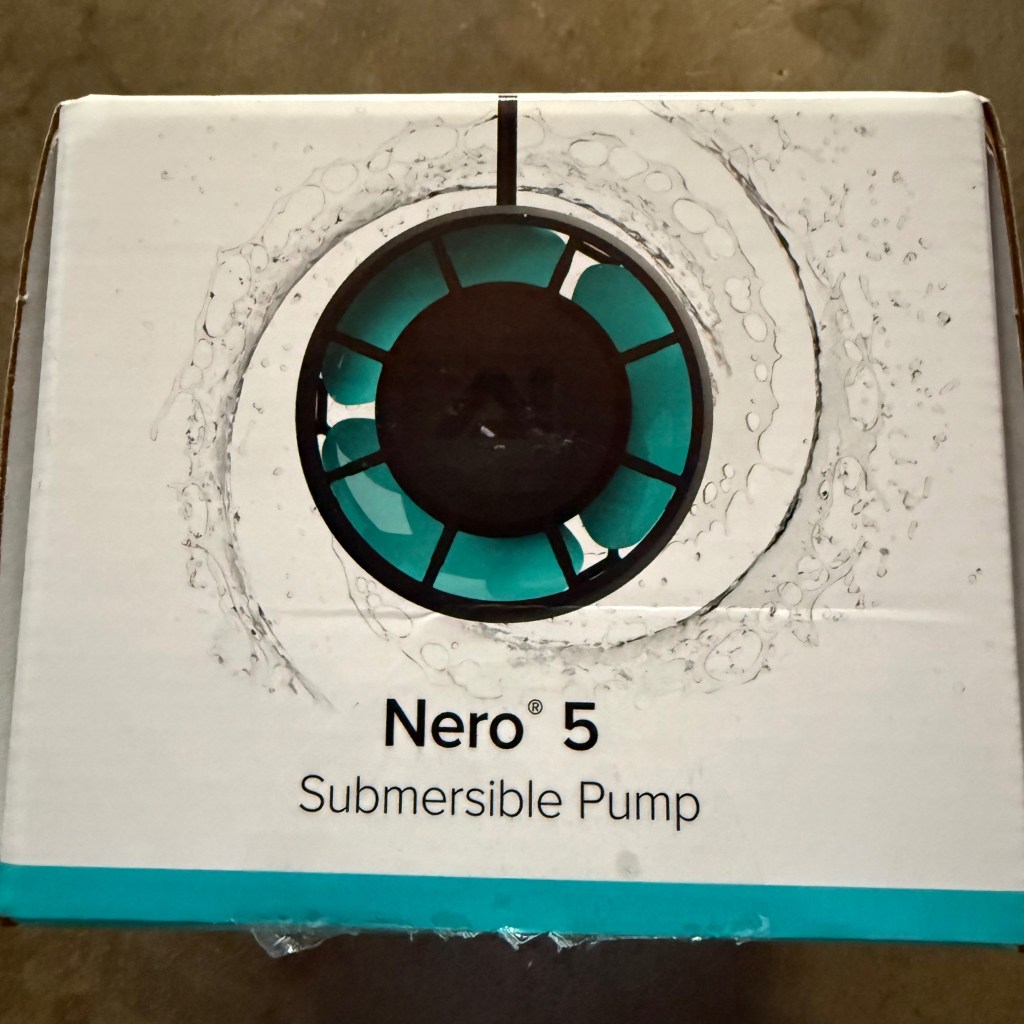
I’d recommend the use of a small electronically controlled wave maker, like the Nero from Aqua Illuminations. It’s one of my fave small pumps for reefs and it’s becoming a valuable tool for my freshwater work as well. It comes in several sizes for almost any aquarium, and you can get precise control and simulate all sorts of natural flow patterns with ease.
Because of all that decomposing material and soil, the water will generally NOT be crystal clear in these habitats, nor should it be in your aquarium.
Natural igarapés often are filled with fine suspended organics, dissolved tannins, bacteria, microscopic particles, plankton, and humic substances. Not dirty. Alive.
I would embrace that. And another thing: I wouldn’t start with adding fish right away.
I’d start with the ecosystem.
I’d let the aquarium mature for several months. Yeah, you’ve heard me say that before. Do it right!
Allow accumulation of biofilms, growth of fungi and microbial communities, proliferation of decomposers and meiofauna to establish first.
Then I’d add fishes.
When the fish arrive, they enter an ecosystem already functioning.
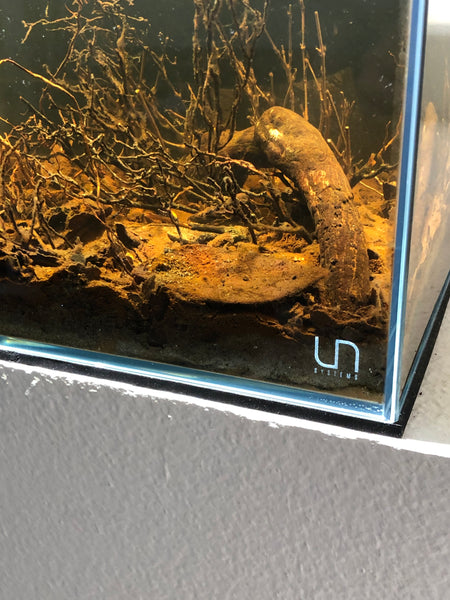
Just like Nature.
Speaking of fishes…What fishes would you find in the igarape?
The fish assemblage of an igarapé tells you how the habitat functions. If you understand why these fishes are there, you begin to understand the ecosystem itself.
One thing that surprises many aquarists is that there isn’t really an “igarapé fish.” Rather, there are fishes that have evolved to exploit the unique ecological opportunities offered by these forest streams.
Let’s work from the top of the water column down.
The Surface
This is an incredibly productive zone.
Leaves overhang the stream, insects fall constantly, and terrestrial arthropods become a major food source.
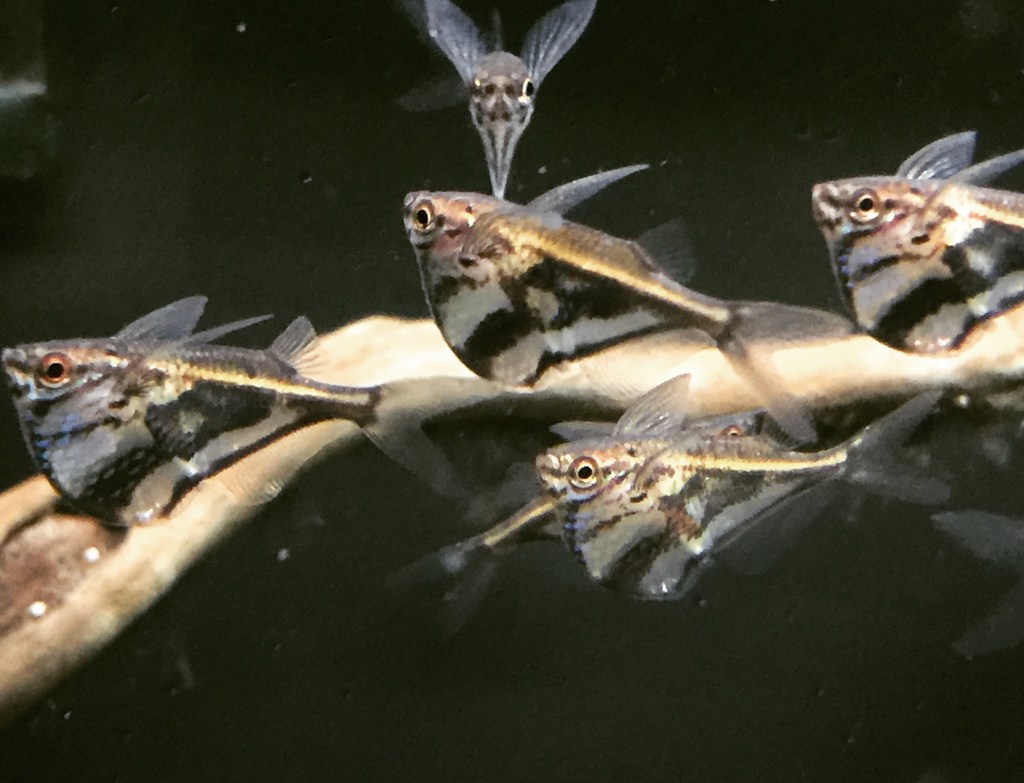
Hatchetfishes (Carnegiella, Gasteropelecus, Thoracocharax)
These are perhaps the quintessential igarapé fishes.
They spend almost their entire lives within a few centimeters of the surface. Their upward-facing mouths are perfectly adapted for feeding on insects. Interestingly, their ability to leap from the water likely evolved as an escape response in these shallow habitats!
Splash Tetras (Copella arnoldi)
One of the most remarkable Amazonian fishes- and one which is not all that commonly kept these days!
They spawn on leaves above the waterline, and the male then splashes the eggs with his tail until they hatch. That behavior only makes sense in shallow forest streams with abundant overhanging vegetation!
Midwater
This is where the greatest diversity occurs.
Cardinal Tetra (Paracheirodon axelrodi)
Despite their popularity, they’re actually remarkably specialized little fishes!
They inhabit slow, acidic blackwater streams and flooded forests where leaf litter and roots dominate. Scientific study demonstrates that the brilliant blue and red colors may actually be easier to recognize in tannin-stained water than we realize.
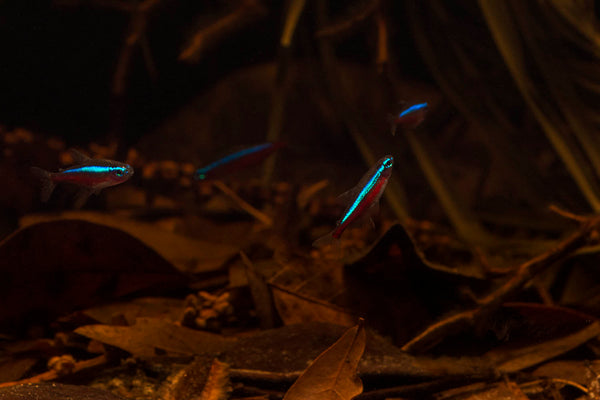
Green Neon Tetra (Paracheirodon simulans)
One of my personal favorites, these guys are often found in even smaller, more acidic waters than Cardinal Tetras. And interestingly, they almost disappear against leaf litter until light catches them. An interesting adaptation!
In a sense, the fishes are not merely inhabitants of the igarapé—they are active participants in its continual renewal. I find that idea wonderfully consistent with the philosophy you’ve developed for your own aquariums: healthy ecosystems are shaped not by one dominant force, but by countless small interactions, repeated day after day, season after season.
Ember Tetra AND relatives (Hyphessobrycon spp.)
Many small Hyphessobrycon species occur in igarapés. They spend much of their time weaving among roots and submerged branches rather than swimming in open schools.
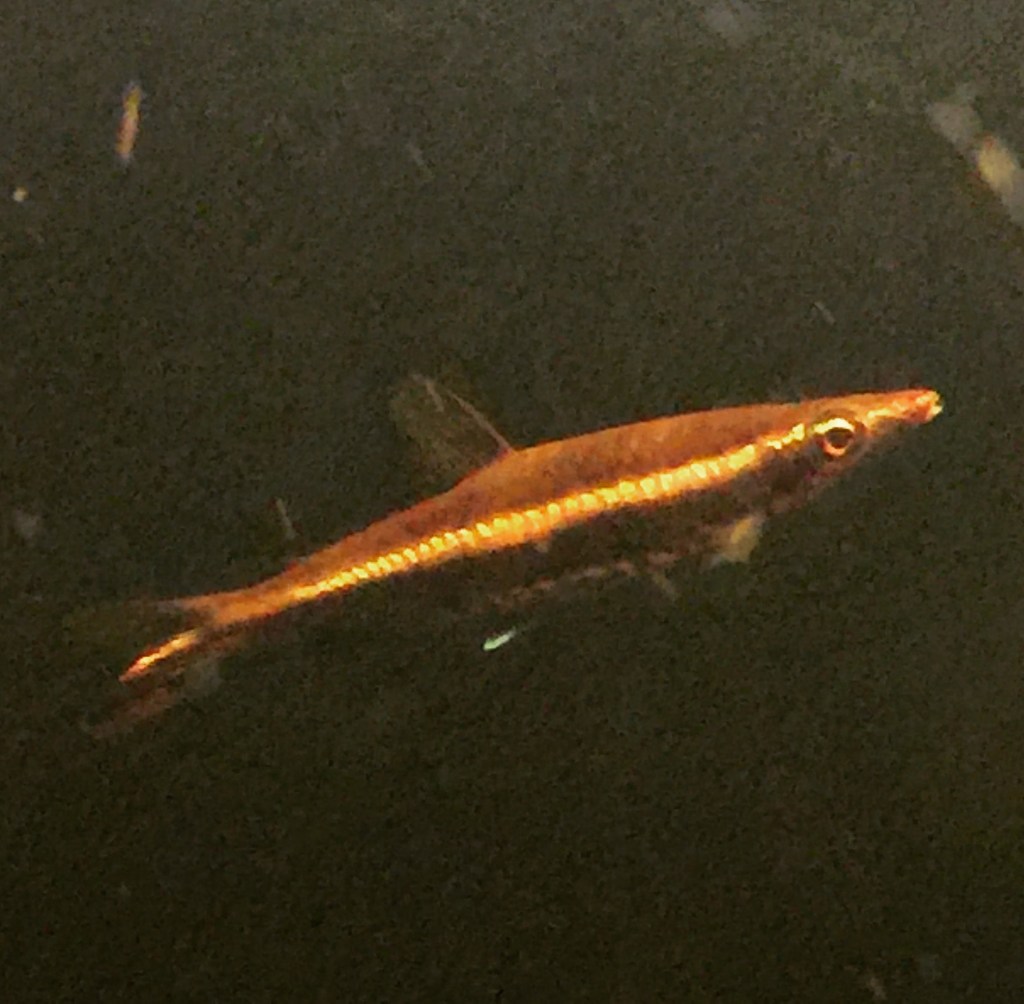
Pencilfishes (Nannostomus sp.)
To me, these are among the most representative fishes of an igarapé. I adore Pencilfishes, and you should, too!
They hover beneath branches, pick tiny prey from biofilms, feed on insect larvae, and browse microorganisms all day long. Different species even occupy different levels within the water column.
Around wood and roots
This is where things become really interesting.
Dwarf Cichlids (Apistogramma spp.)
Probably the iconic bottom-associated fish of these habitats.
They spend their days inspecting leaves, turning substrate, hunting insect larvae, and guarding tiny territories. Apistos are constantly “reading” the forest floor.
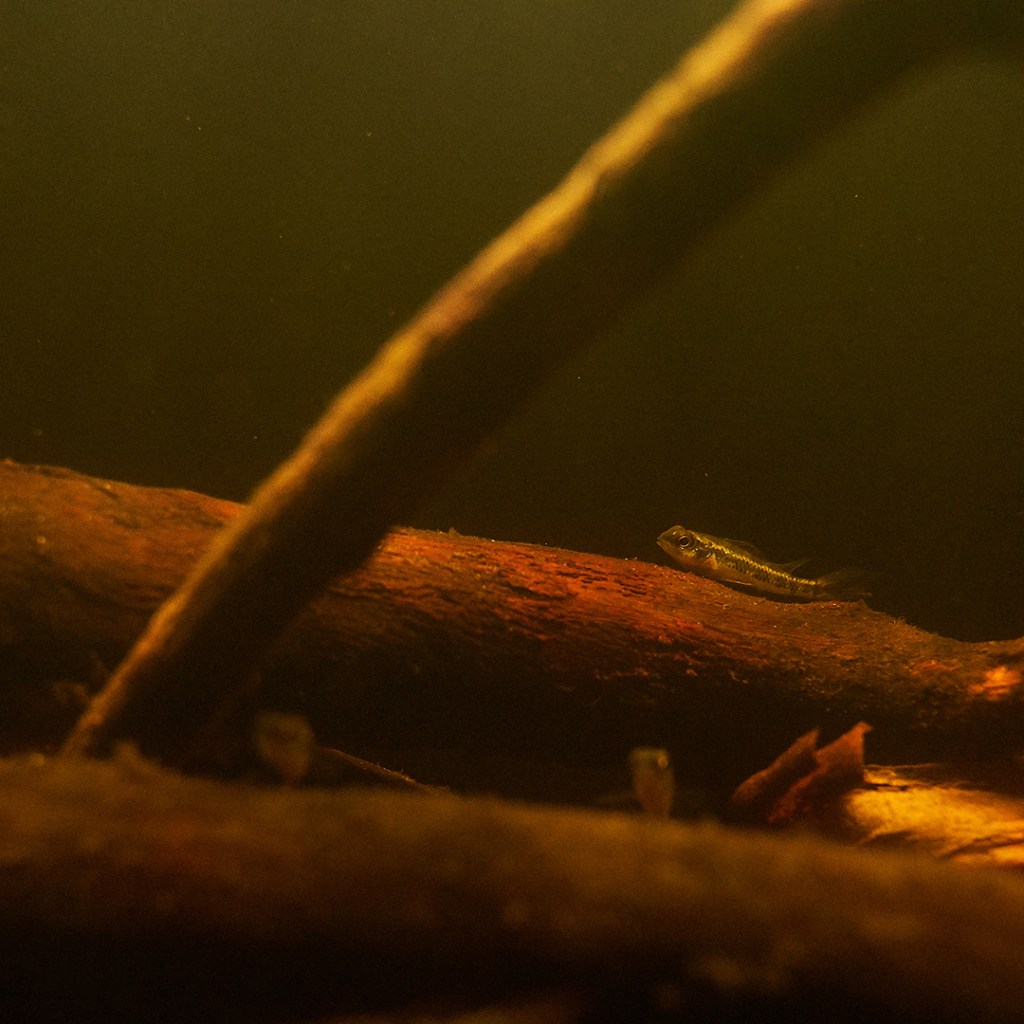
Checkerboard Cichlid (Dicrossus filamentosus
Perhaps even more specialized these fish methodically sift through leaf litter searching for tiny crustaceans and insect larvae. Watching them is like watching little ecological excavators as they search a nd search and search.
The Bottom
The substrate is alive. And fishes are part of the equation here.
Corydoras
Many Amazonian Corys inhabit forest streams.
They don’t simply “vacuum the gravel” as we have assumed for generations in the hobby. Rather, they probe, taste, sort, reject, and select material on the substrate, in search of food items.
They’re interacting with an extraordinarily complex substrate community.
Wood specialists
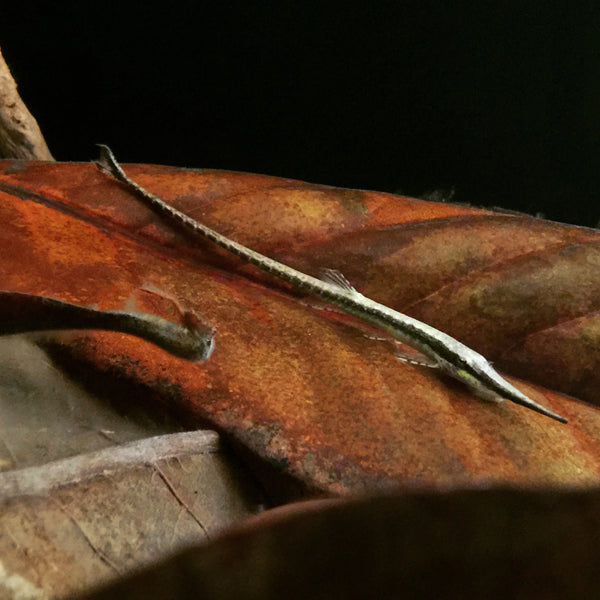
Whiptail Catfishes (Rineloricaria, Sturisoma, Farlowella)
Many species graze biofilms, algae, fungi, and microorganisms from submerged wood.
Again…
They’re interacting with the decomposition process!
After dark the igarapé becomes an entirely different world.
Small catfishes emerge, Knifefishes begin hunting, Shrimp become active. Tiny invertebrates leave the leaf litter. The ecosystem literally changes “shifts.”
One thing that is often overlooked about grape fish populations is that many fishes are seasonal visitors. During flooding, species like Angelfish, Discus, and various characins move into flooded forests to feed among submerged branches.
When waters recede, they leave.
An igarapé isn’t a static community.
It’s connected to the larger Amazon.
When creating your own version of an igarape in an aquarium, I’d probably resist the temptation to include dozens of species.
Instead, I’d focus on fishes that represent different ecological roles.
For example:
Surface
- Splash Tetras or Hatchetfishes
Midwater
- Pencilfish
- Green Neons
Lower water column
- Apistogramma
Substrate
- Corydoras or Dicrossus
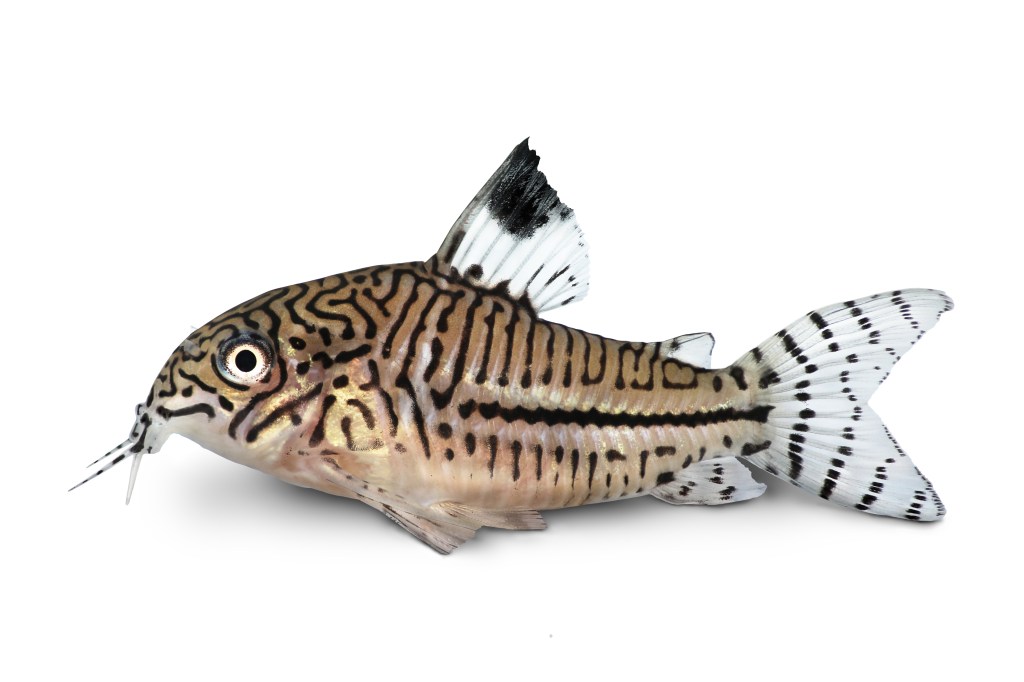
Notice what I’m selecting here? Not colors. I’m selecting functions.
Each species is interacting with a different part of the habitat.
That’s ecological completeness. This is how I’ve stocked reef tanks for decades…and it works wonders/
An igarapé isn’t dominated by predators.
It’s dominated by foragers.
Almost every fish is searching, picking. browsing. inspecting. sfting. and hovering.
The habitat rewards curiosity more than speed. Feeding is based upon persistency and methodical processes.
When you finally do add your fishes, I think feeding is where we could become much more ecologically realistic.
Rather than feeding the fish, I’d think about feeding the ecosystem, occasionally introducing live foods, insect larvae, fruit flies, terrestrial insects, additional leaf litter and botanicals.
The fish then forage. The microbes respond. The invertebrates respond.
Everything “participates” in the ecosystem that you’ve created.
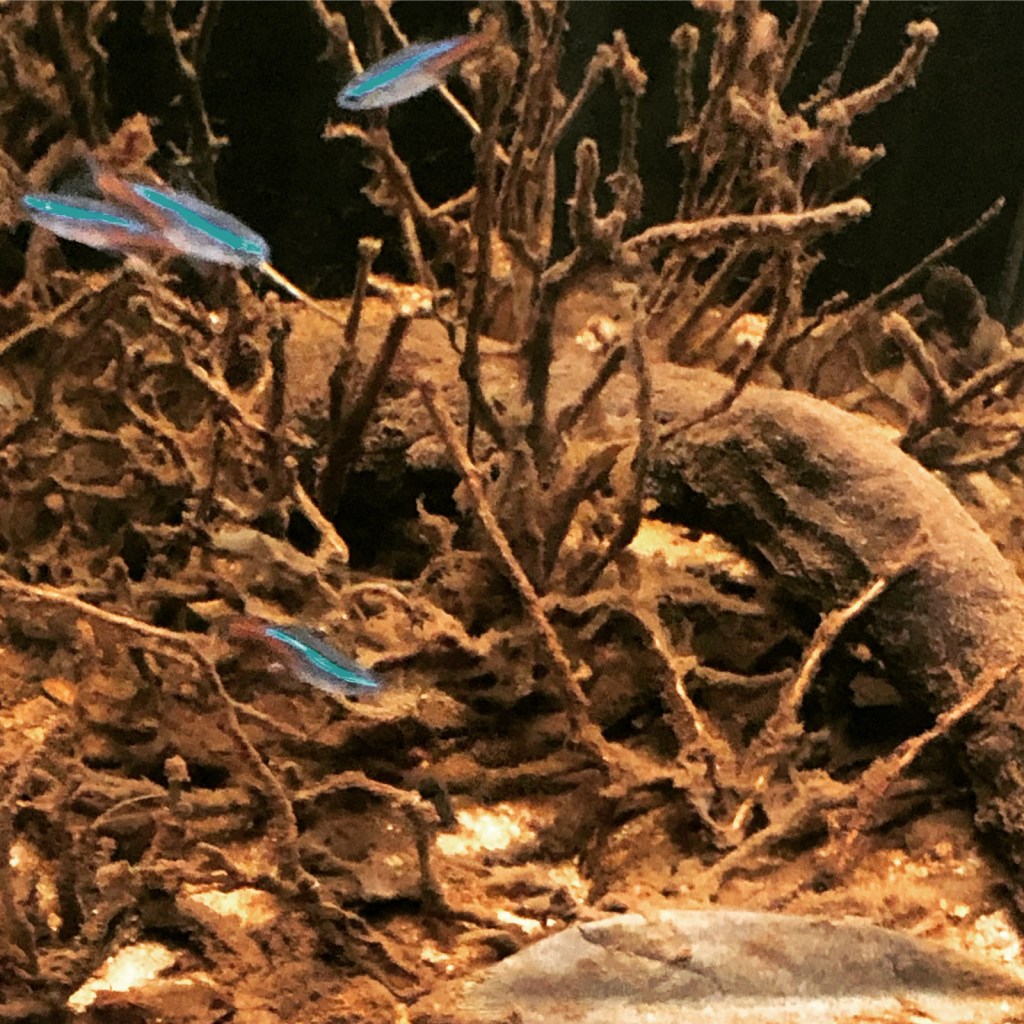
Then comes what I’ve come to call “succession.” This is may be my favorite part of keeping botanical method aquariums. It’s the time when Nature truly goes to work. In essence, I wouldn’t maintain the aquarium- I’d guide it.
Leaves disappear. New ones replace them. Wood softens. Biofilms wax and wane. Sediments shift. Some branches collapse. Others are added.
The aquarium evolves.
I wouldn’t ever chase a “perfect designer appearance” for a tank like this.
Nature isn’t static.
An igarapé today is different next week, or next month, and that’s part of its beauty. It constantly evolves, and Nature dictates the path. You can and should certainly allow this to happen in your aquarium. Remember- it’s literally a small stream flowing through a patch of forest floor. In fact, it’s mostly a forest floor during much of the year!
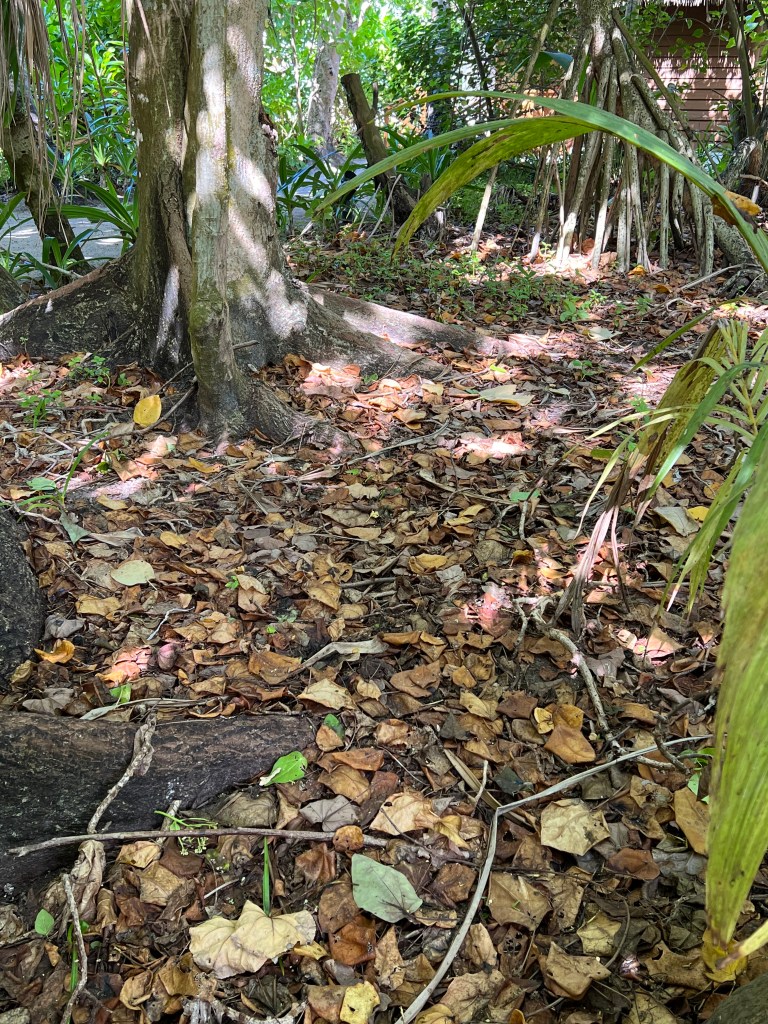
So I don’t think the aquarium’s focal point would be a fish, or even a piece of wood.
The focal point would be ecological processes.
Watching fungi colonize wood, microorganisms process leaves, fishes sift through sediments, periphyton develop, insects become fish food, and decomposition create habitat.
Those processes become the attraction! The aquarium should not be built around just the fishes. Rather, it should be built around relationships.
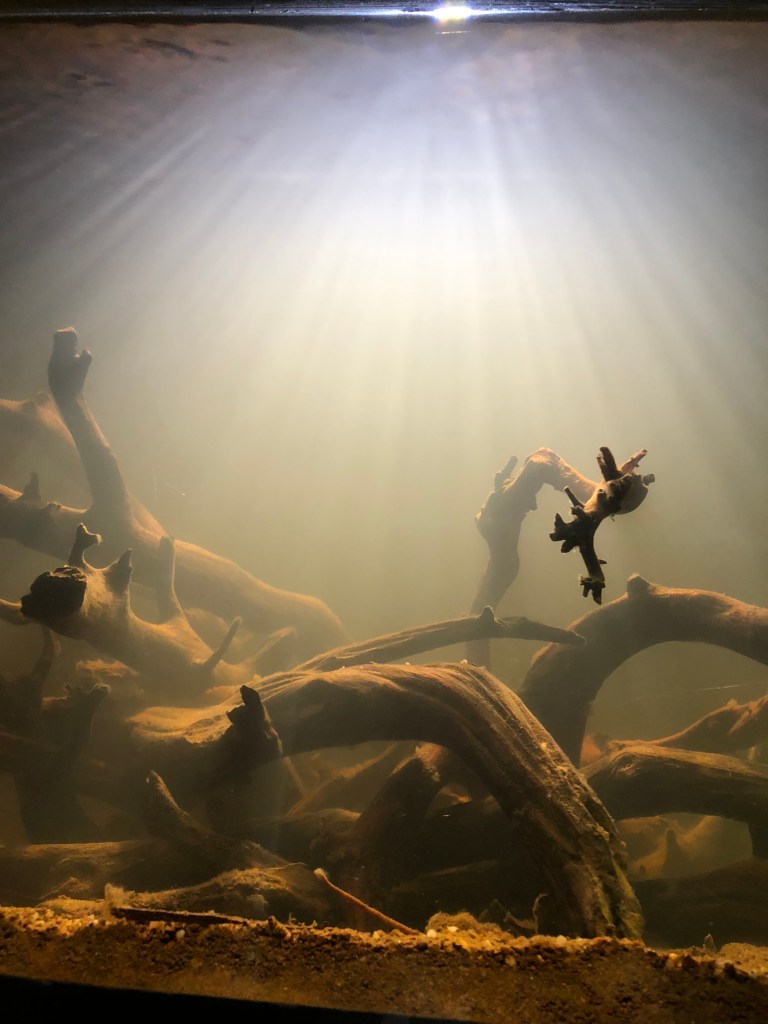
Relationships between: substrate and microbes, wood and fungi, leaves and decomposers, water movement and habitat, and fishes and the “forest floor” you’ve created.
The organisms simply express those relationships.
My aesthetic “mantra” for an igarape aquairum is essentially the same for any botanical method aquarium that I create, yet one which gets to the heart of our process and our movement:
A successful botanical method aquarium is not just a collection of fishes and botanicals. It is a functioning forest floor beneath water, where leaves become soil, wood becomes habitat, microbes become engineers, and fishes simply live within the world those processes create.
The aquarist’s task is not to arrange Nature, but to initiate it—and then guide its succession with patience and restraint.
In a sense, the fishes are not merely inhabitants of the igarapé—they are active participants in its continual renewal. I find that idea wonderfully consistent with the philosophy that I’ve developed for my aquariums:
Healthy ecosystems are shaped not by one dominant force, but by countless small interactions, repeated day after day, season after season.
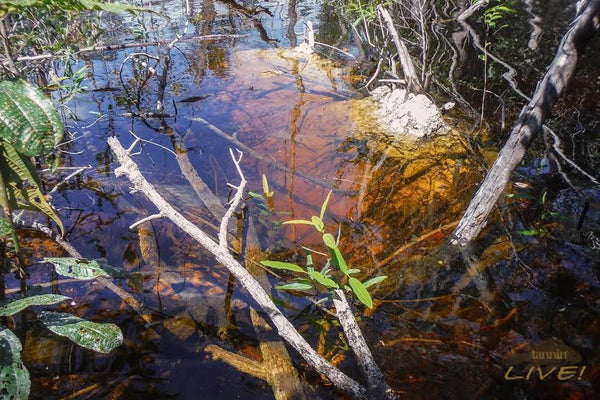
The igarape is yet another wonderful natural aquatic habitat that is ripe for replication in the aquarium. It’s a complex web of interactions, interdependencies, and relationships.
Let’s give it the attention it deserves.
Stay curious. Stay creative. Stay bold…
And Stay Wet.
Scott Fellman
 The Tint
Leave a comment