
There is one word that aquarium hobbyists definitely have come to loathe:
Detritus.
The very mention of the word can send most aquarists into a cold sweat! It’s one of those things we’ve been told from almost day one in the hobby to avoid at all costs.
The definition of this stuff, as accepted in the aquarium hobby, is kind of sketchy in this regard; not flattering at the very least:
“detritus is dead particulate organic matter. It typically includes the bodies or fragments of dead organisms, as well as fecal material. Detritus is typically colonized by communities of microorganisms which act to decompose or remineralize the material.” (Source: The Aquarium Wiki)
Yeah, doesn’t sound great. Sounds like something we want out of our tanks- fast!
Not surprisingly, a lot of hobbyists think that it is so bad.
I’m not buying it.
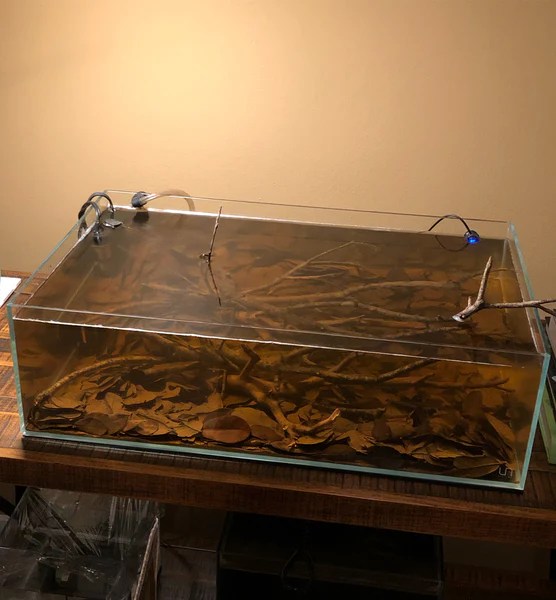
Why is this necessarily a “bad” thing?
Could there be some “upside” to this stuff?
Yeah, there is.
The Latin root word, is really weird, too: It means “rubbing or wearing away.”
Okay…
But really, IS it that bad?
I mean, even in the above the definition, there is the part about being “colonized by communities of microorganisms which act to decompose or remineralize…”
Key in on that for just a second. It’s being processed. Utilized.
What do these microorganisms do? They consume it…They ultimately render it ecologically inert. And in the process, they contribute to the biological diversity and arguably even the stability of the system. Some of them are utilized as food by other creatures. Important in a closed system, I should think.
This IS really important. It’s part of the biological “operating system” of our aquariums.
It’s also known that detritus may be formed by some types of bacterial aggregations. These may result from the feeding activities of animals, but often they are simply a result of bacterial growth. Detritus can be composed of inorganic mineral grains resulting from the actions of animals burrowing into wood or botanicals, or from ingested larger mineral grains of material, which are only partially dissolved via digestion.
That’s not bad, right?
I think we should embrace this. Especially in a botanical-method aquarium, which essentially “runs” on the decomposition of materials.
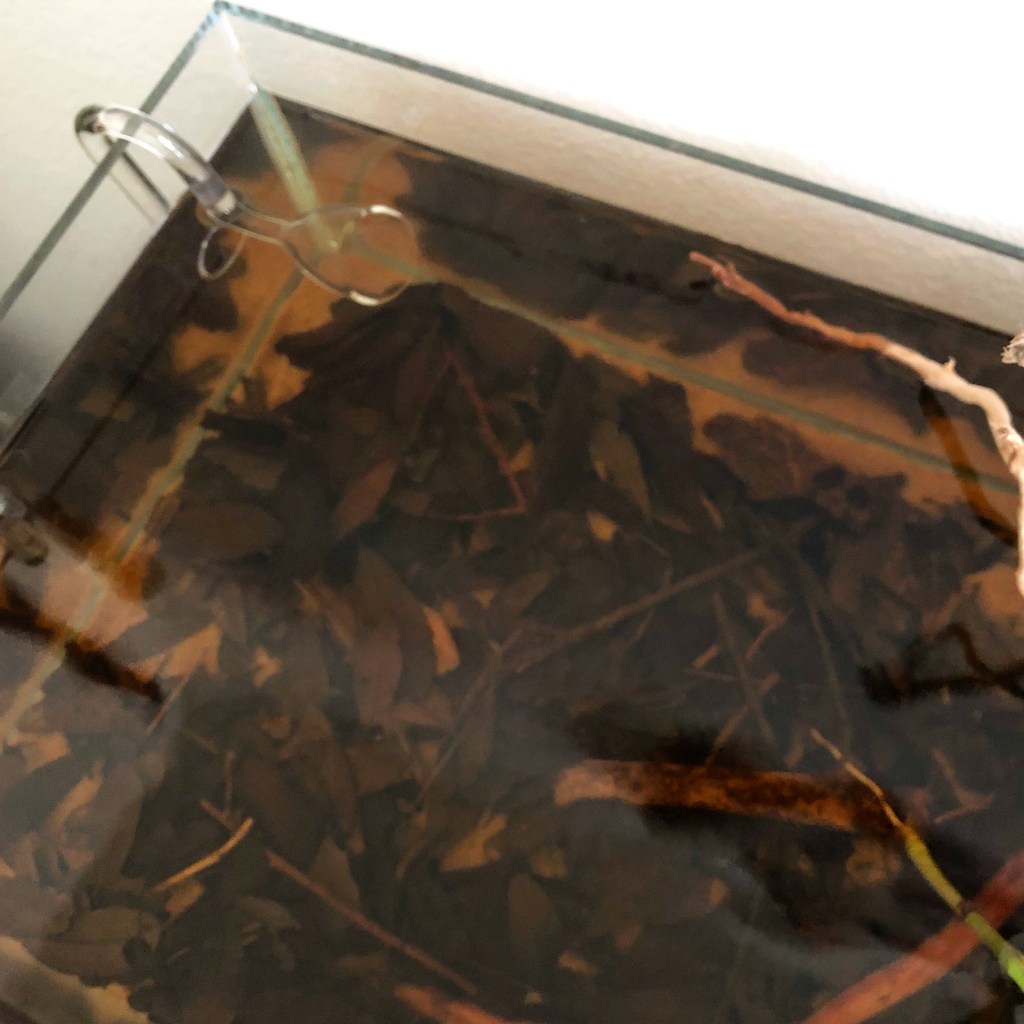
In the flooded forest floors we find in Nature, the leaf litter “community” of fishes, insects, fungi, detritus, and microorganisms is really important to the overall tropical environment, as it assimilates terrestrial material into the blackwater aquatic system, and acts to reduce the loss of nutrients to the forest which would inevitably occur if all the material which fell into the streams was washed downstream!
Think about this:
If you walk into an Amazonian igarapé or igapo and scoop up a handful of substrate, you’re not holding clean sand.
You’re holding…detritus.
Leaves in various stages of decomposition, wood fibers, fine sediments, fungal hyphae, bacteria, micro-crustaceans, nematodes, tiny insect larvae, organic floc.
The forest floor beneath the water is, in many respects, one enormous detrital ecosystem.
That realization changes everything.
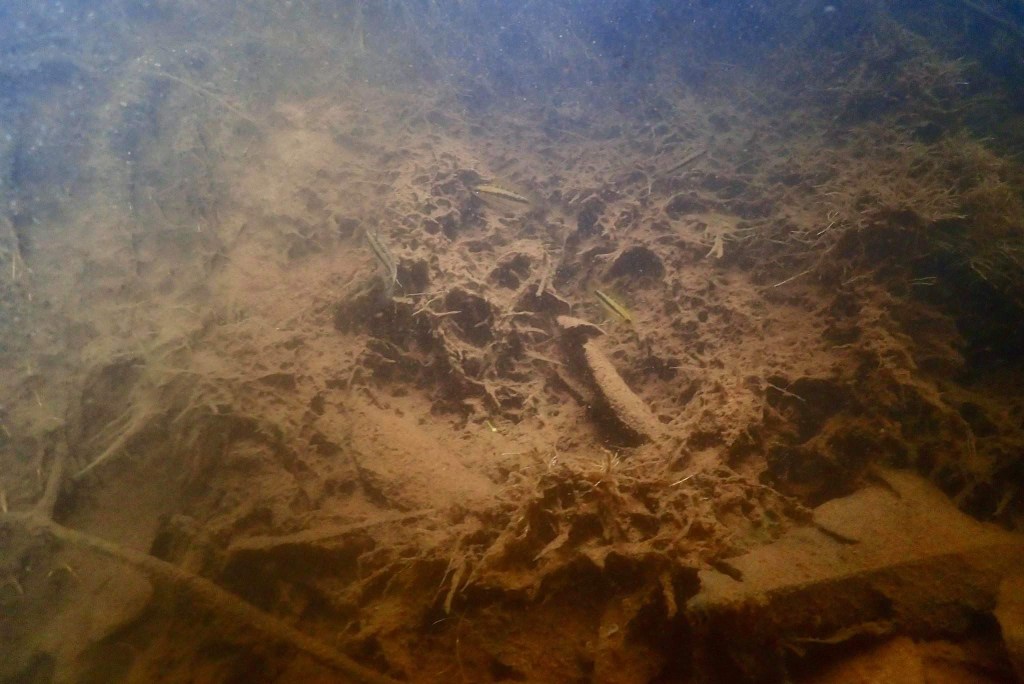
And this stuff is being used by a myriad of life forms.
Most aquarists use the word to mean “accumulated organic debris.”
Ecologists often think of it as particulate matter that drives the ecosystem.
Those definitions aren’t the same.
One is a maintenance problem.
The other is an energy source.
Is there a lesson from Nature here that we can incorporate into our aquarium work?
Yup!
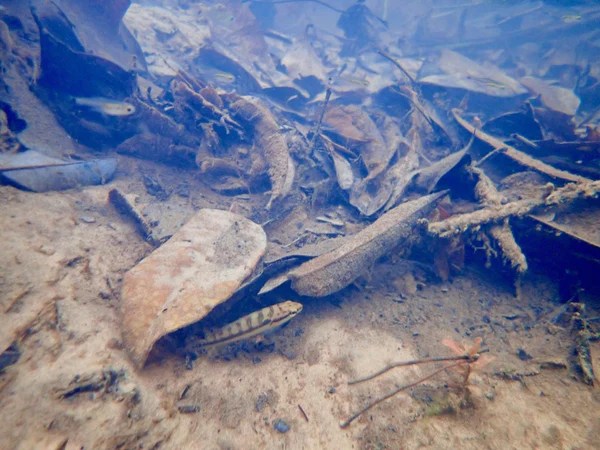
In the Botanical Method, detritus isn’t an accident…
It’s an ecological product. Leaves don’t simply “disappear.” They fragment. Wood softens. Biofilms slough off. Fish produce feces. Microorganisms die. Fungi grow.
Everything eventually becomes smaller particles.
That’s detritus.
And those particles become food for another suite of organisms.
It’s a continuous cycle.
This is where I think that many hobbyists become uncomfortable with the stuff.
Because we often associate cleanliness-or the appearance of cleanliness- with health.
Nature doesn’t.
Nature associates processing with health.
A healthy aquatic ecosystem is not free of detritus. It’s full of organisms capable of processing it.
That’s a profound difference.
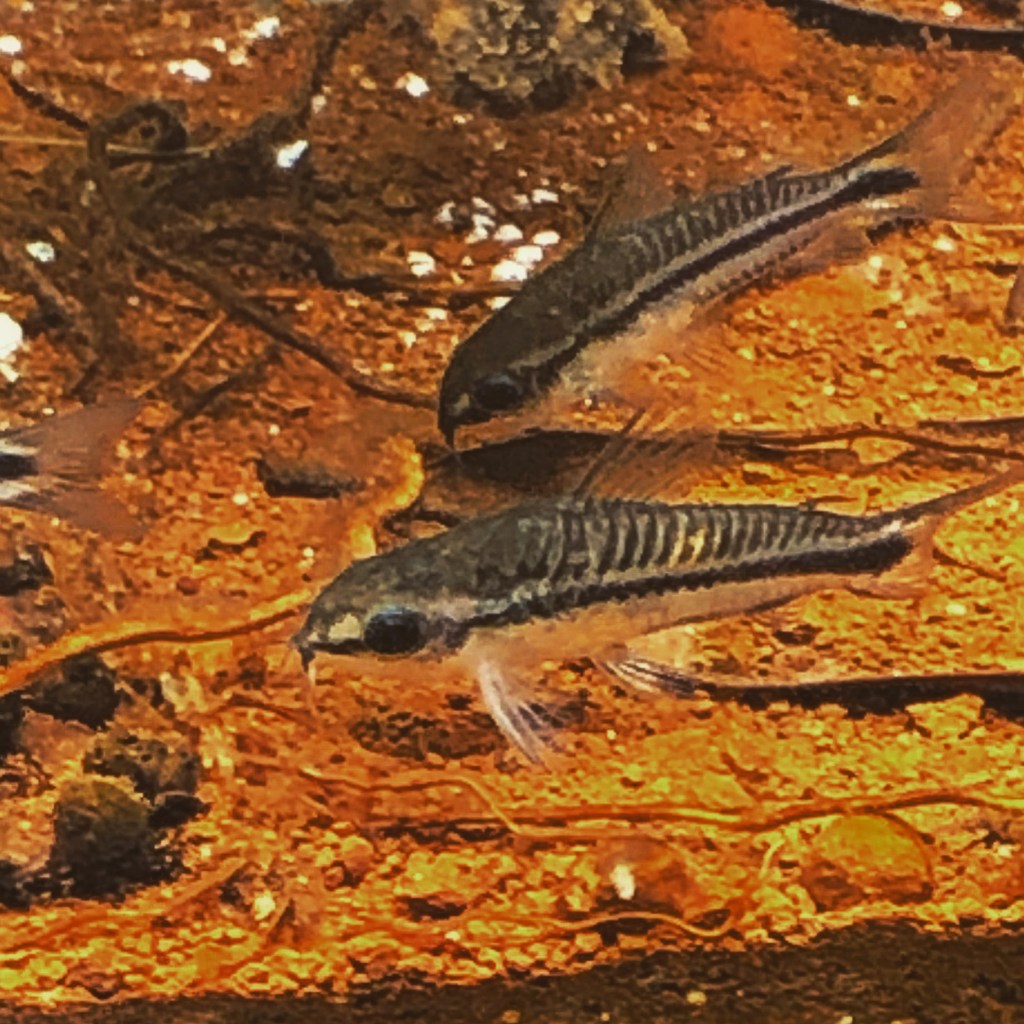
Now, I realize that the thought of allowing this stuff to accumulate or even be present in your system- goes against virtually everything we’ve been indoctrinated to believe in about aquarium husbandry. Pretty much every article you see on this stuff is about its “dangers”, and how to get it out of your tank.
This is outmoded thinking. There’s no context.
I’ll say it again- I think we’ve been looking at detritus wrong for a long time; perceiving it as an enemy to be feared, as opposed to the “biological catalyst” it really is!
I don’t advocate simply allowing all kinds of detritus to accumulate on an unlimited basis, however. There’s a distinction I’d make that I think fits our botanical method aquarium philosophy beautifully. There is a definite “good” kind of detritus.
It’s what I have come to call “functional detritus.”
“What the actual fuck, Fellman!”
Here me out before you pelt me with “Hakkai Stones.”
“Functional detritus”:
This is material that’s distributed, oxygenated, continually processed, inhabited by microbes, colonized by fungi, and browsed by fishes and invertebrates.
It’s part of the ecosystem.
In essence, it’s organically rich particulate material.
I’ve pushed this narrative for years, and I still think we need to encourage our fellow hobbyists to embrace it more.
Yeah, good detritus.
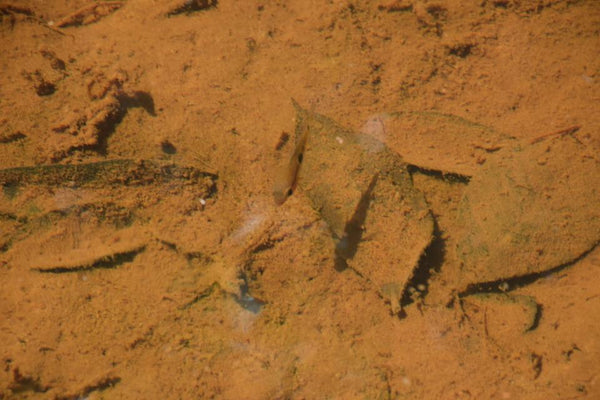
What should freak people out is the “bad” kind..The product of, well- shitty husbandry. What I call “stagnant detritus.” There’s a BIG difference.
“Stagnant detritus”:
This is typically uneaten food and lots of fish waste, trapped in dead zones, compacted, poorly oxygenated, and isolated from biological processing.
That’s different.
Now you’ve interrupted the “ecological loop”, and the material is no longer participating. It’s simply accumulating.
That’s where intervention becomes appropriate.
Okay, I’ll admit that detritus in general may not be the most attractive thing to look at in our tanks to some. I’ll give you that. Superficially, it literally looks like a pile of shit! However, I think “functional detritus” and “stagnant detritus” actually look different if we learn how to see them.
Functional detritus has a certain “visual character.”
Imagine a shallow igarapé or igapo again. The leaf litter there isn’t pristine.
There are tiny fragments of decomposing leaves scattered among intact ones. A thin dusting of fine organic material has settled into the creases of bark. Small twigs are partially buried. The substrate has subtle tonal variation rather than being uniformly colored.
Nothing appears “neglected.” Rather, everything appears integrated.
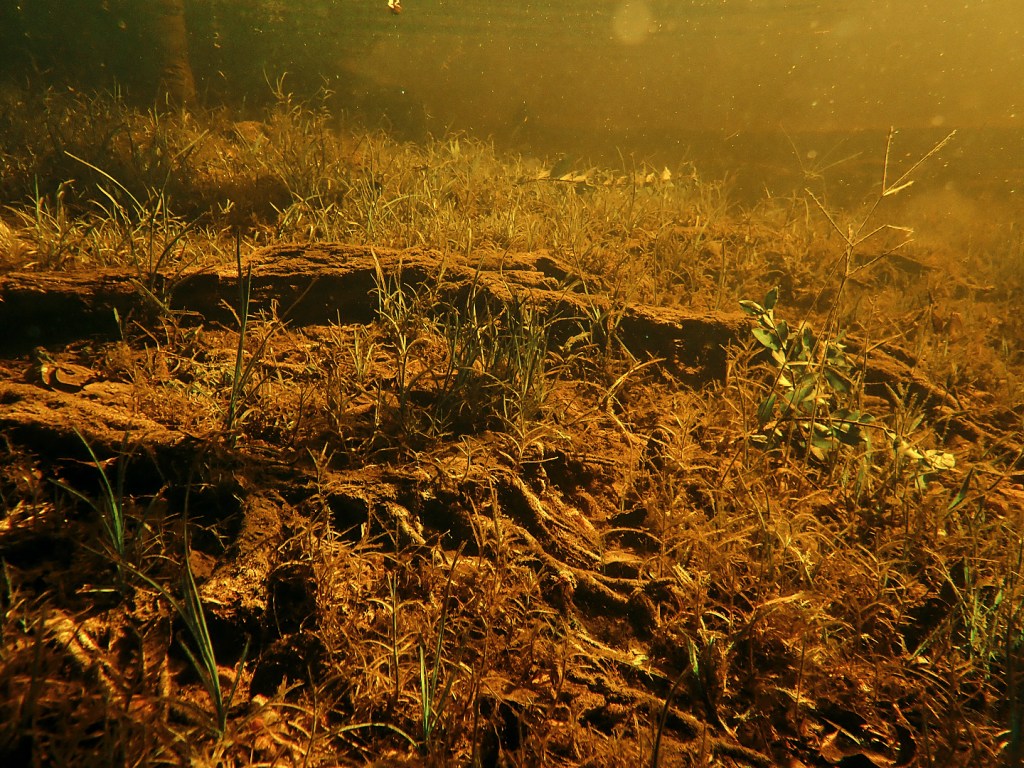
There is no sharp boundary between leaf, sediment, wood, and organic matter. Instead, one gradually becomes the other.
To me, that’s beautiful.
It’s the visual expression of decomposition in progress.
“Stagnant detritus” just looks different.
It tends to announce itself in unpleasing ways. A pile of “mulm” trapped in one corner, a thick blanket of debris behind hardscape, dark accumulations with no apparent relationship to the surrounding habitat.
The eye recognizes it immediately because it lacks context.
It isn’t contributing to the “composition” that is our aquarium…
It’s interrupting it.
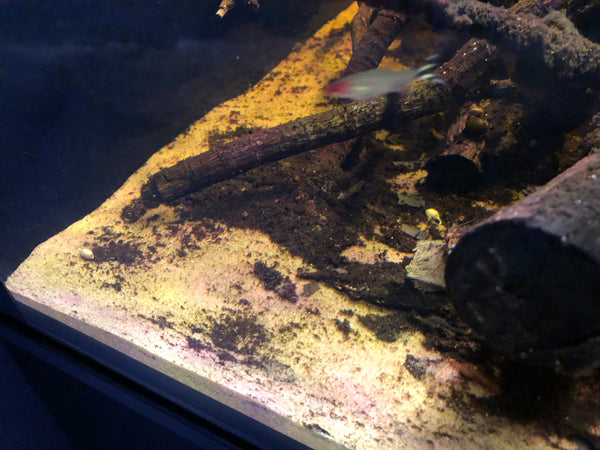
Yeah, there is, of course, a distinction between these two types of detritus accumulations, as we just described.
One is the result of poor husbandry, and of course, is not something we’d want in our aquariums. The other is a more nuanced definition.
Remember, just because something looks a certain way doesn’t mean that it always a bad thing, right?
To get more context, take into consideration why we add botanicals to our tanks in the first place. To “fuel” the ecosystem, right? To literally create it!
And think about what happens to them as they are broken down over time. You don’t have to have huge piles of the stuff littering your sandy substrate; however, you could have some accumulating here and there among the botanicals and leaves, where it may not offend your aesthetic senses, and still contribute to the overall aquatic ecosystem you’ve created.
Actually, it becomes the substrate.
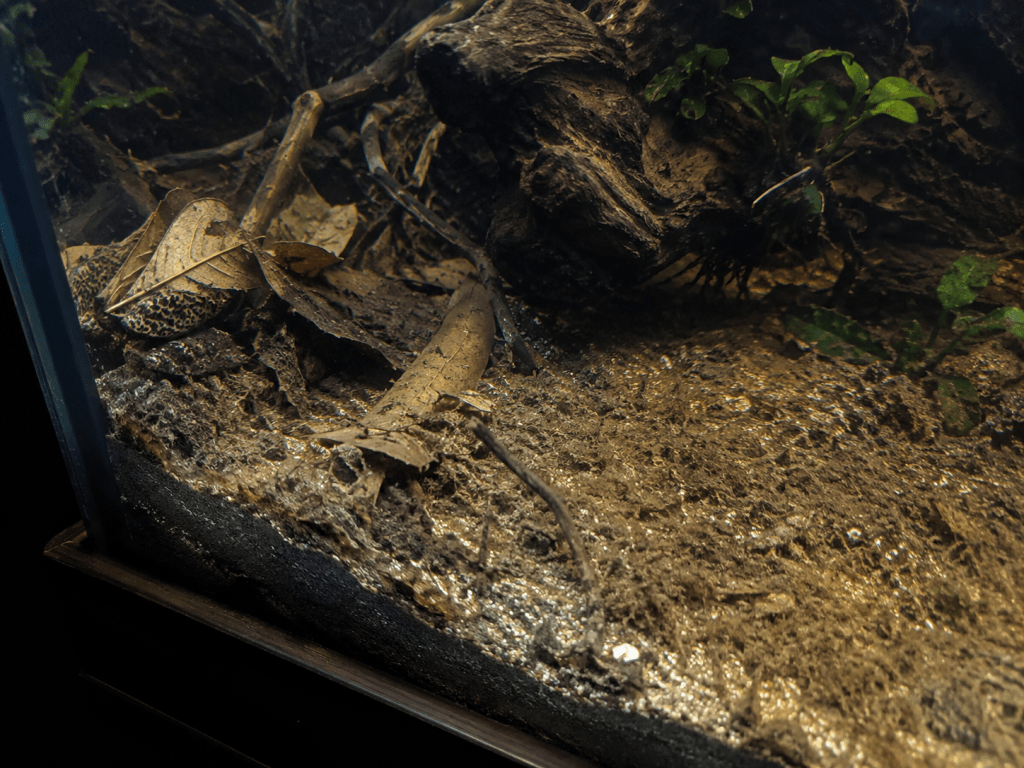
This leads me to a thought that I’ve never fully articulated until now:
I don’t think a Botanical Method aquarium should ever strive for a “clean” substrate.
I think it should strive for a living substrate.
Those are not synonymous. A living substrate contains detritus, whereas a neglected substrate also contains detritus.
The difference is biological activity.
Maintenance, then, becomes rather interesting. Instead of asking, “How much detritus should I remove?” I’d ask myself, “Which detritus is no longer serving an ecological function?”
That’s a much more subtle question.
For example, fine organic material integrated into leaf litter?
I’d leave much of it. Thick mats of fish poop and uneaten food trapped behind hardscape with no circulation? I’d remove some or most of it. The same material smothering leaf litter or creating obvious anaerobic pockets?
I’d intervene.
Again…You’re guiding. Not sterilizing.
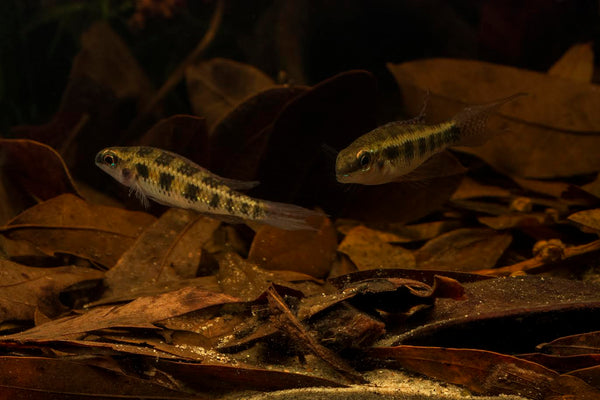
I think that this distinction between types of detritus also explains why well-managed botanical method aquariums often become more stable over time. As detritus is continually processed, you’re gradually building a mature benthic ecosystem. The substrate itself becomes biologically richer.
It isn’t simply supporting life.
It becomes life.
If you allow your leaves and other botanicals to break down completely in the tank (and you should), what do you think happens? Do you see a decline in water quality in a well-maintained system? A noticeable uptick in nitrate or other signs? Does anyone ever do water tests to confirm the “detritus is dangerous” theory, or do we simply rely on what “they” say in the books and hobby forums?
Likely not.
Is leaving the “functional detritus” in play actually a benefit, as opposed to a problem?
It is.
Like, 100% it is a benefit.
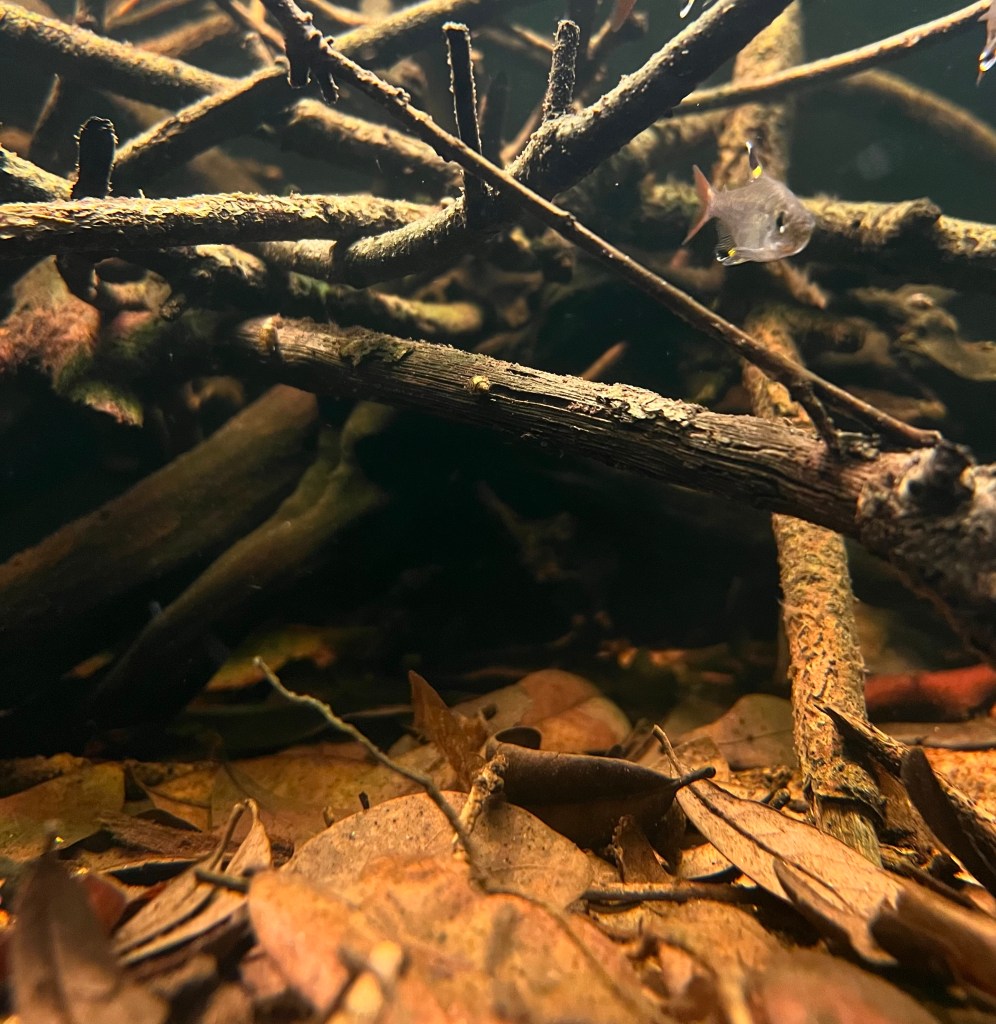
Now, I’m just one guy, but I personally haven’t ever had issues with the complete decomposition of botanicals and leaves being left to accumulate in my aquariums.
In almost three decades of playing with this stuff, and being a hardcore, water-quality-testing reef keeper during much of that time, I can’t ever, EVER recall even one time where the decline of a system I maintained could be pinned specifically on the detritus from decomposing botanical materials as a causative factor in reducing water quality.
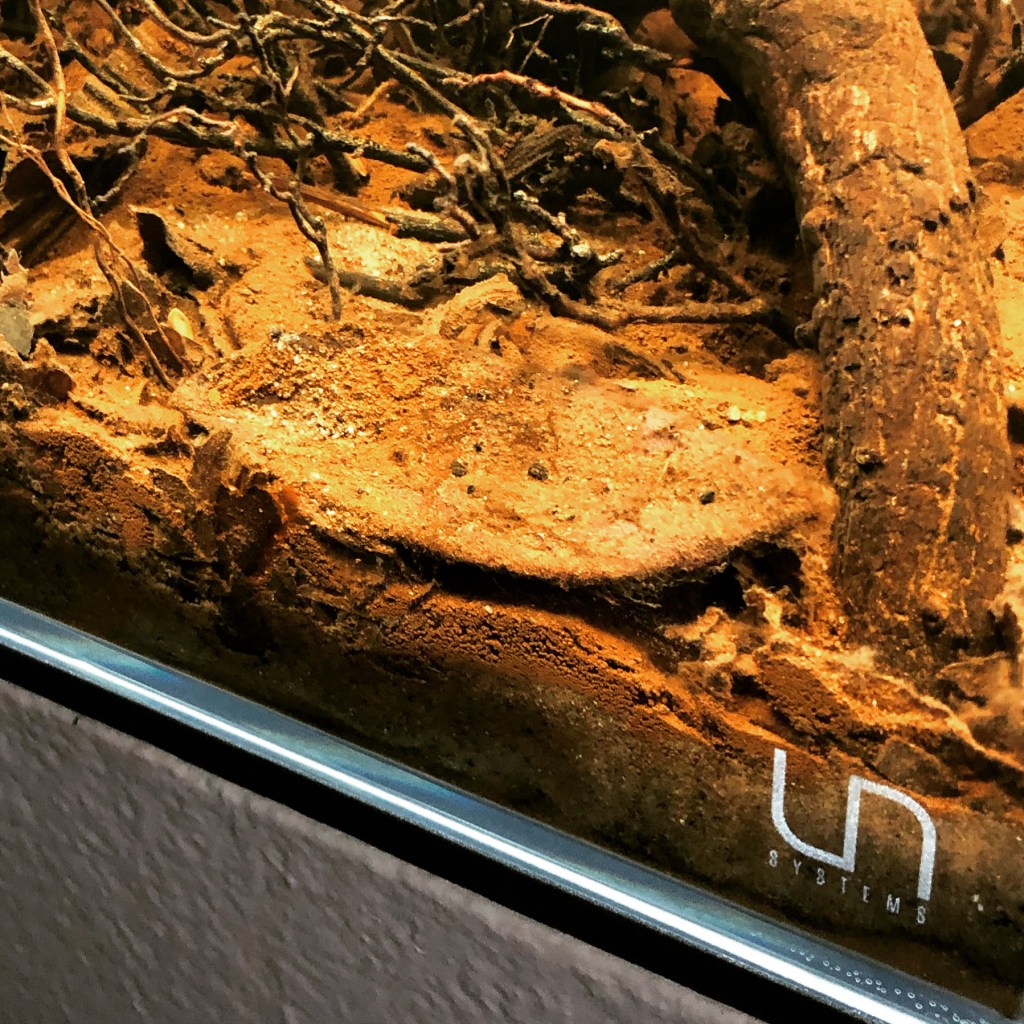
Again, if you’re allowing large quantities of uneaten food and fish poop to accumulate in your aquarium, that’s a very different distinction. Such materials accumulating will contribute to nitrate and phosphate accumulation in closed aquatic systems and can lead to a decline in water quality, unless removed or acted upon by organisms residing in the aquarium.
Now, our love of detritus shouldn’t be a surrogate for poor husbandry- ever.
Yet, don’t think about how you can eliminate any and all detritus from your aquarium. Think about how you can help detritus become a habitat.
That’s a completely different philosophy.
Detritus is not the “end point “of organic matter; it is the beginning of another community. The aquarist’s task is not to wage war against it, but to ensure that it remains part of a living cycle of decomposition, transformation, and renewal.
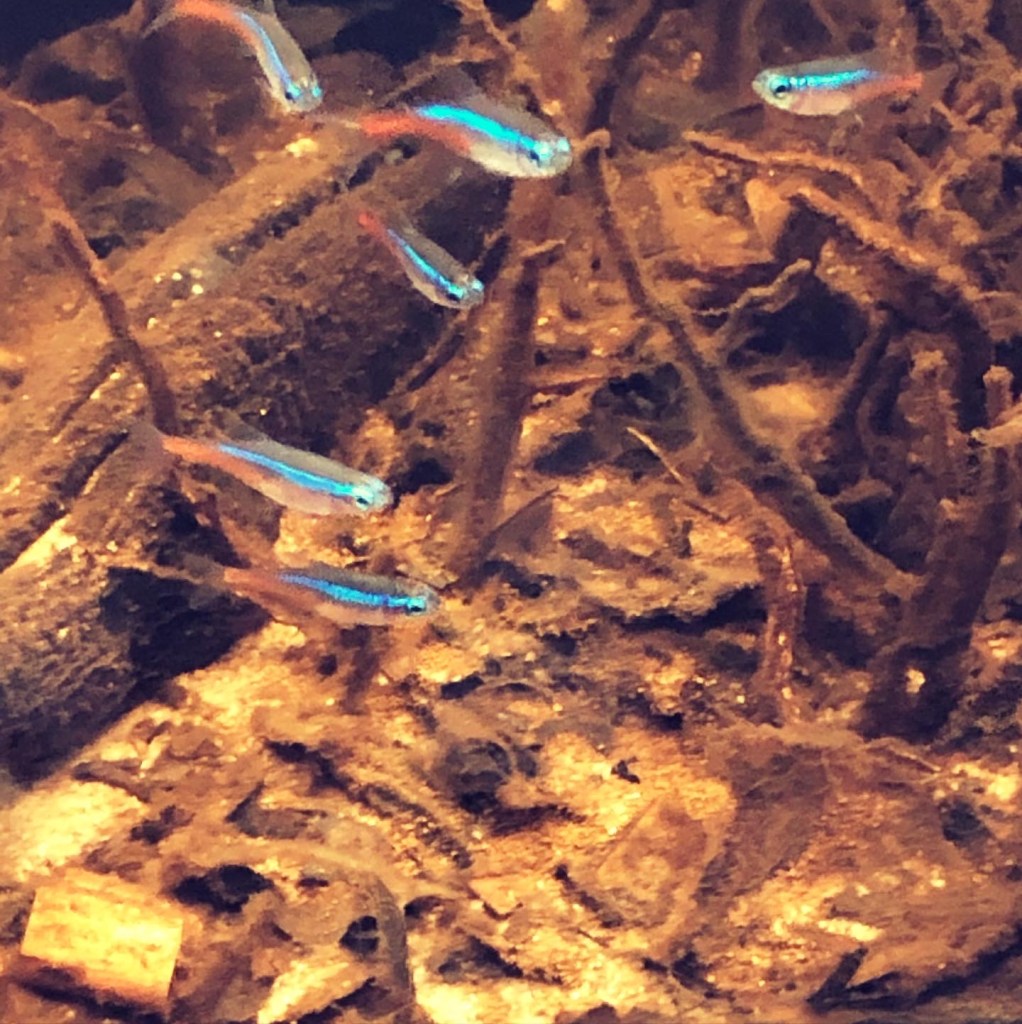
Is this “filtration” for your aquarium? Well, yes and no.
I wouldn’t say that the detritus itself becomes the filter.
I’d say that the detritus-processing community becomes the filter.
That distinction is everything.
Detritus is the substrate upon which an extraordinarily complex biological community develops. The filter isn’t the accumulated organic matter—it’s the bacteria, fungi, protozoa, meiofauna, tiny worms, crustaceans, and countless other organisms that colonize it and continuously transform it.
In other words, the “filter” is not a device.
It’s a food web.
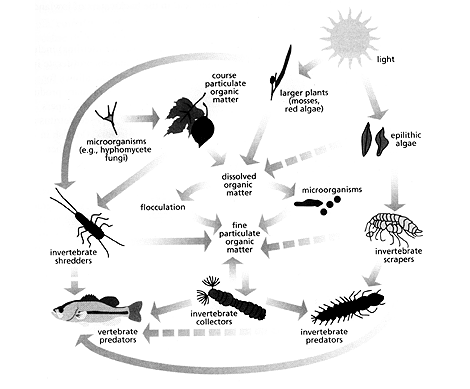
Think about what occurs when we add a leaf to our botanical method aquarium.
It is colonized by bacteria, and fungi begin breaking down cellulose and lignin. Biofilms develop. Tiny crustaceans graze those biofilms. Worms fragment the leaf. Fish forage among the fragments. The fragments become finer organic particles.
Those particles are colonized again.
Eventually, much of that carbon leaves the system as carbon dioxide, bacterial biomass, animal biomass, dissolved organic compounds, or material exported by water exchanges. At no point is the leaf simply “rotting.”
It is being processed.
That processing is filtration.
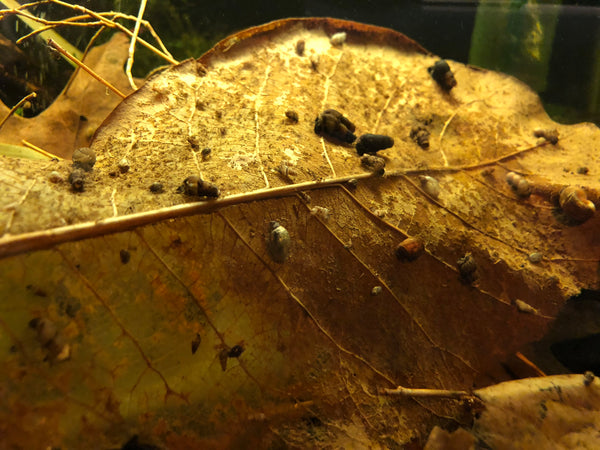
I don’t think the most mature Botanical Method aquariums are filtered by the physical filter systems that we employ. Rather, they’re “filtered” through their ecology.
Sure, filters remove some particles from the water column, maybe facilitate some bacterial growth., and water exchanges export what accumulates.
But the day-to-day stability—the quiet, continuous transformation of organic matter into new life—is increasingly carried out by the invisible community inhabiting the leaf litter, wood, sediments, and biofilms.
As I just alluded to, I have always been a firm believer in some forms of nutrient export being employed in every single tank I maintain. Typically, it’s regular water exchanges. And, not “when I think about it’, or “periodically”, mind you.
Nope, it’s weekly.
So, yeah- I’m not saying that you can essentially disobey all the common sense husbandry practices we’ve come to know and love in the hobby (like not overcrowding/overfeeding, etc.) and just change the water weekly and everything’s good, either.
Water exchanges are a helpful vehicle to maintain a stable, healthy aquarium.
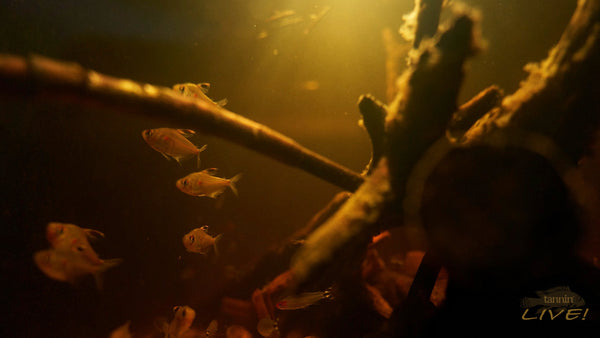
However, they’re not a panacea for all of the potential “ills” of a poorly managed tank. You need to master the well-known basics of aquarium care. Period.
You know this, of course…right?
And you could employ some well-known “friends” to help you keep detritus well-managed in your aquarium, such as snails, like the Malaysian Livebearing Snail, fish like catfishes and loaches, and all sorts of worms, like blackworms, and even organisms like Gammarus.
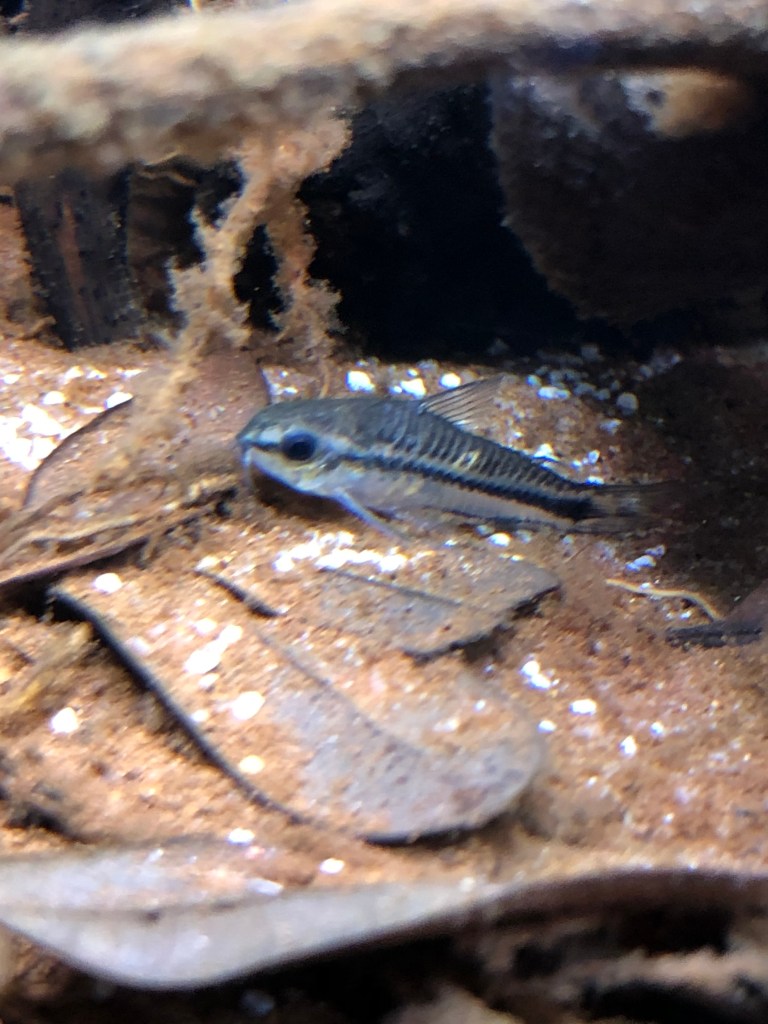
These creatures spend much of their lives interacting with detritus. Not because they’re “dirty” animals- it’s because that’s where the food is!
Think about the potential benefits of allowing some of this stuff to remain.
Think about the organisms which feed upon it, their impact on the water quality, and on the organisms which fed on them. Then, think about the fishes and how they utilize not only the material itself, but the organisms which consume it.
Consider its role in the overall ecosystem…
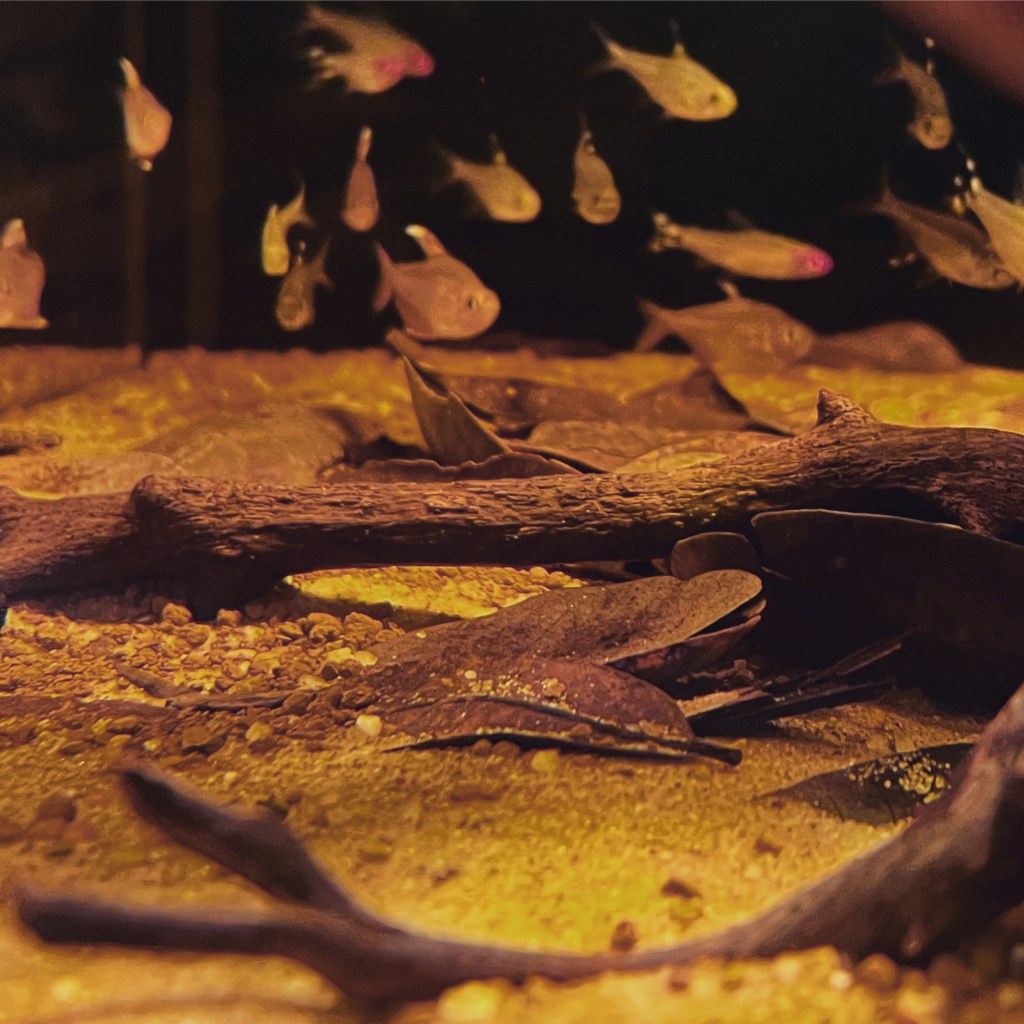
So….IS detritus just a “nutrient trap?”
Or is it a place for fishes to forage among? A place for biodiversity to arise?
A place for larval fishes to seek refuge and sustenance in? Kind of like they do in Nature, and have done so for eons?
Yes, I know, we’re talking about a closed ecosystem here, which doesn’t have all of the millions of minute inputs and exports and nuances that Nature does, but structurally and functionally, we have some of them at the highest levels (ie; water going in and coming out, food sources being added, stuff being exported, etc.).
There is so much more to this stuff than to simply buy in unflinchingly to overly-generalized statements like, “detritus is bad.”
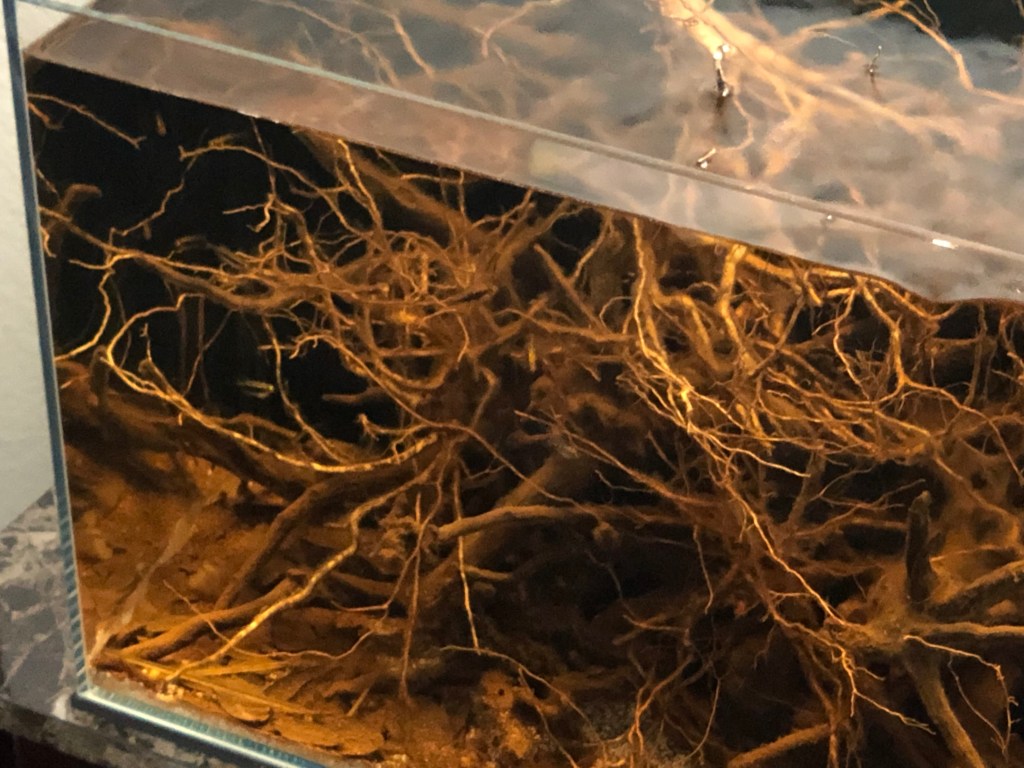
Don’t be afraid. Open your mind. Study what is happening. in your tank Test your water. Observe the health of your fishes. Draw parallels to the natural aquatic ecosystems of the world. Look at this “evolution” process with wonder, awe, and courage.
And learn.
Maybe, as the years go by, we as a hobby will overcome generations of fear over stuff like detritus and fungi and biofilms as well- the very things which power the aquatic ecosystems we strive to replicate in our aquariums.
Ahh..this detritus…
This “annoying” product of decomposition, and the life forms that accompany/produce it can actually be one of the most beautiful, elegant, beneficial friends that we can have in the aquarium…
The detrital layer is no longer merely the “byproduct “of the ecosystem—it has become one of the ecosystem’s defining “organs.” I think that’s a powerful way to understand what you’re trying to cultivate.
Embrace it. Understand the role it plays in Nature- and in our tanks.
It’s a “mental shift.”
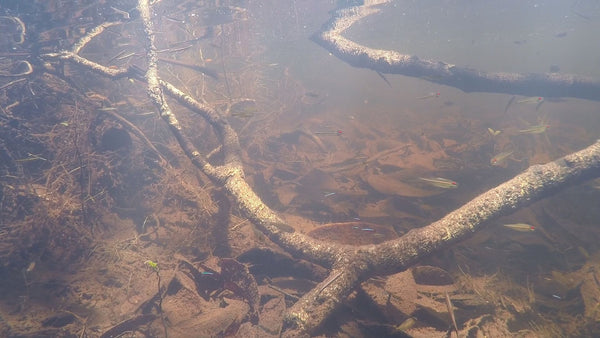
A perspective of open-minded curiosity…and a willingness to look at things a bit differently and go beyond the usual and generally accepted hobby ideas on stuff like this is just one of the many “mental shifts” that we make as botanical method aquarium enthusiasts.
However, it’s always, always worth considering and exploring new ways of looking at things in the hobby.
Because just accepting “status quo”, keeping a closed mind to alternative ideas, and not pushing the edges from time to time is not only a little bit boring- it’s denying yourself and fellow hobbyists the opportunity to learn about- and potentially benefit from- stuff we might have long been afraid of.
Open your mind up and reconsider the very significant “upside” to detritus.
It will literally open up an entire new world to you.
Stay open-minded. Stay curious. Stay thoughtful. Stay observant…
And Stay Wet.
Scott Fellman
 The Tint
Leave a comment