
How often, during your hobby “career”, have you been tempted to add one more fish, that “final” coral, or that “extra” piece of wood to your aquairum, in an attempt to “fill it out” more and make it look more “finished?”
One of my favorite design quotes comes from the architect Ludwig Mies van der Rohe: “Less is more.”
And another, from Coco Chanel, has always struck me as oddly applicable to aquascaping: “Before you leave the house, look in the mirror and take one thing off.”
We love talking about how we conceive our botanical method aquariums: Hearing about the ecology, flow, fish load, maintenance, lighting, and philosophy. Have you noticed that we spend very little time fixating on stuff like water chemistry parameters?
That’s because I think the more interesting story is that, as a successful botanical method aquairum enthusiast, you’ve designed a system where the biology is leading the chemistry, not the other way around.
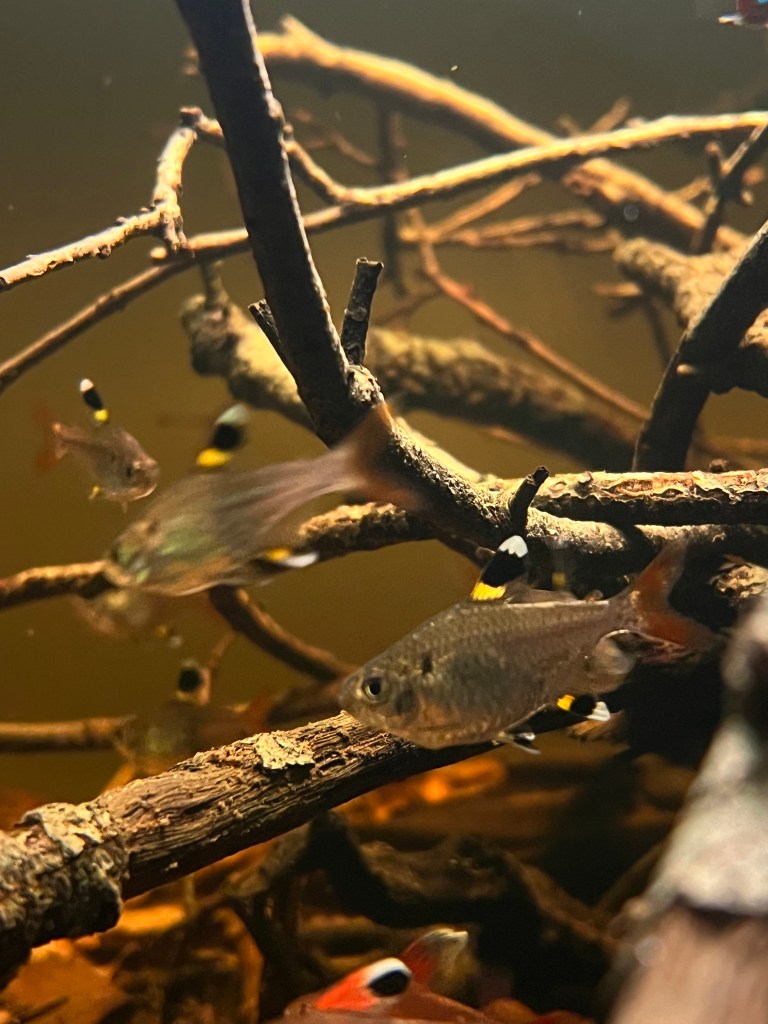
The test kits are still useful—they tell you if the ecosystem is drifting. But they no longer define whether the aquarium is successful.
The aquarium itself does.
And this is exactly what a mature, thoughtfully designed botanical method aquarium should do: becoming more itself with each passing year.
One of the more interesting evolutions in the Botanical Method has been the realization that achieving ecological richness does not necessarily require an ever-expanding assortment of leaves, seed pods, and wood. In fact, there are compelling reasons to believe that a more restrained approach may better reflect the dynamics of many natural habitats.
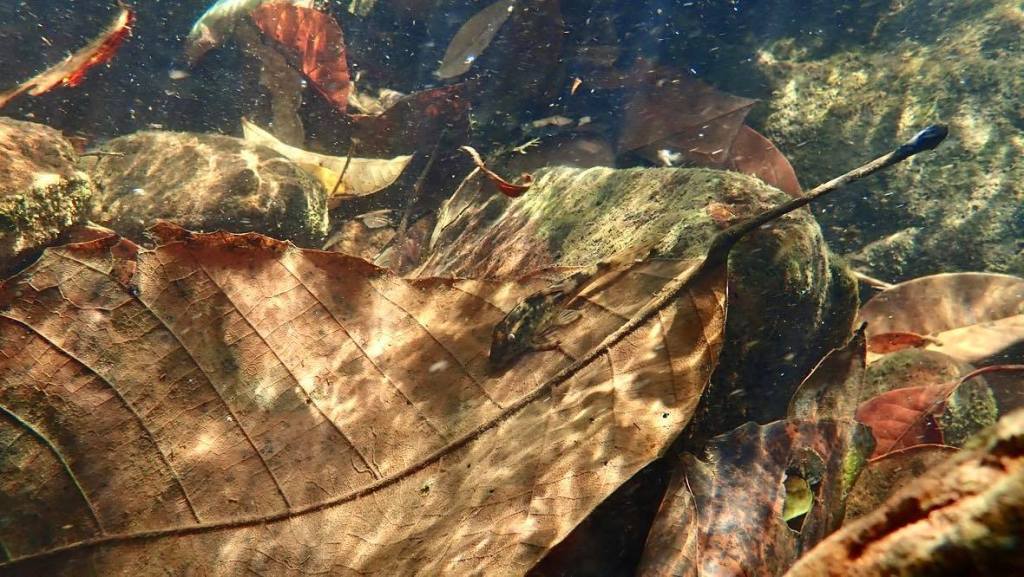
In an Amazonian igapo or igarapé, diversity certainly exists, but it is not always expressed as an equal mixture of dozens of different botanical materials. Rather, the composition of the forest, the season, water flow, and localized inputs often result in one or two dominant types of leaf litter, interspersed with branches, twigs, and occasional seed pods. The ecosystem functions not because of the sheer number of materials present, but because those materials become substrates for an astonishing diversity of life.
This is perhaps the most important distinction. The ecological value of botanicals lies less in what they are than in what they become.
As leaves soften and wood weathers, they are colonized by bacteria, fungi, biofilms, protozoans, and a host of tiny invertebrates. Together, these organisms form the detrital community that drives decomposition, nutrient recycling, and energy transfer throughout the aquarium. In other words, it is the living community that develops upon the botanicals—not simply the botanicals themselves—that creates a functioning ecosystem.
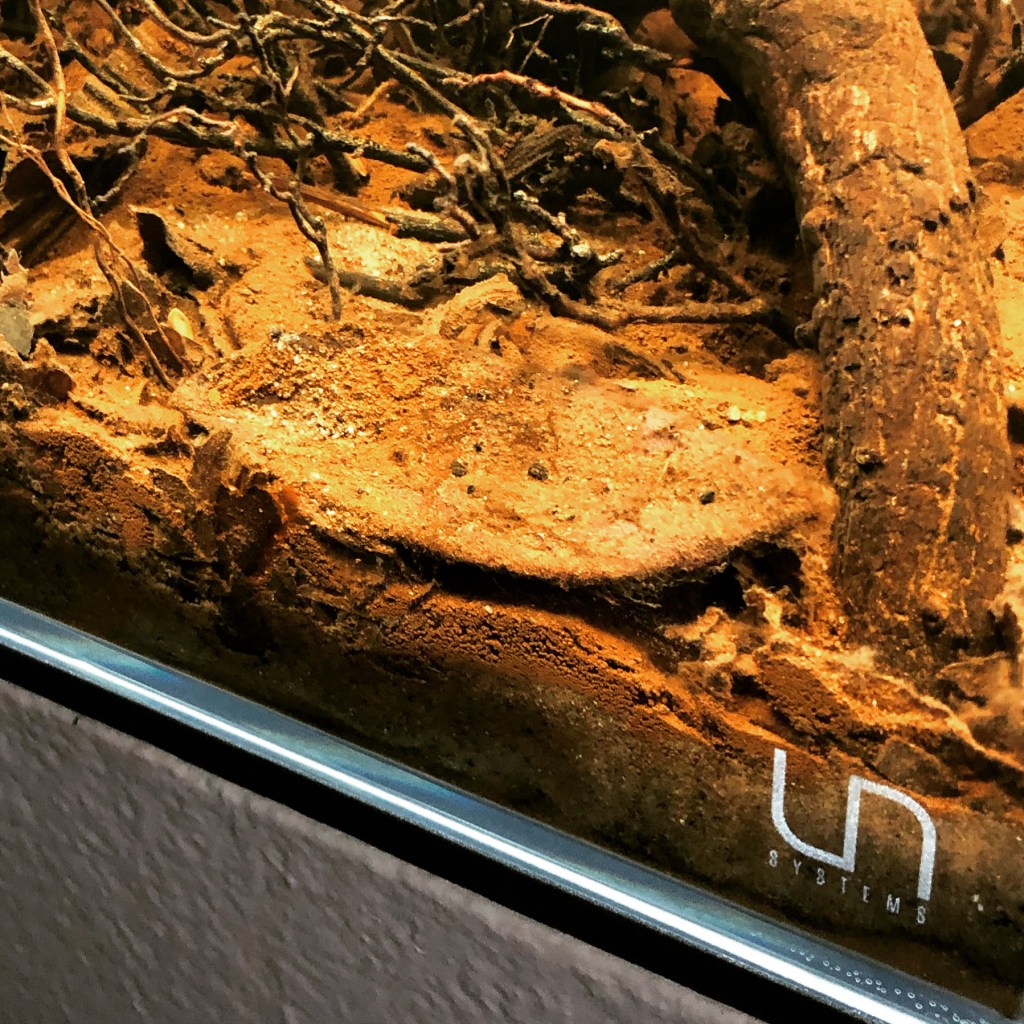
For the aquarist, this can be a liberating realization. Rather than continually adding new varieties of materials in pursuit of greater complexity, it may be more beneficial to allow a smaller selection of carefully chosen botanicals to mature naturally. As decomposition progresses, those materials undergo ecological succession, changing in both appearance and function as successive communities of organisms colonize them.
This approach also encourages a more authentic aesthetic. Instead of a display that appears assembled from an assortment of collected objects, the aquarium begins to resemble a forest floor beneath water—settled, cohesive, and shaped by time. Fragmented leaves, softened wood, and a thin layer of organically active detritus become evidence of ongoing ecological processes rather than signs of neglect.
Ultimately, “less is more” in the Botanical Method is not about minimalism for its own sake. It is about recognizing that ecological complexity arises from biological interactions, not simply from the number of decorative elements we place into an aquarium.
By exercising restraint in our selection of materials and allowing natural processes to unfold, we create space for the true architects of these systems—the countless microorganisms and detrital organisms that quietly transform leaves into habitat, habitat into food webs, and an aquarium into a living ecosystem.
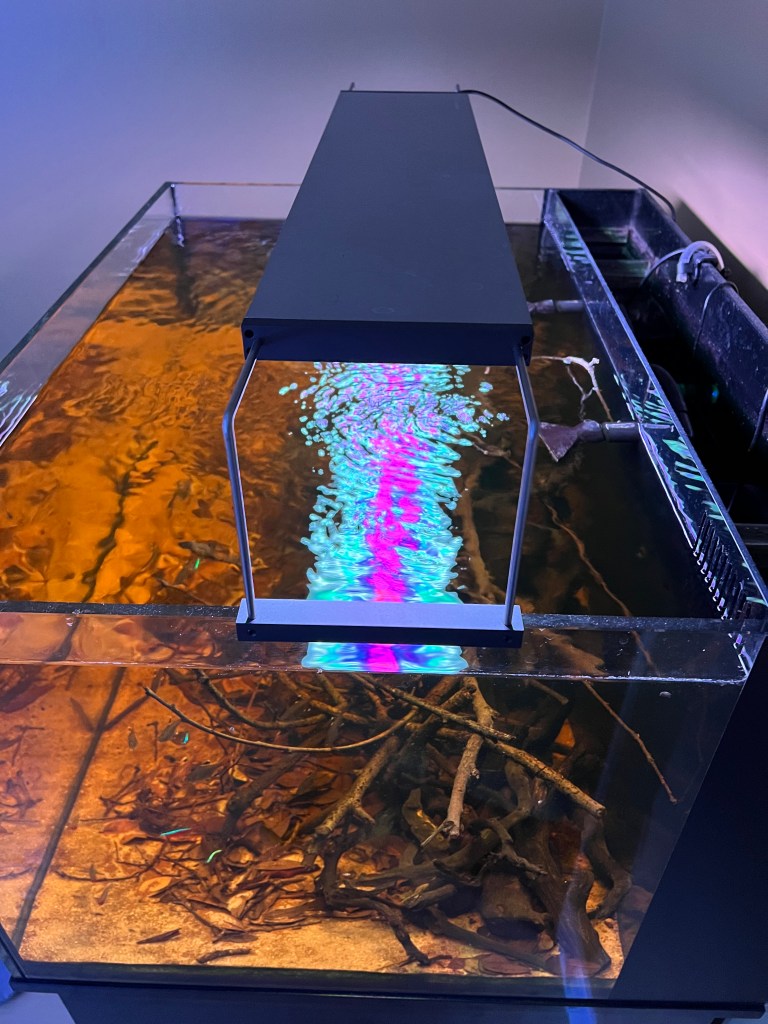
Perhaps this is one of the Botanical Method’s most enduring lessons: We are not striving to accumulate botanicals, but to cultivate the ecological relationships they inspire. When we understand that distinction, we begin to appreciate that the greatest richness in a natural aquarium is often invisible, unfolding patiently beneath every leaf and within every fragment of wood. In that sense, using fewer materials is not a compromise at all—it is an invitation for Nature to do more of the work.
IMHO, the most compelling aquariums aren’t necessarily those with the greatest number of components—they’re the ones in which the relationships among those components are allowed to deepen over time. That’s where the ecology, and ultimately the beauty, resides.
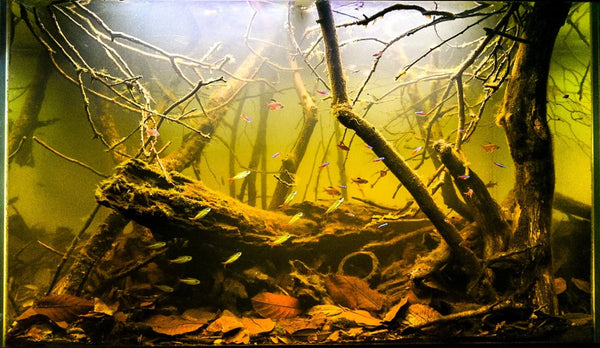
A greater variety of botanical materials may increase the number of ecological niches available, but it is probably not the primary determinant of microbial biodiversity in a mature aquarium.
In other words, the source pool of organisms and the environmental conditions are likely more important than whether you use three species of leaves or twelve.
Let’s unpack why.
If you visit different aquatic habitats, you’ll notice something interesting: Many are actually dominated by relatively few plant species. One stream may receive mostly palm fronds.
Another may be carpeted with one or two dominant tree species. Another may contain enormous amounts of woody debris with relatively little fresh leaf litter.
Yet, all of these habitats support extraordinarily diverse microbial communities.
That suggests something important.
The microorganisms are not responding only to plant identity. They’re responding to the enormous range of microhabitats that develop as those materials decompose.
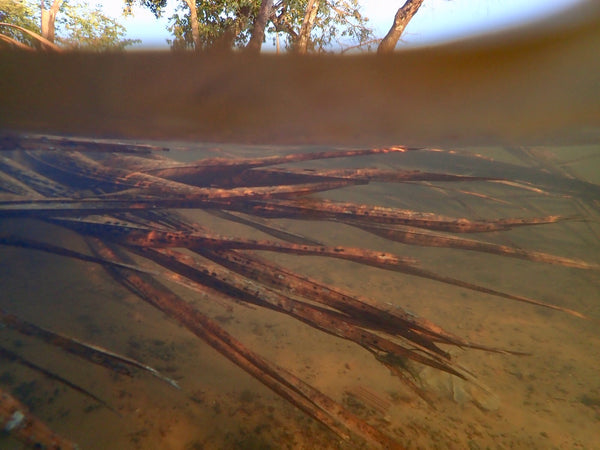
A leaf, for example, is not a single habitat.
Think about a single leaf after several weeks underwater.
It contains an intact cuticle, a softened mesophyll, fungal colonies, bacterial biofilms, tiny perforations, accumulated fine detritus, oxygen-rich surfaces, and oxygen-poor interiors.
Ecologically, that one leaf has become dozens of habitats! Now multiply that by fifty leaves.
You don’t necessarily need twenty plant species to create remarkable complexity.
Now, different botanicals DO differ chemically.
This is where diversity can matter. Different leaves contain different lignins, celluloses, tannins, polyphenols, structural carbohydrates, waxes, and minerals Some fungi specialize on certain compounds. Some bacteria prefer others.
So increasing botanical diversity can theoretically broaden the range of organisms capable of colonization. However, I suspect the effect is smaller than many hobbyists imagine. I personally think that succession is more important than variety. This is something we’ve discussed many times.
As decomposition proceeds, each stage supports different organisms. That “temporal diversity” may be every bit as important as botanical diversity.
And, as we just discussed, one species of leaf changes dramatically over six months. It becomes many habitats through time. I feel like the actual limiting factor to biodiversity in our botanical method aquariums may be “inoculation” (ie; the addition of various organisms).
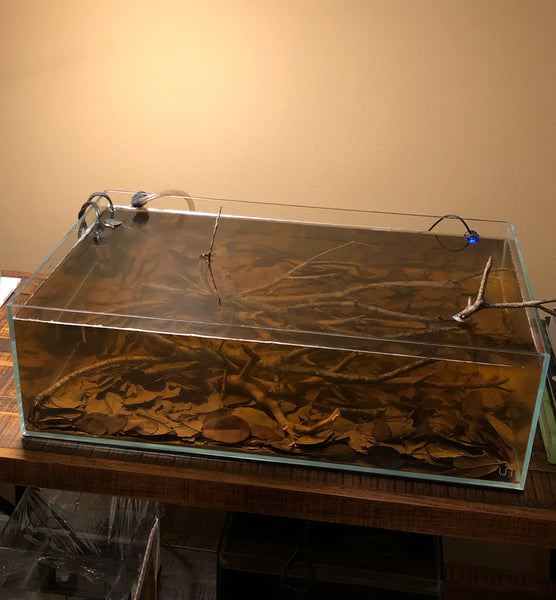
This is where stuff gets especially interesting. Her’s an example illustrate what I’m getting at here:
Suppose two identical aquariums contain identical leaves.
One receives occasional live foods, new pieces of wood, aquatic plants, snails, copepods, and microorganisms from established aquariums.
The other remains essentially sterile after setup.
I would expect the first aquarium to develop a considerably richer ecosystem.
Not because of the leaves. But because more organisms arrived. Ecologists call this the “species pool” or “regional pool”—the collection of organisms available to colonize a habitat. No matter how many niches exist, they can’t be filled by species that never arrive, right?
This is EXACTLY what drives ecosystems in Nature.
An igarapé or igapo is not an isolated “jar.” It receives numerous inputs from various sources. Literally, every day, the habitat receives fungal spores, bacteria, insects, sediments, drifting leaves, and fishes, not to mention, birds and mammals.
It’s constantly being “inoculated” with new life forms.
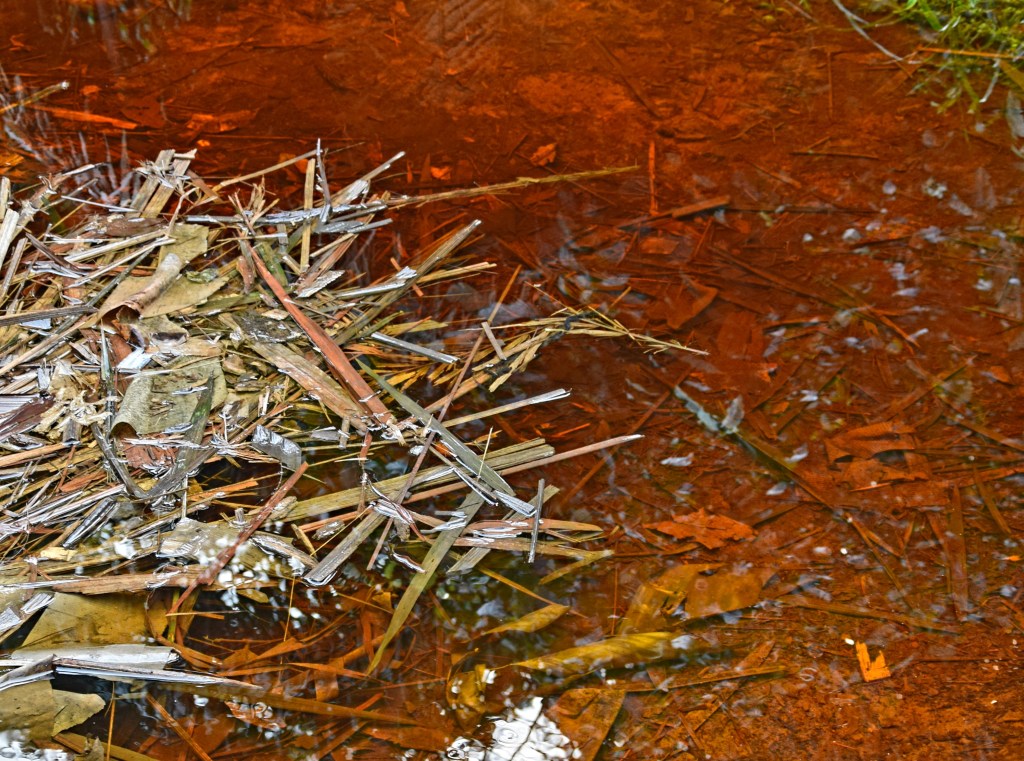
Our aquariums are comparatively closed systems, with more limited inoculations than in Nature. That’s one reason biodiversity eventually reaches an equilibrium at some point.
This makes me think differently about botanical method aquarium husbandry. Perhaps the question isn’t, “Should I add more kinds of leaves?” Perhaps it’s, “How can I increase the diversity of living organisms entering the aquairum.?”
That’s a much more ecological question.
Occasional additions of new botanicals, cultured microfauna, live foods, or even established filter media from healthy systems may contribute more to biodiversity than simply adding five new species of seed pods.
Functional diversity often matters more than taxonomic diversity.
Suppose one aquarium has 200 bacterial species. Another has 350 bacterial species.
Does the second necessarily function better?
Not necessarily. If the first contains organisms performing all of the important ecological roles (decomposition, nitrification, denitrification, cellulose degradation, fungal breakdown, etc.) it may be every bit as stable. Ecologists often find that ecosystem function plateaus long before every possible species is present.
If I were designing a Botanical Method aquarium from scratch today, I would probably prioritize stable environmental conditions. a substantial amount of high-quality botanical material, time for ecological succession, occasional introductions of beneficial microfauna and microorganisms, and a moderate—not excessive—variety of botanical materials.
Notice where botanical diversity falls in my approach?
Not first. And it’s not because it doesn’t matter. It’s because I think its influence is often overshadowed by the richness of the living community that develops upon it.
The ecology in n aquarium is created less by the “ingredients” themselves than by the organisms and relationships those materials support.
Leaves, wood, and seed pods are all, in a sense, “scaffolds.” Their greatest ecological value is not in their identity but in their ability to host communities, foster succession, and create countless tiny niches. Once those communities become established, the aquarium begins to function as a living ecosystem rather than a carefully arranged collection of materials.
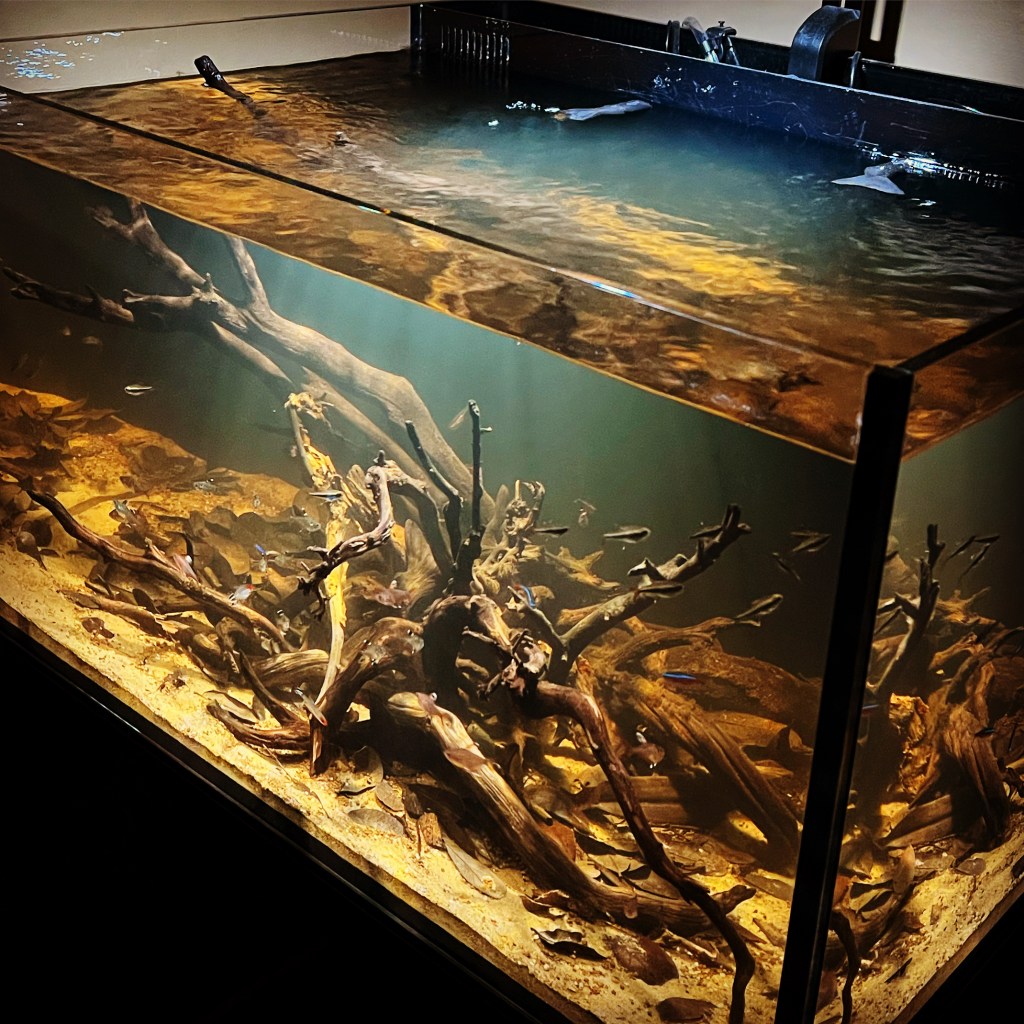
I have a feeling that this idea—that biology eventually becomes more important than the building materials—may be one of the deepest insights of the botanical method aquarium. It’s a subtle shift in emphasis, but it changes how we think about almost every decision we make as aquarists.
If we accept that the long-term stability of these aquariums depends not only on the botanicals themselves but on the communities that colonize them, then it makes sense that we should pay as much attention to introducing life as we do to introducing leaves.
I would approach the startup of a Botanical Method aquarium much as a restoration ecologist approaches the restoration of a wetland. The physical habitat is created first, but the ultimate goal is to establish the biological community that will inhabit it. The leaves, wood, and sediments provide the framework, but they are only the beginning of the story.
After the aquarium is filled and the botanicals have begun to saturate, I would introduce a small amount of biologically mature material from an established, healthy aquarium. This could be a handful of “seasoned” (ie; softened or partially decomposed) leaf litter, a small piece of well-colonized wood, a bit of botanical detritus collected from beneath a mature leaf litter/botaniocal bed, or even a portion of filter media from a trusted system.
What you’re really transferring isn’t “dirt”—it’s an entire microscopic community of bacteria, fungi, protozoans, and countless other organisms that have already organized themselves into a functioning ecosystem.
From there, I would allow time to become the primary “architect.”
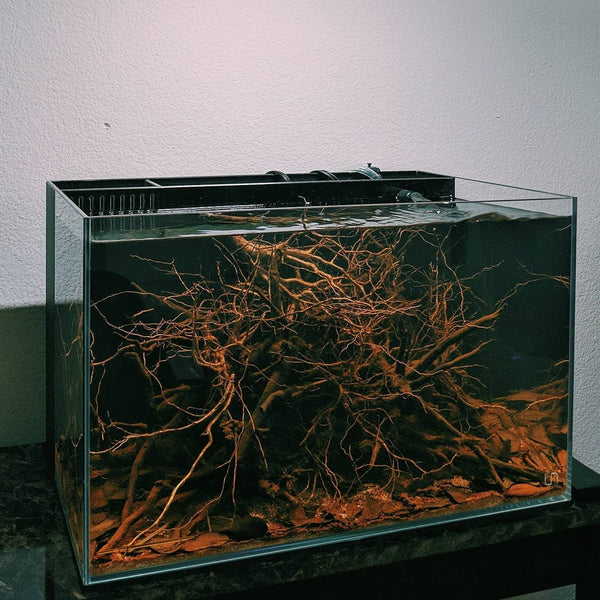
Rather than rushing to add fish, I’d let the biofilms develop, allow the inevitable fungal blooms to run their course, and give the decomposer community time to establish itself. Those first few weeks represent the beginning of ecological succession, and they shouldn’t be viewed merely as the “cycling period.” They are the period during which the foundation of the aquarium’s future ecology is being laid.
As the system matures, I think there is value in periodically enriching it with living organisms rather than simply replacing botanical materials. Occasional introductions of cultured microcrustaceans, live foods, or even small quantities of biologically active material from other healthy botanical aquariums may contribute more to the long-term resilience of the ecosystem than continually adding new varieties of leaves or seed pods.
As we’ve discussed many times, natural igapo and other aquatic habitats are constantly receiving new organisms from floodwaters, rainfall, insects, animals, and drifting organic matter. Our aquariums are comparatively closed systems, so occasional biological “renewal” may help maintain a richer ecological community over time.
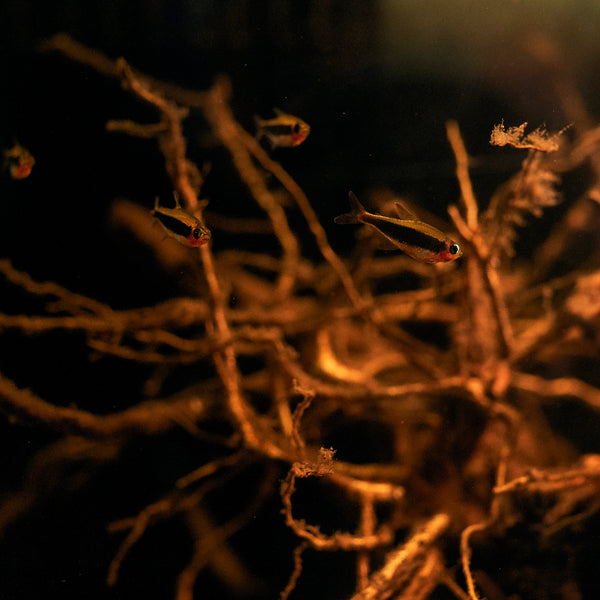
I would probably rely less on bottled bacterial products than many hobbyists do. Those products can certainly have a place, particularly in establishing nitrifying bacteria, but they represent only a tiny fraction of the organisms that inhabit a mature detrital ecosystem. A healthy botanical aquarium is not built solely upon nitrification. It depends equally upon decomposers, fungi, grazers, protozoans, and countless other microscopic organisms that together form an intricate food web. That diversity is difficult to capture in a bottle.
The more I’ve thought about this stuff, the more I think we may have inadvertently identified a missing piece of the Botanical Method. here We have spent years emphasizing the introduction of botanical materials because they create habitat. Perhaps the next logical step is to place equal emphasis on the intentional introduction of the communities that inhabit those habitats.
In other words, we should think not only about seeding the aquarium with leaves and wood, but with life itself.
If I were to distill this into a single guiding principle, it would be this:
A Botanical Method aquarium should be started not simply by adding botanicals, but by inoculating an ecosystem. The leaves and wood provide the “architecture”, but the microorganisms, fungi, and tiny invertebrates provide the function. Together they transform an arrangement of natural materials into a living, self-organizing community.
When the methodology first emerged, it emphasized the importance of introducing substrates for ecological processes: leaves, seed pods, branches, bark, and wood. That was—and remains—an important shift away from viewing these materials as mere decorations.
But perhaps the next chapter is recognizing that substrates alone do not create ecosystems. In this context, I’m referring to anything which bacteria, fungi, and other microroganisms can colonize as a “substrate.
An abandoned field does not become an old-growth forest simply because the soil is present. Likewise, a handful of leaves does not become an igarapé simply because it begins to decompose. The physical habitat must be colonized by a succession of organisms that collectively establish the ecosystem.
I almost envision the startup of a Botanical Method aquarium as occurring in three phases.
First, we establish the physical template: the substrate, botanicals, water chemistry, and flow that resemble the forest stream.
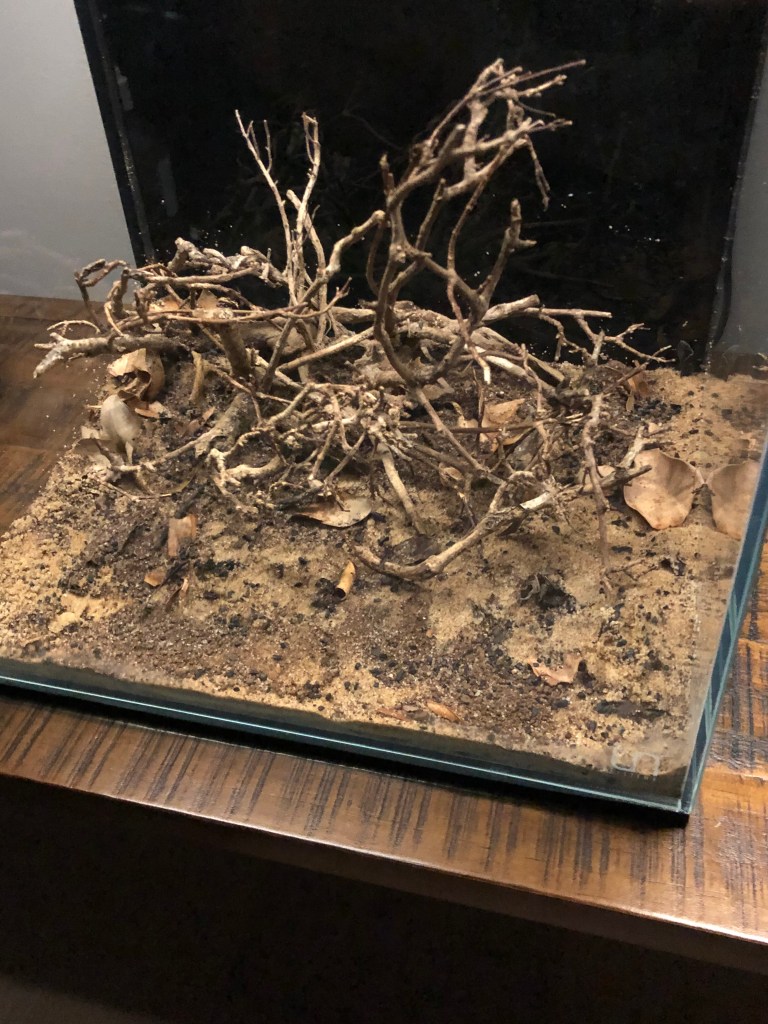
Next, we establish the biological template by introducing the organisms that will occupy that habitat. This is where mature botanical material, decomposer communities, microcrustaceans, and established biofilms become every bit as important as nitrifying bacteria.
Finally, we enter the phase of ecological succession, where the aquarist steps back and allows time to become an active participant. Rather than constantly correcting or rearranging the aquarium, we guide it gently, introducing fresh botanical inputs as others disappear and occasionally enriching the living community, while allowing the countless interactions among microorganisms, fungi, invertebrates, and fishes to shape the ecosystem.
To me, that’s a far richer concept than simply “cycling” an aquarium.
In fact, I’d almost stop using the word cycle altogether in this context. A cycle implies reaching an endpoint, whereas an ecosystem never reaches one.
It simply matures.
And perhaps this line of thinking suggests a new way to summarize the Botanical Method itself:
The Botanical Method is not the practice of adding natural materials to an aquarium. It is the practice of cultivating the ecological communities that those materials make possible.
The botanicals provide the architecture, but the living organisms provide the function. As succession unfolds, the aquarium gradually ceases to be an arrangement of leaves and wood and becomes, instead, a living detrital ecosystem whose beauty is an expression of its ecology rather than its design.
I think that’s a profound shift in emphasis. It doesn’t replace the original ideas behind the Botanical Method—it completes them.
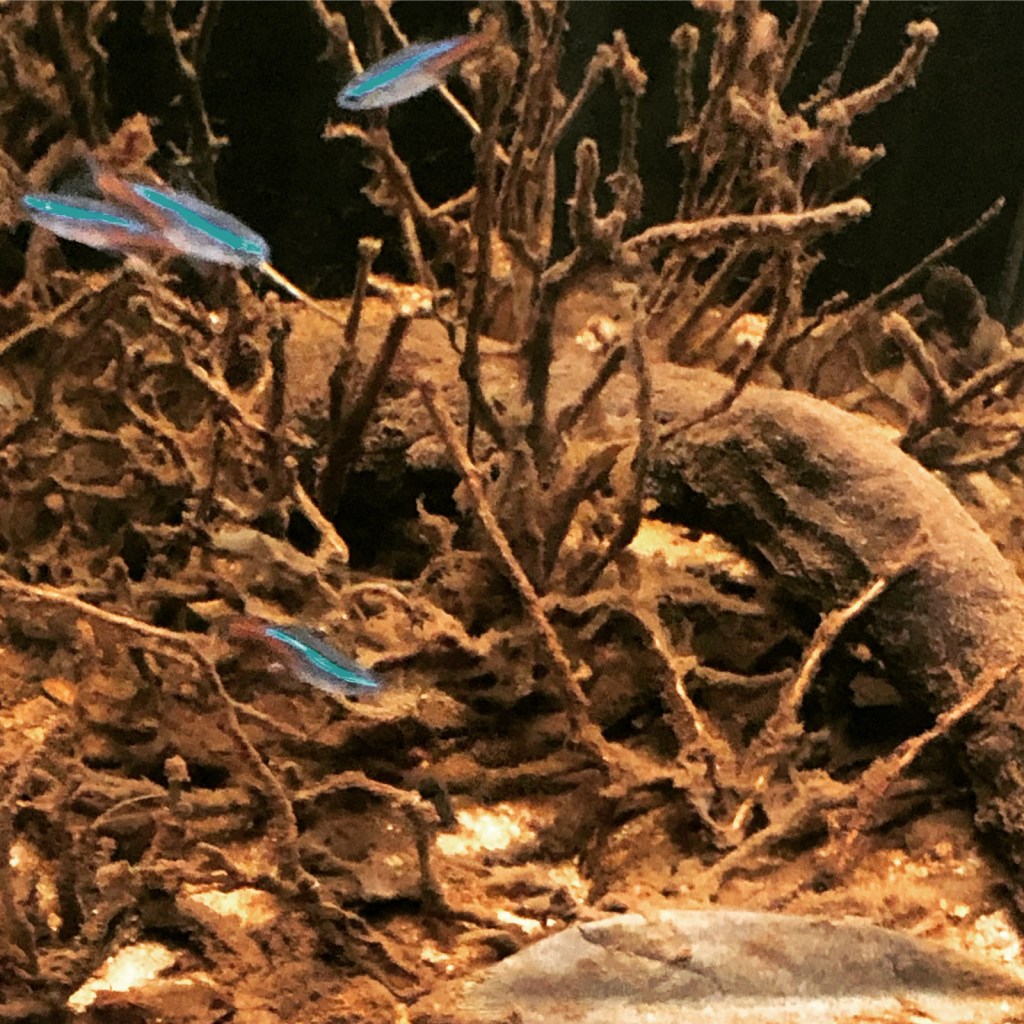
And, if you’ll allow me one prediction, I think this is where the hobby is headed over the next decade. We’re already seeing aquarists move beyond simply keeping fish or corals toward cultivating entire ecosystems. The next frontier in our world won’t be finding the newest leaf or the rarest seed pod. It will be learning how to establish, nurture, and understand the invisible communities that make those materials come alive.
In many ways, that’s exactly what ecologists have been teaching us all along: habitat is only half the story. Life is the other half.
I find that idea particularly exciting because it shifts the emphasis from cycling an aquarium to cultivating an ecosystem. Those are not quite the same thing, and I suspect that distinction may become an important part of the Botanical Method as it continues to mature.
And YOU have a front row seat- in fact, you’re a driving force- of this whole new, exciting frontier!
Stay curious. Stay motivated. Stay observant. Stay bold…
And Stay Wet.
Scott Fellman
 The Tint
Leave a comment