
Today’s post came about as a result of listening to a member of our community- a very successful, highly accomplished aquarist who has done some amazing stuff-having shared his aquarium on an online forum and gotten roundly thrashed by a couple of armchair critics for no apparent reason.
He was dumbfounded.
Fortunately, he had a thick enough skin to simply dismiss it, and continued to share his work and results, which , in the end, silenced the critic and his “allies”…but he was alarmed at the ferocity of the attack levied upon him and his idea.
It happens.
At some point, at some time, and in some place, you’re going to get some criticism for what you’re doing in the hobby. Perhaps it’s a product of the relative anonymity or comfort that social media provides. Avatars and screen names can make very weak people into bullies. They can also make some people strong enough to become great friends and mentors.
Yet, you do see a fair amount of critiques levied by seemingly anonymous people out there online. Often times, it’s from a person who doesn’t even know you, who sees you trying something they feel is unwise, ill-advised, or even dangerous with your fishes.
I suppose that’s a good thing. It’s nice that we have a sort of support system to help guide us on our aquatic journeys.
Usually, criticisms are offered in the spirit of friendship and support, perhaps with the hope that you won’t repeat a painful (or costly) mistake that the critic made themselves. These are useful, and you should, at the very least, pay attention to what is being preferred, evaluate the criticism against the context of what you’re doing, and make your next move based on your quick analysis.
Yet, there are darker ones…Yes.
Other criticisms are of a slightly different, often less “friendly” nature. They come from a place of…well…fear. A place of anger. A place of ego. You know the kind I’m talking about. The kind of flat-out dismissive, judgmental, almost “boilerplate” types of criticisms. Especially when you’re trying something new, or executing an idea which has not been done much before, if at all, in the manner in which you’re attempting.
And often, they’re very biting:
“You can’t do that.”
“It’s not done that way.”
“Your tank will crash.”
“Your a fool.”
Stuff like that.
Again, your first move is not to flip the guy/gal the middle finger and go at it. Obviously, this person is opinionated. Is it because they’ve done what you did before and had a bad experience? Is it because they wish they had thought of the idea? Is it because they have an expertise in a small area related to what you’re doing and want to prove what they know by lashing out?
Sometimes I’ve found, in my four decades in the hobby, that the most dismissive, arrogant critics are often those who have not done what you are doing. They “know” not from firsthand experience, but because they’ve “heard” or read that this is contrary to what everyone who has been successful in the past is doing. They’re those who, for whatever reason, feel it necessary to discourage, degrade, and otherwise thwart your attempts to do something perhaps a bit outside of their comfort zone…these self-appointed “guardians of aquarium practice.”
So..they attack.
They fall back on “the books.” Or maybe some related information they found online. It’s easy to find information on almost any topic online these days- particularly if it’s the “popular” narrative about how things are “supposed” to be done.
Remember, if you’re doing something new or in a different way, there is typically not much out there on it to “support” your position. It’s often up to you to weather the attacks and explain how you did what you did, and why it works. Or own up to the failure when it doesn’t work, as the case may be. Regardless, there is often little more but your own experience to fall back on, until you fin other outliers who have had similar successes with what you’re doing.
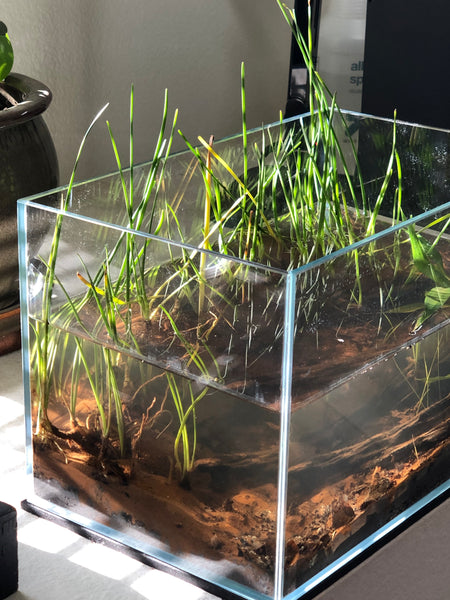
I can tell you first hand, when I first started Tannin Aquatics, and began talking about the use of botanicals and playing with blackwater aquariums on social media and elsewhere, we received a lot of response- both supportive and dismissive.
The initial response was, “This has been done before! You’re not the first person to talk about this!”
No fucking shit.
This used to drive me crazy…I can’t recall a single time when I ever asserted that I “invented” this idea. Of course, that won’t stop the armchair experts and critics from making their “point.” Of course, eventually it stopped bothering me because it was obvious that I never asserted this, and that what I was talking about was far different and way more detailed than had been previously discussed before in the hobby.
A Lot of hobbyists who took the time to go after me thought that adding botanical materials to your aquarium in quantity was a recipe for a “tank crash.” They felt that what we were proffering was reckless and ill-thought-out. I heard a lot of backlash about “pH plummeting into the abyss”, “ammonia spikes”, and other horrible fates that awaited me as I continued further down the road.
And they had no other basis to make such an assertion other than it wasn’t considered “standard” aquarium practice.
And guess what? None of that stuff happened. And I never advocated practices or ideas which would bring about such issues.
Oh sure, I had some things work better than others. I lost fishes here and there- for various reasons. But I developed a set of practices, protocols, procedures- to assure myself the greatest likelihood of success. To prevent the “prophesized” disasters from happening.
And when I would encounter a setback, I researched and consulted and asked the tough questions of those with more knowledge than I, to figure out what I did wrong. Then, I corrected my procedures and moved forward. I took the time to write down and share everything I learned with my fellow hobbyists. I shared everything that I’ve learned and thought about- still do- in this blog and elsewhere.
I’m not that unique. Not some shining example. There are a lot of hobbyists who get their ideas out there…I am just an average guy with an above average interest in a rather arcane subject within the aquarium hobby, and I pushed to learn as much as I can about it. Lots of you do the same…have for decades.
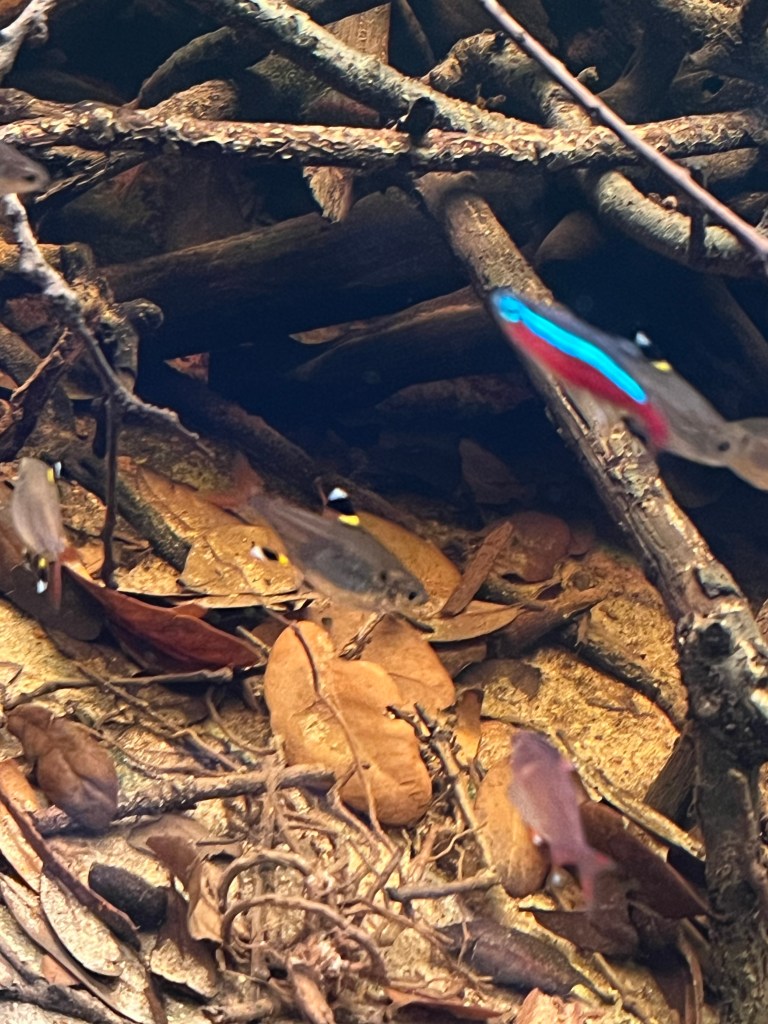
Many of you were dabbling with some of this stuff yourselves, and we were able to trade “war stories”, share ideas, discuss our successes and failures. We collaborated. We took an idea which was typically dismissed or seen as some sort of “side show” and looked at it more seriously, more procedurally…And we have seen the emergence of botanical method aquarium as a legitimate methodology to successfully keep and breed a wide variety of fishes.
We learn new stuff every day- together.
This is the way you push out into the unknown and weather the unwarranted “criticisms” or plain old attacks. You DO. You focus. You find others who have similar interests and share ideas. You collaborate. And most of all, you share. Without fear. Without judgement. And without expectation of anything, other than perhaps inspiring others to follow the path you’ve taken if they desire, and to expand and improve upon it.
It’s hard to take criticism. Especially when it’ for something you hold near and dear, and work with daily. However, in the aquarium world, like in so many other places- it comes with the territory.
And then there are the times when you’re really doing stuff far differently than ever done before in the hobby.
Ever felt a bit nervous when contemplating some new idea for your aquarium; you know, the one that no one ever tried before? The one everyone says can’t be done, or “won’t work”, or “is destined to fail”…or the one that simply flies in the face of what’s been considered “The Way” for so long?
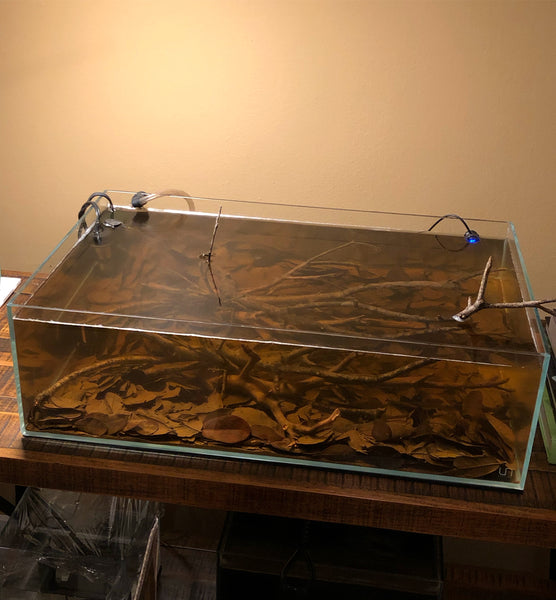
It’s natural. There is a sort of feeling of walking a tightrope without a safety net…I mean, you could fail. Or, there’s a chance that you could be the first hobbyist to pull it off. Or, more likely, the first hobbyist simply to try it. And I suppose, it can be a bit scary.
“First”.
It’s a powerful word, huh?
Throughout our lives, we’re taught that it’s good to be “first”: Winning the race, being the first in line, the first one to finish our homework, etc. In the aquarium hobby, however, “first” sometimes carries a little more baggage with it.
A little extra challenge, right? A lot of scrutiny. Skepticism.

When you’re the first hobbyist to keep a challenging fish, or proffer a different way of doing things, you have some serious responsibility– to the animals, the natural environment, and even tougher still- the hobby “establishment”.
It’s a heavy weight to shoulder for many!

Visionaries in our hobby have always suffered the criticisms of those who came before them.
I guess it’s human nature to question the gangly newcomers to our little utopia. If you are pioneering a new technique, keeping an animal previously thought un-keepable, or, worse yet- challenging a long-held hobby “truism”, the fact is, you’re likely to take a beating. Or, at the very least, hear a lot of hushed whispers when you walk into the room.
Sad, huh?
Yeah, it sucks. But only for a while.
The fact is, somebody has to be the first. Somebody has to dip their toes in the water, trying that new technique, or trying to keep the fish once thought impossible.
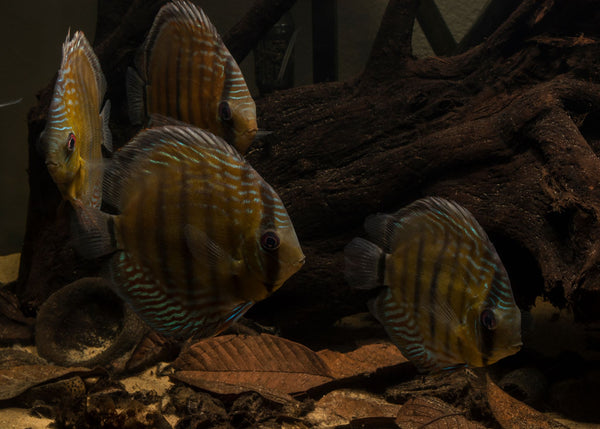
Look at a guy like Jack Wattley. He was breeding multiple strains of Discus on a regular basis, when most hobbyists were just happy to keep one alive! He single-handedly unlocked so many mysteries of this fish-and shared his findings-that it made it possible for aquarists worldwide to successfully keep and breed them.
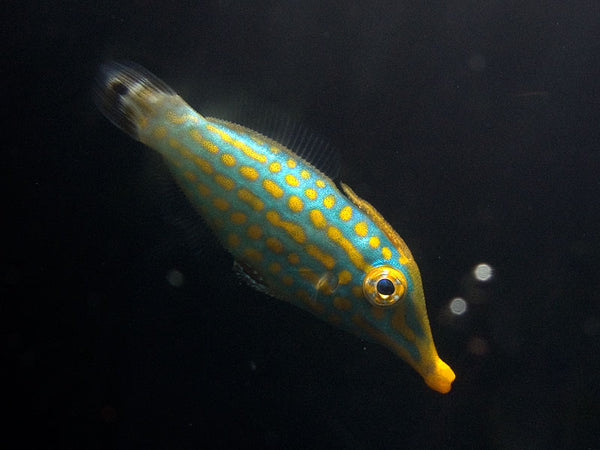
I remember not too many years ago, when my friend Matt Pederson succeeded at spawning and rearing the Ornate Filefish. This was a fish that would pretty much expose your neck to the chopping block for fellow hobbyists if you dared even try to keep one. He took a bit of grief for even keeping the fish.
It was considered nearly impossible to keep- an obligate corallivore, supposedly only feeding on live coral polyps. Matt felt otherwise. Matt not only believed that he could keep and breed the fish- he defied the naysayers and actually did it! It was a major achievement in the marine fish breeding world at the time.
Still is impressive, if only for sheer audacity! He had serious courage. Tuned out all of the “noise.”
Courage, my friends. And conviction. And the strength to endure scrutiny, criticism, and those naysayers who call you “foolish” or “brash” for even trying. If you have those traits- and a good idea, go for it!
On the other hand, there is nothing wrong with a bit of healthy skepticism or peer review.
Preaching something that is contrary to conventional wisdom (“You can keep non-photosynthetic corals in a reef system”) is one thing- it challenges us to re-think our previously long-held beliefs. It pushes boundaries that may only be there because we haven’t figured out the way to do it yet.
However, advocating an idea that, in most cases, will cause harm to our animals (“There is no problem letting different species of Mbuna hybridize and releasing them at random to the LFS for sale.”) is another thing entirely. And giving advice that’s downright foolhardy {“I think we should teach our toddlers how to hand-feed Piranha! ) will justifiably qualify you for an online assault from the fish-keeping community!
However, those are extremes of absurdity.
Trying something that hasn’t been done before is an entirely different game. And one you should consider playing if you’re ready.
If you’re ready. If you think it can work.
If…
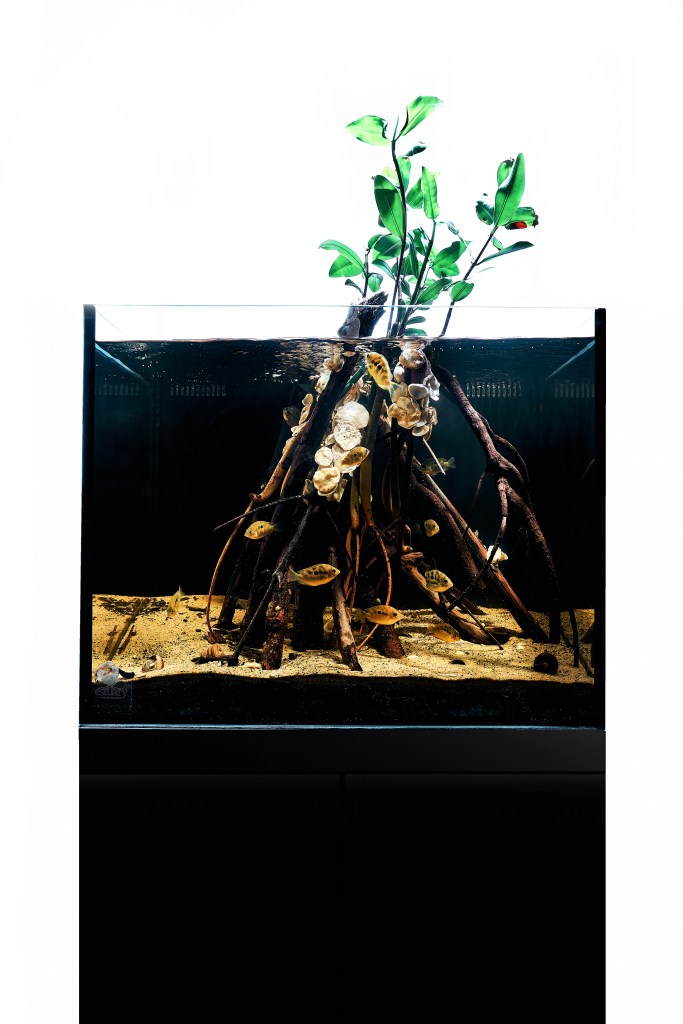
I’m NOT discouraging you from testing a theory or radical new idea.
What I AM encouraging is responsible experimentation. Share your data. Force progress. Where would we be if hobbyists continued to believe that the undergravel filter was THE ONLY way to maintain a healthy aquarium, or if we never tried fragging a stony coral? Or if we were afraid of tinted water? Yikes!
Radical steps are often necessary for change. Besides, who cares if people laugh at you once in a while. Not giving a flying fuck is great for the soul, trust me.
I leave you with a favorite, rather cliched, yet perfectly appropriate inspirational quote from Apple co-founder and visionary, the late Steve Jobs:
“Your time is limited, so don’t waste it living someone else’s life. Don’t be trapped by dogma – which is living with the results of other people’s thinking. Don’t let the noise of other’s opinions drown out your own inner voice. And most important, have the courage to follow your heart and intuition. They somehow already know what you truly want to become. Everything else is secondary.”
It’s okay to be the first. It’s okay to look at the hobby a bit differently.
It’s okay to push the outside of the envelope.
Flying in the face of “conventional aquarium wisdom” is a tough, but entirely passable road, if you’ve got what it takes. Perhaps a rather lonely, sometimes bumpy road, filled with the occasional obstacle or two. But totally worth the journey.

Take it.
You’re no “fool.”
For those of you pushing out into new territories- new frontiers:
Move forward. Bravely.
Take comfort in the fact that you are trying. Take comfort in the fact that your work may inspire others…and in it’s own little way, perhaps change the aquarium hobby.
Yeah, you’re no fool.
Stay bold. Stay dedicated. Stay tenacious. Stay thick skinned.
And Stay Wet.
Scott Fellman


Leave a Reply