
After decades of playing with Botanical Method aquariums, I’ve arrived at a conclusion that seems almost obvious in retrospect:
Botanical Method aquariums naturally resemble many wild aquatic habitats because they function in ways that resemble them.
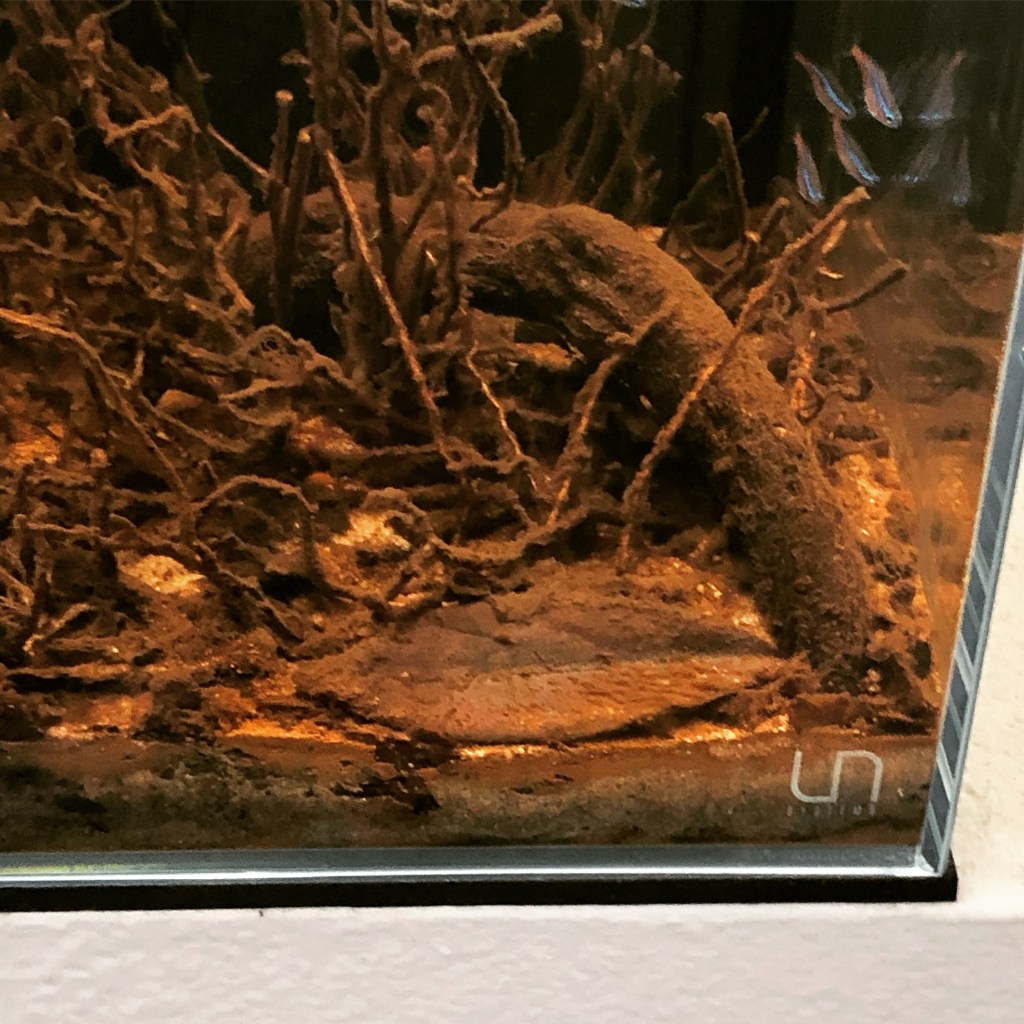
That’s more important than simply making an aquarium look natural.
When we add leaves, wood, seed pods, bark, and other terrestrial materials, we’re introducing many of the same ecological building blocks found in wild tropical streams, rivers, and flooded forests.
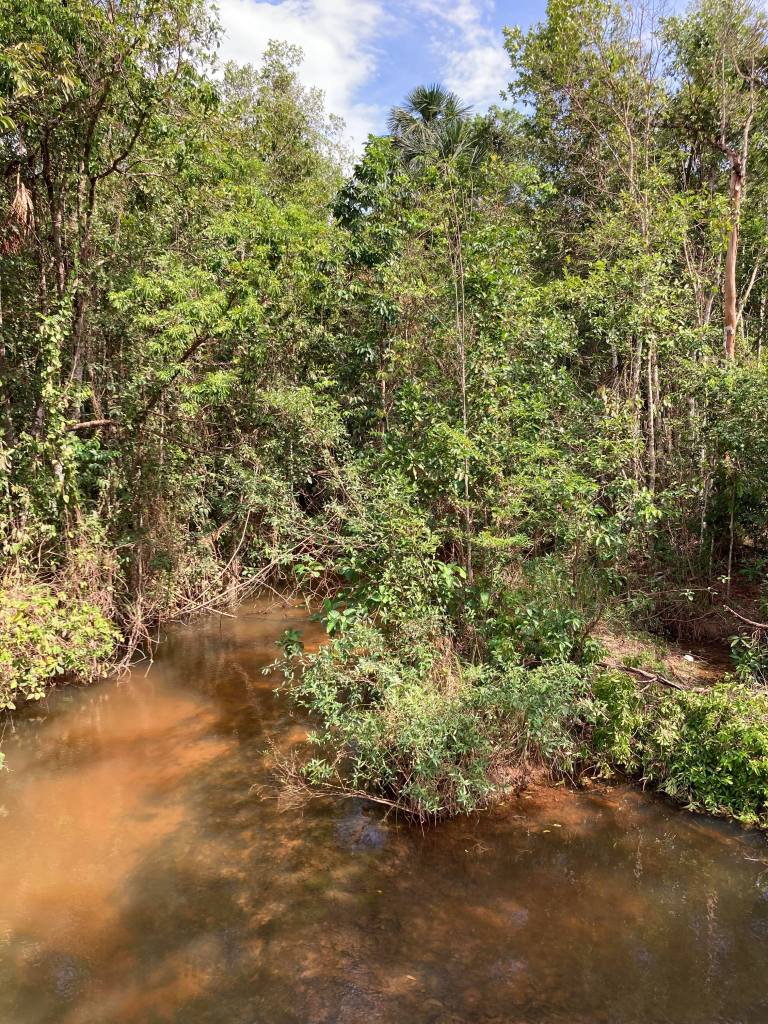
As these materials become saturated and sink, they accumulate into a beautifully disordered matrix. They soften, decay, shift with currents, and become colonized by fungi, bacteria, biofilms, and other microorganisms.
The result isn’t simply a natural-looking aquascape.
It’s a developing ecosystem.
And that’s where the real magic begins.
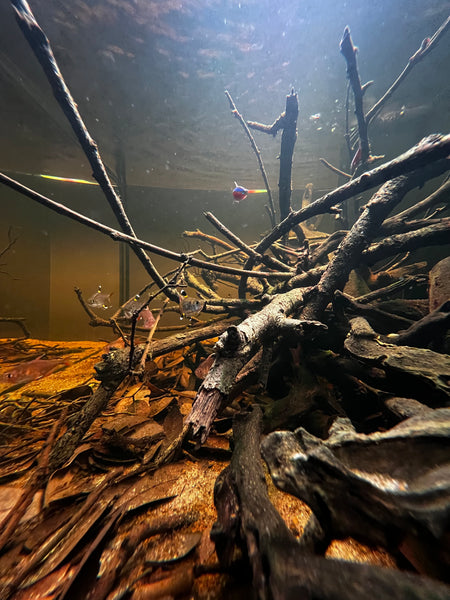
For a long time, I thought a successful, healthy aquarium was one that remained as “clean” and orderly as possible. Eventually, however, it occurred to me that wild aquatic habitats aren’t spotless environments. They depend upon continual inputs of organic material to support food webs at multiple trophic levels.
That little mental unlock changed everything.
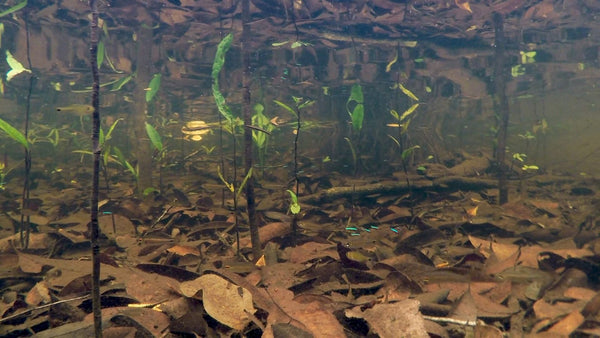
I began to understand that the leaves, wood, botanicals, sediments, biofilms, fungi, and detritus in a Botanical Method aquarium aren’t merely things we tolerate for the sake of aesthetics. They are participants in the system. They provide surfaces for microbial colonization, food for invertebrates, shelter for fishes, and the raw materials from which ecological processes unfold.
In other words, the materials are doing something.
And when we allow them to do what they naturally do, the aesthetics tend to follow.
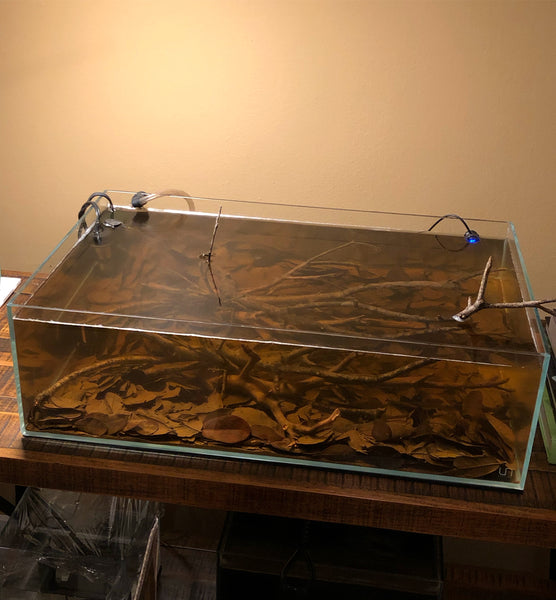
A good example is what happens to wood when it is submerged. A submerged branch in a wild stream doesn’t remain a perfectly positioned piece of “aquascaping material.”
Current, gravity, flooding, and time determine where it settles. It becomes colonized by biofilms, fungi, algae, and microorganisms. It alters flow, creates shade, collects leaves and organic matter, and establishes small areas of refuge and feeding opportunity.
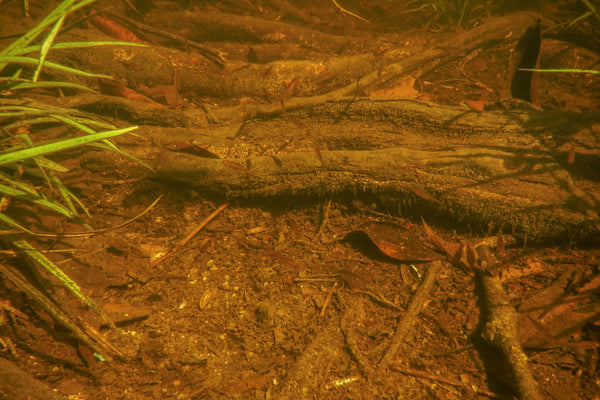
The same thing can happen in an aquarium.
Wood becomes structure. It creates visual barriers, shelter, territories, shaded areas, and surfaces upon which microbial communities develop. Leaves and detritus accumulate around it, creating additional microhabitats.
The aquarium begins to acquire some of the same physical and biological complexity found in the wild.
The same is true of leaf litter.
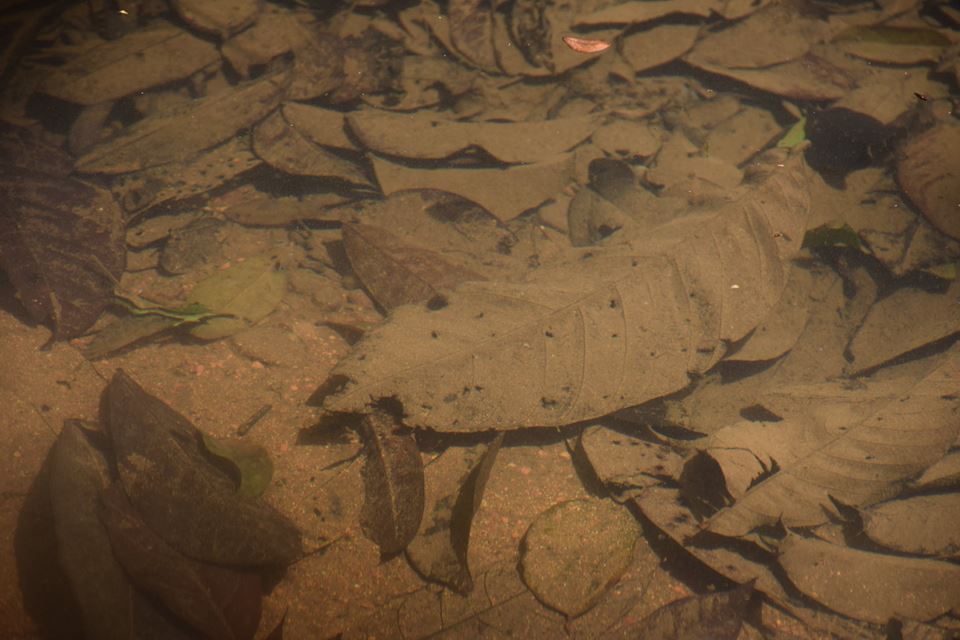
In flooded forests and tropical streams, fallen leaves and materials from the forest canopy accumulates on the bottom, creating a dynamic matrix of organic matter. Leaves provide shelter, visual barriers, feeding opportunities, and surfaces for microbial colonization. As they soften and decompose, they become increasingly important to the food web.
Put a leaf litter bed into an aquarium and, given time, remarkably similar processes begin to occur. That’s the important distinction.
We’re not simply reproducing the appearance of leaf litter. We’re reproducing some of its function. Nature is “messy” because ecosystems are dynamic. Nature is messy because ecosystems are dynamic.
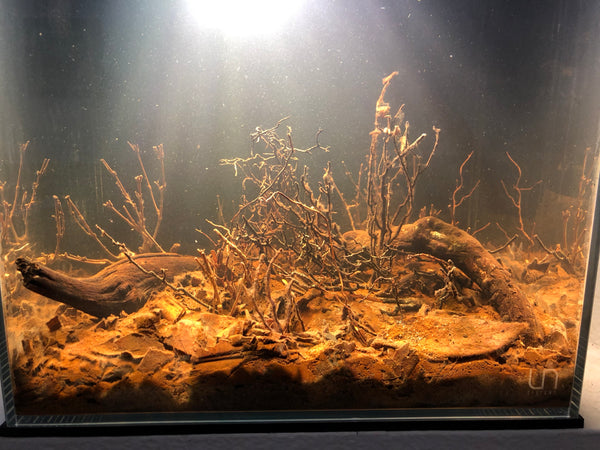
One of the things that fascinates me about wild aquatic habitats is their apparent randomness. Branches don’t fall according to the “Golden Ratio.” Leaves don’t arrange themselves according to an aquascaping contest’s rules.
Floods redistribute organic material. Currents move smaller pieces. Large logs remain in place and divert water. Sediments accumulate in some areas and disappear from others. Those processes create microhabitats.
And microhabitats influence where fishes feed, hide, rest, spawn, and interact.
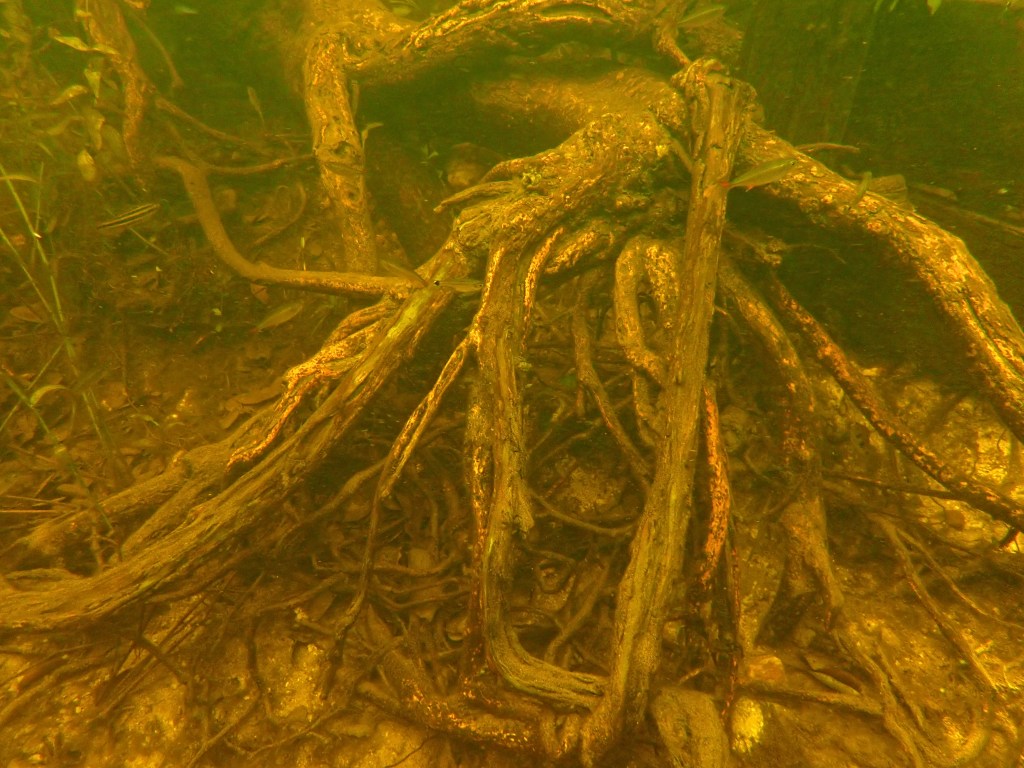
We can reproduce some of that dynamic quality in our aquariums simply by allowing botanical materials to move, accumulate, decompose, and change rather than constantly resetting the system to its original appearance.
The result may initially look less “perfect.” But it can become considerably more authentic.
And the fishes notice.
They investigate the spaces between leaves. They forage along branches. They explore newly accumulated material. They exploit the tiny organisms living among decomposing botanicals.
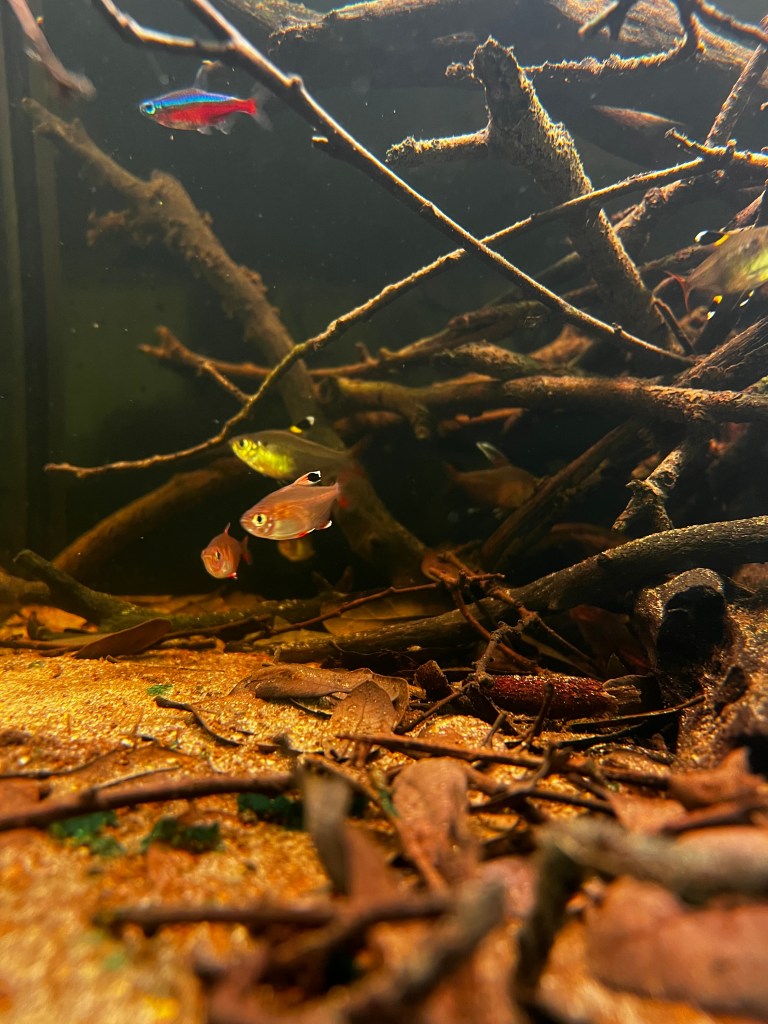
The aquascape becomes more than “scenery.” It becomes a landscape of opportunities, just like what happens in the wild. Opportunities for the fishes to forage, hide, and reproduce.
Perhaps the biggest mental shift in Botanical Method aquarium keeping is learning to appreciate things that we’ve traditionally been taught to remove: Biofilms, fungal growth, decomposing leaves. fine detritus, darkly tinted water, and even a little visible particulate matter.
These things can look alarming if our definition of a “healthy aquarium” is based entirely upon pristine appearance. But biofilms and fungi are fundamental components of natural aquatic food webs. Fungi colonize and break down wood and leaves. Biofilms colonize submerged surfaces and transform organic material into forms that can be consumed by other organisms.
That doesn’t mean every accumulation of detritus is beneficial, or that poor water quality should be ignored. Function still matters.
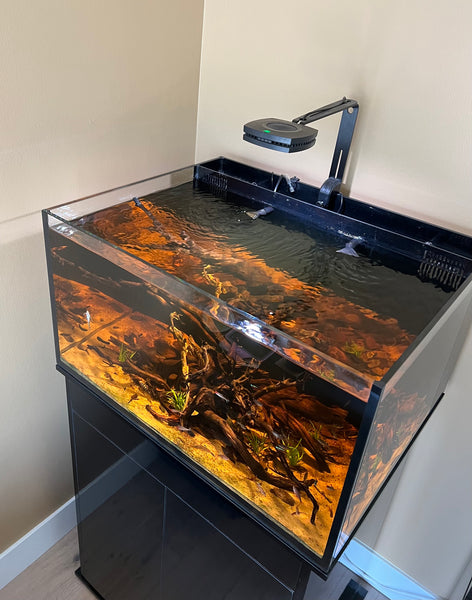
The point is that appearance alone cannot tell us whether an ecosystem is functioning well. We cannot assume that an aquarium with brownish water is “dirty”, any more than we should assume that a “crystal-clear” aquarium is perfectly healthy.
Color is not clarity, and clarity is not water quality.
A “blackwater “aquarium may contain substantial tannin and humic substances while maintaining excellent chemical and environmental conditions. Conversely, an aquarium can have perfectly transparent water while containing dangerously elevated ammonia or other contaminants.
We have to look beyond appearance.
And ironically, when we do, we sometimes discover that the “strange-looking” aquarium is the one functioning most like the habitat we’re trying to emulate!
Function first. Aesthetics second.
This is perhaps the biggest philosophical shift for me.
The conventional aquascape often attempts to reproduce the appearance of a habitat: rocks in the right arrangement, wood positioned just so, plants carefully placed. There’s nothing wrong with that. Aquascaping is an art form.
But I find myself increasingly interested in what happens when we attempt to reproduce the reasons why those habitats look the way they do. I ask myself a lot of questions when I observe natural aquatic habitats:
Why does organic material accumulate there?
Why does wood sit at that angle?
Why is the bottom covered in leaves?
Why is the water tinted?
Why are certain areas densely populated with fishes while others are relatively empty?
Those questions lead us away from “decoration” and toward ecology, and that’s where Botanical Method aquariums become so fascinating. The goal isn’t to force Nature into an aesthetic composition. It’s to create conditions in which Nature can begin doing some of the work herself.
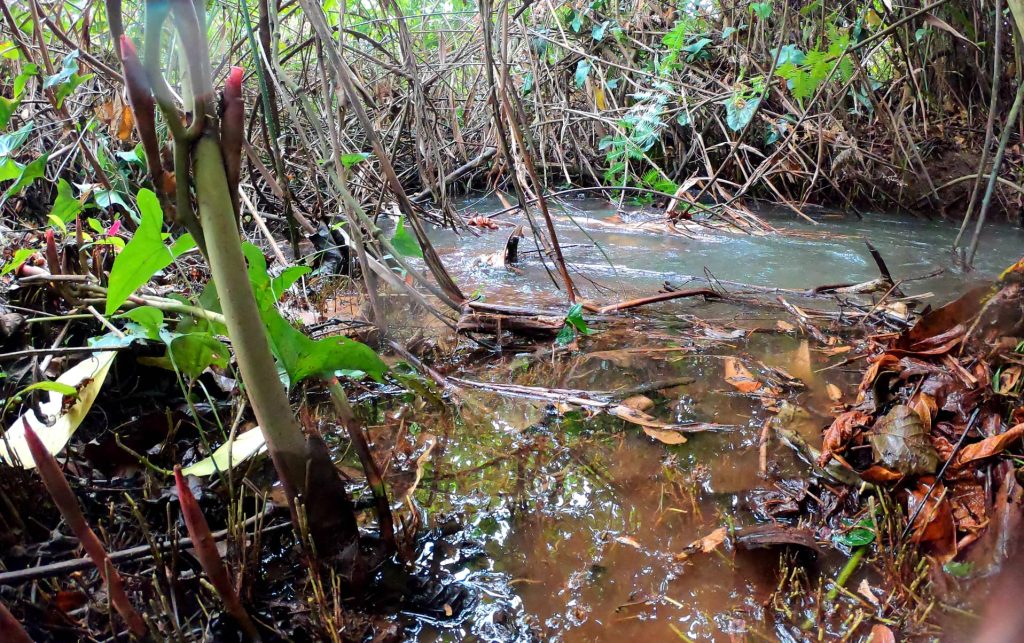
Given time, the materials shift, soften, and decompose. They become colonized. They feed other organisms, and alter the physical and chemical environment.
The aquarium begins to develop its own “history” if you will…And that history is visible.
The ultimate “natural” aquarium
I think this represents an evolution in how we might think about “natural” aquariums. A natural-looking aquarium doesn’t necessarily need to be meticulously arranged to resemble a photograph of a wild habitat.
Perhaps the more compelling goal is an aquarium that functions like the habitat it represents, and therefore develops some of its appearance as a consequence. A “collateral benefit”, if you will. That’s a very different proposition.
It’s also why Botanical Method aquariums can look so unusual to someone accustomed to conventional aquarium aesthetics.
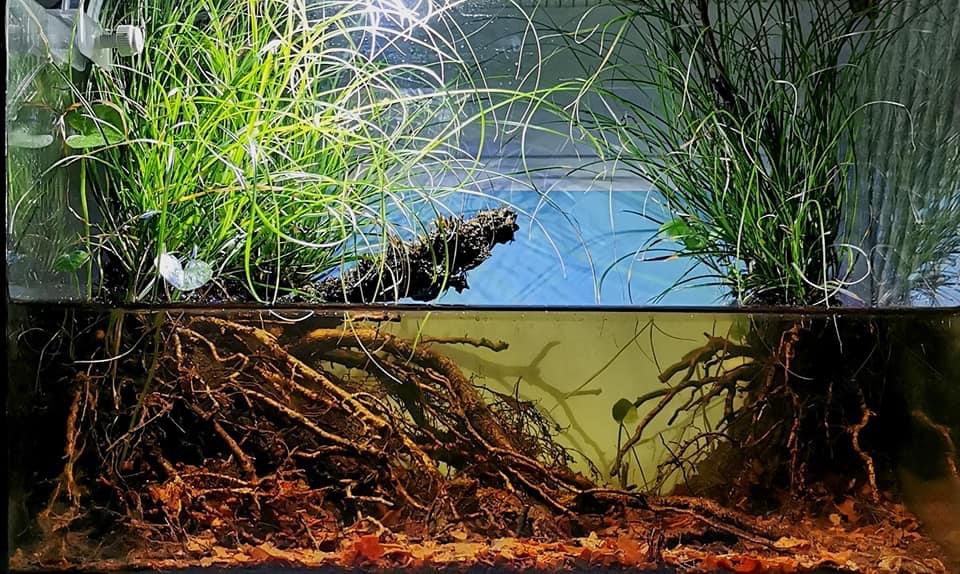
The tinted water, decomposing leaves, fungal growths, accumulated botanicals, and visible organic material can initially look like signs that something has gone wrong. But once you understand the processes behind them, they become evidence that something is happening.
The aquarium is alive, and that’s the part I find most compelling. We aren’t simply building an attractive display and keeping it frozen in time. We’re establishing a set of conditions and then watching an ecosystem develop.
We observe, test, adjust, add, and remove. We allow. We intervene when necessary. And then we watch again. It’s a long game; one which rewards patience and observation handsomely.
There is no single “recipe” for this. Every system becomes its own little experiment, influenced by its materials, inhabitants, water chemistry, flow, light, maintenance, and history.
That’s the beauty of it.
The aquarium becomes a living process rather than a finished object.
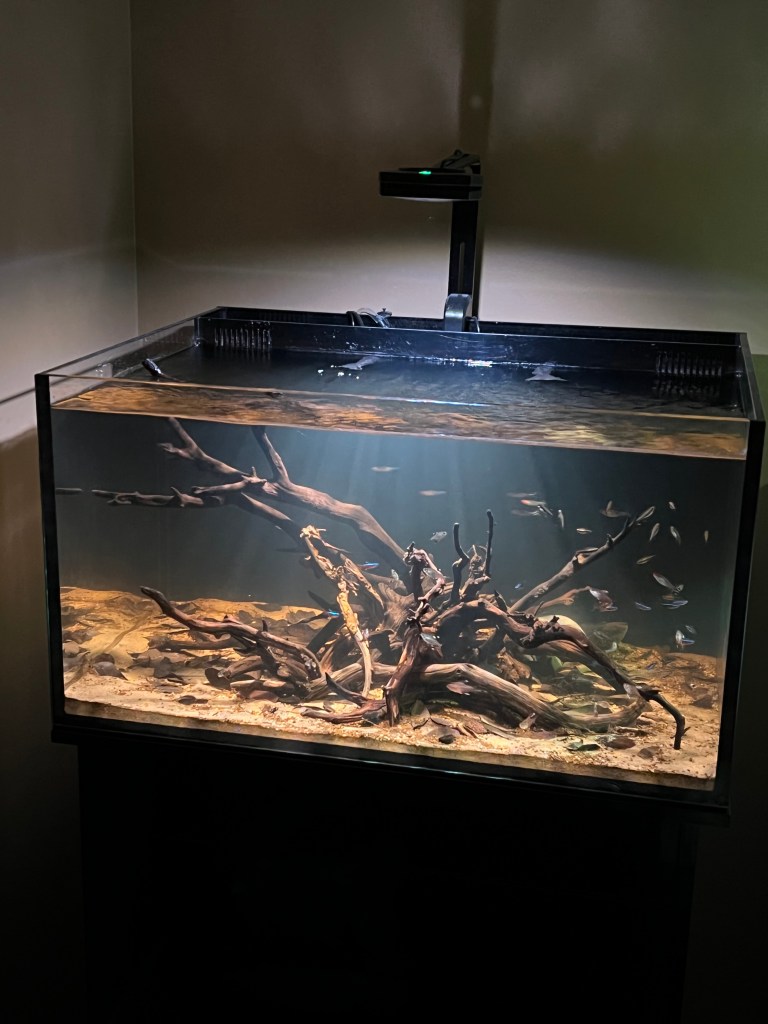
And perhaps that’s the real “evolution” that we’re after. Not simply aquariums that look like Nature. But aquariums whose appearance emerges, at least in part, because they function more like Nature.
Take the time to go beyond the sexy look.
Because you’ll find that the function is every bit as fascinating—and often considerably more beautiful—than the aesthetics it creates.
Stay curious. Stay observant. Stay open-minded.
And, of course…
Stay Wet.
Scott Fellman


Leave a Reply