
In the truest sense, a botanical method aquarium is never “finished.” Because it is a living, breathing ecosystem rather than a static piece of home decor, it exists in a state of continuous, beautiful evolution.
A botanical method aquarium can absolutely be run indefinitely. In fact, as the months and years pass, a properly managed botanical system actually becomes more stable, resilient, and biologically mature.
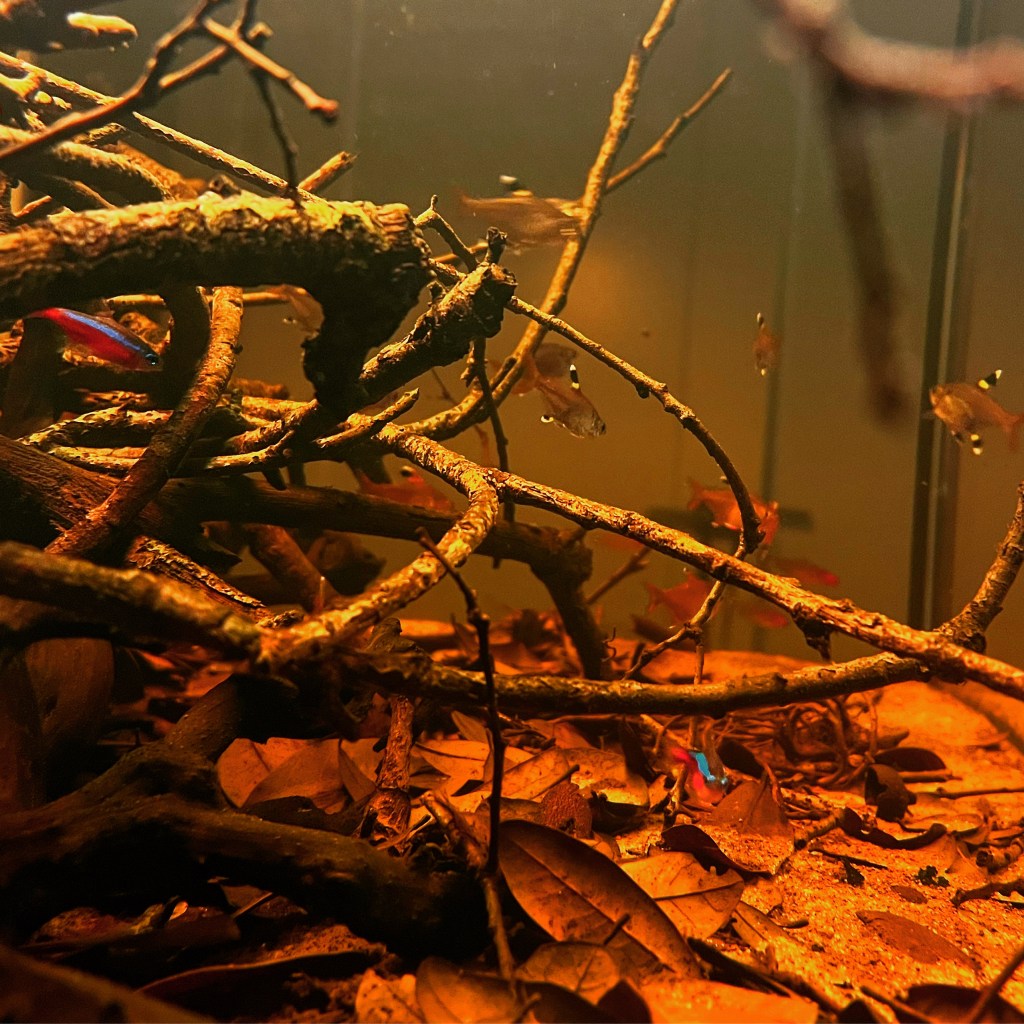
Running a botanical tank as a permanent, multi-year ecosystem relies on understanding a few core dynamics.
To run the tank indefinitely, you treat botanicals less like “hardscape” and more like a “slow-release fuel source.” Leaves and soft seed pods will completely skeletonize, break down, and essentially “melt” into the substrate over 1 to 3 months. Instead of cleaning them out, you simply layer new, prepared leaves right on top of the old ones.
Over time, this creates a deep, rich, multi-layered “benthic zone” just like in a natural tropical stream. The bottom layers become fine, nutrient-dense organic “mulch”, while the top layers provide fresh cover and foraging grounds for your inhabitants.
In a standard aquarium, the biological filter is hidden away inside a plastic canister box. As I’ve reiterated many times over the years, in a long-running botanical method aquarium, the entire aquarium is the filter. This is a fundamental concept; one which sets these types of systems apart from their more “mainstream” brethren.
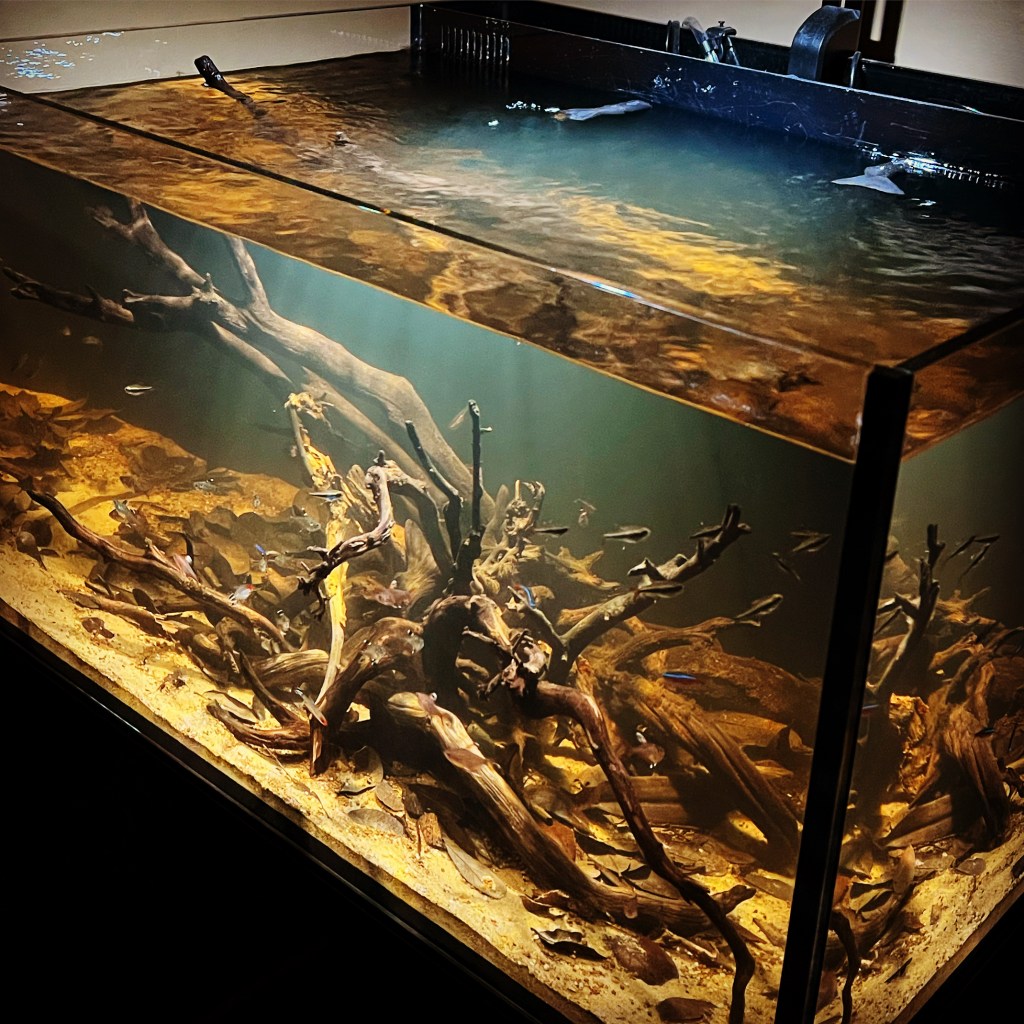
As the system crosses the one- or two-year mark, the populations of beneficial fungi, detritivores, and micro-crustaceans stabilize. They become so efficient at processing organic material that the tank develops a remarkable buffering capacity against sudden biological shocks. The microfauna “engine” becomes self-sustaining.
Over extended periods, the wood and deep layers of leaf litter continuously release humic substances and fulvic acids. For soft-water, acidophilic fish (like wild Bettas, Apistogrammas, or Discus), this aged water becomes an incredibly healing environment. The humic compounds act as natural anti-fungal and anti-bacterial agents, keeping the fish intensely colored and highly resistant to disease.
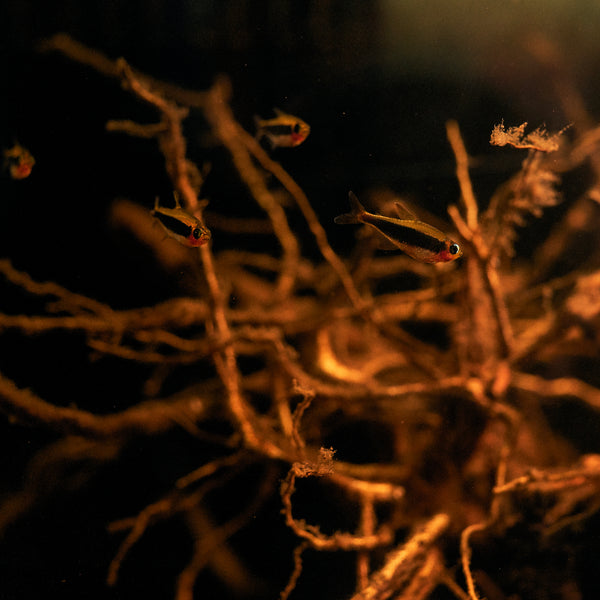
If there is any mechanical reason a botanical aquarium might eventually need a structural “reset” after many years, it is the accumulation of extreme quantities of biogenic silt.
Many years of decomposing leaves will eventually create a thick, muddy layer of fine organic detritus at the very bottom of the tank. While this is fantastic for micro-fauna and root-feeding plants, after several years (in theory) it can compress tightly enough to restrict water circulation through the substrate. To prevent this from ending your tank’s indefinite run, occasionally use a turkey baster or gentle siphon to blow off and extract just the top “fluff “of excess silt during routine water changes, leaving the structural leaf layers intact.
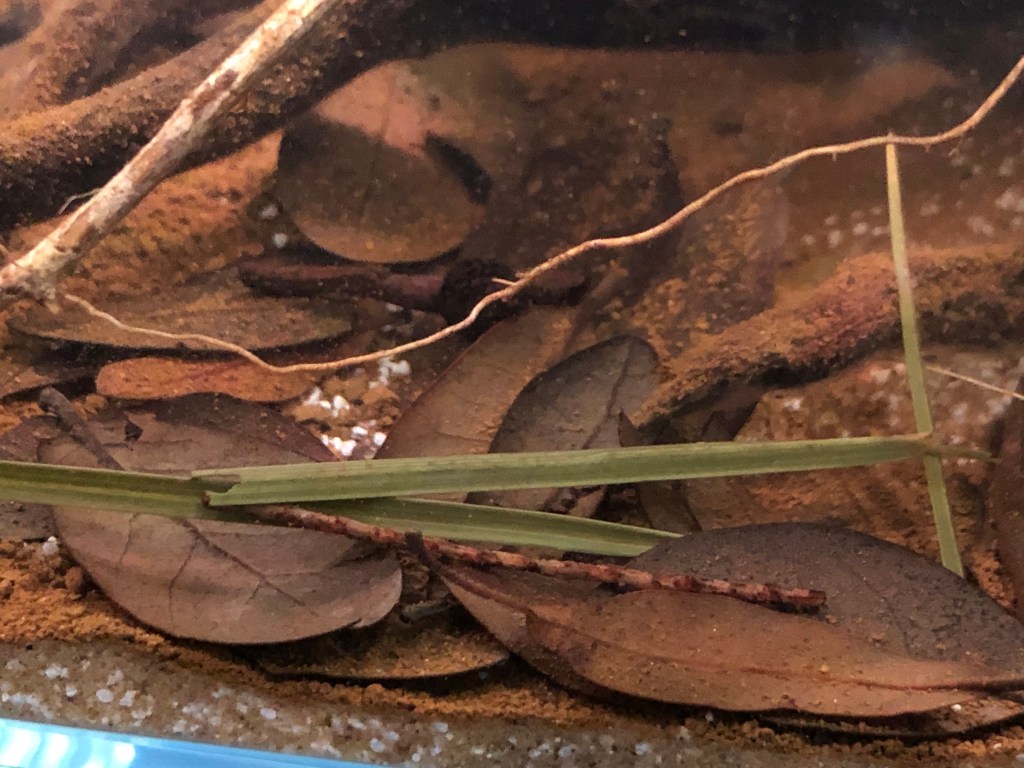
Always remember that you aren’t just building a display; you are managing an ecosystem that moves through time. To run a botanical method aquarium indefinitely, your maintenance regimen shifts away from “cleaning” and focuses entirely on resource management and ecological replenishment. Instead of trying to keep the tank sterile, your goal is to maintain a steady input/output balance so the natural decomposition “engine” never stalls.
Perform small, low-impact water exchanges (10% to 15%). Avoid massive water parameter swings. Small, regular water changes keep nitrate levels low while preserving the delicate humic acid concentration and preventing osmotic shock to your soft-water microbiome.
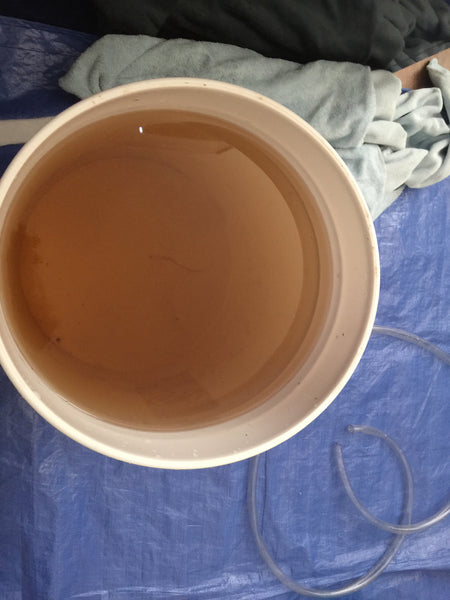
Top off evaporation with RO/DI water regularly. Because a botanical tank naturally drifts toward soft, acidic parameters, topping off evaporation with tap water will cause minerals to slowly concentrate over time, raising your GH/KH. Use pure water for top-offs to keep parameters stable.
Get into the habit of tossing in a few pre-prepared leaves every week or two. Adding them in small, staggered batches ensures a continuous supply of fresh, crisp foraging surfaces without causing sudden, drastic drops in pH or dissolved oxygen. It also mimics what occurs in natural habitats, where leaves are falling into the aquatic environment on a more-or-less continuous basis.
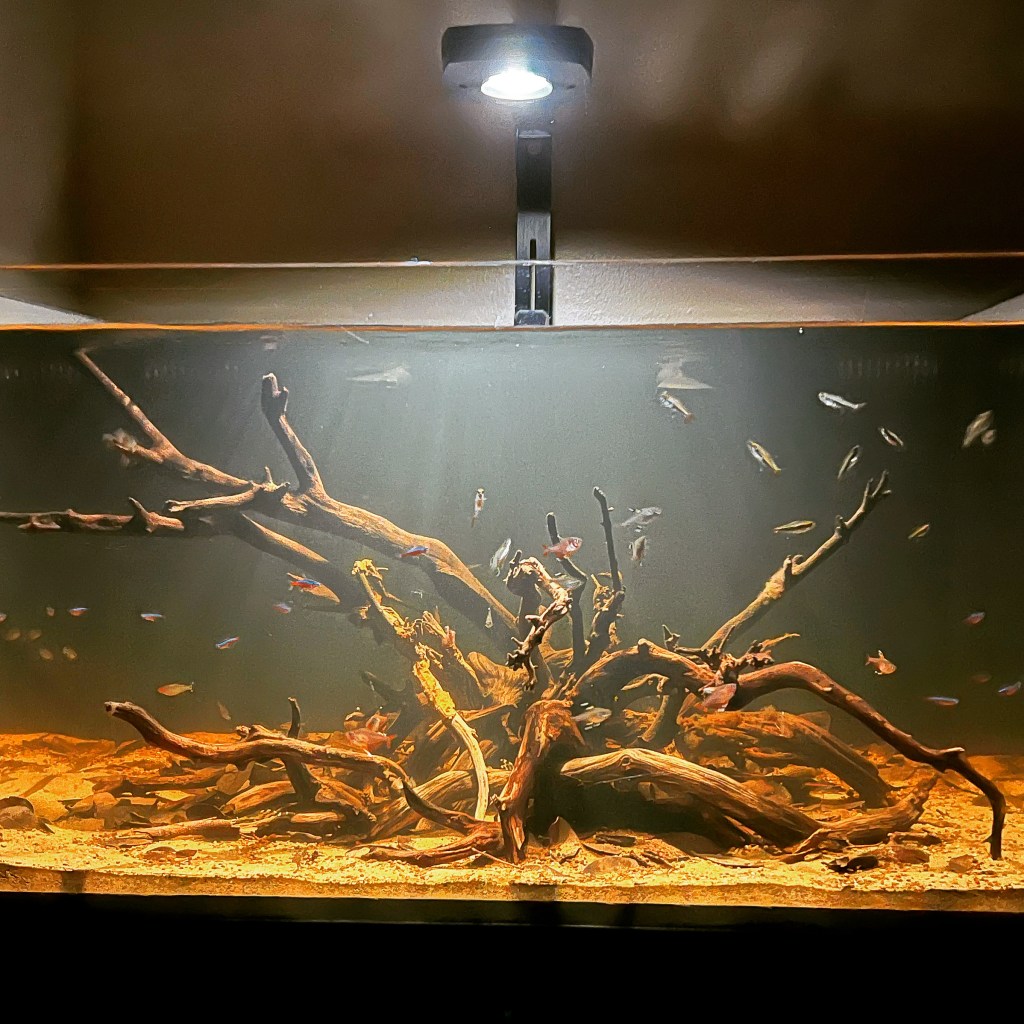
On a monthly basis, gently manage the silt/detritus accumulation. Do not dig a gravel vacuum into the substrate. Instead, hover a siphon about an inch above the leaf litter matrix. Gently swirl it to lift and export the excess, loose, fluffy brown mulm that collects on top, preventing the bottom layers from choking out water flow.
Periodically, inspect wood and seed pod “structural integrity.” Harder botanicals (like Cariniana pods, Bertolithia pods, or oak branches) last much longer than leaves, but will eventually soften and break apart. Check if any large pods are completely collapsing into mush and need to be replaced with fresh hard botanicals, if that’s your thing. Or just leave them be…
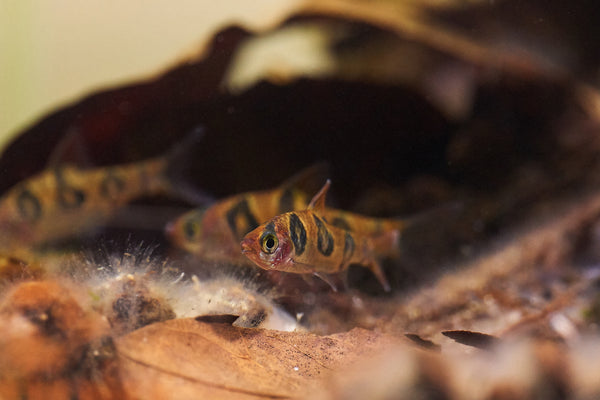
Clean filter intake or sponge media regularly, or as needed. If you are using a sponge filter or a canister filter, gently squeeze the sponge out in a bucket of extracted aquarium water. You want to remove heavy clogging debris to maintain water circulation while preserving the thick layers of nitrifying bacteria and biofilm living on the sponge.
Also, if you’re using circulation pumps (like EcoTech Marine Vortechs or AI Neros), you want to clean them regularly, as botanical debris may slow down the impeller, and thus impede output/flow.
Every 6 months to a year, “audit” your system to make sure it’s functioning as intended. Do stuff like evaluate the substrate depth. Over a year, the compressed, decomposed leaves will turn into a rich organic soil layer. Ensure this benthic zone isn’t becoming so deep and tightly packed that it develops completely anaerobic (oxygen-free) gas pockets. If it feels too dense, gently stir very small sections of the shallowest areas with a skewer to release trapped gasses.
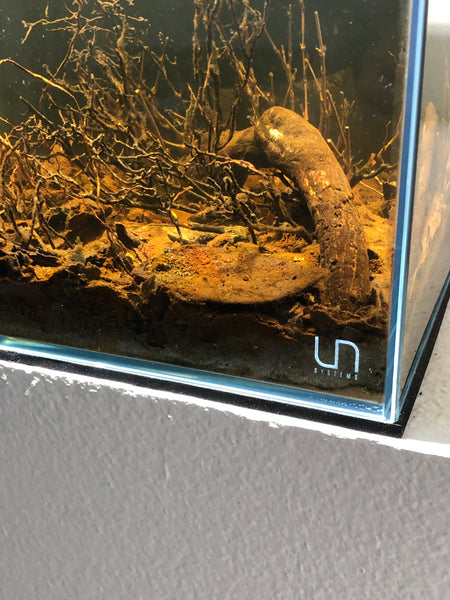
If you’re the water testing type, perform a water parameter “baseline check of your aquarium. While testing daily is unnecessary for a mature system, check your pH, KH, and perhaps nitrate and phosphate once in a while, just to see what’s up.
What kinds of changes could you see?
For one, a decline in pH.
Over multiple years, a highly active botanical system can experience a significant pH decline if dissolved minerals drop to absolute zero, causing the pH to go to very low levels (say, below 4.5). This can effectively “stall’ biological filtration in the traditional sense.
How?
Well, the standard autotrophic bacteria responsible for the first stage of biological filtration (Nitrosomonas) do not actually consume ammonium ions (NH₄⁺); they strictly consume free ammonia (NH₃). At a higher pH, a significant portion of total ammonia exists as free, accessible NH₃. As the pH drops, hydrogen ions (H+) flood the water and forcefully bond with free ammonia, converting it into ammonium (NH₄⁺).
By the time the pH hits 6.0 or below, virtually all of the ammonia has transformed into ammonium. At a pH of 4.5, the amount of free NH₃ is mathematically microscopic. The bacteria literally starve because their exact “food source” no longer exists in a form they can capture! In highly acidic water (4.5 pH), nitrite picks up hydrogen ions and protonates (changes the “charge”) into nitrous acid (HNO₂). Nitrous acid penetrates the cell walls of the bacteria and acts as a potent metabolic toxin, actively inhibiting their growth and shutting down their internal enzyme pathways.
Yikes!
Yet, all is not lost.
If nitrification stops entirely at low pH, you might wonder how wild blackwater rivers (like the Rio Negro, which sits at a pH of 4.0 to 4.5) don’t turn into toxic pools of fish waste.
Nature solves this in two ways that cross over into the botanical method aquarium:
Because all the ammonia is locked up as ammonium (NH₄⁺) at a pH of 4.5, it loses its ability to pass through fish gills. It becomes completely non-toxic to livestock.
While standard aquarium bacteria stall out below a pH of 6.0, wild acidic environments are inhabited by Archaea—an entirely different domain of single-celled life. They have specialized cellular membranes that are immune to acid, which allows them to oxidize ammonia, even a pH of 4.5 or lower.
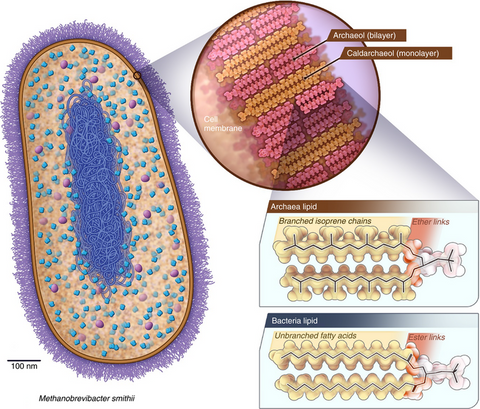
(Image used under CC 4.0)
Yeah, these are pretty freakin’ crazy-adaptable organisms. The old sayings that “If these were six feet tall, they’d be ruling the world…” sort of comes to mind, huh?
Do they appear in our aquariums? They might; I just don’t know for certain!
Again, even if your pH is really low, if the tank appears to be functioning fine and the fishes are healthy, you likely have nothing to worry about. Maybe that means the Archaens are doing their thing? Perhpoas.
Regardless, it’s just nice to know where you’re at!
Another suggestion for long term success with botanical method aquariums is to simply not go crazy with maintenance. To me, one of the “golden rules” of botanical method aquarium keeping is to not remove decomposed leaves and botanicals unless they are clogging a mechanical intake/output. Let the old leaves and botanicals naturally dissolve into the substrate matrix. Your tank will develop a multi-tiered substrate, with fresh leaves/botanicals on top, partially degraded ones in the middle, and rich, living biological mulch at the bottom.
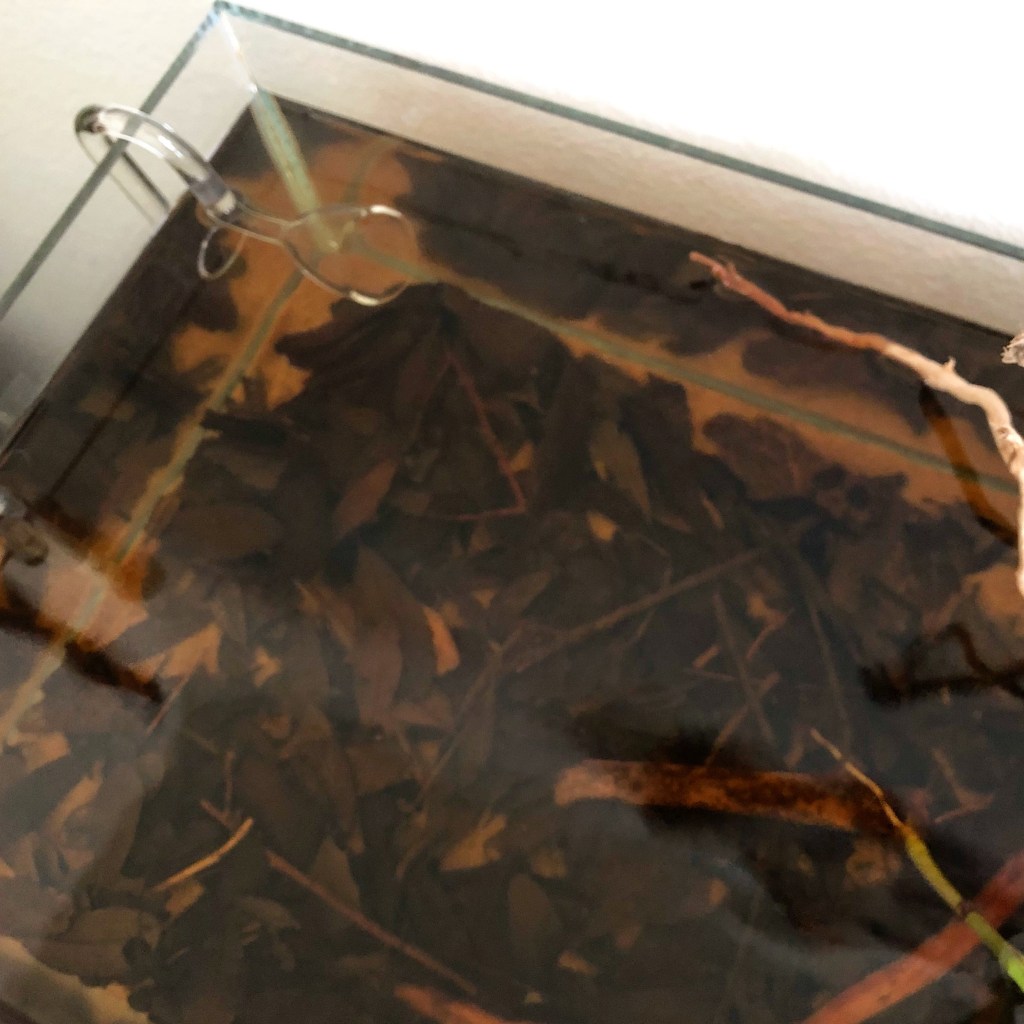
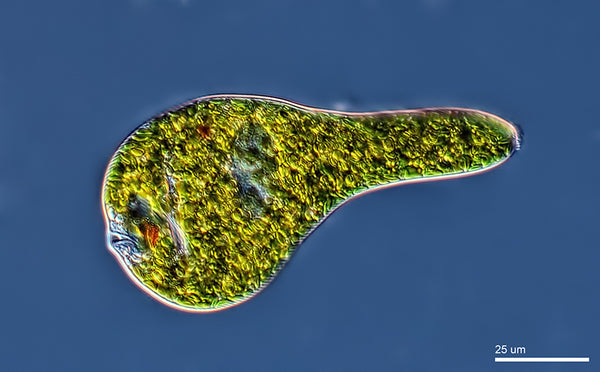
Another thing I recommend for long term success is to add pure live cultures of copepods, Paramecium, rotifers, and Daphnia from time to time. Introducing these micro-organisms perfectly aligns with our “hands-off”, ecosystem-first philosophy. In a conventional aquarium, these tiny creatures are quickly sucked up by heavy filters or starved out by a lack of food. In a botanical system, you have already built the perfect habitat for them to thrive.
By adding Paramecium (infusoria) and copepods, you are introducing the missing ecological link between microscopic bacteria/fungi and your fish. The decomposing leaves feed the bacteria and biofilms, the bacteria and biofilms feed the Paramecium and micro-crustaceans, and the micro-crustaceans feed your fish. If you ever breed fish or keep tiny micro-predators (like Scarlet Badis or Chocolate Gouramis), they will have a constant, 24/7 supply of highly nutritious, live food swimming right in their habitat!
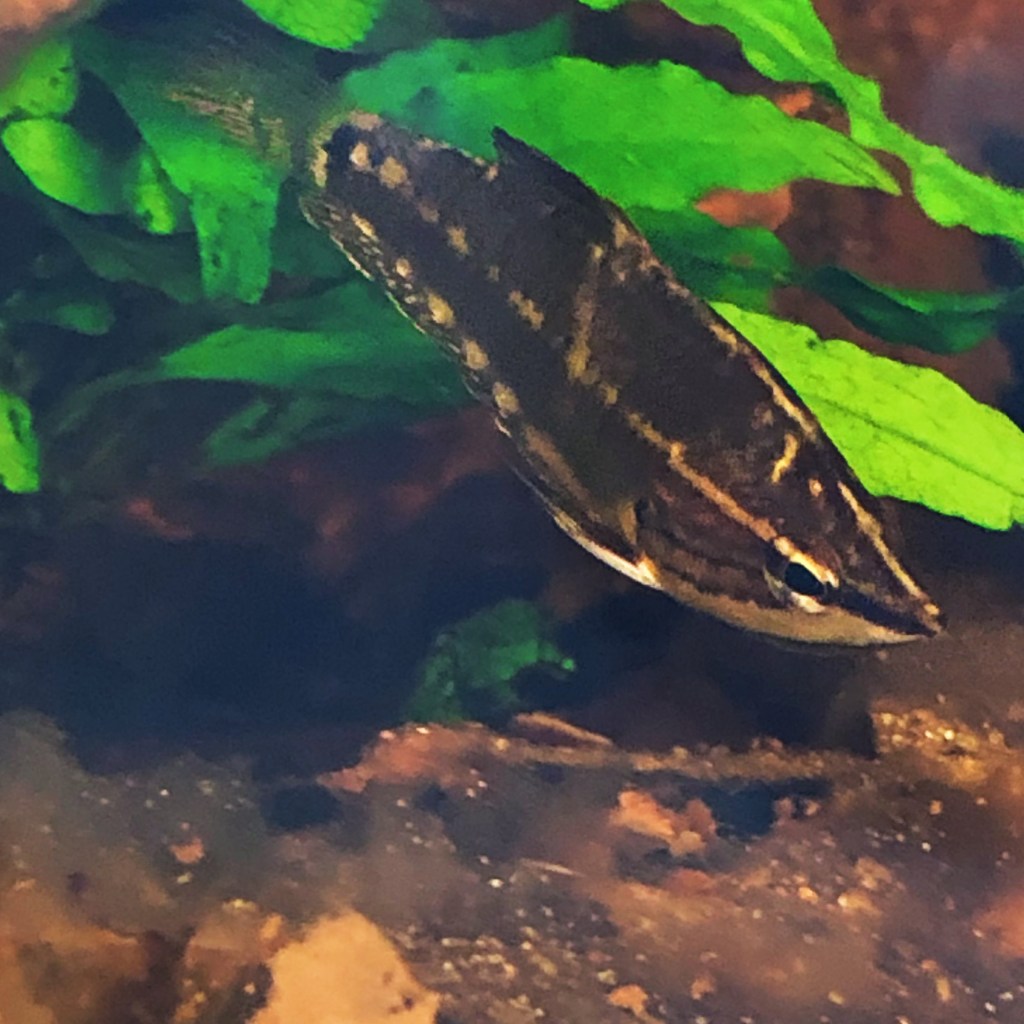
Another bonus: Microfauna excel at “micro maintenance!” Copepods and rotifers are voracious grazers. They spend their entire lives crawling over leaf litter, wood, and substrate, actively eating the organic detritus, fungal spores, and microscopic algae that you want to keep at “aesthetically tolerable” levels. They act as an invisible, microscopic “clean-up crew” that reaches crevices a snail or shrimp never could.
And, boosting biodiversity in your botanical method aquarium makes the ecology more resilient. In a closed aquarium, a single species of bacteria or microorganism can sometimes dominate and cause a destabilizing “bloom.” By periodically dosing a diverse mix of live cultures, you introduce ecological competition. A high diversity of micro-fauna creates a stable “biological buffer”, ensuring that no single opportunistic microbe can easily take over the system.
At the risk of sounding redundant, I need to mention the idea of keeping your hands off whenever possible one more time…
When thinking about the long-term maintenance of our systems, it’s important to continuously remind ourselves of the value of decomposing materials accumulating in our systems. We understand that they act, to a certain extent, as “fuel” for the micro and macrofauna which reside in the aquarium. The idea of leaving this material in place over the long-term is a crucial component of this approach, IMHO.
I have long believed that if you decide to let the botanicals remain in your aquarium to break down and decompose completely, you shouldn’t change course by suddenly removing the material all at once.
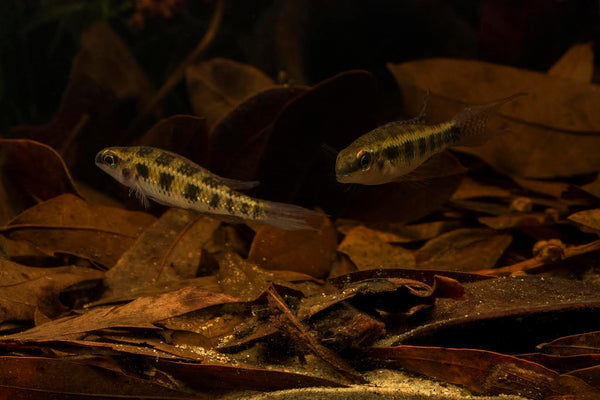
I think my admonishment to stay sort of “hands off” is steeped in the mindset that you’ve created a little ecosystem, and if you start removing a significant source of someone’s food (or for that matter, their home!), there is bound to be a net loss of biota…and this could lead to a disruption of the very biological processes that we aim to foster.
How we as humans choose to accept this progression and change is purely based on our own tastes.
The reality is that these things will continue despite any interventions we perform on our tanks. We can “resist” them, performing “maintenance” takes on our tanks, like trimming plants, fragging corals, scraping algae, stirring the top layers of substrate, etc.- but these are merely serving to counteract or stave off the inevitable changes that occur in an aquarium as it establishes itself, begins to thrive, and runs at a stable pace for extended periods of time.
Some tanks do decline over time.
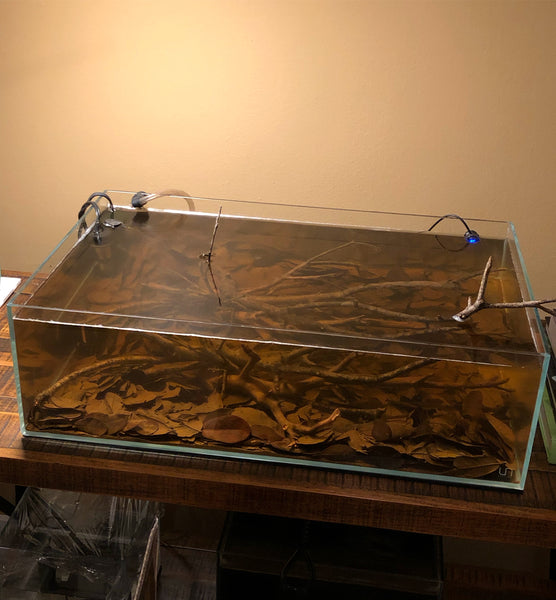
Of course, in many cases, the “decline” is so gradual, so subtle, that the outsider hardly notices. In the case of a botanical-method aquarium, with its abundance of seed pods, leaves, and other materials, you’d be hard-pressed to really call it a “decline.” It’s more like an evolution, really.
An evolution that can keep our aquariums running indefinitely…
You, the aquarist, ever keen on anything that occurs in your tank,will notice- and occasionally perform subtle (or not-so-subtle) interventions to counteract this process, lest it descend into some sort of chaos, right?
But, wait a second…
Isn’t “chaos” sort of a human-ascribed thing? I mean, we’re talking about changes in the aquatic habitat which evolve the look and perhaps the biological “operating system” of the aquarium. This is absolutely analogous to what happens in natural aquatic systems.
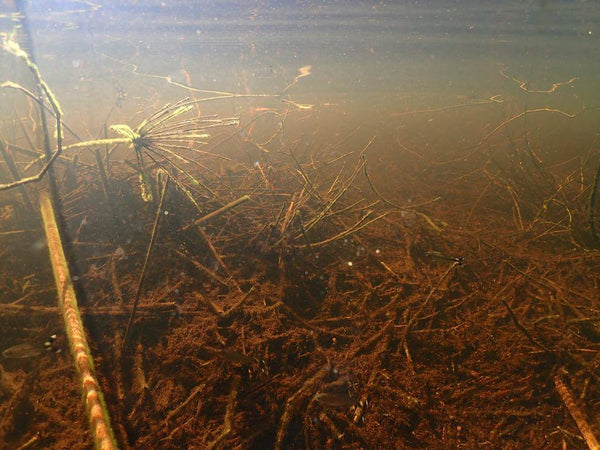
Stuff breaks down, and different types of organisms flourish and reproduce as a result. Nothing goes to waste in Nature…or in our aquariums, too..The ecosystem utilizes everything…If we allow it to happen.
We, as aquarists actually sabotage the essential natural processes which help our tanks run when we attempt to “intervene” through excessive maintenance.
The ebb and flow of life in a natural, botanical-method aquarium is much like a garden. You can and should perform regular maintenance, conducting water exchanges, filter media replacement, etc.- like you do in any other tank. However, you need to conduct these maintenance sessions not with the idea of “THIS will take care of those biofilms”, but an attitude of. “This will continue to facilitate change over time…”
Yeah, it requires a certain attitude.
And a willingness to look at Nature as She actually is- and to appreciate the beauty in the details of Her processes.
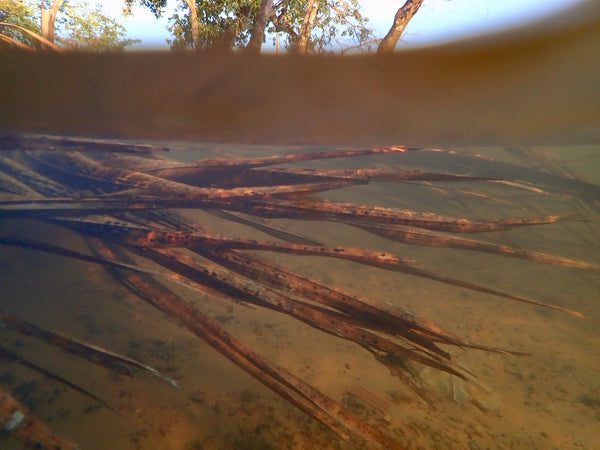
A willingness to accept.
An acceptance that Nature will plot the right course for your tank. And, you need a degree of patience and yeah-faith– that things will unfold in ways you may not even have begun to appreciate. Like any other aquatic endeavour, you can make it easier and more enjoyable by being aware of what is going on, and accepting the way Nature works Her magic.
Stay patient. Stay observant. Stay diligent….
And Stay Wet
Scott Fellman


Leave a Reply