
It’s been a few months since I’ve waxed poetic about my soft coral reef aquarium and its patchy “rubble” zone which I created for biodiversity over the summer. The tank is moving along just fine, and I thought I’d reflect on a few things, particularly my thoughts on detritus and its role in the ecology of my system.
Now, first, this tank is..okay. It’s not the coolest, best-looking, or sexiest reef tank I’ve ever run. There are really no unusual corals, fishes, or other organisms which reside in the tank that place it in that “Instgram-sexy” category. It’s probably one of the best-equipped, most ecologically-focused ones I’ve done, however.
Remarkably, I’ve received a ton of inquiries about this simple system, its progress, how it was set up, and the philosophy behind it, so I’m happy to revisit it here and go over what I feel are some of the unique and interesting points of this tank. It’s flattering, of course, but there is literally nothing about this aquarium that is groundbreaking or amazing. It’s simply applying common sense, some long-held ideas, and a little bit of “contrarian” thinking.
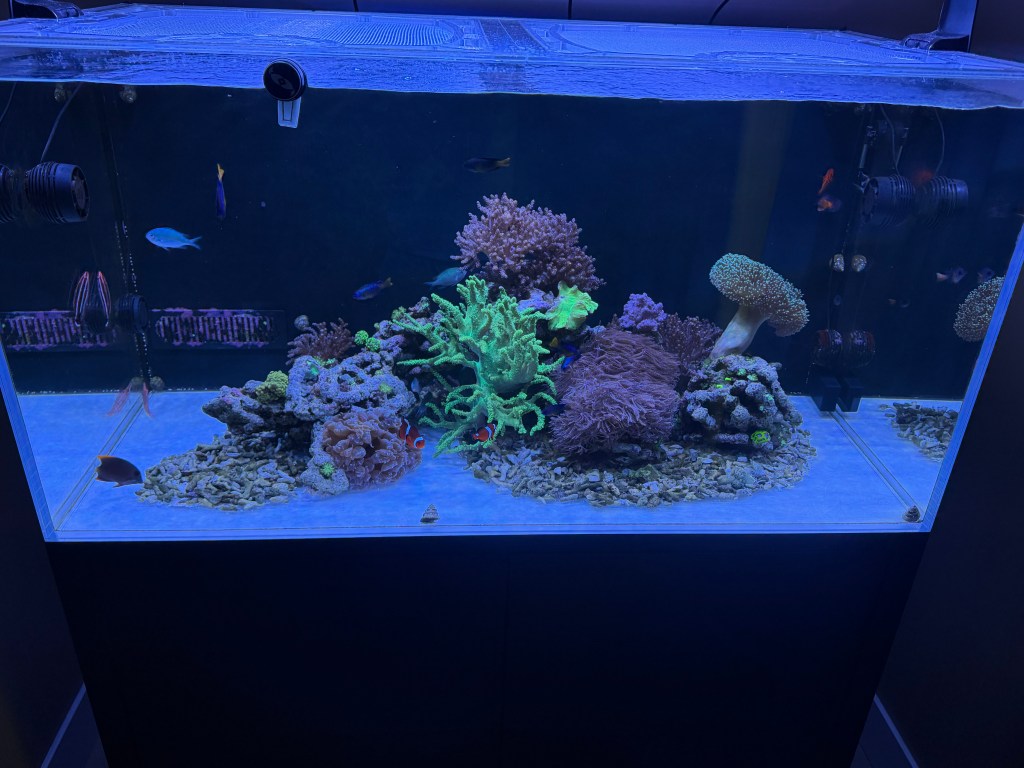
After working with this rubble for several months, and coupling this to the accumulated experience I’ve had with rubble and substrates in general in reef tanks over the years, I’m starting to formulate some conclusions about the idea of rubble and substrates in general, and why I’m having such success this time.
A lot of my thinking centers on…you guessed it- detritus again.
My primary conclusion is that, in a high-energy reef system with strong flow, heavy skimming, and proper mechanical filtration ( in my case, an automated filter roller), leaving small quantities of detritus to settle within a thin rubble substrate is not a “liability”—it is a massive biological asset.
In the past, reef-keeping “orthodoxy” demanded a sterile, zero-detritus environment to prevent nitrate and phosphate spikes. However, modern reef science heavily favors a functional, biologically diverse approach. I feel that my specific setup creates the perfect balance to achieve this, utilizing both ecology and technology working in concert: The high turnover, solid mechanical filtration (filter roller) and protein skimming, keep the water column pristine, while the minimal rubble traps just enough organic particulate to fuel a crucial, hidden “micro-ecosystem.”
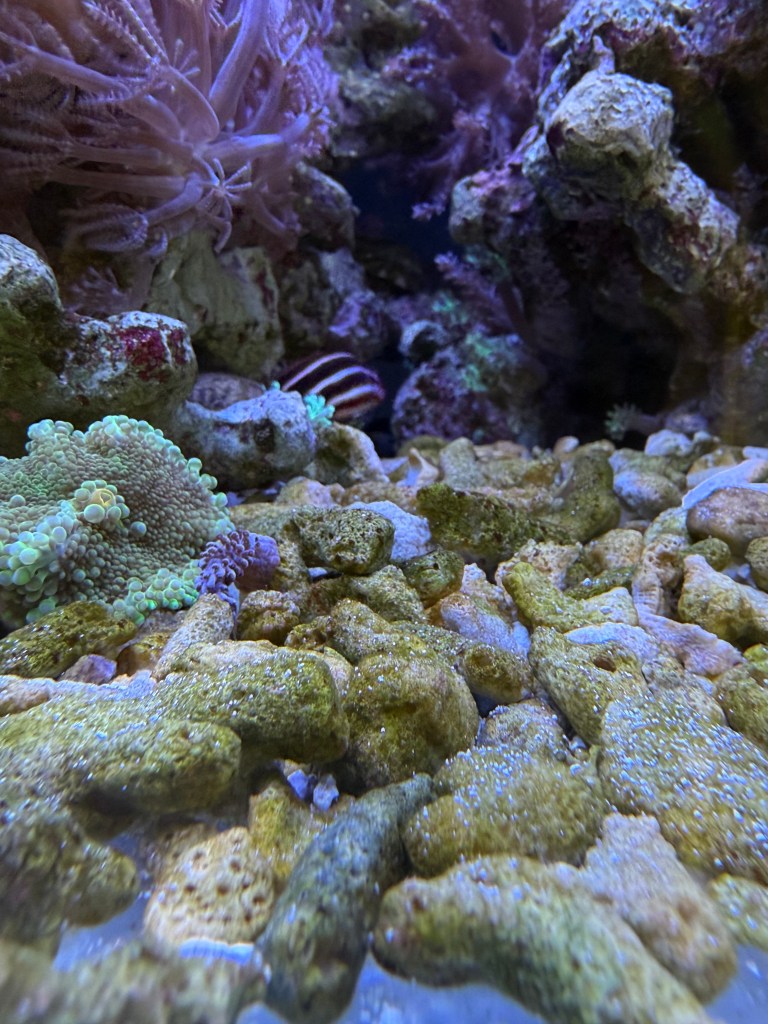
I believe that the “rubble zone” which I’ve created acts like a “benthic micro refugium” of sorts, supporting the greater aquarium ecosystem. A 3/4″ deep layer of loose rubble creates an intricate matrix of microscopic caves, shade, and surface area. When small amounts of detritus settle here, they don’t just sit and rot; they immediately become the foundational energy source for a vital benthic food web.
This sounds an awful lot like the stuff we talk about in our botanical method aquarium work, doesn’t it?
Detritus is coated in nutrient-rich marine biofilms and bacteria. Micro-crustaceans feast on this material. A rubble zone essentially acts as an in-tank breeding ground for copepods and other organisms, providing a continuous stream of live, highly nutritious food for a wide variety of fishes, like Mandarins, wrasses, and Anthias.
Small particulate fuels the growth of cryptic organisms (like sponges, tube worms, and bryozoans) underneath the rubble over time. These organisms are incredibly efficient at polishing water and cycling dissolved organic matter back into usable energy.
This also leads to the formation of what is known colloquially as “marine snow”- a form of particulate matter which provides food for corals and other filter and suspension feeders in the aquarium. Remember, most corals are not purely photosynthetic; they are active “suspension feeders.” In Nature, corals derive a massive portion of their energy from consuming floating organic aggregates; the aforementioned “marine snow.”
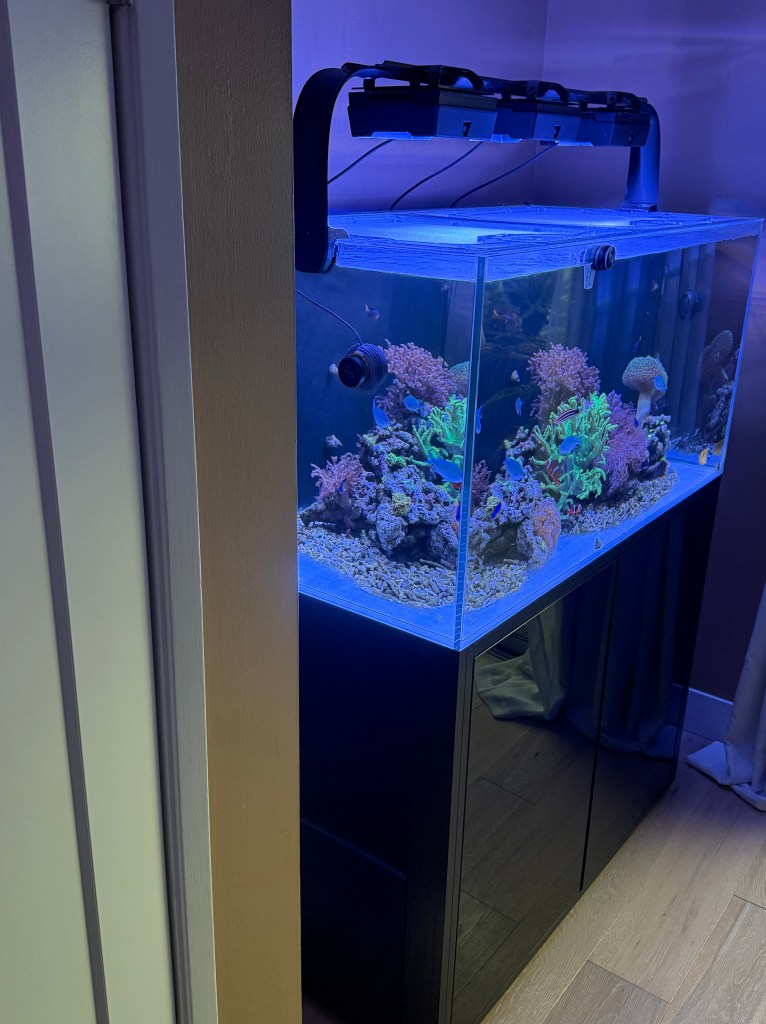
Because I have significant water movement in my aquarium, that small amount of detritus isn’t permanently stagnant. It is constantly being gently lifted, shifted, and resuspended by my Nero wave makers. This creates a natural, continuous feeding mechanism for my resident LPS corals, providing them with organic nitrogen, phosphorus, and particulate matter that commercial bottled foods simply cannot perfectly replicate. It’s certainly not a massive amount of food, but it’s something. And I believe that it’s being utilized.
Now, the “food production” aspect is all well and good, but many hobbyists have still operated under the assumption that any detritus is bad. This is particularly pervasive in the reef world. The main reason aquarists fear detritus in a substrate is the threat of it becoming an uncontrolled “nutrient sink” that eventually leads to hair algae or cyanobacteria blooms. However, the specific mechanics of my system (and likely many of yours) really neutralize this risk.
Because my mechanical filtration and foam fractionation is excellent, the vast majority of heavy organic waste is exported before it can break down into inorganic nitrates and phosphates. The detritus settling in my rubble is the “leftover” material—largely refractory, highly processed organic matter that decomposes incredibly slowly.
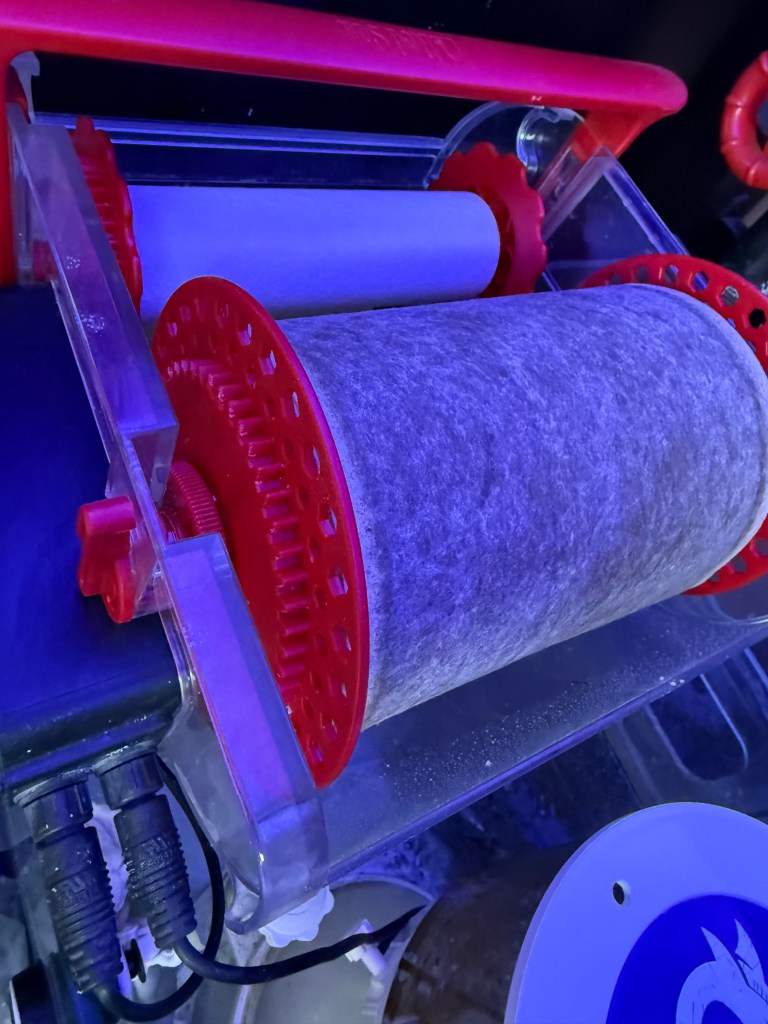
I believe that equipment choices are important in a system like this which embraces ecology based on rubble or substrate. A mechanical filter roller, like my Red Sea “Reef Mat 1200” is an invaluable tool for maintaining a healthy ecosystem, as is sufficient protein skimming.
And, at a maximum depth of about 3/4″, my rubble layer is simply too shallow to develop toxic, hypoxic, or completely anaerobic (oxygen-free) dead zones. Oxygen-rich water can still gently penetrate the matrix, ensuring that only beneficial, aerobic nitrification and heterotrophic consumption take place.
I also have a specific maintenance mindset when it comes to this aquarium.
With this approach, I feel that you do not need to vigorously vacuum or disturb the rubble during water changes. Instead, treat it much like your leaf litter layer in your botanical method aquariums: Use a turkey baster once every few weeks to gently blow a stream of water into the rubble. This will kick up the excess “fluff” into the water column for your corals to eat and your mechanical filtration to export, while leaving the core micro-fauna habitat perfectly intact.
And, to be perfectly honest, there typically isn’t that much “stuff” that gets kicked up during this process…
By creating a rubble zone in a thoughtfully-equipped, high energy reef aquarium, I believe that I have essentially engineered a semi-self-cleaning, lower-nutrient system that still retains some of the biological maturity and biodiversity reminiscent of a natural wild reef.
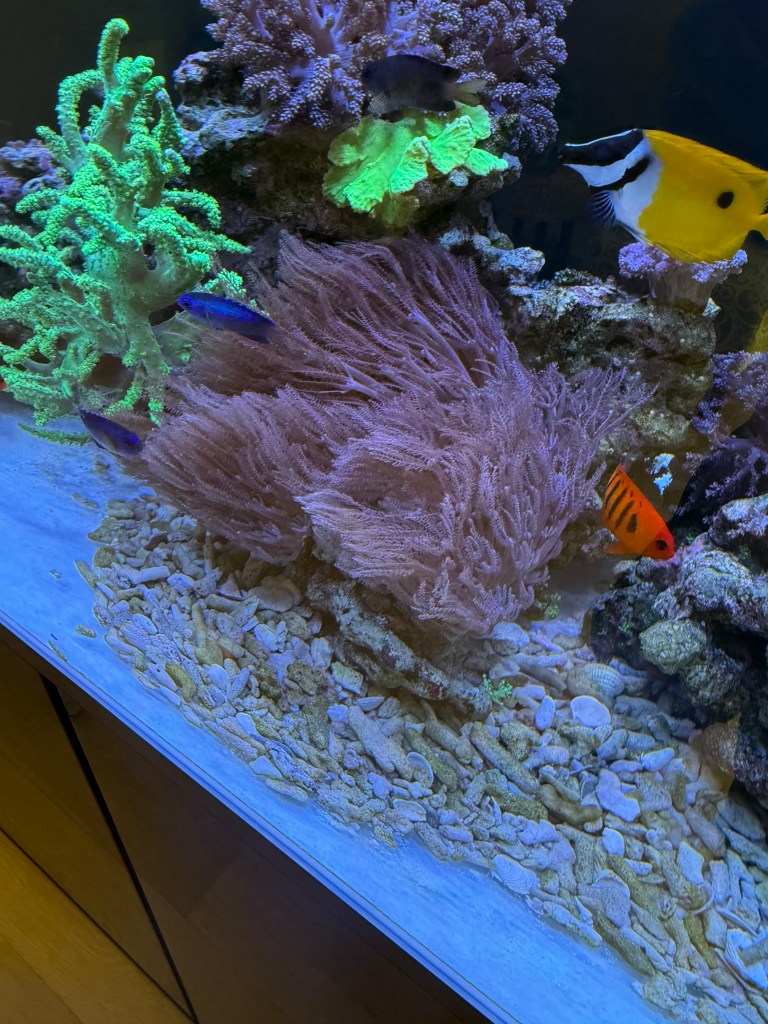
And what have I noticed over time? My rubble is visually clean despite some settling particulate. No nuisance algae or localized cyanobacteria, etc. Just a patina of “hard” algae on the rubble. No films or hair type algae have appeared at all.
IMHO, a clean substrate with no films or hair algae, paired with a “hard” patina on the rubble, indicates that my reef is in a state of biological equilibrium. The nutrients entering the system are being consumed and cycled efficiently at the microscopic level before opportunistic pests can ever catch a foothold.
And that “hard patina” of cover on the rubble reveals exactly why this setup is working so well:
That “patina” is likely a mix of crustose coralline algae (CCA), low-profile encrusting micro-algae, and dense bacterial matrices. In marine ecology, real estate is everything. Taking advantage of available space is the whole game. Because that hard patina has claimed 100% of the surface area on the rubble, it acts as a biological “shield.” Nuisance films like cyanobacteria or dinoflagellates, and filamentous pests like green hair algae, literally have nowhere to anchor or colonize.
This patina also acts as a localized “sponge”, snapping up the tiny amounts of inorganic nutrients released by the settling detritus right at the source, preventing them from leaching back out into the open water column.
I also believe that this “rubble zone” provides high efficiency heterotrophic consumption, borne out by the fact that particulate settles but the substrate remains visually clean. This means that my benthic “clean-up crew”—specifically micro-fauna (copepods and amphipods) and “micro-brittle stars” and snails—is properly matched to the nutrient input. They are processing the organic material rapidly enough that it doesn’t really have the chance to accumulate to a volume that would trigger a localized hypoxic zone or an algae bloom.
Much like the aquarium itself, my maintenance is hardly sophisticated or even innovative. When a reef tank is running this smoothly, I’ve always felt that the best maintenance strategy is what I like to call “radical non-intervention.”
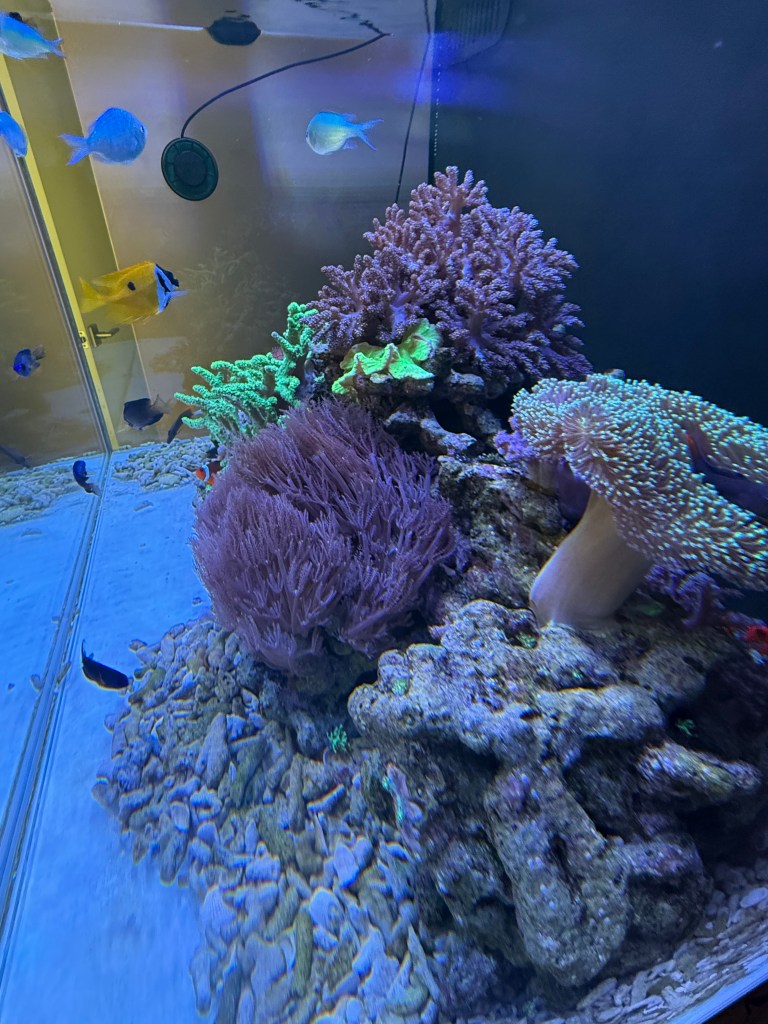
Less is more, IMHO, so I really try to minimize physical disruptions to the ecosystem. Actions like stirring up or flipping that rubble will bury the living patina, disrupt the cryptic sponges underneath, and expose uncolonized, raw surface area. That raw space is exactly what opportunistic nuisance algae look for to start a bloom. Hence, I don’t use a “gravel vac” in my system! I siphon gently from slightly above the rubble.
My system has essentially become a more or less self-sustaining “loop.” The filter roller catches the heavy “industrial waste”, the skimmer removes dissolved organics, and the rubble zone handles the “fine-tuning.” By simply exchanging water as opposed to aggressive siphoning from the rubble, I believe that I have managed to balance two things that are typically difficult to pair in reef-keeping: A visually clean display and a highly complex, mature biological ecosystem.
Now, before I give myself a ton of accolades, I hardly did this myself. In addition to the filtration and maintenance approach, I utilize biological means to keep this system humming along. That means fishes! Within my fish collection in this tank, I have a carefully selected group of ridiculously common, but useful fishes which really do the hard work here:
A spunky little Six-Line Wrasse (Pseudocheilinus hexataenia) acts as a “population regulator” in the rubble zone. He spends almost his entire day weaving through the intricate gaps of the 3/4″ rubble layer, systematically hunting down larger amphipods, copepods, and flatworms. By keeping the micro-crustacean population actively “grazed”, the wrasse forces the pod population to reproduce rapidly, ensuring a constantly turning, young, and active “micro-cleanup crew” deeper inside the substrate matrix where the fish can’t reach.
My Tomini Tang (Ctenochaetus tominiensis) acts as the film and detritus “vacuum.” As a member of the Ctenochaetus genus (Bristletooth Tangs), the Tomini possesses specialized, comb-like teeth perfectly adapted for a rubble zone. Instead of nipping at large macro-algae, the Tomini hovers over the substrate and rocks, using its mouth to vacuum up microscopic film algae, dinoflagellates, and—critically—organic detritus. It is actively consuming some of the very particulate matter that settles into the rubble, digesting the organic energy, and preventing any build-up from turning into an unsightly slime.
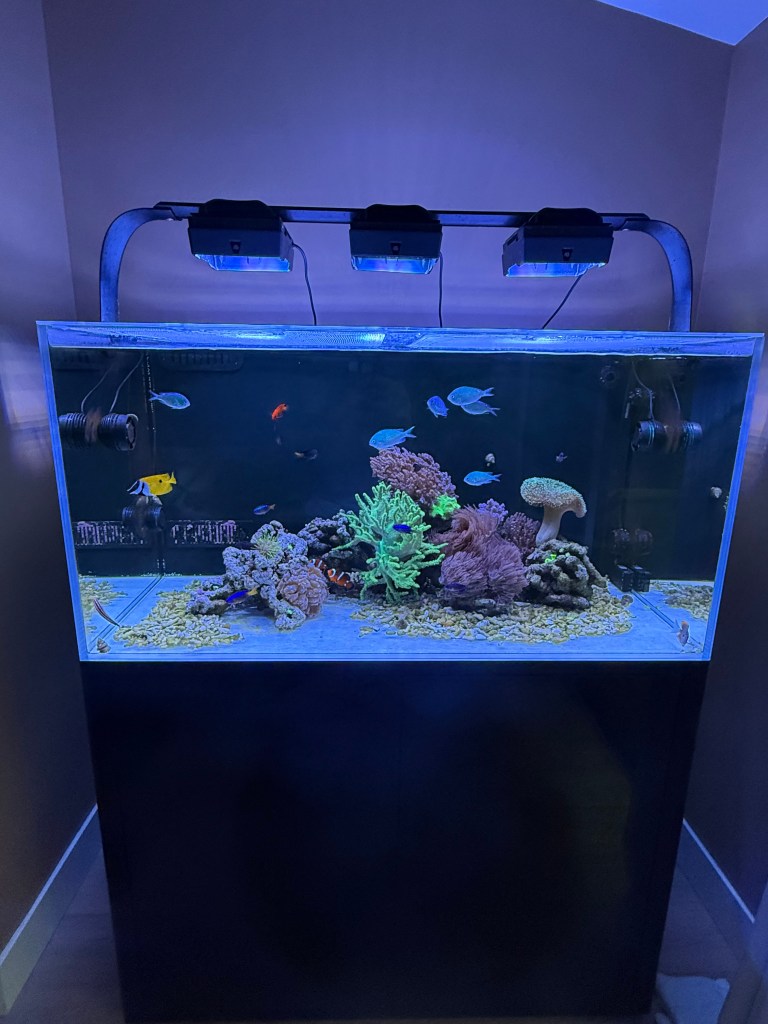
My Flame Angel (Centropyge loriculus) acts like the “micro grazer” in this system. It constantly nips and pecks at the hard surfaces of the rubble. It targets tiny, newly settled filamentous algae spores before they can even grow long enough to be visible to the naked eye. I believe that this continuous “pecking” behavior is a major reason why hair algae can never establish a foothold on my substrate.
A Foxface Lo (Siganus unimaculatus) acts as the “heavy duty” gazer in my aquarium, and in any algae battle, provides the ultimate “insurance policy” for my hardscape. Possessing a unique, rabbit-like snout, the Foxface can reach deep into the crevices of the rubble bed. Siganus species are famous for eating the tough, unpalatable nuisance algaes that other herbivores reject (like bubble algae or thick turf algae).
The mechanical filtration in this system handles the water column, but this specific fish community handles the surfaces. The Tomini and Flame Angel keep the rubble completely polished of microalgae films, the Foxface prevents macro pest algae from anchoring, and the Wrasse thrives on the micro-fauna fueled by the settling particulate.
Fish selection in a system like mine is of paramount importance in creating a healthy, long-term-sustainable “closed-loop ecosystem.” I’ve always felt that the most important fishes in a reef tank are the ones who “earn their keep” by providing valuable grazing services to the system.
Over the long term, I believe that this aquarium will continue to thrive, because of the way it was set up. The long-term trajectory for a soft coral aquarium managed with this exact biological philosophy is incredibly bright. Soft corals (Octocorallia)—such as Anthelia, Toadstool Leathers, Capnella, Sinularia, and Ricordea—absolutely thrive in environments that lean slightly nutrient-rich, biodiverse, and structurally stable.
Because my mechanical filtration keeps the water clean while my “players” and rubble bed manage the waste at the surface level, I’ve managed to accidentally engineer what I feel is an ideal soft-coral/LPS system.
Soft corals do not just rely on light; they are aggressive consumers of organic particulate, dissolved amino acids, and bacterioplankton. The tiny amounts of detritus settling in my rubble are continuously broken down by the copepods and Tomini Tang, releasing a steady stream of microscopic organic nutrients right at the substrate level.
Soft corals will detect this localized nutrient source and begin to actively crawl off the main rockwork to form a “living carpet” directly on the rubble bed over time. I’ve already seen some encrusting over the individual pieces of rubble, cementing them together into an alluring, seamless, animated floor.
And speaking of coral, I do have a rather busy mix of common, fast-growing corals, each presenting their own challenges within mixed reef, yet each working well in this setup.
Capnella (Kenya Tree) and Sinularia (Cabbage/Finger Leathers) love a heavy, continuous supply of dissolved organic matter. They are going to grow massive trunks. As I’ve previously discussed, Capnella naturally drops “branches” or buds. A lot of people consider this coral a metaphorical “weed.” I’ve already had to remove quite a bit of it! In a bare or heavily vacuumed tank, these often fail to establish themselves. In my tank, they typically drift down, lodge perfectly into the rubble matrix, anchor within days, and start new colonies. This makes removal and/or pruning essential, but very simple!
I also keep one of the classic “beginner” corals- Anthelia. It’s is a stunning coral, but it is an absolute “space invader” if left unchecked. Although I have it positioned on the reef “proper”, it loves the settling particulate in the rubble zone and eagerly tries to carpet the entire floor. I use the rubble to my advantage here: If the Anthelia grows over a patch of rubble, I simply lift those individual pieces of rock out of the tank to easily frag and control its spread.
While my softies consume dissolved nutrients, my Favia, Bubble, and Hammer corals are active nocturnal predators. At night, when my Six-Line Wrasse is asleep, the rubble bed often releases a small, but noticeable cloud of copepods and larvae into the water column. The Bubble and Hammer corals will extend long, sticky sweeper tentacles to capture this live micro-fauna. This consistent, natural feeding is why my LPS will show exceptional tissue expansion and rapid skeletal growth, even without target-feeding commercial foods.
My fave coral in this tank is Stereonephthya (“Koji Wada” Pink Nepthea) – a true crown jewel. Unlike standard green Nepthea (which is usually a Litophyton or Sinularia, btw), true Stereonephthya relies more heavily on catching microscopic organic particulate rather than just photosynthesis.
Many reefers struggle with this specific coral because their tanks are simply too sterile, causing the coral to slowly starve and wither. My setup provides the exact environment it needs: high water movement to keep its polyps open, paired with the occasional fine particulate kicked up from the rubble zone.
Stereonephthya species have unique skeletal structures composed of dense calcite “needles” (sclerites) that require strong, continuous water movement to keep their heavy branching stalks upright and expanded. Without high current, they tend to deflate, collapse, and lose their vibrant color.
While Stereonephthya is more highly dependent on catching physical food, than other soft corals it does still contain symbiotic zooxanthellae for photosynthesis. By keeping it high on the rockwork, it receives both the more intense light it needs for energy and the rapid current required to flush away its waste and bring it fresh organic matter.
I can go on and on about my remarkably “pedestrian” coral collection, because each one was selected intentionally not only because I found it attractive, but because it is well suited to the type of ecosystem I am trying to foster within the tank, but I think that you get the picture here: I have intentionally selected animals that perfectly translate the energy of my filtration and fish community into lush, colorful growth.
One of the classic long-term challenges of a soft coral/LPS mixed reef like mine is allelopathy. Soft corals (especially Leathers and Sinularia) release chemical toxins (terpenes) into the water to stunt the growth of competing corals. Because I have excellent mechanical filtration, lots of water movement, and a high-performance protein skimmer, these organic chemical compounds are continuously removed from the water column before they can reach concerning concentrations. This ensures that a diverse blend of soft corals and LPS corals can grow massive and tightly pack the tank without chemically choking each other out.
Over the longer term, my experience with tanks operated in this manner has been very good. As the system matures, its biological resilience becomes nearly unbreakable. This is far different from the more “traditional”, almost sterile, postmodern “SPS” tanks that I’ve played with in the past.
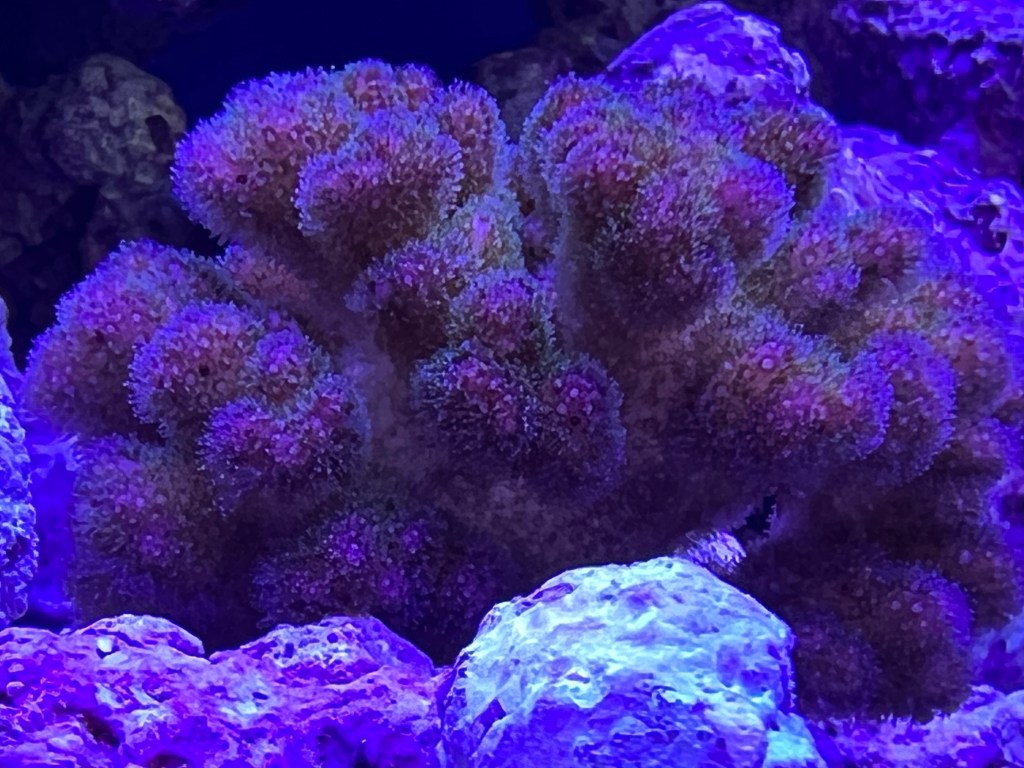
In such sterile, low-nutrient reef tanks, a sudden shift can trigger outbreaks of Dinoflagellates or Cyanobacteria. In my tank, the established “hard patina” on the rubble, paired with a population of copepods, means there is minimal ecological vulnerability. This is significant. It can effectively deal with unexpected nutrient events rather easily. If a fish passes away unnoticed or an accidental overfeeding occurs while I’m away, the massive heterotrophic micro-fauna “engine” will absorb the nutrient spike almost instantly.
The real “problem” I will face in the long run with this aquarium is the success of the corals: Space management is a challenge! Soft corals are notoriously fast growers once they find their “sweet spot.” My long-term maintenance has already shifted from water chemistry management to “gardening.” I occasionally need to reach in with a pair of bone cutters or a razor blade to peel back overgrowth from the rubble to keep the different coral colonies from entirely engulfing one another.
By embracing some very basic, yet often dismissed ideas, I feel that my system is built to age gracefully into a lush, low-maintenance, thriving aquarium.
Let’s get back to the primary theory behind my rubble zone and lack of concern about that old “boogyman”, detritus. IMHO, the widespread fear of detritus in reef-keeping is a classic case of the right villain in the wrong context.
Let me say it again: Detritus in and of itself is not inherently harmful. In fact, in a healthy marine ecosystem, it is a vital food source. The negative view exists because, in conventional, improperly-managed aquariums, detritus becomes the catalyst for catastrophic water quality failures.
The negative stigma persists due to a mix of historical context, chemistry risks, and specific setup vulnerabilities:
Detritus is typically composed of uneaten food, fish feces, dead bacterial biofilms, and decaying organic matter. In a closed aquarium, if it is allowed to accumulate unchecked, heterotrophic bacteria will mineralize it.
In a tank lacking high-turnover mechanical filtration (like a filter roller) or a robust biological consumer base (like copepods and the Tomini tang, etc.), these nutrients can eventually build up to significant levels. This often triggers massive outbreaks of hair algae, dinoflagellates, or smothering blankets of cyanobacteria.
Hypoxic “dead zones” are another reason for this fear. Detritus is only safe if it remains oxygenated. In reef tanks with deep, stagnant sand beds or poor water flow, detritus settles into thick, undisturbed layers. As bacteria consume this waste, they deplete all the local oxygen. The area becomes anoxic (oxygen-free).
When this happens, anaerobic bacteria take over and produce hydrogen sulfide, a highly toxic gas that smells like rotten eggs. If a deep, dirty sand bed is suddenly stirred up, it can instantly release this gas and, in theory, “crash” a tank. A shallow rubble layer completely eliminates this risk because oxygen-rich water penetrates it easily.
I think that another contributor to the “war on detritus” is the result of some “historical trauma” from the “Berlin Method” era. In the 1990s and 2000s, reef-keeping technology was primitive compared to today. Hobbyists relied on basic protein skimmers and live rock, without advanced tools like automatic filter rollers or high-tech wavemakers that randomize flow.
Because we couldn’t export waste efficiently, our only defense against excess nutrient accumulations, algal nightmares, and “crashing” was to keep the tank completely sterile. Aquarists vacuumed every grain of sand, blew off rocks daily, and championed “bare-bottom” tanks. This generated a generational, textbook dogma: Detritus equals failure.
And there is that common aquarium mindset thing… Aesthtics above almost everything else…Yup…Many reefers treat their aquariums like a living piece of clean, modern furniture rather than a slice of Nature. To the human eye, brown stuff on the substrate looks “dirty.” This aesthetic preference is often mistaken for a biological requirement. In reality, a natural wild reef matrix is covered in sediment, marine snow, and organic detritus that fuels the surrounding corals and micro-fauna.
Detritus is a problem when it sits stagnant, rots in anoxic zones, and overwhelms the tank’s filtration capacity.
In my setup, detritus is harmless because it is dynamic. Significant water movement keeps it suspended as coral food, and a thin rubble layer ensures it stays rich in oxygen, specialized fish and pods eat it, and equipment like the filter roller exports the excess before it can rot. We can all benefit from understanding the difference between a “dirty” tank and a biodiverse ecosystem. It just requires a little “mental shift.”
Once you can get over this longstanding fear of detritus, you’ll have made a profound and incredibly rewarding “course correction.”
Shifting from a rigid, bare-bottom plan to a thin rubble substrate is the exact moment you choose to build a living ecosystem rather than a sterile holding tank. And your instinct would be entirely correct: Pure bare-bottom systems can absolutely feel like a sterile clinical laboratory or a “science experiment.” They prioritize hyper-sterile control over the beautiful, complex chaos of wild Nature.
By stepping away from the “sterility” mindset, you allow your aquarium to develop “biological character.” Damn, this sounds familiar, doesn’t it?
A bare-bottom tank forces you to act as the primary filter, requiring constant manual siphoning to keep it from looking “neglected.” A rubble system, by contrast, relies on a partnership with Nature. You provide the physical architecture (the rubble), the mechanical safety nets (the filter roller and skimmer), and the specialized labor (fishes like the Six-Line Wrasse, Tomini, Flame Angel, and Foxface). Nature happily supplies the rest, building a self-regulating little ecosystem that keeps itself visually clean.
The reward is an aquarium that looks and sort of functions a lot like a cross-section of a wild, shallow reef flat. Watching a Tomini Tang graze on a pebble of rubble or seeing Stereonephthya catch suspended particulate in the current is infinitely more captivating to me than watching detritus slide across a bare pane of glass!
Now, as I’ve mentioned before, my system is sort of a “hybrid” of bare bottom and rubble, and it’s not covered 100%. By intentionally leaving exposed bare spots alongside pockets of thin rubble, I believe that I have captured the high-performance benefits ( being able to employ wicked flow) of a bare-bottom tank while retaining the biological maturity and visual “texture” of a wild reef.
In a 100% covered substrate, detritus can get trapped evenly across the entire floor. In my “hybrid” setup, the bare glass patches act as low-friction “highways.” Significant water movement will naturally sweep loose particulate off the smooth glass and channel it directly toward the mechanical filter roller, or gently deposit it right into the rubble pockets. This keeps the bare areas spotless without any manual siphoning.
Because the rubble is concentrated in some areas, rather than spread thin everywhere, it acts as a centralized “magnet” for “clean-up crew” and fish. In my tank, the Tomini Tang and Flame Angel don’t have to wander aimlessly; they know exactly where the high-yield grazing pastures are. Watching them systematically work a distinct mound of rubble, turning pebbles over and pecking at the hard patina, is highly rewarding to observe.
Keeping the zone mostly clear of carpeting corals preserves the open-space aesthetic. Leaving it open means that if you have a loose Ricordea mushroom, frog of Capnella, or a small zoanthid frag, you can simply drop it directly into a rubble pocket. It will naturally attach to a single pebble, allowing you to move it around as you wish, rather than letting it permanently encrust your main rockwork.
Although aesthetically far from “biotopically natural”, my layout superficially mirrors a shallow reef fringe or patch reef habitat. In the wild, reefs are rarely uniform fields of sand or solid rock. They are dynamic transition zones where heavy currents sweep the solid limestone floor bare, leaving deposits of coral rubble, broken shells, and small stones gathered in the depressions and low-flow eddies.
By allowing your tank to settle into this “fusion” layout, you create a display that is incredibly low-maintenance, biologically resilient, and optimized for the exact natural behaviors of your fish. It is proof that you don’t have to follow rigid hobby dogmas to achieve a “masterclass” in reef ecology!
When you embrace a more ecological approach, you don’t just build a beautiful home for your corals; you create a space where you get to witness authentic ecological succession every single day.
Ecological succession in a reef aquarium is that predictable, step-by-step evolution of the tank’s biological community over time, where different species of bacteria, algae, and micro-organisms dominate the ecosystem in successive waves until an “equilibrium” is reached- a stable, mature ecosystem where beneficial micro-fauna (bacteria, copepods, worms) and corals can outcompete nuisance algae for space and nutrients.
And a lot can be learned about the phases and succession which reef aquariums go through as they head towards an equilibrium. A series of “drivers” has an impact on this succession, and each has an impact on the ecosystem. For example, nutrient availability drives shifts in nitrates, phosphates, and silicates- each of which dictate which algae or bacteria “wave” comes next.
Then there is physical competition for space, in which organisms literally fight for real estate. For example, coralline algae locks down rock work so pest algae cannot root. Another key driver of succession is biodiversity. By introducing a diverse group of live micro-fauna (like copepods), you accelerate progression past the “ugly” phases of the tank’s early days.
I think that the idea of “opportunism” is key in creating an ecological succession in reef aquairums. In recent years, the use of dry rock and the absence of sand provides a literal “blank canvas” for life, meaning the tank has to build its micro-ecosystem entirely from scratch, often extending what reefers call the “ugly phase” for many months.
To move a reef tank from sterile dry rock to a lush, diverse ecosystem, you have to transition from managing chemistry to managing biology. Instead of relying solely on filters to strip nutrients out, you must intentionally seed the aquarium with life so that beneficial organisms consume waste and outcompete undesirable organisms. It all makes sense. You must introduce these organisms manually to build a resilient food web. My rubble zone was no different…it needed to “recruit” life forms to do the work.
The reef is giving me more to observe, not necessarily more to fix
A system utilizing an intentional rubble margin represents a paradigm shift in modern reef keeping, serving as a living masterclass in ecological engineering that shatters several long-held hobby myths. It elegantly demonstrates that true stability is born from biological complexity, not sterile control.
A rubble margin pushes the boundaries by trading mechanical intervention for biological resilience. It acts as a specialized incubator for planktonic life, pumping a continuous stream of natural, live food into the water column. This shifts the aquarium from a fragile, chemically dependent closed system into a self-sustaining trophic web. It proves that stability isn’t achieved by stripping life away, but by cultivating it in excess.
It moves the hobby away from the outdated notion of the aquarium as a chemical reactor, proving instead that a reef tank thrives best when treated as a wild, interconnected, and self-regulating living ecosystem.
Stay Curious. Stay thoughtful. Stay skeptical….
And Stay Wet.
Scott Fellman


Leave a Reply