
It’s long been known in the aquarium hobby that various natural materials can be used successfully to manipulate the environmental conditions in our tanks. Everything from rocks to wood to…well, botanicals- can impact water chemistry to some extent.
Why do we want to manipulate the environmental conditions in our tanks? Of course, it’s to create optimum conditions for our fishes. And the art of environmental manipulation starts with the most basic of parameters, pH.
Probably the single most important measurable environmental factor which we can manipulate using botanicals is pH. As you likely know, pH is a measurement of how acidic or alkaline your aquarium water is. It tells us how much hydrogen-ion activity is present in the water. The pH scale runs from 0 to 14., with a reading of below 7 being acidic, and above 7 being alkaline. The pH is not a measure of how much acid or alkaline material your water contains. It’s a measurement of the water’s current acid-base condition.
Now, the idea of lowering pH with botanical materials is not at all a new concept. Hobbyists have incorporated peat moss to help lower pH…in water with very low general hardness, for generations. Can other botanical materials lower pH in such water?
A question I get a lot around here is about the “water-softening capability of botanicals”, to which I respond almost reflexively, “There is none.”
Botanicals will not help you soften hard water.
I believe that anyone who tells you this categorically simply does not have the correct facts. Ask them to explain how this process occurs. I’d like to know, ’cause I’ve found no evidence of this!
To help make sense of it all, we need to all re-familiarize ourselves with the concept of carbonate hardness.
Now, before we get too far, I’ll dispense with the necessary disclosure that my knowledge of water chemistry is quite basic, and I’m not asserting that anything discussed here is the “last word” on the subject. It’s an explanation of some facts and ideas based on my limited college chemistry and understanding of these things from being a “practicing aquarist.”
At a certain point in discussion about this stuff with really knowledgable people, my eyes start to glaze over…There are plenty of you out here who could “school me” on this stuff, and I encourage your input on these more esoteric, yet very important aspects of the hobby. We will all benefit.
Ahh, back to that bit on carbonate hardness…
This is one of those terms, along with “general hardness” (GH), that we see bandied about all over the internet and in books and hobby discussions…It’s super-confusing to me, as there are multiple ways of determining the hardness of water (in general, but for us it’s for aquarium purposes).
“Hardness”, is essentially a measure of the total concentration of specific minerals dissolved in the water, including calcium and magnesium, as well as other minerals like potassium and sodium. It is said that the concentration of these minerals in a given quantity of water contribute to the “hardness.”
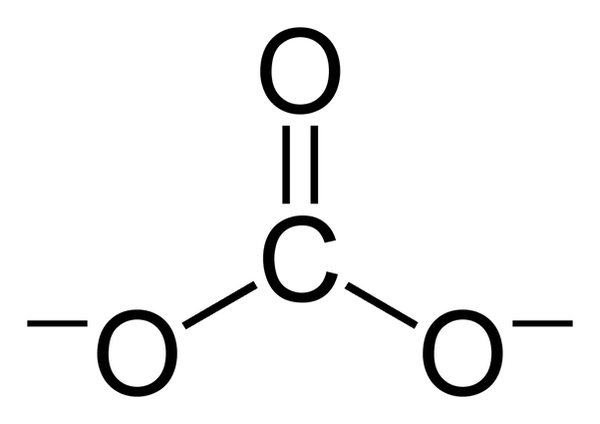
In its most simple terms, KH helps us understand how resistant the water is to changes in pH.
Oh, and what exactly is “soft water”, anyways? In simple terms, soft water is water which has a relatively low concentration of calcium carbonate and other ions.
There are a few ways of measuring this.
As a reef hobbyist, I was long ago indoctrinated to utilize KH (from the german word “karbonate”) to measure the carbonate and bicarbonate ions in a given aquatics system, which function as “buffers”, and keep the pH from dropping. And KH is a component of GH, to make matters more confusing (KH can never be higher than the “general hardness” of the water because of this fact). And a lot of test kits will measure both…as if a guy like myself needs more confusion in his life…
So,
Hobbyists really seem to want an inexpensive, “natural”, or simple way too soften their water. Using some botanical-based stuff just seems like it would be so right, doesn’t?
Yeah, it seems that way.
And there actually IS a possibility here, impractical though it may be…Our old friend and nemesis, the “OG” botanical material used in aquariums- peat moss!
I receive a ton of questions about peat moss…mainly, what it can do to manipulate environmental conditions- pH and hardness- in aquariums. There is a lot discussed about peat’s ability to “condition” aquarium water. And, although some of the facts might a bit convoluted, there is some validity to this, believe it or not!
Yes, interestingly, it is known that our old and controversial friend, peat moss, has actually demonstrated some capacity to conduct ion exchange ( a process in which which unwanted dissolved ions in water are exchanged for other ions with a similar charge.) Ions are atoms or molecules containing a total number of electrons that are not equal to the total number of protons. (I know, if you’re like me, that made your head start spinning almost instantaneously.😳
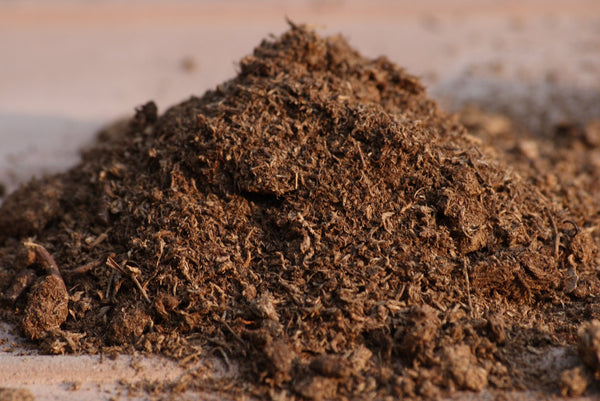
Think of it this way: Peat softens water by exchanging humic acids for magnesium and calcium.
It’s actually true.
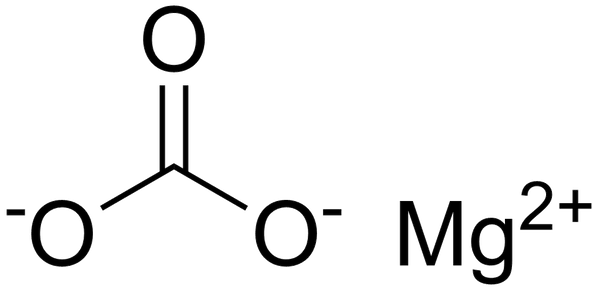
Peat effectively binds calcium and magnesium ions, while simultaneously releasing tannic and other acids into the water. These acids “work” the bicarbonates in the water, reducing the carbonate hardness and pH to some extent.
And it will visually tint the water as well, as we all know!
Interesting, right?
However, you can’t just drop some peat into your tank and expect “Instant Amazon.” This process requires “active peat filtration” (the water passing over over the peat itself) to make this happen. Of course, you could place some in the tank and just wait for the process to occur “passively”- but it will take much, much longer.
Being the curious, and occasionally reckless fish geek that I am, I played around with this idea once, to try to see if this does, indeed work.
And, well, it does sort of work.
However, it took a LOT of this stuff to do the job with this “dump and wait” technique.
How much?
Well, a shitload, if you must know. (and I”m being technically accurate, too.)
Yeah, it took a shitload of peat, and a fair amount of time to reduce my Los Angeles tap water, with hardness exceeding ~240ppm and ph of 8.4 down to “workable parameters” of 6.4ph and a hardness level of around 40ppm. How much are we talking? It took a full 2-cubic-foot bag of peat, added to a 30-gallon plastic trash can, filled with with my tap water, over 8 days in order to achieve these parameters.
So, yeah. The idea does work. Not exactly efficiently, but it does work.
Based on my experience, you CAN soften water with peat to some extent if you’re dedicated to it, have time, the means to do it, and a willingness and ability to test your water. I’ve long ago lost that thrill that some people get from these types of “money-saving DIY!” methods. To me, I simply decided to forgo other indulgences, save my money for a while, and invest in the RO/DI unit, and call it a day.
Yeah, an RO/DI unit isn’t quite as romantic as dumping some peat into a barrel of water, but it’s a helluva a lot more efficient.
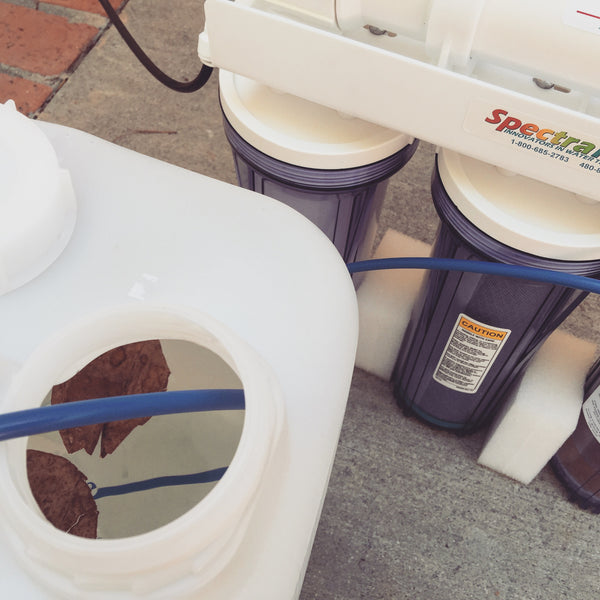
My SpectraPure 4 stage RO/DI unit cranks out 90+ gallons of zero TDS, zero carbonate hardness water in a day. Now, one could argue that the rejection rate of RO/DI makes it less efficient- but hell, I water my garden with the reject water! And yeah, a unit like mine retails for around $300 plus USD, a lot more than a 2-cubic foot bag of peat, but the long-term, consistent efficiency, ecological “friendliness”, and reliability is pretty obvious to me.
All in all, for maximum efficiency, consistency, and control, just invest in an RO/DI unit and you’ll create soft water with little effort and no mess.
Yeah, it IS a bit pricy to purchase an RO/DI unit initially, but well worth it, IMHO, if your goal is to create soft, malleable water to use in your aquariums.
So, this long dissertation on peat was a roundabout way of discussing how you could accomplish some water parameter manipulation with natural materials. It’s entirely possible. It just requires some realistic expectations, research, effort, testing, and work.
There are some botanical products which you could incorporate fairly reliably to lower pH in water with minimal carbonate hardness, like…cones.
Cones, such as Alder and others, have been used successfully for quite a few years by shrimp and fish breeders to lower the pH in their aquaria, as well as to stimulate breeding. Some claim that they provide some antifungal properties. I’ve seen claims of higher hatch rates for certain fish eggs when utilizing cones as “water conditioners” in spawning aquariums.
Is there any merit to these claims? Well, there seems to be at least some anecdotal evidence that the cones (well, really- the substances that cones release) may offer some benefits.
More about this later.
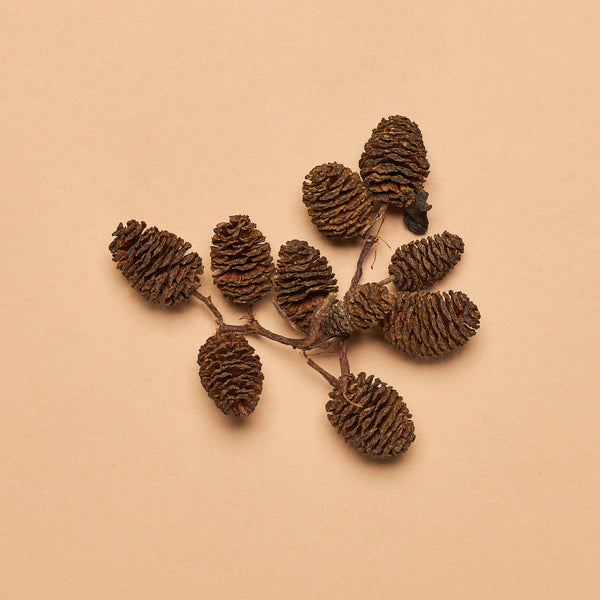
What, exactly, is a “cone?”
To many of us “city folks”, cones are those odd-looking things that fall off big old Pine trees in yards and parks, are cool to throw into the fire while camping (’cause they “crackle!”), and to throw at each other when you’re a kid! Well, to science, a cone (known to botanists as a strobilus) is the organ on a plant that contains the reproductive structures.
Cones come in male and female varieties, are well-studied by scientists, and have definitive characteristics that make identifying each species. sex, and viability possible, but I won’t bore you with those details right now!
So, as far as cones are concerned, as aquarists, we like them because they are known to contain those tannins and humic acids. And, as you know by now, I have a more than causal interest in stuff that “tints” the aquarium water and contributes to a more dynamic physical and aesthetic aquarium environment- and cones can make some important contributions.
Now, I must be honest- I have no desire whatsoever to have them in my display tank. They just look out of place, IMHO. They do work for imparting tannins into water- a more utilitarian role…
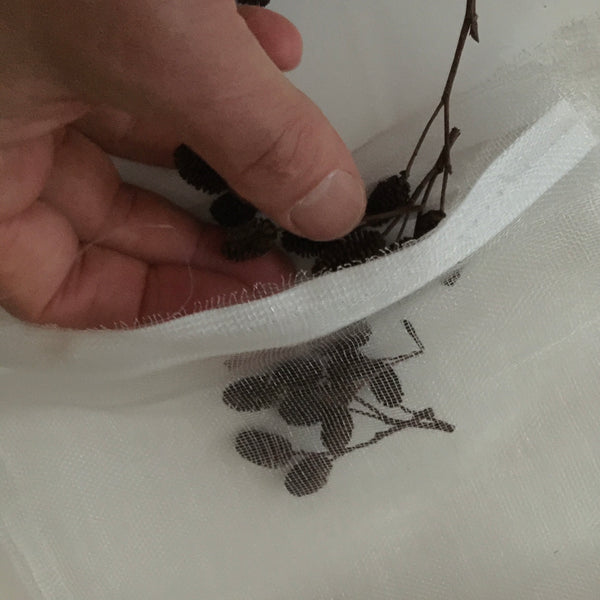
First off, the varieties that we aquarists will typically use are Alder, Birch, and Casauarina. These have been used for aquariums for some time, each has their own “tint capability” and therefore, utility for our purposes!
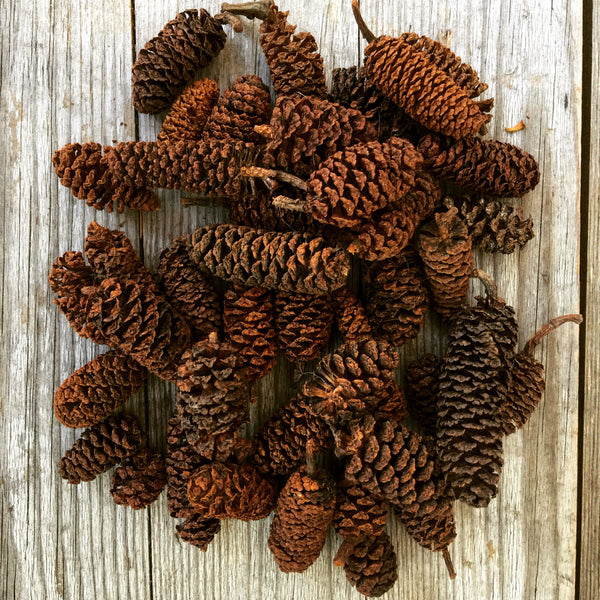
Alder cones are probably the “alpha dogs” of the “cone-using world”, and you’ll find aquarists worldwide playing with them in their aquariums- they seem to be very popular. Hailing from the genus Alnus, there quite a few species found worldwide.
The varieties most commonly used in aquaria come from Northern Europe and The Pacific Northwest in North America. Alder trees are also known to have bark rich in tannins, so it’s no stretch to conclude that the woody little cones also contain some tannins as well!
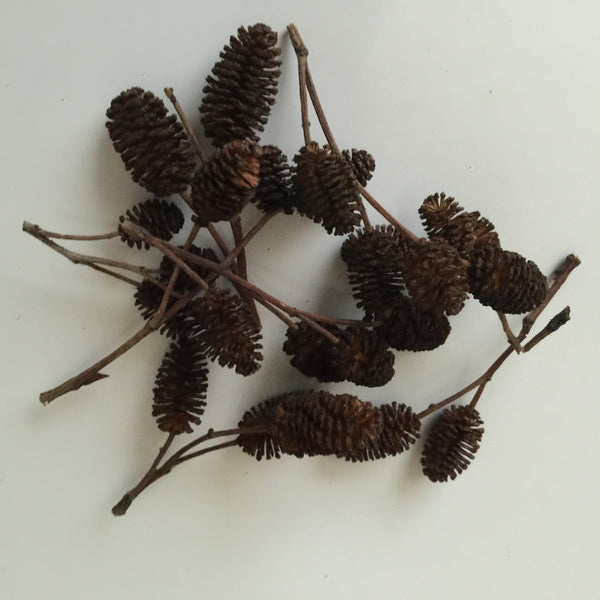
Now, Alder cones are small- typically only a few centimeters in length, varying by age and species- but they are powerful little “tinters!’ It only takes a small quantity of these guys, steeped in water, to produce some decent color. Now, of course, color is simply an aesthetic “measure”, and has absolutely no correlation with the pH of the water. Please don’t forget that concept!
However, in terms of pH manipulation, there are some possibilities here.
A study done a few years back by a Swedish hobbyist using from one to six cones in a glass containing about 10 ounces of “reasonably soft” tap water (not exactly certain what that means, though), with a starting ph of around 8.12, was able to affect a drop to 6.74 with one cone after about two weeks, 4.79 with 2 cones after two weeks, and an amazing 3.84 with 6 cones after the same time period! The biggest part of the drop in pH occurred in the first 12 hours after immersion of the cones.
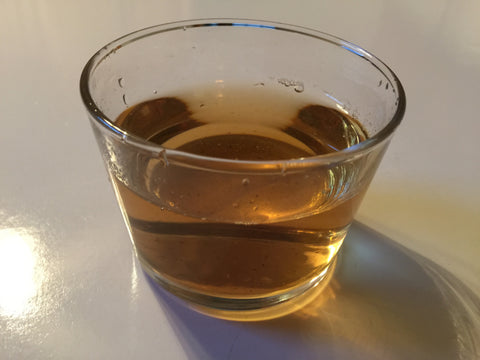
This same enthusiast extrapolated that it would take about 330 cones to lower the ph of 100 liters of tap water from 8.12 to a respectable 6.74 in about 2 weeks, with nicely “tinted” water resembling, in the hobbyist’s own charming words, “a cup of tea”– music to our ears, of course, yet not exactly a scientific recipe.
A 2014 study published in Science of the Total Environment examined the decomposition of black alder (Alnus glutinosa) leaves. It found that the effect on water chemistry depended substantially on decomposition conditions.
Under oxygen-limited conditions, decomposing alder leaves contributed to acidification, with water reaching approximately pH 4.9. Under aerobic conditions, however, decomposition was associated with alkalinization, with pH reaching approximately 8.4.
That’s a particularly interesting finding. It demonstrates that the chemical effects of decomposing botanical material are not necessarily fixed properties of the plant itself. They can depend on the microbial processes occurring during decomposition.
It is not, however, direct proof that alder cones will produce the same effect.
So, suffice it to say, these little cones do pack a considerable wallop! Of course, no hobbyist I know is going to toss 300 alder cones in a 25 gallon aquarium to try to drop the pH by 1.38, but this exercise demonstrates the apparent “capabilities” of these innocuous-appearing little cones, and demonstrates the need to treat them with some respect and start very slowly when using them in our aquaria! Because, well- damn– we are dealing with natural materials and to try to ascribe them precisely-delineated capabilities is really speculative.
The other cone commonly used by fish geeks is the Birch cone (Betula sp.), which has similar, although not quite as pronounced an effect on pH as Alder, in my rudimentary recreation of that other guy’s slightly more sophisticated tests! Birch cones are a bit larger and more elongated, which apparently doesn’t have much correlation with their “capabilities” as a “pH reducer” in the aquarium, but it’s an easy identifier. Interestingly, birch extracts (from the wood, mainly) are used in other industrial capacities, such as treating leather and in flavorings.
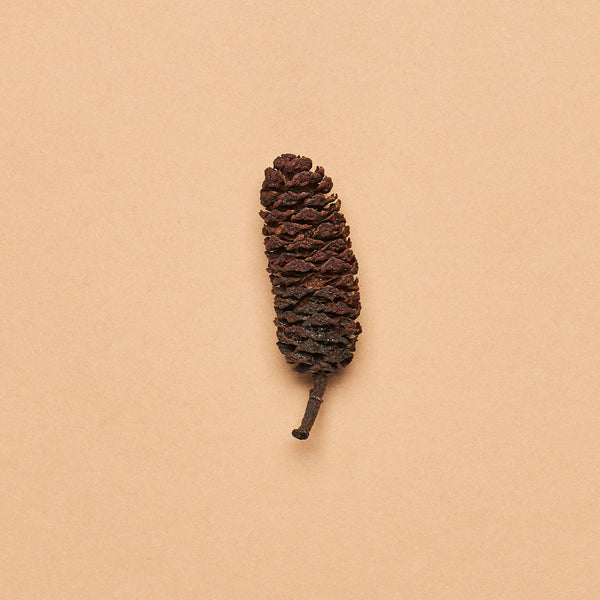
A given quantity of Birch cones do seem to render a slightly darker visual tint to the water than Alder, in myopinion, but as we all know from me shaming you, tint is NOT necessarily indicative of the pH of water. And remember, very hard water is unlikely to have the pH substantially influenced by a reasonable amount of any cones or botanicals. Softer water (like RO/DI), with little to no general hardness, is far more susceptible (malleable) to pH manipulation via botanicals, in our experience.
In order to round out the available collection of cones, hobbyists have sourced the rather attractive Casuaurina Cone (Allocasuarina and Alnus sp.), which come from the beautiful evergreen trees found throughout Australia, Oceana, and as non-native introductions into the Indian sub-continent.
These cones are somewhat lesser known in the hobby in Europe and North America, but have apparently been used in Asia for a number of years in the same capacity as Alder has in Europe. These are handsome, “fat-looking” cones that actually look kind of different to me than their European/North American brethren.
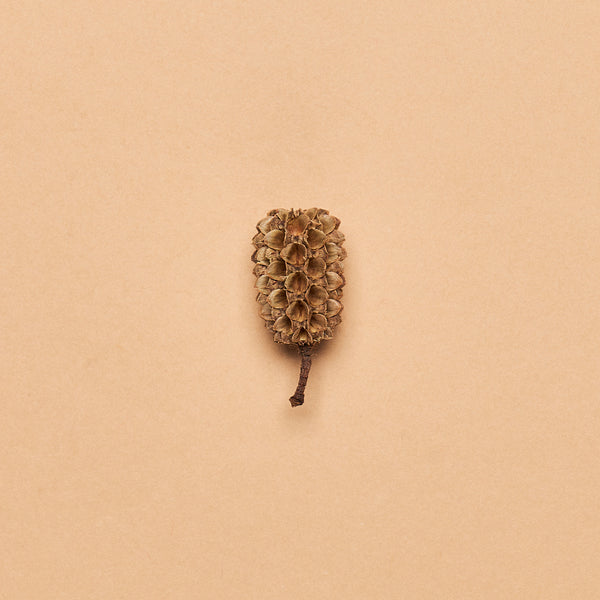
CONFESSION TIME: As I mentioned earlier, and as much as I love the idea of using cones in aquariums, I must admit that, in my opinion, they hardly look “tropical.” They look awkward…I feel that they are best relegated to the utilitarian role of “media”, used to influence the color of the water, to cultivate biofilms and fungal growths, and to a lesser extent, to lower the pH of the aquarium water in filters or media bags away from the display.
I just think they look- well, how do I sound politically correct? Um, shitty- in aquariums. To me, nothing screams “NOT FUCKING TROPICAL” more than a bunch of Alder cones in the aquarium proper.
Okay, well, that’s just me.
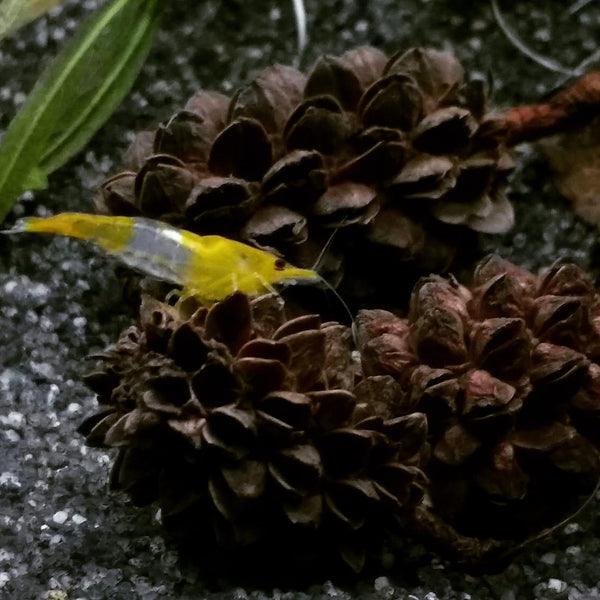
A lot of hobbyists- especially shrimp enthusiasts, don’t seem to be bothered by the look of cones in their displays. It’s about the utility. And, if you’re going to keep cones in your display aquarium, the Casuarina are the best candidates for the job, IMHO. Their ability to reduce pH has not been evaluated, to my knowledge. Nonetheless, I would operate on the assumption that they may impact water chemistry- and definitely can influence the visual tint of the water! And more important, they have a very “faceted” surface which seems to cultivate biofilms and fungal growths quite effectively.
Shrimp seem to love that!
So, how many cones do you need to use in your tanks? I’d be doing you a complete disservice if I even attempted to tell you with any degree of authority. There’s really no formula for this stuff. It’s really a matter of what works for you, the individual aquarist.
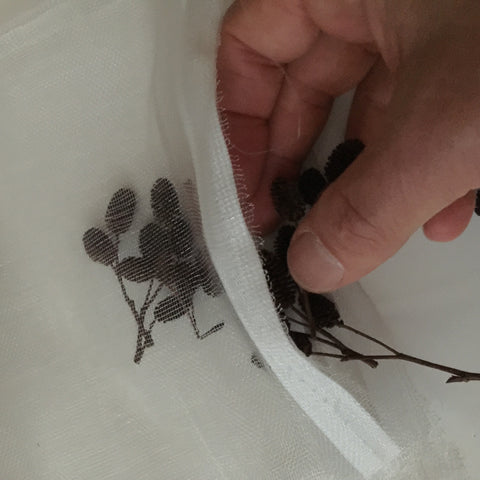
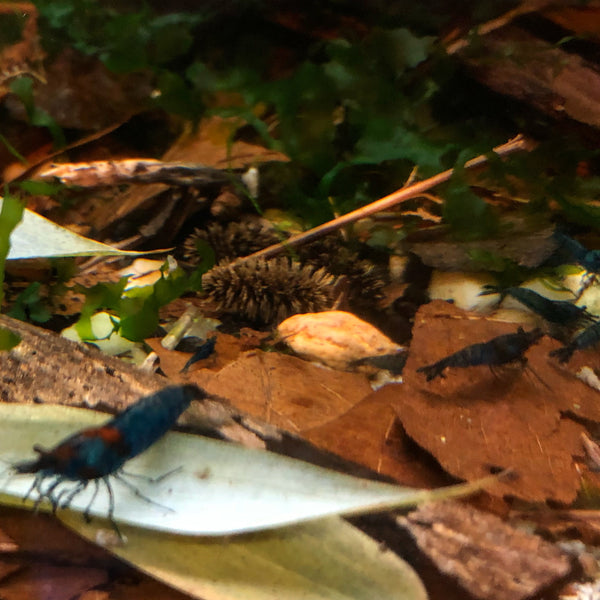
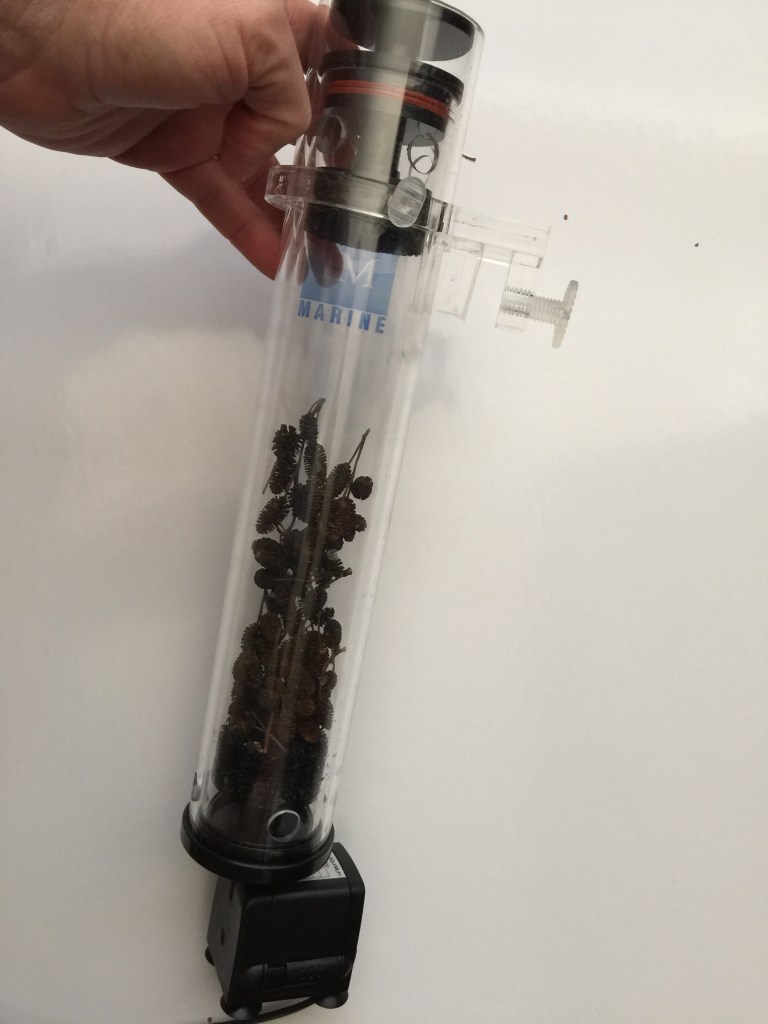
In general, cones seem to be ideal candidates to use in filters, media reactors, or just passively somewhere in your aquarium where water flows over them gently. As mentioned previously, they certainly make a great foraging area for shrimp, and the many -“faceted” surfaces (known, interestingly enough as “scales” to botanists) do a respectable job of recruiting biofilms.
Since shrimp and some catfish (I’m thinking Otocinculus) seem to love foraging in them, one could conceivably even sneak in some pelleted foods into the scales, turning them into unorthodox, yet effective “feeding stations” for these animals, or other bottom-dwelling fishes which might be out-competed in busy community tanks.
In general, the cones mentioned here are known to science to have rather significant amounts of tannins in their tissues. As with most plants, the tannins are theorized to be present in cones to protect the mother plant from predators. With the tannins, their usefulness as aquarium “water conditioning media” is easy to understand in that context, right?
However, the other properties attributed to them by aquarists and hobby industry people are a bit harder to substantiate, IMHO. Many hobbyists who use cones will speak of their alleged “anti-fungal” and “antibacterial” properties, with little more than anecdotal experience (or less!) to substantiate these claims.
Unlike Catappa leaves, which have been studied by scientists in Asia and elsewhere for fisheries use as antifungals/antimicrobials, and which DO have some phytochemical constituents that may be useful in treating and preventing infections, we’re really operating on the basis of inference and even supposition that, because the cones seem to do what leaves do from a pH and aesthetic standpoint, they must also have these “therapeutic” capabilities, right?
Yikes.
We have to break really careful about that.
Of course, those of you who trade in botanicals need to be responsible when assigning these “attributes” to the stuff you sell, and not everyone in the industry does. I see lots of vendors selling these items around the world, with descriptions that absolutely imply that the cones have all of these amazing capabilities and should be used to lower pH, treat fungus, hatch eggs, etc.
As you know, that kind of overly-generalized, sales-oriented hyperbolic stuff makes me want to vomit.
It was the same with catappa leaves.
The last thing I wanted to do when I started Tannin Aquatics back in the day was to get caught up in touting all sorts of unsubstantiated claims about these leaves and the substances they contain, so I did my best to ferret out just what the ”real deal” is here! It it was helpful for me to at least try to extract some practical information out of the many claims about these leaves.
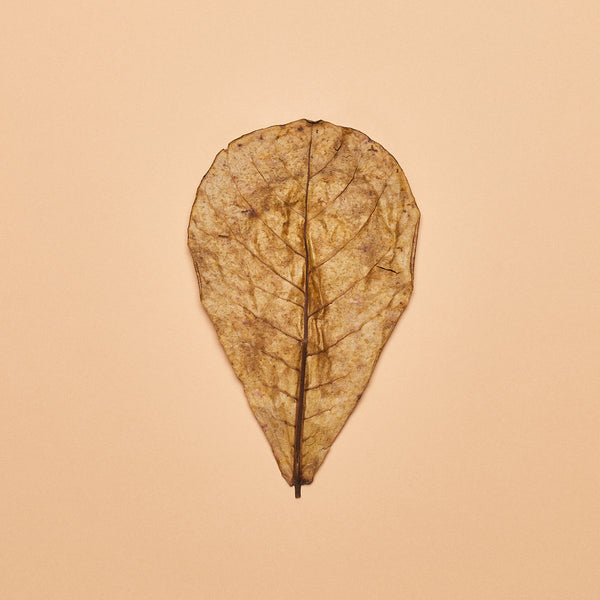
For many years, Betta breeders and other enthusiasts in Southeast Asia added catappa leaves to the tanks and containers that held their fishes, and noticed a lot of positives…Those breeders who actually fought their fishes seemed to feel that, when their fish were kept in water into which catappa had been steeped, they recovered more quickly from their fight-related injuries.
It really wasn’t until I found some scientific papers on catappa extracts which documented their anti fungal properties that I began to accept this stuff a bit more. It was a lot of really serious scholarly research based on actual fisheries work that helped me change my mind. Some good, solid, replicable experiments.
A 2016 study by Nugroho and colleagues, published in Biosaintifika, examined the effects of Terminalia catappa leaf extract on Betta rearing water.
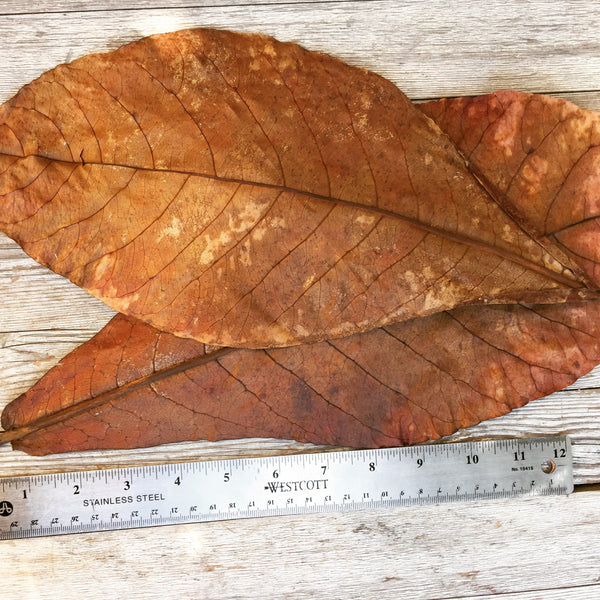
The researchers tested concentrations from 125 to 625 ppm over 30 days. At the highest concentration, they recorded a pH of approximately 5.05. The control water was approximately 6.14. They identified tannins and other phenolic compounds in the extract and suggested these contributed to the decrease.
That’s evidence that Catappa-derived compounds can be associated with a measurable pH reduction.
However, there are limitations:
The researchers used a concentrated ethanol-derived leaf extract, not simply whole dried leaves, the experimental water was already relatively acidic, and the study did not establish how the same treatment would behave in moderately hard, alkaline municipal tap water!
There is also an interesting counter-example. A 2017 study evaluating Catappa extract as a natural water-treatment coagulant found no significant effect on the pH of the river water it tested!
So the evidence supports the possibility, not a “universal effect” that can be relied upon continuously to lower pH in aquarium water.
Possibility.
That’s a far cry from the usual drivel that we see spouted by a lot of aquatics “influencers” and vendors on social media channels and YouTube and such, proclaiming the pH-lowering capabilities of these leaves. That kind of stuff just doesn’t do much to elevate things, right? Rarely do we get any detail, and caveats, and certainly little explanation. Usually, it’s just these grandiose pronouncements about the alleged “miracle” abilities of botanicals- and that’s it.
Do better, guys. Do better.
Back to the cones, specifically, for a minute…
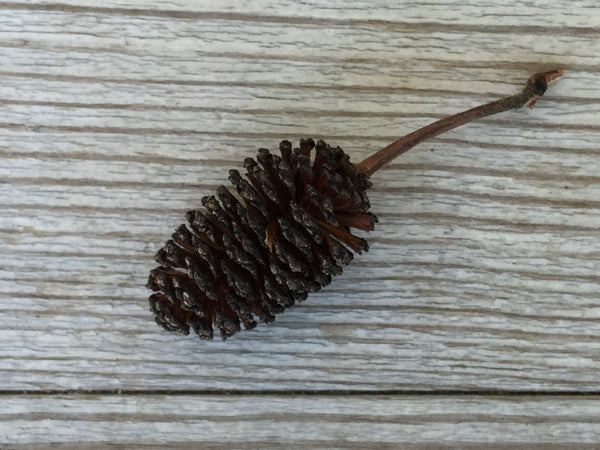
As much as I would love to share many hobbyists’ enthusiasm and faith that they can reliably and consistently lower pH, until scientific aquarium-use-specific research is done on them, I think it’s best to consider them as a means to provide some color to the water, to add some pH-reducing capability under certain circumstances, and for their ability to cultivate biofilms.
We should state that it is thought by some to have possible therapeutic benefits for aquatic animals, the extent of which is not fully understood.
And that’s it.
Yeah, I’m a damn “buzzkill”, I know.
Although I’m personally skeptical of some of the claims about cones, I would encourage responsible hobby-level experimentation with cones as a possible “homeopathic” remedy or “preventative” for fungus and other possible fish maladies for those who are interested (I’m not). Look, as long as we are open-minded, honest, record our results, and don’t simply ascribe every good (and bad) thing that happens to our animals while using the cones to their “properties”, it is certainly with looking into!
The number of shrimp breeders I’ve spoken with and read about over the years who do use cones (mainly Alder and Casuarina) in their breeding/rearing aquaria with good results makes experimenting with them too tempting to simply dismiss!
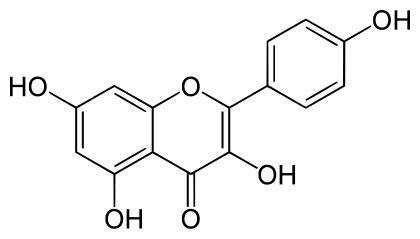
And of course, we can go on and on about the “humic substances” they may contain. For a refresher, these are a complex mixture of naturally occurring organic compounds produced as plant material decomposes and is transformed by microorganisms and chemical processes and tannins which are released by botanical materials in general, directly into the aquatic environment. They have known fish health benefits. That’s a legitimate, known “thing”, documented by a lot of scientific study. However, it’s not an absolute, either.
Alder cones and Catappa leaves contain organic precursors that can contribute to the formation and release of humic-like substances, but they are not simply “containers” of finished humic substances.
Catappa leaves contain a variety of polyphenolic compounds, including hydrolysable tannins, flavonoids, phenolic acids, and other soluble and insoluble organic compounds.
As leaves become submerged, these compounds are released through leaching and subsequently transformed through microbial decomposition.
Some of the resulting dissolved organic matter has properties associated with humic substances. Further microbial and chemical transformations can produce increasingly complex, humic-like material.
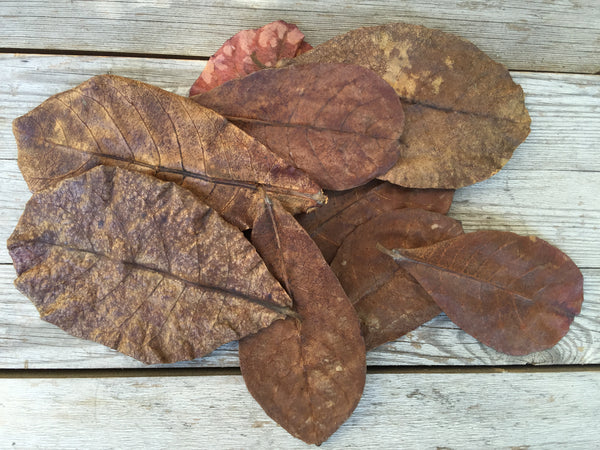
Catappa leaves, for example, are a source of organic compounds that contribute to the dissolved organic matter “pool”, including humic-like fractions.
Alder cones also contain polyphenolic compounds, particularly tannins and other phenolics. These compounds leach into the water and undergo further transformation. As with Catappa, microbial activity and decomposition of Alder cones can contribute to the formation of humic-like dissolved organic matter.
However, I would be cautious about claiming that Alder cones have a particularly high “humic substance content” relative to Catappa leaves. Comparative analytical data specific to aquarium use is very scarce.
Then, there is the subject of KH (hardness) of the source water that you’re using…This is the fundamental chemistry behind the whole discussion.
When botanical materials release organic acids into water, those acids can contribute hydrogen ions. But water containing bicarbonate and carbonate has an acid-neutralizing capacity. That’s what we measure, in practical aquarium terms, with KH.
This is why adding a handful of Catappa leaves or alder cones to very soft water can produce a noticeable pH change, while adding the same material to moderately hard tap water may produce little measurable change.
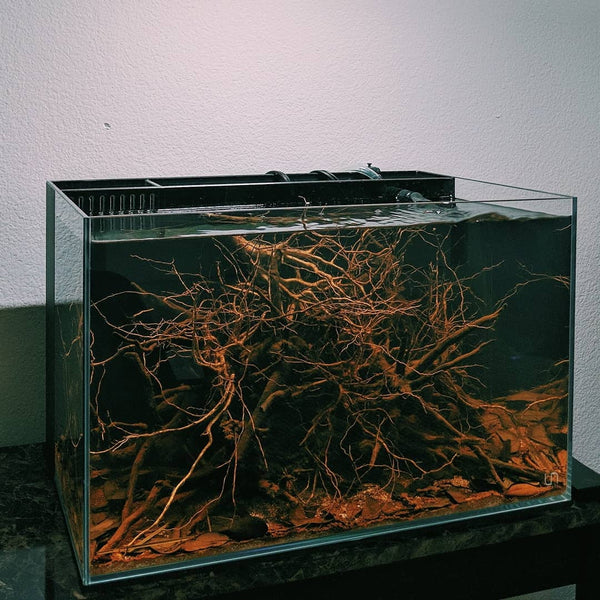
In the end, the ability of botanical materials to manipulate the aquatic environment is wide open for research. It’s more than just theoretical that they are capable of doing some things to the environmental parameters of the water they are placed in.
Botanicals are not merely “water conditioners.” They are organic resources entering a biological processing system.
Their effects are dependent on water chemistry, concentration, and biological processing. Neither should be considered a dependable substitute for controlling source-water mineral content.
And yet, more work is needed on a hobbyist level if we really want to understand how the physical aquarium environment can be influenced by them.
One experiment I’d love to see is a controlled comparison of Catappa leaves and alder cones across several KH levels, measuring pH, alkalinity, dissolved organic carbon, and conductivity over 30 days.
That would tell us considerably more than simply measuring pH before and after adding botanical materials, right?
The distinction I’d emphasize is that botanicals can contribute to acidification, but they don’t necessarily create “acidic water..” The water itself determines how much of that acidifying potential is expressed.
If the goal is to reproduce genuinely soft, acidic habitat conditions in your aquarium, I’d establish the mineral chemistry first and use botanicals to contribute to the ecological character of the water—not rely on them to overcome the buffering capacity of ordinary tap water.
Use that as your starting point, and move out from there!
Remember, the most interesting part of botanical method aquarium keeping isn’t what we add to the aquarium. It’s what the aquarium does with it!
Don’t be afraid to roll up your sleeves and work with this stuff.
There is SO much to learn that it’s not even funny! We’re really at the ground floor of our understanding of how to manage botanical method aquariums, and every one of us has an important role to play, helping to dispel myths, develop and perfect techniques, and add to the body of knowledge of botanical-influenced systems.
Whatever your course is…stay on it. Stay bold. Stay creative. Stay curious. Stay undeterred.Stay active…
And Stay Wet!
Scott Fellman


Leave a Reply