
It’s pretty incredible to see the explosion of interest in botanical-method aquariums over the last several years. It’s well beyond a passing phase or trend….To call this a “trend” is selling the idea short. Nature doesn’t operate according to trends, and using botanical materials in our aquariums is about as natural a process as we can embrace.
Still, it’s a significant departure from what most of us are accustomed to in the aquarium hobby.
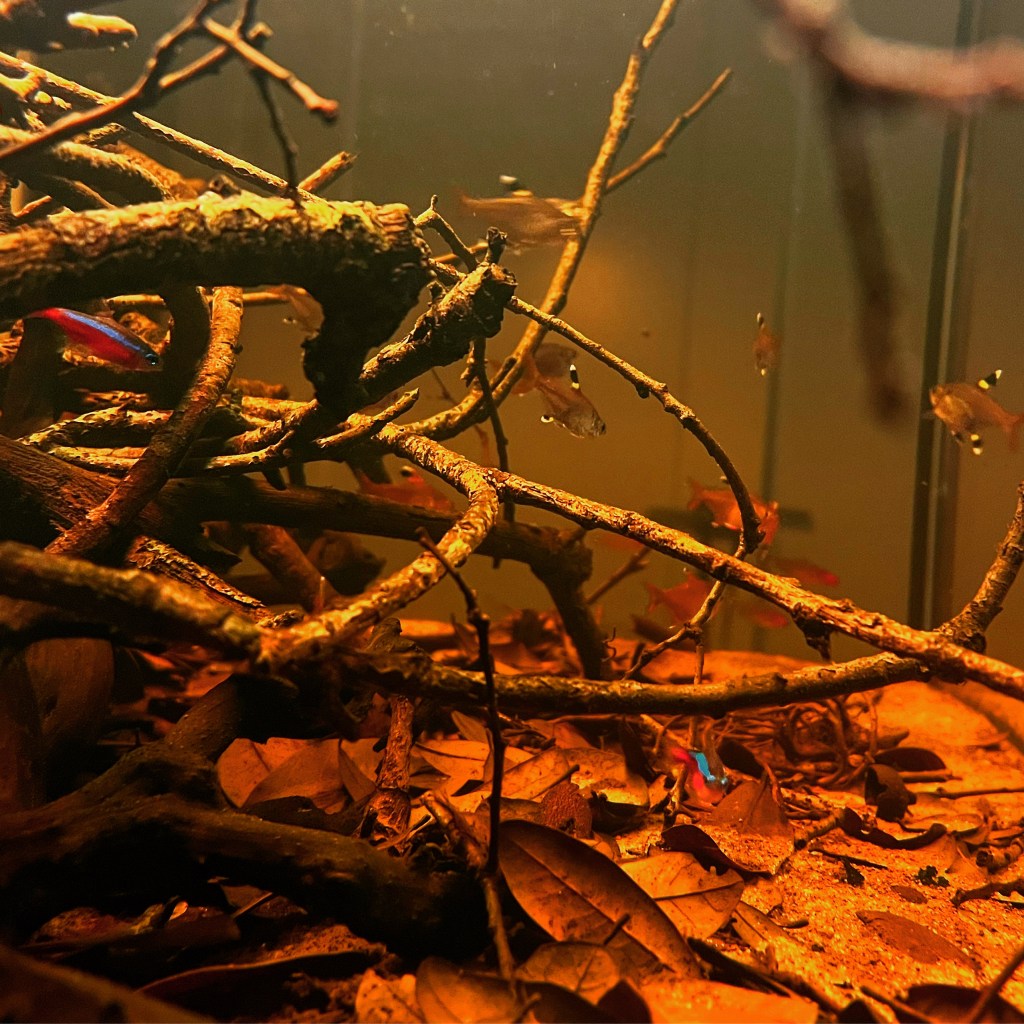
Many newcomers are drawn to the aesthetic but remain uncertain about the realities: decomposing leaves, fungal growth, biofilms, detritus, and water that isn’t necessarily crystal clear. These things run counter to much of what we’ve been taught to regard as signs of a healthy aquarium.
And that’s where an important mental shift comes in.
Botanical-method aquariums have a different “operating system”, both literally and figuratively. There’s no great mystery or secret to keeping one. Like any aquarium, success comes from understanding its characteristics, anticipating its changes, and learning to appreciate the processes that make it function.
Perhaps the most immediately obvious difference is the appearance of the water itself.
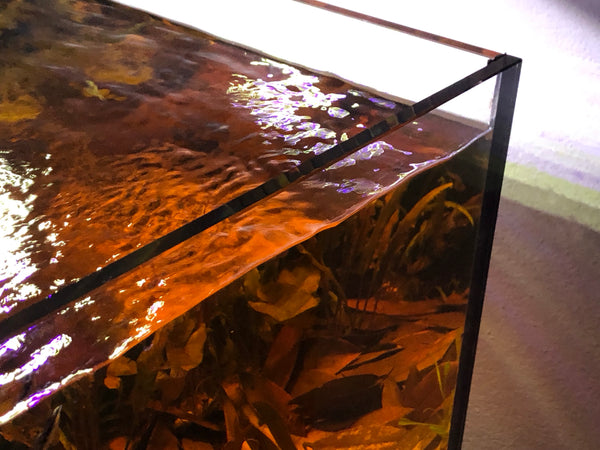
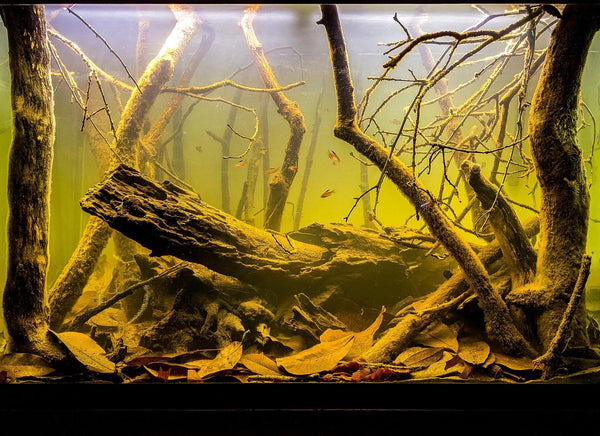
In many botanical-method aquariums, the water develops a pronounced tint from tannins and other substances released by submerged botanical materials. You can certainly use activated carbon or other chemical filtration media to reduce that coloration while retaining much of the botanical influence. But for many of us, that beautiful brown tint is part of the appeal. It’s what brought us to the dark side in the first place!
There is also a subtle difference in the way light interacts with the water. Beyond its color, botanical-influenced water often has a distinctive visual character—a sort of “patina” that becomes apparent when compared with a conventional clear-water aquarium.
Then there’s decomposition…
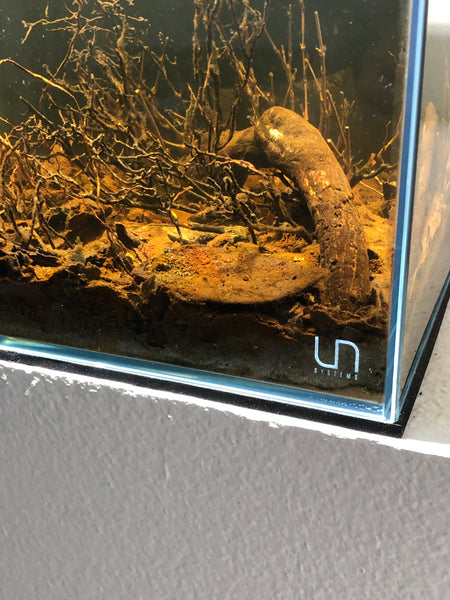
Leaves, seed pods, and other botanical materials don’t remain pristine indefinitely. They soften, break down, and are gradually transformed through bacterial and fungal activity. The “aquascape” you initially create is therefore never quite “finished.” Nature continually reshapes it.
For some hobbyists, this is a difficult adjustment. We’re accustomed to carefully arranged layouts, immaculate substrates, and hardscape that looks exactly as it did when it was first installed.
But the transient nature of botanical materials is part of their appeal. It brings to mind the Japanese aesthetic concept of wabi-sabi: an appreciation for impermanence, natural change, and the beauty of imperfection.
And then there are the fungal growths and biofilms.
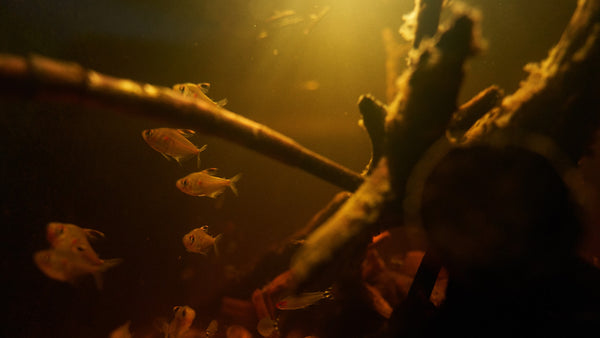
These are familiar features of botanical-method aquariums. Freshly submerged materials provide abundant organic resources and surfaces for bacteria, fungi, and other microorganisms to colonize. Their appearance and abundance may wax and wane according to the quantity and condition of the botanical material, but they remain part of the system’s ongoing ecology.
Rather than viewing every coating or fungal growth as a problem, we should recognize that these organisms are performing functions that occur continuously in natural aquatic habitats.
This is perhaps the most important part of the mental shift: understanding that a healthy natural habitat rarely resembles the immaculate, carefully controlled environments we’ve come to associate with “successful”aquariums.
Nature is a world of biofilms, decomposing organic matter, algal patinas, scattered leaves, wood tangles, and materials redistributed by currents, rainfall, and animal activity. It rarely conforms to our ideas of symmetry, proportion, or meticulous arrangement..
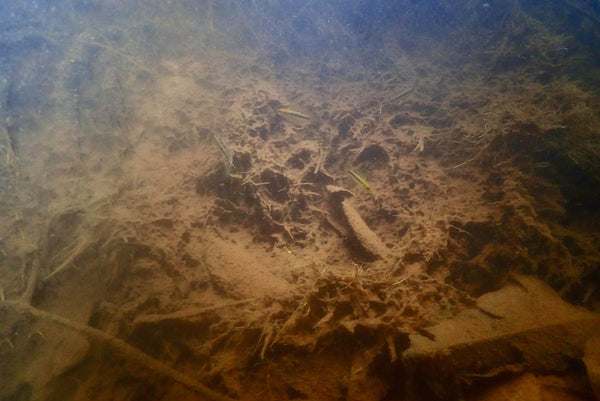
Of course, there’s nothing wrong with a beautifully manicured aquascape. Those designs can be breathtaking.
But they’re one interpretation of Nature, not the only one.
A botanical-method aquarium embraces a different aesthetic, one in which the appearance of the habitat is influenced by the ecological processes taking place within it. If you’re going to work with these systems in their more natural expression, you have to become comfortable with that distinction.
Getting Started: SlowLY and DeliberateLY
Let’s say you have an established aquarium, and you’re kind of enthralled with this stuff. You want to switch your aquarium to one that embraces the botanical method approach. So, how do you transition an aquarium toward a botanical method?
I’d begin with two questions:
Do the fishes you keep come from environments where botanical materials and accumulating organic matter are natural features of the habitat?
And are you willing to make the transition gradually?
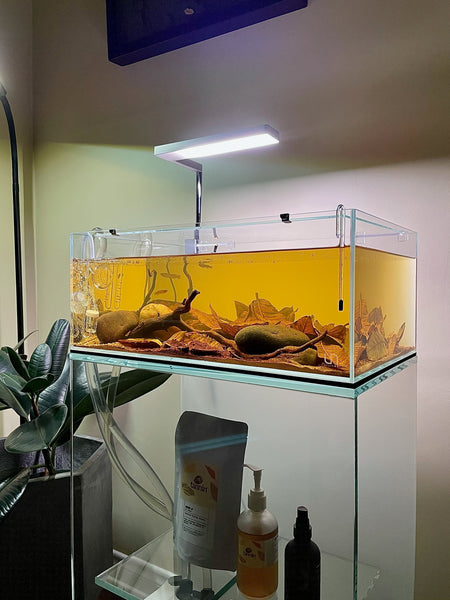
The first requires a little research and due diligence. The second requires patience.
My recommendation is to begin with relatively small quantities of leaves, then gradually introduce more durable materials such as seed pods and other botanicals. Leaves generally break down more quickly, releasing their associated compounds into the water at a corresponding pace.
There isn’t a “universal formula” for how much material to use. Too many variables influence the outcome, including water chemistry, substrate composition, filtration, and the types of botanicals selected.
Start conservatively. Perhaps a half-dozen leaves per 10 gallons is a reasonable initial experiment. Observe what happens, test your water, and adjust accordingly.
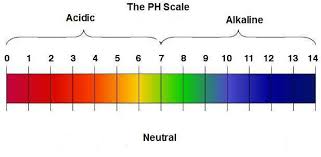
I’d pay particular attention to pH and alkalinity. A digital pH meter is a worthwhile investment if you intend to monitor changes closely. Don’t kid yourself, however-if you’re starting with buffered water that is hard and alkaline, the pH impact of leaves will be quite limited. Some hobbyists also track TDS, although its usefulness depends on what you’re trying to understand.
Add materials gradually and establish a consistent routine. Rather than introducing a large quantity all at once, consider adding modest amounts every four or five days, monitoring the response along the way. And “monitoring” in this context might simply be observing the reaction of your fishes to the changes.
And remember something we’ve discussed many times: Botanicals do not meaningfully soften water or eliminate carbonate hardness. Their influence on pH is limited, particularly in water with substantial buffering capacity.
If your objective is to maintain soft, acidic conditions, you’ll need to address the underlying water chemistry first. Using RO/DI water is an important part of that process. Even then, gradual transitions are essential, especially when moving fishes accustomed to harder, more alkaline conditions.
Think in terms of a manageable operating range rather than chasing an arbitrary target. Make small changes, observe the response, and give the aquarium time to adjust.
Filtration, Organic Matter, and “Equilibrium”
Another common question concerns chemical filtration.
Some hobbyists worry that activated carbon and other chemical filtration media will remove the very substances they’re trying to introduce through botanical materials. That’s a reasonable consideration, but it doesn’t have to be an “either-or” decision.
I routinely use modest quantities of activated carbon and other chemical filtration media in my botanical-method systems. These materials may remove some tannins and humic substances, but they can also help moderate excess dissolved organics and other compounds associated with the botanical bioload.
The important distinction is one of degree. You don’t necessarily need to use the full manufacturer’s recommended quantity if your objective is simply to provide some additional chemical filtration while retaining much of the botanical influence.
There isn’t a universal prescription here. We rely on observation, testing, and a little experimentation!
Over time, I’ve found that botanical-method aquariums tend to establish a fairly consistent “operating range” when their basic husbandry practices are maintained. Regular water exchanges, measured additions of botanical materials, appropriate filtration, and sensible stocking all contribute to that stability.
The key is consistency.
These aquariums aren’t “set-and-forget” systems. They require observation and occasional adjustments, just like any other aquarium. But neither are they inherently ecologically “fragile.“
In my experience, most significant “problems” develop gradually in aquariums.. Changes in water chemistry, biological activity, and animal behavior usually provide clues before a situation becomes serious. The challenge is recognizing those changes and responding thoughtfully rather than overreacting.
The Question of “Benign Neglect”
Every once in a while, I wonder what would happen if we allowed a mature botanical-method aquarium a little more “breathing room.” Just time to operate un molested for a while…
What if we missed a few weekly water exchanges? What if a tank with a substantial accumulation of leaves and botanicals went several weeks with little more than feeding and evaporation replacement?
Would the materials continue decomposing? Would biofilms continue developing? Would nutrients accumulate unchecked? Would water chemistry become unstable?
I’ve experimented with this idea in a couple of systems, and the results were surprisingly…uneventful.
The tanks didn’t miss a beat.
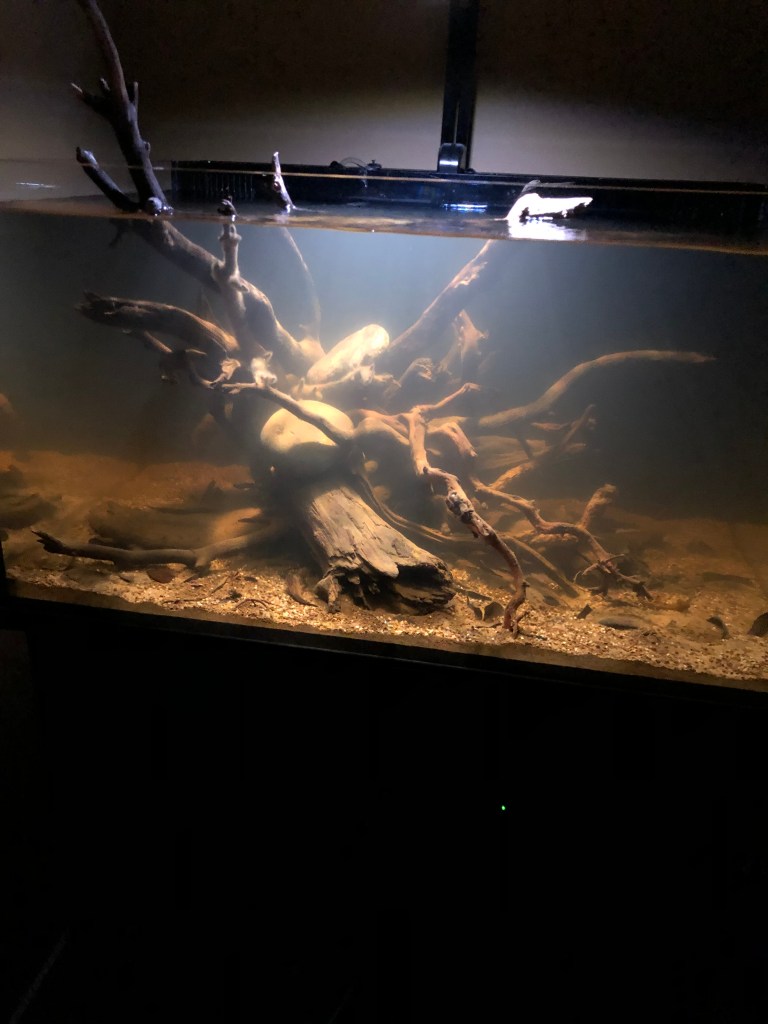
Of course, two aquariums hardly constitute a scientific study. But the experience reinforced something I’ve come to believe: a well-established, properly configured botanical-method aquarium can be remarkably resilient.
Think about the environment we’re attempting to replicate. Decomposition, organic enrichment, microbial activity, and nutrient processing are not unusual events in these habitats. They’re fundamental ecological processes.
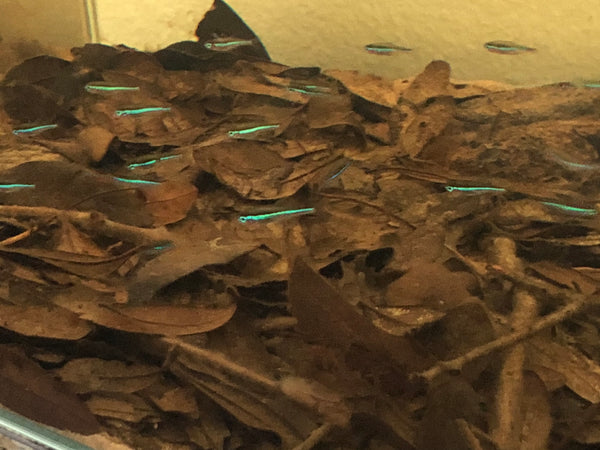
The leaves and other materials provide resources for bacteria, fungi, and a variety of microorganisms. The resulting biological communities process and assimilate organic matter as part of the aquarium’s ongoing nutrient cycle.
Could the microbial and invertebrate communities within a mature botanical substrate provide some degree of nutrient processing, perhaps even supporting localized denitrification? It’s an interesting possibility that deserves further investigation.
This isn’t an argument against regular maintenance.
I still believe in consistent water exchanges and attentive husbandry. Nor would I recommend deliberately “neglecting” an aquarium as a routine practice.
Rather, it’s an observation about resilience.
We shouldn’t be operating our aquariums so close to the edge that missing one maintenance session sends the entire system into chaos. A thoughtfully configured aquarium should have some capacity to absorb ordinary interruptions in our routines.
Life happens. Family obligations, work, travel, and unexpected circumstances occasionally interfere with even the most diligent maintenance schedules.
A little resilience is a good thing.
Building for the Long Term
So, how do we create botanical-method aquariums that remain stable and productive over time?
It begins with patience and thoughtful preparation.
Start slowly, gradually establishing the quantity and variety of botanical materials appropriate for your particular aquarium. Stock fishes conservatively, allowing the biological community to develop alongside the animals. Maintain sensible feeding practices, provide appropriate filtration, and establish a consistent schedule for water exchanges and botanical replenishment.
Monitor basic water chemistry, particularly during the early stages, so you can establish a baseline for how the aquarium functions. Continue observing those parameters over time, paying attention to trends rather than reacting to every individual reading.
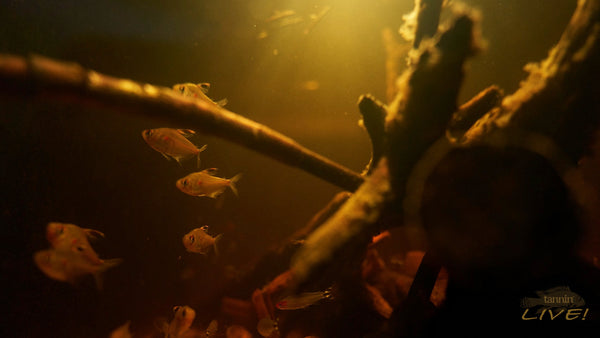
And don’t overlook the animals themselves. Their behavior, appetite, coloration, and overall condition are among the most useful indicators of how well the environment is functioning.
Botanical materials are ephemeral. They soften, decompose, and eventually need to be replenished if you want to maintain a consistent supply of organic material and the habitat characteristics associated with it.
Replacing them isn’t simply a matter of keeping the aquarium looking the same. It also helps perpetuate the ecological processes that make the system what it is.
Ultimately, botanical-method aquariums are dynamic environments. Their appearance and function evolve continuously, influenced by the materials we introduce, the organisms that colonize them, and the husbandry decisions we make along the way.
The goal isn’t to prevent change. It’s to guide that change thoughtfully.
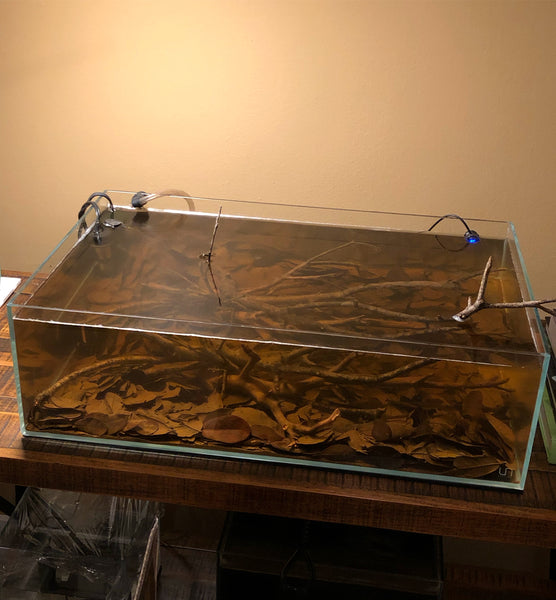
I love regular water exchanges. I enjoy maintaining my aquariums and keeping a close eye on their development. But I don’t panic when life occasionally gets in the way.
A well-established aquarium should have enough ecological resilience to tolerate an occasional departure from the routine.
That resilience doesn’t happen by accident. It’s the result of patience, consistency, appropriate stocking, careful observation, and an appreciation for the biological processes taking place beneath the surface.
We’re still learning about these systems. There are questions worth exploring, assumptions worth challenging, and plenty of opportunities to expand our understanding of how botanical-method aquariums function.
Botanical-method aquariums require a shift in how we interpret appearance, biological activity, maintenance, and resilience.
And that’s part of the appeal.
It’s as much an art as it is a science. We provide the materials, establish the conditions, and then allow Nature to participate in the process.
The fun is in the experimentation. The journey. The discovery.
Stay excited. Stay careful. Stay experimental. Stay diligent. Stay skeptical. Stay hopeful. Stay creative. Stay enthralled.
And Stay Wet.
Scott Fellman


Leave a Reply