
One of the things that we find ourselves doing in the aquarium hobby is using ” a little of this and that” in our tanks, because-well- because we seem to be fixated on lots of variety of “stuff” in our tanks, right?
I mean, there is nothing wrong with using a diversity of materials in our aquariums to express our creativity, and I did own a company which sold a significant variety of natural botanical materials, so I like the idea …However, I think it’s also important to consider exactly what it is we’re trying to accomplish in our tanks when we select and employ botanical materials in our aquariums.
Huh?
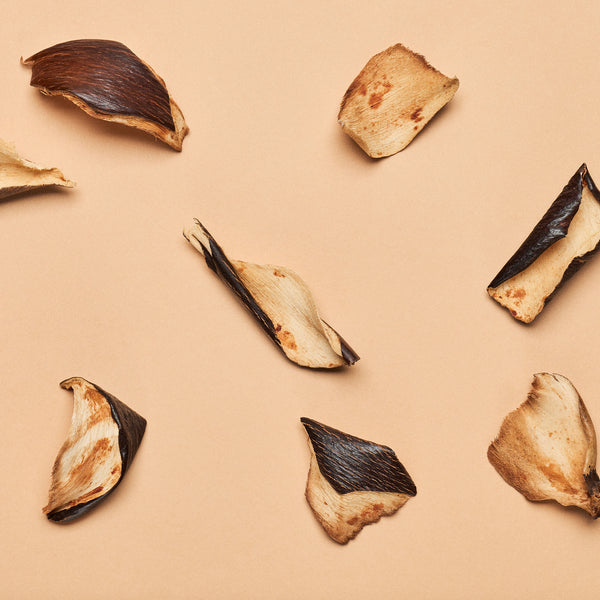
As we’ve discussed a lot around here, the idea of using natural materials, like wood, leaves, seed pods, and roots is a faithful representation of many of the wild habitats we obsess over. And more important, it’s a functional methodology of fostering natural processes and a healthy ecology in our tanks.
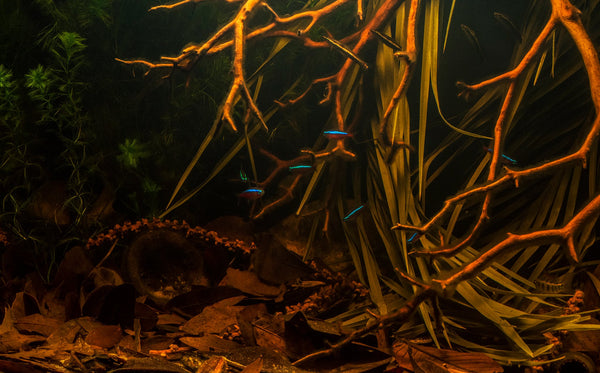
Are you simply trying to add some aquascaping interest to your tank? Are you interested in manipulating the aquarium water chemistry? Perhaps you’re attempting to replicate a very specific ecological niche? Setting up a system for breeding fishes or rearing their fry?
There are many, many applications for botanicals in aquariums. A wide range of things you can do with them, and an even wider range of botanicals to do the job. And the most important “job” for botanicals in our aquariums, IMHO, is to foster the ecology of the aquarium…The so-called “microbiome.”
One thing to consider when adding botanicals to an established, stable aquairum is the environmental impact that they can cause. Dumping a massive pile of leaves and seed pods into a tank at once creates a sudden surge in organic matter. This spike can trigger heavy heterotrophic bacterial blooms, deplete dissolved oxygen, and cause sharp drops in pH in low-KH water. This goes hand in hand with the idea of slowly building up your fish population, too. Because the microbial food web takes months to mature, introducing small groups of fish slowly prevents overwhelming the nascent biological filter.
And the important thing to know in this context is that you don’t have to use 25 different botanicals and leaves in your aquarium to achieve this ecology within your tank. Beneficial fungi, bacteria, and microfauna colonize virtually any safe organic material. Choosing a few cohesive textures mimics natural habitats, and from an aesthetic standpoint, actually prevents visual “clutter” that simply looks bad!
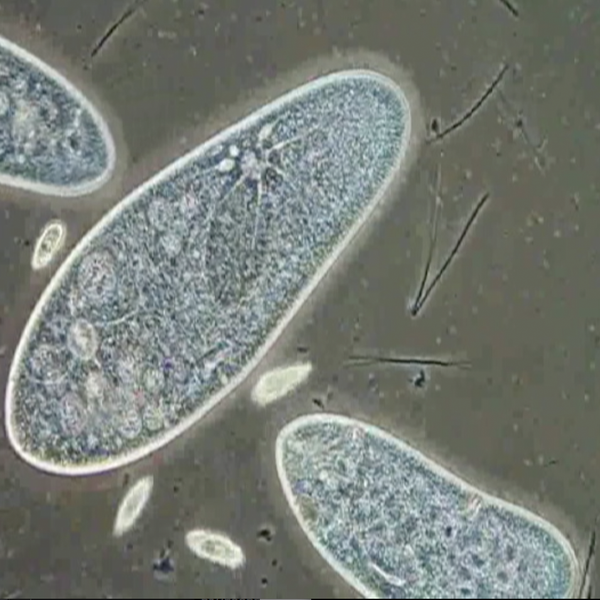
Again, the reality is that, organisms like fungal growth, bacteria, Paramecium, and other microfauna are typically not tied to a specific leaf or seed pod, so not having a huge variety doesn’t mean that you won’t be able to achieve a significant microbiome within your tank.
So from a “biodiversity” or ecological standpoint, there is no reason why you would need a huge variety of botanicals in a given aquarium. It really boils down to aesthetics. Or, if you’re trying to be more “biotopically accurate”- it depends upon the variety of materials that you’d expect to find in the habitat you’re interested in replicating.
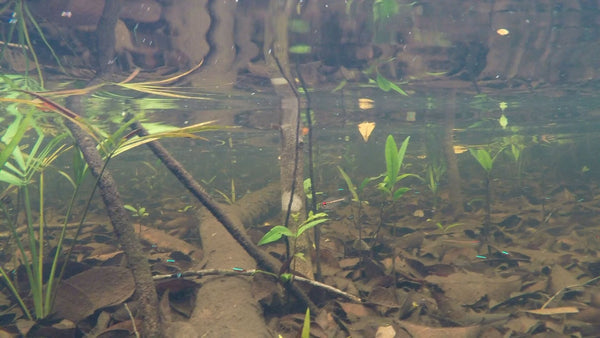
For example, a flooded forest might have a lot more ( in both density and variety) leaves and seed pods than say, a fast-flowing river, stream, or a small oxbow lake might have. Other locales might simply have a lot of a few materials, like branches and leaves, but minimal amounts of seed pods and other materials.
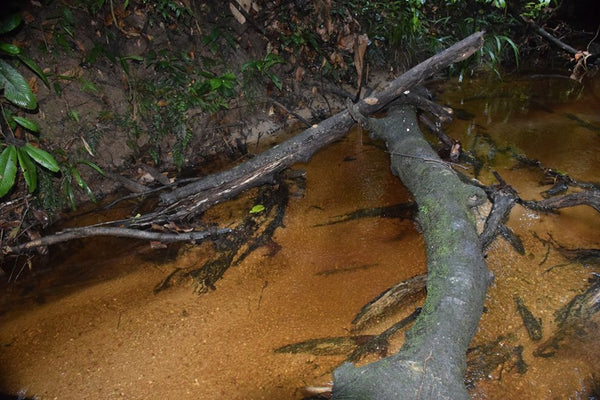
Maybe you’re not trying to replicate any specific habitat at all. Perhaps it’s simply a creative expression with botanicals. That’s fine. You can use as many or as little as you want…and you still get the “functional” aspects if you don’t “edit” them!
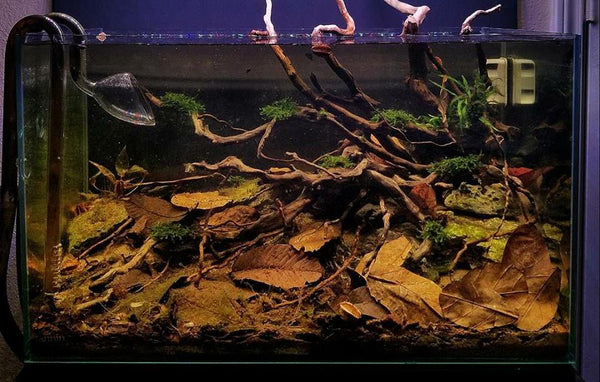
How your botanical-method aquarium looks and (to a lesser extent, functions) is dependent upon these types of characteristics. Yet, it’s really a matter of what works best for the aquarium that you are trying to create. The power of restraint is a very important factor when playing with botanicals!
Now again, with all of the cool botanical materials available to hobbyists today, it’s certainly fun to use a large variety of different materials in your tank! I personally have always been of the opinion that too much variety in a given tank is sort of distracting and just somehow doesn’t always look good. I mean, it certainly can..it just doesn’t always! Somehow, using a little less variety in a given tank seems to just look a bit better, IMHO.
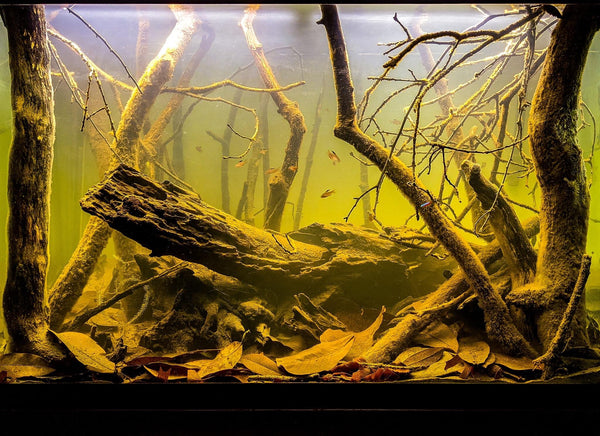
However, as we’ve mentioned already, if you’re replicating a specific habitat that might have a wide variety of materials in a given small locale, it makes sense, right?
And there is the benefit of a field of botanicals not only cultivating microbial and fungal food sources for fishes, there is the direct consumption of the botanicals (or their constituent materials) by fishes.
Yes, direct consumption of botanicals by fishes is something that we haven’t talked all that much about over the years here.
It’s long been known that many species of fishes, particularly Panaque/Panaqolus and some Hypostomus/Cochliodon love botanical materials! These species are equipped with teeth specifically “designed” to gouge wood. And there’s probably another odd one or two that consume it as well. Now, you should be aware that wood “eaters” don’t consume the wood per se, they consume it as a “by-product” of their overall feeding strategy.
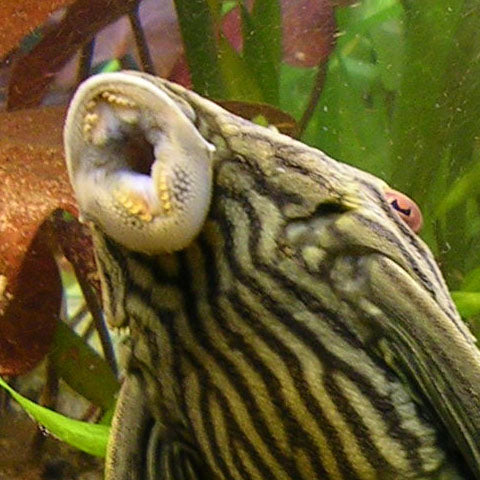
(The “business end” of Panaque nigrolineatus by Neale Monks, used under CC BY-SA 3.0)
In fact, some recent scientific studies have corroborated digestive enzyme activity profiles and gastrointestinal fermentation levels in the fishes’ GI tracts, suggesting that the “wood-eating catfishes” are not true xylivores, such as beavers and termites, but rather, are detritivores like so many other fishes from the family Loricariidae.
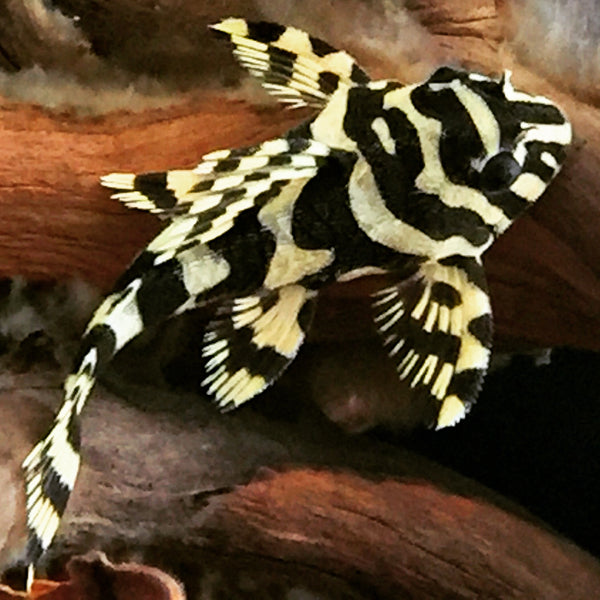
In fact, the conclusion of one study indicated that “..the fishes’ whole digestive strategy ranging from intake, to passage rate, digestive enzyme activities, gastrointestinal fermentation, and decreasing surface area in the distal intestine suggests that these fishes are geared for the digestion and assimilation of soluble components of their detrital diet.
However, the wood-eating catfishes do take macroscopic detritus (i.e., woody debris) and reduce it to <1 mm in diameter, which likely has significant consequences for carbon cycling in their environment. Given that much of the Amazonian basin is unstudied, and much of it is under threat of deforestation (leading to more wood in waterways), the wood-eating catfishes may play a crucial role in the dynamics of the Amazonian ecosystem, and certainly in the reduction of coarse woody debris.”
(German DP. Inside the guts of wood-eating catfishes: can they digest wood? Journal of Comparative Physiology B, Biochemical, Systemic, and Environmental Physiology. 2009;179(8):1011-1023. doi:10.1007/s00360-009-0381-1.)
Interesting, right?
And it has some implication for how we keep these fishes in our botanical-method aquariums, right? I mean, we have no shortage of pics of Plecos tearing into various botanicals, ranging from leaves to seed pods, like the Calotropis pods, Cariniana pods, etc. So, based on the study above, it would suggest that at least part of the seed pods do form a part of the diet of these fishes, and in the process of consuming them, the fishes are helping enrich the aquarium habitat.
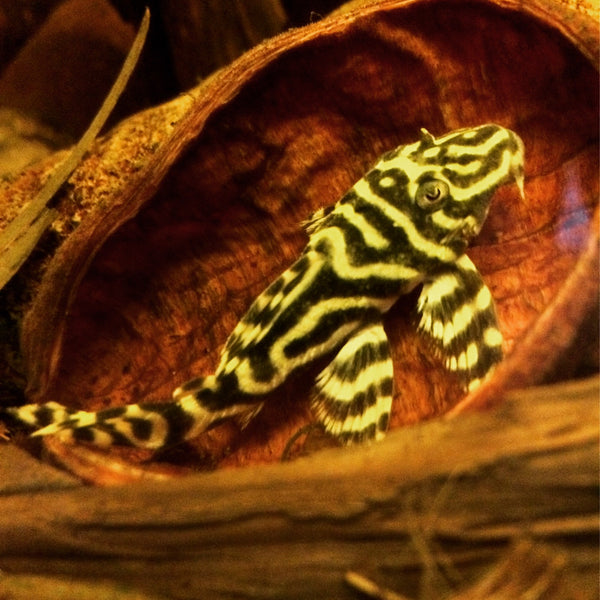
Now, the botanicals themselves may not be “the whole meal” for many fishes, but the biofilms, algal threads, and other biocover which grow on them do provide foraging for many fishes. A number of us have noticed a wide-ranging variety of fishes, from Barbs to characin to cichlids, feeding actively on the materials on the materials which are “recruited” by submerged botanicals.
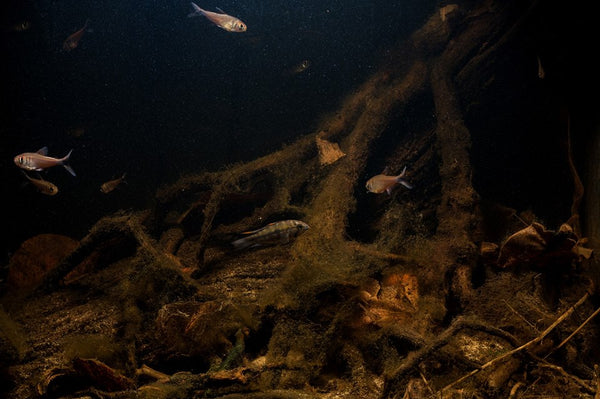
This type of activity has led me to postulate that the use of botanicals can perform a definite “direct feeding support function” for a wide variety of fishes. So, I suppose, one advantage of a variety of botanical materials in one tank is that it increases your chances of having something palatable to someone in the tank!
If you’ve followed this blog for any length of time, you’re well aware that I’m not just pushing you to play with natural, botanical-method aquariums only for the pretty aesthetics. I mean, yeah, they look awesome, but there is so much more to it than that. Most of us in this world are almost as obsessed with the function of these aquariums and the wild habitats which they attempt to represent!
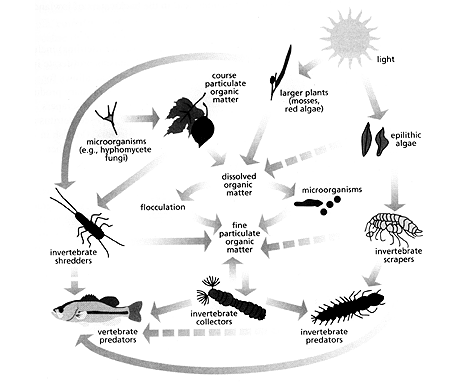
Understanding why you’re choosing to throw botanicals into your existing aquarium is as important as it is to understand how to employ them. Regardless of how you employ the botanicals, I cannot stress enough the need to go SLOWLY. There is no need to rush and dump everything in at one time, or in huge quantities. In established, stable aquarium, where your animals are used to a certain stable range of parameters…It goes without saying that if your introducing materials which can influence water chemistry and quality, you will need to go slow and exercise common sense.
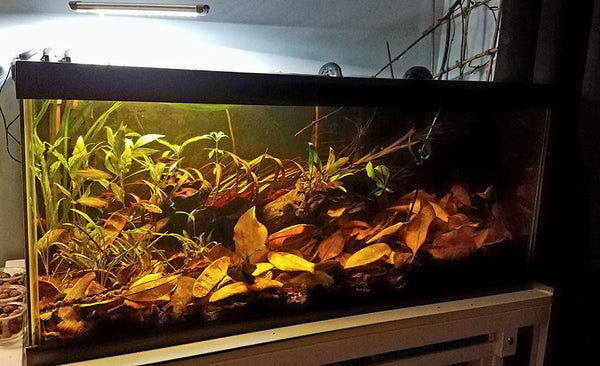
And, since botanicals are actively “breaking down” in your aquarium over their “service lifetimes”, it’s important to employ good husbandry techniques (i.e.; monitoring of water quality, water changes, regular filter media changes, etc.). Just remind yourself that botanicals create a “dynamic” environment, and you’ll enjoy using them that much more!
Apart from, “What botanicals should I use for a _____________ style setup?” the most common question we receive is “”Do I leave them in or let them break down in my tank?”
And of course, my simple answer is…“Leave ’em in to fully decompose!”
Remember, we’re running decomposition-based systems which rely on detritus as part of the ecological “engine” of the aquarium.
In the end, I suppose it’s as much about your aesthetic preferences as it is long-term ecological stability of the aquarium. It’s a decision that each of us makes based on our tastes, management “style”, and how much of a “mental shift” we’ve made to except the transient nature of a botanical-method aquarium and its function. There really is no “right” or “wrong” answer here. It’s all about how much you enjoy what happens naturally versus what you choose to control in your tank.
I tend to favor Nature. Every time. It’s not even close.
But that’s just me.
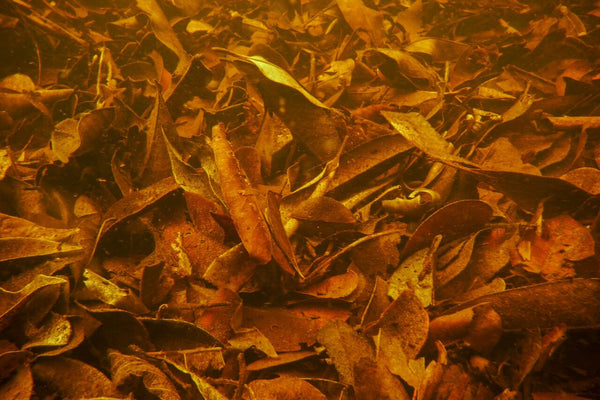
And of course, we can’t ever lose sight of the fact that we’re creating and adding to a closed aquatic ecosystem, and that our actions in how we manage our tanks must map to our ambitions, tastes, and the “regulations” that Nature imposes upon us.
Yes, anything that you add into your aquarium that begins to break down is bioload.
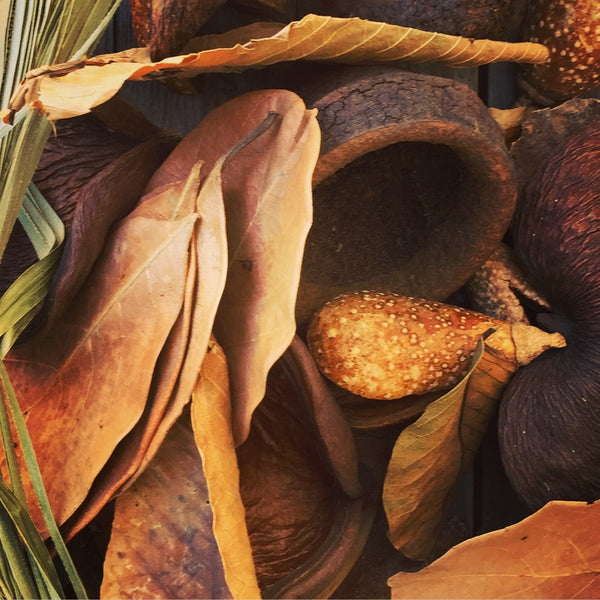
Everything that imparts proteins, lignins, tannins, organics, etc. into the water is something that you need to consider. However, it’s always been my personal experience and opinion that, in an otherwise well-maintained aquarium, with regular attention to husbandry, stocking, and maintenance, the “burden” of botanicals on your water quality is surprisingly insignificant.
Even in test systems which I intentionally “neglected” by conducting very sporadic water exchanges, once I hit my preferred “population” of botanicals (by building them up gradually), I have never noticed significant phosphate or nitrate increases that could be attributed to their presence. Never had any health issues for the fishes which resided in them.
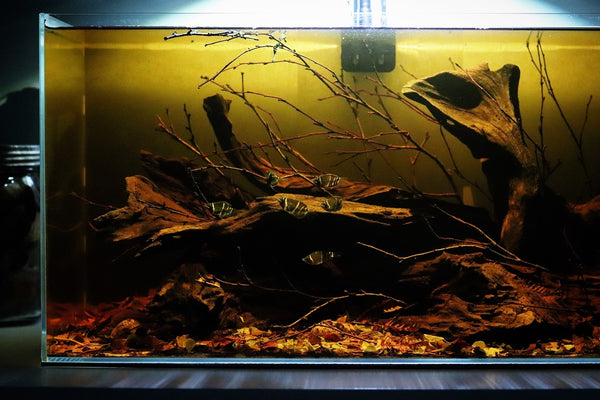
So, once and for all- is adding a large batch of botanicals to your existing aquarium “dangerous?”
I mean, it could be, in some instances. Like, adding large quantities of fresh botanicals to an established, stable tank all at once is a recipe for problems. But, this is “Aquarium Keeping 101”, right? Like, what would you expect that would happen?
Conversely, going crazy cleaning every centimeter of your tank is a horrible idea, too. “Traditional” aquarium keeping treats botanical detritus and decaying leaves as “waste” to be siphoned out immediately. In a botanical system, that decomposing layer fuels the microbial food web and feeds grazing fish and their fry. Over-cleaning strips away beneficial bacteria and can ironically cause ammonia spikes.
Why the hell would you even do that?
It’s about common sense.
Restraint also applies to filtration. Skipping high quantities of activated carbon and chemical resins allows humic substances and tannins to remain in the water column, preserving the protective, anti-fungal environment which you’ve fostered.
The reality is, adding botanicals to your tank and using them, letting them decompose, and replacing them regularly is no more “dangerous” than anything else we do as aquarists. You simply need to go slowly, apply common sense, follow a preparation protocol, and observe your tank carefully.
Look, stuff can still occasionally go wrong, even when you follow instructions and employ common sense. Never lose sight of the fact that aquariums are closed natural ecosystems, and changing the delicate ecological balance within them always risks disrupting established biological processes- and that can have consequences for your fishes.
But, you already KNOW that
It’s the reality of Nature, and a reminder that, although we can control some things, Mother Nature calls the shots…
So, the power of “chilling out”- the ability to exercise restraint; to not go crazy adding a ton of stuff all at once- is a huge and very, very important skill for all who play with botanicals to acquire.
I’ll bet that you already have.
Stay creative. Stay curious. Stay excited. Stay restrained…
And Stay Wet.
Scott Fellman


Leave a Reply