
As hobbyists, we love “tweaking”, modifying, and changing stuff. Sometimes, we do this on a big-scale (like, tearing down our aquascape and starting over). Other times, it’s about making smaller, incremental changes to our tanks.
Incremental steps are important in just about any aquarium; however, they’re almost a given with the botanical-method aquariums we love and work with. Like any aquarium, it’s a given that we won’t reach the “final” version (is there such a thing, lol?) of our botanical-method aquarium for some time…if ever.
I can’t tell you how many times I’ve started out with one idea, and ended up with something quite different after a relatively brief period of time.
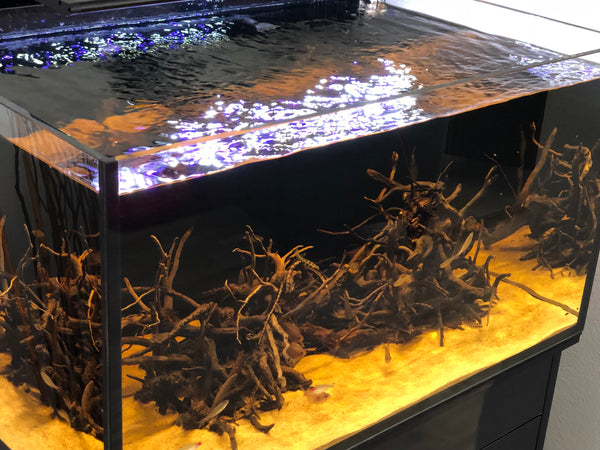
To me, it’s best accomplished gradually..It’s a constant “evolution” of sorts. A series of slow, steady adjustments. A process which keeps us in control of the situation, and to a certain extent, mimics what occurs in Nature, right?
Yeah. Think about it for just a second.
In Nature, things don’t ever really reach an “end”- they just keep changing…It may occur over eons, but it happens. Changes in climate, water flow, erosion; an influx of materials into the aquatic environment all play a role in this.
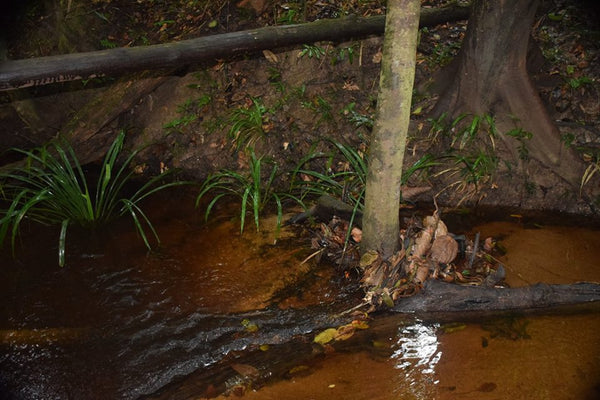
When we set out and add a bunch of leaves and botanicals to our aquarium, doesn’t this sort of parallel what happens in Nature to a certain degree?
It sure does!
I mean, one could draw parallels between pretty much everything that we do with our aquaria and what happens in Nature; however, I think that the botanical-method aquarium lends itself to replicating some aspects of nature better than many other types of systems we play with as fish geeks! I mean, the very process of adding and removing botanical materials to our aquariums is a near perfect replication of what happens in these environments in nature!
Occasionally, you’ll end up doing “addition by subtraction” in a botanical-method aquarium! Like, making a serious “edit” to move forward.
This happens to me all the time.
I’ll start out with lofty plans, select a bunch of botanicals and wood and such, and set up a nice ‘scape. I’ll run it in for a few weeks and realize that, for whatever reason, it wasn’t “hitting” on the points that I wanted…So I’d start removing stuff that I felt pulled the tank away from the original vision I had for it.
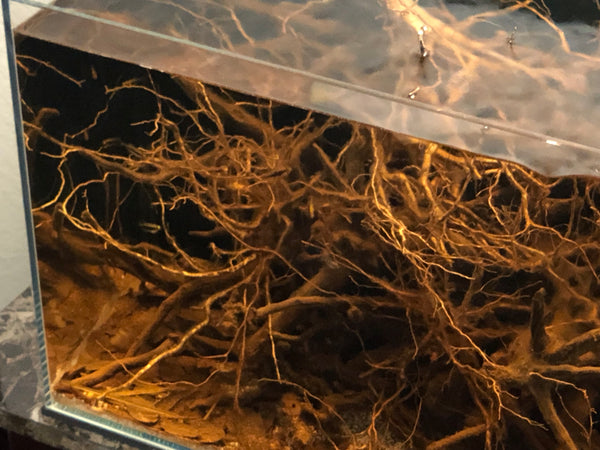
A great example of this was the nano aquarium I set up in my office a few years back. I had a vision for this aquarium when I started- to be the most “leaf-centric” version of an Amazonian igarape habitat I’ve ever done.
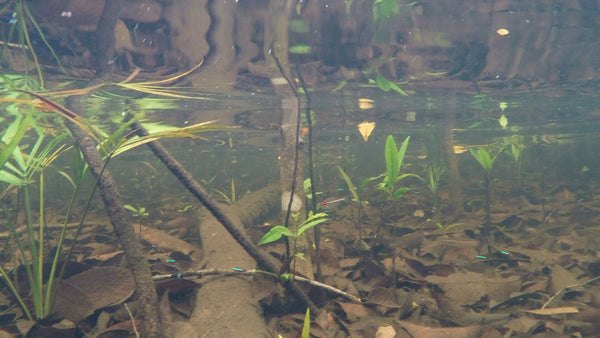
Was envisioning shallow water, tangled twigs a well-distributed layer of small Live Oak leaves and a scattering of small botanicals. I’d incorporate some wood to evoke the feeling of a “root ball” that was suddenly exposed to the inundation of water. And just one species of fish- the cute little Paracheirodon simulans (“Green Neon Tetra”). I even threw in a cutting of “Cat Palm” that I had rooted in water for several months for that extra touch…
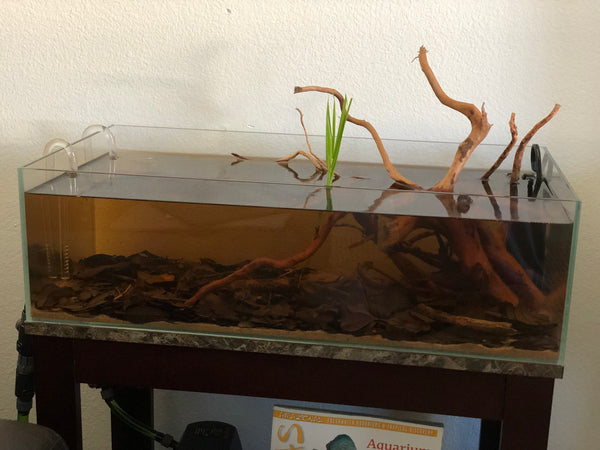
Simple, easy-to-execute, and a fairly good representation of the habitat I was interested in.
Right?
Nope.
Of course, it was a good “start”…It even received a lot of encouragement and praise from our Instagram and Facebook followers (not that those things are the ultimate “metric” of “good”, but…). It was a tiny tank, but I found a lot of pleasure in it.
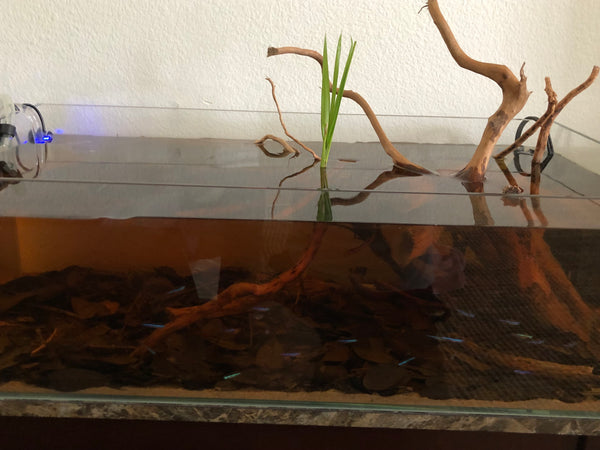
For a while, anyways.
Something about it just wasn’t “right” about it to me.
You know that feeling, right?
I had to do some hard thinking about this. I looked at my pictures of the wild habitat by Mike Tuccinardi, David Sobry, and others, and thought about the “dream” tank I was thinking about for so long: Just a layer of leaves and a small scattering of twigs.
Nothing else.
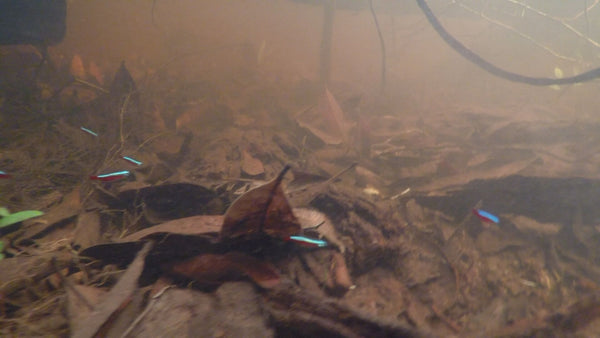
And of course, you know what I did next, right?
Out came the wood. Back to a vase of water went the little palm. Out went the small Cariniana Pods and such.
So what I had was the tank I had yearned for all these years: Shallow, tinted water, a very thin layer of sand, and a cover of leaves and just a few small oak twigs.
Nothing else.
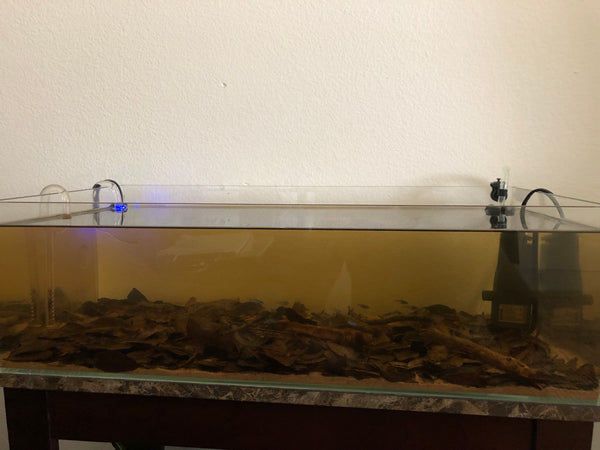
Now, I admit that I hated the efficient, but butt-ugly Eheim surface film extractor thingy on the right side, but it did work great. I thought about pulling it in favor of just a well-placed airstone for surface agitation/film removal. Or even no ayirstone. The auto top off sensor on the left, near the filter inflow/outflow pipes was a bit annoying, but kind of unavoidable (And it makes life easier, too!). That shallow tank with it’s wide open top evaporated a significant amount of water daily.
Now, as you know by now, I absolutely hate visible hardware in a scape, so next time I do this on a large scale, I’ll use a reef-ready tank with integrated overflows and a sump!
So, yeah. Just leaves and a handful of twigs. And really tinted water. That’s a “future edit!”
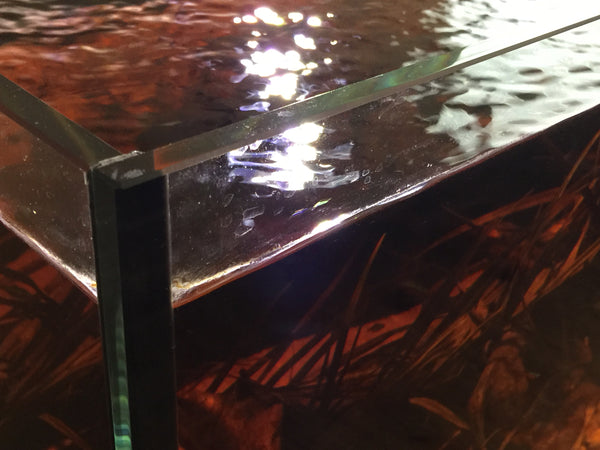
I’m SOOO doing that tank. I can imagine a school of like 200 Neons or Cardinals over nothing but leaf litter in a larger aquarium. People will be like, “Why?”
And then I’ll be able to explain. To share the details on the wild habitat which inspired it. I could never do that with a “high concept” diorama scape, which has in much in common with a natural aquatic habitat as do cut flowers in a vase, IMHO.
I realized that this was not everyone’s aesthetic “dream tank”; definitely not the aquascaping world’s vision of “ground-breaking” work- but it was exactly what I envisioned. Minimalistic on initial consideration and observation, but when you really take the time to examine it, this “no-scape” is remarkably dynamic and engrossing. And functionally amazing. During my months-long experiment, I ran this tank with NO EXTERNAL FOOD INPUTS and the fish were as fat an happy as they day they were added… Yeah, leaf litter, biofilm and microorganisms do wonders, huh?
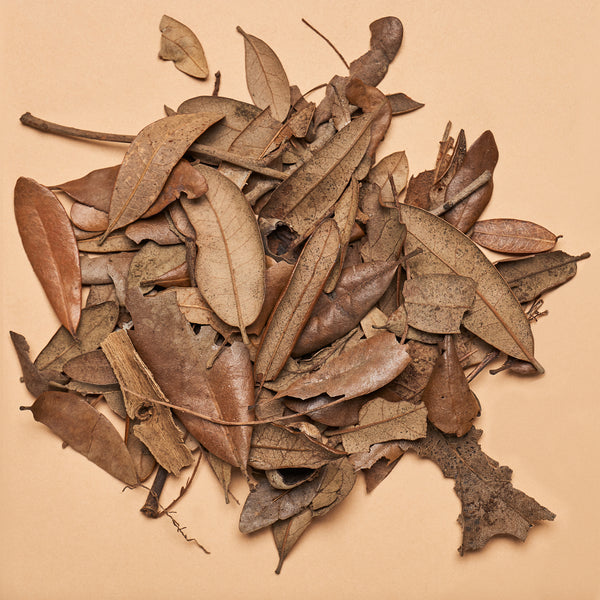
It is something that proved to be oddly compelling to me. I can imagine it on a larger scale…I think it could be mind-blowing if executed well.
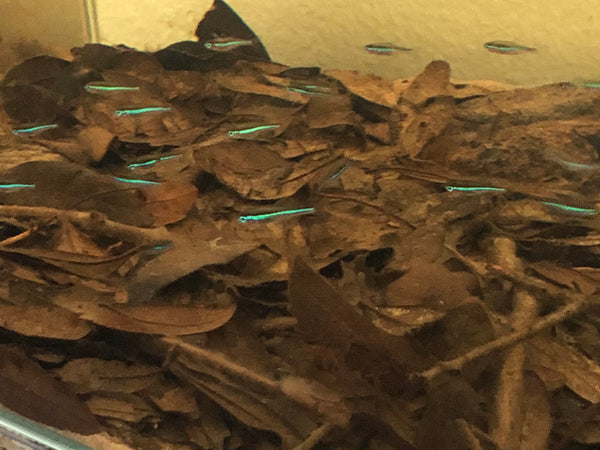
This tank was a great example of a good edit... A perfect example of “addition by subtraction”, if you ask me. The ‘scape ended up being exactly what I wanted- by taking stuff out!
So…The simple message here?
“Edits” are okay. Don’t be afraid to “edit” from time to time. It’s part of the evolution of your aquarium- even if it means that you’re taking out a lot of what might have been “safe” and more openly accepted by others. Even if it means making what seems like a radical change to get to where you want to go.
Yes, less can be more. Really.
“Editing” is important.
Let’s examine the “editing” on another version of this tank I executed not too long ago.
Keep in mind that I have always felt that one of the best things about a botanical-method aquarium is that it is a dynamic, evolving, and, well “flexible” environment to work with. By its very nature, the botanical-method aquarium changes- and can be changed- with relatively little effort on our part, while still embracing natural processes.
Case in point has been a little tank I played with not too long ago- a deliberate attempt to highlight this “pivotable” nature of botanical method aquariums. It started life as one of our “classic” configurations- a leaf litter habitat. A simple aquarium, which consists of a sprinkling of sand, a bunch of leaves, and a few twigs.
Botanical method aquarium-keeping at its most simple and elegant.
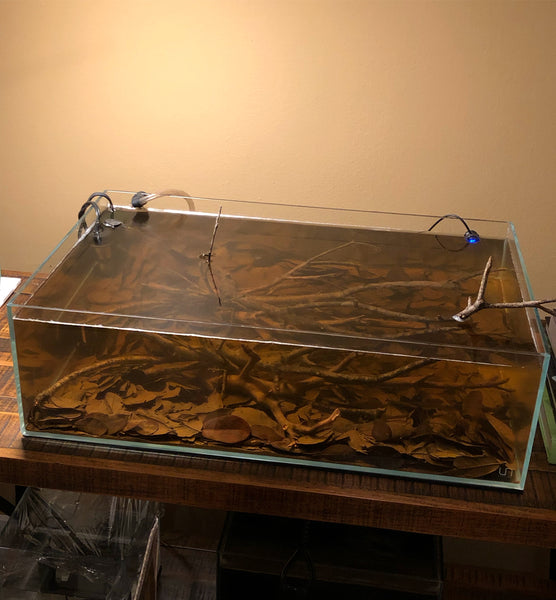
As you know, I’ve done a number of aquariums like this over the years, and they have been among my favorites. They’re easy to create, really easy to manage, and teach you almost everything you need to know about running a botanical-method aquarium. You will learn about preparation of the materials, how they interact with water, and what life forms colonize them (ie; biofilms and fungal growths).
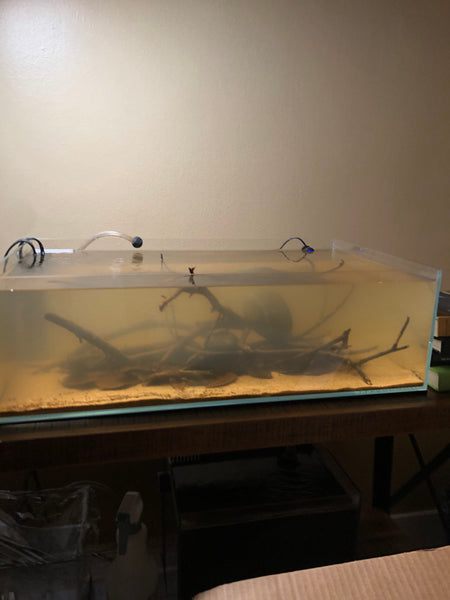
This configuration is a perfect “testbed” for the idea that botanical method aquariums can generate their own supplemental food sources for their inhabitants, if allowed to develop undisturbed for a while.
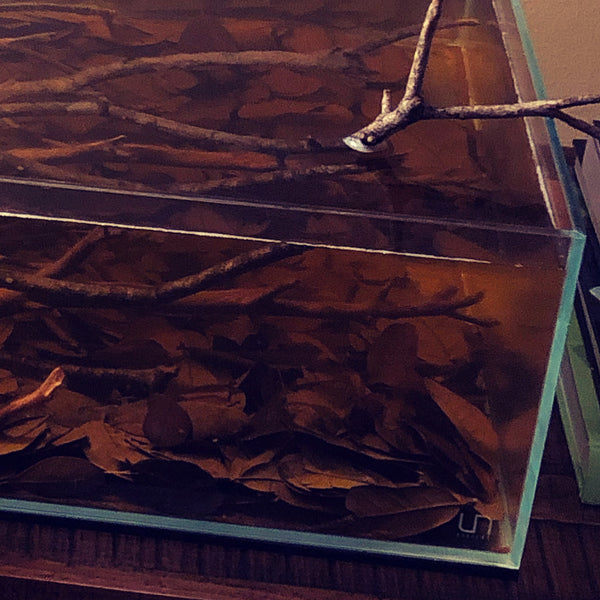
It’s also a great “foundation” for other experiments with botanical method aquariums, as we’ll discuss shortly.
One of the things that I love the most about this approach is that you can use such a small variety of materials, yet achieve a dramatic, ecologically rich aquarium with ease. The most important task is to prepare the leaves in order for them to sink and be able to recruit biofilms and fungal growths quickly, and ultimately decompose.
Then, it’s really a matter of simply waiting for the “bloom” of biological activity. You also have the option of “inoculating” your tank with bacterial supplements or cultures of microorganisms, like Paramecium, etc., as well as copepods or organisms like Daphnia or Cyclops. These are fun little experiments that can really help you create a functional little ecosystem from the outset, and help provide some supplemental food sources for your fishes when they’re added.
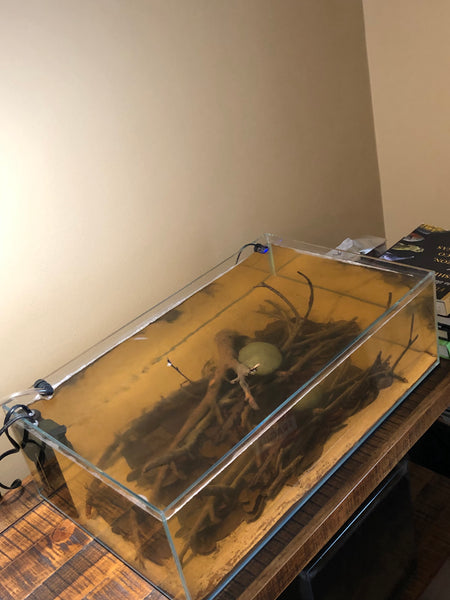
The idea couldn’t be more simple. The execution is really easy. The environmental evolution which arises couldn’t be more interesting! Yeah, easy. In fact, it was really a matter of setting in the leaves and twigs, and…doing nothing. Fungal growths form. Biofilms are recruited. Leaves soften and ultimately decompose…Stuff that will happen without any real intervention on your part…
This is really easy.
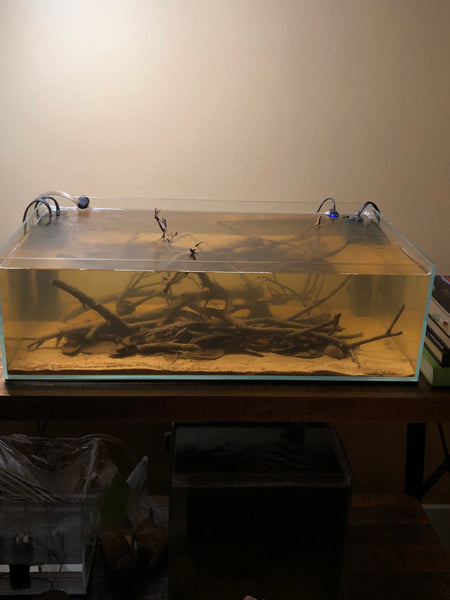
From an aesthetic perspective, this type of aquarium, by virtue of the fact that it uses a large amount of botanical materials, achieves a sort of “established” look very quickly. And from a functional standpoint, I find that these “leaf-litter-centric” systems seem to “settle down” and stabilize rather quickly, too. Very little fluctuation in the water parameters seems to occur after the initial setup, if lthey’re eft undisturbed.
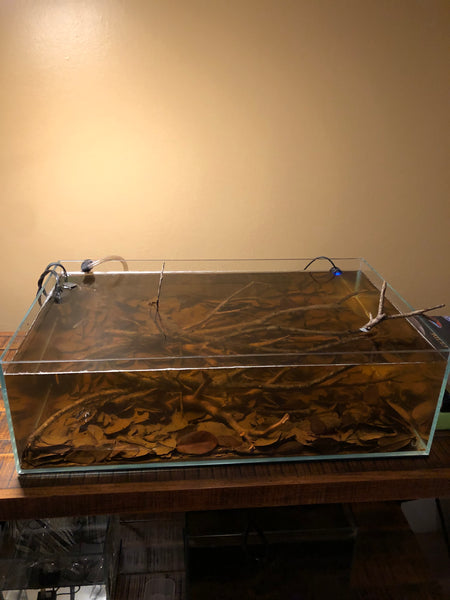
I could have managed this tank much like I had managed leaf litter systems in the past…Indefinitely letting it evolve, occasionally topping off with new leaves. Making few, if any changes of any kind.
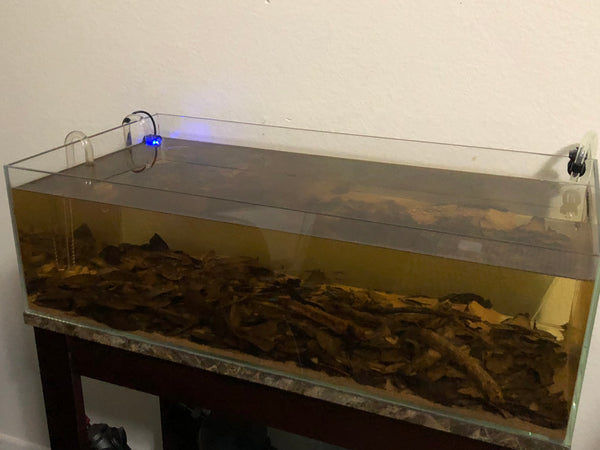
Yet, that was not the destiny I had in mind for this tank.
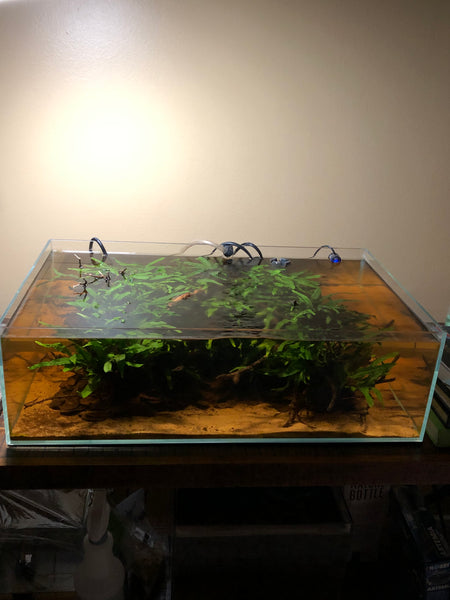
The idea behind this tank was to demonstrate that you could create a heavily botanically-influenced aquarium, yet “transition” if you want, and easily keep and grow aquatic plants in the system as well. The “transitional” part was when I added aquatic plants.
Taking this aquarium from a “hardscape” ( to steal an aquascaping term) to a “quasi-biotopic” planted aquarium was a fun! I envisioned a section of a Southeast Asian stream, where the epiphytic Microsorum is growing on some submerged twigs and branches near the shoreline.
I’ve seen videos of this feature a few times, and was always taken by the extremely luxurious growth of Java Fern right over and into a section of terrestrial material. The dark water, lighter colored sand, and mass of decomposing leaves and branches made this too irresistible to overlook!
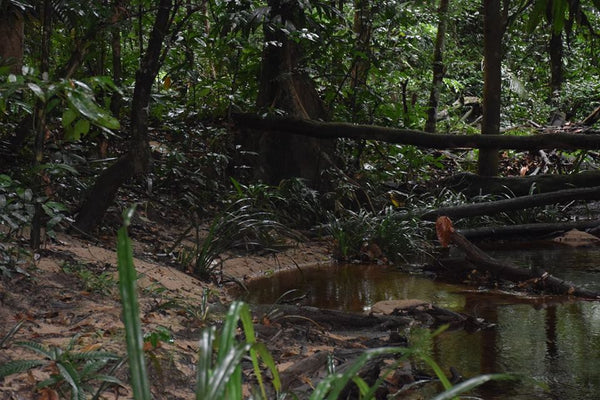
Once again, the interplay of the terrestrial and the aquatic habitats is incredible and alluring to me. And, since there was little substrate in this tank, keeping regionally appropriate rooted plants, like Cryptocoryne, was not possible from the outset. The epiphytic nature of Java Fern made it a perfect plant for this tank!
The idea wasn’t just to place a few specimens of Microsorum here and there on the wood. Rather, it was to pack it heavily with them, creating a lush, overgrown look immediately. I’d rather be in the position of having to thin out and prune a slow-growing plant in a few weeks than be waiting for a few specimens of said slow-growing plant to cover a large surface area!
(See- I can be impatient!)
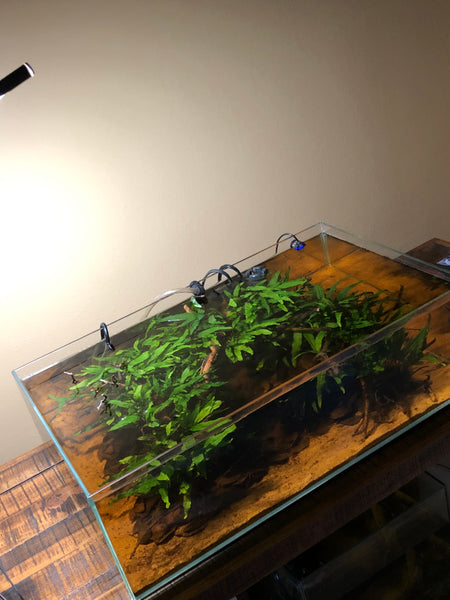
The idea of a dark, earthy, yet lushly planted aquarium has always appealed to me. Yeah, even though I’m not known for my use of plants in my work, I have been a fan of this “jungle”-type of approach to aquatic plants for many years. Interestingly, when I peruse images of the “Nature Aquarium” style aquairums, it’s always the more lush, almost “overgrown”-looking tanks that catch my eye.
I am a firm believer in Takashi Amano’s embrace of the Japanese philosophy of “Wabi-Sabi”- an acceptance of the transient nature of things, and their natural imperfections. And the approach I took with this tank- creating an evolving, semi-ephemeral “hardscape” of leaves and twigs, utilizing a significant quantity of just one species of plant, and allowing it to grow extensively in the tank, is as close to wabi-sabi as you’ll ever see me deliberately come!
Now, one thing I did was to “corral” most of the leaf litter into and among the matrix of branches. I did this because I wanted to see some exposed substrate for contrast, and wanted to emulate and emphasize the way leaf litter accumulates among submerged roots in Nature.
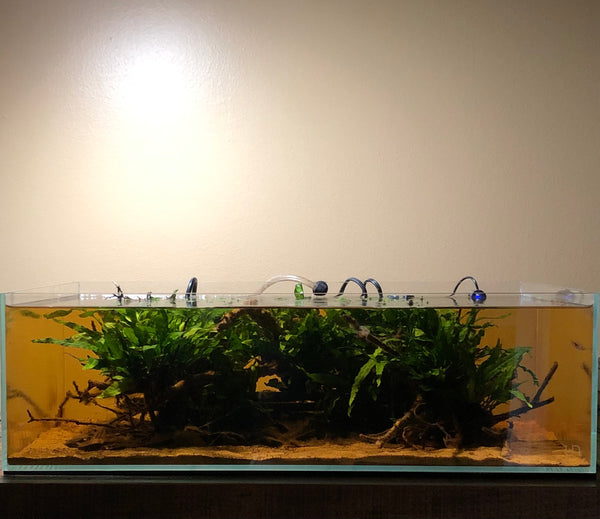
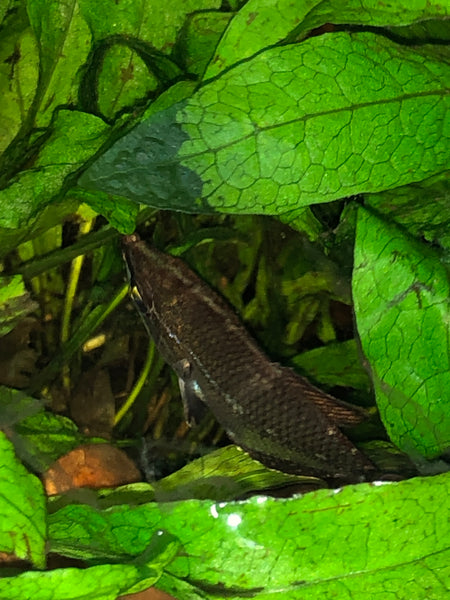
The inhabitants had to be a species of Rasbora, (R. hengeli) and one of my long-coveted fishes, Vaillant’s Chocolate Gourami”, Sphaerichthys vaillanti. This fish is an idea candidate for such a tank. Not only is the tank reasonably small, so I could actually see this shy fish now and again- it has deeply tinted water, and is further darkened with the thick matrix of branches and dense aquatic vegetation- a perfect representation of their wild habitat!
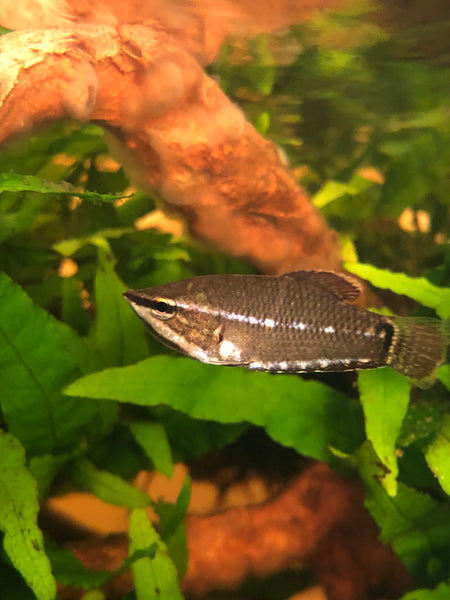
I really want to impress upon you how easy this aquairum is to equip, set up, run, and manage. You could easily get by with less “gear” than I used.
Let’s do a quick “recap” of the materials used for this setup:
EQUIPMENT
Aquarium: Ultum Nature Systems “60S” (23.62’x14.17″x7.09″)- 10 U.S. Gallons
Filter: Aqueon “Quietflow AT10” Internal Filter
Heater: Finnex “HMX 50S” 50-watt submersible
Surface Skimmer: Ehiem “Skim 350”
Lighting: Room Ambient, supplemented with an LED floor lamp I purchased on Amazon
NATURAL MATERIALS
Substrate: CaribSea “Sunset Gold” sand, Tannin NatureBase “Varzea” sedimented substrate (Substrate materials were mixed together to create a substrate layer approximately 1/4″-1/2″ inch (.635- 1.27cm) deep ).
Live Oak Leaf Litter
Large Oak Twigs
A few pieces of Borneo Catappa Bark
Java Fern “Narrow Mini”
And that’s it…
Now, these are the things that I used…You can certainly set up similar tank utilizing different equipment and materials. A lot of hobbyists would have used a canister filter, which I’ve done in the past. However, as you know, I pretty much despise all cannister filters for reasons I can’t always quite articulate, so I opted for the small internal filter. And you don’t have to use a surface skimmer, but I hate surface film, so in non-overflow-equipped tanks, it’s a “necessary evil” for me.
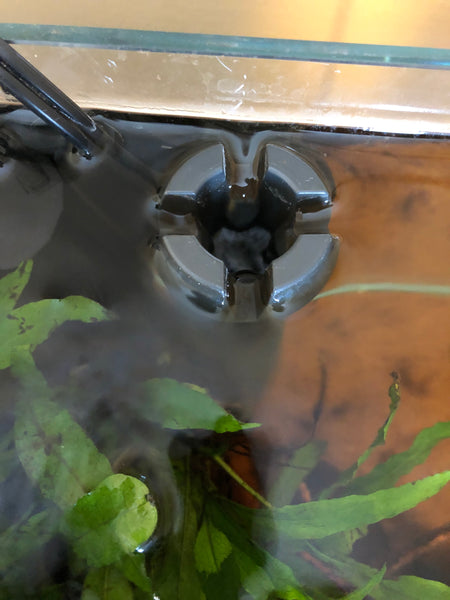
Yes, the equipment is visible unless you go to some lengths to hide it (part of the reason why everyone loves canisters!), but my “upside” is that I don’t have to deal with that damn “glassware” (one of the mostawful, shortsighted inventions in the history of aquarium keeping, IMHO. Absolutely stupid, overpriced, fragile, and shitty, in case you had doubts as to my position about glassware! 😆).
Deep breath, Scott…
So, it was sort of a “lesser of two evils” thing for me!
Personally, if a decent “all-in-one” aquarium with similar dimensions were available, I would have grabbed one in a heartbeat! An AIO aquarium can have surface skimming, “filtration”, and a place to hide the heater all in one convenient, aesthetically clean design.
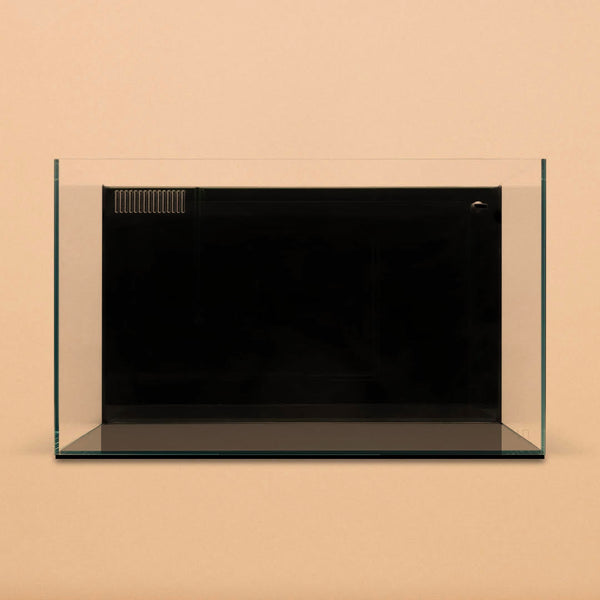
IMHO, the lack of AIO’s with more interesting dimensions and sizes is one of the great missed opportunities in the aquarium industry. I think they’d be “smash-hit” sellers…Someone needs to take the chance and step up! Better yet- some manufacturer needs to consult with me on this….😆
Oh, but this piece isn’t about my rantings against the aquarium industry, so let’s get back to the topic.
So, managing this aquarium really couldn’t be easier. My maintenance procedure includes exchanging 1 gallon/4L of water a week, cleaning the surface skimmer, and wiping away any algae I might encounter on the front glass (since the tank gets partial sun at certain times of the day, once little section of the glass occasionally gets. little algae film).
And that’s it. Easy. Literally, this tank is on cruise control. Oh , I added .50ml of Seachem Flourish Excel three times a week. I never felt the need to “top off” the leaves in the tank, as oak is pretty durable and tends to hang around a very long time before completely breaking down.
One of the cool things about a botanical method aquarium like this one is that you can observe the fungal bloom and gradual decline among the leaves, and upon the oak branches. Initially, there was significant fungal growth among the leaf litter, in particular.
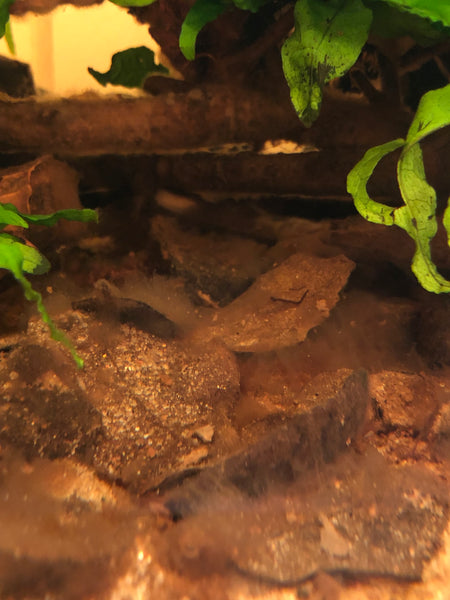
However, as always occurs in botanical method aquariums, the initial significant bloom of fungal growth always subsides to a vary manageable, more “aesthetically pleasing” level, and remains that way for the duration of the aquariums existence.
It’s yet another one of those “mental shifts” we ask you to make as a botanical method aquarium keeper. Being patient with your aquarium as it evolves. And the beautiful thing is that, when you do this, the aquarium often becomes something better than you initially envisioned.
The beauty of an aquarium like this one is that you can make a few “edits” to the theme along the way without issues, as we’ve discussed many times. This type of “baseline” “leaf-litter-centric” tank gives you a track to run on, and then you can make subtle changes without impacting the “operating system” of the aquarium.
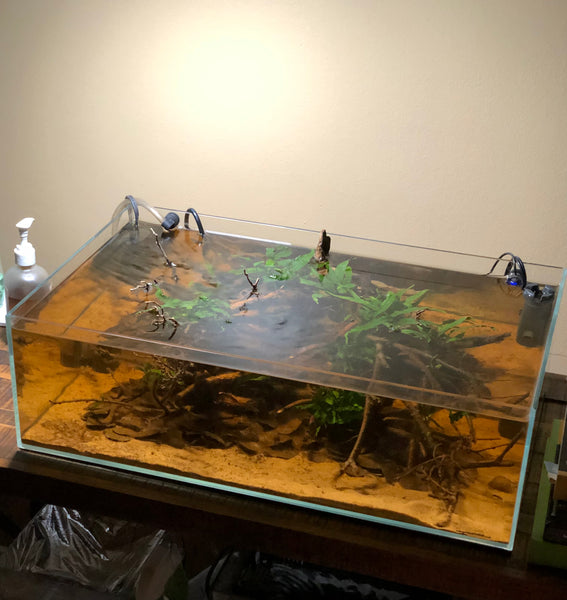
In the end, living with your botanical method aquarium isn’t just about a new aesthetic approach. It’s about understanding and processing what’s happening in the little aquatic ecosystem you’ve created. It’s about asking questions, modifying technique, and playing hunches- all skills that we as hobbyists have practiced for generations.
Editing, by any other name.
When you distill it all- we’re still just “keeping an aquarium”…but one that I feel embraces a far more natural, dynamic, and potentially game-changing methodology for the hobby.
Stay creative. Stay focused. Stay bold. Stay fascinated. Stay diligent. Stay relentless…
And Stay Wet.
Scott Fellman
 The Tint
Leave a comment