
One of the fun things about the aquarium hobby is that we always have the opportunity to find out new things about existing ideas, practices- and fishes! There are certain fishes which we have almost taken for granted in the hobby, yet, for which there still seems to be a lot of conflicting information about them circulating online and elsewhere.
I sometimes wonder if this is because there is that whole hobby “regurgitation” thing going on- a lot of well-intentioned “information aggregating” about an aquarium topic from individuals with little to no personal experience with an idea, technique, piece of equipment, plant, coral, or fish, shared authoritatively (and likely with good intentions…). So, what happens is that questionable information and ideas becomes “fact.”
When it comes to fishes suitable for brackish water aquariums, this regurgitated information hangs on for a long time, with little pushback or questioning. As a result, misinformation about various fishes and their suitability for these systems propagates. The result is confusion!
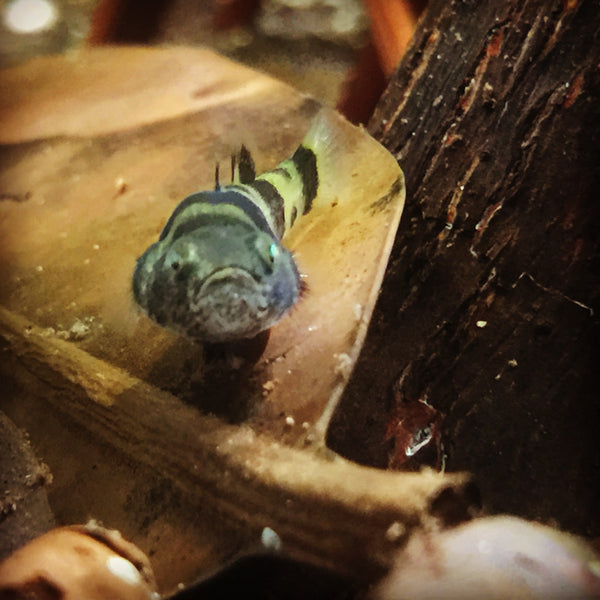
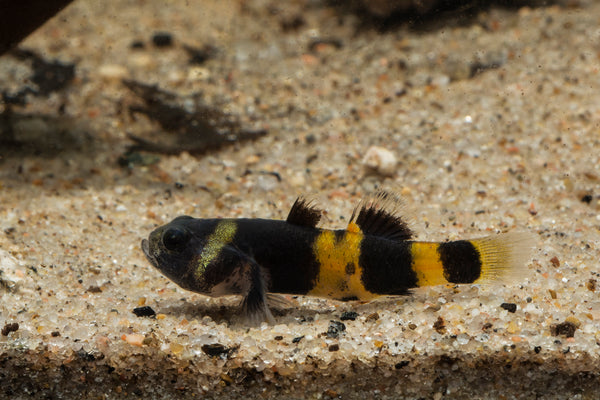
The poster child for this, IMHO, also happens to be the cutest freshwater fish- the lovable “Bumblebee Goby”, Brachygobius doriae. because, well- it’s really small ( like maybe 1.5″/ 38mm max), and hops around like its namesake. And it has this little face that’s…well, it’s cute. And, did I mention? It’s small. It’s even placed in a small genus, with only nine, occasionally-confused members.
Actually, not occasionally confused- pretty much always confused!
And, the real irony is that the fish which we in the hobby refer to as the “Bumblebee Goby” is Brachygobius doriae; however, “the books” always seem to illustrate and talk about the similar, but exceedingly rare Brachygobius (Hypogymnogobius) xanthozonus. It’s super easy to be totally confused about these fish. The collective “Bumblebee Goby” moniker that we as a hobby and industry attach to all of these little fuckers doesn’t help at all, either!
Don’t feel bad.
It’s not just us hobbyists who are making a confused mess of this stuff. Goby taxonomy is apparently, “…a Category 5 Shit-storm!” as one ichthyology student I reached out to for this piece relayed to me! Love the honesty of college kids!
Now, one of the things I love about this fish is that it’s one that we have a completely preconceived notion about, and the “Bumblebee Goby”, is like the poster child for “little brackish aquariums.” You know, the typical cliched ones, with white sand, a few grey rocks; maybe some plastic plants…
Those ones.
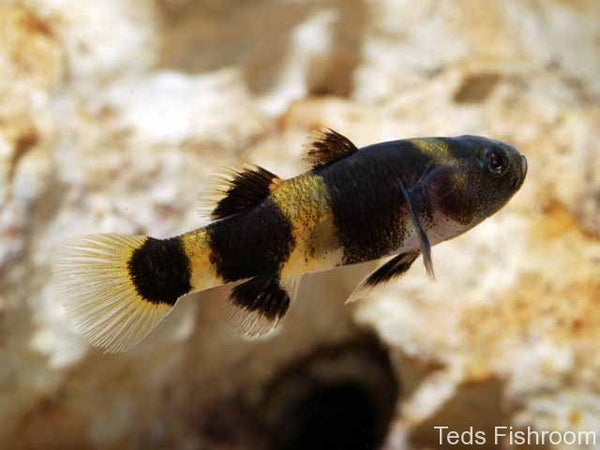
(The star of our blog…taken by our good friend, Ted Judy! Visit his site- tedsfishroom.com for all sorts of cool stuff!)
And, yeah, it IS found in brackish environments in places like coastal Southeast Asia, from the Mae Khlong in Thailand to the Mekong basin (Cambodia, Laos, and Vietnam), Malaysia (Peninsular and Sarawak areas), Singapore, Indonesia (Kalimantan, Borneo) and Brunei. In fact, the type locality for B. doriae in the Rayu River area in Sarawak, is described as “a warm, silty, structurally complex tropical swamp or estuarine backwater with abundant organic debris and dense riparian vegetation.”
Of course, there are multiple species carrying this “Bumblebee Goby” moniker!
There is one species, Brachygobius xanthomelas, which is, from every source I can access, a true freshwater “specialist”- not believed to inhabit brackish water habitats.
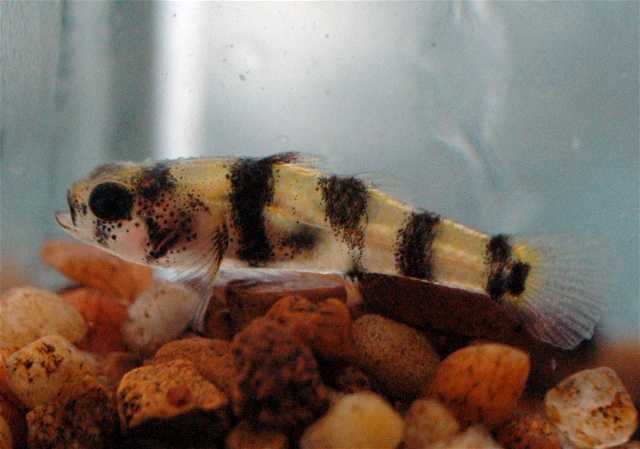
And then there is the confusing and similar B. sabanus, which really looks like B. doriae, and is found in both brackish and freshwater habitats, and…Yeah. I actually think I’ve kept that species before, having been simply and exasperatingly called “Bumblebee Goby” at the retailer where I purchased it from.
According to one source, the two species are extremely similar in appearance and easily confused, with the primary visual difference (to us, not ichthyologists doing scale counts) is that in B. doriae, the majority of the first dorsal fin, and about 2/3 of of the pectoral fin are black. In B. sabanus, the last ray or two of the first dorsal fin are clear, and a small percentage of the pectoral fin is black.
Yeah, try to determine THAT on a 1-inch fish in an established aquarium! I kind of understand why we use the common name to describe all of these little fishes now!
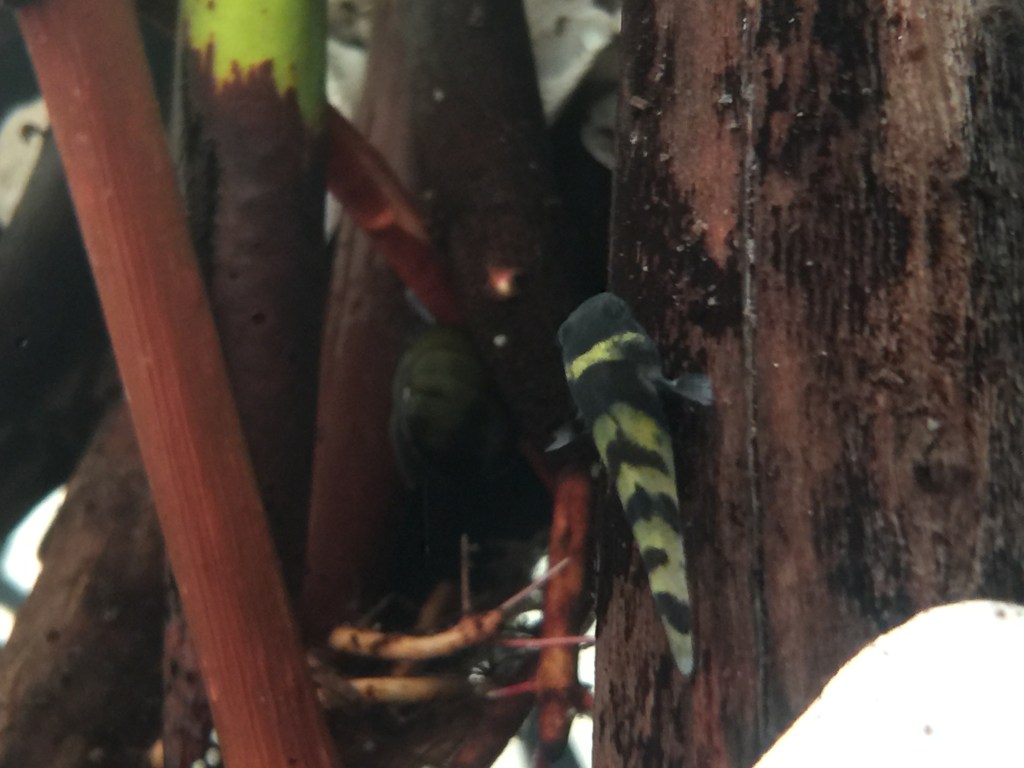
Oh, and supposedly B. sabanus is much smaller than B. doriae… Okay, but seriously….They’re both tiny-ass fish!
Whatever.
I’m pretty sure that the species in my brackish tank is B.sabanus, but I’m not 100% certain…Not that I’m easily confused or anything like that…😆
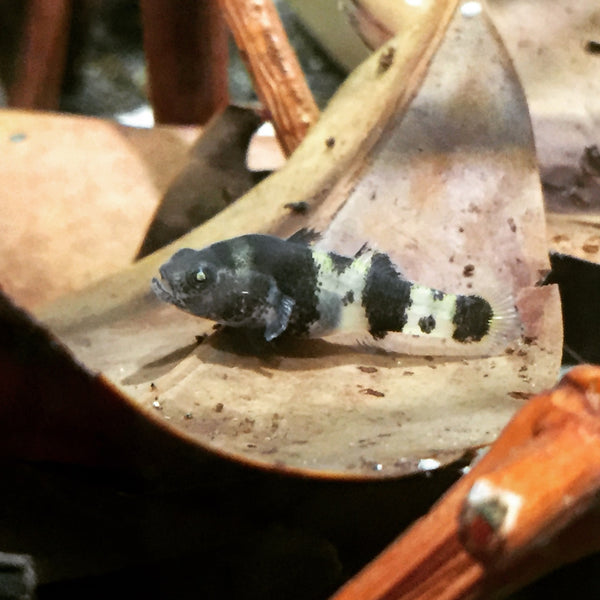
All species of “Bumblebee Gobies” are adapted to structurally complex environments. Their small size and disruptive yellow-and-black banding help them disappear among roots, shadows, and decomposing leaves. In the wild, it typically stays close to cover and perches on wood, leaves, or mud while hunting tiny crustaceans and insect larvae.
The real cool thing about our little friends, Brachygobius doriae and Brachygobius sabanus (or whatever the hell they are), is that some populations may be found in not only “regular” freshwater habitats- but soft, acidic freshwater...like those tannin-stained peat swamps that we’ve talked about before!
Now, in these peat swamps, they surprisingly tend to be found in waters that are more mildly acidic (like 6.8 and up), but nonetheless, this is an extraordinary range for a fish that has been long ago “typecast” by the aquarium trade as a primarily brackish water fish, wouldn’t you say?
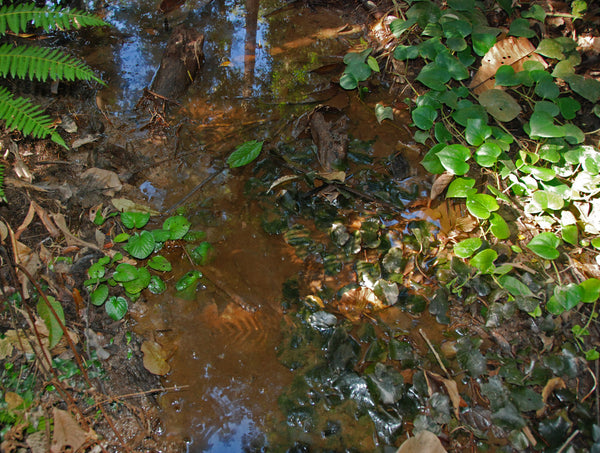
Now, most aquarium-available populations of these fish tend to come from pure freshwater, or if we’re lucky, brackish. Typical habitats include brackish tidal creeks, mud-bottom channels, mangrove root systems, and areas with leaf litter and submerged wood. This may either be freshwater or brackish.
And, to the little guys’ credit, they are highly adaptable. Many habitats experience dramatic seasonal changes:, for example, monsoonal flooding (which dilutes salinity), a dry season which increases salinity, and even tidal cycles which alter water chemistry daily!
Because of this, the species is naturally adaptable to variable salinity, though usually not to fully marine conditions.
The problem is that we as hobbyists are at the mercy of our suppliers to advise us where they came from- not always an easy thing to do! To my knowledge, they are not currently available as captive bred specimens with any degree of regularity, so it’s all about imported wild ones.
Once you identify what species you actually have, if that’s your thing- careful acclimation to your water conditions- whatever those might be- is necessary. Like a lot of small gobies, Bumblebees tend to not tolerate wildly fluctuating environmental conditions well.
I’ve kept them in brackish (SG 1.003-1.010) water with a little “tint” and perhaps a slight turbidity to it for many years with great success (and I even had two instances of them laying eggs!). Our concept of the “botanical-method brackish” aquarium is pretty much a perfect fit for these little guys, IMHO...assuming you carefully acclimate them to your conditions.
Bumblebee gobies rely heavily on camouflage, stillness, and complex cover ( ie; Mangrove roots and leaf litter) for protection, spawning, and feeding, and we’d be well advised to provide this kind of environmental complexity in our aquariums as well.
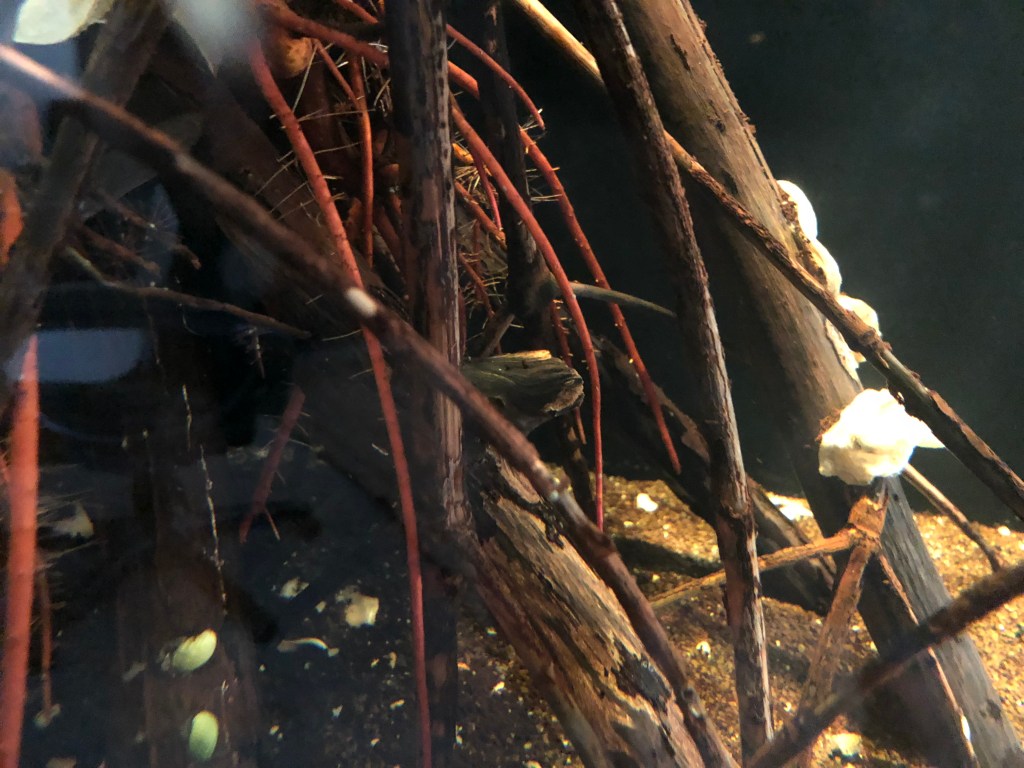
With the Bumblebee Goby being a little fish that tends to hop around on the substrate, it’s not a bad idea to learn more about the composition of the substrate in the localities where it’s found, right? I did a little digging (LOL) in the available scientific information on these fishes and their common habitats, and found that the locations in which they are found tend to have fairly specific types of materials in the substrate.
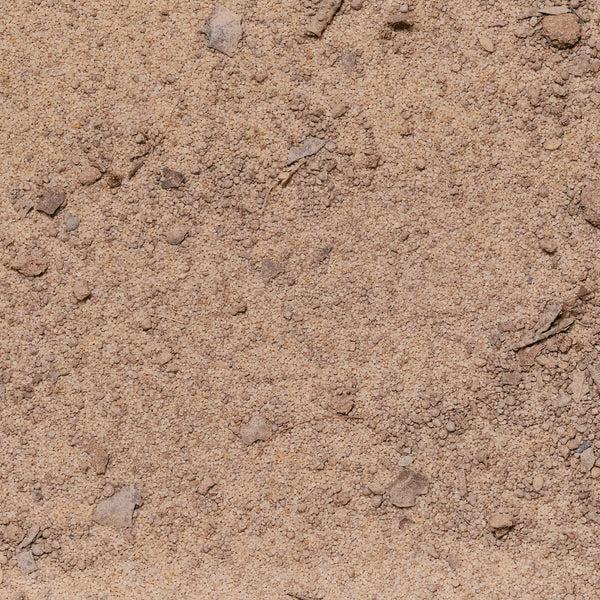
The substrate itself is typically described by ecologists as muddy, sandy, silty and interspersed with leaves, driftwood, and mangrove roots in the brackish areas. Did you see the “leaves” part? Yeah…kinda what I was thinking. I love the mud part, too- a theme that I’ve been talking about over and over here in “The Tint”, haven’t I?
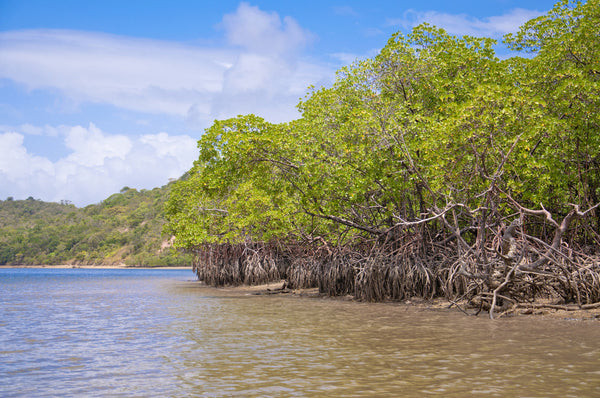
As I’ve said for years, I feel that we need to spend a lot more time as hobbyists thinking about how substrates are an integral part our fishes’ habitats, and the significance they play in their daily lives. We should create “functional” substrates in our aquariums that reflect the composition of these natural habitats, as well as their impact on the ecological needs of our fishes.
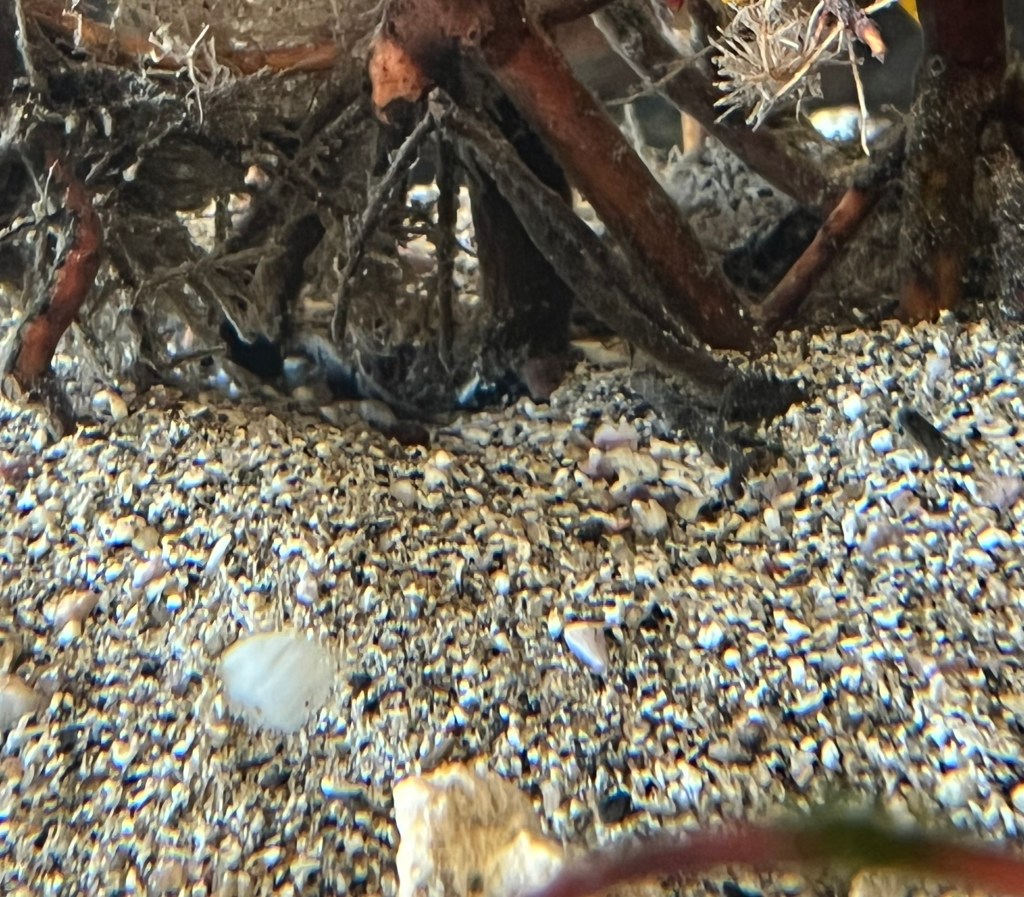
When it comes to actually keeping the fishes, I’ve always kept these Bumblebee Gobies in “community” settings- that is- a community of their own species.
Like, a larger group of 10-20 specimens.
I suppose the this “big community” approach is a bit “unconventional” in aquarium hobby practice, but if you want to see their most natural behaviors, this is the best way, IMHO. They remind me very much of marine Jawfishes, in which there are definite social hierarchies and territorial boundaries and such.
Field collections sometimes recover many bumblebee gobies together from a small area, suggesting they tolerate conspecifics well when space and cover are abundant. Juveniles may also aggregate more than adults do.
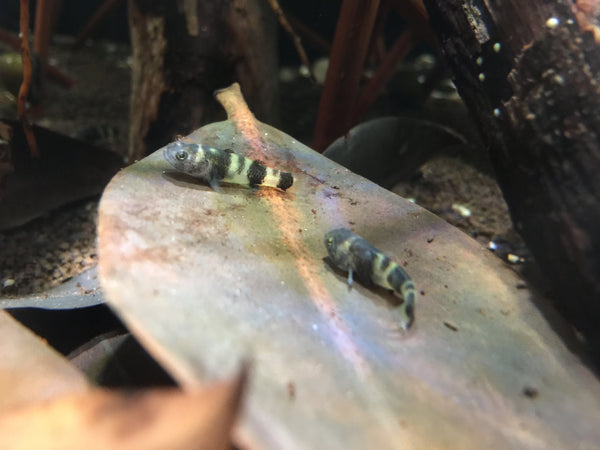
You don’t need a huge aquarium to keep them, and an argument could be made for a small tank being best (primarily because of the ability to monitor them closely and assure that they are feeding well)-but wouldn’t it be cool to keep a bunch of these tiny guys in say, a 40-50 gallon tank? Yeah…Of course it is! Especially if it’s set up correctly!
Now, that’s a proportionately huge tank for some tiny little fishes, but trust me- it’s the ultimate “stage” for these guys! And it gives you an appreciation for the unique environments that they come from.
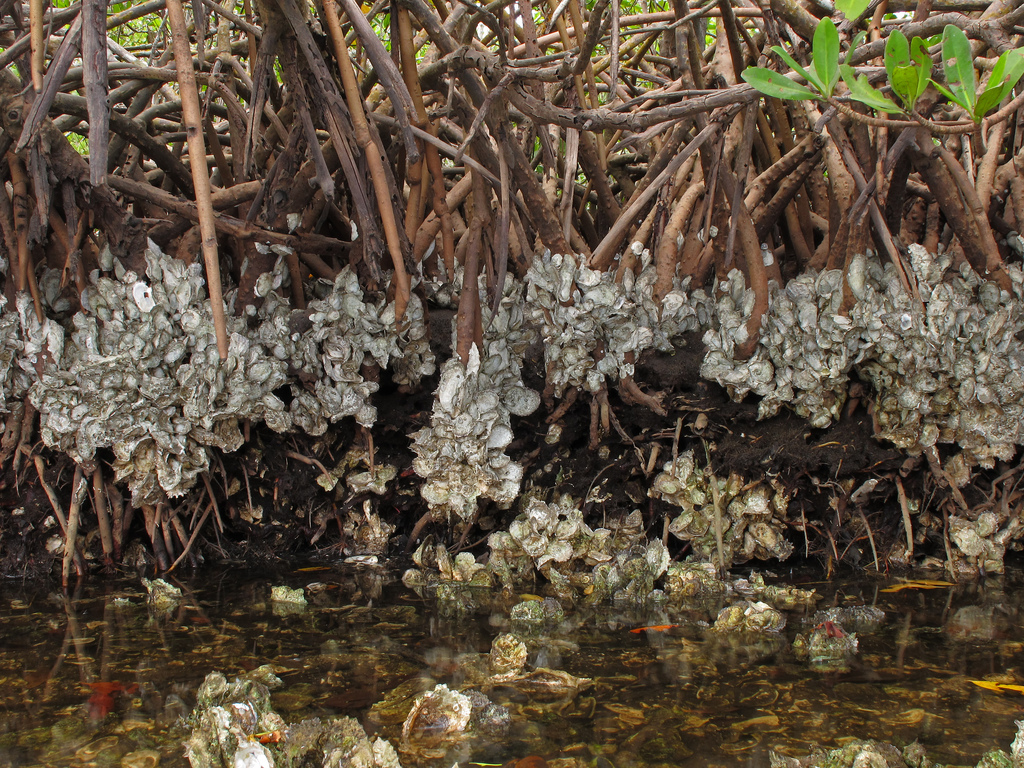
I suppose one could argue that the larger tank makes it harder to “find” them because of their diminutive size, but it also provides scale and room for a substantial community of them- and that to me is a huge advantage! Besides, if you have to look for them in the display, you’re likely more engaged by the display, right?
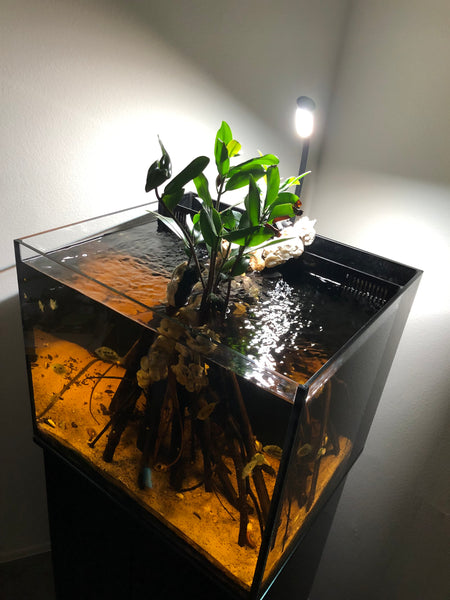
Regardless of the size of the aquarium you keep them in, careful acclimation and quarantine of newly-received Bumblebee Gobies is really important, because they’re little fishes, and are often half-starved and otherwise stressed upon arrival at the LFS. They do need ample time and attention in order to acclimate to captivity healthily. A well-established, ecologically “productive” botanical-method brackish system is idea for this species!
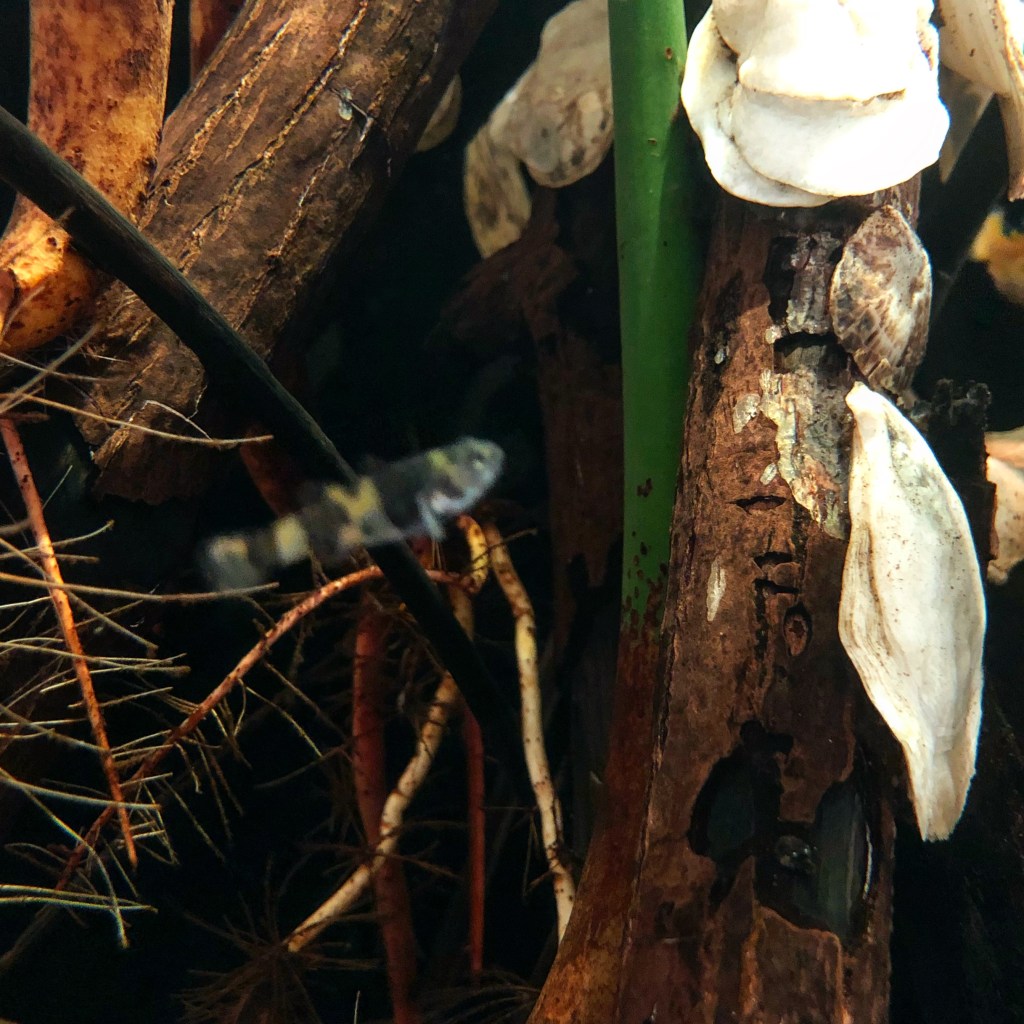
And the way you set up the tank; the way it’s “scaped”, is so important to facilitating their health, happiness, and interesting behaviors! This is where not just relying on aquarium references is important. Look on sites like fishbase.org, find scholarly articles, and see the “occurrences” of the fish, and research these collection sites…You’ll find out a lot about these locales if you “deep dive”.
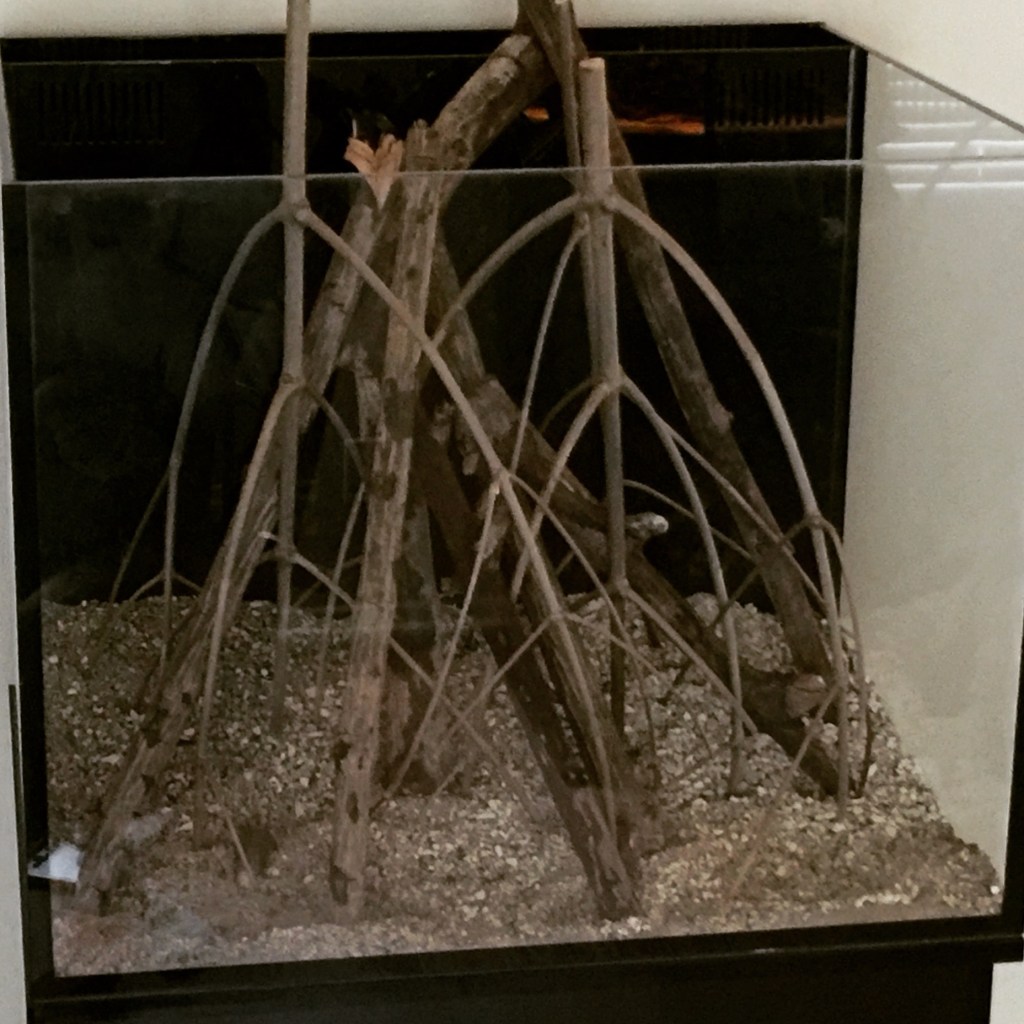
You can find out lots of interesting details about the varying ecologies of the areas in which they are found in Nature. This will definitely inform your on good ways to keep them in an aquarium! Personally, I think that the mangrove habitats are the most interesting and rewarding ones…
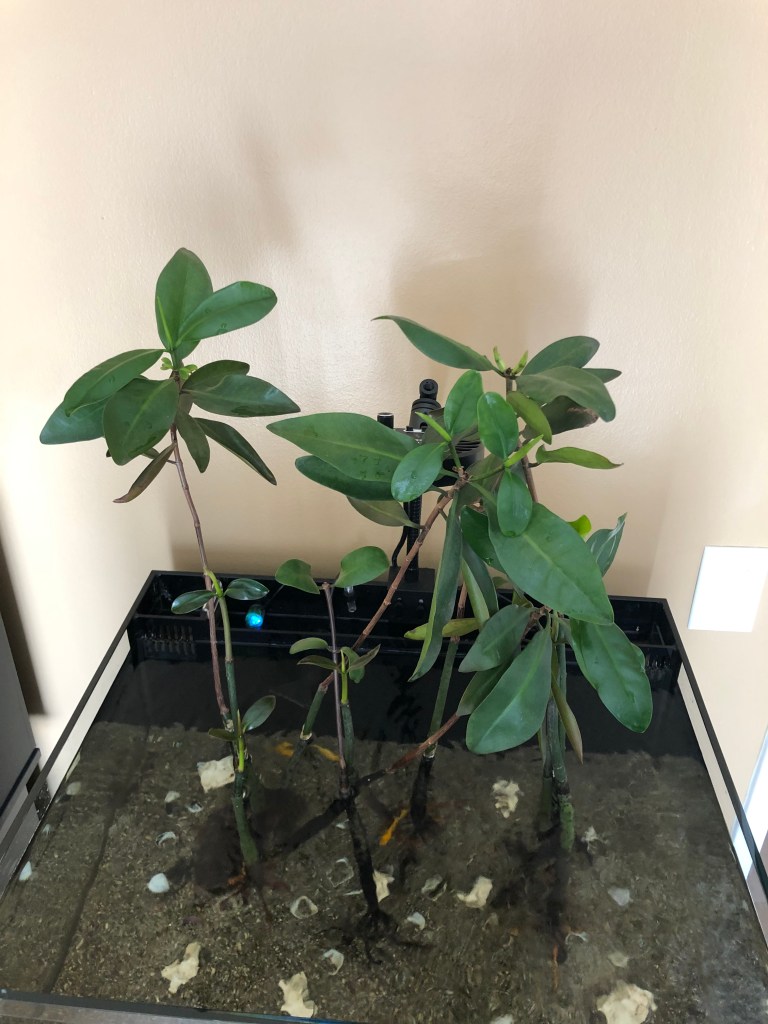
Regardless, the importance of setting up an aquarium with a variety of “micro-niches” (i.e.; rocky areas, empty shells, branches, palm fronds, leaf and botanical accumulations, mangrove roots, etc.) cannot be overstated. Not only does it look cool aesthetically (duh..), it facilitates social behaviors, provides potential food sources, and as well.
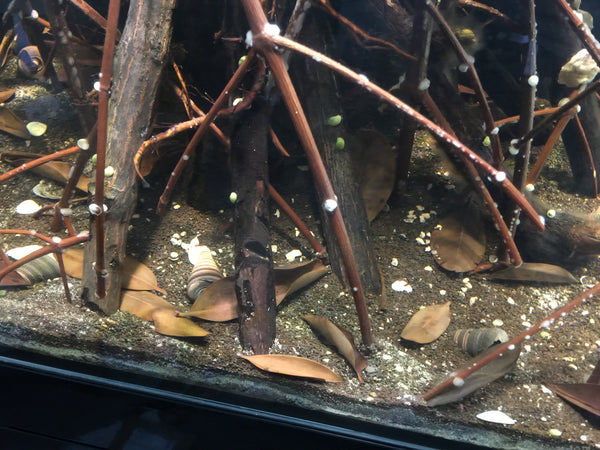
Having decomposing leaf litter and sedimented substrates provides the opportunity for these little guys to forage among- important, because it is sometimes a bit of a challenge to get them to feed on prepared foods.
Direct, species-specific gut content studies on Bumblebee Gobies are surprisingly scarce in scientific literature. That said, the available evidence paints a fairly consistent picture of B. doriae as a specialized micropredatory carnivore. Reported stomach contents of wild specimens include copepods, ostracods, amphipods, mysids, tiny shrimp larvae, and organic detritus.
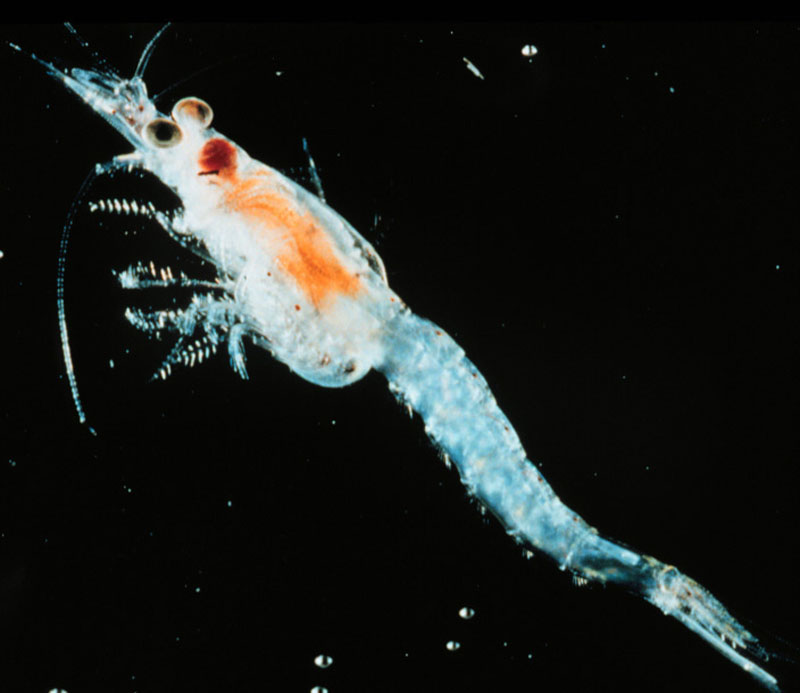
I’ve found, however, that they will typically acclimate to frozen and live brine shrimp, small mysis, and even consume some of the commercially available live copepod cultures (like those from Reef Nutrition and others) over time. These products can really make a difference in the success of keeping Bumblebees long term!
Rather than actively chasing prey in open water, Bumblebees perch, dart short distances, and suck in their tiny prey. Keep this behavior in mind when setting up a system for them to live in, and when considering what foods your offer to them. (and how you offer it to them!).
The botanical-method aquarium approach gives you that additional “edge”, providing supplemental food sources, as we’ve discussed many, many times here. This not only helps the fishes acclimate more easily- it supplements whatever foods you are providing them with no effort on your part.
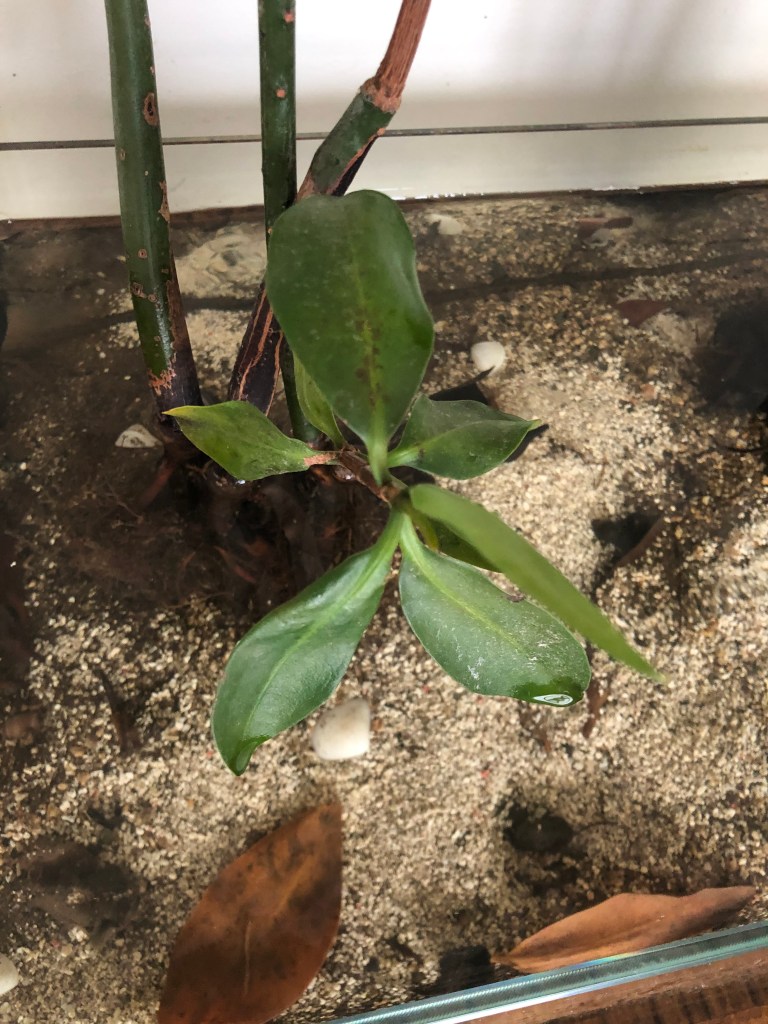
As I have mentioned already, it’s great to keep these guys in a group- the larger the better, IMHO! This is why a decent-sized aquarium makes the most sense to me!
Now, one of the things we’ve learned about humans behavior over the centuries is that just because you’re small doesn’t mean you can’t be a bit of a jerk- and these guys are no exception! You’ll occasionally get a dominant male that is just such a…well-asshole- that he pretty much can be the “top dog” of his domain of tiny friends, making life sometimes miserable for them.
You need to watch this type of behavior and occasionally intervene to make sure it doesn’t get out of hand (and it can, believe it or not…Seeing two 3/4″ fishes going at it is only partially funny when one of them gets the living shit kicked out of him).
Again, that’s the value, IMHO, of using a much larger aquarium than you’d think that you need for these guys. It spreads out the population so as to give everyone their own “personal space.”
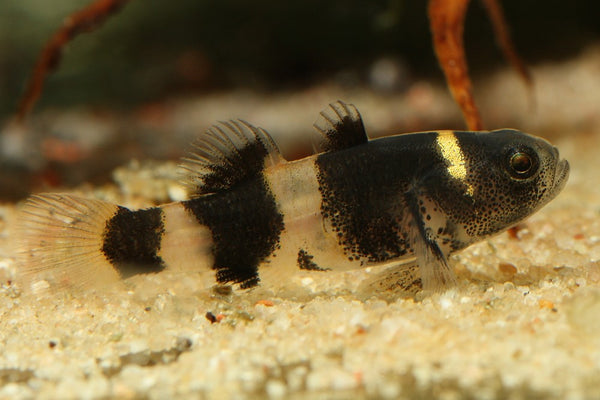
(Image by Dirk Golinski, used under CC-BY-SA-3.0)
Perhaps my favorite aspect of these fishes is that many of them ARE truly brackish-water fishes, or at least, brackish-water “friendly”, and are truly worthy of their very own display tank. A group of these small, endearing fishes can be as exciting as any of the larger, flashier fishes which we associated with brackish tanks.
And since we have a “better way to do brackish”, IMHO, we can leverage this ability with better understanding of the habitats from which these guys come from in Nature, how they feed, and what they feed on, and create truly amazing displays for them!
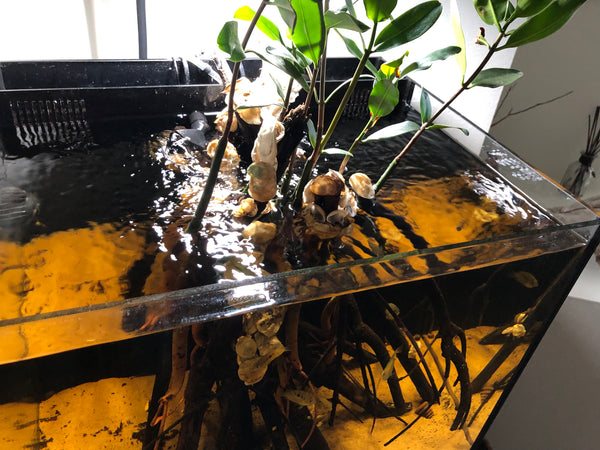
The frequent frustration many hobbyists encounter when they embark on a brackish water aquarium adventure is a distinct lack of readily-available hobby-friendly information on the fishes and their habitats.
And of course, there is a significant challenge to source some of the fishes from these unique habitats…and, indeed, it’s often a matter of discerning which fishes actually come from brackish water habitats! This will be an ongoing struggle until suppliers regularly fish in, and note their brackish water collection locales. Hobby vendors will also have to do their part to pass this information on to the consumer whenever it’s available. A real team effort!
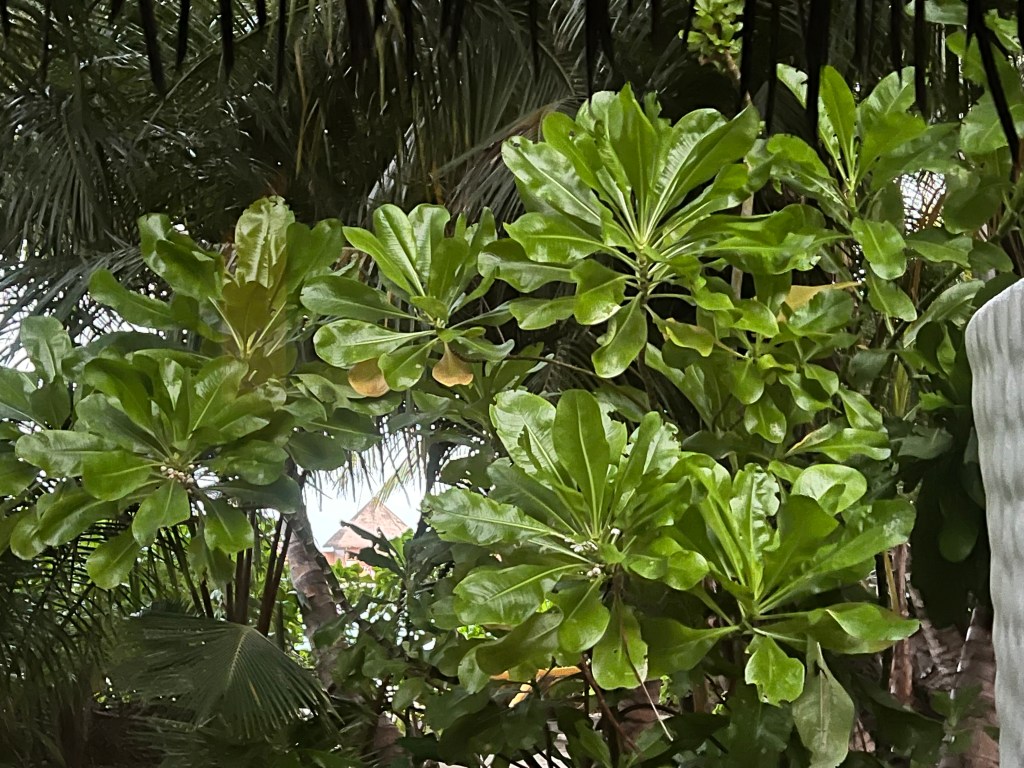
Oner of my 2027 projects will be to work a lot more with brackish. My last couple of years have been consumed with reef-keeping again, and it’s given me a lot of insight that will inform my upcoming brackish work.
And, as we start looking closer and closer at brackish aquariums, we’ll start looking more and more closely at some of the fishes that we could use in our brackish aquariums. I’ll keep revisiting this topic to provide some inspiration and information based on my personal experience and research whenever possible.
Now, this piece was not intended to be a landmark, definitive, ground-breaking expose’ on what’s already pretty well-known fish in the hobby. However, I wanted to get you thinking about some of the fishes that you’ve already heard of, perhaps even taken for granted, while looking at them in the context of the type of environments we’re talking about with our botanical-method brackish work.
Seeing how they can thrive in a more ecologically appropriate aquarium setup is the real takeaway here!
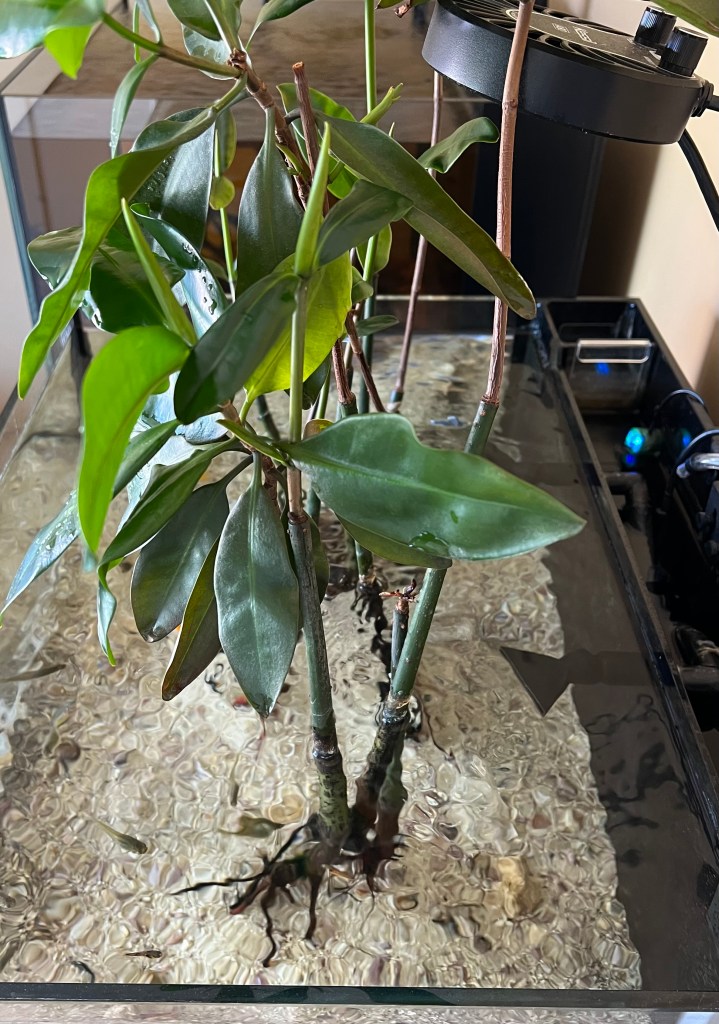
Of course, as we look at some of the common (and rare) fishes that are perfect for what we’re doing, I’ll always give you my honest thoughts on their husbandry and adaptability to aquariums.
The “Bumblebee Goby” (whatever species you might encounter), is one of our enduring, yet surprising hobby faves, for a lot of reasons. However, given the many variables associated with their environment, and the challenges in acclimating and feeding them, it begs the question:
Should you keep this fish?
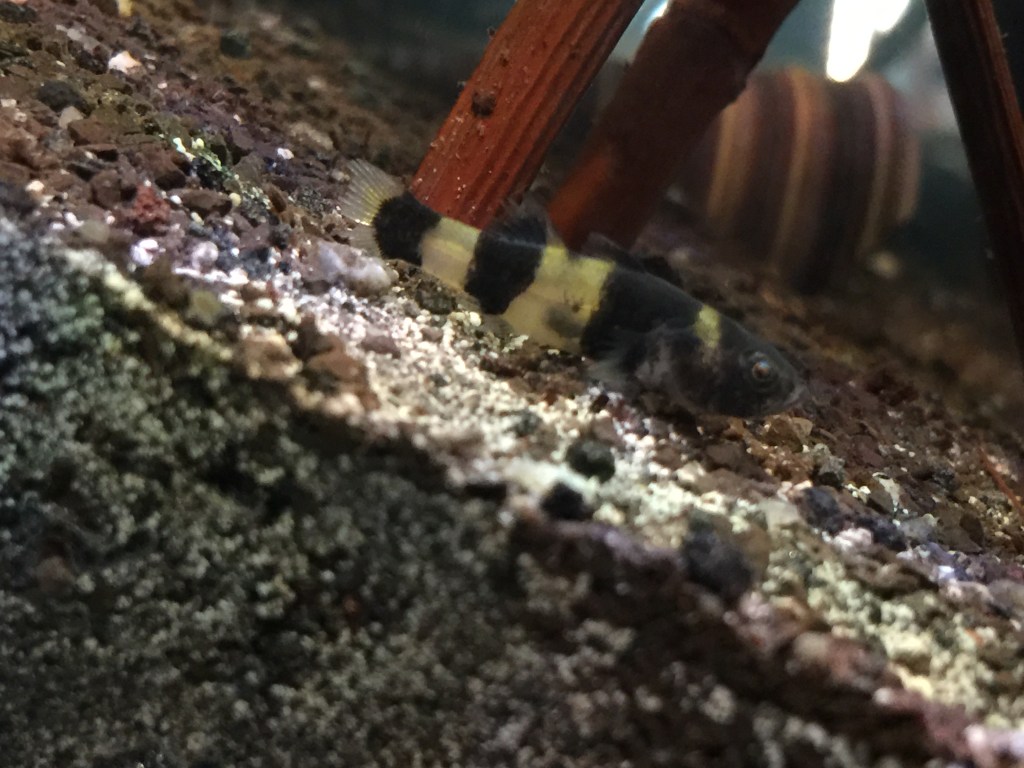
Well, sure, if you’re up to the idea of really setting up the correct conditions for the species that you have.
They’re simply not a “super-easy” fish that you can just pop into any old tank…They’re not difficult, either, but you need to understand your fish and the habitat which they came from in order to really be successful with them, IMHO.
I’m thinking of lots of cool ideas to keep these fishes healthy and happy for a long time…and no doubt, you have many of your own! Be sure to share, because I love to hear what you do, too!
Stay excited. Stay creative. Stay “slightly salty…”
And Stay Wet
Scott Fellman
 The Tint
Leave a comment