
One of the many questions I have received lately was about how my philosophy of creating a tank works. Now, at first, I had to laugh a bit…I was like, “Umm, you buy a tank, fill it with water, and…” Of course, that WASN’T the gist of the question. What the questioner really wanted to know was how I decide what to include and how to configure my aquariums; what guides these decisions.
It’s a pretty good question!
The summarized answer? It’s all about the habitat.
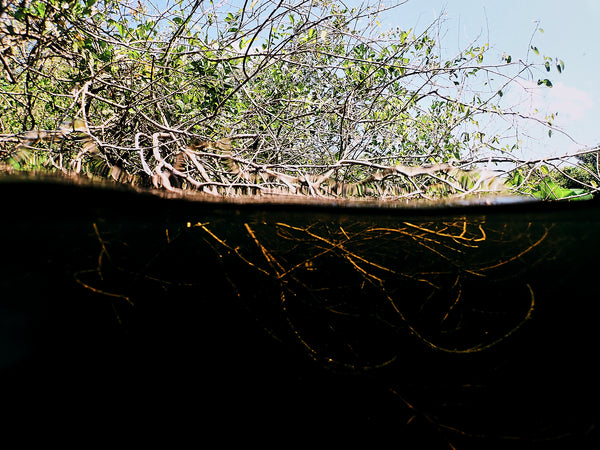
Now, I don’t profess to be some sort of “guru” on the philosophy of aquarium design and such. However, I do have some definite opinions about what drives my designs.
First off, I am a keen observer and student of wild aquatic habitats and ecological niches in the tropical world. I have found that I am drawn to certain types of habitats; typically, those in which terrestrial materials, like soil, leaves, seed pods, and the like influence the ecological characteristics of the water, and the fishes which live there.
These are the types off ecosystems that I love to replicate in my aquariums.
That being said, I will not only observe the aesthetics of the habitat which I want to replicate- I spend a ridiculous amount of time trying to replicate, as faithfully as possible, the function of the habitat as well.
I have long believed that, there is almost always something to be gained by “repatriating” our fishes to conditions that are similar to those which they have evolved to live in for eons. And that’s despite the fact that many fishes, like Discus, Tetras, etc. are kept and bred successfully in hard, alkaline “tap water” conditions- and have been for generations in the hobby/industry
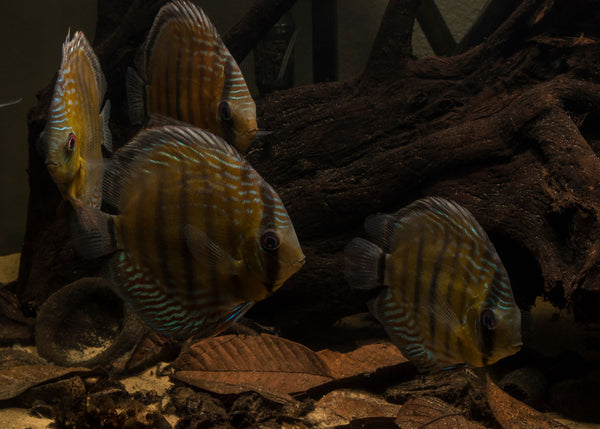
I just don’t believe that a few dozen generations of captive breeding under dramatically different environmental conditions (ie; hard and alkaline water) than their wild environments have eclipsed or erased some of the fishes’ evolutionary adaptations to specific conditions, or diminished the positive effect that those conditions have on them. I mean, sure, just because fishes are adaptable to radically different environmental parameters than they evolved to thrive under doesn’t meant that it’s “better” for them.
I think we can and should do things a bit differently.
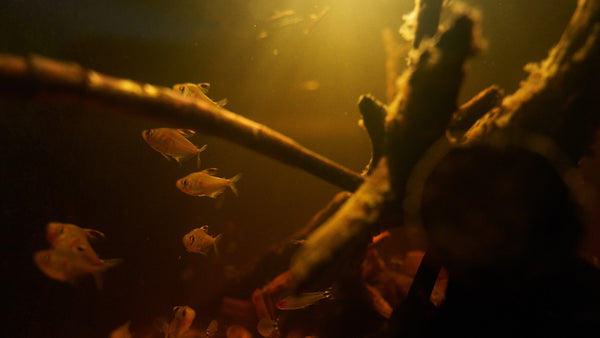
We have to draw a distinction between what’s best for the fishes and what’s easiest for us as hobbyists to create and maintain. And arguably, if we don’t bother to study, understand, and appreciate the wild aquatic habitats from which our fishes hail, how can we understand their fragility and the dramatic impacts of humans on them? Your fishes may “come from a hatchery”... But that’s not where fishes come from. Make sense?
I think so.
So, to summarize- my philosophy is to study and understand the environments from which our fishes come, and to replicate them in function and form as best as possible. It doesn’t always mean exactly- but it’s definitely NOT forcing them to adapt to our “local tap water “conditions without any attempt to modify them.
Here’s a “case study” of my own that sort of reflects the execution of my philosophy:
As many of you know, I’ve had a long obsession with the idea of root tangles and submerged accumulations of leaves, branches, and seed pods. I love the silty, sedimented substrates and the intricate interplay of terrestrial plant roots with the aquatic environment.
I was doing a geeky “deep dive” into this type of habitat in Amazonia, and stumbled upon this gem from a scientific paper by J. Gery and U. Romer in 1997:
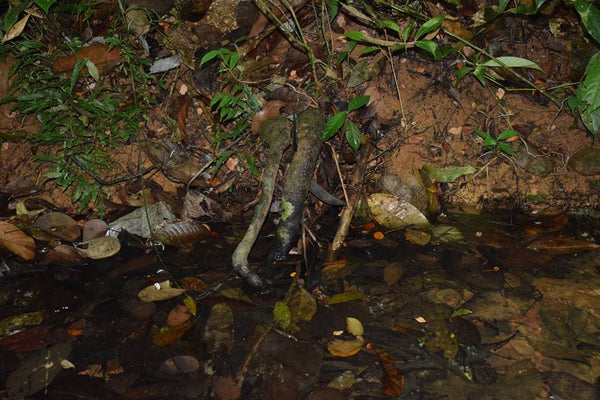
“The brook, 80-200cm wide, 50-100 cm deep near the end of the dry season (the level was still dropping at the rate of 20cm a day), runs rather swiftly in a dense forest, with Ficus trees and Leopoldina palms…in the water as dominant plants. Dead wood. mostly prickly trunks of palms, are lying in the water, usually covered with Ficus leaves, which also cover the bottom with a layer 50-100cm thick. No submerse plants. Only the branches and roots of emerge plants provide shelter for aquatic organisms.
The following data were gathered by the Junior author Feb 21, 1994 at 11:00AM: Clear with blackwater influence, extremely acid. Current 0.5-1 mv/sec. Temp.: Air 29C, water 24C at more than 50cm depth… The fish fauna seems quite poor in species. Only 6 species were collected I the brook, including Tucanoichthys tucano: Two cichlids, Nannacara adoketa, and Crenicichla sp., one catfish, a doradid Amblydoras sp.; and an as yet unidentified Rivulus, abundant; the only other characoid, probably syncopic, was Poecilocharax weitzmani.”
Yeah, it turned out to be the ichthyological description of the little “Tucano Tetra”, Tucanoichtys tucano, and was a treasure trove of data on both the fish and its habitat. I was taken by the decidedly “aquarium reproducible” characteristics of the habitat, both in terms of its physical size and its structure.
Boom! I was hooked.
And I had great source for quality specimens of these fish, so things just started to line up!
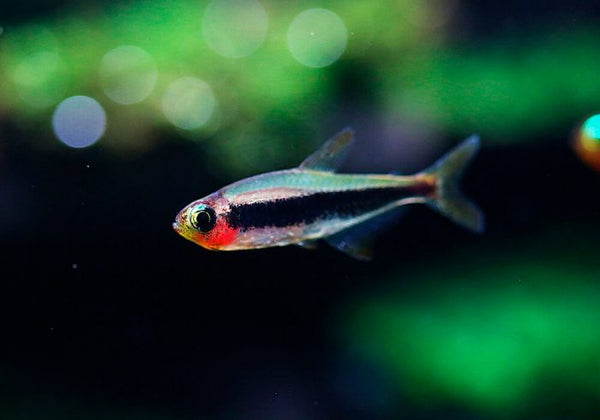
I needed to replicate this habitat! And how could I not love this little fish? I even had a little aquarium that I had been dying to work with for a while.
It must have been “ordained” by the universe, right?
Now, I admit, I wasn’t interested in, or able to safely lower the pH down to 4.3 ( which was one of the readings taken at the locale), and hold it there, but I could get the “low sixes” nailed easily! Sure, one could logically call me a sort of hypocrite, because I’m immediately conceding that I won’t do 4.3, and I suppose that could be warranted…
However, there is a far cry between creating 6.2pH for my tank, which is relatively easy to obtain and maintain for me, and “force-fitting” fishes to adapt to our 8.4pH Los Angeles tap water!
So, even the “create the proper conditions for the fish instead of forcing them to adapt to what’s easiest for us” philosophy that I adhere to can be nuanced! And it should!
I personally don’t want to mess with strong acids at this time. It’s doable…a number of hobbyists have successfully. It’s not easy, and can be quite challenging. And to be honest, I don’t think it’s 100% necessary for many fishes.
Like, I’d rather provide the very real benefits for the fishes from humic substances and other compounds derived from the wood, leaves, botanicals, and soil athat I use, and forgo the challenging low-pH manipulation and management. You can lock in a lot of the other ecological aspects of the you fishes’ natural habitats without going “full chem.”
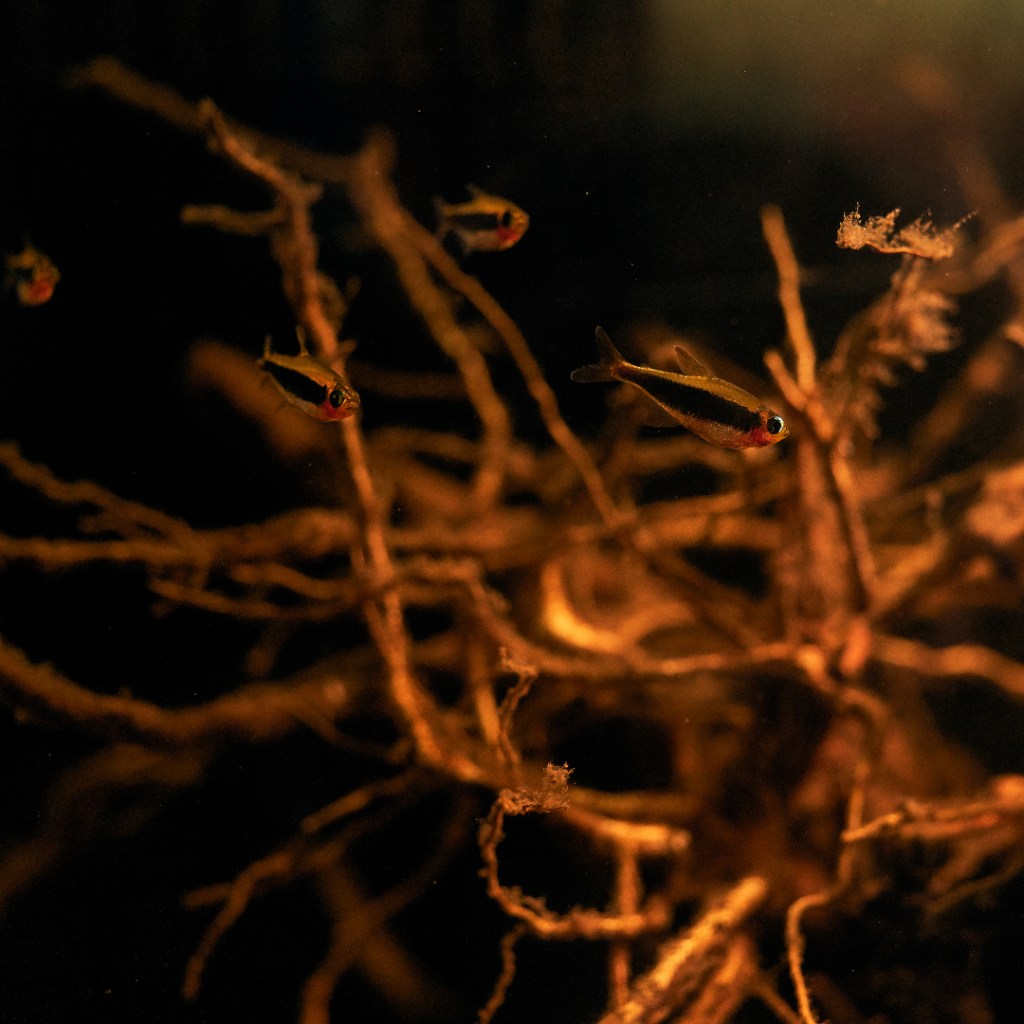
And the idea of executing it in a nano-sized AIO aquarium made the entire project more immediately attainable, less expensive (have you priced a Tucano Tetra lately?) and a bit less daunting. I knew that I could pull off a compelling biotope-inspired setup on a small scale.
I had a plan.
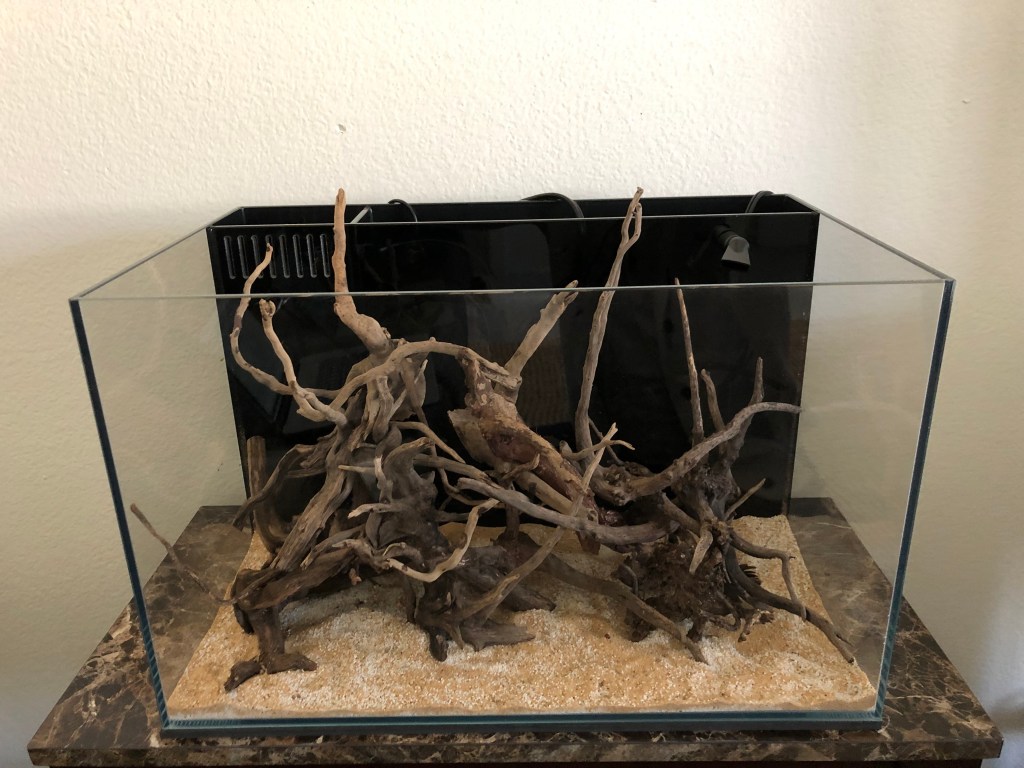
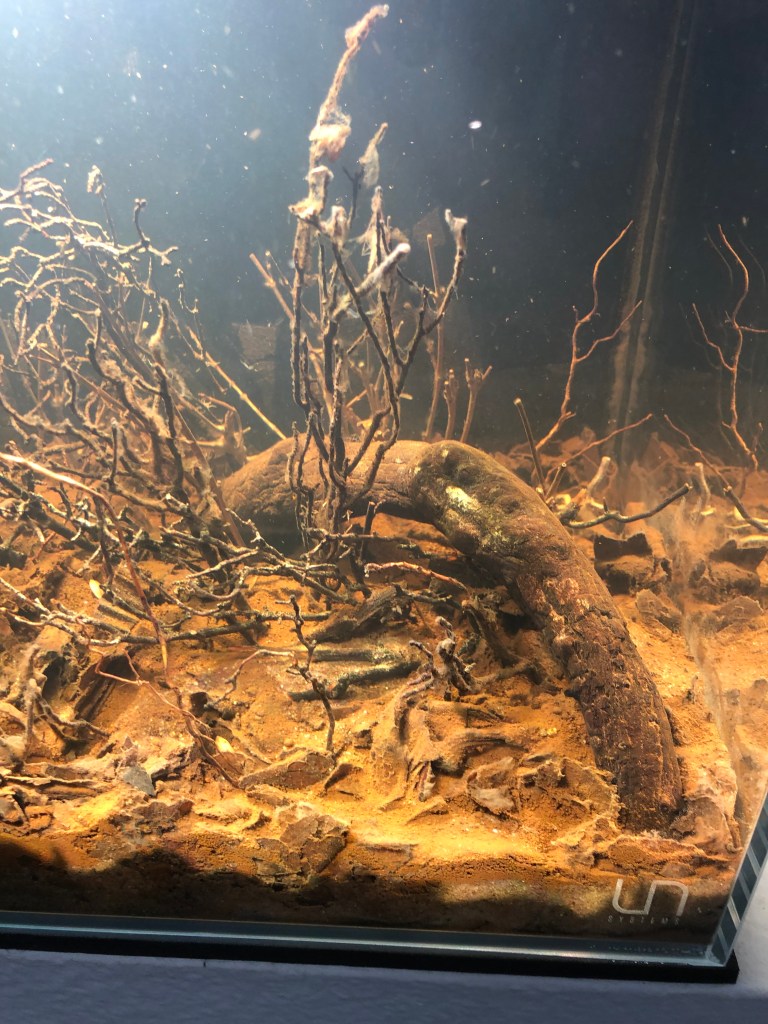
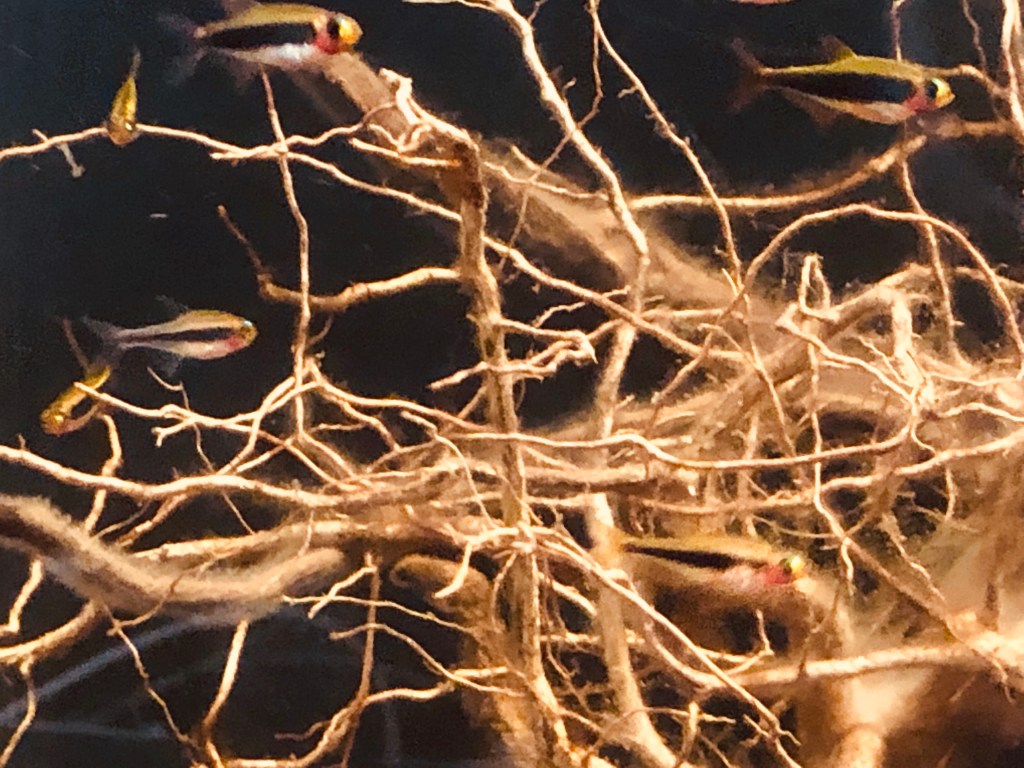
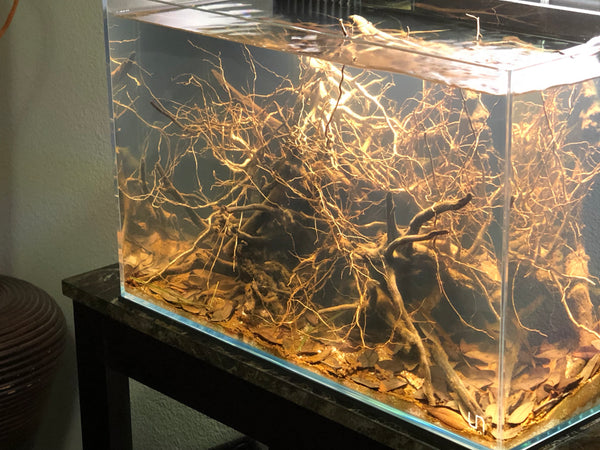
My idea centered around those root tangles… I have an obsession with a material called Melastoma Root from Indonesia. It possesses just the right combination of delicate appearance and structural integrity to simulate the root sections found in the Tucano’s natural habitat. By laying a few of those over a little “superstructure” of small driftwood pieces, I achieved the very effect I was shooting for quite easily!
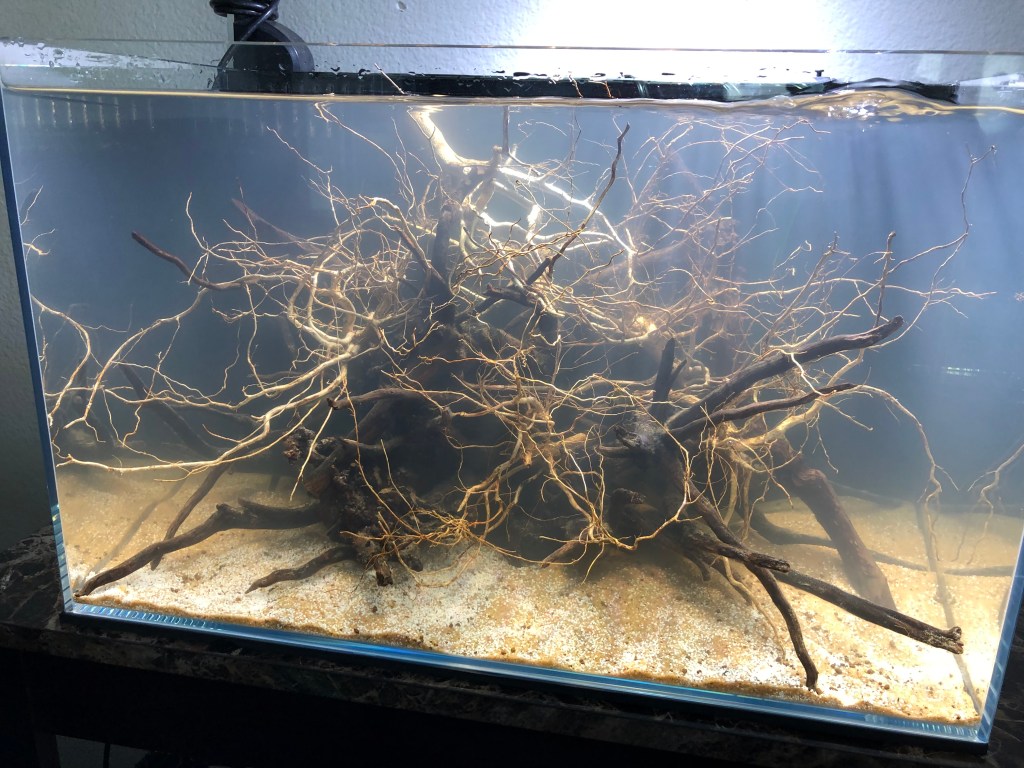
And of course, the leaf part of the equation was best achieved by using my all-time fave, Live Oak leaves, along with a few Ficus leaves, both of which provided not only the right ecological impact, but a perfect sense of “scale” for the small tank.
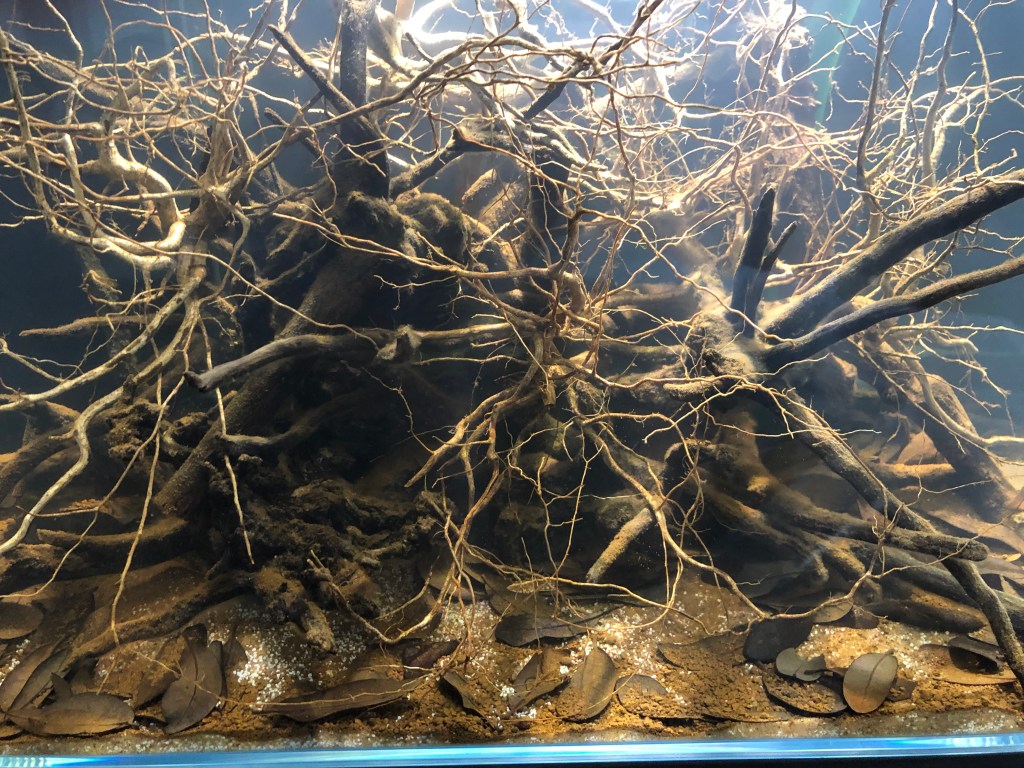
And without flogging a dead horse, as the horrible expression goes, I think I nailed many of the physical attributes of the habitat of this fish. By utilizing natural materials, such as roots, which are representative of those found in the fish’s habitat, as well as the use of Ficus and other small leaves as the “litter” in the tank, I think we created a cool biotope-inspired display for these little guys!
And man, I love this tank.
Like, I love it more than any other “biotope-inspired” tank I’ve ever set up.
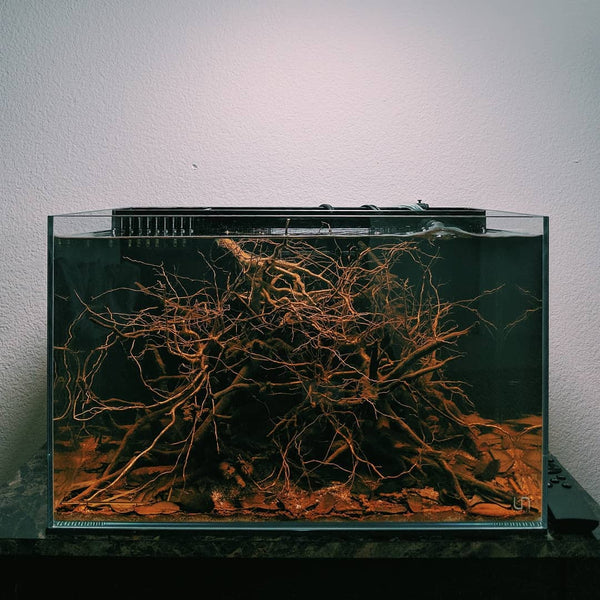
Being able to pull off many aspects of the look, feel and function of the natural habitat of the fish was a really rewarding experience. And I recall how I knew that I must have been on to something when my friend, Johnny Ciotti, one of the hobby’s most talented aquascapers/visionaries/photgraphers, stopped by after I had set up the tank, and the first words out of his mouth were, “Holy shit!”
So, setting up a system based on the ecology of a wild habitat is fascinating on so many levels. This tank is but one example of this philosophy in action. Again, it’s NOT perfect. It’s certainly something that can- and should- be improved upon. The pH thing, for example. But the physical environment; the biological nuances…the long-term function of this type of aquarium microcosm…I think we are well on our way to building a lot of “best practice” stuff here.
I’m still not satisfied yet…
However, I think it’s a good start.
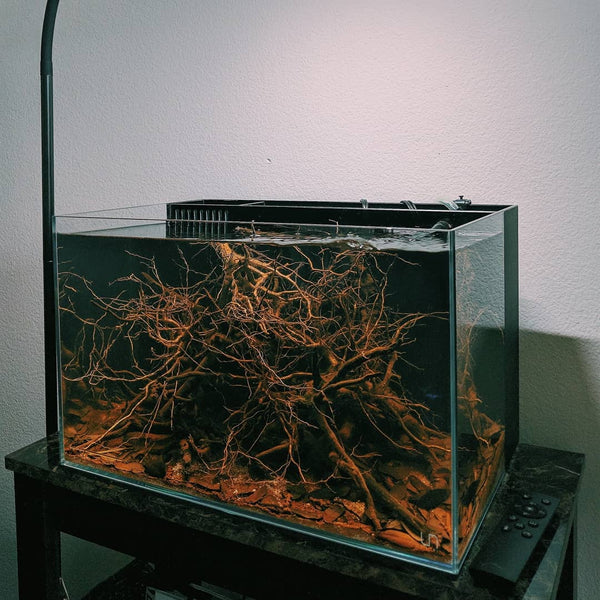
After an initial settling-in phase, this tank easily shifted out of “new and pristine mode” into “looks like a natural habitat” mode, as I kind of expected that it would! This is usually what happens when you combine natural materials like leaves and roots and sediments. It just comes together so nicely.
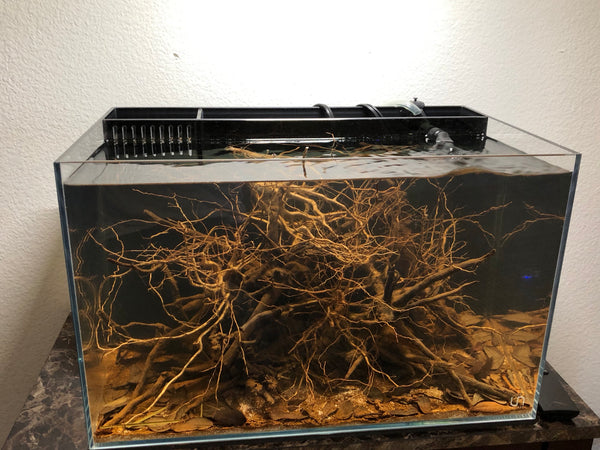
As the water darkened, and the biofilms and “patina” took over, the tank became a perfect demonstration of the power of simply “executing and waiting” on your tank to “do its thing” and evolve.
And evolve it did- in a relatively short period of time!
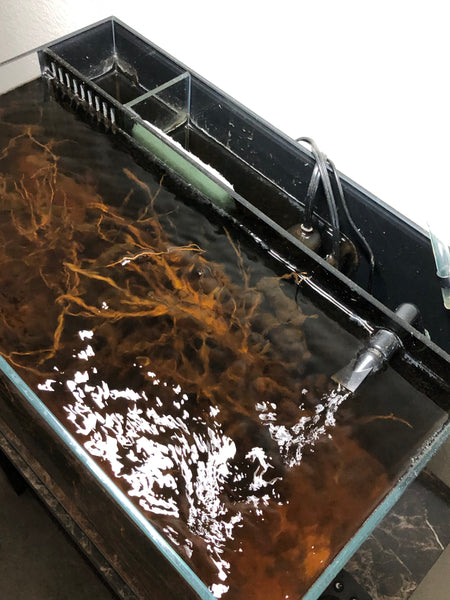
And, people have asked why I didn’t do it in a larger tank. Well, it’s pretty simple: I tried it on a small scale because of the tiny size (and breath-taking price!) of the Tucanos; I figured they’d be utterly lost in a larger (like 50 US gallons) aquarium. Not to mention, that I’d have to take out a second mortgage on my home to acquire a population significant enough to make it look like there were any fish in the tank!
So, here I am.
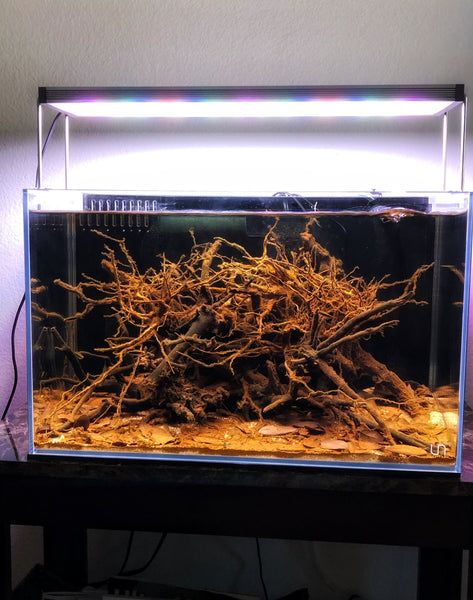
Of course, I DO love the physical appearance of the aquarium so much that I totally want to scale this baby up! That’s a total fish-geek mindset, for sure!
I mean, why stop when you have a good thing going, right? LOL
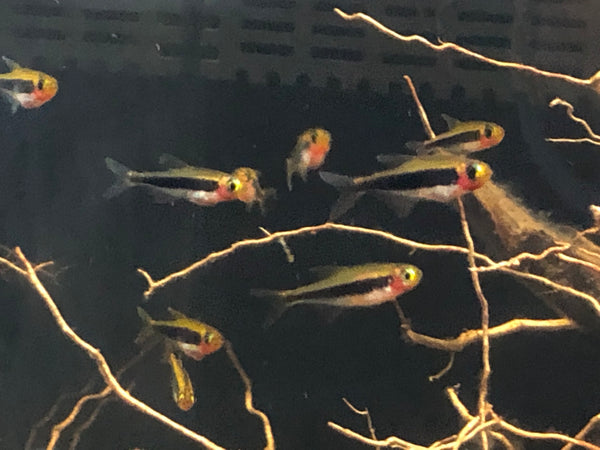
Would I add some other fishes to this tank?
My original plan was to sort of stay reasonably monospecific, with just the Tucanos. However, reaserch showed that some fishes are found sympatrically with the Tucanos- specifically, the cute little cichlid, Ivanacara adoketa, some Amblydoras catfishes, Rivulus (yeah, killies- but the fucking things jump like mad…and in my open-top tank…), and the coolest of all- the equally tiny and somewhat pricy Poecilocharax weitzmani– a fish that looks a lot like the Tucano, but dwells in the leaf litter.
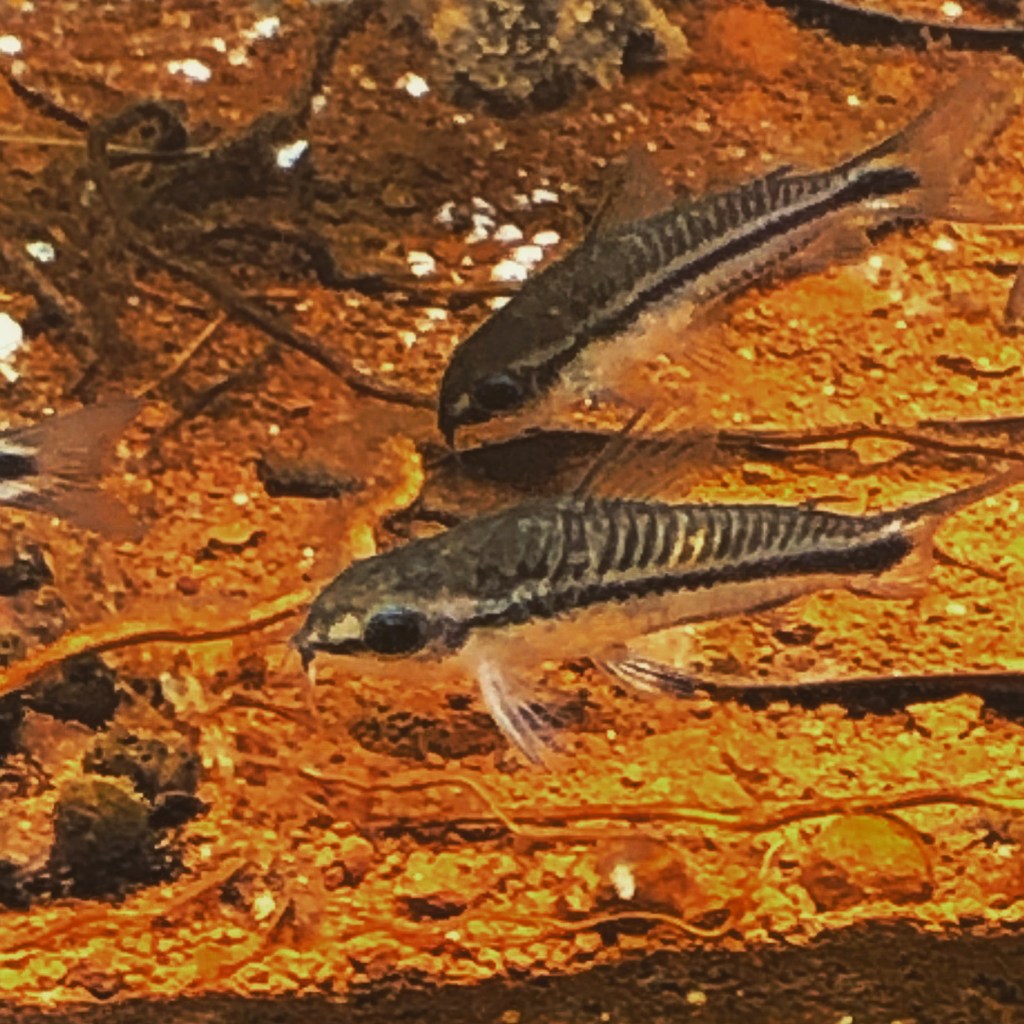
And I had a hell of a time sourcing P. weitzmani, so I looked for a “replacement” that would provide some similar benefits to the tank. I ultimately settled on adding some Corydoras pygmaeus to the mix, to create a little interest and some action (Yeah, the Tucanos are not the most active swimmers, lol). They definitely seem to enjoy rooting through the leaf litter and substrate during their daily routine.
There is a certain joy in creating an aquarium for the expressed purpose of replicating the ecological aspects of a wild habitat, and then discovering over time how much you love the aesthetics!
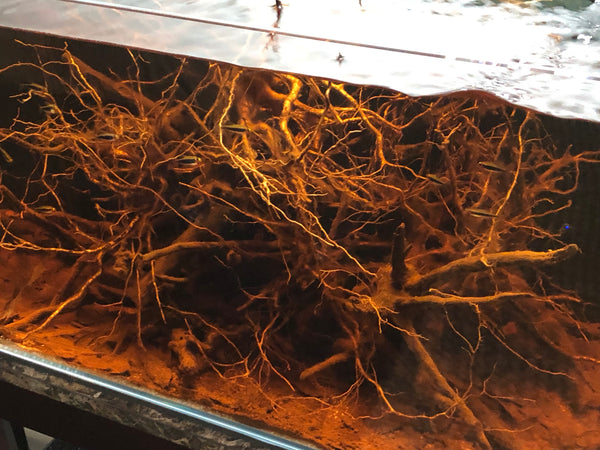
I think it also requires the usual caveats- a “mindset shift” that embraces the fact that the natural habitats we love don’t always meet our “acculturated” aesthetic expectations. We need to understand that Nature does her own thing, regardless of whether we “approve” of it or not!
The toughest thing about doing aquariums like this is that mental game, which tasks us to accept that Nature simply does things differently…and that we need to strive to emulate Her work with an open mind.
Keep striving.
Scott Fellman


Leave a Reply