
Like many of you, I don’t consider myself a “beginner” in the hobby. After a lifetime of doing this stuff, I feel like I’ve learned a few things along the way.
The aquarium hobby has a rather strange reputation for being complicated. Walk into a fish store or browse an online forum, and you are immediately introduced to endless equipment lists, water chemistry charts, dosing schedules, filtration debates, and a morass of conflicting opinions. For many beginners, the experience can feel overwhelming before the first fish even enters the tank.
But aquariums do not have to be complicated to be successful.
In fact, some of the healthiest and most enjoyable botanical method aquariums are built on simplicity. The key is understanding that this specialty is not about buying the most advanced equipment or chasing some hobby view of “perfection.” It’s about creating a stable environment and learning to enjoy the process.
A healthy aquarium is not a machine. It is a small ecosystem.
Beneficial bacteria process waste. Plants absorb nutrients. Microorganisms break down debris. Once established, botanical method aquariums become surprisingly self-sustaining when left undisturbed.
This is why experienced aquarists often repeat an important lesson: patience is more important than intervention.
Many problems in the botanical method aquarium approach come from reacting too quickly, or making big, impulsive moves, like changing water chemistry repeatedly, over-cleaning filters, adding unnecessary chemicals, and constantly rearranging or remodeling the aquarium.
Sometimes the best action is simply allowing the aquarium time to stabilize naturally. A simple aquarium is not a lesser aquarium in any way! In many ways, it reflects a deeper understanding of the hobby itself.
Success with aquariums does not come from controlling every variable. It comes from consistency, observation, and yeah, restraint.
The most successful aquarium is often the one where the aquarist has learned when to stop interfering and simply enjoy it.
A botanical method aquarium rewards restraint. Successful botanical method aquarium keepers learn to observe trends instead of reacting instantly to every visual change. The big “secret” is that the aquarium ecosystem often corrects itself when left to its own devices.
For whatever reason, many in the “mainstream” hobby outside of our little niche are under the impression that botanical method tanks are forever teetering on the brink of disaster- running precariously close to environmental failure if we take our eyes off of them for even the shortest period of time.
It’s a bizarre, if not completely erroneous viewpoint which I think had its origins in (yet again) a complete misunderstanding of how the botanical method aquairum is conceived, set up, and “managed.”
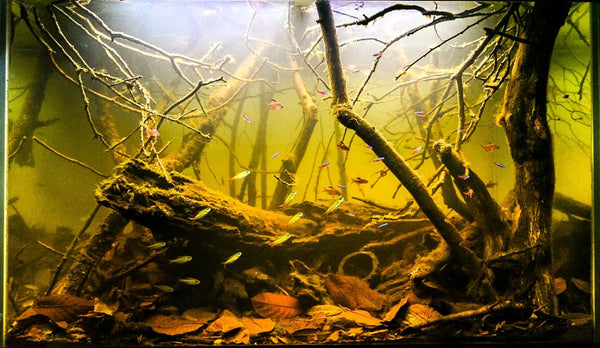
I believe that the appearance of our tanks- with tinted water, decomposing leaves, and accumulating detritus- gives the uninformed the impression that we are simply managing ticking “biological time bombs”, with marginal water quality, improper “filtration”, and overall lack of care.
The reality couldn’t be more the opposite.
As we’ve come to find out as a community over the decades, botanical-method tanks run incredibly stable, healthily, and yeah- easily- once established. The whole mindset behind how these tanks are established and run involves creating the means for a stable natural ecology, valuing bacteria, fungi, and other. microfauna as an intimate part of our systems.
It involves facilitating the proper conditions for them to thrive and do their thing- just as they’ve done in Nature for eons- to benefit our closed systems. All of the leaves and botanicals are the “operating system” which our little microcosms run on!
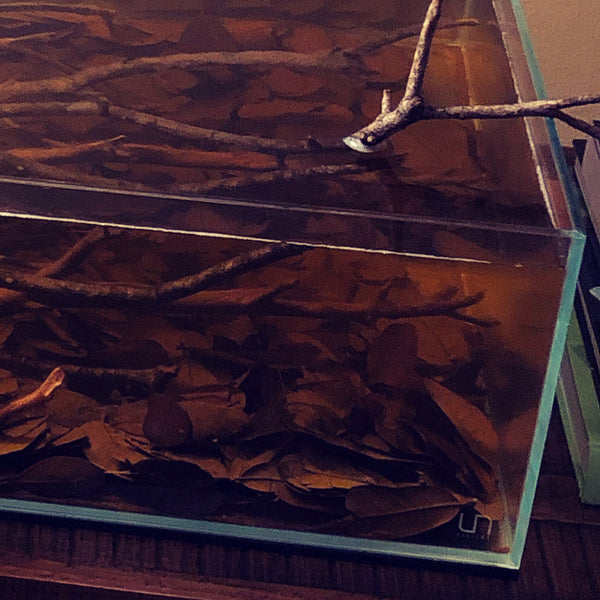
nd the myth about these tanks needing so much extra care to avoid disaster is pretty amusing to me. Like any well managed aquairum, the botanical method system actually runs quite smoothly, providing a healthy environment for fishes, despite the “unorthodox” aesthetics. They handle minor changes and occasional moments of lack of attention just fine!
In most instances, the fishes that we keep are not so delicate, and the closed environments we provide aren’t running so “close to the edge” that we should panic when some random factor changes things up one day (ie; filter stops, the lights don’t run on, etc.).
And consider this: When we purchase our fishes, they are unceremoniously netted out of the tank (or stream, lake, river, etc.) environment in which they reside, placed in a plastic bag, transported for who knows how long, and possibly making a few stops on the way before ultimately landing in our aquarium.
That’s a LOT of changes to cope with. Stress.
But guess what? Fishes manage to deal with it. Somehow.
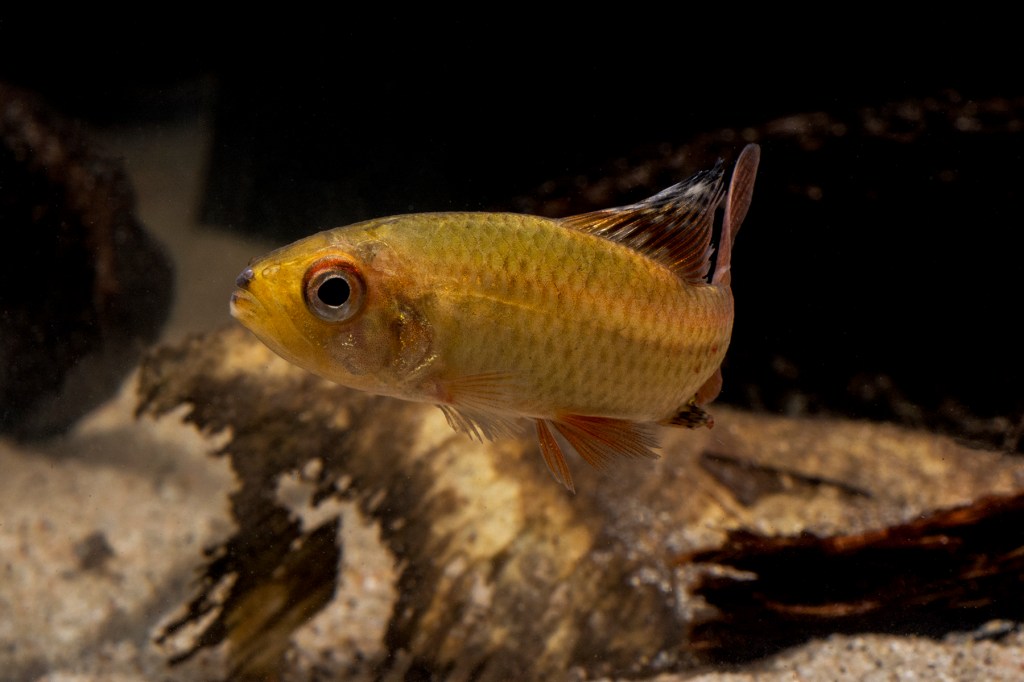
So, it kind of goes without saying that even a bout of “benign neglect” from time to time isn’t going to spell Armageddon for your tank. I mean, it shouldn’t.
Botanical method aquariums, especially well-established ones, can, in my experience, run for almost indefinite periods of time with minimal maintenance.
Now, let me make it perfectly clear:
I’m NOT saying that you can and should forgo water exchanges or other routine husbandry tasks in your botanical method aquariums!
I am, however, suggesting that these systems, based largely on ecology, and “configured” in some ways like the wild habitats they purport to represent, can endure periods of time when you’re not on top of things.
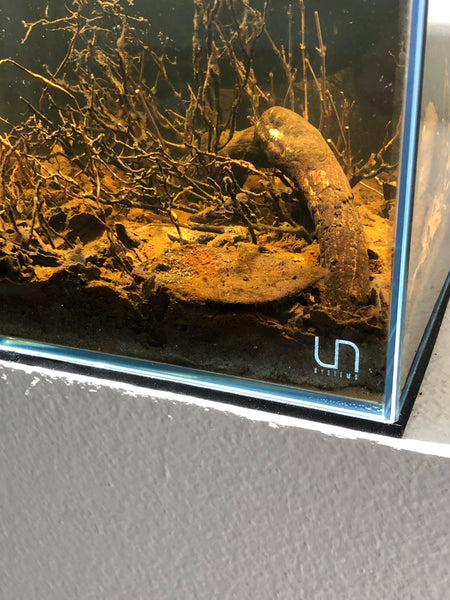
Again, it’s really a function of how we set up these tanks to begin with. We encourage the growth of bacteria, fungi, and other microorganisms, and “fuel” their growth by supplying botanical materials for them to colonize and feed upon. There is more or less a continous supply of food for the organisms at the bottom of the food chain to keep doing their job.
I don’t portend to have all of the answers, but after decades of constructing, observing, and testing botanical method aquariums under all sorts of situations, I can definitely attest to their long-term reliability and ability to rebound easily from periods of neglect.
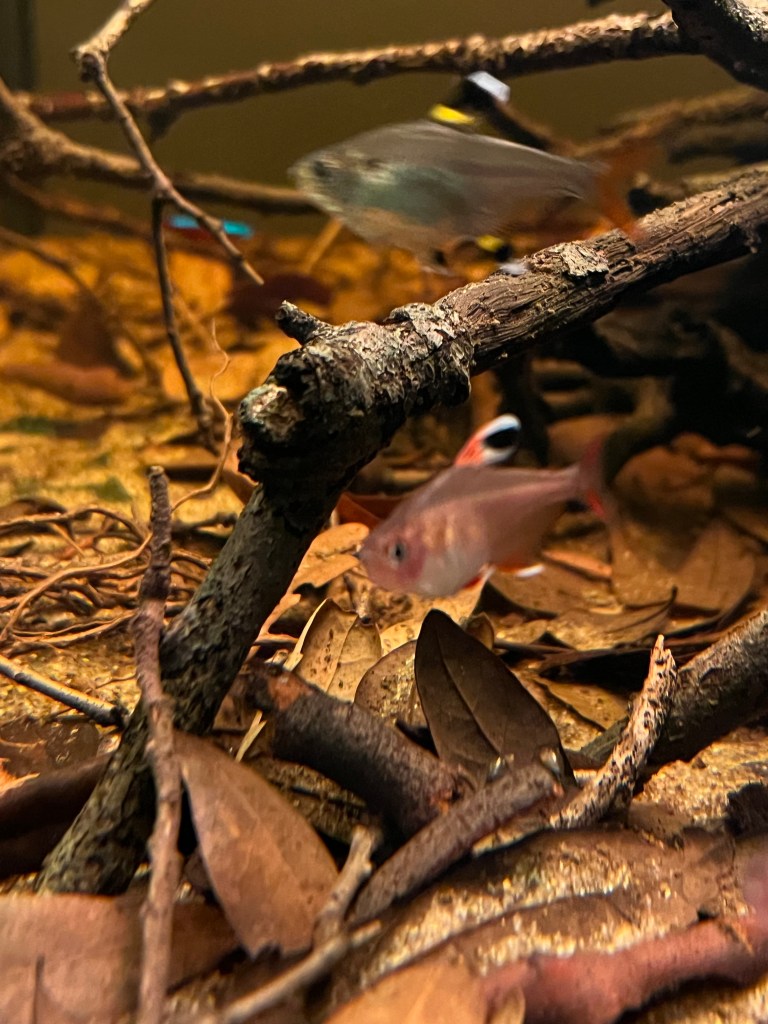
This is something that we as hobbyists likely have some degree of firsthand experience with. I know that I do.
Over the lifetime that I’ve been in the hobby there have been a number of times that, for one reason or another, I simply let my aquariums “run themselves”, save an occasional water change or filter media cleaning, and of course, regular feeding (that consisted of tossing in a few flakes or pellets, or whatever was on hand at the time).
You know, putting Mother Nature in control!
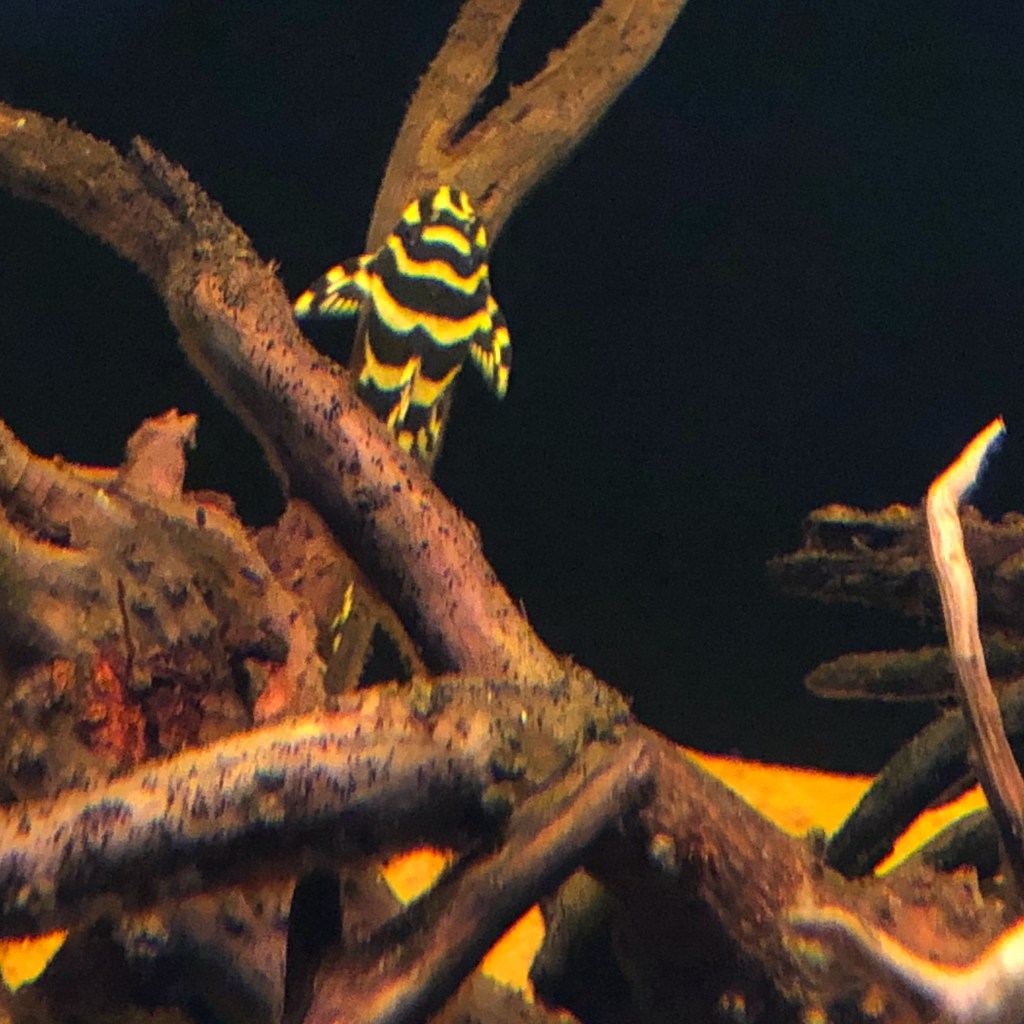
A particularly fond memory of this type of “practice” comes from my Senior year in high school, when I was seriously into breeding killies (in addition to keeping saltwater, cichlids, tetras, and of course, the usual high school pursuits of girls, sports, and socializing). As a junior AKA member, I obtained a group of the “Clown Killie”, Epiplatys annulatus Monroviae, and was determined to breed the little fuckers.
Of course, they always had a reputation for being just a bit of a challenge, requiring steadfast care, feeding, and a fair measure of patience. As a busy kid, I had little patience (although more than the average high school guy- after all, I was a fish geek!), so I was delighted to learn that these fishes were thought to fare better in “permanent” and so-called “natural” setups (fish geek code for “set and forget”, IMHO).
So of course, I thought that this species was a perfect fish for my busy lifestyle at the time!
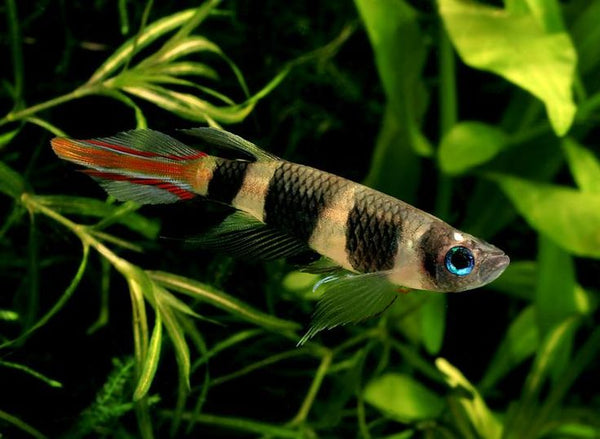
I set up 2 pairs and a few extra females in a 2.5 gallon tank, planted with Water Sprite, Hygrophila, and Rotala. Given moderate light from a small fixture, and a sponge filter providing filtration/circulation, this tank looked good and ran just fine with little intervention on my part. In fact, I’m embarrassed to admit that I would sometimes go a week or more without so much as looking at the tank long enough to toss some food in there.
Yeah.
One day (I think it was during Spring Break), I took the time to really stare into the tank, to see what was going on…Sure enough, upon close examination, I saw several tiny fry flitting in and among the Rotala! I was elated! Rather than panic and start hatching brine shrimp, I made the very mature and level-headed decision to simply...leave them alone, as I had been doing for months. I resisted the temptation to net them out, “power feed” them, and otherwise intervene.
I reasoned that I could hardly do better than what they were apparently being provided by Nature, as they have done successfully for eons.
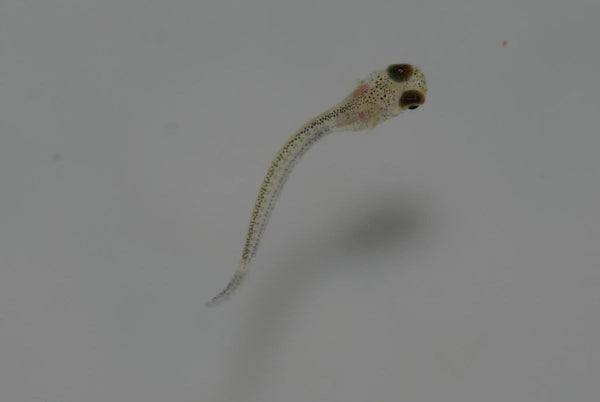
I ultimately ended up with a pretty stable population of around 12-15 individuals, in a tank I “maintained” for around 3-4 years. Ironically, the difficulties started when I had the time to really get into “taking care” of the fishes, and took more initiative and “control” of the breeding.
I ultimately slowly lost the entire colony. Sad.
But a valuable lesson.
Sometimes, what we would classify as “benign neglect” is actually the best thing we could do..the closest imitation to Nature that we can offer fishes in captive environments!
Other times, it’s a fusion of both “hands on” and “hands off” approaches.
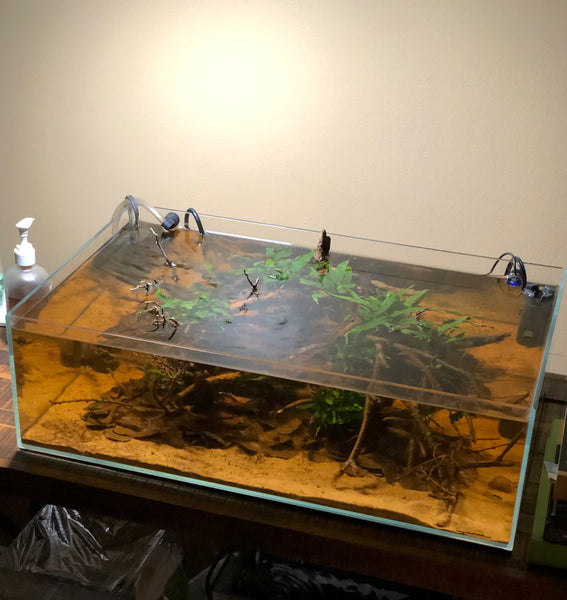
Now, again-I’m not suggesting that you abandon all care of your fishes, but I am suggesting that you reconsider the way that you might care for some of the more demanding varieties (from a breeding aspect, anyways).
Sometimes, what we would classify as “benign neglect” is actually the best thing we could do..the closest imitation to Nature that we can offer fishes in captive environments! I experimented with this a few years back in my “no-scape” leaf litter tank for Paracheirodon simulans, which was set up in the hopes of “passively feeding” the fish via the organisms living in, and produced via the layer of decomposing leaf litter which composed the entire “hardscape” of the aquarium.
It worked. And it worked well.
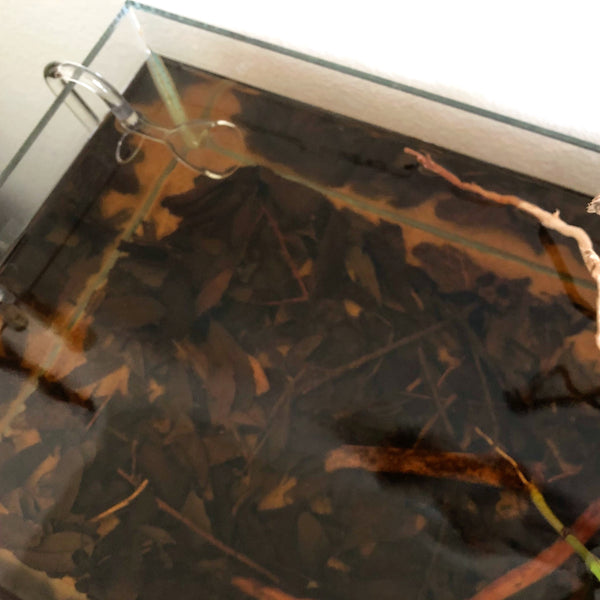
And, as part of the experiment, I did not feed these fishes during the entire 7-month duration of the experiment, and they not only were as fat and happy as any “Green Neon Tetras” I’d ever seen, but they actually spawned repeatedly in this tank! They subsisted entirely on food sources produced by the aquarium.
As I’ve reiterated previously, the tank was “pre-stocked” with some small crustaceans, paramecium cultures, and some worms and such, and allowed to “break in” for a month before fishes were even added.
It was set up to succeed in this fashion.
And it did.
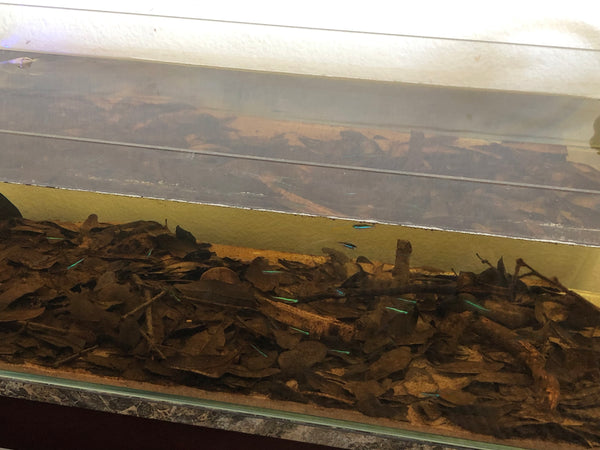
I repeated a variation of this with my prized Tucanoicthys tucano– and had similar good results!
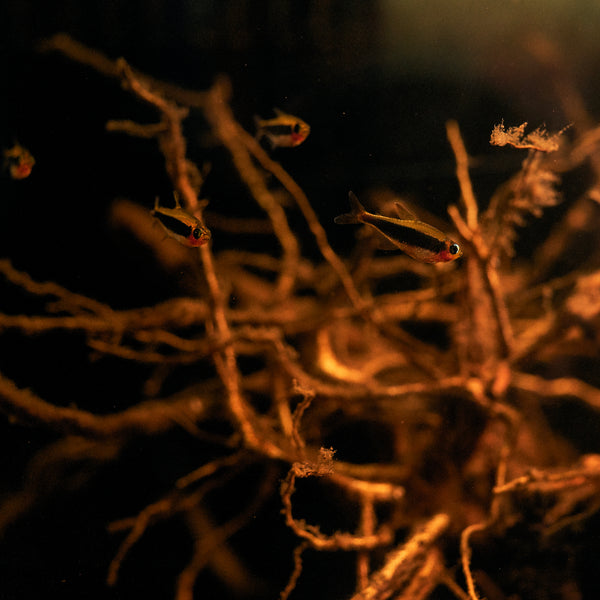
After decades of playing with these types of tanks, I’m now a firm believer that, in a well-established, properly cared-for botanical method aquarium, fishes will find sustenance among the resources already present in their environment.
In many cases, the tank itself may not produce enough food to sustain an entire population of mid-sized adult fishes…However, it might be able to supplement whatever feeding you’re actively doing as an aquarist, and very likely could do the same for fry, until they are caught and moved to a “proper nursery” tank.
Yet, you don’t have to go nuts trying to control every aspect of the tank…
Sometimes it’s best to simply “monitor” and not intervene so much.
Hard to do for us ‘hands on” fish geeks- particularly for a hardcore hobbyist like myself- but it often times works far better than our efforts to take control of the situation, IMHO.
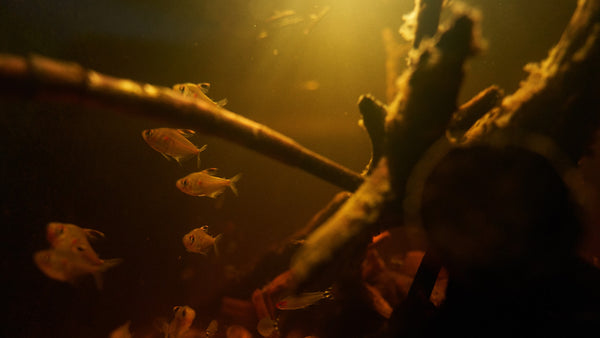
Nature really knows how to do this stuff!
She’s been doing it for eons.
For the final time- I’m not suggesting to abandon husbandry and care protocols in favor of neglect, just to “see what happens.” What I AM suggesting is that sometimes, closed systems can regulate themselves a bit with minimal intervention on our part. Keep things very simple…and let Nature do more of the work.
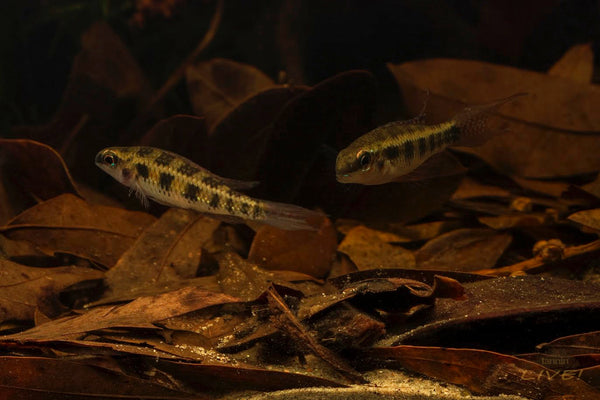
Not quite “set and forget”- but something sort of close, right?
Plants and animals whose needs are being met will thrive and come to dominate the closed ecosystem, for better or worse, just like in Nature. In fact, one could probably make the argument that- at least on a superficial level- the “benignly neglected” botanical method aquarium may be the closest imitation of Nature that we can present!
Let Nature do her thing?
Something to think about…
Stay curious. Stay diligent. Stay observant. Stay thoughtful…
And Stay Wet.
Scott Fellman
 The Tint
Leave a comment