
Yes, I admit a tiny bit of obsession about botanical-method brackish water aquariums. Like my freshwater botanical method tanks, I’m constantly thinking of different iterations and configurations for different systems.
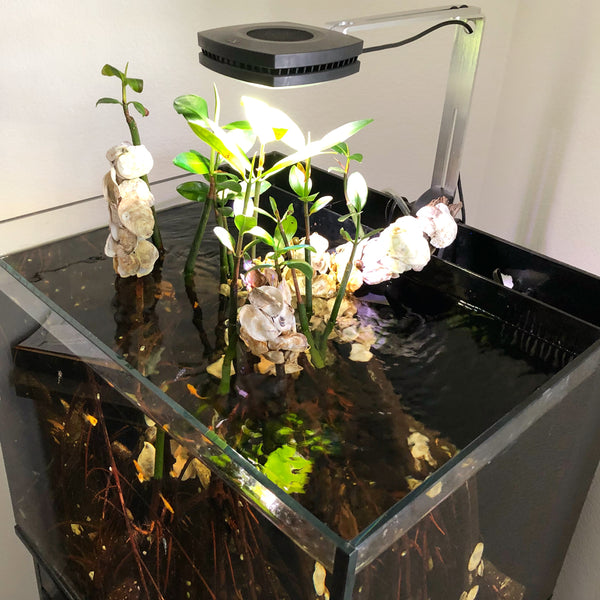
I spend a lot of time working through ideas and occasionally actually following through on creating them!
Although there is a good amount of information on brackish-water habitats from which brackish water fishes come, in the hobby, (with the rare exception of some biotope enthusiasts) we’ve sort of distilled brackish-water aquarium “aesthetics” down to white aragonite sand, a few rocks, and maybe some “hardy” freshwater plants…and it’s been mired in that aesthetic hell for decades.
Just like what the hobby was doing in the blackwater area for years, I think we’ve been collectively focusing on the wrong part of the equation for a long time- just “salt” and basic aesthetics- then on to the fishes. The wrong fishes, IMHO. Yeah- big ol’ puffers and Scats and Monos and Eels. Fishes that, although interesting, require large aquariums to keep successfully for any length of time. The size of the “preferred” fishes alone has, I’ll bet, kept many hobbyists from venturing into brackish.
I personally believe that not many hobbyists really want to dedicate a 200 gallon tank to some big grey, messy fishes, a few rocks, and some struggling freshwater plants- or worse. However, I’ll bet that a lot of hobbyists might just want to dedicate a 15-40 gallon aquarium to smaller, interesting brackish water fishes, and some healthy mangroves…
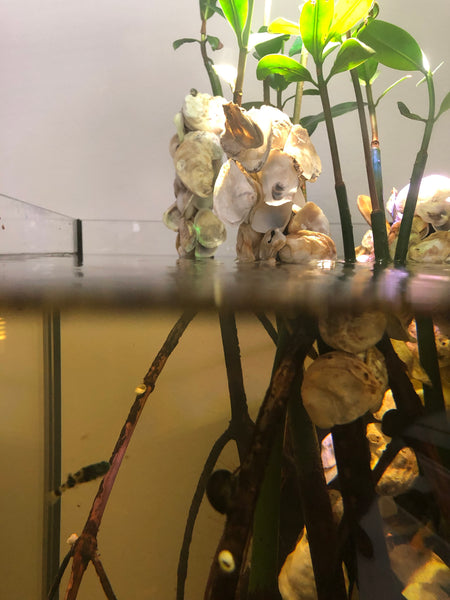
My approach to brackish is a little different than the “throw in a couple of rocks and white sand, a few teaspoons of salt per gallon, add some Monos and Mollies, and you’re good to go! Brackish biotope” idea that you’ve seen for a long time in hobby literature.
As you suspect, my approach is to really take a look at the function and appearance of these unique aquatic habitats, and then construct aquariums which mimic these factors in a unique and more compelling way. To do this, we want to really focus on helping you replicate and understand the complex web of life that occurs in brackish water habitats, and how you can replicate parts of it in the aquarium.
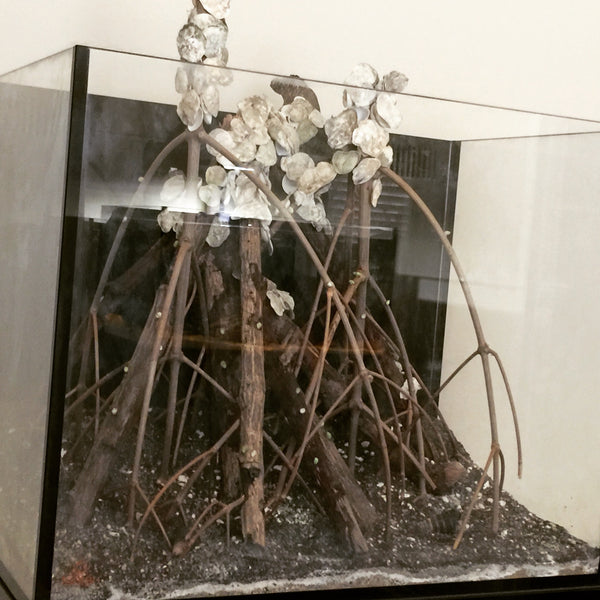
And of course, with any new tank startup comes a lot of questions from other hobbyists- the usual litany of stuff like what materials I used, how I filter it, etc…and of course, the most important of all to a fish geek,“What are you gonna put in it?”
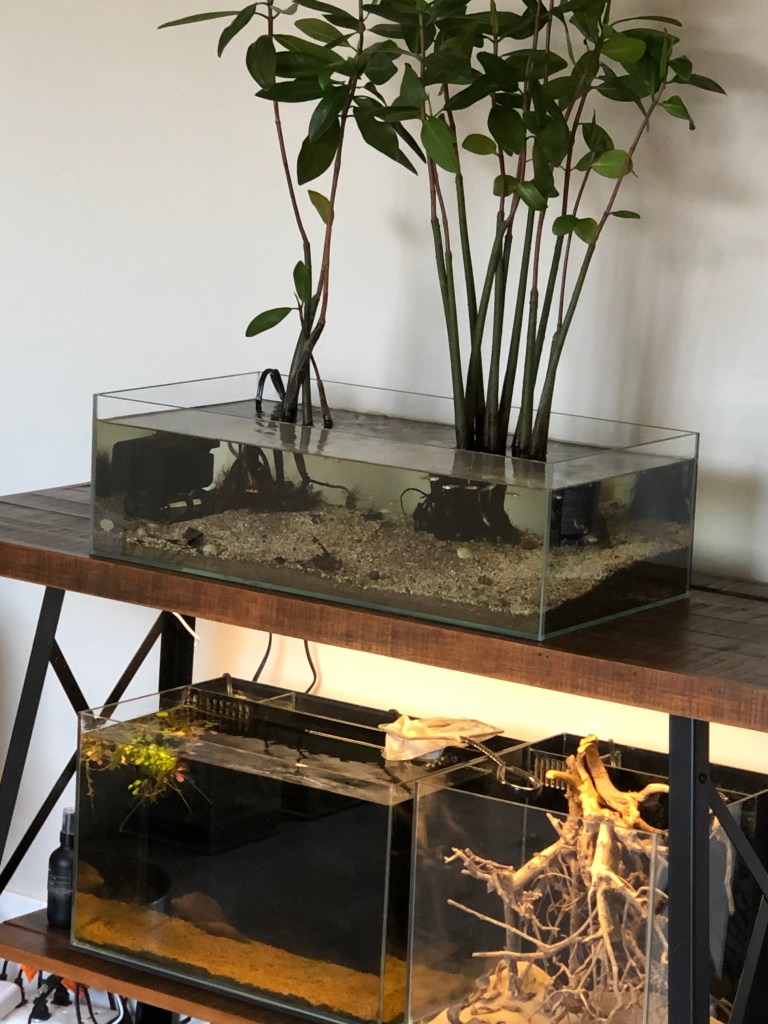
For my brackish tanks, I find it to be a bit of a challenge to obtain a lot of the fishes on my target lists. As we’ve discussed in previous pieces on brackish- it’s often a function of the fish simply not being available. Or, if they are- it’s about finding some that actually were collected fro ma brackish water habitat.
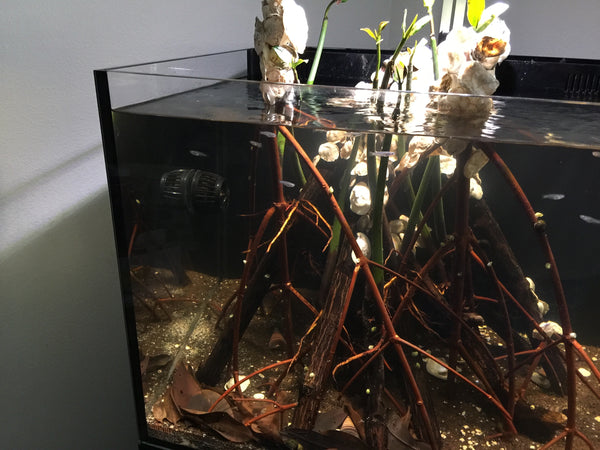
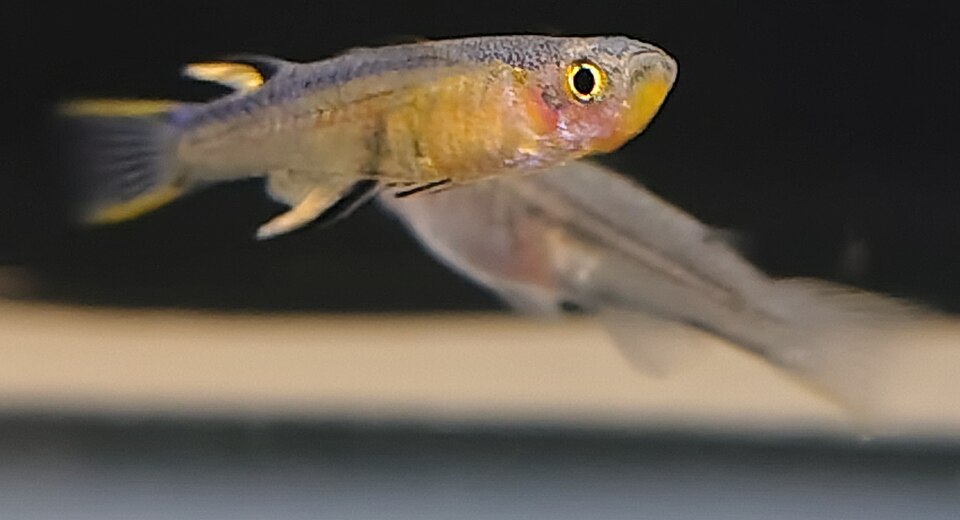
One of the fishes on my brackish water fish target list that I know would fit into just about any situation of my brackish systems is the “Neon Blue Eye”, Pseudomugil cyanodorsalis.
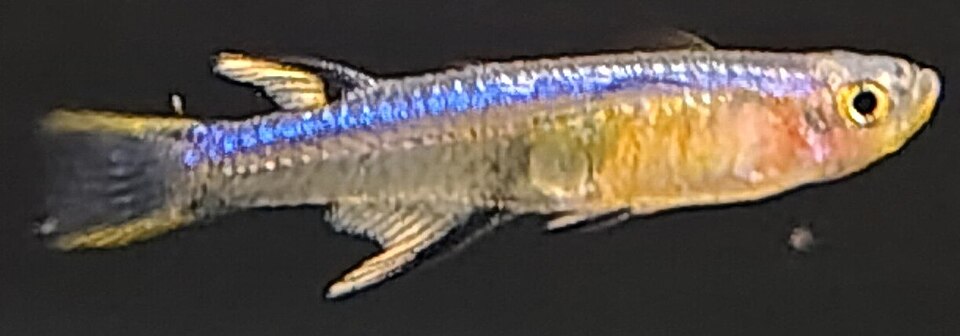
Pseudomugil cyanodorsalis inhabits a very different environment from most freshwater rainbowfishes.
It is a fish of tropical coastal wetlands, occurring in northern Australia, especially around the estuarine plains of the Northern Territory and parts of the Western Australia.
Its habitat is characterized by brackish to hypersaline water. The salinity can fluctuate dramatically with tides and seasonal rainfall. During the dry season, evaporation may concentrate salts to levels exceeding normal seawater. However, during the wet season, heavy rains can temporarily dilute habitats to nearly fresh water.
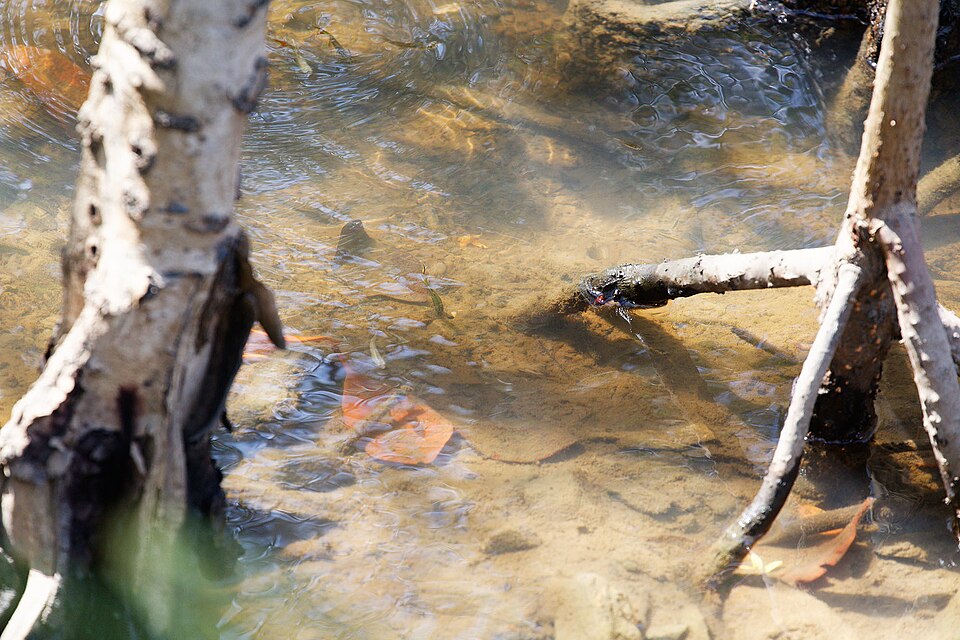
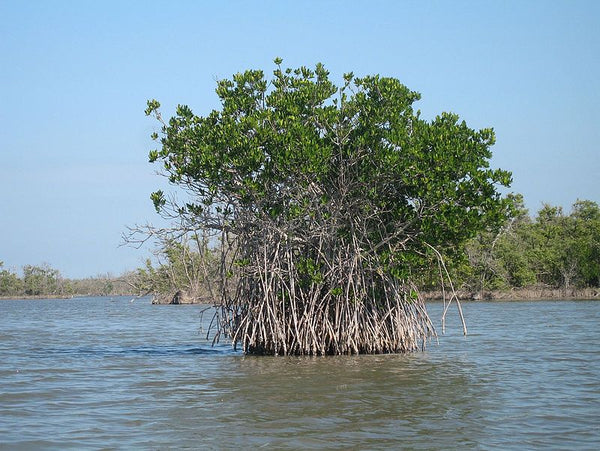
The species is typically found in tidal creeks, coastal lagoons, mangrove-fringed pools, salt marshes, floodplain wetlands connected to estuaries, and shallow backwaters behind mangrove forests, where they are found among the roots. Generally speaking, P. cyanodorsalis is an inhabitant of open, bright, highly variable coastal wetlands, adapted to extreme fluctuations in salinity, temperature, and water level.
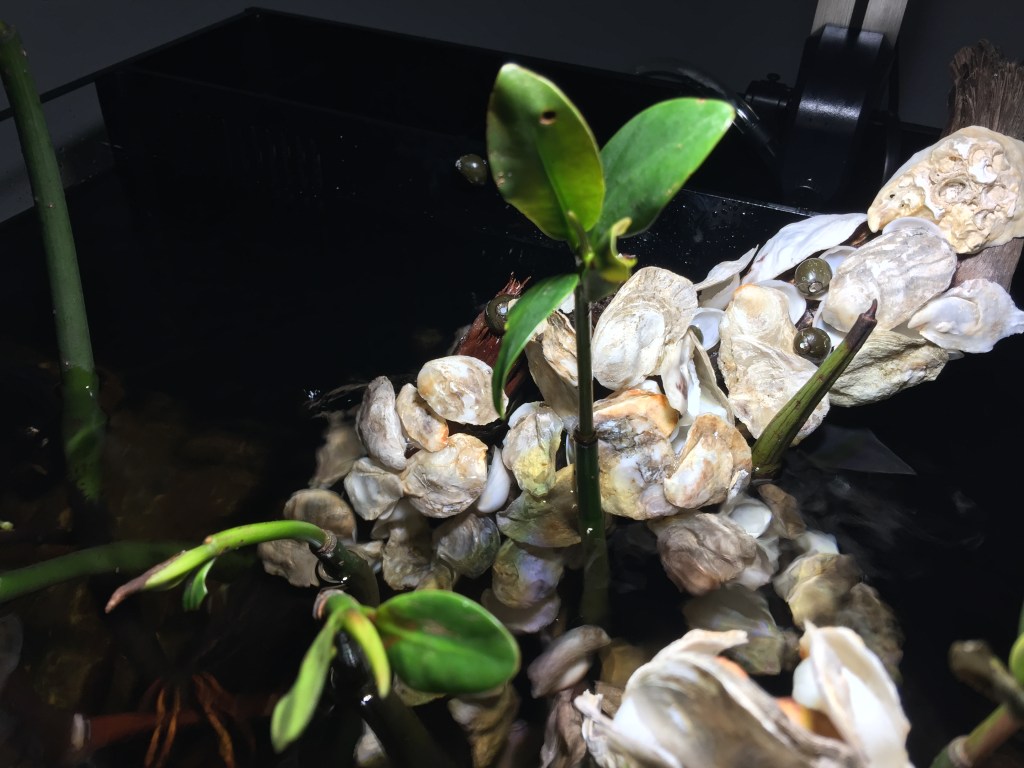
The Blue Eyes tend to stay in the upper/top part of the water column, with and endless activity level that is completely engaging. And the neat thing is that they will swim at all levels of the tank at any given moment, but they seem to be preferentially a surface dweller. And their subtle, metallic coloration and diminutive size makes them look just fantastic in this sized aquarium.
P. cyanodorsalis is a fascinating fish for a brackish water aquarium, not only because it’s a Rainbowfish (which automatically makes it cool), but because it is a “poster child” for the “euryhaline” adaptability. It can live in freshwater, brackish, and full-strength marine habitats/water conditions, and can move between the two quite quickly and dramatically.
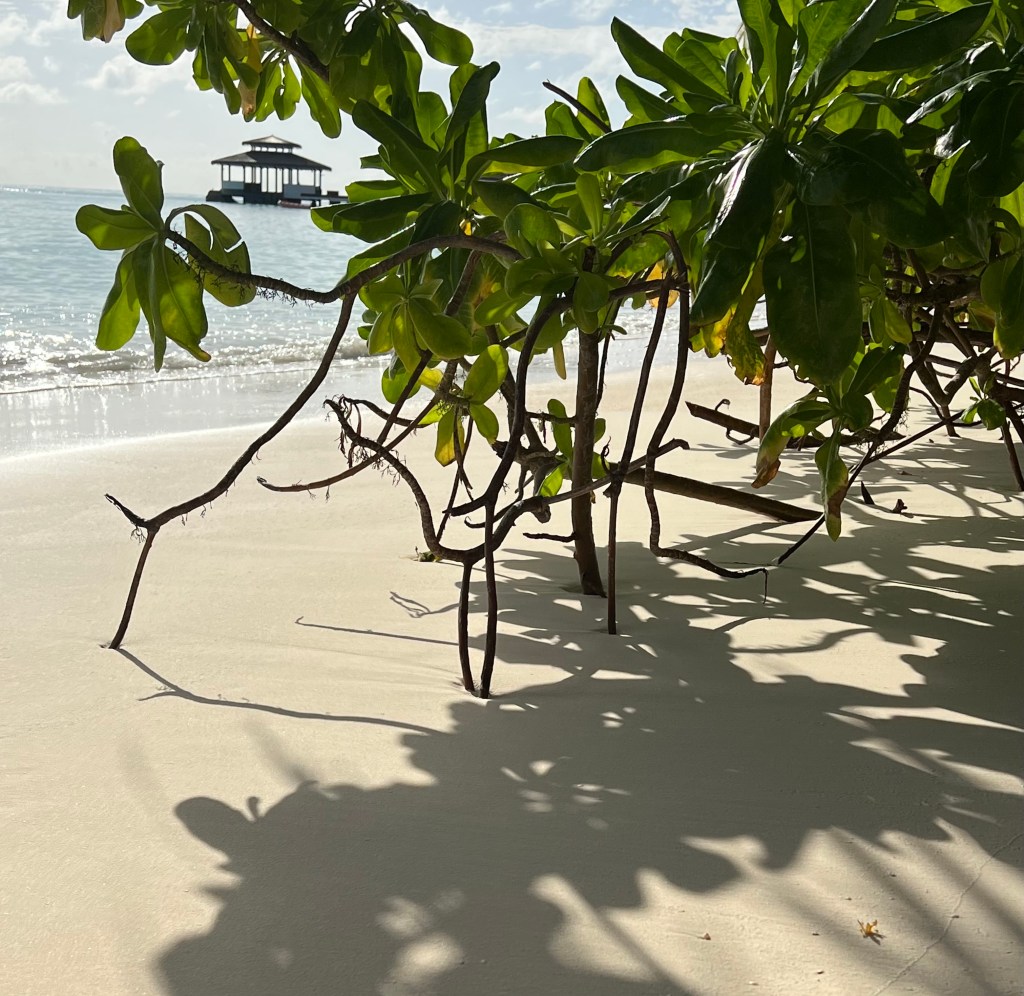
Many wild populations are subject to rapid tidal influxes and changes, often going from near-pure freshwater to even higher than typical marine (1.025) specific gravities (I recall reading about some specimens being collected from specific gravities as high as 1.030!). That’s salty!
Another cool thing about this fish is that it is often found in large aggregations associated with…wait for it…mangroves!
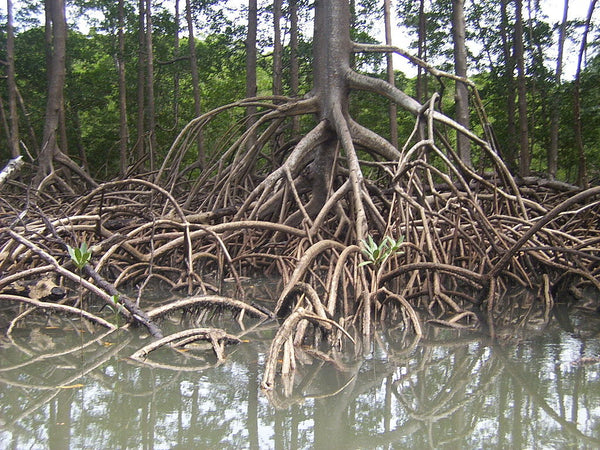
Yup, this little fish is perfect for the habitats which I am trying to replicate, a thicket of mangrove prop roots with lots of small fishes living among them. And since these are small fishes, topping of at around 1.5″/40mm, and live in aggregations, keeping a colony of these guys in a replication of their environment, lets you enjoy their interesting habits and reproductive behaviors.
And the small size can give your tank a good sense of “scale”, IMHO!
While there appears to be no significant published gut-content studies specifically for Pseudomugil cyanodorsalis that quantitatively analyze stomach contents, multiple field sources consistently indicate that the species is a micro-predator and opportunistic planktivore, feeding primarily on zooplankton (copepods, cladocerans, rotifers), small crustaceans, aquatic insect larvae, terrestrial insects that fall onto the water surface, phytoplankton, and suspended organic matter, and, to a lesser extent, other tiny invertebrates suspended in the water column.
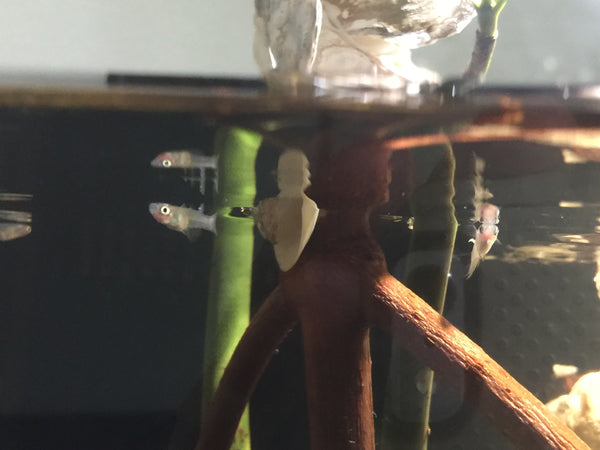
P. cyanodorsalis is primarily a water-column feeder, taking suspended prey and items at or near the surface. This species is an important “middle link” between plankton production and larger estuarine predators. Observation in the wild suggests that these fish eat harpacticoid and calanoid copepods, ostracods, mosquito larvae, chironomid larvae and pupae, tiny amphipods, juvenile shrimp, and drifting insect fragments.
Note that pure cultures of various copepods are commercially available from manufacturers like Reef Nutrition and others.. You can often find them in tropical fish stores and many online vendors, specifically ones which cater to the reef hobby. These are awesome foods to supplement the more traditional prepared foods that these fishes will ultimately take.
Pseudomugil cyanodorsalis is one of the more strongly social members of the “Blue-Eye” group. Field observations indicate that the species forms loose to moderately cohesive shoals, including mixed-sex group aggregations, ranging from dozens to hundreds of individuals. When habitats expand during seasonal flooding, these groups can become more dispersed.
Overall, the social structure of P. cyanodorsalis is best described as a shoaling society with male display hierarchies and promiscuous group spawning, similar to many other Blue-Eyes and small Rainbowfishes.
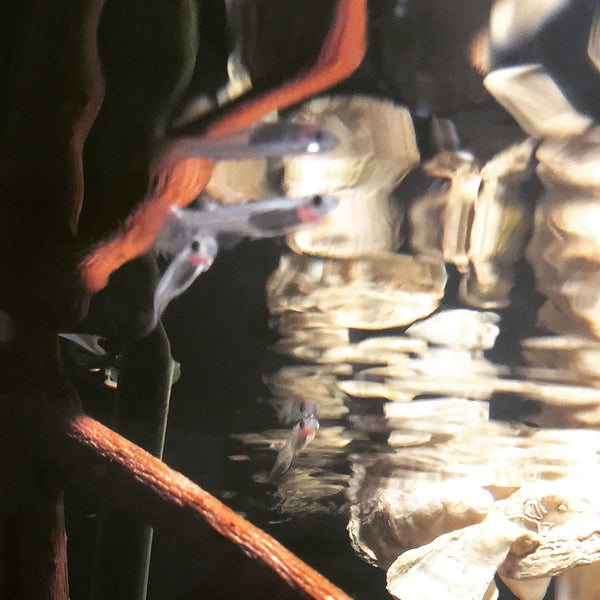
Unlike territorial fishes that defend fixed areas, most individuals spend most of their time continuously moving through open water and mangrove root margins in search of food items. Males court multiple females, and spawn with multiple males. This promotes high genetic mixing within local populations. They deposit adhesive eggs among fine vegetation or spawning substrates, including mangrove roots.
Spawning is usually repeated over many days rather than occurring in a single large event. A female may release a few eggs each day while associating with multiple males. The resulting eggs adhere to vegetation by fine attachment filaments, helping them remain in place despite water movement and changing water levels.
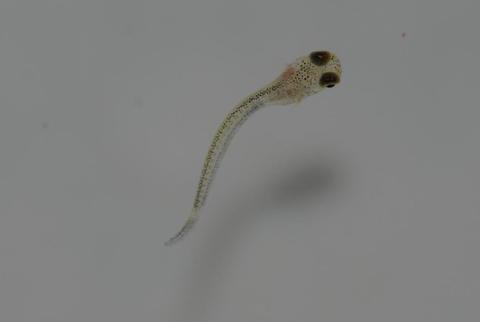
Eggs typically hatch in roughly 10–20 days, depending on temperature and salinity. There is no parental care provided for the resulting fry. The newly hatched larvae are extremely small and spend much of their time in shallow vegetated margins, quiet backwaters, and dense aquatic vegetation, which provide both shelter and food.
They feed on protozoans, rotifers, tiny copepod nauplii, and other microscopic plankton, which hare abundant in these habitats. In a properly-set-up botanical method brackish water aquarium, with a complement of decomposing mangrove leaves and organic detritus, populations of these organisms will proliferate, providing substantial first foods for the fry.
Like many pseudomugils, P. cyanodorsalis appears to be a relatively short-lived species. With their relatively short life span, they grow quickly, and reach sexual maturity within months. They begin participating in spawning while still relatively small. Populations persist through continual reproduction rather than long individual lifespans.
This strategy is well suited to the dynamic coastal marshes, tidal wetlands, and seasonal floodplains where P. cyanodorsalis naturally occurs. And these fishes can do very well in dedicated species task, where you could see multiple generations spawning and forming a nice colony.
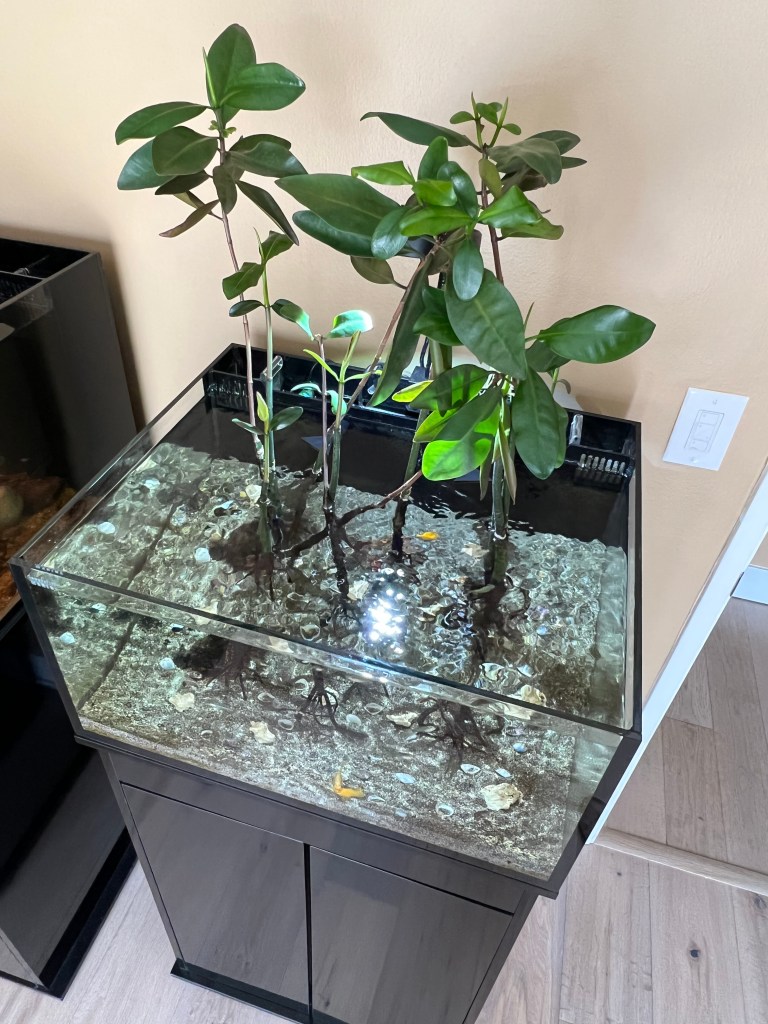
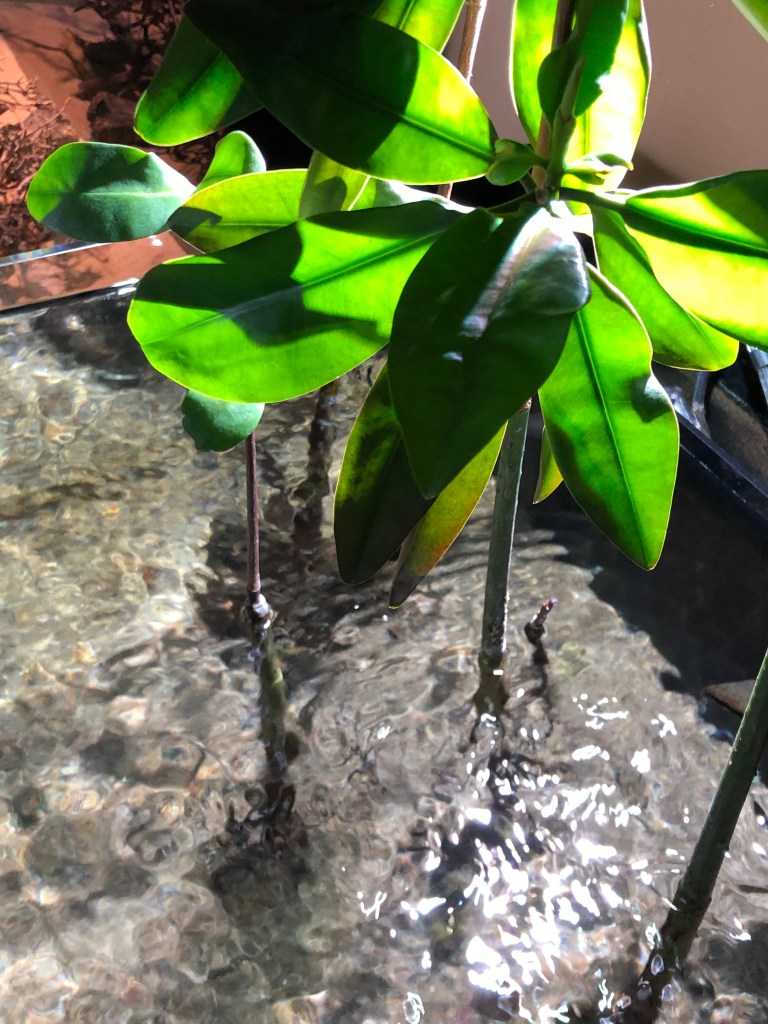
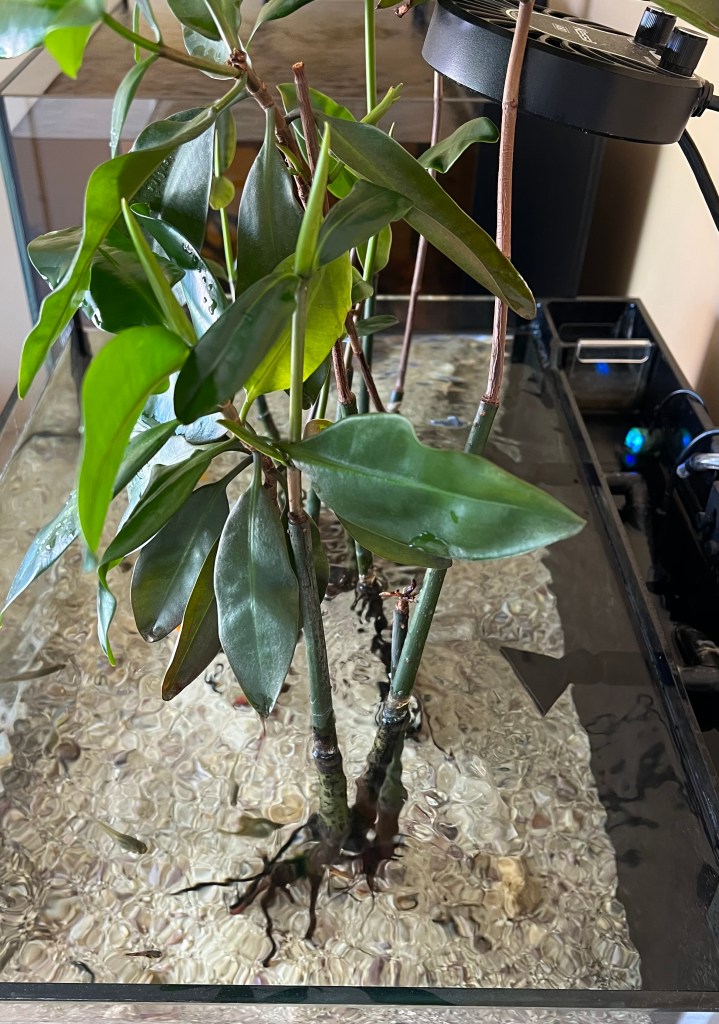
It’s not a secret that I feel the best way to keep Pseudomugil cyanodorsalis is in a shallow, mangrove-focused aquarium setup. Not only do the fish look their best in such a setup, they demonstrate more natural behaviors. The roots of the mangroves provide foraging, protection, and spawning locations- just like they do in the wild habitats from where these fishes come.
And of course, being one who doesn’t always take his own advice- I kept mine with Mollies. They got a long fabulously! However, all things being equal, I’d keep them in their own tank just the same!
My advice, for what it’s worth, would be to keep a large group of them (at least a dozen, if not many more) to really bring out their most interesting social behaviors., and to maximize spawning opportunities.
If ever there were a perfect fish for a species-specific brackish water aquarium, this would be it!
And hands-down, I’d go for brackish water with these fishes, because they consistently demonstrate better health, feeding, and spawning under these conditions. I’d shoot for a specific gravity of 1.003-1.005, and keep it locked in.
My approach to brackish is to really take a look at the function and appearance of these unique aquatic habitats, and then construct aquariums which mimic these factors in a unique and more compelling way. To do this, I want to really focus on helping you replicate and understand the complex web of life that occurs in brackish water habitats, and how you can replicate parts of it in the aquarium.
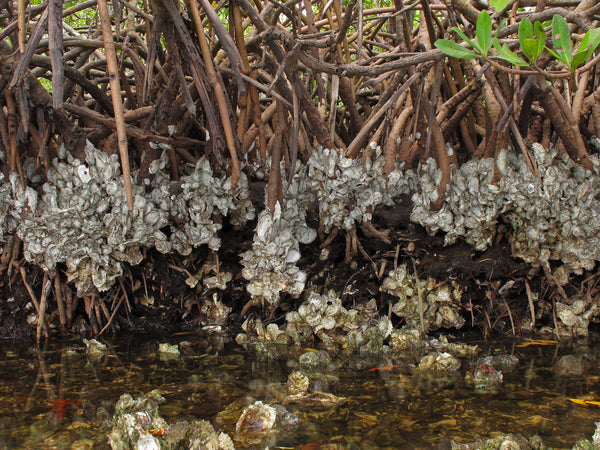
Provide gentle to moderate water movement in the aquarium. Mangrove habitats are usually enclosed and protected environments, with low-energy waters. Provide some cover in the form of overhanging mangroves, to keep them calmer and less “jumpy”- ’cause the little fuckers can jump!
You might have noticed that the tanks I’m featuring here are all open-top systems…Many rainbow fish breeders/keepers would tell you that this is less than optimal.
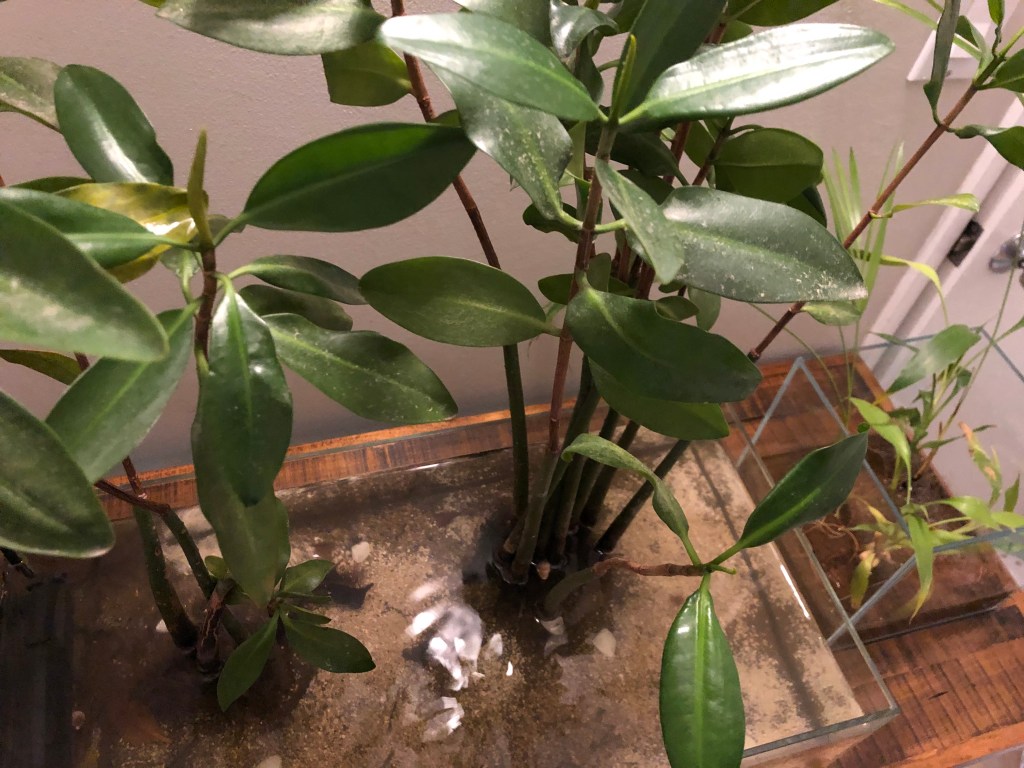
Yeah, in a perfect world, you’d keep ’em in a covered aquarium…but how can you grow mangrove in a covered aquarium? So..it’s a tradeoff! Just try to not to freak the fishes out by turning on the lights to bright immediately in a dark room, or keeping their open-top tank in a low traffic part of your home…
In my experience, these fishes settle in very easily, particularly if you can obtain some captive-bred specimens. Mine ate heartily and really grew remarkably fast. Like, “killifish fast!”
This rapid development tracks with their “life strategy.”
Since this species is naturally rather short-lived (these fish typically live for one to two years at the most) they go through their life cycle quickly. This rapid maturation lets you quickly establish a self-sustaining, multi-generational breeding colony in your aquarium in a relatively short time span.

(Shameless plug for “The Tint” podcast!)
Their striking colors make them a captivating focal point as they actively dart across the upper levels of the aquarium. This energetic swimming behavior and peaceful social interactions, featuring harmless, beautiful sparring displays between rival males-adds constant movement to the tank.
Beyond their looks, they offer a uniquely rewarding challenge for aquarists due to their extreme euryhaline nature. They thrive in brackish water setups, making them the ultimate centerpiece for specialized nano biotopes and dedicated breeding projects.
If you’re like me, you might move on to other Rainbowfish species at some point, but you’ll never truly be “over the rainbows!”
Stay curious. Stay dedicated. Stay enthusiastic. Stay engaged…
And Stay Wet.
Scott Fellman


Leave a Reply