
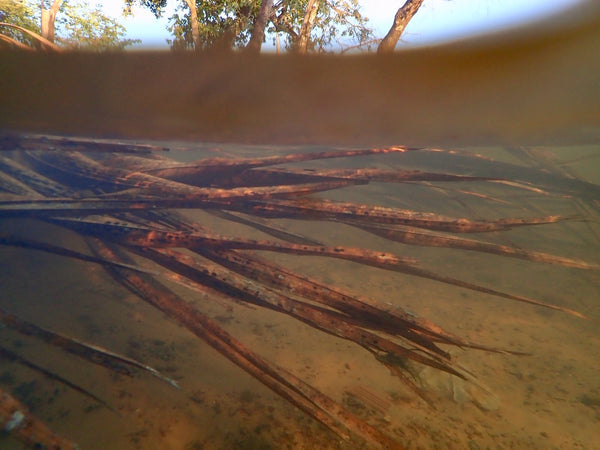
Tinted, turbid water. Sediment, biofilm. Decomposing botanical materials. Soil. A random scattering of branches covered in fungal growth.
Stuff that has made aquarists’ heads collectively spin for years. Stuff that is, by many hobbyists’s standards, “sloppy, undesirable…even, gross!”
To me, it’s freaking gorgeous. The idea of these things popping up and growing naturally in our tanks- as they do in Nature, is simply beyond anything I’ve ever seen intentionally done in any aquarium anywhere on planet Earth.
Unfiltered Nature. Powerful. Compelling. Raw. Real.
Okay, I’m not mentioning this to brag about how our seemingly avant-garde love of dirty, often chaotic-looking aquatic features in our tanks and in the wild makes us somehow cooler than the glassware loving, stupidly-named aquascaping stone crowd, or something like that. 😆 (well, possibly, but..)
However, I want you to understand the degree to which I love the concept of Nature in it’s most compelling forms, and how strongly I feel that we as a global community of hobbyists need to look beyond what’s regularly presented to us as a “natural aquarium” and really give this stuff some thought.
We CAN and SHOULD interpret natural aquatic features more literally in our aquarium work when possible. And we’re seeing more of this all the time!
Now, sure, not all of Nature requires us to make extreme aesthetic preference shifts in order to love it.
Well, maybe not all. Well, a lot of it, though.
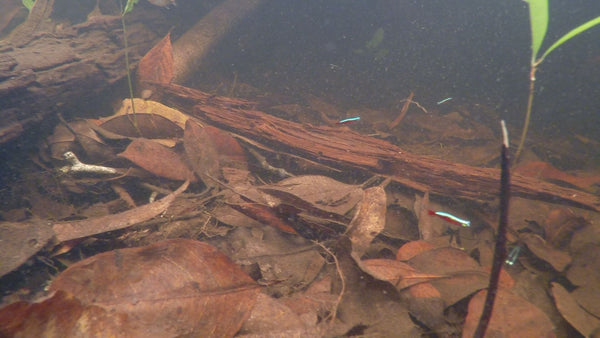
To make our point, let’s look at an example of an interesting aquatic feature from Nature which push us out of our collective hobby comfort zone. Let’s try to think why we often hesitate to replicate them, and what to expect when we do.
We could all appreciate this, I think.
There are a lot of aquatic habitats in Nature which are filled with tangles of terrestrial plant roots, emergent vegetation, fallen branches, etc., which fill small bodies of water almost completely.
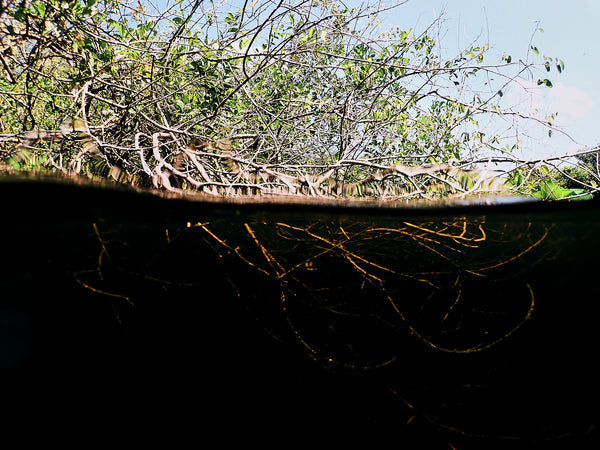
These types of habitats are unique; they attract a large quantities of smaller fishes to the protection of their vast matrix of structures. Submerged fallen tree branches or roots of marginal terrestrial plants provide a large surface area upon which algae, biofilm, and fungal growth occurs. This, in turn, attracts higher life forms, like crustaceans and aquatic insects.
Can’t we replicate such aquatic features in the aquarium?
Of course we can!
This idea is a fantastic expression of “functional aesthetics.” It’s a “package” that is a bit different than the way we would normally present an aquarium. However, we as hobbyists hesitate to densely pack an aquarium like this, don’t we?
Why do you think this is?
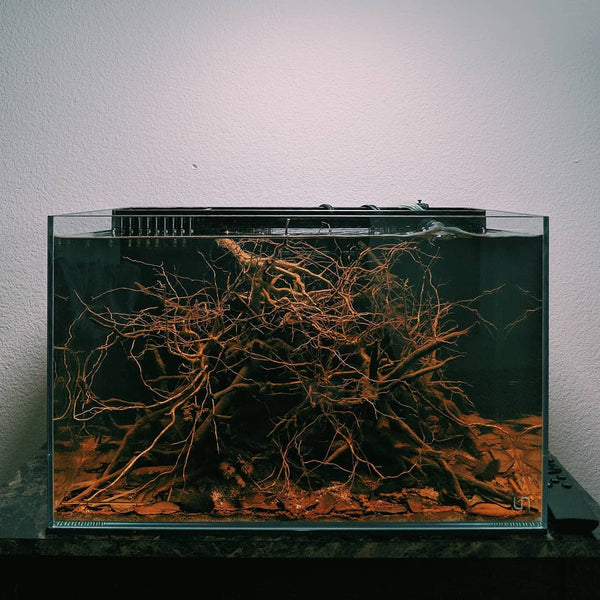
I think that we hesitate, because- quite frankly- having a large mass of tangled branches or roots and their associated leaves and detritus in the cozy confines of an aquarium tends to limit the number, size, and swimming area of fishes, right?
Sure, it does…
On the other hand, I think that there is something oddly compelling, intricate, and just beautiful about complex, spatially “full” aquatic features. Though seldom seen in aquarium work, there is a reason to replicate these systems. And when you take into account that these are actually very realistic, entirely functionalrepresentations of certain natural habitats, it becomes all the more interesting!
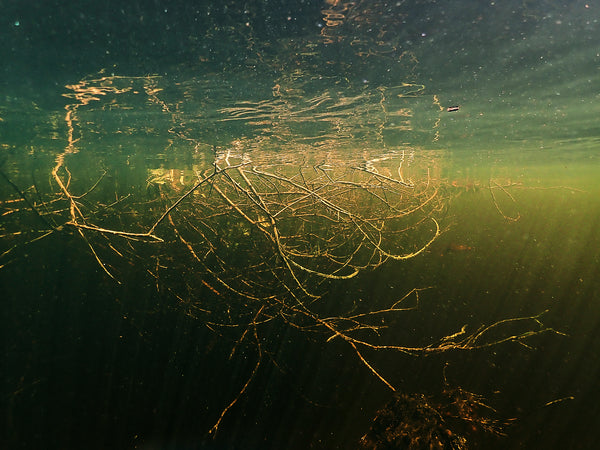
What can you expect when you execute something like this in the aquarium?
Well, for on thing, it WILL take up a fair amount of space within the tank. Depending upon the type of materials that you use (driftwood, roots. twigs, or branches), you will, of course, displace varying amounts of water.
Flow patterns within the aquarium will be affected, as will be the areas where leaves, detritus and other botanical materials settle out. You’ll need to understand that the aquarium will not only appear different- it’ll function differently as well.
Yet, we kind of think that the idea of executing representations of these ecological niches makes a ton of sense. Fishes love to hide. And forage. And spawn. And these tangles provide the perfect habitat in which to do all of these activities.
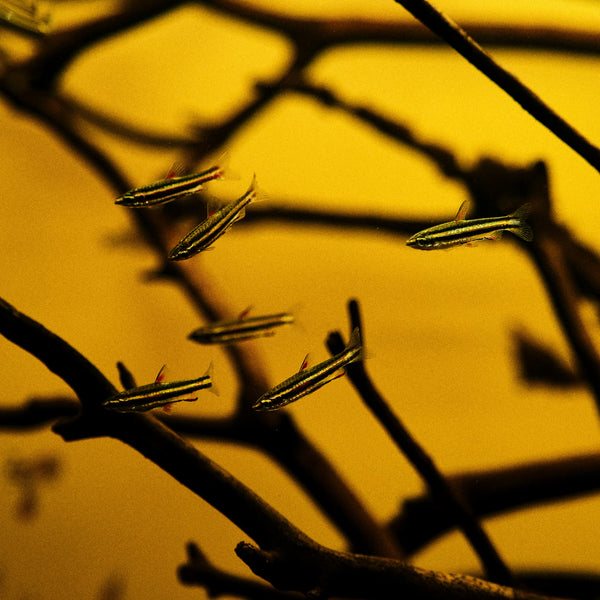
When you consider that these habitats do accumulate botanical materials and provide colonization points for various life forms, they likely facilitate biological processes like nutrient export and production of natural food resources. The “different aesthetics” simply come along as “part of the package”- both in Nature and in the aquarium.
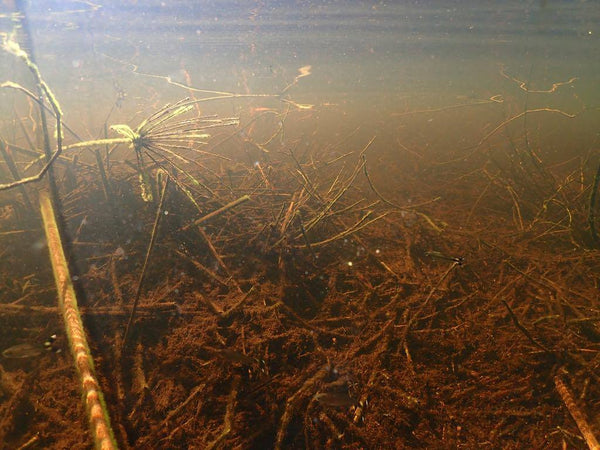
Such features also serve to keep fishes in close proximity to their food, and each other!
It may seem a bit strange, but it’s entirely realistic, comfortable, and simply “normal” for many of the fishes we play with in aquariums to live in close quarters with other species. In one field study of forest streams in the Rio Negro in Brazil (you knew I’d go back there, right?), it was noted that there were up to 20 different species present, all living in close proximity to each other, within distinct niches within the habitat. The population density was an astounding 100 individuals per cubic meter!
That’s a lot of fishes!
Of course, the takeaway here isn’t that you should pack the hell out of your community tank because some stream in the jungle has a lot of fishes living in a small area of space filled with roots and branches.
Hell No.
The real takeaway is the fact that the study indicated a significant number of species in that relatively small space, living within the same niche within the habitat!
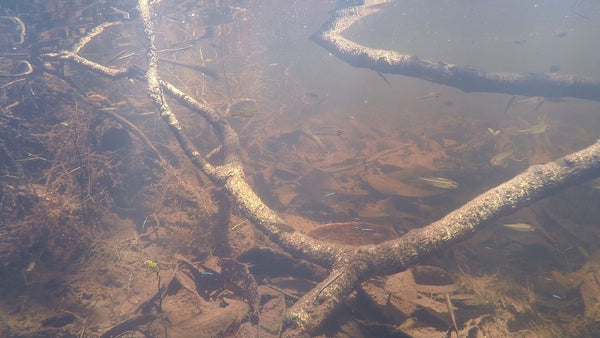
When our aquariums set up in a more natural style (in both form and function) the fishes are “sorting things out for themselves” and inhabiting the little niches that they would in the wild.
We have great information about these environments, photos of the physical structures found within them, and detailed studies on populations inhabiting these niches.
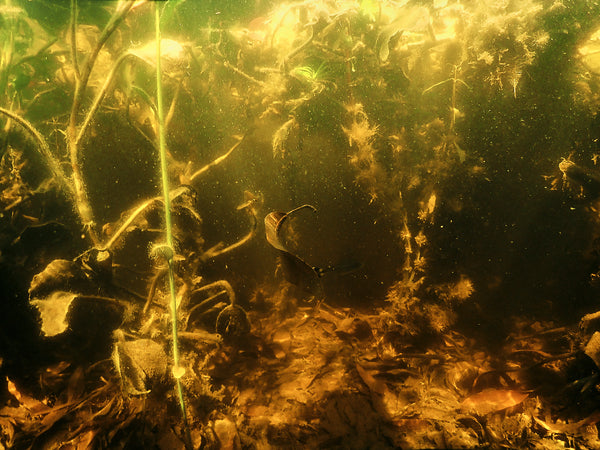
What new understanding will we gain by creating these deliberate configurations within our aquariums? What newfound successes will we have with previously temperamental fishes? What reproductive secrets will we unlock- all by providing more faithful representations of the communities and micro niches from which they come?
Perhaps most exciting, when replicating these unique niches, we’re developing more modern interpretations of the “community aquarium”, intentionally layering, populating, and optimizing several “microhabitats” within the same tank.
Huge.
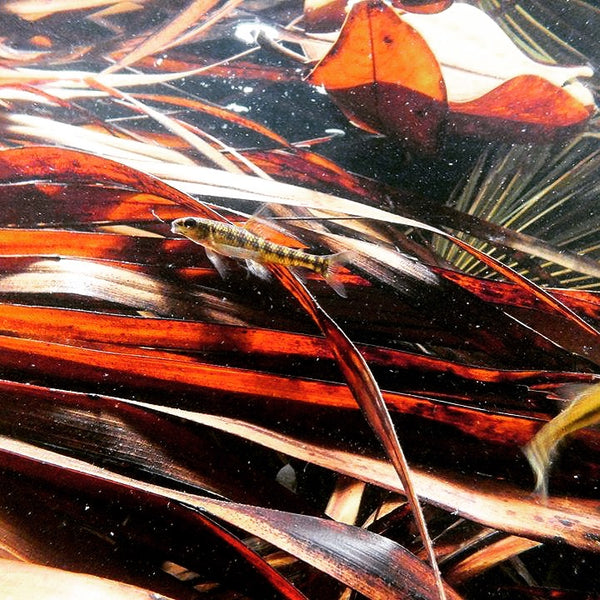
Recreating, in a more literal and realistic manner, the environmental niches that these fishes inhabit in the wild is more compelling, fascinating, and proving to be more successful than ever before.
I think that facilitating natural behaviors, like foraging and spawning in these. complex, densely-filled environments in our tanks is another amazing “by-product” of these features.
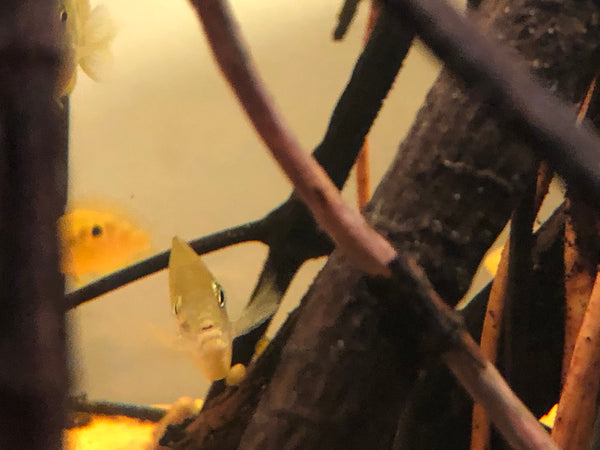
It even goes beyond planned aesthetics (ie; “That piece of wood would look awesome there!”) and, much like happens in the natural environment, plants will grow and fishes will gather where conditions are appropriate. Fishes take opportunities to live and forage among the debris on newly-inundated forest floors…
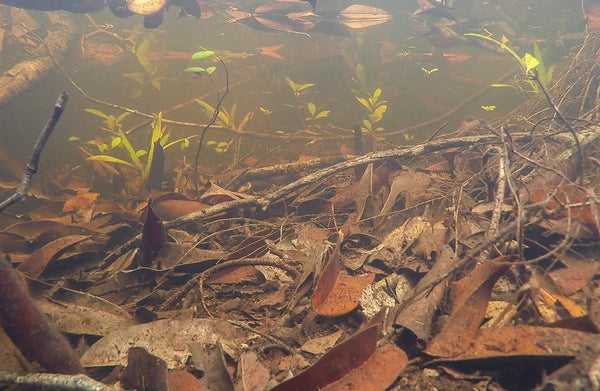
Seeing the way my fishes interact with the dense structure and the materials which occur, accumulate, and indeed comprise their habitat is extremely educational for me.
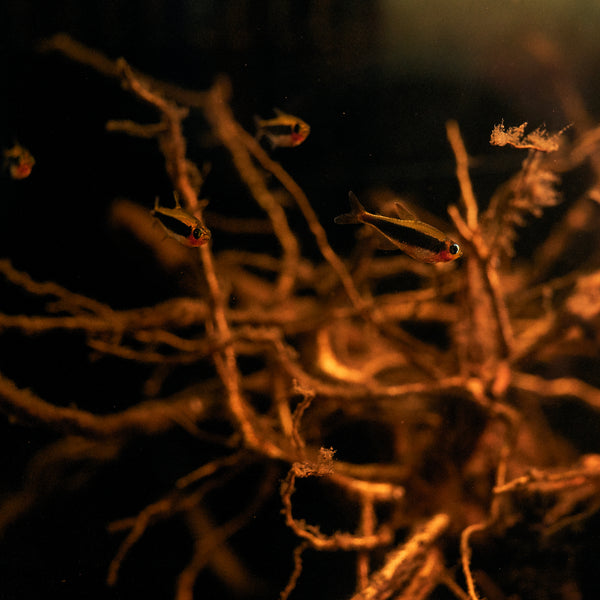
Now, I’m not saying that you need to make every aquarium a tightly-packed, heavily-filled-with-branches setup. I am suggesting, however, that we consider occasionally setting up an aquarium- or features within our aquarium- which create these interesting “behavior zones.”
With more and more hobbyists thinking further outside the proverbial “box” than ever before when planning aquariums, we’re starting to see more functionally aesthetic representations of all sorts of aquatic habitats. Again, we can’t always find the exact plant species, leaves, or wood that are found in these habitats, but we can still create these functional representations of fascinating aquatic habitats and their ecology.
Let’s talk about that “Urban Igapo” idea again…
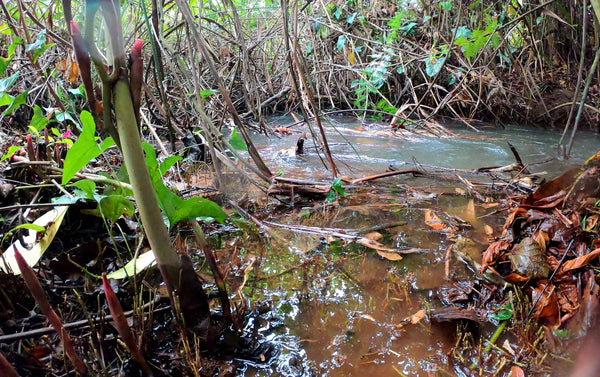
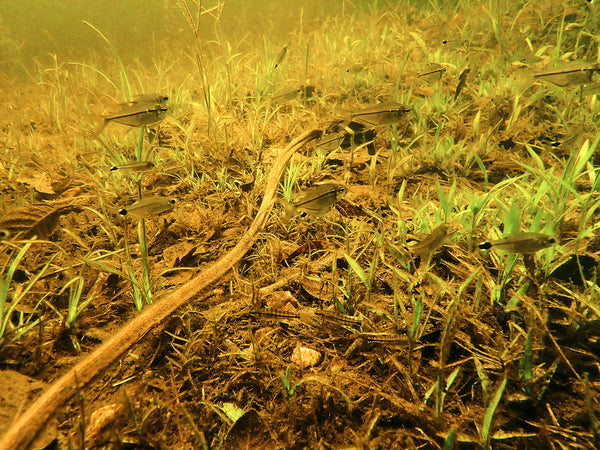
We’ve talked a lot about flooded igapo forest floors and inundated meadows in the tropical regions of the world, specifically South America. Being inhabited by terrestrial habitats, these forest floors are often covered with flood-resistant shrubs and grasses, many of which are not typically available in the aquarium hobby.
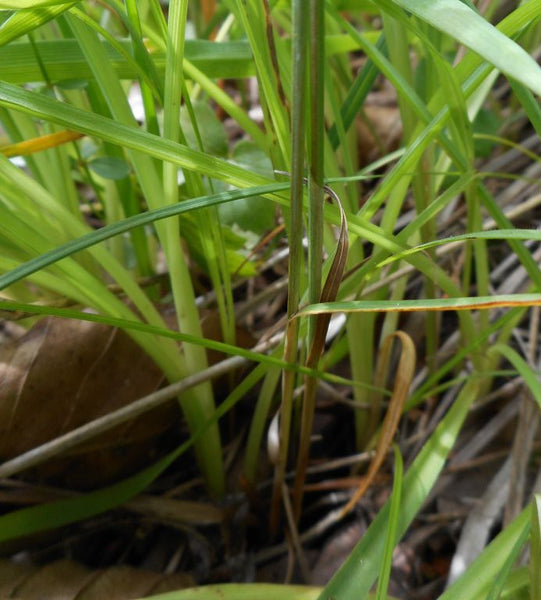
Grasses, such as Paspalum repens, a common species found in South America, and several other grasses, are quite abundant in these habitats, and are most resistant to prolonged submersion.
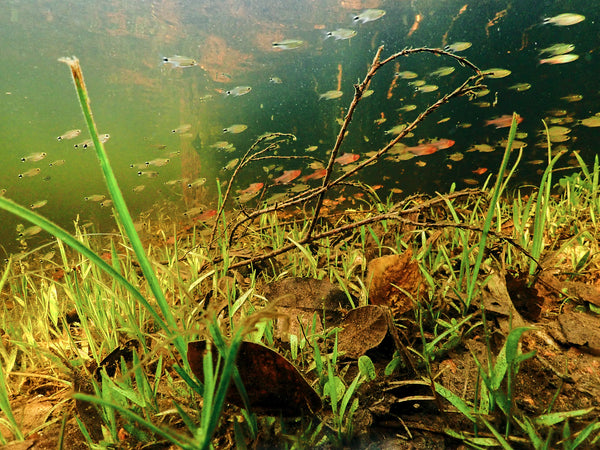
Now, there are species of Paspalum which are available as seed in many parts of the world, particularly North America and Europe. You absolutely can grow these and utilize them for the “role” of (“generic”) “Pantanal grasses” or “forest grasses” in your displays. Ive done this many, many times. Many of them are remarkably tolerant of submersion for brief periods of time!
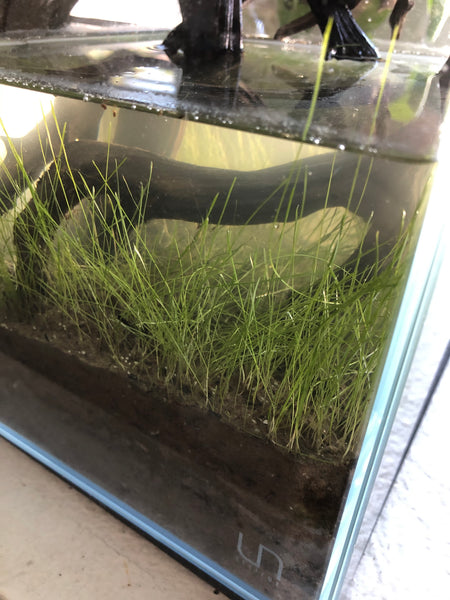
There are other species that you can obtain and use for your “Urban Igapo” setup. Here are a few to get you started:
Oryza perennis: A wild relative of rice adapted to the fluctuating water levels of Amazonian floodplains. You can use a variety of other rice species in your “Urban Igapo” to represent this species! Many are physiologically identical, and tolerate similar environmental conditions.
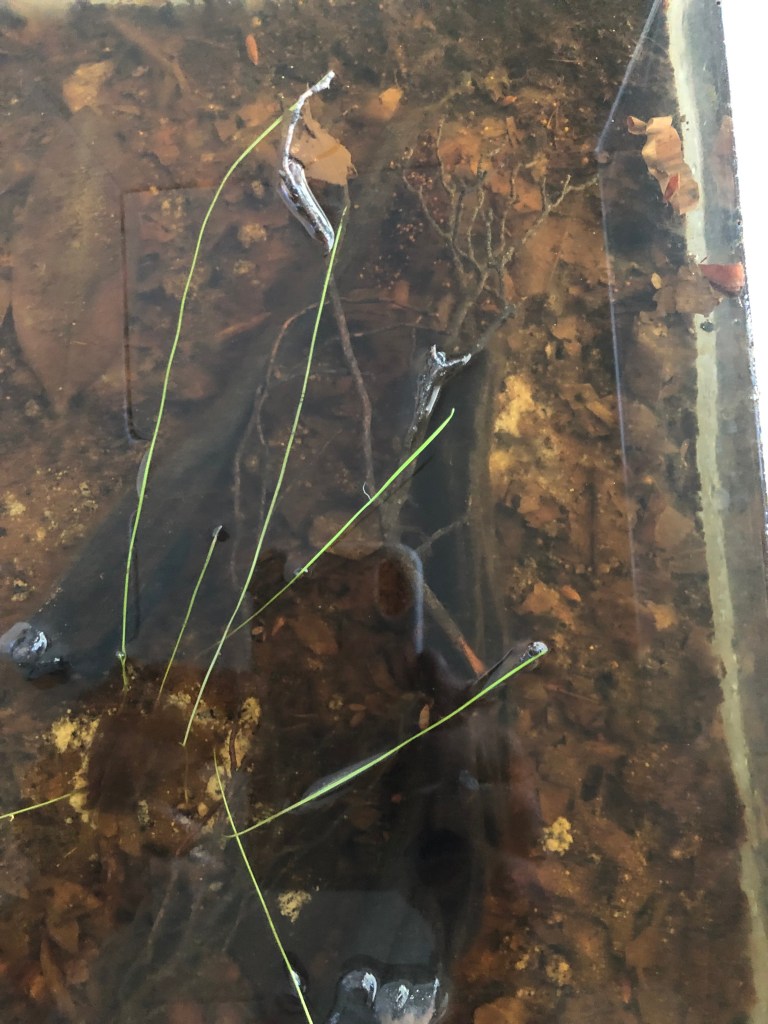
Lagenocarpus pulchra: A prominent terrestrial sedge (family Cyperaceae, often grouped with grasses by observers) found carpeting the dry phase of specific igapó floors. That’s one sedge species, but there are numerous others that you can more readily obtain and use.
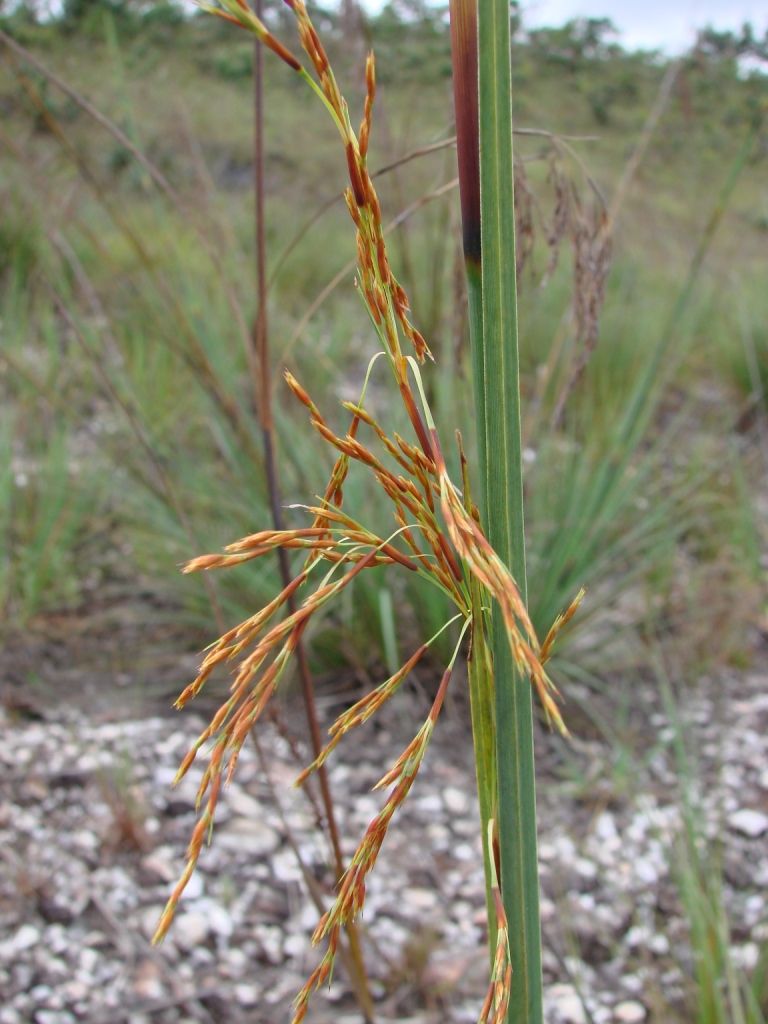
Rhynchospora spp. and Scleria spp.: Riparian sedges that emerge along the forest edges and lower strata during the terrestrial (unflooded) period. Again, there are lots of riparian plants available to those who do the research.
Most of these plants adapt to seasonal flooding through dynamic physiological and structural transformations. They actually switch their anatomy depending on whether they are completely underwater (submerged phase) or exposed to air (emergent phase). When the floodwaters rise, the plants focus on survival, buoyancy, and gas transport.
Cells form large, hollow air channels inside the stems and roots. This acts like a built-in snorkel, moving gases down from any parts still touching the air. Stems and leaf stalks rapidly lengthen to keep their tips above the rising water line. Leaves that stay underwater grow thinner, lose their waxy coating (cuticle), and drop their stomata (breathing pores).
This allows them to absorb dissolved carbon dioxide directly from the water. Some grasses, like Paspalum repens, detach or form floating root mats that ride the water surface.
As the water recedes, the plants transition back to standard land-based growth to maximize reproduction. The plants produce lignin, a tough organic polymer, to stiffen their stems so they can stand upright without the support of water. New leaves grow thicker, develop a waxy cuticle to prevent dehydration, and form functional stomata for atmospheric gas exchange. Plants use this dry window to quickly flower, pollinate via wind or insects, and drop seeds into the mud before the next flood cycle.
I’m a huge fan of Acorus in these setups!
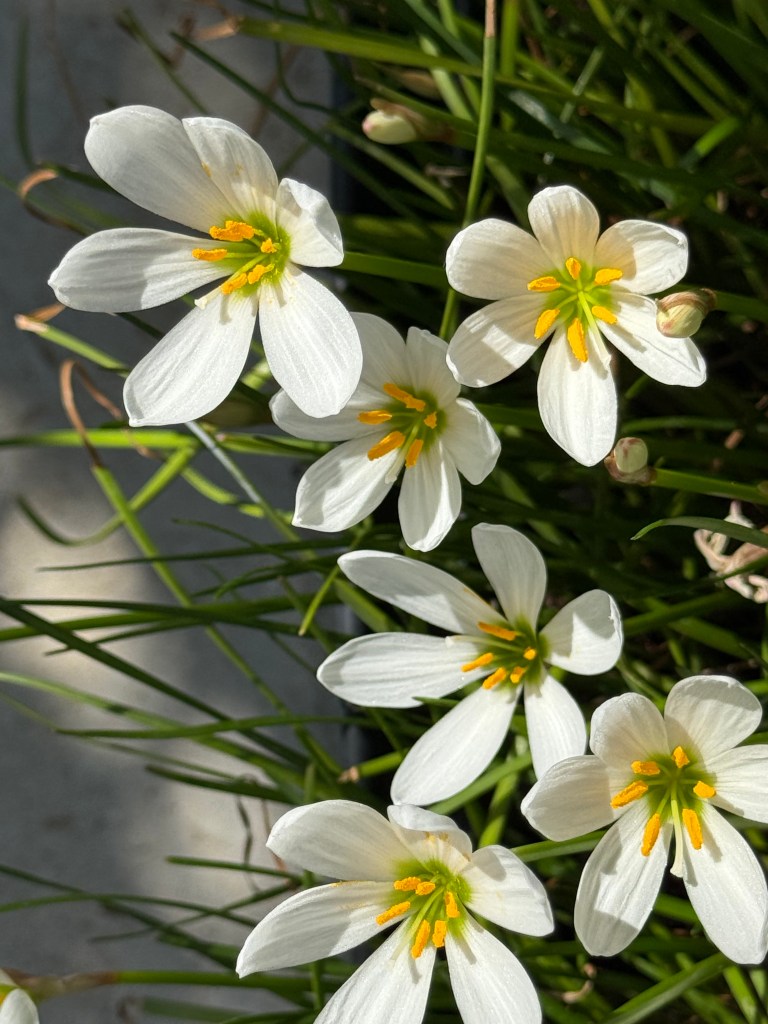
Now, my other “challenge’ to plant lovers in general: Let’s figure out which terrestrial plants can tolerate/grow/thrive under submerged or partially submerged (blackwater) conditions. Perhaps a more “realistic” (not in the hardcore “biotope aquarium contest” context, of course) avenue to explore in this regard?
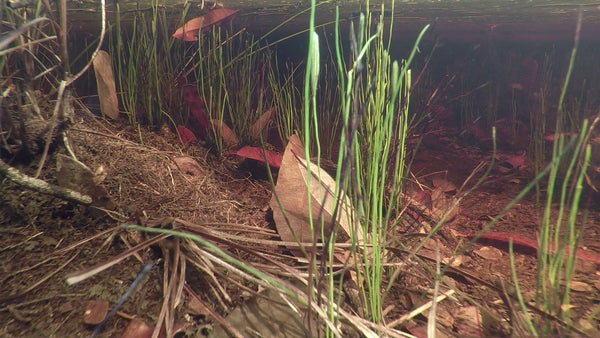
I’ve got one tree for you to research…the dominant terrestrial plant in the South American flooded forests is Eugenia inundata… Don’t think I’m not well underway in my (somewhat futile) efforts to see if I can secure fallen leaves of THIS plant!
You’ll also find Iriartea setigera, Socratea exorrhiza, Mauritiella aculeata palms in these areas..
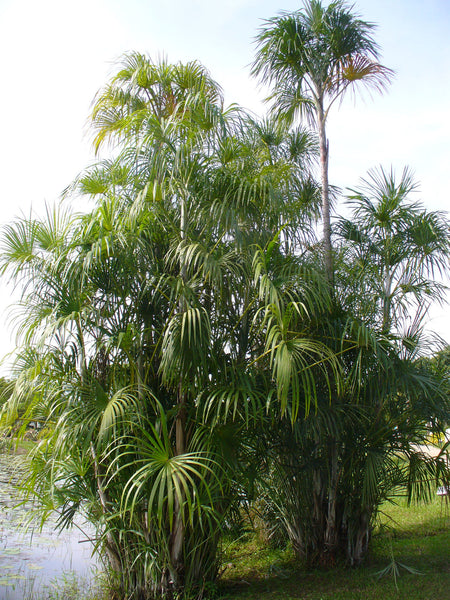
(Mauritiella aculeata – Image by pixel too used under CC BY 2.0)
Like so many things from the Amazon, it’s not easy (read that, damn near impossible) to secure botanical material from this region, so the proverbial “Don’t hold your breath waiting for this” comes to mind! Oh, and the submerged grasses we see and drool over in those underwater pics from Mike Tucc and Ivan Mikolji of these habitats?
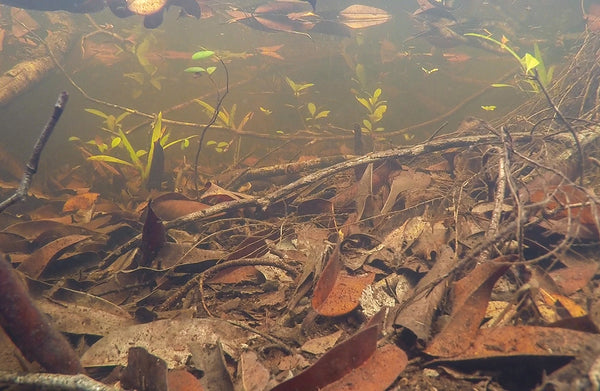
Again, they’re typically Paspalum repens and Oryza perennis.
Remember, we DO have access to some species, such as Sedges and other riparian or semi-aquatic/bog plants from genera that are found in these regions, such as Papyrus (Cyperus), Acorus, Orzyas, etc. These are surprisingly popular plants, and for the purpose of recreating one of these seasonally-inundated habitats, they’re near perfect!
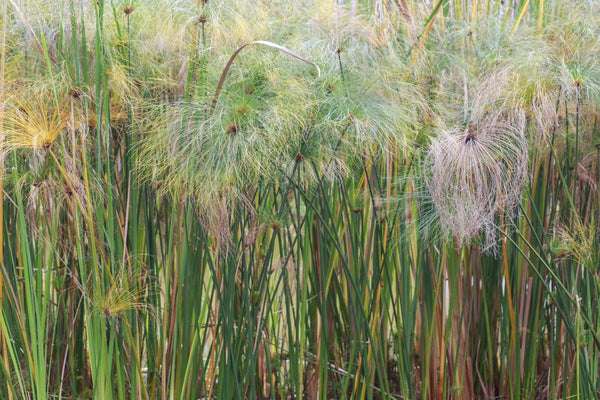
Since many of these plants tolerate submersion for extended periods of time, they are of great interest to many of us for use in our “Urban Igapo” type aquariums. Of course, part of what interests me is that these are generally very hardy plants, because, well- I don’t exactly have a “green thumb”, aquatic or otherwise, and appreciate plants that can take widely varying environmental conditions, like Acorus!
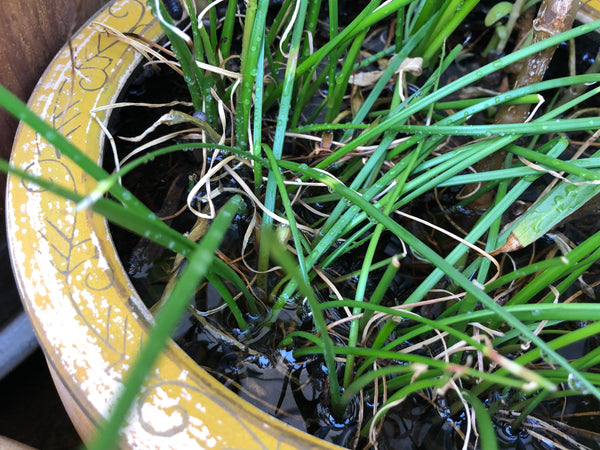
There are numerous species more commonly available from commercial nurseries in North American and European nations, so creating realistic representations of these habitats in our aquariums is more attainable than ever!
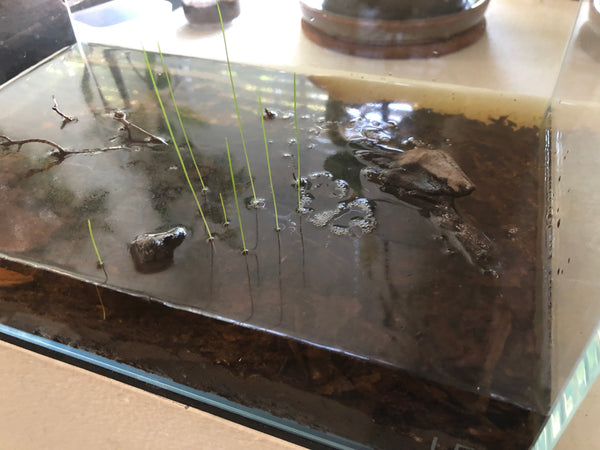
Now, with this in mind, there are also lots and lots of possibilities for creating unique aquatic displays with what I would call “aquatic analogs” of these grasses and shrubs. In other words, incorporating some true aquatics to replicate the “look” of the flooded forests using representative species.
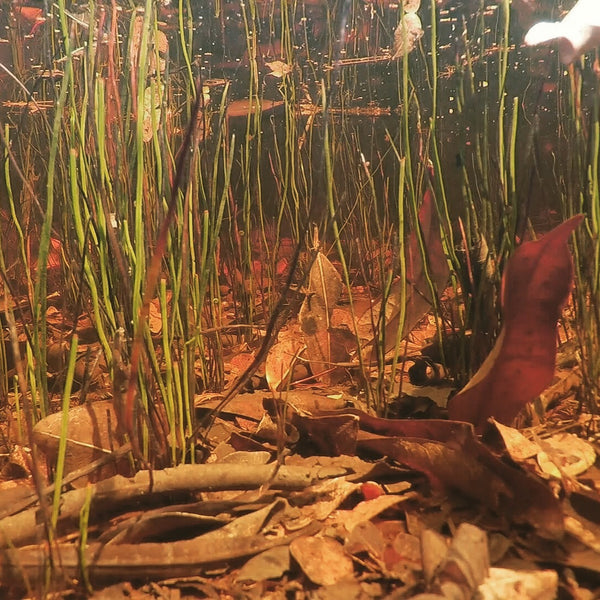
I freely admit that this is a total “cheat”- but when you think about it, it’s a pretty good method that can be employed if you want to represent the inundation period for the theme of your aquarium, and aren’t able to secure or grow the terrestrial/semi-aquatic analogs to the species found in these habitats.
So, I’m thinking about plants like Echinodorus tenellus, the “Pygmy Chain Sword”, which grows in a most “grasslike” state, and certainly is representative of the grasses one might find on a flooded Panatanal or forest floor habitat in South America.
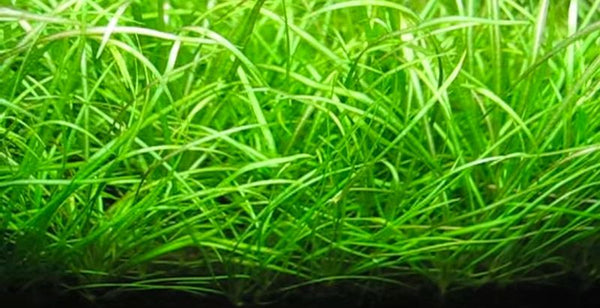
It’s not hard to cultivate a little section of these plants in your representation of a flooded forest, and drop in a few leaves and botanicals, and achieve a relatively realistic-looking facsimile!
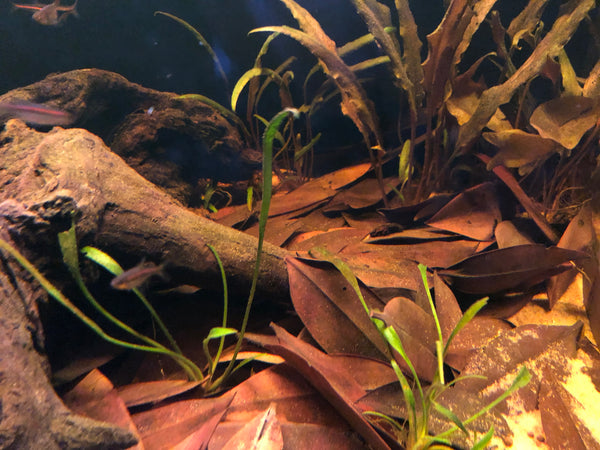
Another great candidate that has a sort of “generic tropical terrestrial grasslike” appearance would be Cryptocoryne parva. This diminutive plant actually can be grown emerged, so for “semi-flooded” igapo or varzea biotope aquariums, it would be really adaptable! And when submerged, it bears strong resemblance to Paspalum or other tropical, submersion-resistant grasses. (It’s the plant in the foreground in the below pic, BTW).
Yeah, I know it’s from another continent…
I suppose the old fave, Sagittaria, could also be employed for this purpose, but some species can achieve a larger size and perhaps ultimately be not as realistic, so you’d need to choose carefully. More exotic, but readily available as tissue-cultured, would be the beautiful Lilaeopsis mauritiana, a beautiful species often called “Micro Sword” for its appearance and size.
And of course, since we’re representing a flooded forest floor or meadow, with patchy growth over rich soil and leaves, you likely don’t need to have the full-on green lawn that planted aquarists strive for so ardently! A little bit of “open space” and some twigs, roots, bark pieces, a few seed pods, and exposed substrate and you’re well on your way to creating a remarkably cool tank!
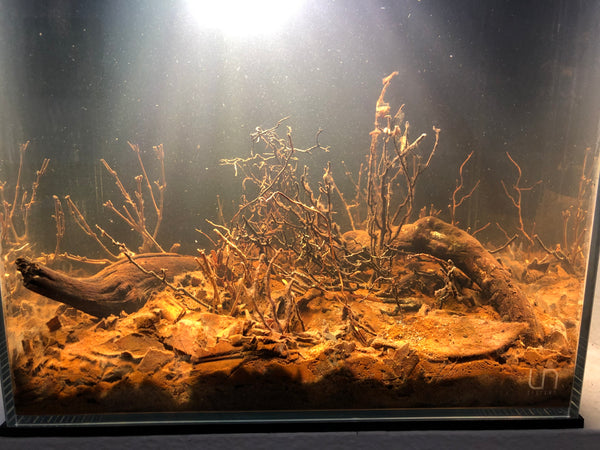
Just plant some of it here and there in such a tank, and….well, yeah, you get the idea, right? 😆
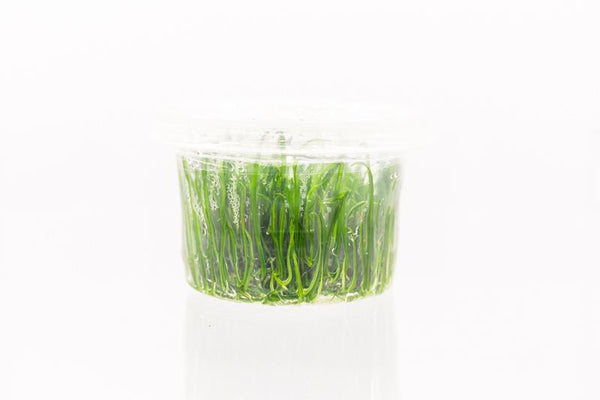
Again, since the intense growth of true aquatic plants isn’t the primary focus of such a display, you have a tremendous amount of “latitude” over their care when working with them in this manner! You don’t need to go nuts with CO2 or massive and complicated fertilizer regimens. A good aquatic soil, sand, and or other media, accompanied by good lighting is all you need.
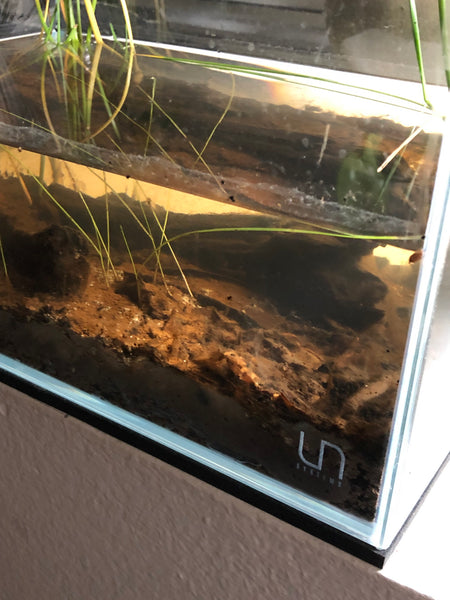
Employing a good cover of leaf litter, along with selected botanicals, you could create a very realistic representation of these habitats in your aquarium!
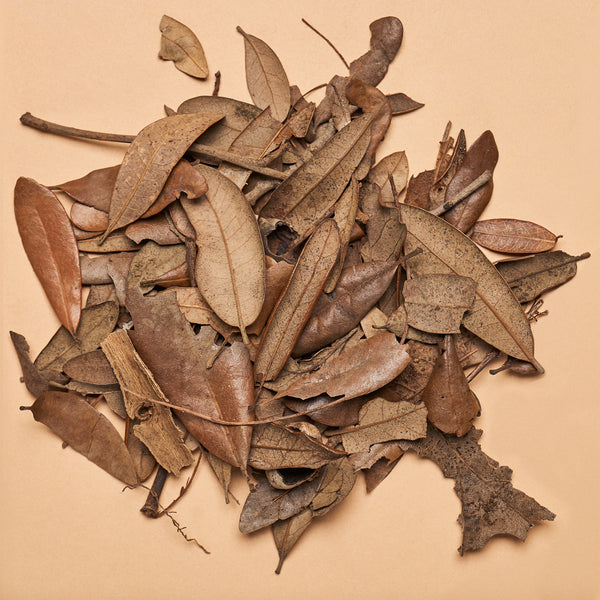
I think that despite the fact that this is sort of “cheat” (and yeah, it most definitely IS! ), you could certainly create a pretty faithful representation of these unique habitats, and inspire further research into them.
You need not be “hamstrung” by not being able to source or obtain the actual terrestrial plants found in these habitats…you could always turn to “aquatic analogs” for a good start!
Work with what you’ve got!
Sure, you simply can’t always obtain every actual plant species found in a given region or habitat…and that’s okay. You can still create more “literal interpretations”of the physical structure of natural aquatic features using “surrogates”, to create aquariums that are alluring, interesting, and decidedly educational. The dynamics of the habitat aren’t always so tied to one specific species or genus of plant, so you do have some latitude!
Don’t stress- you’re still creating something very special.
What’s most profound about this approach, in my humble opinion, is that it’s enabled us to study more closely- and replicate more closely- the unique environments from which our fave fishes hail. And that leads to a greater understanding of both the fishes and their habitats.
Stay creative. Stay studious. Stay excited. Stay diligent…
And Stay Wet.
Scott Fellman


Leave a Reply