
Oh, today I’m likely to piss some people off. That’s nothing new, but it’s fun to “poke the beehive” now and then and have us look in the mirror a bit.
As many of you know, I love to follow what’s up in the competition aquascaping world, even while avowing a total hatred of the hubris and bizarreness around it. I greatly admire the skill of the people who compete in those contests, particularly the ones who appropriate the term “Nature” for their work.
I admit, I do find some ideas in those contests that I could employ in my own work in a different manner. I also find it fascinating to see all of the contortions and mental gymnastics that these entrants do to push their work as “natural.”
One of the things that sort of catches my attention lately is the increasing interest in what is being labeled as “realism” among the “high concept” aquascaping world. Like, taking some cues from natural habitats to incorporate in aquariums.
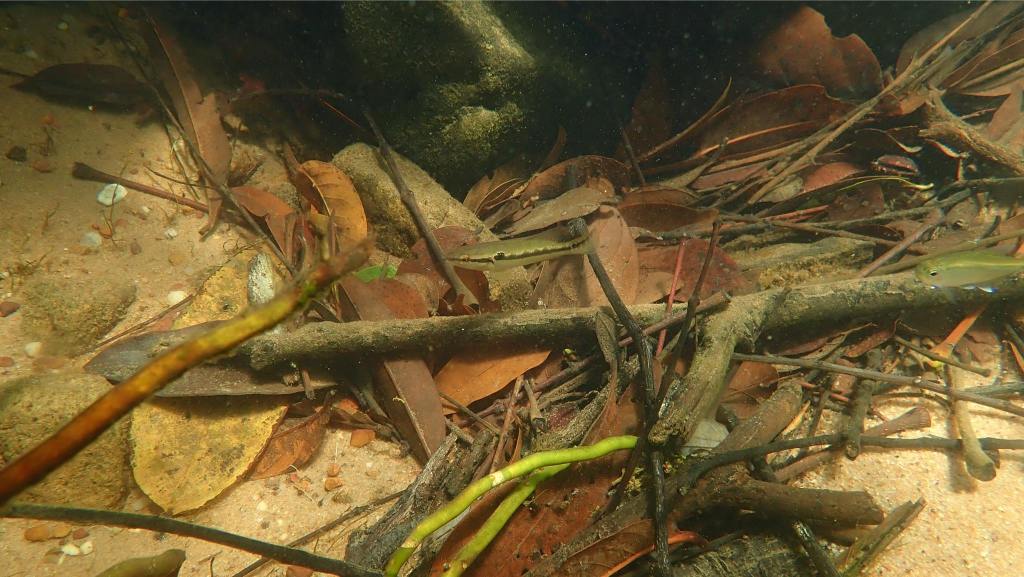
Okay, this is huge, right?
Part of me is totally celebrating the move away from the strange “fantasy ‘scape” crap that has dominated aquascaping for too many years now.
It’s an interesting shift. An encouragung one.
However, the natural-style aquarium lover in me is still wishing we could prod them along a bit more. While it’s an interesting and encouraging development, I can’t help but observe some nuances in the “movement” which leave me wishing they’d go a bit further. Because the emphasis seems to be on only half of the equation.
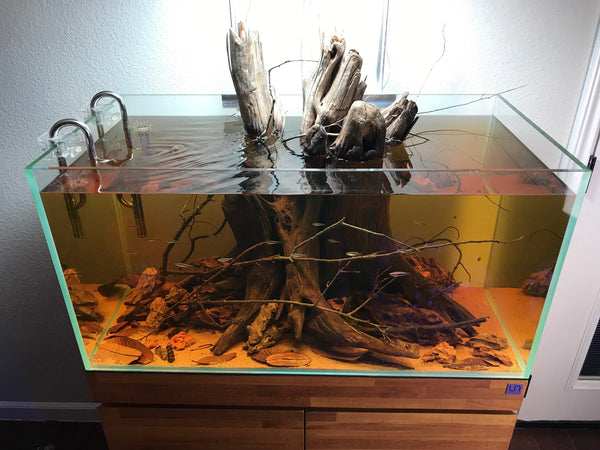
Yeah, the interest seems to focus mainly on the look, as opposed to the whole picture; the function.
And yet, there is a push to make their “mountain/canyon ‘scapes” more “realistic.” Huh? WTF does that mean?
I see tons of discussions on this “technique”- a lot of ideas about gluing rock together and gluing wood to rock to create unusual “canyons” and such..urghh!!! And of course, it begs the question to me…Are underwater mountain scenes “realistic” in tropical fish habitats to begin with?
Umm…
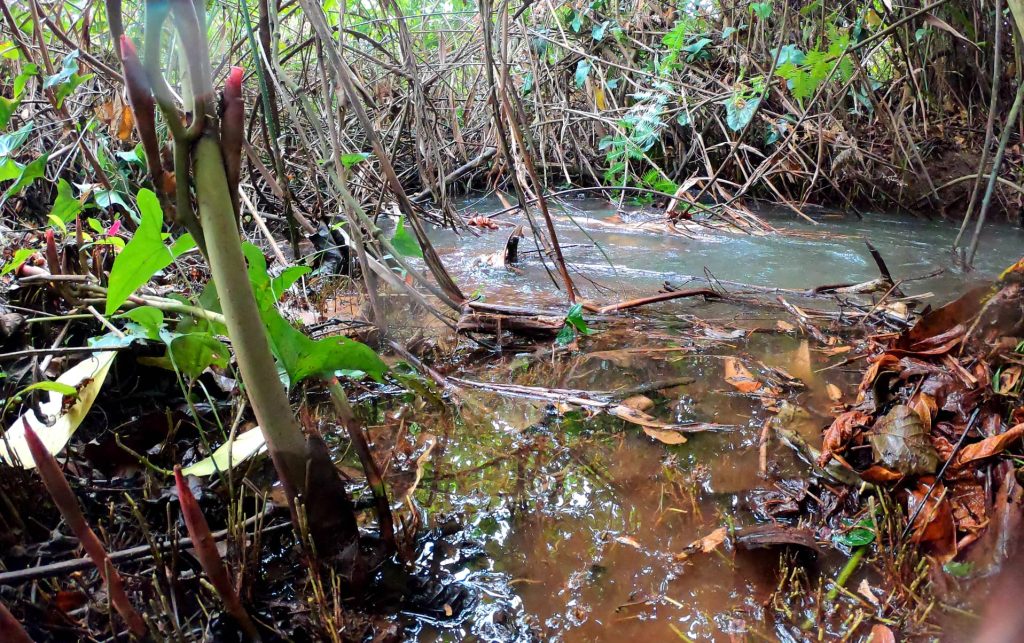
Can’t these guys ever just look at a stream or something that tropical fishes actually reside in, and try to just kill it replicating that? Does it always have to be a photo of Olympus Mons on Mars, or K2 in the Himalayas, or something ridiculously non-aquatic that inspires them. So much talent working on- well, you get my point. Sheesh!
Chill, Fellman. Chill.
I mean, “baby steps”, I suppose- but man, going just a bit further could yield so much more…
I guess it seems like nothing ever satisfies me, right? And who the fuck am I, right?
However…
I sometimes fear that this burgeoning interest in aquariums intended to replicate some aspects of Nature at a “contest level”, while great on the surface, will simply result in a renewed interest in the same sort of “diorama effect” we’ve seen in planted aquarium contests.
In other words, just focusing on the “look” -or “a look” (which is cool, don’t get me wrong) yet summarily overlooking the function– the reason why the damn habitat looks the way it does and how fishes have adapted to it in the first place..and considering how we can utilize this for their husbandry, spawning, etc.- is only a marginal improvement over where we’ve been “stuck” for a while now.
Like, “Why do we need decomposing leaves in there? And that ‘fungus’ on the wood is gross! However, this wood arrangement represents a flooded forest in the Amazon! I used several pieces of ‘Umbaka Wood’ glued together to create the look of a fallen tree, and…”
Yeah, I’m being mean, but shit…so close. I remember celebrating when my friend Alex Franqui had the temerity to enter a real botanical method aquarium, decomposing leaves, biofilm-covered wood, and all, in an Aquascaping contest a few years back- and placed pretty highly! I thought we had a breakthrough…
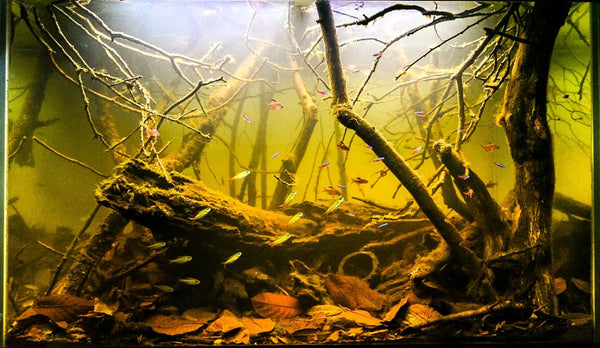
I mean, I’m probably being unduly harsh on the contest culture, judging, and entrants, but it’s like, if you’re going to represent a natural aquatic ecosystem- follow through and do it all the way. Don’t edit and sanitize it for the masses. Because when you try to present something like that and attempt to be “educational”, you need to make it very clear that what you’re doing is inspired by Nature, not an accurate representation of a natural habitat.
There’s nothing wrong with that. Just be factual.
If you’re not going to go all the way, yet still insist on calling your work an accurate representation of a natural aquatic habitat, maybe it’s best to just go back to creating “Fairy Forests” and Beach Scenes…
Some of these people need to just stare at a few unusual underwater scenes for a while and just open their minds to the possibilities…
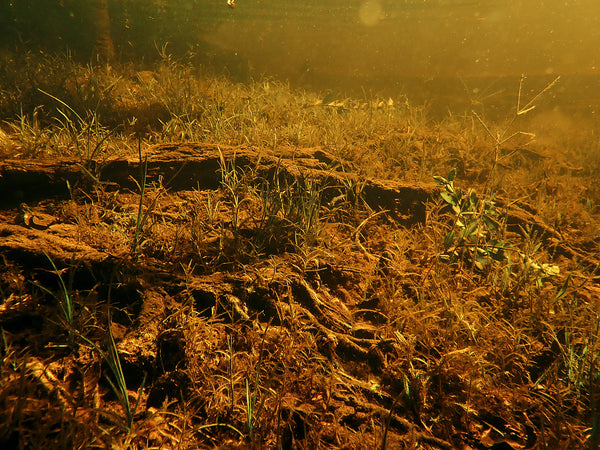
We all need to go further. Even the biotope enthusiasts can push harder. They’re soooo close!
I’m sure I’m being just a bit over-the-top (oaky, maybe QUITE a bit!), and the term “asshole” is not unwarranted here- but it seems to me like the so-called “Nature Aquarium” movement seems to have, IMHO, largely overlooked the real function of Nature, so I feel that my criticism is warranted, unfortunately.
A sanitized, highly stylized interpretation of a natural habitat is a start…I’ll give ’em that-but it’s just that- a start.
The real exciting part- the truly “progressive” part- comes when you let Nature “do her thing” and allow her to transform the aquarium as she’s done in the wild for eons.
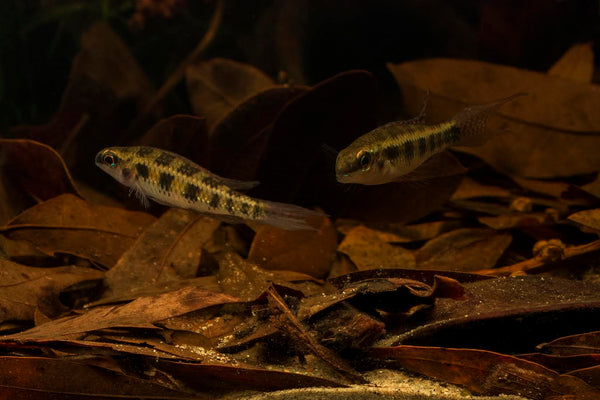
So, yes- It should go beyond merely creating the “look” of these systems to win a contest, IMHO. Rather, we should also focus on the structural/functional aspects of these environments to create long-term benefits for the fishes we keep in them. We should aim to incorporate things like biofilms, detritus, decomposition into our systems, just as Nature does.
That’s a real “biotope aquarium” or ‘Nature” aquarium in my book.
How about if entrants in this special category needed to show a progression in the tank from “new” to ecologically evolved? You know, shots of the tank over several months, with leaves and wood developing biofilms and decomposing, etc….This would satisfy the judges, who want see hardscape arrangements and such, and the “armchair critics” and real natural habitat enthusiasts like me who rail on the vapidity of these things, lol.
And it would educate people.
And, in addition to you- the botanical method aquarium community- there is another group of hobbyists that are in a position to influence and inspire the aquarium world to push further- biotope aquarium enthusiasts. I hope that this crowd- who have a lot of awareness about the habitats they are inspired by-will at least consider this “functional/aesthetic” dynamic that we obsess over when they conceive and execute their work, and will be more vocal about it.
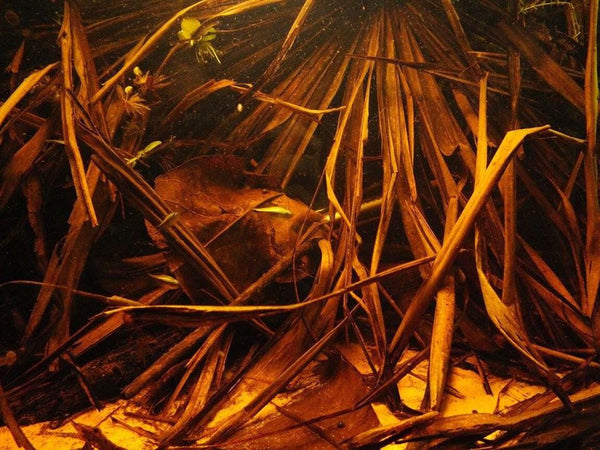
Decomposing leaves, biofilms, detritus, sediments, submerged terrestrial plants- all have their place in an aquarium designed to mimic aquatic habitats. You can and should be able to manage nutrients and the bioload input released into our closed systems by these materials, as we’ve discussed (and executed/demostrated) here for years.
The fear about “detritus” and such “crashing tanks” is largely overstated, IMHO- especially with competent aquarium husbandry and proper outfitting of a tank with good filtration and nutrient control/export systems in place. These are literally detritus-based ecosystems. We’ve talked about this at least a thousand times here over the years. It’s no mystery.
I’ll go further…I want to push people who ply these waters a bit more:
If you’re up to the challenge of attempting to replicate the look of some natural habitat- you are likely a competent enough aquarist to be able to responsibly manage the system over the long term, as well.
Don’t chicken out.
Ouch, right?
Hey, that’s reality. Sorry to be so frank. Setting up a tank just for a contest period, taking entry pics and then tearing it down is absurd, IMHO. Enough of the “shallow mimicry” bullshit that has dominated the aquascaping/contest world for too long, IMHO.
You want to truly influence/educate people and inspire them? Want to really advance the hobby and art/science of aquarium keeping? Then execute a tank which can be managed over the long haul.
And document it like our crowd does. At every phase. Even the “ugly” ones.
Create and manage tank that doesn’t polish out the reality of Nature. Crack the code. Figure out the technique. Look to Nature and “back engineer” it.
These things can be done.
Oh, wait. They are being done!
You-our community- are doing them right now. Every day!
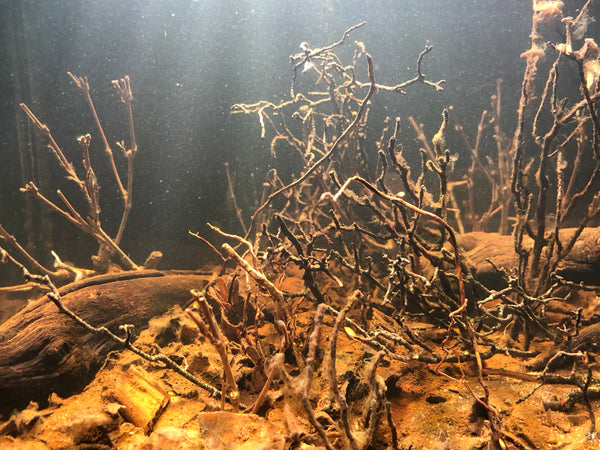
There are many aspects of wild habitats that we choose to replicate, which we can turn into “functionally aesthetic” aquarium systems. Take, for example, the most common hardscape component- wood. It’s been a staple of the aquarium world for decades. If we think of wood pieces as more than just “static hardscape”- and consider them as a dynamic part of the habitat- the game changes.
Trees- in their submerged and even fallen state- are more than just “hardscape” to those of us who are into the functional aesthetic aspects of our aquariums. Much more.
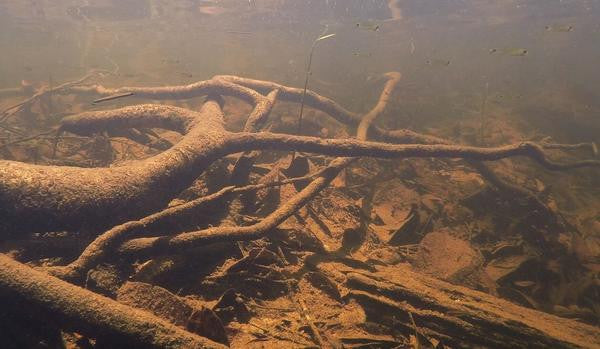
The trees present in flooded forest habitats and streams actually benefit fishes and aquatic life forms when they fall. Upon the return of the inundating waters to the dry forests, these fallen trees become an important part of the aquatic habitats, providing multiple benefits.
A fallen tree wedged into a stream bottom provides shelter from the currents. The tree trunk changes the flow pattern of the stream to create eddies which may bring in food and wash away fine silt, allowing formation of gravel beds and the accumulation of leaves and fallen botanical materials.
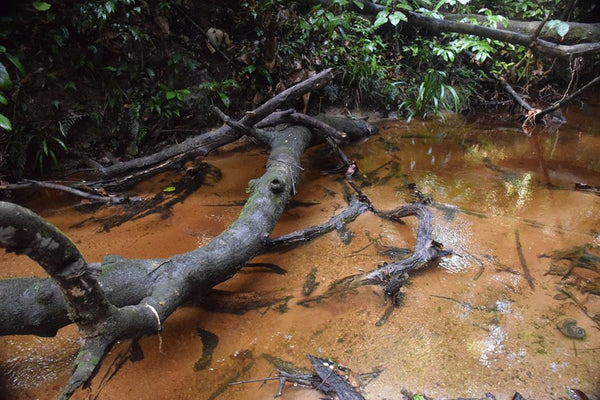
Foraging areas are created, in which fishes may find insects, small crustaceans, and fruits and such which come from the terrestrial environment. They provide spawning locations for fishes, and shelter for fry to develop and avoid predators.
That’s why fishes are attracted to these aquatic features, contest scapers!
Consider that, okay?
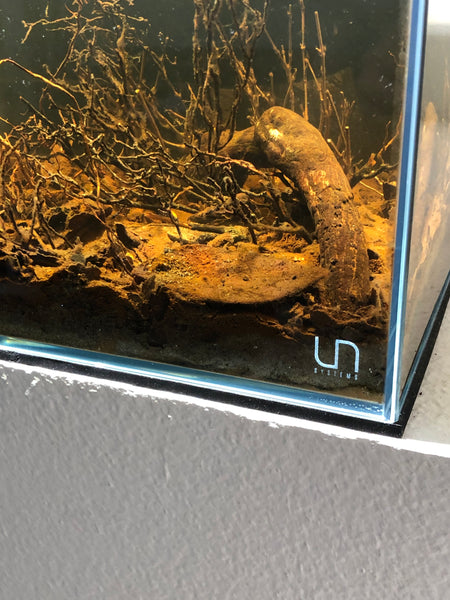
Although it might be impractical for many aquarists to obtain really large branches and such to simulate these submerged tree trunks, it would be a most interesting aquascape feature if you could source larger, thicker pieces to recreate this fascinating microhabitat in your aquarium! And entire community of fishes could be developed around (literally) one or two large branches in a modest-sized aquarium.
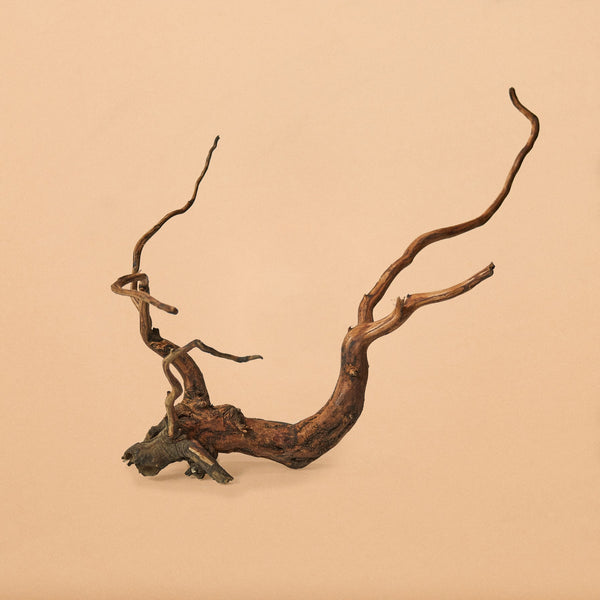
Toss in a bunch of leaf litter and some botanicals- let them break down and decompose…bam! Instant functional biotope component!
Right?
Well, almost…You’ve got the look down.
Foster the function!
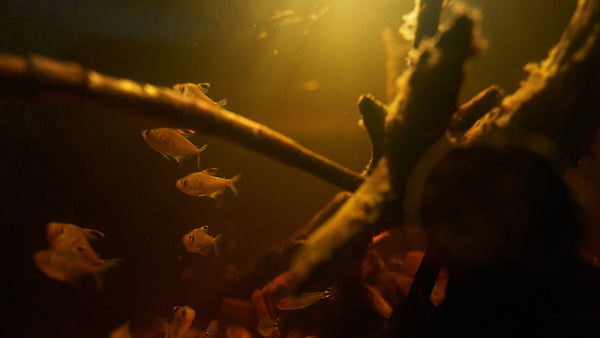
Encourage some biofilms, algae, and other epiphytic material to colonize the branches and then you’re on your way to a functional representation of this unique habitat! “Polishing out” and “editing” the “undesirable” aspects of Nature (again, the biofilms, detritus, decomposition, etc.) for the sake of some “aesthetic benefit” is, in reality, counterproductive to long-term aquarium management.
For the “Nature Aquarium” crowd- please focus on one of Amano’s core principles- one which has just been sort of “cast aside” of late- the concept and philosophy wabi-sabi. One that embraces the beauty of transience and natural processes.
Making the mental shift and helping the aquarium world as a whole understand and appreciate the appearance of some formerly misunderstood and feared aspects of aquatic habitats will lead to more than a shallow, superficial interpretation of Nature. You guys and gals are too talented not to use your skills to truly represent Nature; to call attention to its function, and to the environments which require our protection.
And there is another benefit to all of this:
It will lead to aquarium interpretations which foster many of the functions which occur in Nature. An understanding of the ecology of aquatic ecosystems.
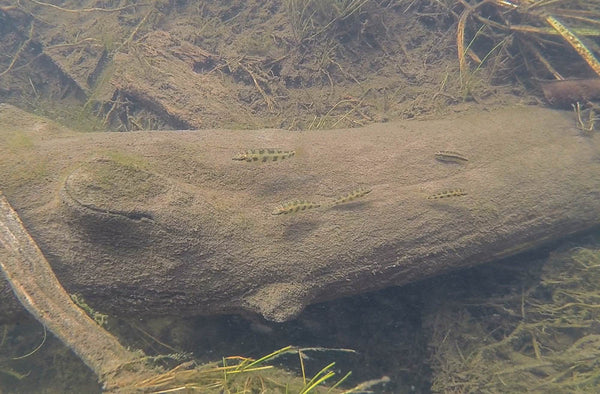
It’s about moving beyond looking at even a natural feature and thinking just about how to create the way it looks in our aquariums. It’s about looking at that feature and thinking, “How can I utilize this feature to provide the same ecological function in the aquarium that it does in Nature?”
So much to talk about, study, and interpret here.
There are so many unique and compelling aspects of the natural aquatic world that I just know will unlock the secrets of many unique and beautiful fishes which we keep in our aquariums.
By creating functional natural aquariums, we’re really setting the stage for what I really feel is the next great evolution of aquarium keeping:
Creating aquariums which replicate, as realistically as possible, the ecological function of the aquatic habitats that we are fascinated by. The “look” is a collateral benefit of process.
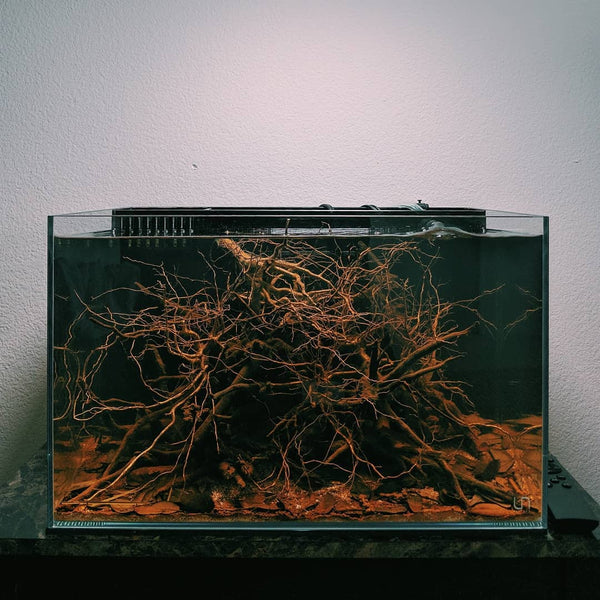
So, yeah…there is a lot to be gained when we move beyond “realism.”
Go deeper…push yourself just a bit further.
You might just change the entire aquarium hobby.
In fact, I think you will.
Stay motivated. Stay inquisitive. Stay curious. Stay creative. Stay fascinated. Stay bold. Stay inspired…
And Stay Wet.
Scott Fellman
 The Tint
Leave a comment