
What if we’ve been all wrong about how we approach aquariums?
Huh?
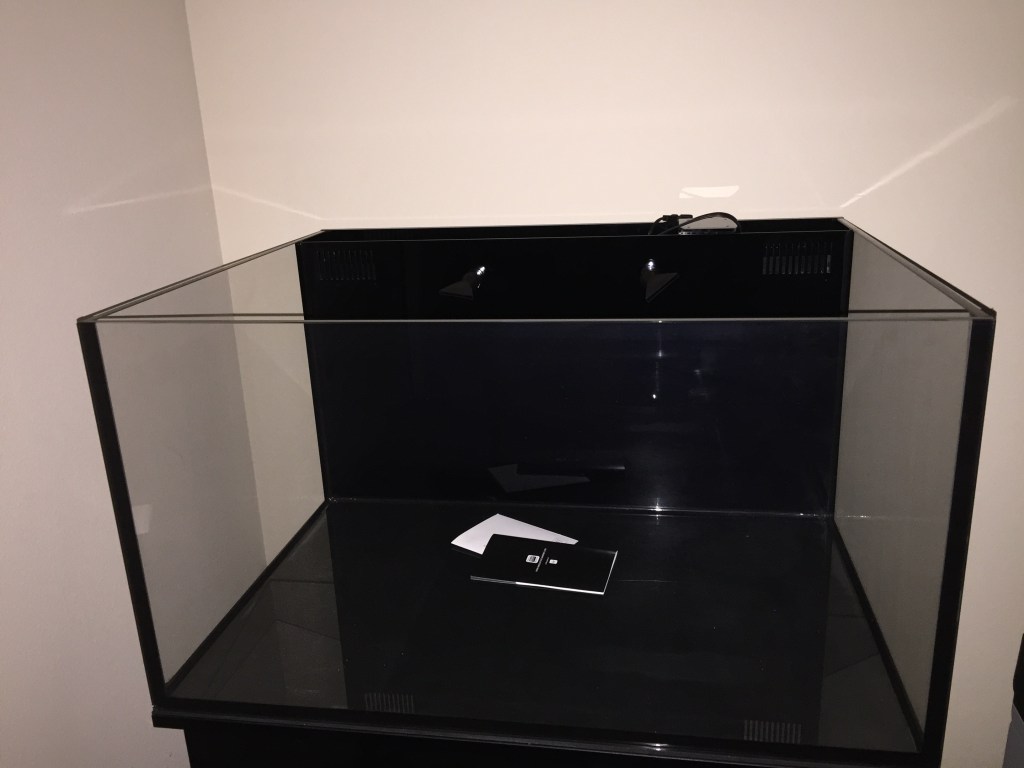
I think that we set up aquairums to be the “finished product” right from the get go., instead of letting them become what Nature intends them to be…
Yeah, let’s think about what it means when we assemble aquariums as ecosystems, rather than just “displays.”
When we take this approach, a large part of what we do is to simply add “stuff” to the empty tank, and leave it the fuck alone. To let Nature do as she does..to assemble/curate/create an ecology based upon what has been provided to work with.
The empty aquarium is really just a starting point for us to encourage Nature to do what She does best!
There have been millions of gigabytes of data and information published on the internet about how to create successful aquariums. Some of it involves utilizing expensive, specialized gear. Some about using certain additives, trace element “cocktails”, and bacteria in a bottle solutions. Some is a sort of “fusion” of both. Some simply involves what I just mentioned…Adding the necessary “raw materials” to the aquarium and letting Nature do as She damn well pleases.
There is a wonderful paradox here: the more seriously we take the aquarium as an ecosystem, the less we may need to “micromanage” it.
Not because we do less thinking, but because we do more thoughtful initial “assembly.”
We provide the ingredients: habitat structure, surfaces, organic material, light, flow, water, appropriate organisms, and sources of energy. Then we allow the interactions among those things to begin producing consequences that we couldn’t have completely predicted.
That’s very different from building an aquarium as a static display. We provide the stage, Nature puts on the performance!
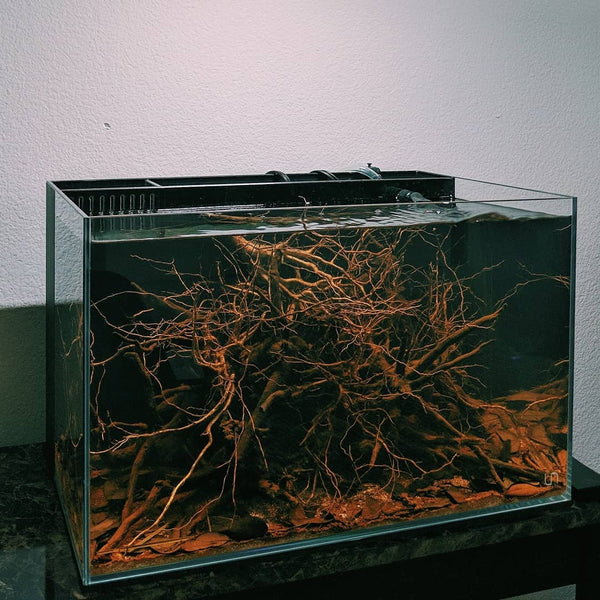
A fallen leaf doesn’t need us to tell it how to decompose, and a piece of wood doesn’t need instructions for becoming colonized. In a reef tank, a rubble fragment doesn’t need to be manually populated with biofilm. A fish doesn’t need to be taught that a particular crevice might contain food.
Once the appropriate materials and conditions exist, I’m pretty convinced that ecological processes begin automatically.
And this is where I think the word curation becomes particularly useful. You have heard me use that word a lot lately, huh? “Curation” doesn’t necessarily mean constantly manipulating something.
You, the aquarist, can establish the initial conditions and boundaries (“curation”), and then allow the organisms within the system to determine much of what happens next.
We place leaves and seed pods on the floor of the aquarium. We didn’t decide which piece would acquire biofilms first. We didn’t decide where the copepods would establish, and we didn’t decide where detritus would ultimately accumulate.
We simply provided opportunity, and then the ecosystem began making “decisions.”
That’s the really exciting part of this whole timing to me.
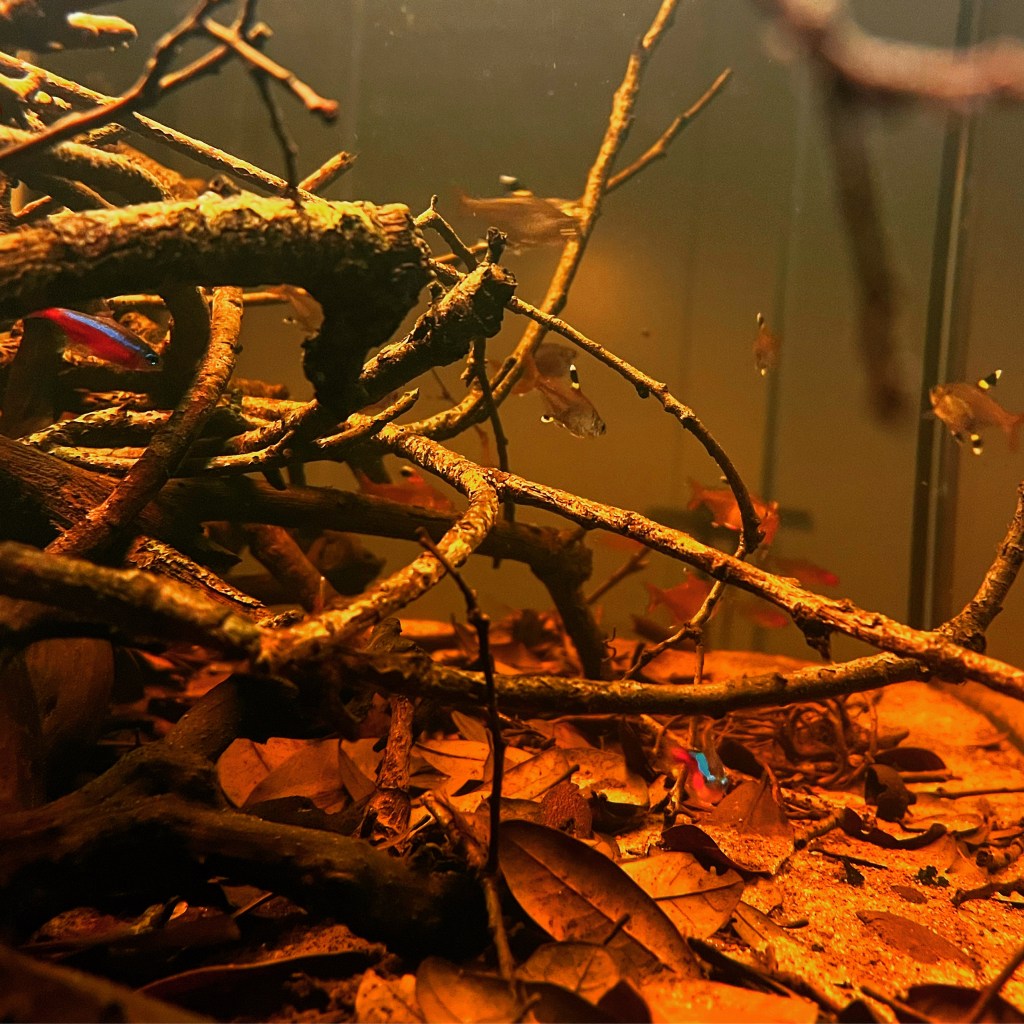
If we’re assembling an ecosystem rather than constructing a “display”, some degree of disorder becomes not only acceptable but actually, informative. Leaves move around, biofilms develop, detritus accumulates in one place and disappears from another. Those aren’t “maintenance failures.”
They’re ecological events.
Some may eventually need intervention. But we don’t need to intervene simply because something has changed. That’s perhaps one of the biggest differences between maintaining an aquarium and cultivating an ecosystem.
I wouldn’t interpret this philosophy I’m kicking around here as “add stuff and never touch the tank.”
Nature isn’t passive, and we shouldn’t be, either!
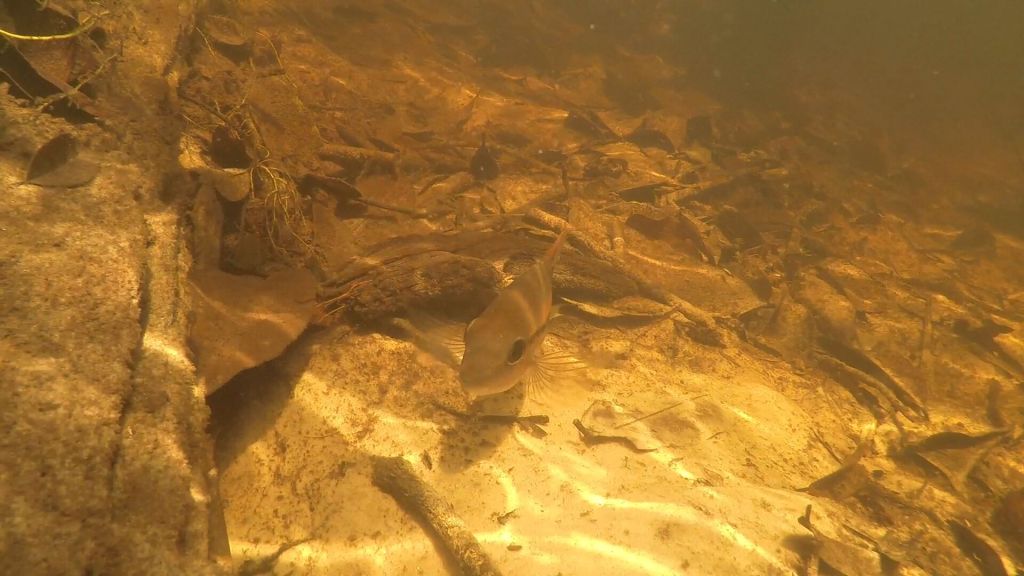
We still need to manage nutrient loading, maintain equipment, prune plants or corals, correct problems, control undesirable organisms, and occasionally redirect the system when it begins moving somewhere we don’t want it to go.
But those interventions become “guidance” rather than constant “authorship.”
That’s very consistent with how I described my coral curation in my reef tank recently, if you recall. I personally don’t want to dictate exactly how the corals will grow. I just want to give it appropriate light, flow, and space—and then guide it when necessary.
I think that I apply exactly the same philosophy to the ecosystem as a whole. We assemble the possibilities. The ecosystem determines the outcome.
And perhaps that is the most profound evolution in my thinking of late.
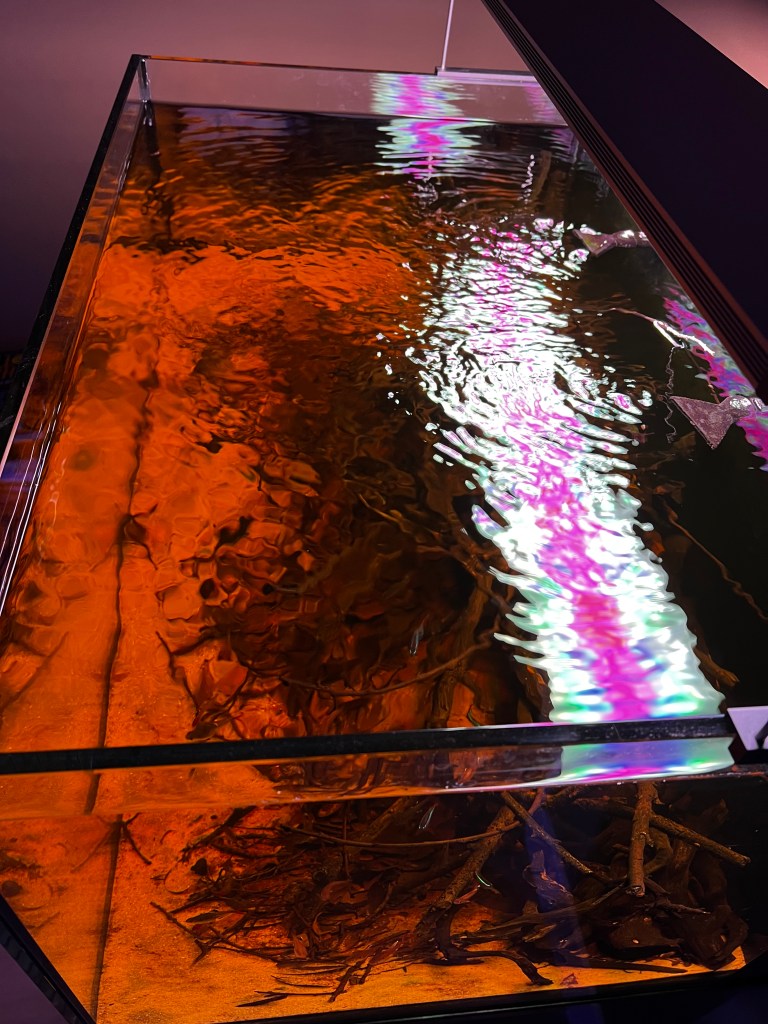
The goal isn’t to create the perfect aquarium and then maintain it indefinitely. It’s to create an aquarium with enough ecological potential that it can continue “creating itself.”
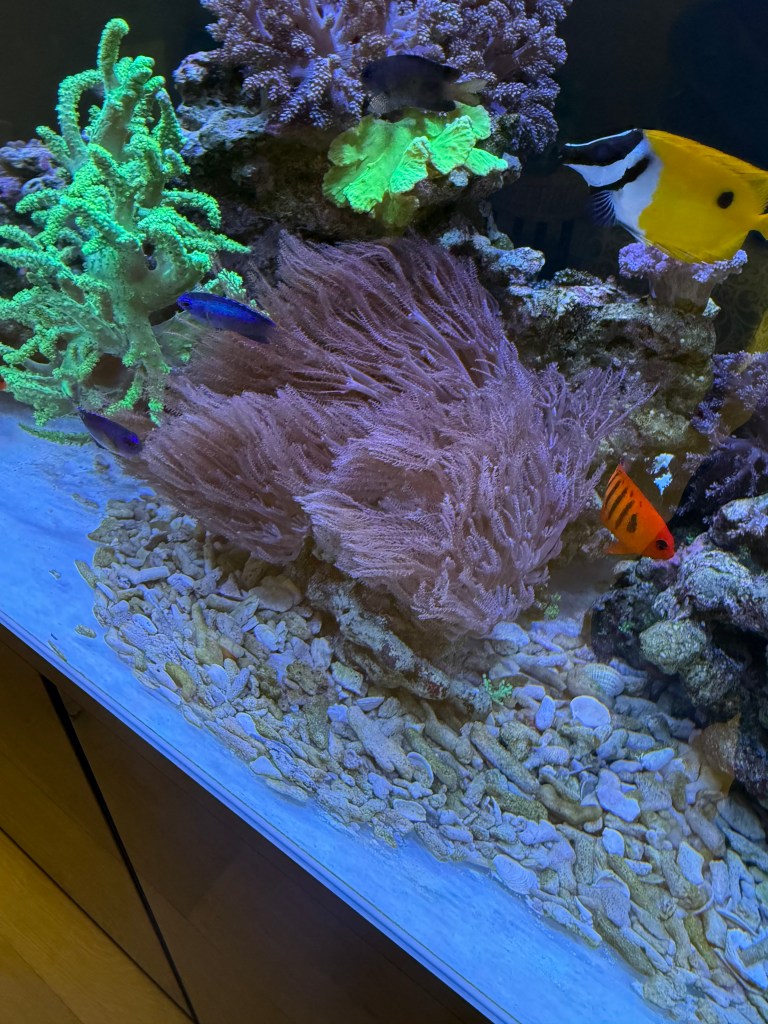
That’s why the rubble margin in my reef tank that I recently discussed here is such a good example of this. I didn’t really “finish” that part of the aquarium when I placed the rubble down. In a sense, that’s when I started it.
Now the fishes, microbes, algae, worms, corals, flow, detritus, and chemistry are collectively going to write the next chapter.
And my role?
It’s just to watch closely, intervene thoughtfully, and otherwise, just get the hell out of Nature’s way.
I feel like we as aquarium hobbyists in general- wether intentionally or not- tend to approach aquariums as “problems to solve” rather than systems to understand.
If this doesn’t make sense to you, I can clarify my thoughts here…It goes something like this:
Fungal growth accumulates on the wood: How do I get rid of it?
Detritus accumulates: How do I eliminate it?
The water changes color: How do I make it clear?
A seed pod recruits biofilm: How do I clean it?
An organism becomes abundant: How do I control it?
And sometimes- occasionally- those really are problems. But more often, we’re simply observing ecological succession.
We’ve provided a particular combination of habitat, nutrients, light, flow, and organisms. Something responds to those conditions more successfully than something else. Its population increases. We then look at the resulting change and declare it…a “problem.”
But from the ecosystem’s perspective, nothing has necessarily gone wrong.
Something has simply found an opportunity.
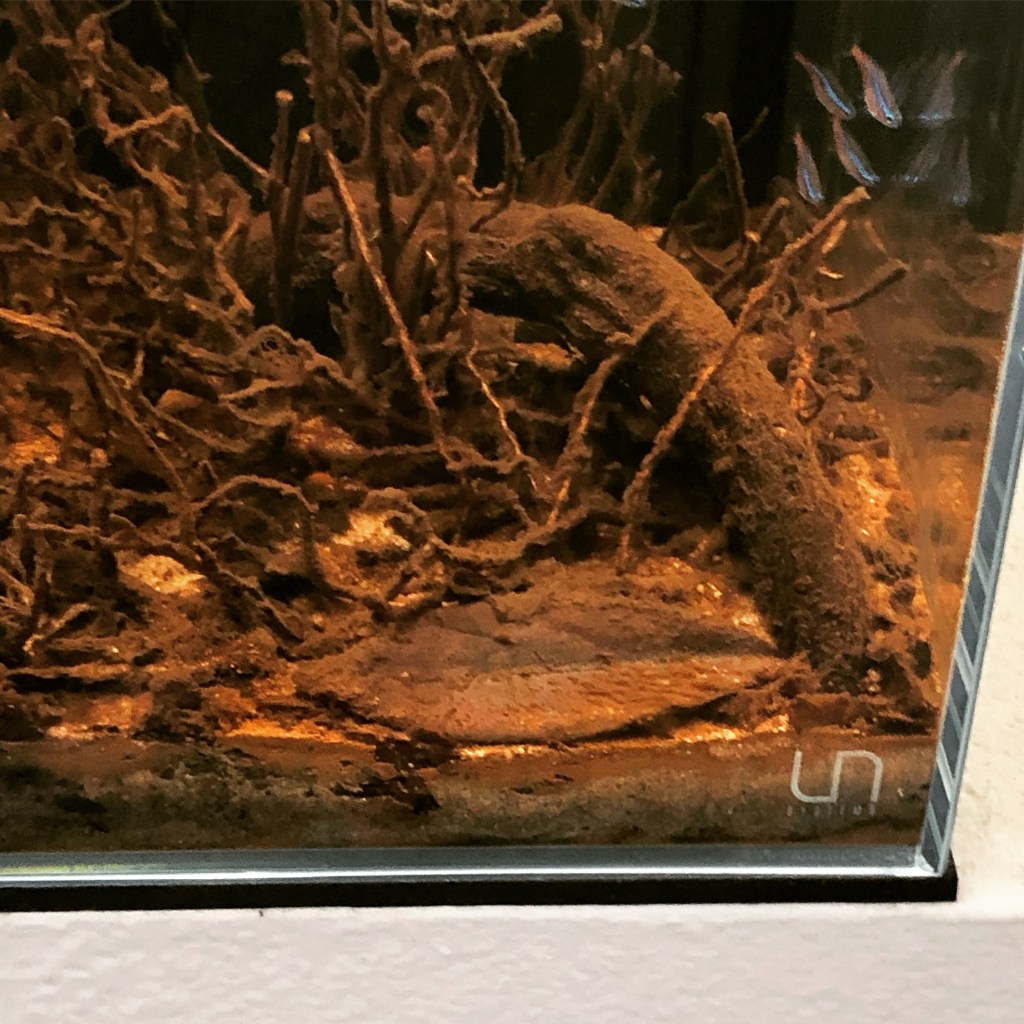
That doesn’t mean we have to accept every outcome. An aquarium is an artificial ecosystem, and we do have a responsibility to keep its trajectory compatible with the animals we’re keeping. But there’s a tremendous difference between correcting an ecological imbalance and interrupting an ecological process simply because we don’t like its appearance.
I think that’s where patience becomes a genuine “husbandry skill.”
We’re often trying to prevent “succession.” This is especially apparent in new aquariums, and for those new to, or unfamiliar with, botanical method aquarium keeping, especially.
In reef tanks, for example, we add sterile rock, sterile substrate, water, light, nutrients, and animals—and then become alarmed when microorganisms, algae, bacterial films, diatoms, cyanobacteria, worms, and other organisms begin colonizing those surfaces.
But what the hell did we expect would happen?
We created an enormous amount of newly available habitat.
Something was going to occupy it.
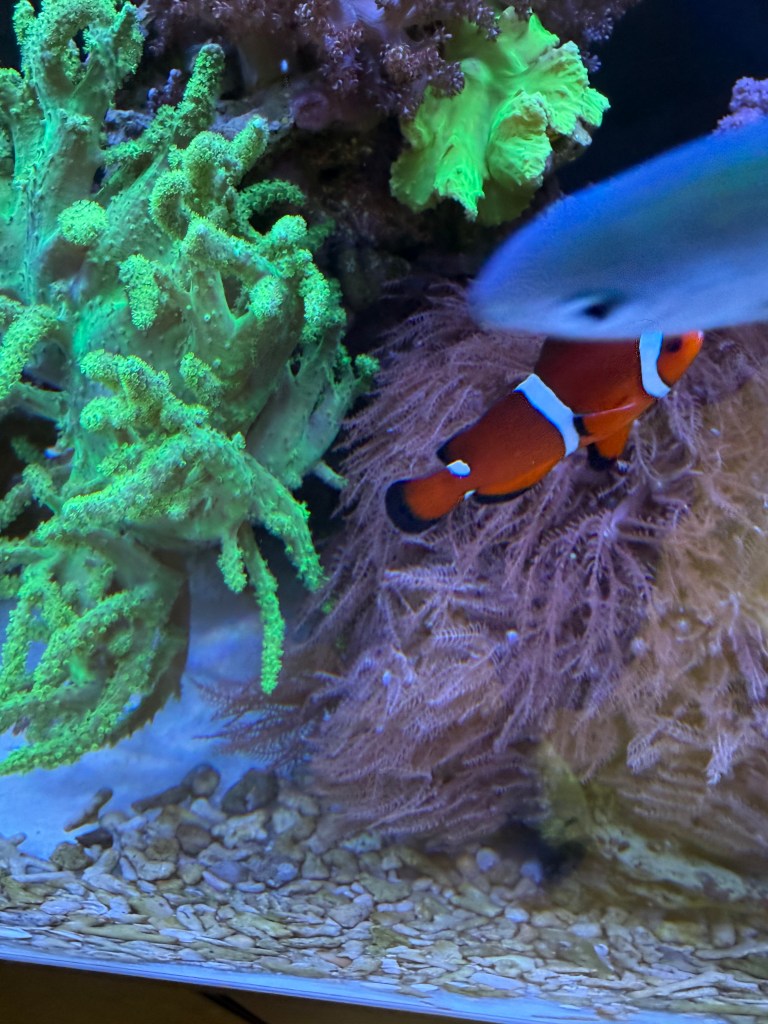
The question we should be asking isn’t necessarily “How do I stop this?”
It’s, “What’s this organism telling me about the habitat I’ve created?”
That’s a much more important question!
If one organism dominates, perhaps it has discovered an ecological opportunity that others haven’t yet occupied. As the system matures, competitors, grazers, predators, and changing environmental conditions may alter that balance.
Sometimes the best intervention is literally just to…wait.
We provide ‘stuff” for Nature to work with.
I think there’s a profound simplicity to it. We provide habitat, energy, diversity, flow. and other appropriate environmental conditions. We Introduce organisms capable of occupying the available niches, then we let interactions happen.
The ecosystem will begin sorting itself out.
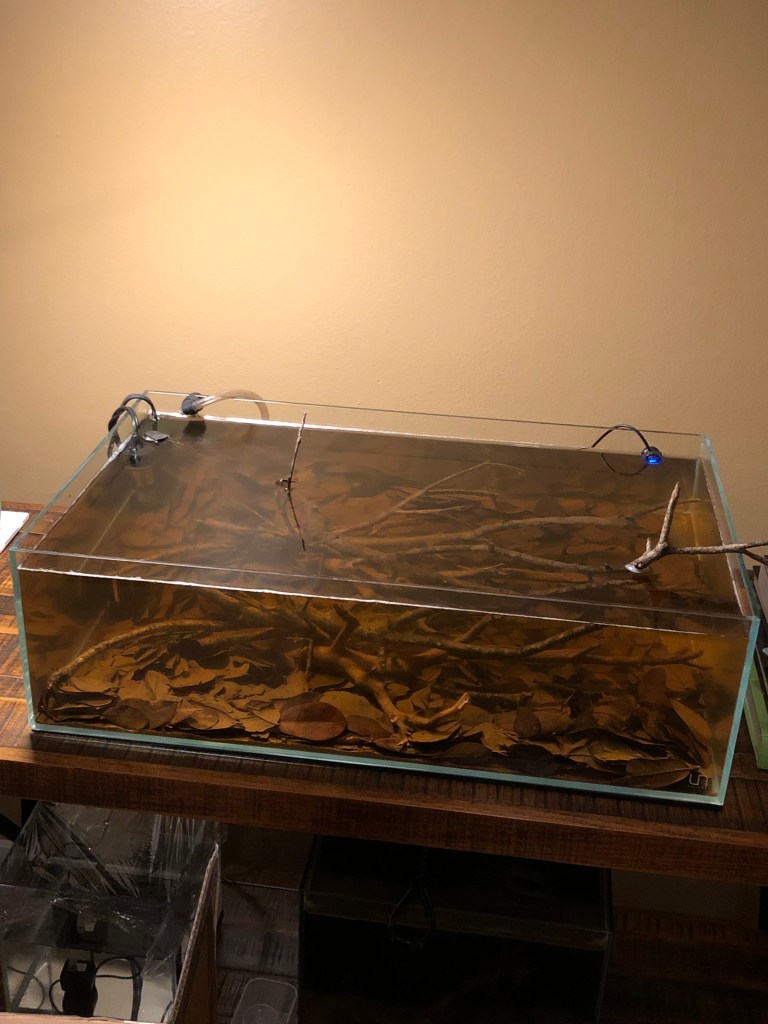
The rubble experiment in my soft coral reef tank that I’ve been talking about lately is almost a perfect miniature demonstration of this principle.
I didn’t populate every piece of rubble with a prescribed community- I created heterogeneous habitat. The fish immediately discovered it, biofilms and algae began appearing. Organic material will accumulate in some places, and small organisms will eventually colonize the spaces between the fragments.
Some populations will flourish; others won’t. The fish will exert predation and grazing pressure. Flow will redistribute material. And eventually, something quite different from the original sterile rubble will emerge.
I simply provided the opportunity.
The ecosystem is doing the rest, and perhaps this is the philosophical shift.
We traditionally think of aquarium husbandry as maintaining a desired state within the tank, but Increasingly, I think the more interesting approach is guiding a desired trajectory.
Those aren’t the same thing.
A “static ” display aquarium needs constant correction because everything that changes is perceived as deviation, whereas a developing ecosystem can be allowed to change-because change is expected.
Our job as aquarists becomes determining which changes matter.
That may mean pruning a coral because it is overwhelming another colony. It may mean adjusting flow because detritus is accumulating somewhere it shouldn’t. It may mean removing an organism that has genuinely become destructive. But it also means being willing to say, “That’s interesting. Let’s see what happens.” before reaching for a “solution.”
And I think that’s where the hobby can become considerably more intellectually rewarding for all of us- not just those of us in the botanical aquarium world.
Instead of constantly asking how to control Nature, we begin asking what Nature is trying to do with the conditions we’ve provided.
That’s ecology.
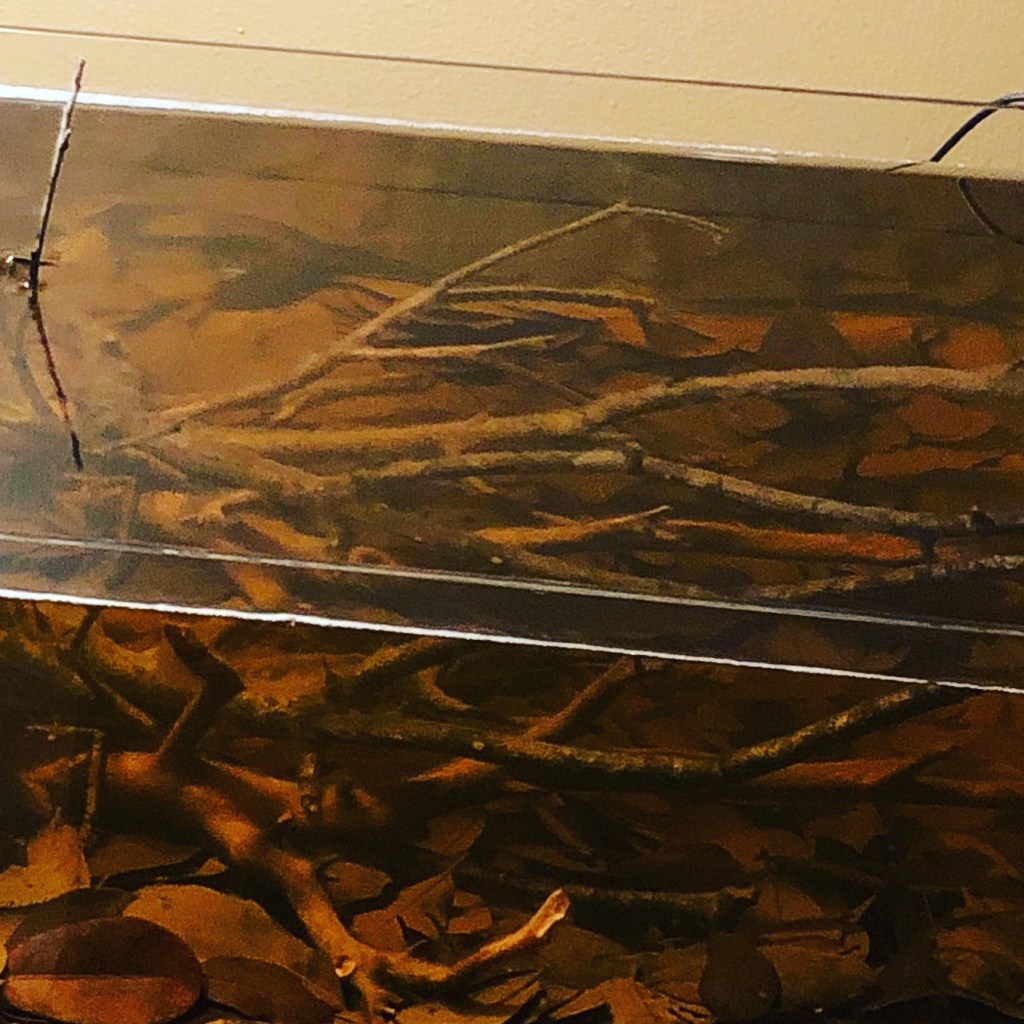
And perhaps the ultimate form of aquarium “curation” isn’t creating the ecosystem ourselves, it’s creating the conditions under which an ecosystem can create itself. This is where my philosophy is after several decades of playing with botanical method aquariums. It’s evolved…
I set up a botanical method aquarium somewhat differently from the way we traditionally approach a “new tank.” I would think of it less as building an aquarium and more as establishing the initial conditions for an ecosystem.
The goal isn’t be to make everything perfect on day one. It’s to provide Nature with a useful set of materials, energy sources, habitats, and organisms—and then give the system time to assemble itself.
Yeah, here’s my 2026 “Guide to creating a Successful Botanical Method Aquarium”, if you will. Part procedure. Part process..A helluva lot of philosophy:
Start by defining the habitat, not the “aquascape”
First, I decide what sort of natural environment I’m trying to recreate: an igapo, igarapé, blackwater stream, varzea, temporal pool, etc.
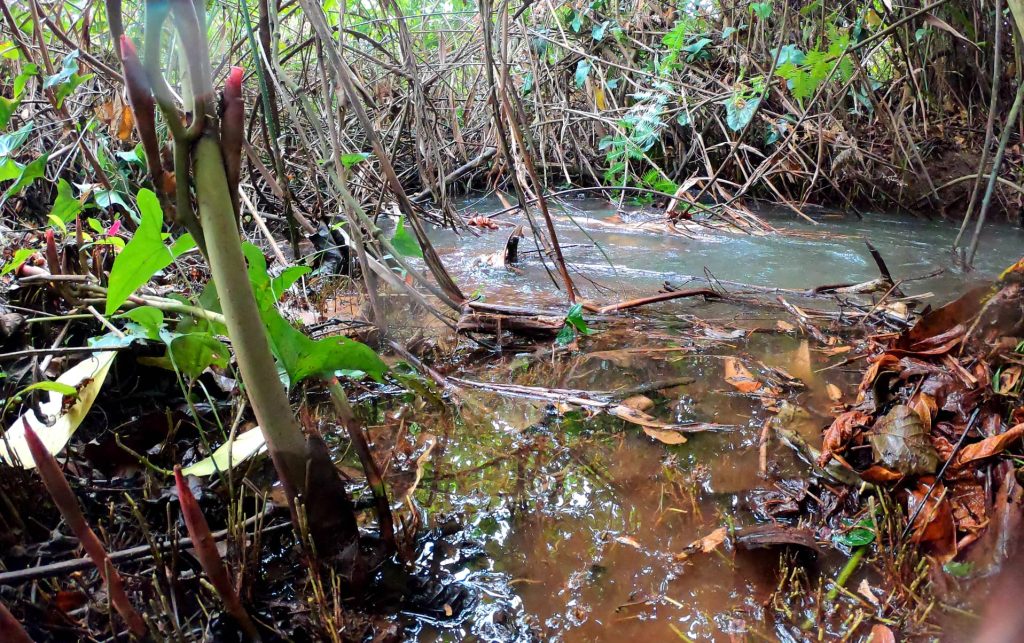
Not merely trying to represent what it physically looks like, but considering what processes occur there, what materials are present, what fishes and other organisms use them, how the water motion occurs, where organic matter accumulates, etc.
That determines almost everything that follows.
Build simple physical structure
I use wood and perhaps a relatively restrained amount of leaves and seed pods, or other structural material to establish the major “physical architecture.” I don’t try to recreate every branch and root that’s found in the habitat in Nature.
I believe that we should create “opportunities” for organisms to utilize the habitat like they do in the wild. You know, creating shaded areas, open water, narrow passages, leaf-retaining areas, sheltered margins, and different flow environments.
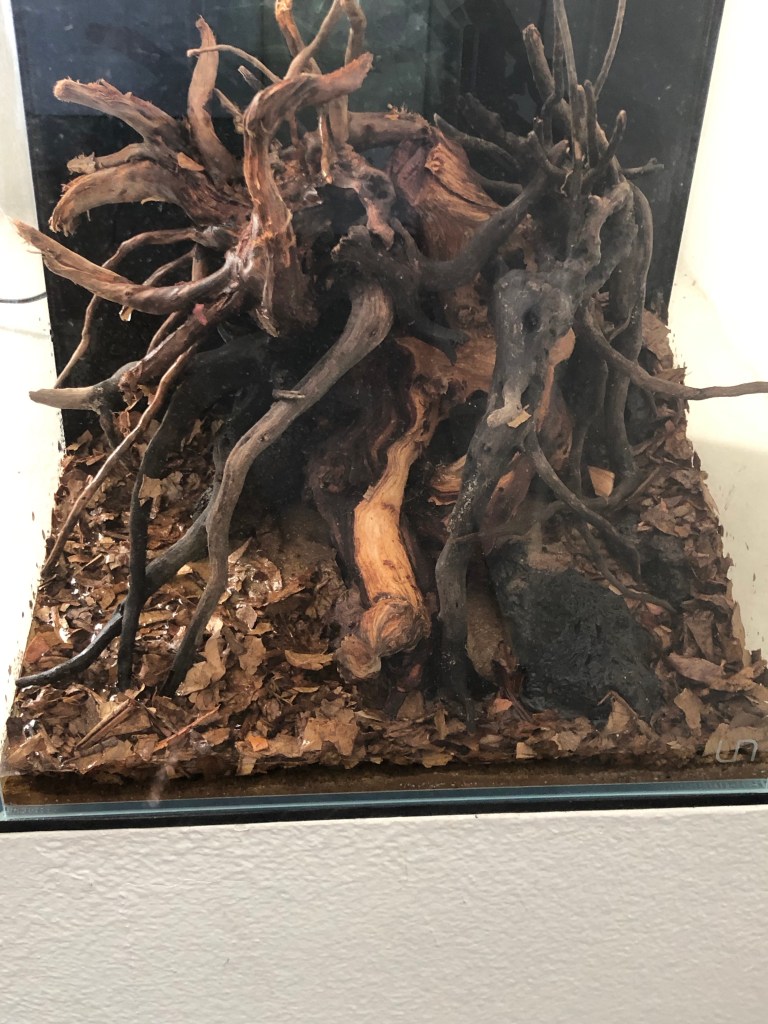
The structure establishes the physical framework. The ecology will fill in the details!
Use a deliberately limited “botanical palette”
This is one area where I strongly embrace a “less is more” philosophy. Rather than dumping twenty different botanicals into the aquarium, I select a relatively small number of materials that perform complementary ecological and visual functions. Sometimes it’s just a couple. Other times it might be 3-4.
For example, leaves for relatively rapid decomposition, tougher botanicals for longer-lasting structure, and perhaps a few larger pieces that provide persistent physical complexity. Twigs and branches come to mind.
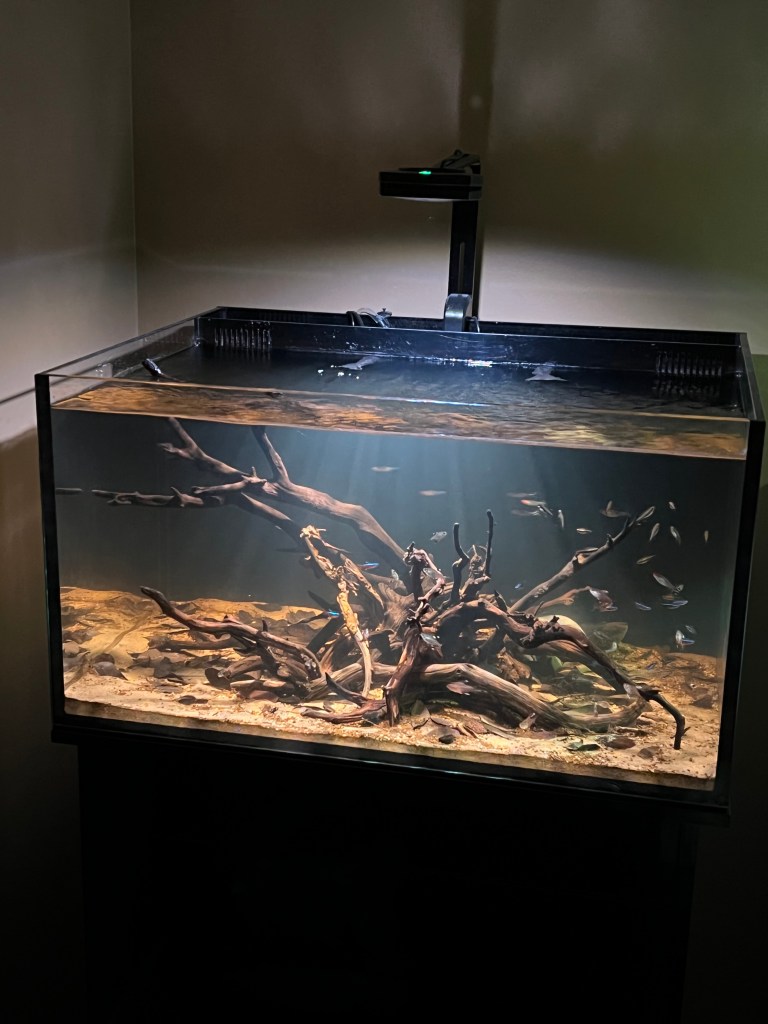
The objective isn’t botanical variety for its own sake.
It’s functional diversity.
Different materials break down at different rates, have different surface characteristics, retain different amounts of detritus, and create different microbial habitats. That’s the whole game here!
Add the botanicals and let them begin their work
Once you’ve settled on the materials you’re going to utilize, create the physical environment and introduce the botanical material.
And then I’d deliberately resist the urge to make it perfect. Don’t overthink this shit. I see people do this all the time and it’s a fruitless endeavor, as Nature will simply change it as it evolves!
Let some leaves overlap, let some settle into corners, let some botanicals move around, let some stuff get buried.
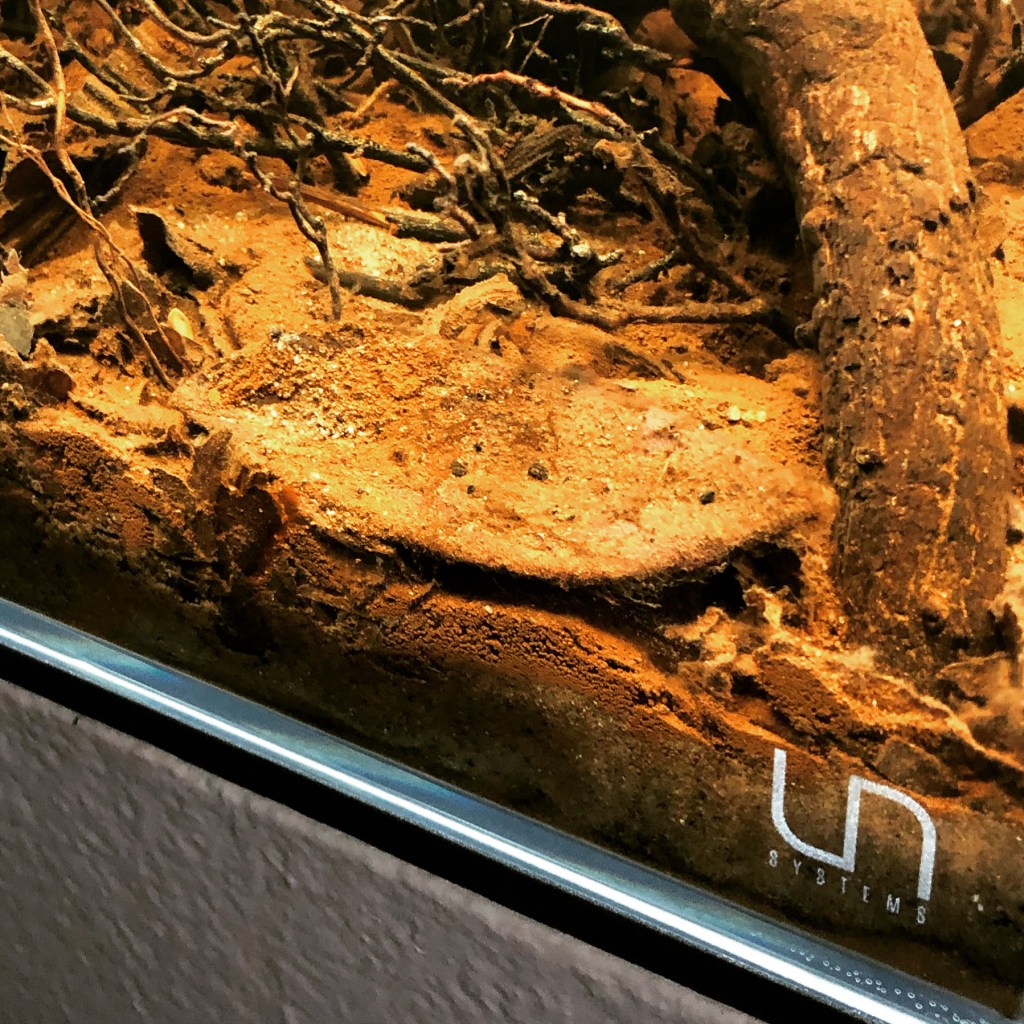
Let fungi appear. That will happen almost immediately with no effort on your part. It’s a huge sign that things are proceeding the way you want them to!
The developing “disorder” is not a “failure” of the “aquascape”, because you’re not creating an aquascape. That’s for the contest kooks! You’re creating the foundation for an ecosystem. This isn’t a “mess”- it’s ecological succession in action!
Introduce the biology deliberately
This is the step I emphasize even more strongly now than I once might have.
I don’t treat a new aquarium as a sterile container that needs to be “cycled” and then populated. Rather, I establish a microbial community from the beginning using a trustworthy source of mature biological material. That might be established filter media, mature substrate, leaf litter, or another appropriate inoculum from a healthy aquarium.
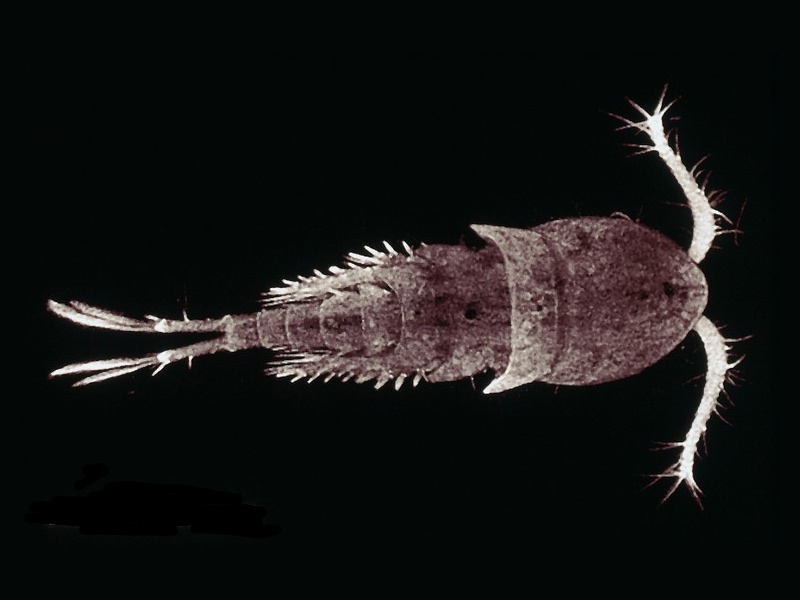
And if available, I’d consider introducing some benthic microfauna—copepods, small worms, ostracods, etc.—rather than relying exclusively on bottled bacterial products. Many of these organisms are now available from a variety of suppliers online! By doing this, you’re essentially providing Nature with a starter community, not attempting to “manufacture” an ecosystem chemically. This is a hugely important and foundational consideration!
Establish appropriate WATER MOVEMENT
This is often overlooked in Botanical Method aquariums. And it’s pretty important! You want enough circulation to prevent the aquarium from becoming stagnant while still allowing organic material to accumulate naturally in certain places.
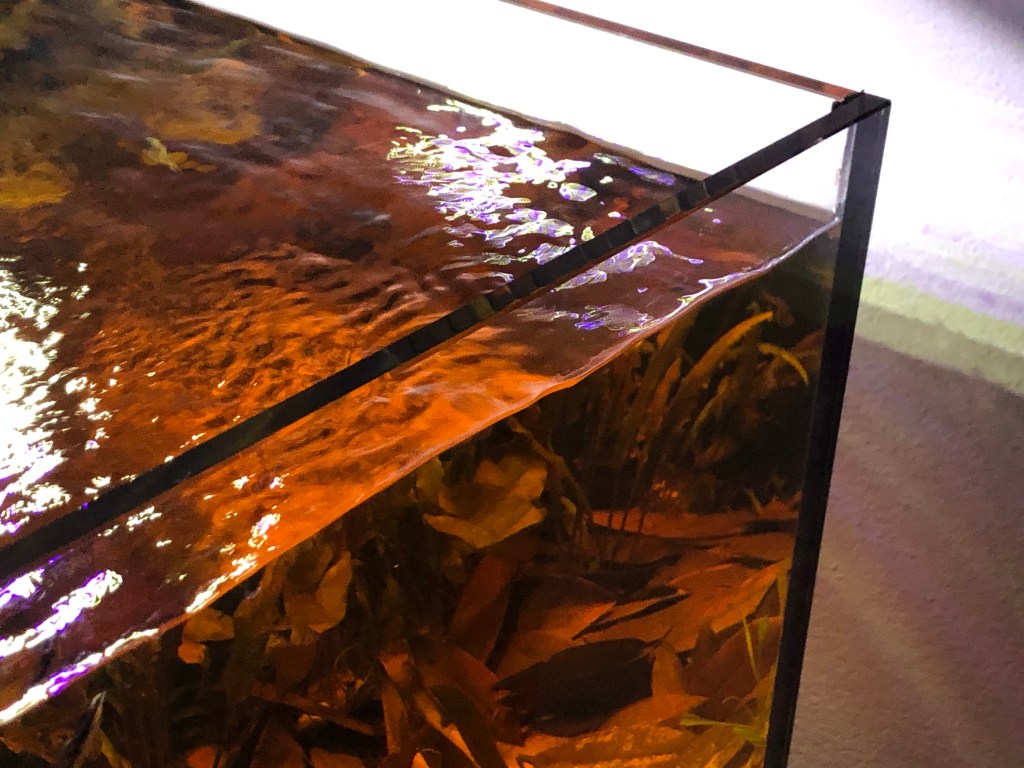
The objective isn’t to keep every particle of material suspended. It’s to create movement and redistribution of materials. Some material should remain in place. Some should move. Some should be exported from the system, while some should be consumed. Nature dictates all of this! A good flow pattern creates a constantly changing distribution of resources for the life forms in your system. Think about that…
Don’t chase perfectly clear water
Oh, man, I’ve talked about this for years, right? Water with “flavor” is what you expect in this kind of system. Crystal clear water (tinted or otherwise) is not an overarching goal nor a sign of health and success. This is an important philosophical and practical distinction. you need to get your head around
I’d allow the tannins and humic substances associated with the botanical materials to develop rather than immediately trying to strip them out.
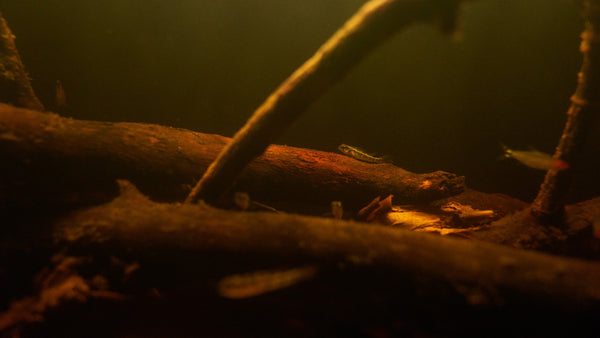
Likewise, a little particulate material isn’t automatically undesirable. The question I’d ask myself is, “Is the aquarium functioning well?”
Are ammonia and nitrite controlled? Are the fishes behaving normally? Is oxygenation adequate? Is organic accumulation becoming excessive? Most likely, they are fine. And if the answers to these fundamental questions are positive, I wouldn’t intervene merely because the aquarium doesn’t resemble a glass of bottled water!
Introduce the fishes thoughtfully—and observe them
When the system is ready for its inhabitants, I select fishes based on the ecology of the habitat, not simply their compatibility chart. Ask yourself what they eat, how do they forage, where do they spend their time, and if they need cover?Ask yourself if the fishes interact with leaf litter, wood, substrate, or the water column?
After introducing my fish, I simply observe them.
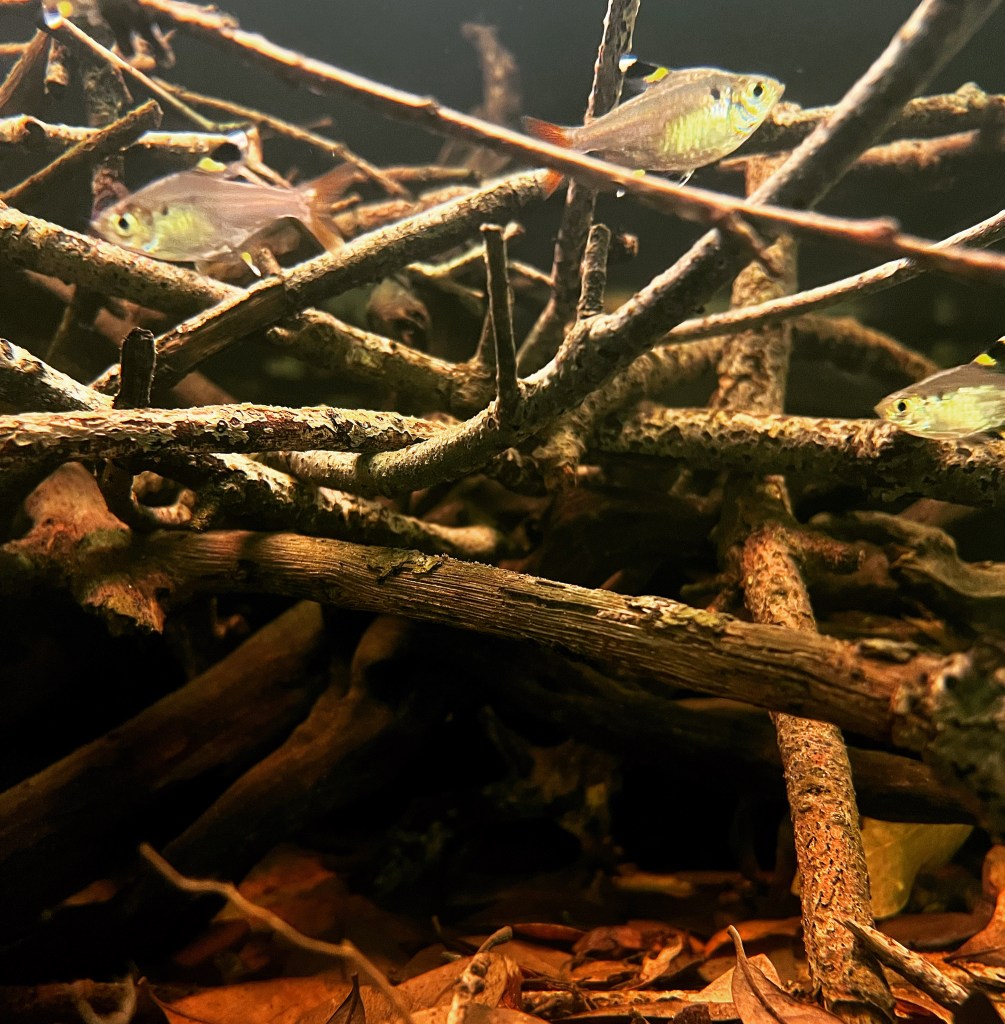
This is one of the most valuable diagnostic tools available to us! If the fishes immediately begin picking through leaves, investigating wood, hunting among botanicals, or occupying particular microhabitats, that’s telling you that you’ve provided something appropriate and meaningful for them!
Feed the ecosystem, not just the fishes
I certainly feed my fish appropriately, but I also recognize that some of what we feed will enter the broader detrital food web. Fish waste, uneaten particles, decomposing leaves, microbial biomass, and invertebrates are all connected. Your fishes will contribute to the development of this food web!
Now, this doesn’t mean deliberately dumping tons food into the aquarium to “feed the ecosystem.” It means understanding that organic matter isn’t automatically “waste” simply because it isn’t consumed immediately.
Some of it becomes food for something else!
JUST…CHILL
This is where understanding our philosophy becomes most important. You must resist the urge to “fix” every development.
The aquarium may go through “ugly” phases: It will accumulate bacterial biofilm, recruit fungal growth, and might even get algae. Some of the botanical materials may decompose surprisingly quickly, while others may persist for months. One organism, like the aforementioned fungal growth, may temporarily become dominant, and then something else may replace it. Don’t do anything about this. Seriously!
I’d observe before intervening.
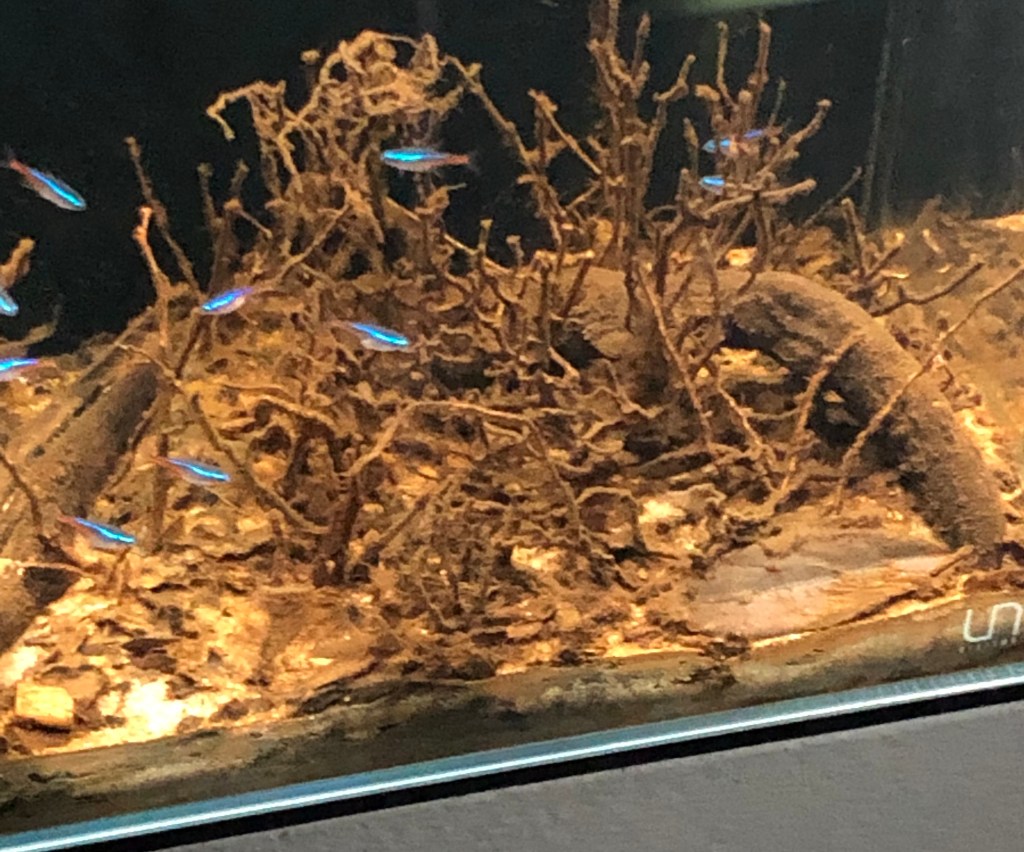
Ask what the system is doing before deciding what you think that it needs.
Maintain the “trajectory” rather than the appearance OF YOUR AQUARIUM
Eventually, “maintenance” in a botanical method aquarium becomes a matter of keeping the ecological “machinery” supplied and preventing genuine problems.
Replace consumed botanical material as needed, perform regular water exchanges, maintain filtration and flow. Don’t go crazy removing decomposed botanical materials and their resulting detritus. Only remove material that is genuinely accumulating excessively, perhaps restricting flow, etc,
Refresh biological diversity occasionally if appropriate by adding more cultures of copepods, etc., but don’t continually “reset” the aquarium.
Expect the appearance to change. That’s part of the point.
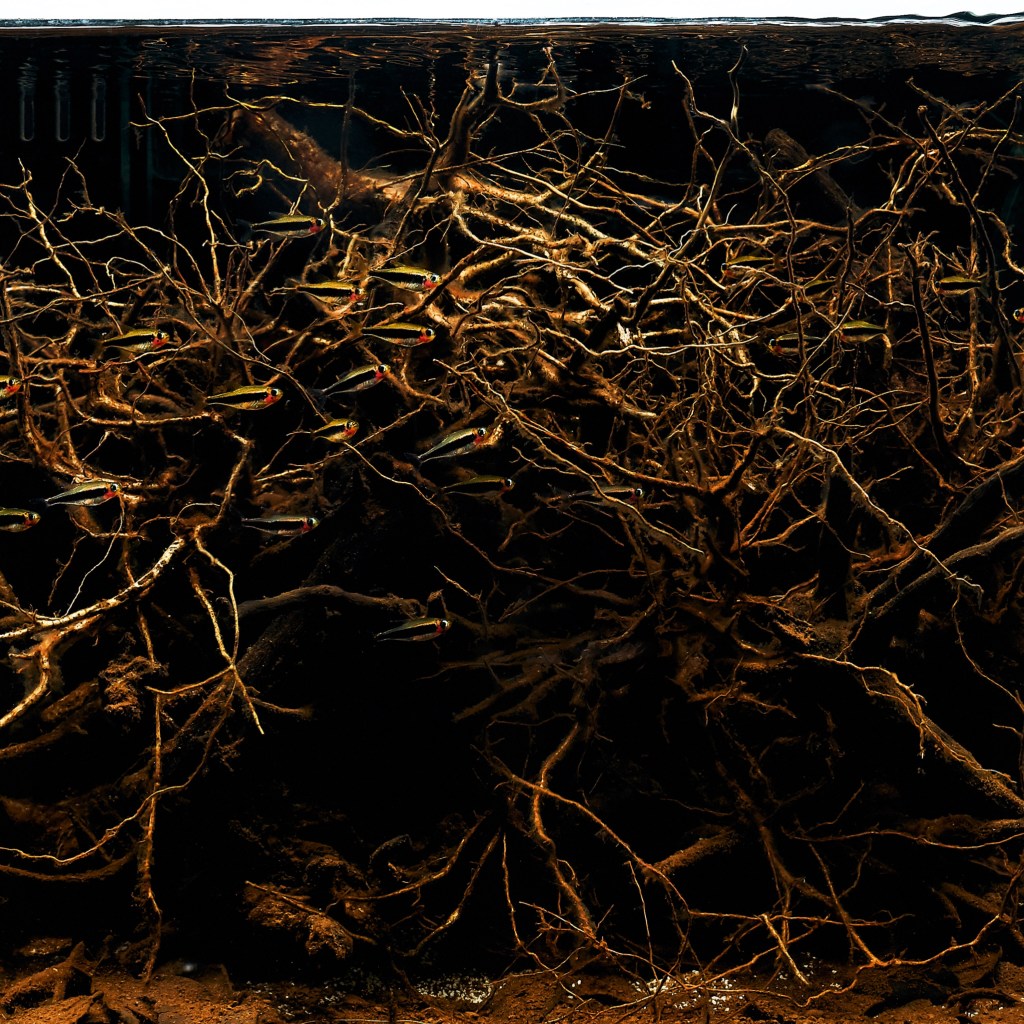
This is where I delve back into that philosophical shit again:
A botanical method aquarium should have a sort of “history.”
The leaves that were added three months ago shouldn’t necessarily still look like the leaves that were added three months ago. The wood should acquire a biological patina. The appearance and composition of the substrate should change as stuff breaks down. Microfauna populations should fluctuate, and the distribution of organic material should evolve.
Here’s my “meta” philosophical thing….The aquarium should become increasingly itself.
Not what we expect it to be.
So, to summarize, if we put my whole approach to creating a botanical method aquarium into a sort of “flow chart’, it’s be something like this:
Define the habitat → establish structure → provide a modest diversity of organic materials → inoculate life → establish flow → introduce inhabitants → observe succession → intervene only when necessary → replenish what the ecosystem consumes.
The really important word in that sequence is “observe.”
Because once you’ve assembled the ingredients, you don’t actually know exactly what the aquarium is going to become, and that’s the beauty of it.
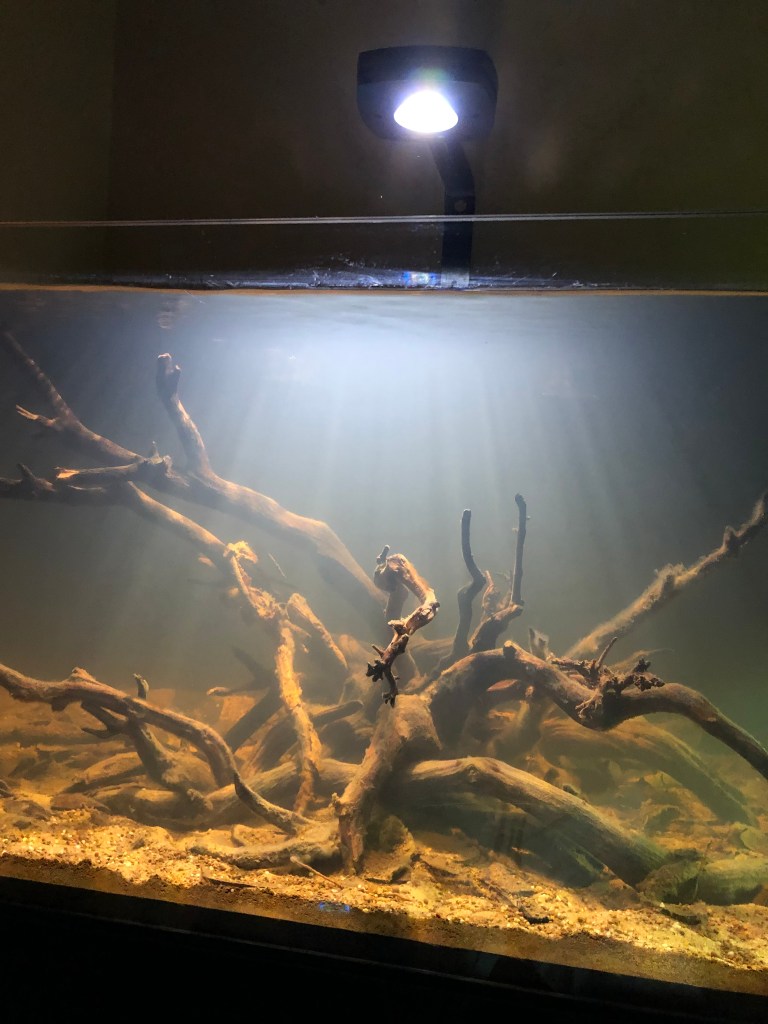
You’re not constructing a finished ecosystem. You’re starting one.
“Woahh! WTF, Fellman? Mind blown!”
Well, I hope you’ll think that. It’s that easy and that difficult.
I think that’s the natural extension of everything we’ve been discussing with these systems over the years here in “The Tint” and elsewhere. Your greatest contribution as the aquarist may occur before the ecosystem becomes established: Just choosing the materials, organisms, physical structure and conditions that determine what kinds of ecological possibilities exist.
After that, our job becomes considerably more humble. We become sort of “passengers” on this voyage.
We watch, we learn, we guide, and we let Nature do most of the work.
THAT is what we’re doing here!
You up for this? I think so!
Stay thoughtful. Stay bold. Stay curious. Stay patient…
And Stay Wet.
Scott Fellman


Leave a Reply